Introduction to Corporate Finance, Fourth Edition Booth, Cleary, Rakita
Chapter 3: Financial Statements
Multiple Choice Questions
1. Section: 3.1 Accounting Principles
2. Section: 3.2 Organizing a Firm’s Transactions
Learning Objective: 3.2
3. Section: 3.2 Organizing a Firm’s Transactions
4. Section: 3.2 Organizing a Firm’s Transactions
Learning Objective: 3.2
5. Section: 3.3 Preparing Accounting Statements
Learning Objective: 3.3
6. Section: 3.3 Preparing Accounting Statements
Learning Objective: 3.3
7. Section: 3.3 Preparing Accounting Statements
Learning Objective: 3.3
Introduction to Corporate Finance, Fourth Edition Booth, Cleary, Rakita
8. Section: 3.3 Preparing Accounting Statements
9. Section: 3.3 Preparing Accounting Statements; 3.4 CP’s Accounting Statements
Learning Objective: 3.3
10. Section: 3.3 Preparing Accounting Statements
Learning Objective: 3.3
11. Section: 3.3 Preparing Accounting Statements
Learning Objective: 3.3
12. Section: 3.4 CP’s Accounting Statements
Learning Objective: 3.4
13. Section: 3.4 CP’s Accounting Statements
Learning Objective: 3.4
14. Section: 3.5 The Canadian Tax System
Learning Objective: 3.5
Introduction to Corporate Finance, Fourth Edition Booth, Cleary, Rakita
15. Section: 3.5 The Canadian Tax System
Learning Objective: 3.5
Practice Problems
Basic
16. Section: 3.2 Organizing a Firm’s Transactions
Learning Objective: 3.2
Level of difficulty: Basic
Solution:
Some basic principles of IFRS are the going concern principle (the firm is not in imminent threat
17. Section: 3.2 Organizing a Firm’s Transactions
Learning Objective: 3.2
Level of difficulty: Basic
Solution:
18. Section: 3.3 Preparing Accounting Statements
Learning Objective: 3.3
Level of difficulty: Basic
Solution:
19. Section: 3.3 Preparing Accounting Statements
Learning Objective:
Level of Difficulty: Basic
Solution:
20. Section: 3.3 Preparing Accounting Statements
Learning Objective: 3.3
Level of Difficulty: Basic
Solution:
21. Section: 3.3 Preparing Accounting Statements
Learning Objective: 3.3
22. Section: 3.3 Preparing Accounting Statements
Learning Objective: 3.3
Level of Difficulty: Basic
23. Section: 3.5 The Canadian Tax System
Learning Objective: 3.5
Level of difficulty: Basic
Solution:
24. Section: 3.5 The Canadian Tax System
Learning Objective: 3.5
Level of difficulty: Basic
Solution:
Year 1: ½ Capital Cost $2,000
25. Section: 3.3 Preparing Accounting Statements
Learning Objective: 3.3
Level of difficulty: Basic
Solution:
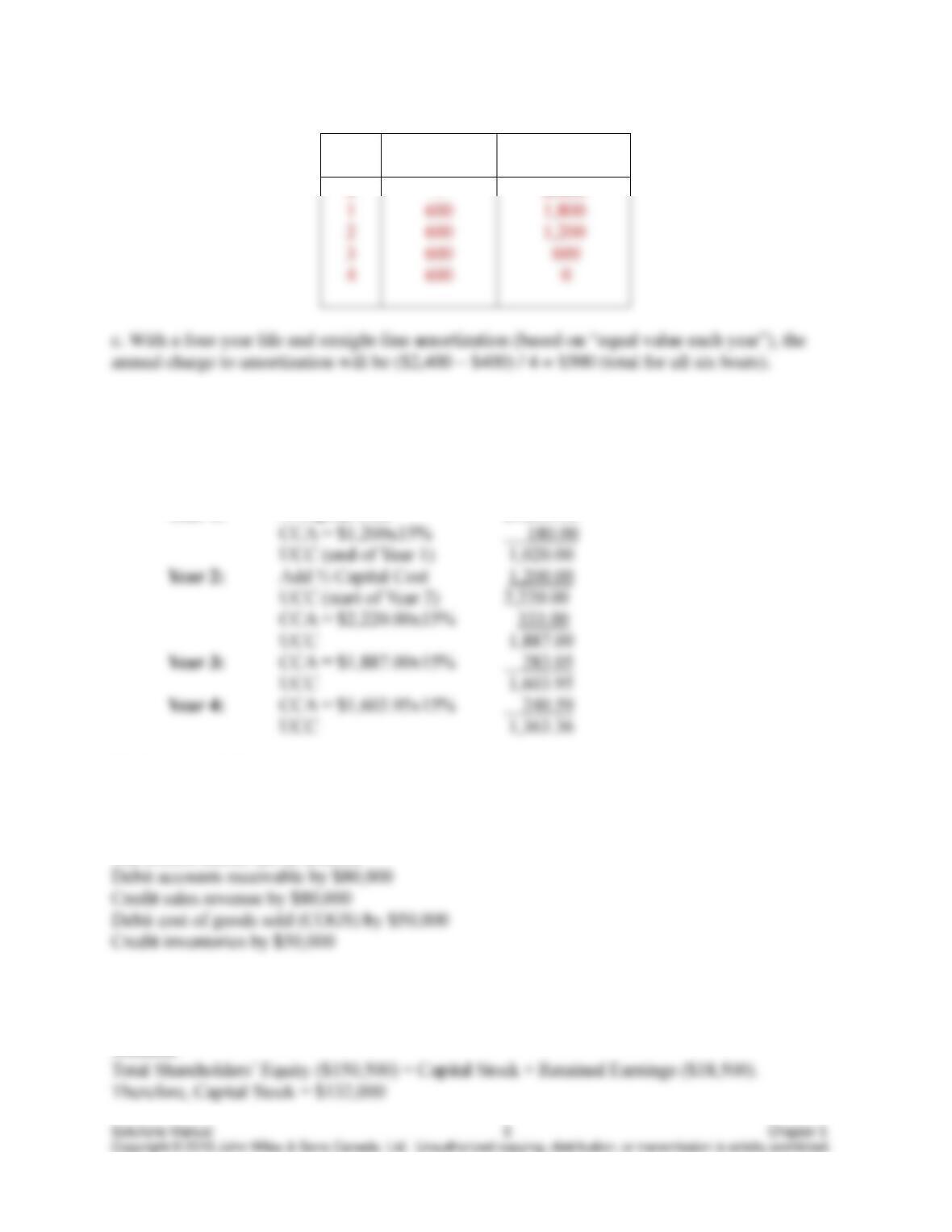
a. With a four–year life and straight–line amortization (based on “equal value each year”), the
Introduction to Corporate Finance, Fourth Edition Booth, Cleary, Rakita
b.
Intermediate
26. Section: 3.5 The Canadian Tax System
Learning Objective: 3.5
Level of difficulty: Intermediate
Solution:
Year 1: ½ Capital Cost $1,200.00
27. Section: 3.2 Organizing a Firm’s Transactions
Learning Objective: 3.2
Level of difficulty: Intermediate
Solution:
The correct entries are as follows:
28. Section: 3.3
Learning Objective: 3.3
Level of difficulty: Intermediate
Solution:
Year
Amortization
Book Value
(net)
0
–
2,400
Introduction to Corporate Finance, Fourth Edition Booth, Cleary, Rakita
29. Section: 3.3 Preparing Accounting Statements
Learning Objective: 3.3
Level of difficulty: Intermediate
Solution:
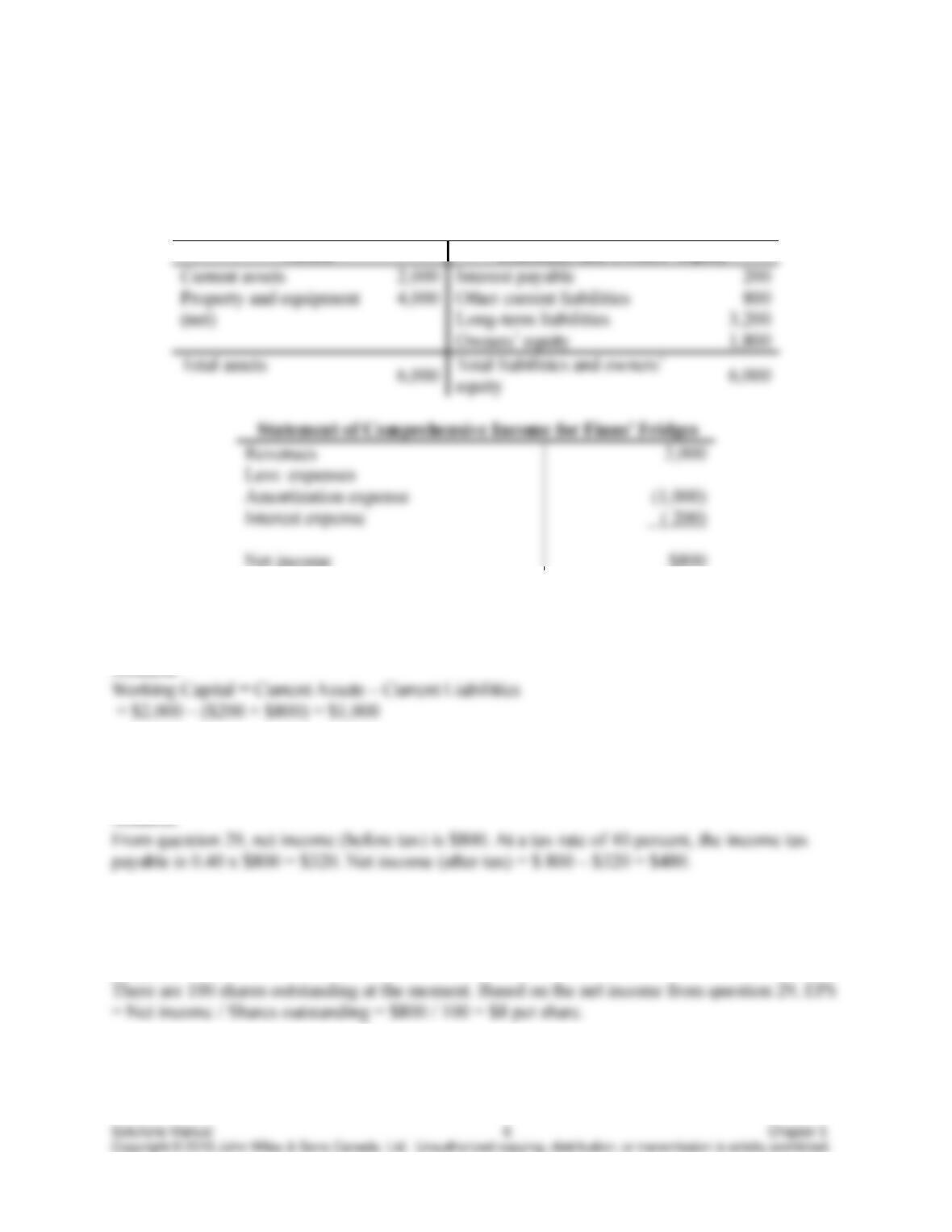
Statement of Financial Position for Finns’ Fridges
Assets
Liabilities and Owners’ Equity
Owners’ equity
Net income
$800
30. Section: 3.3 Preparing Accounting Statements
Learning Objective: 3.3
Level of difficulty: Intermediate
Solution:
31. Section: 3.3 Preparing Accounting Statements
Learning Objective: 3.3
Level of difficulty: Intermediate
32. Section: 3.3 Preparing Accounting Statements
Learning Objective: 3.3
Level of difficulty: Intermediate
Solution:
33. Section: 3.3 Preparing Accounting Statements
Learning Objective: 3.3
Level of difficulty: Intermediate
Introduction to Corporate Finance, Fourth Edition Booth, Cleary, Rakita
Solution:
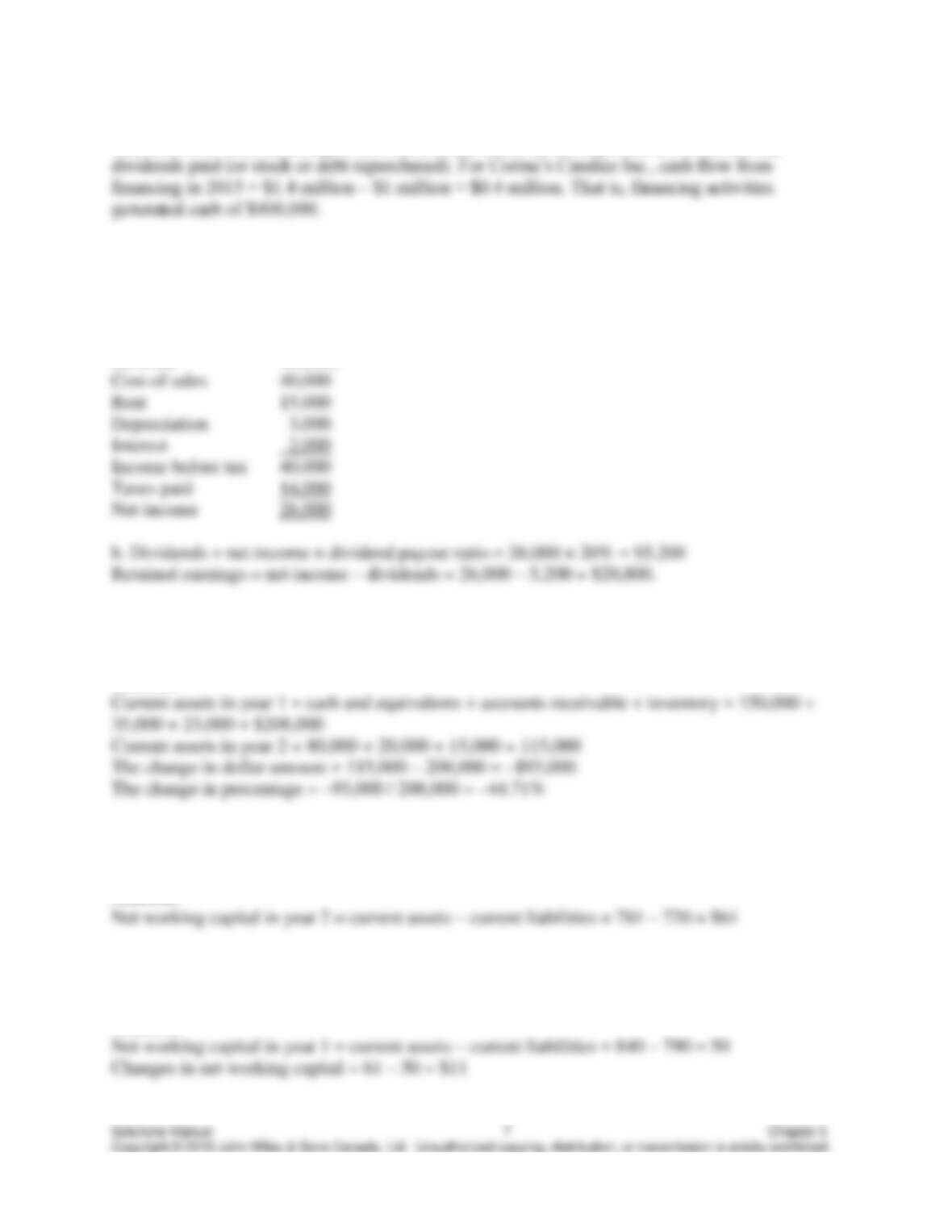
The cash flow from financing is the total amount raised by issuing stock (or debt) less any
34. Section: 3.3 Preparing Accounting Statements
Learning Objective: 3.3
Level of difficulty: Intermediate
Solution:
a.
Revenue 100,000
35. Section: 3.3 Preparing Accounting Statements
Learning Objective: 3.3
Level of Difficulty: Intermediate
Solution:
36. Section: 3.3 Preparing Accounting Statements
Learning Objective:
Level of difficulty: Intermediate
Solution:
37. Section: 3.3 Preparing Accounting Statements
Learning Objective:
Level of difficulty: Intermediate
Solution:
Introduction to Corporate Finance, Fourth Edition Booth, Cleary, Rakita
38. Section: 3.3 Preparing Accounting Statements
Learning Objective:
Level of difficulty: Intermediate
Solution:
39. Section: 3.3 Preparing Accounting Statements
Learning Objective:
Level of difficulty: Intermediate
Solution:
40. Section: 3.4 CP’s Accounting Statements
Learning Objective: 3.4
Level of difficulty: Intermediate
Solution:
41. Section: 3.4 CP’s. Accounting Statements
Learning Objective: 3.4
Level of difficulty: Intermediate
Solution:
In $millions
Dec 31, 2014
Dec 31, 2013
Change ($)
Change (%)
Cash and cash equivalents
226
476
–250
–52.52%
equivalents
411
–411
Account receivable, net
702
580
Materials and supplies
177
165
Deferred income taxes
56
344
–288
–83.72%
Other current assets
116
Total current assets
–752
–37.06%
42. Section: 3.4 CP’s Accounting Statements
Learning Objective: 3.4
Level of difficulty: Intermediate
Solution:
Introduction to Corporate Finance, Fourth Edition Booth, Cleary, Rakita
43. Section: 3.4 CP’s Accounting Statements
Learning Objective: 3.4
Level of difficulty: Intermediate
44. Section: 3.4 CP’s Accounting Statements
Learning Objective: 3.4
Level of difficulty: Intermediate
Solution:
The sales growth rate in 2014 is ($6,464 million / $5,982 million) – 1 = 8.06%.
45. Section: 3.5 The Canadian Tax System
Learning Objective: 3.5
Level of difficulty: Intermediate
Solution:
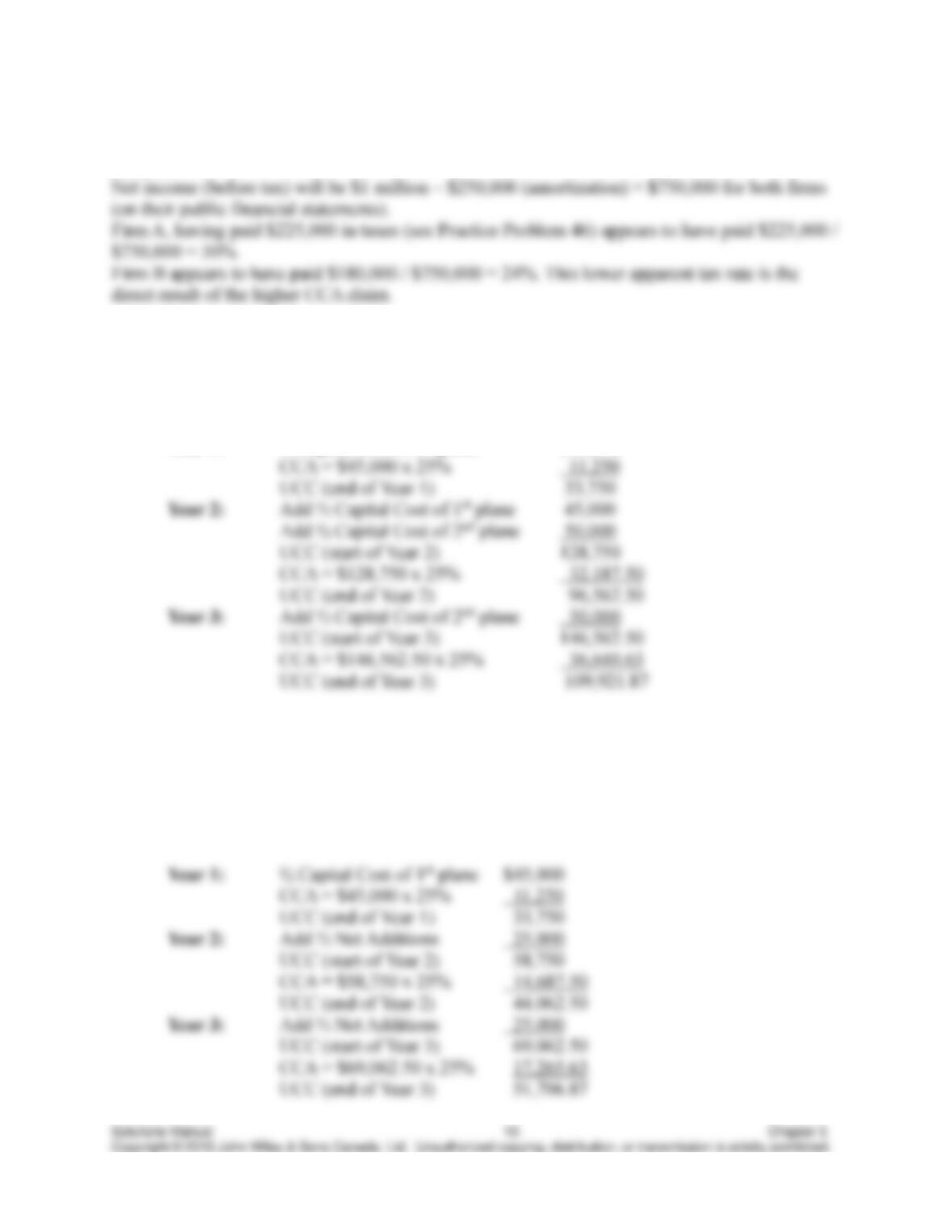
a. The sale price is greater than the original capital cost (purchase price), so there is a capital gain
46. Section: 3.5 The Canadian Tax System
Learning Objective: 3.5
Level of difficulty: Intermediate
Solution:
The actual tax to be paid will be based on CCA claimed, not the reported amortization. For firm
47. Section: 3.5 The Canadian Tax System
Introduction to Corporate Finance, Fourth Edition Booth, Cleary, Rakita
Learning Objective: 3.5
Level of difficulty: Intermediate
Solution:
48. Section: 3.5 The Canadian Tax System
Learning Objective: 3.5
Level of difficulty: Intermediate
Solution:
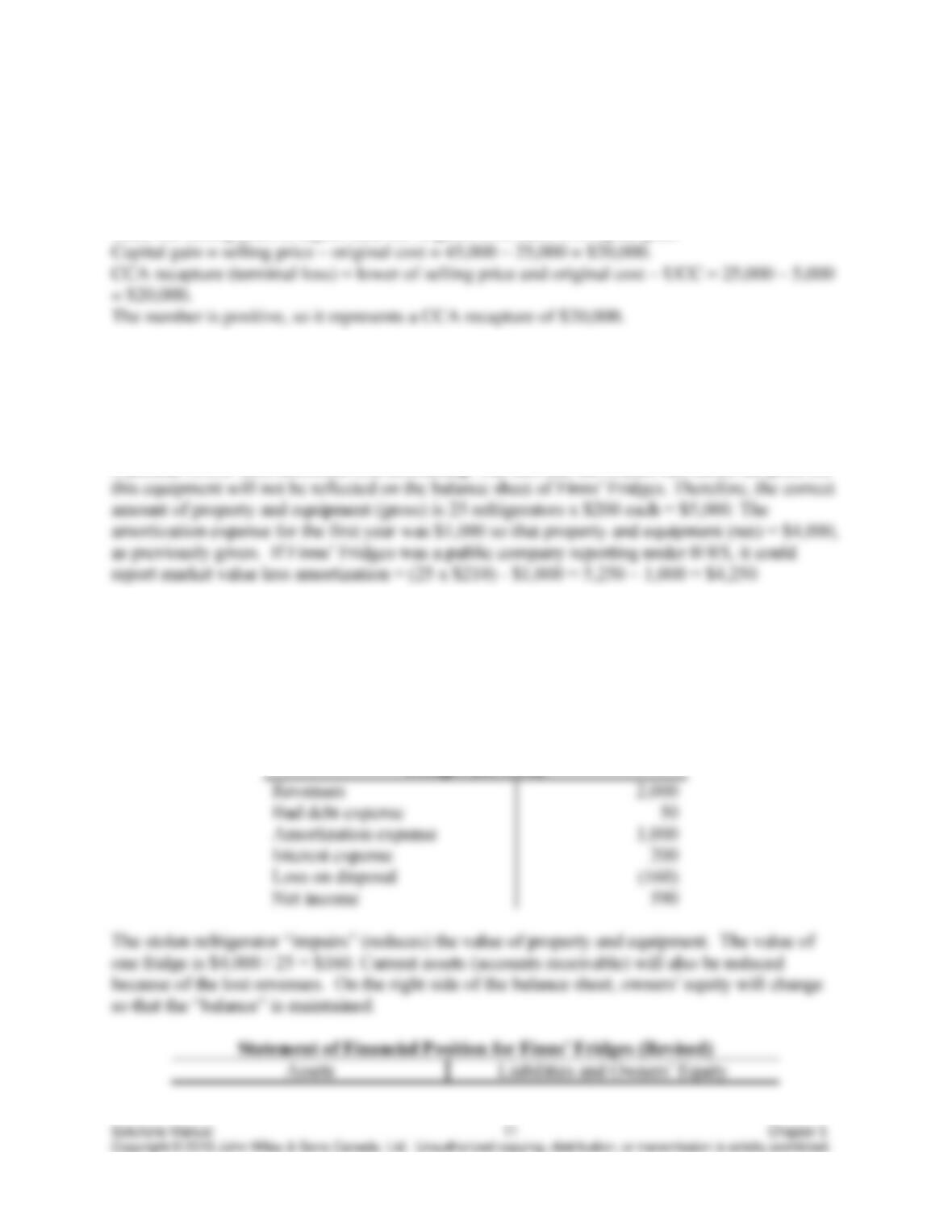
Year 1: ½ Capital Cost of 1st plane $45,000
49. Section: 3.5 The Canadian Tax System
Learning Objective: 3.5
Level of difficulty: Intermediate
Solution:
In Year 2, the value of “Net additions” to the asset pool will be $100,000 – 50,000 = $50,000.
Introduction to Corporate Finance, Fourth Edition Booth, Cleary, Rakita
50. Section: 3.5 The Canadian Tax System
Learning Objective: 3.5
Level of difficulty: Intermediate
Solution:
Since the selling price is higher than the original cost, there is a capital gain.
Challenging
51. Section: 3.2 Organizing a Firm’s Transactions
Learning Objective: 3.2
Level of difficulty: Challenging
Solution:
Canadian GAAP uses historical cost accounting. The fact that the retailer has raised the price for
52. Section: 3.3 Preparing Accounting Statements
Learning Objective: 3.3
Level of difficulty: Challenging
Solution:
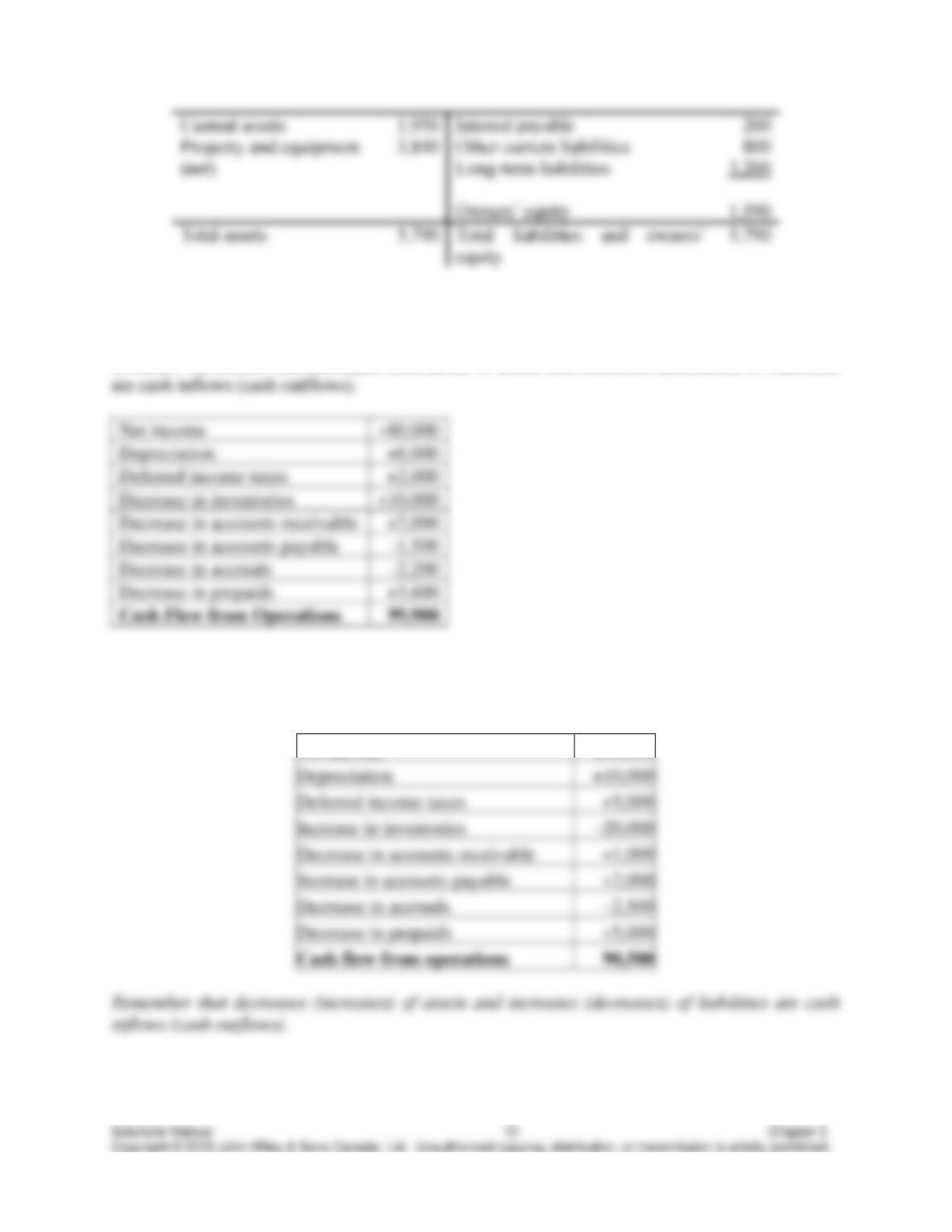
The lost rental income will reduce the company’s revenues Reduction = 5 students x $10 = $50.
Statement of Comprehensive Income for Finns’
Fridges (Revised)
Introduction to Corporate Finance, Fourth Edition Booth, Cleary, Rakita
53. Section: 3.3 Preparing Accounting Statements
Learning Objective: 3.3
Level of difficulty: Challenging
Solution: Remember that decreases (increases) of assets and increases (decreases) of liabilities
54. Section: 3.3 Preparing Accounting Statements
Learning Objective: 3.3
Level of difficulty: Challenging
Solution:
Net Income
$90,000
Depreciation
Deferred income taxes
Increase in inventories
Decrease in accounts receivable
Increase in accounts payable
Decrease in accruals
Decrease in prepaids
55. Section: 3.5 The Canadian Tax System
Learning Objective: 3.5
Introduction to Corporate Finance, Fourth Edition Booth, Cleary, Rakita
Level of difficulty: Challenging
Solution:
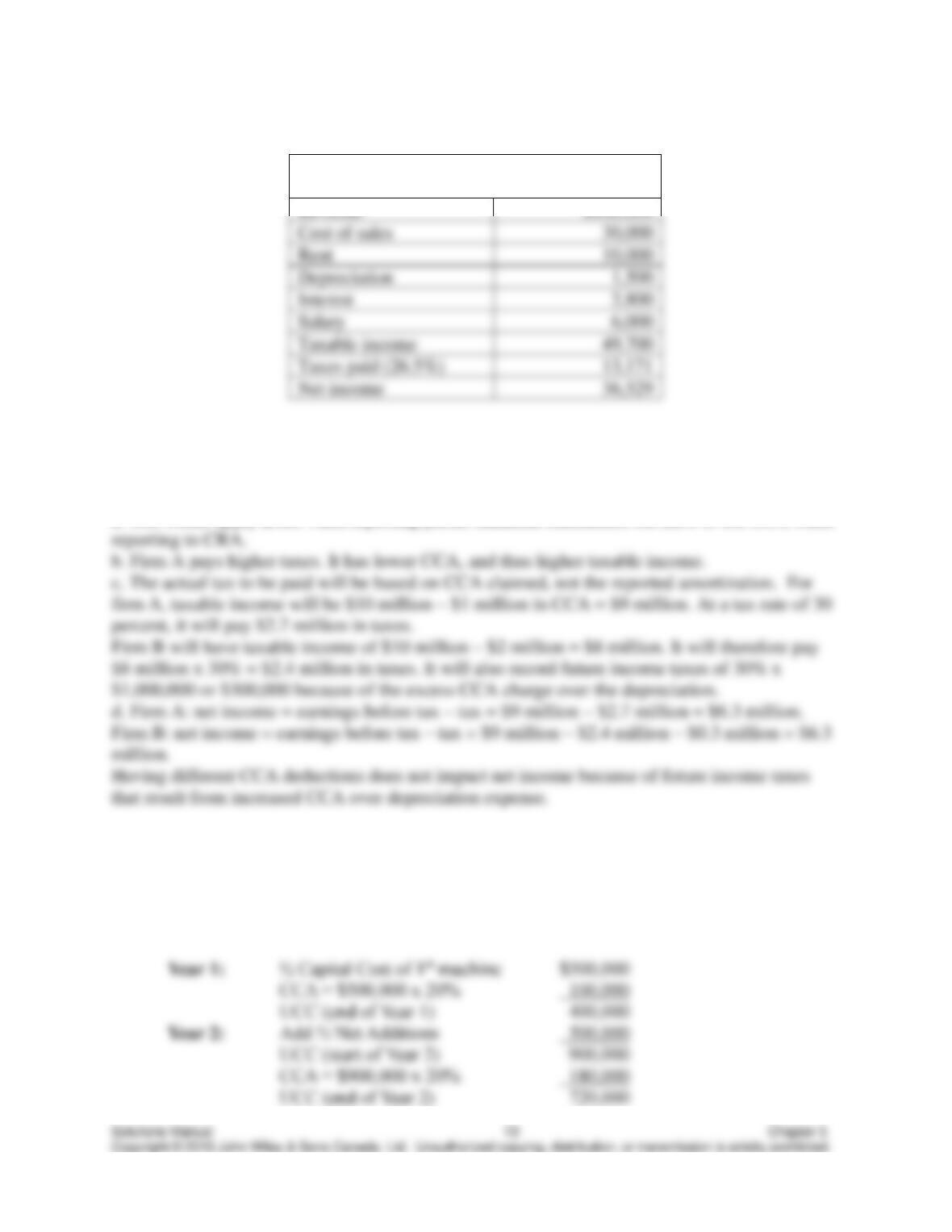
GG Inc. Statement of Comprehensive
Income for Year 2015
56. Section: 3.5 The Canadian Tax System
Learning Objective: 3.5
Level of difficulty: Challenging
Solution:
a. Yes. Firms apply IFRS when reporting public financial statements, but have to use CCA when
57. Section: 3.3 Preparing Accounting Statements
Learning Objective: 3.3
Topic: Corporate Tax
Level of Difficulty: Challenging
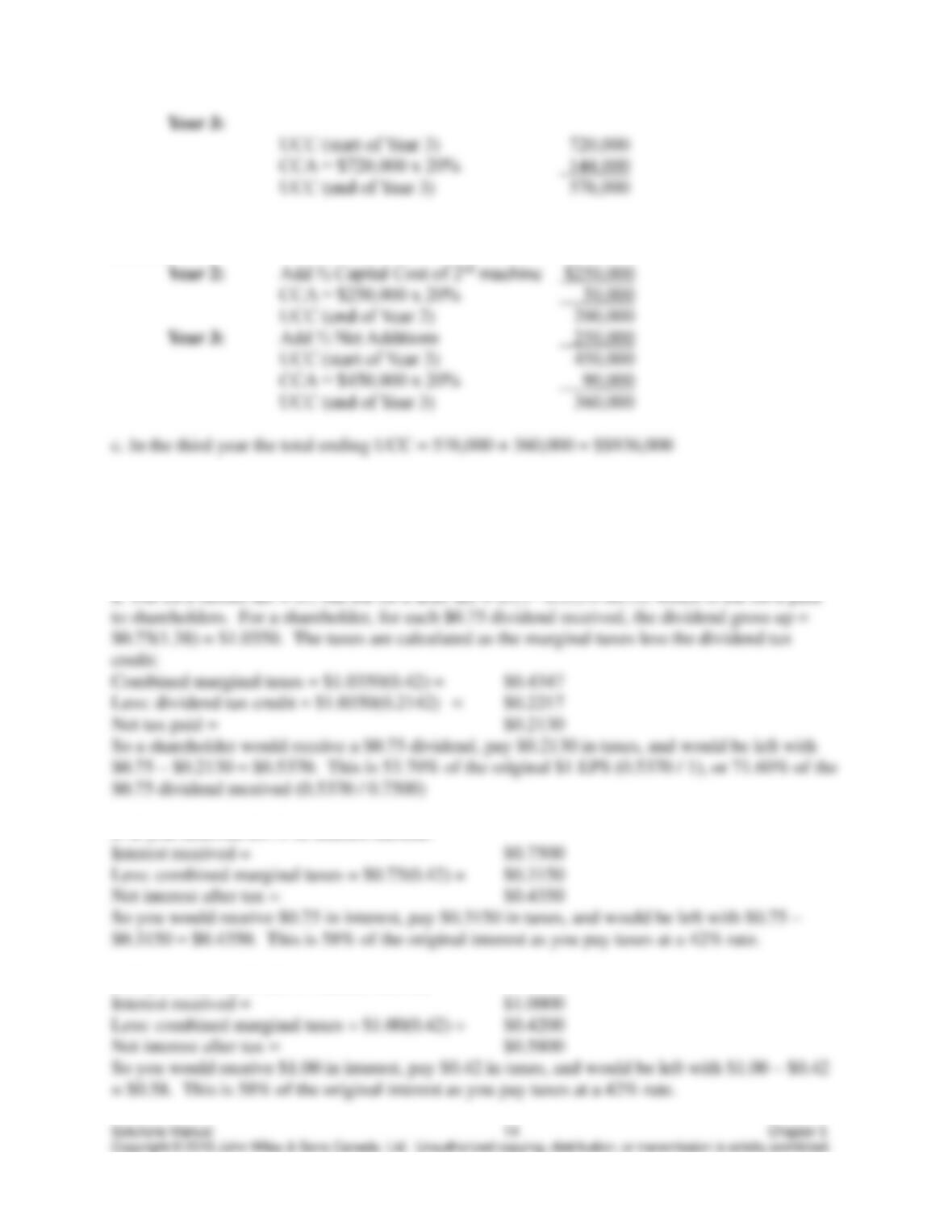
a. The beginning UCC, CCA, and ending UCC in year 1 to 3 for the first machine are as follows.
Introduction to Corporate Finance, Fourth Edition Booth, Cleary, Rakita
b. The beginning UCC, CCA, and ending UCC in years 2 and 3 for the second machine are as
follows.
58. Section: 3.5 The Canadian Tax System
Learning Objective: 3.5
Level of Difficulty: Challenging
Solution:
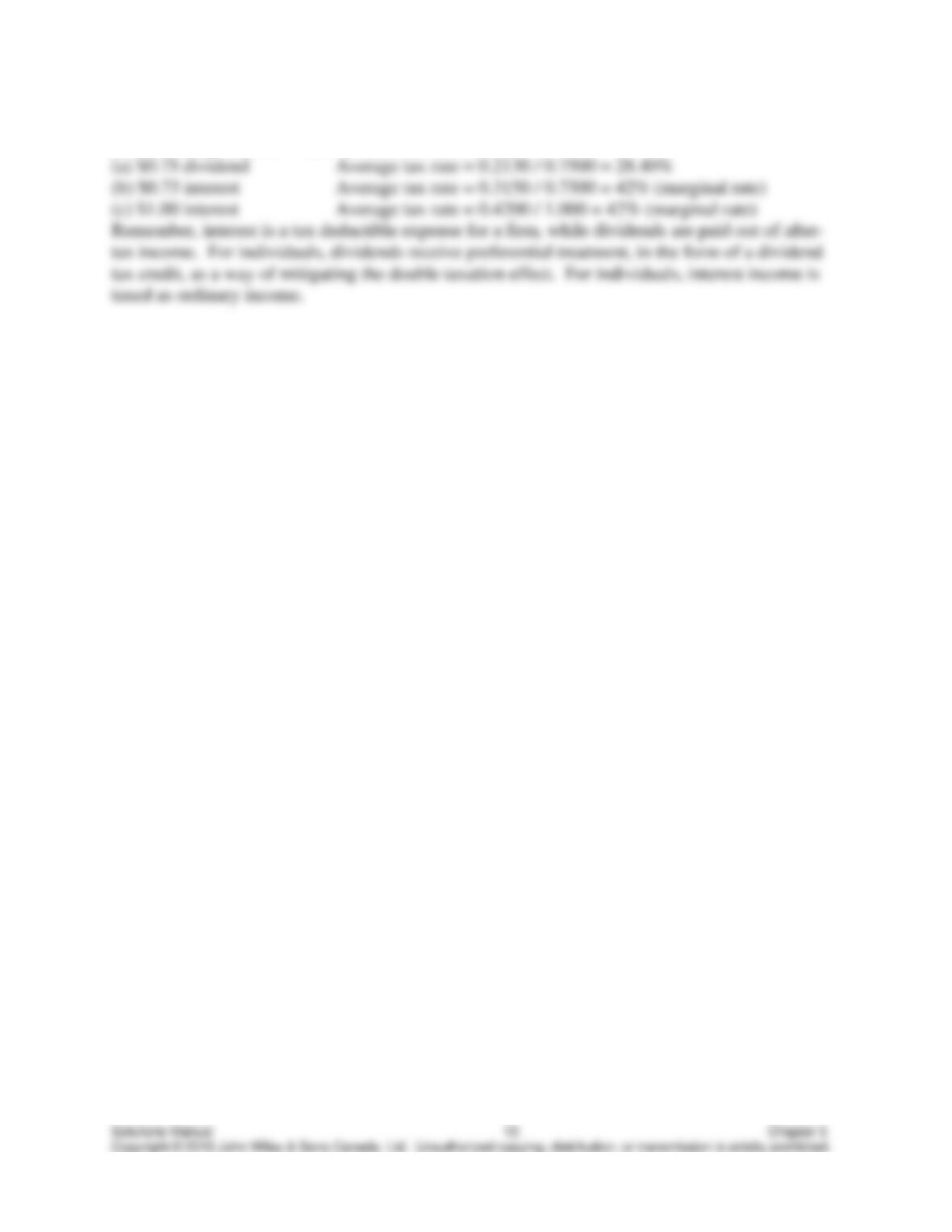
b. If you received $0.75 in interest income:
c. If you received $1.00 in interest income:
Introduction to Corporate Finance, Fourth Edition Booth, Cleary, Rakita
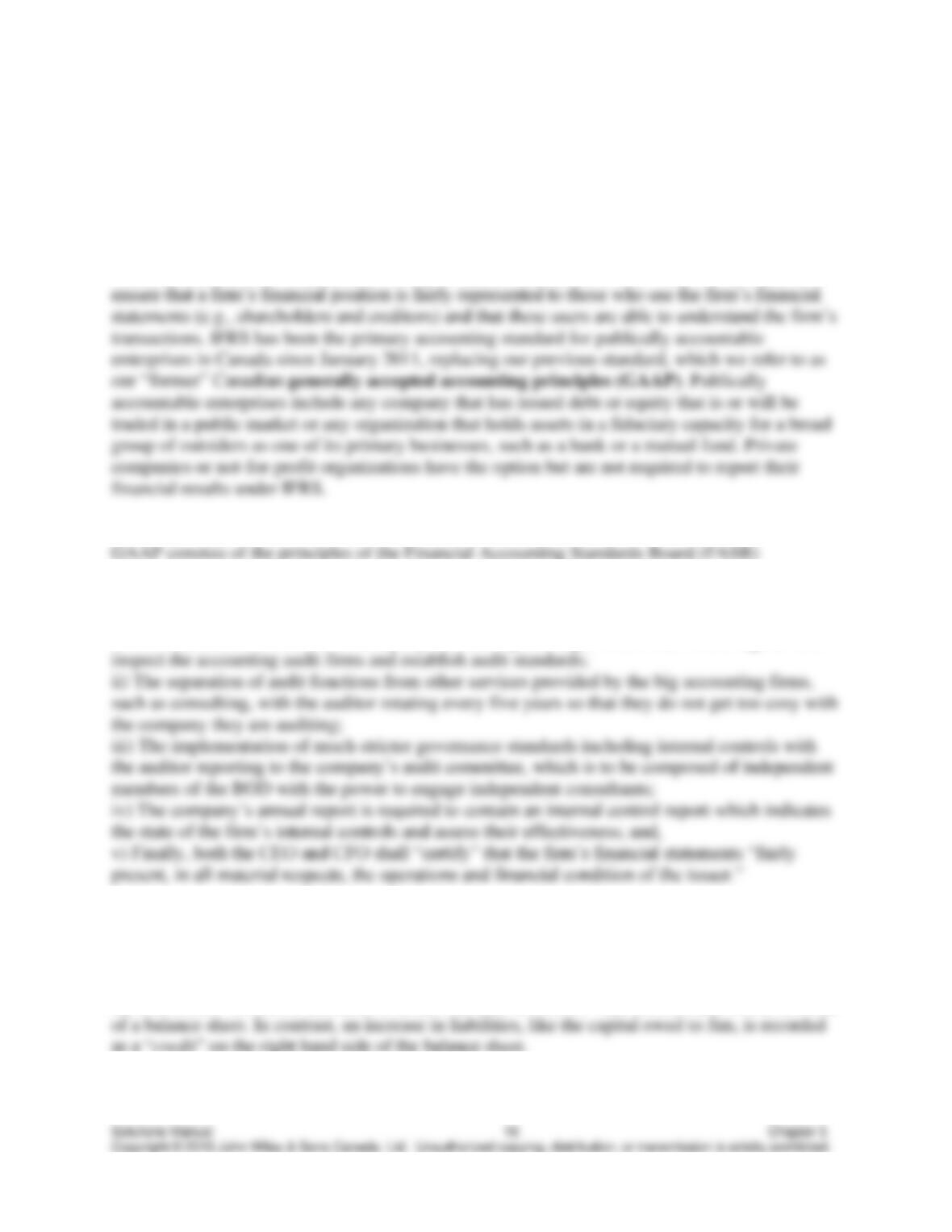
d. The average tax rate = taxes paid / income received
Introduction to Corporate Finance, Fourth Edition Booth, Cleary, Rakita
Answers to Concept Review Questions
3.1 Accounting Principles
Concept review questions
1. What does IFRS stand for? What types of Canadian companies must prepare their financial
statements in accordance with IFRS (or U.S. GAAP)?
International financial reporting standards (IFRS) set out the basic conventions for preparing
financial statements in Canada and in many countries around the world. They are intended to
2. Who prescribes GAAP for U.S. companies?
3. What are the major provisions of SOX?
The main provisions of this act were:
i) The establishment of a Public Company Accounting Oversight Board that would register and
3.2 Organizing a Firm’s Transactions
Concept review questions
1. Differentiate between debits and credits with respect to assets and liabilities.
By convention we record increases in assets like cash as “debits” and record them on the left side
as a “credit” on the right hand side of the balance sheet.
2. What is the primary objective of financial reporting under IFRS?
Introduction to Corporate Finance, Fourth Edition Booth, Cleary, Rakita
They are intended to ensure that a firm’s financial position is fairly represented to those who use
3. Explain what is meant by the matching principle. How is this principle related to the use of
accrual accounting?
The matching principle is that the revenues must be matched against the costs that generated
3.3 Preparing Accounting Statements
Concept review questions
1. How is the balance sheet related to the income statement?
Balance sheet is simply a snapshot of the financial position of the firm. Income statement is a
2. What happens to the net income figure when a firm’s accountants make more aggressive
accounting assumptions? Briefly explain.
The net income figure will increase under more aggressive accounting assumptions. For
3. How do cash flow statements alleviate the impact of most major accounting assumptions?
Cash flow statements undo the effects of judgment as much as possible and track the actual flow
of hard cash through a firm since cash flows does not vary with the accounting assumptions.
4. Why do income statements differ from tax statements? What is the major difference?
In particular firms are allowed to present one set of accounts to Revenue Canada (the tax
Introduction to Corporate Finance, Fourth Edition Booth, Cleary, Rakita
3.4 Canadian Pacific Accounting Statements
Concept Review Questions
1. Who is responsible for the preparation of a company’s financial statements?
Management prepares the financial statements in accordance with IFRS or U.S. GAAP, not the
2. What are the scope and purpose of the auditor’s opinion?
First, they indicate that they carry out some tests to make sure that things are as the management
3. Identify the main components of a firm’s balance sheet and income statement.
A firm’s balance sheet has assets on the left hand side and liabilities and shareholder’s equity on
3.5 The Canadian Tax System
Concept Review Questions
1. Explain how to calculate the CCA expense for an asset class in a given year.
2. Explain why a firm cannot claim CCA recapture and a terminal loss for the same asset class in
the same year.
When an asset is terminated, the salvage value is greater than, equal to, or less than the UCC. If
3. Why would firms prefer to receive dividend income and make interest payments rather than
make dividend payments and receive interest payments?
Introduction to Corporate Finance, Fourth Edition Booth, Cleary, Rakita
4. What form of investment income has the highest tax rate in Canada?