Introduction to Corporate Finance, Fourth Edition Booth, Cleary, Rakita
Chapter 24: Working Capital Management – Current Assets and Current Liabilities
Multiple Choice Questions
1. Section: 24.1 Cash and Marketable Securities
Learning Objective: 24.1
Level of difficulty: Basic
2. Section: 24.1 Cash and Marketable Securities
Learning Objective: 24.1
Level of difficulty: Intermediate
3. Section: 24.2 Accounts Receivable
Learning Objective: 24.2
Level of difficulty: Intermediate
4. Section: 24.2 Accounts Receivable
Learning Objective: 24.2
Level of difficulty: Intermediate
5. Section: 24.2 Accounts Receivable
Learning Objective: 24.2
Level of difficulty: Basic
6. Section: 24.3 Inventory
Learning Objective: 24.3
Level of difficulty: Basic
7. Section: 24.4 Short-Term Financing Considerations
Learning Objective: 24.4
Level of difficulty: Basic
8. Section: 24.4 Short-Term Financing Considerations
Introduction to Corporate Finance, Fourth Edition Booth, Cleary, Rakita
Learning Objective: 24.4
Level of difficulty: Intermediate
9. Section: 24.4 Short-Term Financing Considerations
Learning Objective: 24.4
Level of difficulty: Basic
Practice Problems
Basic
10. Section: 24.2 Accounts Receivable
Learning Objective: 24.2
Level of difficulty: Basic
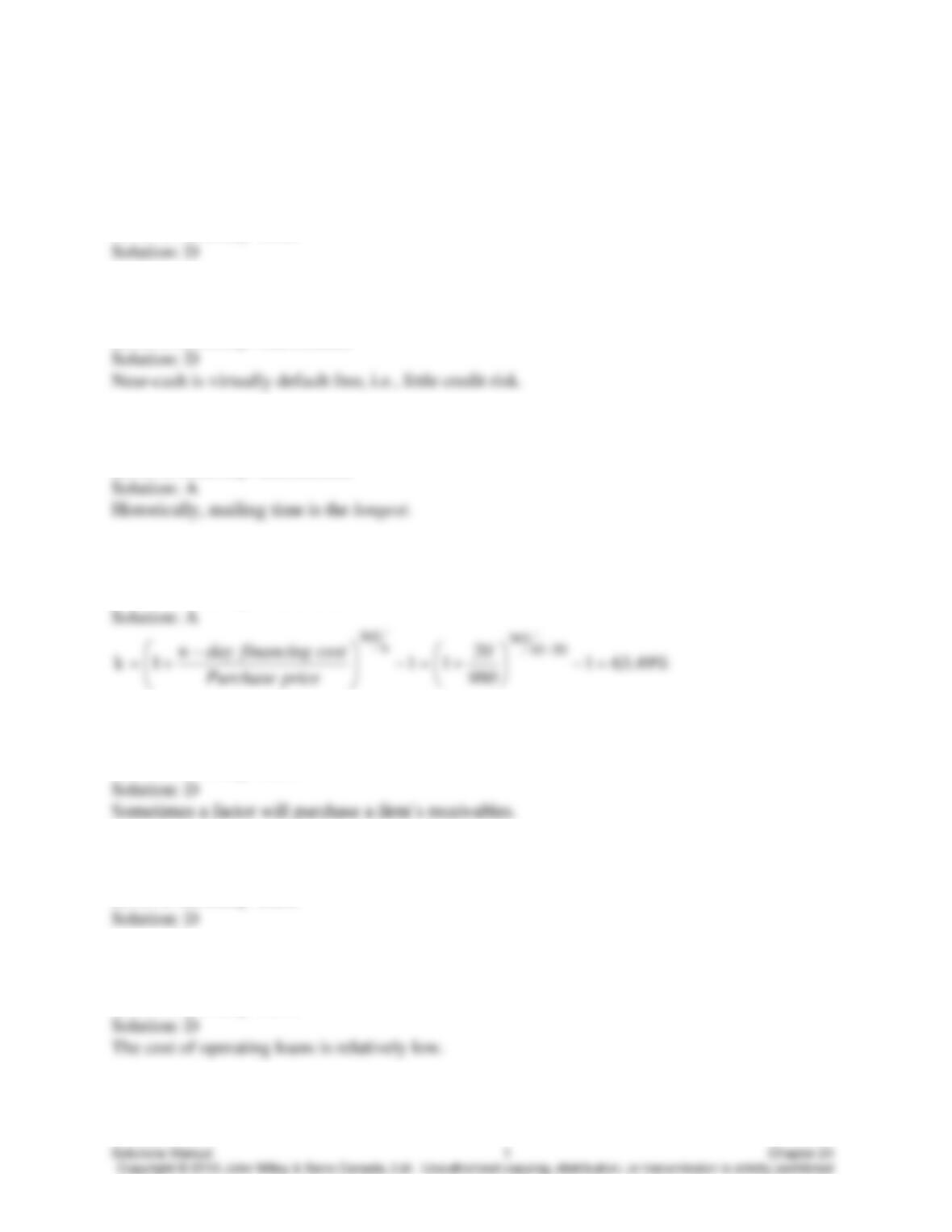
Solution:
Three major sources of float are:
• The time it takes the cheque to reach the firm after it is mailed by the customer (longest).
11. Section: 24.2 Accounts Receivable
Learning Objective: 24.2
Level of difficulty: Basic
Solution:
A factor acts as an independent credit department outside of a firm by checking credit of new
12. Section: 24.2 Accounts Receivable
Learning Objective: 24.2
Level of difficulty: Basic
Solution:
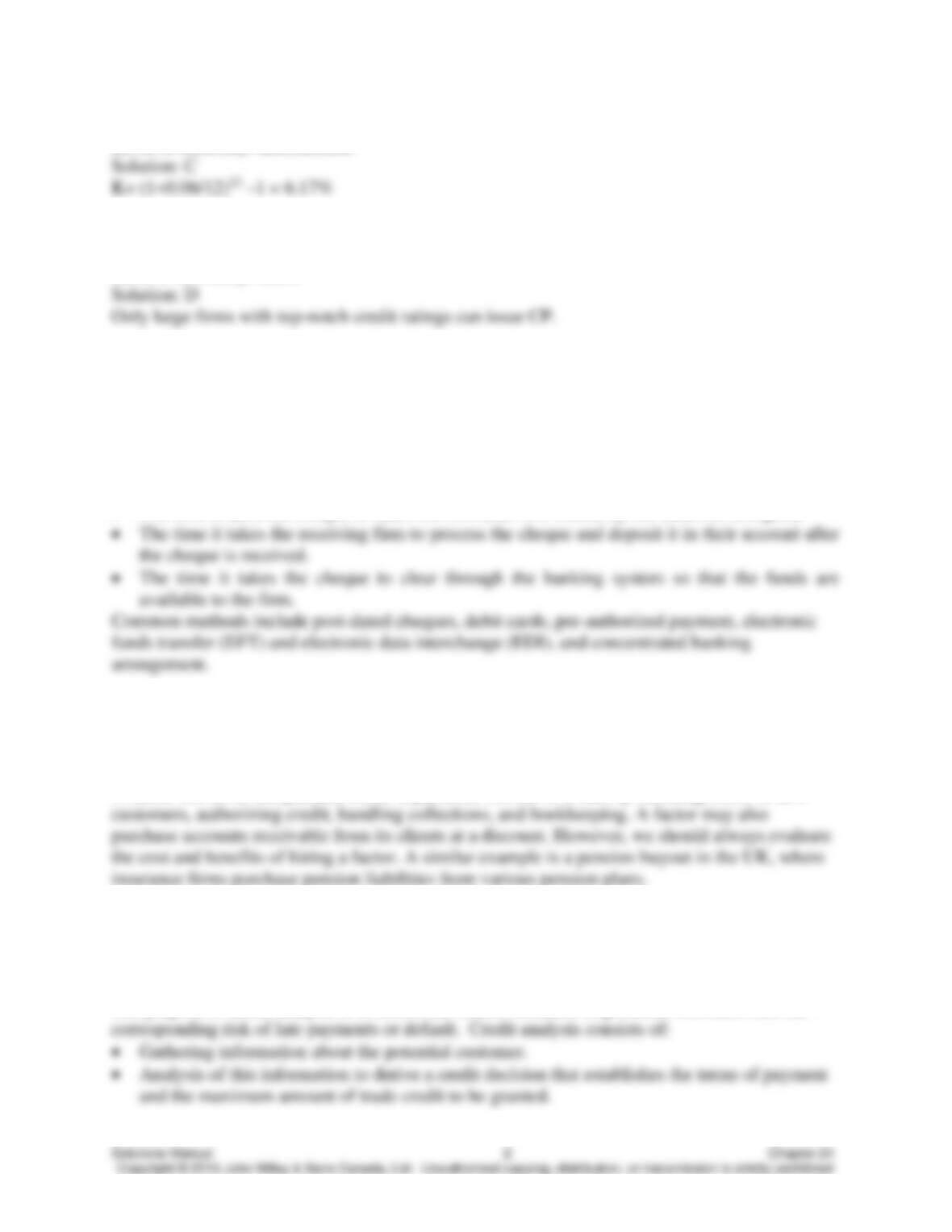
The purpose of credit analysis is to assess the creditworthiness of potential customers and the
Introduction to Corporate Finance, Fourth Edition Booth, Cleary, Rakita
13. Section: 24.2 Accounts Receivable
Learning Objective: 24.2
Level of difficulty: Basic
Solution:
14. Section: 24.4 Short-Term Financing Considerations
Learning Objective: 24.4
Level of difficulty: Basic
Solution:
Intermediate
15. Section: 24.1 Cash and Marketable Securities
Learning Objective: 24.1
Level of difficulty: Intermediate
Solution:
Transactions motive refers to the cash required for a firm’s normal operations. Manufacturing
16. Section: 24.1 Cash and Marketable Securities
Learning Objective: 24.1
Level of difficulty: Intermediate
Solution:
Optimal cash balance means a balance between the risks of illiquidity and expected return that is
17. Section: 24.1 Cash and Marketable Securities
Learning Objective: 24.1
Level of difficulty: Intermediate
Solution:
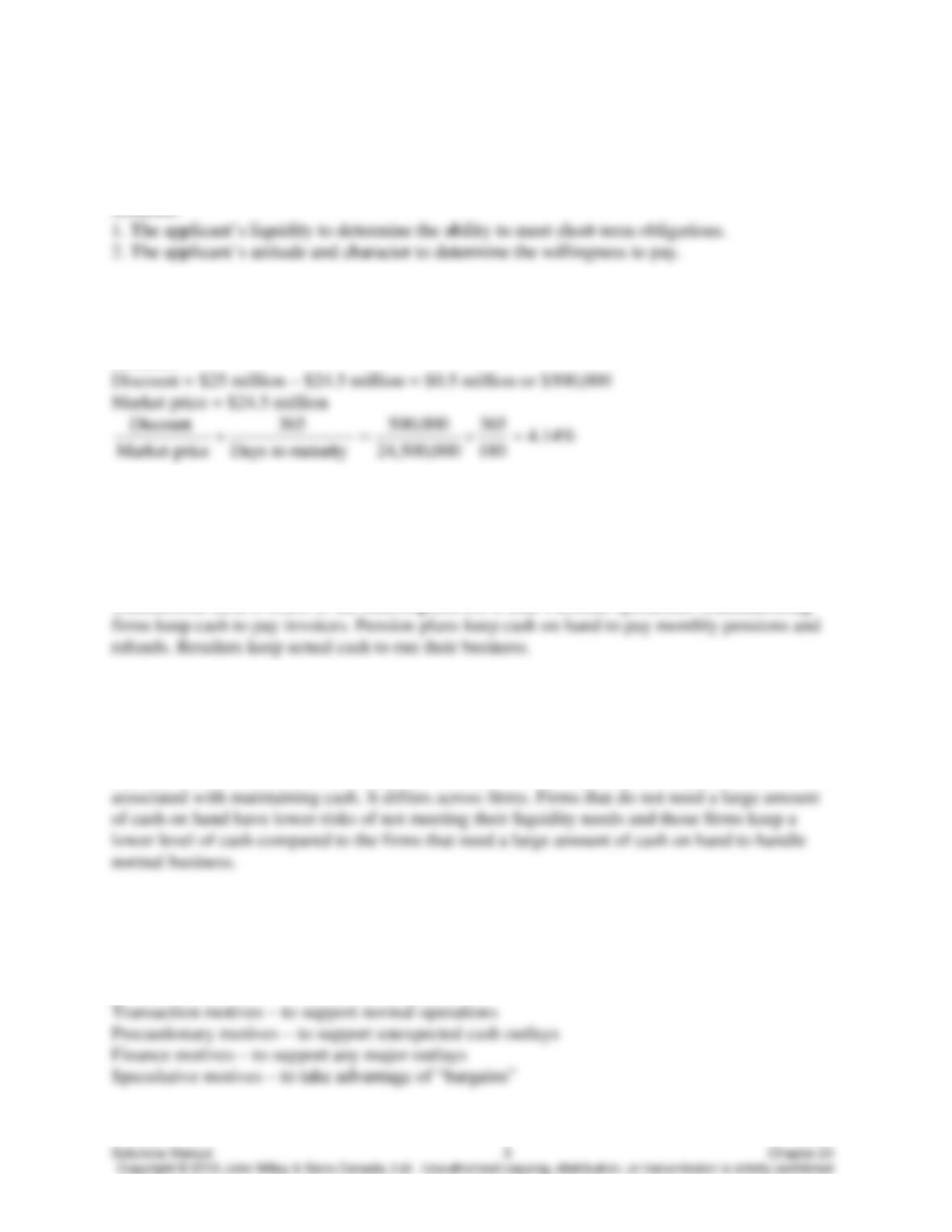
Four main motives for firms to hold cash are:
Introduction to Corporate Finance, Fourth Edition Booth, Cleary, Rakita
18. Section: 24.2 Accounts Receivable
Learning Objective: 24.2
Level of difficulty: Intermediate
Solution:
Firms that sell or manufacture high-cost equipment occasionally establish wholly owned
19. Section: 24.3 Inventory
Learning Objective: 24.3
Level of difficulty: Intermediate
Solution:
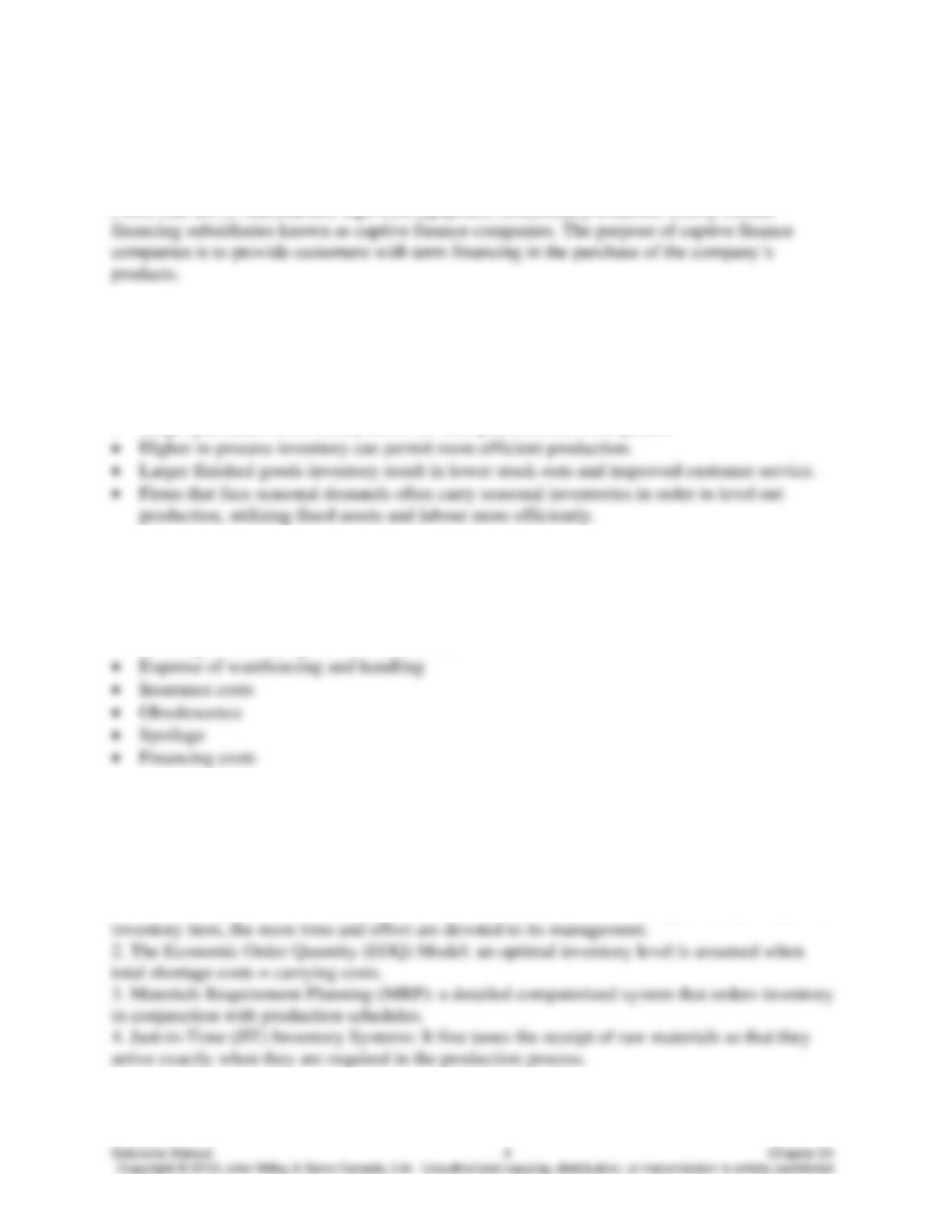
Advantages of carrying inventories include:
• Larger purchases of inventory allow for bulk purchases at lower prices.
20. Section: 24.3 Inventory
Learning Objective: 24.3
Level of difficulty: Intermediate
Solution:
Disadvantages of carrying inventories include:
21. Section: 24.3 Inventory
Learning Objective: 24.3
Level of difficulty: Intermediate
Solution:
The four inventory management approaches are:
1. The ABC Approach: inventory is divided into several categories. The higher the priority of the
22. Section: 24.4 Short-Term Financing Considerations
Introduction to Corporate Finance, Fourth Edition Booth, Cleary, Rakita
Learning Objective: 24.4
Level of difficulty: Intermediate
Solution:
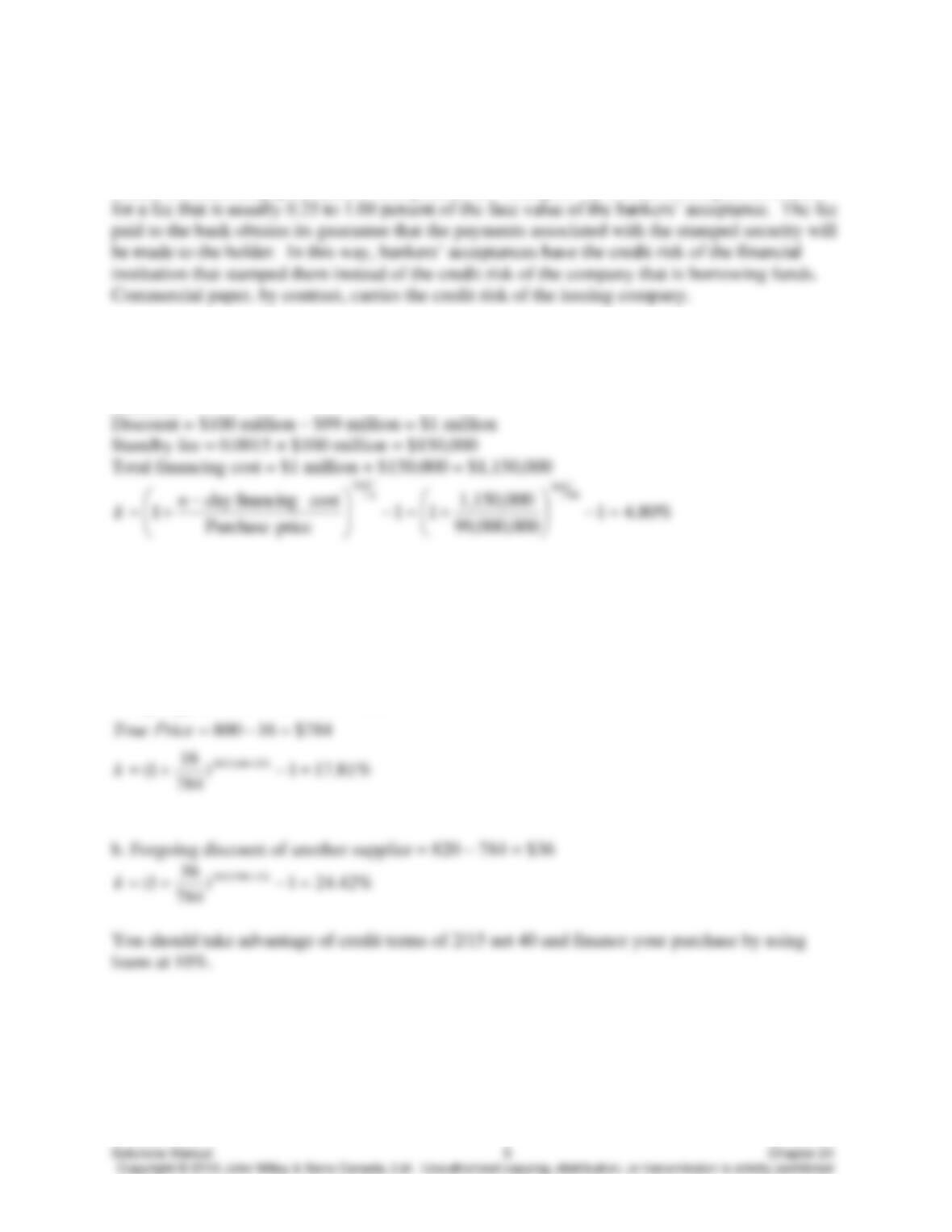
Unlike commercial paper, bankers’ acceptances are “stamped” by a bank as accepted in return
23. Section: 24.4 Short-Term Financing Considerations
Learning Objective: 24.4
Level of difficulty: Intermediate
Solution:
24. Section: 24.4 Short-Term Financing Considerations
Learning Objective: 24.4
Level of difficulty: Intermediate
Solution:
a.
16$%2800
==
scountForgoingDi
25. Section: 24.4 Short-Term Financing Considerations
Learning Objective: 24.4
Level of difficulty: Intermediate
Solution:
Introduction to Corporate Finance, Fourth Edition Booth, Cleary, Rakita
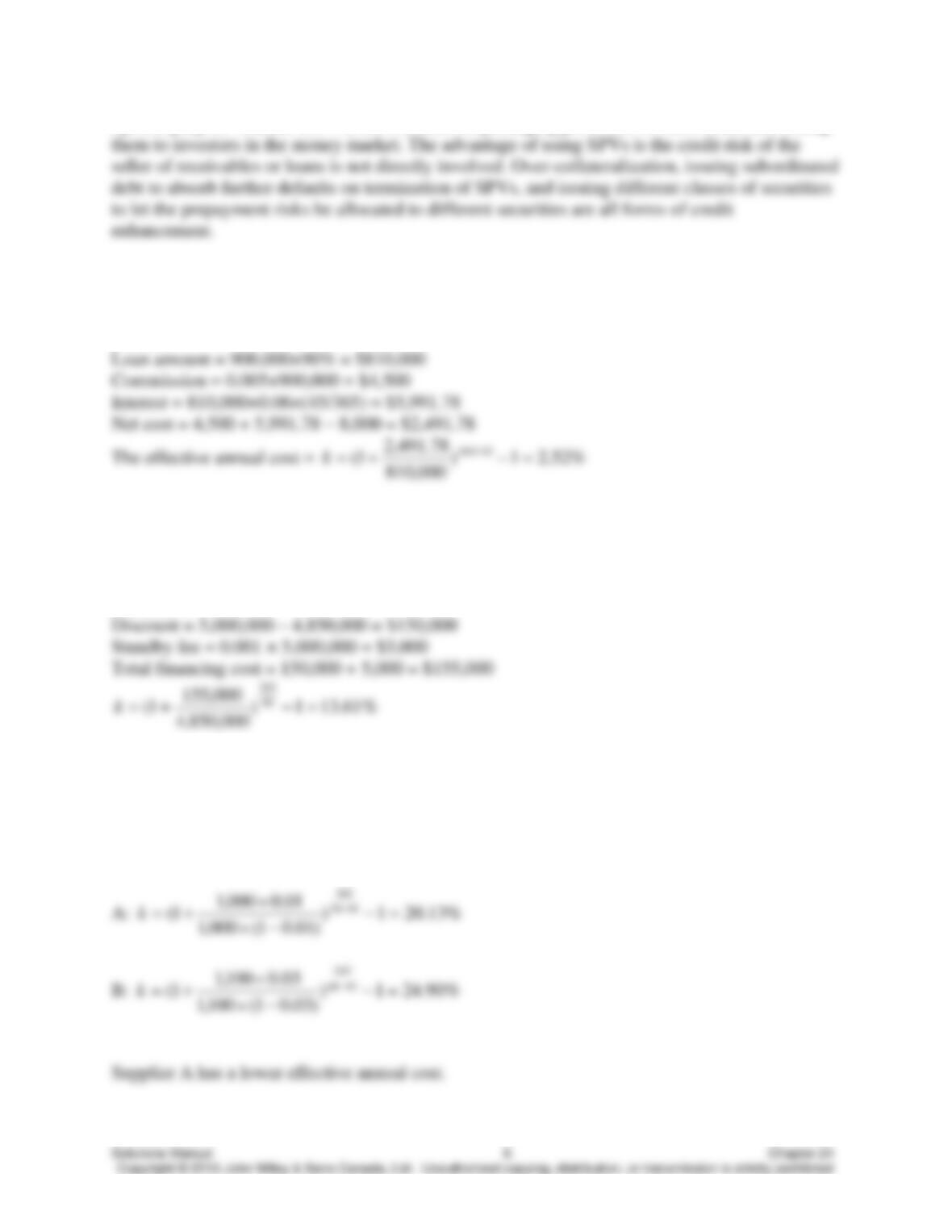
Special purpose vehicles (SPVs) are conduits for packaging portfolios of receivables and selling
26. Section: 24.4 Short-Term Financing Considerations
Learning Objective: 24.4
Level of difficulty: Intermediate
Solution:
27. Section: 24.4 Short-Term Financing Considerations
Learning Objective: 24.4
Level of difficulty: Intermediate
Solution:
28. Sections: 24.2 Accounts Receivable and 24.4 Short-Term Financing Considerations
Learning Objectives: 24.2 and 24.4
Level of difficulty: Intermediate
Solution:
Introduction to Corporate Finance, Fourth Edition Booth, Cleary, Rakita
Challenging
29. Section: 24.1 Cash and Marketable Securities
Learning Objective: 24.1
Level of difficulty: Challenging
Solution:
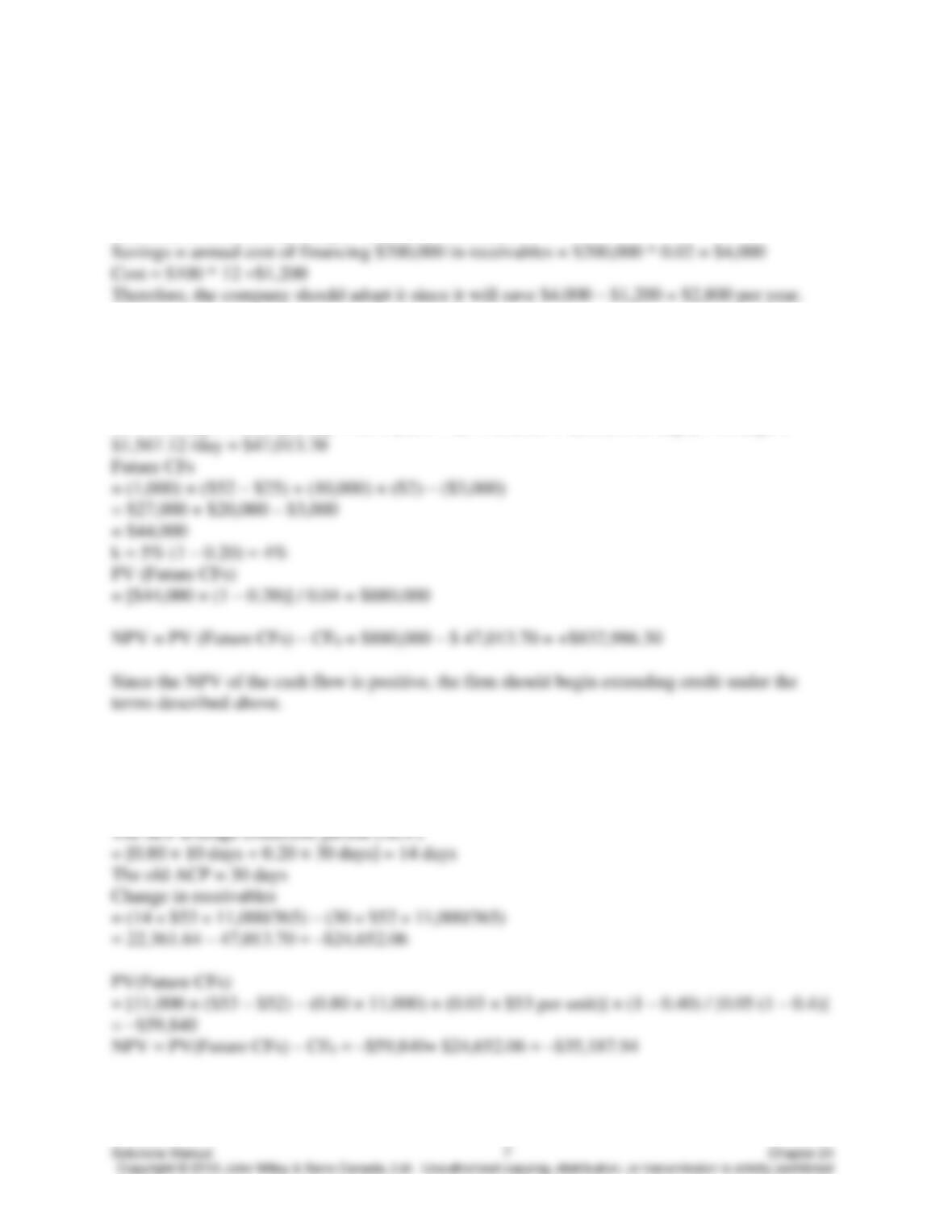
Receivables decrease by 2 days * $100,000 = $200,000
30. Section: 24.2 Accounts Receivable
Learning Objective: 24.2
Level of difficulty: Challenging
Solution:
CF0 = 30 days × sales per day = 30 × [($50 + 2) × (10,000 + 1,000) /365 days] = 30 days ×
31. Section: 24.2 Accounts Receivable
Learning Objective: 24.2
Level of difficulty: Challenging
Solution:
Introduction to Corporate Finance, Fourth Edition Booth, Cleary, Rakita
32. Section: 24.2 Accounts Receivable
Learning Objective: 24.2
Level of difficulty: Challenging
Solution:
A/R = ACP ×daily credit sales = 60 × $75,000 = $4,500,000
33. Section: 24.2 Accounts Receivable
Learning Objective: 24.2
Level of difficulty: Challenging
Solution:
CF0 = A/R(new) – A/R(old) = [20 days × ($45 × 10,000)/365] – [25 days × ($45 × 12,000)/365]
= –$12,328.77
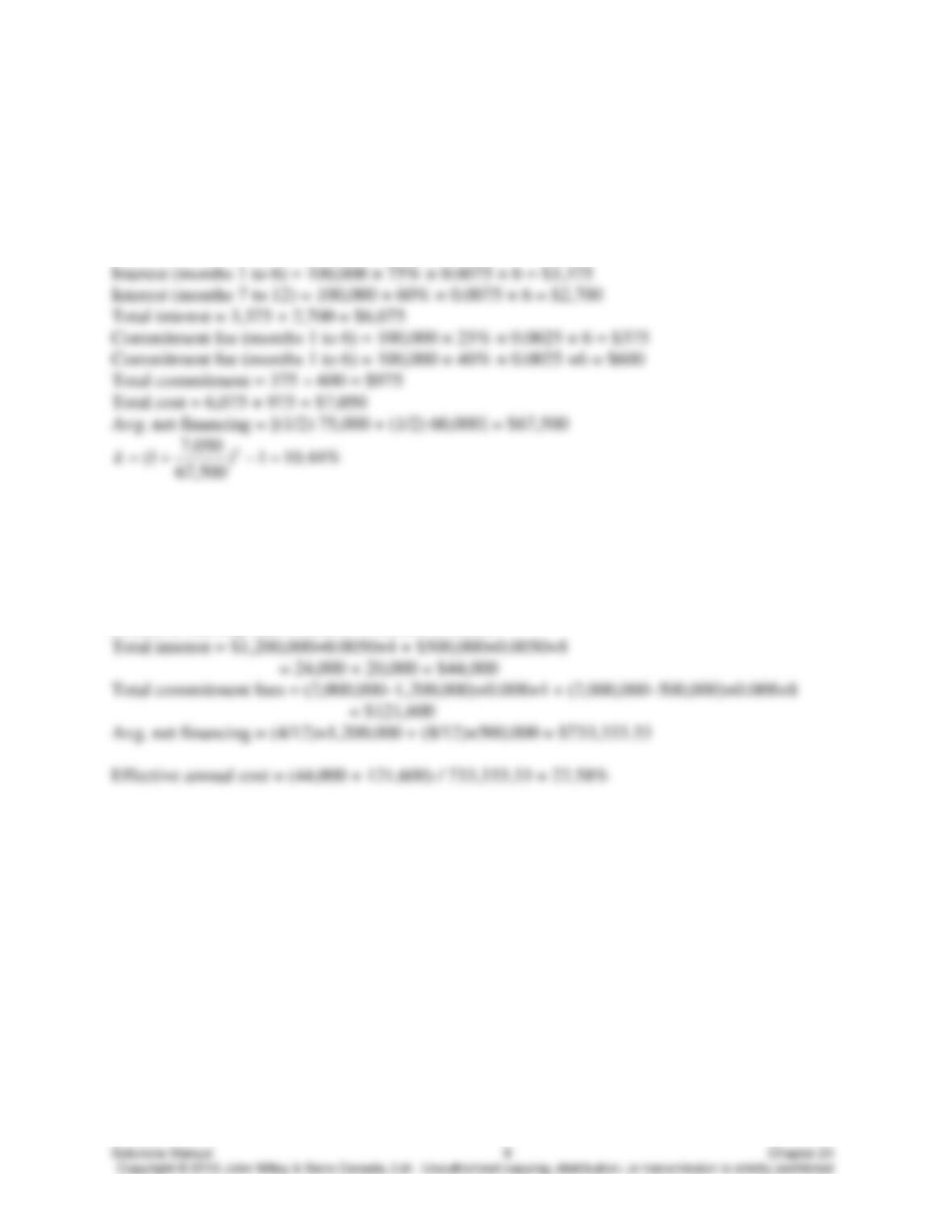
34. Section: 24.4 Short-Term Financing Considerations
Learning Objective: 24.4
Level of difficulty: Challenging
Solution:
Introduction to Corporate Finance, Fourth Edition Booth, Cleary, Rakita
35. Section: 24.4 Short-Term Financing Considerations
Learning Objective: 24.4
Level of difficulty: Challenging
Solution:
Effective monthly rate = 0.09/12 = 0.0075
36. Section: 24.4 Short-Term Financing Considerations
Learning Objective: 24.4
Level of difficulty: Challenging
Solution:
Effective monthly rate = 0.06/12 = 0.0050 or 0.50%
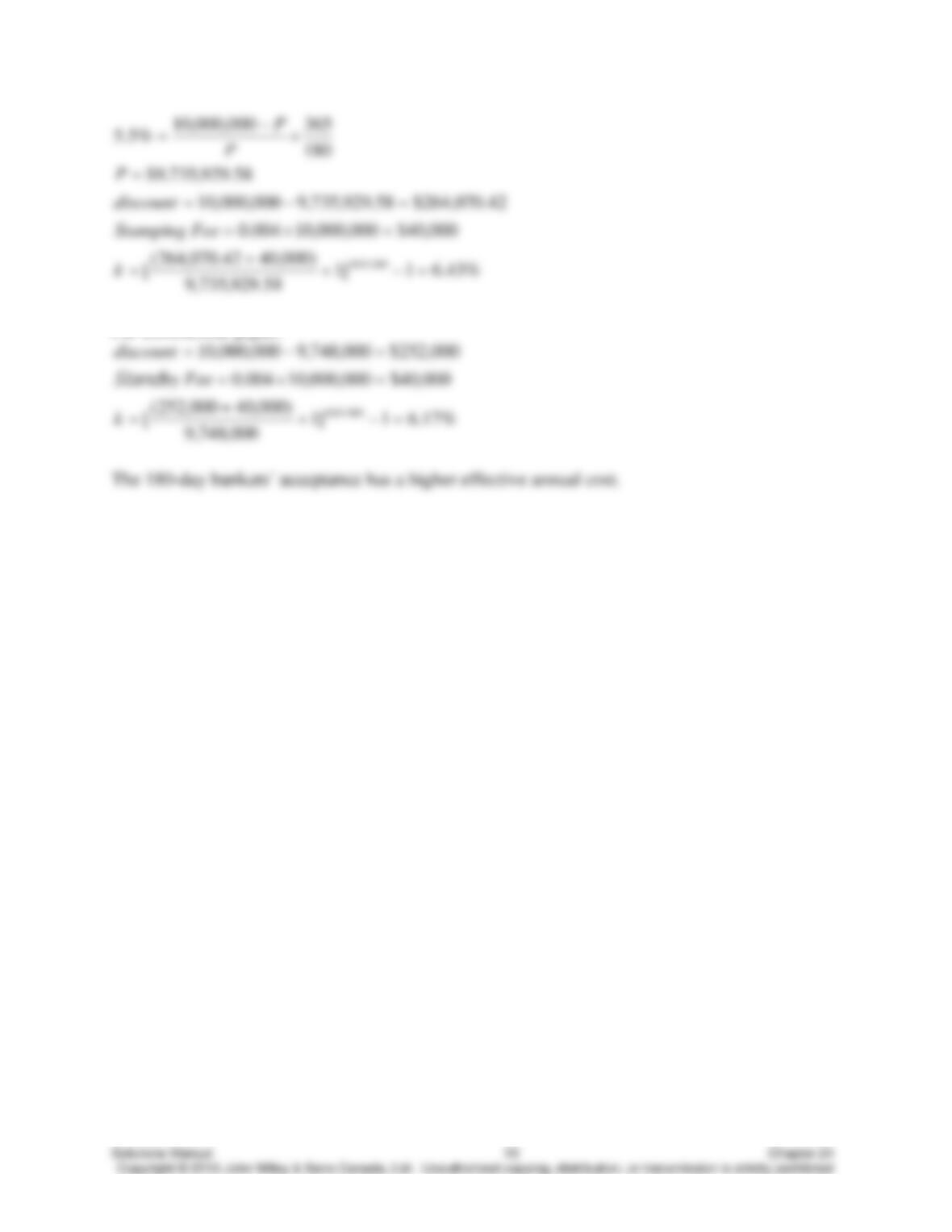
37. Section: 24.4 Short-Term Financing Considerations
Learning Objective: 24.4
Level of difficulty: Challenging
Solution:
For bankers’ acceptances:
Introduction to Corporate Finance, Fourth Edition Booth, Cleary, Rakita
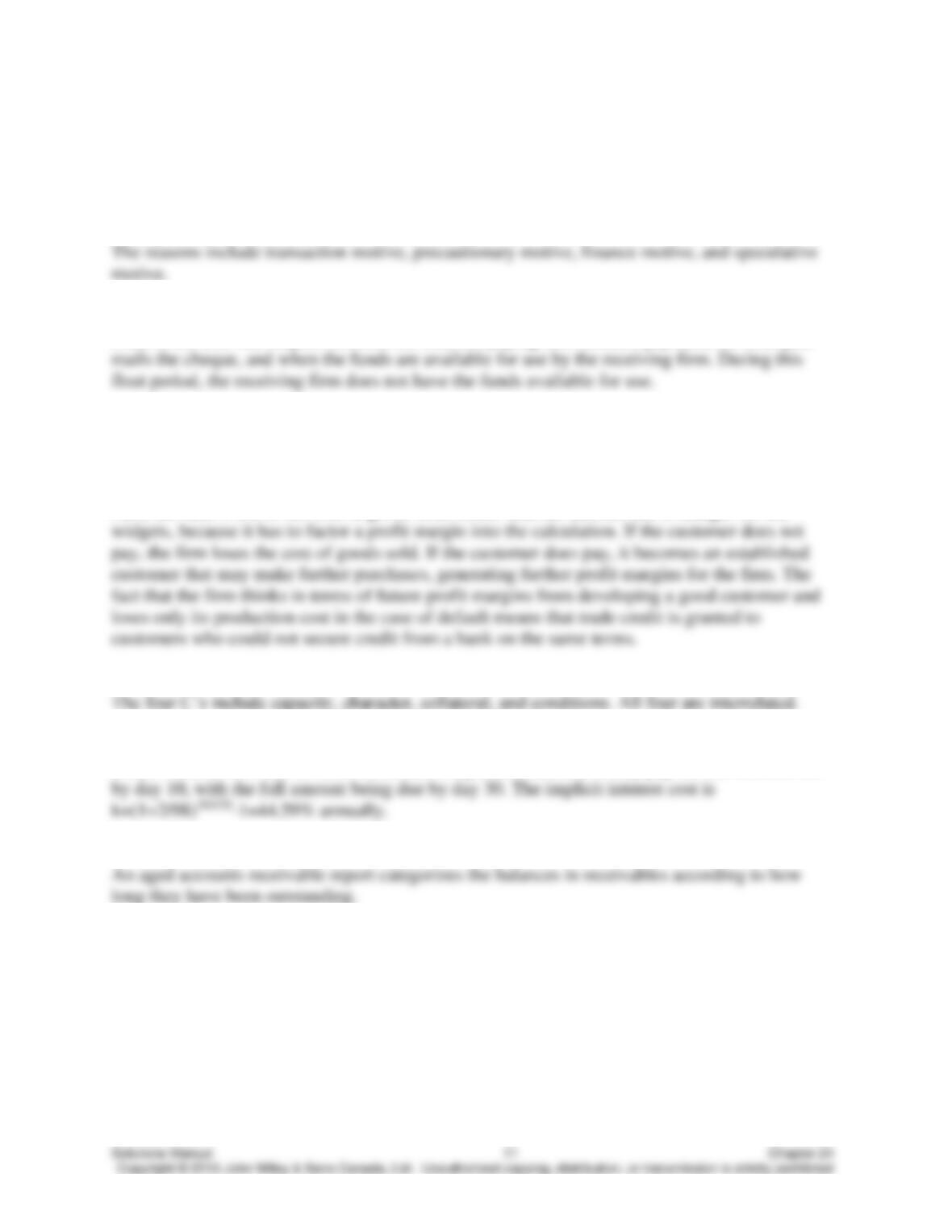
For commercial paper:
Introduction to Corporate Finance, Fourth Edition Booth, Cleary, Rakita
Answers to Concept Review Questions
24.1 Cash and Marketable Securities
Concept review questions
1. Why do firms hold cash?
2. What is float and why is it important to the firm?
Float is the time that elapses between the time the paying firm initiates payment, for example,
24.2 Accounts Receivable
Concept review questions
1. Why is trade credit different from bank credit?
First, the firm’s cost is the cost of goods sold, rather than the amount that it charges for the
2. What are the four C’s of credit?
3. What does 2/10 net 30 mean, and what is the implicit interest cost?
Credit terms of 2/10 net 30 offer customers a 2 percent discount if they pay the full amount due
4. What is an aged accounts receivable report?
24.3 Inventory
Concept review questions
1. Identify the costs and benefits of holding inventory.
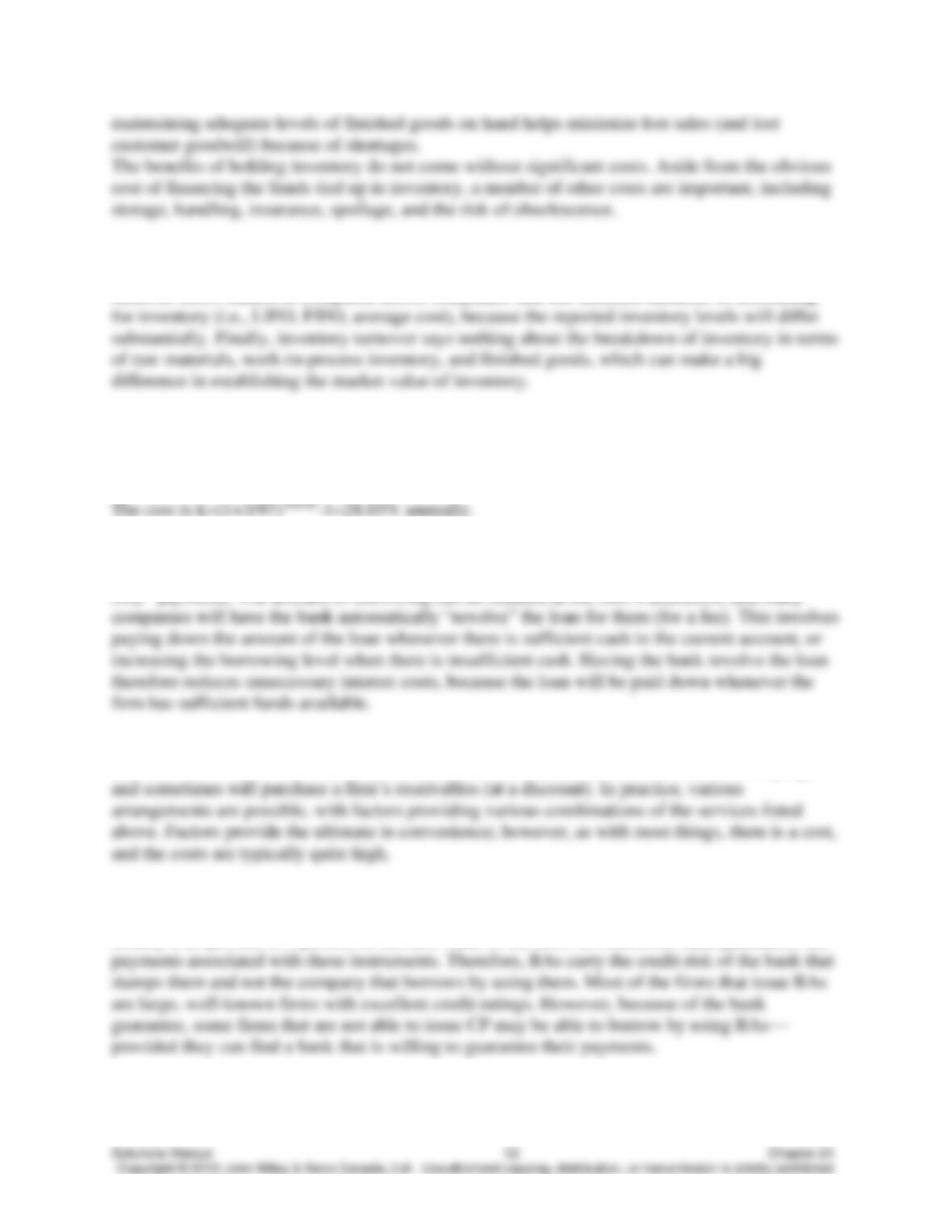
One reason firms hold large amounts of inventory is that they may have received discounts on
large-volume purchases. However, the more important benefits of holding inventory are that
holding sufficient levels of raw materials minimizes disruptions in the production process, while
Introduction to Corporate Finance, Fourth Edition Booth, Cleary, Rakita
2. What are the drawbacks to using the turnover ratio to measure inventory policy?
First, it does not measure shortage costs or explicitly measure financing costs, and so on. Second,
turnover ratios cannot be compared across companies that use different methods of accounting
24.4 Short-Term Financing Considerations
Concept review questions
1. What is the cost of 3/15 net 60 trade credit?
2. What is the difference between a bank operating line of credit and a traditional loan?
The difference is that operating line of credit is generally set up so that the firm makes “interest
3. What additional services does a factor provide over a bank?
It checks the credit of new customers, authorizes credit, handles collections and bookkeeping,
4. What is the difference between a BA and commercial paper?
BAs differ from CP because they are “stamped” by a bank as accepted in return for a fee that is
usually 0.25 percent to 1 percent of the face value of the BAs. In return, the bank guarantees the
5. Why do securitizations require credit enhancements?

Introduction to Corporate Finance, Fourth Edition Booth, Cleary, Rakita
If a portfolio of receivables or loans is simply sold to investors, in all likelihood the credit quality