Introduction to Corporate Finance, Fourth Edition Booth, Cleary, Rakita
Chapter 23: Working Capital Management – General Issues
Multiple Choice Questions
1. Section: 23.1 The Importance of Working Capital Management
Learning Objective: 23.1
Level of difficulty: Intermediate
2. Section: 23.2 An Integrated Approach to Net Working Capital (NWC) Management
Learning Objective: 23.2
Level of difficulty: Intermediate
3. Section: 23.2 An Integrated Approach to Net Working Capital (NWC) Management
Learning Objective: 23.2
Level of difficulty: Intermediate
4. Section: 23.4 Working Capital Management
Learning Objective: 23.4
Level of difficulty: Intermediate
5. Section: 23.4 Working Capital Management
Learning Objective: 23.4
Level of difficulty: Intermediate
6. Section: 23.4 Working Capital Management
Learning Objective: 23.4
Level of difficulty: Intermediate
7. Section: 23.4 Working Capital Management
Learning Objective: 23.4
Introduction to Corporate Finance, Fourth Edition Booth, Cleary, Rakita
Level of difficulty: Intermediate
8. Section: 23.4 Working Capital Management
Learning Objective: 23.4
Level of difficulty: Intermediate
9. Section: 23.4 Working Capital Management
Learning Objective: 23.4
Level of difficulty: Intermediate
10. Sections: 23.3 Analyzing Cash Inflows and Outflows and 23.4 Working Capital Management
Learning Objectives: 23.3 and 23.4
Level of difficulty: Intermediate
11. Section: 23.3 Analyzing Cash Inflows and Outflows and 23.4 Working Capital Management
Learning Objectives: 23.3 and 23.4
Level of difficulty: Intermediate
12. Section: 23.3 Analyzing Cash Inflows and Outflows and 23.4 Working Capital Management
Learning Objectives: 23.3 and 23.4
Level of difficulty: Intermediate
Practice Problems
Basic
13. Section: 23.1 The Importance of Working Capital Management
Learning Objective: 23.1
Level of difficulty: Basic
Solution:
Characteristics of sound net working capital management include:
• Maintenance of optimal cash balances
14. Section: 23.1 The Importance of Working Capital Management
Learning Objective: 23.1
Level of difficulty: Basic
Introduction to Corporate Finance, Fourth Edition Booth, Cleary, Rakita
firm’s balance sheet.
15. Section: 23.4 Working Capital Management
Learning Objective: 23.4
Level of difficulty: Basic
Solution:
Intermediate
16. Section: 23.1 The Importance of Working Capital Management
Learning Objective: 23.1
Level of difficulty: Intermediate
Solution: Businesses that allow a customer long periods of time to pay their bills are, in effect,
17. Section: 23.1 The Importance of Working Capital Management
Learning Objective: 23.1
Level of difficulty: Intermediate
Solution:
Net working capital (NWC) is defined as the difference between current assets and current
18. Section: 23.2 An Integrated Approach to Net Working Capital (NWC) Management
Learning Objective: 23.2
Level of difficulty: Intermediate
19. Section: 23.2 An Integrated Approach to Net Working Capital (NWC) Management
Learning Objective: 23.2
Level of difficulty: Intermediate
Solution: Cash budgets are in effect detailed (i.e., constructed monthly, weekly, or daily) pro
20. Section: 23.2 An Integrated Approach to Net Working Capital (NWC) Management
Learning Objective: 23.2
Introduction to Corporate Finance, Fourth Edition Booth, Cleary, Rakita
Level of difficulty: Intermediate
Solution:
a. Sources of funds using the indirect method described in chapter 2:
b. Uses of funds:
21. Section: 23.2 An Integrated Approach to Net Working Capital (NWC) Management
Learning Objective: 23.2
Level of difficulty: Intermediate
Solution:
Cash inflows:
22. Section: 23.3 Analyzing Cash Inflows and Outflows
Learning Objective: 23.3
Level of difficulty: Intermediate
Solution:
23. Section: 23.3 Analyzing Cash Inflows and Outflows
Learning Objective: 23.3
Level of difficulty: Intermediate
Solution:
Introduction to Corporate Finance, Fourth Edition Booth, Cleary, Rakita
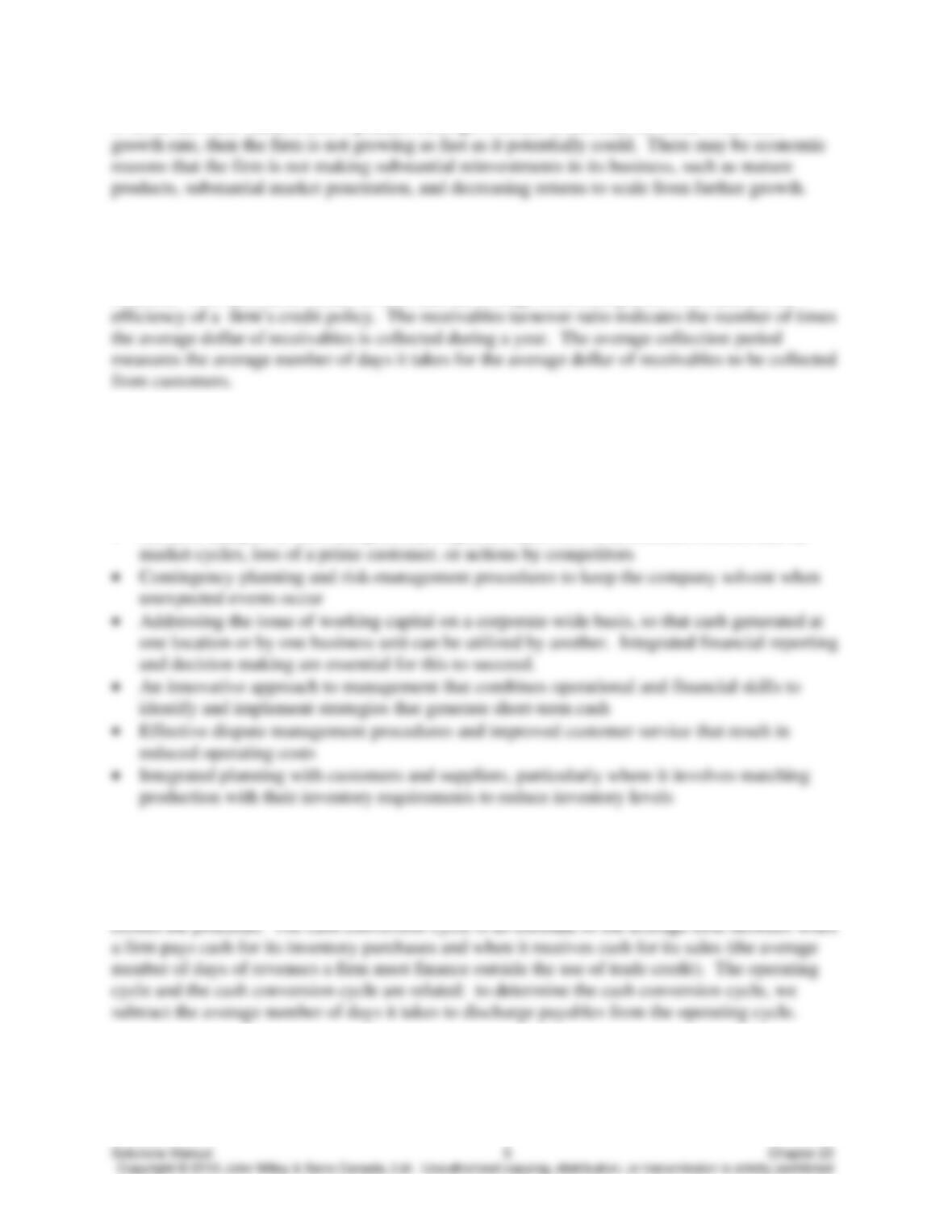
b. If, on the other hand, a firm’s planned sales growth rate is less than its break-even sales
24. Section: 23.4 Working Capital Management
Learning Objective: 23.4
Level of difficulty: Intermediate
Solution: The receivables turnover ratio and the average collection period both measure the
25. Section: 23.3 Analyzing Cash Inflows and Outflows
Learning Objective: 23.3
Level of difficulty: Intermediate
Solution:
Measures to improve working capital management include:
• Scenario analysis to show the potential impact on cash flow of unforeseen events, such as
26. Section: 23.3 Analyzing Cash Inflows and Outflows
Learning Objective: 23.4
Level of difficulty: Intermediate
Solution: The operating cycle is the average time required to acquire inventory, sell it, and
27. Section: 23.4 Working Capital Management
Learning Objective: 23.4
Level of difficulty: Intermediate
Introduction to Corporate Finance, Fourth Edition Booth, Cleary, Rakita
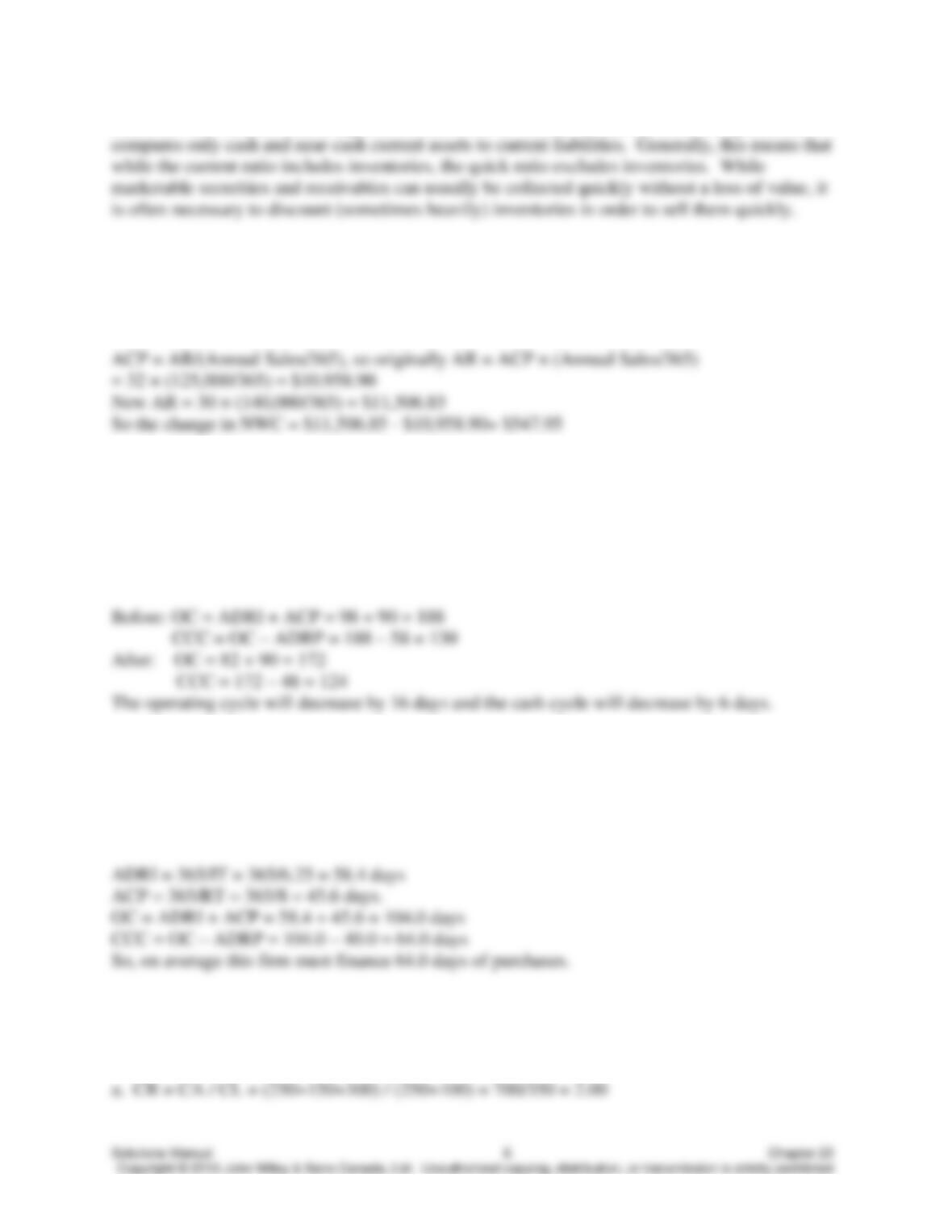
Solution: The current ratio compares current assets to current liabilities, while the quick ratio
28. Section: 23.4 Working Capital Management
Learning Objective: 23.4
Level of difficulty: Intermediate
Solution:
29. Section: 23.4 Working Capital Management
Learning Objective: 23.4
Level of difficulty: Intermediate
Solution:
30. Section: 23.4 Working Capital Management
Learning Objective: 23.4
Level of difficulty: Intermediate
Solution:
31. Section: 23.4 Working Capital Management
Learning Objective: 23.4
Level of difficulty: Intermediate
Solution:
Introduction to Corporate Finance, Fourth Edition Booth, Cleary, Rakita
Challenging
32. Section: 23.2 An Integrated Approach to Net Working Capital (NWC) Management
Learning Objective: 23.2
Level of difficulty: Challenging
Solution:
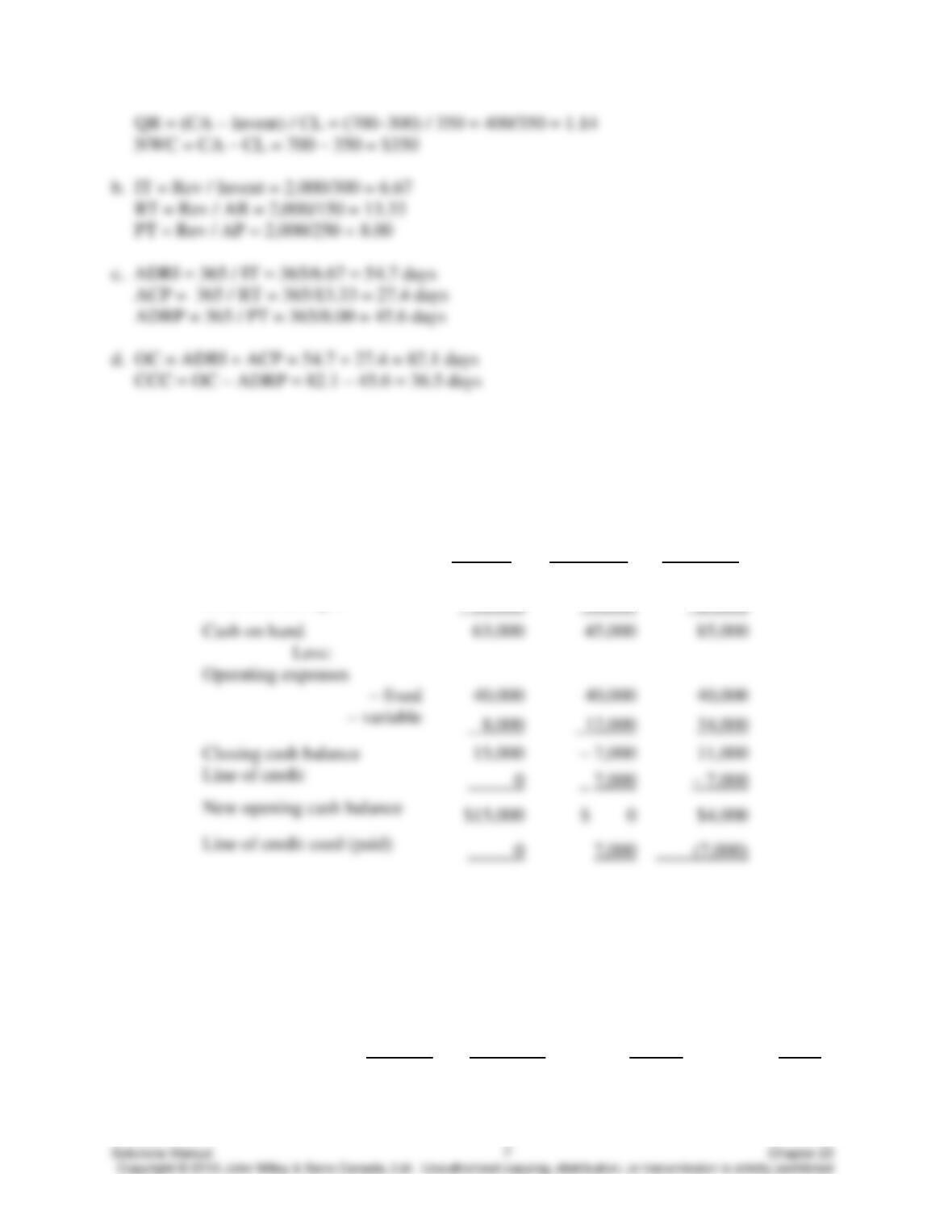
October
November
December
Opening cash balance
$43,000
$15,000
$ 0
Total cash receipts
20,000
30,000
85,000
Cash on hand
45,000
85,000
Operating expenses
40,000
40,000
Closing cash balance
11,000
33. Section: 23.2 An Integrated Approach to Net Working Capital (NWC) Management
Learning Objective: 23.2
Level of difficulty: Challenging
Solution:
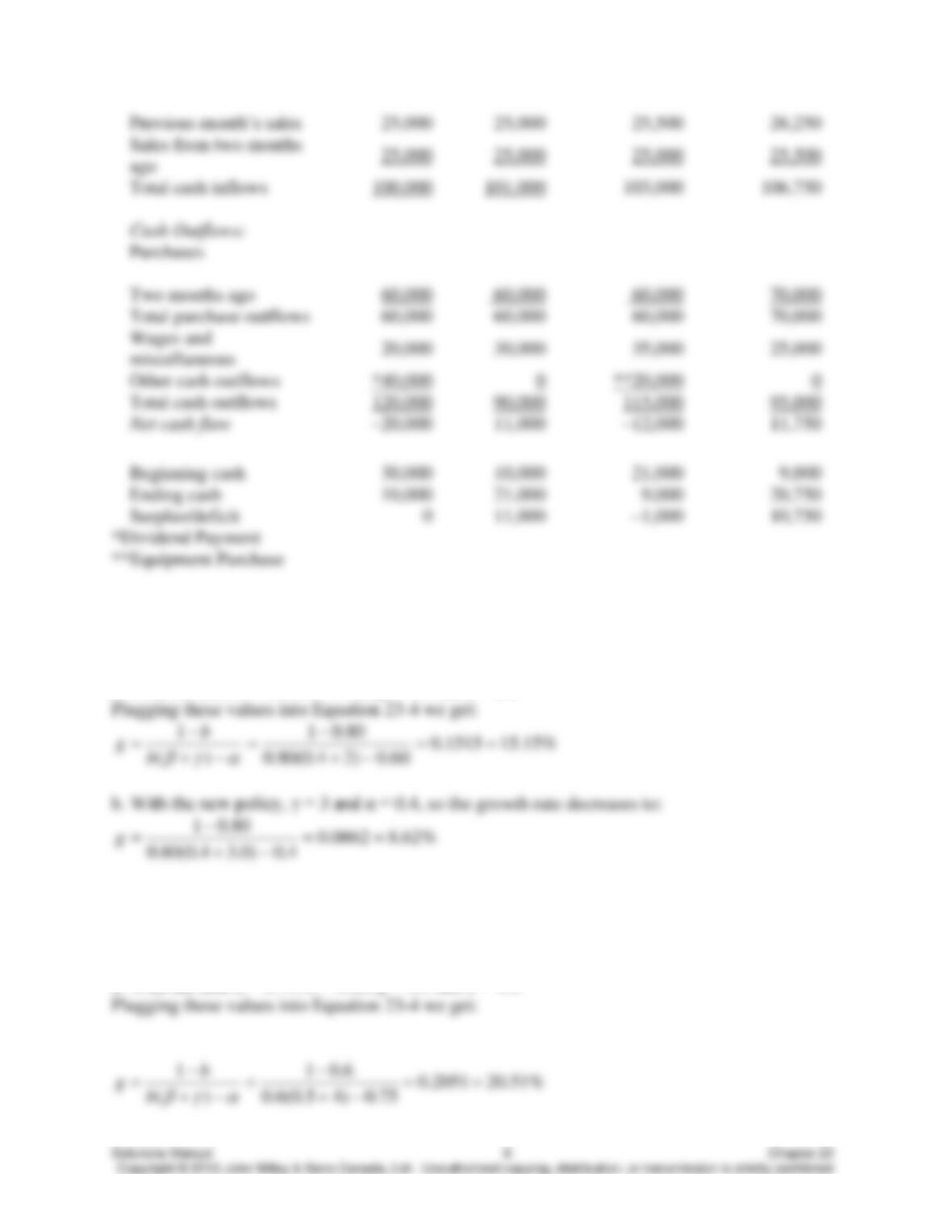
Cash Inflows:
January
February
March
April
Sales
Current month sales
50,000
51,000
52,500
55,000
Introduction to Corporate Finance, Fourth Edition Booth, Cleary, Rakita
34. Section: 23.3 Analyzing Cash Inflows and Outflows
Learning Objective: 23.3
Level of difficulty: Challenging
Solution:
a. With the data α = 0.60; b = 0.80; β = 0.4 and γ = 2.0.
35. Section: 23.3 Analyzing Cash Inflows and Outflows
Learning Objective: 23.3
Level of difficulty: Challenging
Solution:
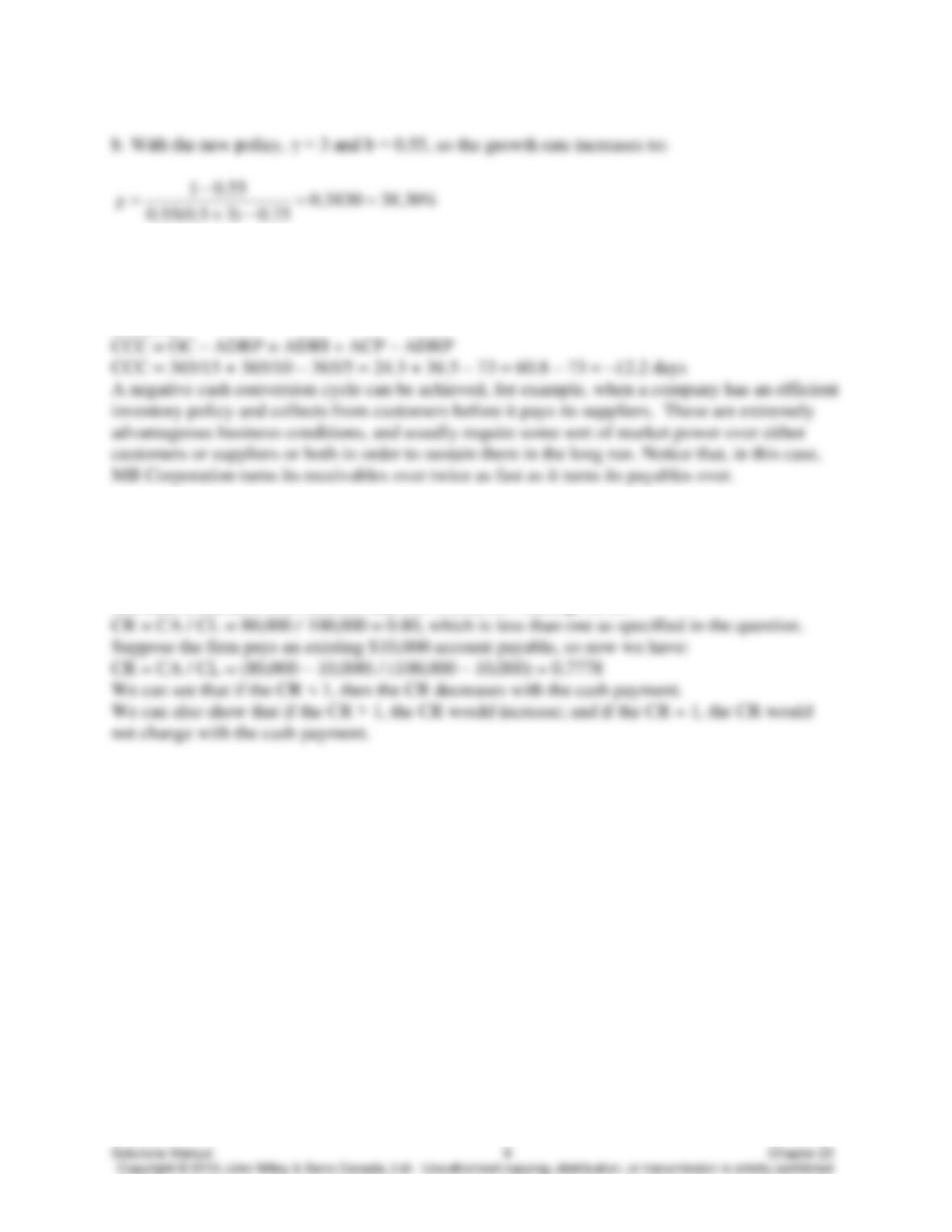
a. With the data α = 0.75; b = 0.60; β = 0.5 and γ = 4.0.
Introduction to Corporate Finance, Fourth Edition Booth, Cleary, Rakita
36. Section: 23.4 Working Capital Management
Learning Objective: 23.4
Level of difficulty: Challenging
Solution:
37. Section: 23.4 Working Capital Management
Learning Objective: 23.4
Level of difficulty: Challenging
Solution:
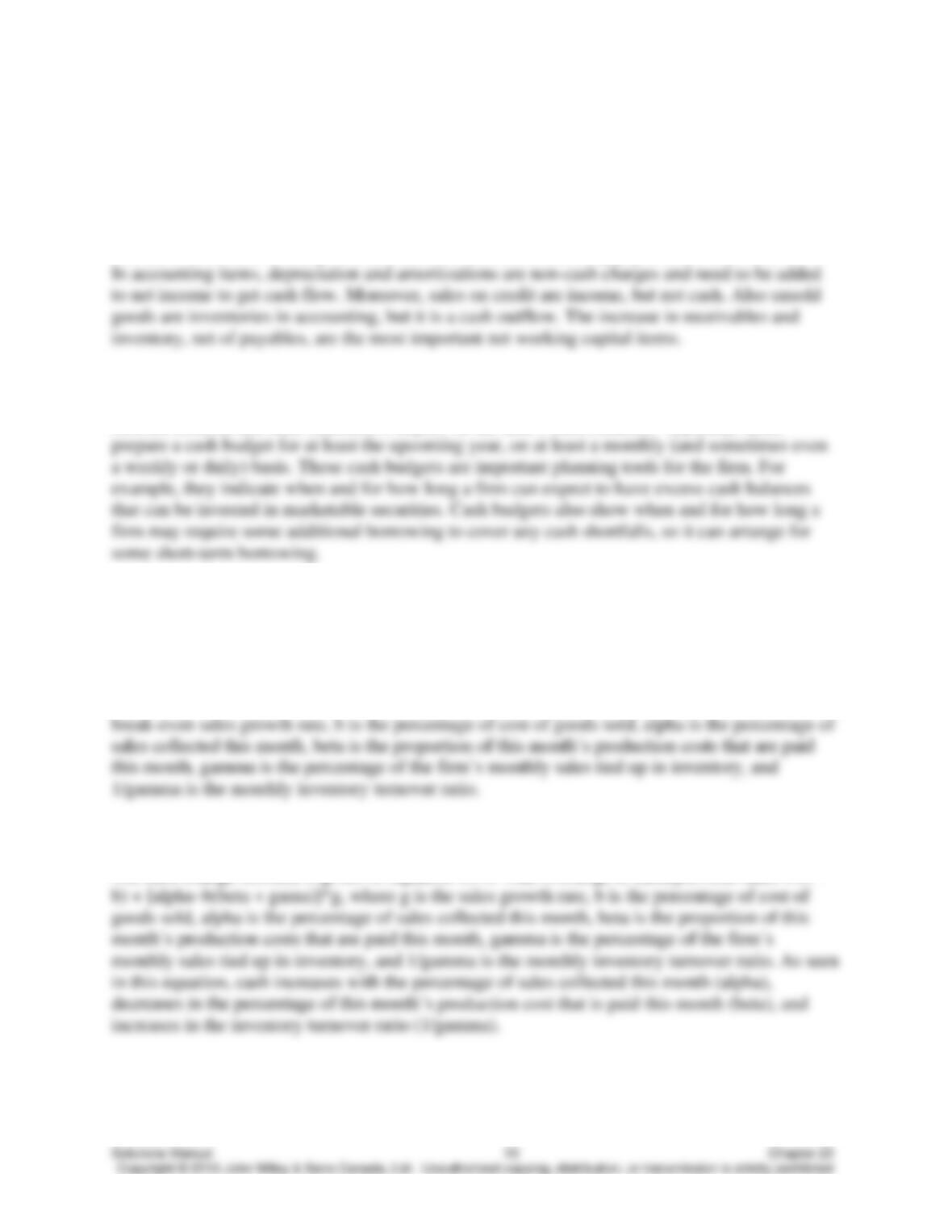
The firm could have CA=$80,000 and CL=$100,000, which gives us:
Introduction to Corporate Finance, Fourth Edition Booth, Cleary, Rakita
Answers to Concept Review Questions
23.1 The Importance of Working Capital Management
Concept review questions
1. What is the difference between profit and cash flow from operations?
The basic difference is that profits are not cash and a firm can only pay its bills with cash.
2. Why should all firms prepare a cash budget?
The important thing about the cash budget is that it forecasts cash inflows and outflows over a
forecast horizon and their cumulative impact on the firm’s cash balances. Typically, firms
23.3 Analyzing Cash Inflows and Outflows
Concept review questions
1. What is the relationship between the break-even sales growth rate and a firm’s collection
policy, payables policy, and inventory policy?
The relationship is given in Equation 23-4. g = (1–b)/((b*(beta + gamma) – alpha), where g is the
2. Why does cash flow from operations increase if the firm speeds up the collection of
receivables, delays paying its bills, or increases its inventory turnover ratio?
The cash change formula is given in Equation 23-3. That is change in cash/previous sales = (1 –
23.4 Working Capital Management in Practice
Introduction to Corporate Finance, Fourth Edition Booth, Cleary, Rakita
Concept review questions
1. What are the limitations of the current ratio and the quick ratio as measures of working capital
management?
A high current ratio or a high quick ratio does not necessarily mean that the firm is practicing
2. What are the operating cycle and the cash conversion cycle, and how are they related to
working capital policy?
The operating cycle (OC) measures the average number of days a firm holds items in inventory