ANSWERS TO CHAPTER QUESTIONS
Chapter 2 The Time Value of Money
1) Compounding is interest paid on principal and interest accumulated. It is
important because normal compounding over many years can result in a more
2) It is important to assess the value of a sum of money at different points in time.
3) The present value is the value today of sums to be paid in the future. The value is
established by taking future cash flows and discounting them back to the present at an
4) The rate of return that could be received on marketable investments having the
same level of risk.
5) When a discount rate is raised, the present value of a future sum is reduced.
6) The lump sum today. The reason is the lump sum today has more compounding
7) A regular annuity is a series of payments made or received at the end of the
period. An annuity due indicates payments made or received at the beginning of the
8) The rate of return is the sum you receive expressed as compensation to you for
making an investment. An inflation-adjusted return adjusts for a rise in the cost of
9) When payments are due at the end of the period they are called a regular annuity.
When payments are due at the beginning of the period they are called an annuity due.
10) The Rule of 72 gives a quick estimate on when your investment return will double
11) Future value is the value that a set amount of money will be worth using today’s
12) The consequence of not accounting for inflation means not accounting for the
13) The internal rate of return takes into account the time valuation of money, and
cash inflows and outflows. The IRR is often used to determine the profitability of a
ANSWERS TO CHAPTER PROBLEMS
Chapter 2 Time Value of Money
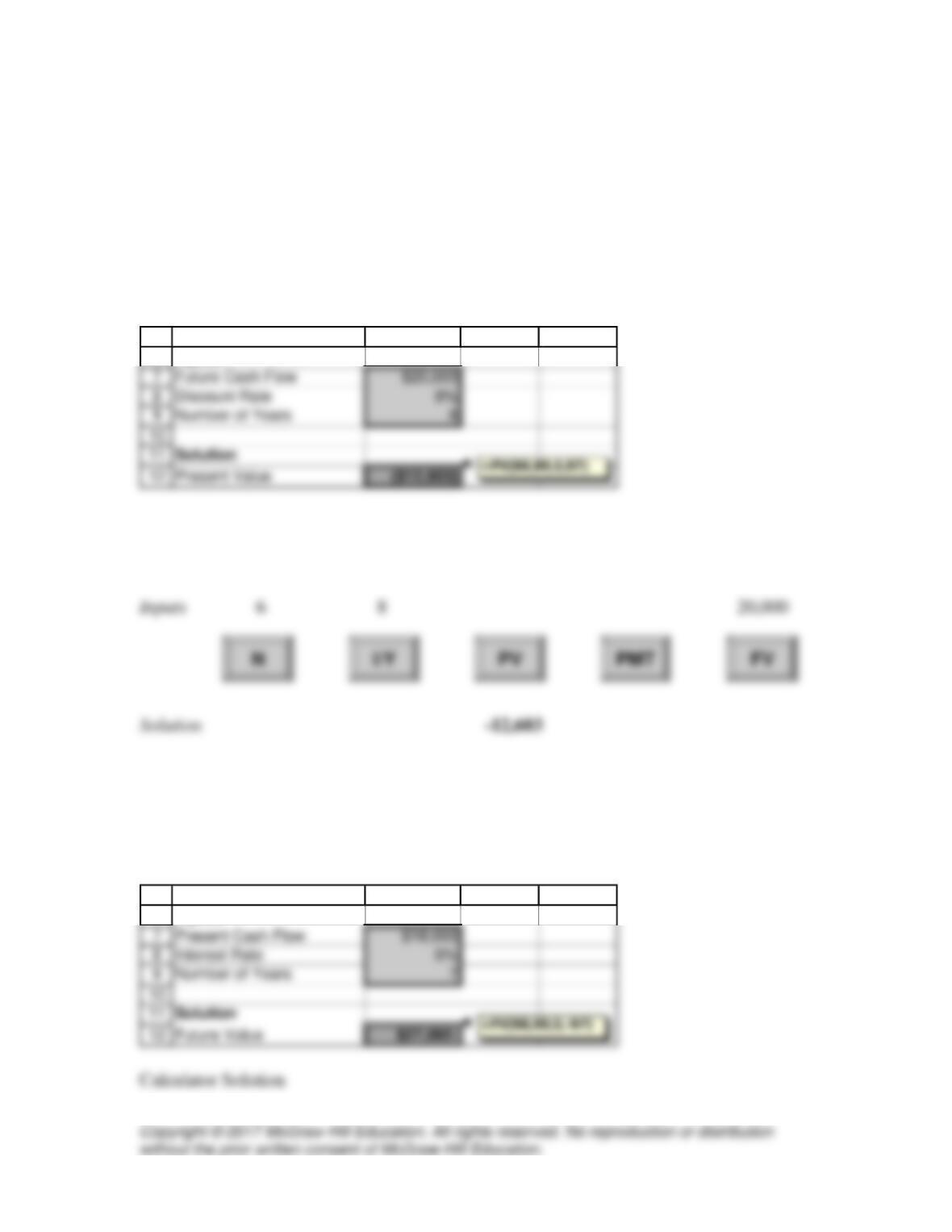
1) What is the present value of a $20,000 sum to be given 6 years from now if the
discount rate is 8 percent?
Excel Solution
6
9
Solution
A B C D
Inputs
Calculator Solution
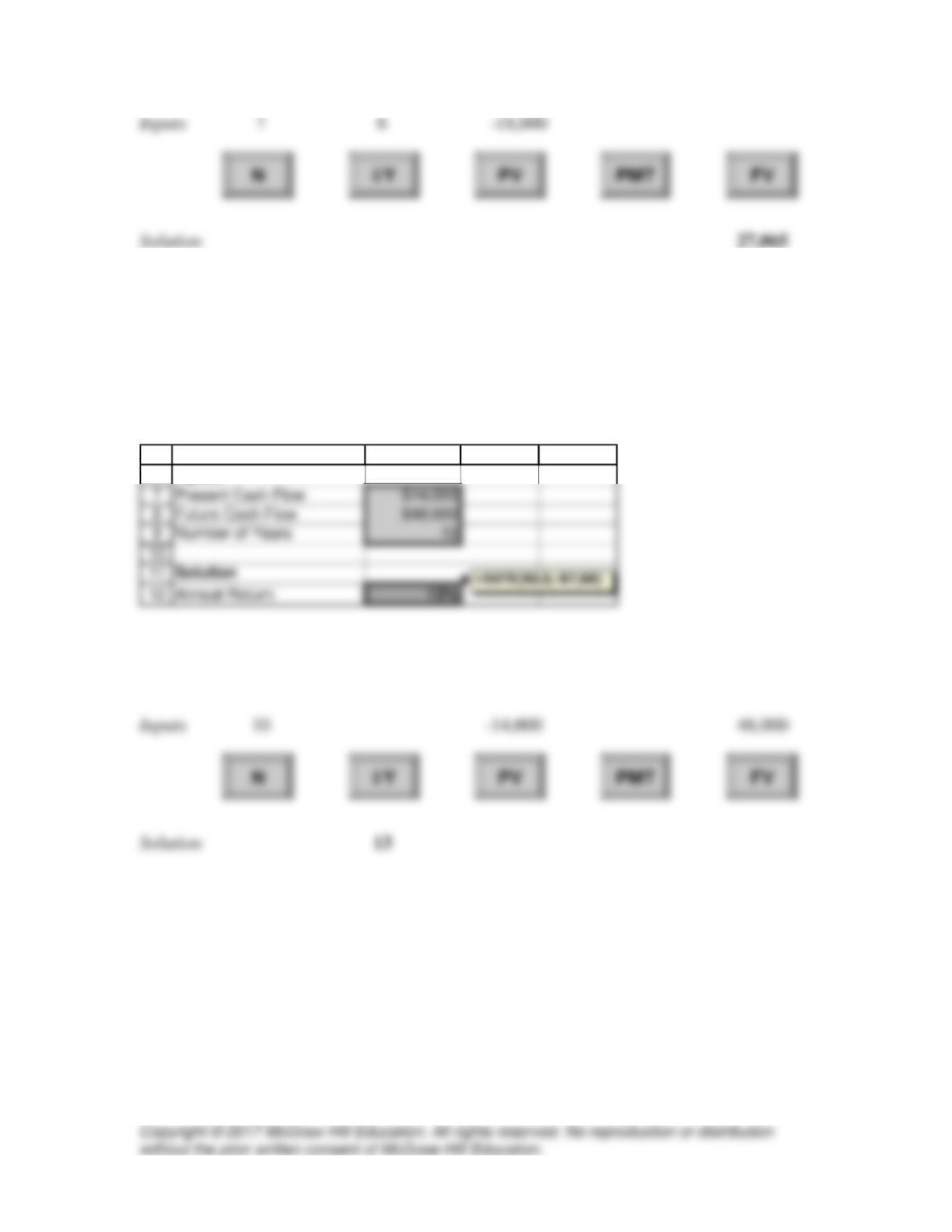
2) What is the future value of an investment of $18,000 that will earn interest at 6
percent and fall due in 7 years?
Excel Solution
6
9
Solution
A B C D
Inputs
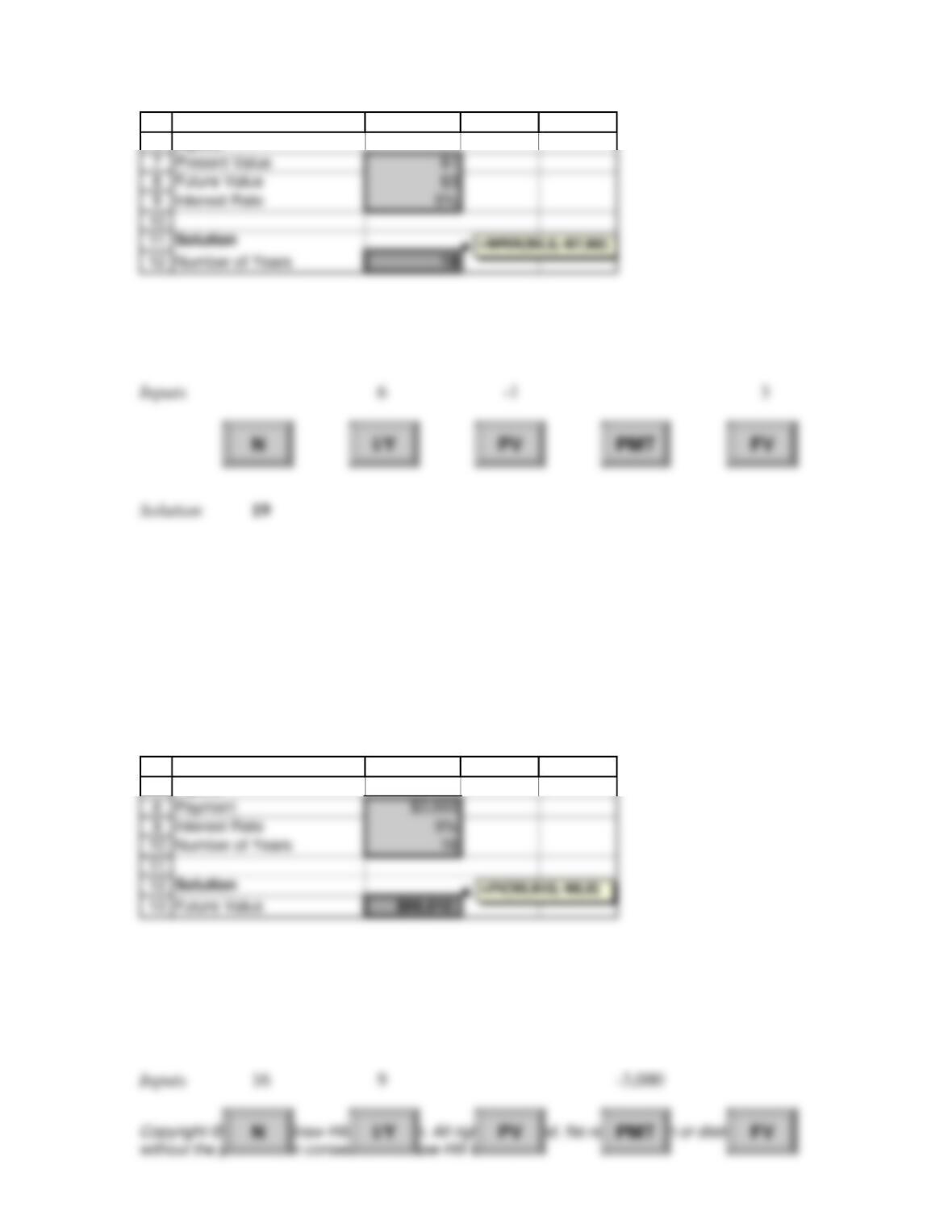
3) Jason was promised $48,000 in 10 years if he would deposit $14,000 today. What
would his compounded annual return be?
Excel Solution
6
9
Solution
A B C D
Inputs
Calculator Solution
4) How many years would it take for a dollar to triple in value if it earns a 6 percent rate
of return?
Excel Solution
6
9
Solution
A B C D
Inputs
Calculator Solution
5) Marcy placed $3,000 a year into an investment returning 9 percent a year for her
daughter’s college education. She started when her daughter was 2. How much did
she accumulate by her daughters 18th birthday?
Excel Solution
7
Solution
A B C D
Inputs
Calculator Solution
Solution 99,010
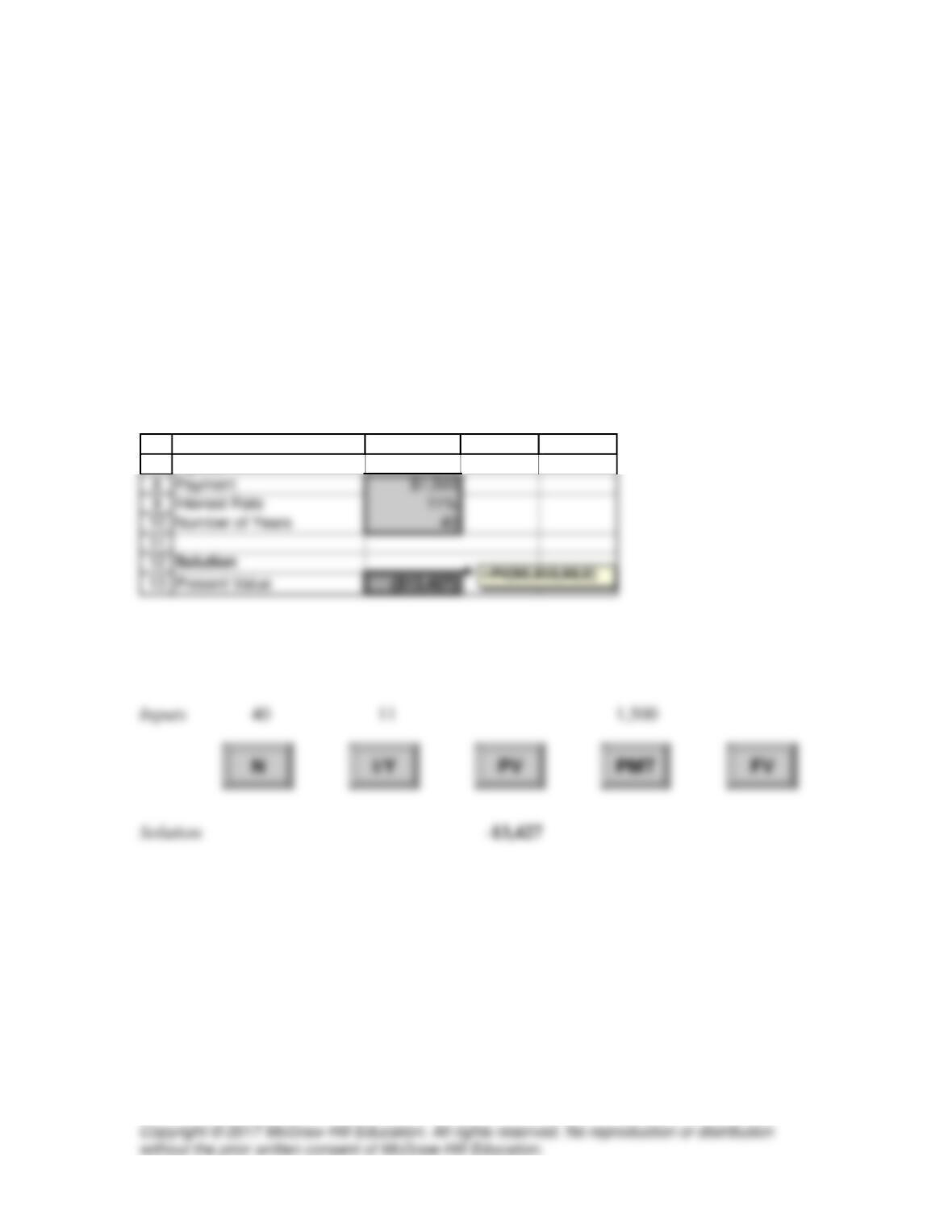
6) Todd was asked what he would pay for an investment that offered $1,500 a year for
the next 40 years. He required an 11 percent return to make that investment. What
should he bid?
Excel Solution
7
Solution
A B C D
Inputs
Calculator Solution
7) Ann was offered an annuity of $20,000 a year for the rest of her life. She was 55 at
the time and her life expectancy was 84. The investment would cost her $180,000.
What would the return on her investment be?
Excel Solution
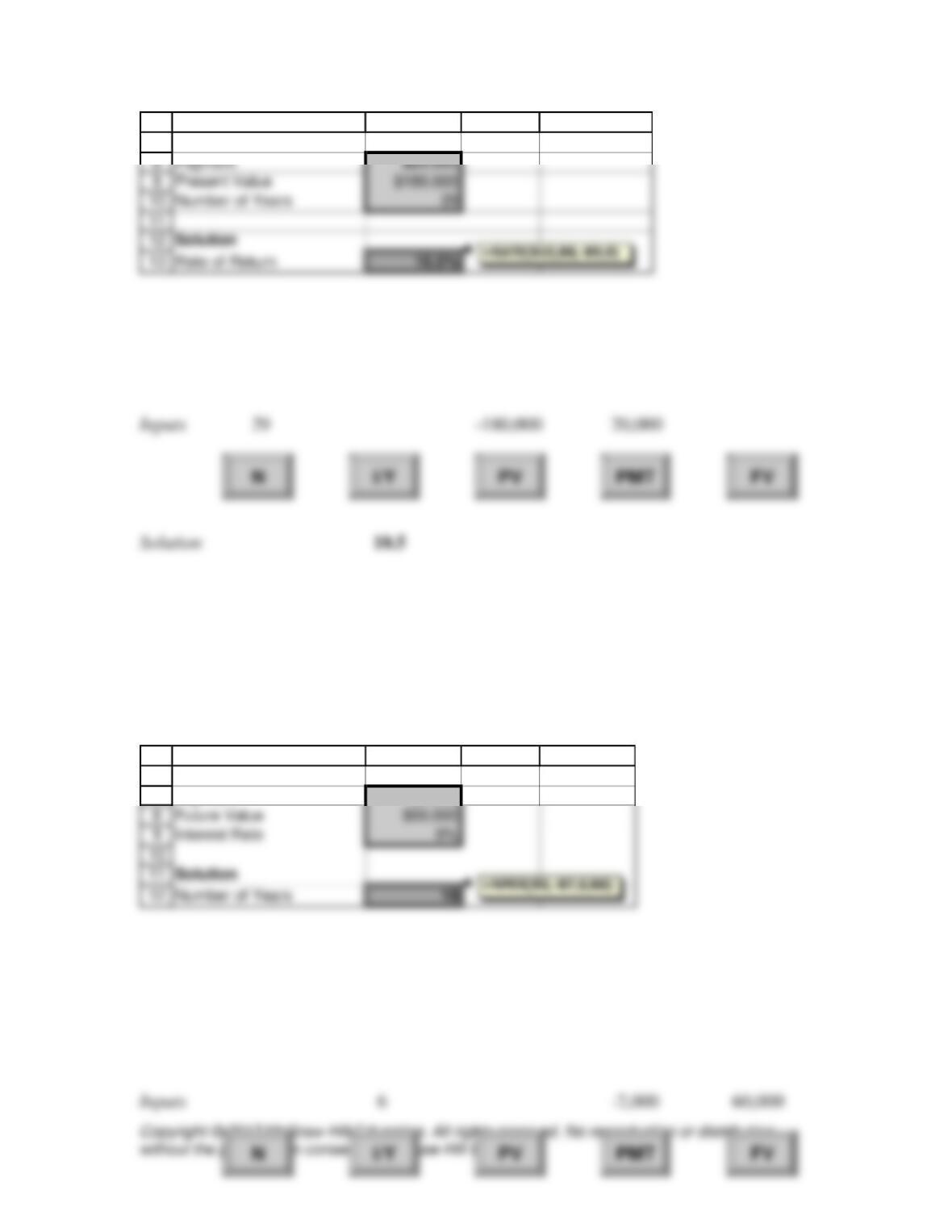
7
Solution
A B C D
Inputs
Calculator Solution
8) How many years would it take for $2,000 a year in savings earning interest at 6
percent to amount to $60,000?
Excel Solution
6
9
Solution
7
A B C D
Inputs
Payment $2,000
Calculator Solution
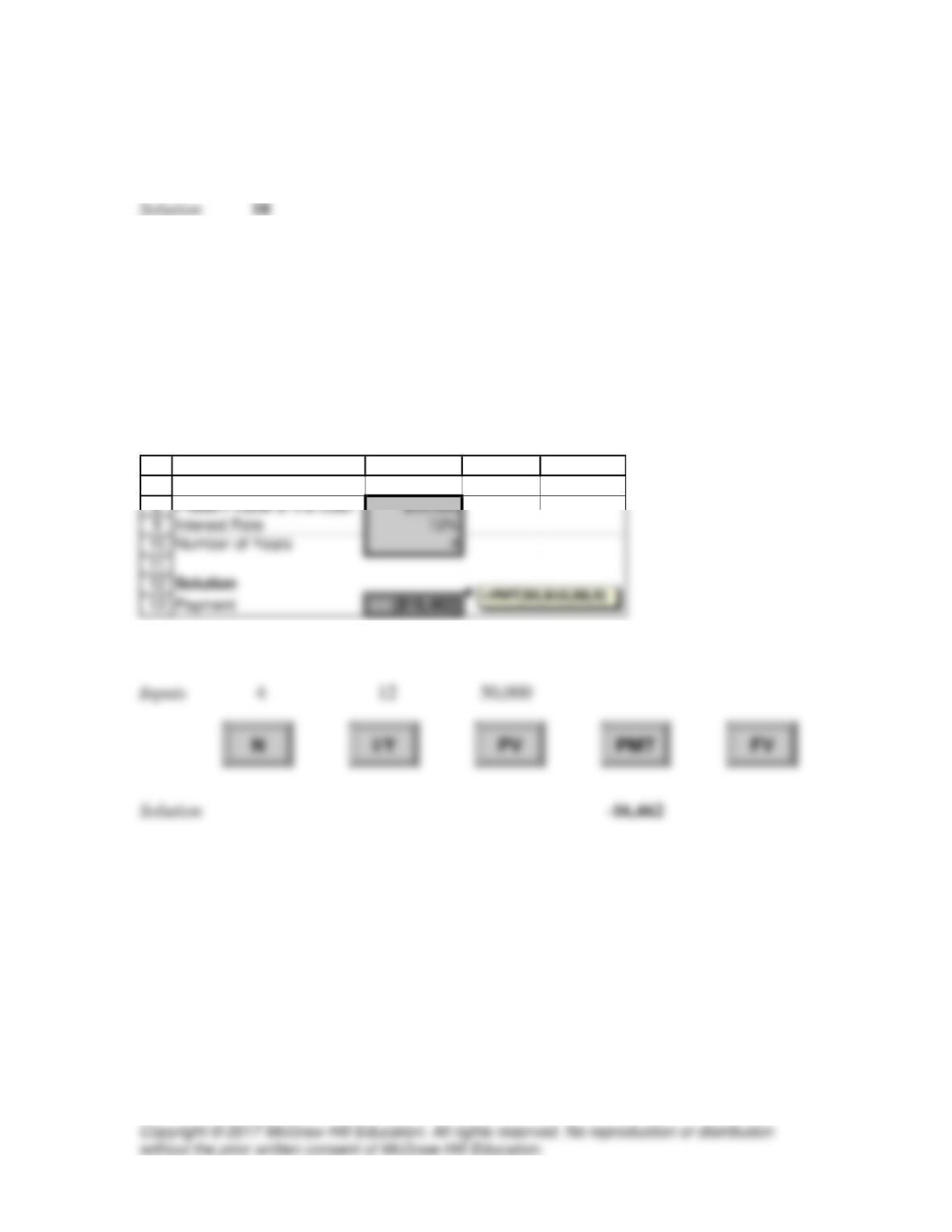
9) Aaron has $50,000 in debt outstanding with interest payable at 12 percent annual. If
Aaron intends to pay off the loan through 4 years of interest and principal payment,
how much should he pay annually?
Excel Solution
7
Solution
A B C D
Inputs
Calculator Solution
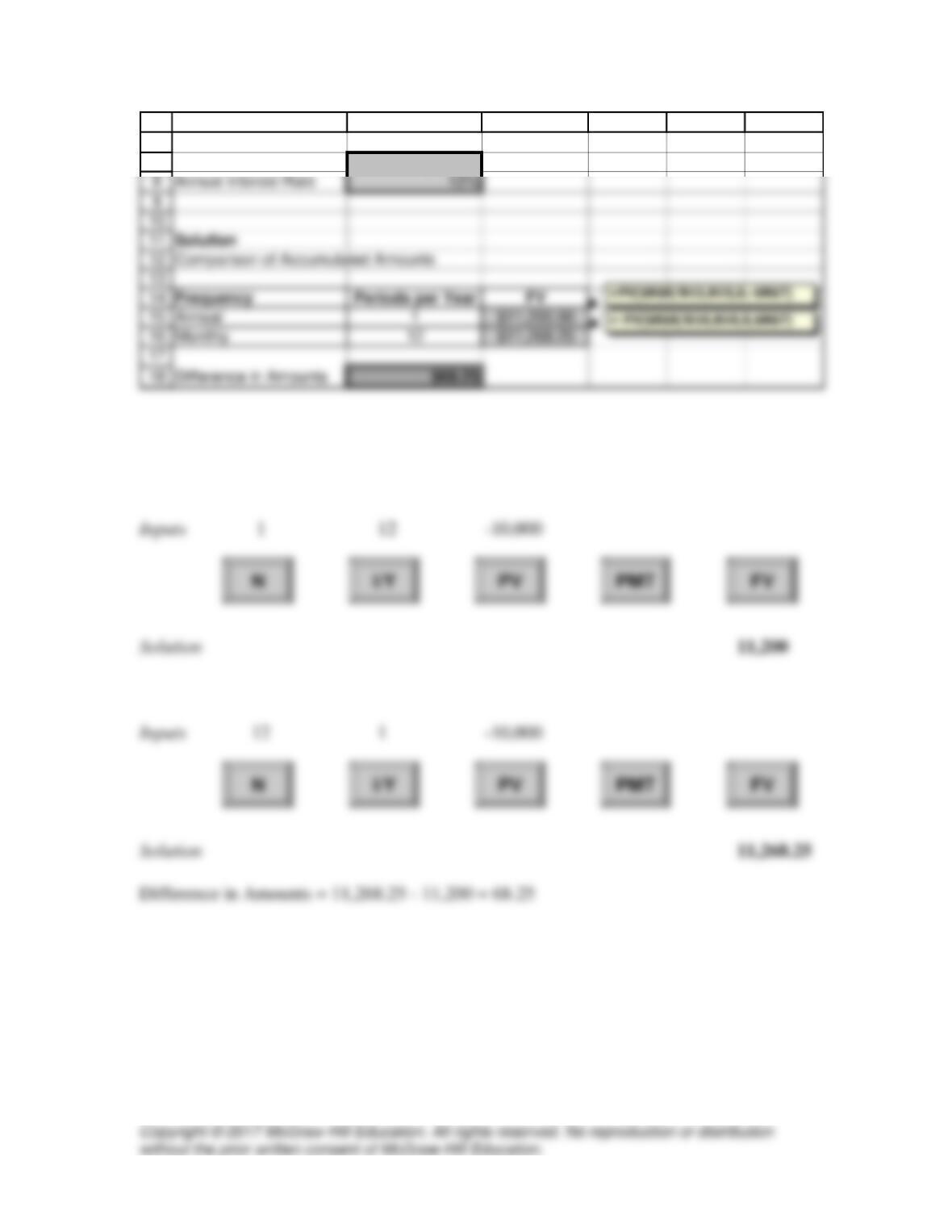
10) What is the difference in amount accumulated between a $10,000 sum with 12
percent interest compounded annually and one compounded monthly over a one-year
period?
Excel Solution
6
7
8
A B C D E F
Inputs
Present Value $10,000
Calculator Solution
Annual Compounding:
Monthly Compounding:
11) What is the difference in future value between savings in which $3,000 is deposited
each year at the beginning of the period and the same amount deposited at the end of
the period? Assume an interest rate of 8 percent and that both are due at the end of 19
years.
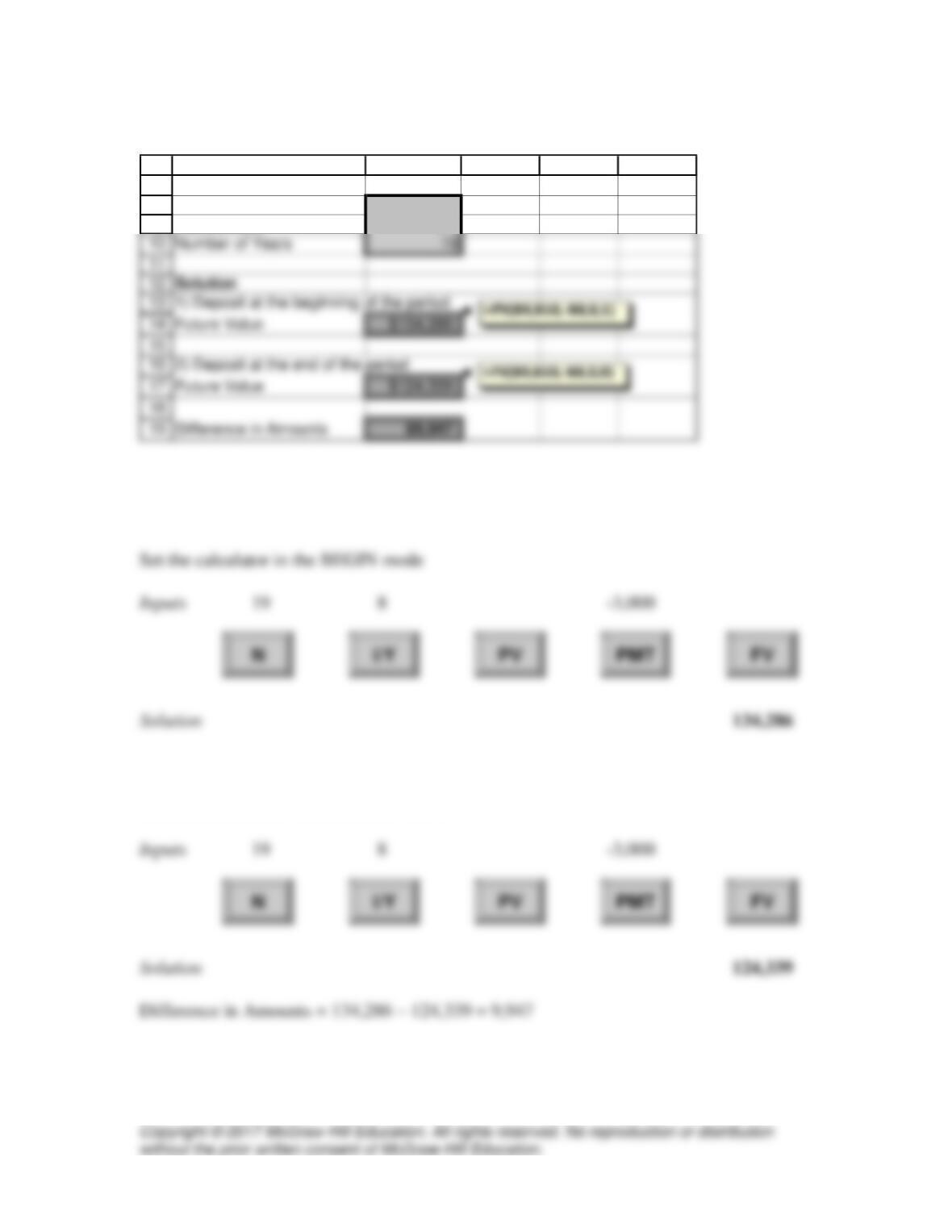
Excel Solution
7
8
9
A B C D E
Inputs
Payment $3,000
Interest Rate 8%
Calculator Solution
Deposit at the beginning of the period:
Deposit at the end of the period:
Set the calculator back to the END mode
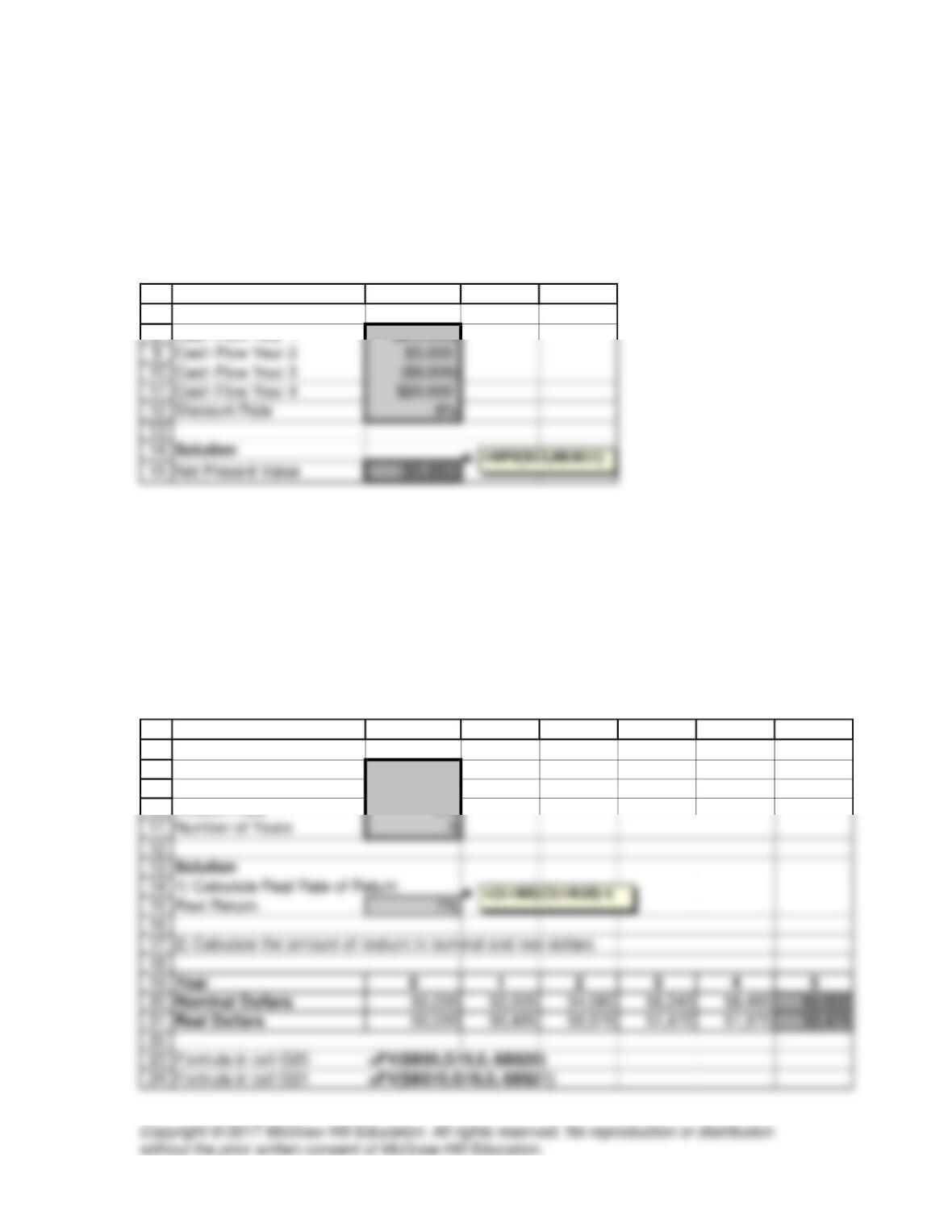
12) Kenneth made a $20,000 investment in year 1, received a $5,000 return in year 2,
made $8,000 cash payment in year 3, and received his $20,000 back in year 4. If his
required rate of return is 8 percent, what was the net present value of his investment?
Excel Solution
7
Solution
A B C D
Inputs
13) John had $50,000 in salary this year. If this salary is growing 4 percent annually and
inflation is projected to rise 3 percent per year, calculate the amount of return he will
receive in nominal and real dollars in the fifth year.
Excel Solution
7
8
9
10
A B C D E F G
Inputs
Present Value of Salary $50,000
Growth Rate 4%
Inflation Rate 3%
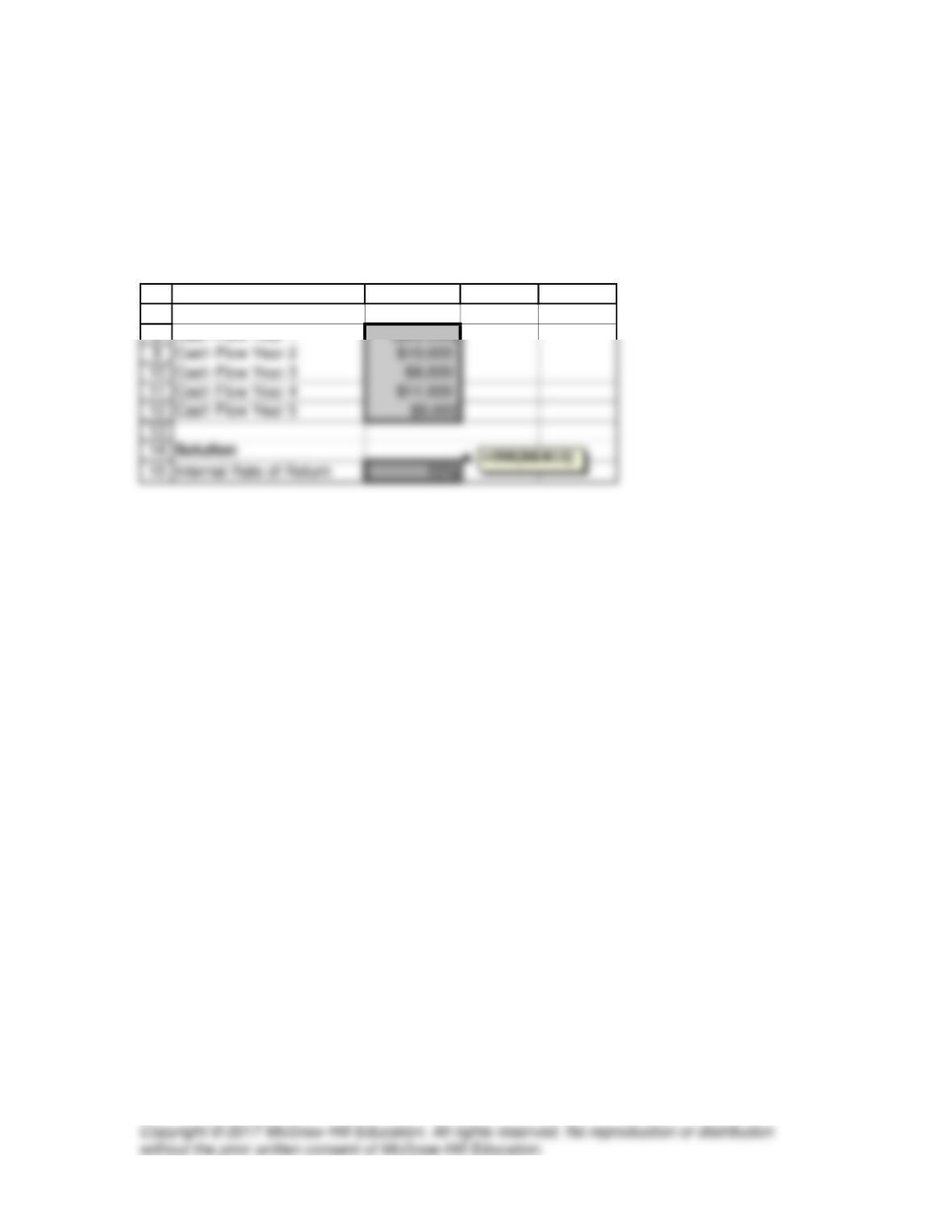
14) Becky made a $30,000 investment in year 1, received a $10,000 return in year 2,
$8,000 in year 3, $11,000 in year 4, and $9,000 in year 5. What was her internal rate
of return over the five-year period?
Excel Solution
7
Solution
A B C D
Inputs
ANSWERS TO CASE APPLICATION QUESTIONS
Chapter 2 The Time Value of Money
2) Compounding is interest on interest in addition to interest on principal. Without
3) 20,000 CHS PV, 70,000 FV, 20 N press I/Y = 6.46%. The rate is lower than the
appropriate market rate of 7% and should be rejected.
4) 100,000 CHS PV (at age 65), 8,000 PMT, 17 N Press I/Y = 3.65%. This rate of
5) Richard and Monica, it is apparent that you are not that familiar with time value
of money and compounding concepts. Available cash has worth. It is the amount
that you could receive by investing in financial assets in the marketplace. It is