Introduction to Corporate Finance, Fourth Edition Booth, Cleary, Rakita
Chapter 16: Leasing
Multiple Choice Questions
1. Section: 16.1 Leasing Arrangements
Learning Objective: 16.1
Level of Difficulty: Intermediate
2. Section: 16.1 Leasing Arrangements
Learning Objective: 16.1
Level of Difficulty: Intermediate
3. Section: 16.1 Leasing Arrangements
Learning Objective: 16.1
Level of Difficulty: Intermediate
4. Section: 16.2 Accounting for Leases
Learning Objectives: 16.2
Level of Difficulty: Challenging
5. Section: 16.2 Accounting for Leases
Learning Objectives: 16.2
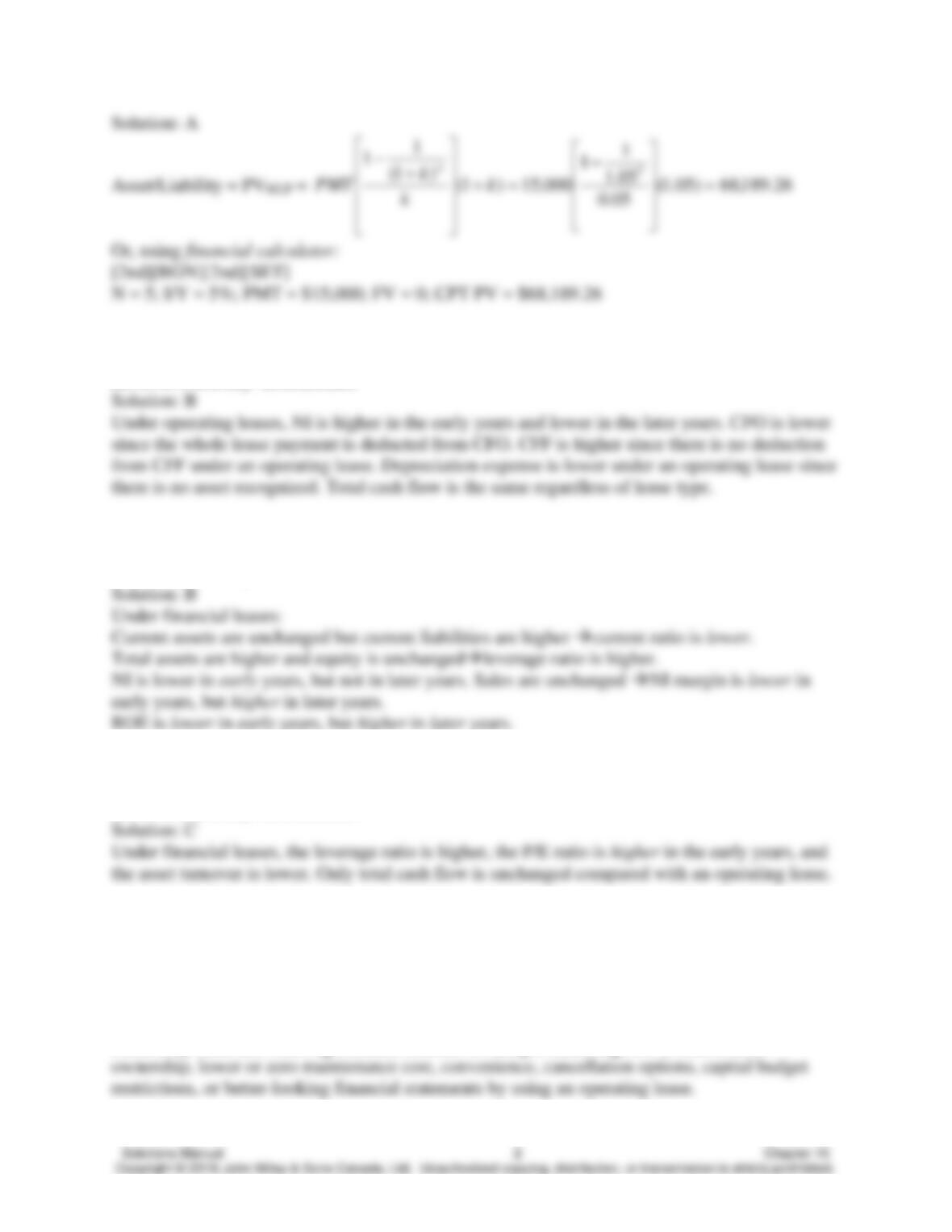
6. Section: 16.2 Accounting for Leases
Learning Objectives: 16.2
Level of Difficulty: Intermediate
Introduction to Corporate Finance, Fourth Edition Booth, Cleary, Rakita
7. Section: 16.2 Accounting for Leases
Learning Objectives: 16.2
Level of Difficulty: Intermediate
8. Section: 16.2 Accounting for Leases
Learning Objectives: 16.2
Level of Difficulty: Intermediate
9. Section: 16.2 Accounting for Leases
Learning Objectives: 16.2
Level of Difficulty: Intermediate
Practice Problems
Basic
10. Section: 16.4 Motivation for Leasing
Learning Objectives: 16.4
Level of Difficulty: Basic
Solution:
Firms may enter into lease agreements because of cheaper financing, lower risk of asset
Introduction to Corporate Finance, Fourth Edition Booth, Cleary, Rakita
11. Section: 16.4 Motivation for Leasing
Learning Objectives: 16.4
Level of Difficulty: Basic
Solution:
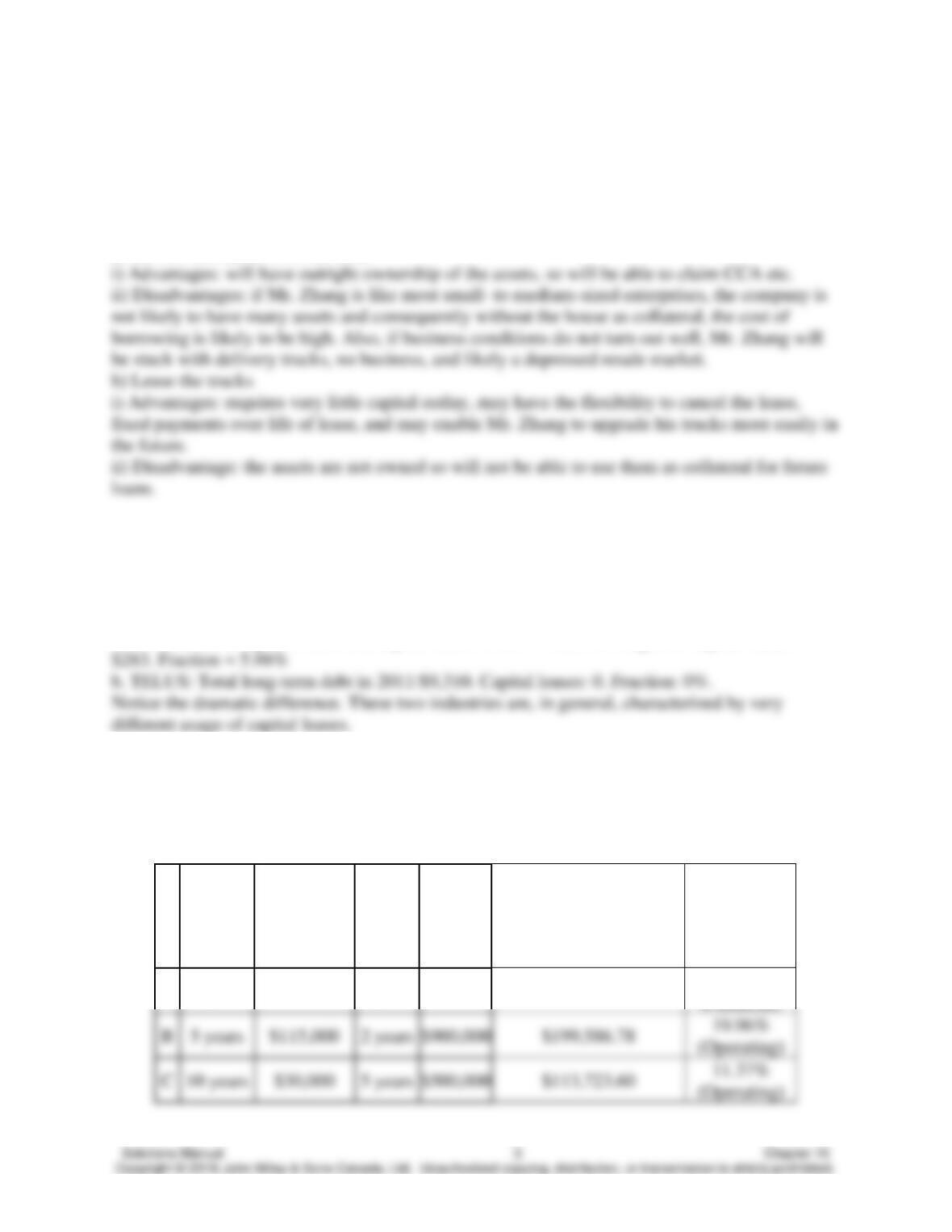
Two alternative methods available to Mr. Zhang’s company are (note: solution provides only
sample advantages and disadvantages):
a) Borrow $250,000 from the bank
Intermediate
12. Section: 16.1 Leasing Arrangements
Learning Objective: 16.1
Level of Difficulty: Intermediate
Solution:
a. Air Canada: Long-term debt and capital leases in 2014: $4,732. Long-term capital leases =
13. Section: 16.2 Accounting for Leases
Learning Objectives: 16.2
Level of Difficulty: Intermediate
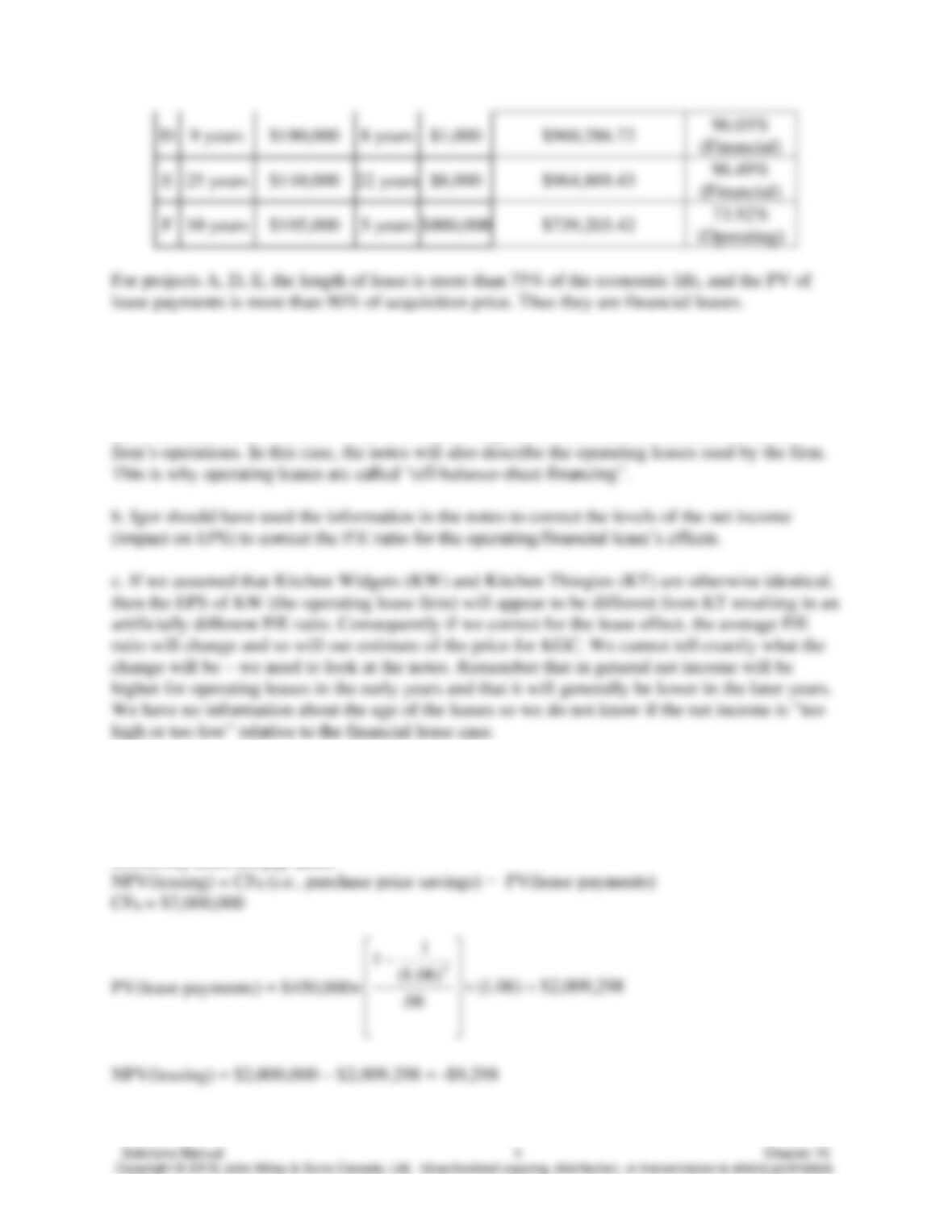
Solution:
Expected
economic
life of the
asset
Annual lease
payments
(End of
year)
Length
of lease
Purchase
price at
end of
lease
PV of lease payments
Percentage of
acquisition
price
A
10 years
$175,000
8 years
$10,000
$933,612.08
93.36%
(Financial)
19.96%
C
10 years
5 years
$113,723.60
11.37%
Introduction to Corporate Finance, Fourth Edition Booth, Cleary, Rakita
14. Section: 16.2 Accounting for Leases
Learning Objectives: 16.2 Level of Difficulty: Intermediate
Solution:
a. All financial statements contain much more than just the balance sheets, income statements,
and statements of cash flows – they also contain important additional information about the
15. Section: 16.3 Evaluating the Lease Decision
Learning Objectives: 16.3
Level of Difficulty: Intermediate
Solution:
University does not pay taxes.
Introduction to Corporate Finance, Fourth Edition Booth, Cleary, Rakita
Challenging
16. Section: 16.2 Accounting for Leases
Learning Objectives: 16.2
Level of Difficulty: Challenging
Solution:
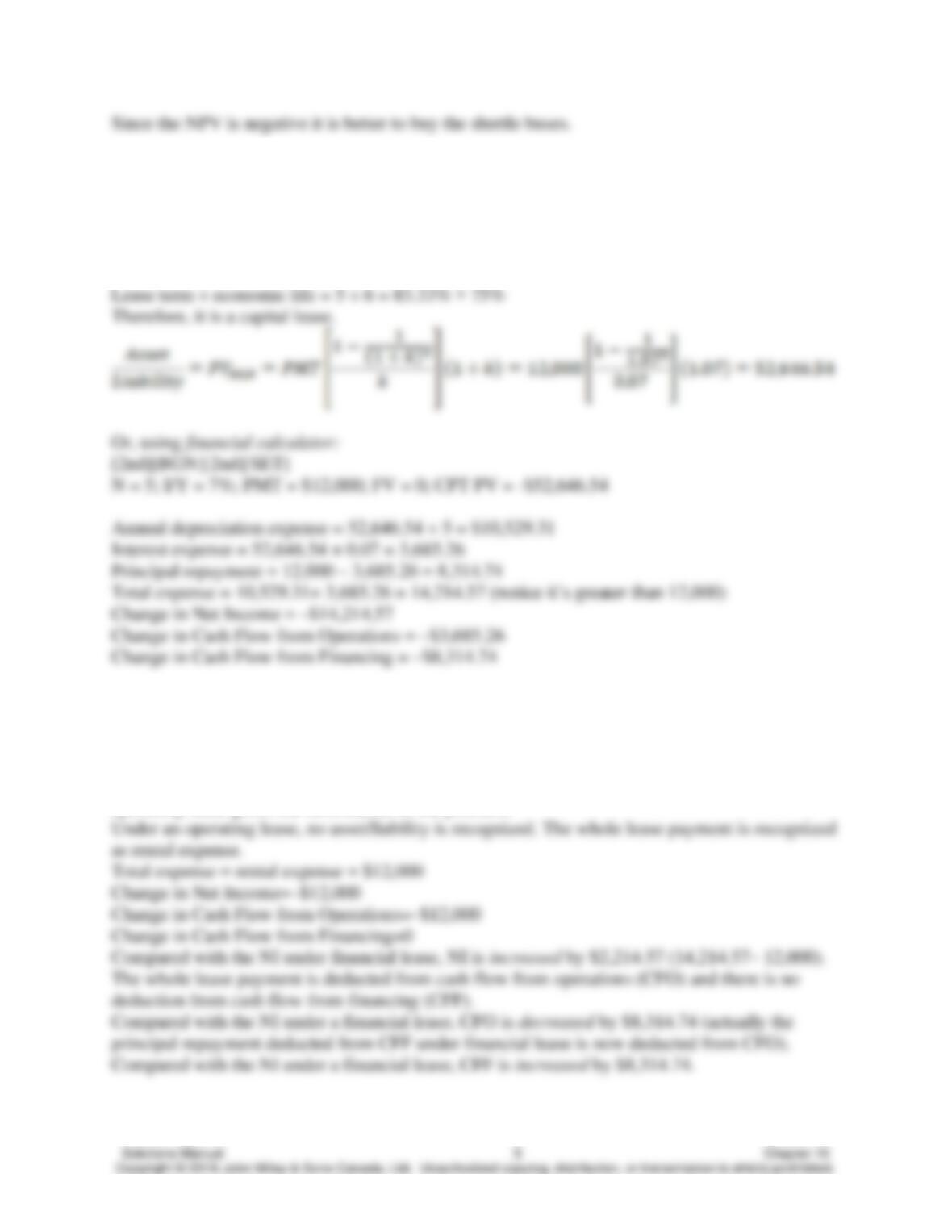
First, we decide the type of lease.
17. Section: 16.2 Accounting for Leases
Learning Objectives: 16.2
Level of Difficulty: Challenging
Solution:
Now the lease term ÷ economic life = 5 ÷ 7 = 71.43% < 75%, therefore the lease is considered an
operating lease given the information in the problem.
18. Section: 16.2 Accounting for Leases
Introduction to Corporate Finance, Fourth Edition Booth, Cleary, Rakita
Learning Objectives: 16.2
Level of Difficulty: Challenging
Solution:
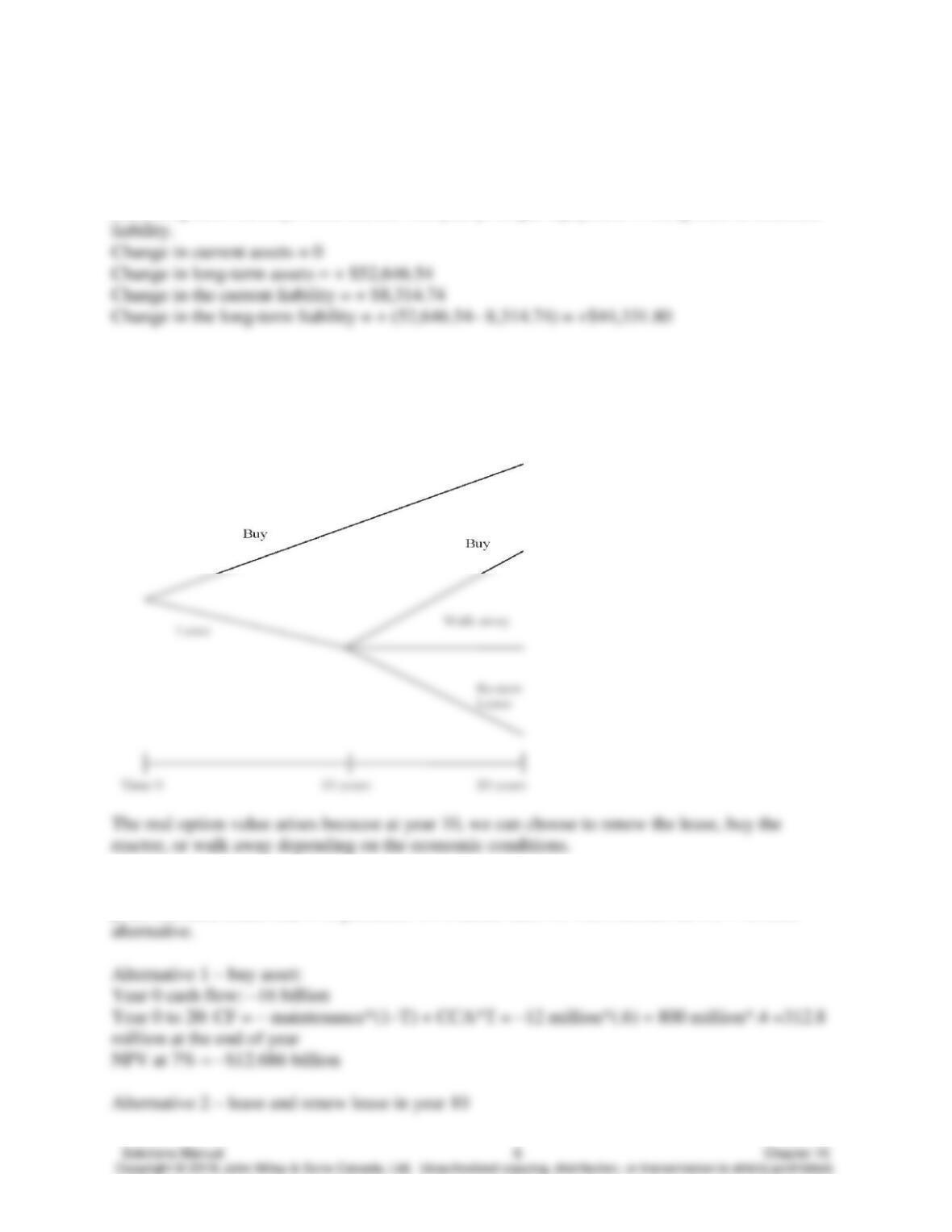
Under a capital lease, the present value of the lease payments is recognized as a long-term asset
and a long-term liability; however, the first-year principal repayment is recognized as a current
19. Section: 16.3 Evaluating the Lease Decision
Learning Objectives: 16.3
Level of Difficulty: Challenging
Solution:
a.
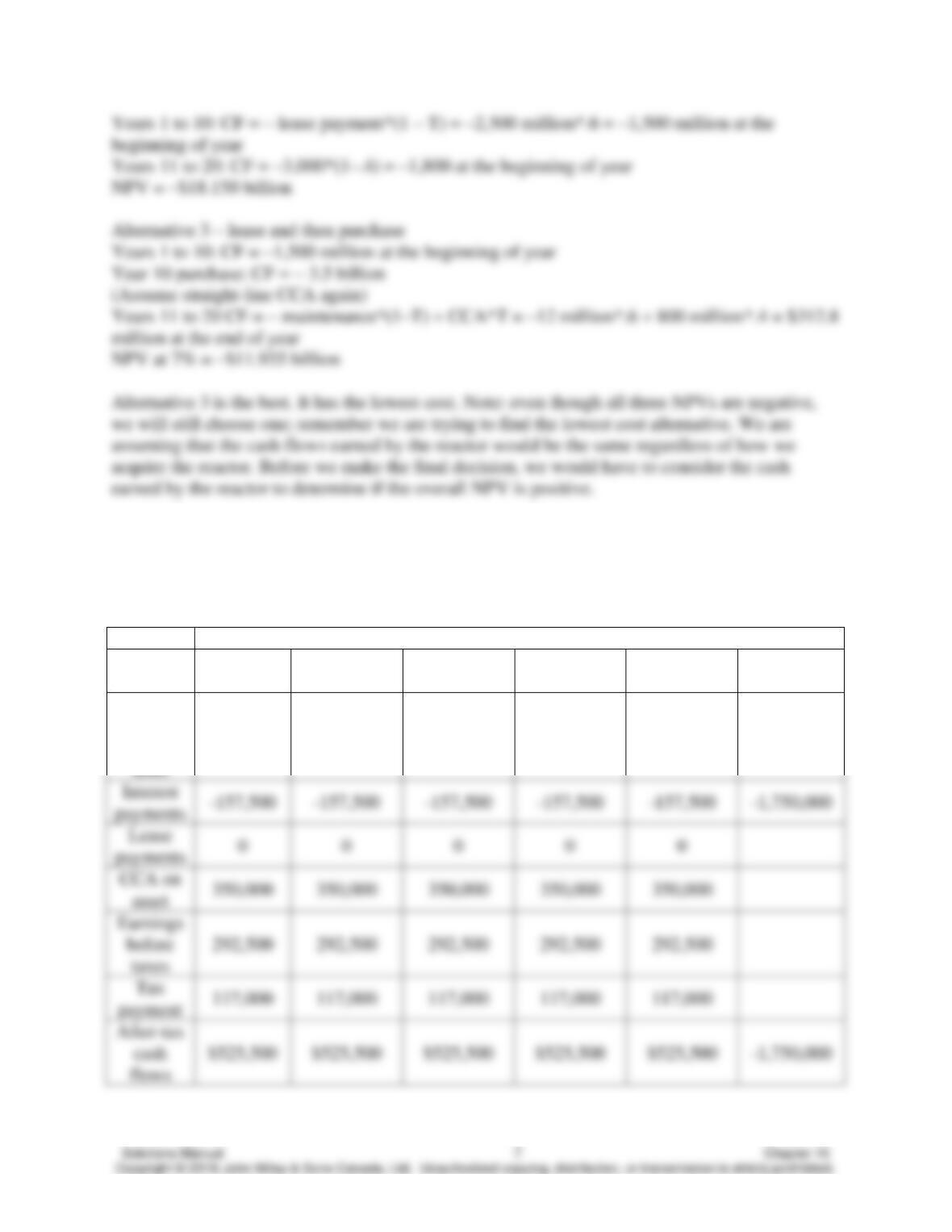
b. Ignoring walking away at 10 years, Expedic has three alternatives: buy the asset, lease for 10
years and then either renew or purchase. To evaluate this, we will consider the NPV of each
Introduction to Corporate Finance, Fourth Edition Booth, Cleary, Rakita
20. Section: 16.3 Evaluating the Lease Decision
Learning Objectives: 16.3
Level of Difficulty: Challenging
Solution:
a.
Firm buys asset
Year 1
Year 2
Year 3
Year 4
Year 5
Principal
repayment
-157,500
-157,500
-157,500
-157,500
0
before
292,500
292,500
292,500
292,500
Cash
flow
from
800,000
800,000
800,000
800,000
800,000
Introduction to Corporate Finance, Fourth Edition Booth, Cleary, Rakita
b.
Firm uses financial lease
Year 1
Year 2
Year 3
Year 4
Year 5
Principal
repayment
Cash flow from asset
800,000
800,000
800,000
800,000
800,000
c.
Lessor in financial lease
Year 1
Year 2
Year 3
Year 4
Year 5
Principal
repayment
Cash flow from asset
0
0
0
0
0
Interest payments
-157,500
-157,500
-157,500
-157,500
-157,500
-1,750,000
CCA on asset
0
Annual tax payments
Year 1
Year 2
Year 3
Year 4
Year 5
Lessor
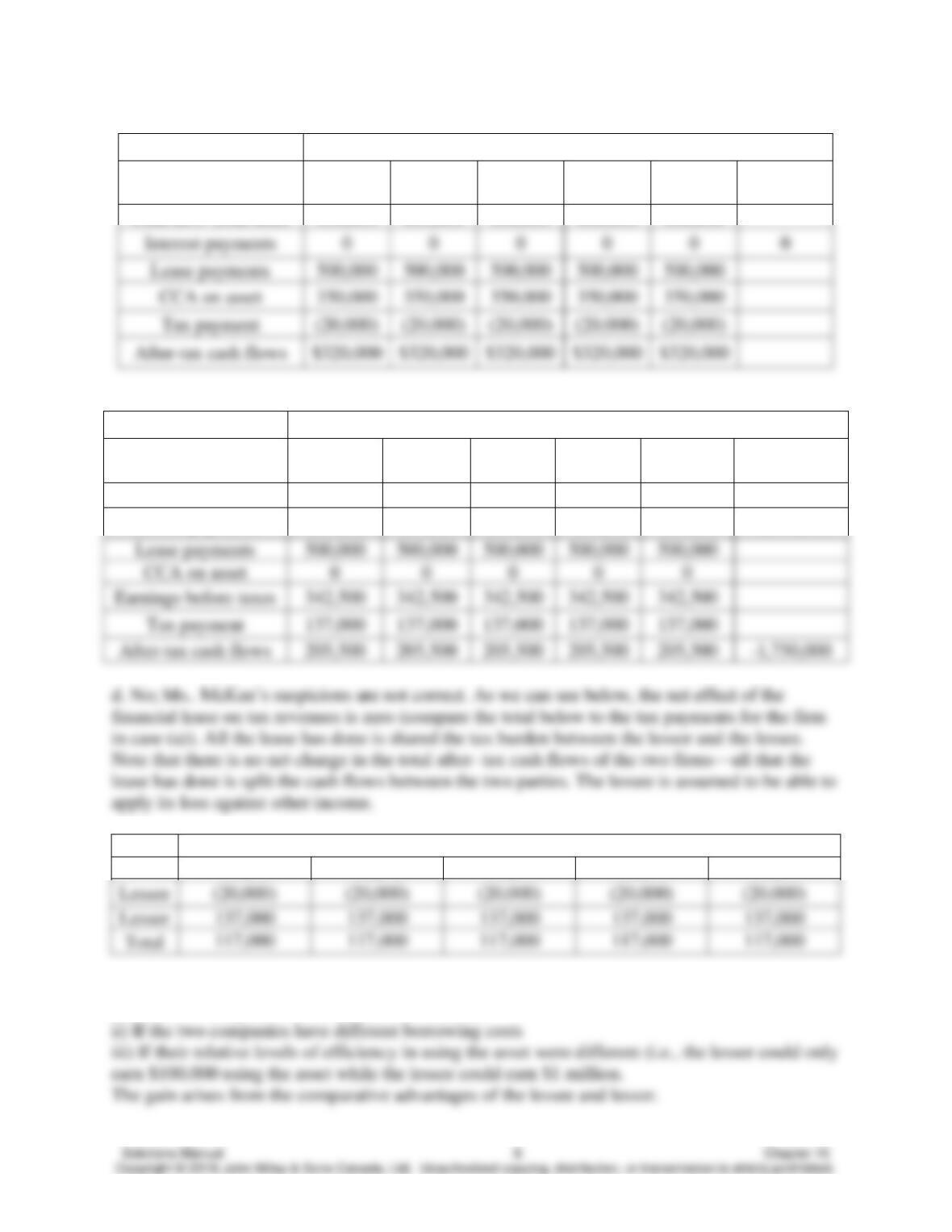
e. There are several ways that leasing could increase total cash flows (lessee + lessor):
i) If the two companies have different tax brackets
Introduction to Corporate Finance, Fourth Edition Booth, Cleary, Rakita
21. Section: 16.3 Evaluating the Lease Decision
Learning Objectives: 16.3
Level of Difficulty: Challenging
Solution:
NPV (leasing) = CF0 (purchase price savings) – PV(foregone depreciation tax savings) –
Or, using financial calculator:
Or, using financial calculator:
22. Section: 16.3 Evaluating the Lease Decision
Introduction to Corporate Finance, Fourth Edition Booth, Cleary, Rakita
Learning Objectives: 16.3
Level of Difficulty: Challenging
Solution:
NPV(leasing) = CF0 (i.e., purchase price savings) + PV(maintenance savings) – PV(foregone
Since the salvage value is the ending UCC at the end of four years.
Year
1 (half-year rule)
2
3
4
(beginning year)
CCA (20%)
Value (year end)
𝑃(𝑆𝑎𝑙𝑣𝑎𝑔𝑒 𝑣𝑎𝑙𝑢𝑒)=138,240×1/(1.054)4=$112,014
Or, using financial calculator:
N = 4; I/Y = 5.4%; PMT = 0; FV = 138,240; CPT PV = -$112,014
Introduction to Corporate Finance, Fourth Edition Booth, Cleary, Rakita
23. Section: 16.3 Evaluating the Lease Decision
Learning Objectives: 16.3
Level of Difficulty: Challenging
Solution:
First, we calculate the monthly payments for each option.
Loan: (N.B. Loan payments are usually at the end of the month.)
Estimate the PV of the beginning-of-month lease payments using the loan rate.
24. Section: 16.3 Evaluating the Lease Decision
Learning Objectives: 16.3
Level of Difficulty: Challenging
Solution:
NPV(leasing) = CF0 (i.e., purchase price savings) − PV(forgone depreciation tax savings)
Introduction to Corporate Finance, Fourth Edition Booth, Cleary, Rakita
PV (after-tax lease payments)
25. Section: 16.3 Evaluating the Lease Decision
Learning Objectives: 16.3
Level of Difficulty: Challenging
Solution:
Setting
26. Section: 16.3 Evaluating the Lease Decision
Learning Objectives: 16.3
Level of Difficulty: Challenging
Solution:
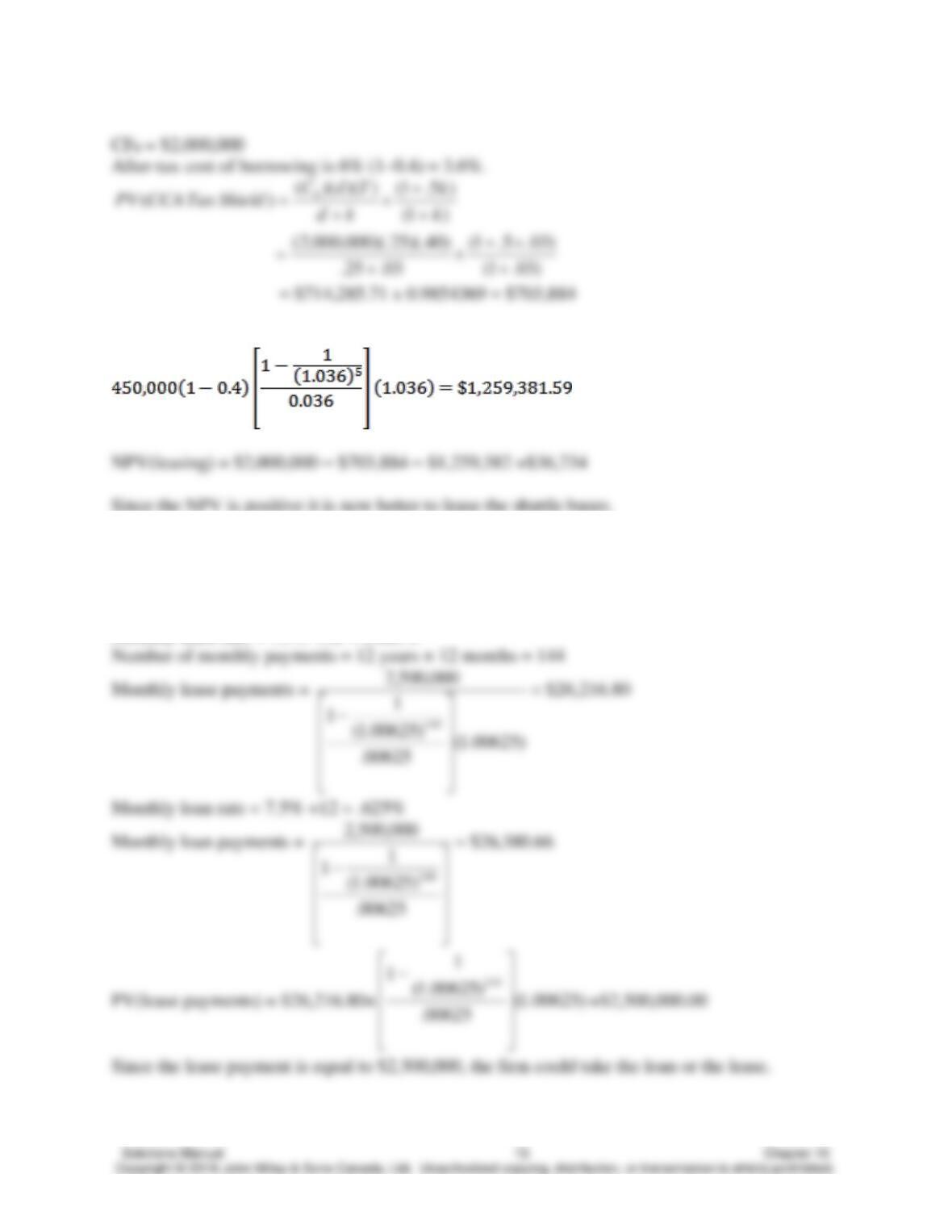
Introduction to Corporate Finance, Fourth Edition Booth, Cleary, Rakita
PV(lease payments) =
Since the NPV is positive it is now better to lease the shuttle buses.
27. Section: 16.3 Evaluating the Lease Decision
Learning Objectives: 16.3
Level of Difficulty: Challenging
Solution:
Monthly lease rate = 7.5% ÷12 = 0.625%
28. Section: 16.3 Evaluating the Lease Decision
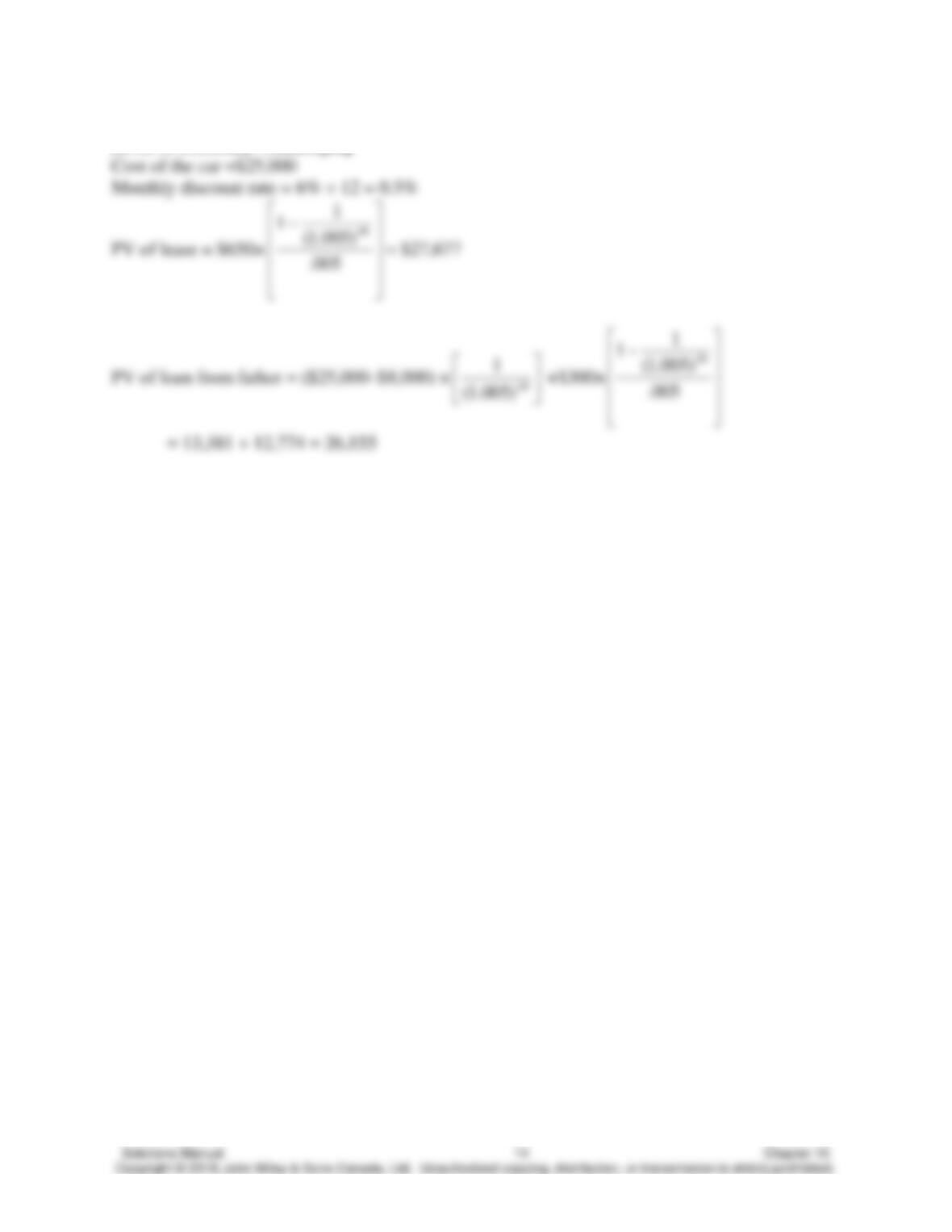
Introduction to Corporate Finance, Fourth Edition Booth, Cleary, Rakita
Learning Objectives: 16.3
Level of Difficulty: Challenging
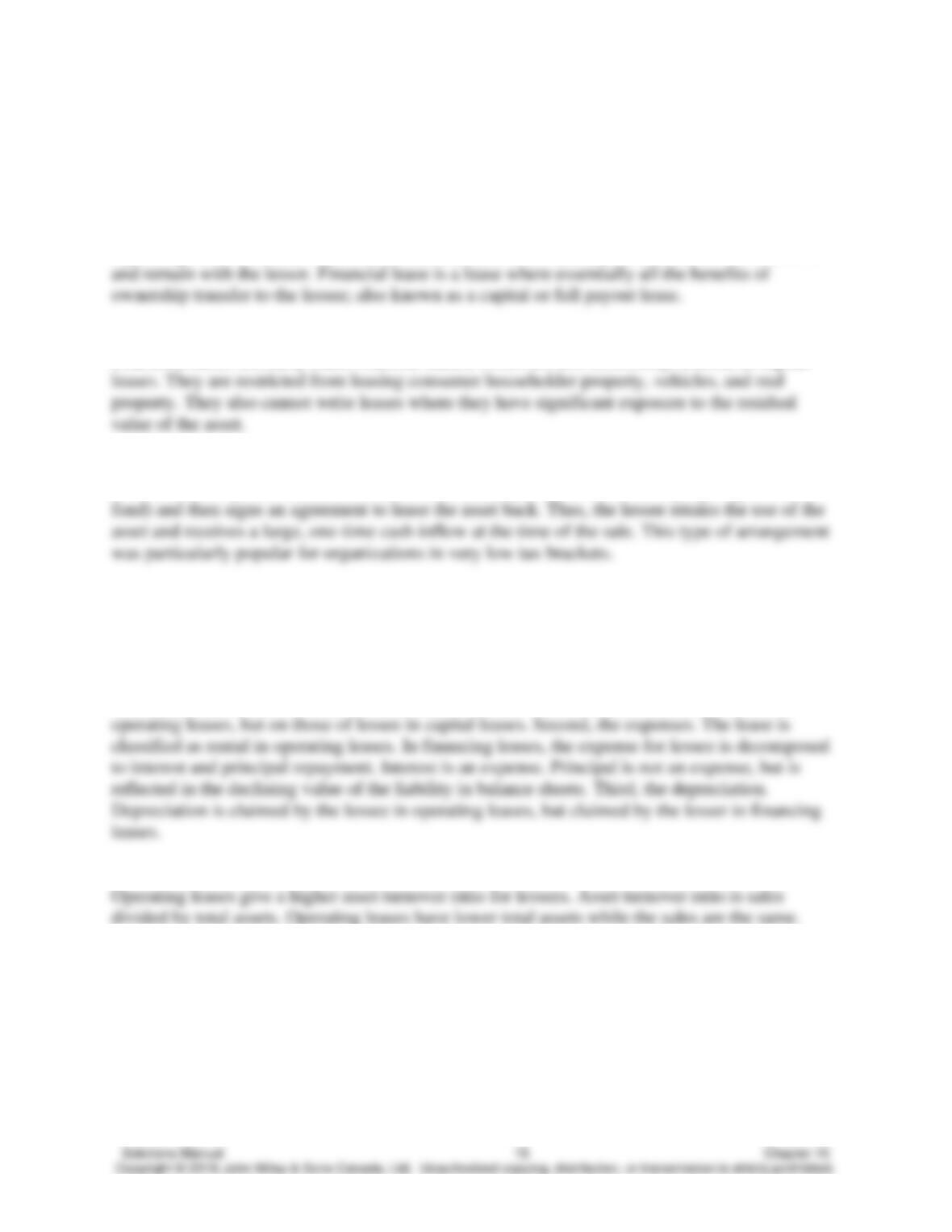
The present value of the loan is lower, implying the loan is cheaper; therefore, you should take
the loan.
Introduction to Corporate Finance, Fourth Edition Booth, Cleary, Rakita
Answers to Concept Review Questions
16.1 Leasing Arrangements
Concept review questions
1. What is the difference between an operating and a financial lease?
Operating lease is a lease where some of the benefits of ownership do not transfer to the lessee
2. What type of leases do chartered banks normally make?
Chartered banks normally make financial leases, which are also commonly referred as capital
3. What is a sale and leaseback agreement (SLB)?
In an SLB, the owner of an asset sells an asset (usually to an insurance company or pension
16.2 Accounting for Leases
Concept review questions
1. What are the cash flow from operations and the free cash flow implications of an operating
versus a financial lease?
The differences are as follows. First, the asset. The lease is on the balance sheets of lessors in
2. Which type of lease, operating or financial, gives a higher asset turnover ratio?
16.3 Evaluating the Lease Decision
Concept review questions
1. Explain how to calculate comparisons in the lease-versus-buy decision when the lease in
question is an operating lease.
Introduction to Corporate Finance, Fourth Edition Booth, Cleary, Rakita
2. How does the analysis change when the lease is a financial lease?
16.4 Motivation for Leasing
Concept review questions
1. Why are leases often more flexible than a borrow-purchase option?
Leases often offer more flexibility. For example, they often include the option to cancel a lease,
2. Why do you think that the major market for leasing is often SMEs, rather than large
corporations?
Leasing provides flexibility and convenience especially for SME, instead of large corporations.
3. If you were opening a copy centre, do you think you would lease or borrow to buy the
equipment and why?
The equipment should be leased for the following reasons:
• Low initial capital outlay – Copy machines are too expensive for a small business like a
copy center.