
1/6/2014
REAL OPTIONS: THE INVESTMENT TIMING OPTION
Cost= ($70)
WACC= 10%
Risk-free rate= 6%
Demand Prob.
Annual
Cash
Prob. x
(CF)
Procedure 1: DCF Only
NPV= $4.61
Procedure 3: Decision Tree Analysis
a. Scenario Analysis: Proceed with Project Today
Cost NPV this Prob. Data for
Year 0 Prob. 1 2 3 Scenario x NPV
$45 $45 $45 $41.91 $12.57 417
30%
30%
b. Decision Tree Analysis: Implement in One Year Only if Optimal
Cost NPV this Prob. Data for
Year 0 Prob. 12 3 4
Scenarioax NPV
-$70 $45 $45 $45 $35.70 $10.71 177
30%
30%
Assume that you have just been hired as a financial analyst by Tropical Sweets Inc., a mid-sized California
company that specializes in creating exotic candies from tropical fruits such as mangoes, papayas, and dates.
The firm’s CEO, George Yamaguchi, recently returned from an industry corporate executive conference in San
Francisco, and one of the sessions he attended was on real options. Since no one at Tropical Sweets is familiar
with the basics of real options, Yamaguchi has asked you to prepare a brief report that the firm’s executives
could use to gain at least a cursory understanding of the topics.
e. Use decision tree analysis to calculate the NPV of the project with the investment timing option.
a. What are some types of real options? Answer: See Chapter 14 Mini Case Show
b. What are the five steps for analyzing a real option? Answer: See Chapter 14 Mini Case Show
c. Tropical Sweets is considering a project that will cost $70 million and will generate expected cash flows of
$30 per year for three years. The cost of capital for this type of project is 10 percent and the risk-free rate is 6
Std Deviation
Tropical Sweets will know the level of demand, and will implement the project only if it adds value to the
d. Now suppose this project has an investment timing option, since it can be delayed for a year. The cost will
still be $70 million at the end of the year, and the cash flows for the scenarios will still last three years. However,
Chapter 14. Real Options
Future Cash Flows
Future Cash Flows
Std Deviation
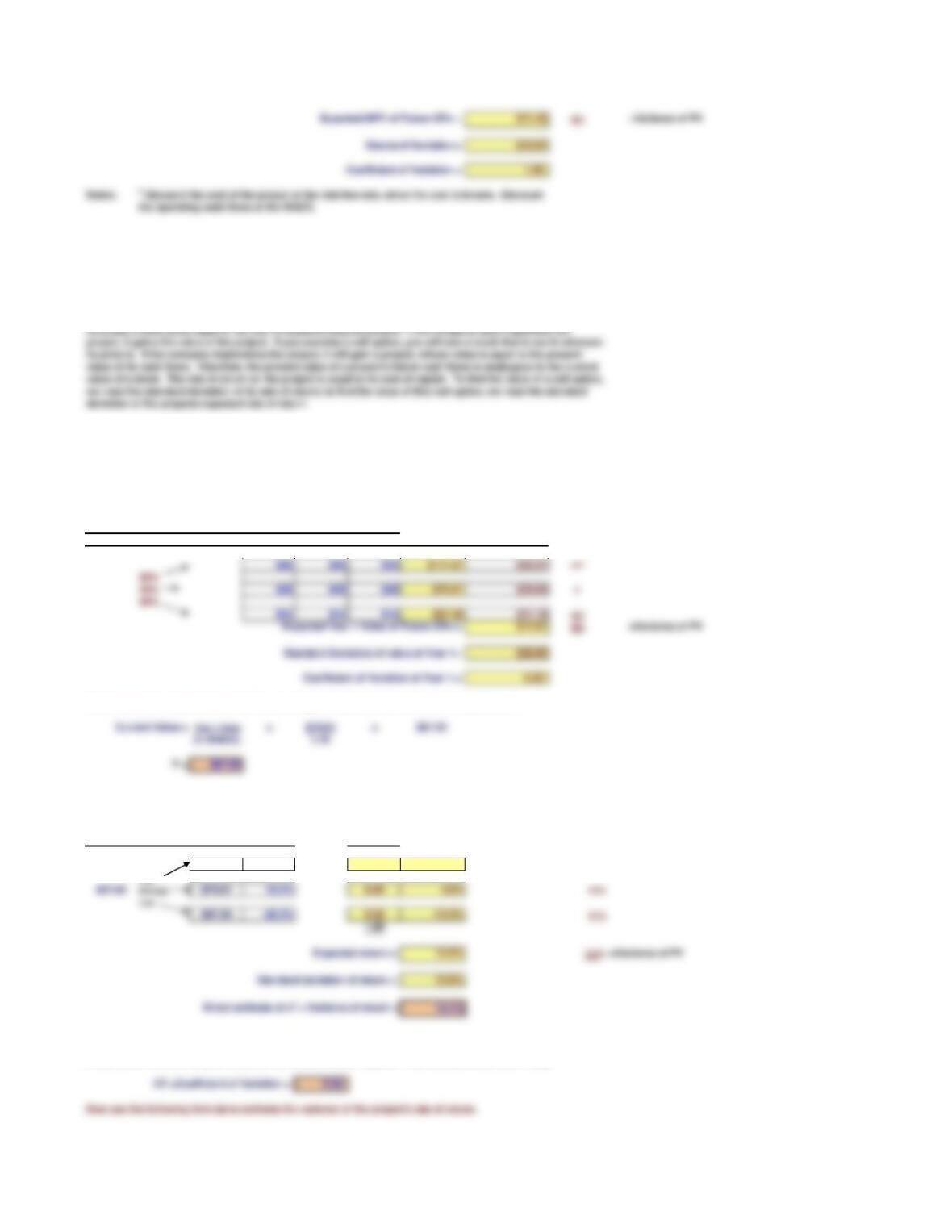
Procedure 4: Analysis with a Financial Option
Find the Year 1 Value and Risk of Future Cash Flows If Project is Deferred
PV at Prob. Data for
Year 0 Prob. 1 2 3 4 Year 1 x Value
Find the current value of future cash flows if project is deferred (note: this is the estimate of P).
Use the direct approach to estimate the variance of the project’s rate of return.
Probability Data for
PVYear 0 PVYear 1 Return
Probability
$111.91 65.00% 0.30 19.5% 9.1%
High
Now use the following formula to estimate the variance of the project’s rate of return.
f. Use a financial option pricing model to estimate the value of the investment timing option.
Future Cash Flows
x ReturnYear 1
Std Deviation
The option to defer the project is like a call option. The company has until Year 1 to decide whether or not to
implement the project, so the time to maturity of the option is one year. If the company exercises the option, it
The first step is to find the value of the project’s future cash flows, as of the time the option must be exercised.
We also need the standard deviation of the project’s value as of the date it must be exercised. Finally, we need
the present value of the project’s future cash flows.
Std Deviation
Use the indirect approach to estimate the variance of the project’s rate of return. Start by estimating the coefficient
of variation, CV, of the project’s value at the time the option expires. This was done in an earlier step.
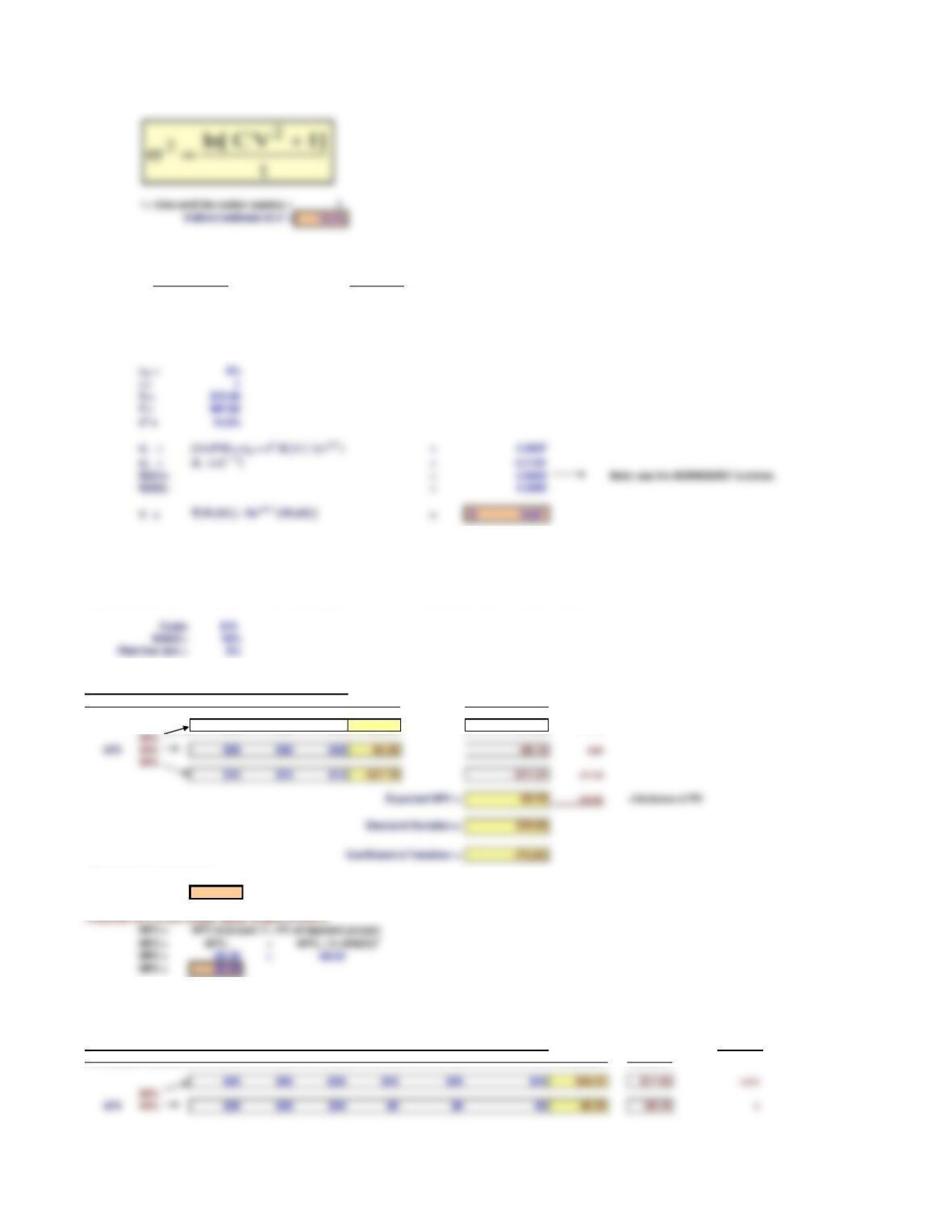
Find the Value of a Call Option Using the Black-Scholes Model
Real Option
rRF = Risk-free interest rate = Risk-free interest rate
t = Time until the option expires = Time until the option expires
X = Strike price = Cost to implement the project
P =
Current price of the underlying stock
= Current value of the project
s2 =
Variance of the stock’s rate of return
= Variance of the project’s rate of return
REAL OPTIONS: THE GROWTH OPTION
Original Project
Cost NPV this Prob. Data for
Year 0 Prob. 1 2 3 Scenario x NPV
$45 $45 $45 $36.91 $11.07 417.45
NPV without growth option:
NPV = -$0.39
Expected NPV is you simply repeat project at time 3:
NPV = -$0.39 + -$0.30
NPV = -$0.69
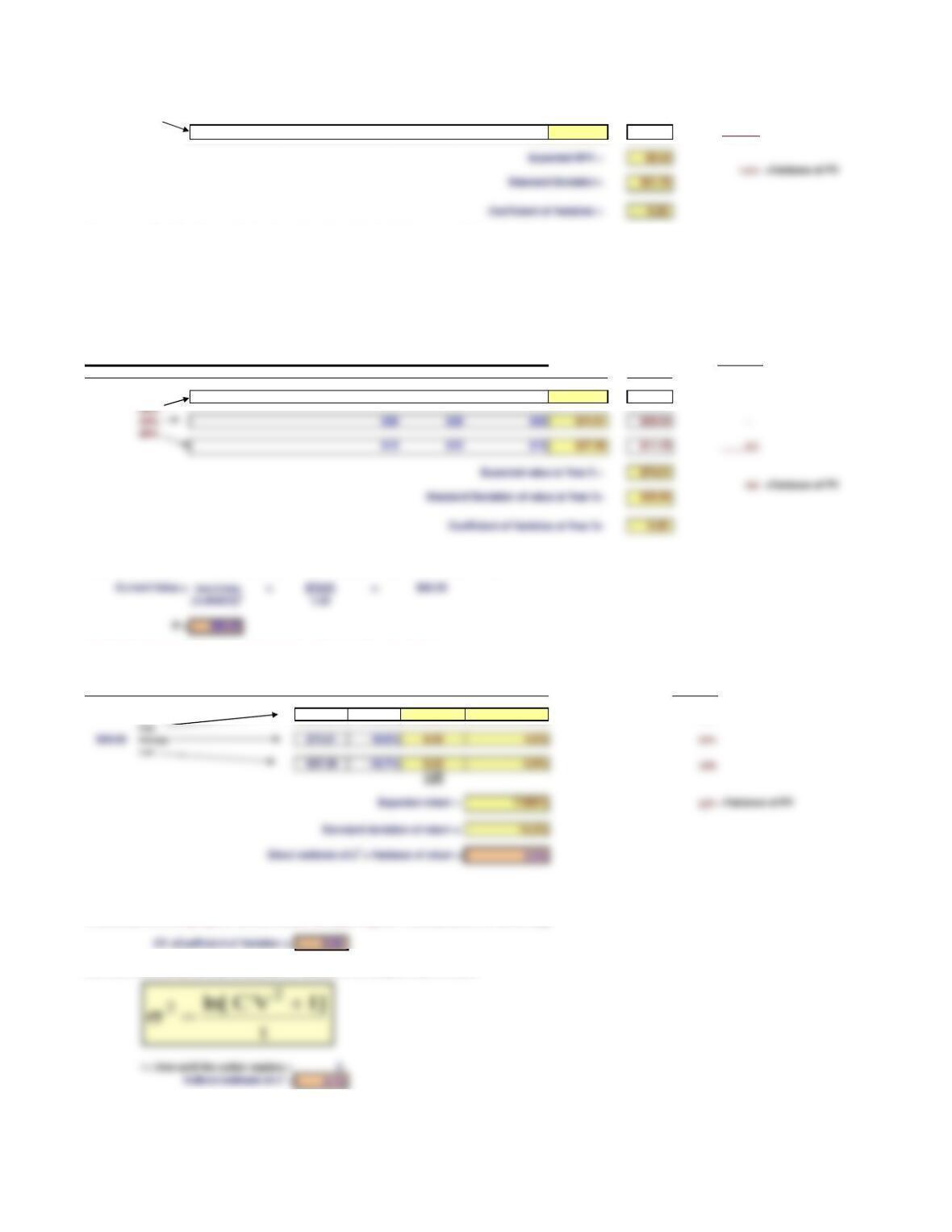
Decision Tree: Implement the repeated project only if demand is high. Data for
Cost NPV this Prob. Std Deviation
Year 0 Prob. 1 2 3 4 5 6 Scenario x NPV
Std Deviation
Financial Option
Future Cash Flows
h. Tropical Sweets will replicate the original project only if demand is high. Using decision tree analysis,
estimate the value of the project with the growth option.
g. Now suppose the cost of the project is $75 million and the project cannot be delayed. But if Tropical Sweets
implements the project, then Tropical Sweets will have a growth option. It will have the opportunity to replicate the
original project at the end of its life. What is total expected NPV of the two projects if both are implemented?
Future Cash Flows
30%
$15 $15 $15 $0 $0 $0 -$37.70 -$11.31 –
Notes: 1. The CF in Year 3 includes the cost to implement the second project if it is optimal to do so.
Financial Option Approach
Find the value and risk of the future cash flows as of the time the option expires.
Data for
Cost PV at Prob. Std Deviation
Year 0 Prob. 1 2 3 4 5 6 Year 3 x NPV
$45 $45 $45 $111.91 $33.57 417
30%
30%
Find the current value of future cash flows if project is deferred (note: this is the estimate of P).
Use the direct approach to estimate the variance of the project’s rate of return.
Annual Data for
PVYear 0 1 2 PVYear 3 Return Probability x Returnannual Std Deviation
$111.91 25.9% 0.30 7.8% 1.0%
Now use the following formula to estimate the variance of the project’s rate of return.
j. What happens to the value of the growth option if the variance of the project’s return is 14.2 percent? What if
it is 50 percent? How might this explain the high valuations of many dot.com companies?
Use the indirect approach to estimate the variance of the project’s rate of return. Start by estimating the coefficient
of variation, CV, of the project’s value at the time the option expires. This was done in an earlier step.
i. Use a financial option model to estimate the value of the growth option.
2. When finding the NPV, the cost to implement the second project is discounted at the risk-free rate; other cash
flows are discounted at the cost of capital.
Future Cash Flows

Find the Value of a Call Option Using the Black-Scholes Model
Sensitivity Analysis
Base Case Case 1 Case 2
rRF = 6% 6% 6%
t = 3 3 3
j. What happens to the value of the growth option if the variance of the project’s return is 14.2 percent? What if
it is 50 percent? How might this explain the high valuations of many dot.com companies?
X = $75.00 $75.00 $75.00
P = $56.05 $56.05 $56.05