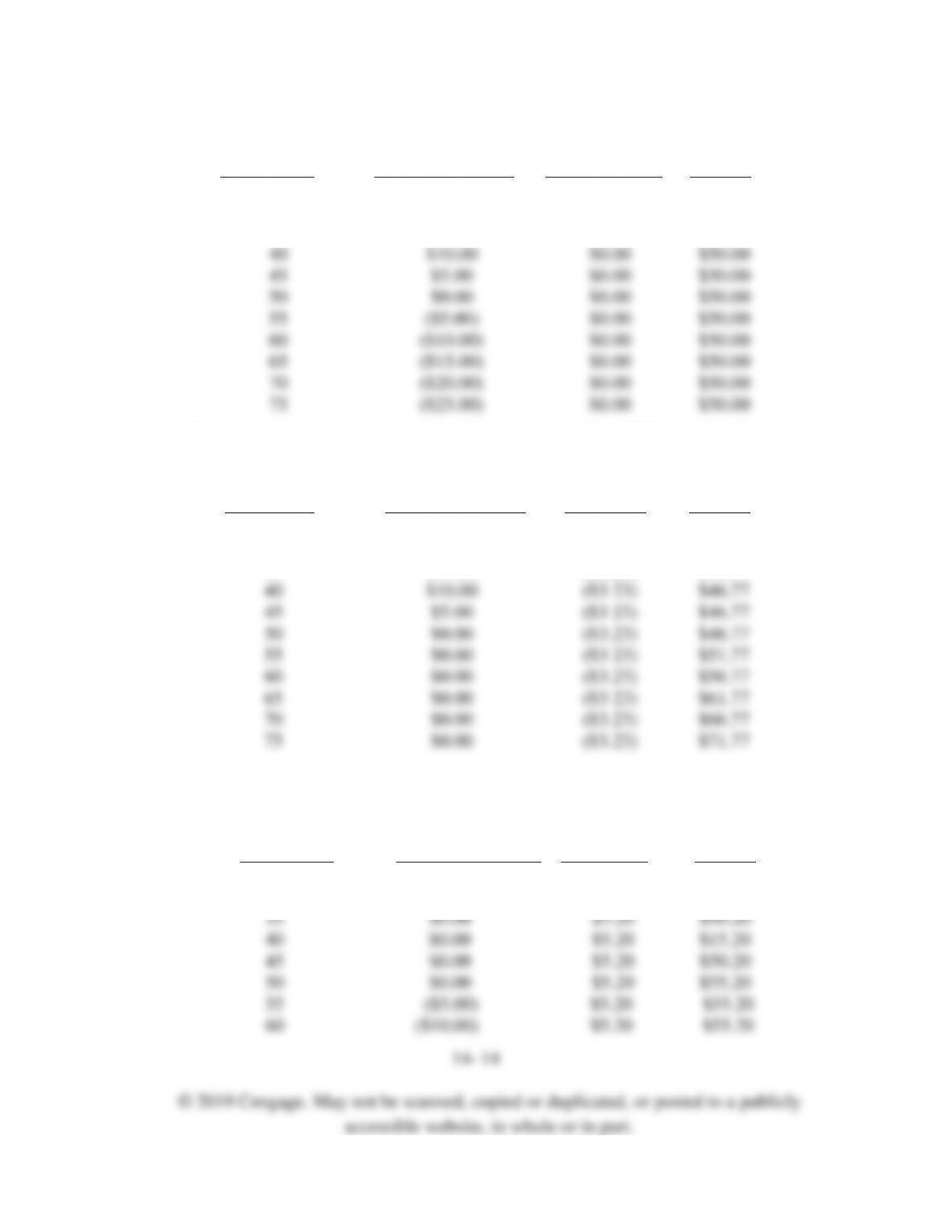
3(a). (i). A short position in a forward option with a exercise price of $50.
Expiration Date Sophia Short Forward (X=$50) Initial Short
Stock Price (S) Payoff =max (0, S-50) Forward Premium Net Profit
25 $25.00 $0.00 $50.00
30 $20.00 $0.00 $50.00
35 $15.00 $0.00 $50.00
(ii). A long position in a put option with a exercise price of $50 and a front-end
premium expense of $3.23.
Expiration Date Sophia Long Put (K=$50) Initial Long Put
Stock Price (S) Payoff = max (0,50–S) Put Premium Net Profit
25 $25 00 ($3 23) $46.77
30 $20.00 ($3.23) $46.77
35 $15.00 ($3.23) $46.77
(iii). A short position in a call option with an exercise price of $50 and a front-end
premium receipt of $5.20.
Expiration Date Sophia Short Call (K=$50) Initial Short
Stock Price (S) Payoff = -max (0,S-50) Call Premium Net Profit
25 $0.00 $5.20 $30.20
30 $0.00 $5.20 $35.20
14- 15
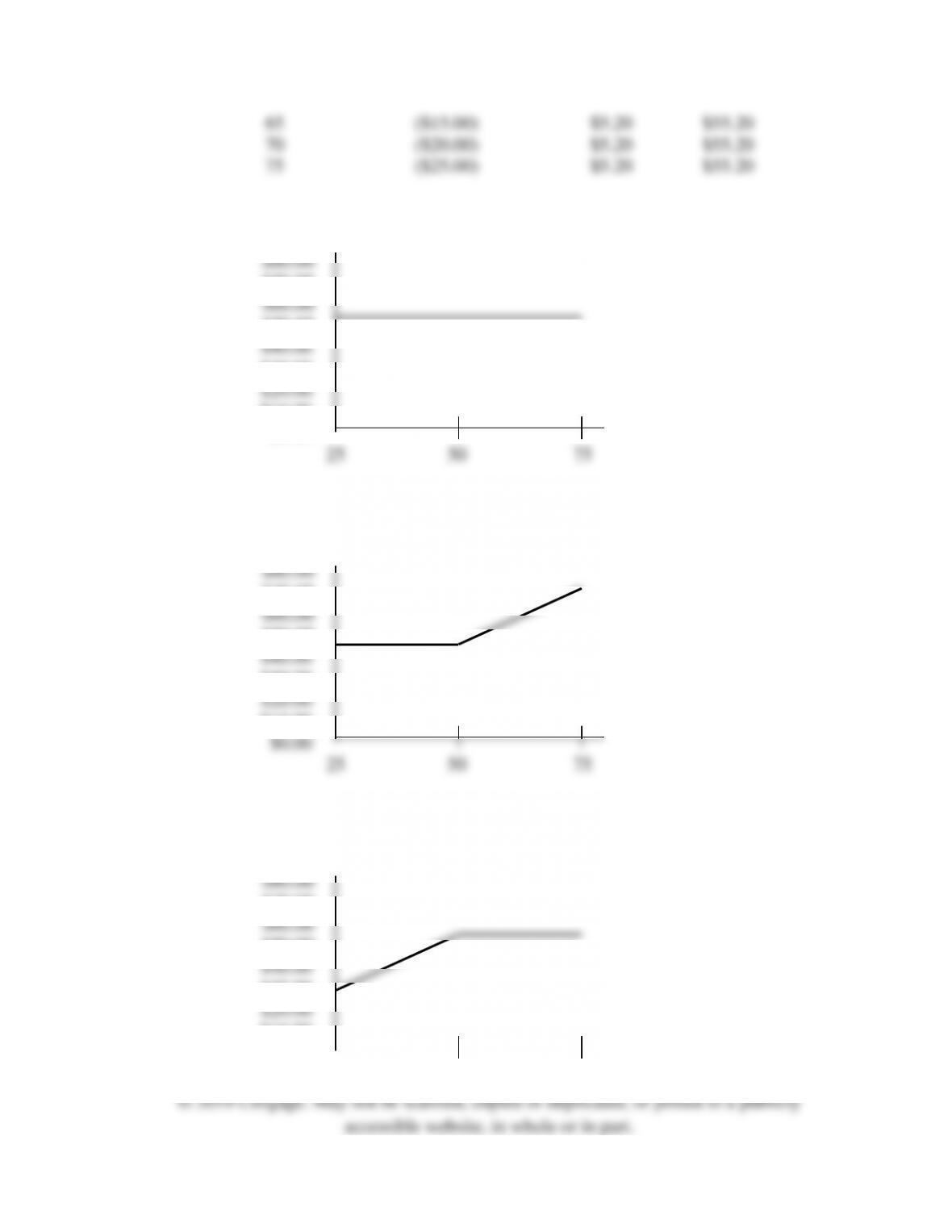
3(b). (i). A short position in a forward with a contract price of $50:
Short Forward
$70.00
$50.00
$30.00
$10.00
$0.00
(ii). A long position in a put option with an exercise price of $50 and a front-end
premium expense of $3.23:
Long Put
$70.00
$50.00
$30.00
$10.00
(iii). A short position in a call option with an exercise price of $50 and a front-end
premium expense of $5.20:
Short Call
$70.00
$50.00
$30.00
$10.00
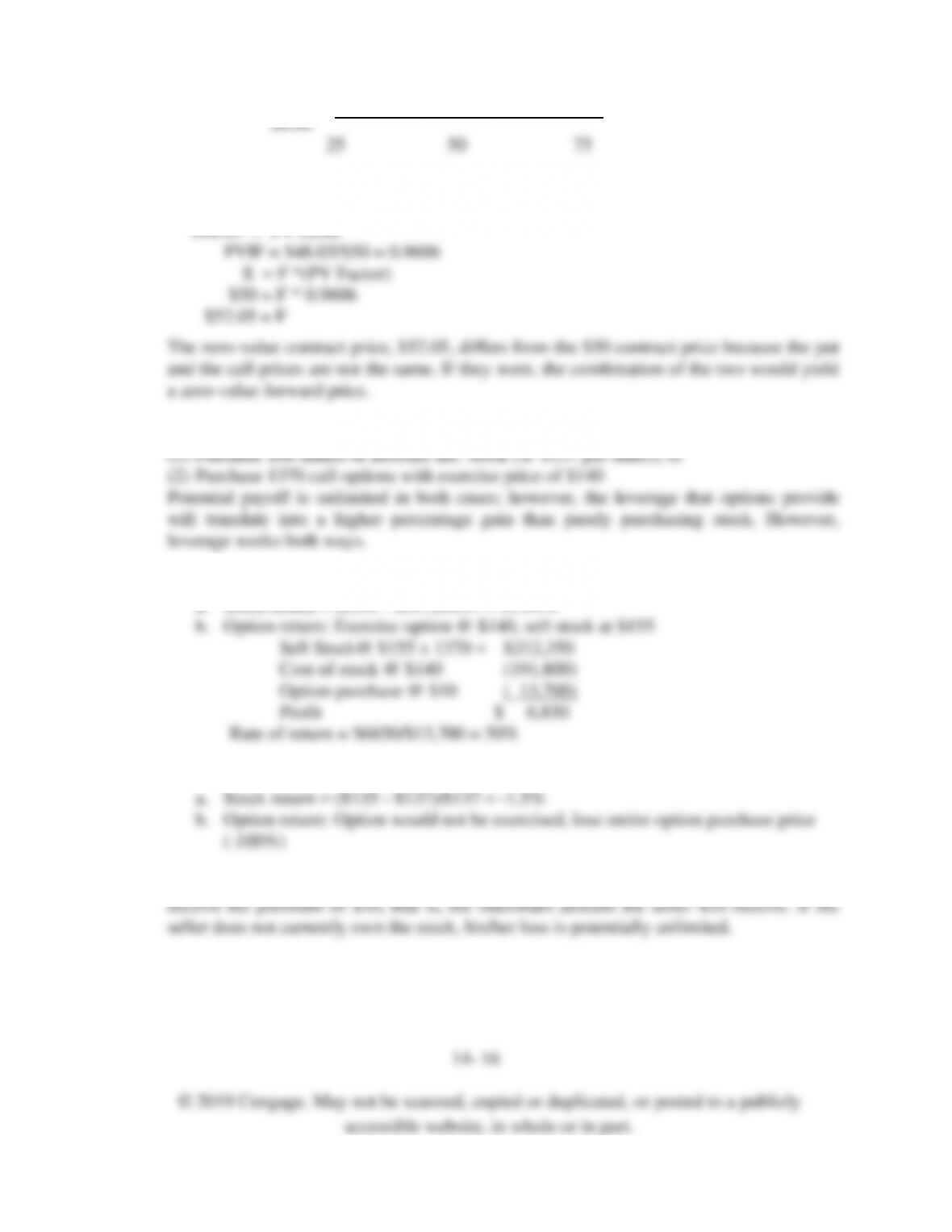
3(c). F0,T = Call – Put + PV(Strike)
$50.00 = 5.20 – 3.23 + PV($50)
4(a). With $13,700 to spend, one could:
4(b). (1) Stock price increases to $155
(2) Stock price decreases to $135
4(c). Breakeven on this call option is $150. In other words, the writer of the call option will
14- 17
5(a). Given:
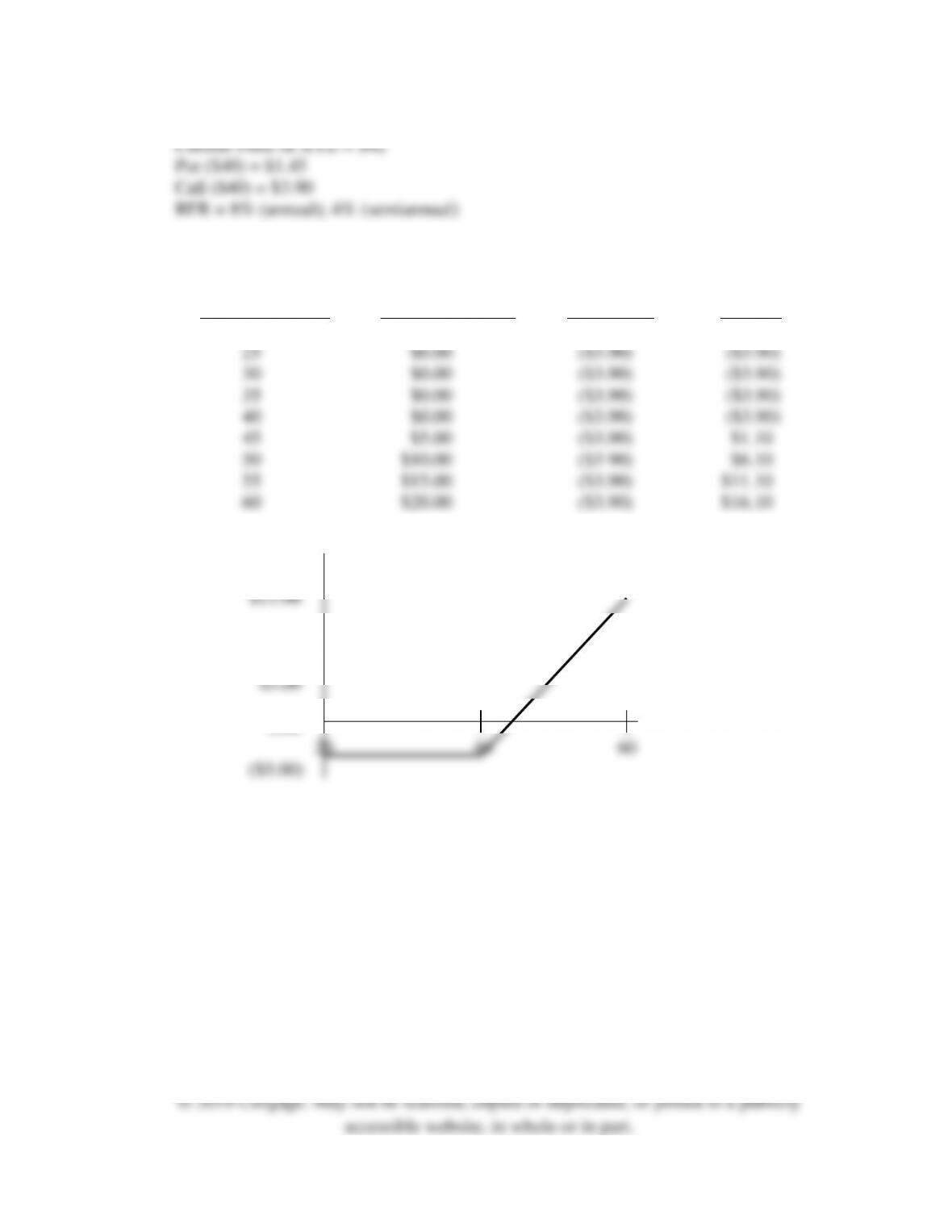
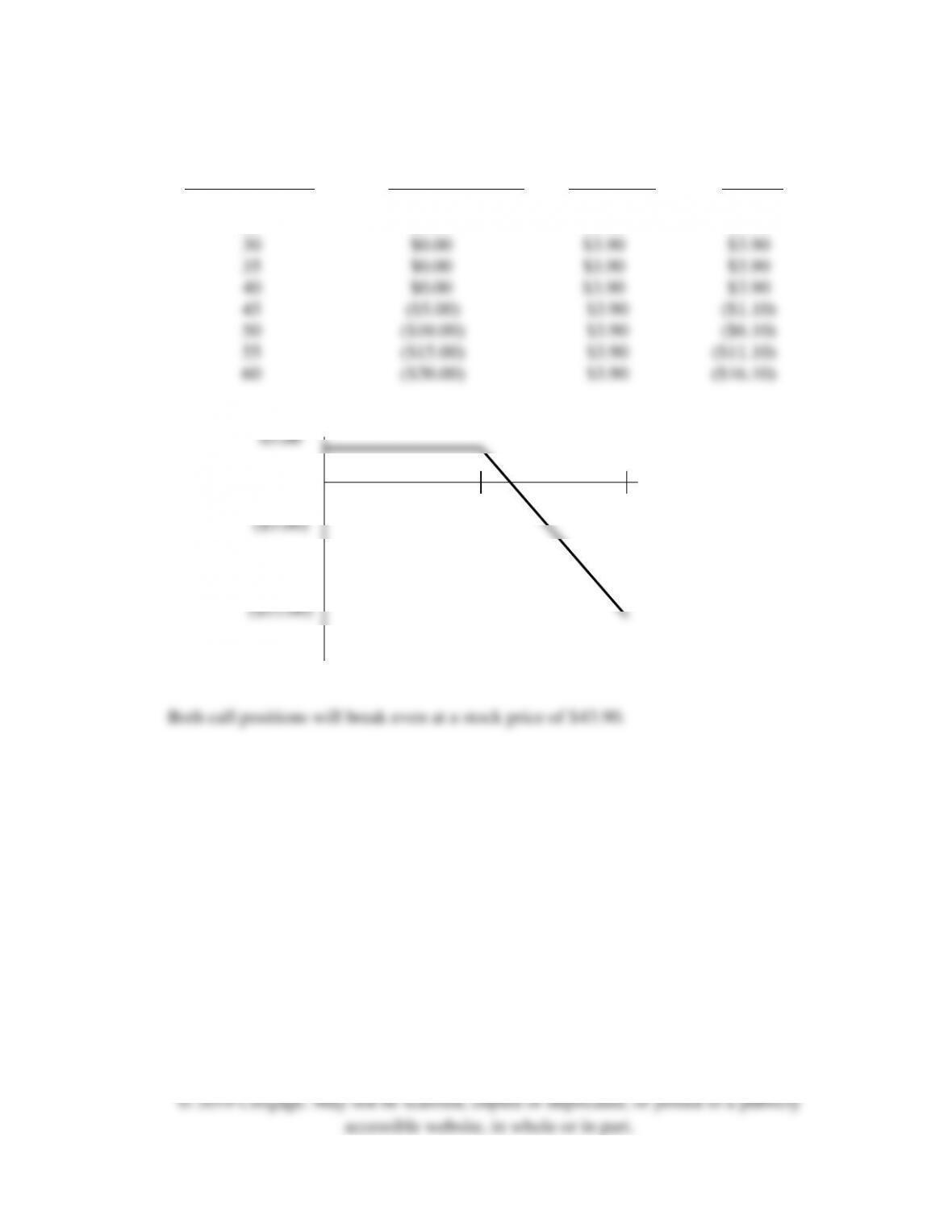
(i). Buy one call option
Expiration Date Long Call (K=$40) Initial Long
XYZ Stock Price (S) Payoff = max (0,S-40) Call Premium Net Profit
20 $0.00 ($3.90) ($3.90)
Long Call
$20.00
$10.00
0.00
14- 18
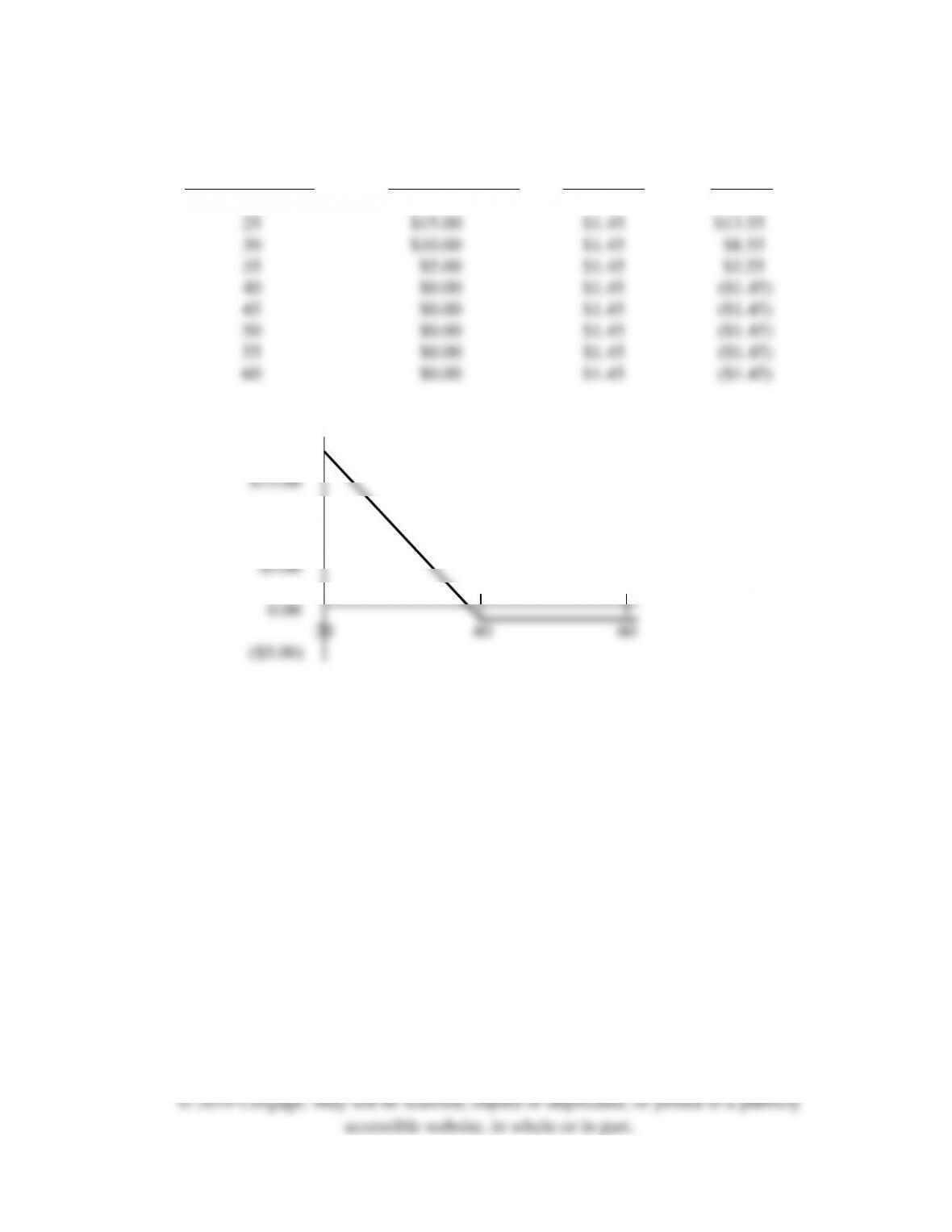
(ii). Short one call option
Expiration Date Short Call (K=$40) Initial Short
XYZ Stock Price (S) Payoff =-max (0,S-40) Call Premium Net Profit
20 $0.00 $3.90 $3.90
25 $0.00 $3.90 $3.90
Short Call
$0.00
20 40 60
($10.00)
($20.00)
14- 19
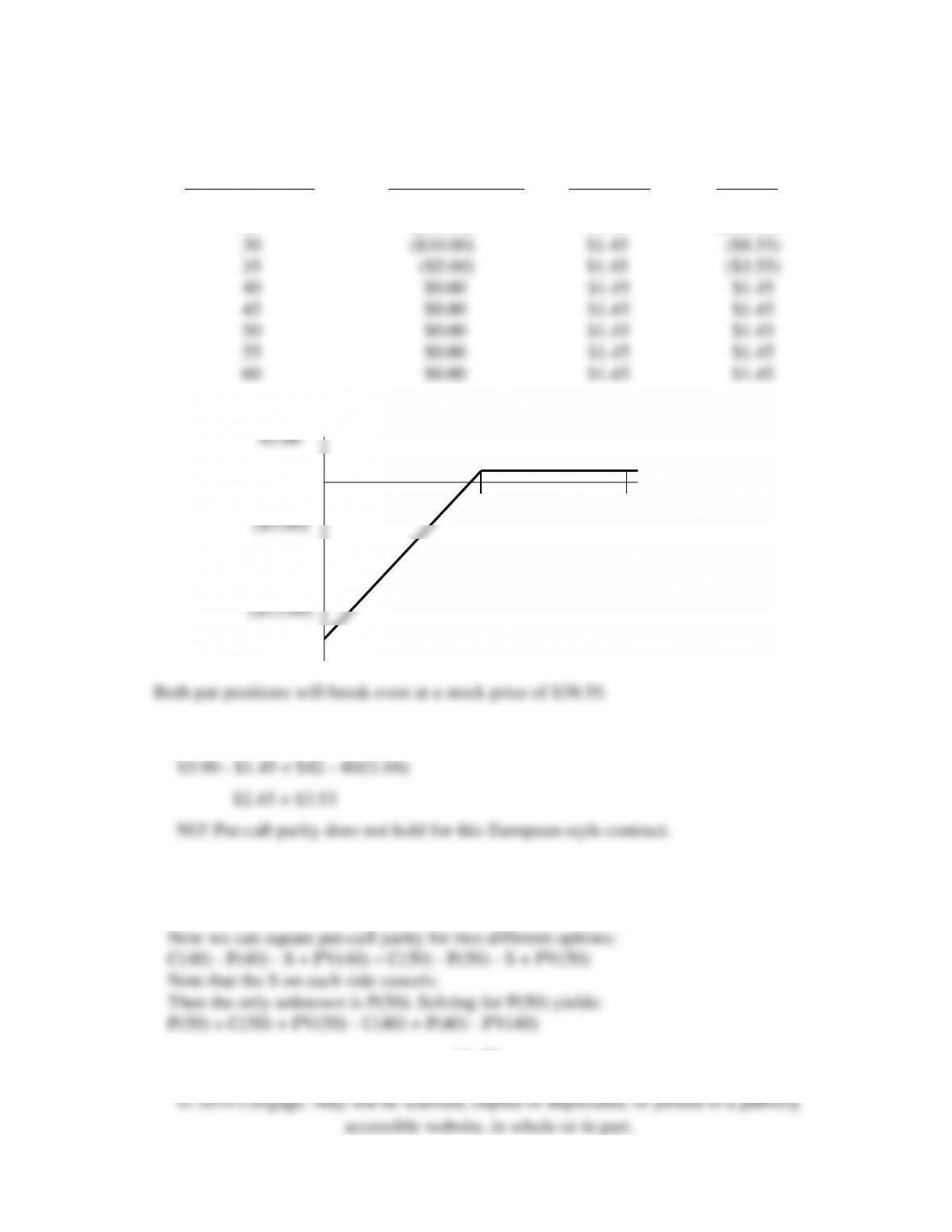
5(b). (i). Buy one put option
Expiration Date Long Put (K=$40) Initial Long
XYZ Stock Price (S) Payoff =max (0,40-S) Put Premium Net Profit
20 $20.00 $1.45 $18.55
Long Put
$20.00
$10.00
14- 20
(ii). Short one put option
Expiration Date Long Put (K=$40) Initial Long
XYZ Stock Price (S) Payoff =-max (0,40-S) Put Premium Net Profit
20 ($20.00) $1.45 ($18.55)
25 ($15.00) $1.45 ($13.55)
Short Put
$0.00
20 40 60
($10.00)
($20.00)
5(c). Does Call – Put = S – PV(exercise price)?
6(a). To solve this problem, express put call parity in the following form:
C(exercise price) – P(exercise price) – S + PV(exercise price) = 0
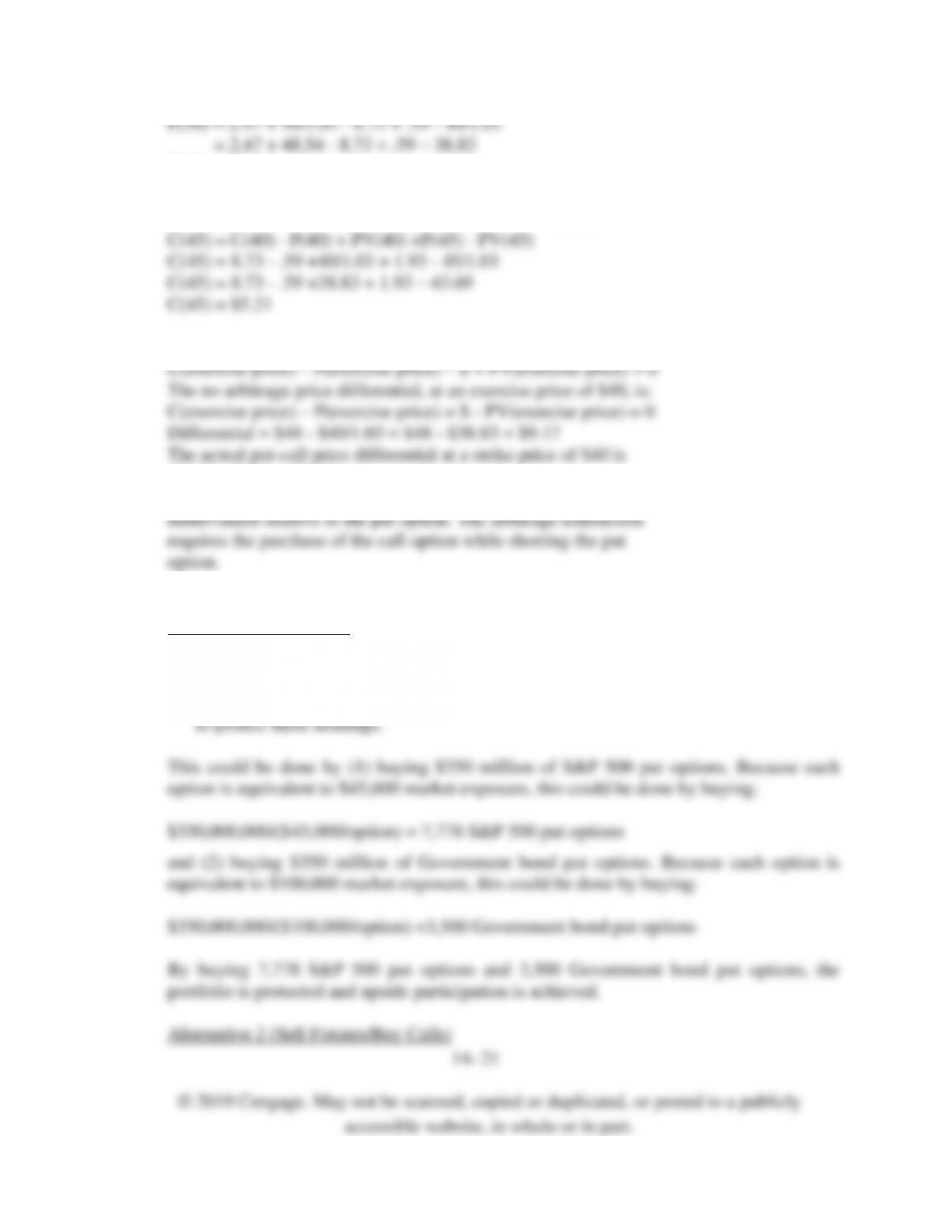
P(50) = $4.04
The same can be done to find the value of C(45):
C(40) – P(40) – S + PV(40) = C(45) – P(45) – S P PV(45)
6(b). To solve this problem, express put call parity in the following form:
($8.73 – 0.59) = $8.14.
Assuming the actual T-bill is priced correctly, the call price is
7.
7(a). Alternative 1 (Buy Puts)
• Buy S&P 500 put options with market exposure equal to equity holdings to protect
these holdings.
• Buy Government bond put options with market exposure equal to the bond holdings
(1) Selling $350 million of S&P futures. Because each future is equivalent to $
(2) Selling $ 350 million of Government bond futures contracts. Because each bond
future is equivalent to $100,000 of bond exposure, this could be done by selling:
7(b). Given the put-call parity relationship, the put options appear misvalued compared to the
call options.
Given the S&P 500 call price, the put should be priced at:
put = 21.00 – index price + present value of (strike + income)
Given the bond call price, the bond put option should be priced at:
put = 6.00 – bond price + present value of (strike + income)
The prices of the futures also appear high. A fair price for the S&P 500 future would be:
A fair price for the bond future would be:
From this analysis, the futures are somewhat overvalued and the put options are relatively
overpriced compared to the call options.
Alternative 1 involves buying relatively expensive assets (the put options).
Put
-60
8(b). With a price of $97 for six-month T-bills, the six-
month risk-free rate is 100/97 -1 = 3.09%
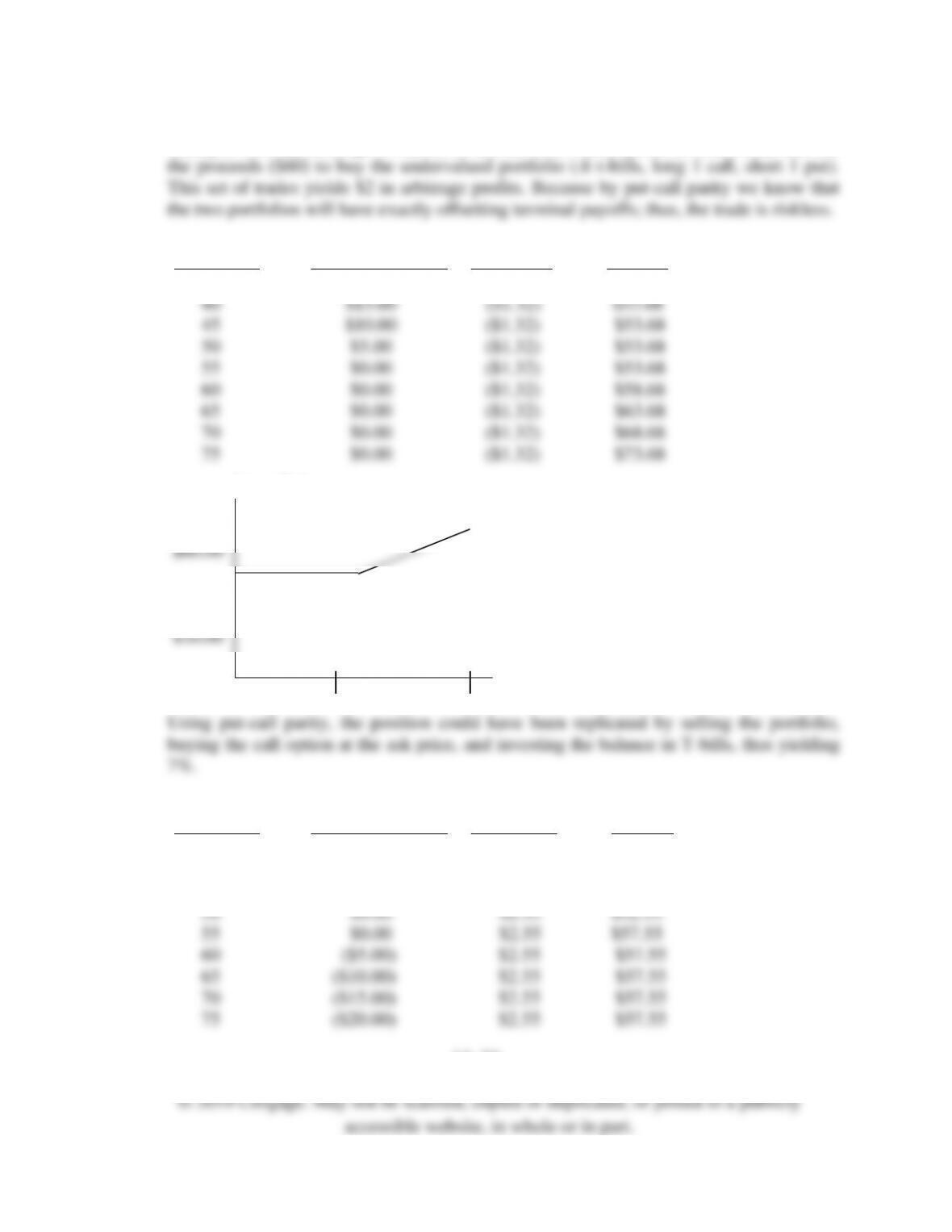
Using put-call parity the “no arbitrage price” is
S= PV(exercise price)+C-P
14- 24
8(c). Because put-call parity indicates the “no arbitrage” price of the stock is $58 and the stock
selling at $60, the arbitrage would be to sell the over-valued portfolio (the stock) and use
9(a). Expiration Date Long Put (X=$55) Initial Long
Stock Price(S) Payoff = max(0,55-S) Put Premium Net Profit
35 $20.00 ($1.32) $53.68
Long Put
9(b). $80.00
$40.00
$0.00
35 50 75
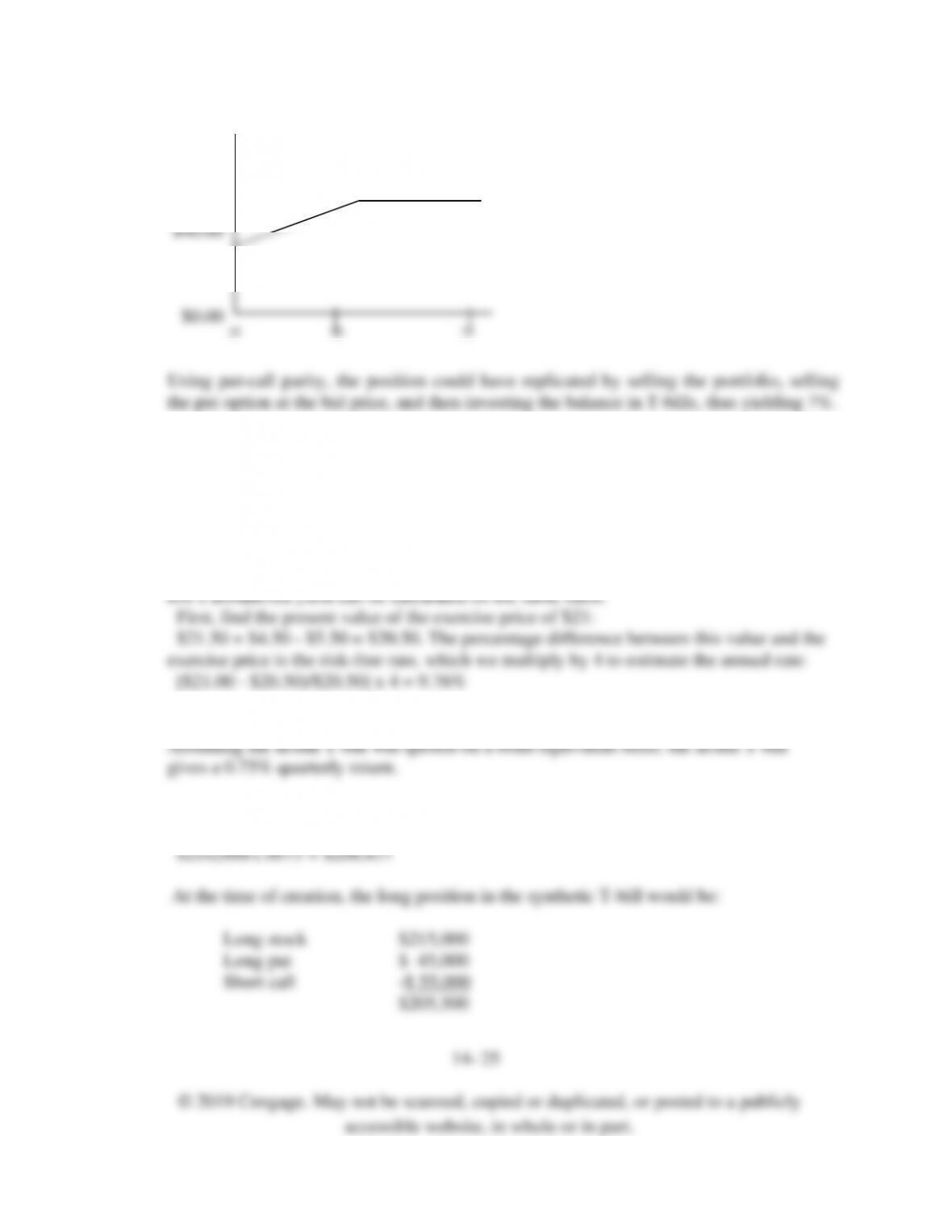
9(c). Expiration Date Short Call (K=$55) Initial Short
Stock Price(S) Payoff = max(0,S-55) Call Premium Net Profit
35 $0.00 $2.55 $37.55
40 $0.00 $2.55 $42.55
45 $0.00 $2.55 $47.55
Short Call
9(d). $80.00
$60.00
$20.00
10.
10(a). The transactions needed to construct the synthetic T-Bill would be to long the stock, long
the put, and short the call.
10(b). Assuming the T-Bill yield was quoted on a bond equivalent basis, the synthetic Treasury
10(c). The strategy would be to short 21 actual T-bills and to long 100 synthetic T-bills.
Immediately, the short actual T-bill position pays:
Therefore the net cash flow is:
10(d). The approach to calculating net cash flow gives the same result whether the calculation is
done for three months or six months. At the three-month expiration, the value of the long
synthetic position is:
where X = exercise price, P = put price, C = call price, and S = stock price
At expiration X = P + S – C