Introduction to Corporate Finance, Fourth Edition Booth, Cleary, Rakita
Chapter 12: Options
Multiple Choice Questions
1. Section: 12.1 Call Options
Learning Objective: 12.1
Level of Difficulty: Basic
2. Section: 12.1 Call Options
Learning Objective: 12.1
Level of Difficulty: Intermediate
3. Section: 12.1 Call Options
Learning Objective: 12.1
Level of Difficulty: Intermediate
4. Section: 12.2 Put Options
Learning Objective: 12.2
Level of Difficulty: Intermediate
5. Section: 12.3 Put–Call Parity
Learning Objective: 12.3
Level of Difficulty: Intermediate
Introduction to Corporate Finance, Fourth Edition Booth, Cleary, Rakita
6. Sections: 12.1 Call Options and 12.2 Put Options
Learning Objective: 12.1 and 12.2
Level of Difficulty: Intermediate
7. Sections: 12.1 Call Options and 12.2 Put Options
Learning Objective: 12.1 and 12.2
Level of Difficulty: Intermediate
8. Section: 12.4 The Black–Scholes Option Pricing Model
Learning Objective: 12.4
Level of Difficulty: Intermediate
9. Section: 12.5 Options Markets
Learning Objective: 12.1 and 12.5
Level of Difficulty: Intermediate
Introduction to Corporate Finance, Fourth Edition Booth, Cleary, Rakita
10. Section: Appendix 12A Binomial Option Pricing and Risk–Neutral Probabilities
Learning Objective: 12.6
Level of Difficulty: Intermediate
Solution: C.
11. Section: Appendix 12A Binomial Option Pricing and Risk–Neutral Probabilities
Learning Objective: 12.6
Level of Difficulty: Intermediate
12. Section: Appendix 12A Binomial Option Pricing and Risk–Neutral Probabilities
Learning Objective: 12.6
Level of Difficulty: Intermediate
Practice Problems
Basic
13. Section: 12.4 The Black–Scholes Option Pricing Model
Learning Objective: 12.4
Level of Difficulty: Basic
Solution:
Delta (Δ) is the change in the price of the option with the change in the underlying asset price.
Rho (ρ) is the change in the option value with respect to a change in the interest rate.
14. Section: 12.3 Put–Call Parity
Learning Objective: 12.3
Level of Difficulty: Basic
Solution:
Intermediate
Introduction to Corporate Finance, Fourth Edition Booth, Cleary, Rakita
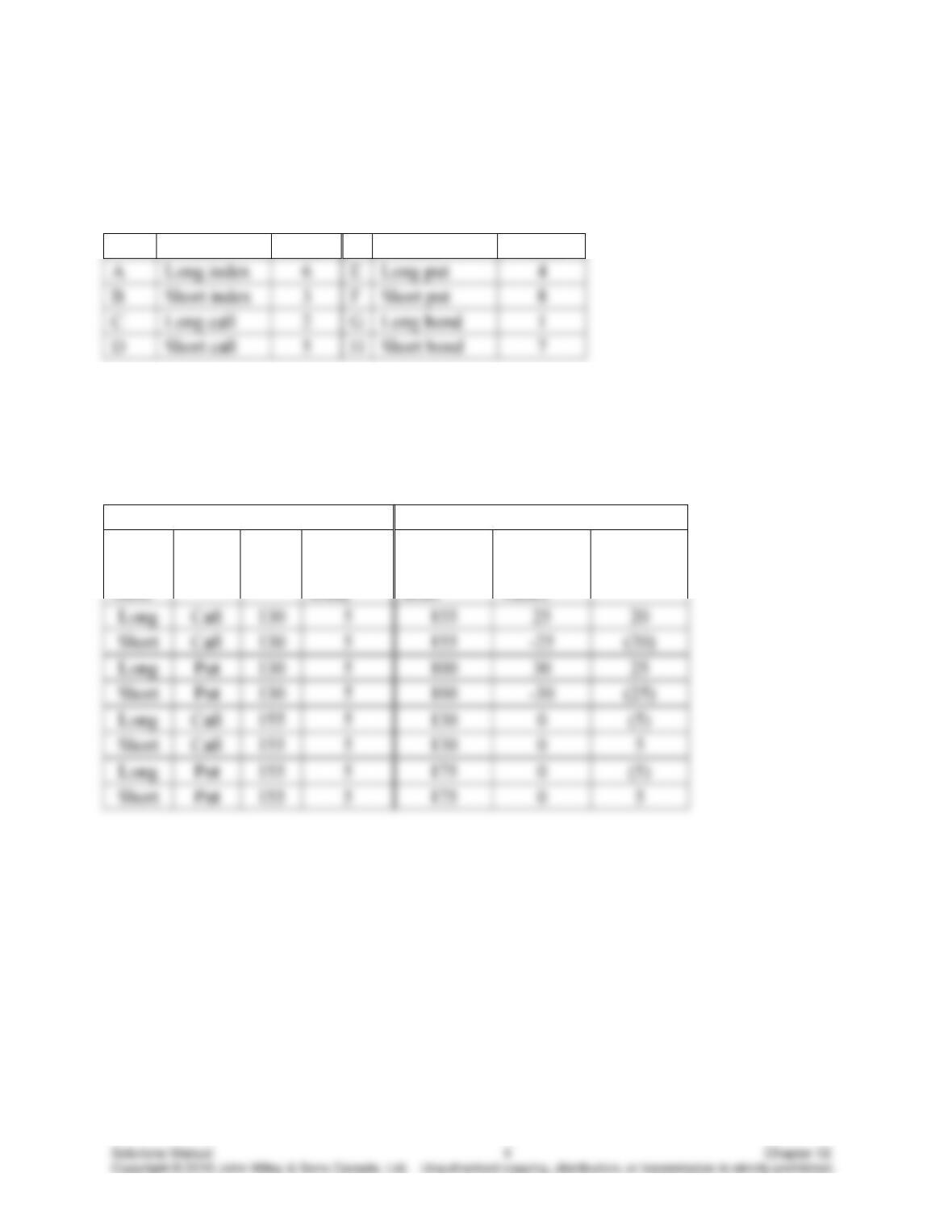
15. Sections: 12.1 Call Options and 12.2 Put Options
Learning Objective: 12.1 and 12.2
Level of Difficulty: Intermediate
Solution:
Position
Series
Position
Series
A
E
G
D
H
16. Sections: 12.1 Call Options and 12.2 Put Options
Learning Objective: 12.1, and 12.2
Level of Difficulty: Intermediate
Solution:
At expiration
Long
or
Short
Call or
Put
Strike
price
Value of
option
today
Value of
underlying
asset
Payoff
(intrinsic
value)
Profit
(loss)
Put
Put
Put
Put
17. Sections: 12.1 Call Options and 12.2 Put Options
Learning Objective: 12.1 and 12.2
Level of Difficulty: Intermediate
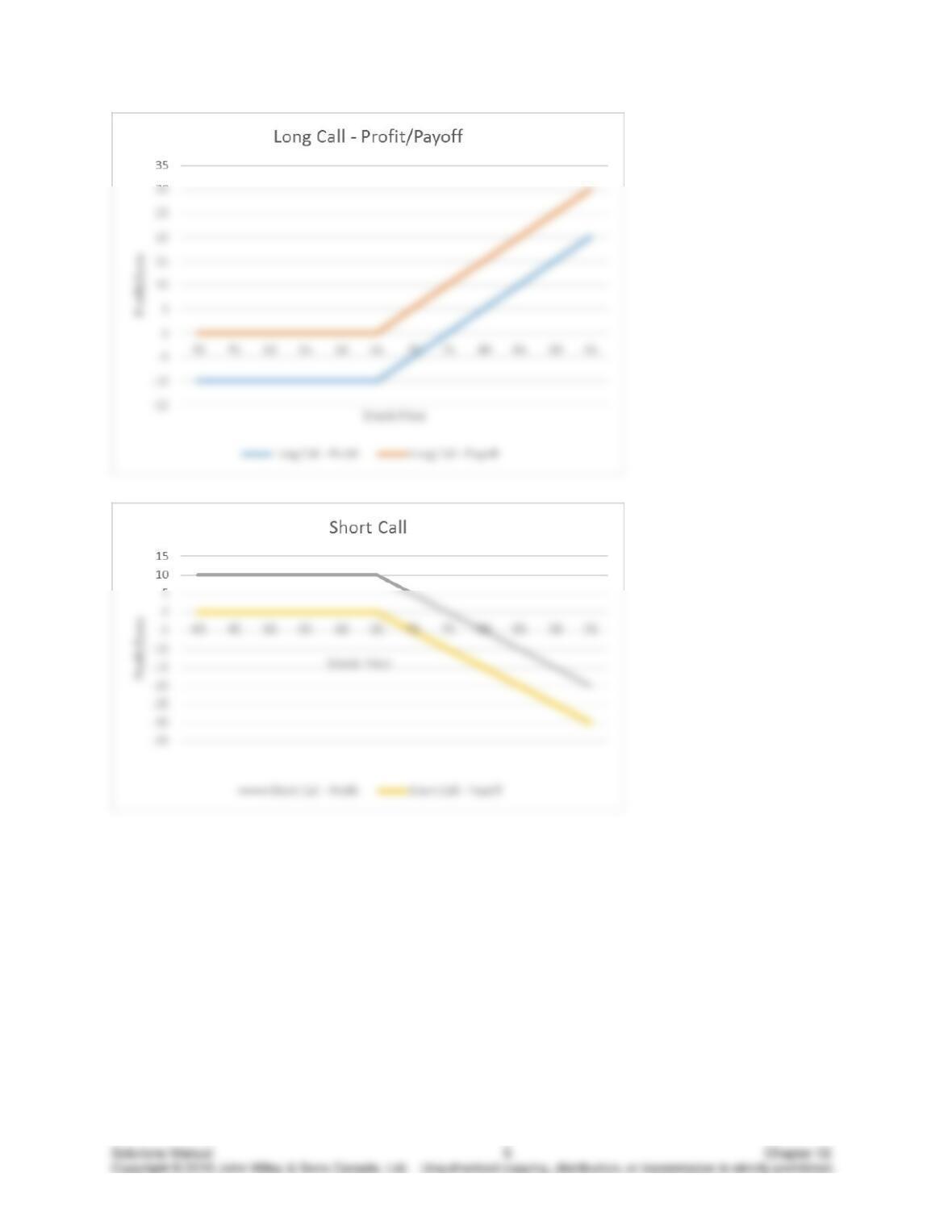
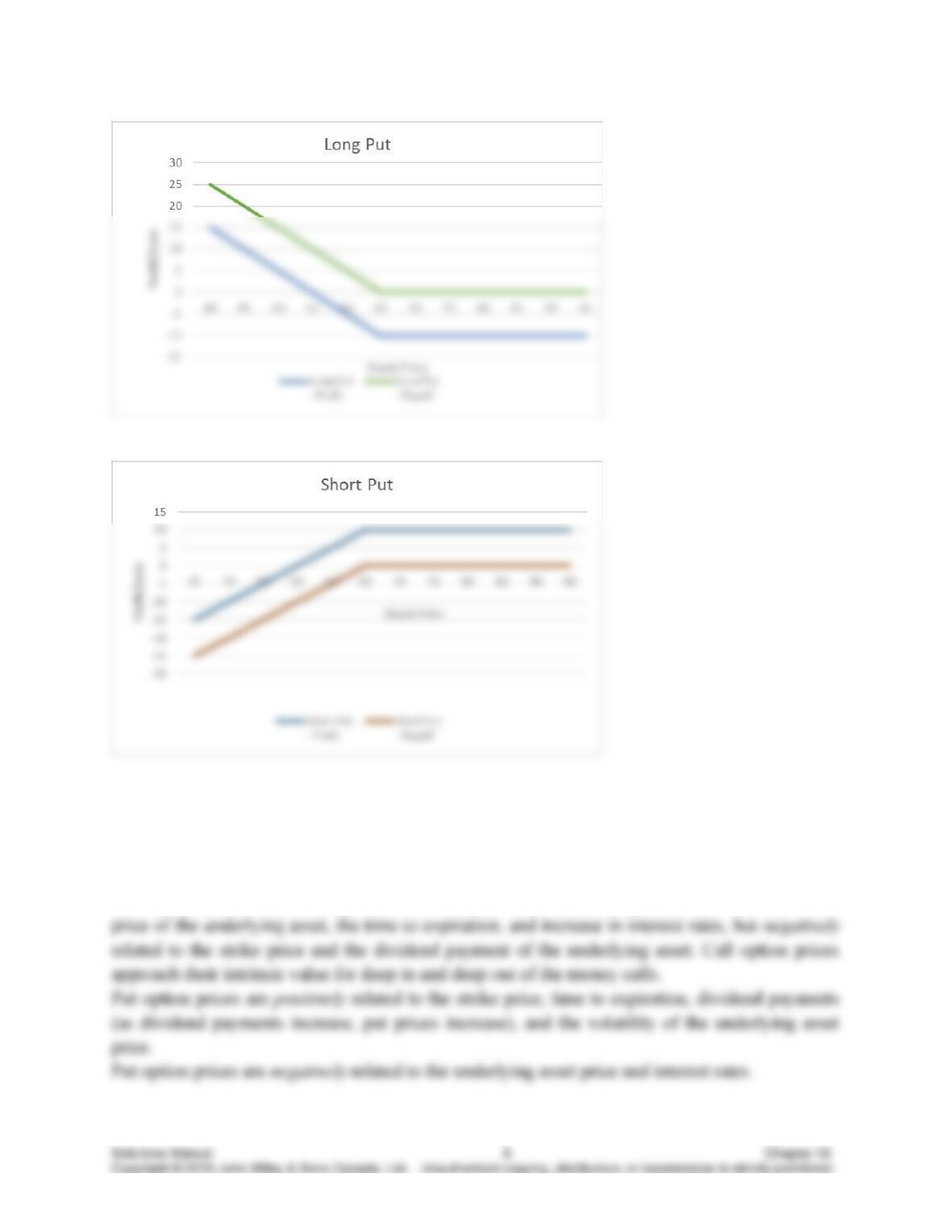
Solution:
Introduction to Corporate Finance, Fourth Edition Booth, Cleary, Rakita
Introduction to Corporate Finance, Fourth Edition Booth, Cleary, Rakita
18. Sections: 12.1 Call Options and 12.2 Put Options
Learning Objective: 12.1 and 12.2
Level of Difficulty: Intermediate
Solution:
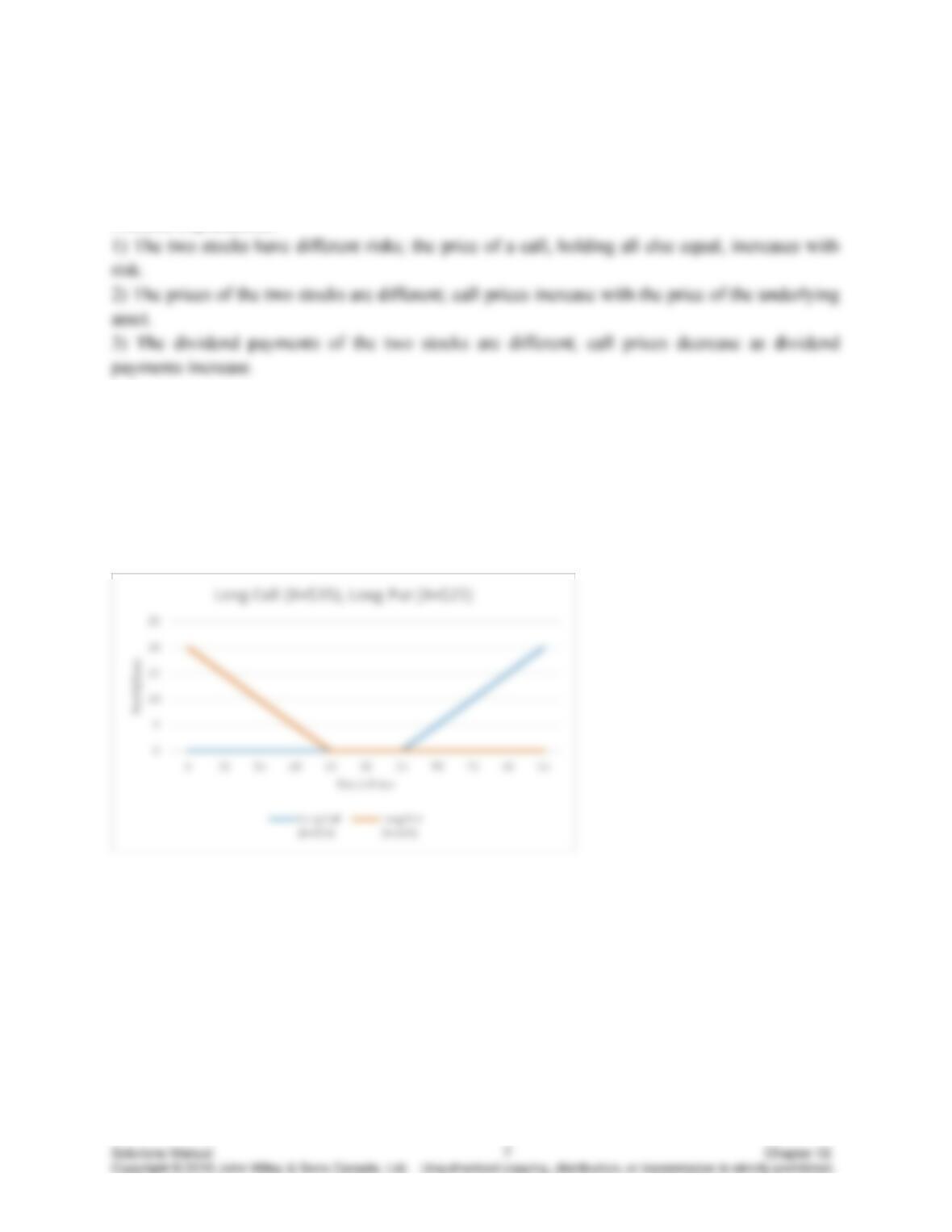
Call option prices are positively related to the price of the underlying asset, the volatility of the
Introduction to Corporate Finance, Fourth Edition Booth, Cleary, Rakita
19. Section: 12.1 Call Options
Learning Objective: 12.1
Level of Difficulty: Intermediate
Solution:
Possible explanations:
20. Sections: 12.1 Call Options and 12.2 Put Options
Learning Objective: 12.1 and 12.2
Level of Difficulty: Intermediate
Solution:
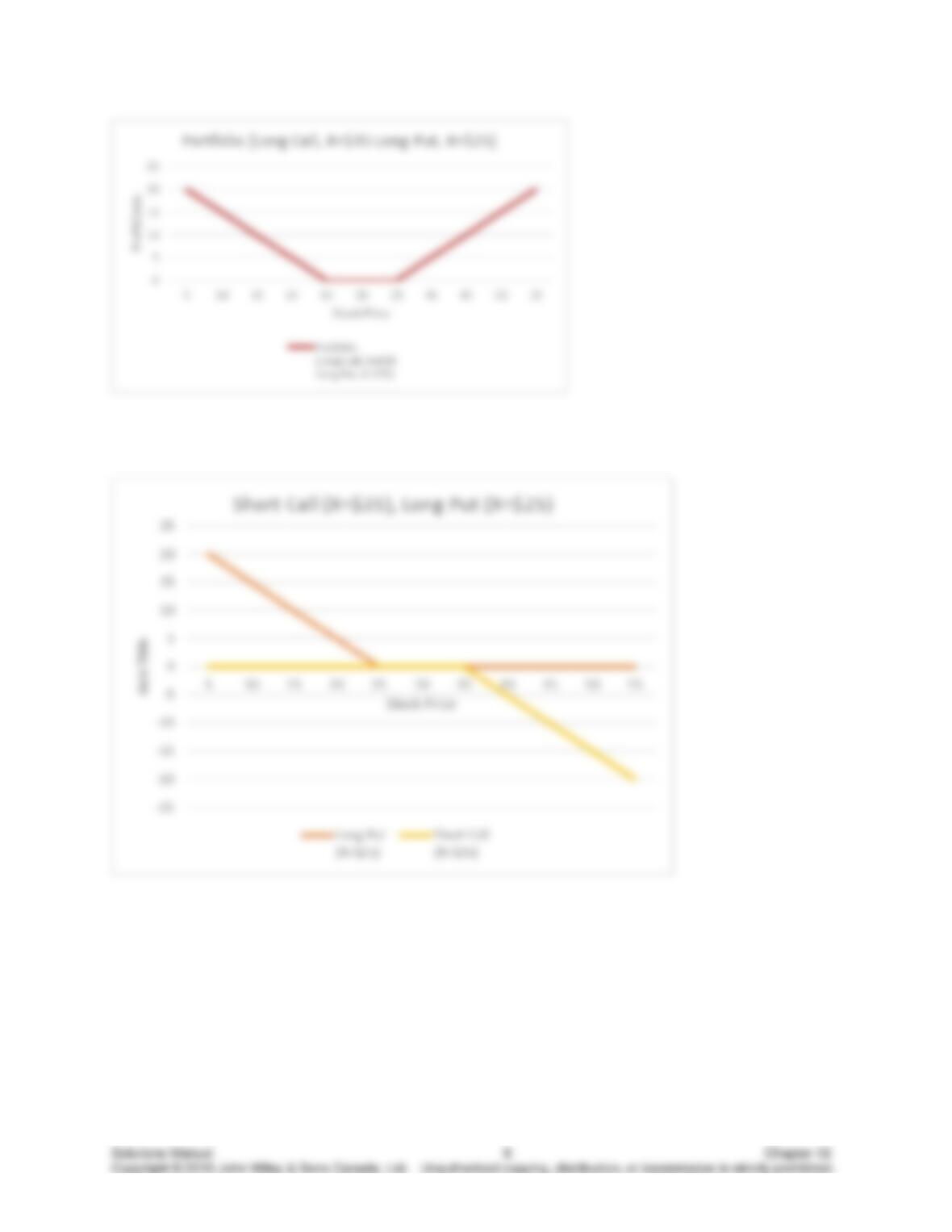
a. The individual securities:
The portfolio:
Introduction to Corporate Finance, Fourth Edition Booth, Cleary, Rakita
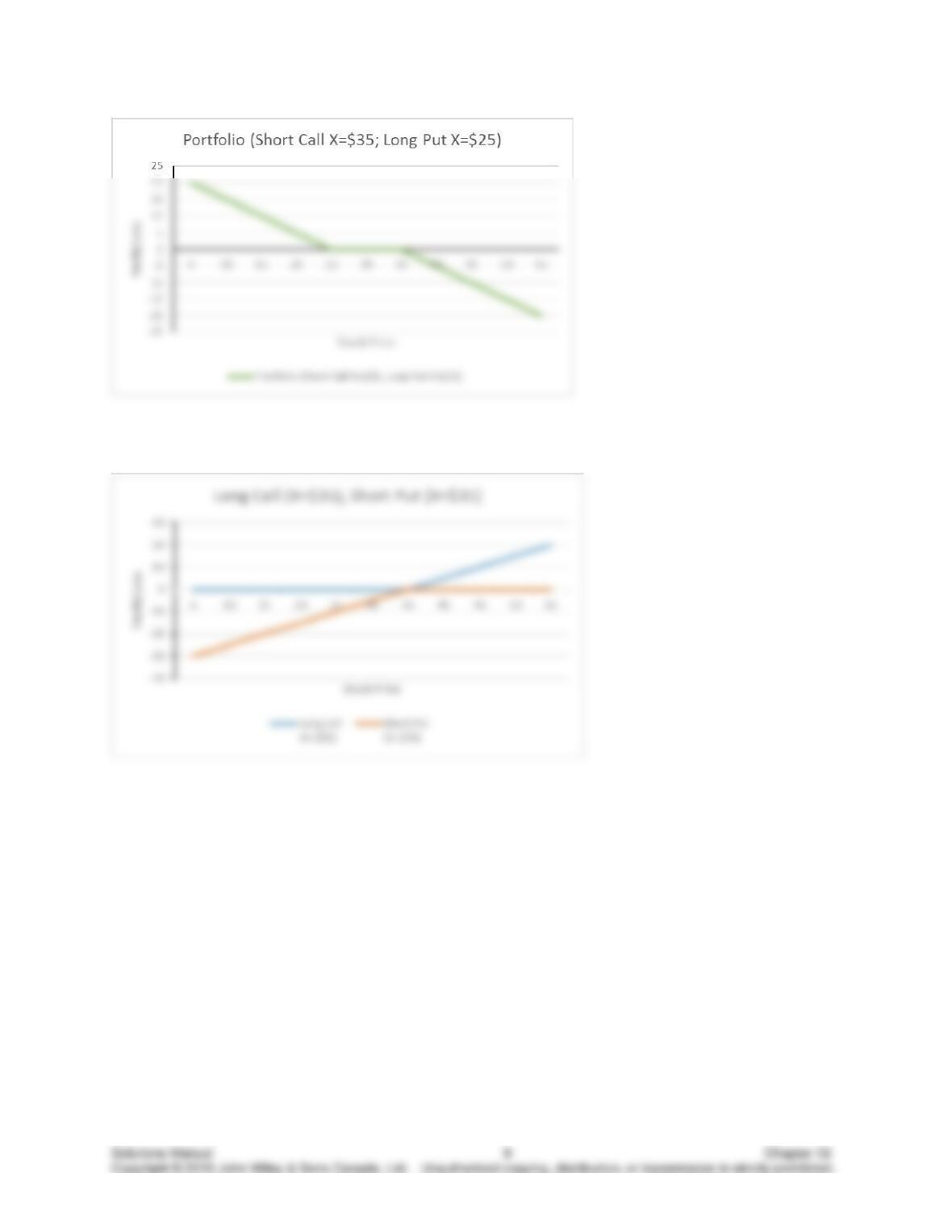
b. The individual securities:
The portfolio:
Introduction to Corporate Finance, Fourth Edition Booth, Cleary, Rakita
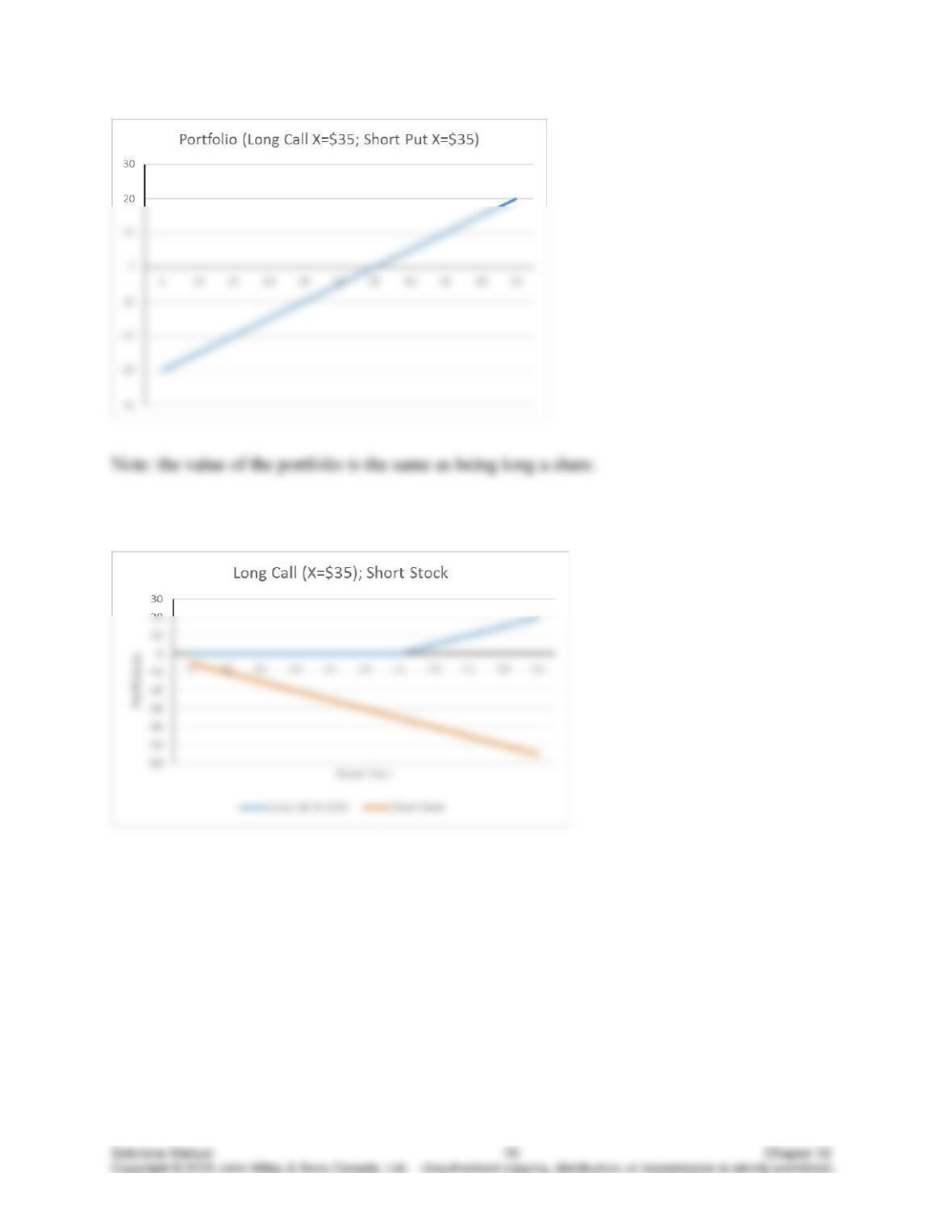
c. The individual securities:
The portfolio:
Introduction to Corporate Finance, Fourth Edition Booth, Cleary, Rakita
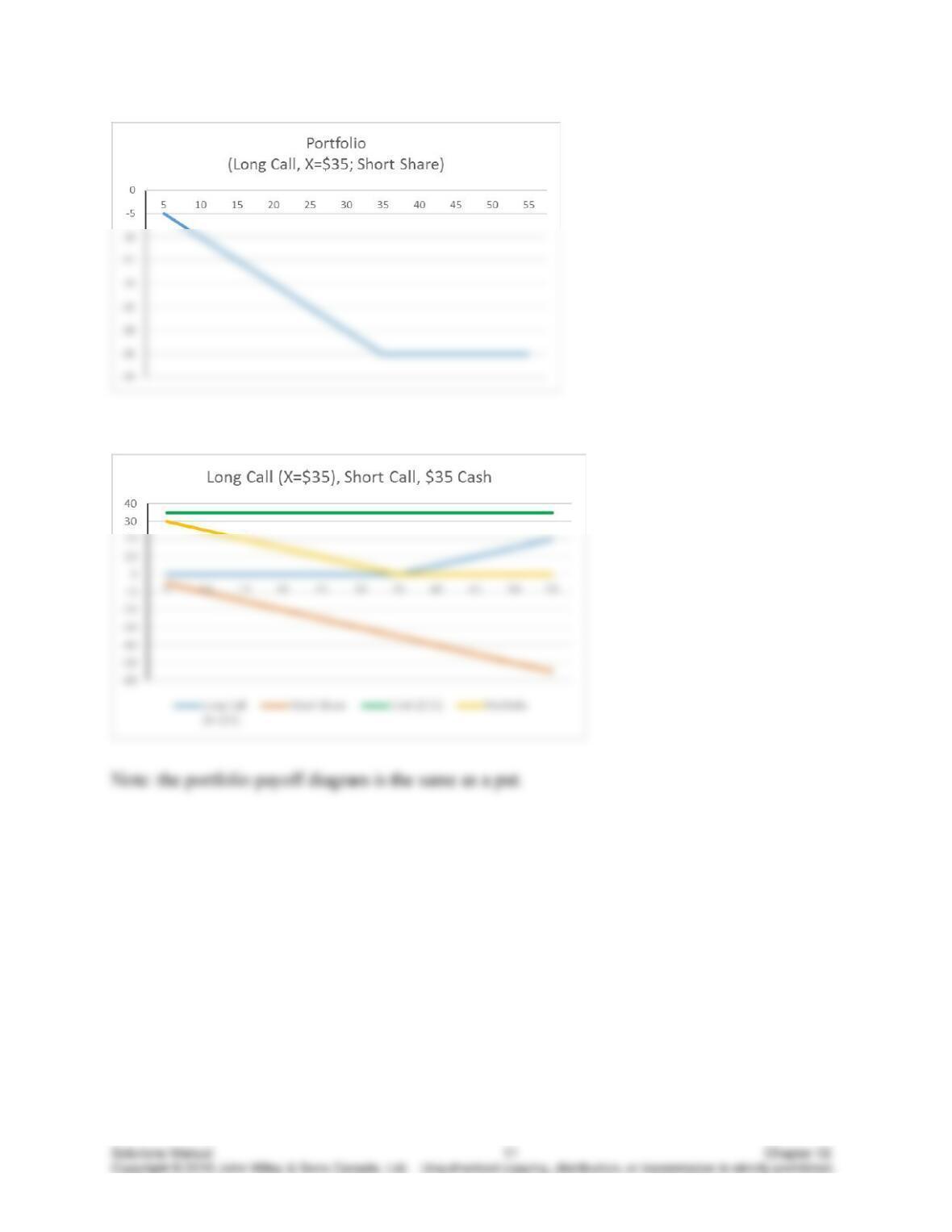
d. The individual securities:
The portfolio:
Introduction to Corporate Finance, Fourth Edition Booth, Cleary, Rakita
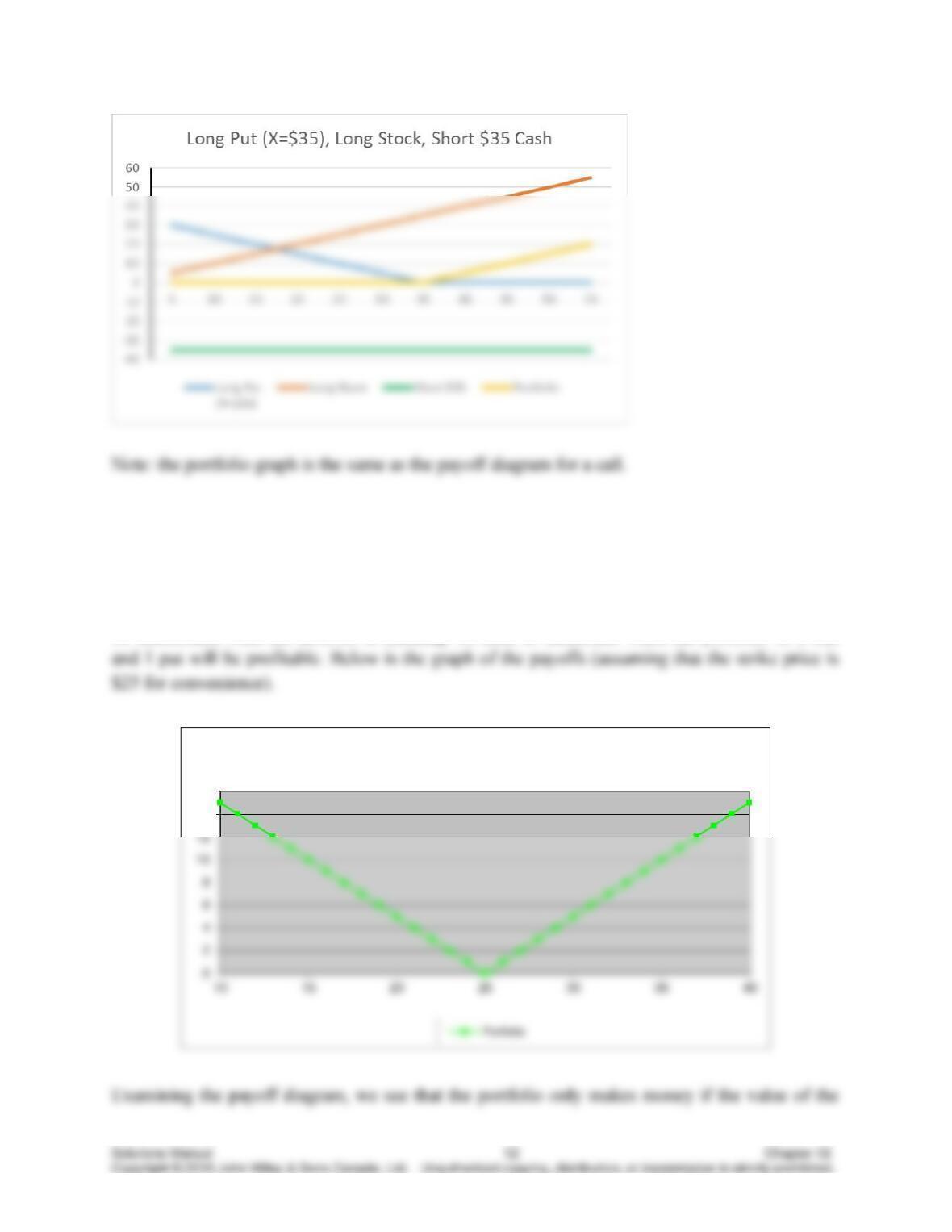
e. The individual securities and the portfolio:
f. The individual securities and the portfolio:
Introduction to Corporate Finance, Fourth Edition Booth, Cleary, Rakita
21. Sections: 12.1 Call Options and 12.2 Put Options
Learning Objective: 12.1 and 12.2
Level of Difficulty: Intermediate
Solution:
To understand what the investor is thinking we need to determine when the portfolio of 1 call
14
16
Portfolio Payoff
Introduction to Corporate Finance, Fourth Edition Booth, Cleary, Rakita
22. Sections: 12.1 Call Options and 12.2 Put Options
Learning Objective: 12.1 and 12.2
Level of Difficulty: Intermediate
Solution:
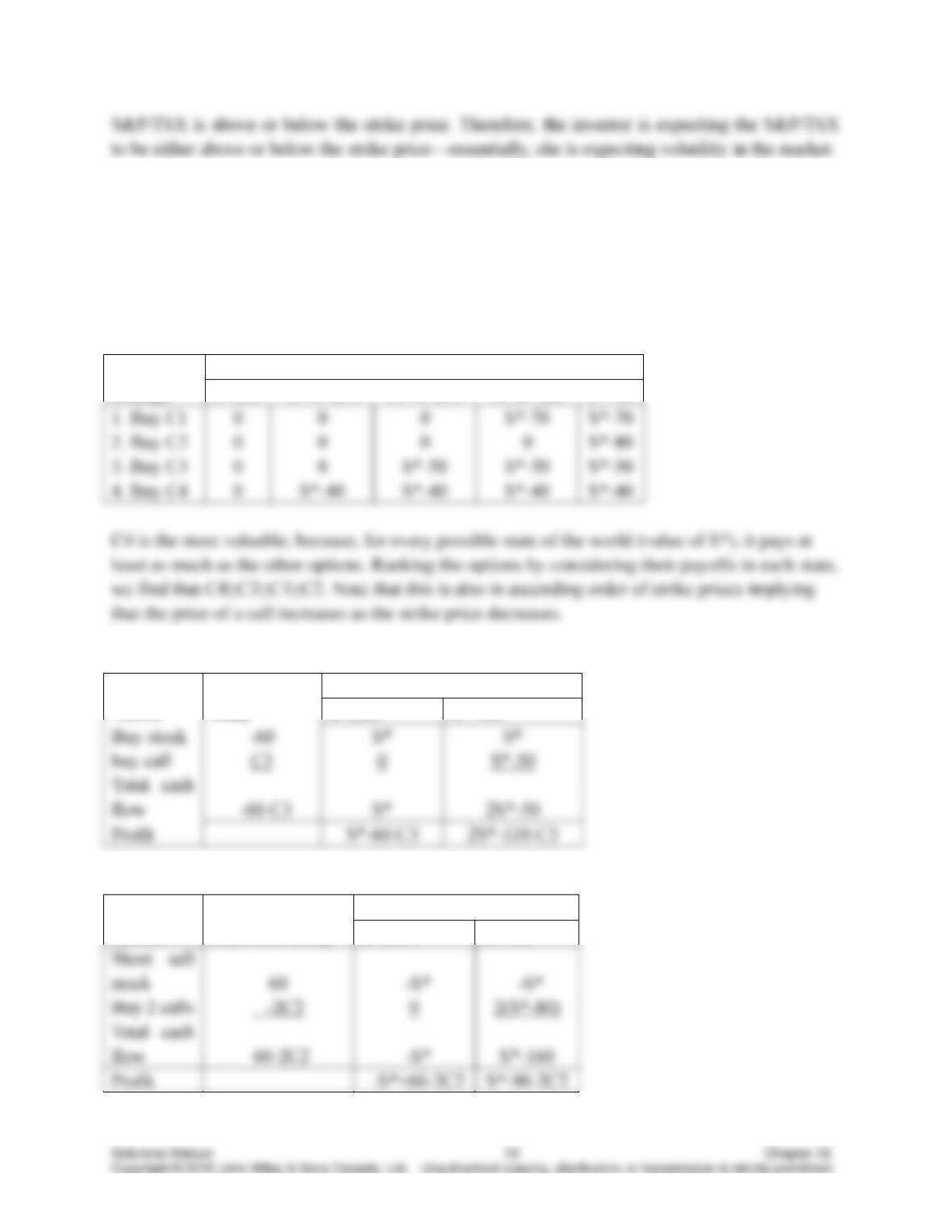
a. To compare the prices of the options, we need to compare the cash flows of every possible
state of the world. Let S* denote the price of the underlying stock at expiration of the options.
Cash flows at expiration
strategy
S*≤40
40<S*≤50
50<S*≤70
70<S*≤80
S*>80
1. Buy C1
2. Buy C2
3. Buy C3
4. Buy C4
b.
Action
Cash flow
today
Cash flow at expiration
S*≤50
S*>50
Buy stock
buy call
Total cash
flow
Profit
c.
Action
Cash flow today
Cash flow at expiration
S*≤80
S*>80
Short sell
stock
Buy 2 calls
Total cash
flow
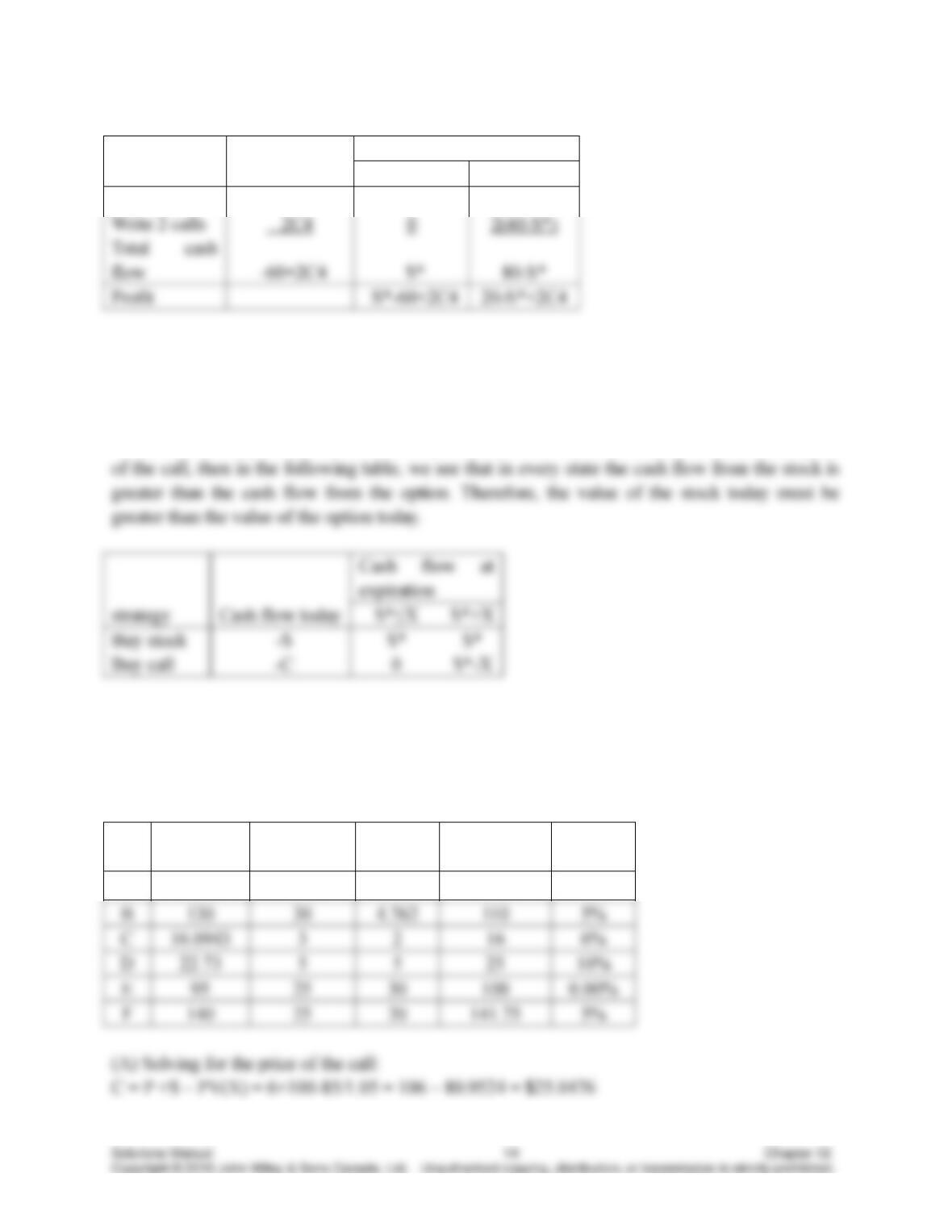
d.
Introduction to Corporate Finance, Fourth Edition Booth, Cleary, Rakita
Action
Cash flow
today
Cash flow at expiration
S*≤40
S*>40
Buy stock
–60
S*
S*
Write 2 calls
Total cash
flow
S*
Profit
23. Section: 12.1 Call Options
Learning Objective: 12.1
Level of Difficulty: Intermediate
Solution:
We must first compare the cash flows at expiration of both securities. Define X as the strike price
Cash flow at
expiration
strategy
Cash flow today
S*>X
Buy stock
Buy call
24. Section: 12.3 Put–Call Parity
Learning Objective: 12.3
Level of Difficulty: Intermediate
Solution:
XCT stock
price
Price of call
Price of
put
Strike price
Risk–
free rate
A
100
25.048
6
85
5%
141.75