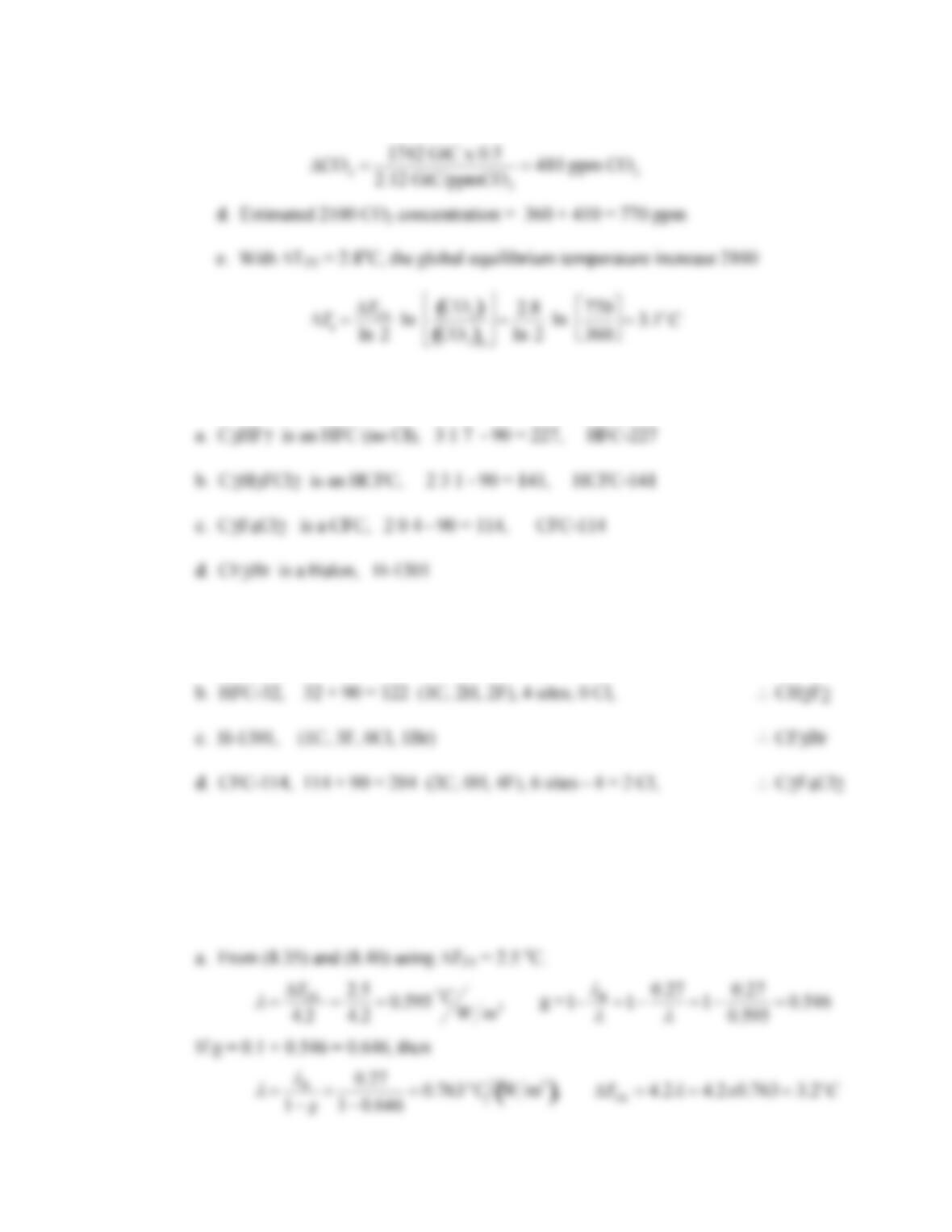
c. The increase in CO2 concentration with A.F. = 0.5:
8.25 Identification of the halocarbons:
8.26 a. HCFC-225, 225 + 90 = 315 (3C, 1H, 5F), 8 sites – (1+5) = 2 Cl, ∴ C3HF5Cl2
8.27. Finding climate sensitivity
λ
and varying feedback factor g.
Pg. 8.12
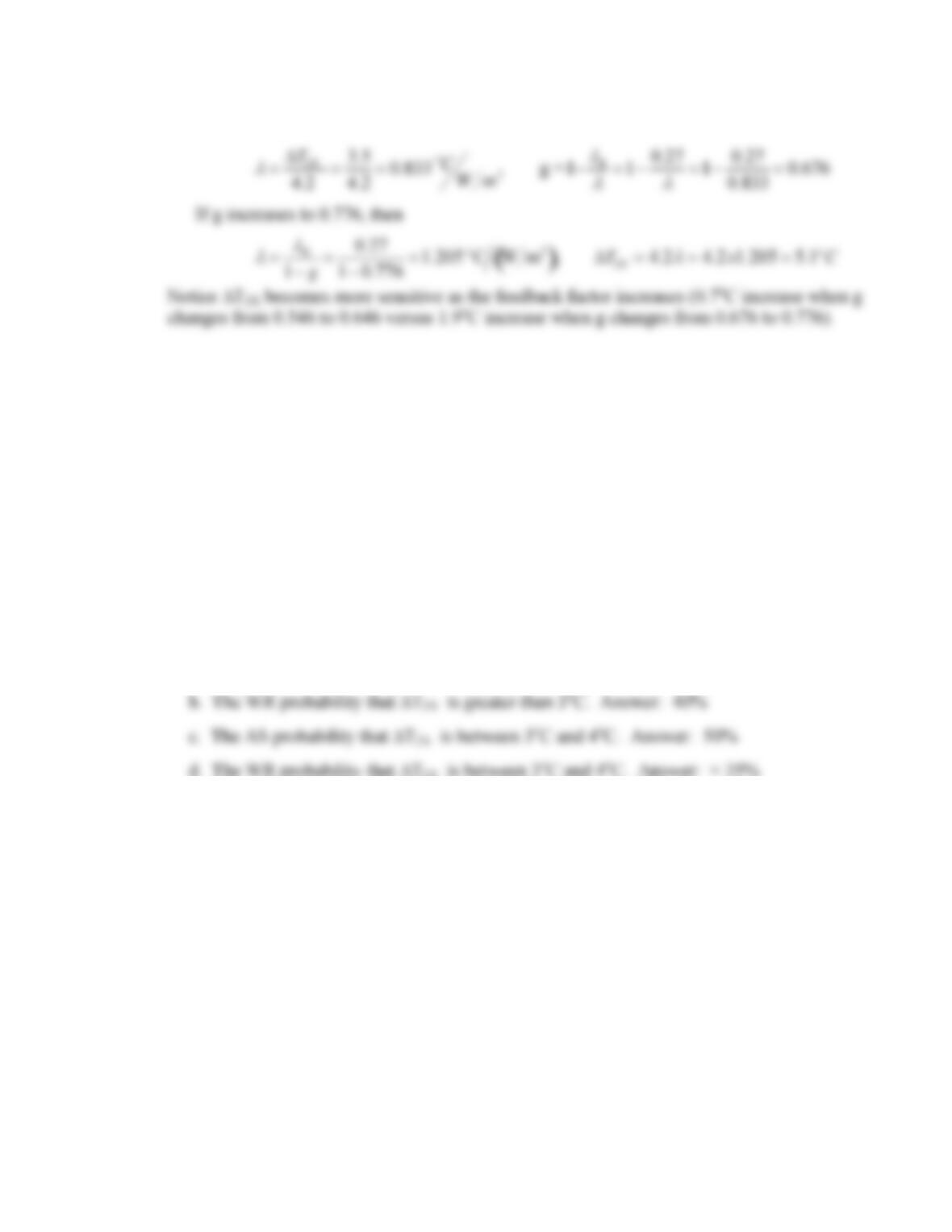
b. For ΔT2X = 3.5 oC
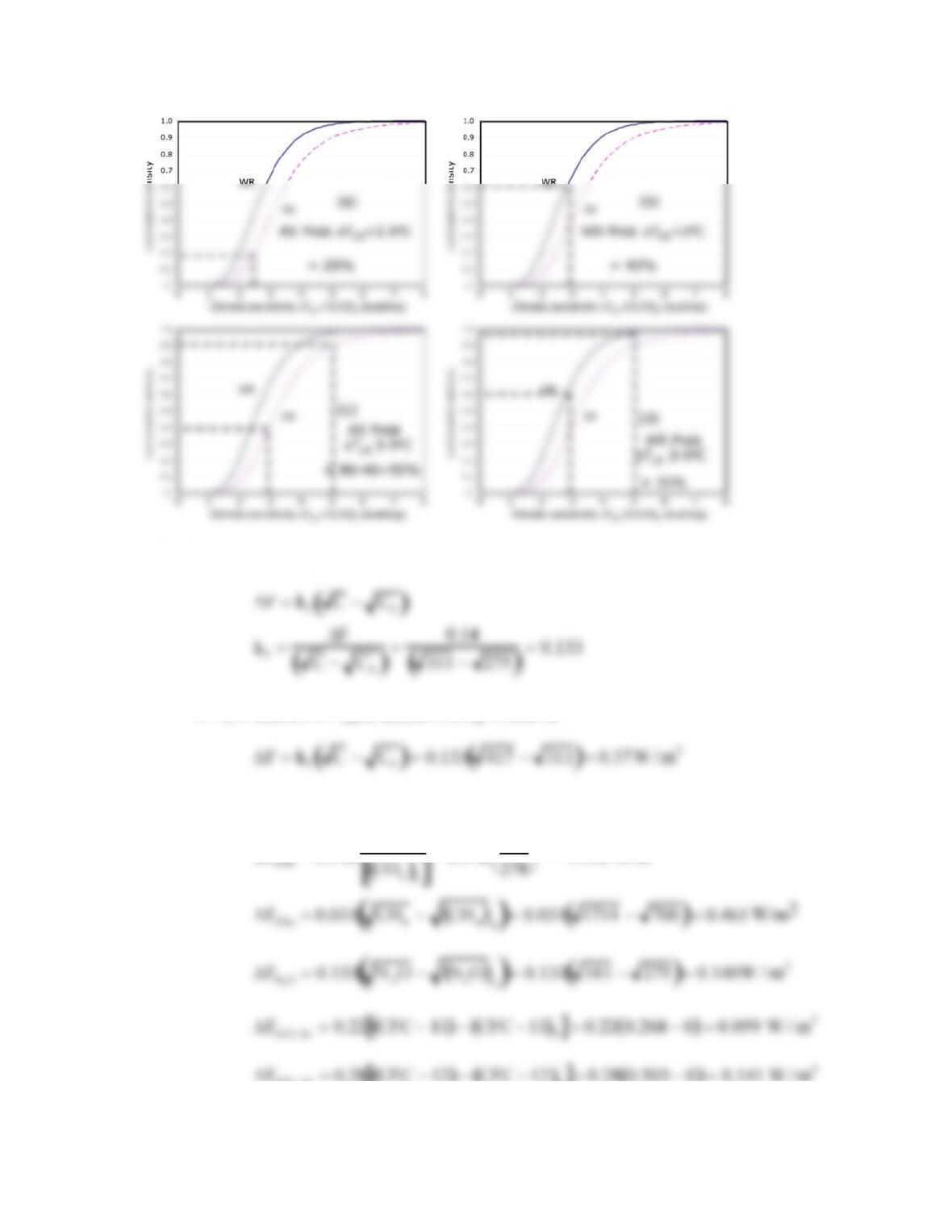
8.28 Using Figure 8.39:
a. The AS probability that ΔT2X is less than 2.5oC. Answer: 20%
Pg. 8.13
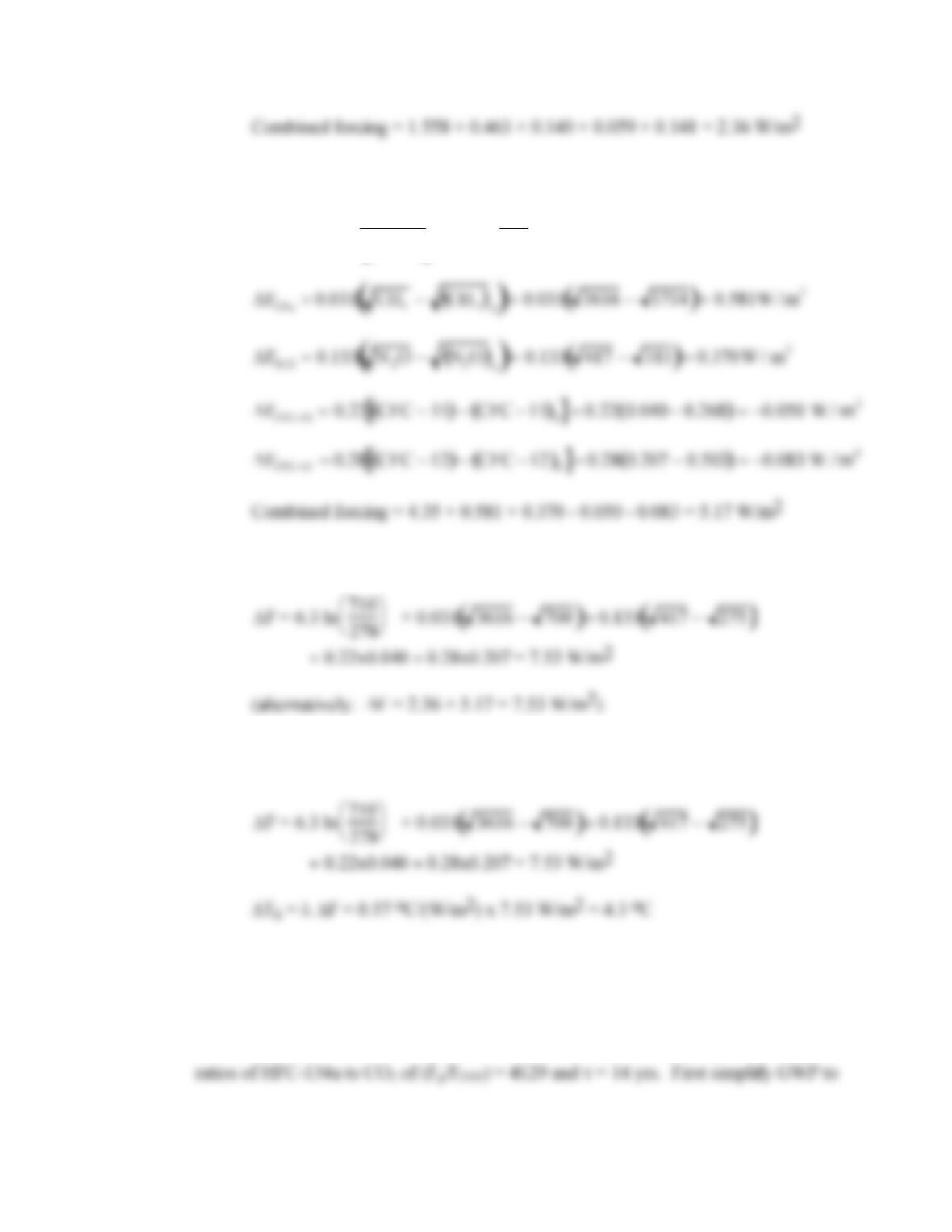
8.29. Radiative forcing for N2O,
If N2O reaches 417 ppb, added forcing would be:
8.30 a. Combined radiative forcings from 1850 to 1992
ΔFCO2 = 6.3 ln CO2
()
[]
= 6.3 ln 356
⎛
⎜ ⎞
⎟ = 1.558 W/m2
[]
Pg. 8.14
b. From 1992 to 2100:
ΔFCO2 = 6.3 ln CO2
()
[]
CO2
()
0
[]
= 6.3 ln 710
356
⎛
⎝
⎜ ⎞
⎠
⎟ = 4.35 W/m2
c. From 1850 to 2100
8.31 From Prob. 8.30 for 1850 to 2100:
8.32 Using and forcing
RCO2t
()
dt
0
20
∫≈13.2yrs; RCO2t
()
dt
0
100
∫≈43.1yrs; RCO2t
()
dt
0
500
∫≈138yrs
Pg. 8.15
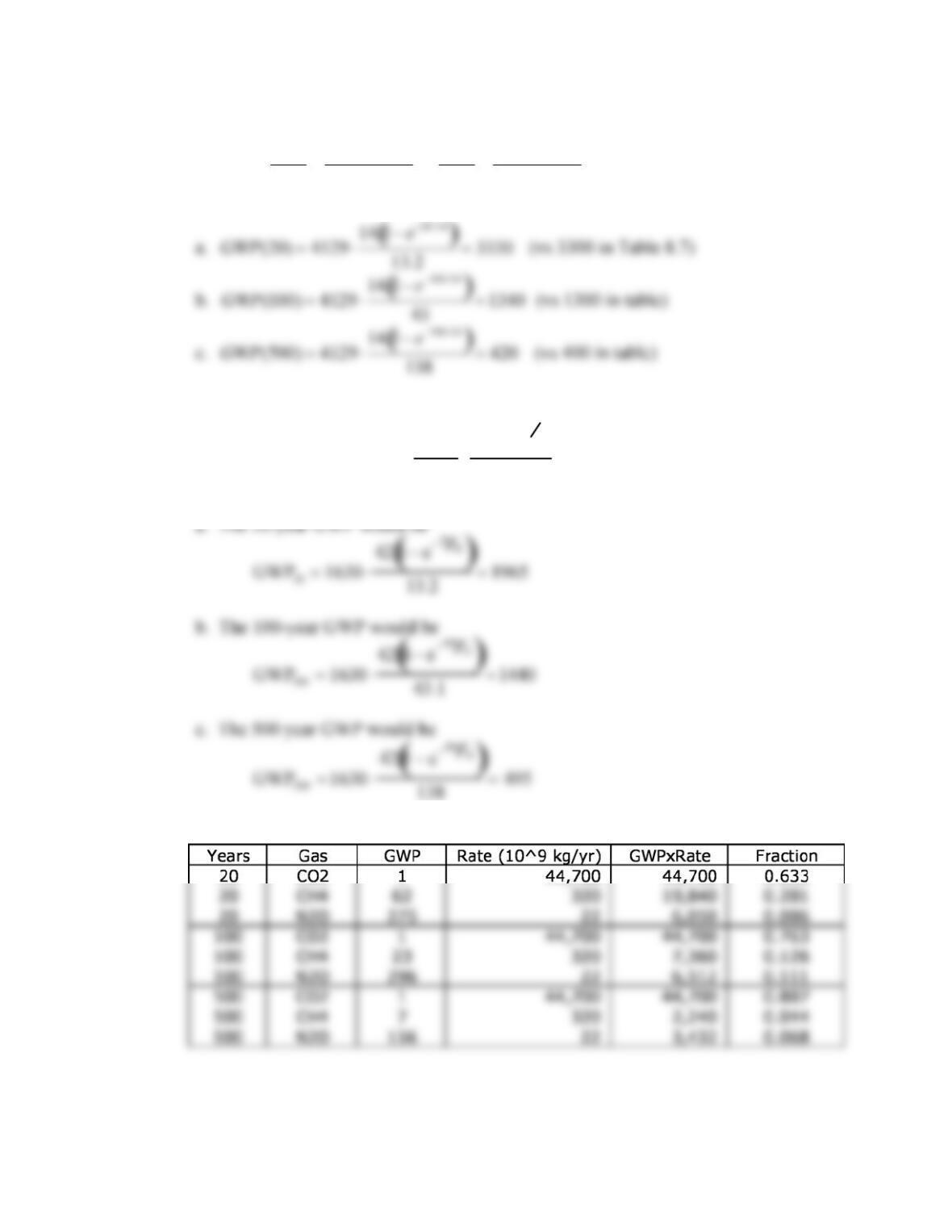
GWPg=Fg
FCO2
⎛
⎝
⎜
⎜
⎞
⎠
⎟
⎟ ⋅
e−t/
τ
dt
0
T
∫
RCO2t
()
dt
0
T
∫=Fg
FCO2
⎛
⎝
⎜
⎜
⎞
⎠
⎟
⎟ ⋅
τ
1−e−T/
τ
()
RCO2t
()
dt
0
T
∫
8.33 For a greenhouse gas with τ = 42 years and a relative forcing of 1630 times that of CO2.
From Problem 8.32, GWP =ΔFg
ΔFCO2
⋅
τ
1−e−t
τ
(
)
RCO2t()dt
∫
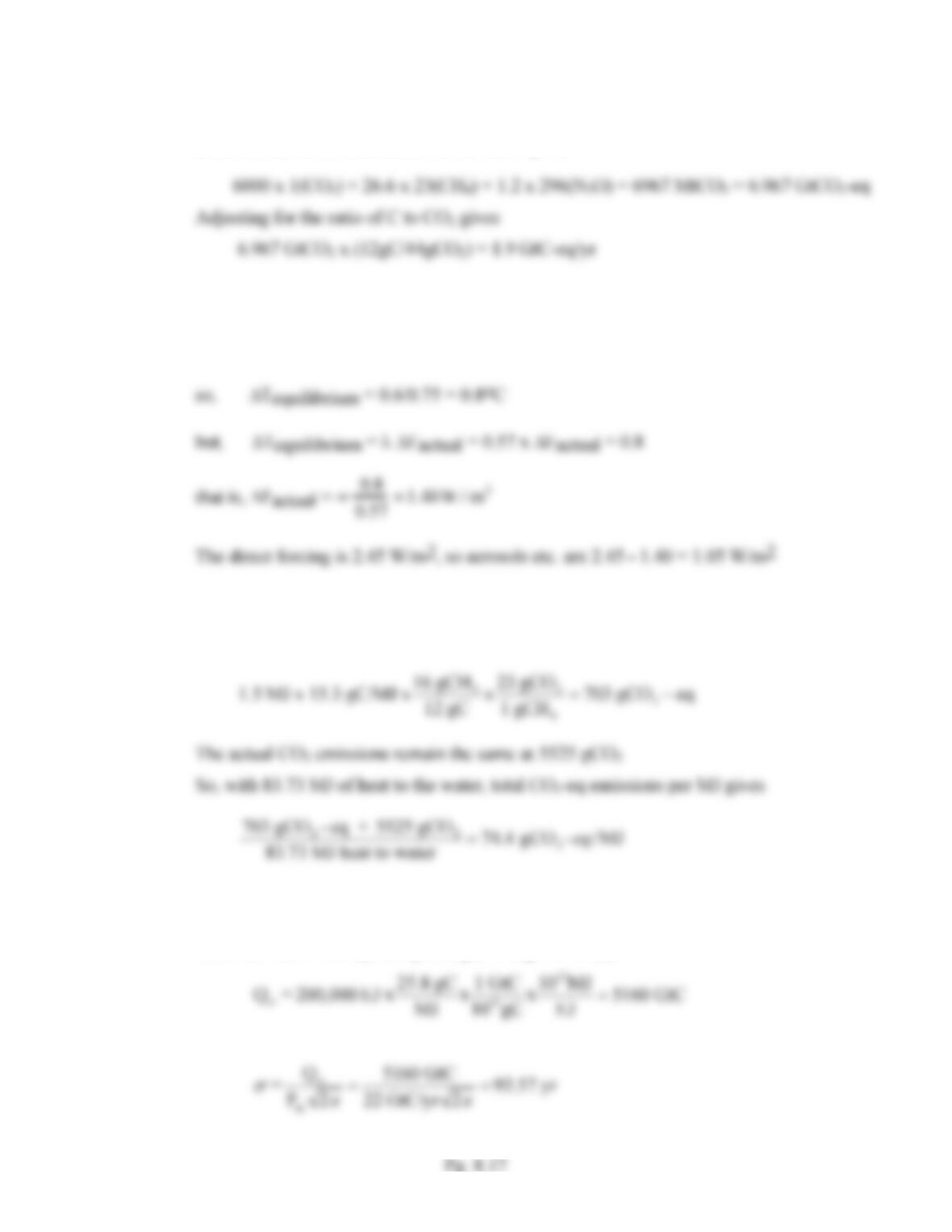
8.34 Applying GWPs from Table 8.7 to the emission rates given:
Pg. 8.16
8.35 Using 100-year GWPs from Table 8.7 with emission rates of 6,000 million metric tons
(Mt) of CO2, 26.6 MtCH4, and 1.2 Mt N2O. gives
8.36 The actual ΔTrealized is estimated to be 0.6oC, which is 75% of the equilibrium ΔT
ΔTrealized = 0.6oC = 0.75 ΔTequilibrium
8.37 Repeating Example 8.12 with the 100-yr GWP for CH4 = 23. With 1.5 MJ of
leakage, 15.3 gC/MJ we get
8.38 Using Table 8.3 for the LHV carbon intensity of coal (25.8 gC/MJ), (3.18) to find
σ, and (3.20) to find tm, then plotting (3.17) gives for (a):
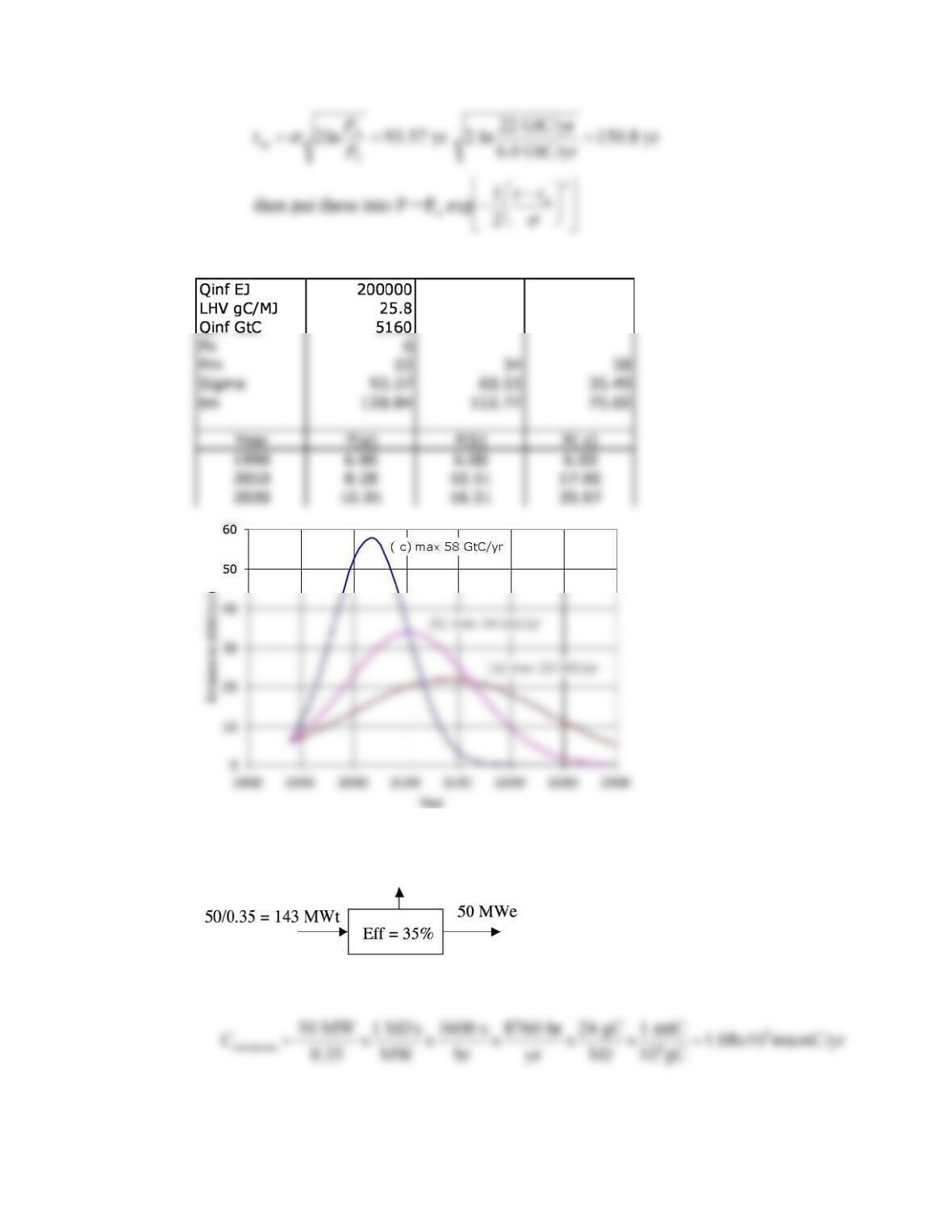
Putting this into a spreadsheet so it can be plotted yields…
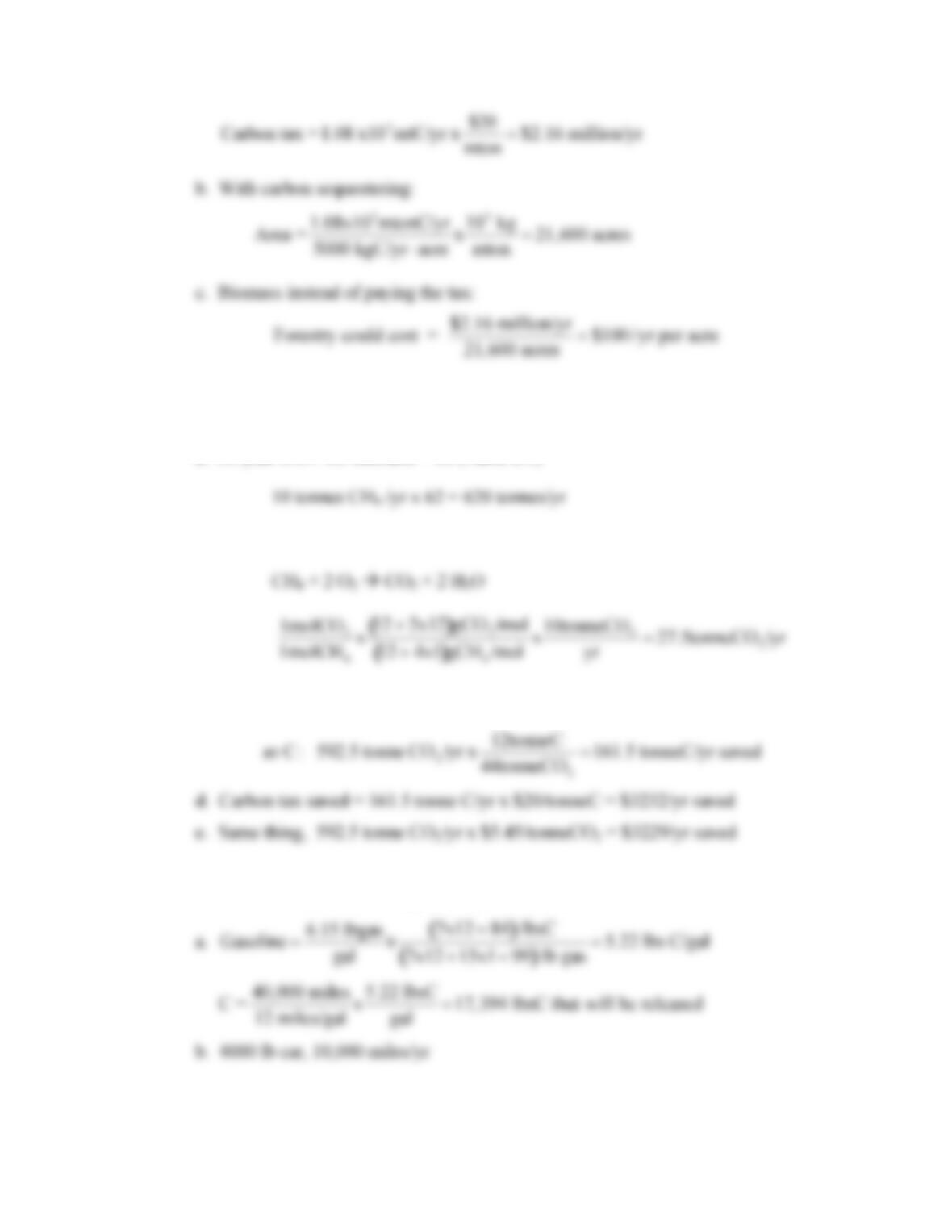
8.39 With a carbon tax of $20/mt of C (as CO2):
a. Assuming a capacity factor of 100% (plant operates all of the time):
Pg. 8.18
8.40 Landfill leaking 10 tonnes (1 tonne = 1 mt = 1000 kg) CH4 per year
a. 20-year GWP for methane = 62 (Table 8.7)
b. Burning the methane
c. Equivalent CO2 savings = 620 – 27.5 = 592.5 tonne CO2/yr.
8.41 Gasoline C7H15 and 6.15 lbs/gal, fully combusted,
Pg. 8.19
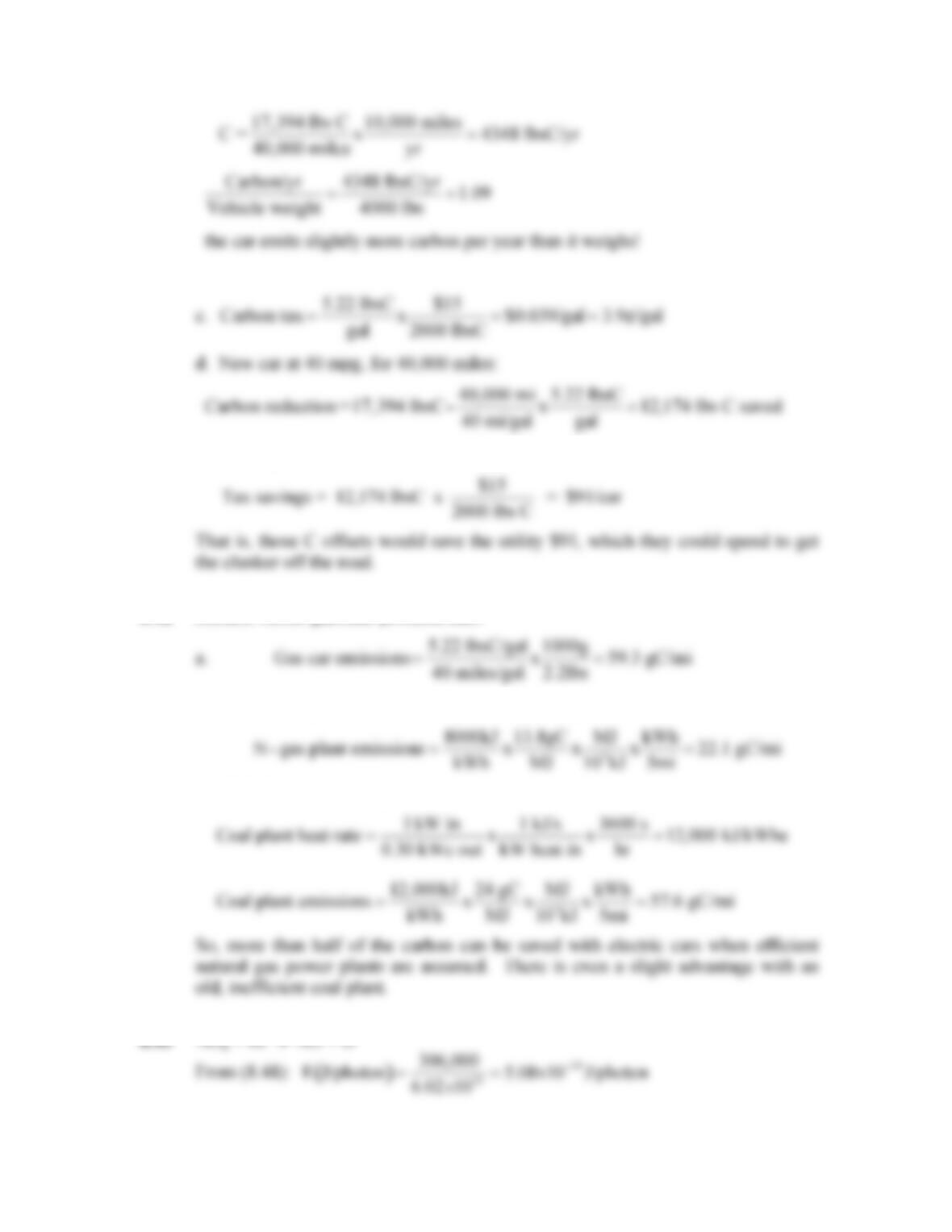
e. Trading in the clunker for the 40 mpg car would save in carbon taxes
8.42 Electric versus gasoline-powered cars:
b. With the very efficient natural-gas fired power plant:
c. With the typical coal plant:
Pg. 8.20
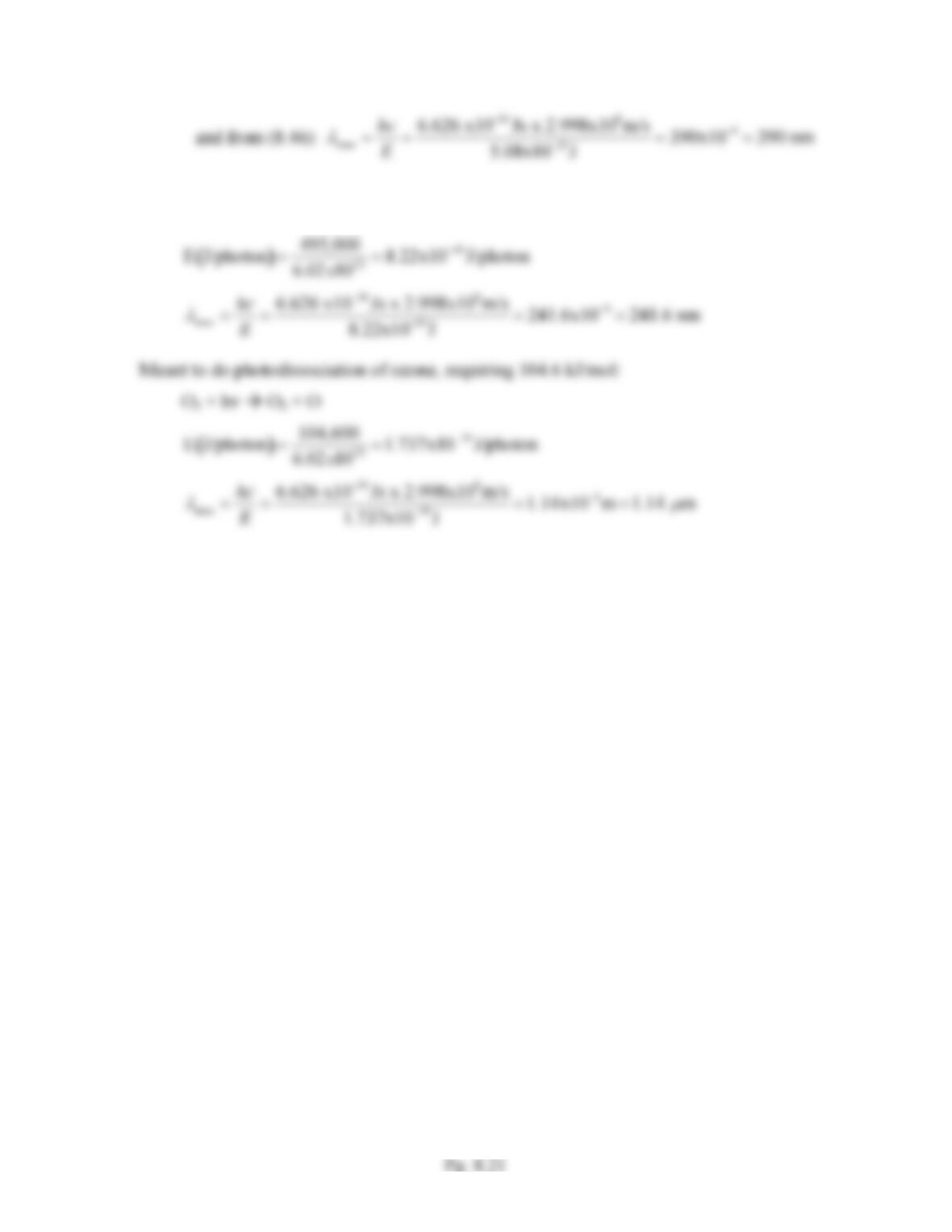
8.44 O2 + hv Æ O + O (oops… same as Example 8.13):