Instructor Resource
Neck, Neck, & Murray, Entrepreneurship: The Practice and Mindset
SAGE Publications, 2018
1
Experiential Exercises
Chapter 16: Marketing and Pitching Your Idea
Source: Teaching Entrepreneurship: A Practice-Based Approach (p. 168–172), by H. Neck, P.
Greene, & C. Brush, 2014, Northampton, MA: Elgar.
Exercise: Perfect Pitch
Description
This exercise offers students an opportunity to develop and reflect on approaches for
communicating their venture effectively and clearly through a simple interactive exercise.
Students will consider different techniques to communicate the essence of their opportunity to an
Usage Suggestions
The exercise works for all audiences, undergraduate, graduate, executive, or practitioner. It is
appropriate for new venture creation courses, entrepreneurship bootcamps, or workshops. The
Learning Objectives
• Learn the basics of constructing the content and communication of a pitch for a venture
idea.
Instructor Resource
Neck, Neck, & Murray, Entrepreneurship: The Practice and Mindset
SAGE Publications, 2018
2
Materials List
Pre-Work Required by Students
If the exercise will be delivered in two parts, as suggested above, there is no pre-work required.
If conducted toward the end of the class, one or both of the readings below are recommended.
Theoretical Foundations
Hoehn-Weiss, M.N., Brush, C.G., & Baron, R.A. (2004). Putting your best foot forward?
Time Plan (60 minutes)
This exercise can be adapted to fit various time schedules, including an entire class. For the
purposes of this teaching note, the exercise requires one hour.
Step 1 0:00–0:20 (20 minutes)
Begin the exercise by asking for a volunteer to present his or her idea to the class. Let the student
Step 2 0:20–1:00 (40 minutes)
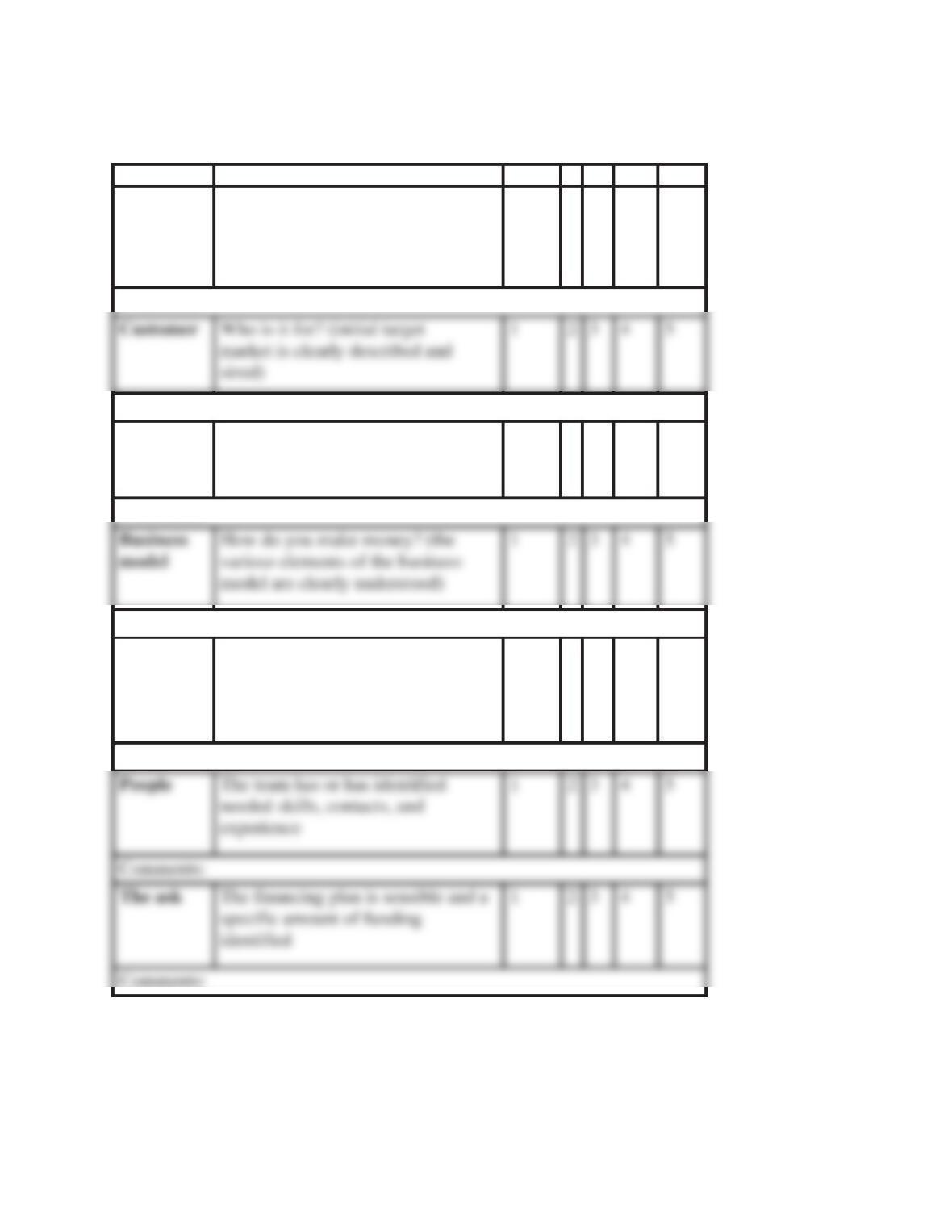
Hand out the “Babson Rocket Pitch Evaluation” and ask the students to compare it to their notes
and complete the evaluation form for each of the pitches. Now you are ready to conduct a
conversation using the following questions as a guide:
Let’s start with the first pitch: Can anyone describe what the product or service is and how it
works?
Who is the target audience and what is the problem that is being solved?
Instructor Resource
Neck, Neck, & Murray, Entrepreneurship: The Practice and Mindset
SAGE Publications, 2018
3
Do the skills of the team match the needs of the business?
What resources are required to launch the business?
Continue with each of the pitches asking similar questions. Ask how the students’ evaluation
compared to the evaluation criteria on the form.
The second time through the exercise at the end of the course, the students will have more of the
answers to the questions above. The presentation should still be kept to three to five minutes, or
Post-Work
If the exercise is used at the beginning of a course, an interesting follow-up exercise is to have
Teaching Tips
Students often begin this exercise with much apprehension. It is best to allow the class to stew
for a while, calling up volunteers and keeping strict adherence to the time constraint. Students
Instructor Resource
Neck, Neck, & Murray, Entrepreneurship: The Practice and Mindset
SAGE Publications, 2018
4
Key Takeaways
• The importance of communicating the key content items to your audience—value
Instructor Resource
Neck, Neck, & Murray, Entrepreneurship: The Practice and Mindset
SAGE Publications, 2018
5
Babson Rocket Pitch Evaluation
False
True
Idea
What is it? How does it work?
(clear and well-understood
description of the product or
service)
1
2
3
4
5
Comments:
Comments:
Need
Why do they need it? (the problem
or opportunity fit is clearly stated
and understood)
1
2
3
4
5
Comments:
Comments:
Differentiat
ion
What makes it unique and
different? (certain unique aspects
that resonate with the target have
been identified and substantiated)
1
2
3
4
5
Comments:
Comments:
Comments: