Substituting the expressions for vTand RTinto the KVL equation yields
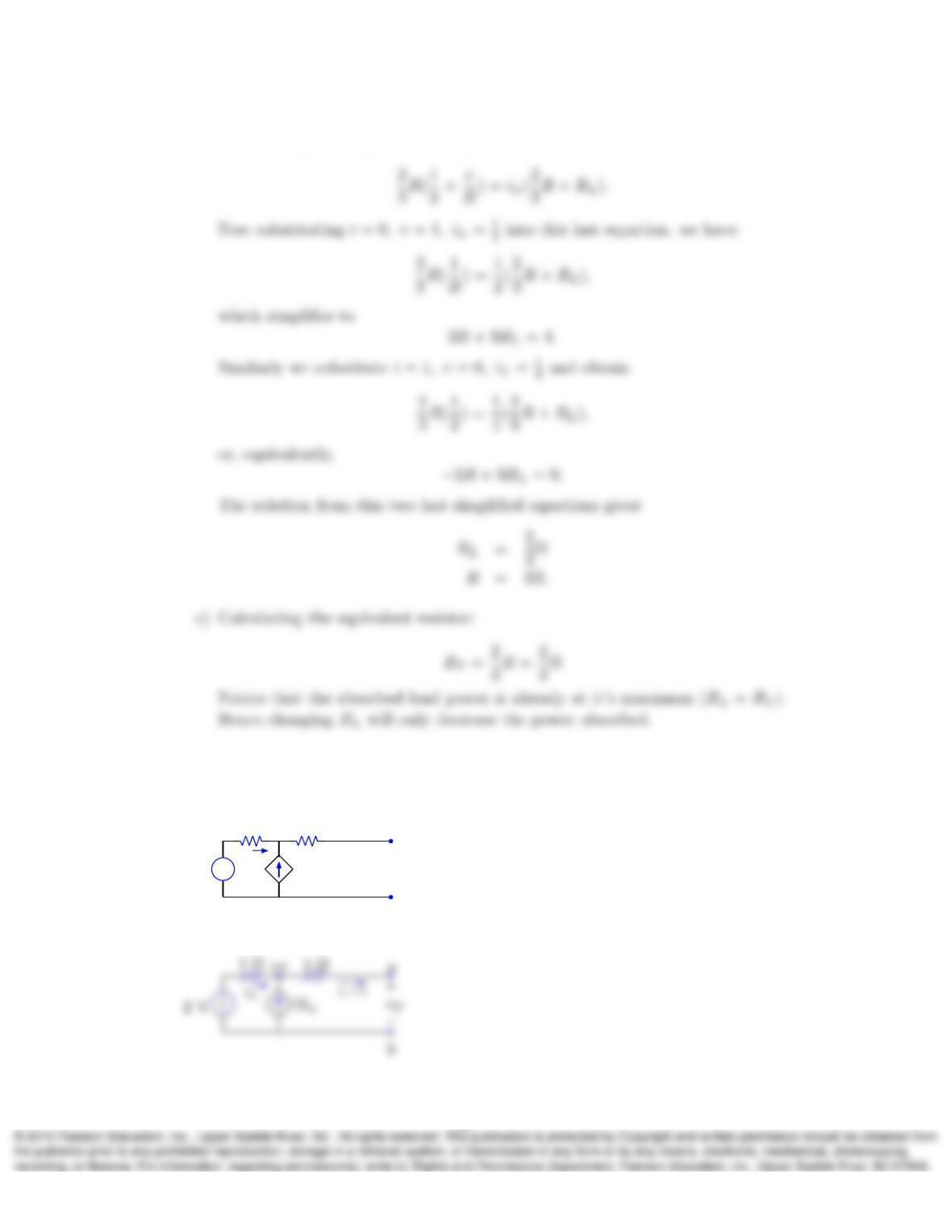
10. In the following circuit, find the open-circuit voltage and the short-circuit current
between nodes ato band determine the Thevenin and Norton equivalent of the
network between nodes aand b.
+
–
b
2 V
1 Ω 1 Ω
ix2ix
a
Solution:
12
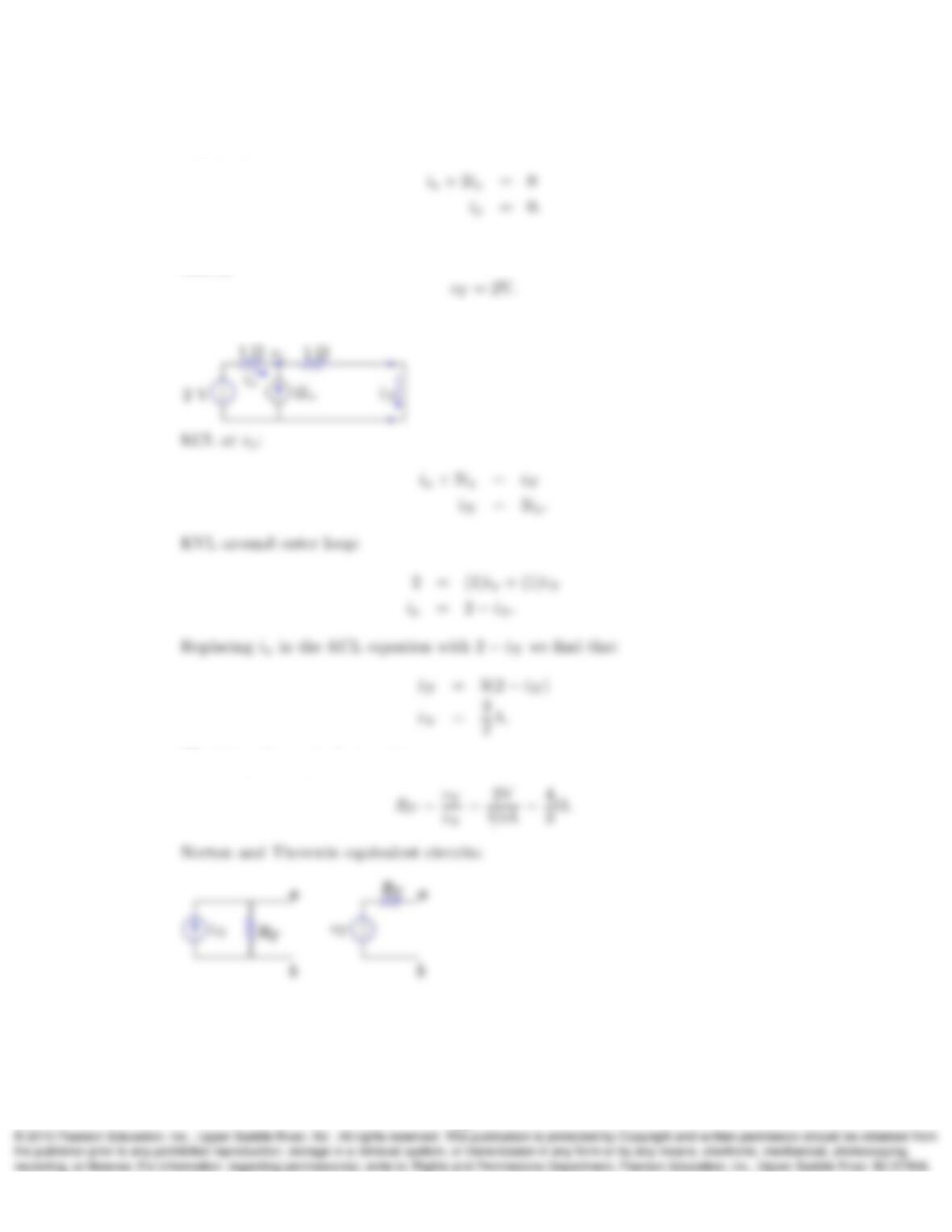
Applying KCL at node vTwe obtain
That means no current flowing through the resistor, consequently no voltage drop.
Hence,
To get the Norton current we analyze the following figure.
Obtaining the equivalent resistor:
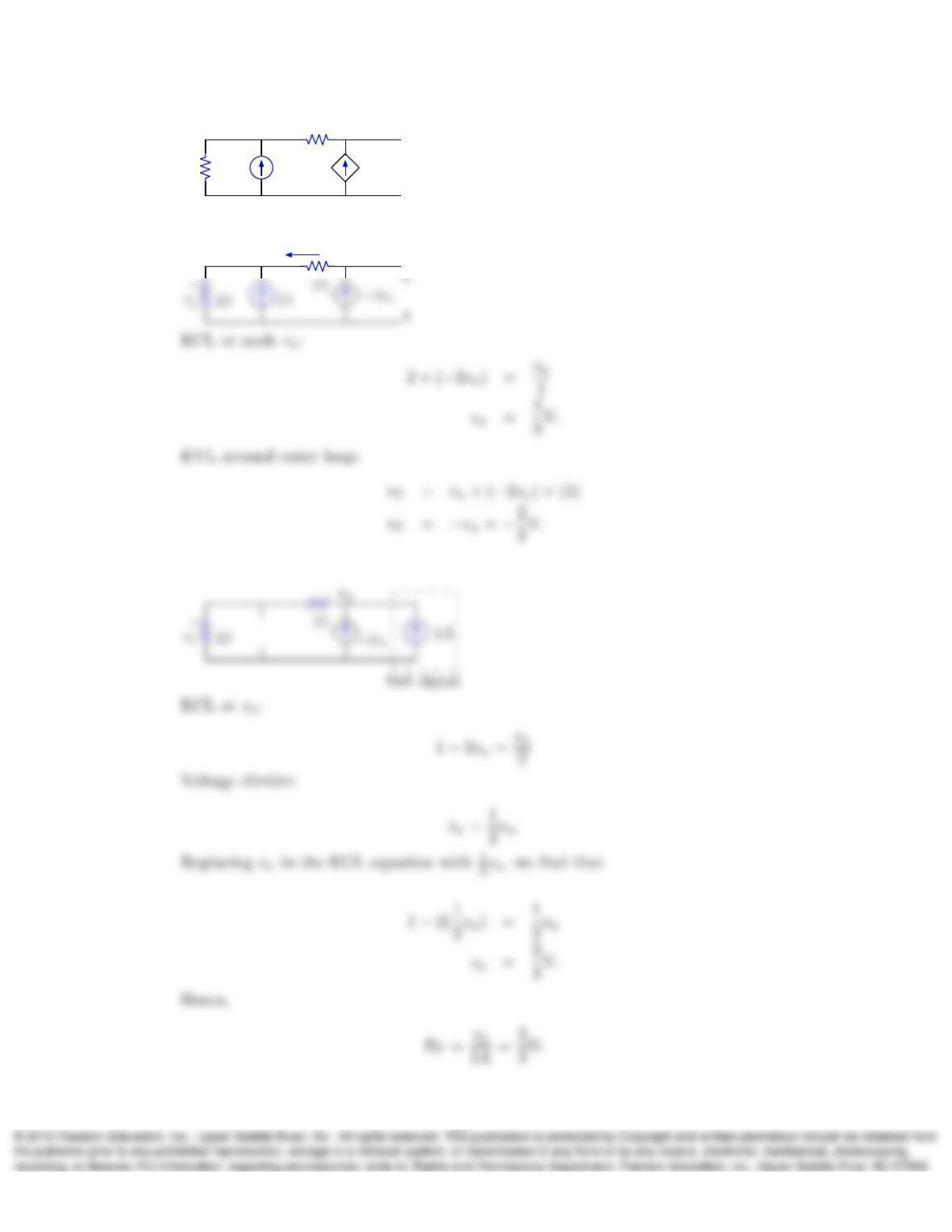
11. Determine the Thevenin equivalent of the following network between nodes aand
b, and then determine the available power of the network:
13
b
vx−2vx
2A
1Ω
1Ω
a
+
–
Solution:
vxvT
−2vx
To find RTset the independent source to zero and add a test signal:
14
Therefore, the available power is:
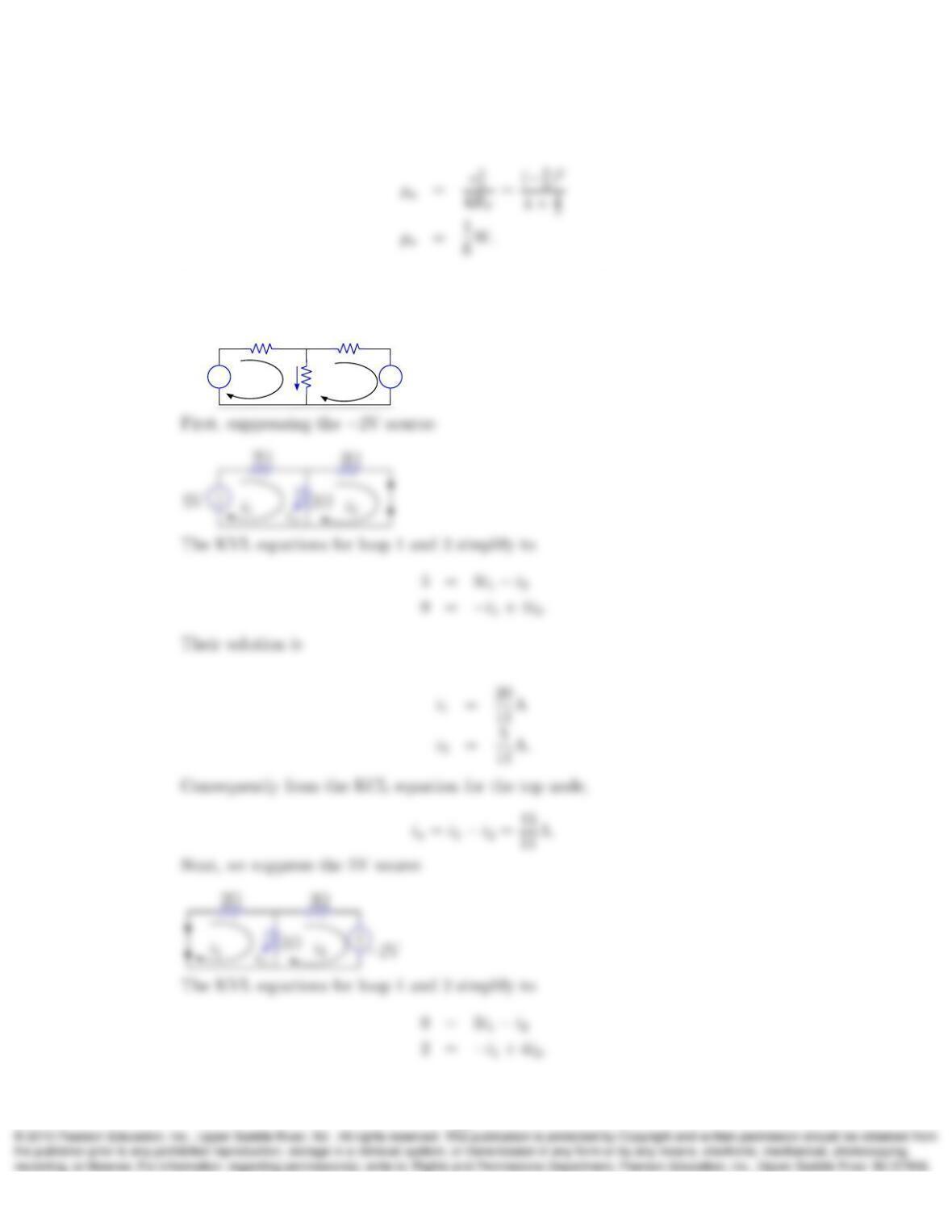
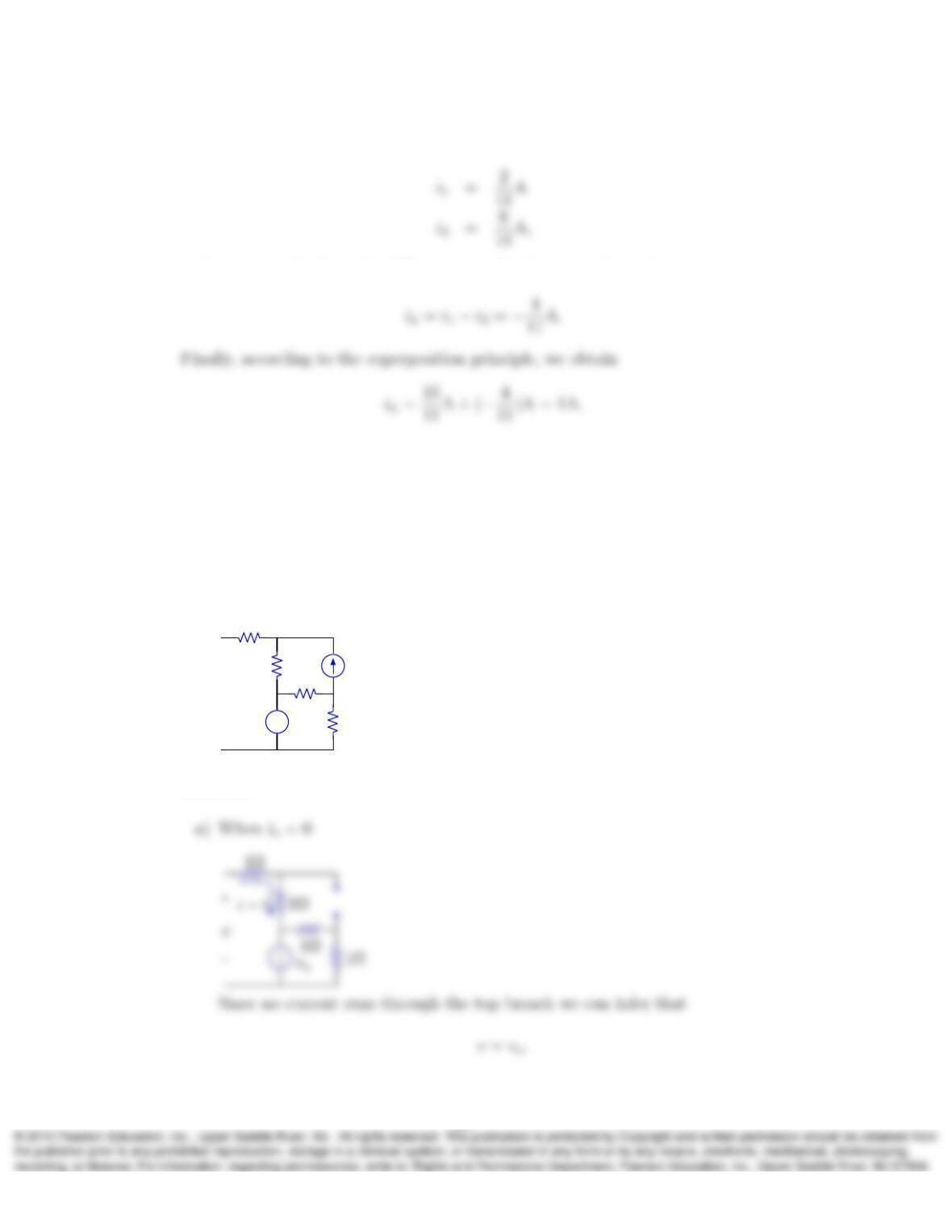
12. Determine ixin Figure 2.11b using source suppression followed by superposition.
Solution:
i1
+
–i2
+
–
5V −2V
ix
3Ω
2Ω
1Ω
15
Solving this equations yields
and, consequently from the KCL equation for the top node, we have
13. In the next circuit, do the following:
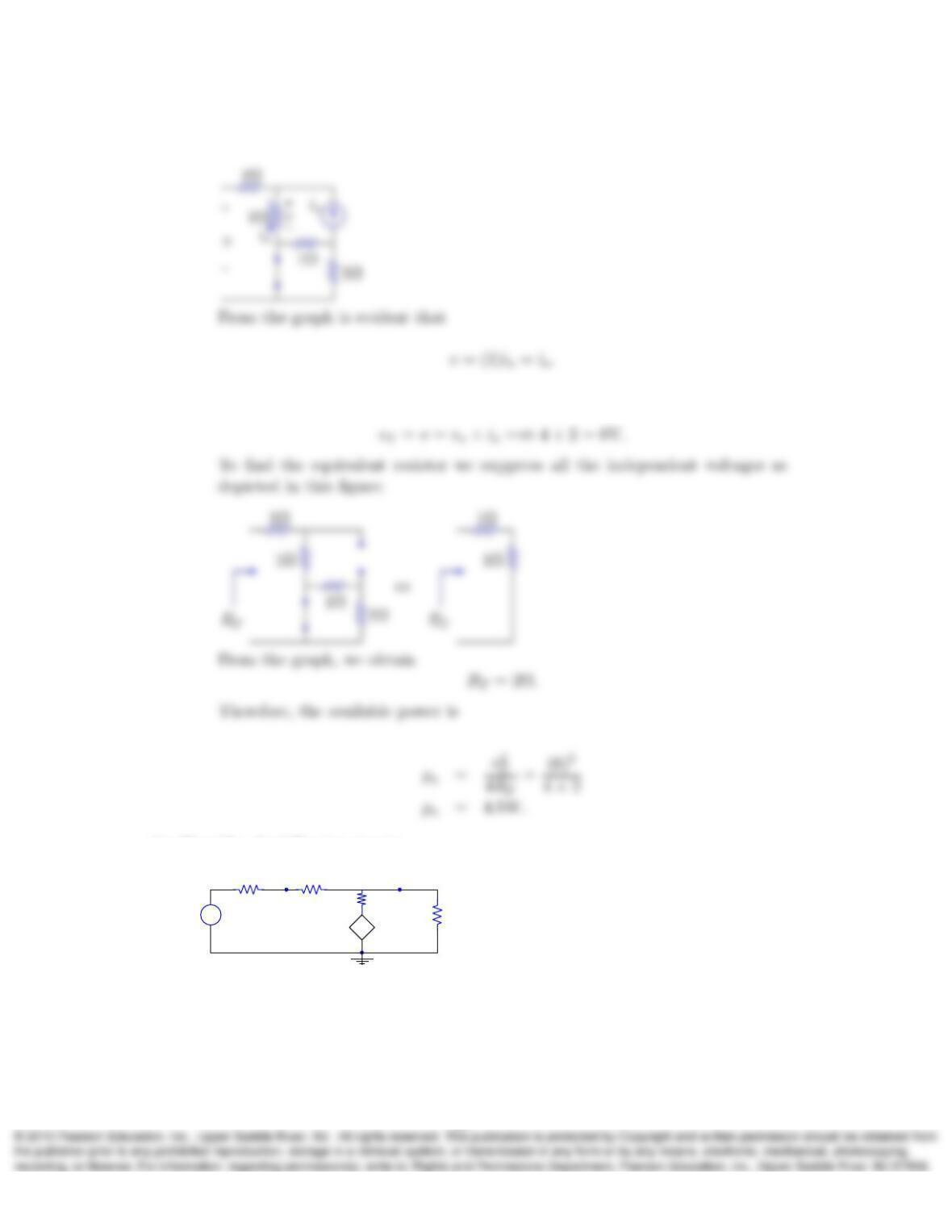
a) Determine vwhen is= 0.
b) Determine vwhen vs= 0.
c) When vs= 4 V and is= 2 A what is the value of vand what is the available
power of the network? Hint: make use of the results of parts (a) and (b) and
the superposition method.
+
–
+
–
v
vs
is
1Ω
1Ω
1Ω 1Ω
Solution:
16
b) When vs= 0
c) Using superposition we find the Thevenin voltage,
14. Consider the following circuit:
+
–+
–
+ –
Avx
vs
1 Ω
RL
+
–
vL
R
vx1 Ω
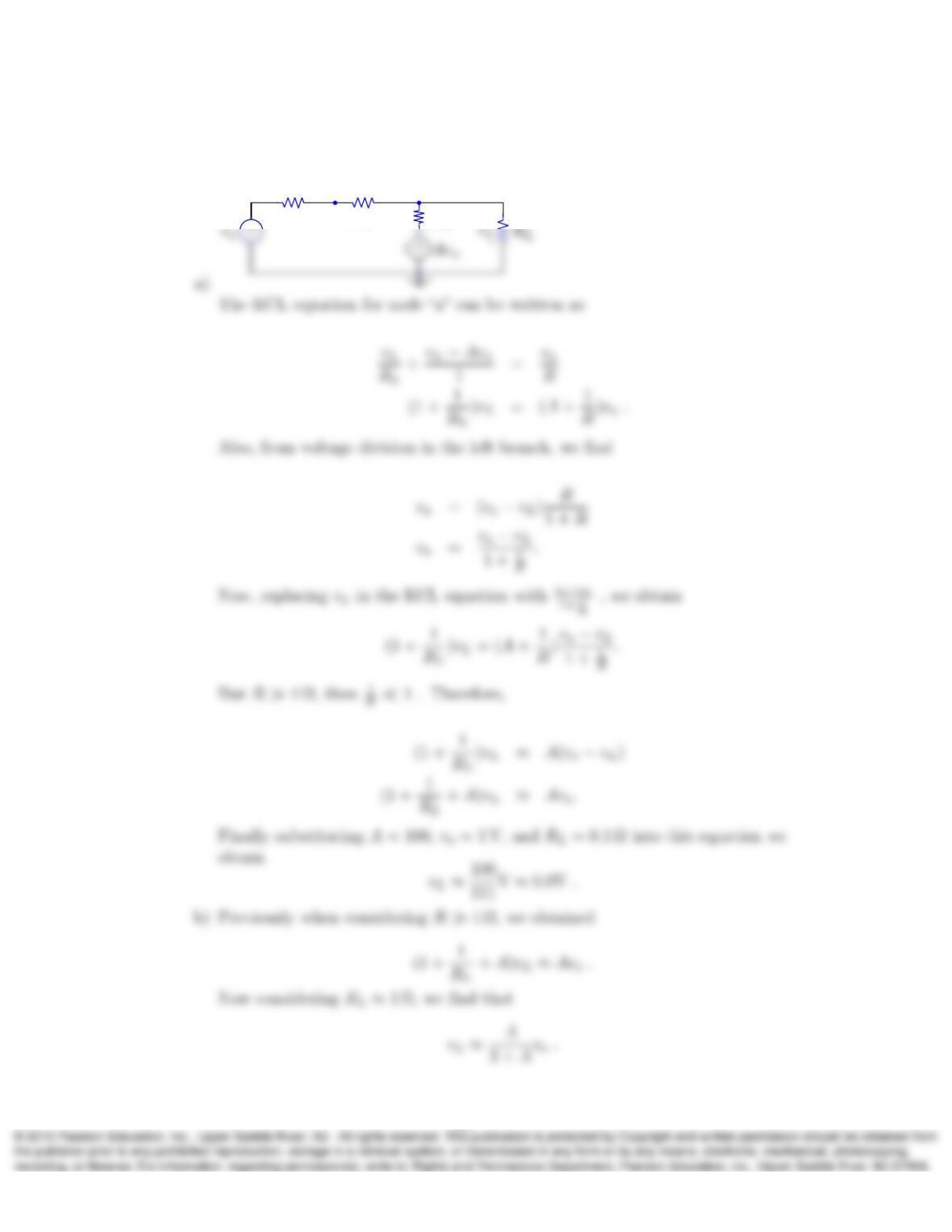
a) Determine vLgiven that vs= 1 V, R= 1 kΩ,RL= 0.1 Ω, and A= 100.
b) Find an approximate expression for vLwhich is valid when R≫1 Ω,RL≈1 Ω,
and A≫1.
17
Solution:
+ –
1 Ω
+
R
vx1 Ω
a
18
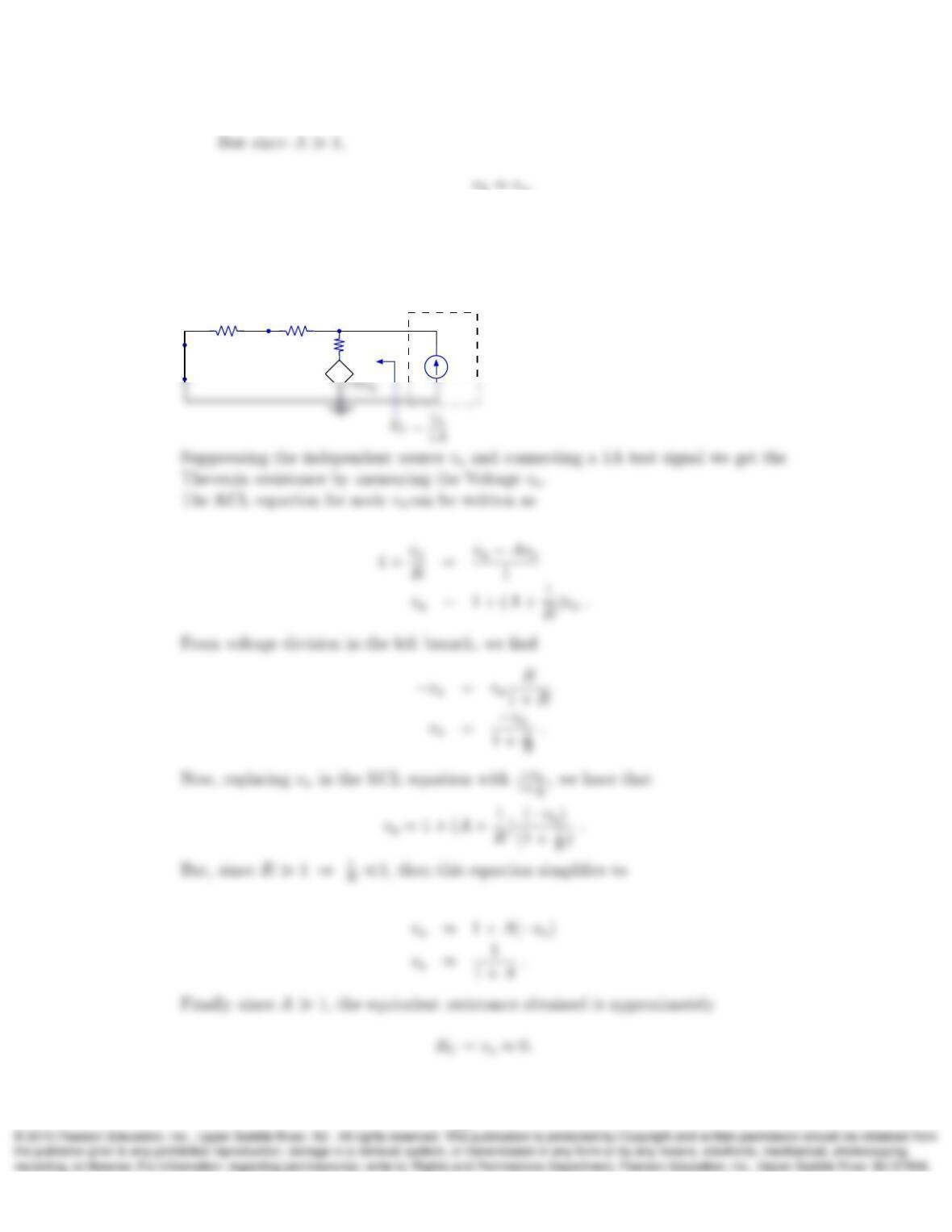
15. Determine the Thevenin resistance RTof the network to the left of RLin the circuit
shown in Problem 14. What is the approximate expression for RTif R≫1 Ω and
A≫1?
Solution:
+
+ –
1 Ω R
vx1 Ω
va
1A
test signal
19
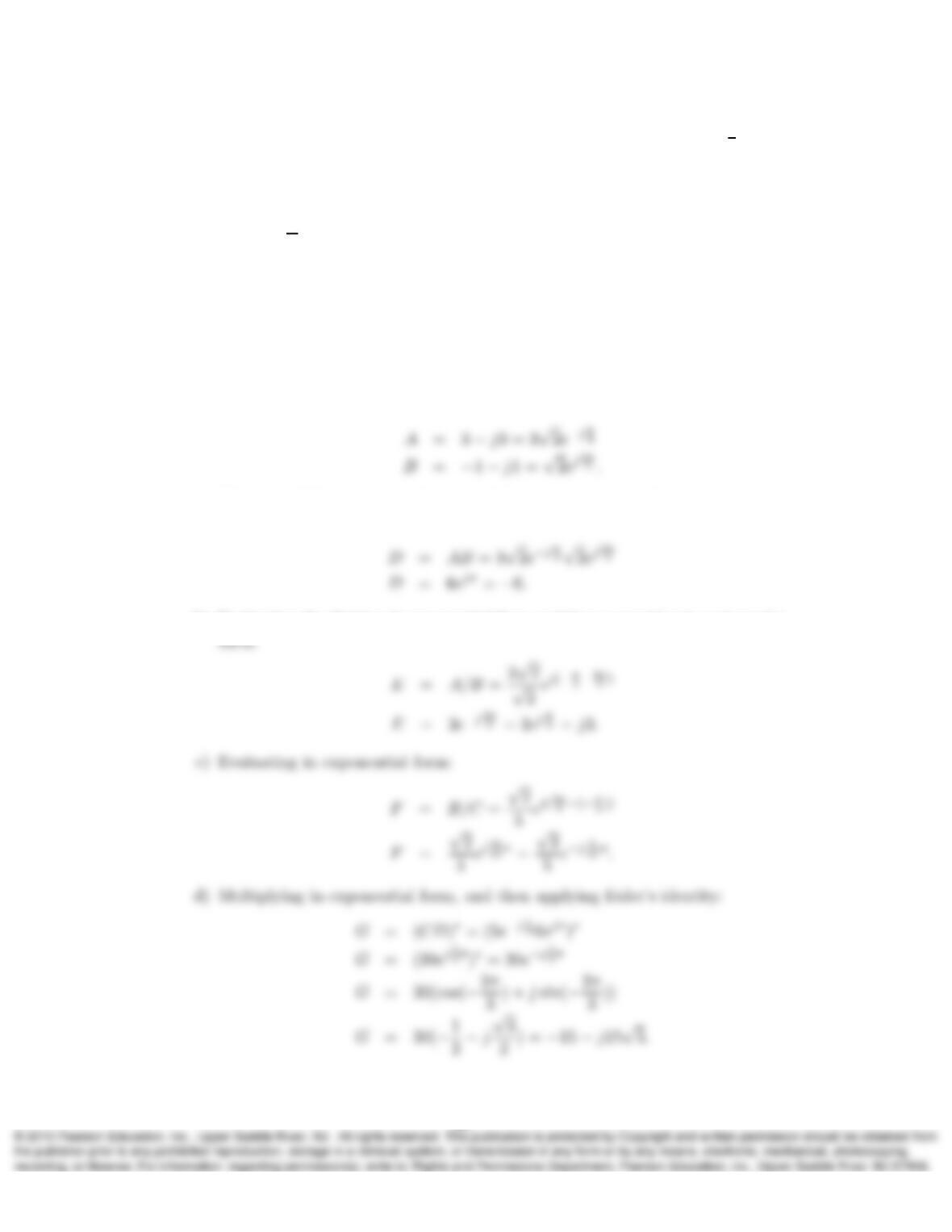
16. For (a) through (e), assume that A= 3 −j3,B=−1−j1, and C= 5e−jπ
3:
a) Let D=AB. Express Din exponential form.
b) Let E=A/B. Express Ein rectangular form.
c) Let F=B
C. Express Fin exponential form.
d) Let G= (CD)∗where ∗denotes complex conjugation. Express Gin rectan-
gular and exponential forms.
e) Let H= (A+C)∗. Determine |H|and ∠H, the magnitude and angle of H.
Solution:
a) First we write Aand Bin exponential form:
Then, multiplying magnitudes and adding arguments, we obtain
b) Evaluating the division in exponential form and then converting to rectangular
20
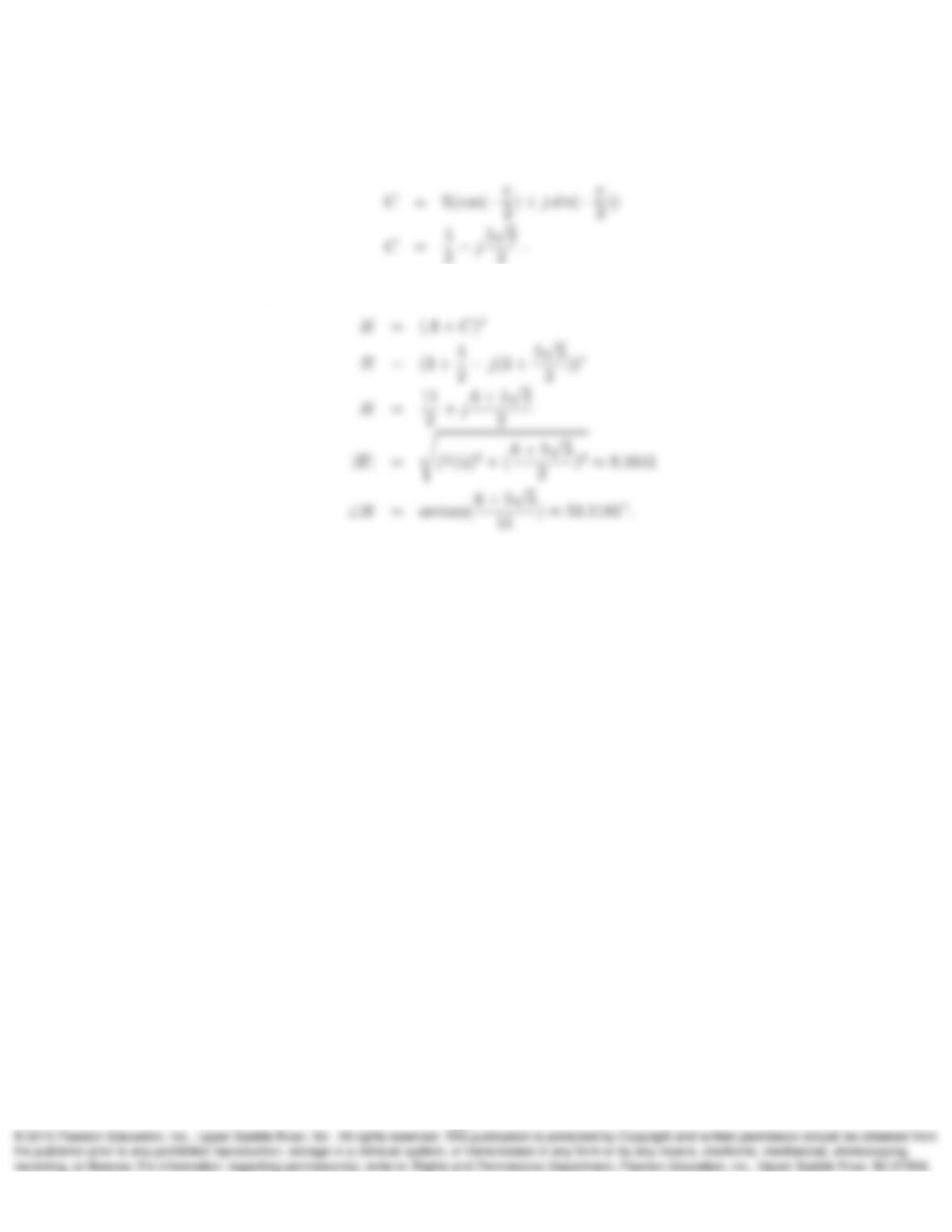
e) Expressing Cin rectangular form gives
Consequently,
21