Problems 9–21
[b] ω=2πf= 50,000; f=25,000
π;
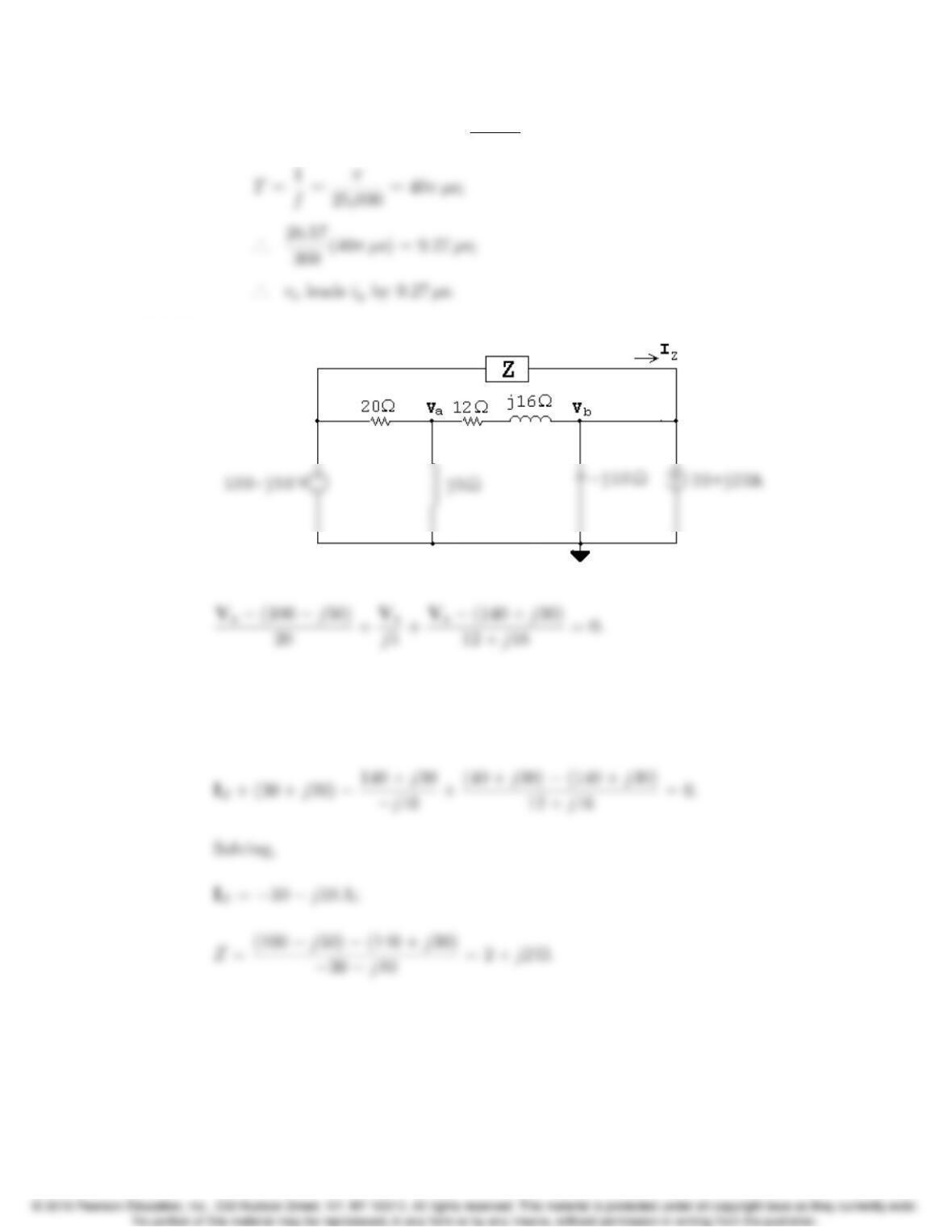
P 9.34
Solving,
Va= 40 + j30 V;
9–22 CHAPTER 9. Sinusoidal Steady State Analysis
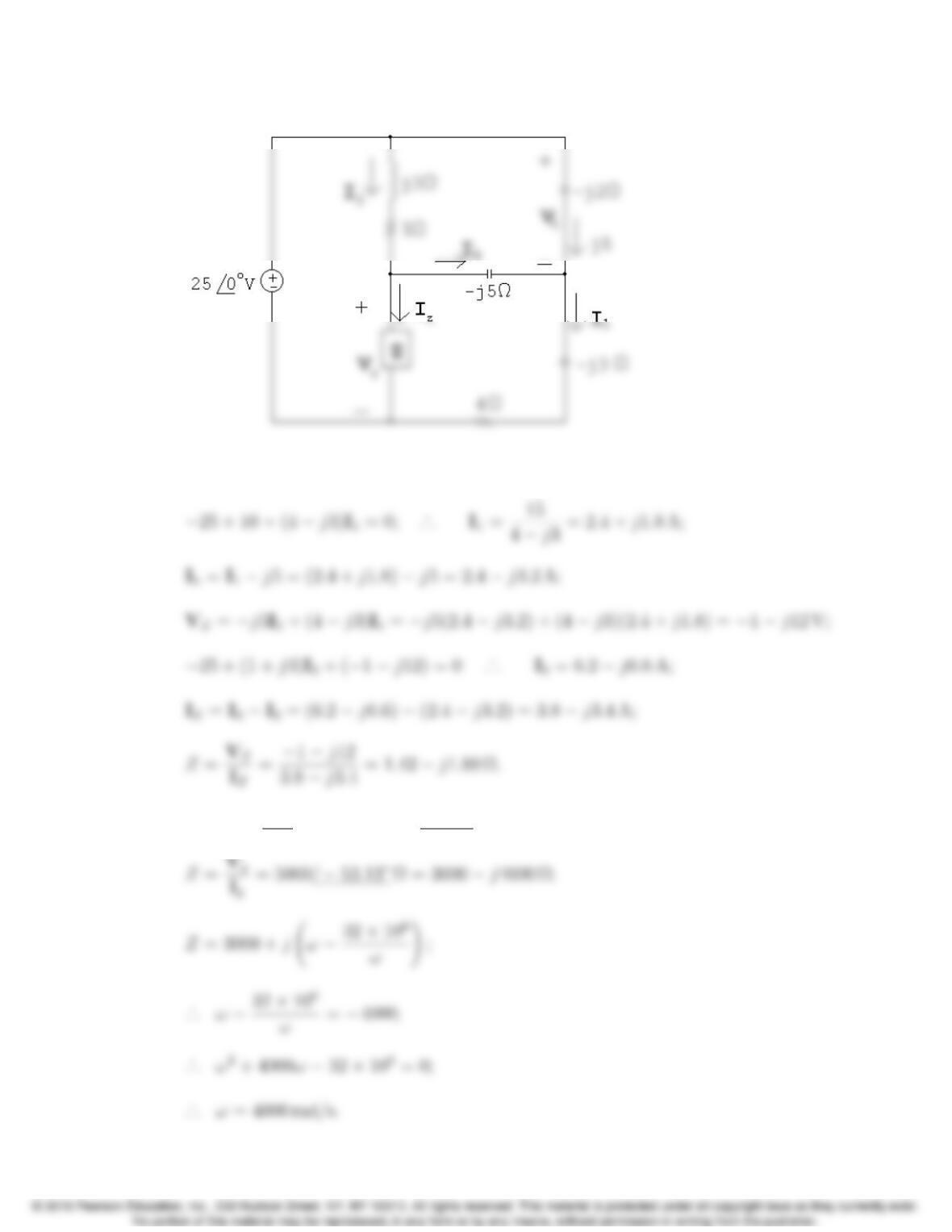
P 9.35
V1=j5(j2) = 10 V;
P 9.36 Vg= 500/30V; Ig=0.1/83.13mA;
Problems 9–23
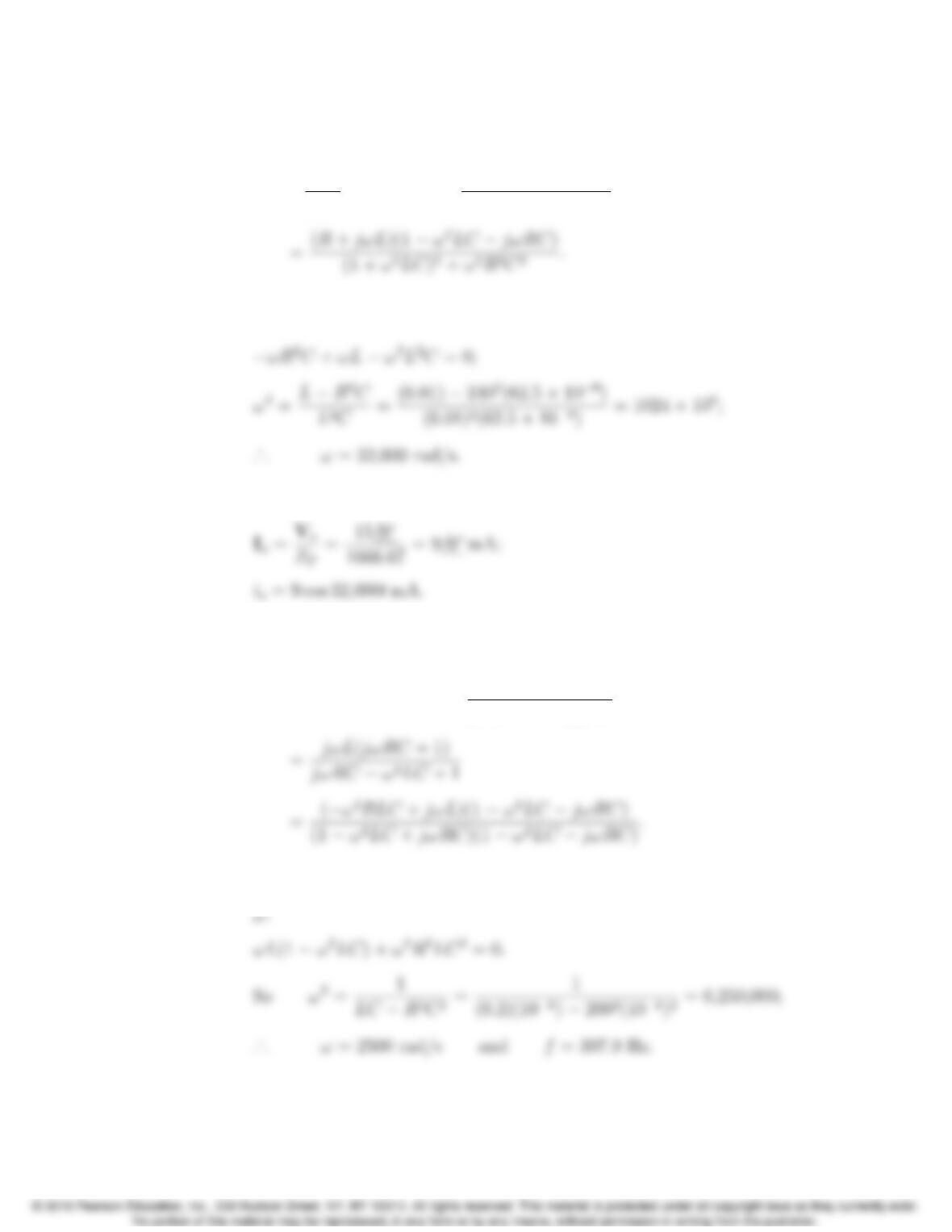
P 9.37 [a] The voltage and current are in phase when the impedance to the left of
the 1 k⌦resistor is purely real:
Zeq =1
jωCk(R+jωL)= R+jωL
1+jωRC ω2LC
The denominator in the above expression is purely real, so set the
imaginary part of the expression’s numerator to zero and solve for ω:
[b] Zt= 1000 + (j500)k(240 + j320) = 1666.67 ⌦;
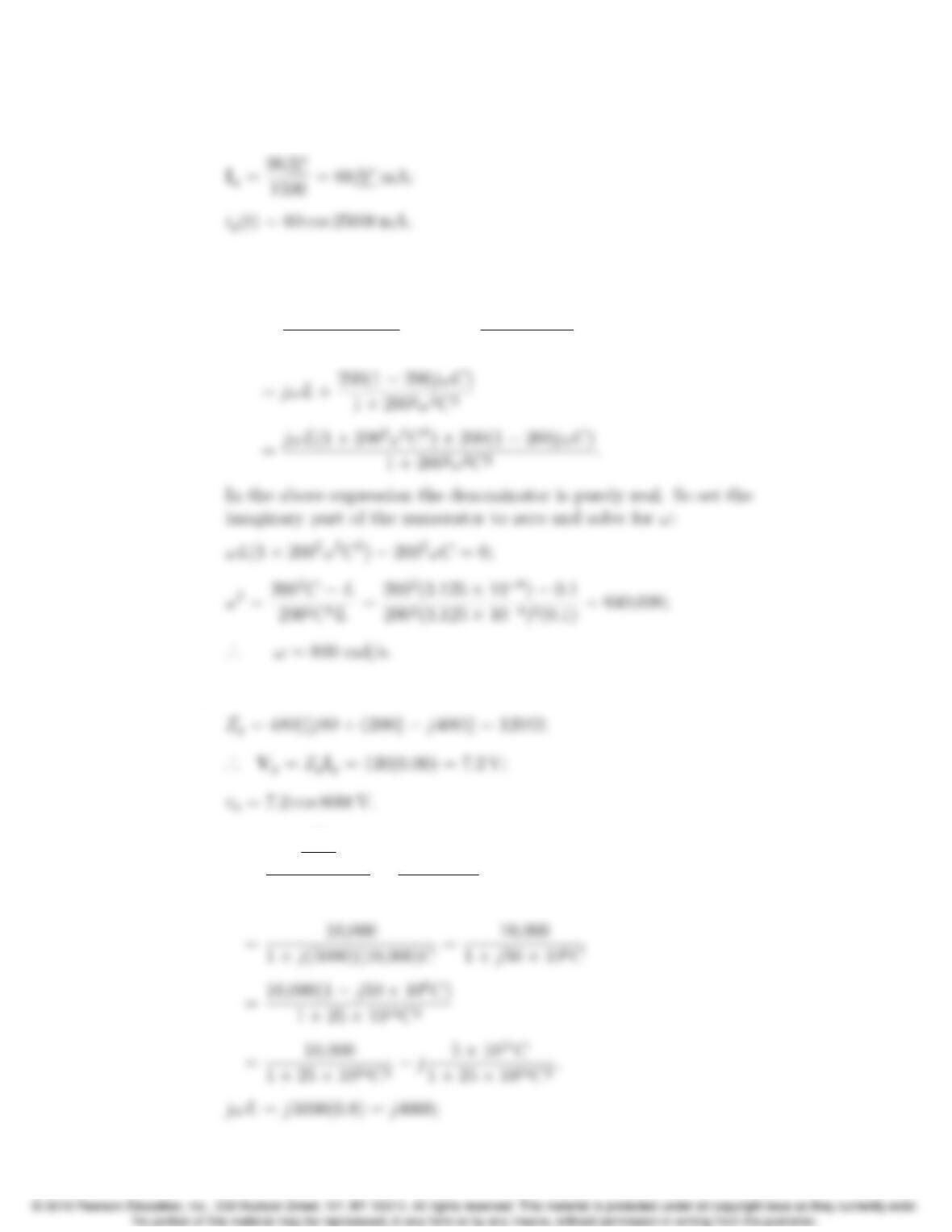
P 9.38 [a] In order for vgand igto be in phase, the impedance to the right of the
500 ⌦resistor must be purely real:
Zeq =jωLk(R+1/ωC)= jωL(R+1/jωC)
jωL+R+1/jωC
The denominator of the above expression is purely real. Now set the
imaginary part of the numerator in that expression to zero and solve for
9–24 CHAPTER 9. Sinusoidal Steady State Analysis
[b] Zeq = 500 + j500k(200 j400) = 1500 ⌦;
P 9.39 [a] For igand vgto be in phase, the impedance to the right of the 480 ⌦
resistor must be purely real.
jωL+(1/jωC)(200)
(1/jωC) + 200 =⌘ωL+200
1 + 200jωC
[b] When ω= 800 rad/s
P 9.40 [a] Zp=
R
jωC
R+ (1/jωC)=R
1+jωRC
Problems 9–25
·
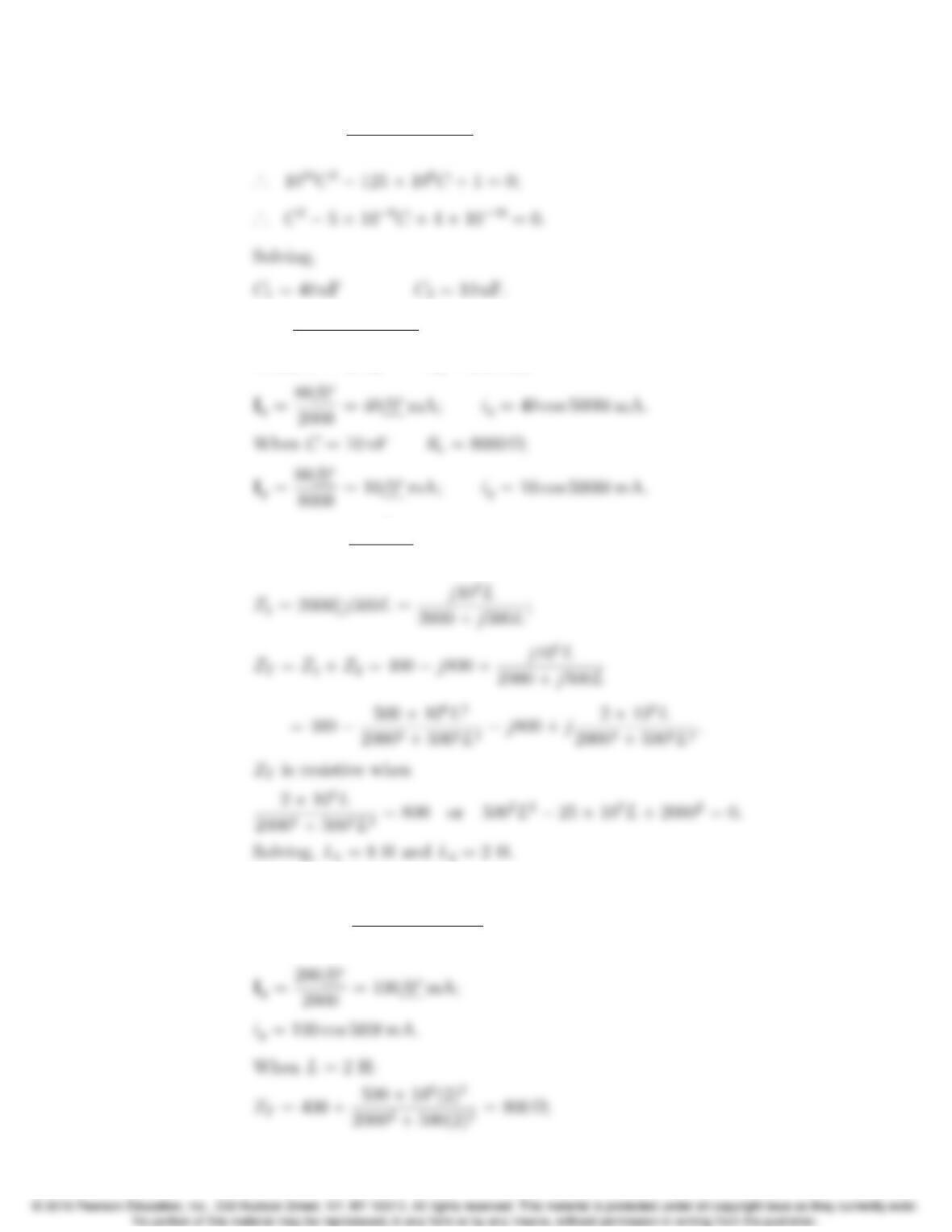
.. 4000 = 5⇥1011C
1+25⇥1014C2;
[b] Re=10,000
1+25⇥1014C2.
When C= 40 nF Re= 2000 ⌦;
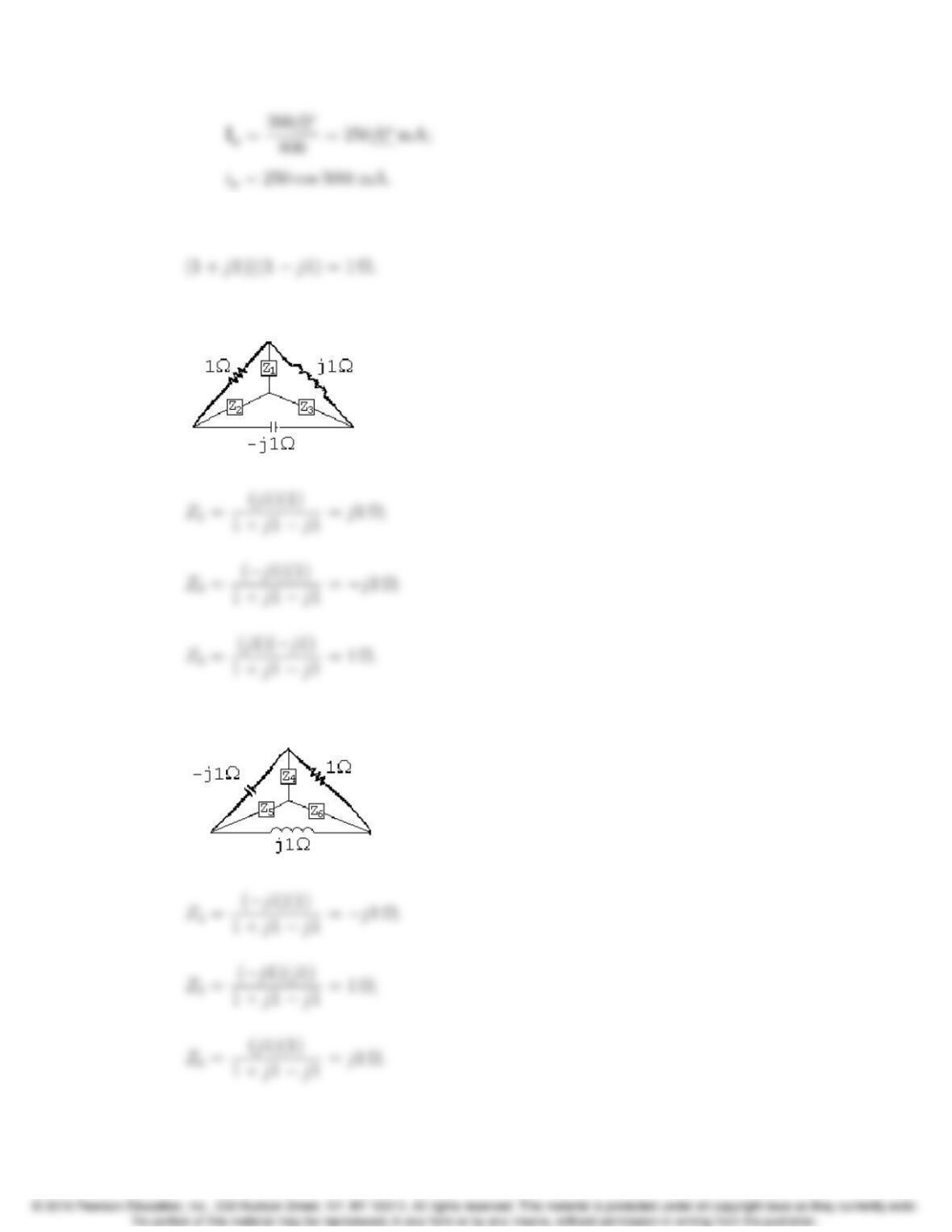
P 9.41 [a] Z1= 400 j106
500(2.5) = 400 j800 ⌦;
[b] When L= 8 H:
ZT= 400 + 500 ⇥106(8)2
20002+ 5002(8)2= 2000 ⌦;
9–26 CHAPTER 9. Sinusoidal Steady State Analysis
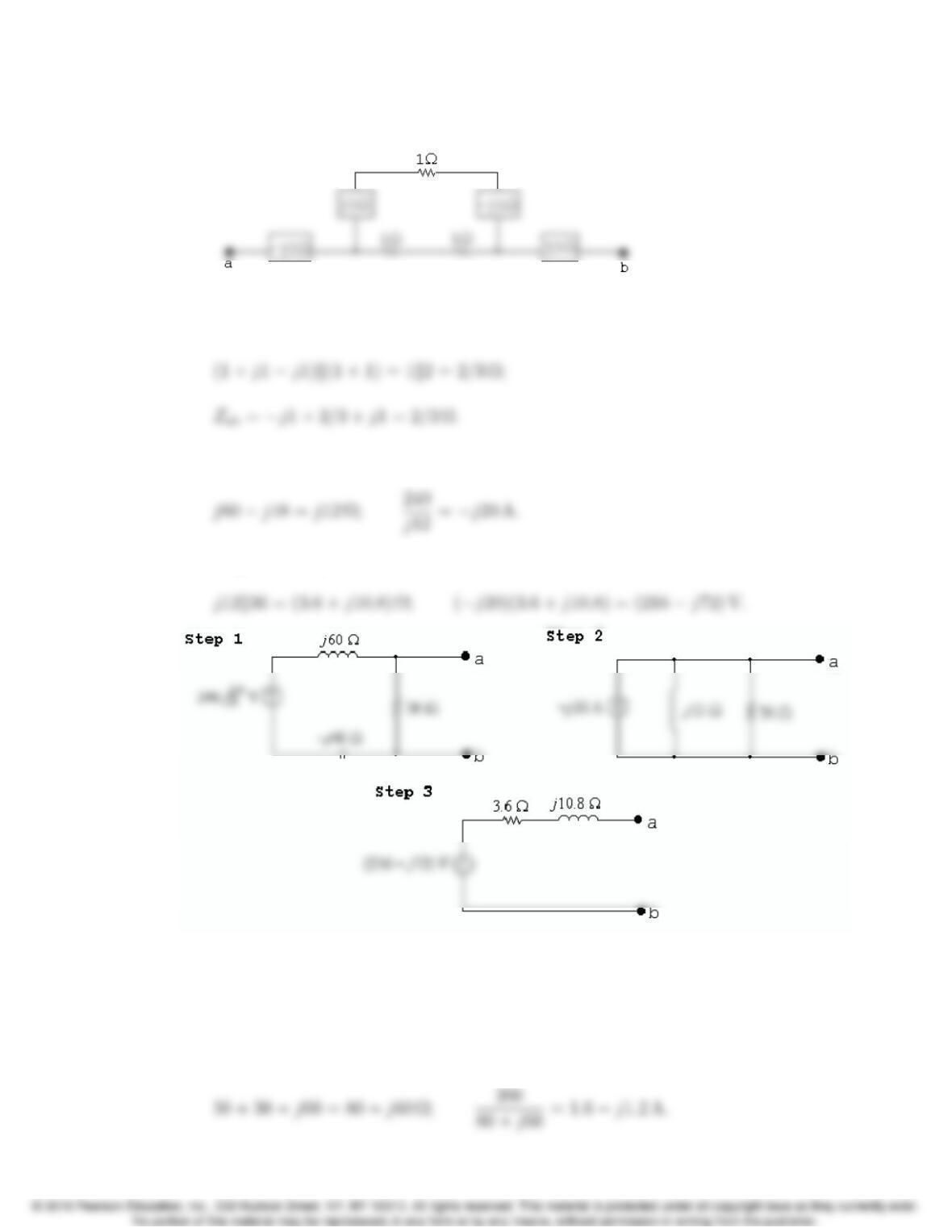
P 9.42 Simplify the top triangle using series and parallel combinations:
Convert the lower left delta to a wye:
Convert the lower right delta to a wye:
Problems 9–27
The resulting circuit is shown below:
Simplify the middle portion of the circuit by making series and parallel
combinations:
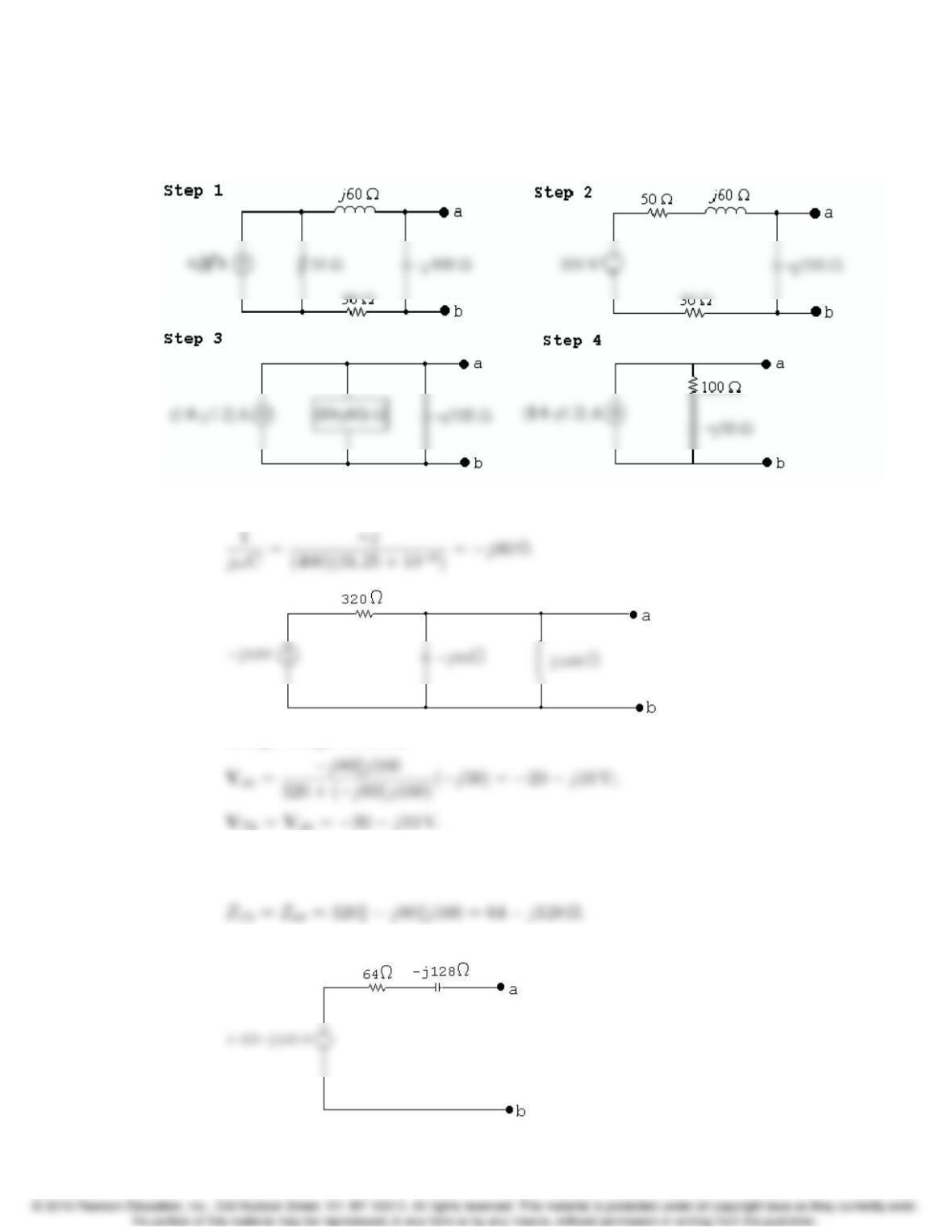
P 9.43 Step 1 to Step 2:
Step 2 to Step 3:
P 9.44 Step 1 to Step 2:
(4)(50) = 200 V.
Step 2 to Step 3:
9–28 CHAPTER 9. Sinusoidal Steady State Analysis
Step 3 to Step 4:
ZN= (80 + j60)kj100 = 100 j50 ⌦;IN=1.6j1.2A.
P 9.45 [a] jωL=j(400)(400) ⇥103=j160 ⌦;
Using voltage division,
[b] Remove the voltage source and combine impedances in parallel to find
ZTh =Zab:
[c]
Problems 9–29
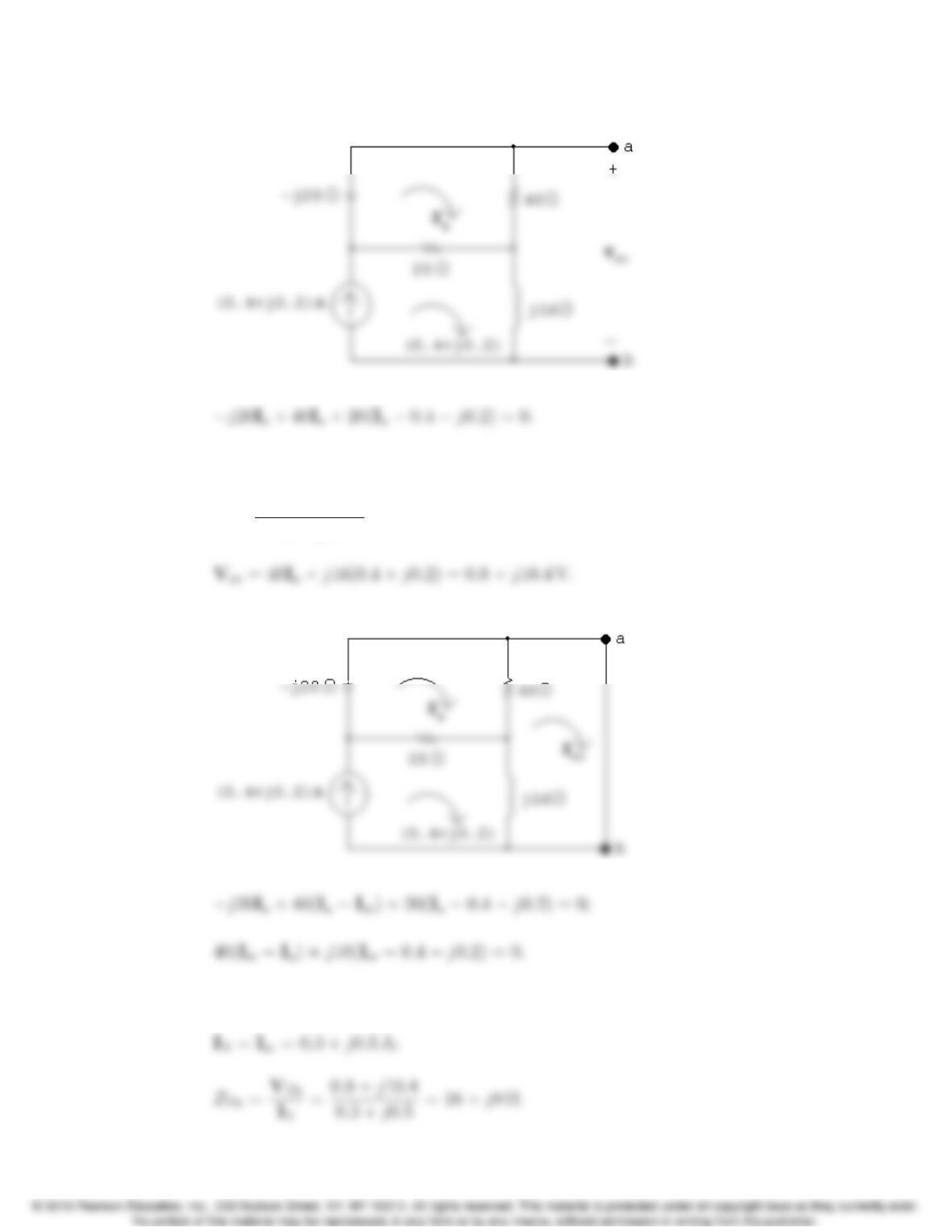
P 9.46 Open circuit voltage:
Solving,
Ia=20(0.4+j0.2)
60 j20 =0.1+j0.1 A;
Short circuit current:
Solving,
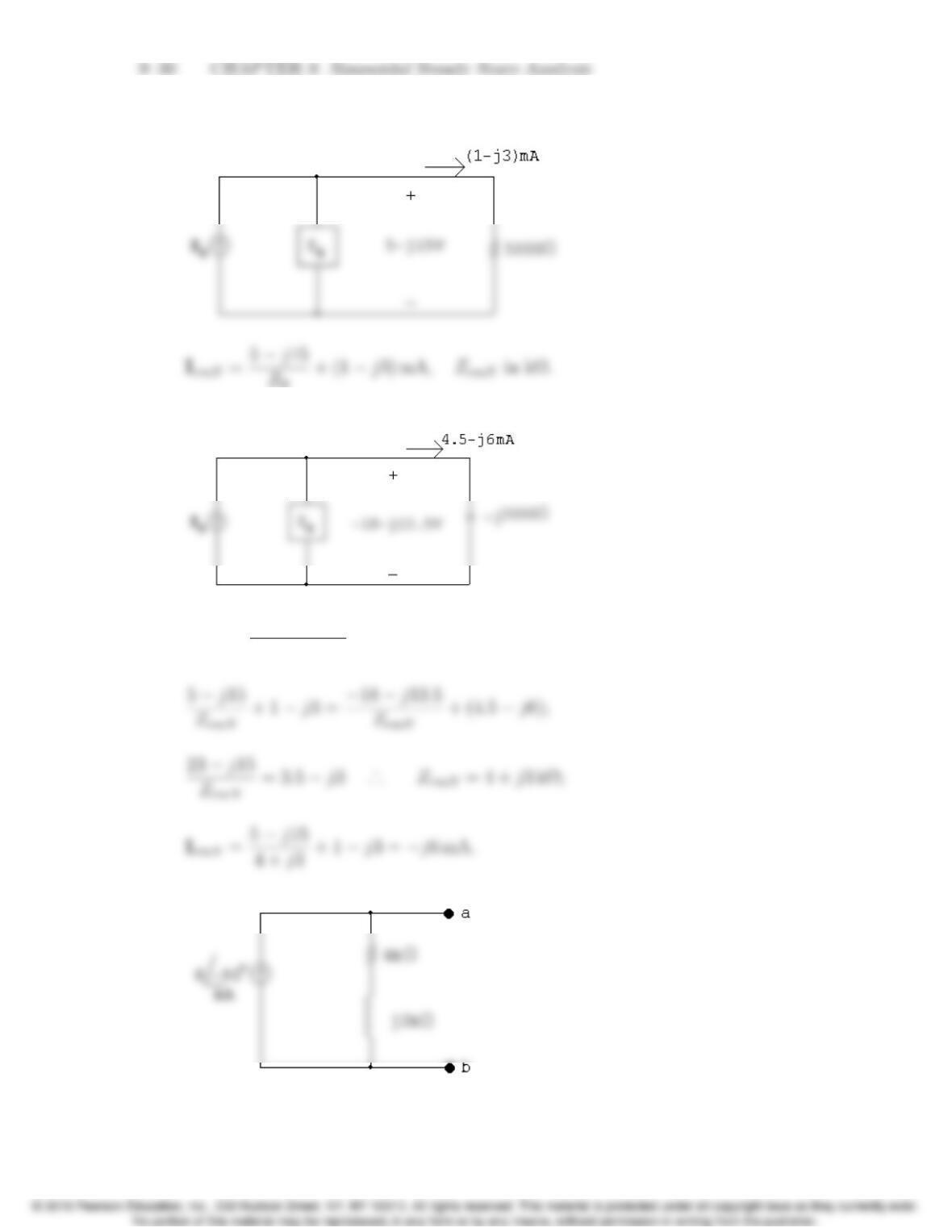
P 9.47
IrmN =18 j13.5
ZrmN
++4.5j6 mA,Z
rmN in k⌦;
Problems 9–31
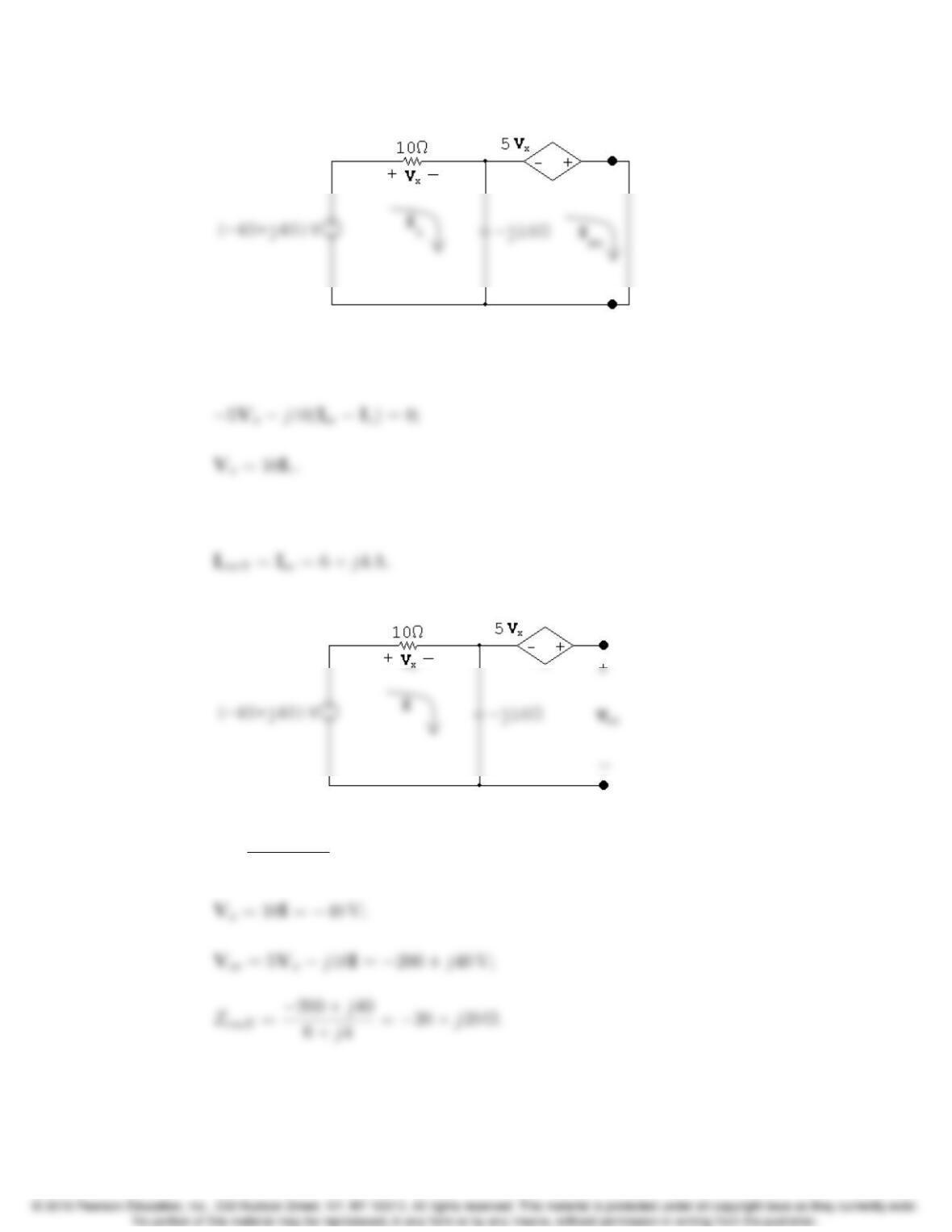
P 9.48 Short circuit current
Vxj10(I1Isc)=40 + j40;
Solving,
Open circuit voltage
I=40 + j40
10 j10 =4 A;
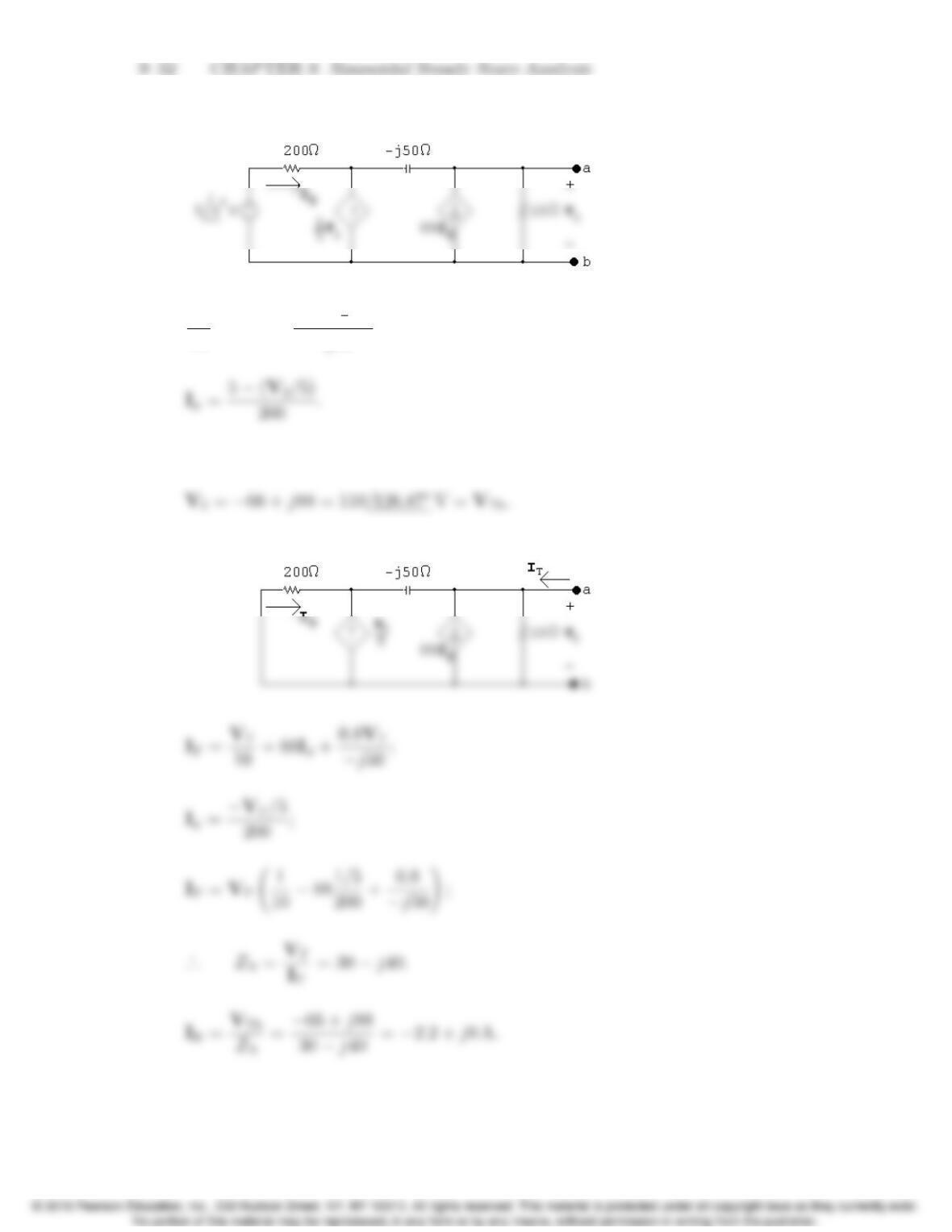
P 9.49 Open circuit voltage:
V2
10 +88Iφ+V21
5V2
j50 = 0;
Solving,
Find the Th´evenin (Norton) equivalent impedance using a test source:
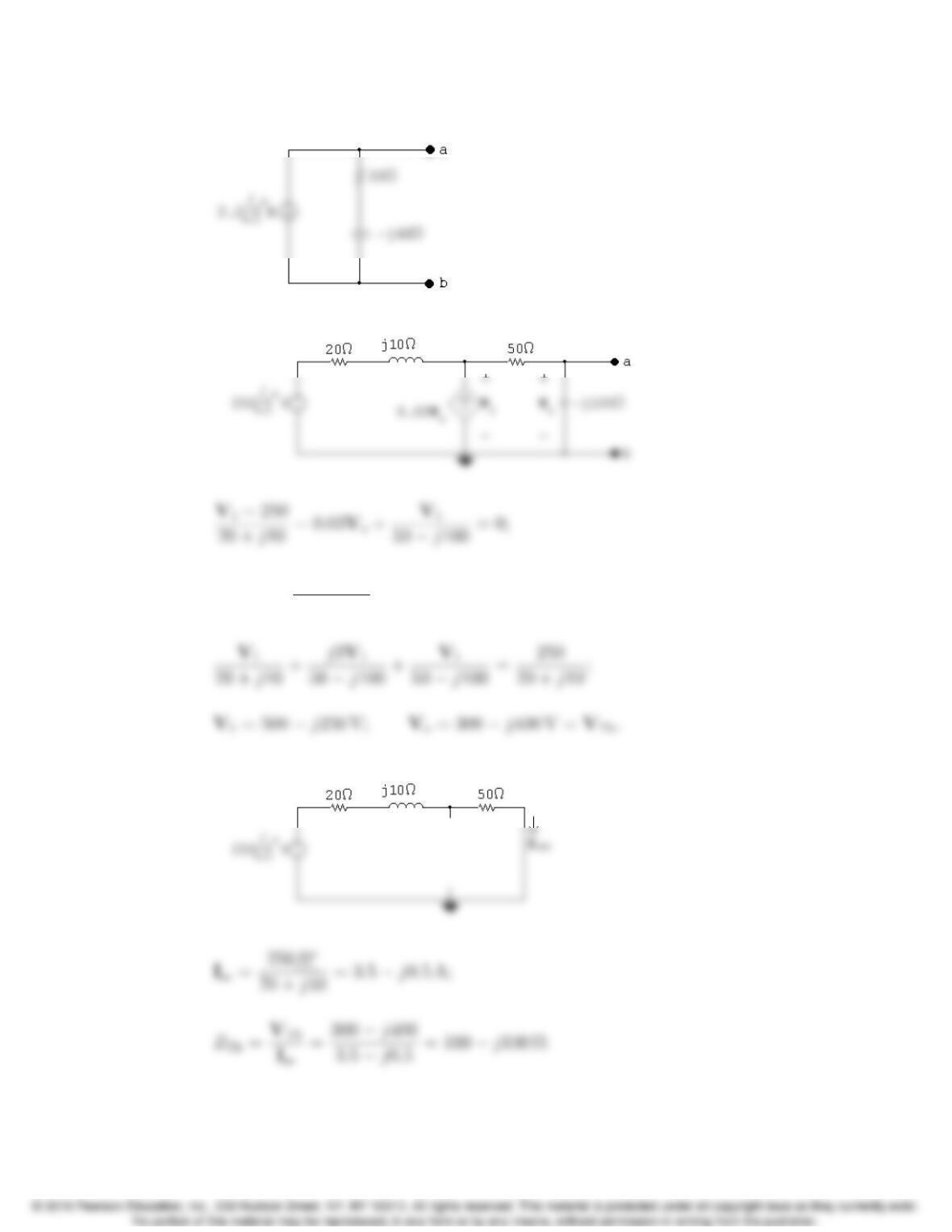
Problems 9–33
The Norton equivalent circuit:
P 9.50 Open circuit voltage:
·
.. Vo=j100
50 j100V1.
Short circuit current:
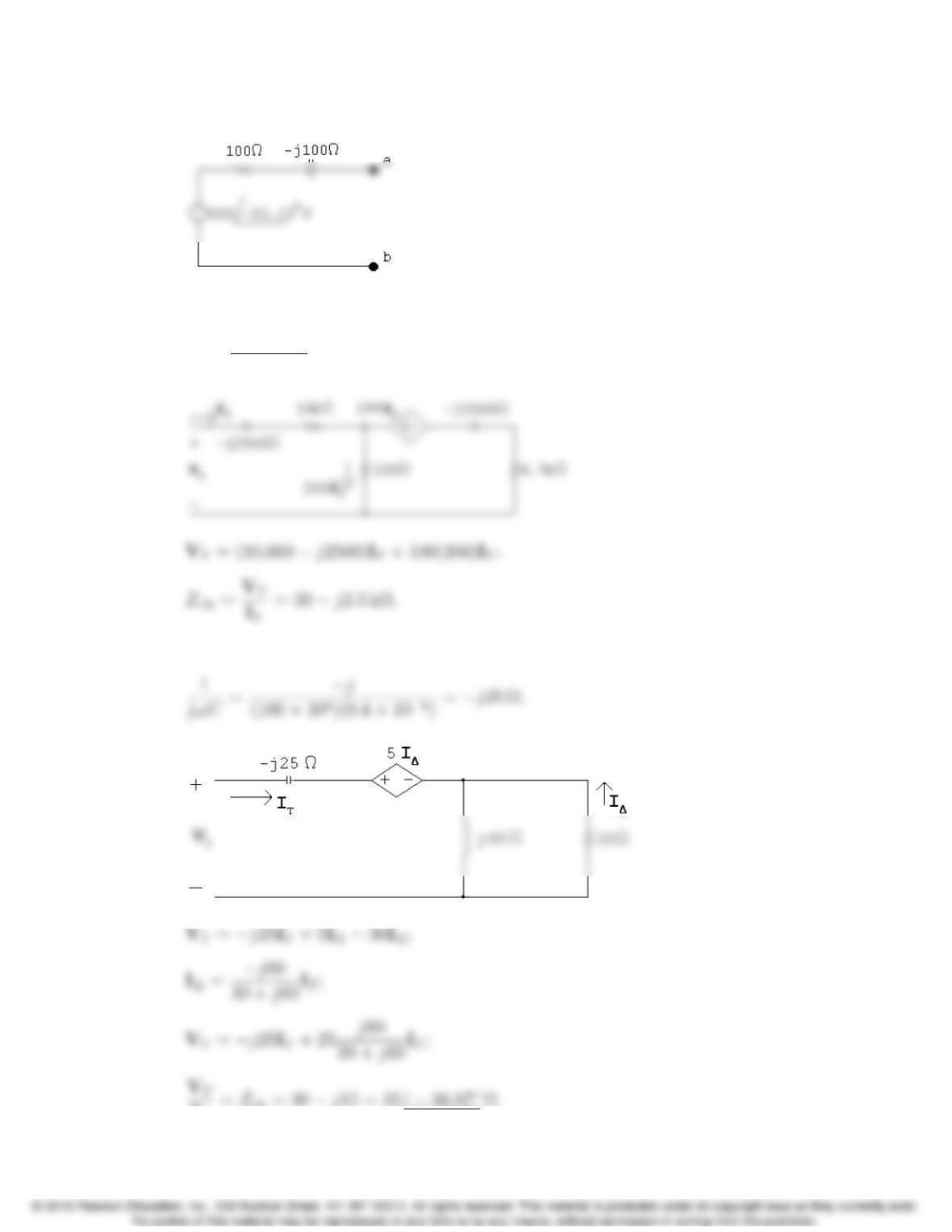
9–34 CHAPTER 9. Sinusoidal Steady State Analysis
The Th´evenin equivalent circuit:
P 9.51 ω=2π(200/π) = 400 rad/s;
Zc=j
400(106)=j2500 ⌦.
P 9.52 jωL=j100 ⇥103(0.6⇥103)=j60 ⌦;
IT
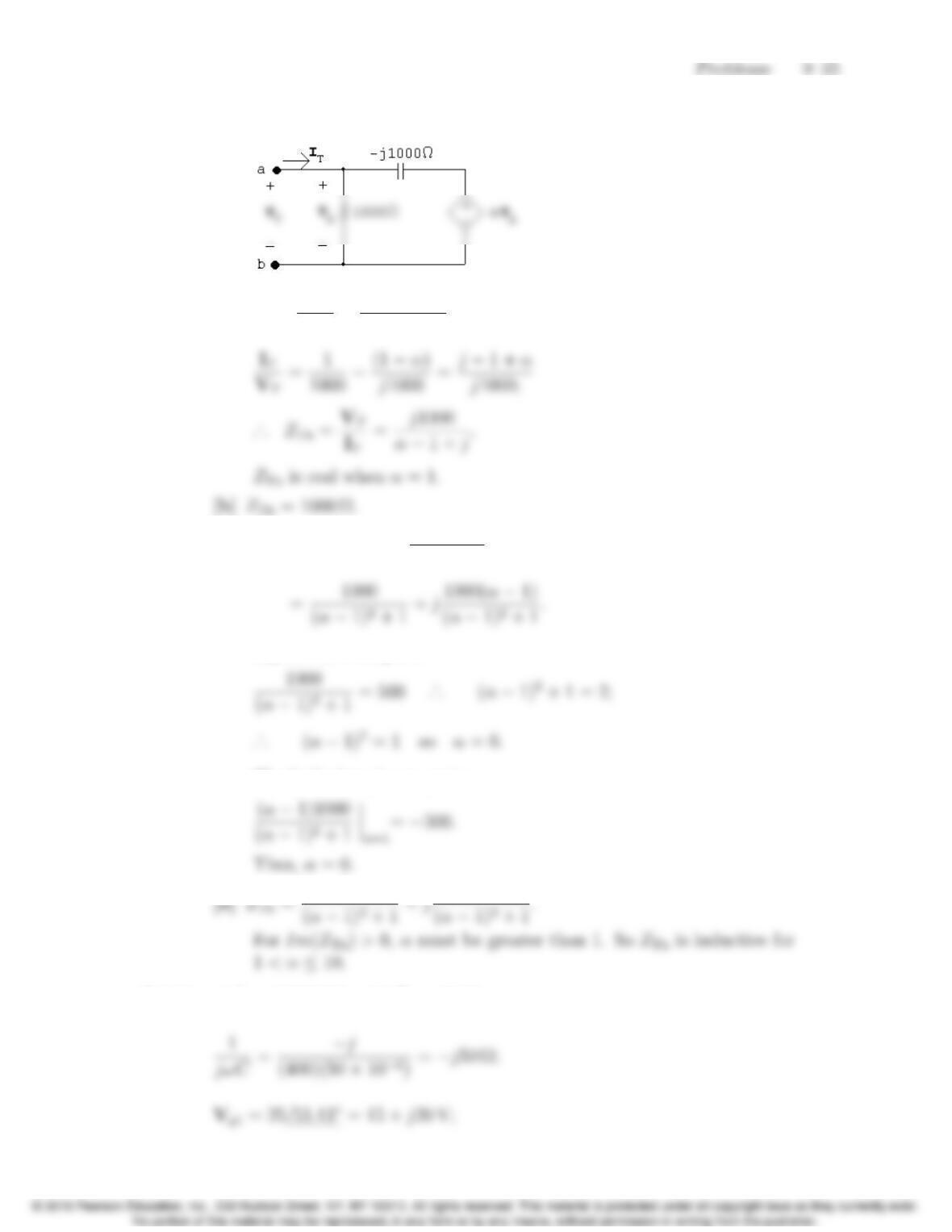
P 9.53 [a]
IT=VT
1000 +VTαVT
j1000 ;
[c] ZTh = 500 j500 = j1000
α1+j
Equate the real parts:
Check the imaginary parts:
P 9.54 jωL=j(400)(50 ⇥103)=j20 ⌦;
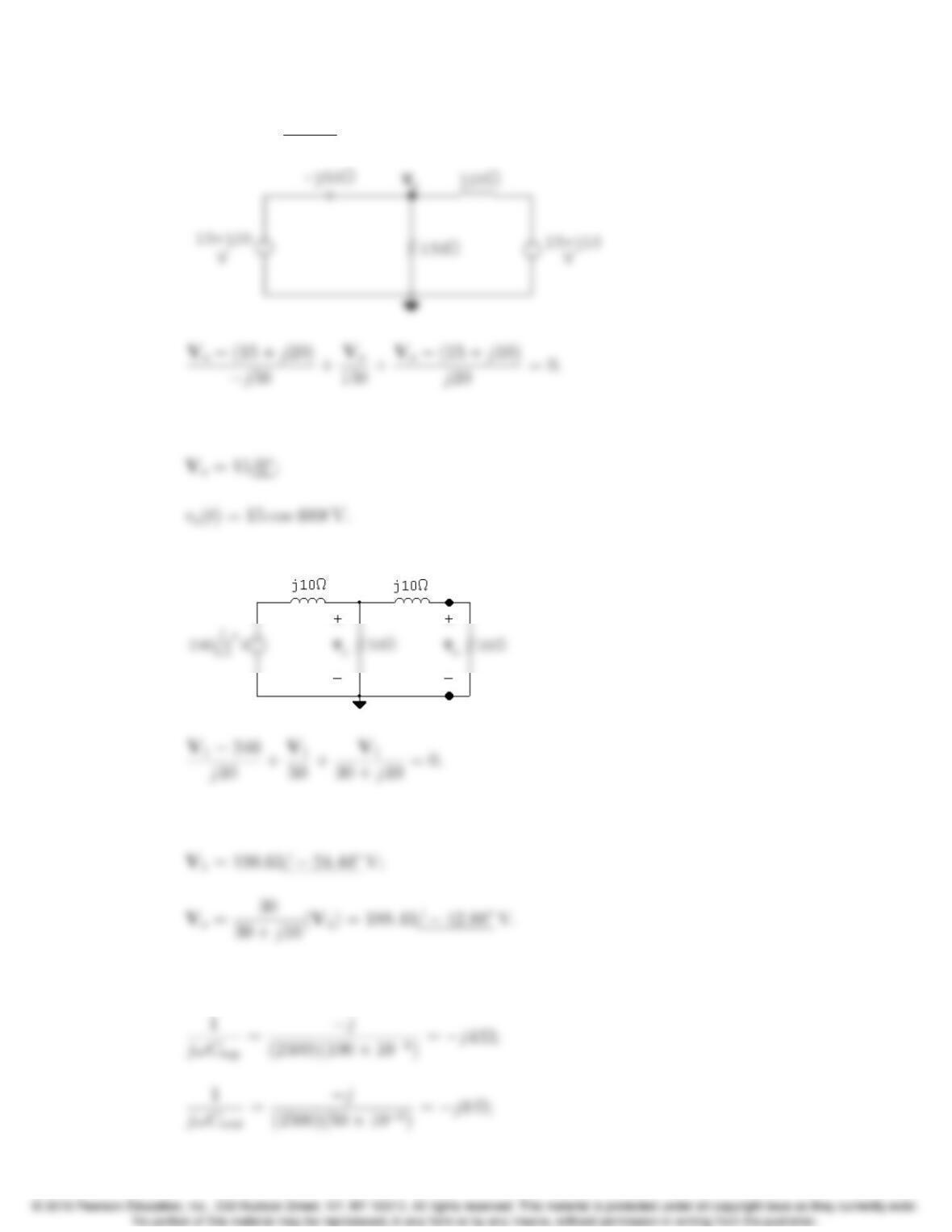
9–36 CHAPTER 9. Sinusoidal Steady State Analysis
Vg2= 18.03/33.69= 15 + j10 V.
Solving,
P 9.55
Solving for V1yields
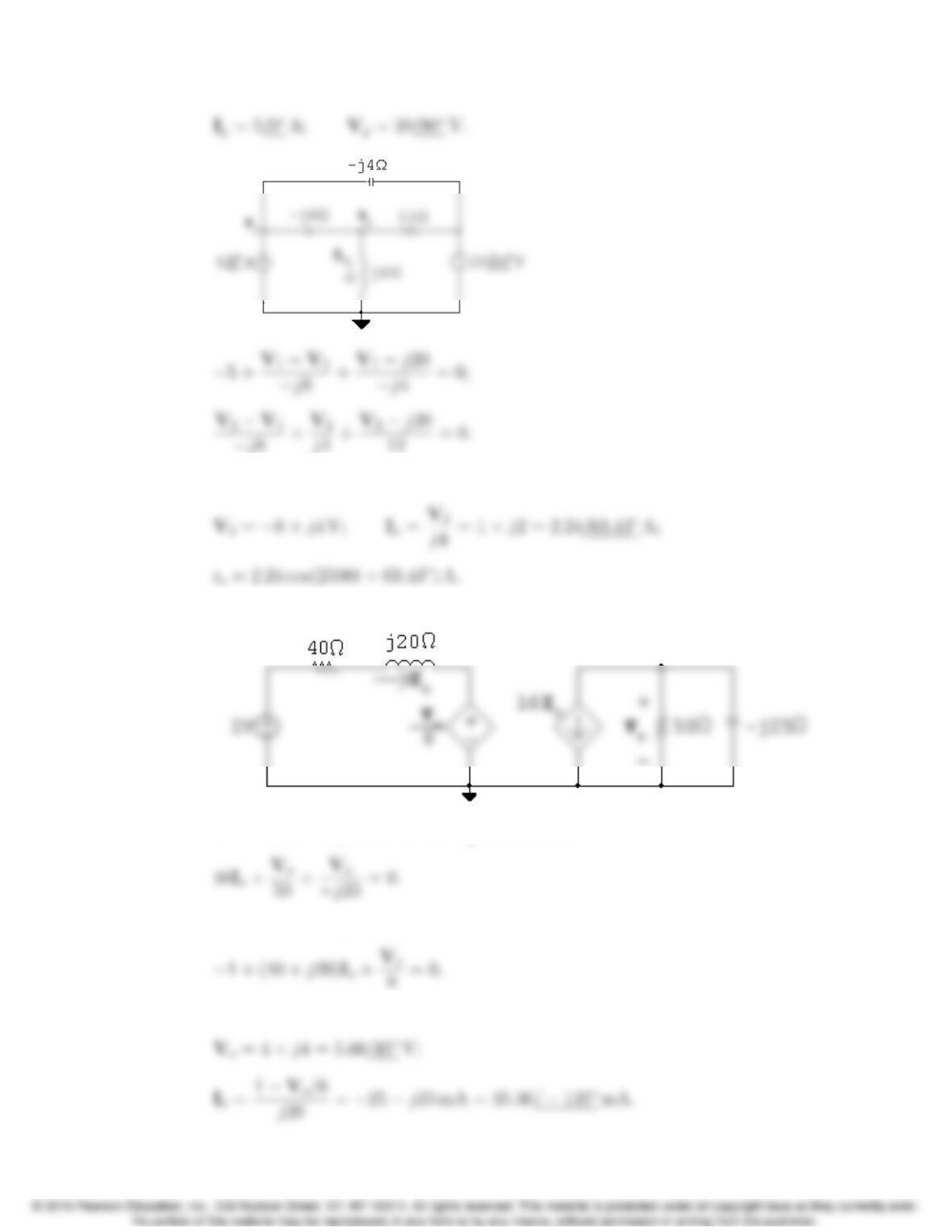
P 9.56 jωL=j(2500)(1.6⇥103)=j4⌦;
Problems 9–37
Solving,
P 9.57 Make a source transformation on the left side:
Write a KCL equation on the right hand side:
Write a KVL equation on the left hand side:
Solving,
9–38 CHAPTER 9. Sinusoidal Steady State Analysis
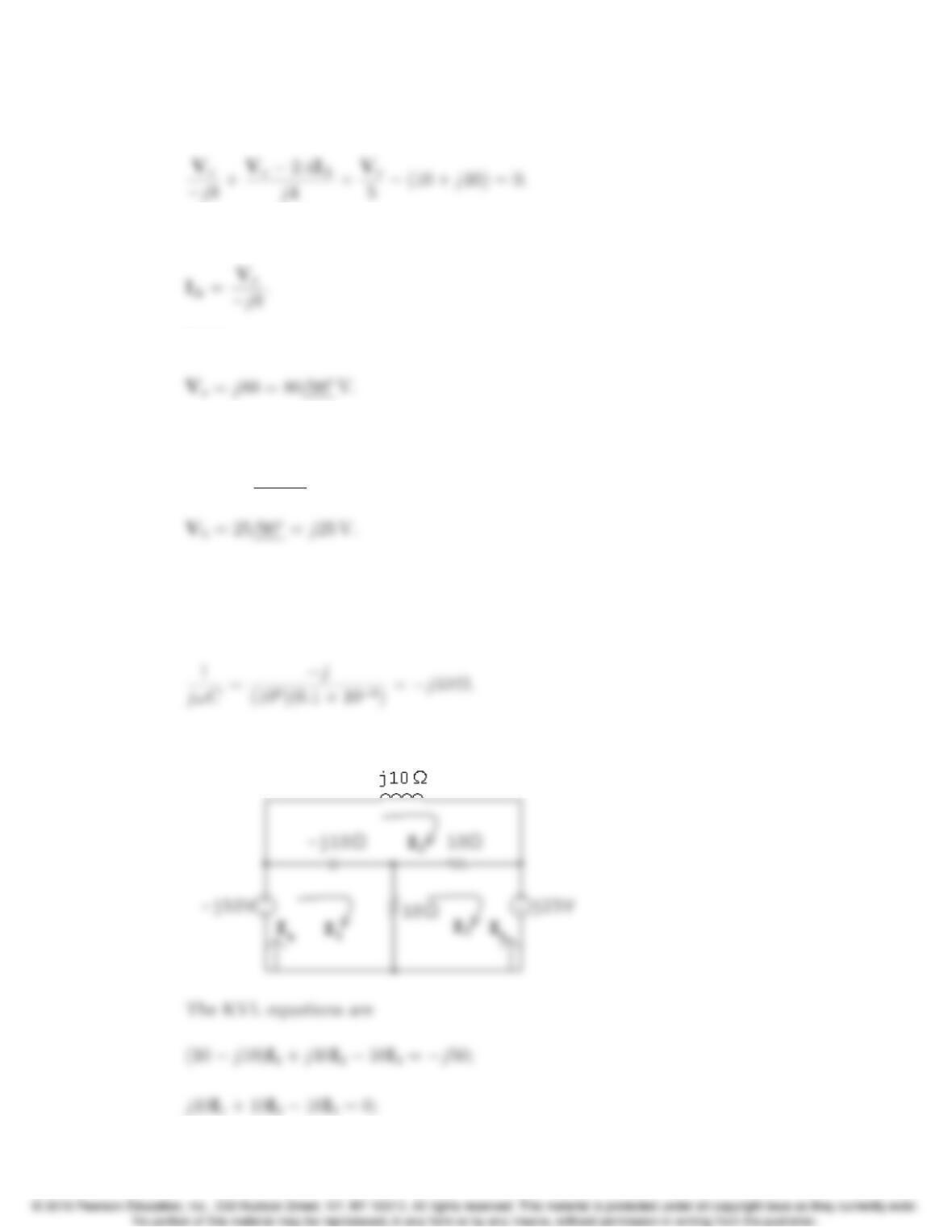
P 9.58 Write a KCL equation at the top node:
The constraint equation is:
Solving,
P 9.59 Transform the circuit to the phasor domain; the sources are
Va= 50/90=j50 V;
The impedances are
jωL=j106(10 ⇥106)=j10 ⌦;
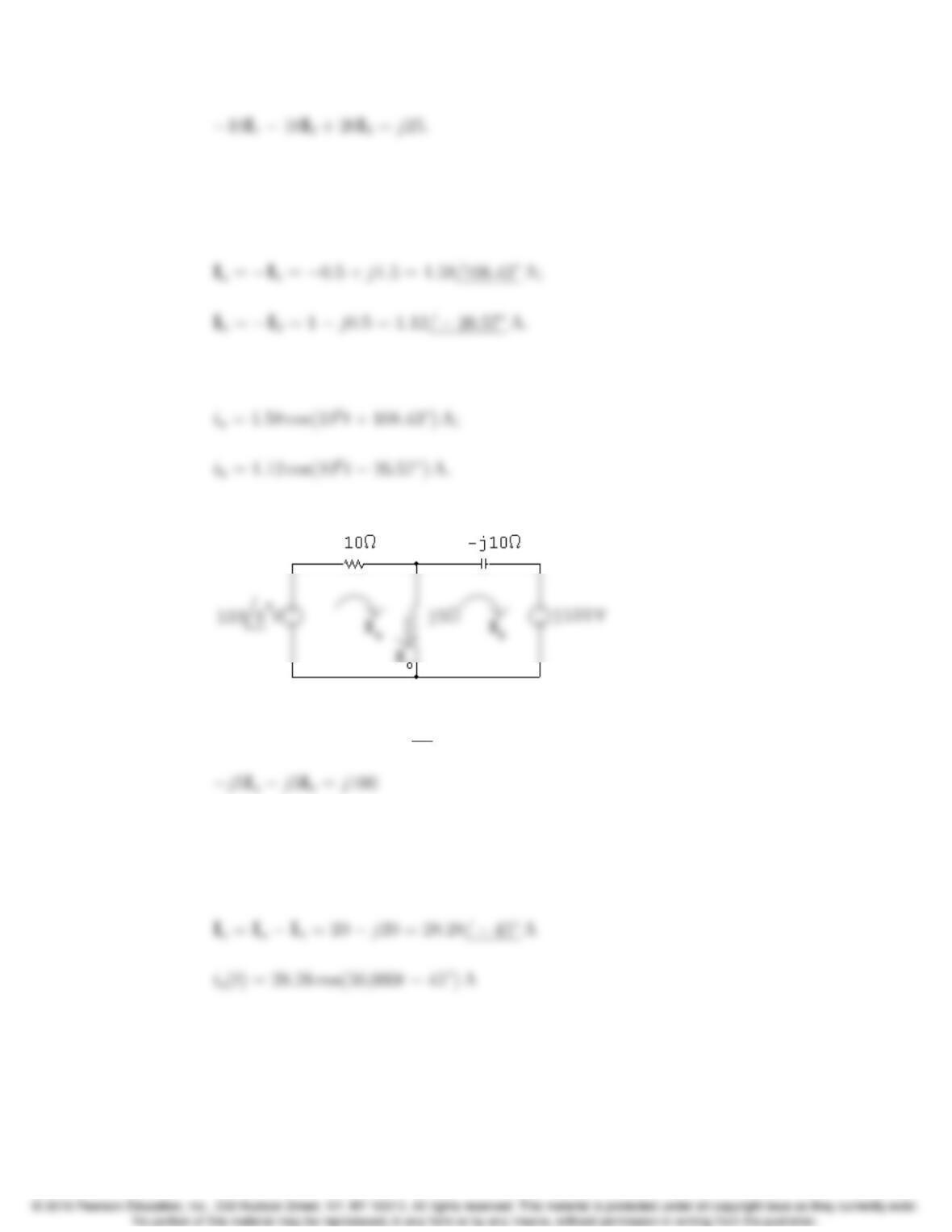
The phasor domain circuit is
Problems 9–39
Solving,
I1=0.5j1.5 A; I3=1+j0.5 A;
Inverse phasor-transform back to the time domain to get
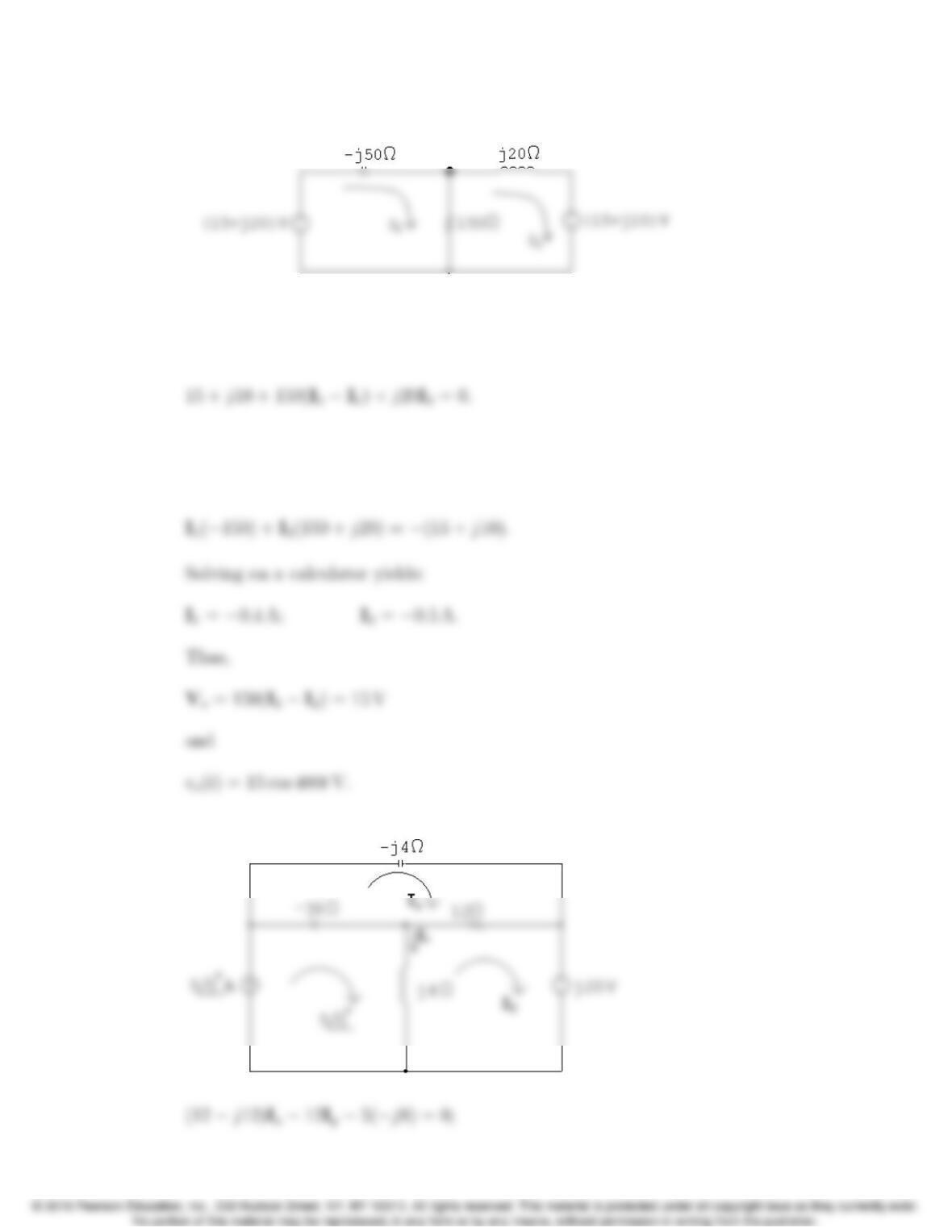
P 9.60
(10 + j5)Iaj5Ib= 100/0
Solving,
Ia=j10 A; Ib=20 + j10 A
9–40 CHAPTER 9. Sinusoidal Steady State Analysis
P 9.61 The circuit with the mesh currents identified is shown below:
The mesh current equations are:
(15 + j20) j50I1+ 150(I1I2)=0;
In standard form:
I1(150 j50) + I2(150) = 15 + j20;
P 9.62