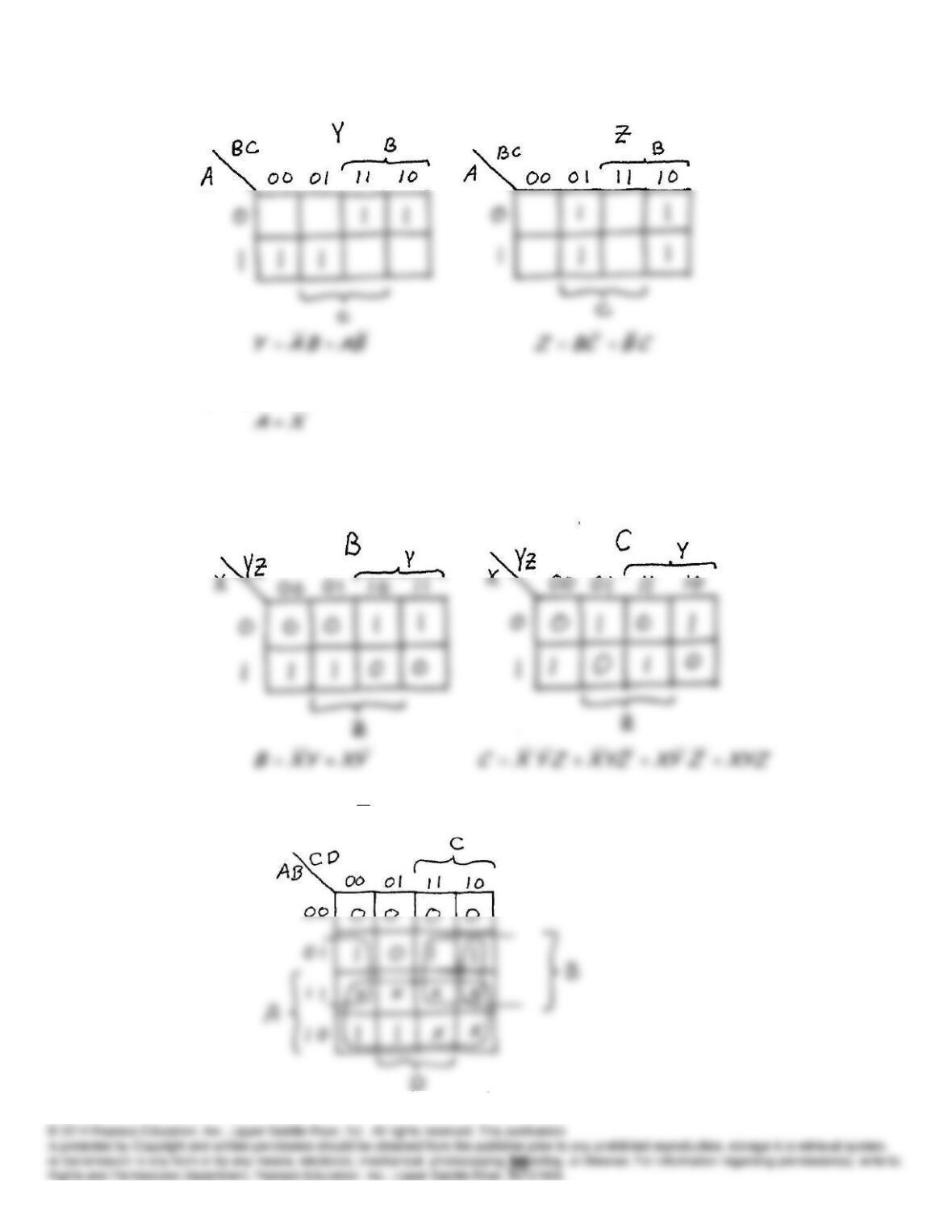
P7.78 By inspection, we see that
The Karnaugh maps for
B
and
C
are:
P7.79* (a)
DBBCAF
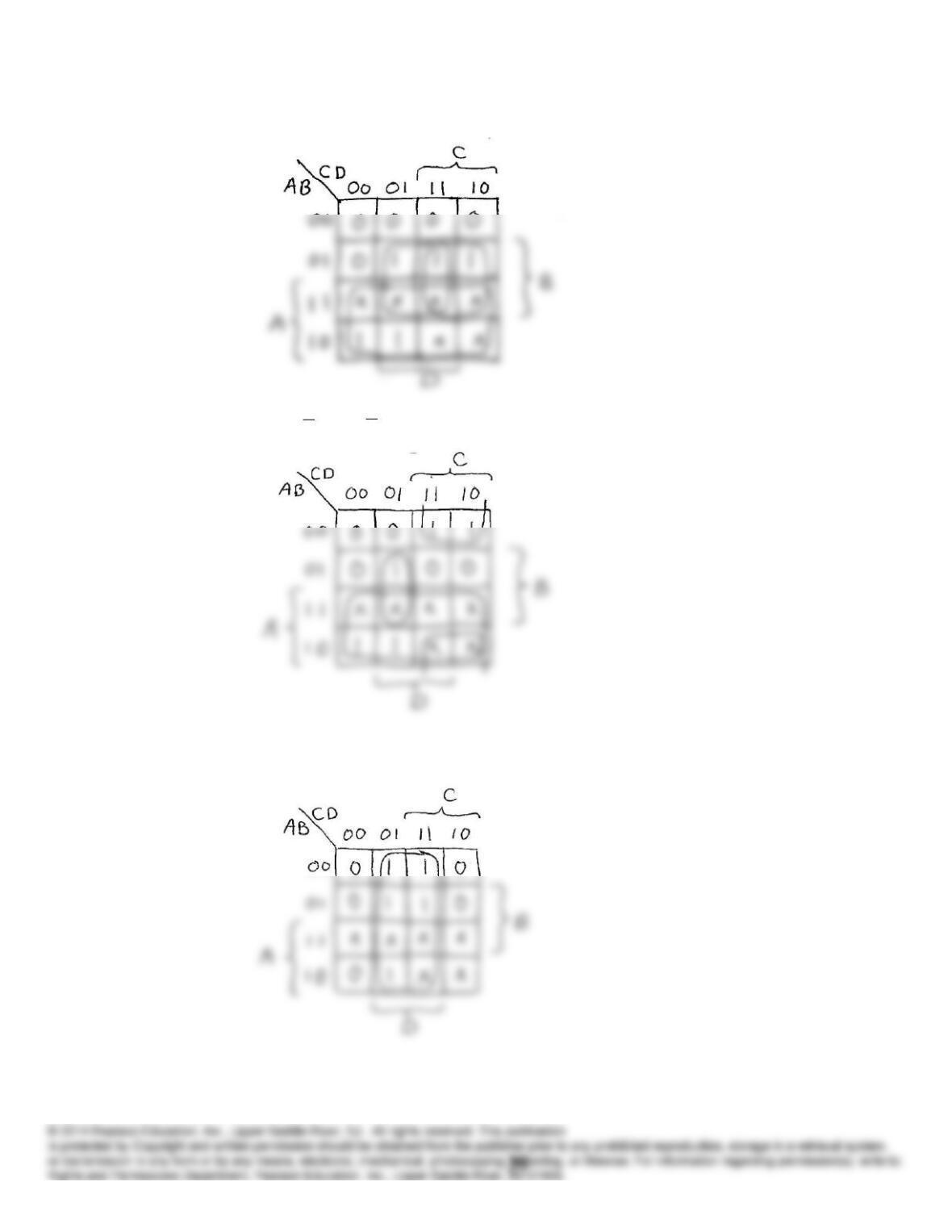
(b)
BCBDAG
(c)
DCBCBAH
(d)
DI
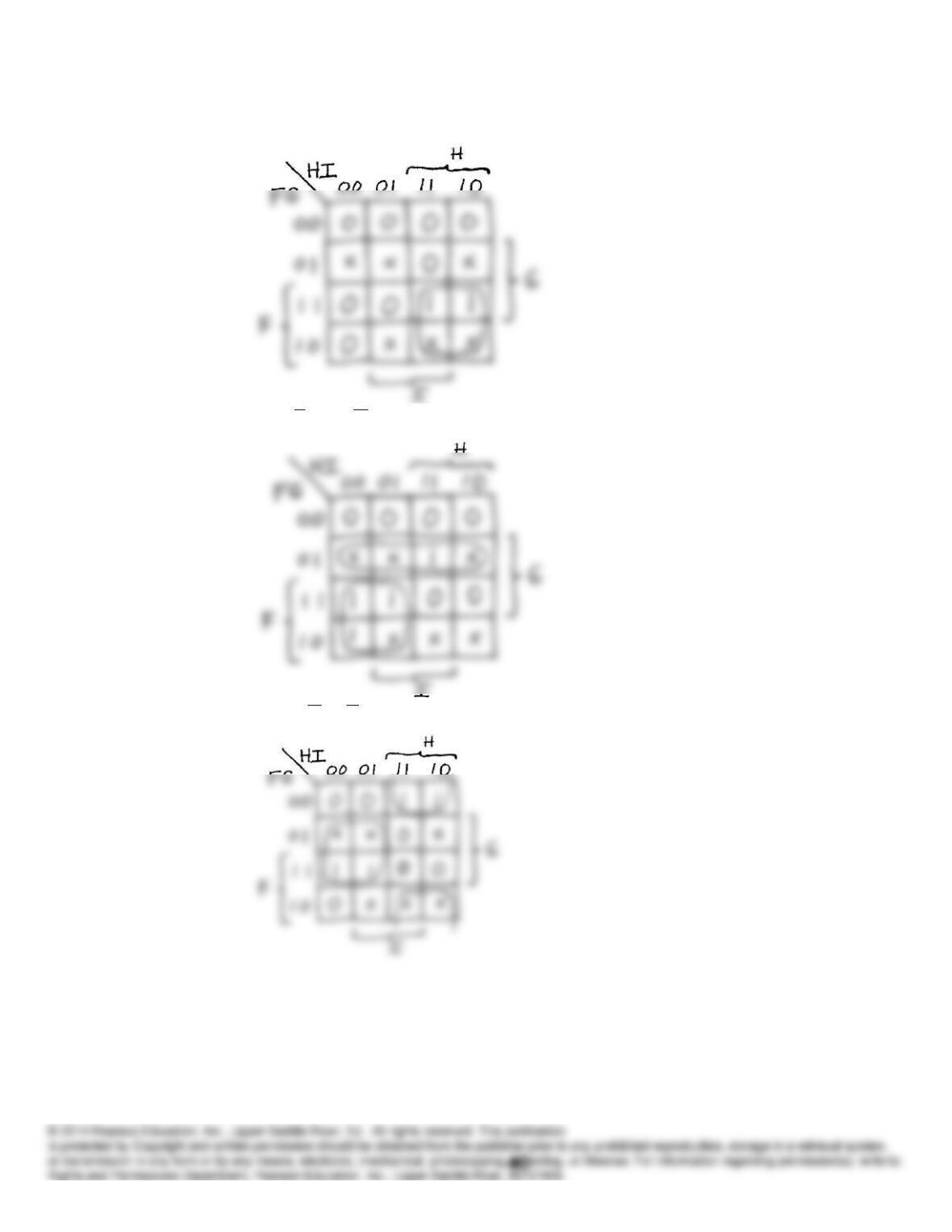
P7.80 (a)
FHA
(b)
HFGFB
(c)
HGHGC
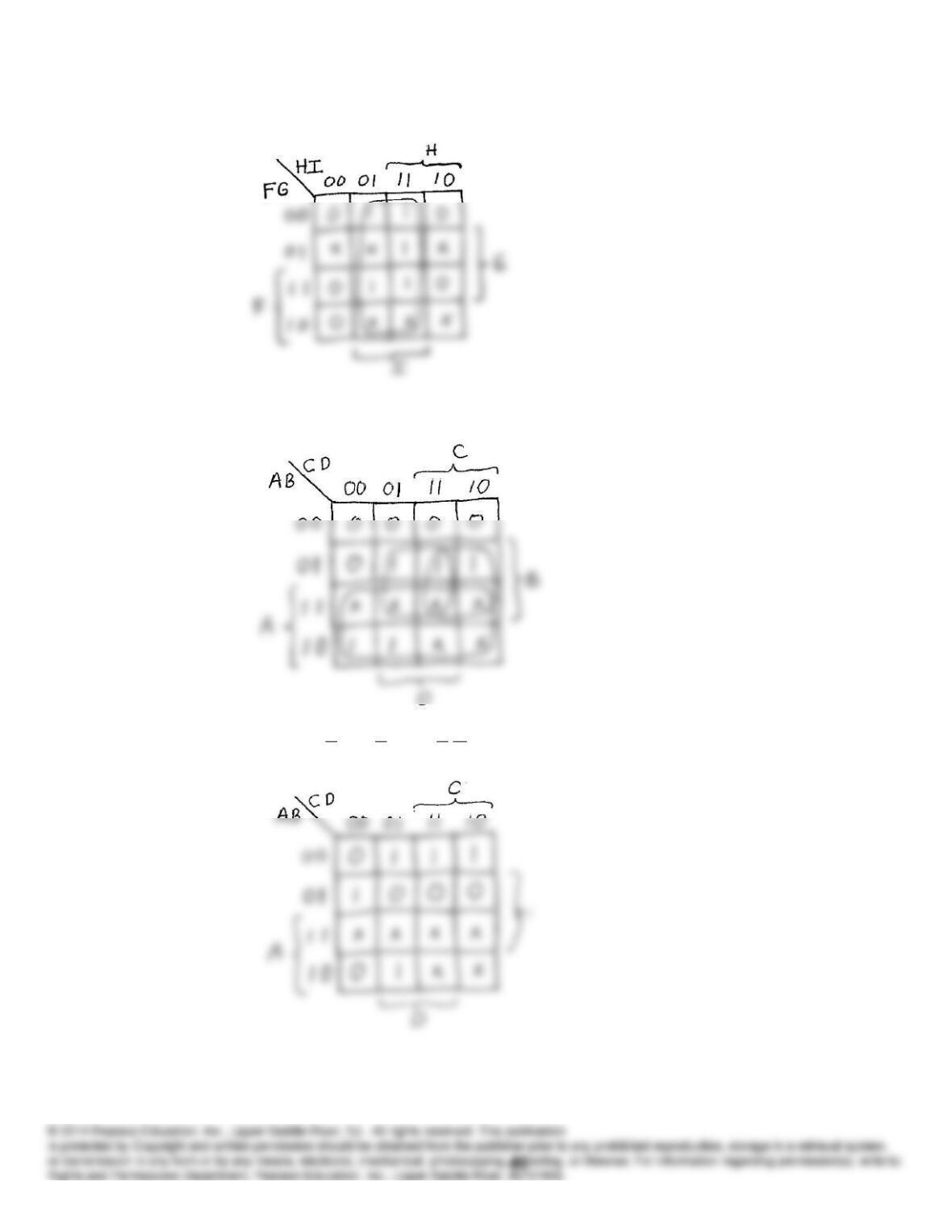
(d)
ID
P7.81 (a)
BDBCAW
(b)
DCBDBCBX
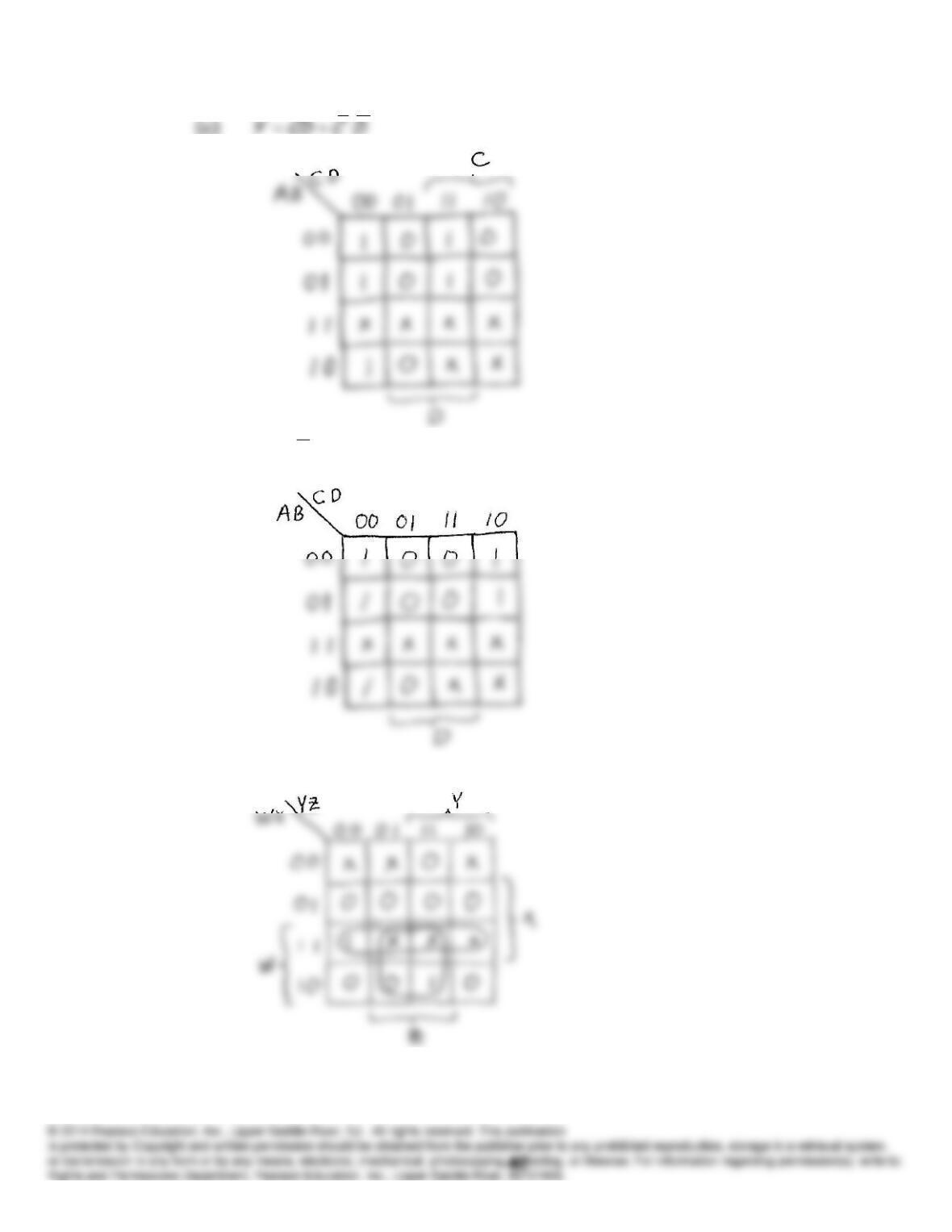
(d)
DZ
P7.82 (a)
WZWXA
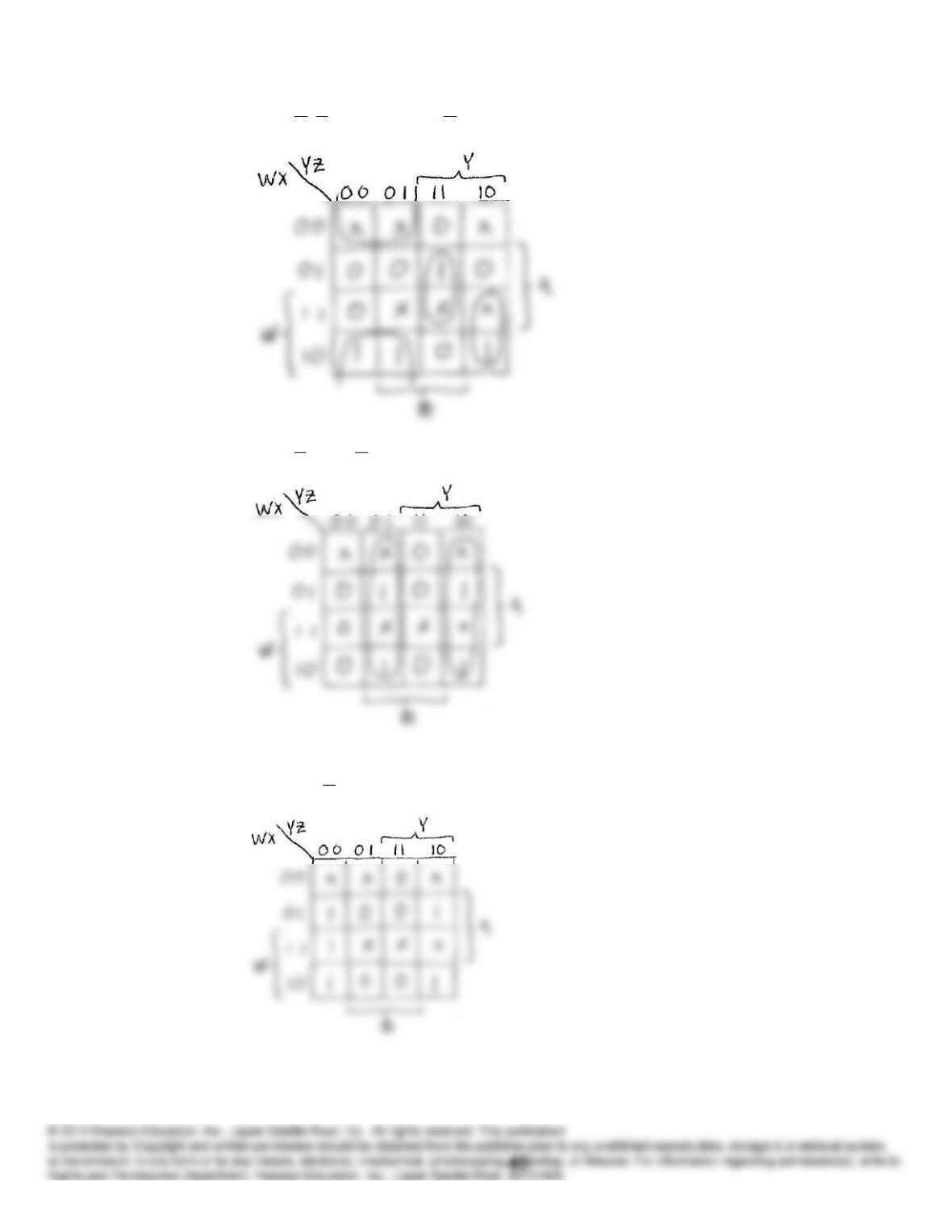
(b)
ZWYXYZYXB
(c)
ZYZYC
(d)
ZD
P7.83 See Figure 7.39 in the text.
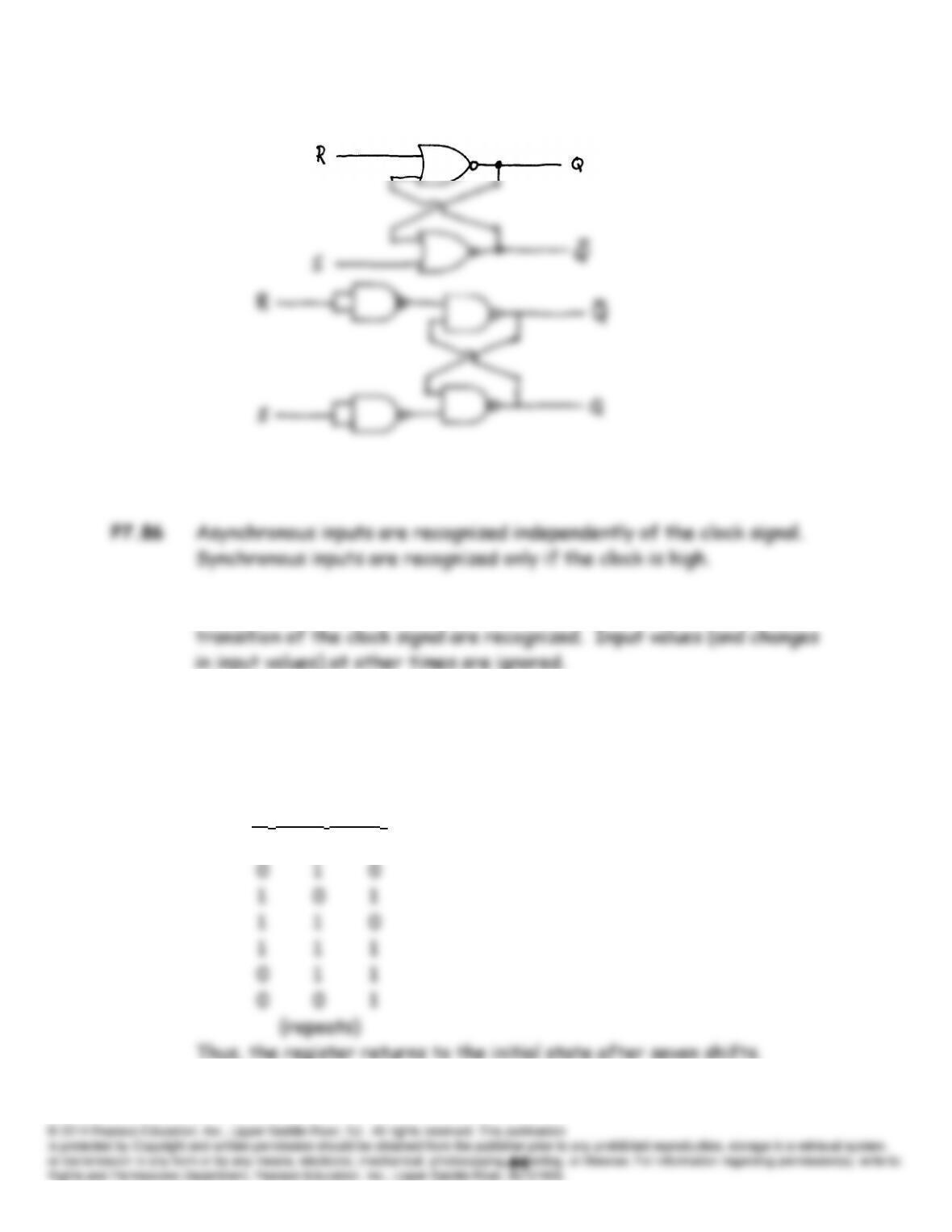
P7.84
P7.85 See Figure 7.44 in the text.
P7.87 In edge triggering, the input values present immediately prior to a
P7.88 See Figure 7.47 in the text.
P7.89* The successive states are:
Q
0
Q
1
Q
2
1 0 0
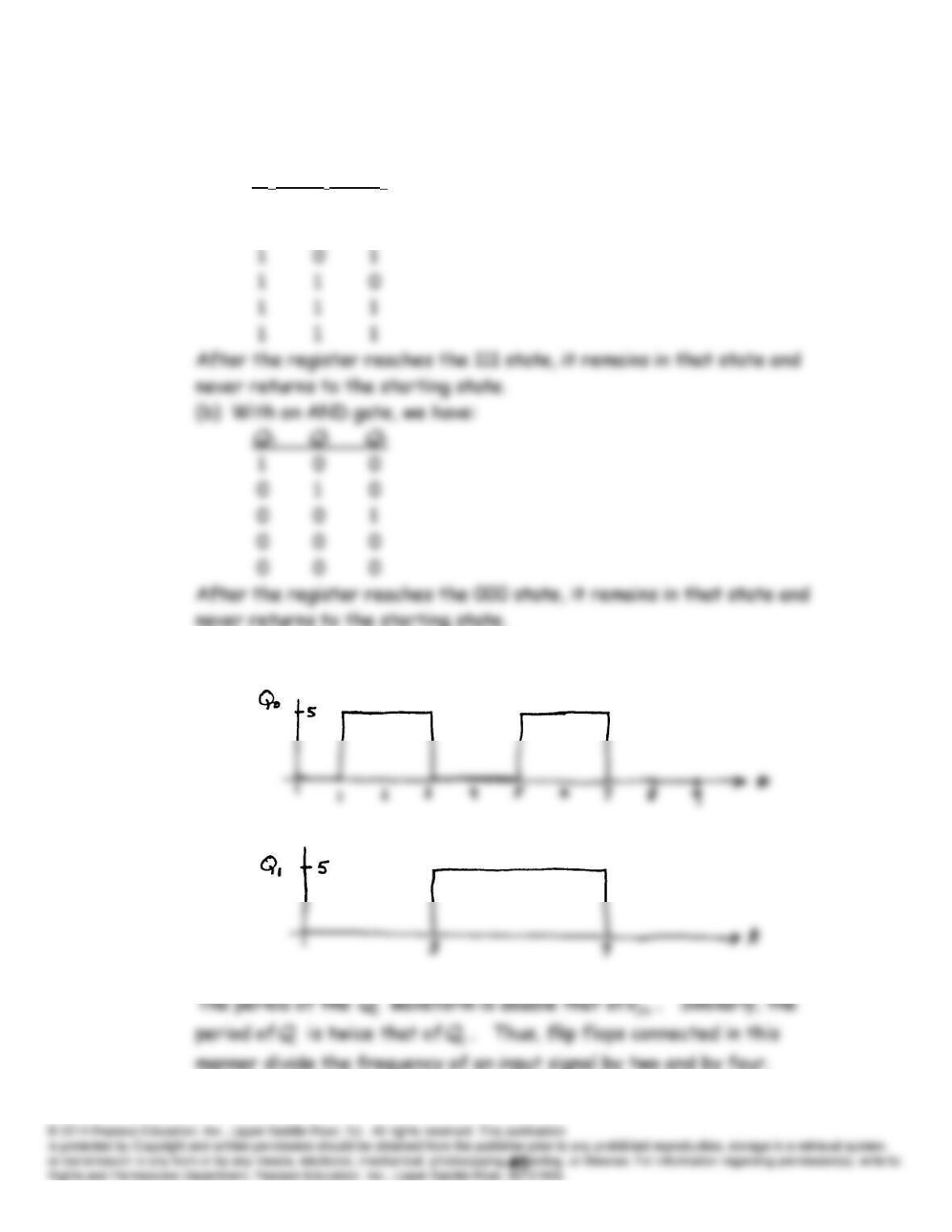
P7.90 (a) With an OR gate, we have:
Q
0
Q
1
Q
2
1 0 0
0 1 0
P7.91
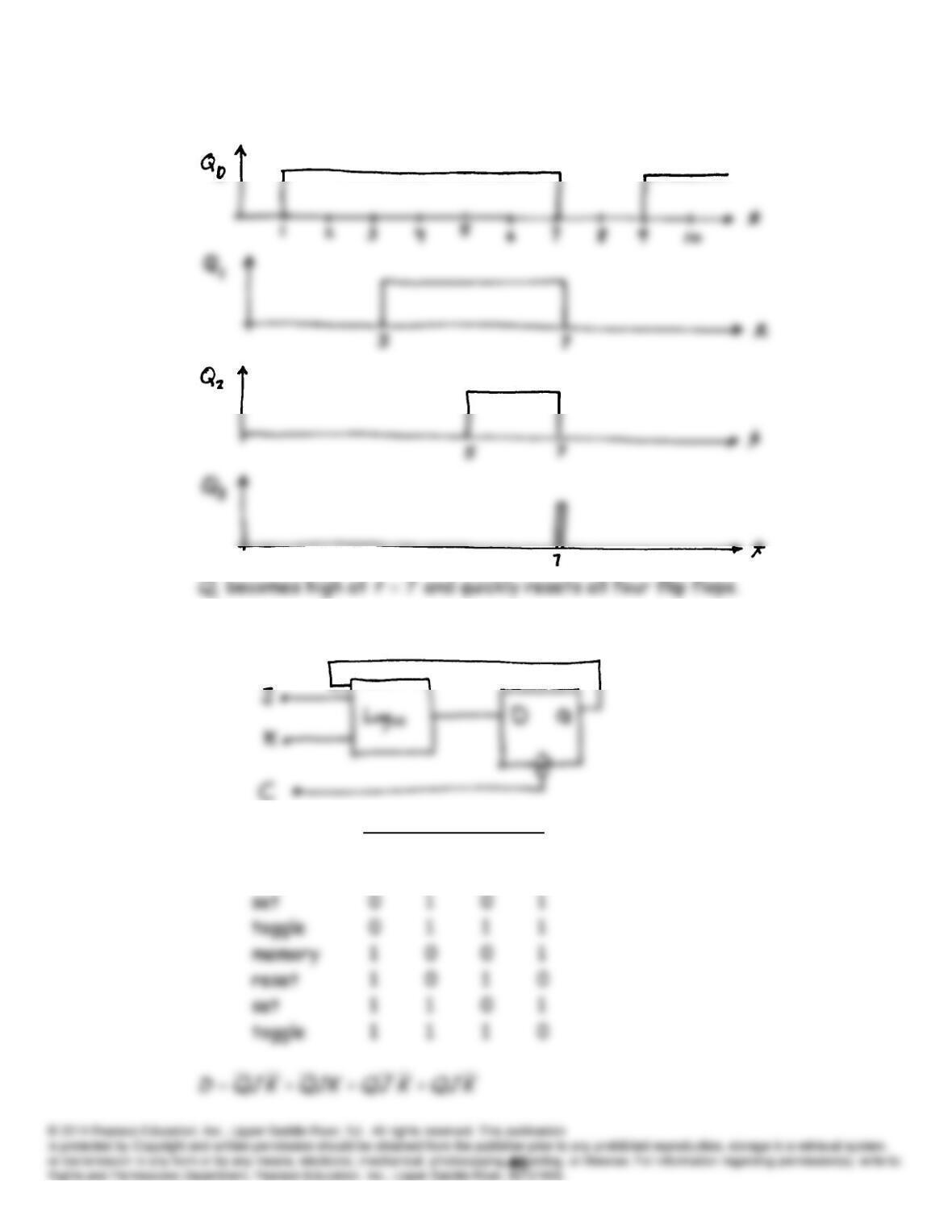
P7.92
P7.93*
Q
J
K
D
memory 0 0 0 0
reset 0 0 1 0
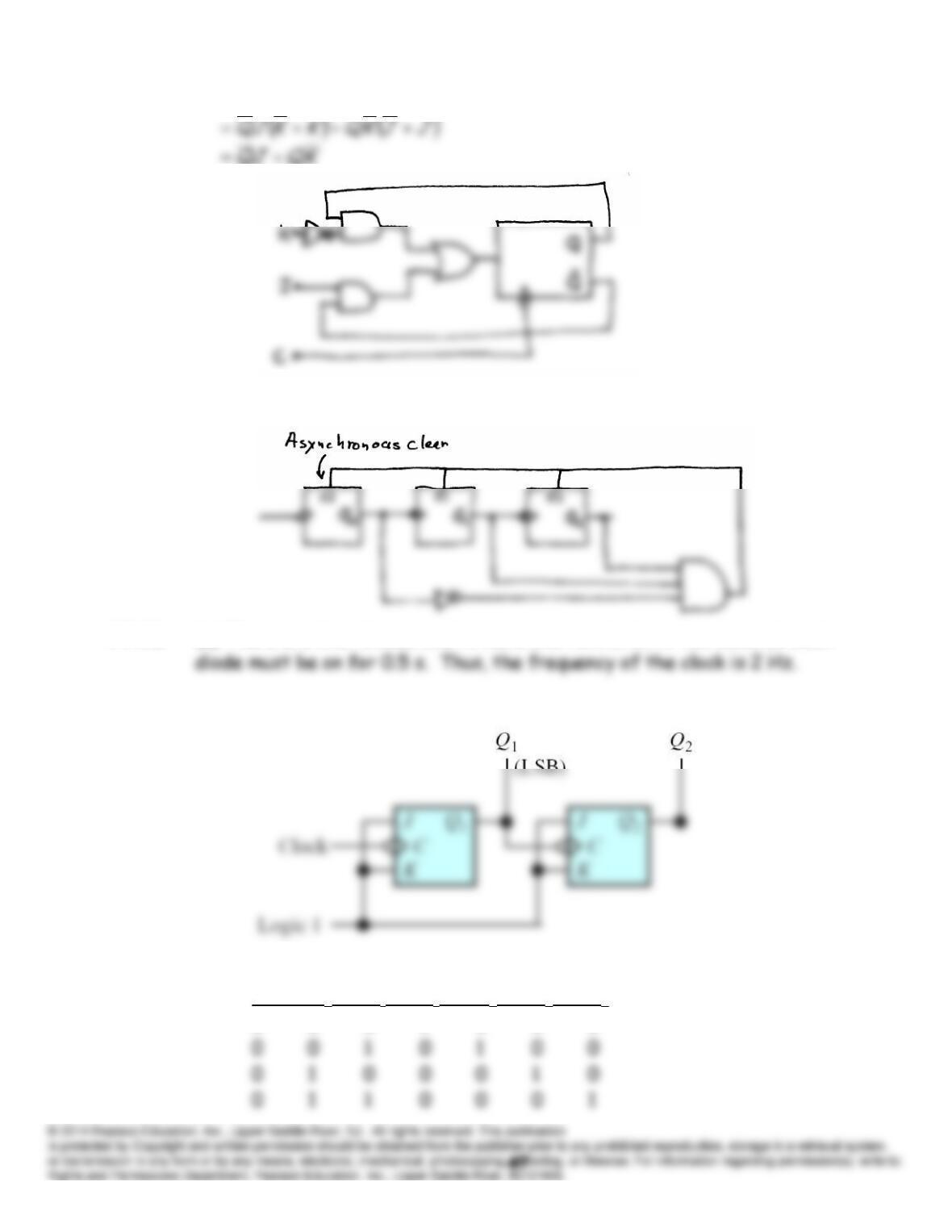
P7.94
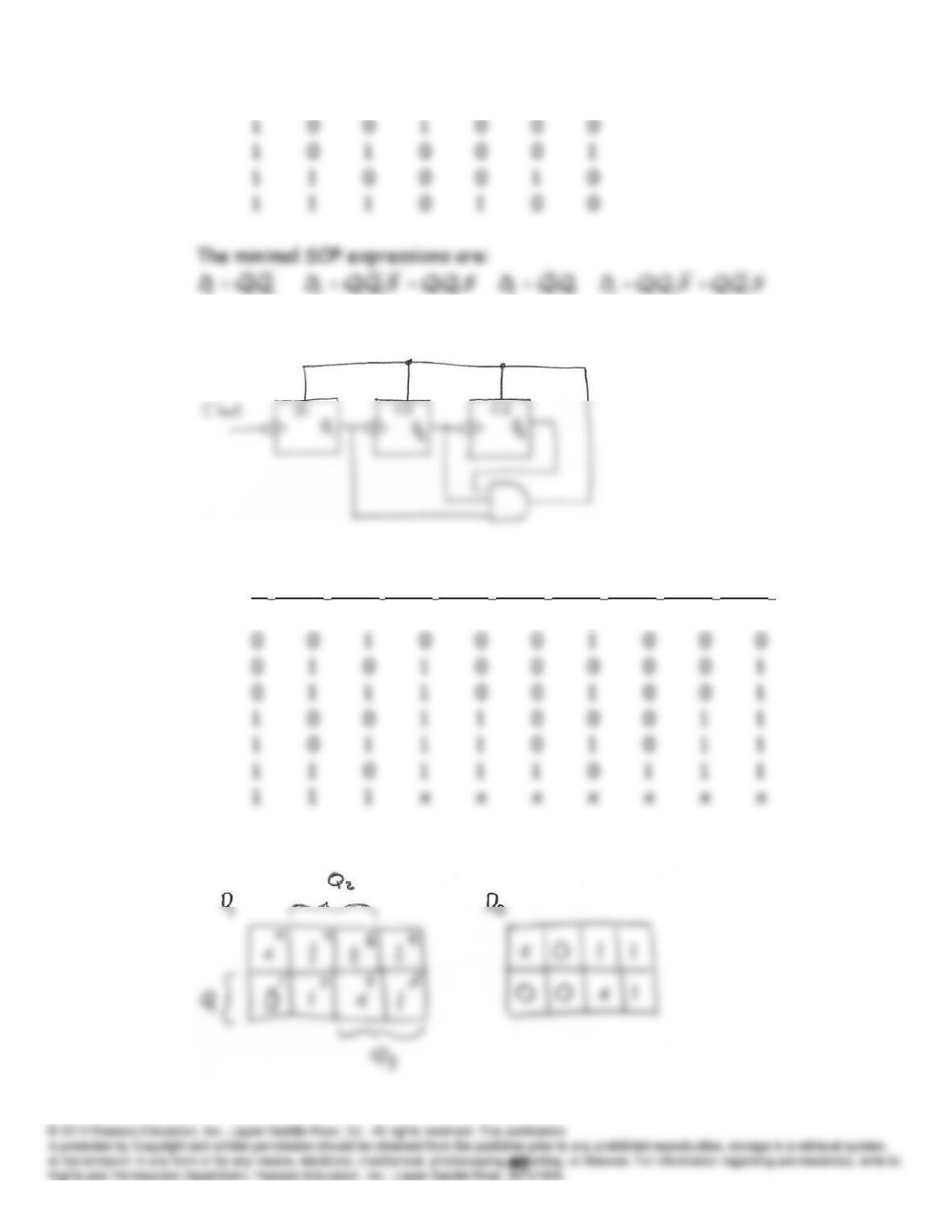
P7.95 (a) There are four diodes and to make one revolution in two seconds each
(b) The modulo-4 counter is:
(c) The truth table is
S
Q
2
Q
1
D
1
D
2
D
3
D
4
0 0 0 1 0 0 0
P7.96 (a) The logic diagram for the counter is:
(b) The truth table for the encoder is:
Q
3
Q
2
Q
1
D
1
D
2
D
3
D
4
D
5
D
6
D
7
0 0 0 x x x x x x x
The Karnaugh maps are:
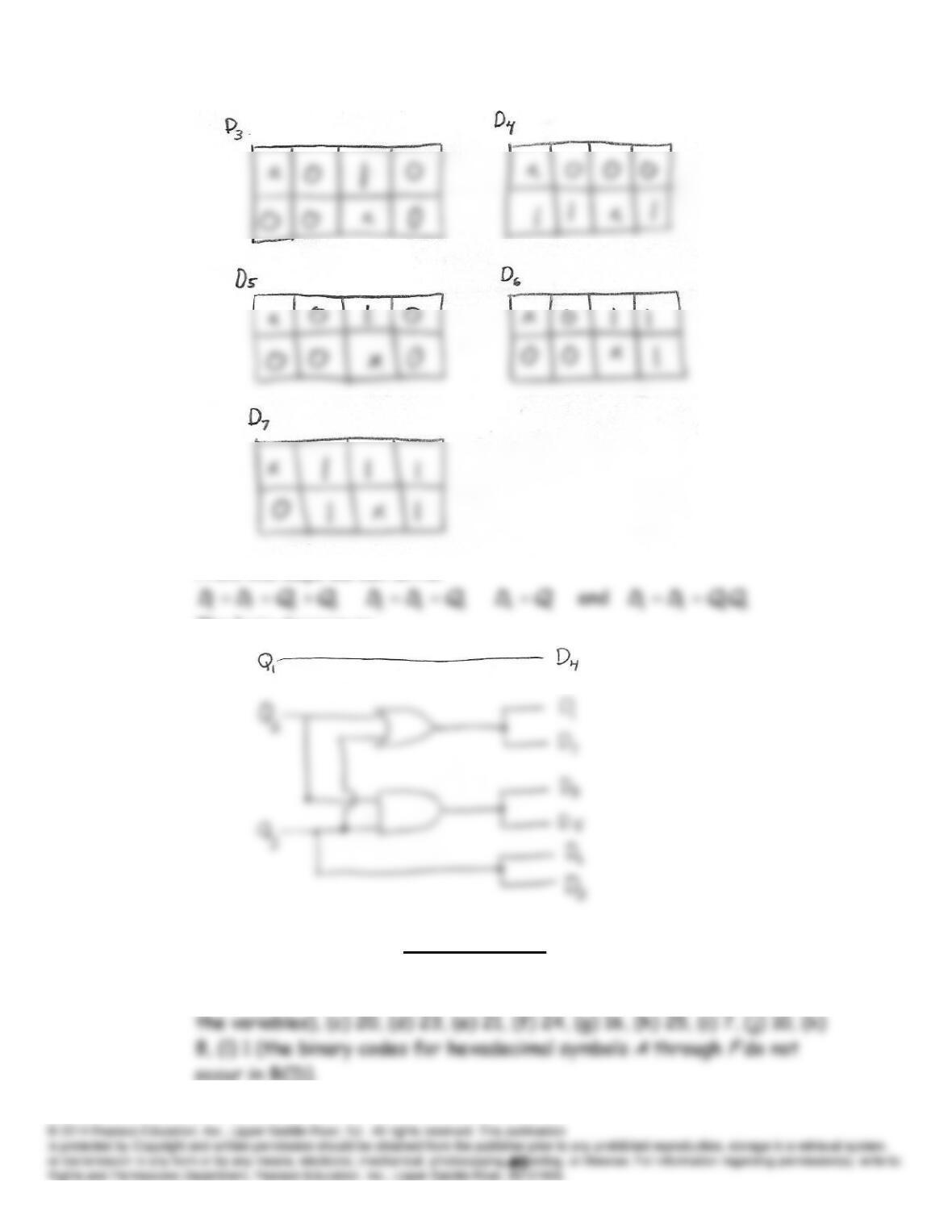
From the maps we can write:
The logic diagram is:
Practice Test
T7.1 (a) 12, (b) 19 (18 is incorrect because it omits the first step, inverting
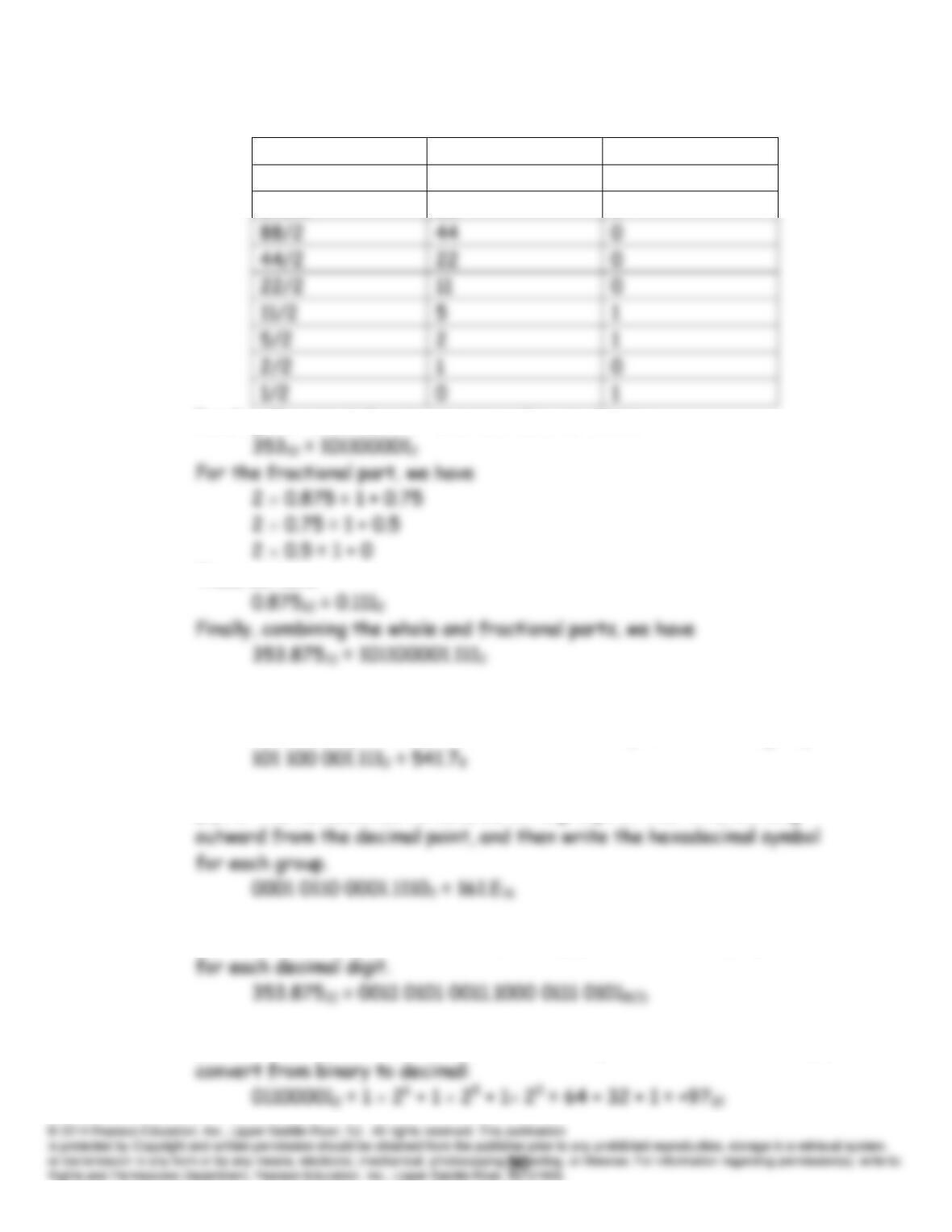
T7.2 (a) For the whole part, we have:
Quotient
Remainders
353/2
176
1
176/2
88
0
88/2
44
0
44/2
22
0
22/2
11
0
11/2
5
1
2/2
1
0
Reading the remainders in reverse order, we obtain:
Thus, we have
(b) For the octal version, we form groups of three bits, working outward
from the decimal point, and then write the octal symbol for each group.
(c) For the hexadecimal version, we form groups of four bits, working
(d) To obtain binary coded decimal, we simply write the binary equivalent
T7.3 (a) Because the left-most bit is zero, this is a positive number. We simply
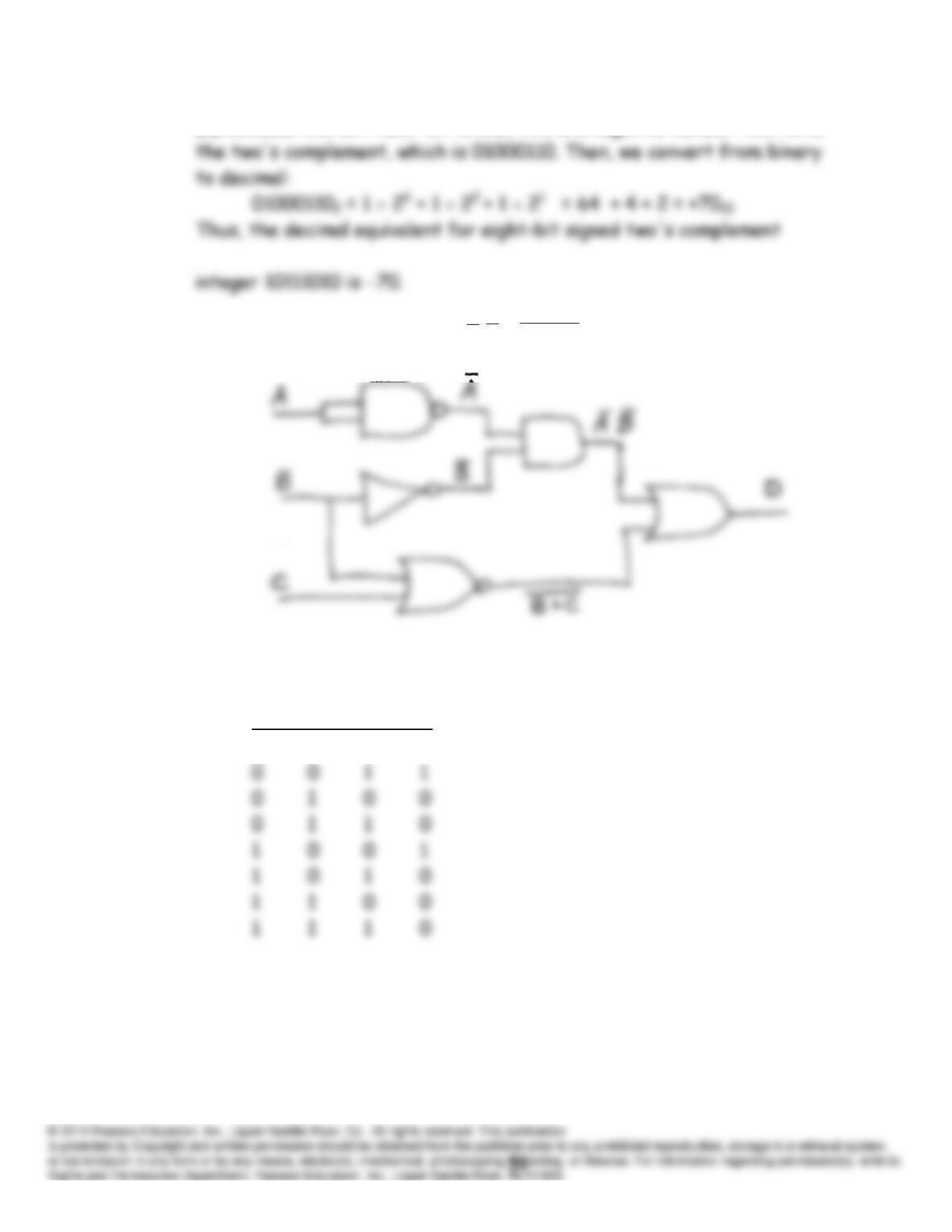
(b) Because the left-most bit is one, this is a negative number. We form
T7.4. (a) The logic expression is
)(
CBBAD
.
(b) The truth table is:
A
B C
D
0 0 0 1
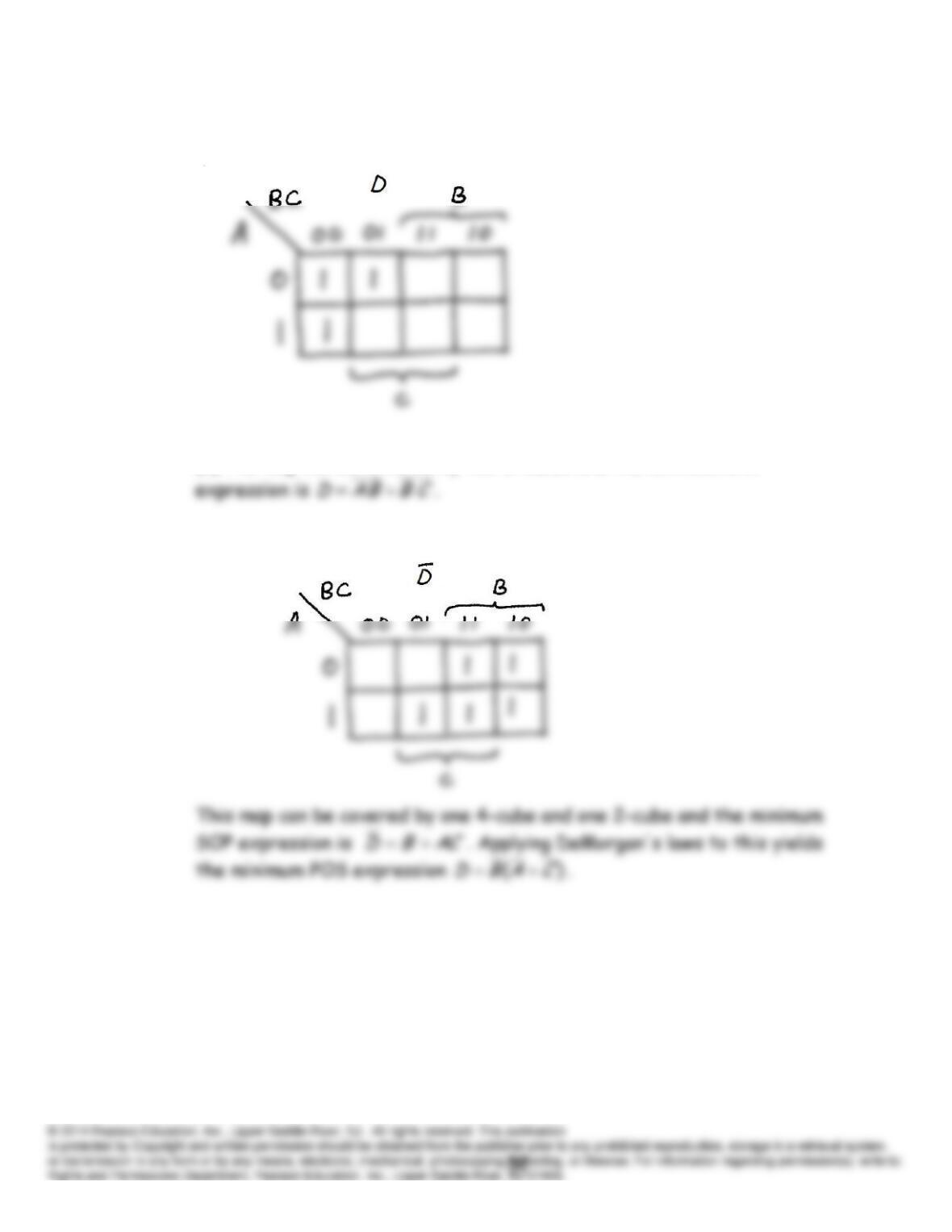
The Karnaugh map is:
(c) The map can be covered by two 2-cubes and the minimum SOP
(d) First, we invert the map to find:
T7.5 (a) The completed Karnaugh map is:
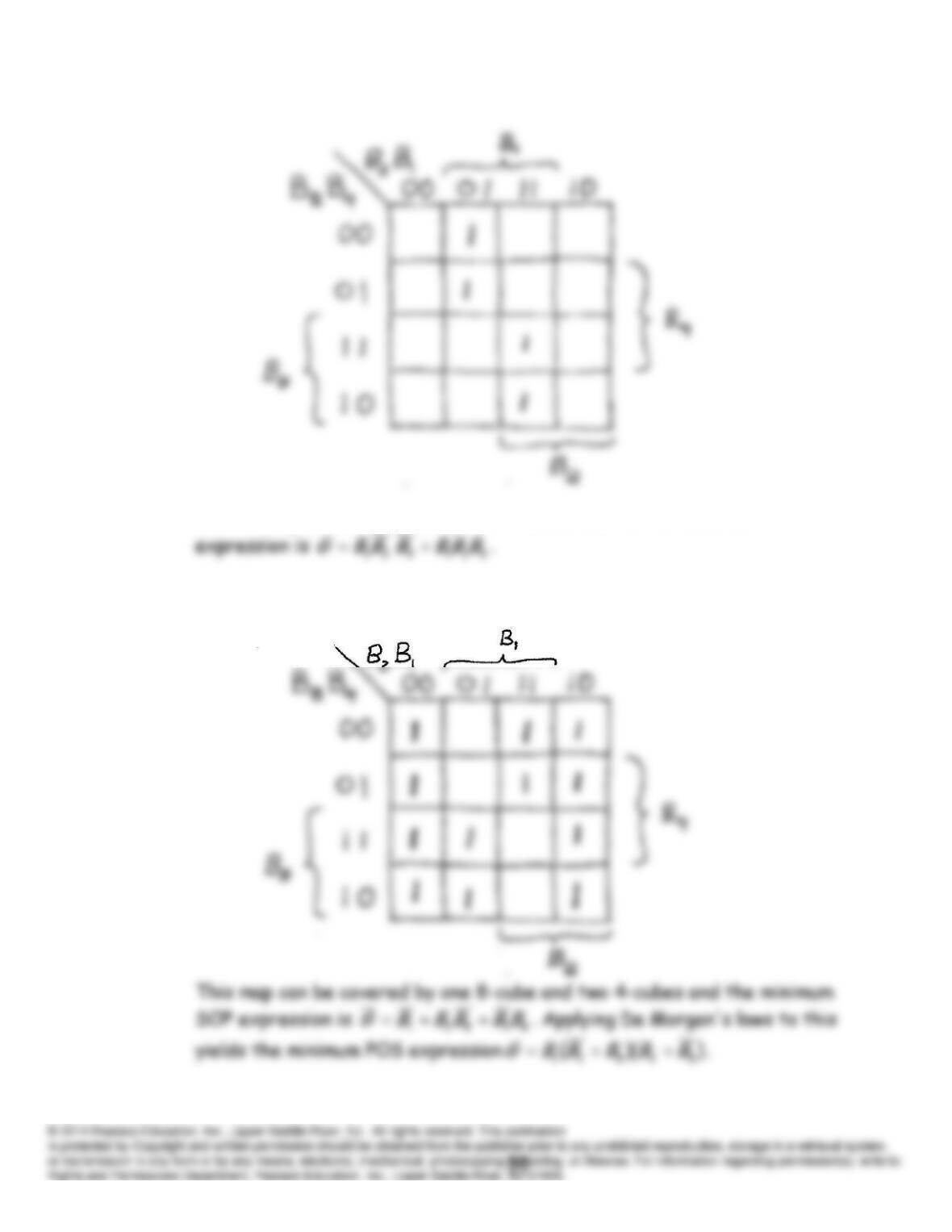
(b) The map can be covered by two 2-cubes and the minimum SOP
(c) First, we invert the map to find:
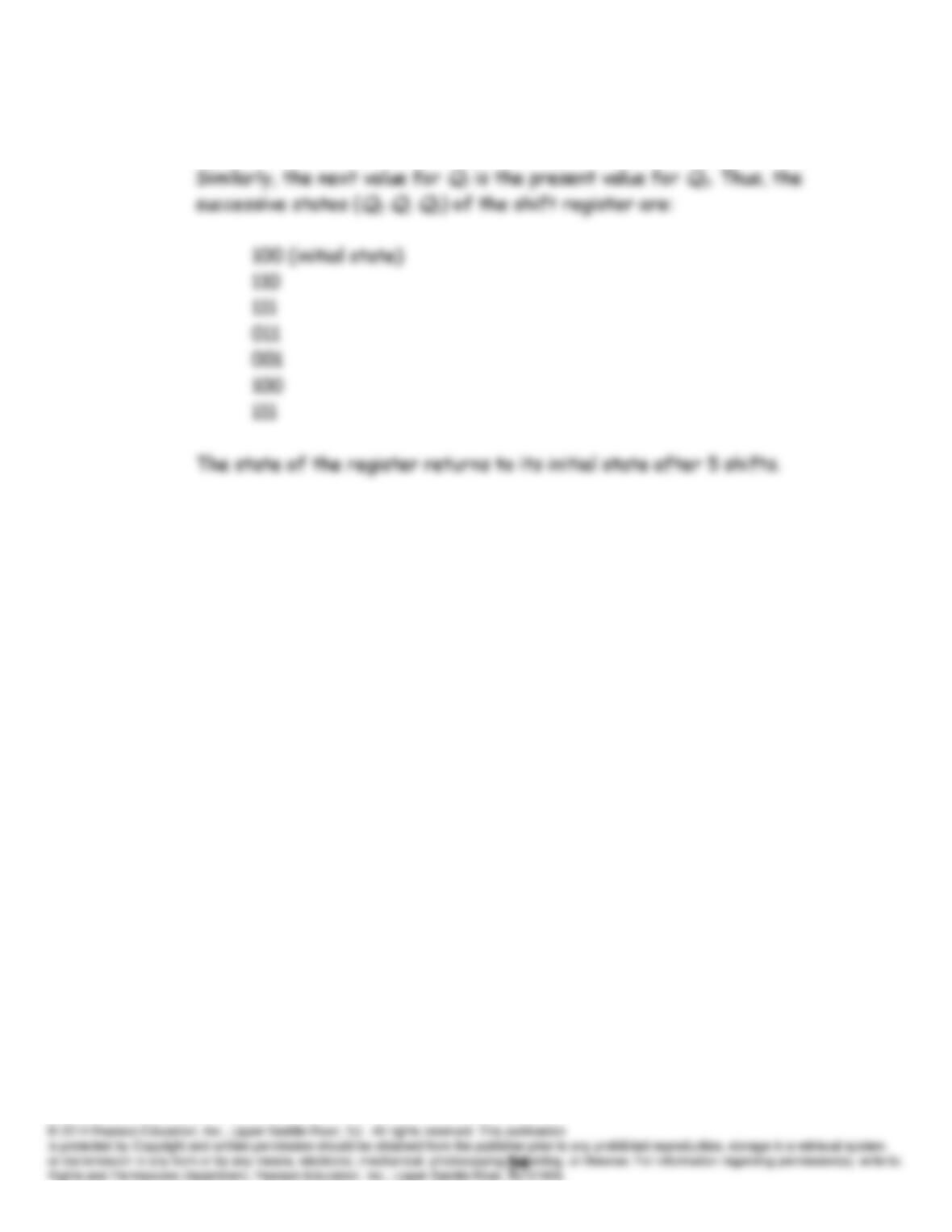
T7.6 Clearly, the next value for
Q
0 is the NAND combination of the current
values of
Q
1 and
Q
2. The next value for
Q
2 is the present value for
Q
1.