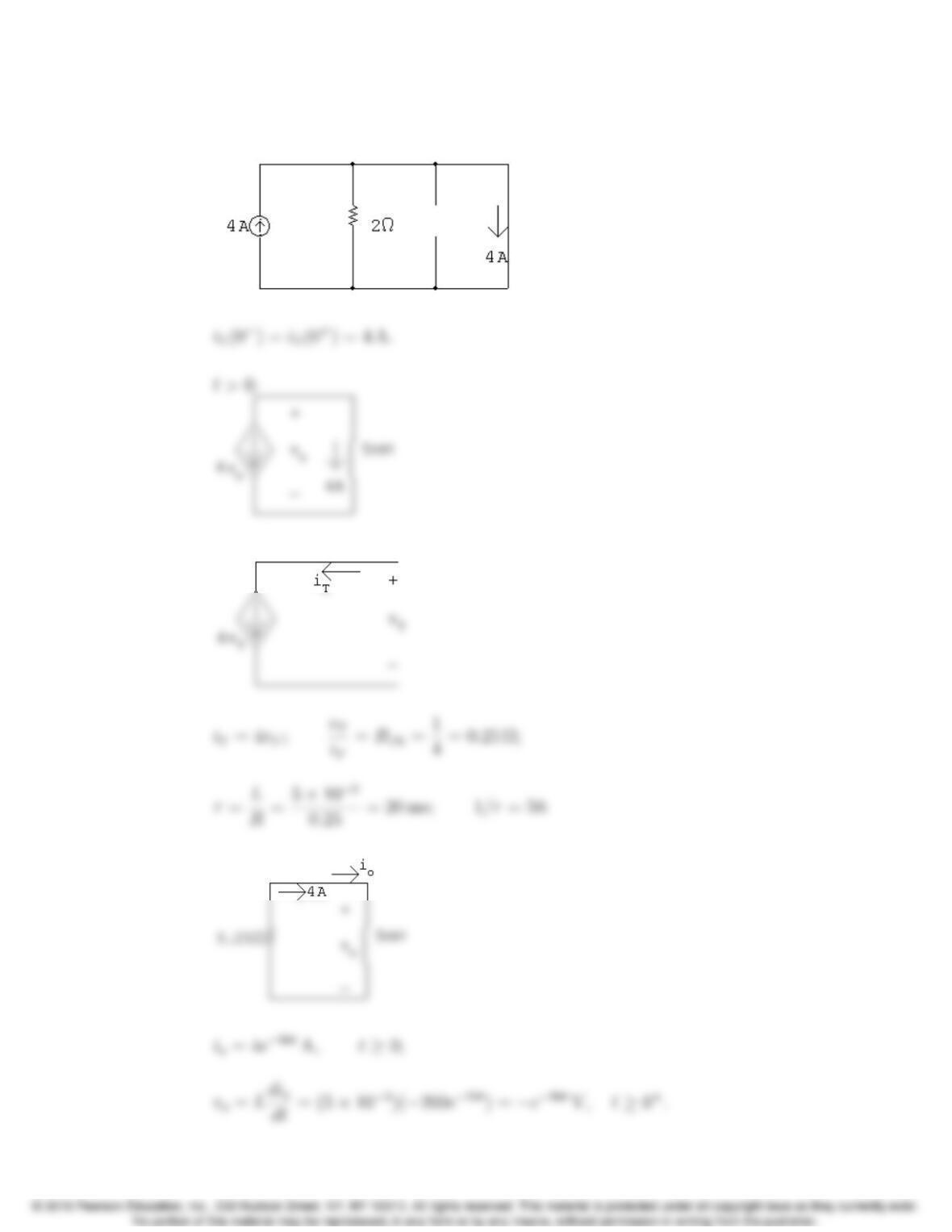
Problems 7–21
P 7.14 t<0;
Find Th´evenin resistance seen by inductor:
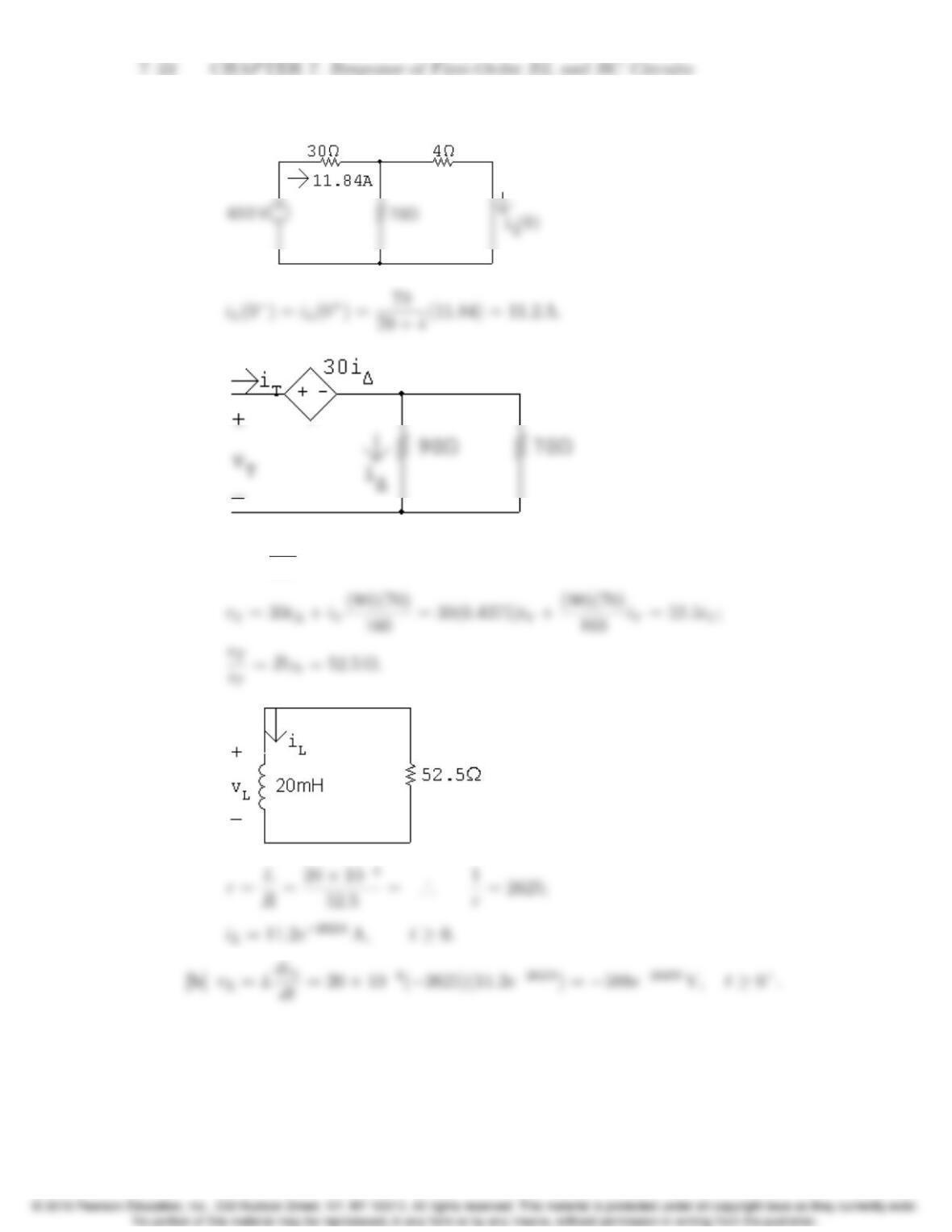
P 7.15 [a] t<0:
i∆=70
160iT=0.4375iT;
Problems 7–23
[c]
P 7.16 w(0) = 1
2(20 ⇥10−3)(11.2)2= 1254.4 mJ;
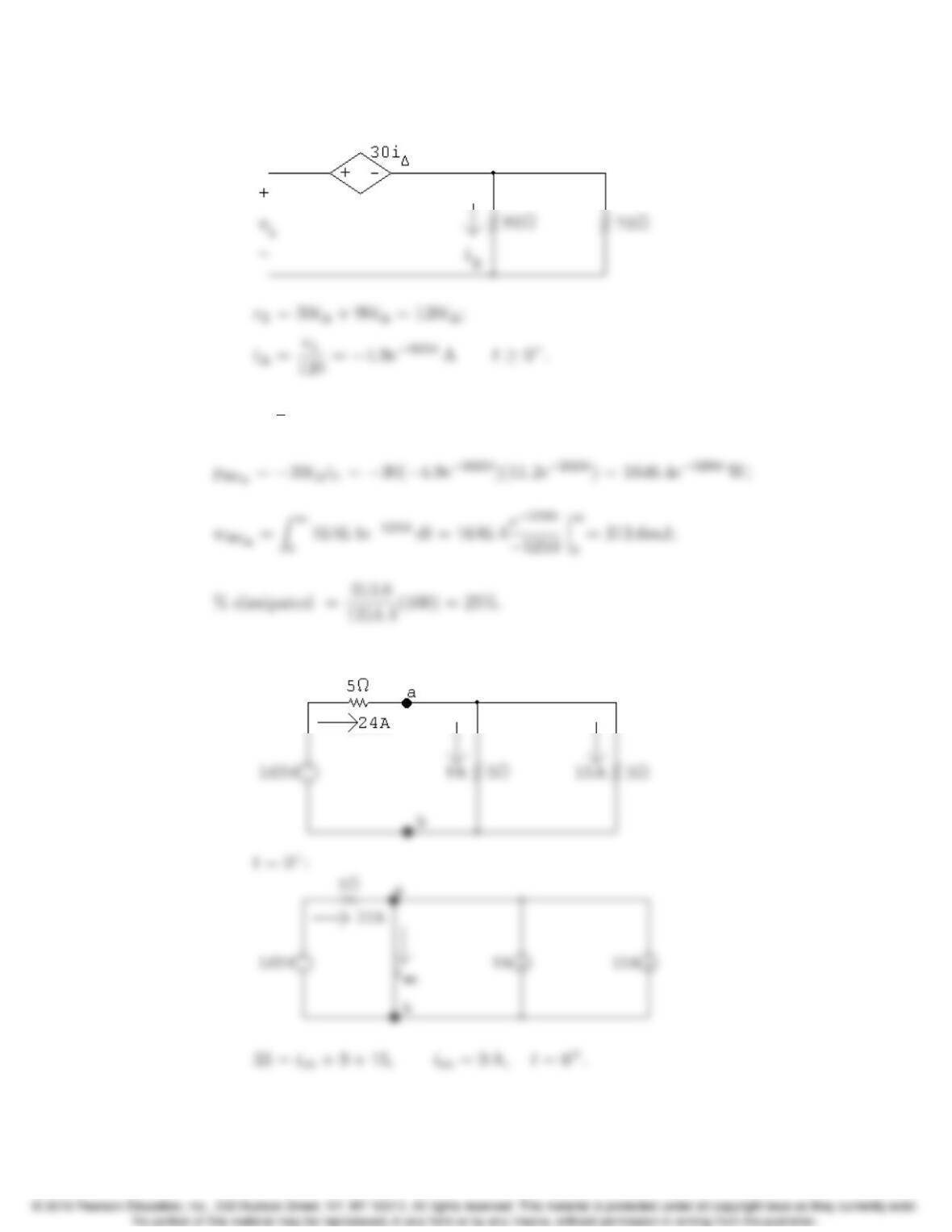
P 7.17 [a] t<0:
7–24 CHAPTER 7. Response of First-Order RL and RC Circuits
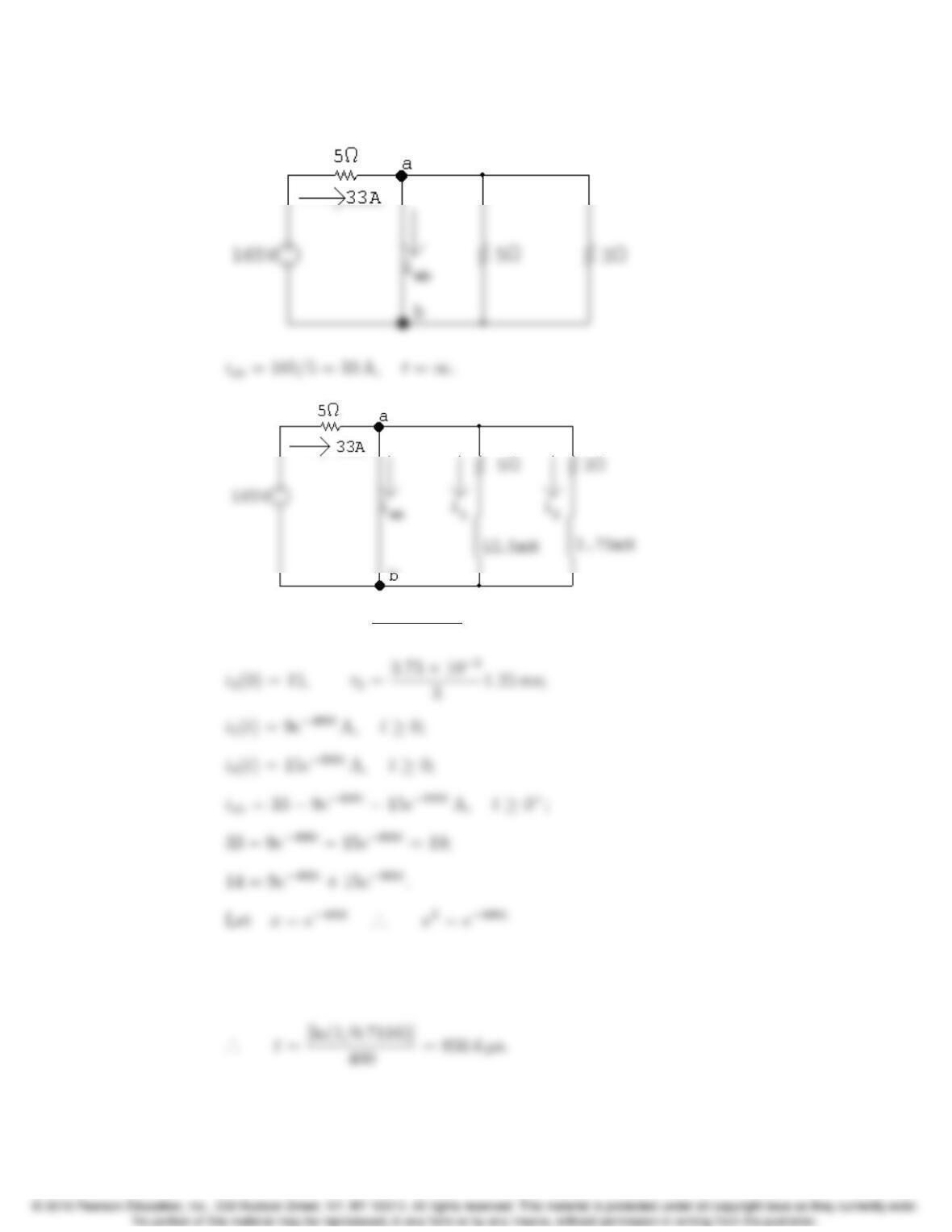
[b] At t=1:
[c] i1(0) = 9,τ
1=12.5⇥10−3
5=2.5 ms;
Substituting,
15x2+9x14 = 0 so x=0.7116 = e−400t;
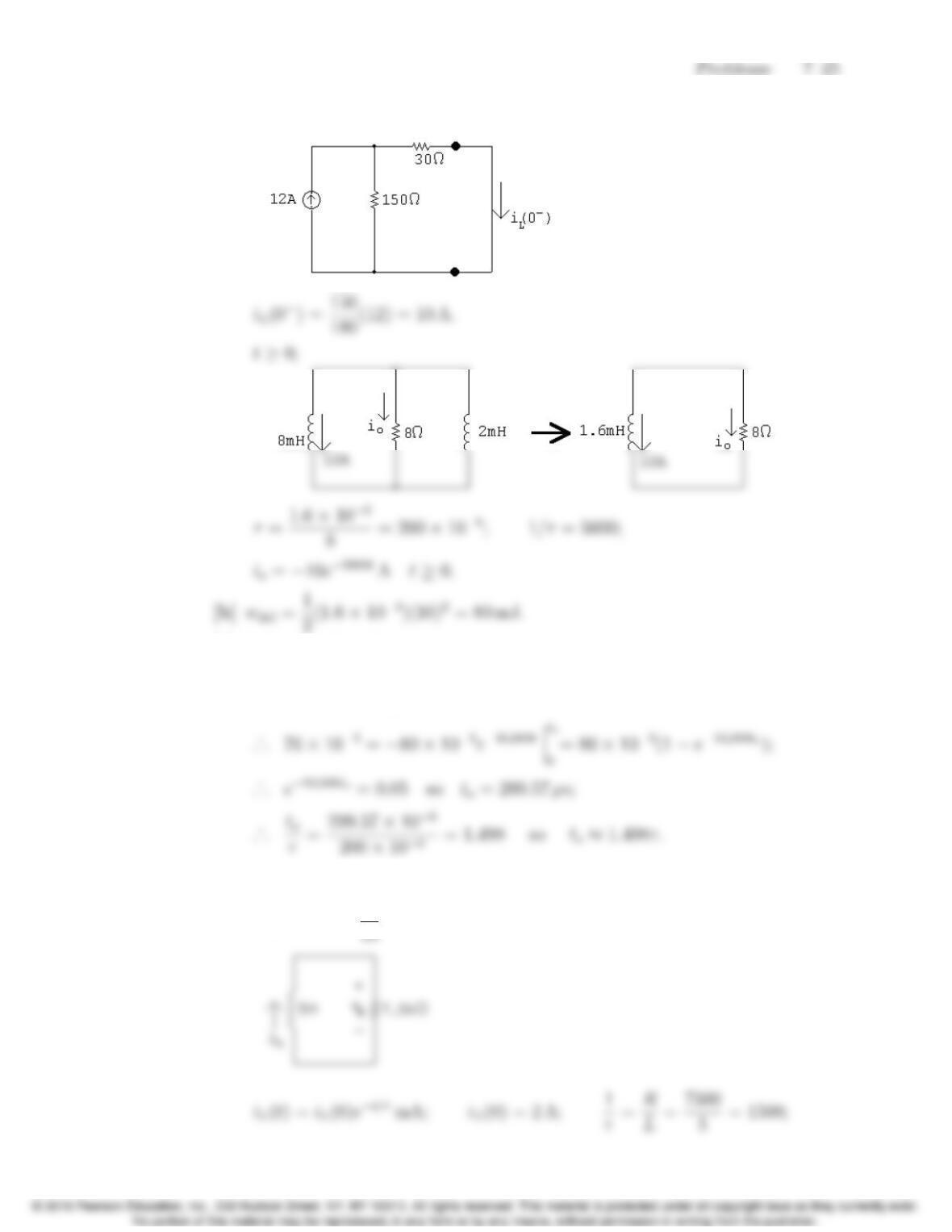
P 7.18 [a] t<0:
[c] 0.95wdel = 76 mJ;
·
.. 76 ⇥10−3=Zto
08(100e−10,000t)dt;
P 7.19 [a] t>0:
Leq =1.25 + 60
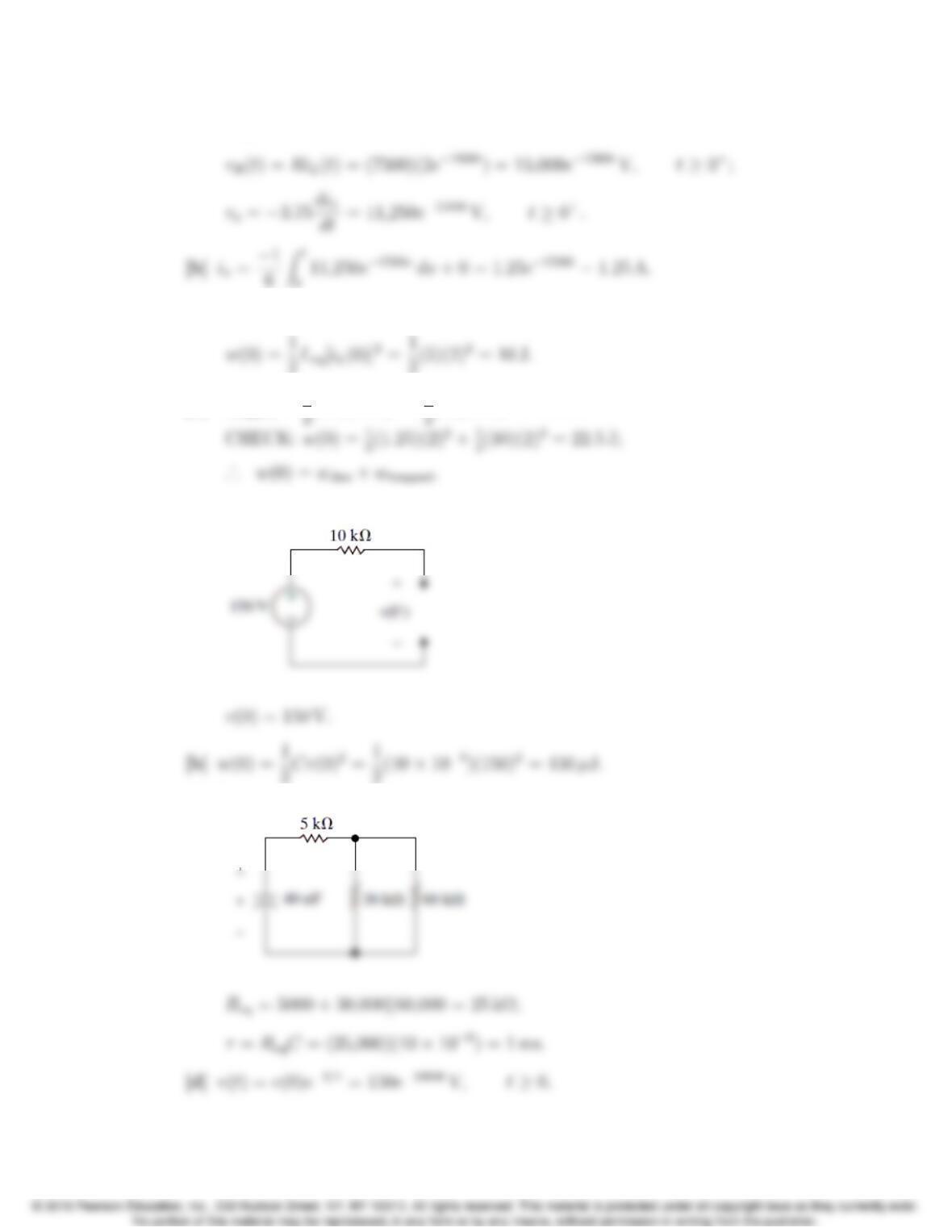
7–26 CHAPTER 7. Response of First-Order RL and RC Circuits
iL(t)=2e−1500tA,t0;
P 7.20 [a] From the solution to Problem 7.19,
[b] wtrapped =1
P 7.21 [a] For t<0:
[c] For t>0:
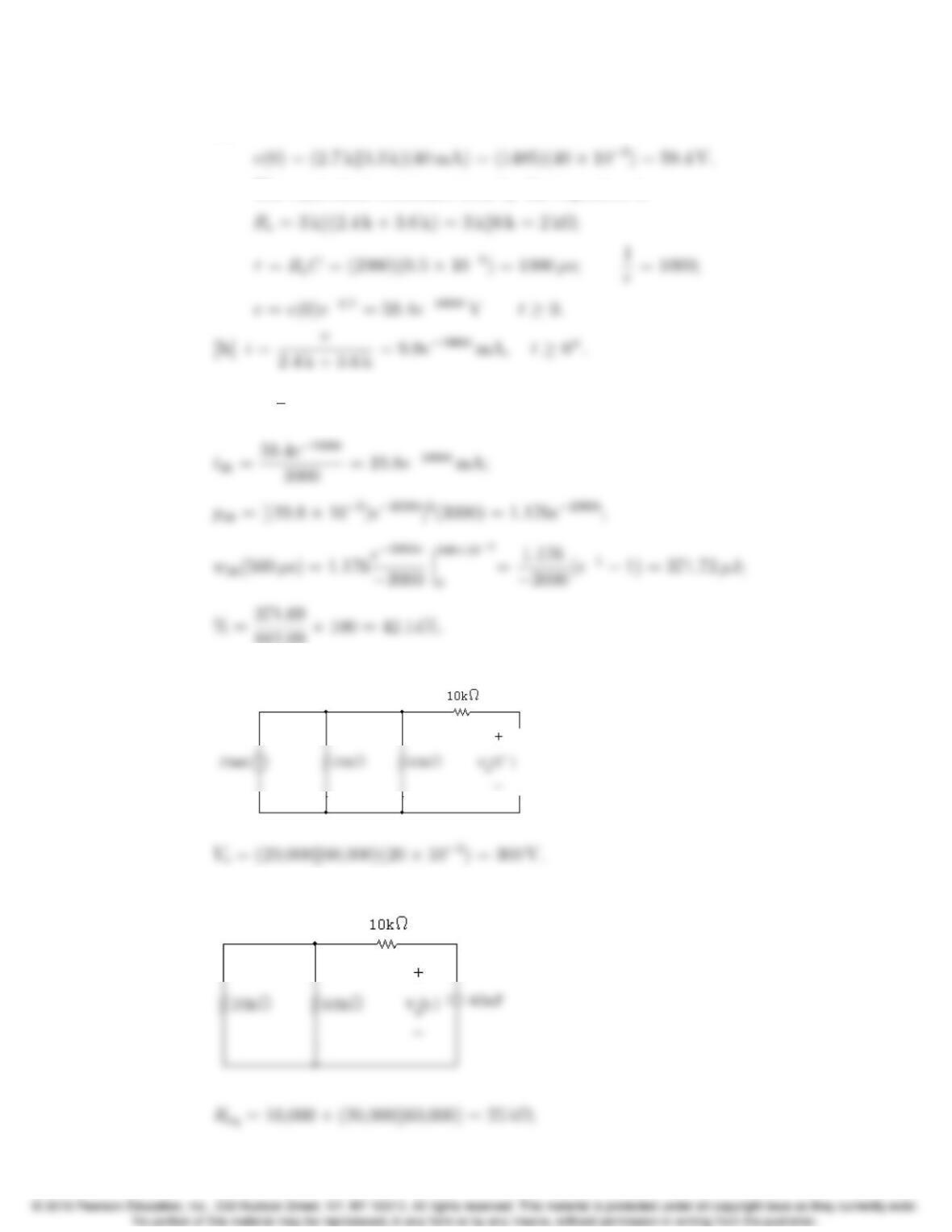
Problems 7–27
P 7.22 [a] Calculate the initial voltage drop across the capacitor:
The equivalent resistance seen by the capacitor is
P 7.23 w(0) = 1
2(0.5⇥10−6)(59.4)2= 882.09 µJ;
882.09 ⇥100 = 42.14%.
P 7.24 For t<0:
For t0:
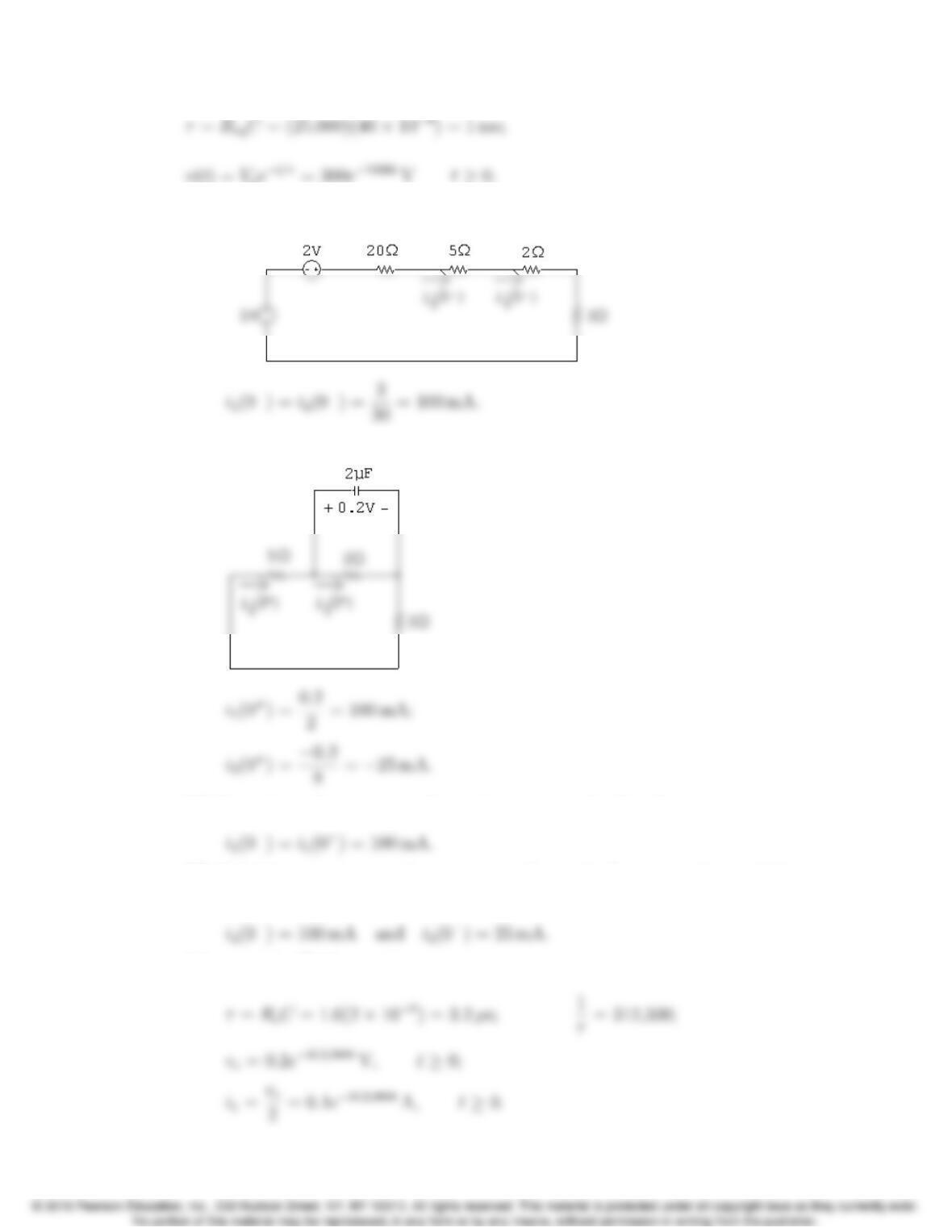
7–28 CHAPTER 7. Response of First-Order RL and RC Circuits
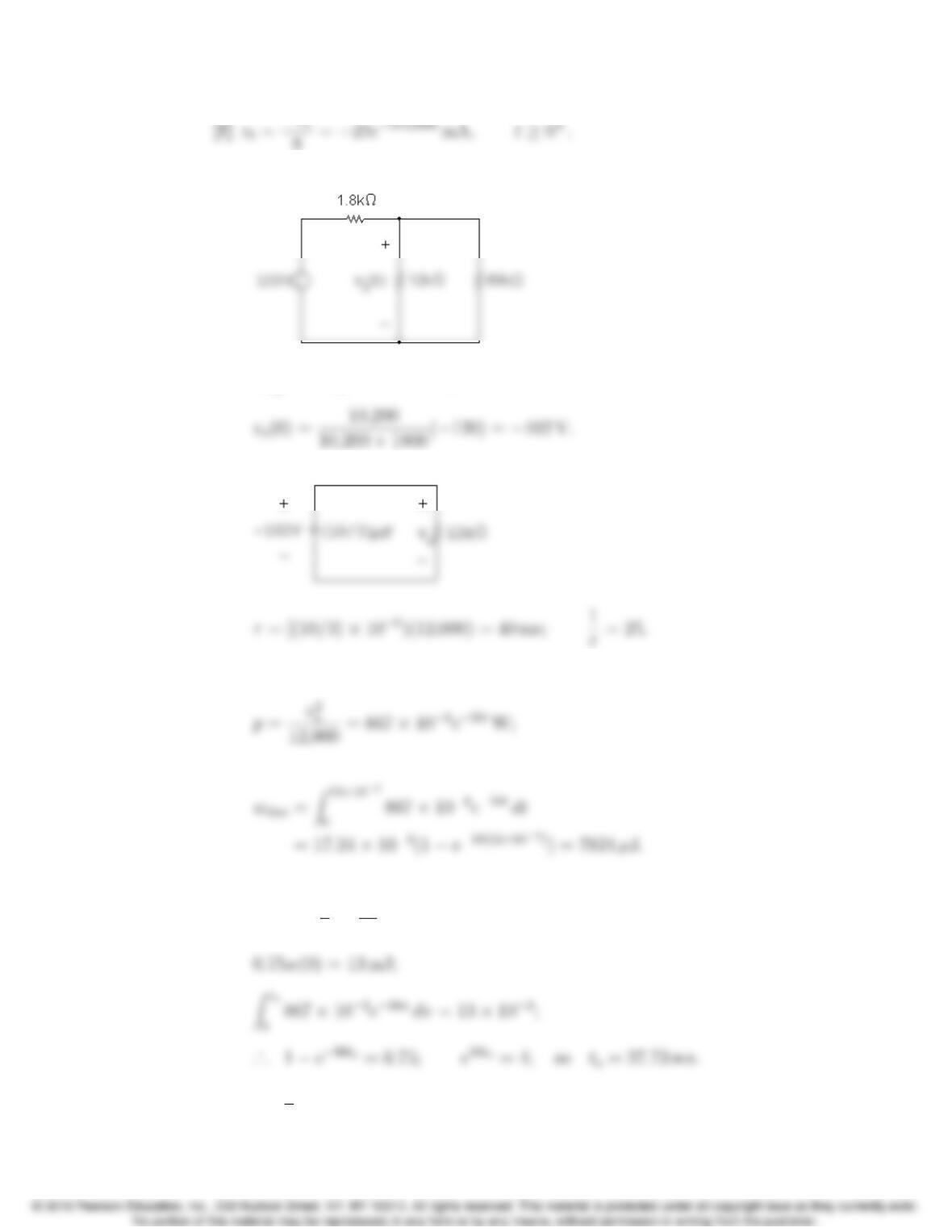
P 7.25 [a] t<0:
[b] t>0:
[c] Capacitor voltage cannot change instantaneously, therefore,
[d] Switching can cause an instantaneous change in the current in a resistive
branch. In this circuit
[e] vc=0.2e−t/τV,t0;
Problems 7–29
P 7.26 [a] t<0:
Req = 12 kk8 k = 10.2 kΩ;
t>0:
vo=102e−25tV,t0;
[b] w(0) = ✓1
2◆✓10
3⇥10−6◆(102)2= 17.34 mJ
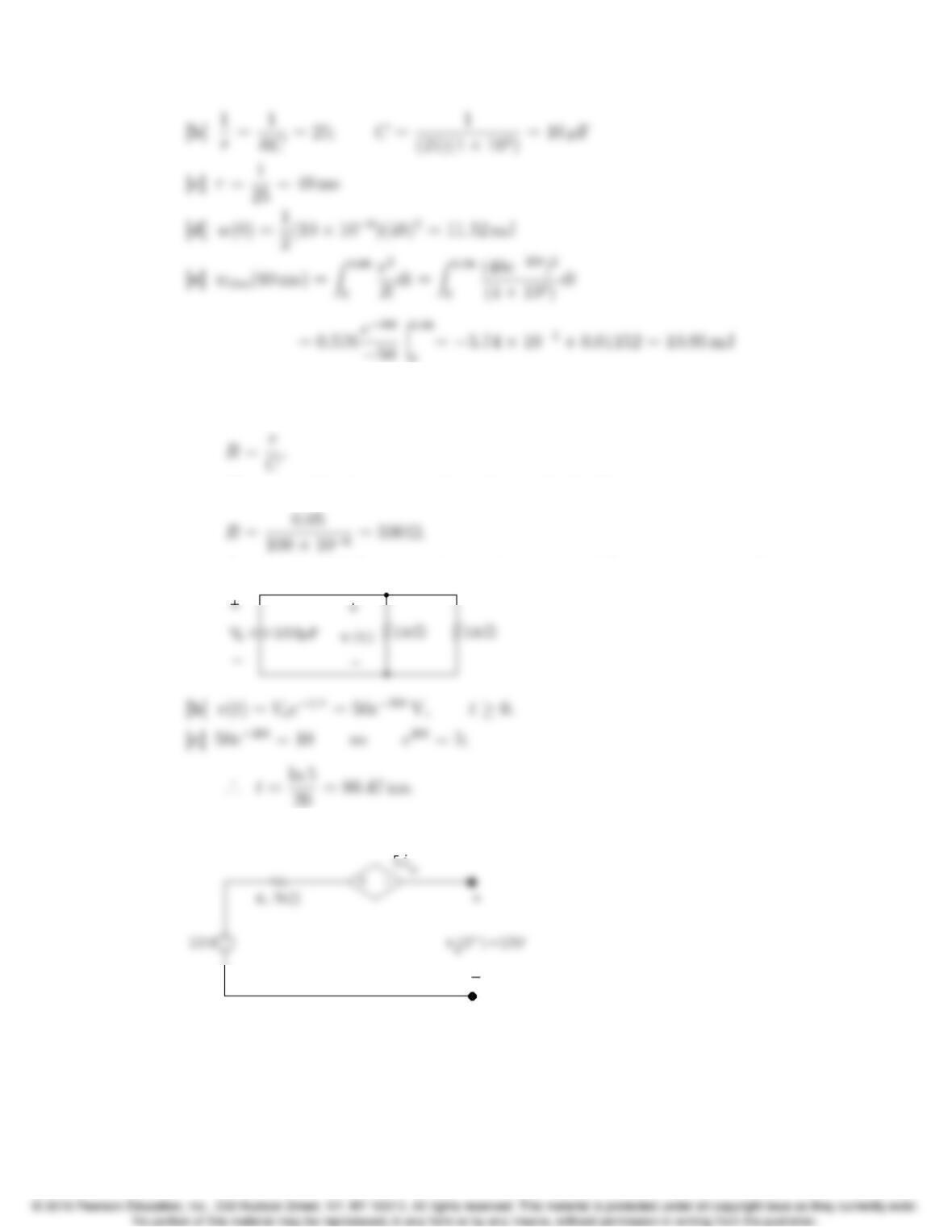
P 7.27 [a] R=v
i=4kΩ
7–30 CHAPTER 7. Response of First-Order RL and RC Circuits
P 7.28 [a] Note that there are many different possible correct solutions to this
problem.
Choose a 100 µF capacitor from Appendix H. Then,
Construct a 500 Ωresistor by combining two 1 kΩresistors in parallel:
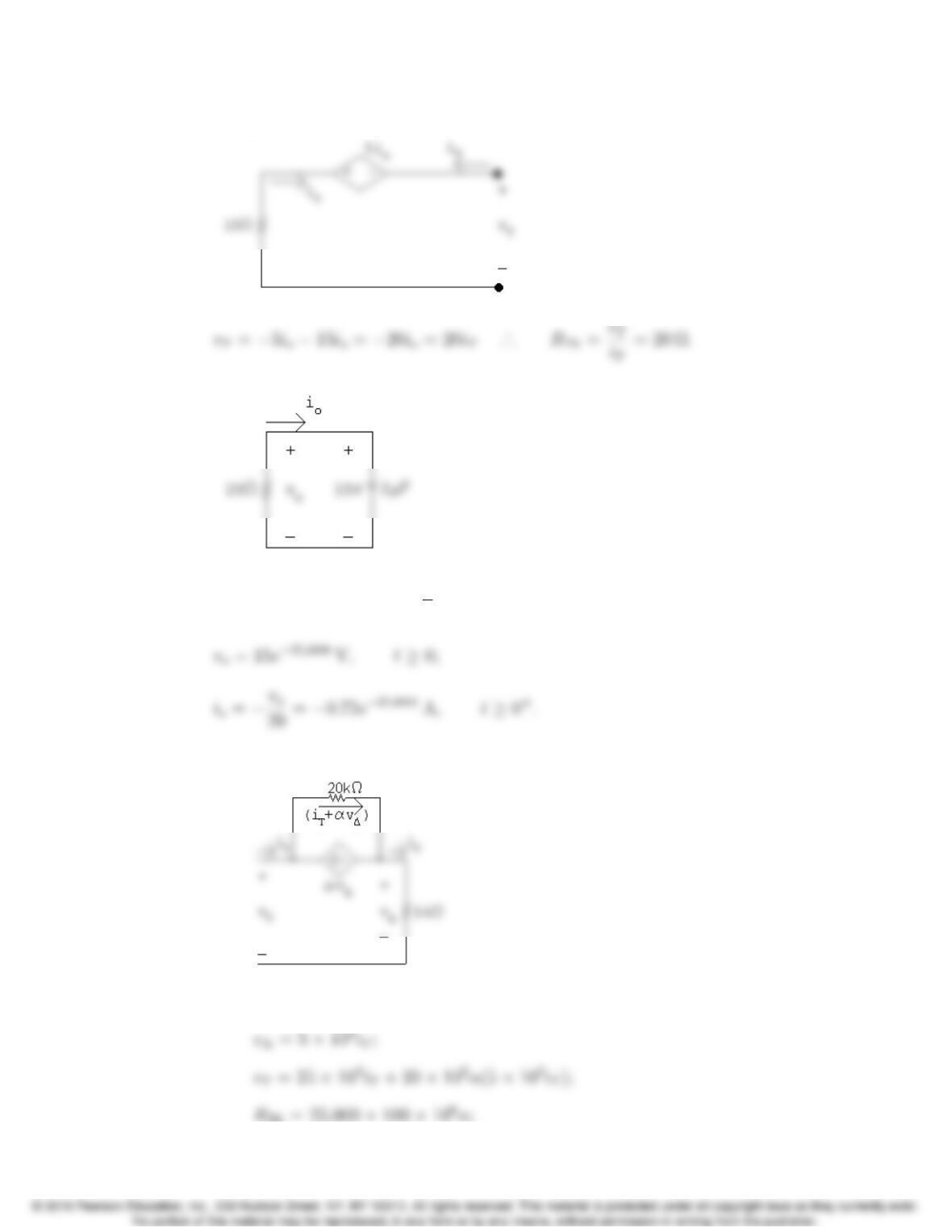
P 7.29 t<0:
Problems 7–31
t>0:
τ=RC = 40 µs; 1
τ= 25,000;
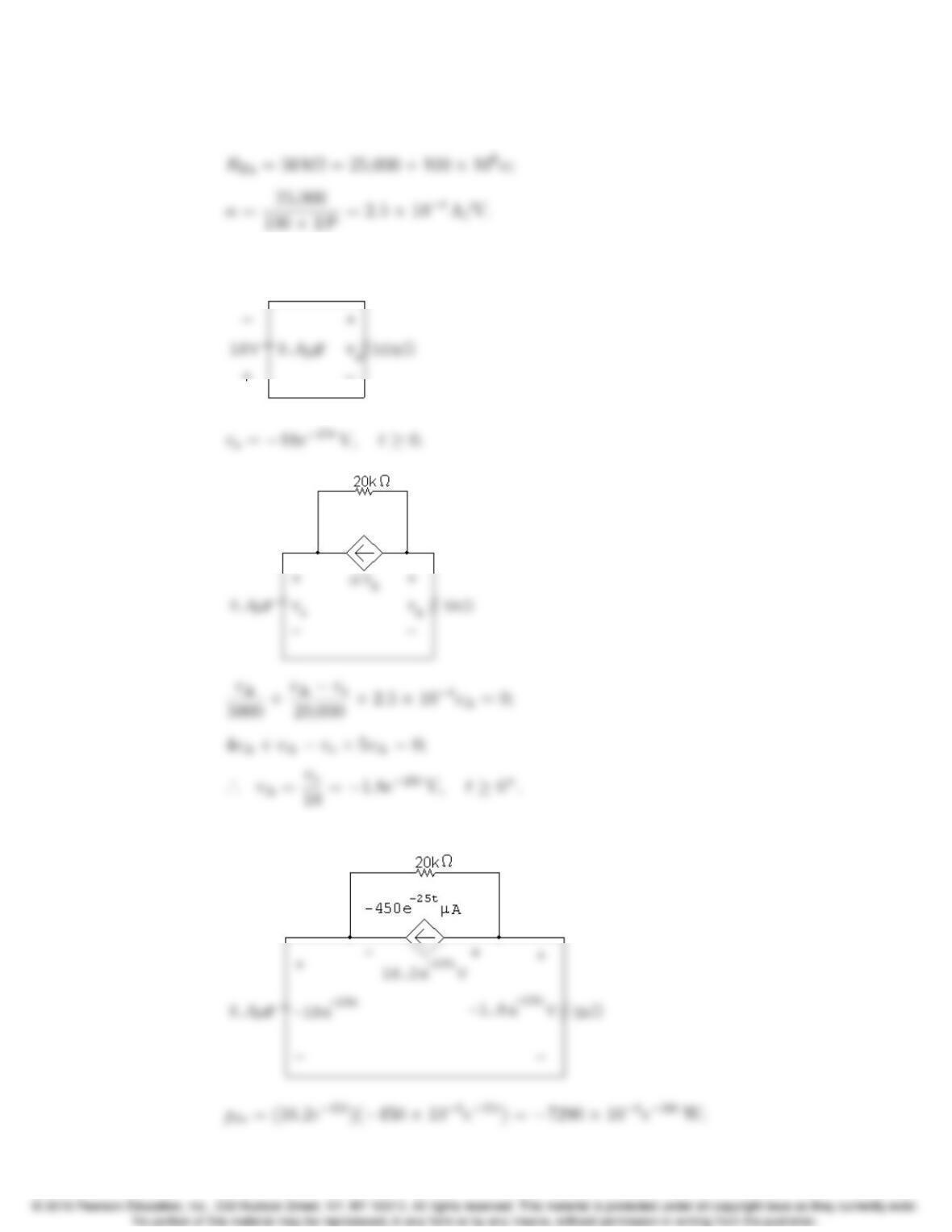
P 7.30 [a]
vT= 20 ⇥103(iT+αv∆)+5⇥103iT;
7–32 CHAPTER 7. Response of First-Order RL and RC Circuits
τ=RThC= 40 ⇥10−3=RTh(0.8⇥10−6;)
[b] vo(0) = (5⇥10−3)(3600) = 18 V,t<0.
t>0:
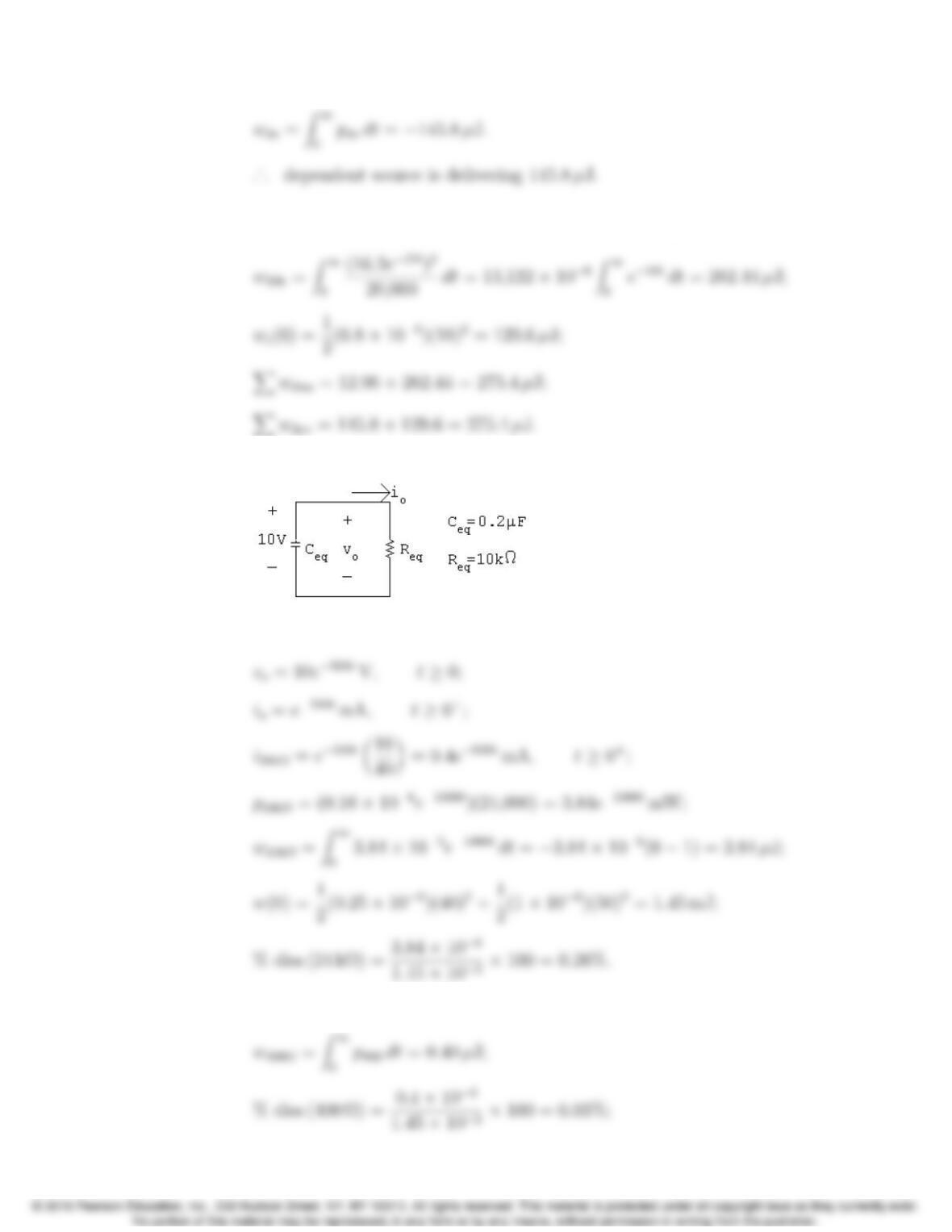
P 7.31 [a]
Problems 7–33
[b] w5k =Z∞
0(5000)(0.36 ⇥10−3e−25t)2dt = 648 ⇥10−6Z∞
0e−50tdt = 12.96 µJ;
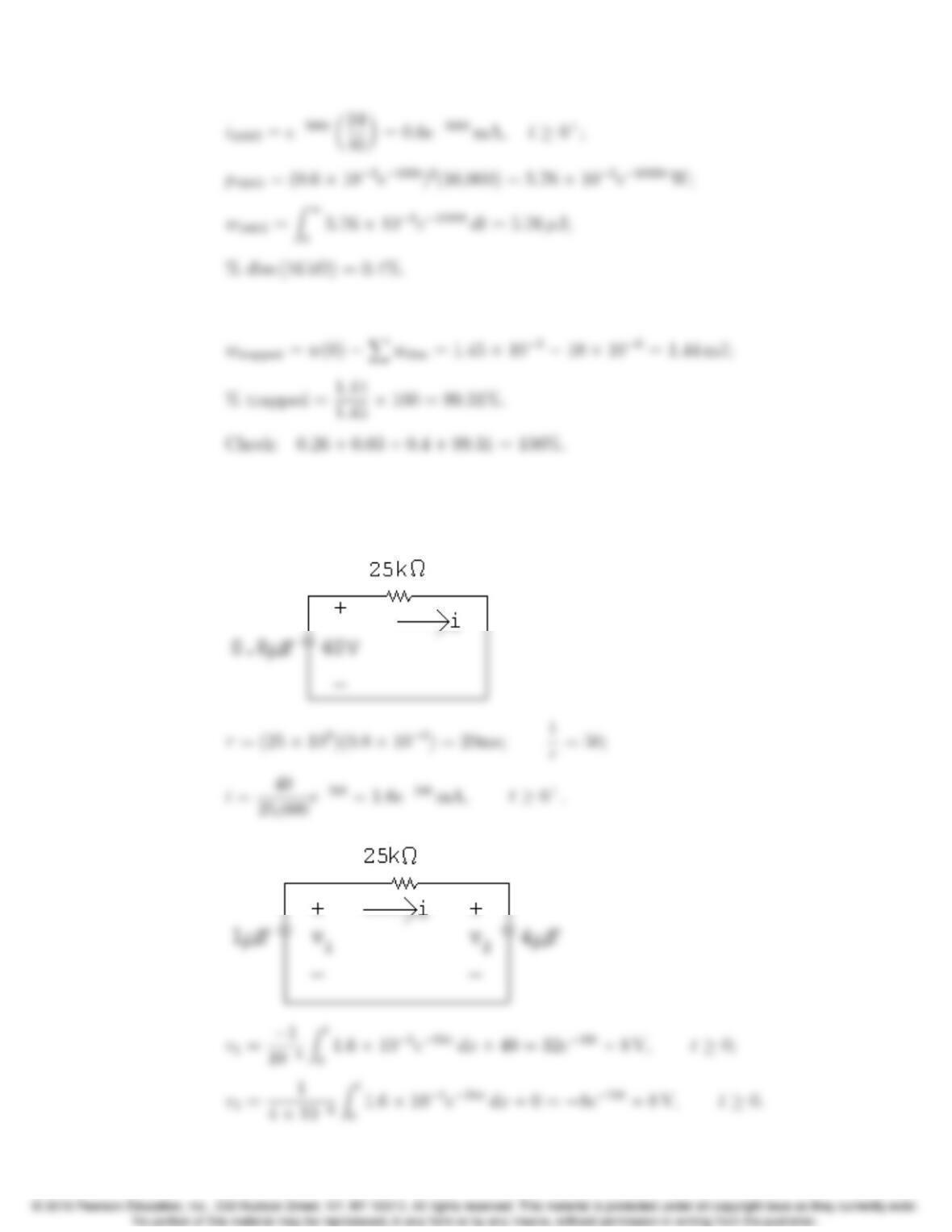
P 7.32 [a] The equivalent circuit for t>0:
τ= 2 ms; 1/τ= 500;
[b] p400Ω= 400(1 ⇥10−3e−500t)2=0.4⇥10−3e−1000t;
7–34 CHAPTER 7. Response of First-Order RL and RC Circuits
[c] Xwdiss =3.84 + 5.76 + 0.4=10µJ
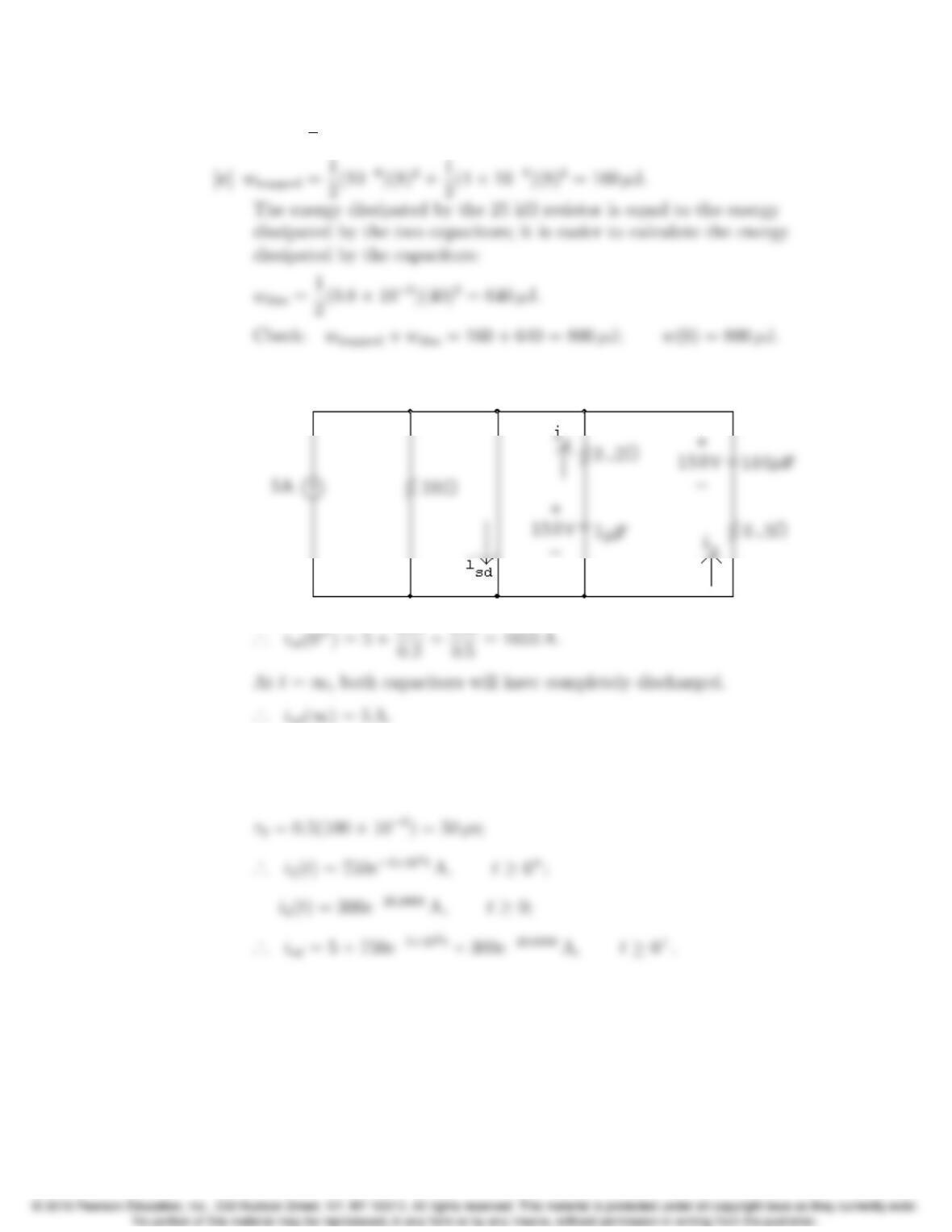
P 7.33 [a] v1(0−)=v1(0+)=40V v2(0+)=0;
Ceq = (1)(4)/5=0.8µF.
Problems 7–35
[b] w(0) = 1
2(10−6)(40)2= 800 µJ.
P 7.34 [a] At t=0
−the voltage on each capacitor will be 150 V(5 ⇥30),positive at
the upper terminal. Hence at t0+we have
sd(1)=5A.
[b] isd(t)=5+i1(t)+i2(t);
τ1=0.2(10−6)=0.2µs;
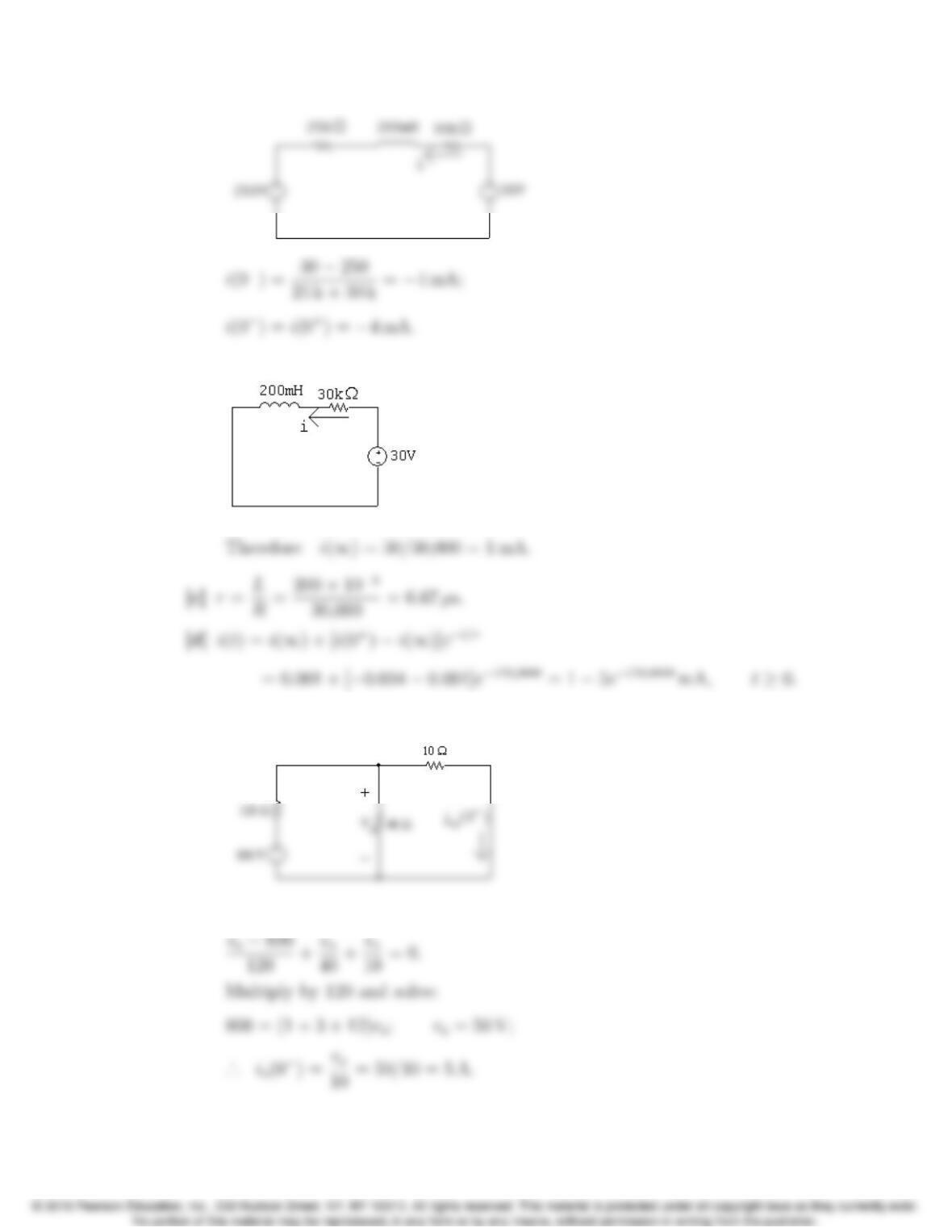
P 7.35 [a] For t<0, calculate the Th´evenin equivalent for the circuit to the left and
right of the 200 mH inductor. We get
7–36 CHAPTER 7. Response of First-Order RL and RC Circuits
[b] For t>0, the circuit reduces to
P 7.36 [a] t<0;
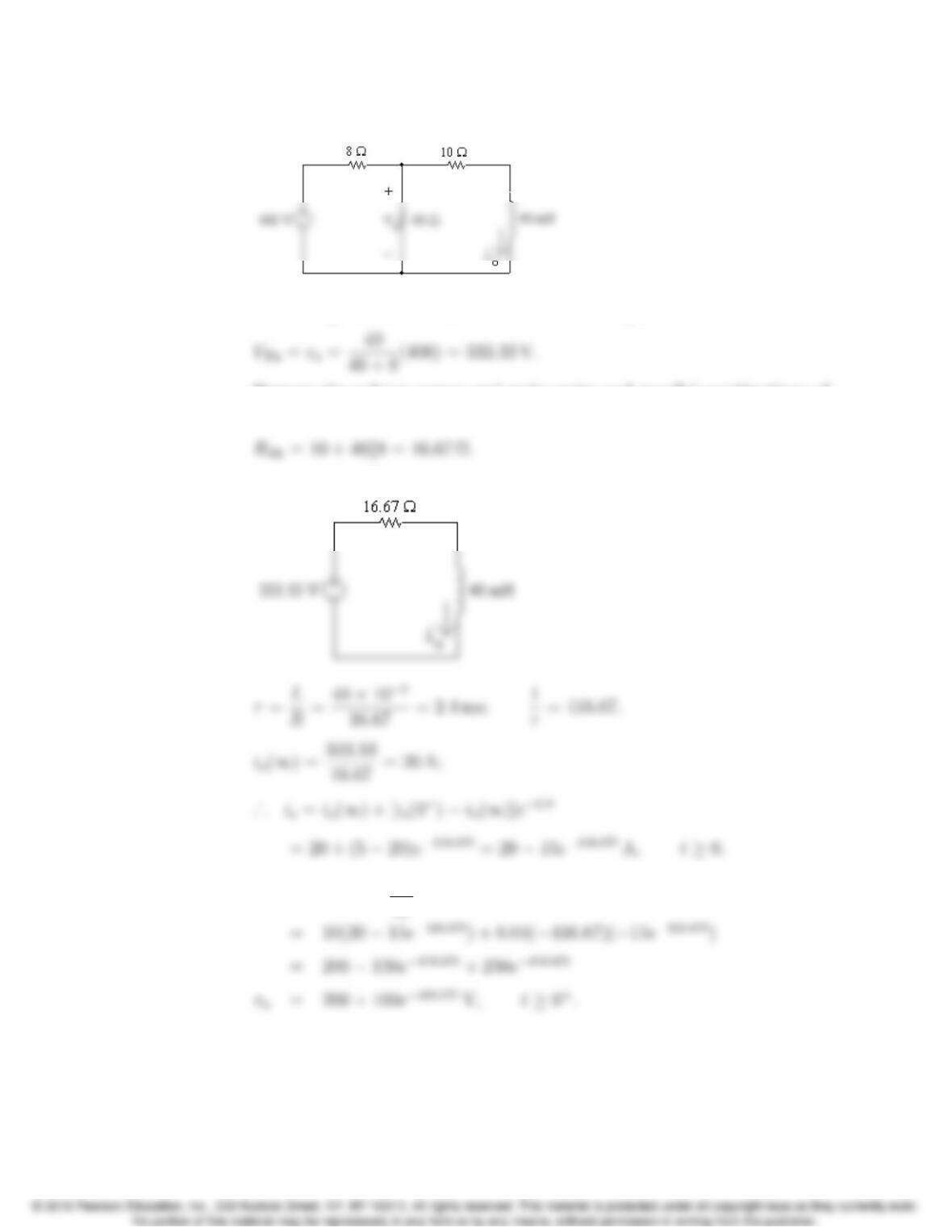
KVL equation at the top node:
Problems 7–37
t>0:
Use voltage division to find the Th´evenin voltage:
Remove the voltage source and make series and parallel combinations of
resistors to find the equivalent resistance:
The simplified circuit is:
[b] vo=10io+Ldio
dt
7–38 CHAPTER 7. Response of First-Order RL and RC Circuits
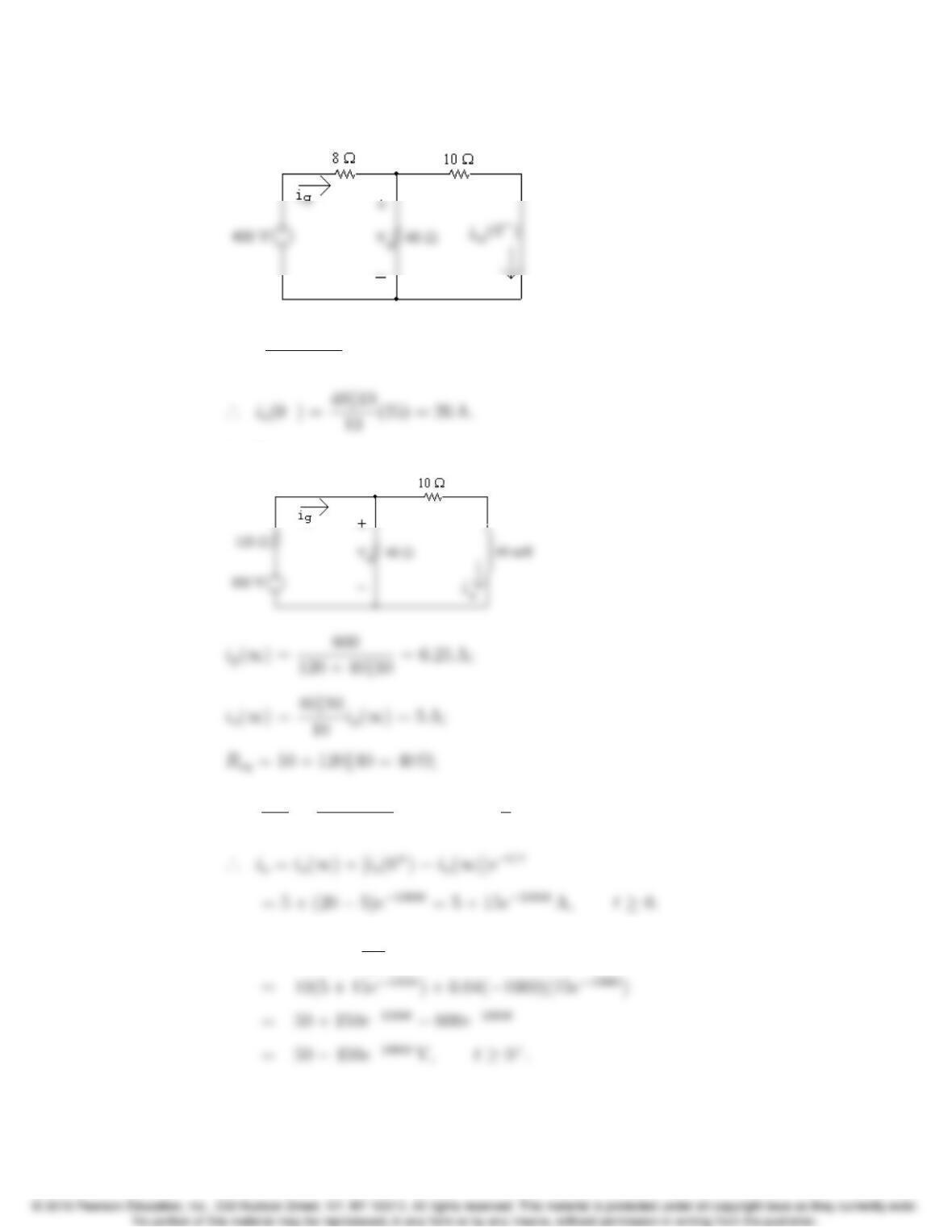
P 7.37 [a] t<0:
ig=400
8+40k10 = 25 A;
t>0;
τ=L
Req
=40 ⇥10−3
40 = 1 ms; 1
τ= 1000;
[b] vo=10io+Ldio
dt
Problems 7–39
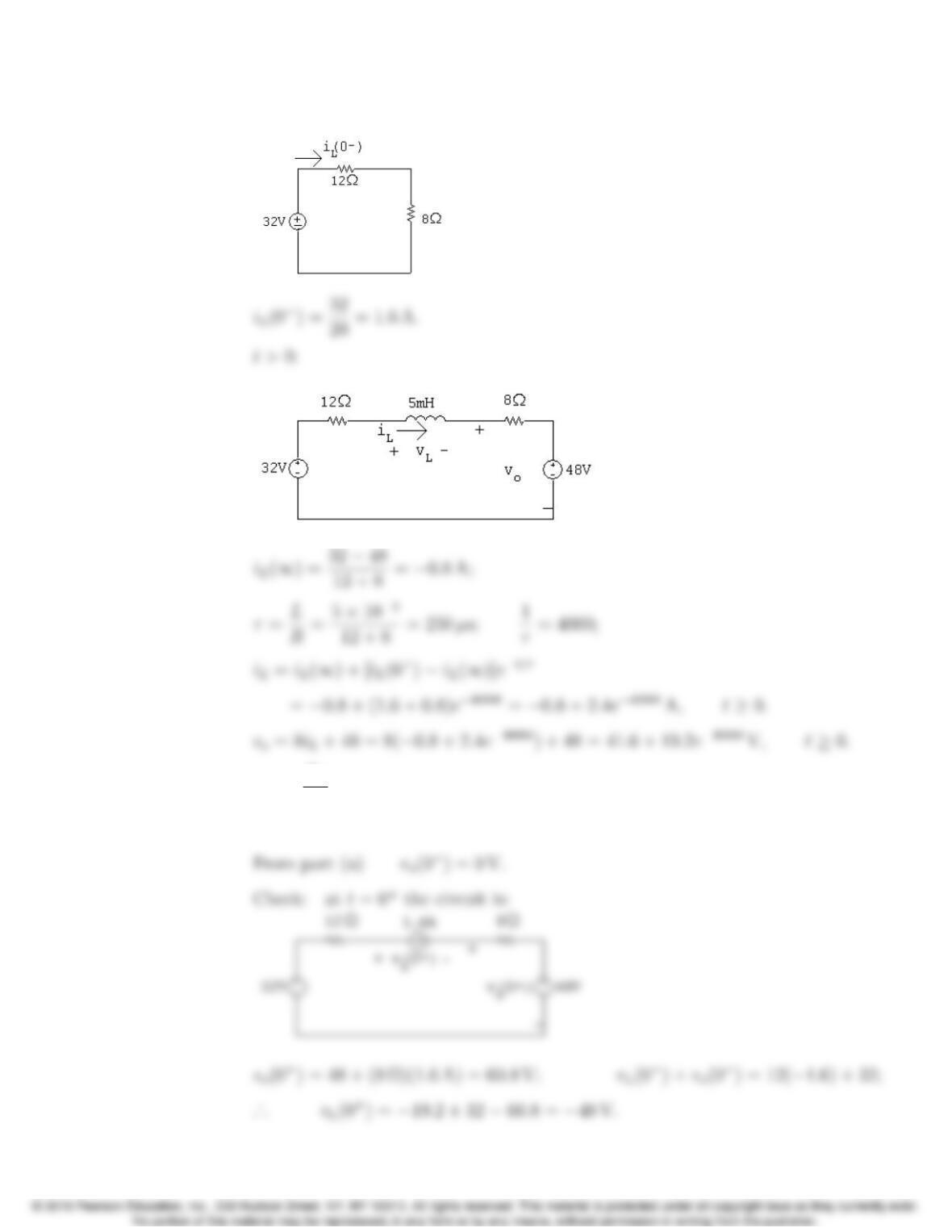
P 7.38 [a] t<0:
[b] vL=LdiL
dt =5⇥10−3(4000)[2.4e−4000t]=48e−4000tV,t0+
vL(0+)=48 V.
P 7.39 [a]
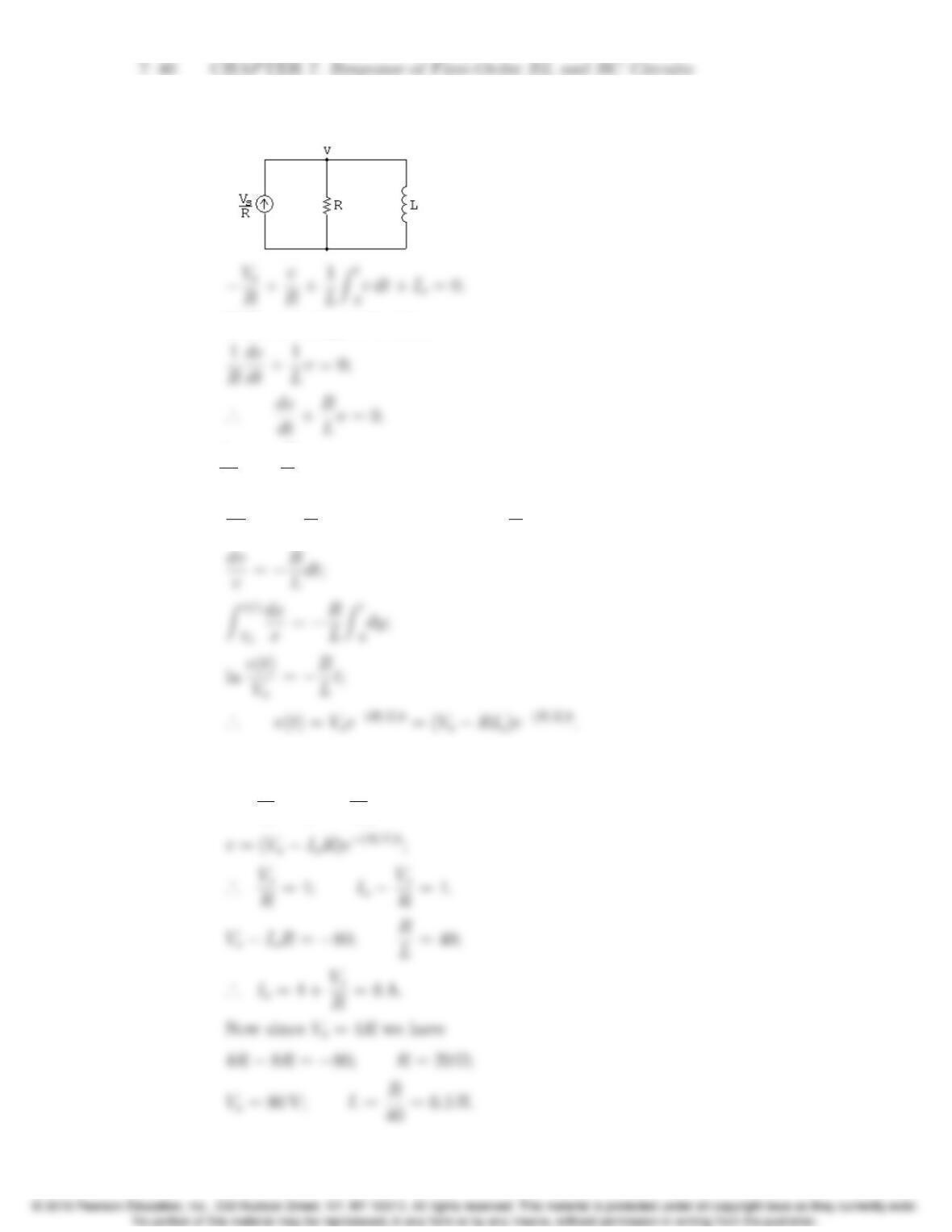
Differentiating both sides,
[b] dv
dt =R
Lv;
dv
dt dt =R
Lv dt so dv =R
Lv dt;
P 7.40 [a] From Eqs. 7.1 and 7.15
i=Vs
R+✓IoVs
R◆e−(R/L)t;