Problems 7–41
[b] i=4+4e−40t;i2= 16 + 32e−40t+16e−80t;
w=1
vo(1)=0;
vo(t)=IgR2e−[(R1+R2)/L]tV,t0+.
[b] vo(0+)!1,and the duration of vo(t)!zero.
[c] vsw =R2io;τ=L
;
P 7.42 Opening the inductive circuit causes a very large voltage to be induced across
the inductor L. This voltage also appears across the switch (part [d] of
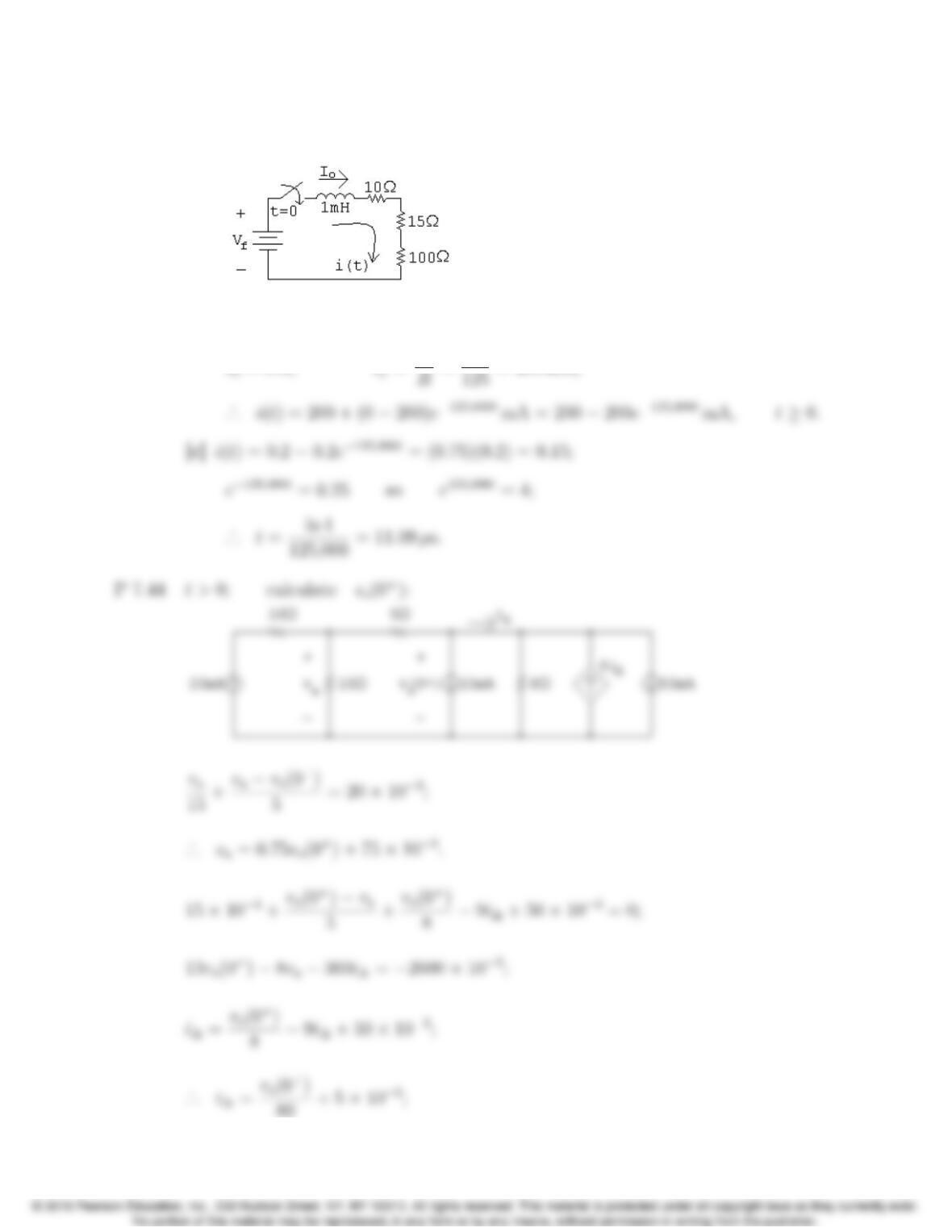
P 7.43 [a] Note that there are many different possible solutions to this problem.
R=L
τ.
Choose a 1 mH inductor from Appendix H. Then,
7–42 CHAPTER 7. Response of First-Order RL and RC Circuits
Construct the resistance needed by combining 100 Ω, 10 Ω, and 15 Ω
resistors in series:
[b] i(t)=If+(IoIf)e−t/τ;
Io= 0 A; If=Vf
Problems 7–43
·
.. 360i∆=4.5vo(0+) + 1800 ⇥10−3;
vo(1)=0.
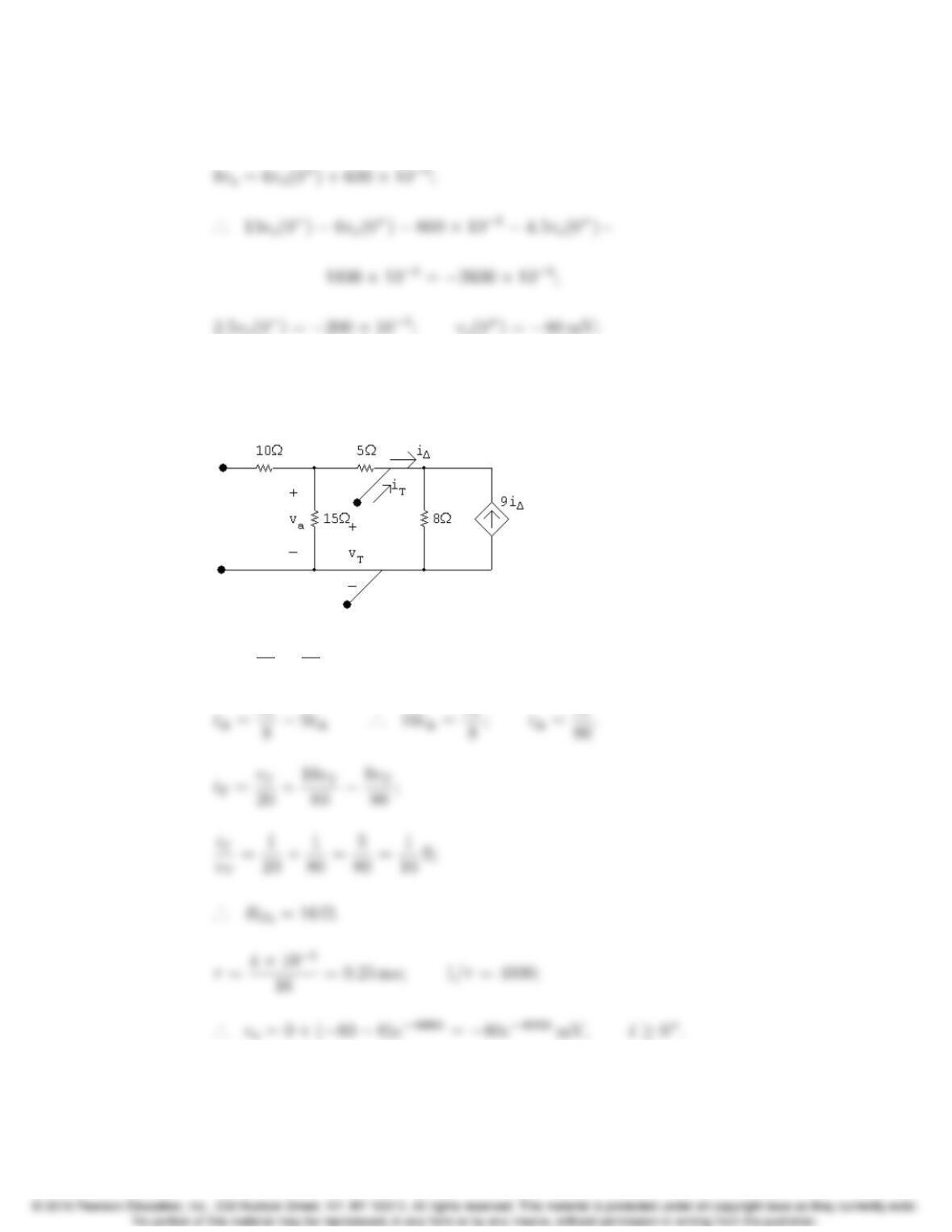
Find the Th´evenin resistance seen by the 4 mH inductor:
iT=vT
20 +vT
89i∆;
7–44 CHAPTER 7. Response of First-Order RL and RC Circuits
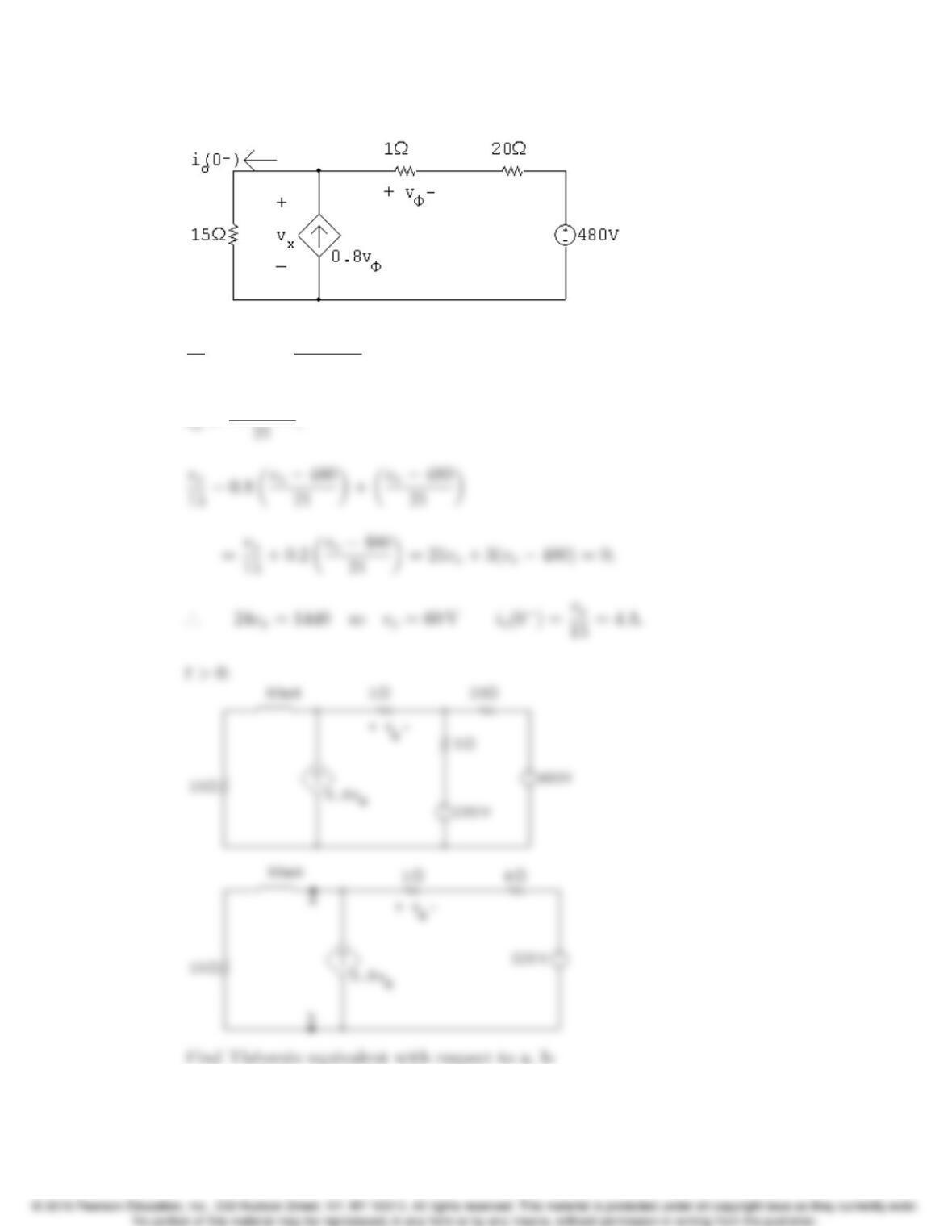
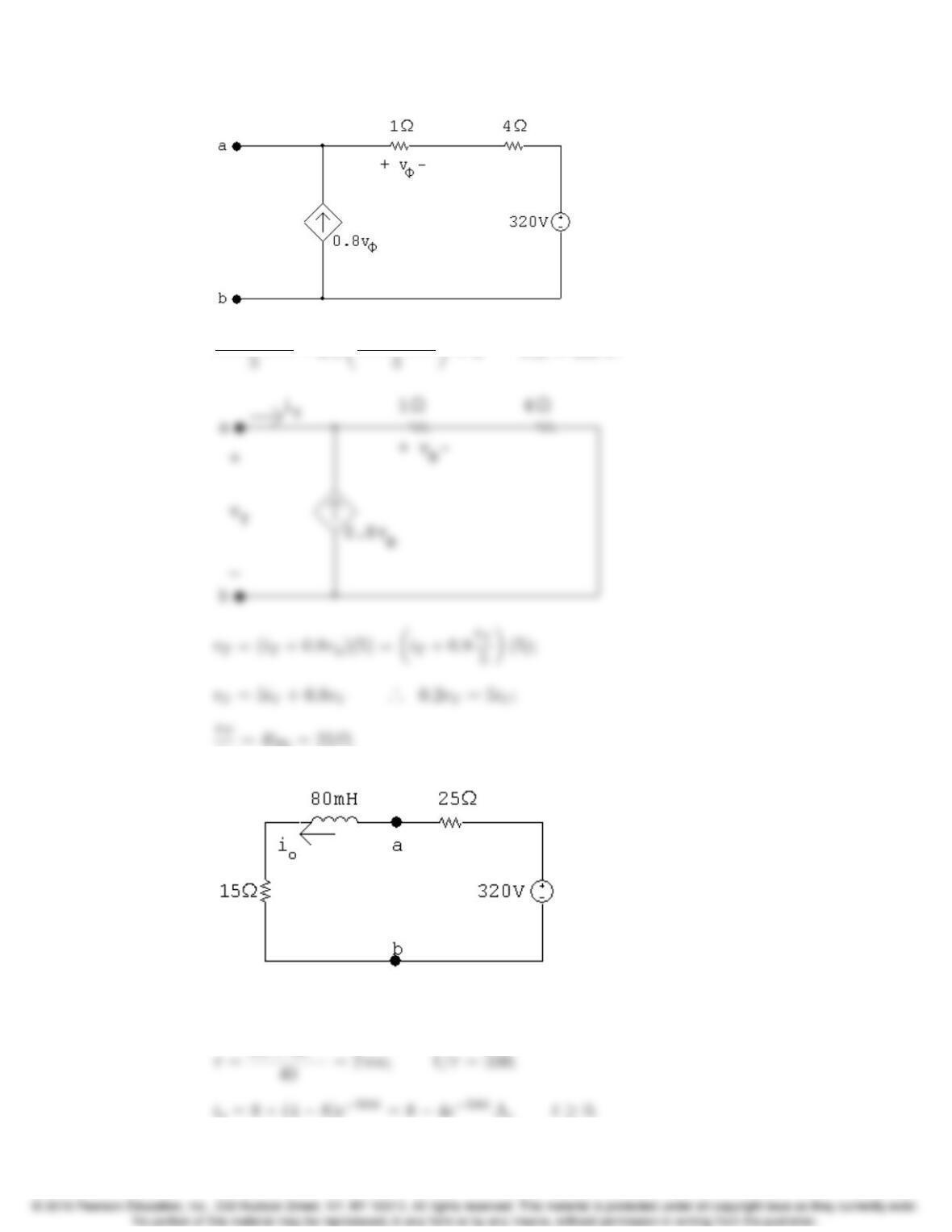
P 7.45 For t<0:
vx
15 0.8vφ+vx480
21 = 0;
Problems 7–45
VTh 320
iT
io(1) = 320/40 = 8 A;
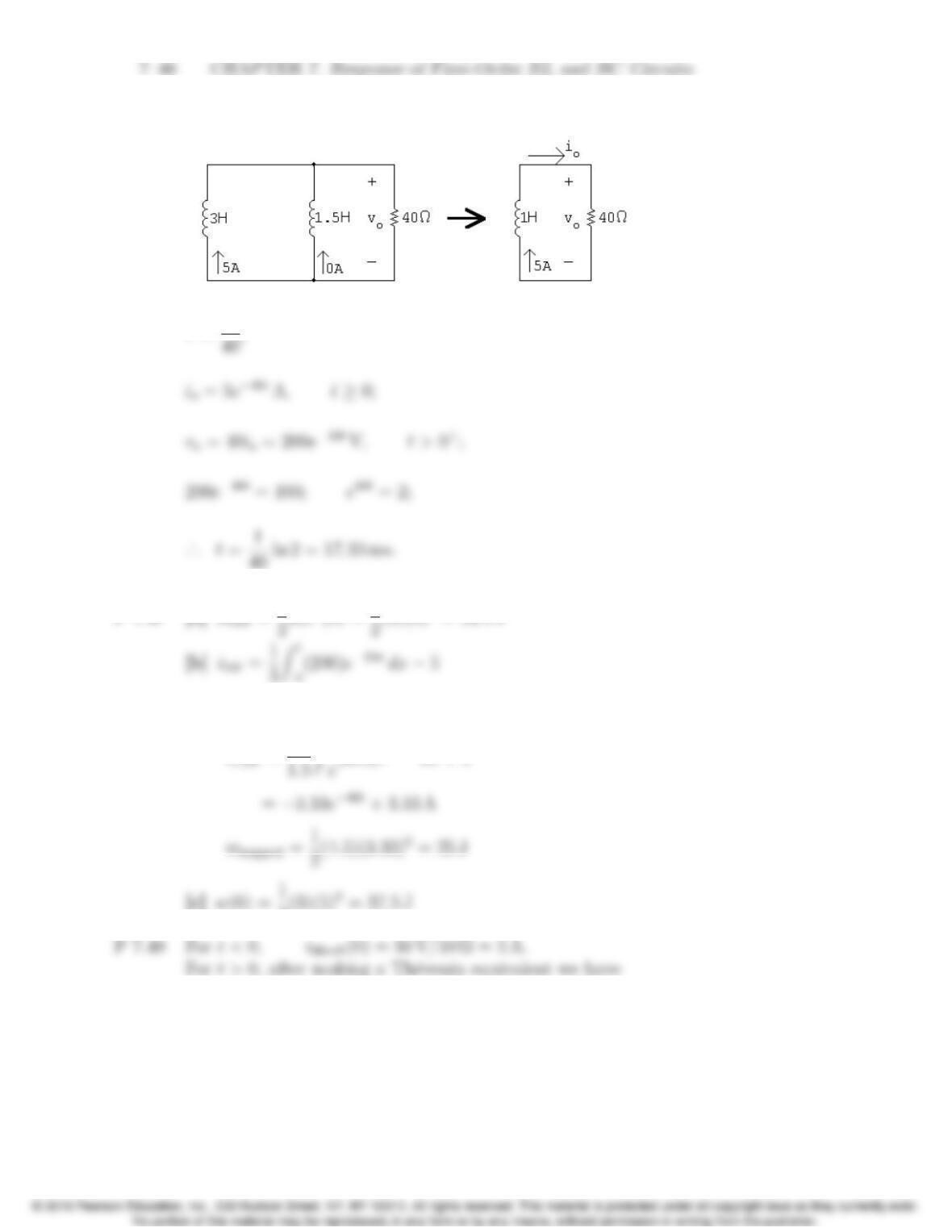
P 7.46 t>0:
τ=1
=1.67(1 e−40t)5=1.67e−40t3.33 A
i1.5H=1
2(3)(5)2= 37.5J
Problems 7–47
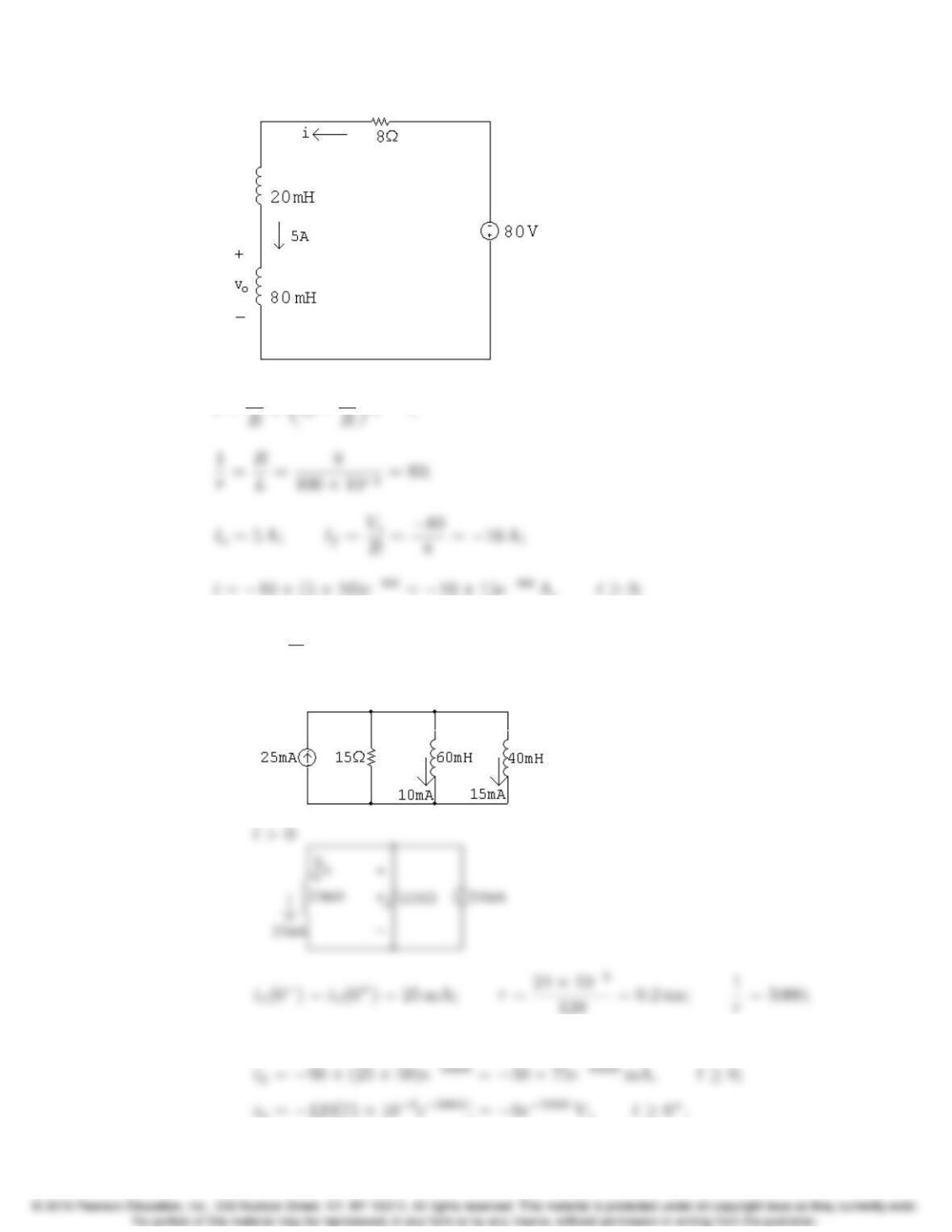
i=Vs
vo=0.08di
dt =0.08(1200e−80t)=96e−80tV,t>0+.
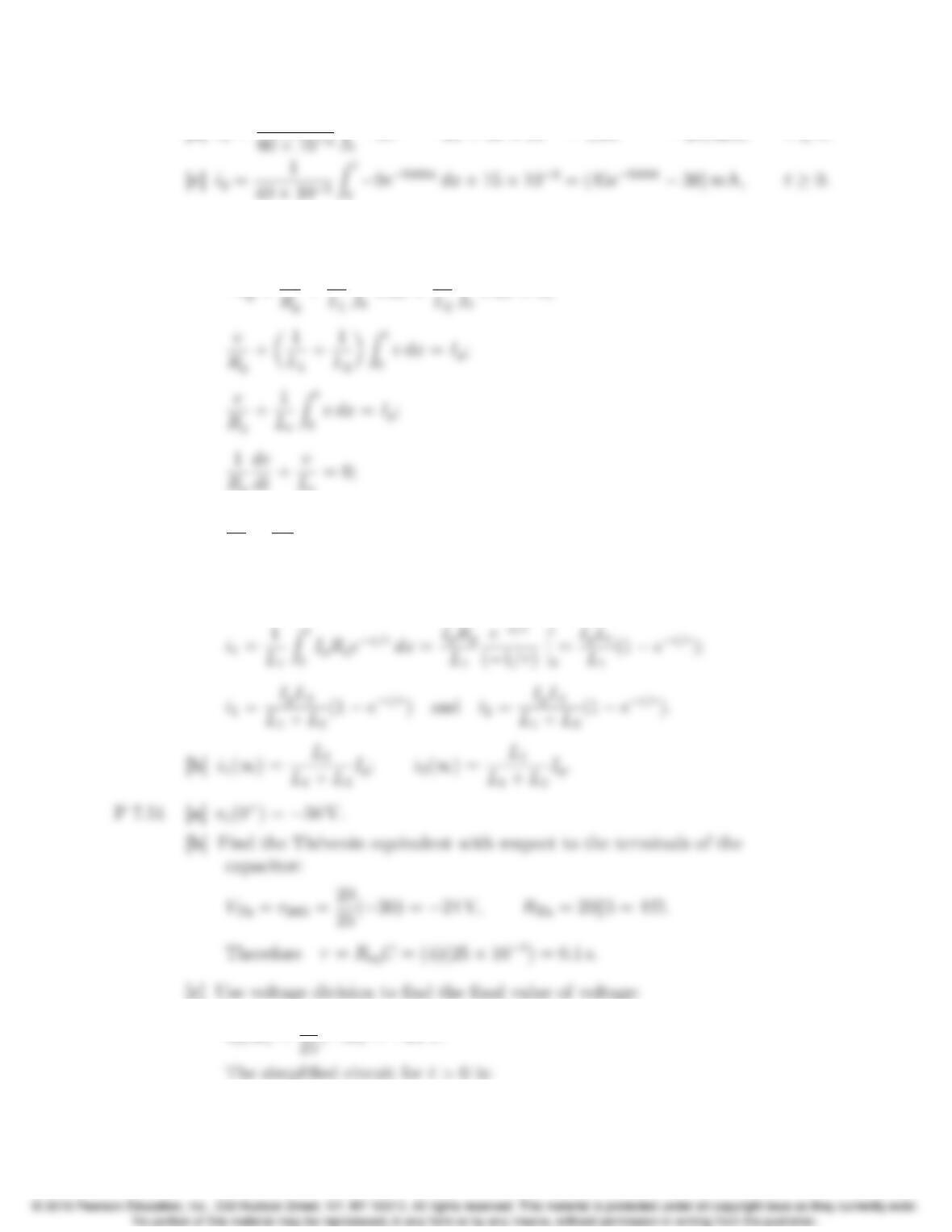
P 7.49 [a] t<0:
iL(1)=50 mA;
7–48 CHAPTER 7. Response of First-Order RL and RC Circuits
[b] i1=1
P 7.50 [a] Let vbe the voltage drop across the parallel branches, positive at the top
node, then
Ig+v
+1
dv
dt +Rg
Le
v=0.
Therefore v=IgRge−t/τ;τ=Le/Rg.
Thus
vc(1)=20
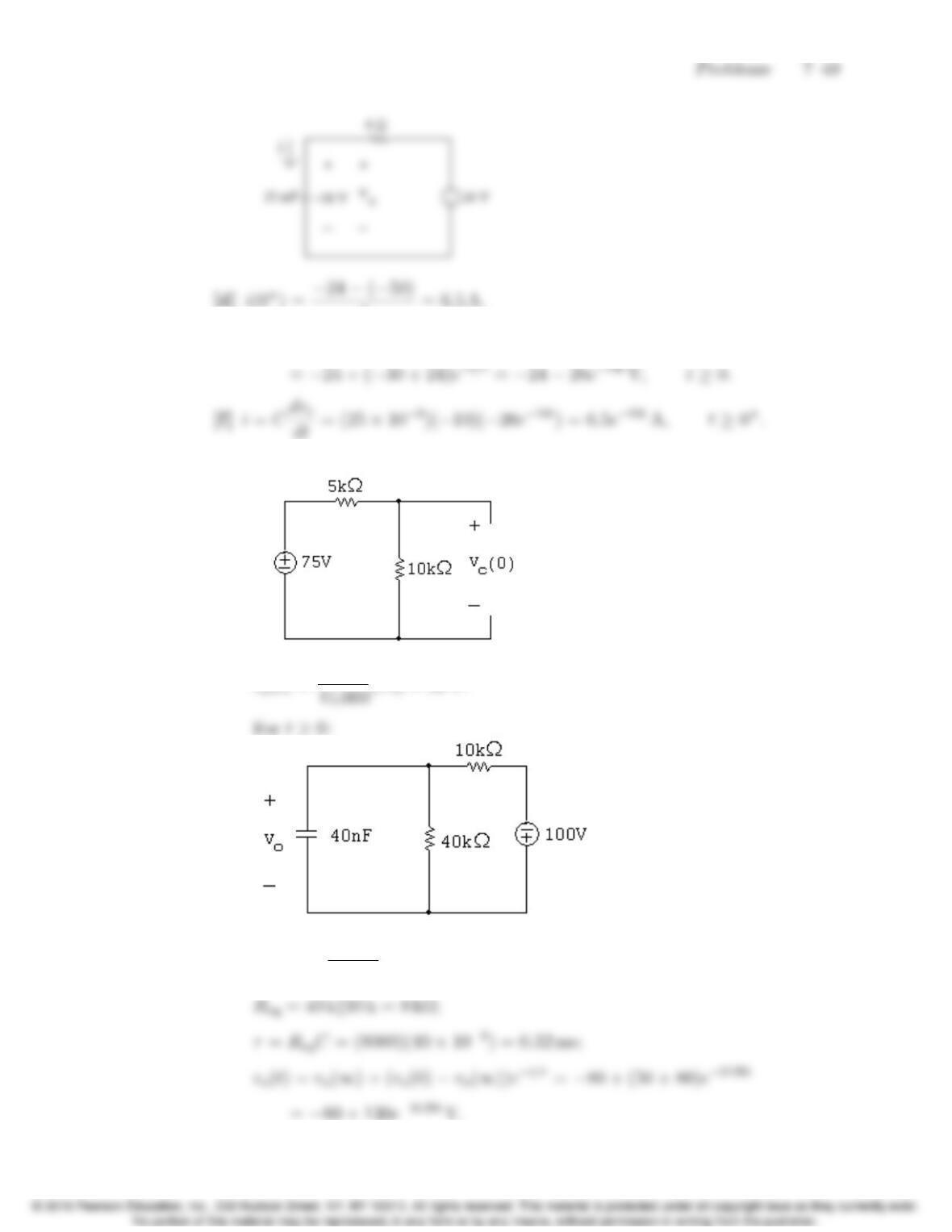
4=6.5A.
[e] vc=vc(1)+[vc(0+)vc(1)]e−t/τ
P 7.52 [a] For t<0:
vo(0) = 10,000
vo(1)=40,000
50,000(100) = 80 V;
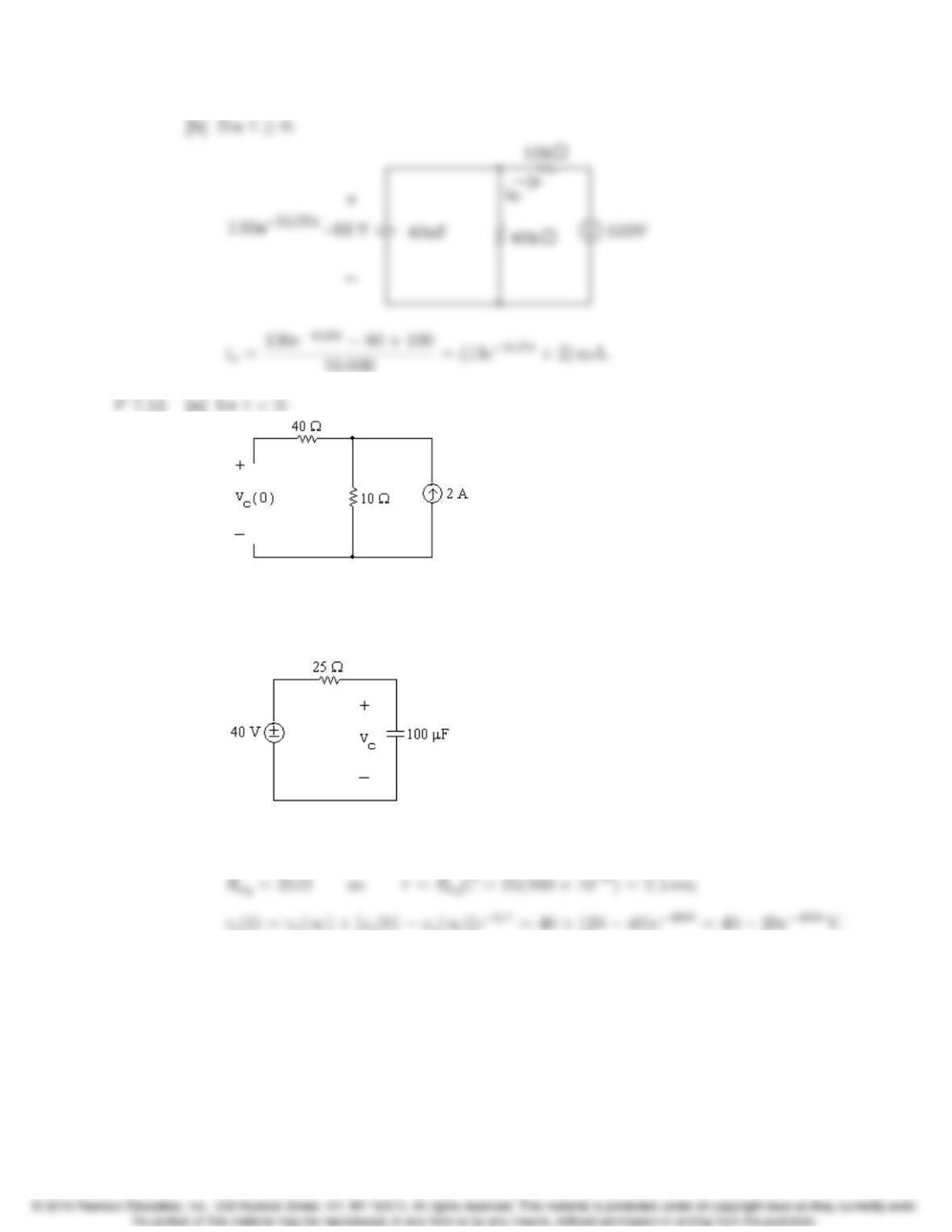
7–50 CHAPTER 7. Response of First-Order RL and RC Circuits
vc(0) = 10(2) = 20 V.
For t0:
vc(1) = 40 V;
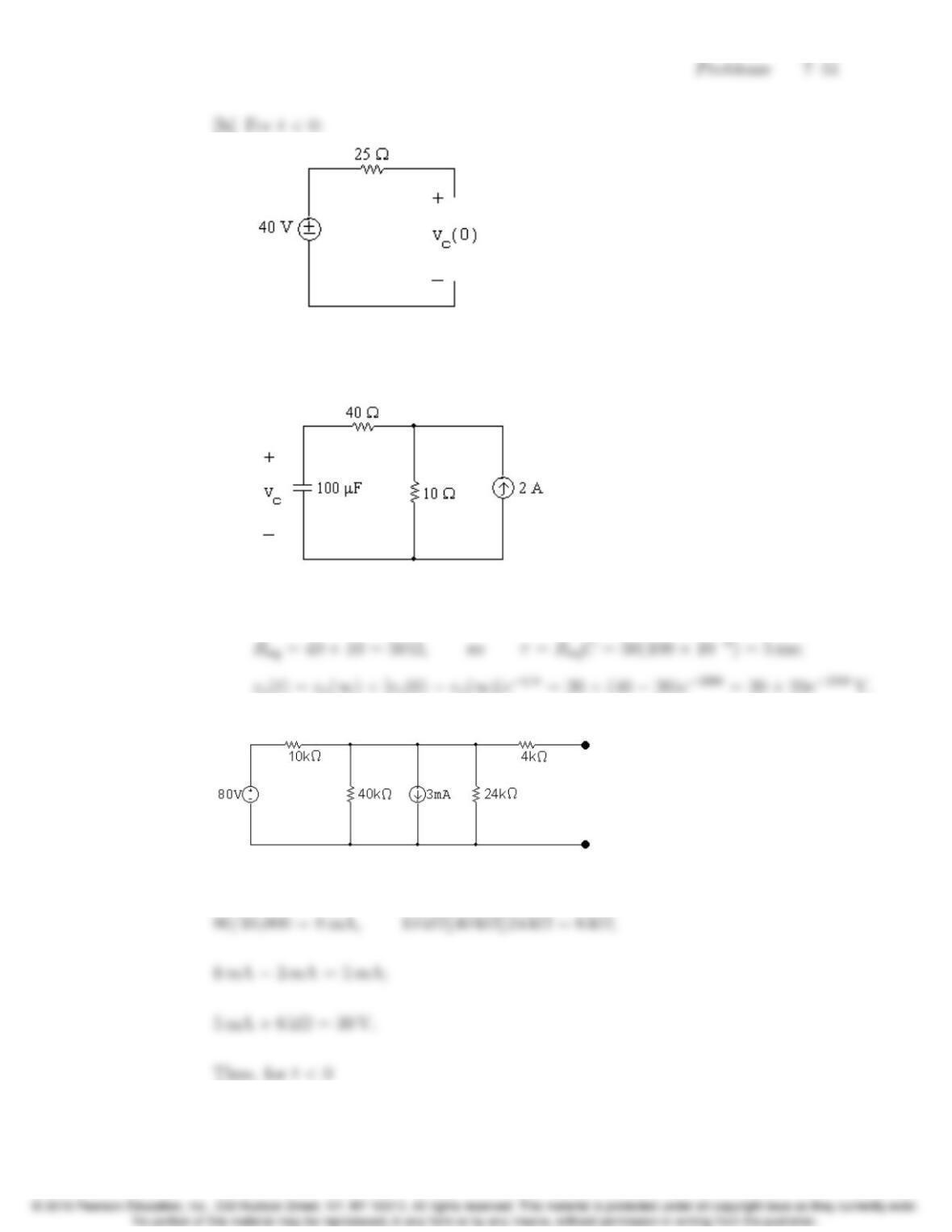
vc(0) = 40 V.
For t0:
vc(1) = 10(2) = 20 V;
P 7.54 For t<0:
Simplify the circuit:
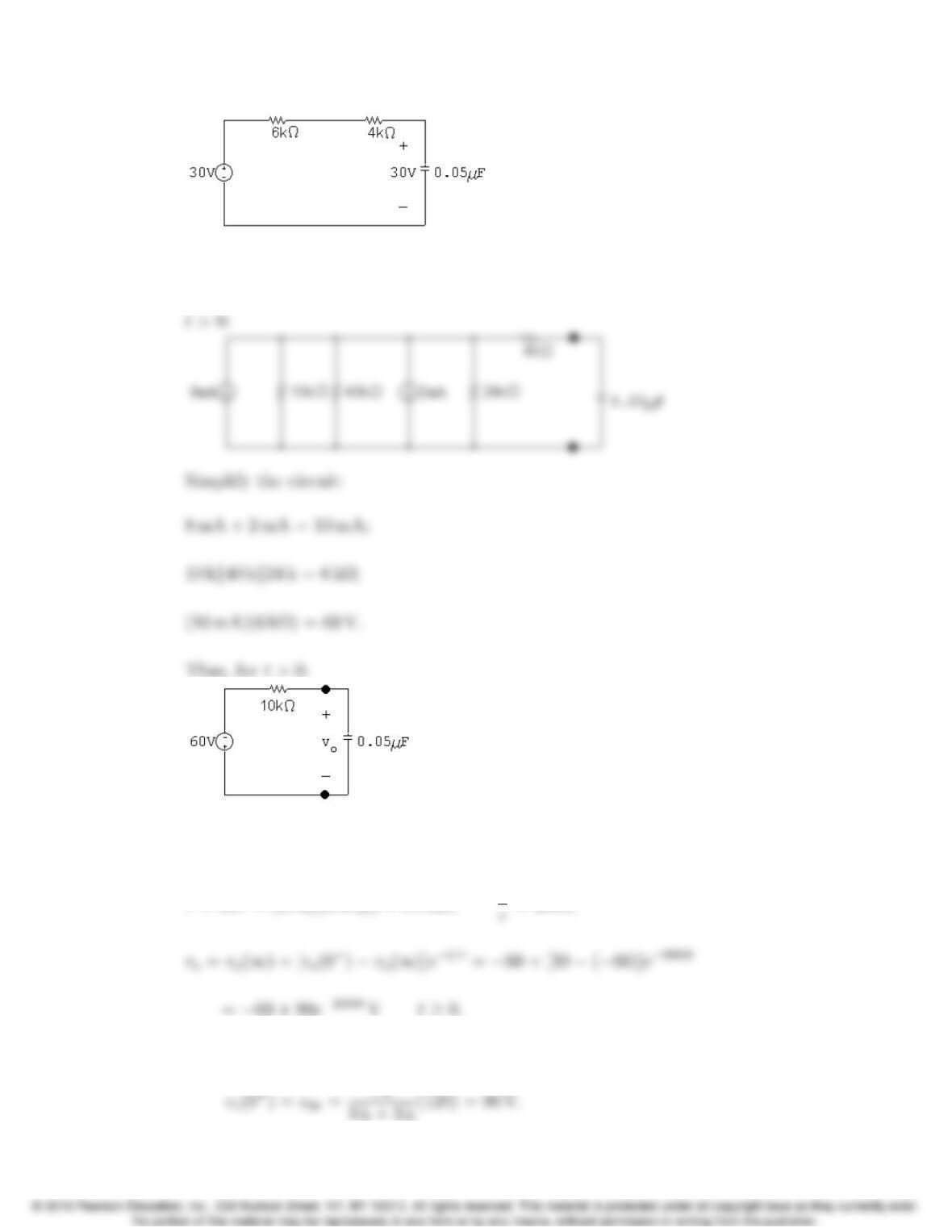
7–52 CHAPTER 7. Response of First-Order RL and RC Circuits
·
.. v
o(0−)=vo(0+)=30V.
vo(1)=10 ⇥10−3(6 ⇥103)=60 V;
τ=RC = (10 k)(0.05 µ)=0.5 ms; 1
P 7.55 [a] Use voltage division to find the initial value of the voltage:
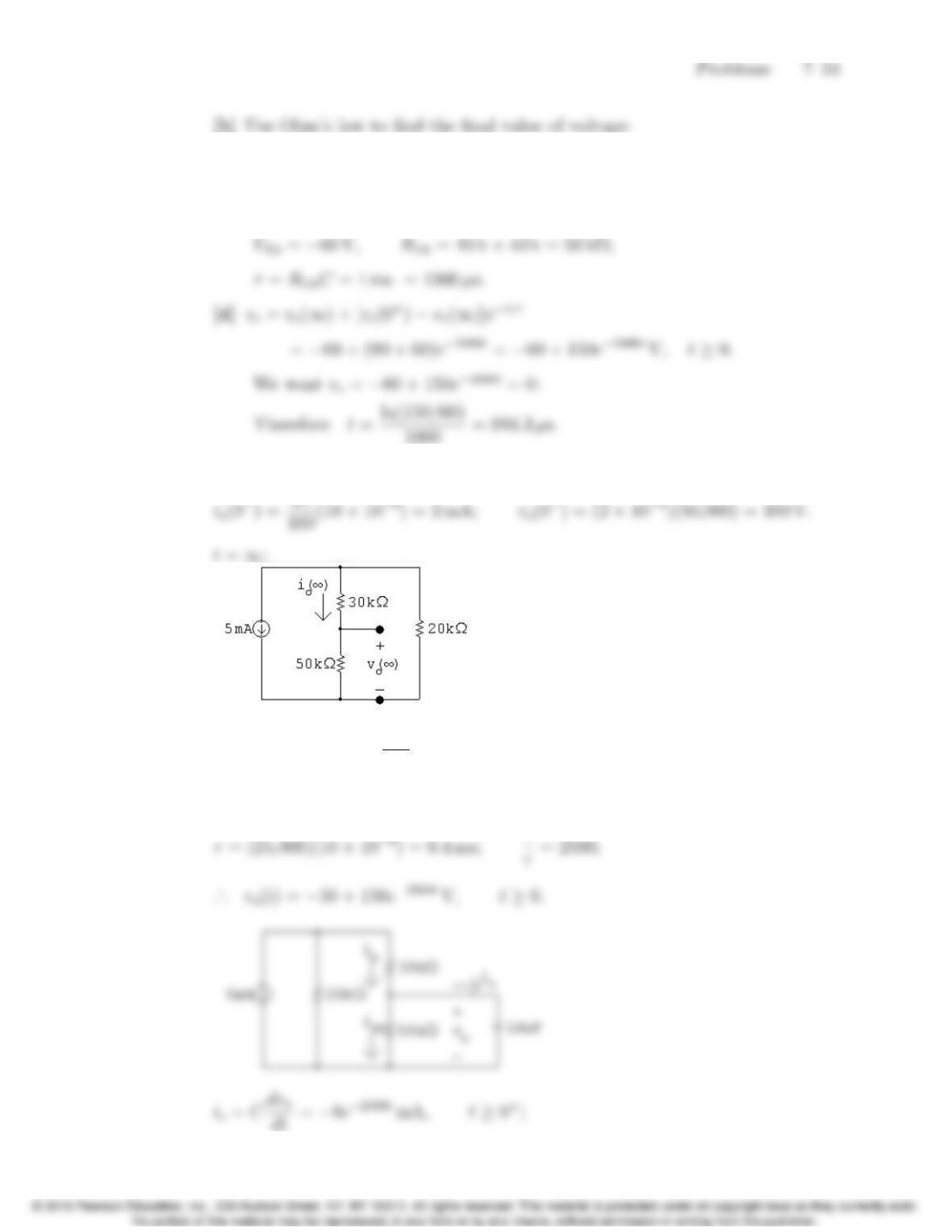
vc(1)=v40k=(1.5⇥10−3)(40 ⇥103)=60 V.
[c] Find the Th´evenin equivalent with respect to the terminals of the
capacitor:
P 7.56 t<0:
io(1)=5⇥10−3✓20
100◆=1 mA; vo(1)=io(1)(50,000) = 50 V.
RTh = 50 kΩk50 kΩ= 25 kΩ;C= 16 nF.
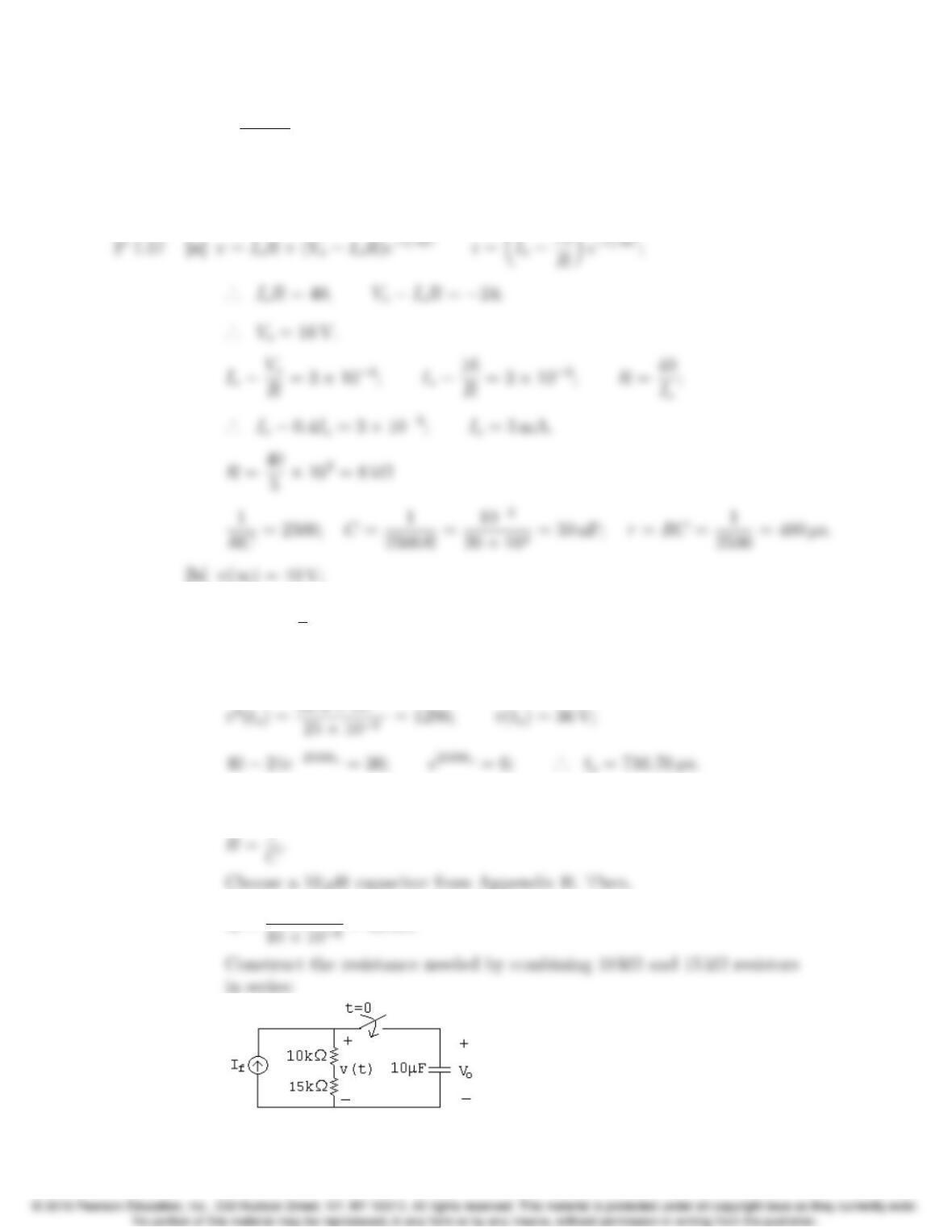
7–54 CHAPTER 7. Response of First-Order RL and RC Circuits
i50k=vo
50,000 =1+3e−2500tmA,t0+;
io=ic+i50k=(1 + 3e−2500t) mA,t0+.
w(1)=1
2(50 ⇥10−9)(1600) = 40 µJ;
0.81w(1)=32.4µJ;
P 7.58 [a] Note that there are many different possible solutions to this problem.
R=0.25
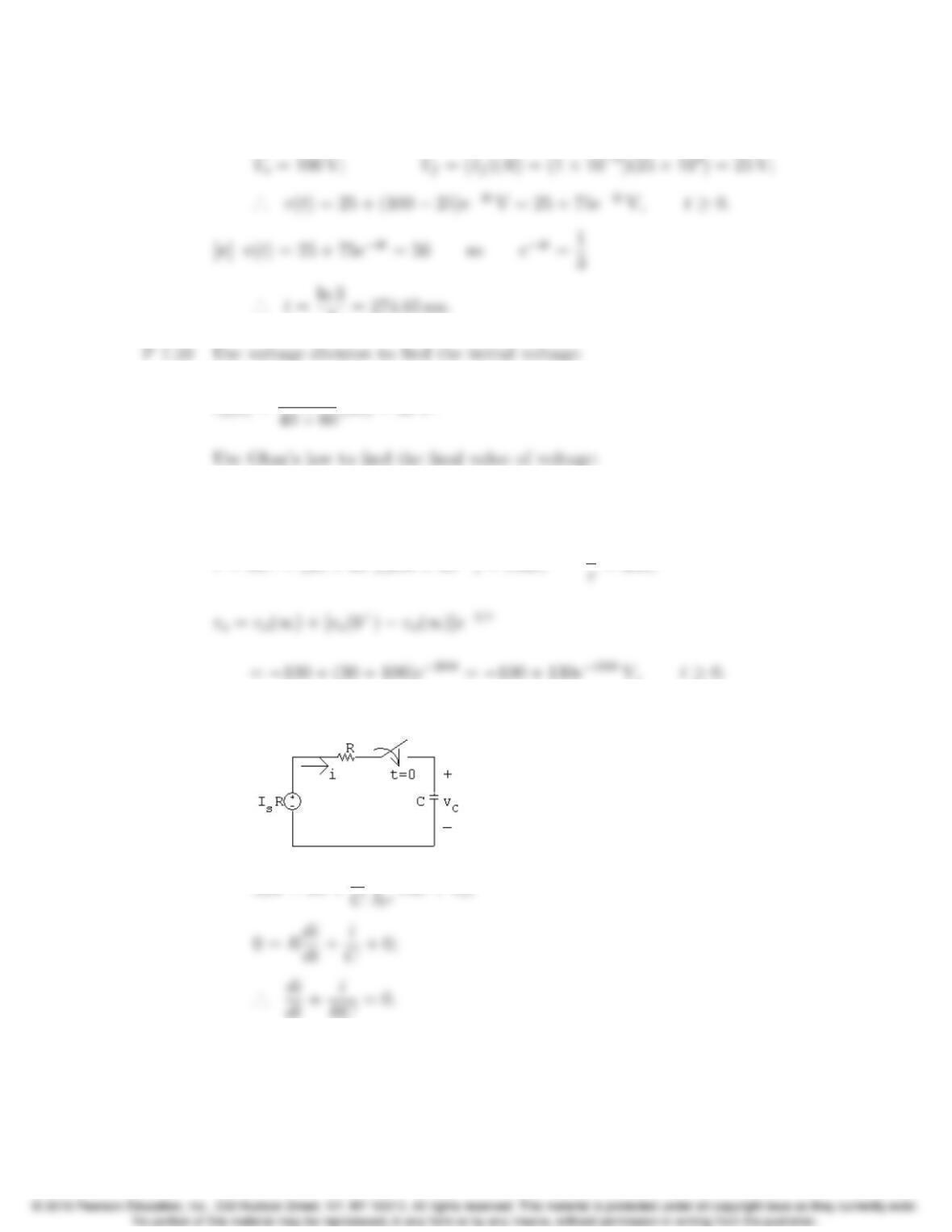
Problems 7–55
[b] v(t)=Vf+(VoVf)e−t/τ;
4= 274.65 ms.
vo(0) = 60
vo(1)=(5 mA)(20 kΩ) = 100 V;
τ=RC = (20 ⇥103)(250 ⇥10−9) = 5 ms; 1
P 7.60 [a]
IsR=Ri +1
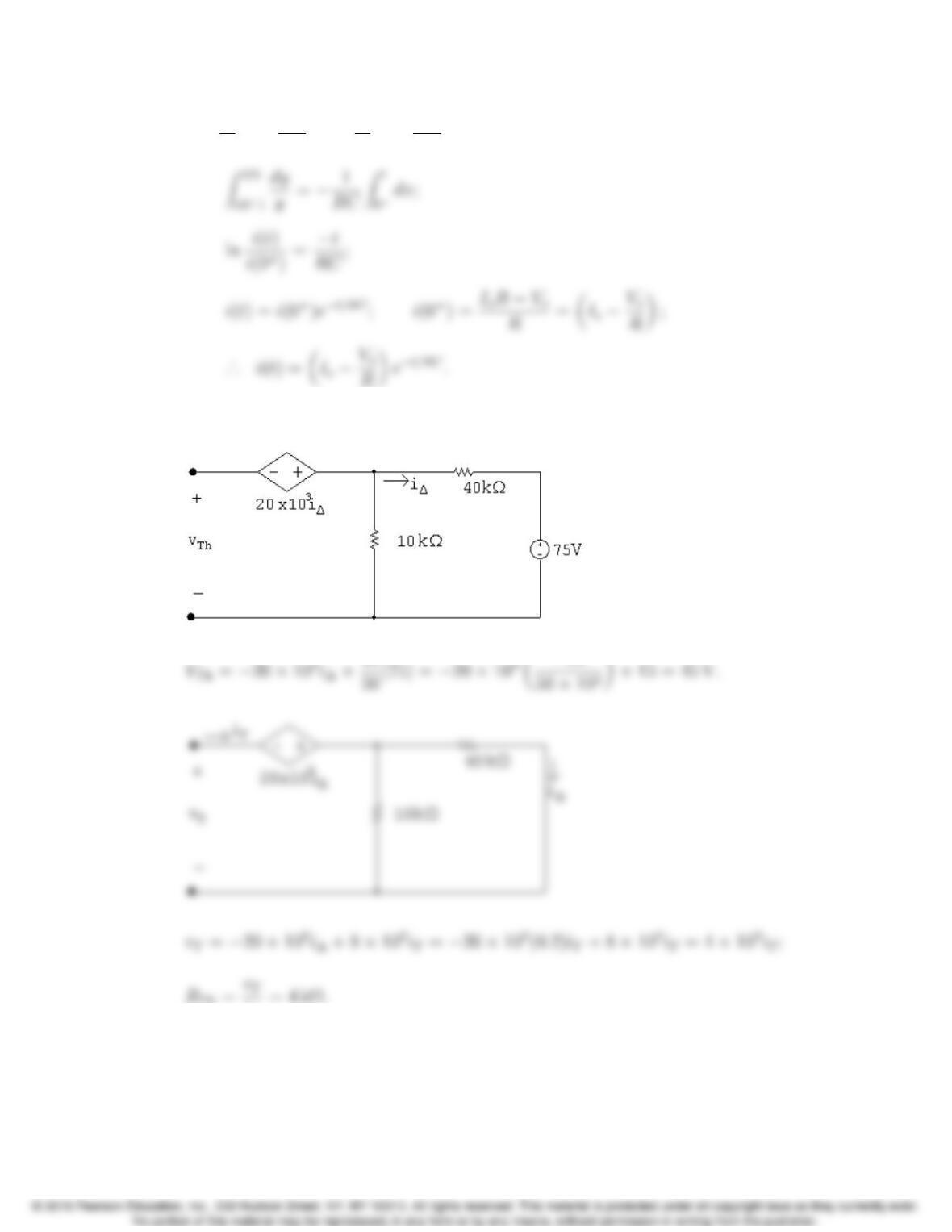
7–56 CHAPTER 7. Response of First-Order RL and RC Circuits
[b] di
dt =i
RC ;di
i=dt
RC ;
P 7.61 For t<0, vo(0) = (3 m)(15 k) = 45 V.
t>0:
iT
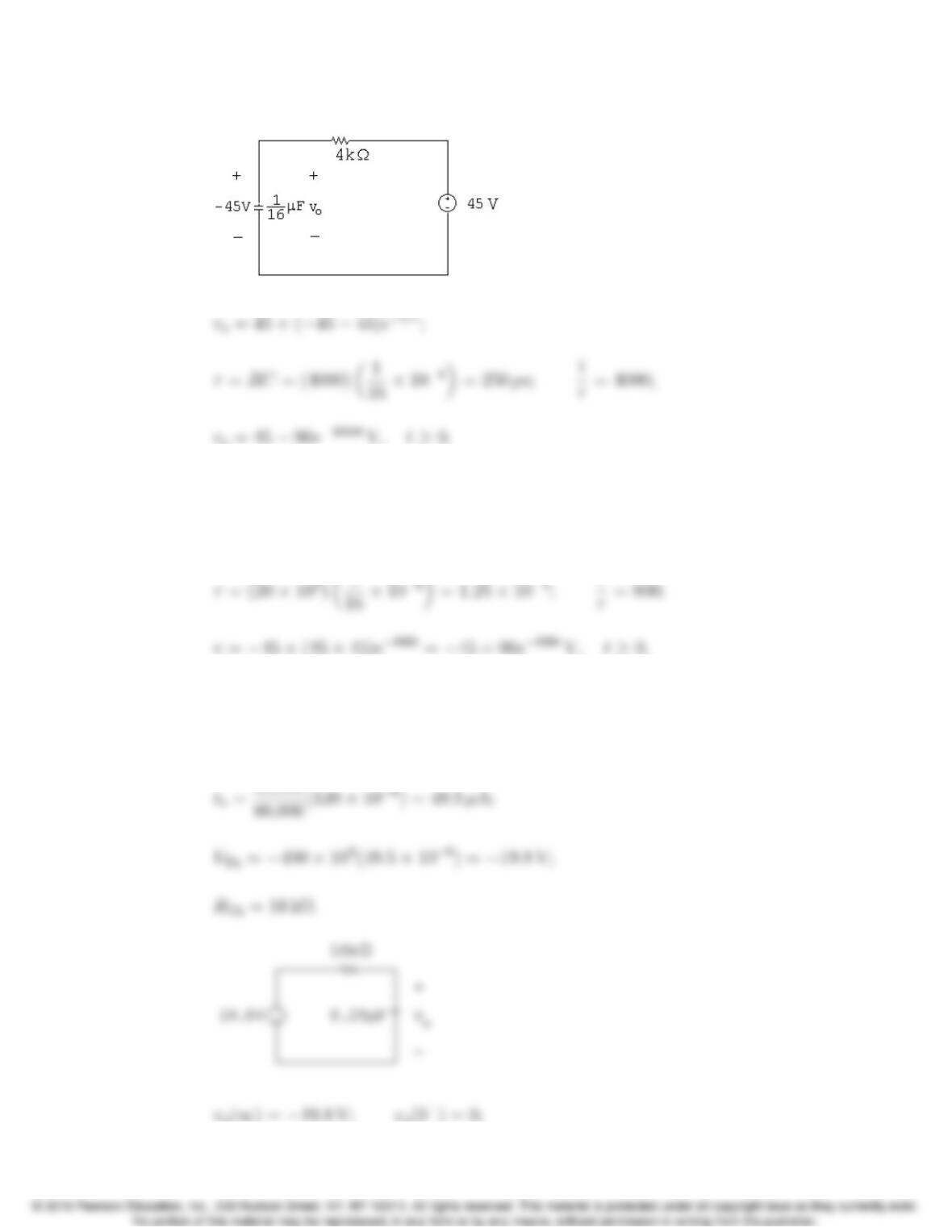
Problems 7–57
t>0
P 7.62 vo(0) = 45 V; vo(1)=45 V;
RTh = 20 kΩ;
P 7.63 For t>0:
VTh =(25)(16,000)ib=400 ⇥103ib;
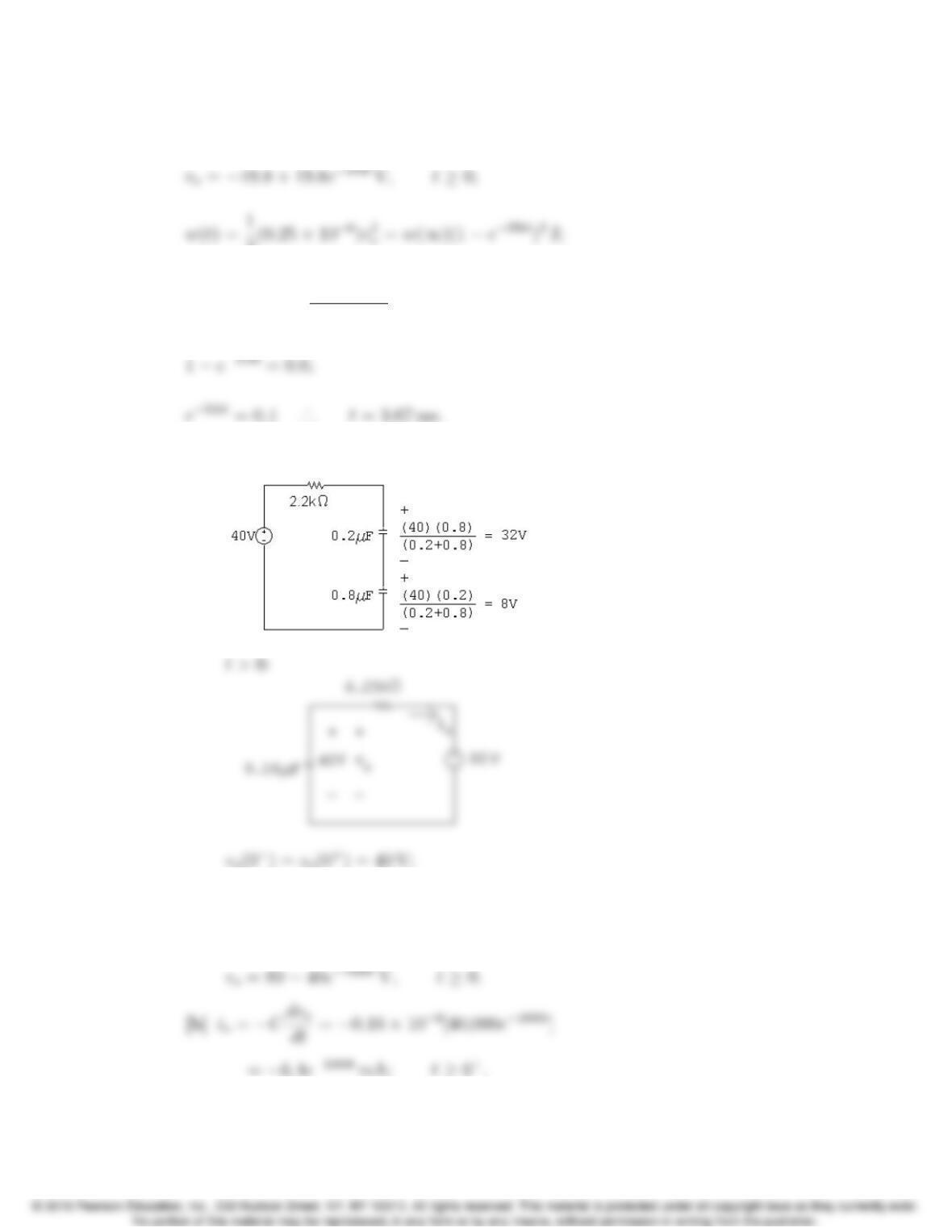
7–58 CHAPTER 7. Response of First-Order RL and RC Circuits
τ= (16,000)(0.25 ⇥10−6) = 4 ms; 1/τ= 250;
2(0.25 ⇥10−6)v2
(1 e−250t)2=0.36w(1)
w(1)=0.36;
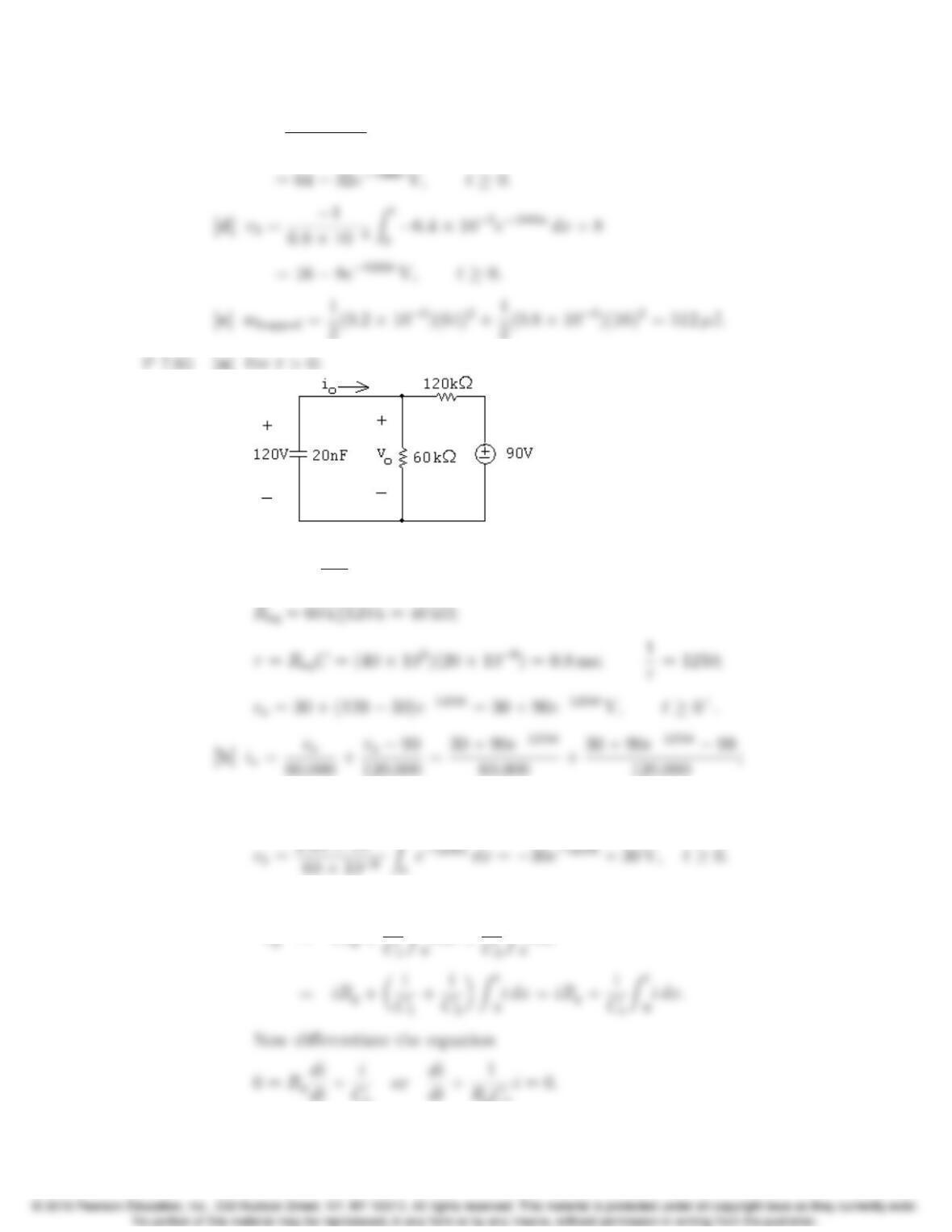
P 7.64 [a] t<0:
vo(1) = 80 V;
τ= (0.16 ⇥10−6)(6.25 ⇥103) = 1 ms; 1/τ= 1000;
Problems 7–59
[c] v1=1
0.2⇥10−6Zt
06.4⇥10−3e−1000xdx +32
v(1)= 60
180(90) = 30 V;
=2.25e−1250tmA;
P 7.66 [a] Let ibe the current in the clockwise direction around the circuit. Then
Vg=iRg+1
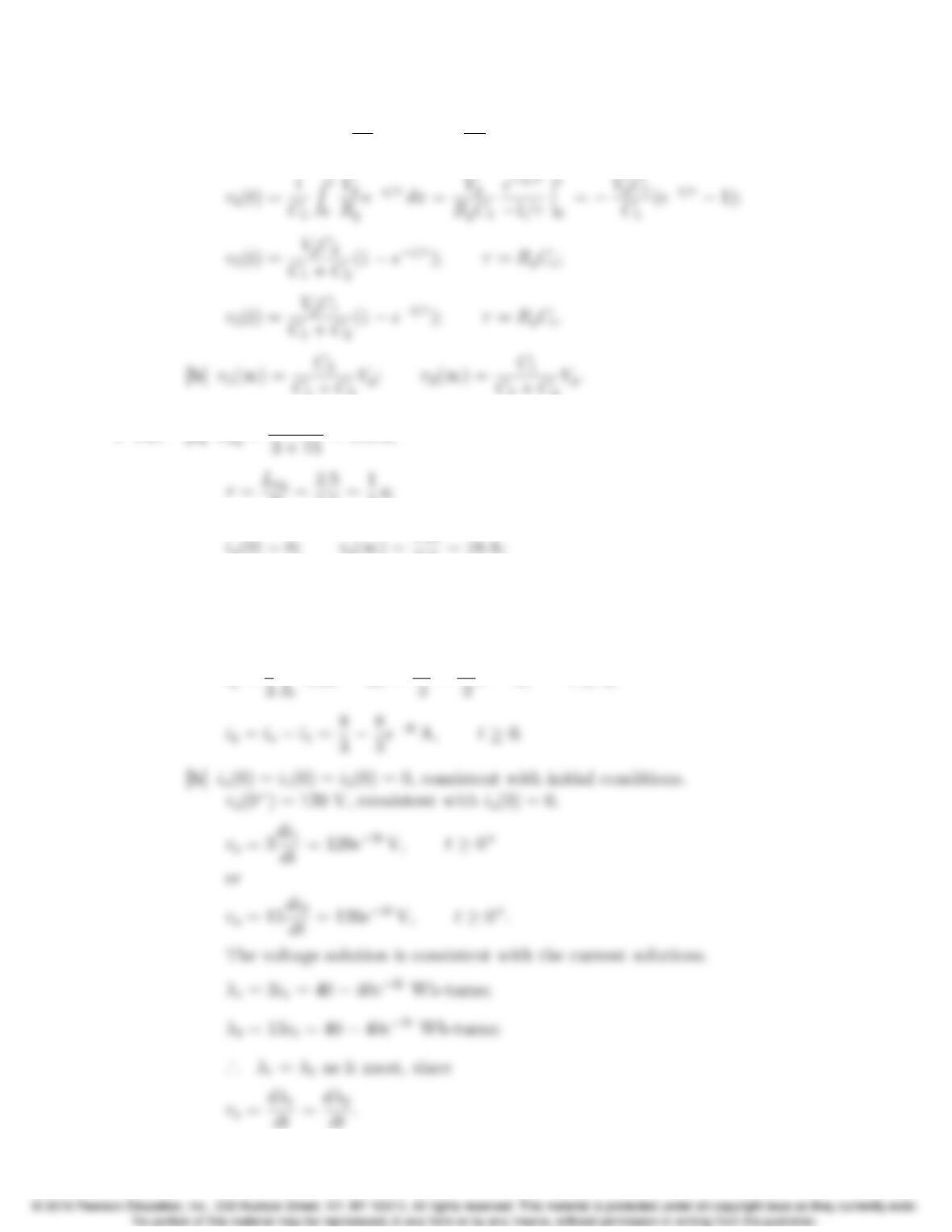
7–60 CHAPTER 7. Response of First-Order RL and RC Circuits
Therefore i=Vg
Rg
e−t/RgCe=Vg
Rg
e−t/τ;τ=RgCe.
P 7.67 [a] Leq =(3)(15)
R=2.5
7.5=1
3s;
7.5= 16 A;
·
.. i
o= 16 16e−3tA,t0.
vo= 120 7.5io= 120e−3tV,t0+;
i1=1