Problems 4–61
[b]
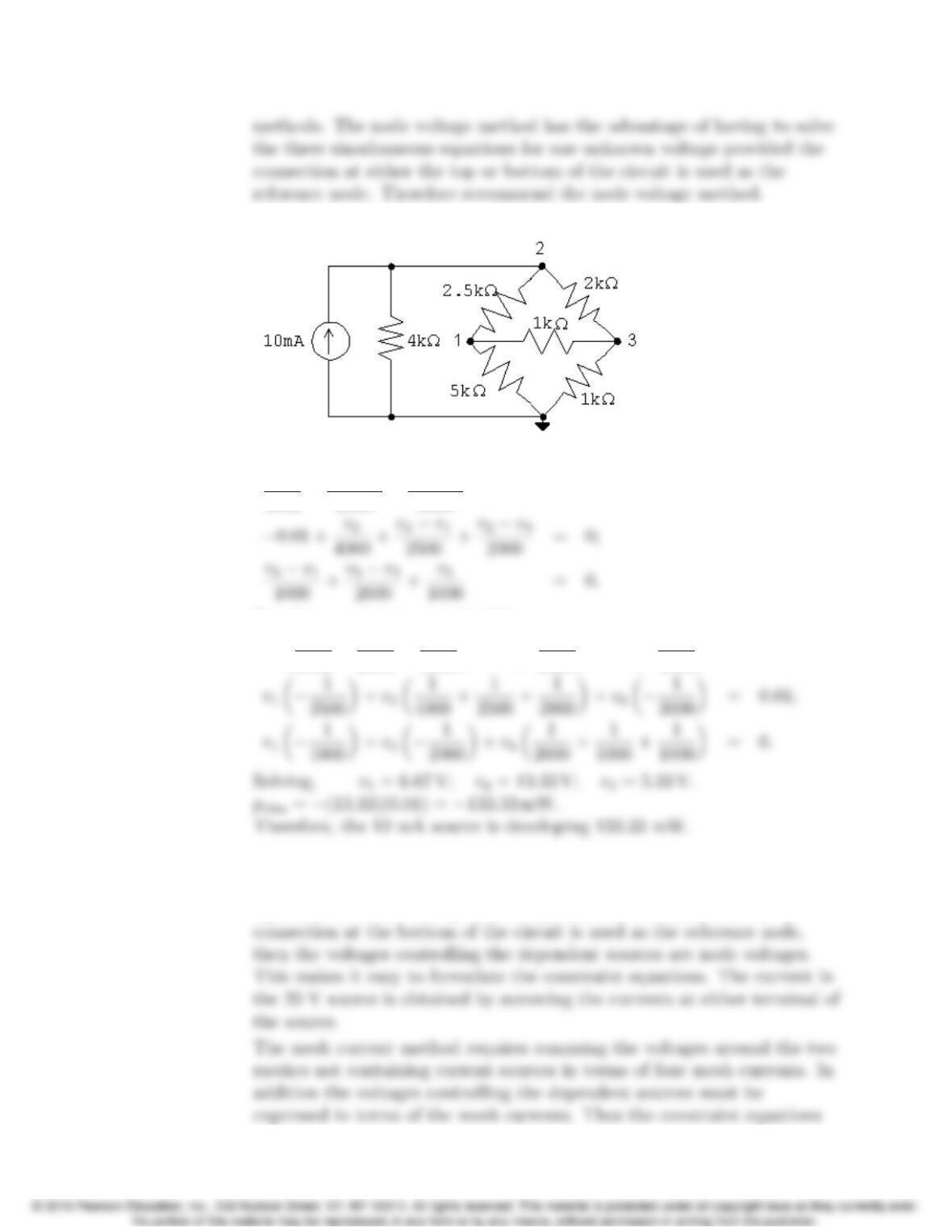
The node voltage equations are:
v1
5000 +v1v2
2500 +v1v3
1000 =0;
Put the equations in standard form:
v1✓1
5000 +1
2500 +1
1000◆+v2✓1
2500◆+v3✓1
1000◆=0;
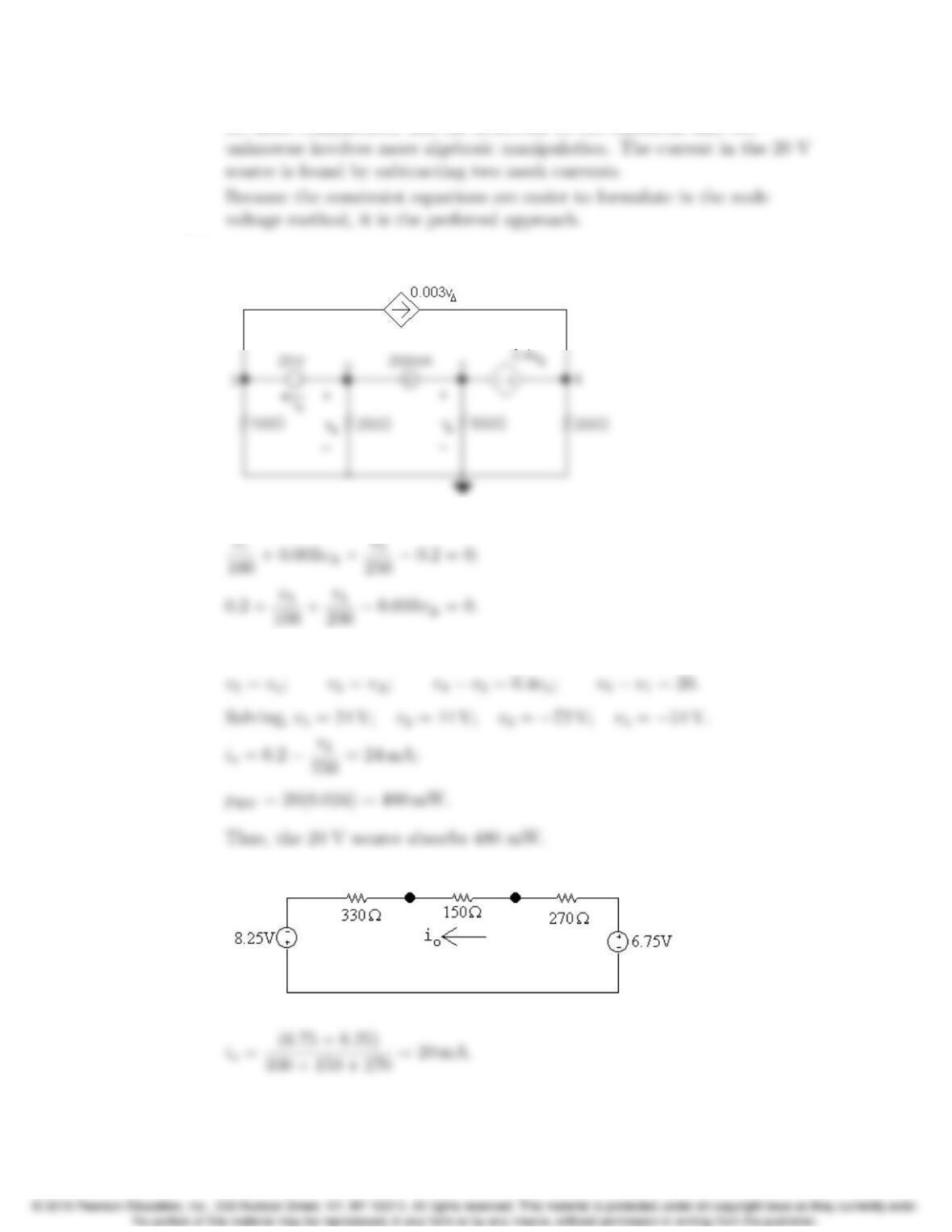
P 4.58 [a] The node voltage method requires summing the currents at two
supernodes in terms of four node voltages and using two constraint
equations to reduce the system of equations to two unknowns. If the
4–62 CHAPTER 4. Techniques of Circuit Analysis
are more complicated, and the reduction to two equations and two
[b]
Node voltage equations:
Constraints:
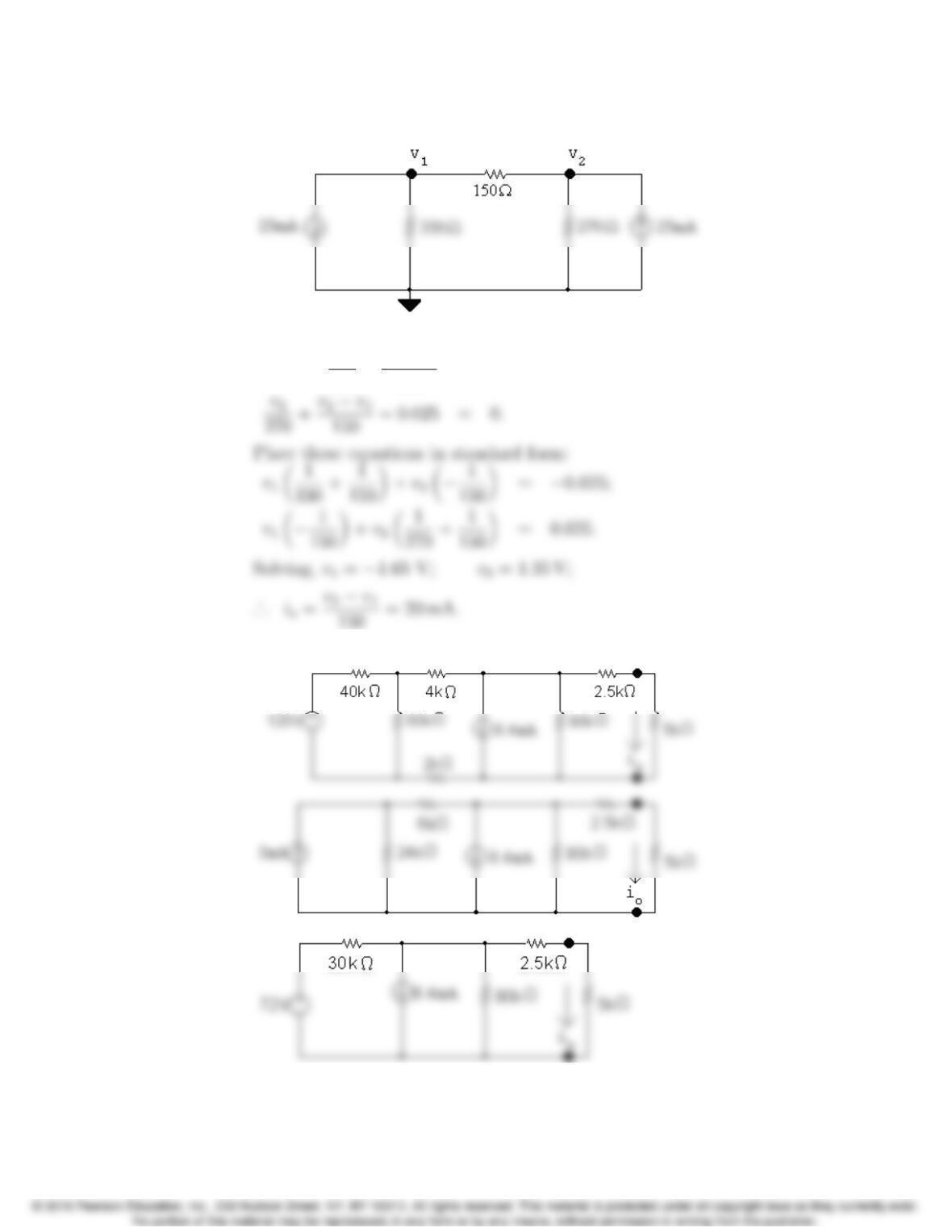
P 4.59 [a] Apply source transformations to both current sources to get
Problems 4–63
[b]
The node voltage equations:
0.025 + v1
330 +v1v2
150 =0;
P 4.60 [a]
4–64 CHAPTER 4. Techniques of Circuit Analysis
[b]
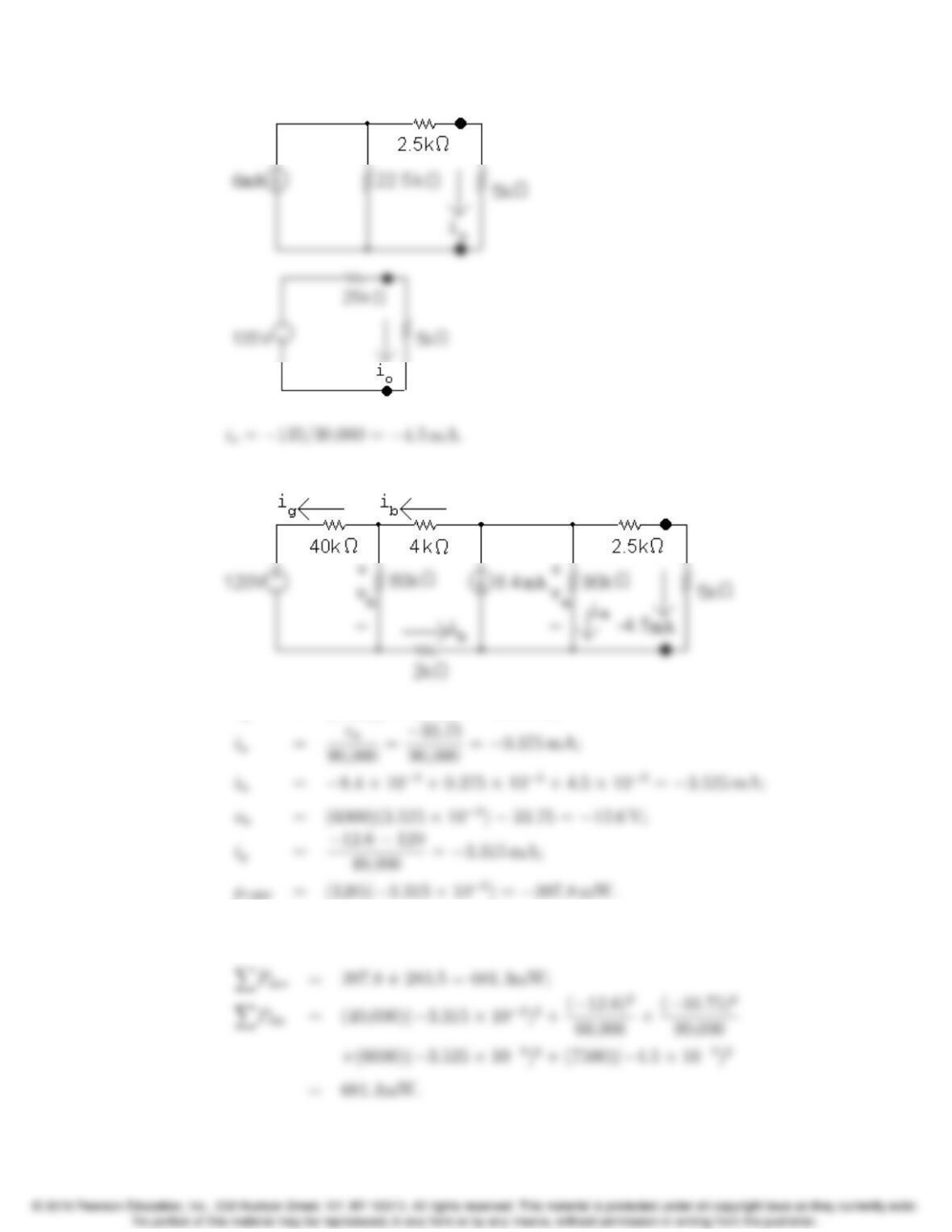
va= (7500)(0.0045) = 33.75 V;
Check:
p8.4mA =(33.75)(8.4⇥10−3)=283.5mW;
Problems 4–65
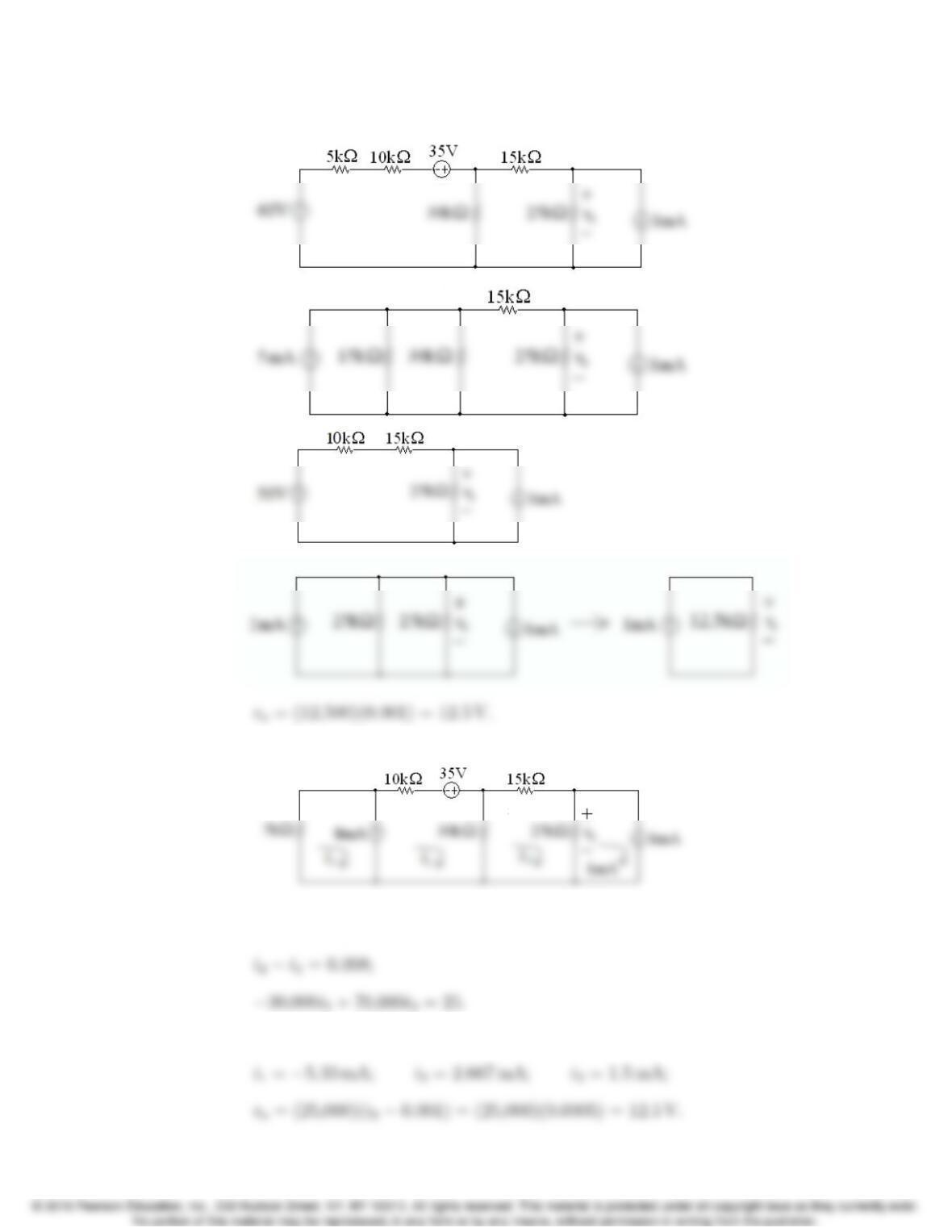
P 4.61 [a]
[b]
5000i1+40,000i230,000i3= 35;
Solving,
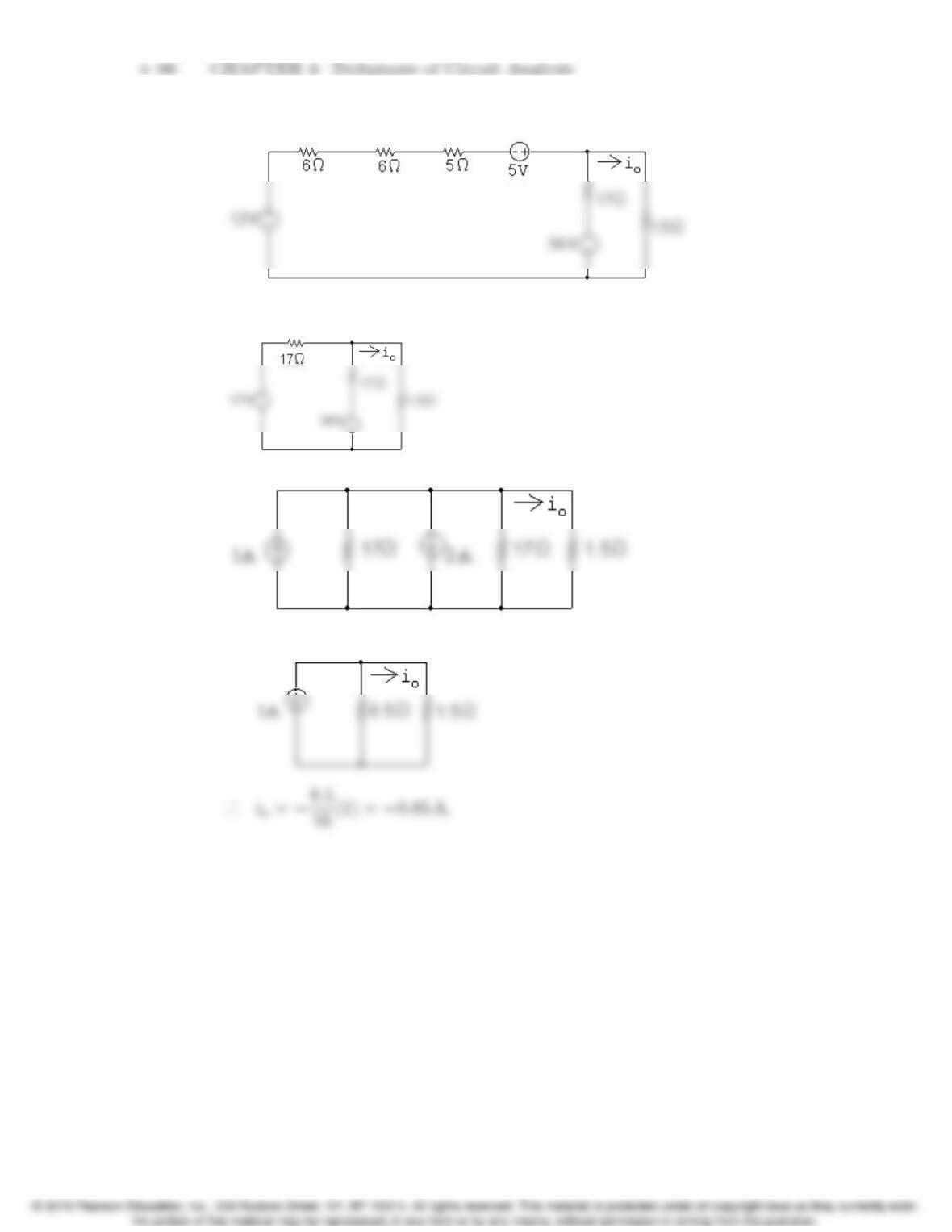
P 4.62 [a] Applying a source transformation to each current source yields
Now combine the 12 V and 5 V sources into a single voltage source and
the 6 Ω, 6 Ωand 5 Ωresistors into a single resistor to get
Now use a source transformation on each voltage source, thus
which can be reduced to
Problems 4–67
[b]
34ia17ib= 12 + 5 + 34 = 51;
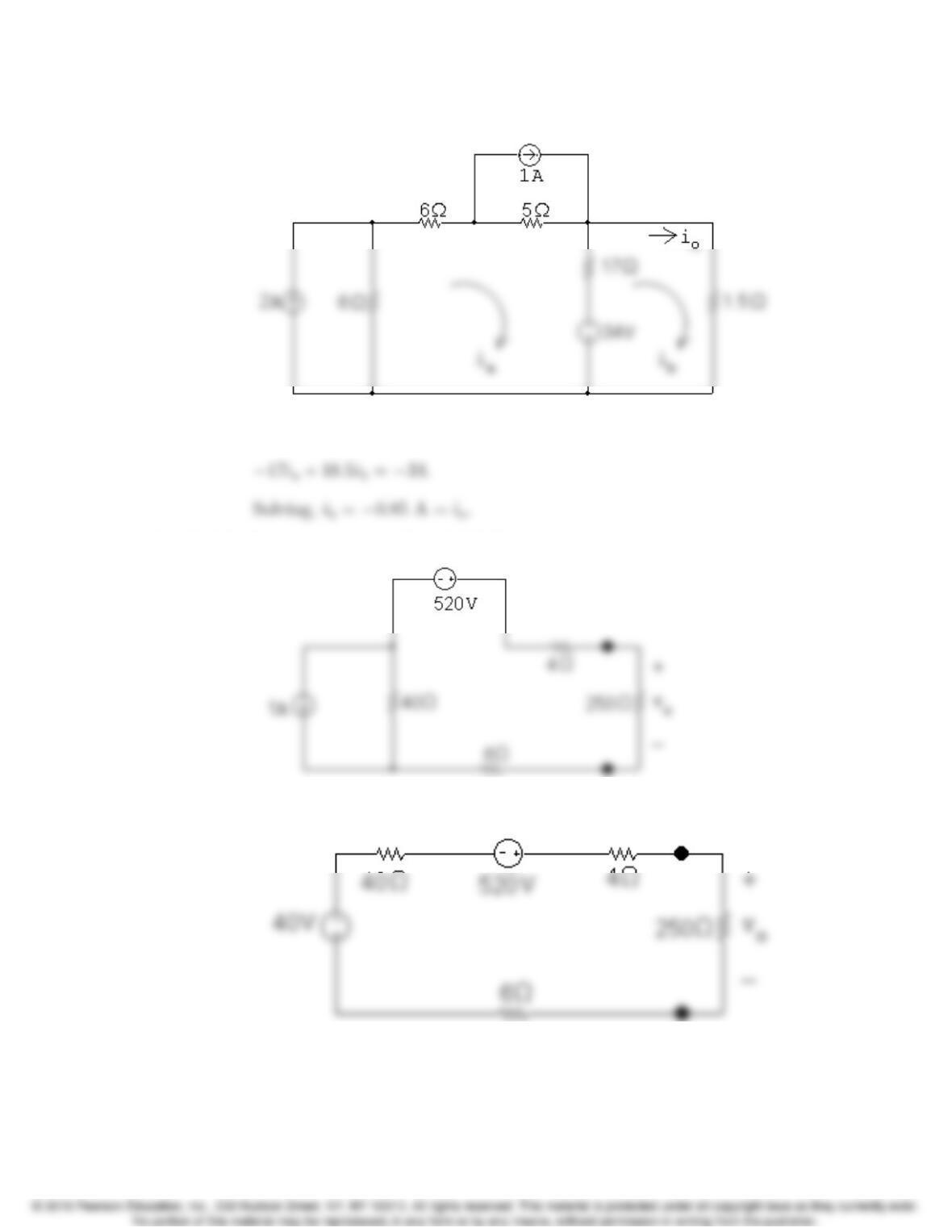
P 4.63 [a] First remove the 16 Ωand 260 Ωresistors:
Next use a source transformation to convert the 1 A current source and
40 Ωresistor:
which simplifies to
4–68 CHAPTER 4. Techniques of Circuit Analysis
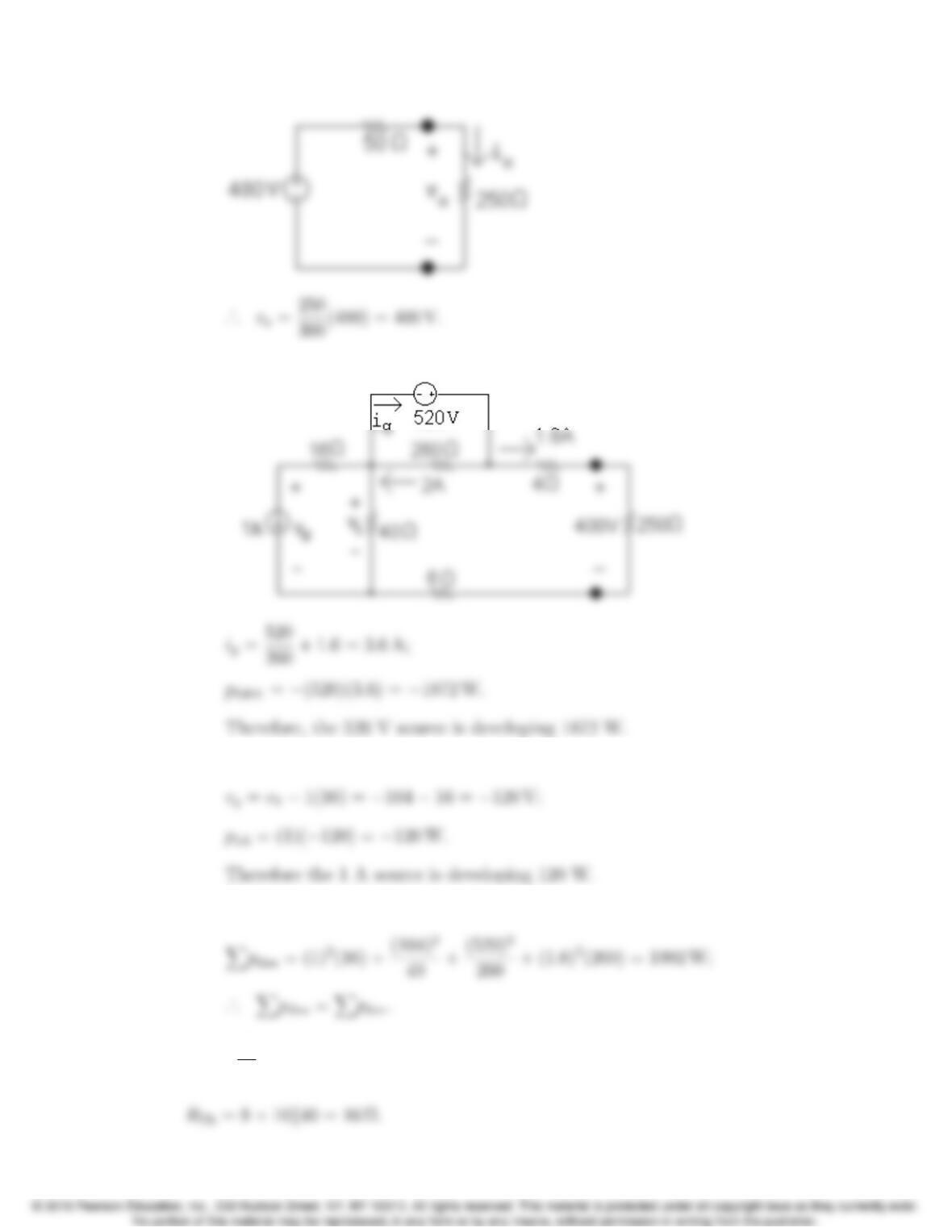
[b] Return to the original circuit with vo= 400 V:
[c] v1=520 + 1.6(4 + 250 + 6) = 104 V;
[d] Xpdev = 1872 + 120 = 1992 W;
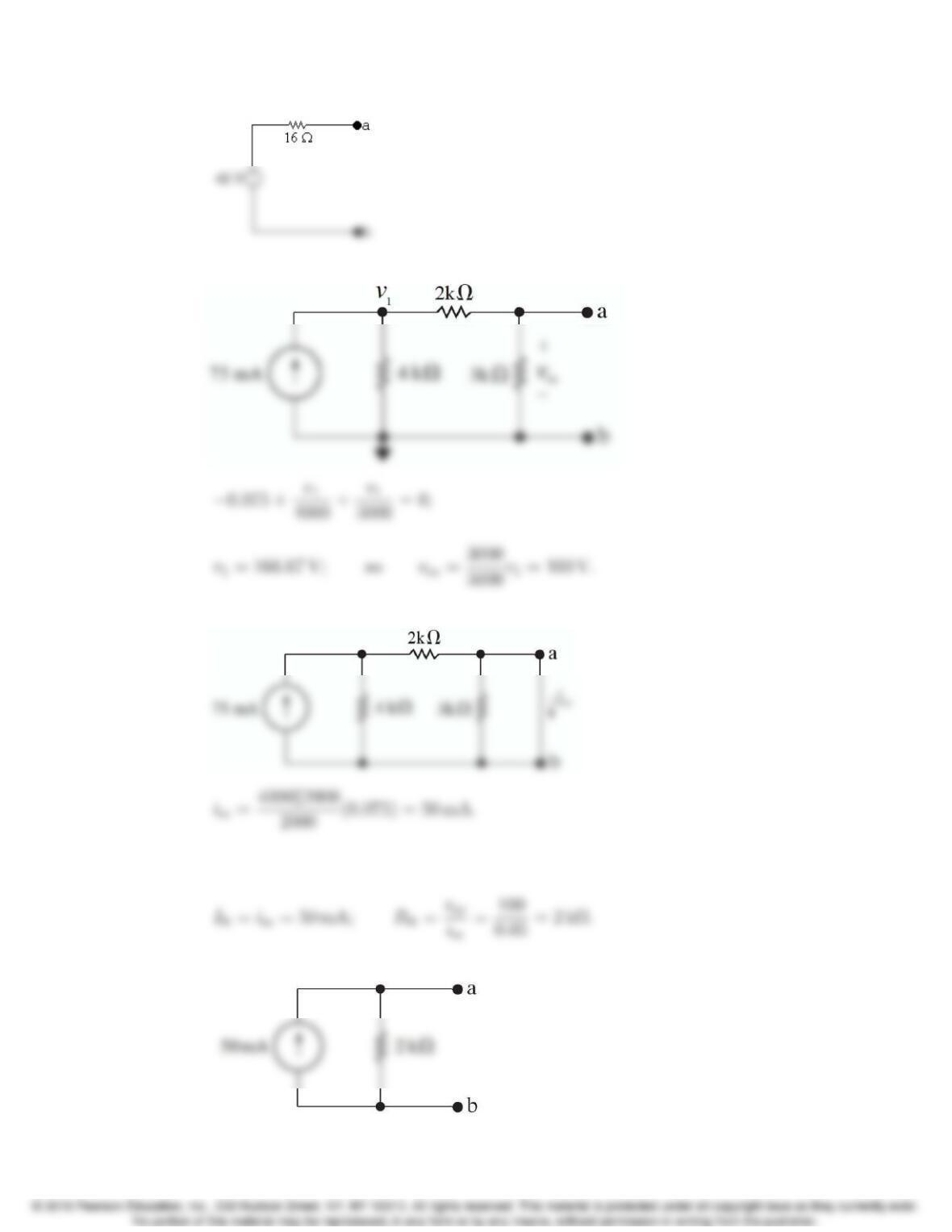
P 4.64 vTh =40
50(60) = 48 V;
Problems 4–69
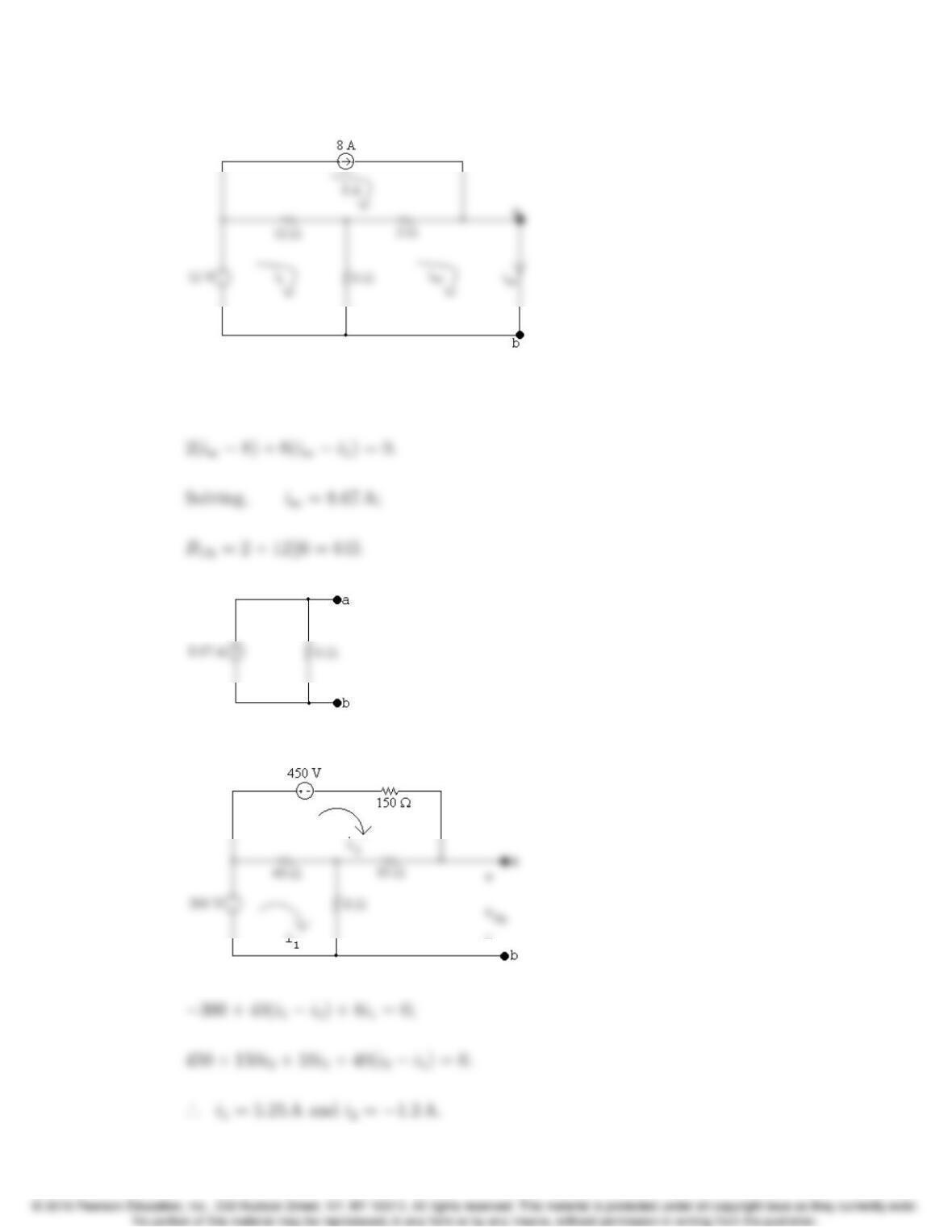
P 4.65 Find the open-circuit voltage:
Find the short-circuit current:
Thus,
4–70 CHAPTER 4. Techniques of Circuit Analysis
P 4.66
12 + 12(i18) + 6(i1isc)=0;
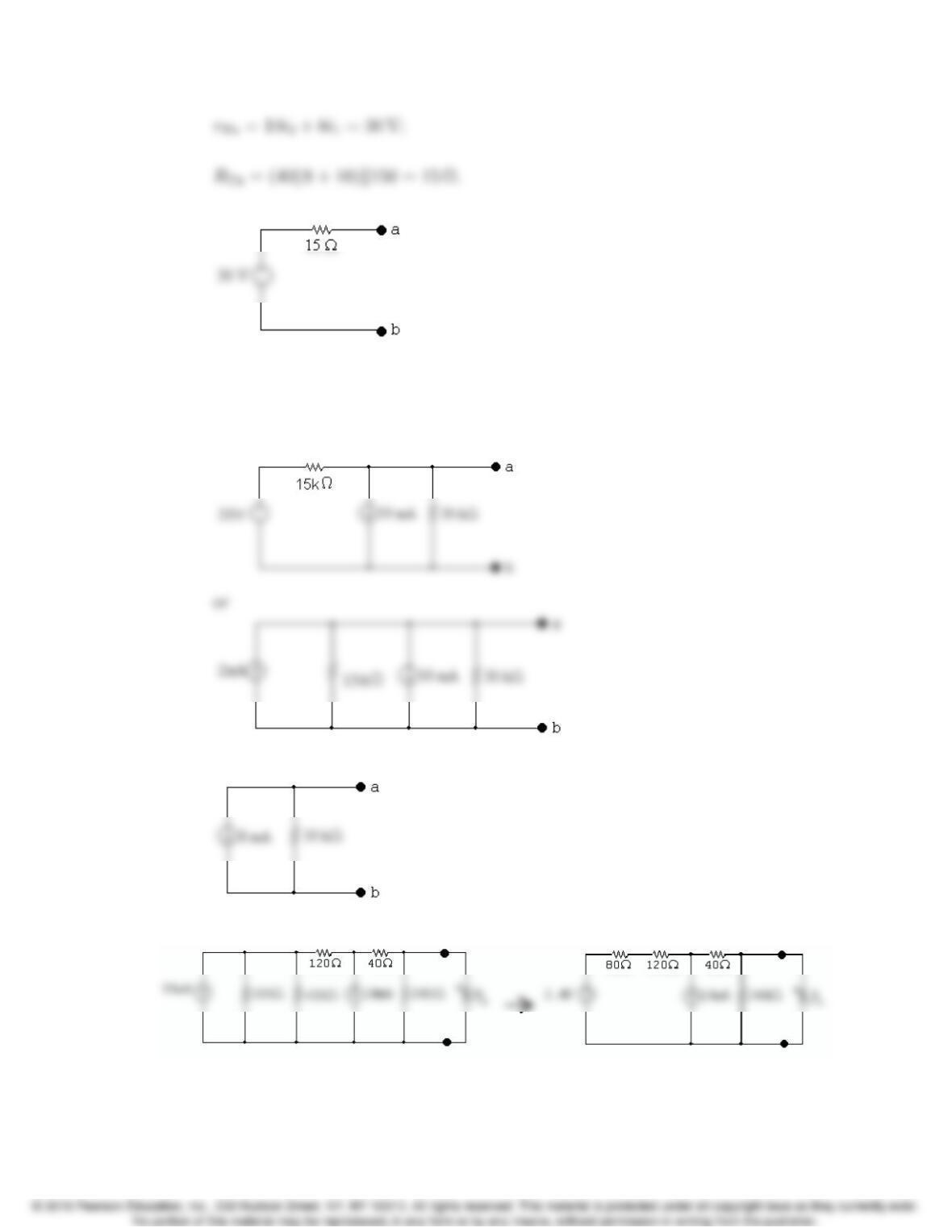
P 4.67 After making a source transformation the circuit becomes
Problems 4–71
P 4.68 First we make the observation that the 8 mA current source and the 20 kΩ
resistor will have no influence on the behavior of the circuit with respect to
the terminals a,b. This follows because they are in parallel with an ideal
voltage source. Hence our circuit can be simplified to
Therefore the Norton equivalent is
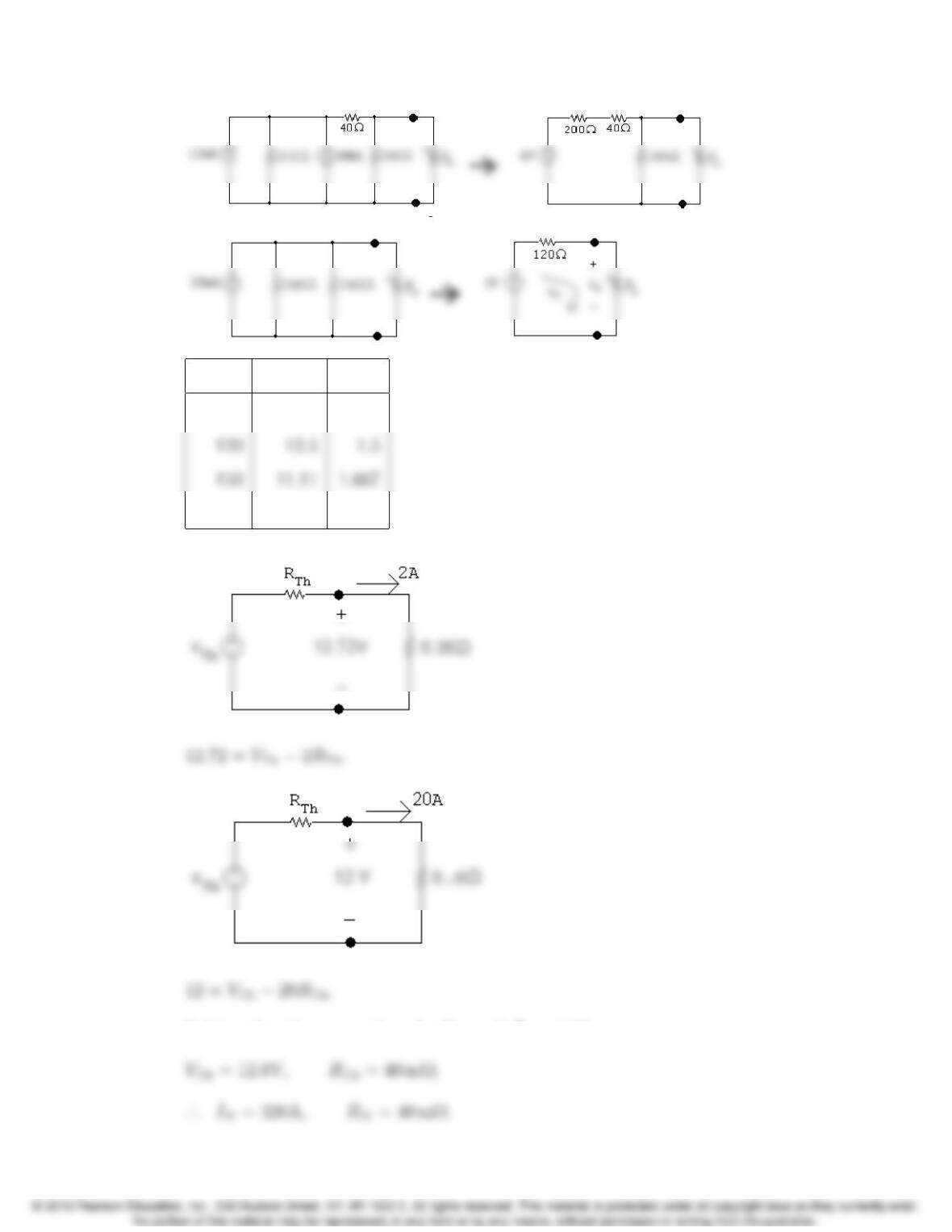
P 4.69 First, find the Th´evenin equivalent with respect to Ro.
4–72 CHAPTER 4. Techniques of Circuit Analysis
Ro(Ω)io(mA) vo(V)
100 13.64 1.364
180 10 1.8
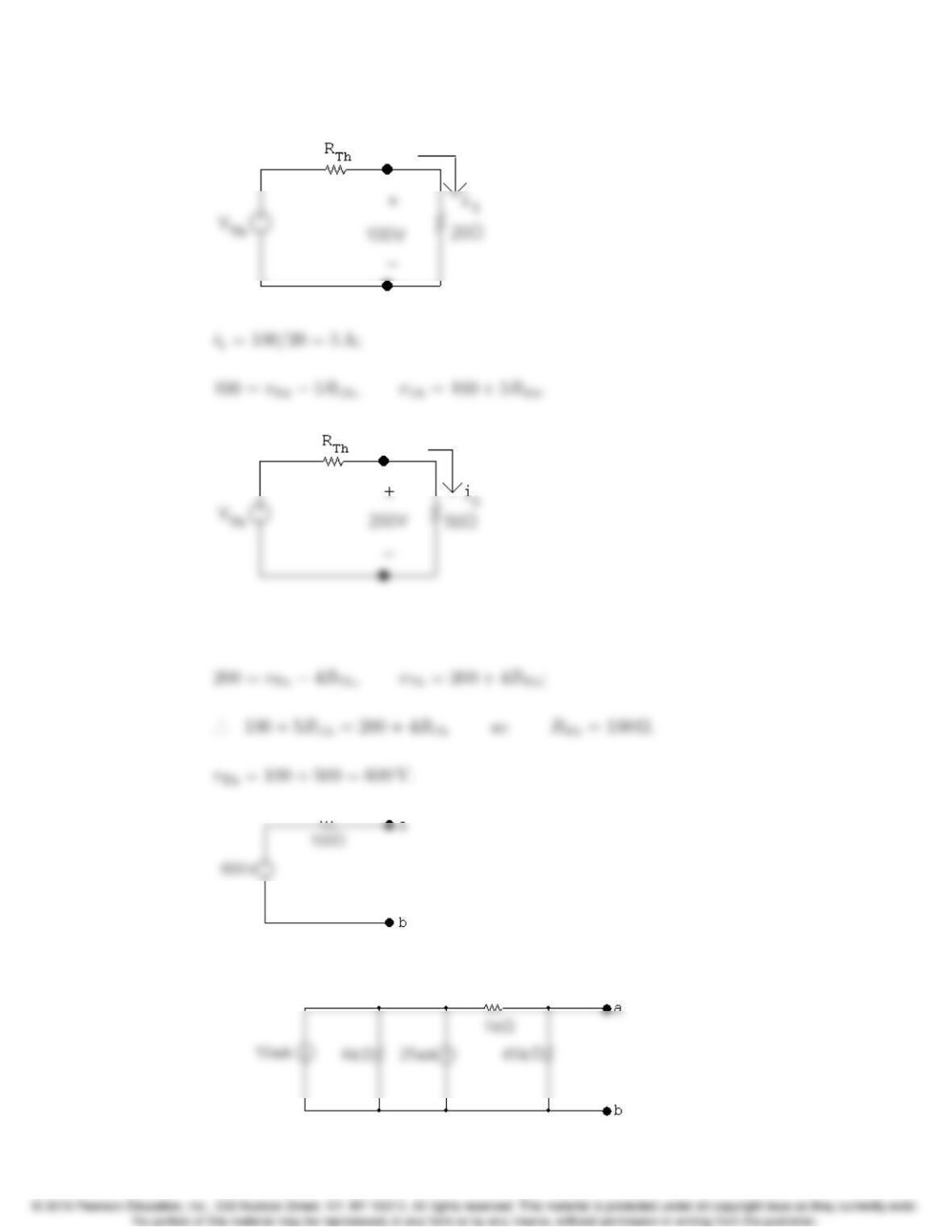
P 4.70
Solving the above equations for VTh and RTh yields
Problems 4–73
P 4.71
i2= 200/50 = 4 A;
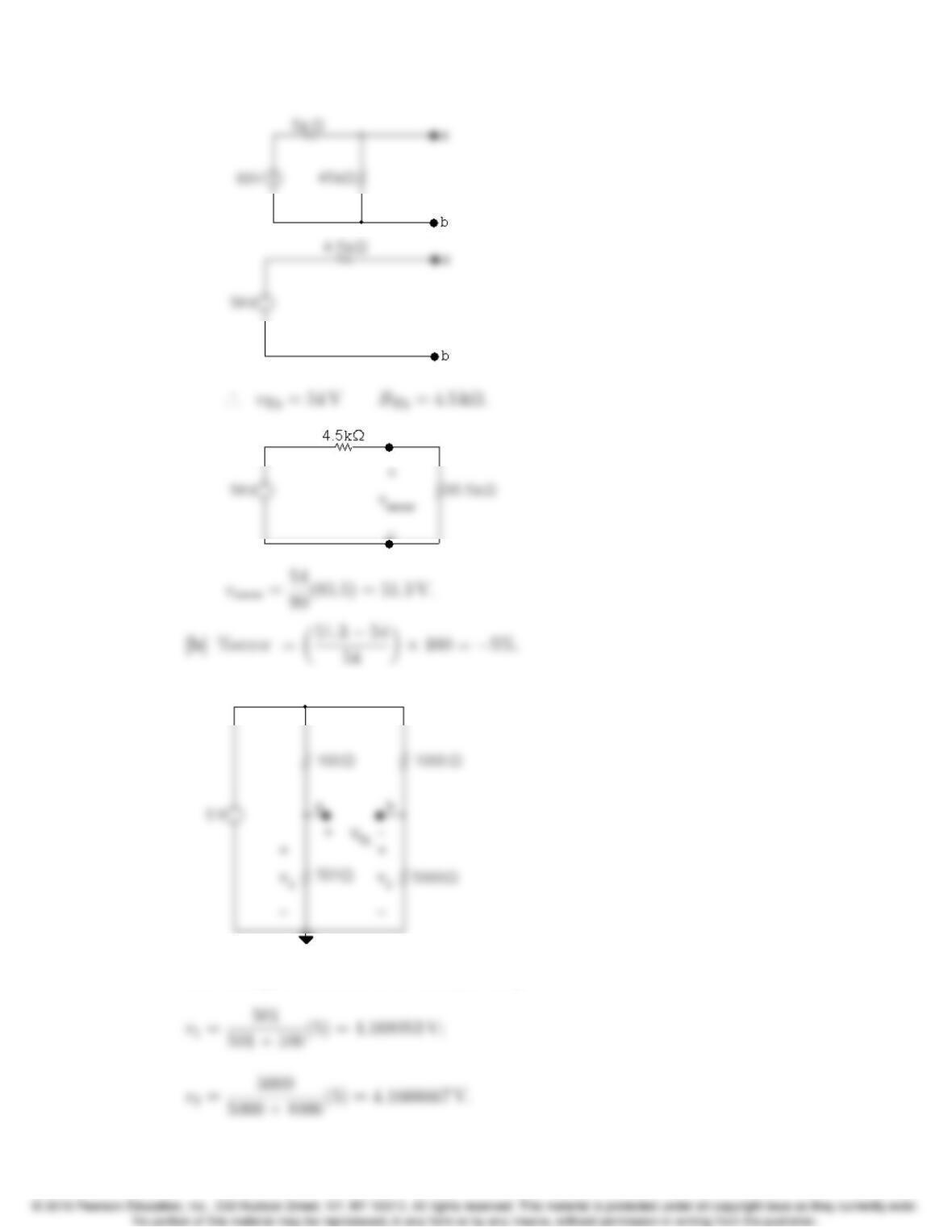
P 4.72 [a] First, find the Th´evenin equivalent with respect to a,b using a succession
of source transformations.
4–74 CHAPTER 4. Techniques of Circuit Analysis
P 4.73
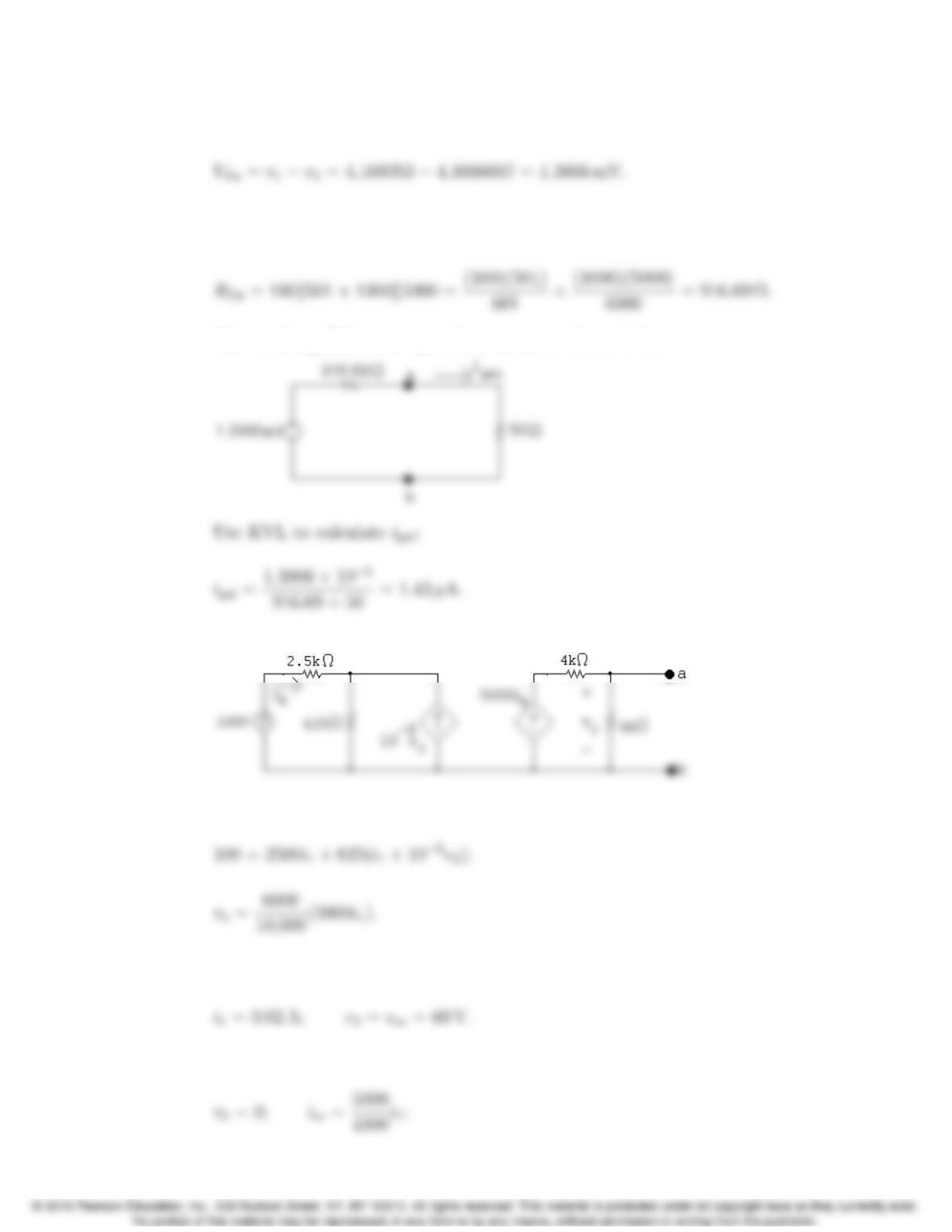
Use voltage division to calculate v1and v2:
Problems 4–75
Now calculate VTh:
Calculate RTh by removing the voltage source and creating series and parallel
combinations of the resisitors:
The resulting Th´evenin equivalent circuit is shown below:
P 4.74
OPEN CIRCUIT
Solving,
SHORT CIRCUIT
4–76 CHAPTER 4. Techniques of Circuit Analysis
Thus,
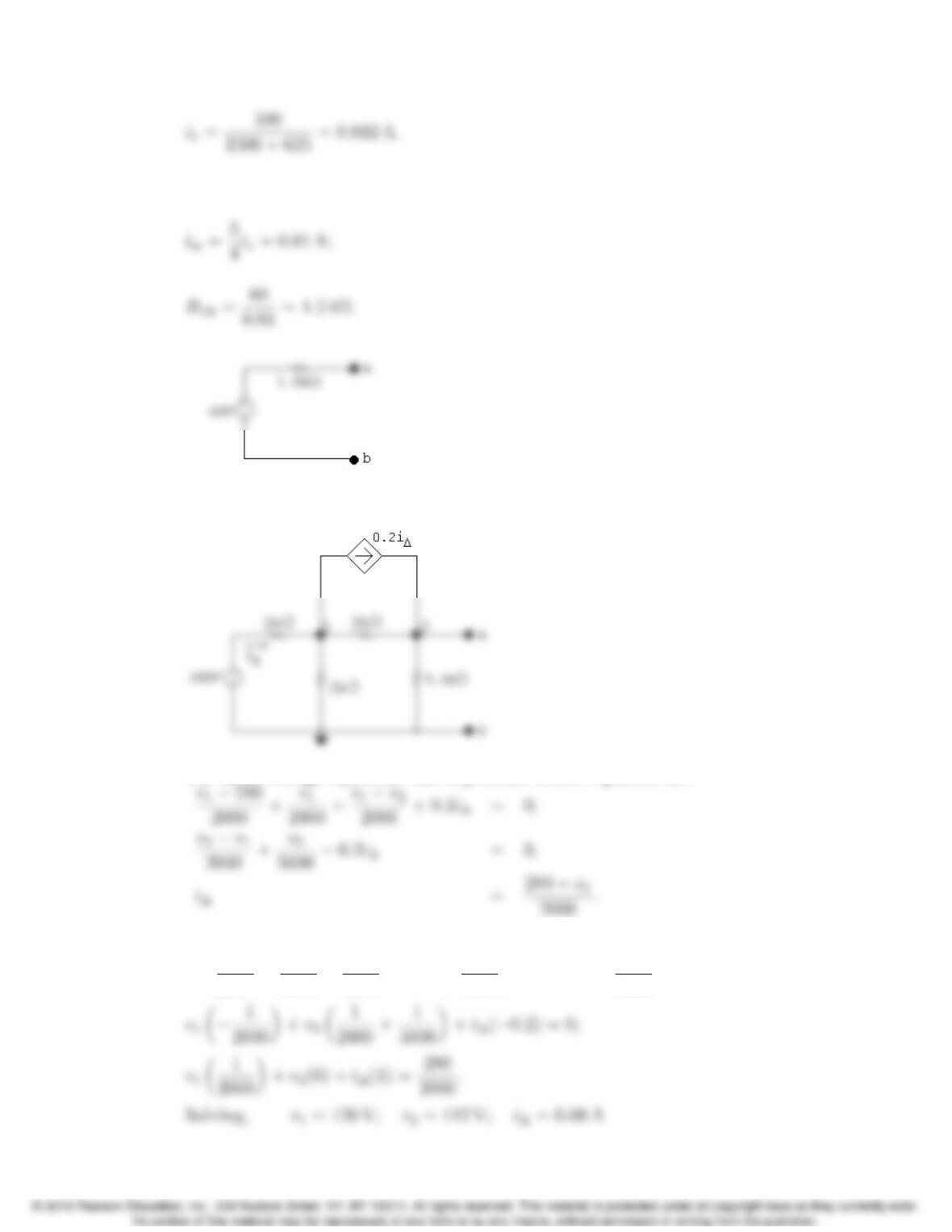
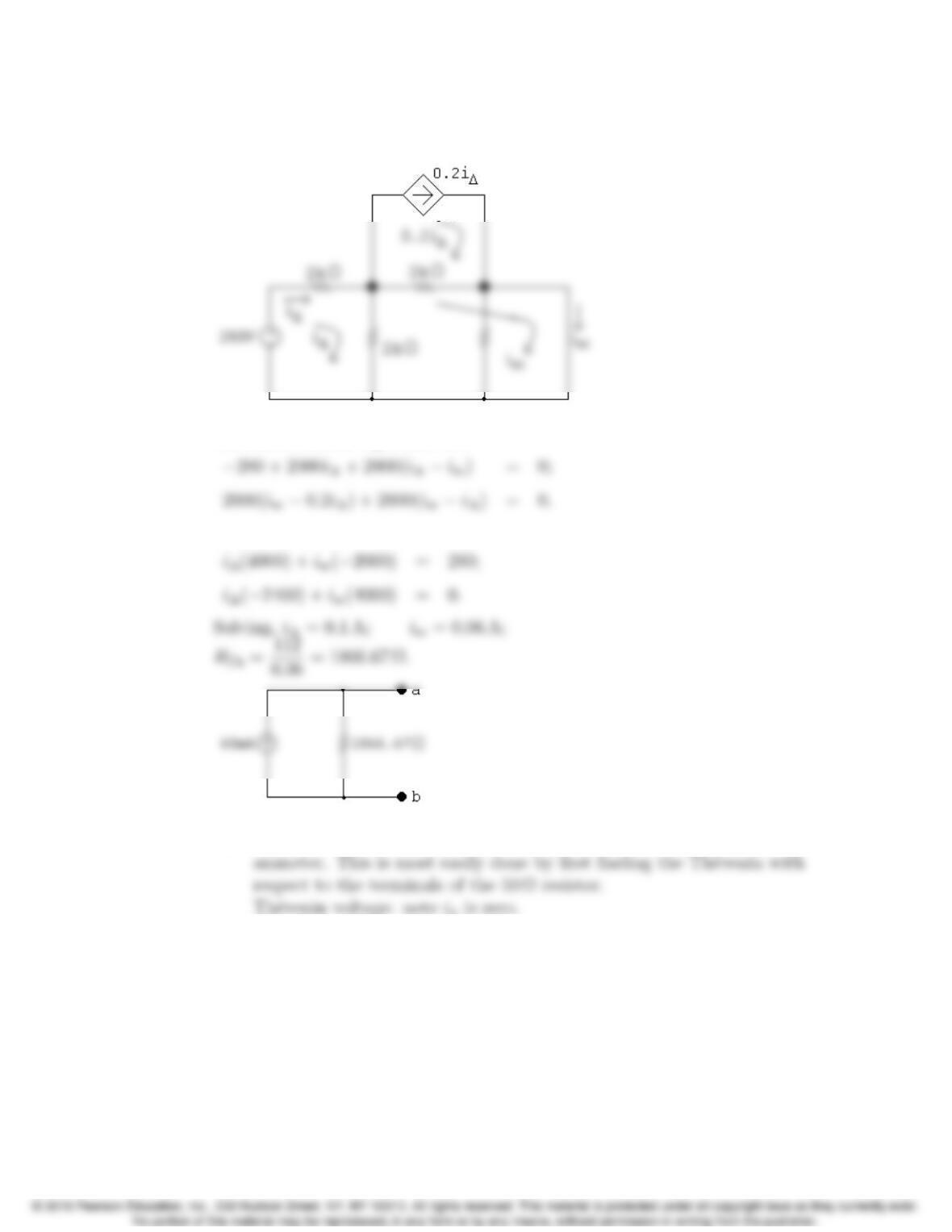
P 4.75
The node voltage equations and dependant source equation are:
In standard form:
v1✓1
2000 +1
2000 +1
2000◆+v2✓1
2000◆+i∆(0.2) = 280
2000;
Problems 4–77
VTh =v2= 112 V.
The mesh current equations are:
Put these equations in standard form:
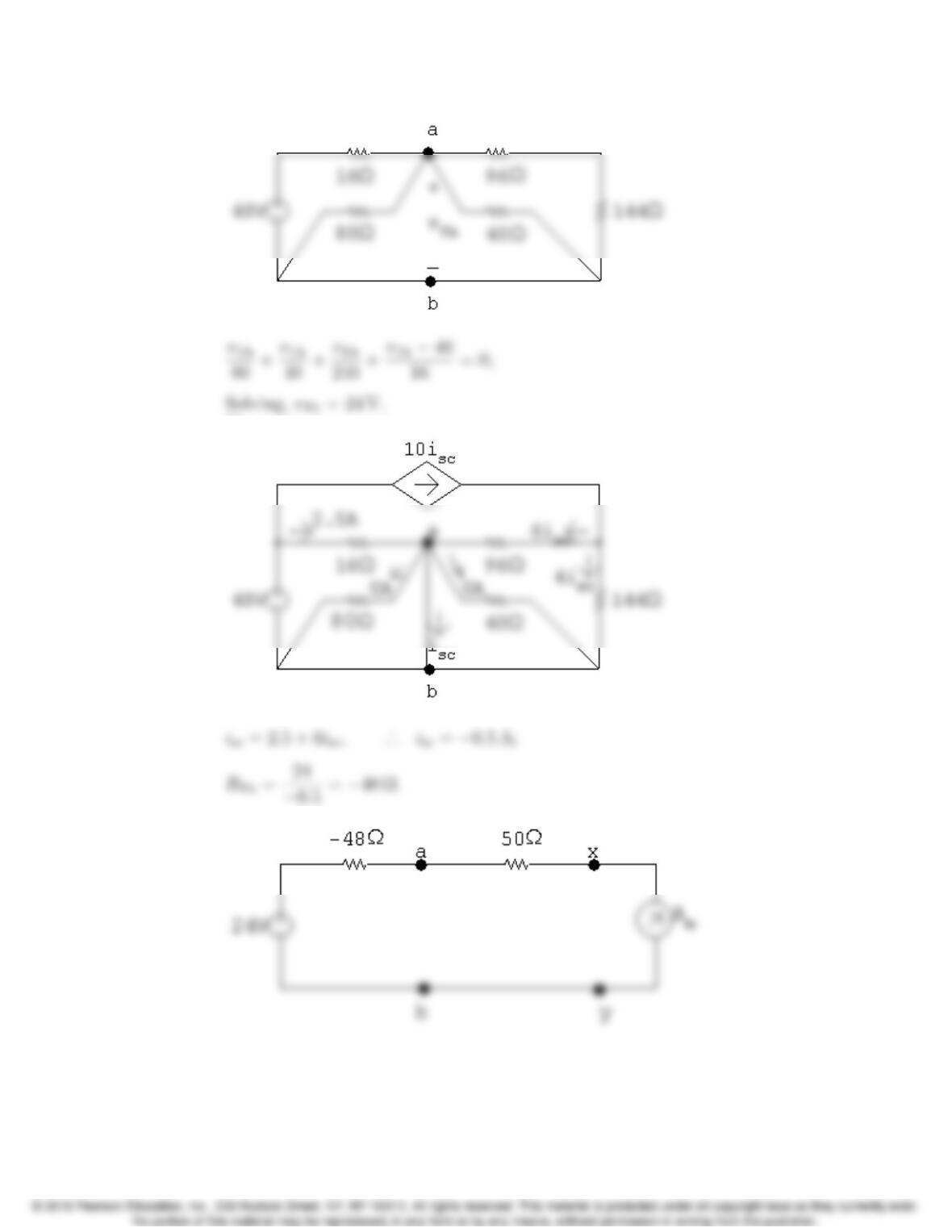
P 4.76 [a] Find the Th´evenin equivalent with respect to the terminals of the
4–78 CHAPTER 4. Techniques of Circuit Analysis
Short-circuit current:
Problems 4–79
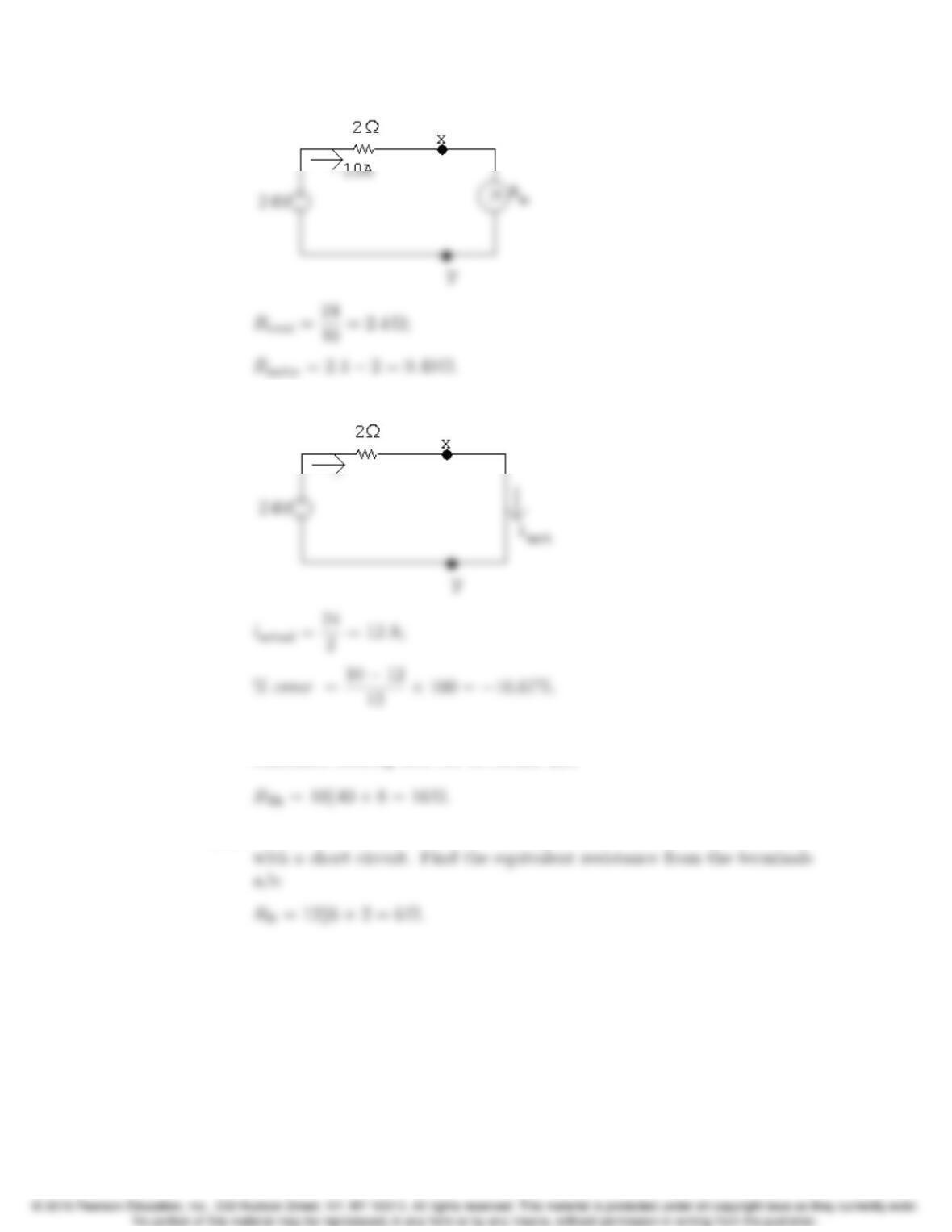
[b] Actual current:
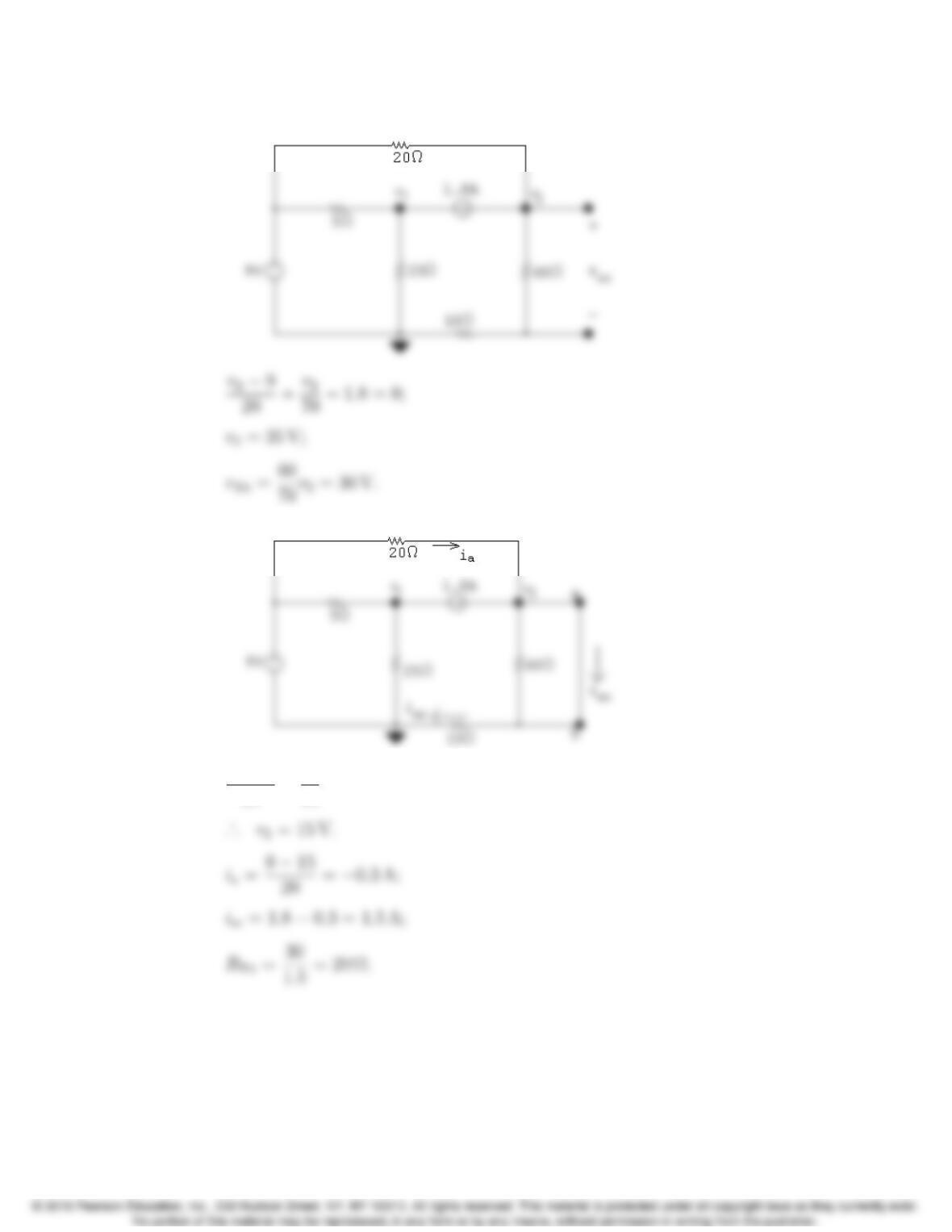
P 4.77 [a] Replace the voltage source with a short circuit and find the equivalent
resistance looking into the terminals a,b:
[b] Replace the current source with an open circuit and the voltage source
4–80 CHAPTER 4. Techniques of Circuit Analysis
P 4.78 [a] Open circuit:
Short circuit:
v29
20 +v2
10 1.8=0;