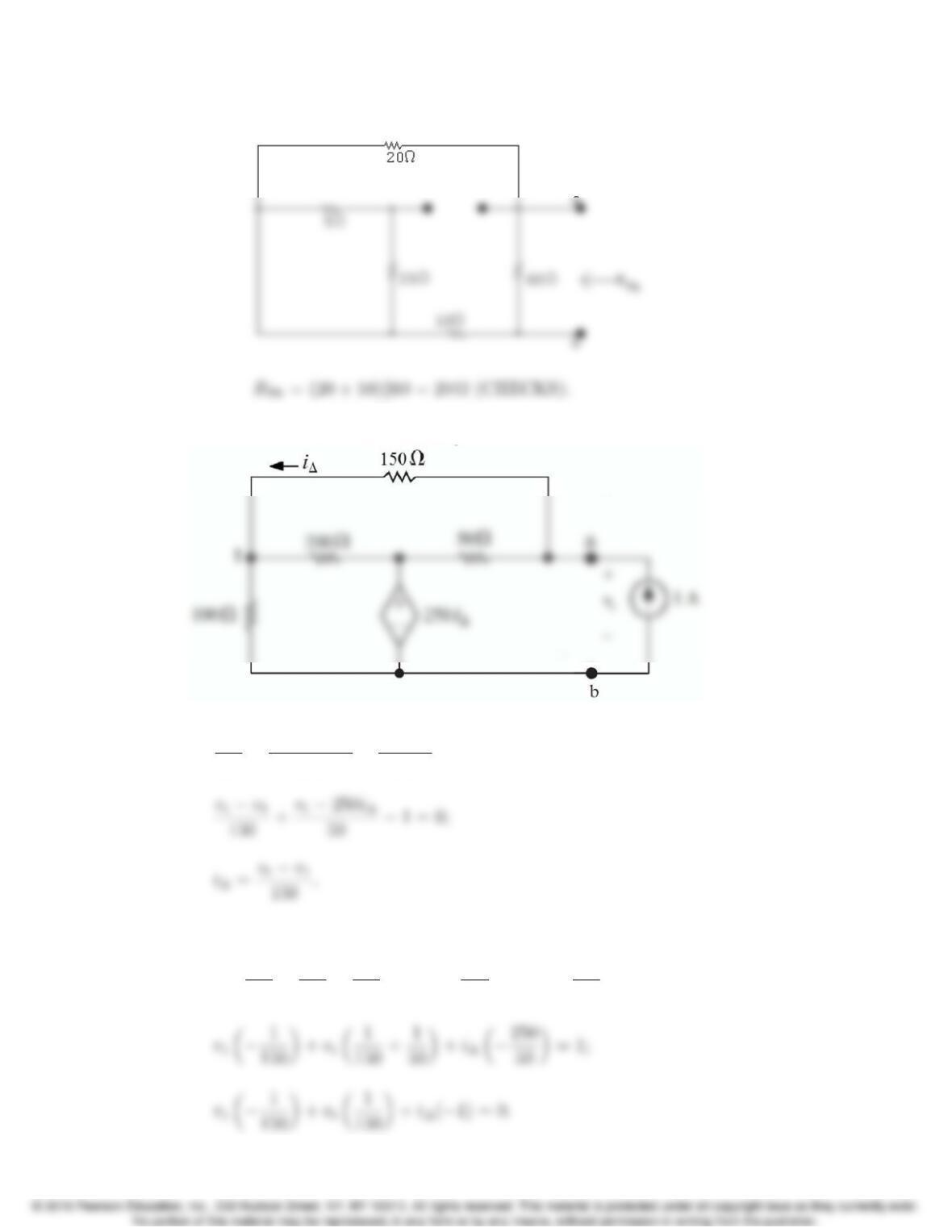
Problems 4–81
[b]
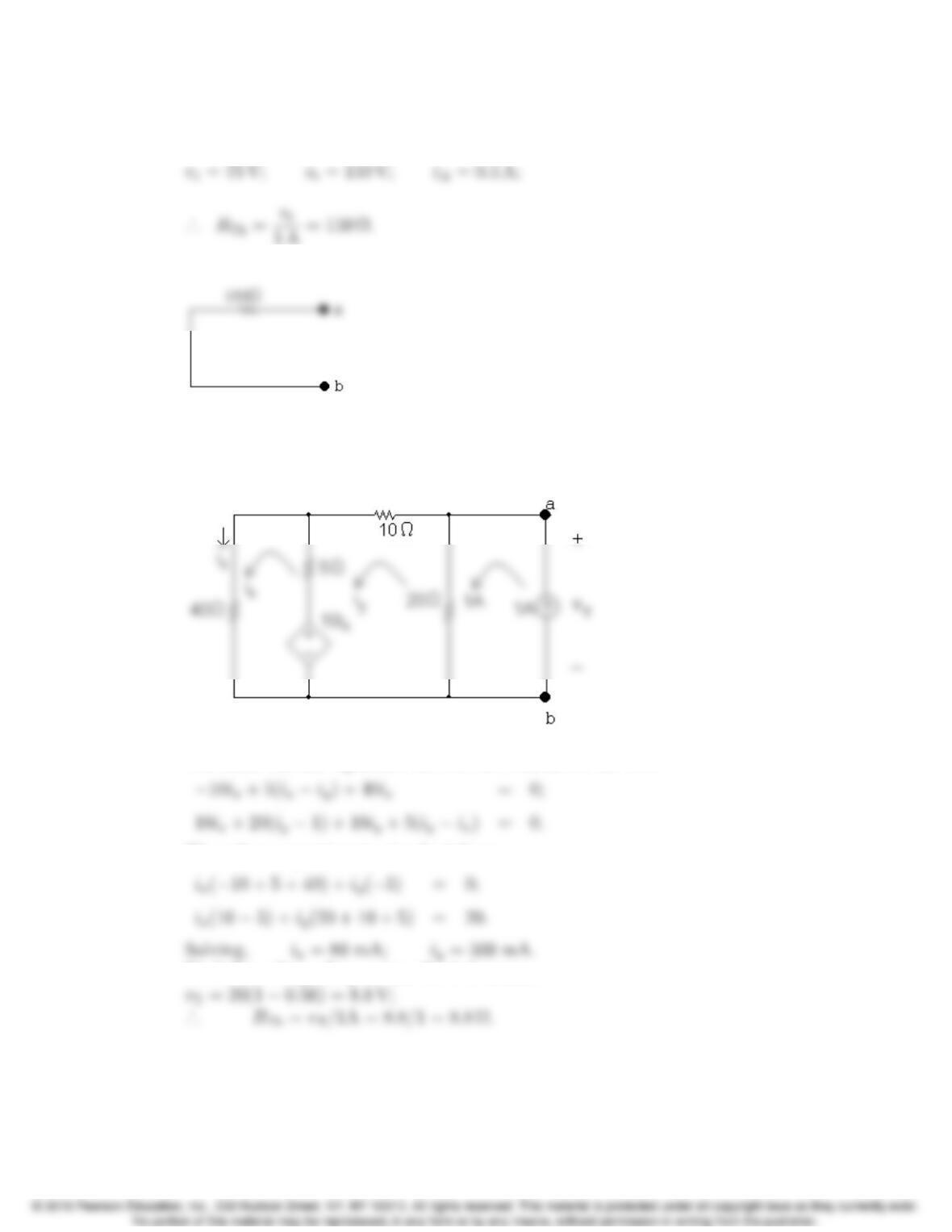
P 4.79 VTh = 0, since circuit contains no independent sources.
v1
100 +v1250i∆
200 +v1vt
150 = 0;
In standard form:
v1✓1
100 +1
200 +1
150◆+vt✓1
150◆+i∆✓250
200◆= 0;
4–82 CHAPTER 4. Techniques of Circuit Analysis
Solving,
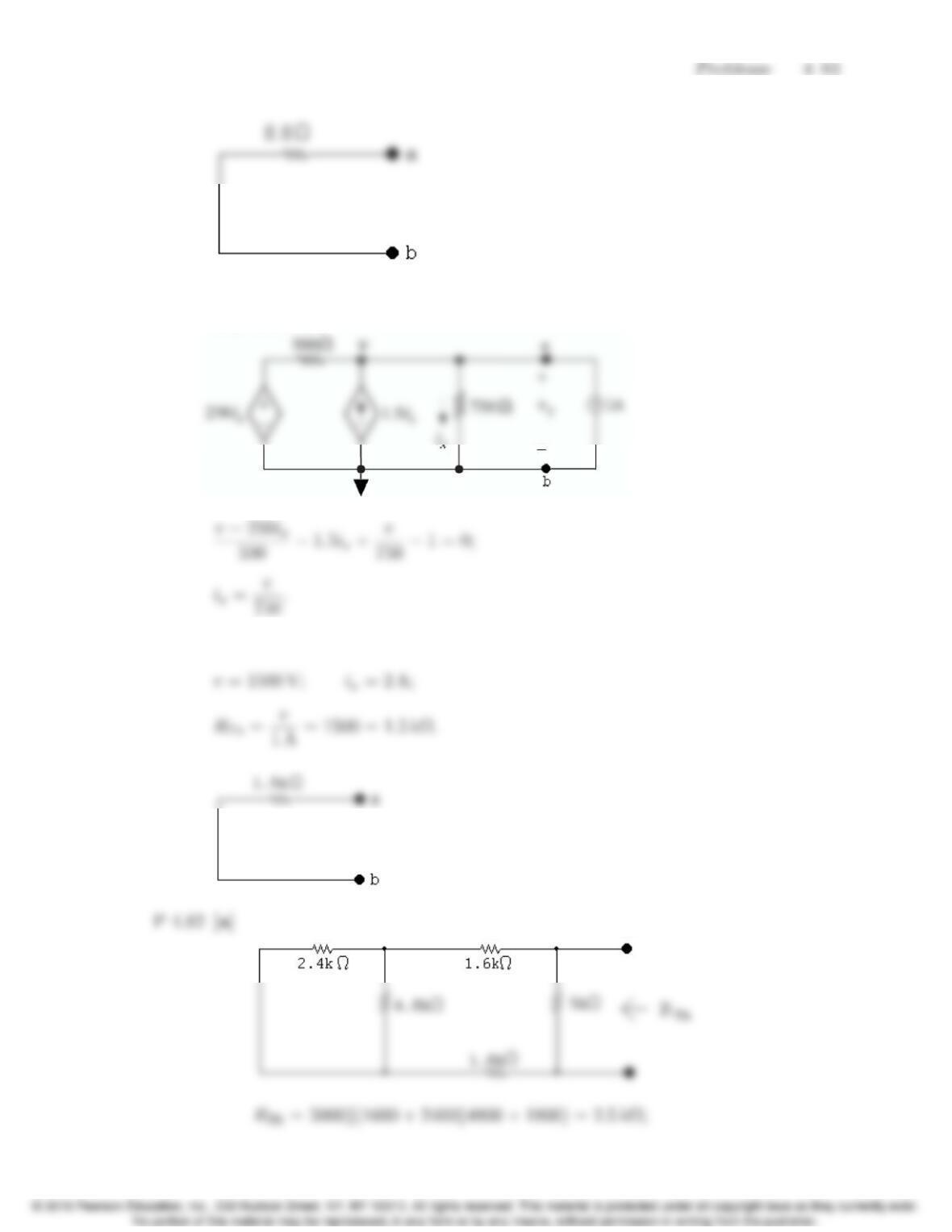
P 4.80 VTh = 0 since there are no independent sources in the circuit. To find RTh,
apply a 1 A test source and calculate the voltage drop across the test source.
Use the mesh current method.
The mesh current equations for the two meshes on the left:
Place these equations in standard form:
Find the voltage drop across the 1 A source:
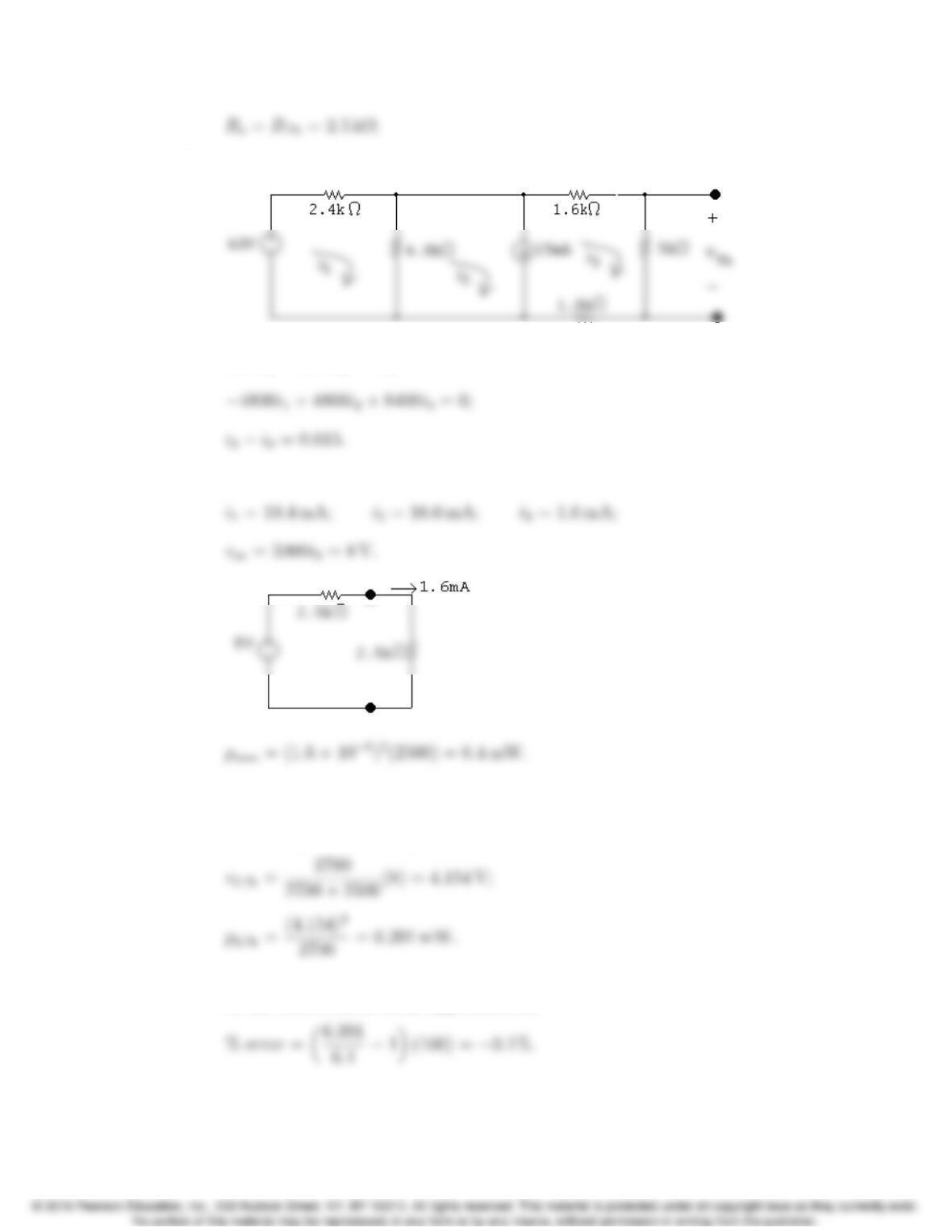
P 4.81 VTh = 0 since there are no independent sources in the circuit. Thus we need
only find RTh.
Solving,
4–84 CHAPTER 4. Techniques of Circuit Analysis
[b]
7200i14800i2= 60;
Solving,
[c] The resistor closest to 2.5 kΩfrom Appendix H has a value of 2.7 kΩ. Use
voltage division to find the voltage drop across this load resistor, and use
the voltage to find the power delivered to it:
The percent error between the maximum power and the power delivered
to the best resistor from Appendix H is
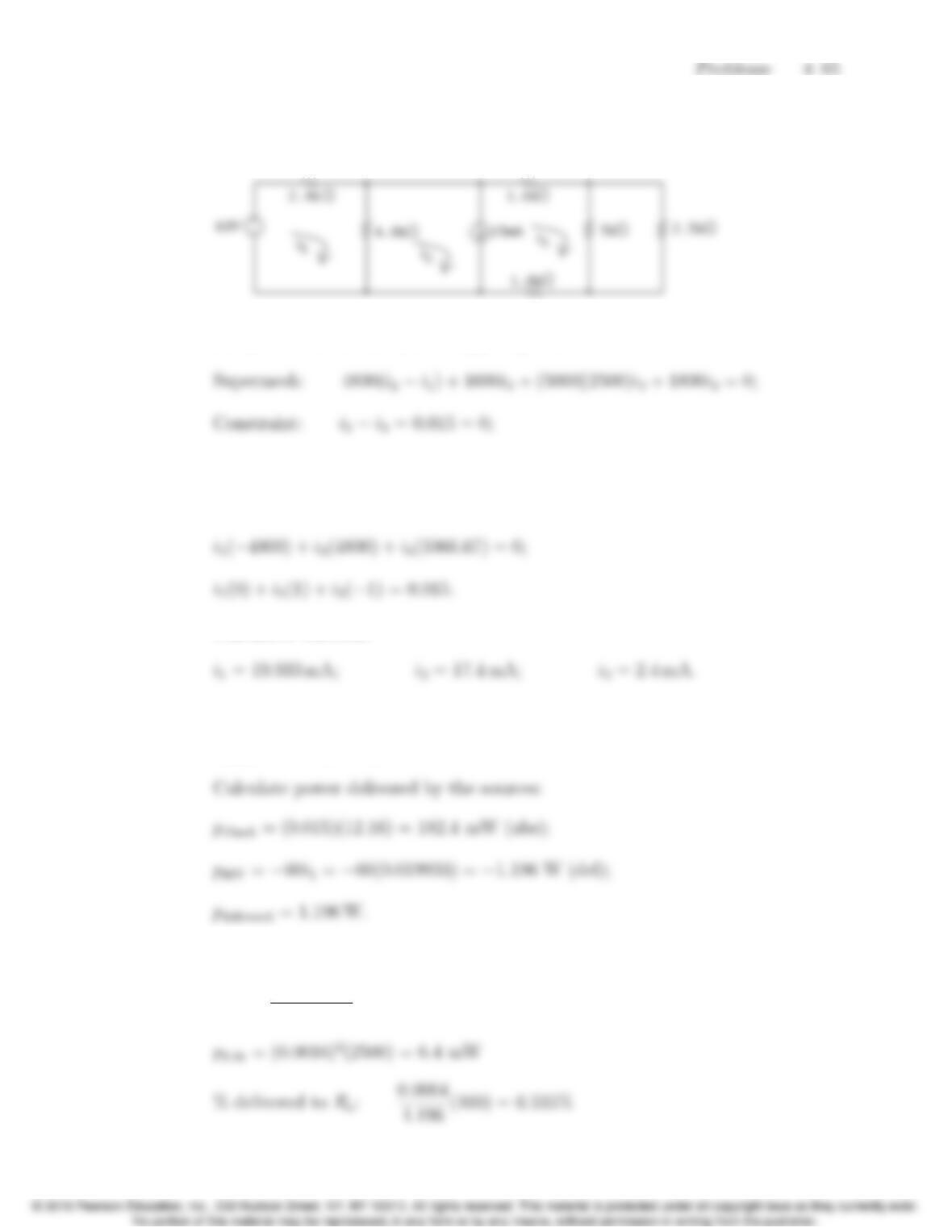
P 4.83 Write KVL equations for the left mesh and the supermesh, place them in
standard form, and solve:
At i1:60 + 2400i1+ 4800(i1i2)=0;
Standard form:
i1(7200) + i2(4800) + i3(0) = 60;
Calculator solution:
Calculate voltage across the current source:
v15mA = 4800(i1i2)=12.16 V.
Calculate power absorbed by the 2.5 kΩresistor and the percentage power:
i2.5k =5000k2500
2500 i3=1.6 mA
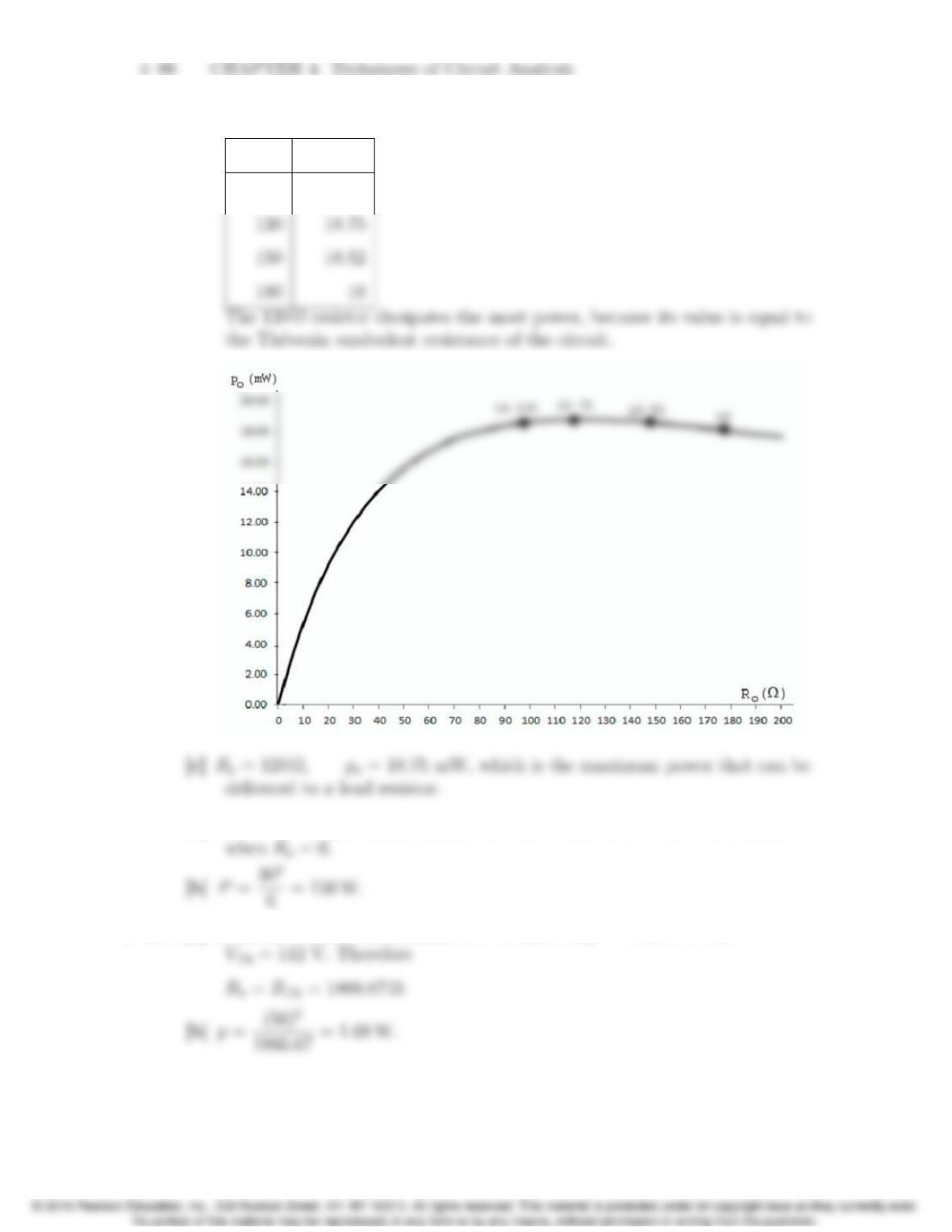
P 4.84 [a] From the solution to Problem 4.69 we have
Ro(Ω)po(mW)
100 18.595
[b]
P 4.85 [a] Since 0 Ro1maximum power will be delivered to the 6 Ωresistor
P 4.86 [a] From the solution of Problem 4.75 we have RTh = 1866.67 Ωand
Problems 4–87
[c]
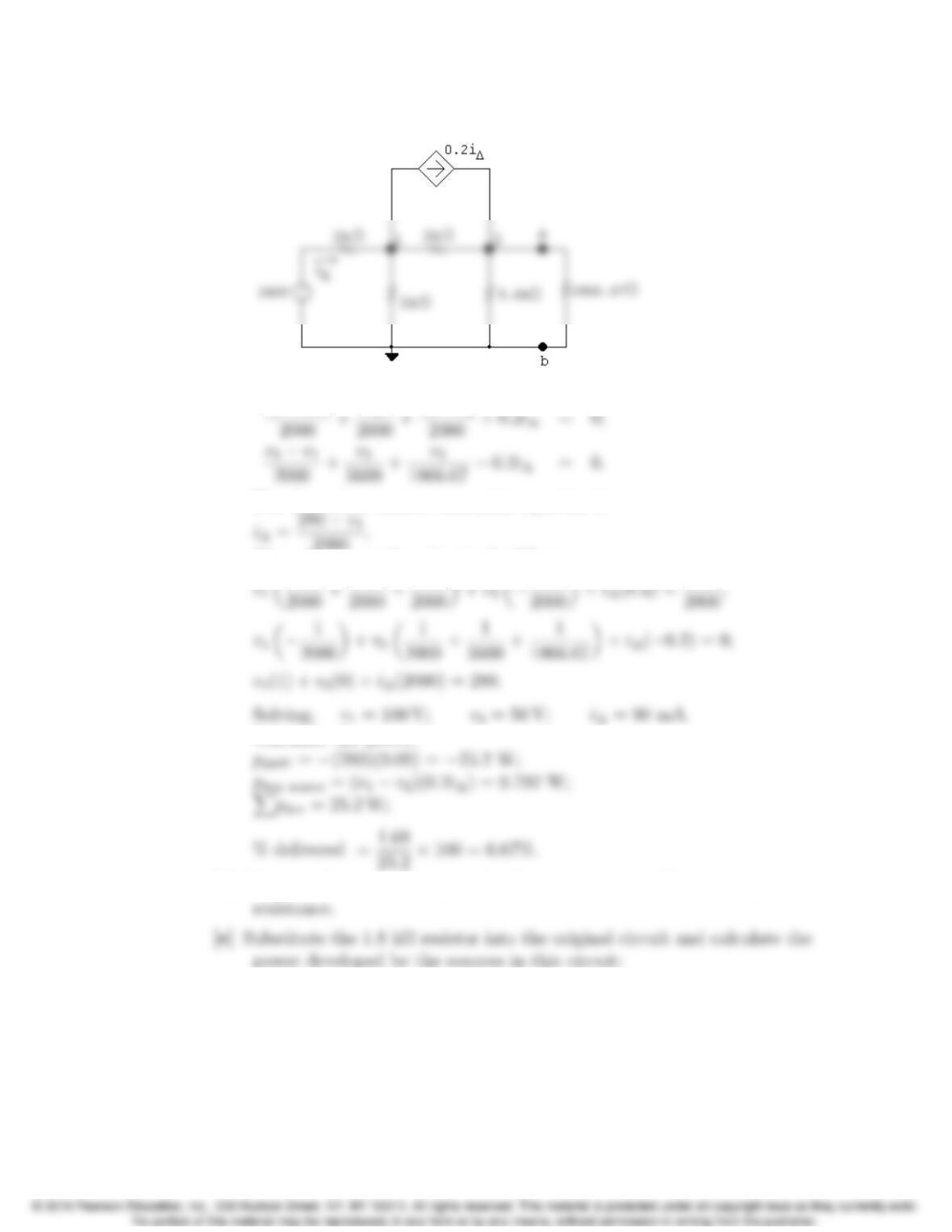
The node voltage equations are:
v1280
The dependent source constraint equation is:
2000 .
Place these equations in standard form:
Calculate the power:
[d] The 1.8 kΩresistor in Appendix H is closest to the Th´evenin equivalent
4–88 CHAPTER 4. Techniques of Circuit Analysis
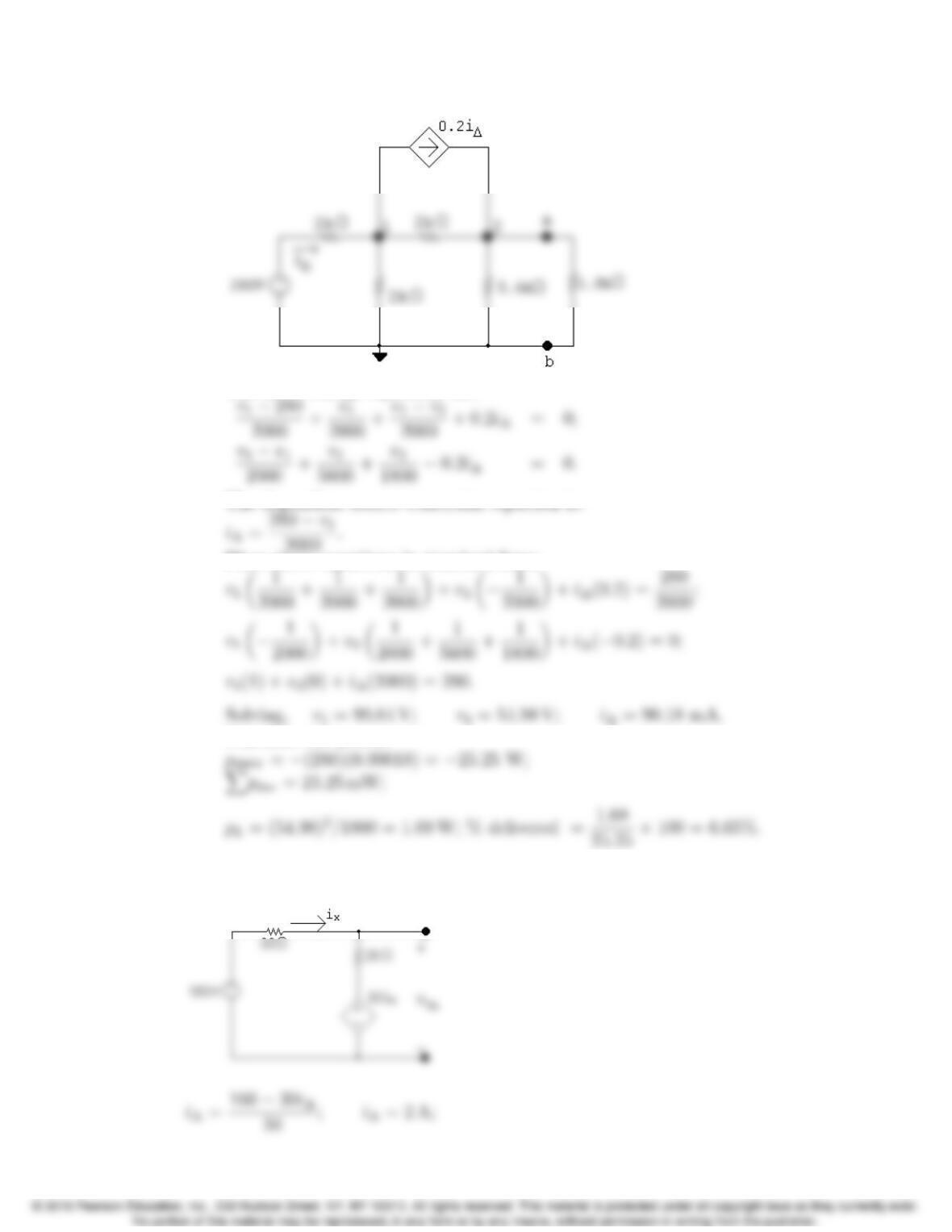
The node voltage equations are:
Place these equations in standard form:
Calculate the power:
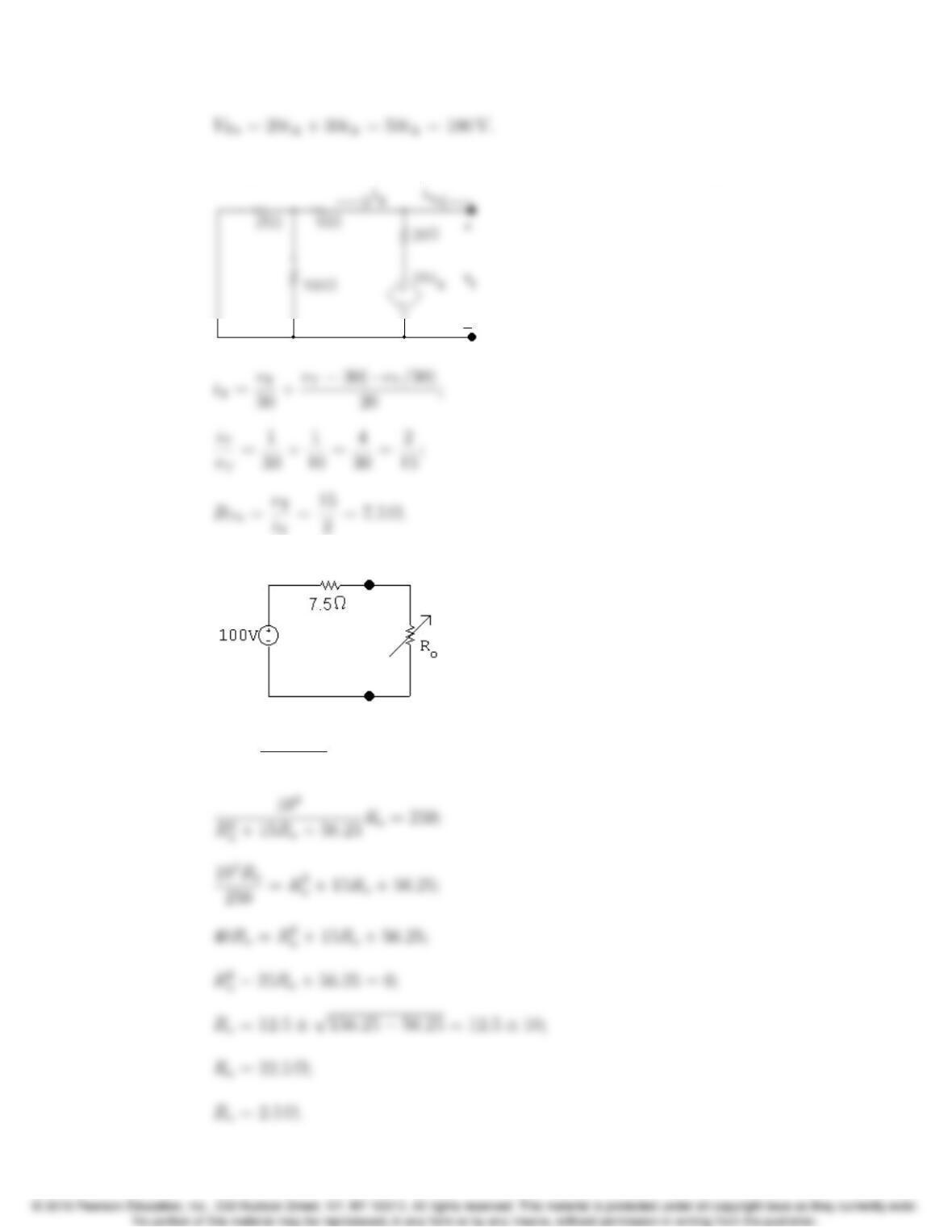
P 4.87 We begin by finding the Th´evenin equivalent with respect to Ro. After making
a couple of source transformations the circuit simplifies to
Problems 4–89
Using the test-source method to find the Th´evenin resistance gives
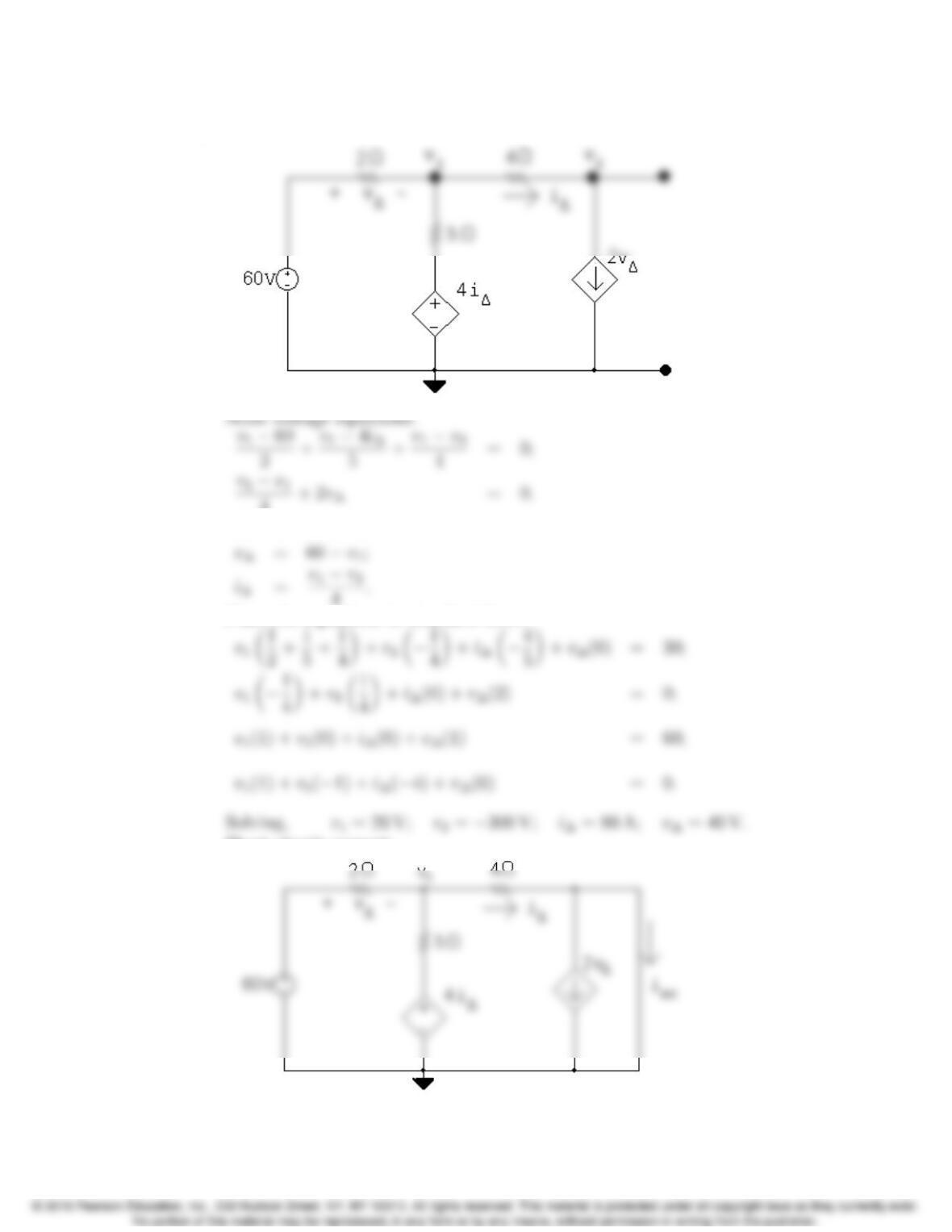
Thus our problem is reduced to analyzing the circuit shown below:
p=✓100
7.5+Ro◆2
Ro= 250;
4–90 CHAPTER 4. Techniques of Circuit Analysis
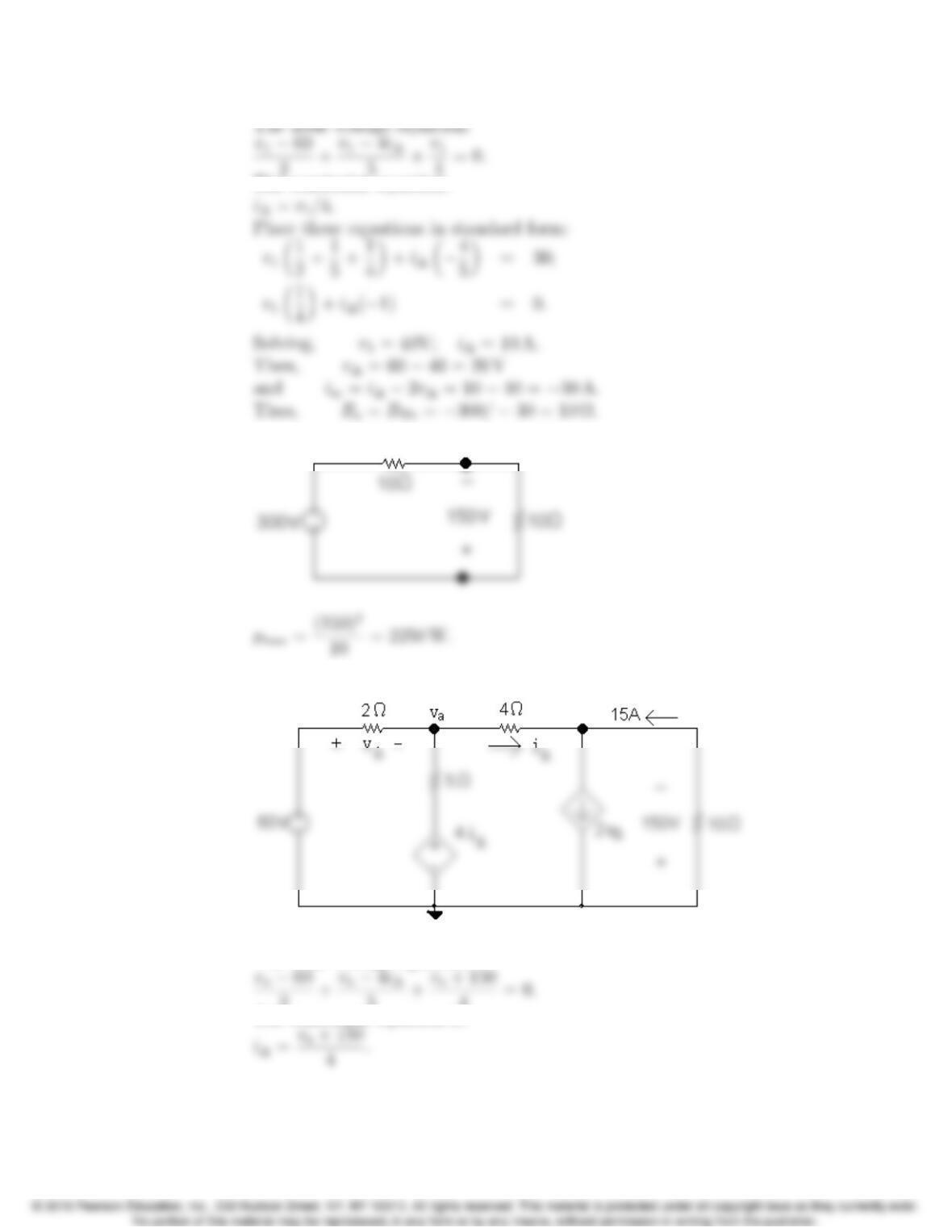
P 4.88 [a] Open circuit voltage
4+2v∆=0.
Constraint equations:
Place the equations in standard form:
Short circuit current:
Problems 4–91
The constraint equation:
[b]
[c]
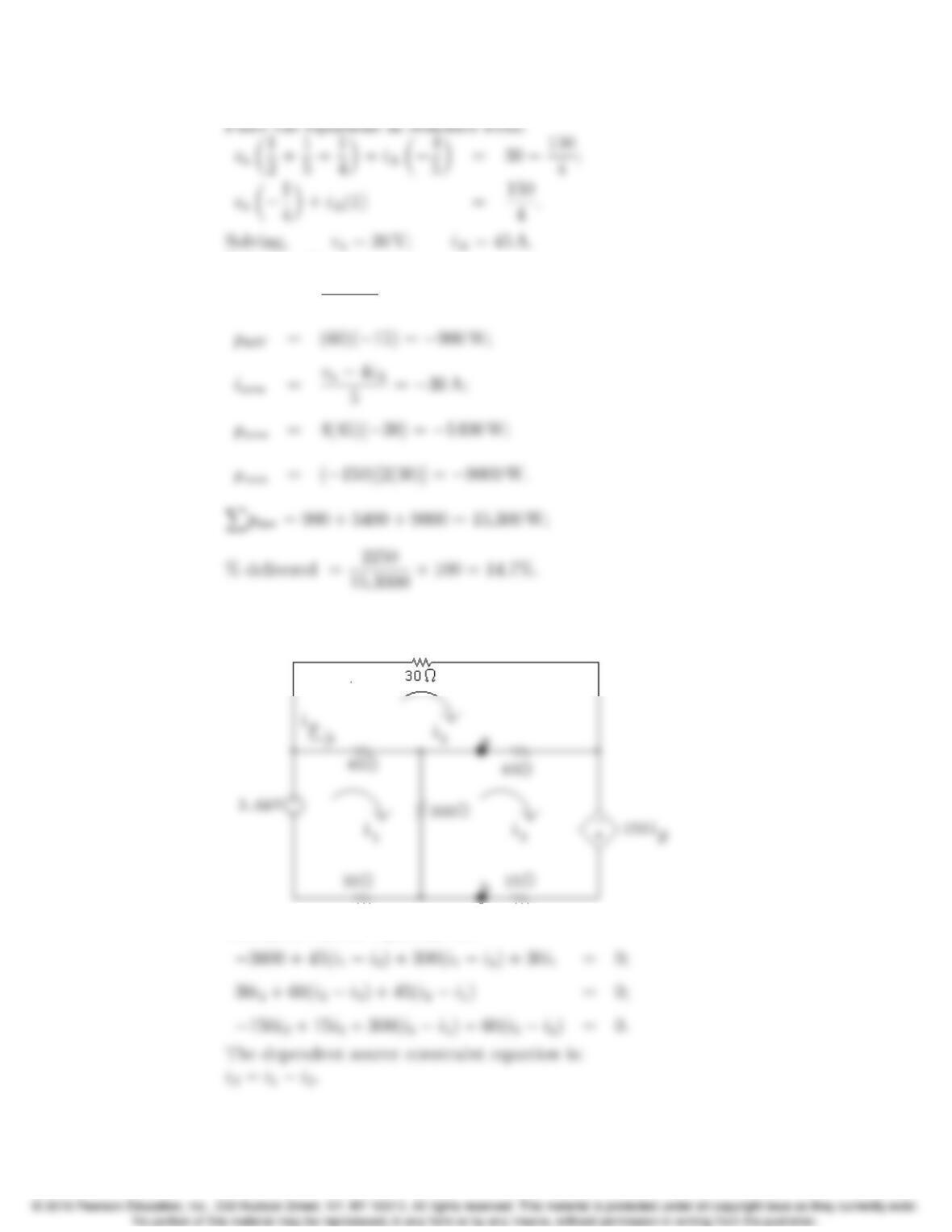
The node voltage equation:
2+va4i∆
5+va+ 150
4= 0.
The constraint equation is:
4–92 CHAPTER 4. Techniques of Circuit Analysis
Calculate the power:
i60V =va60
2=15 A;
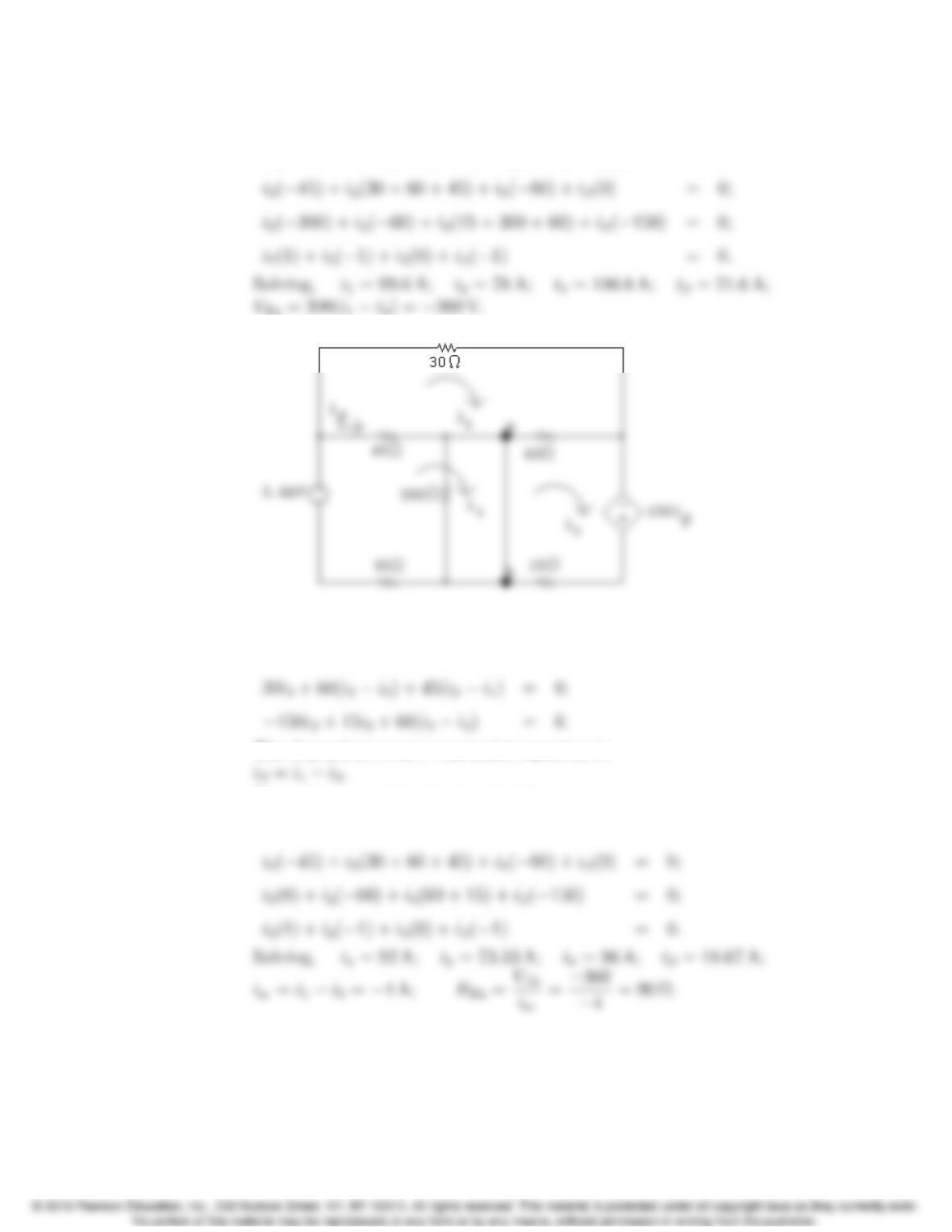
P 4.89 [a] Find the Th´evenin equivalent with respect to the terminals of RL.
Open circuit voltage:
The mesh current equations are:
Problems 4–93
Place these equations in standard form:
i1(45 + 300 + 30) + i2(45) + i3(300) + iβ(0) = 3600;
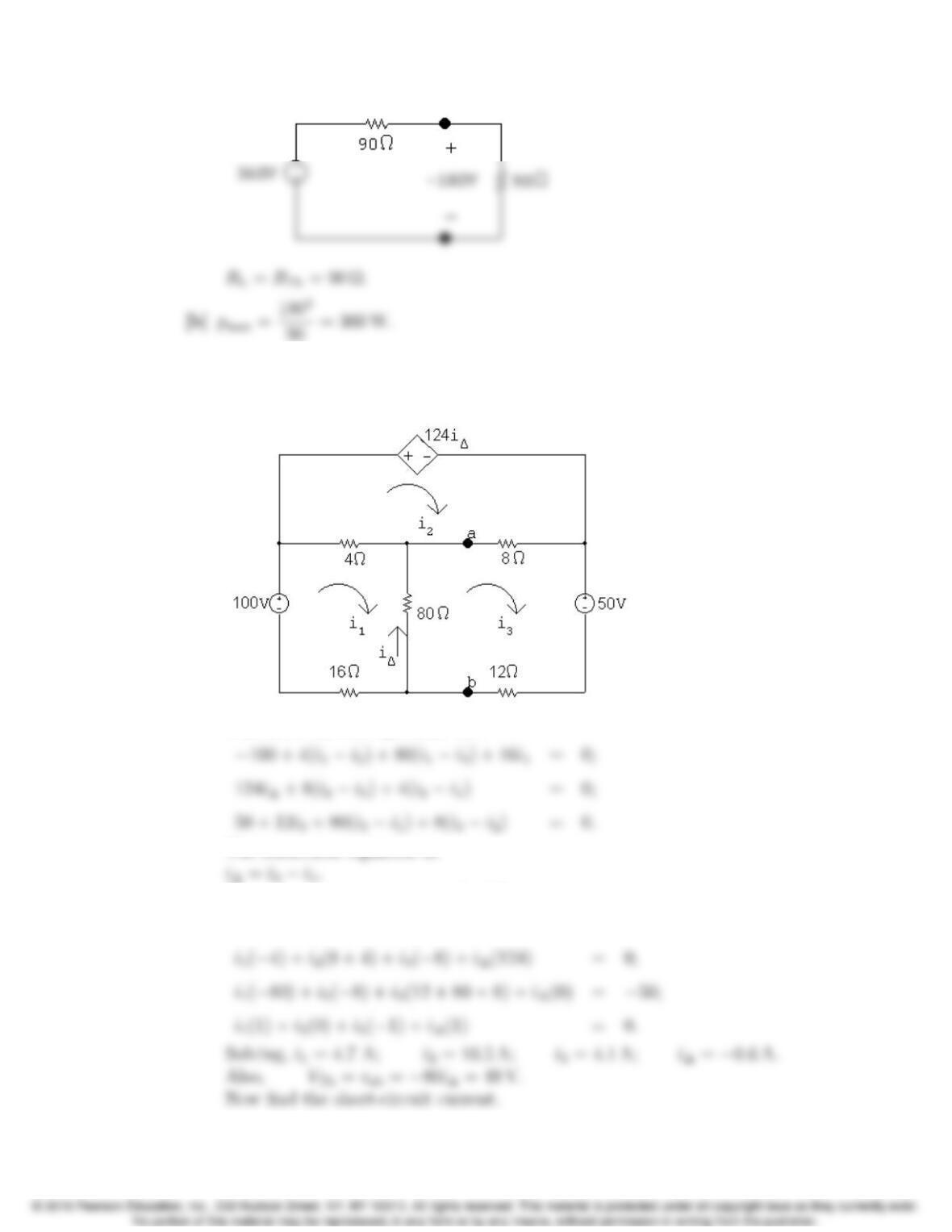
Short-circuit current:
The mesh current equations are:
3600 + 45(i1i2)+30i1=0;
The dependent source constraint equation is:
Place these equations in standard form:
i1(45 + 30) + i2(45) + i3(0) + iβ(0) = 3600;
4–94 CHAPTER 4. Techniques of Circuit Analysis
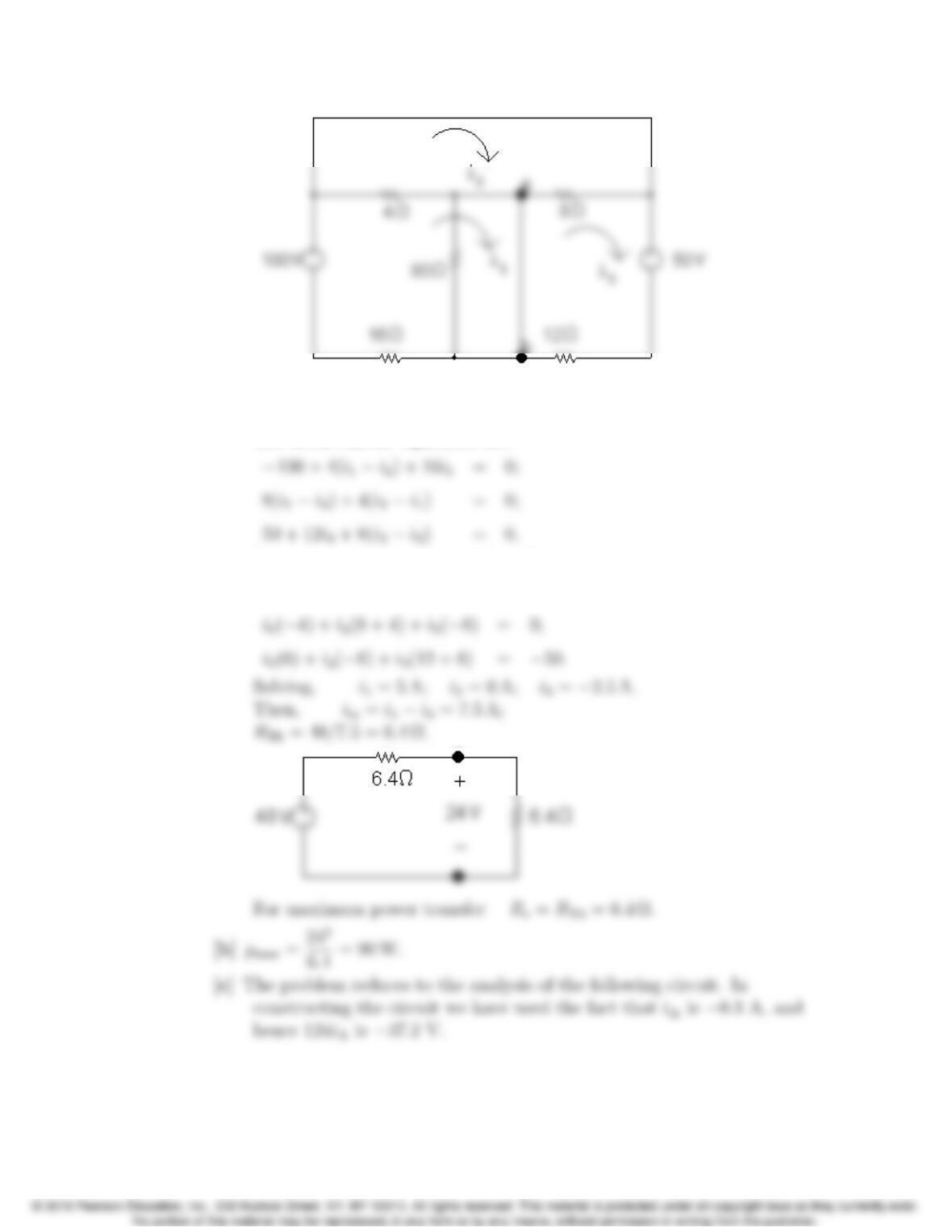
P 4.90 [a] We begin by finding the Th´evenin equivalent with respect to the terminals
of Ro.
Open circuit voltage
The mesh current equations are:
Place these equations in standard form:
i1(4 + 80 + 16) + i2(4) + i3(80) + i∆(0) = 100;
Problems 4–95
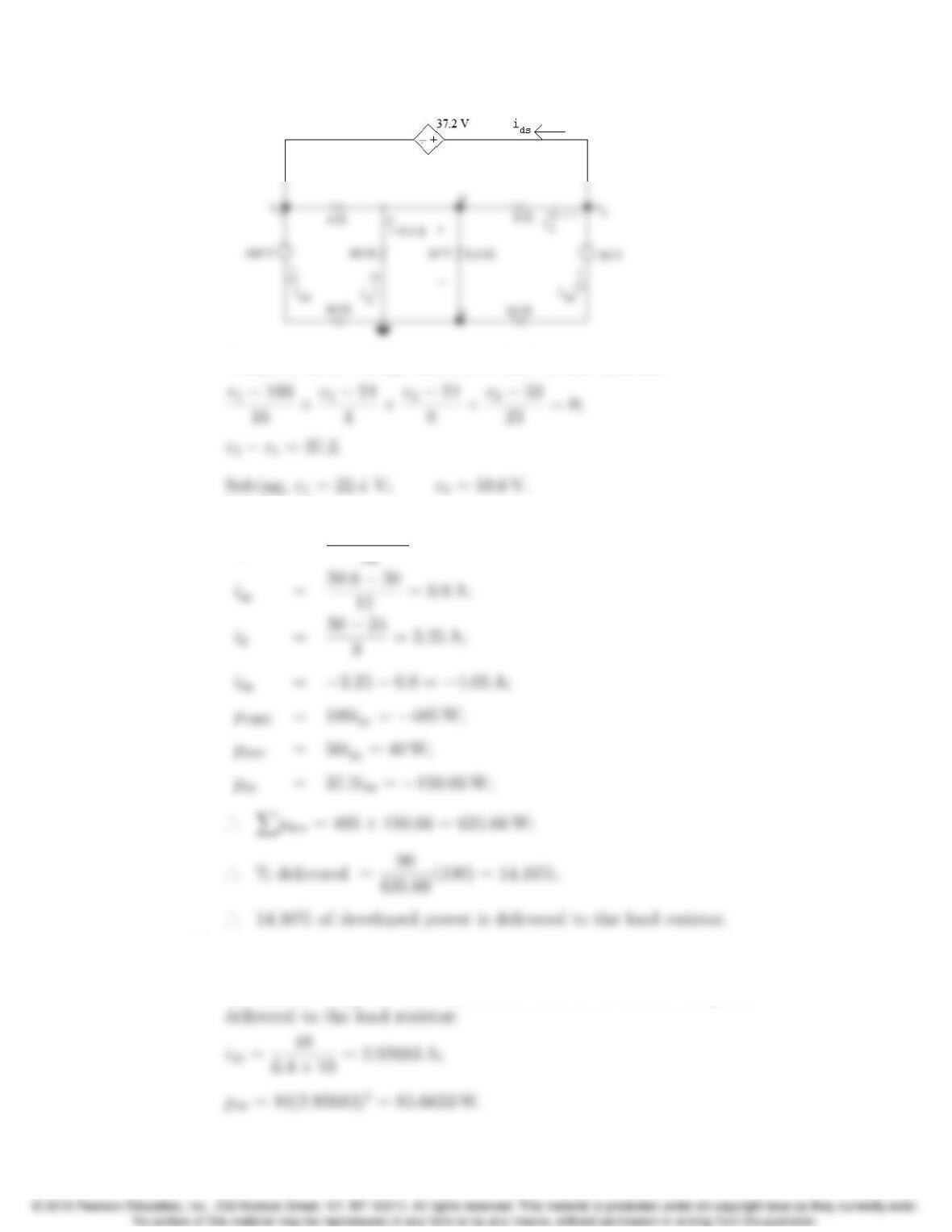
Note with the short circuit from a to b that i∆is zero, hence 124i∆is
also zero.
The mesh current equations are:
Place these equations in standard form:
i1(4 + 16) + i2(4) + i3(0) = 100;
4–96 CHAPTER 4. Techniques of Circuit Analysis
Using the node voltage method to find v1and v2yields
It follows that
ig1=22.4100
[d] The resistor from Appendix H that is closest to the Th´evenin resistance is
10 Ω. To calculate the power delivered to a 10 Ωload resistor, calculate
the current using the Th´evenin circuit and use it to find the power
Problems 4–97
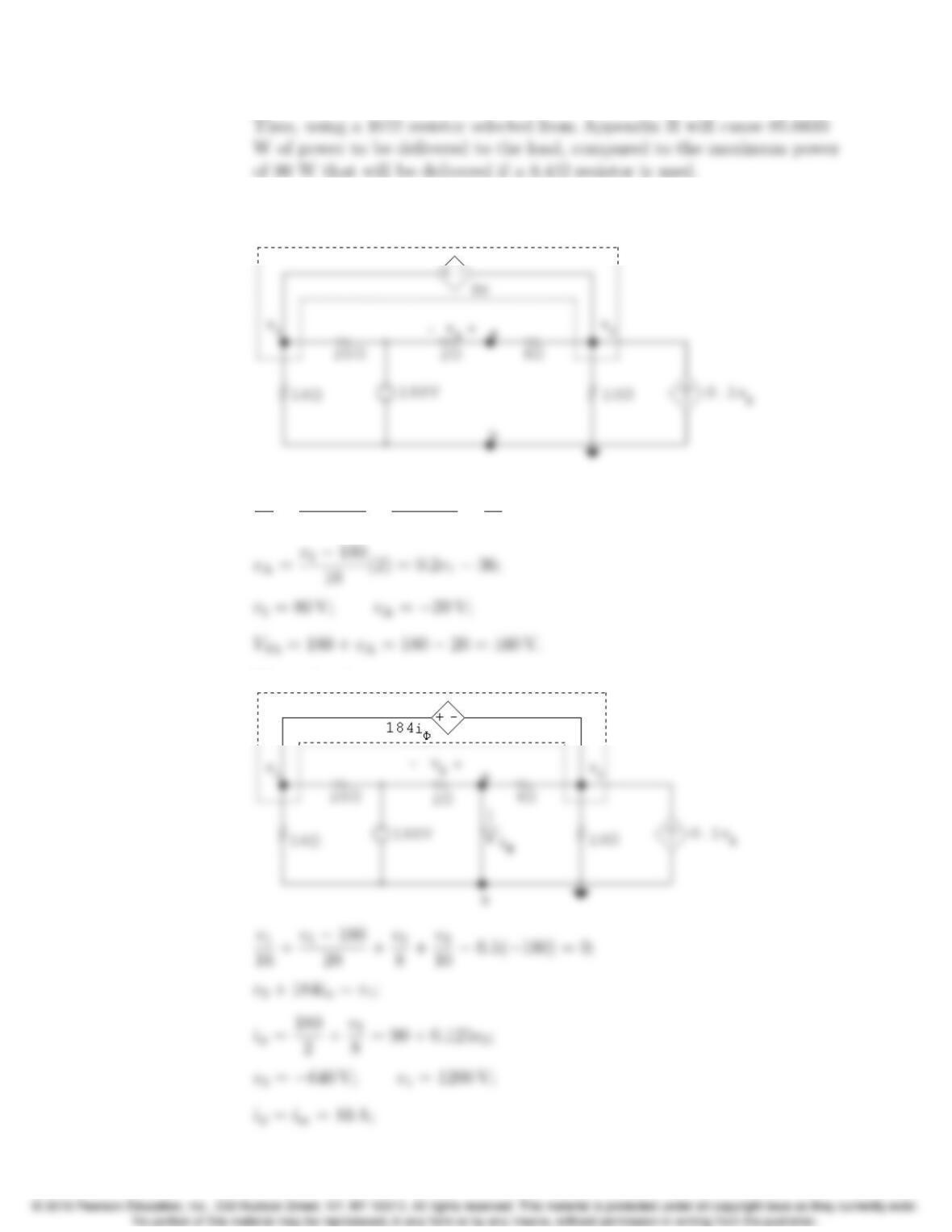
P 4.91 [a] First find the Th´evenin equivalent with respect to Ro.
Open circuit voltage: iφ= 0; 184φ= 0.
v1
16 +v1180
20 +v1180
10 +v1
10 0.1v∆= 0;
Short circuit current