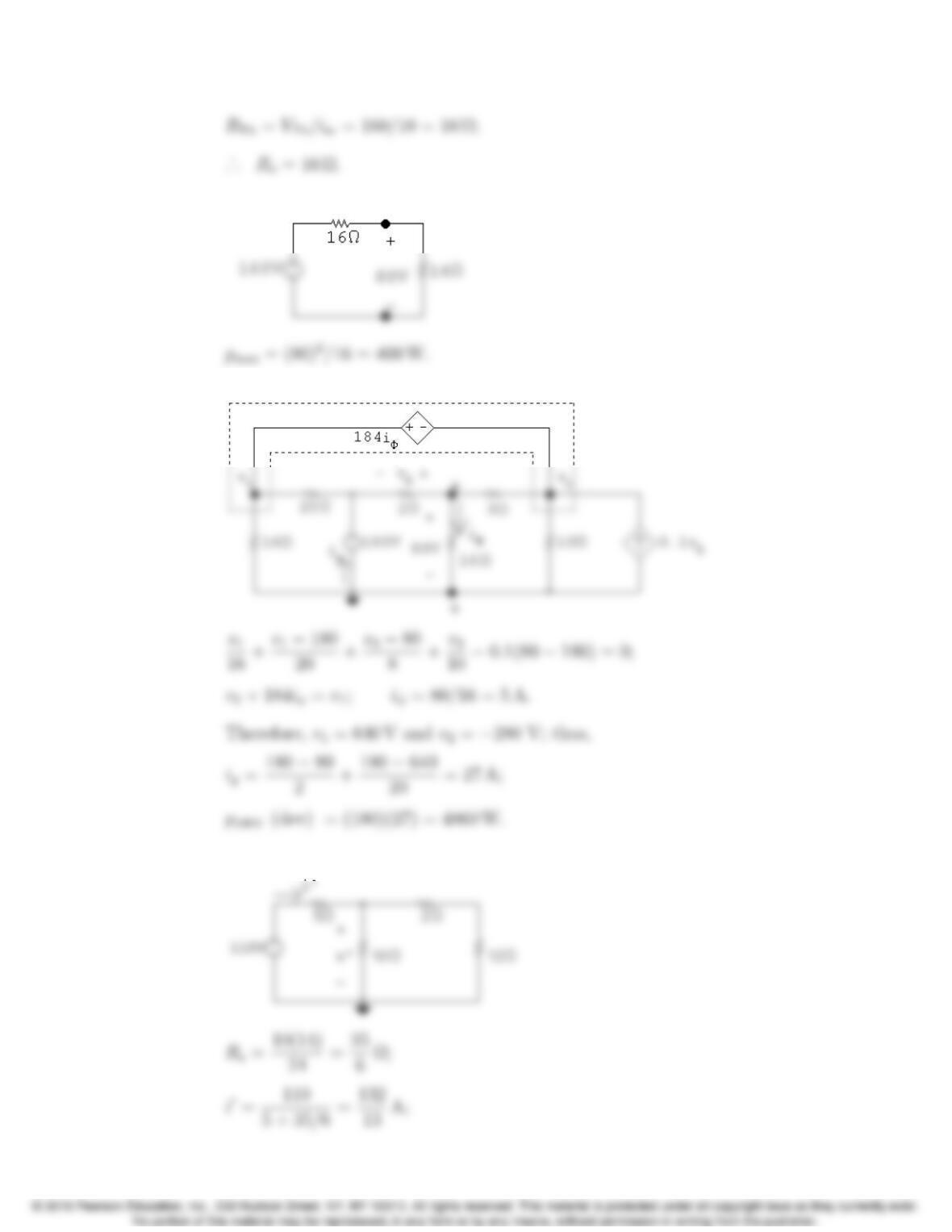
4–98 CHAPTER 4. Techniques of Circuit Analysis
[b]
[c]
P 4.92 [a] 110 V source acting alone:
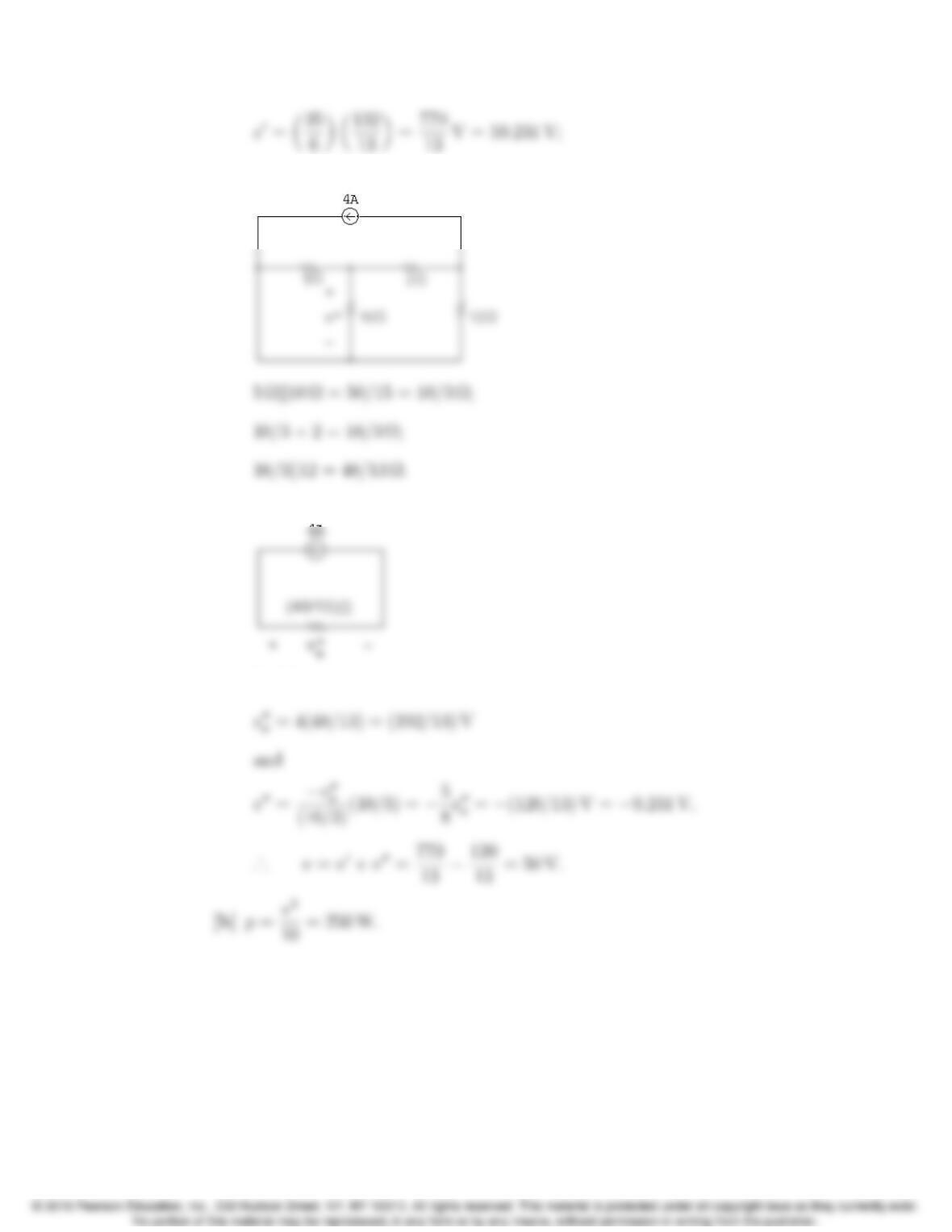
Problems 4–99
4 A source acting alone:
Hence our circuit reduces to:
It follows that
4–100 CHAPTER 4. Techniques of Circuit Analysis
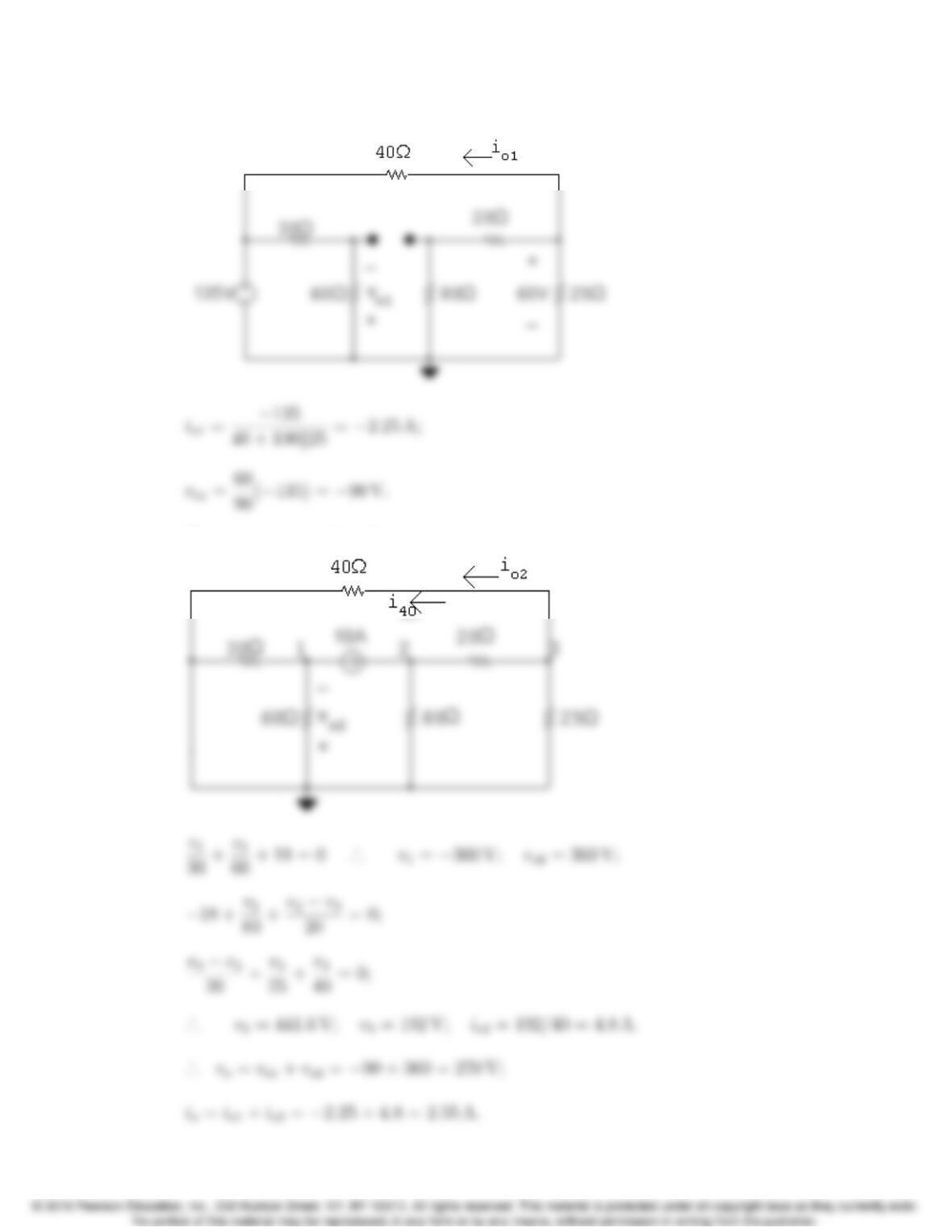
P 4.93 Voltage source acting alone:
Current source acting alone:
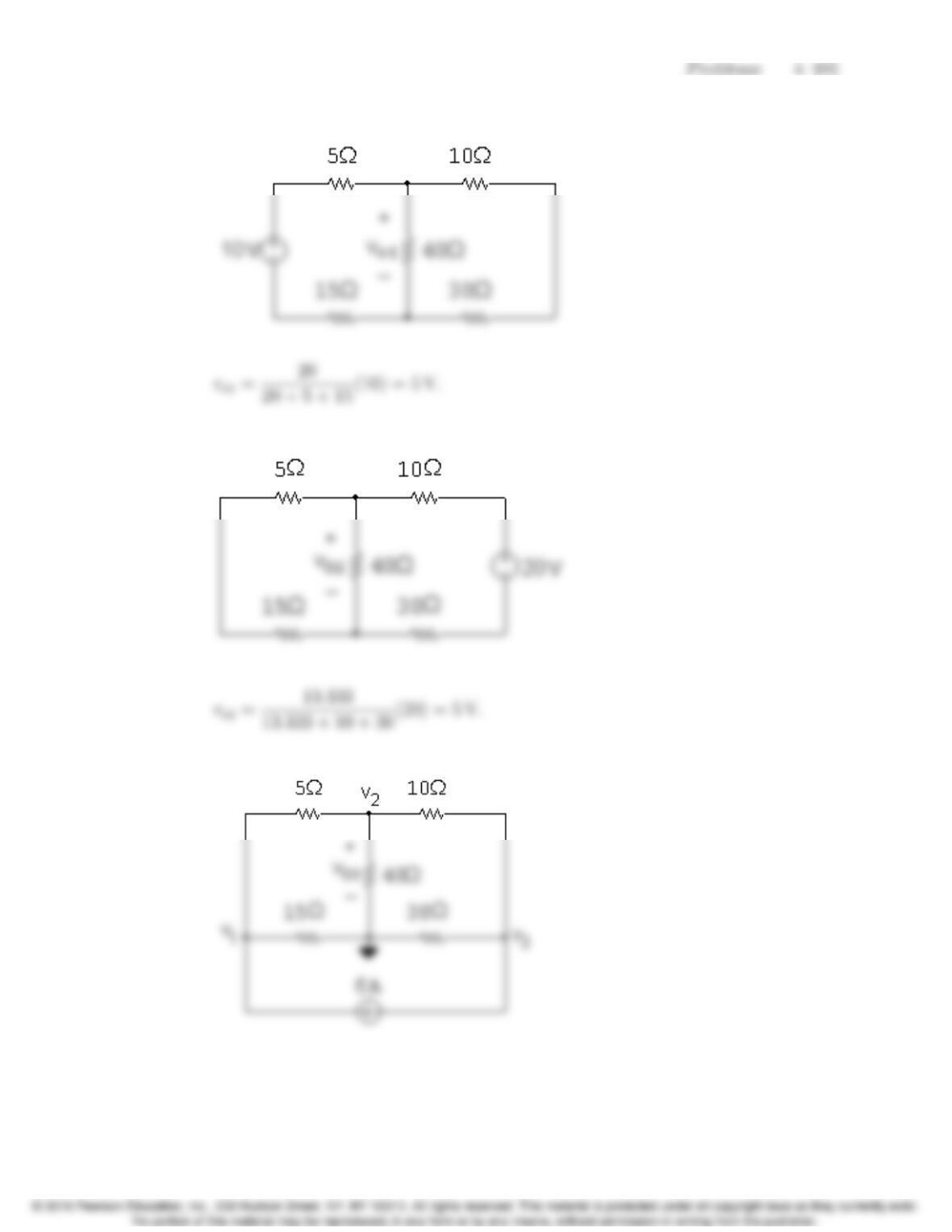
P 4.94 10 V source acting alone:
20 V source acting alone:
6 A current source acting alone:
4–102 CHAPTER 4. Techniques of Circuit Analysis
Node voltage equations:
v1
In standard form:
v1✓1
15 +1
5◆+v2✓1
5◆+v3(0) = 6;
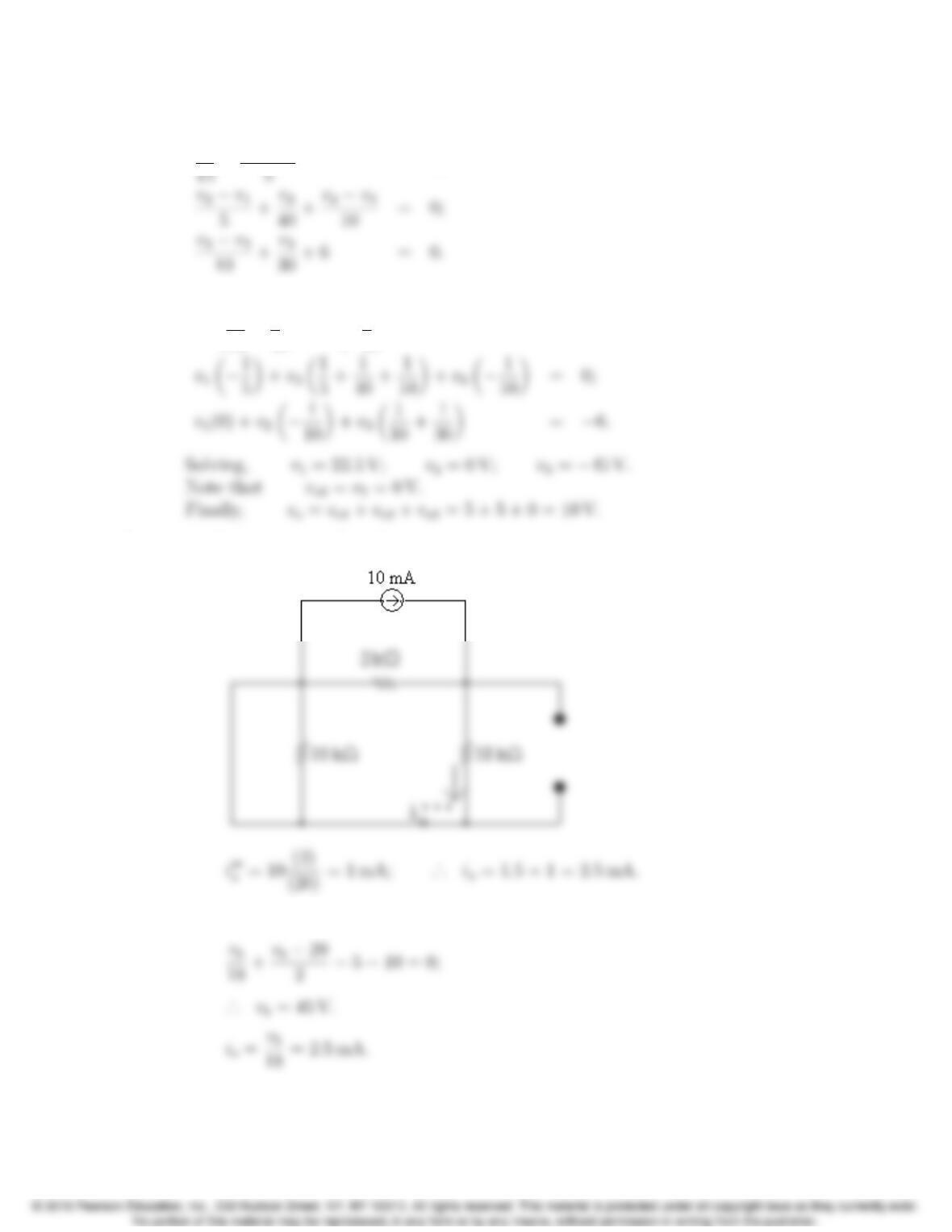
P 4.95 [a] By hypothesis i0
o+i00
o=1.5 mA.
[b] With all three sources in the circuit write a single node voltage equation.
Problems 4–103
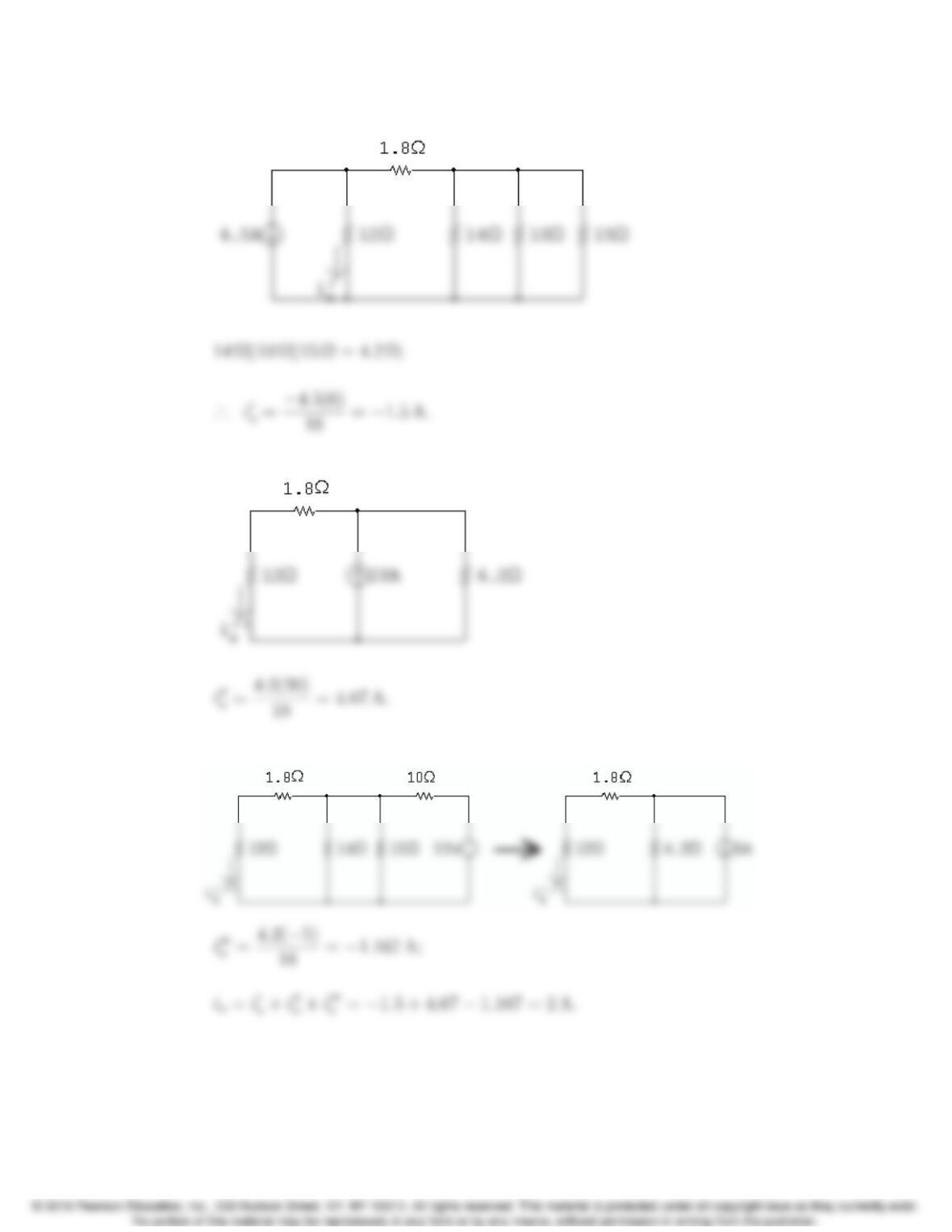
P 4.96 4.5 A source:
20 A source:
50 V source:
4–104 CHAPTER 4. Techniques of Circuit Analysis
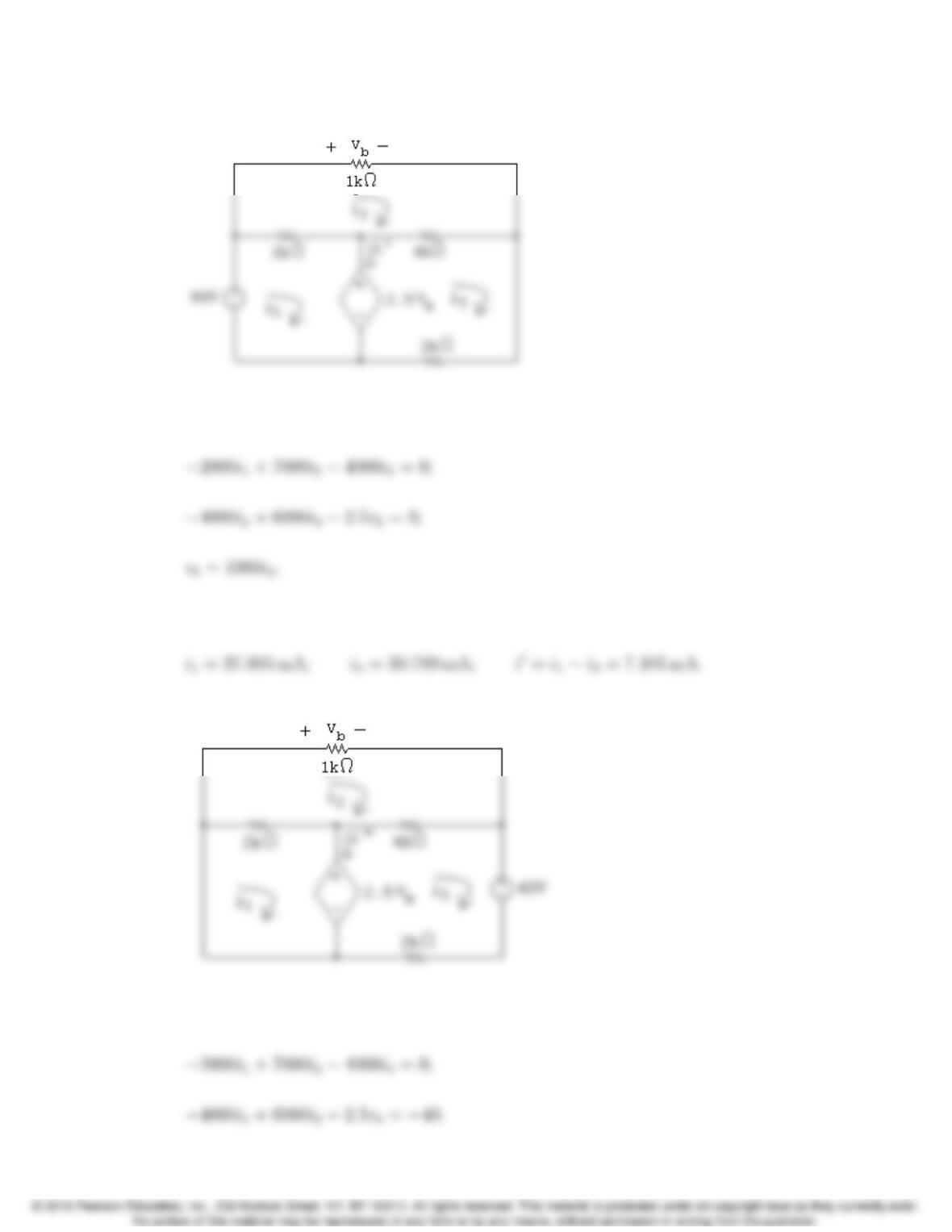
P 4.97 90-V source acting alone:
2000(i1i2)+2.5vb= 90;
Solving,
40-V source acting alone:
2000(i1i2)+2.5vb= 0;
Problems 4–105
Solving,
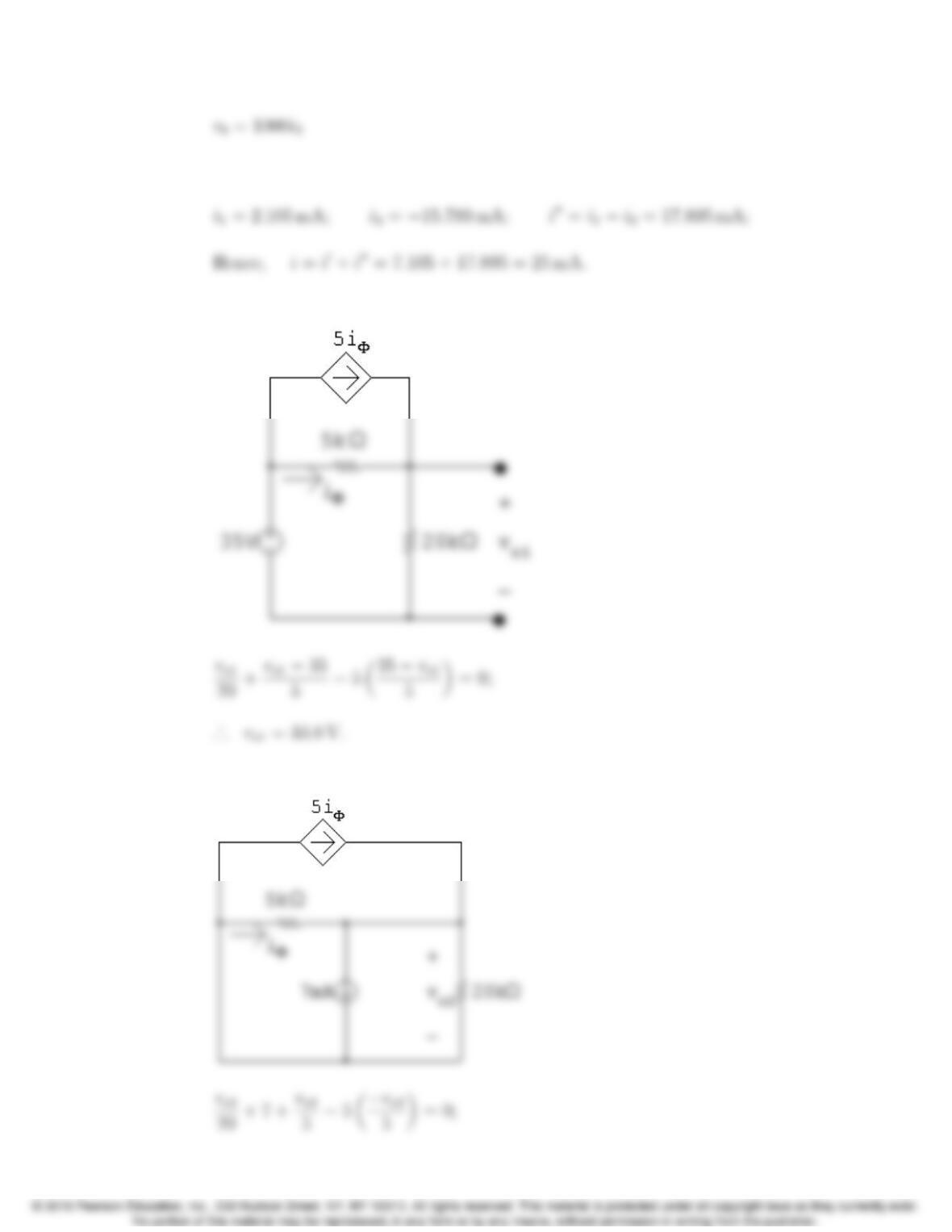
P 4.98 Voltage source acting alone:
Current source acting alone:
4–106 CHAPTER 4. Techniques of Circuit Analysis
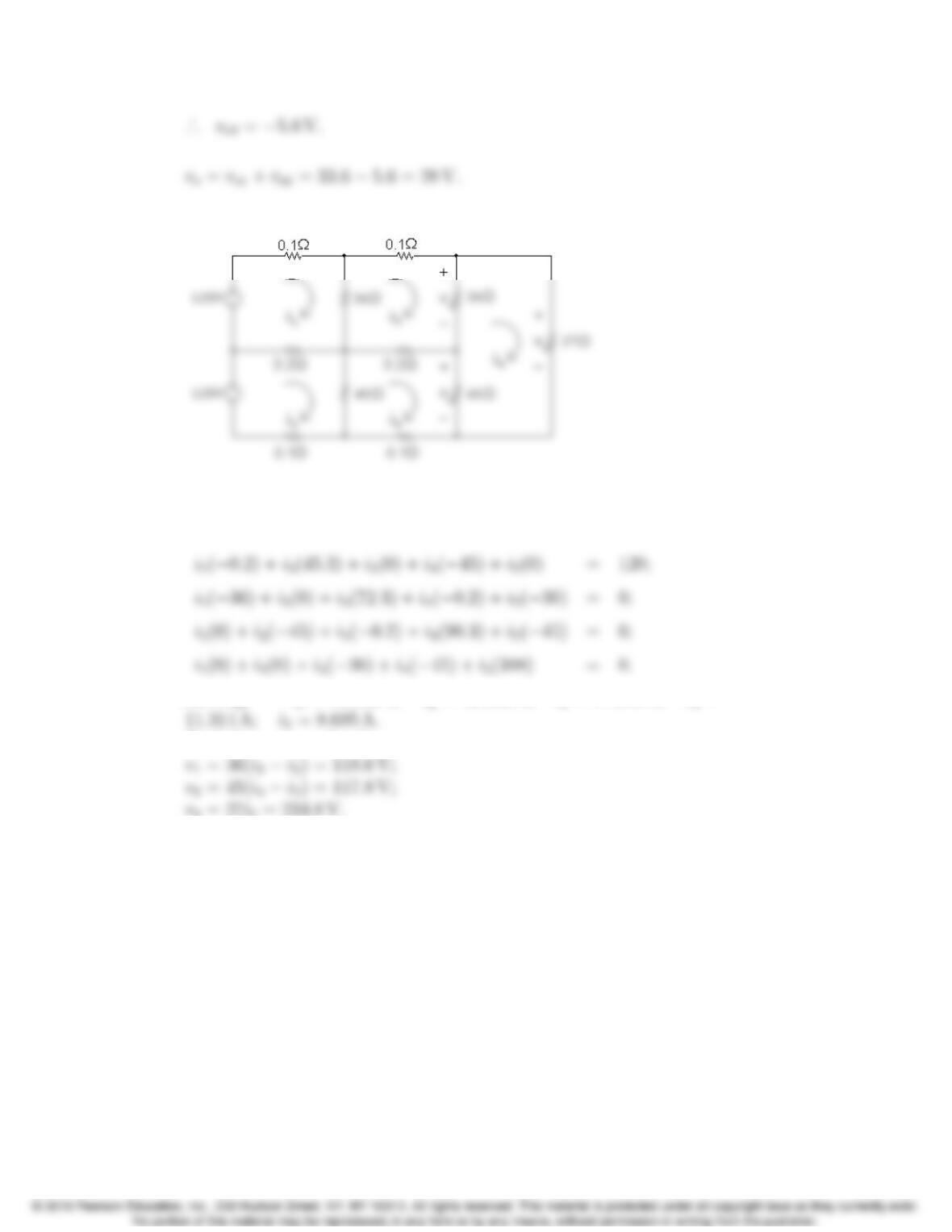
P 4.99
The mesh equations are:
i1(36.3) + i2(0.2) + i3(36) + i4(0) + i5(0) = 120;
Solving, i1= 15.226 A; i2= 13.953 A; i3= 11.942 A; i4=
Find the requested voltages:
P 4.100
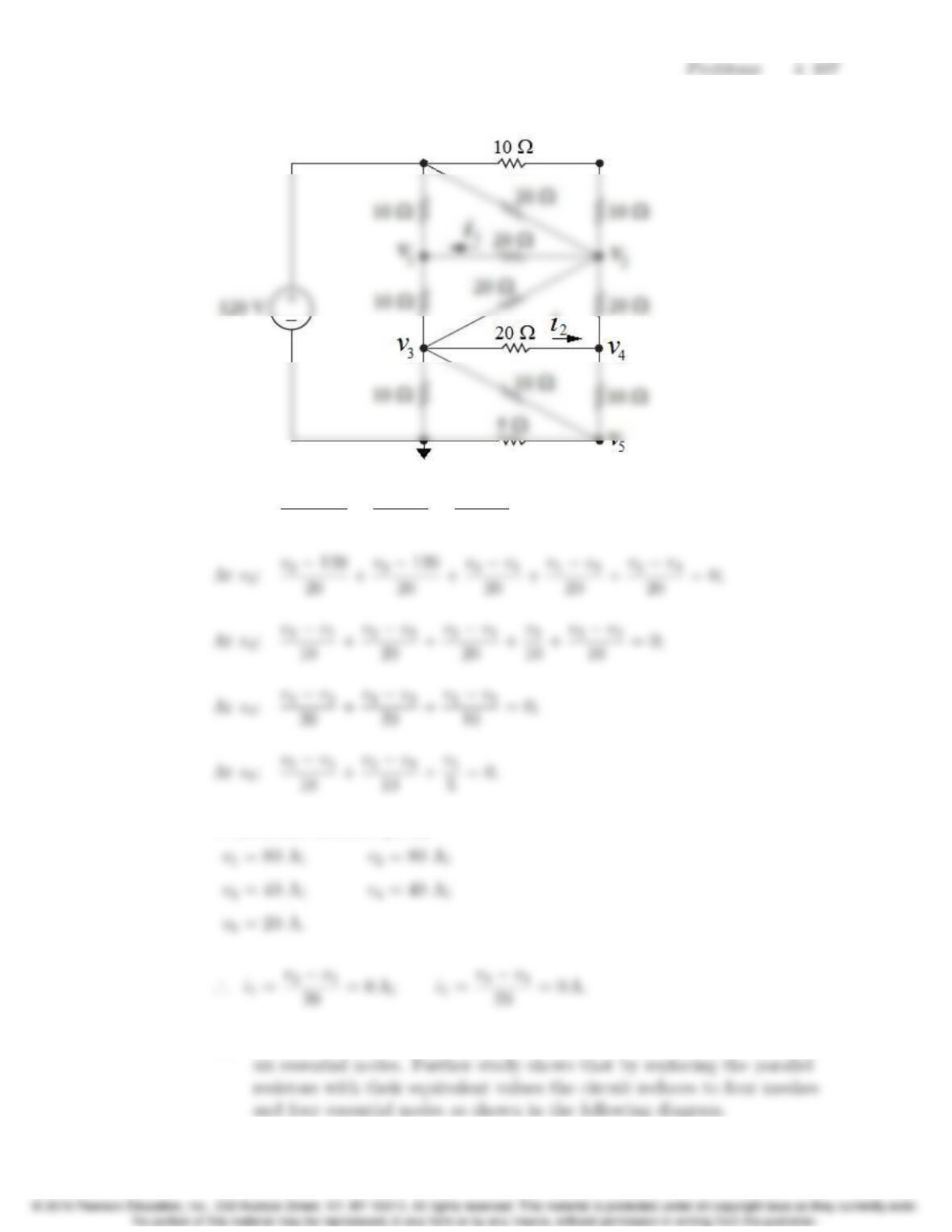
At v1:v1120
10 +v1v2
20 +v1v3
10 = 0;
A calculator solution yields
P 4.101 [a] In studying the circuit in Fig. P4.101 we note it contains six meshes and
4–108 CHAPTER 4. Techniques of Circuit Analysis
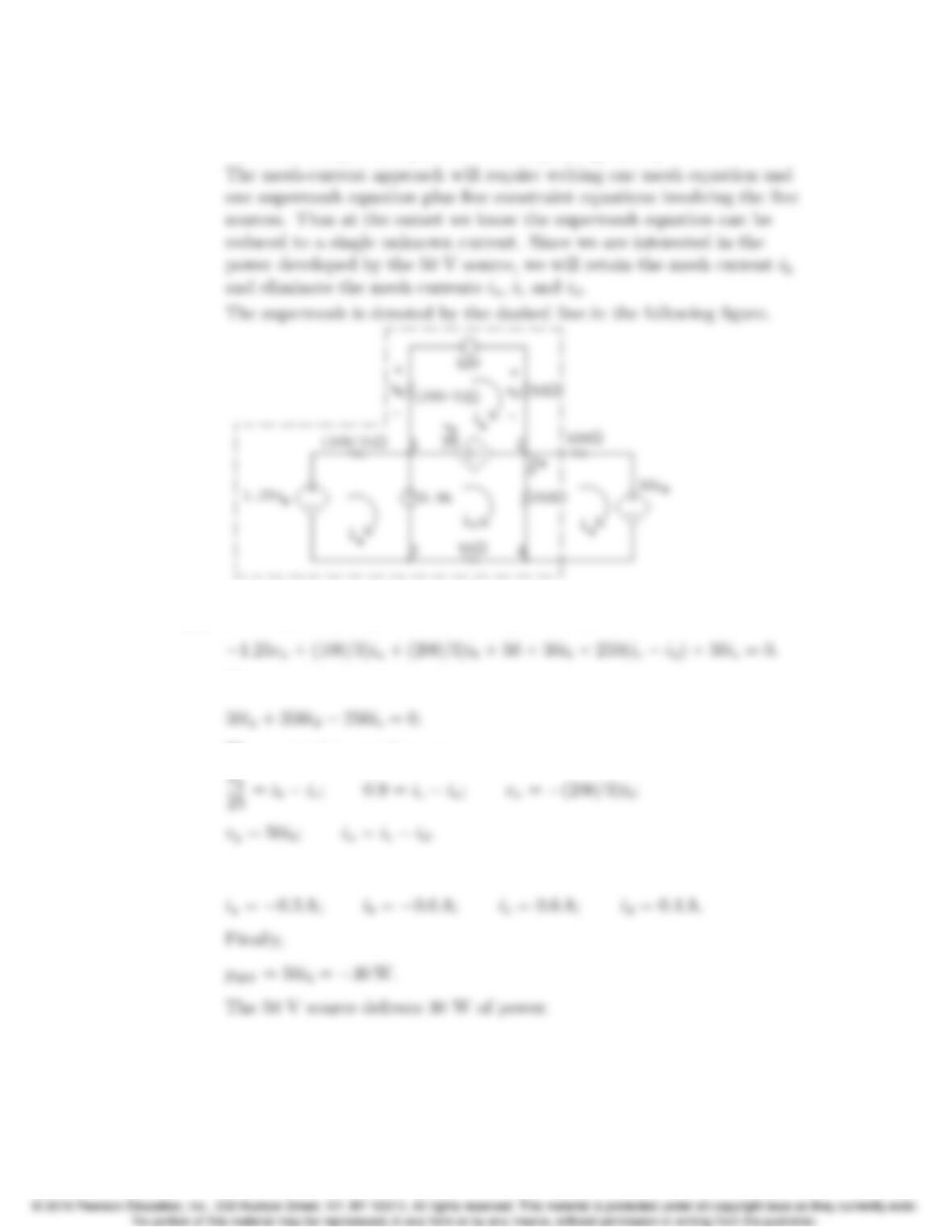
The node-voltage approach will require solving three node voltage
equations along with equations involving vx,vy, and ix.
[b] Summing the voltages around the supermesh yields
The remaining mesh equation is
The constraint equations are
Solving,
Problems 4–109
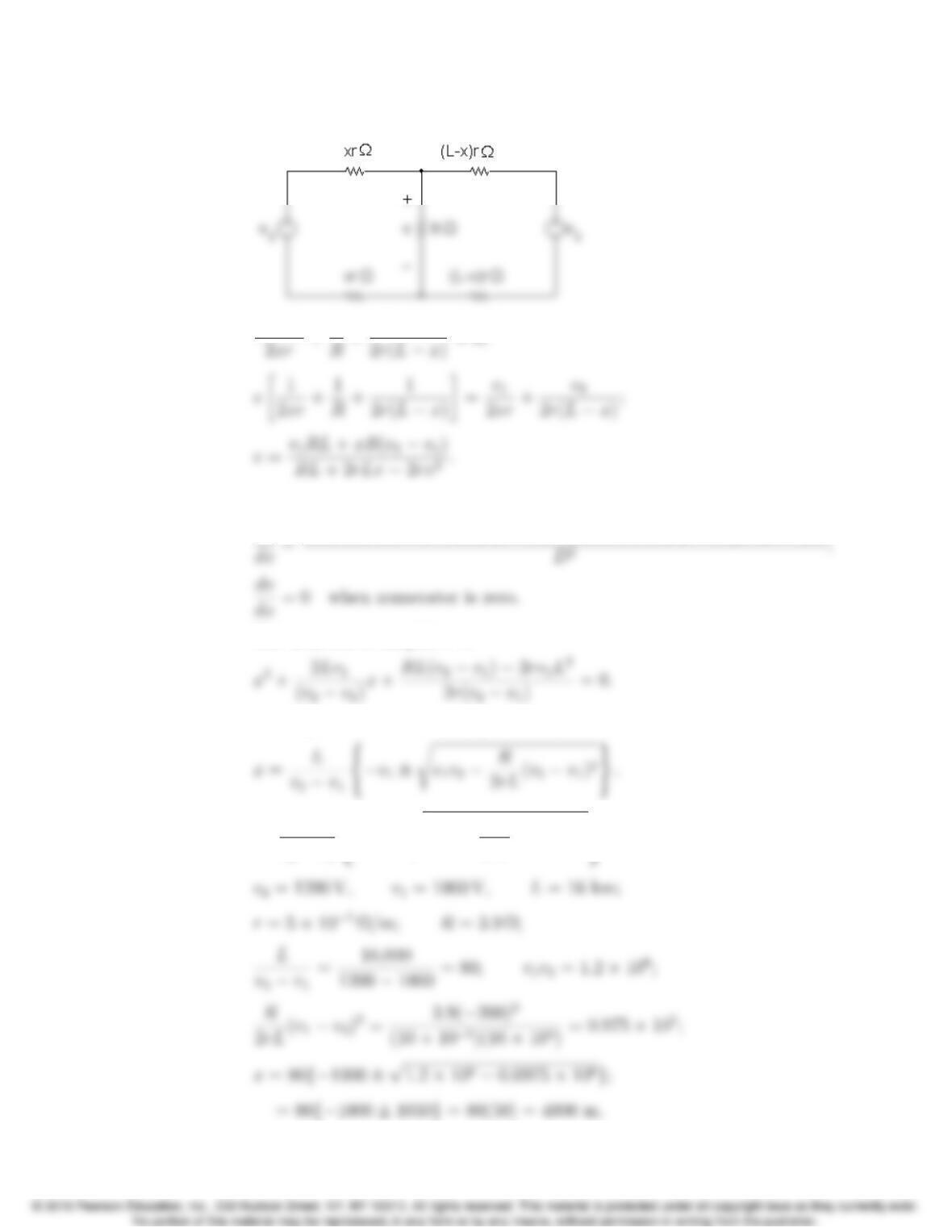
P 4.102 [a]
vv1
[b] Let D=RL +2rLx 2rx2.
dv
The numerator simplifies to
Solving for the roots of the quadratic yields
[c] x=L
v2v18
<
:v1±sv1v2R
2rL(v1v2)29
=
;
;
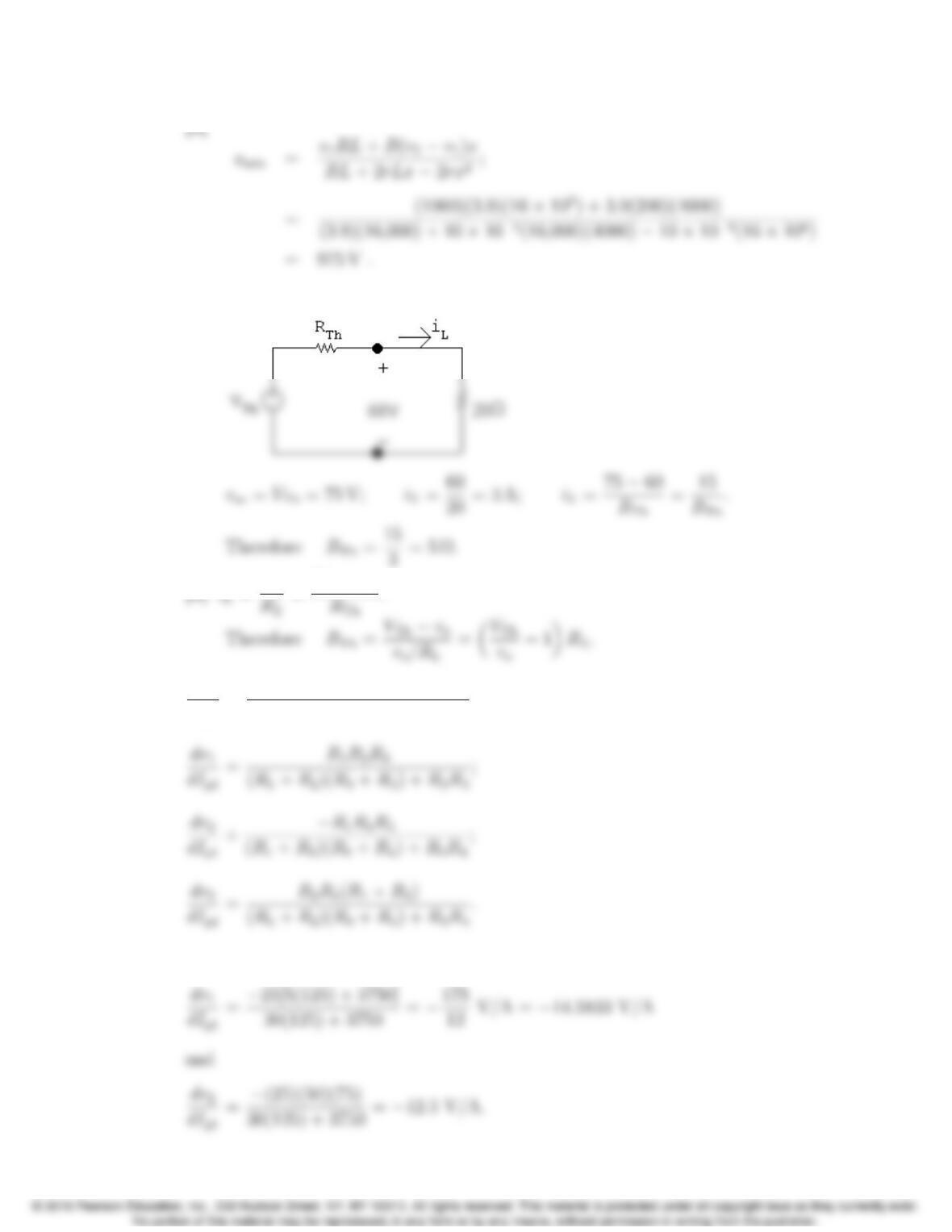
4–110 CHAPTER 4. Techniques of Circuit Analysis
P 4.103 [a]
P 4.104 dv1
dIg1
=R1[R2(R3+R4)+R3R4]
(R1+R2)(R3+R4)+R3R4
;
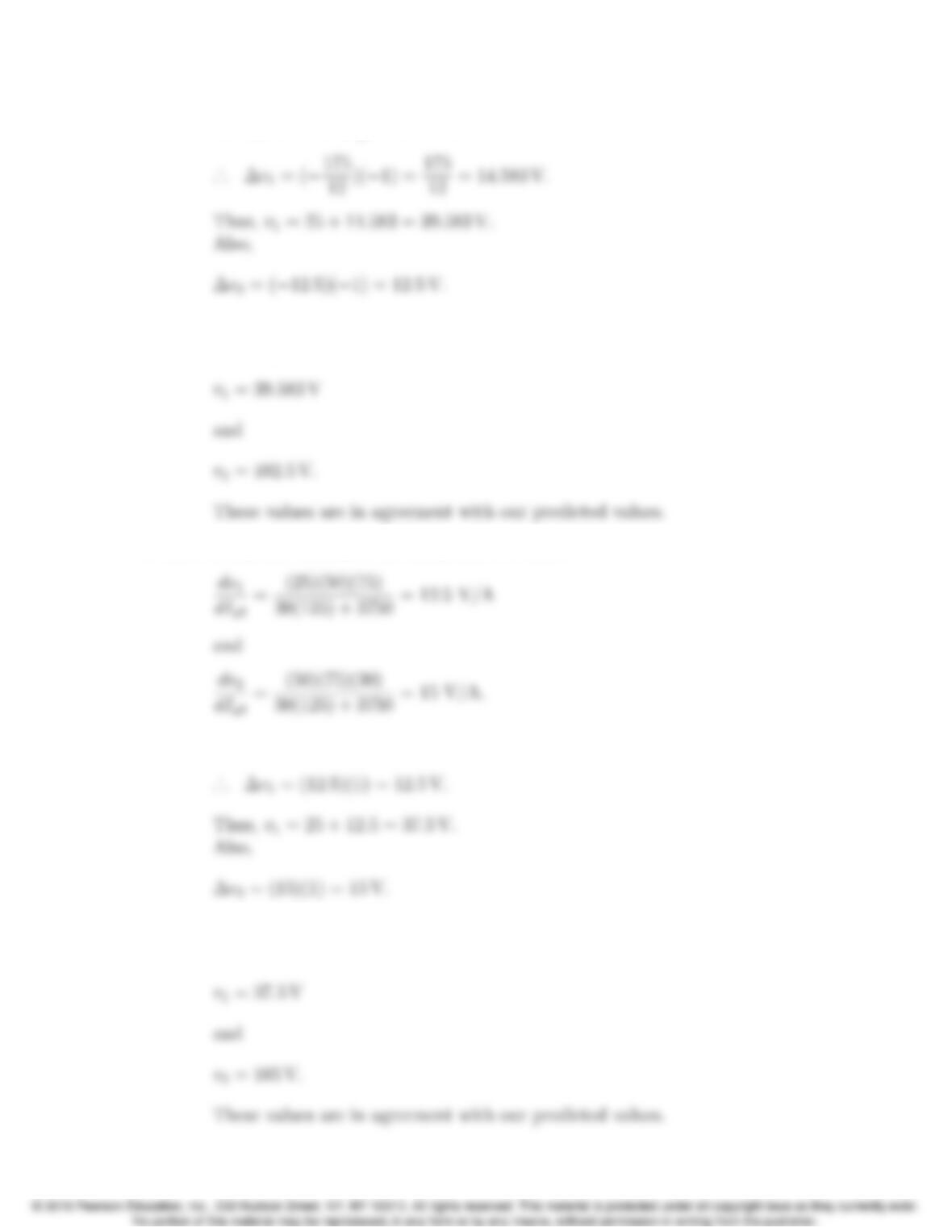
P 4.105 From the solution to Problem 4.104 we have
Problems 4–111
By hypothesis, ∆Ig1= 11 12 = 1 A;
Thus, v2= 90 + 12.5 = 102.5 V.
The PSpice solution is
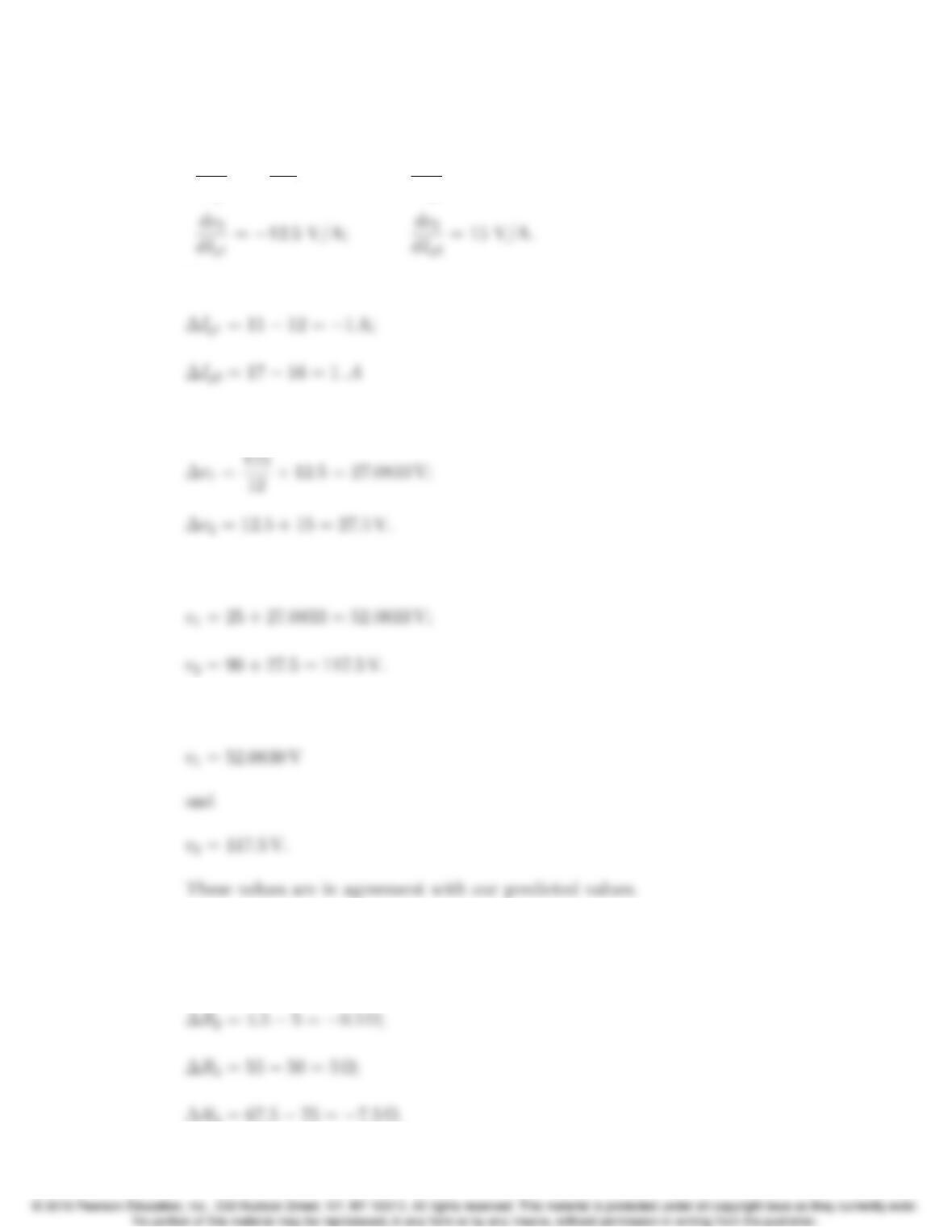
P 4.106 From the solution to Problem 4.104 we have
By hypothesis, ∆Ig2= 17 16 = 1 A;
Thus, v2= 90 + 15 = 105 V .
The PSpice solution is
4–112 CHAPTER 4. Techniques of Circuit Analysis
P 4.107 From the solutions to Problems 4.104 — 4.106 we have
dv1
dIg1
=175
12 V/A; dv1
dIg2
= 12.5 V/A;
By hypothesis,
Therefore,
Hence
The PSpice solution is
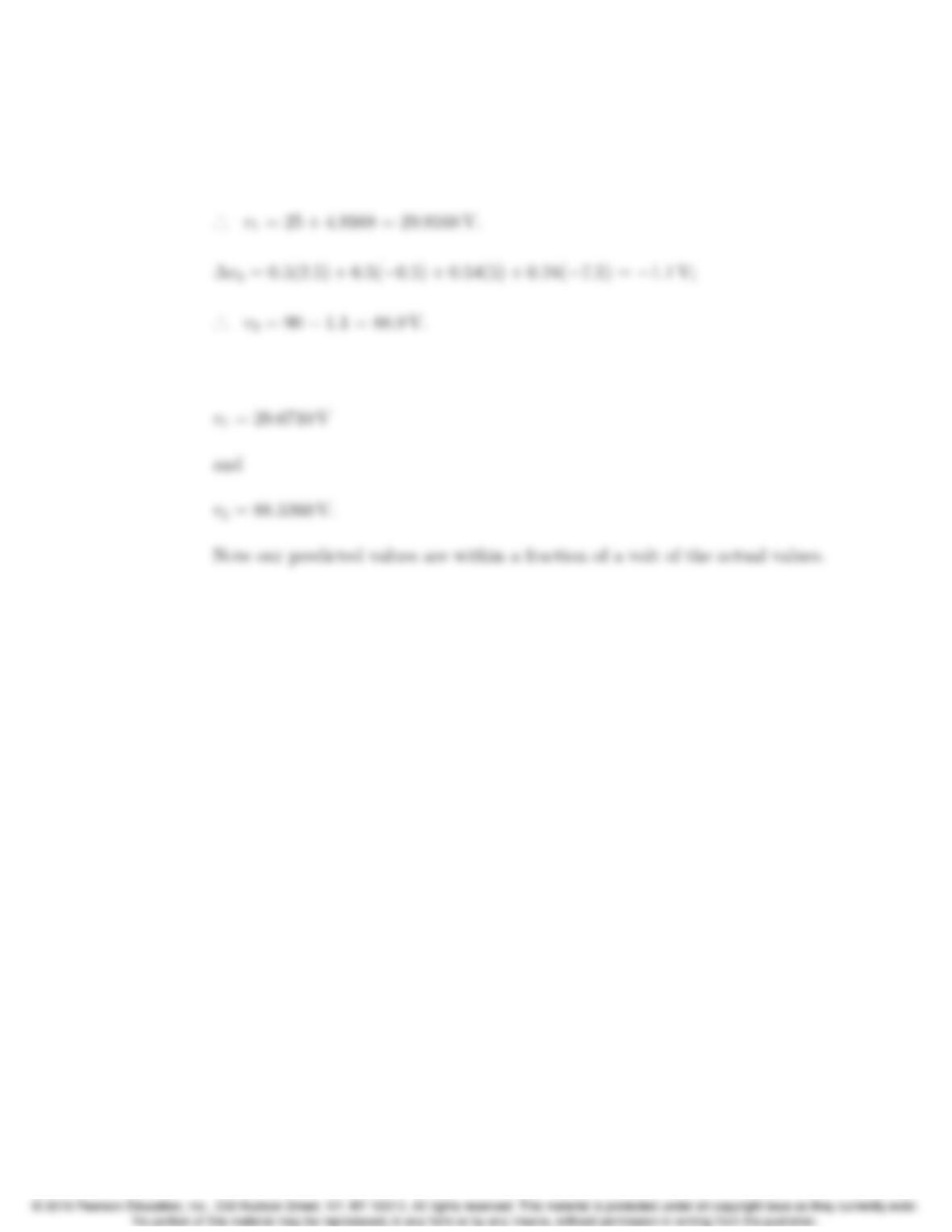
P 4.108 By hypothesis,
∆R1= 27.525 = 2.5Ω;
Problems 4–113
So
∆v1=0.5833(2.5) 5.417(0.5) + 0.45(5) + 0.2(7.5) = 4.9168 V;
The PSpice solution is