Two-Port Circuits
Assessment Problems
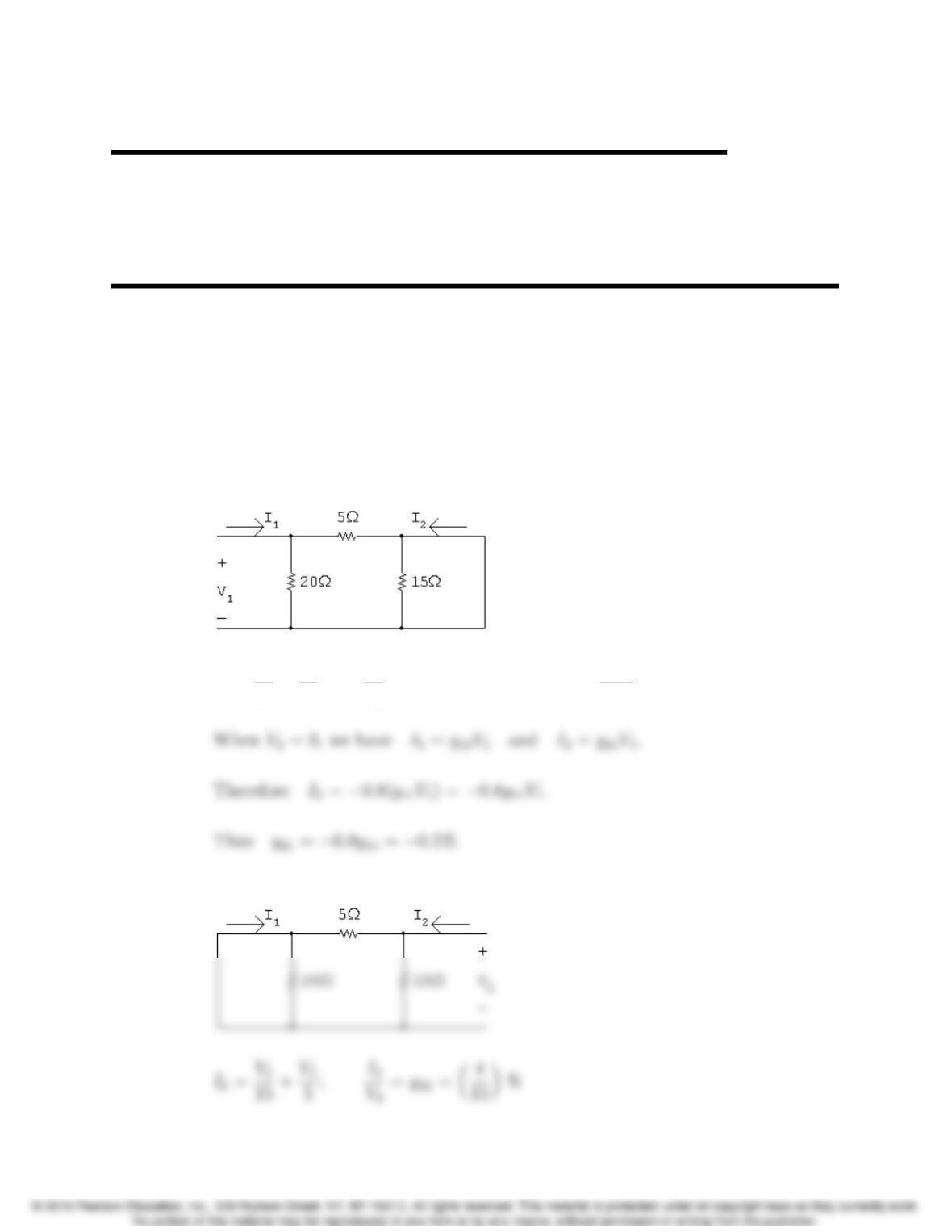
AP 18.1 With port 2 short-circuited, we have
I1=V1
20 +V1
5;I1
V1
=y11 =0.25 S; I2=✓20
25 ◆I1=0.8I1.
With port 1 short-circuited, we have
18–1
18
18–2 CHAPTER 18. Two-Port Circuits
I1=✓15
AP 18.2
g11 =✓I1
V1◆I2=0
=1
20 +1
20 =0.1 S;
g21 =✓V2
V1◆I2=0
=(15/20)V1
V1
=0.75;
AP 18.3
g11 =I1
V1I2=0
=5⇥106
50 ⇥103=0.1 mS;
Problems 18–3
AP 18.4 First calculate the b-parameters:
b11 =V2
V1I1=0
=15
10 =1.5Ω;b21 =I2
V1I1=0
=30
10 = 3 S;
AP 18.5
z11 =z22,z
12 =z21,95 = z11(5) + z12(0).
Therefore, z11 =z22 = 95/5 = 19 Ω.
Solving these simultaneous equations for z12 yields the quadratic equation
AP 18.6 [a] I2=Vg
a11ZL+a12 +a21ZgZL+a22Zg
[b] ZTh =a12 +a22Zg
a11 +a21Zg
=10 + (3⇥102)(100)
5⇥104+ (106)(100)
18–4 CHAPTER 18. Two-Port Circuits
[c] VTh =Vg
=50 ⇥103
AP 18.7 [a] For the given bridged-tee circuit, we have
a0
11 =a0
22 =1.25,a
0
21 =1
20 S,a
0
12 = 11.25 Ω.
The a-parameters of the cascaded networks are
a11 = (1.25)2+ (11.25)(0.05) = 2.125;
Problems 18–5
Problems
P 18.1 h11 =✓V1
I1◆V2=0
= 20k5 = 4 Ω;
h21 =✓I2
I1◆V2=0
=(20/25)I1
I1
=0.8;
P 18.2
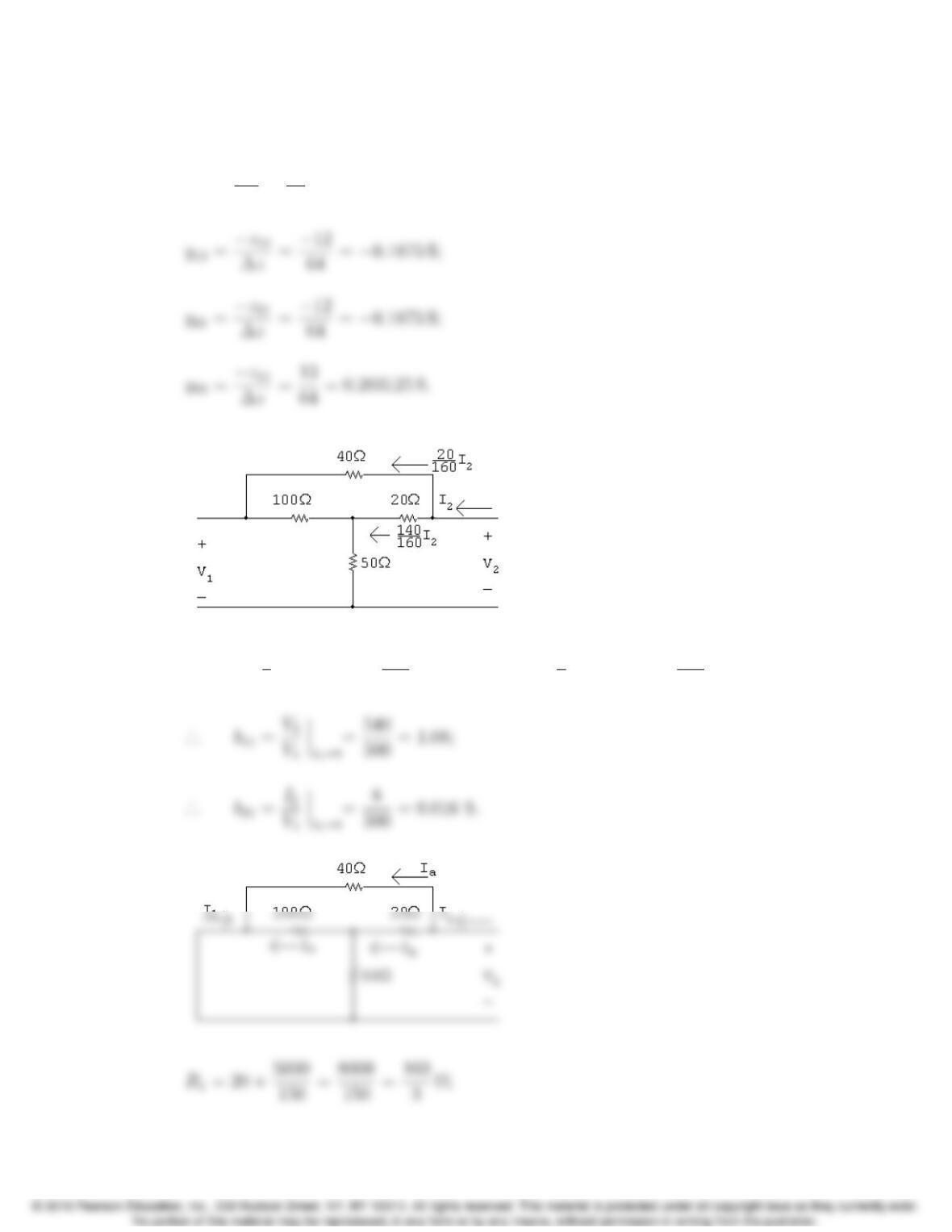
z11 =V1
I1I2=0
= 1 + 12 = 13 Ω;
18–6 CHAPTER 18. Two-Port Circuits
P 18.3 ∆z= (13)(16) (12)(12) = 64.
y11 =z22
∆z=16
64 =0.25 S;
P 18.4
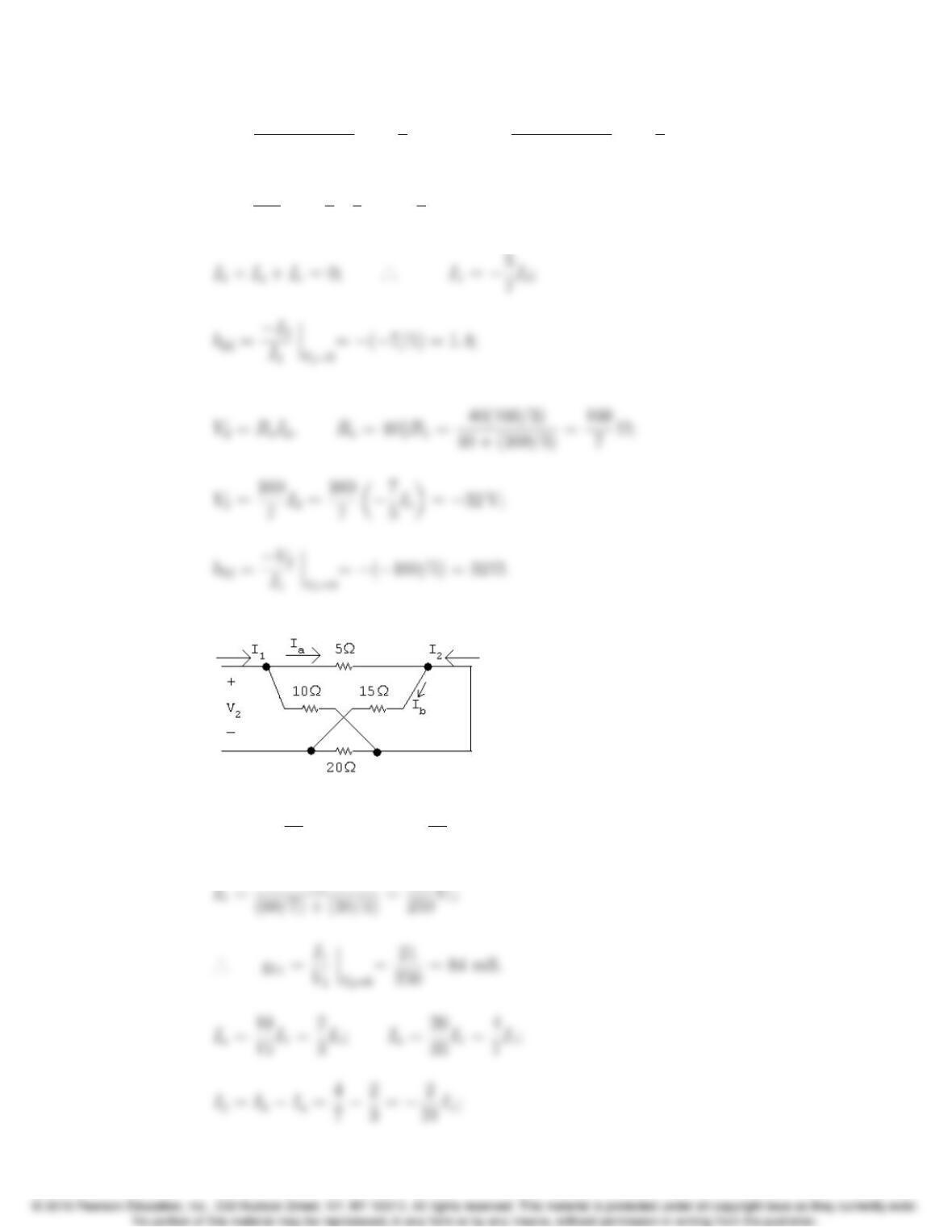
V2= 20 ✓7
8I2◆+50I2=540
8I2;V1= 100 ✓1
8I2◆+50I2=500
8I2;
Problems 18–7
Ia=160/3
(160/3) + 40I2=4
7I2;Ib=40
(160/3) + 40I2=3
7I2;
Ic=50
150Ib=1
3✓3
7I2◆=1
7I2;
P 18.5 For V2= 0:
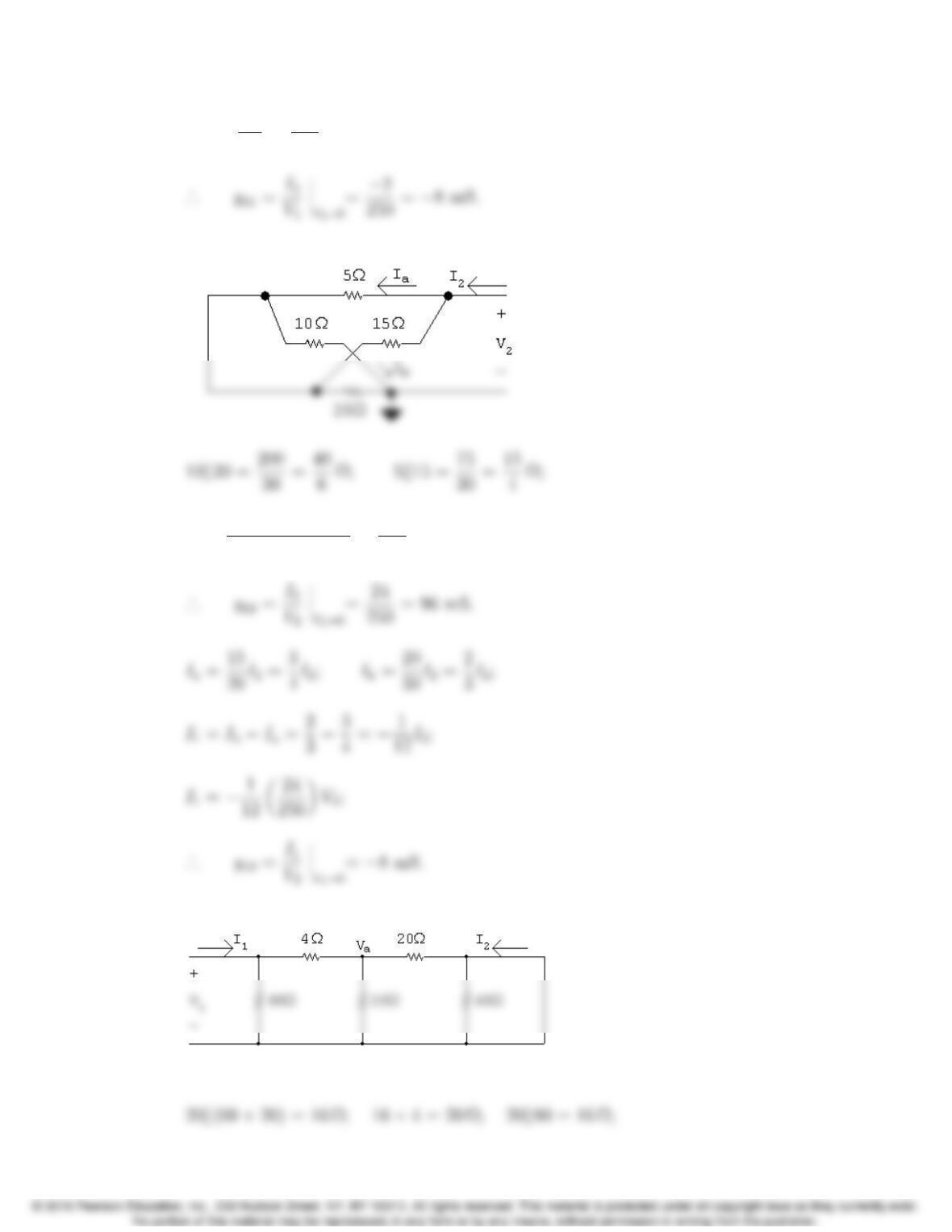
15k20 = 60
7Ω; 5k10 = 10
3Ω;
18–8 CHAPTER 18. Two-Port Circuits
I2=✓2
21 ◆✓21
250◆V1;
For V1= 0:
I2=V2
(40/6) + (15/4) =24
250V2;
P 18.6 For I2= 0:
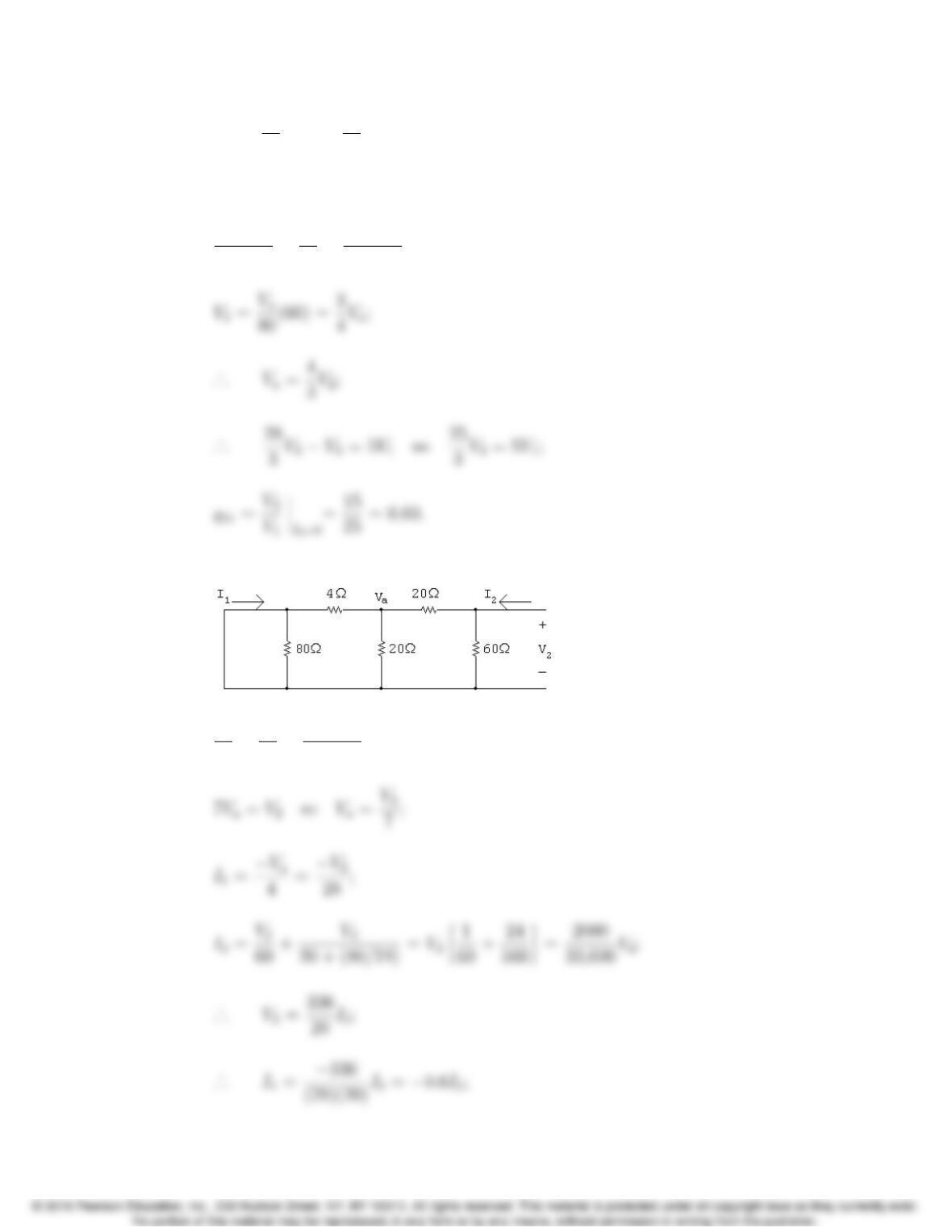
Calculate g11:
Problems 18–9
g11 =I1
V1I2=0
=1
16 = 62.5 mS.
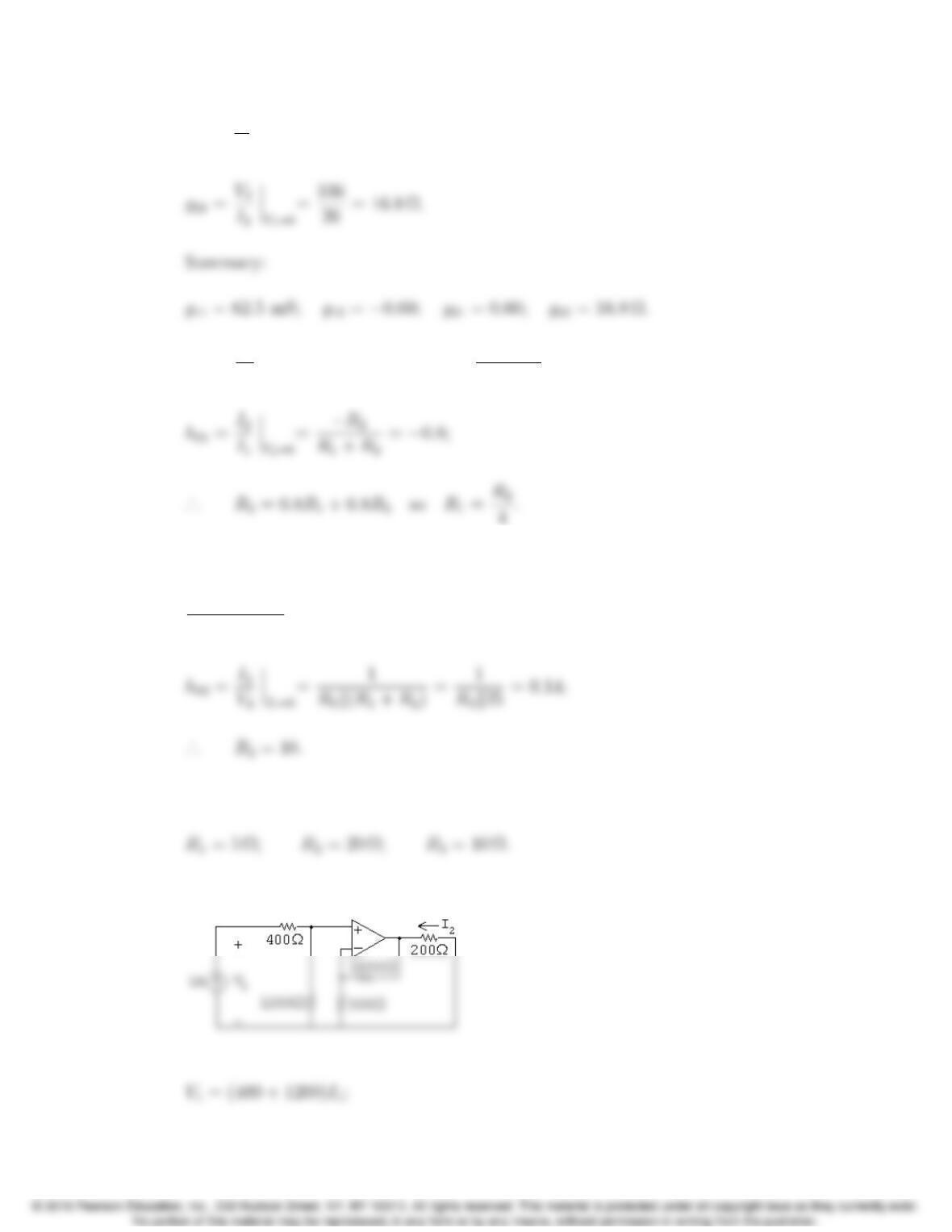
Calculate g21:
VaV1
4+Va
20 +VaV2
20 = 0;
For V1= 0:
Va
4+Va
20 +VaV2
20 = 0;
18–10 CHAPTER 18. Two-Port Circuits
g12 =I1
I2V1=0
=0.60;
P 18.7 h11 =V1
I1V2=0
=R1kR2=4 ·
.. R1R2
R1+R2
= 4;
Substituting,
(R2/4)R2
(R2/4) + R2
= 4 so R2= 20 Ωand R1= 5 Ω;
Summary:
P 18.8 For V2= 0:
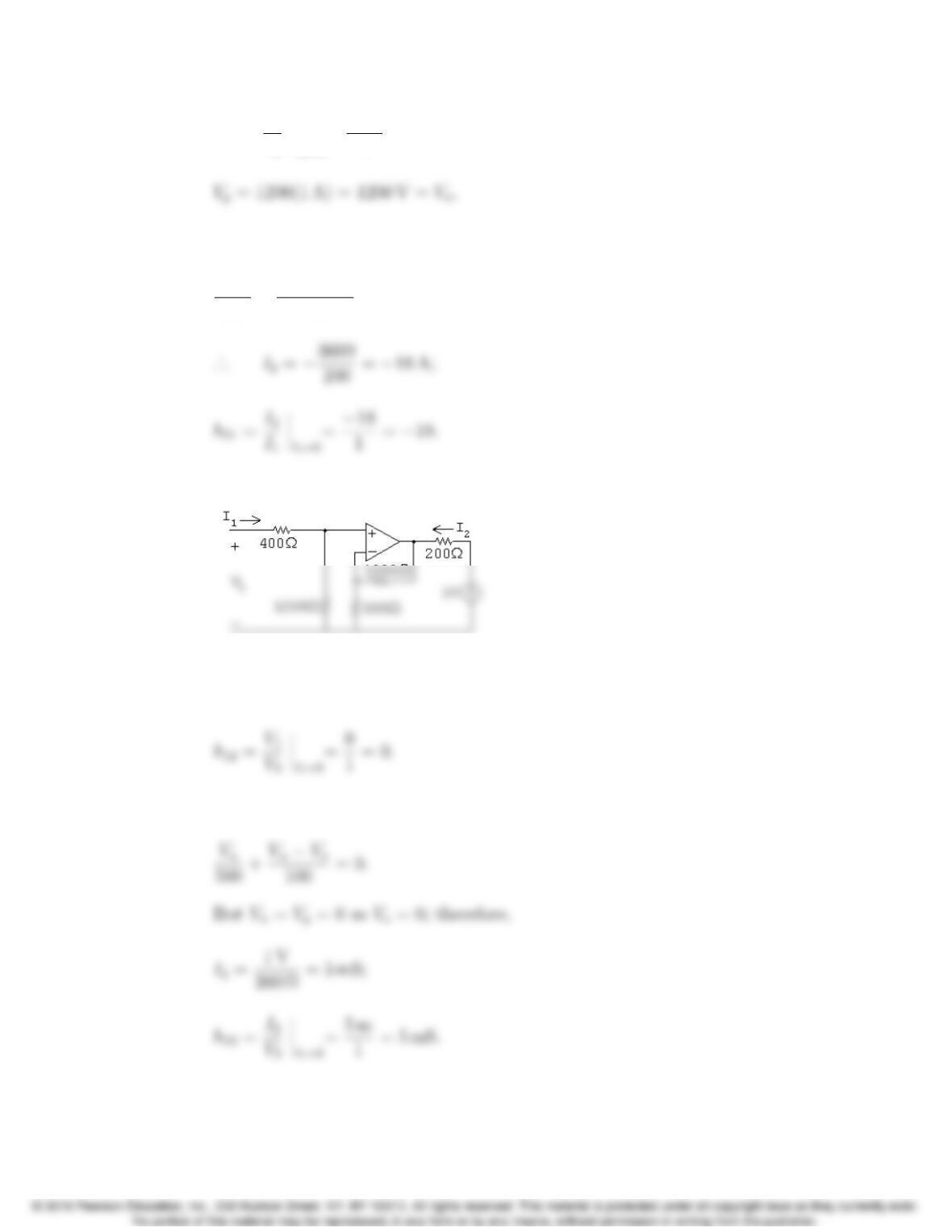
Problems 18–11
h11 =V1
I1V2=0
=1600
1= 1600 Ω;
At Vn,
1200
500 +1200 Vo
1000 = 0 so Vo= 3600 V;
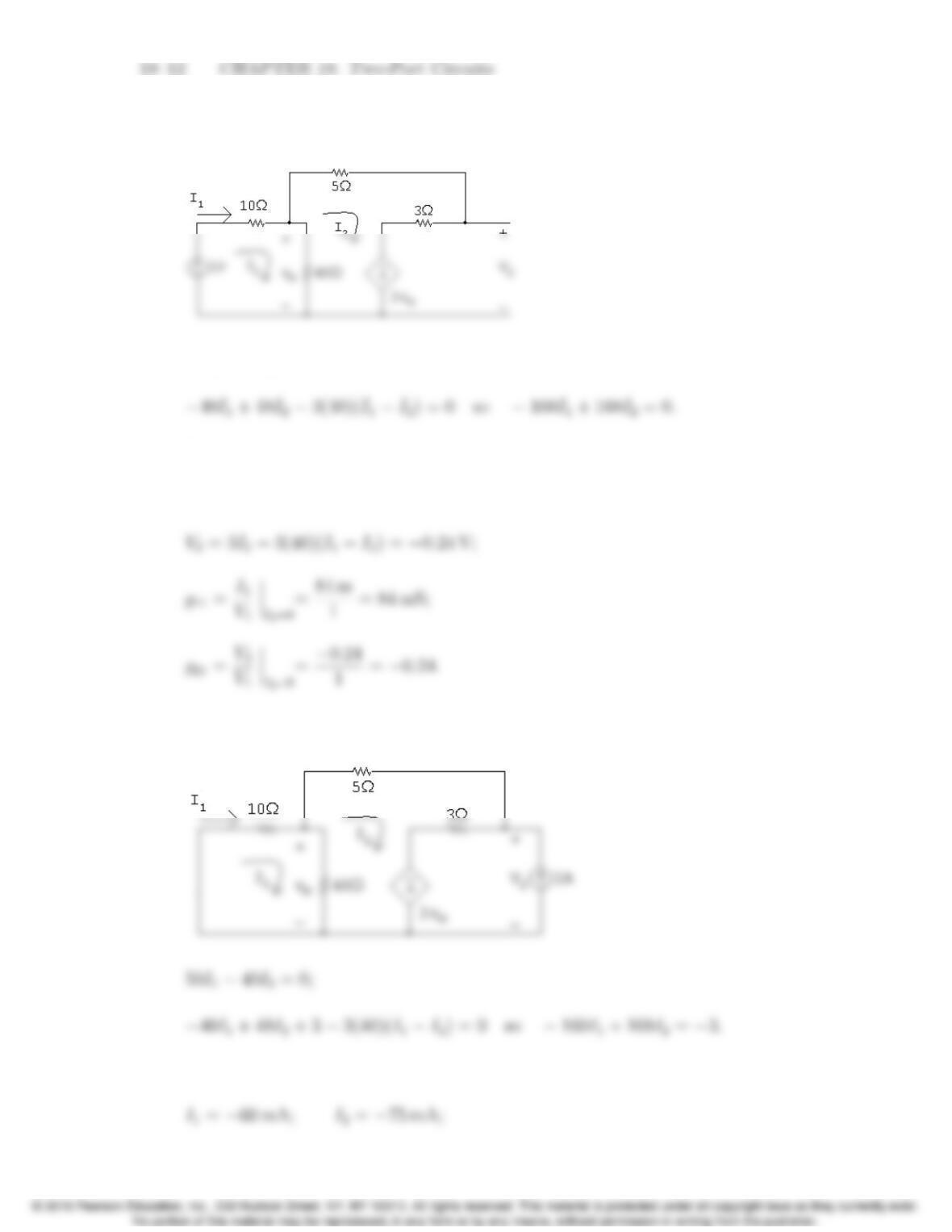
For I1= 0:
V1= 0;
At Vn,
P 18.9 For I2= 0:
50I140I2= 1;
Solving,
I1= 84 mA; I2= 80 mA;
For V1= 0:
Solving,
Problems 18–13
V2= 3(I2+1)3(40)(I1I2)=0.975 V;
P 18.10 V1=a11V2a12I2;
I1=a21V2a22I2;
V1= 103I1+10
4V2= 103(0.5⇥106)V2+10
4V2;
18–14 CHAPTER 18. Two-Port Circuits
Summary
P 18.11 g11 =a21
a11
=0.5⇥106
4⇥104=1.25 mS;
P 18.12 For V2= 0:
For I1= 0:
Problems 18–15
200I2=j2V2+V250i2;
250I2=V2(1 + j2);
Summary:
P 18.13 I1=g11V1+g12I2;V2=g21V1+g22I2;
g11 =I1
V1I2=0
=0.25 ⇥106
20 ⇥103= 12.5⇥106= 12.5µS;
18–16 CHAPTER 18. Two-Port Circuits
P 18.14 [a] I1=y11V1+y12V2;I2=y21V1+y22V2;
y21 =I2
V1V2=0
=50 ⇥106
10 =5µS;
Summary:
[b] y11 =∆g
g22
;y12 =g12
g22
;y21 =g21
g22
;y22 =1
g22
;
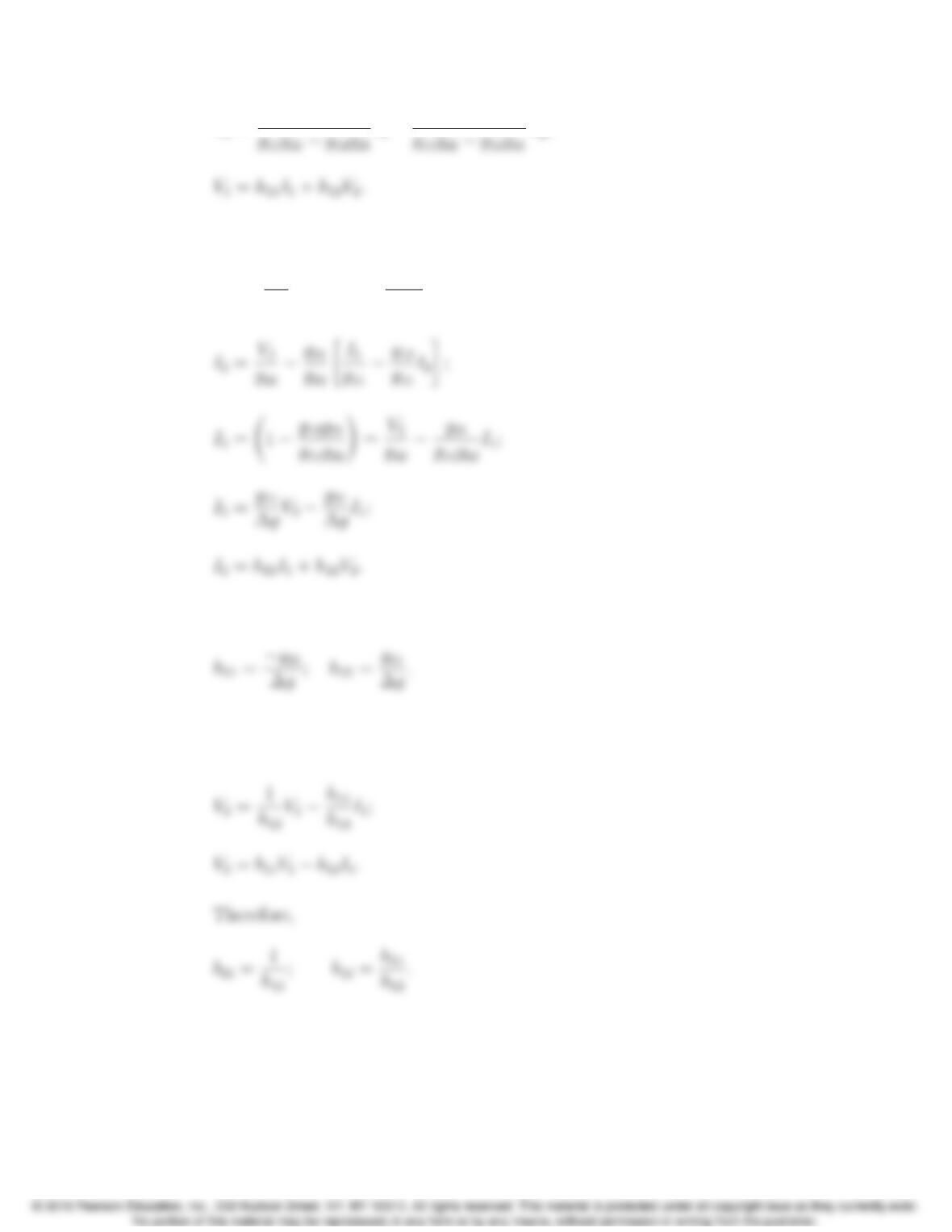
P 18.15 I1=g11V1+g12I2;
Substituting,
Problems 18–17
V1=g22
I1g12
V2;
Therefore,
h11 =g22
∆g;h12 =g12
∆gwhere ∆g=g11g22 g12g21.
Therefore,
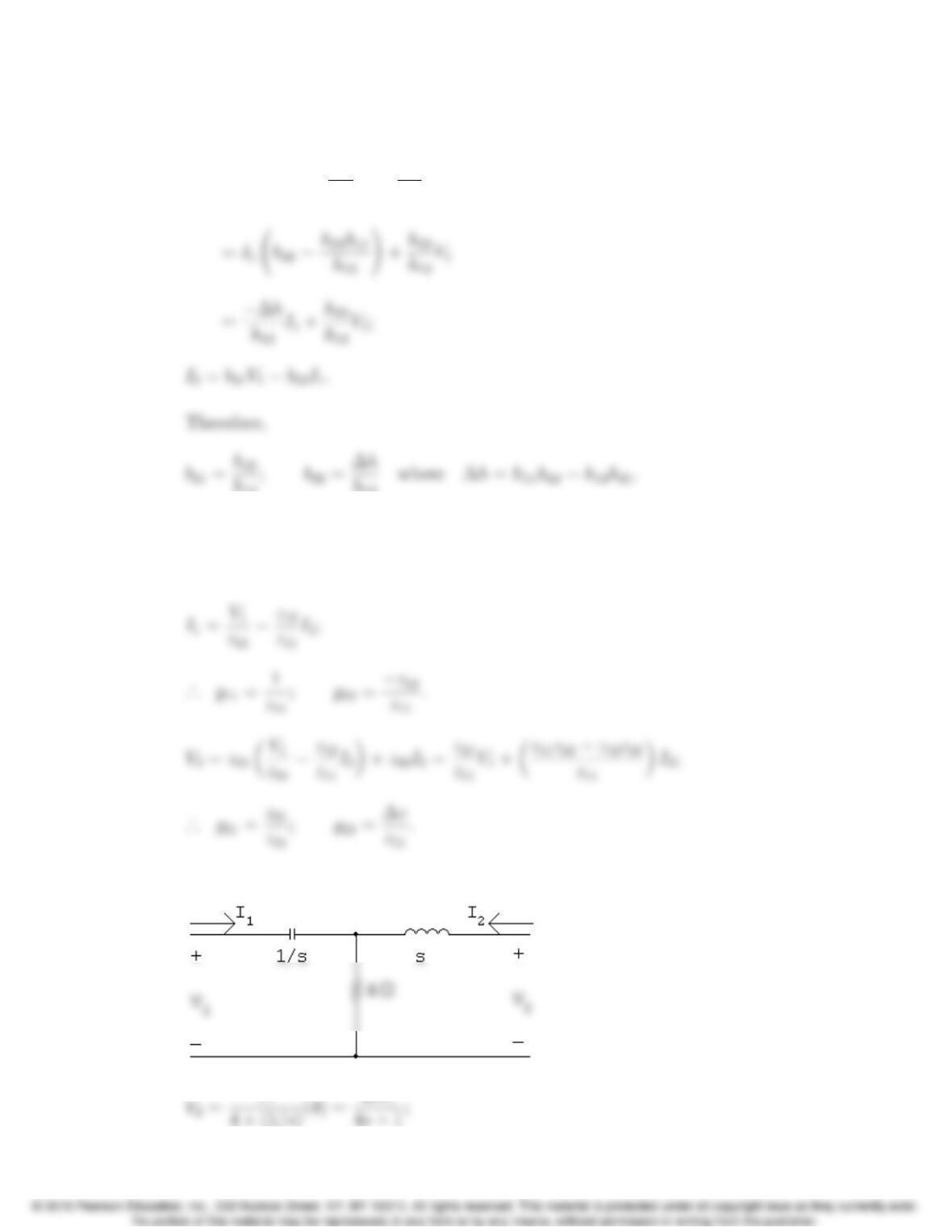
P 18.16 V1=h11I1+h12V2;I2=h21I1+h22V2.
Rearranging the first equation,
18–18 CHAPTER 18. Two-Port Circuits
Solving the second h-parameter equation for I2:
I2=h21I1+h22 1
h12
V1h11
h12
I1!
h12
h12
P 18.17 I1=g11V1+g12I2;V2=g21V1+g22I2;
V1=z11I1+z12I2;V2=z21I1+z22I2;
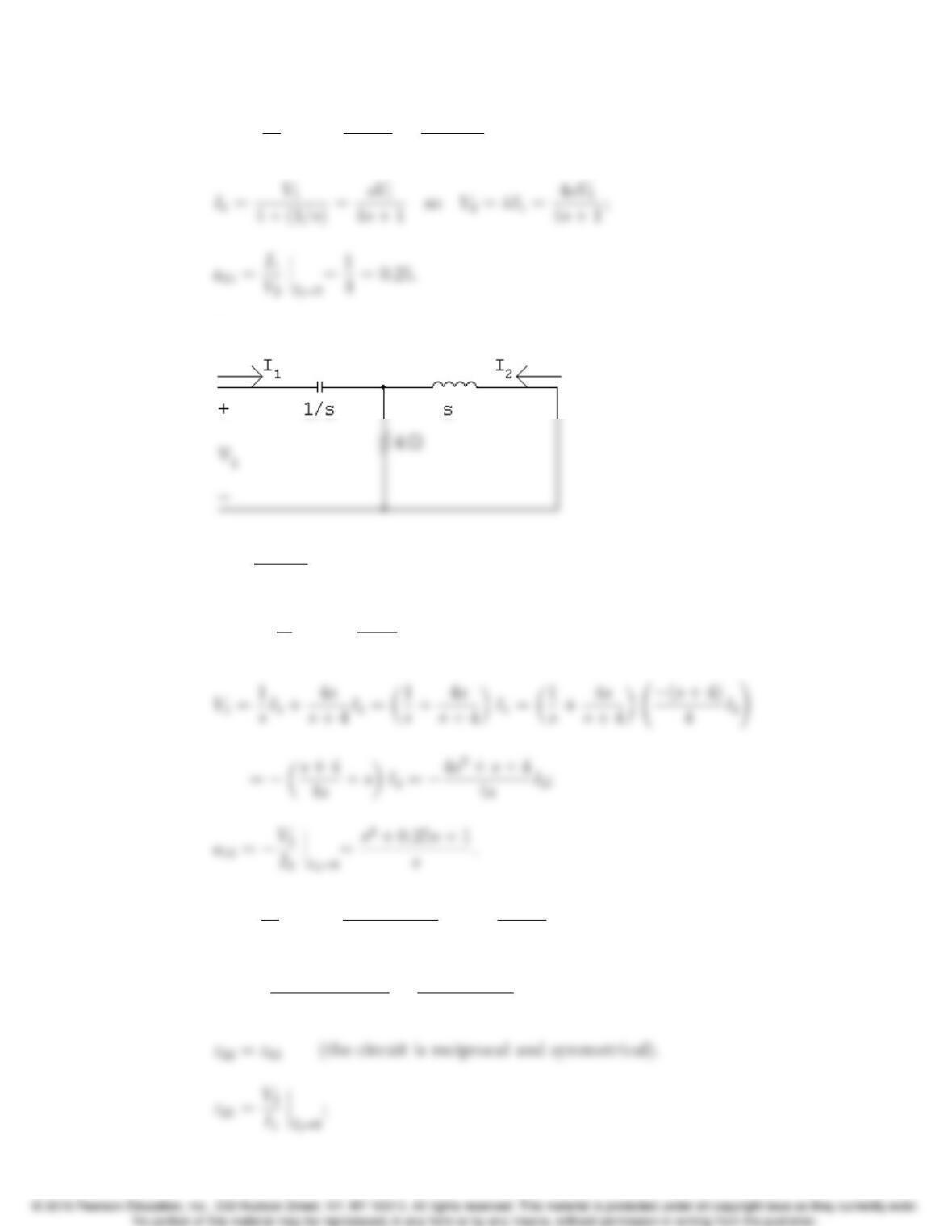
P 18.18 For I2= 0:
Problems 18–19
a11 =V1
V2I2=0
=4s+1
4s=s+0.25
s;
For V2= 0:
I2=I1(4)
s+4 ;
a22 =I1
I2V2=0
=s+4
s;
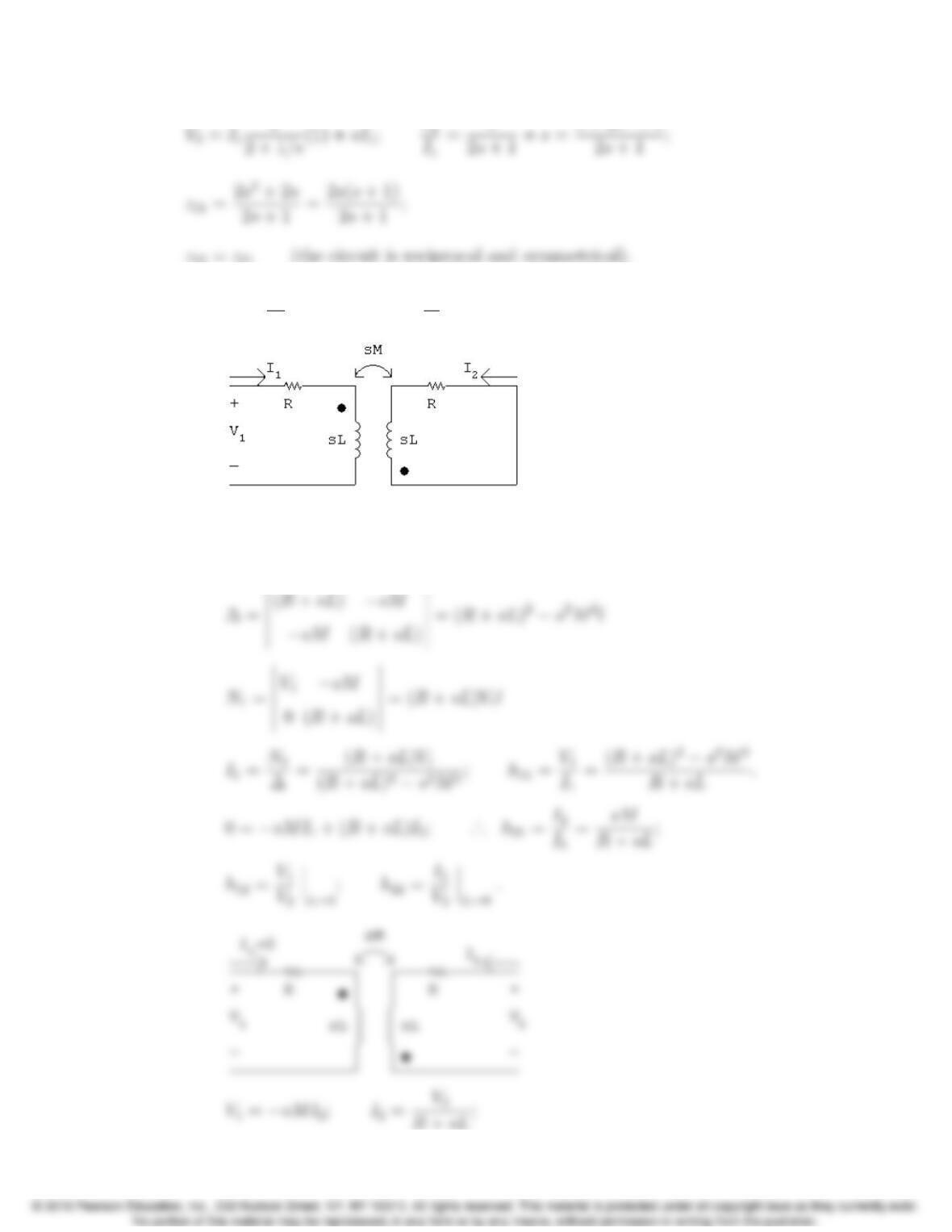
P 18.19 z11 =V1
I1I2=0
=(1 + 1/s)(1)
2+1/s +s=s+1
2s+1+s
=s+1+2s2+2
2s+1 =2s2+2s+1
2s+1 ;
18–20 CHAPTER 18. Two-Port Circuits
1
P 18.20 [a] h11 =V1
I1V2=0
;h21 =I2
I1V2=0
.
V1=(R+sL)I1sMI2l
0=sMI1+(R+sL)I2l