Problems 18–21
[b] h12 =−h21 (reciprocal);
h11h22 −h12h21 = 1 (symmetrical, reciprocal);
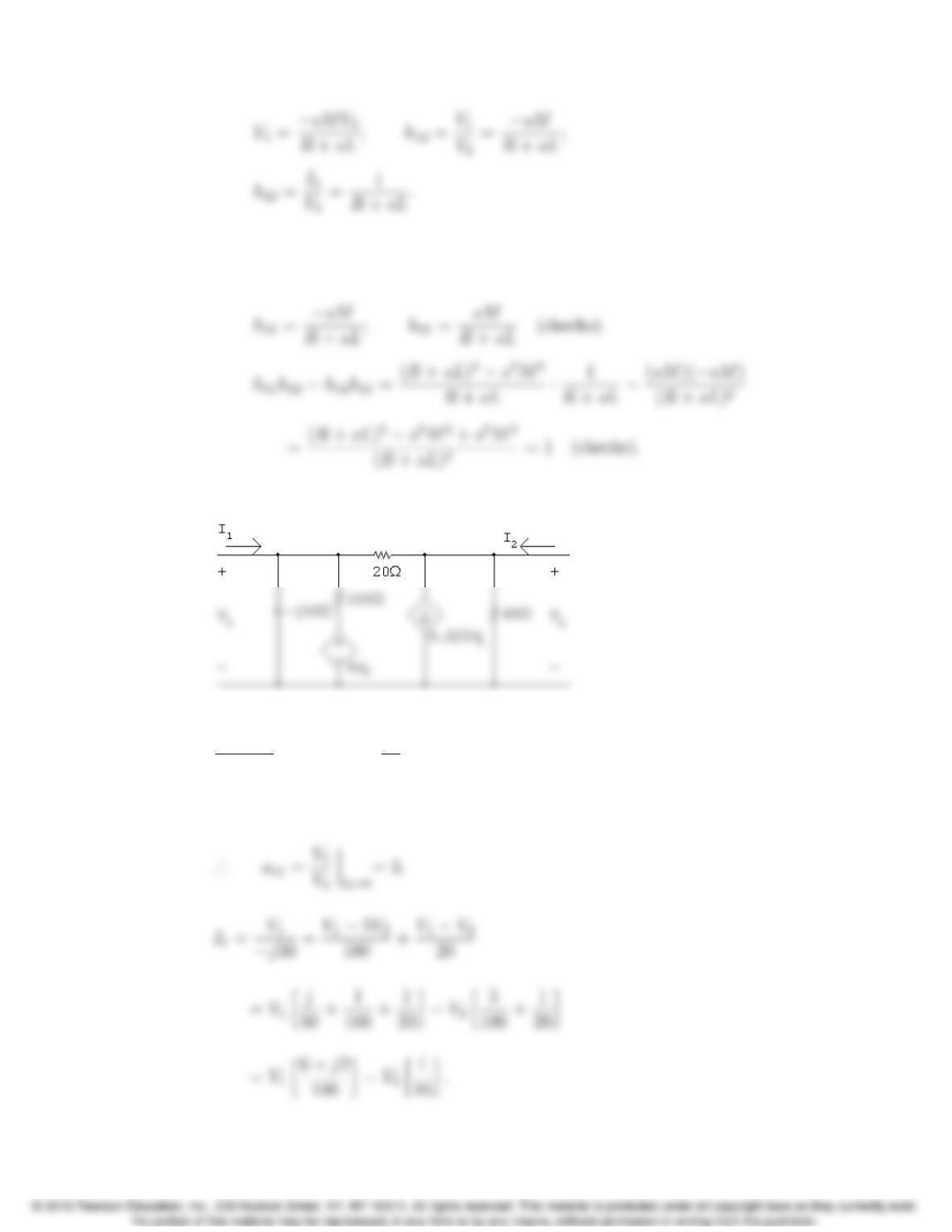
P 18.21 For I2= 0:
V2−V1
20 +0.025V1+V2
40 = 0;
2V2−2V1+V1+V2= 0 so 3V2=V1;
18–22 CHAPTER 18. Two-Port Circuits
But V1=3V2so
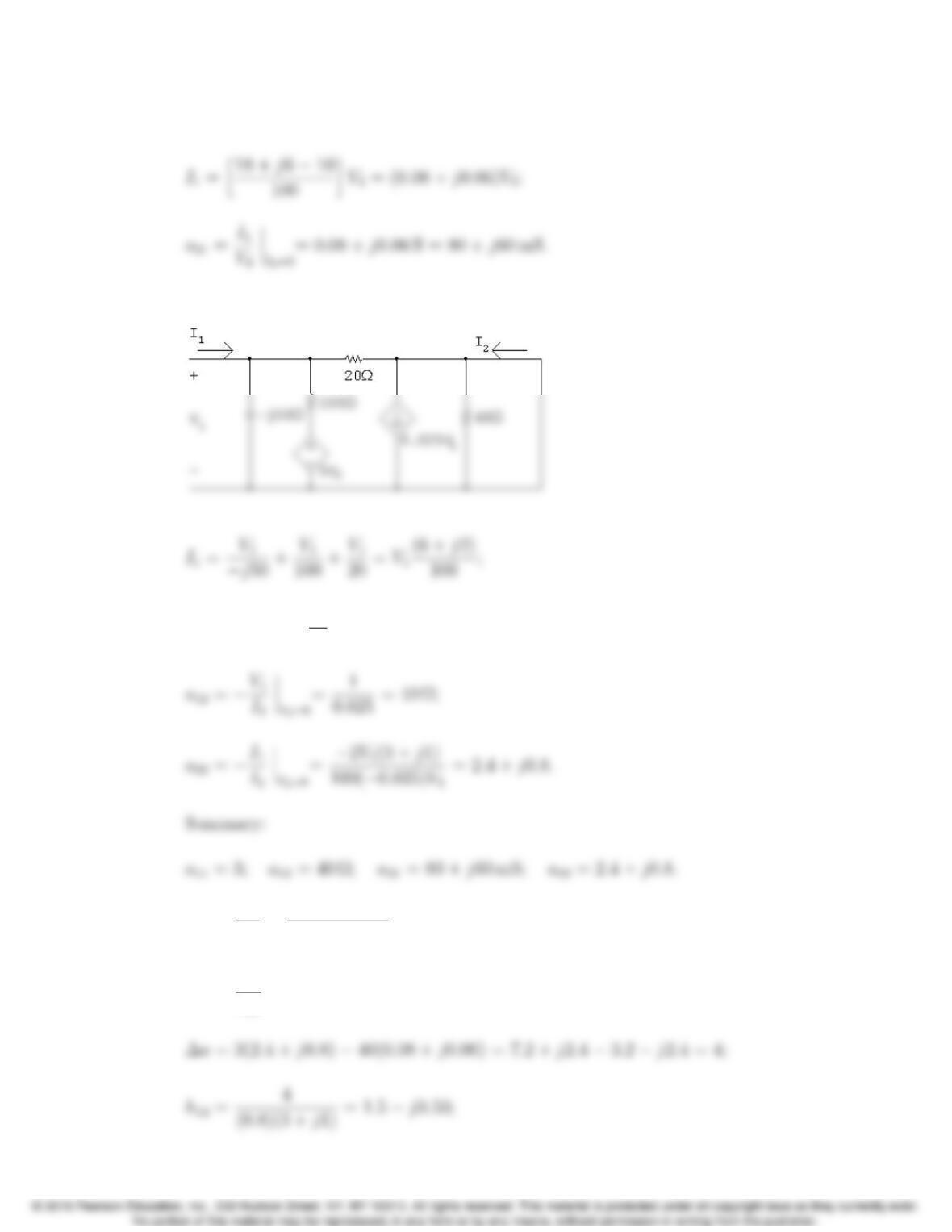
For V2= 0:
I2=0.025V1−V1
20 =−0.025V1;
P 18.22 h11 =a12
a22
=40
(0.8)(3 + j1) = 15 −j5Ω;
h12 =∆a
a22
;
Problems 18–23
P 18.23 First we note that
Therefore z11 =z22.
z12 =V1
I2I1=0
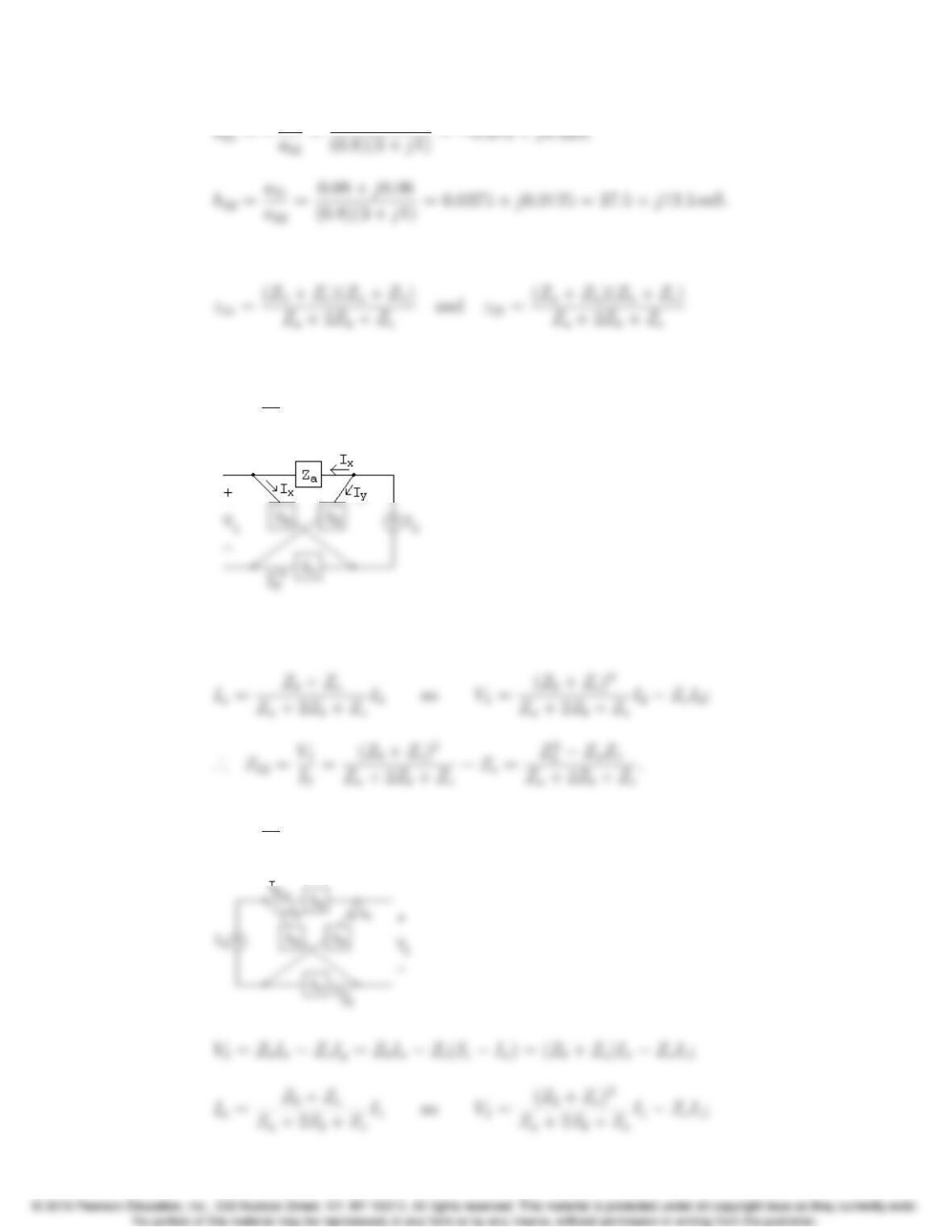
; Use the circuit below:
V1=ZbIx−ZcIy=ZbIx−Zc(I2−Ix)=(Zb+Zc)Ix−ZcI2;
z21 =V2
I1I2=0
; Use the circuit below:
18–24 CHAPTER 18. Two-Port Circuits
P 18.24
I2=−V2
ZL
=−b11V1+b12I1
ZL
;
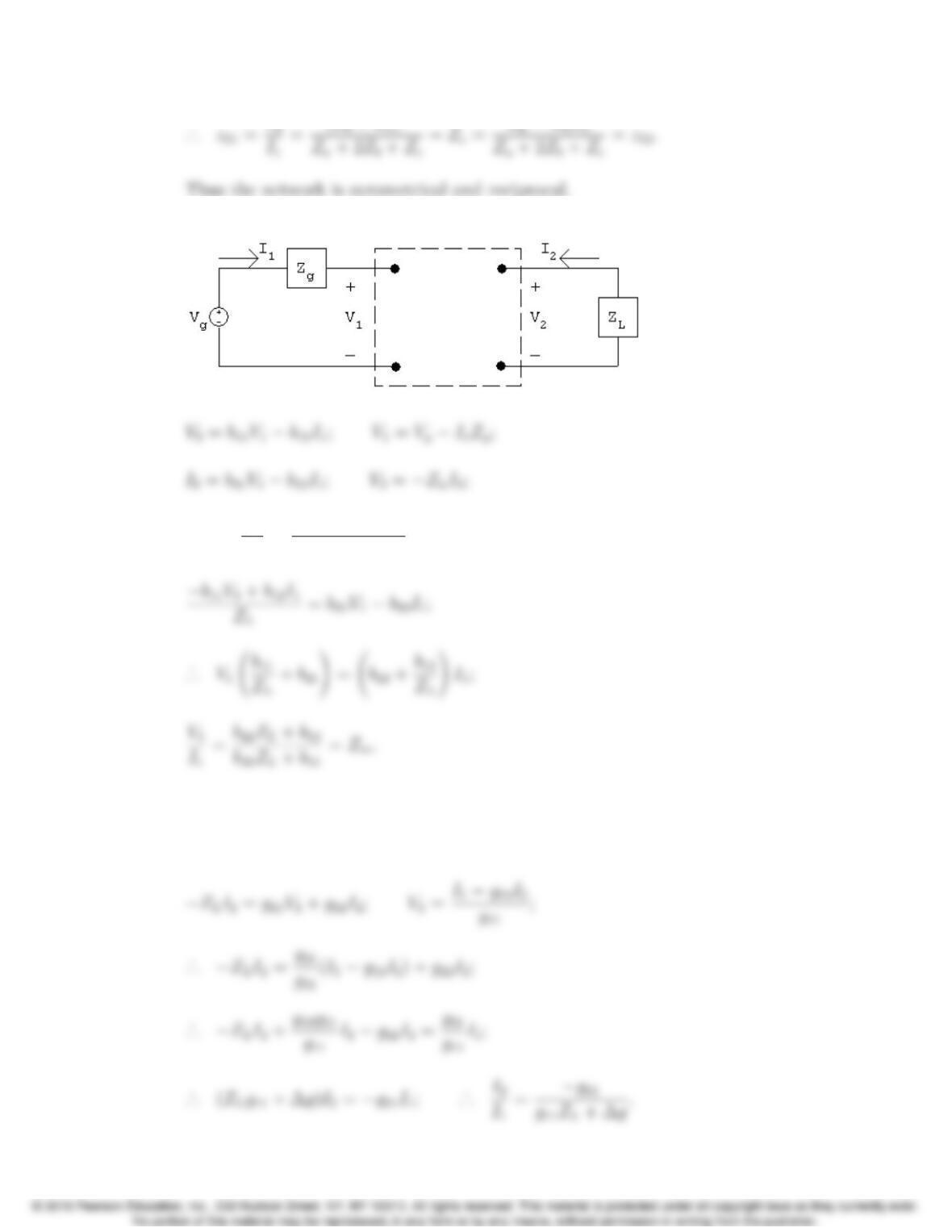
P 18.25 I1=g11V1+g12I2;V1=Vg−ZgI1;
V2=g21V1+g22I2;V2=−ZLI2;
Problems 18–25
P 18.26 I1=y11V1+y12V2;V1=Vg−ZgI1;
P 18.27 V1=z11I1+z12I2;V1=Vg−ZgI1;
V2=z21I1+z22I2;V2=−ZLI2;
P 18.28 V1=h11I1+h12V2;V1=Vg−ZgI1;
I2=h21I1+h22V2;V2=−ZLI2;
18–26 CHAPTER 18. Two-Port Circuits
·
.. −V2
ZL
=h21 “Vg−h12V2
h11 +Zg#+h22V2.
−V2(h11 +Zg)
ZL
=h21Vg−h12h21V2+h22(h11 +Zg)V2;
P 18.29 V1=h11I1+h12V2;
I2=h21I1+h22V2.
From the first measurement:
h11 =V1
I1
=4
5×103= 800 Ω;
From the second measurement:
h22V2= 40I1;
Summary:
Problems 18–27
From the circuit,
Zg= 250 Ω;Vg=5.25 mV;
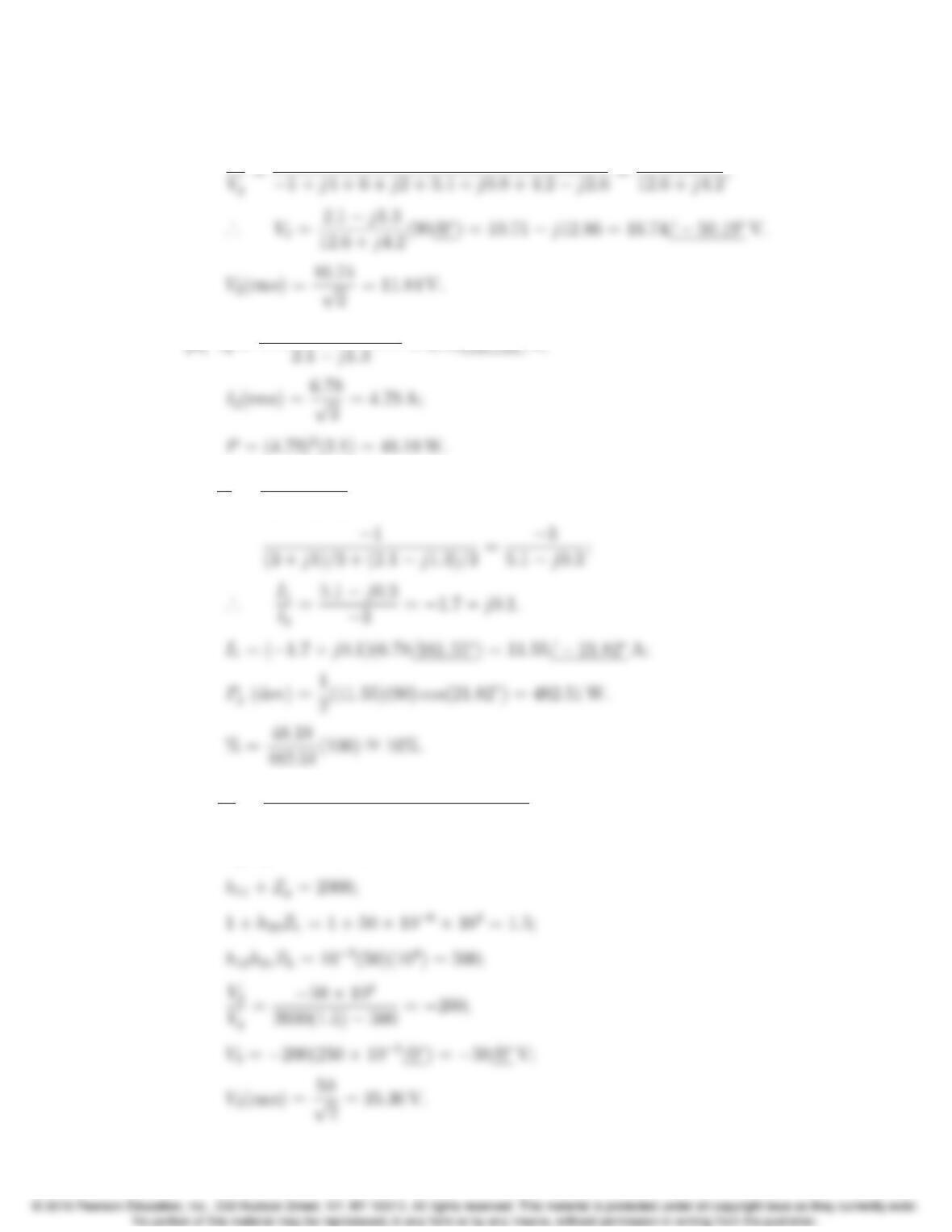
P 18.30 [a] ZTh =b11Zg+b12
b21Zg+b22
;
b11Zg=6+j2; b21Zg= 2;
18–28 CHAPTER 18. Two-Port Circuits
b21ZgZL=4.2−j2.6;
V2
[b] I2=−(10.71 −j12.86)
[c] I2
I1
=−∆b
b11 +b21ZL
;
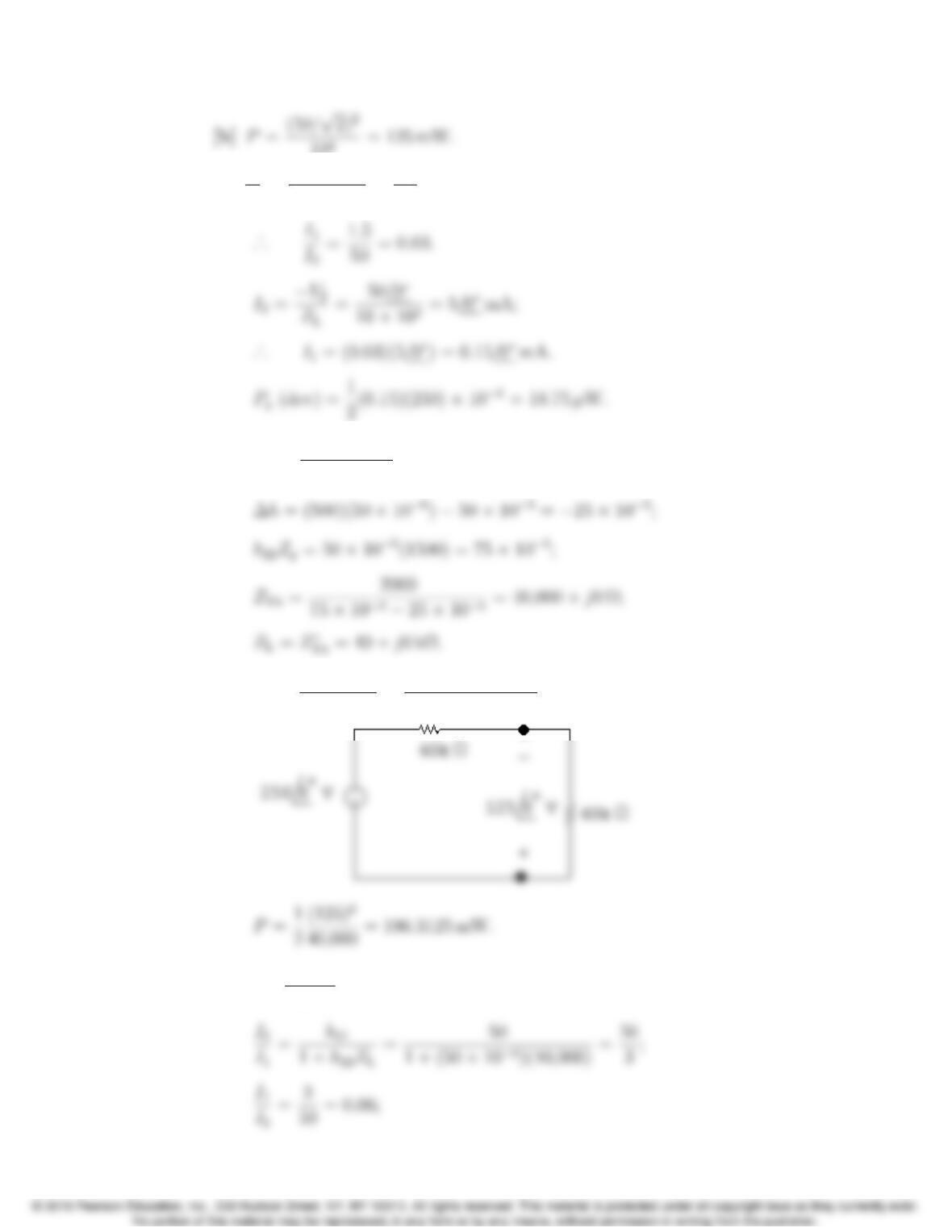
P 18.31 [a] V2
Vg
=−h21ZL
(h11 +Zg)(1 + h22ZL)−h12h21ZL
;
h21ZL= 50 ×104;
Problems 18–29
104= 125 mW.
[c] I2
I1
=h21
1+h22ZL
=50
1.5;
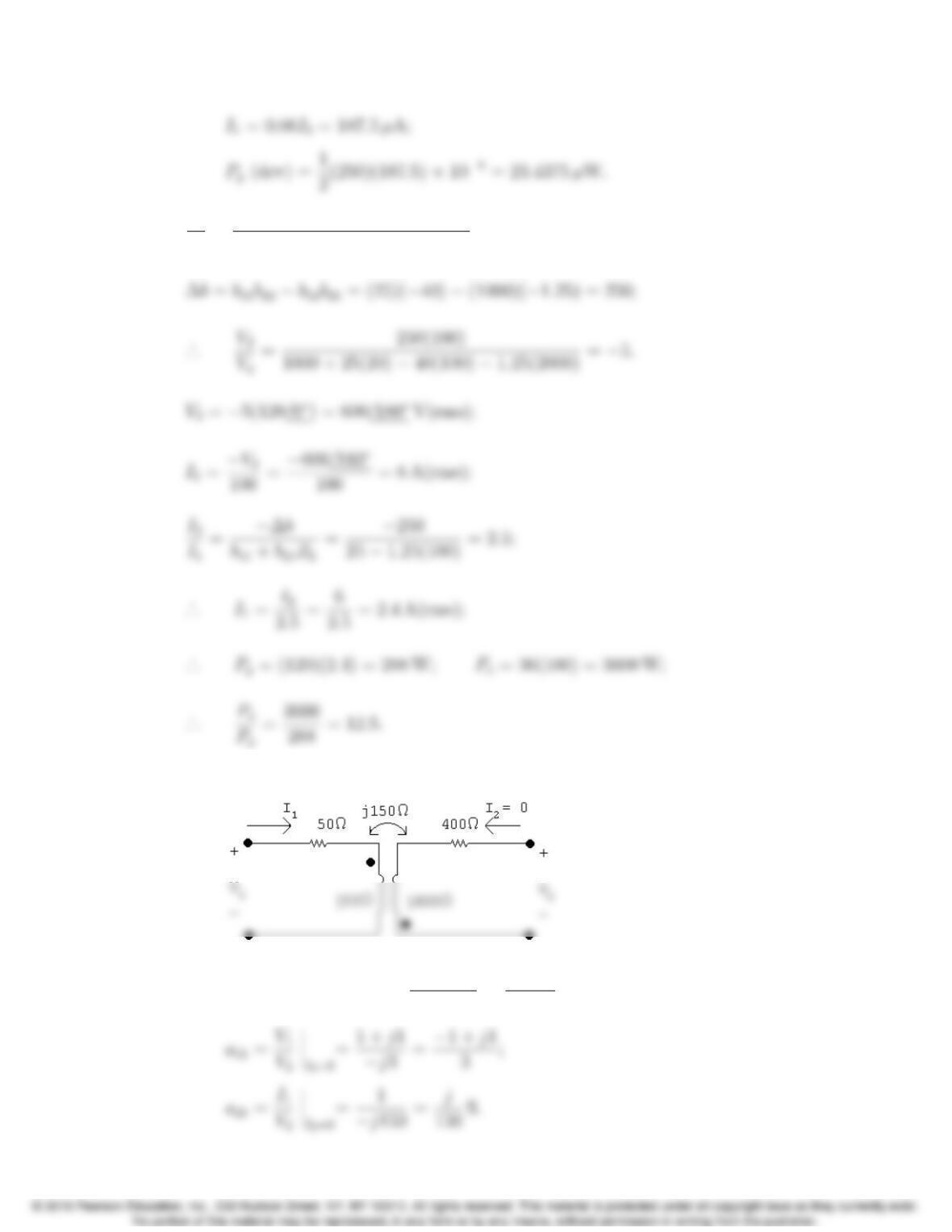
P 18.32 [a] ZTh =Zg+h11
h22Zg+∆h;
[b] VTh =−h21Vg
50 ×103=−50(250) ×103
50 ×103=−250 V.
[c] I2=125
40,000 =3.125 mA;
18–30 CHAPTER 18. Two-Port Circuits
P 18.33 V2
Vg
=∆bZL
b12 +b11Zg+b22ZL+b21ZgZL
;
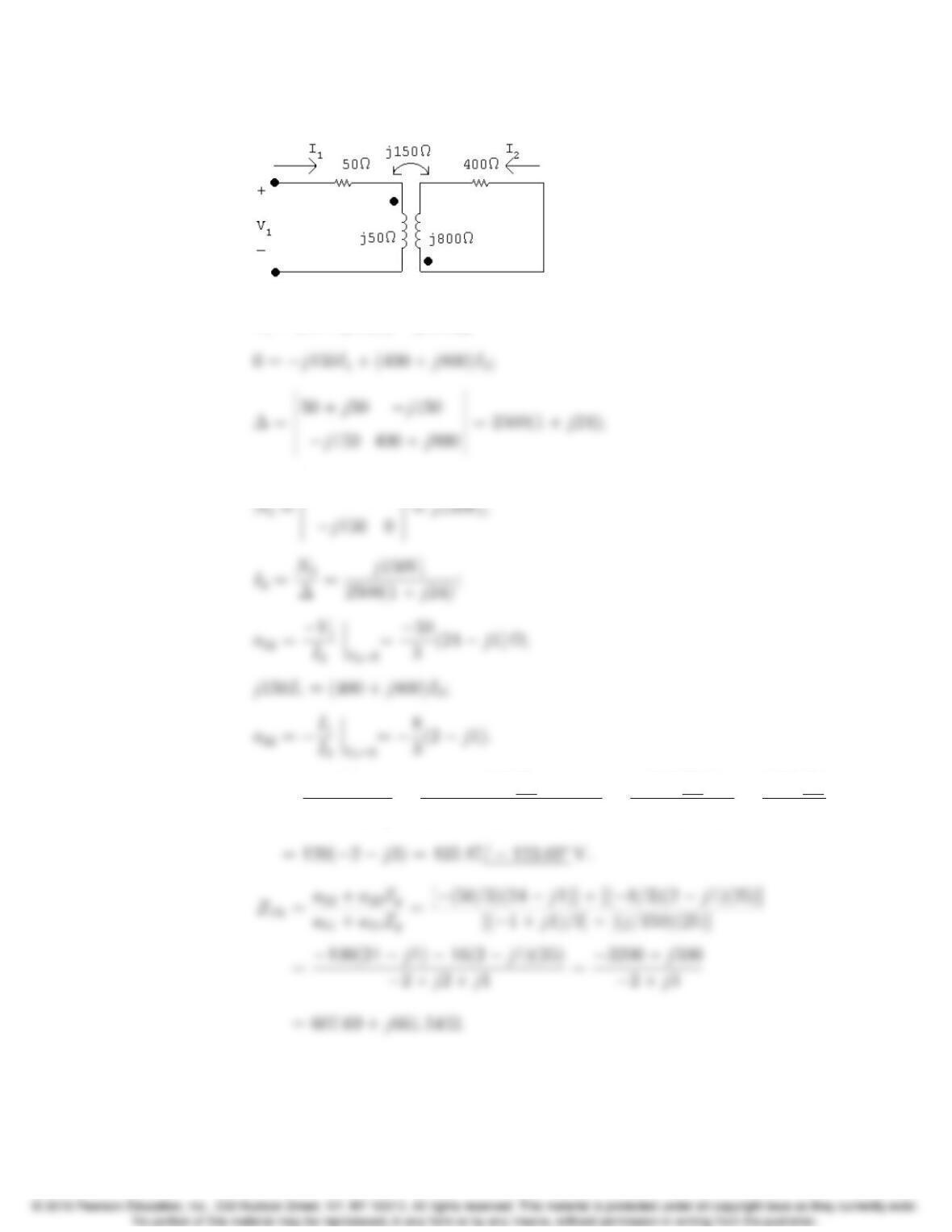
P 18.34 [a] For I2= 0:
V2=−j150I1=−j150 V1
50 + j50 =−j3V1
1+j1;
Problems 18–31
For V2= 0:
V1= (50 + j50)I1−j150I2;
50 + j50 V1
[b] VTh =Vg
a11 +a21Zg
=260/0
(−1+j1)/3+j25/150 =(260/0)6
−2+j2+j1=1560/0
−2+j3