Problems 17–21
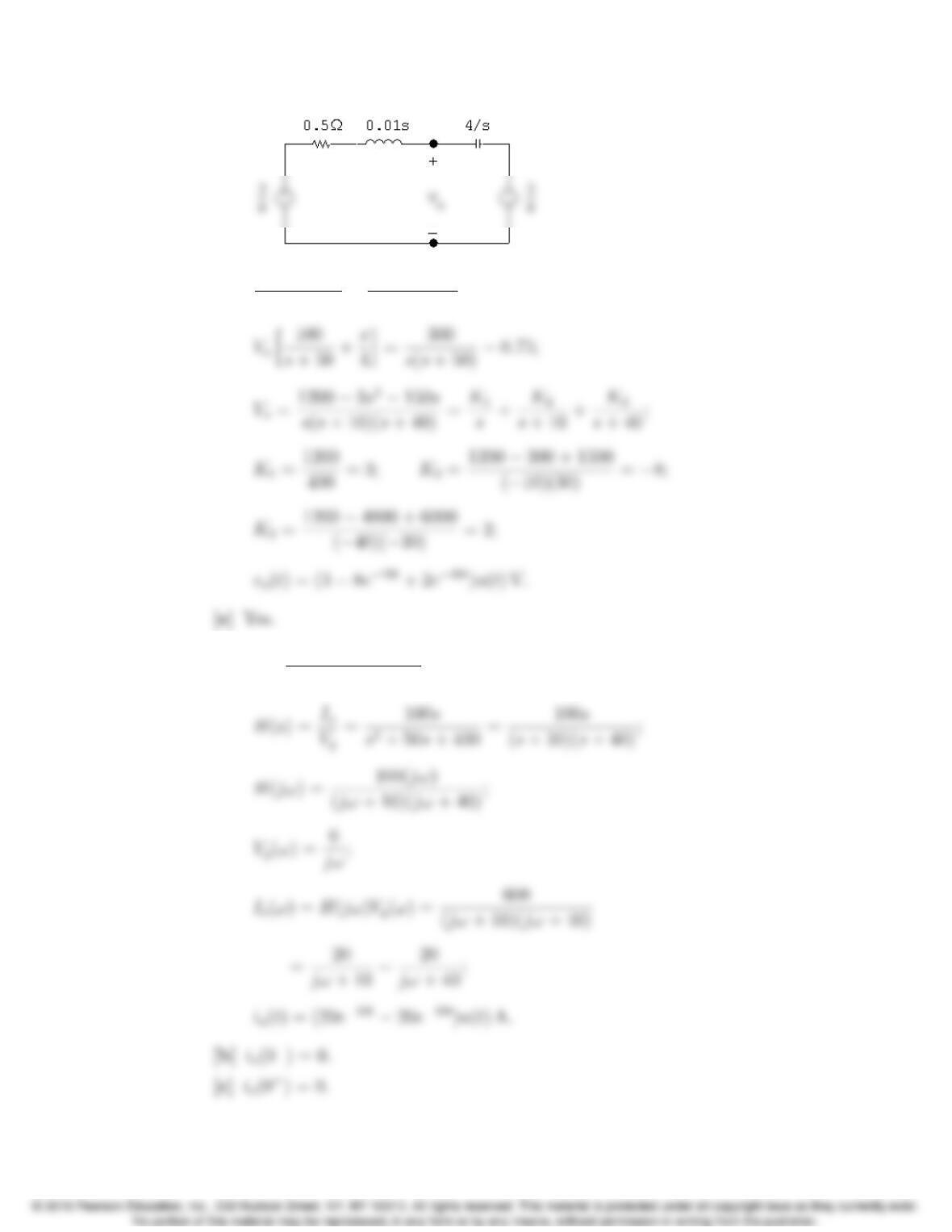
Vo3/s
0.5+0.01s+(Vo+3/s)s
4= 0;
P 17.27 [a] Io=Vg
0.5+0.01s+4/s;
17–22 CHAPTER 17. The Fourier Transform
[d]
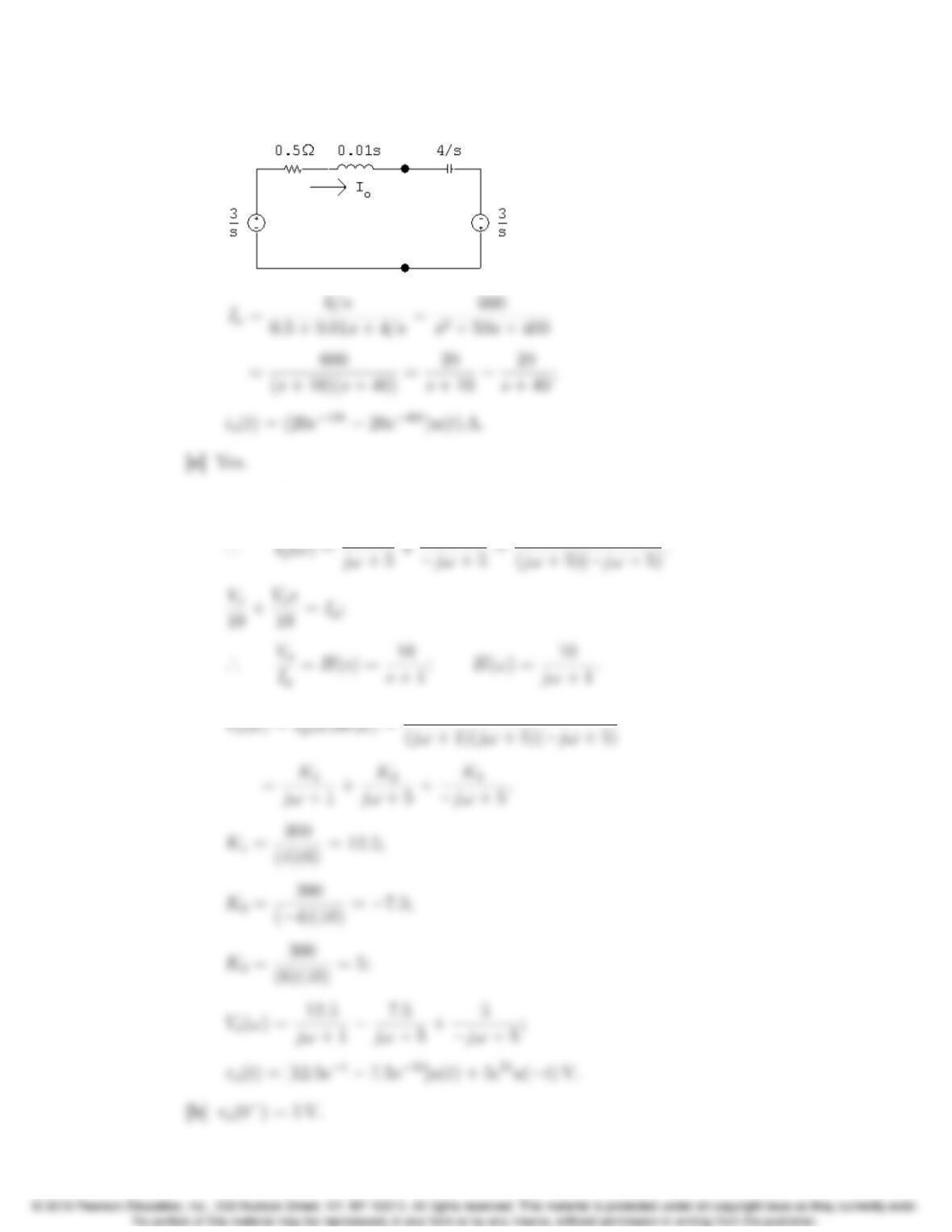
P 17.28 [a] ig=3e5|t|;
Problems 17–23
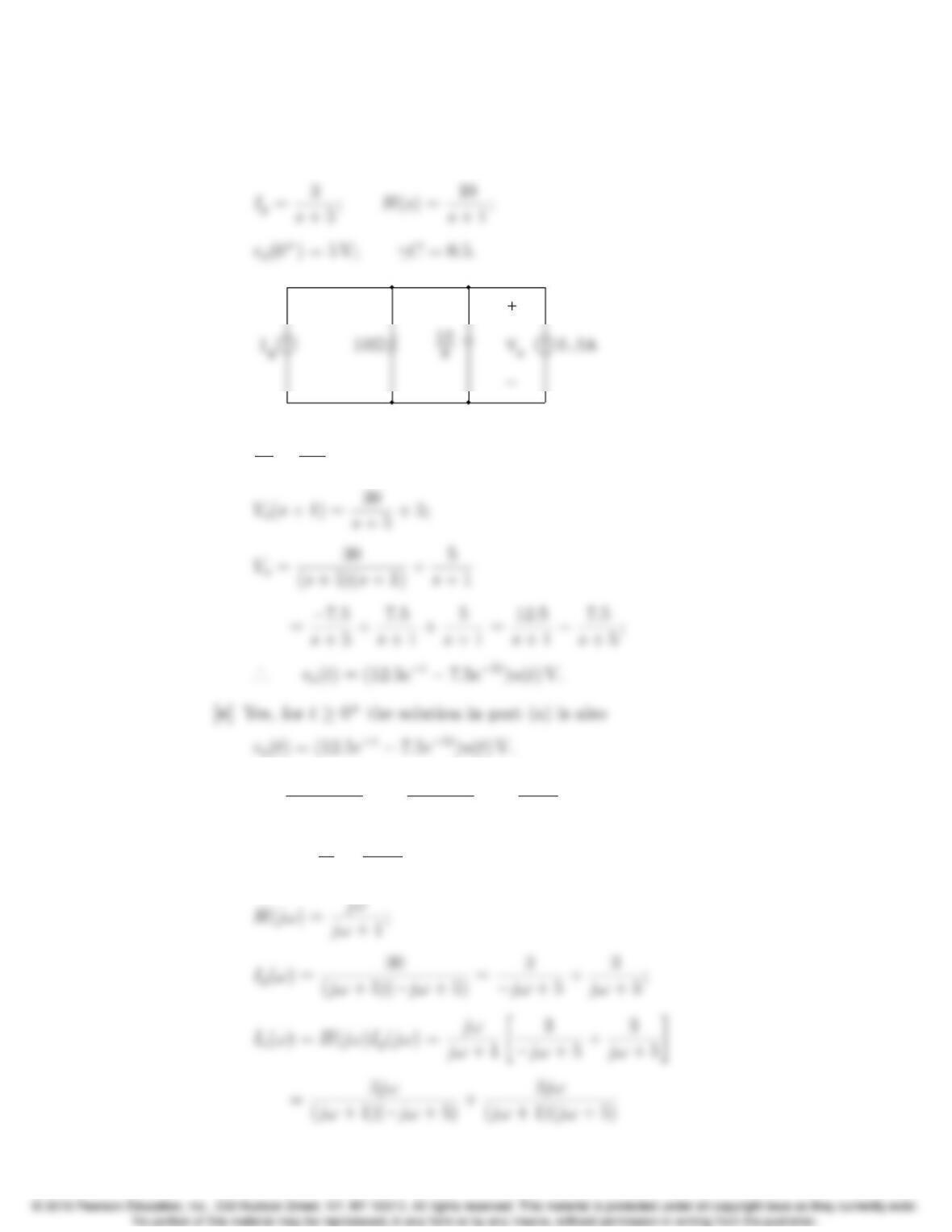
[c] vo(0+)=12.57.5=5V.
[d] ig=3e5tu(t),t0+;
Vo
10 +Vos
10 =Ig+0.5;
P 17.29 [a] Io=10k(10/s)
10/s Ig=10s
10s+10Ig=s
s+1Ig;
H(s)=Io
Ig
=s
s+1;
17–24 CHAPTER 17. The Fourier Transform
=0.5
jω+1+2.5
jω+5+0.75
jω+1+3.75
jω+5.
[d] From Problem 17.28, vo(0+) = 5 V.
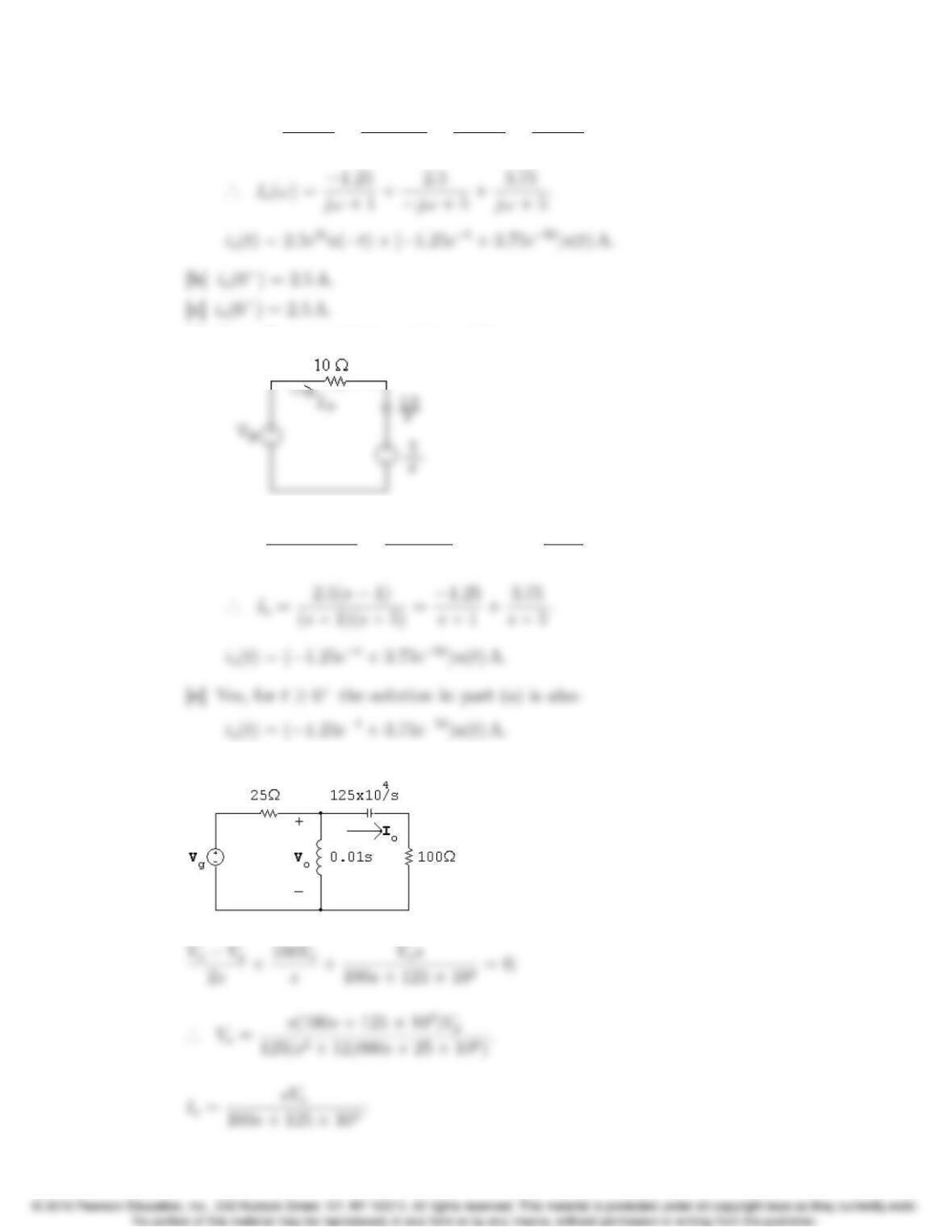
Io=Vg(5/s)
10 + (10/s)=sVg5
10s+10;Vg=30
s+5.
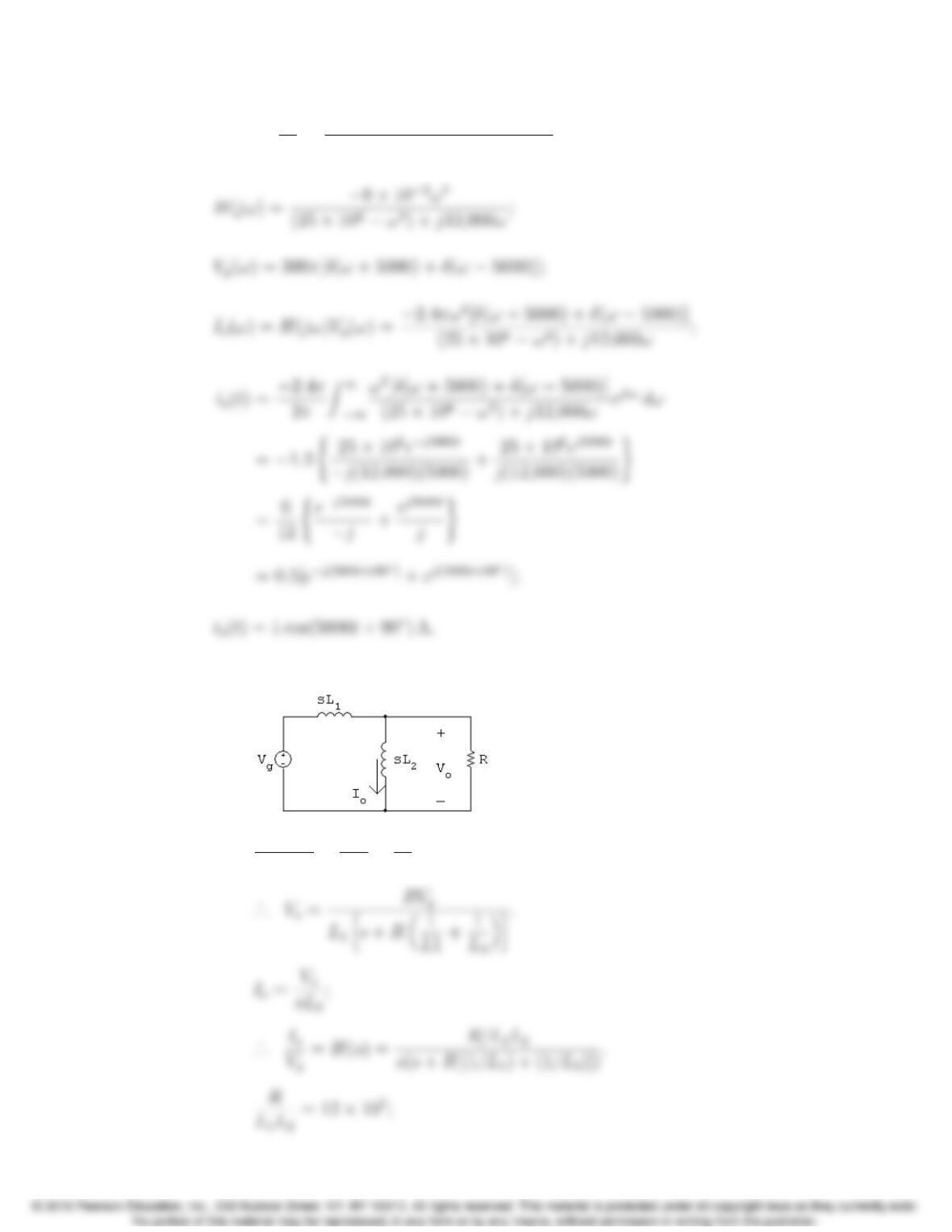
P 17.30
Problems 17–25
H(s)= Io
Vg
=s2
125(s2+12,000s+25⇥106).
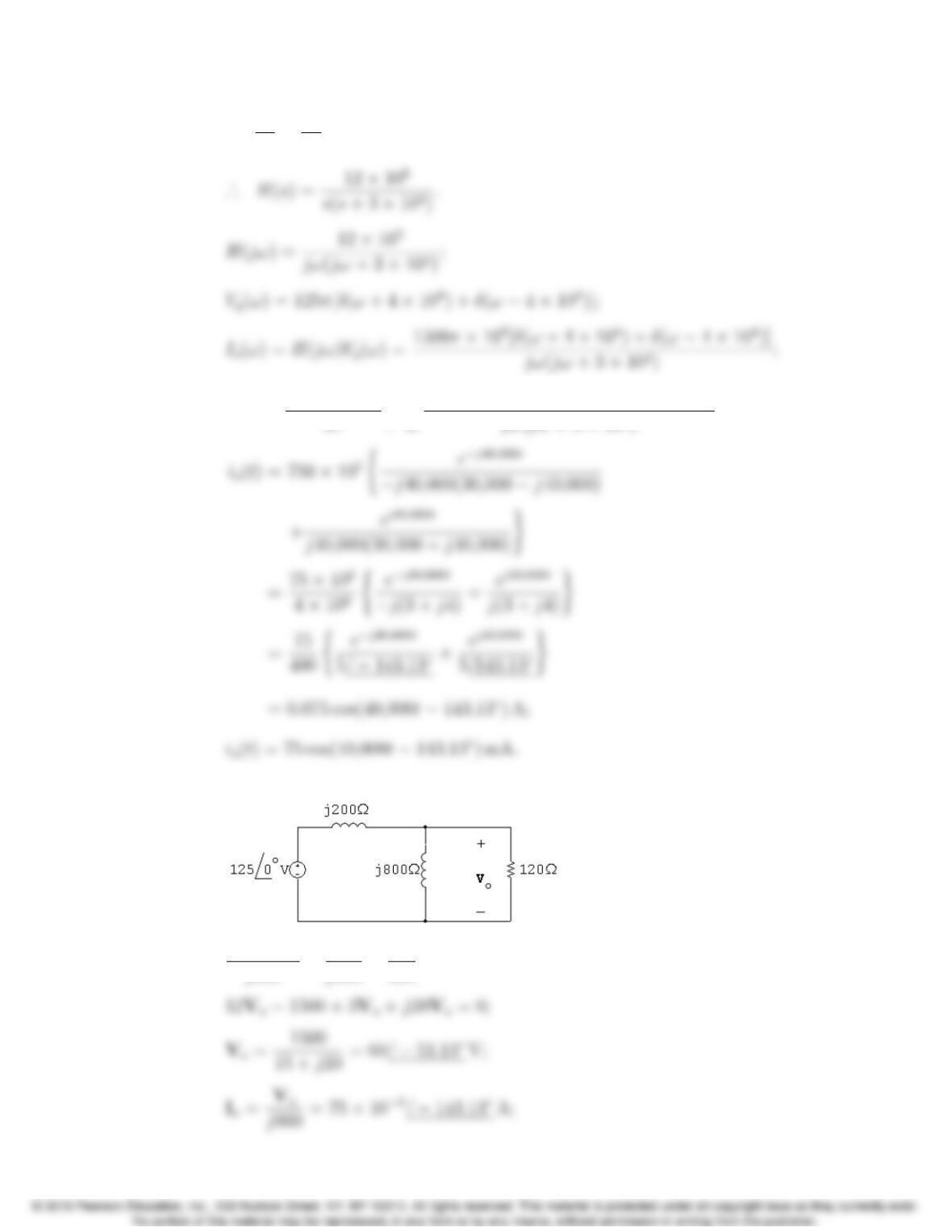
P 17.31 [a]
VoVg
sL1
+Vo
sL2
+Vo
R= 0;
17–26 CHAPTER 17. The Fourier Transform
R✓1
L1
+1
L2◆=3⇥104;
io(t)=1500π⇥105
2πZ1
1
[δ(ω+4⇥104)+δ(ω4⇥104)]ejtω
jω(jω+3⇥104)dω;
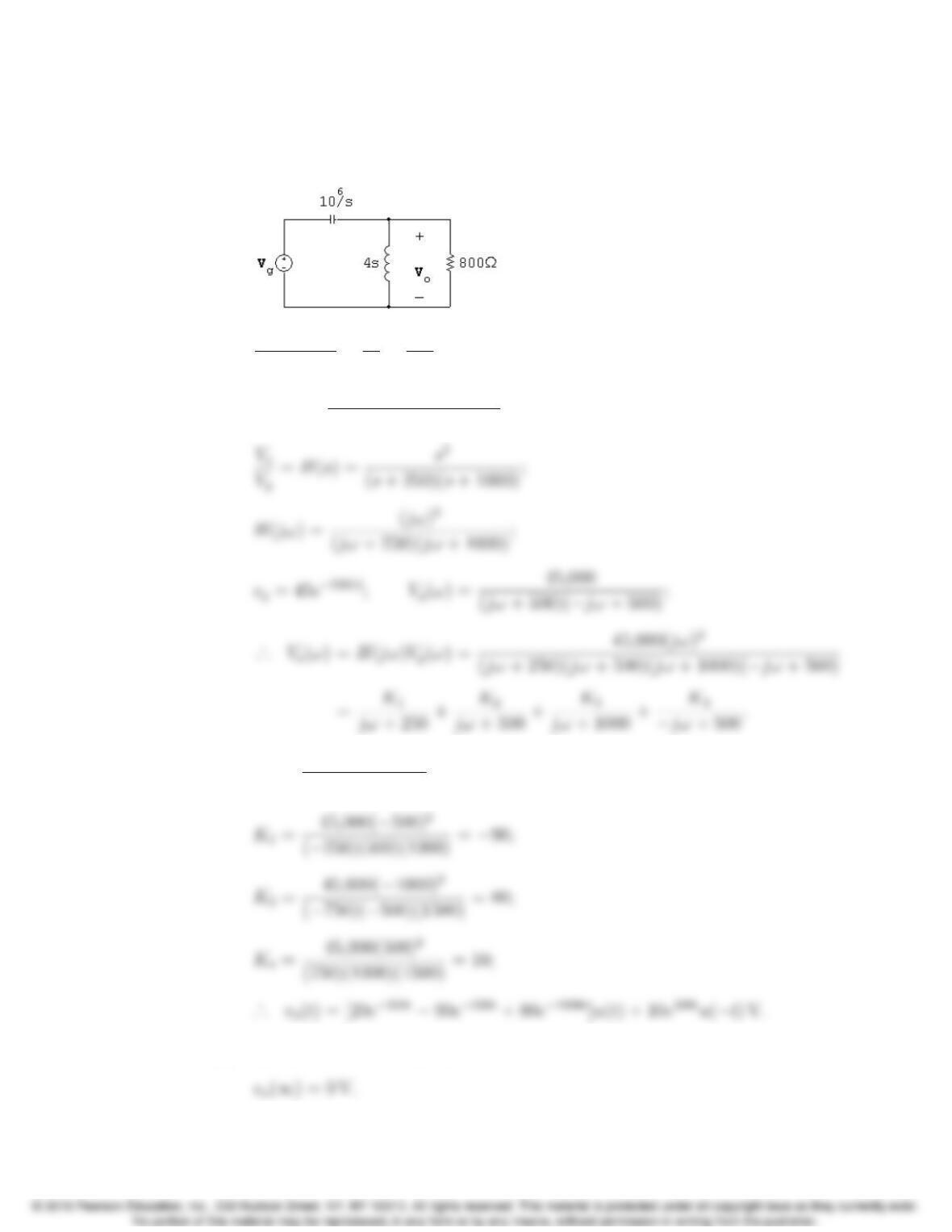
[b] In the phasor domain:
Vo125
j200 +Vo
j800 +Vo
120 = 0;
Problems 17–27
io(t) = 75 cos(40,000t143.13) mA.
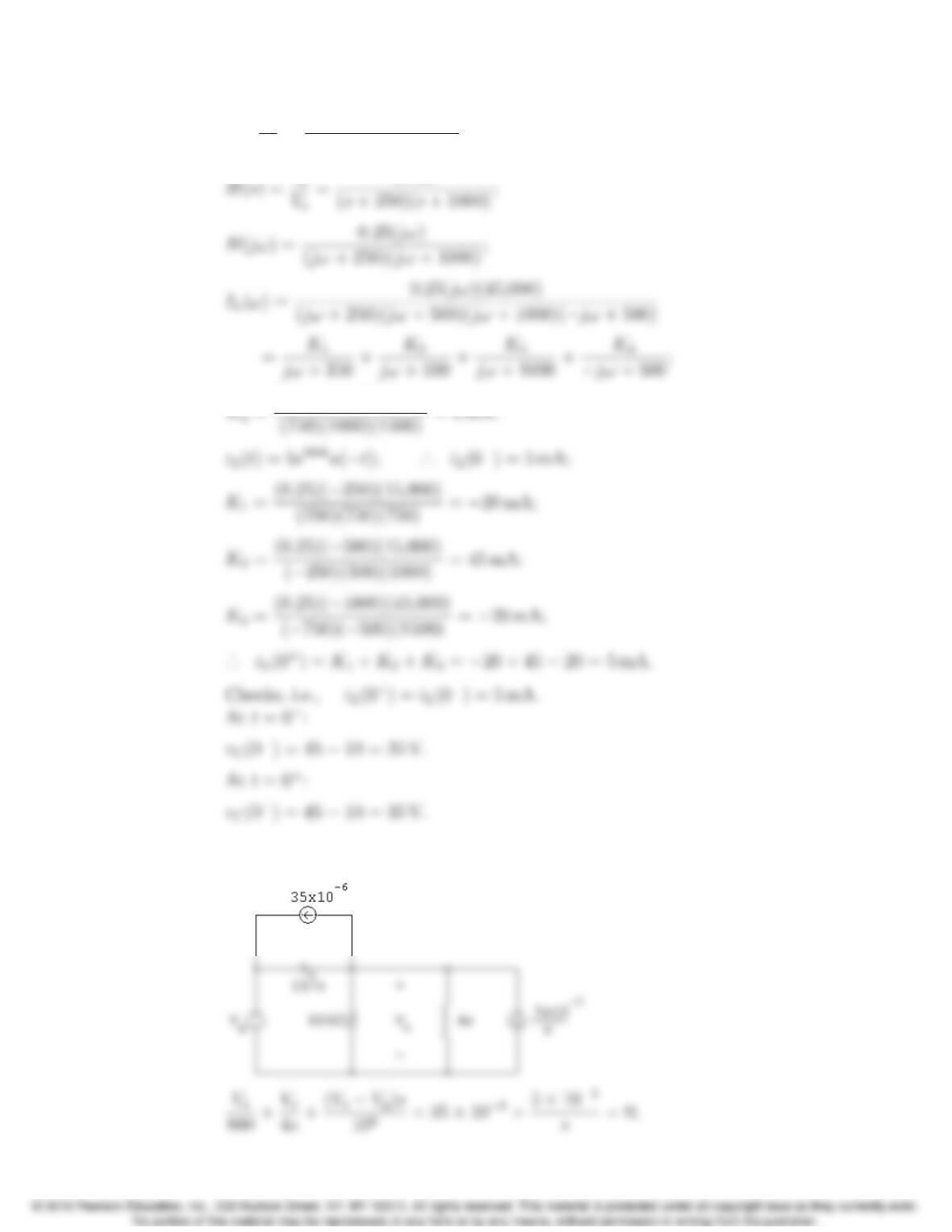
P 17.32 [a]
(VoVg)s
106+Vo
4s+Vo
800 = 0;
·
.. V
o=s2Vg
s2+ 1250s+25⇥104.
K1=45,000(250)2
(250)(750)(750) = 20;
[b] vo(0) = 10 V; Vo(0+)=2090 + 80 = 10 V;
17–28 CHAPTER 17. The Fourier Transform
[c] IL=Vo
4s=0.25sVg
(s+ 250)(s+ 1000);
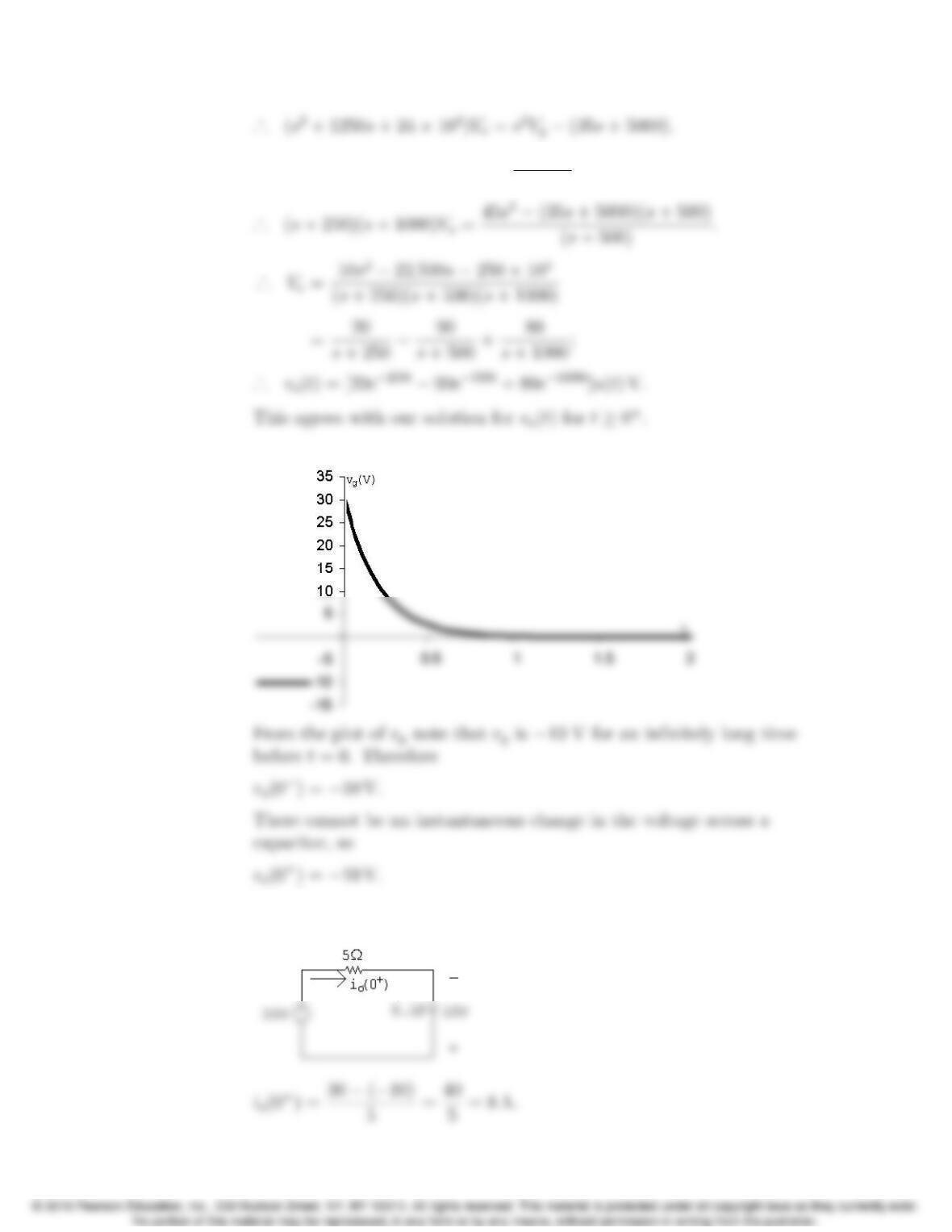
[d] We can check the correctness of out solution for t0+by using the
Laplace transform. Our circuit becomes
Problems 17–29
vg(t)=45e500tu(t) V; Vg=45
s+ 500;
P 17.33 [a]
[b] io(0)=0A.
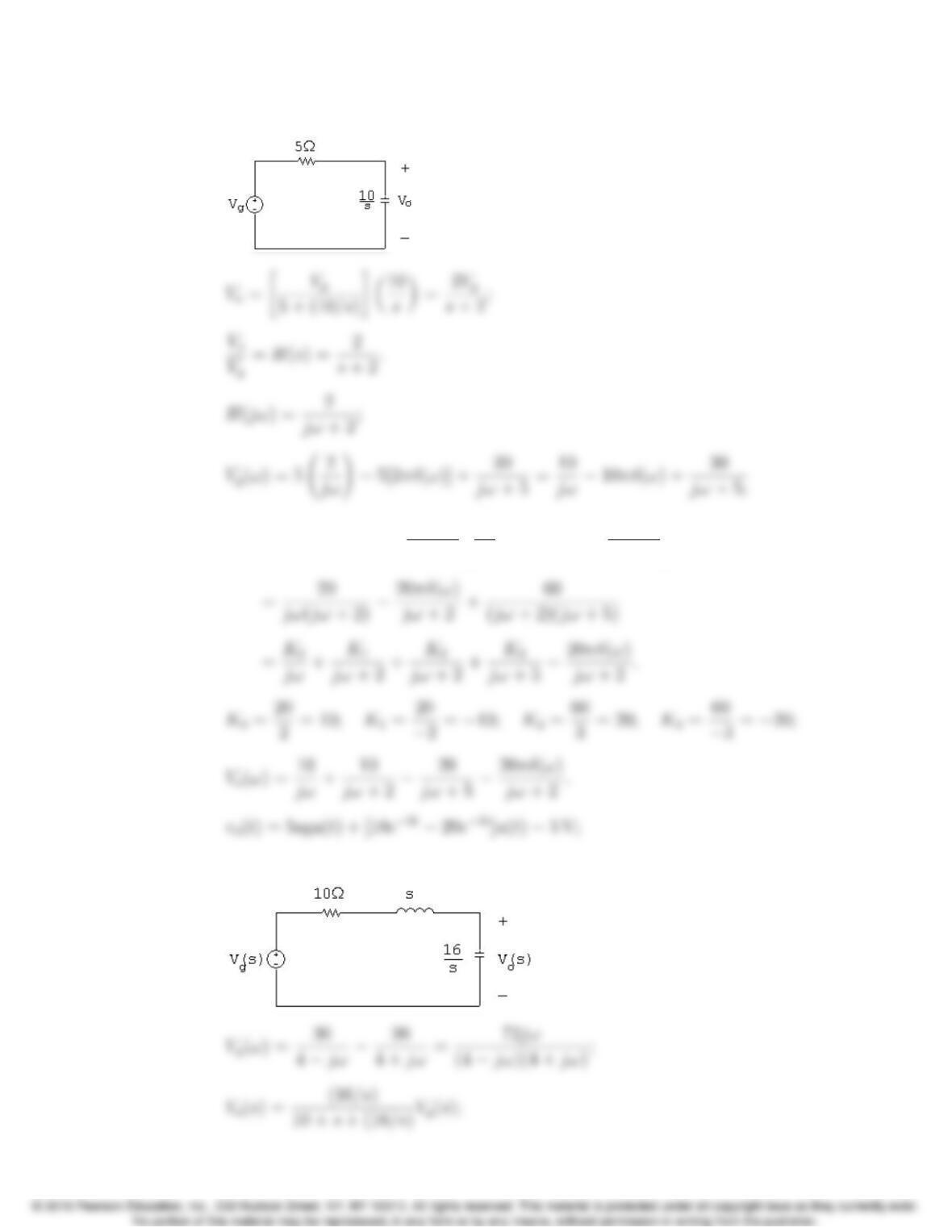
At t=0
+the circuit is
17–30 CHAPTER 17. The Fourier Transform
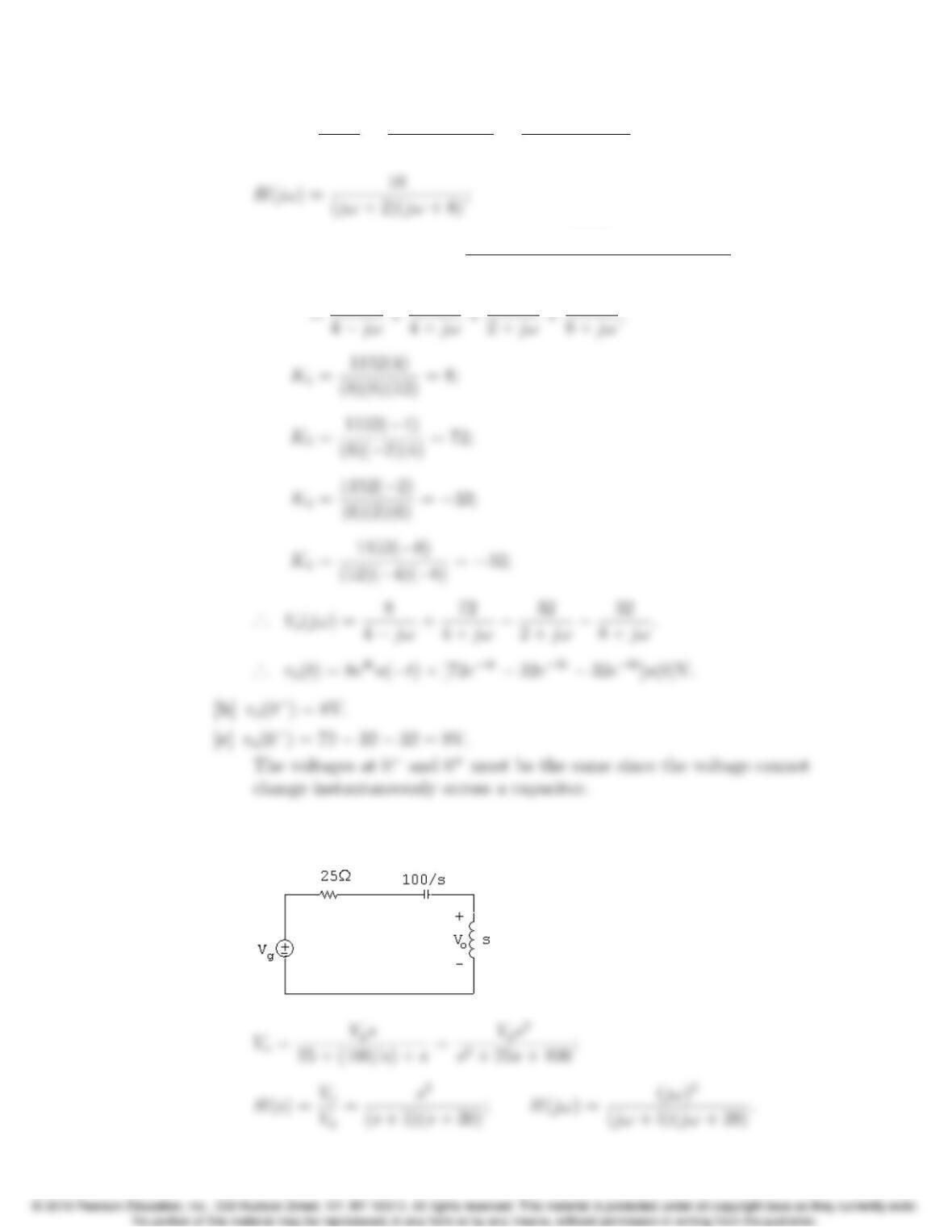
[c] The s-domain circuit is
Vo(ω)=H(ω)Vg(ω)= 2
jω+2“10
jω10πδ(ω)+ 30
jω+5#
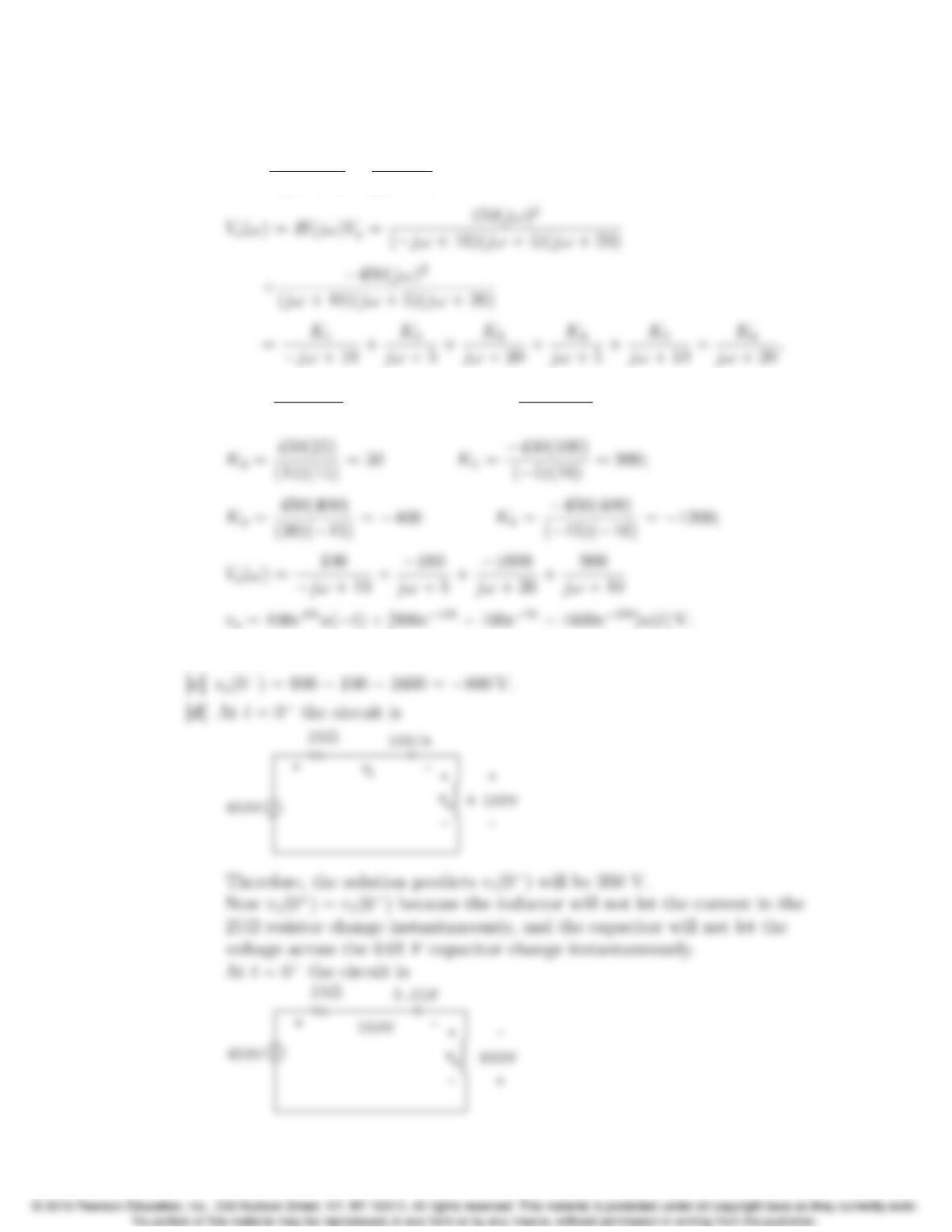
P 17.34 [a]
Problems 17–31
H(s)=Vo(s)
Vg(s)=16
s2+10s+16 =16
(s+ 2)(s+8).
Vo(jω)=H(jω)·Vg(ω)= 1152jω
(4 jω)(4 + jω)(2 + jω)(8 + jω)
P 17.35 [a]
17–32 CHAPTER 17. The Fourier Transform
vg= 25ig= 450e10tu(t)450e10tu(t) V;
Vg=450
jω+10450
jω+10;
K1=450(100)
(15)(30) = 100 K4=450(25)
(5)(15) =150;
[b] vo(0) = 100 V.
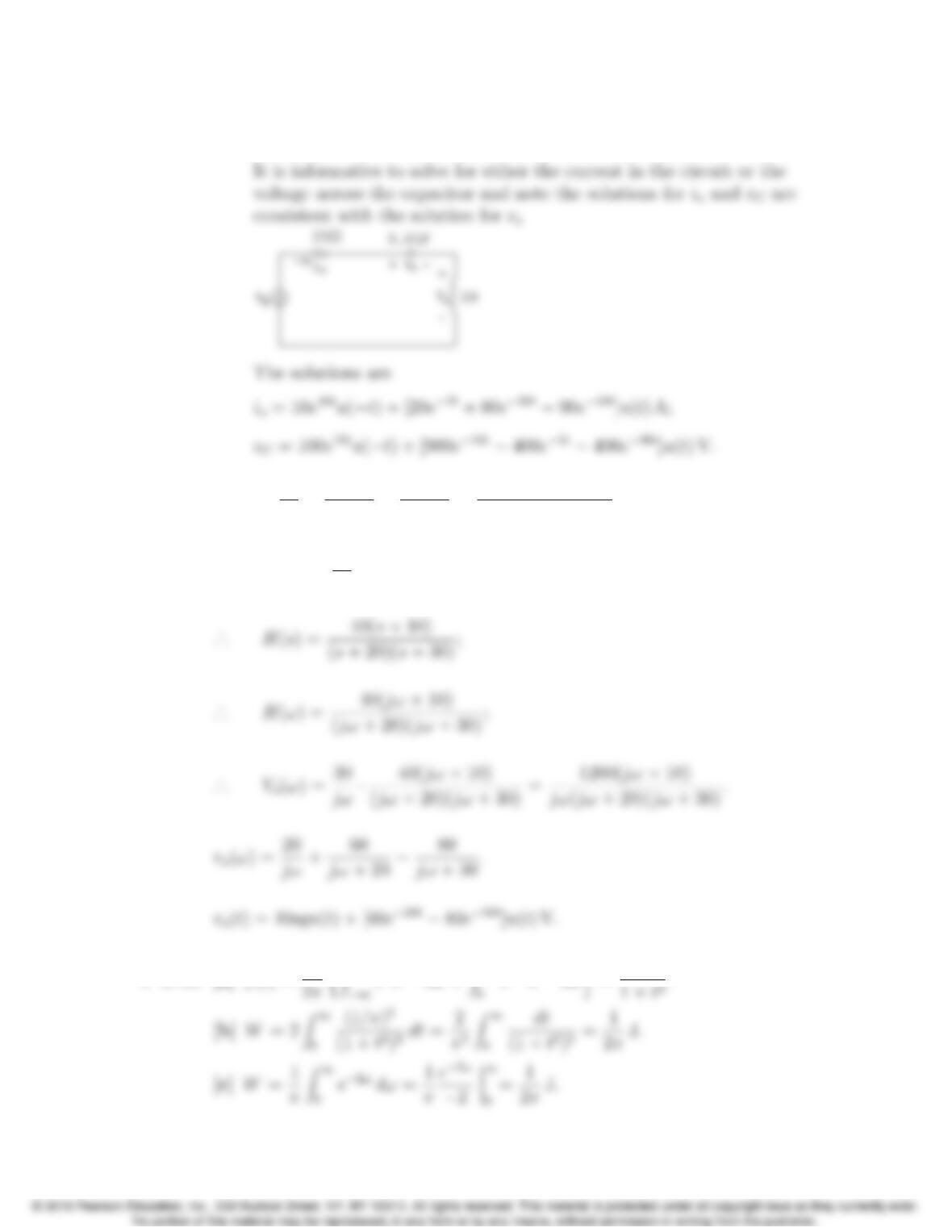
Problems 17–33
From the circuit at t=0
+we see that vomust be 800 V, which is
consistent with the solution for voobtained in part (a).
P 17.36 Vo(s)=10
s+30
s+2040
s+30 =600(s+ 10)
s(s+ 20)(s+ 30);
Vo(s)=H(s)·15
s;
P 17.37 [a] f(t)= 1
eωejtωdω+Z1
17–34 CHAPTER 17. The Fourier Transform
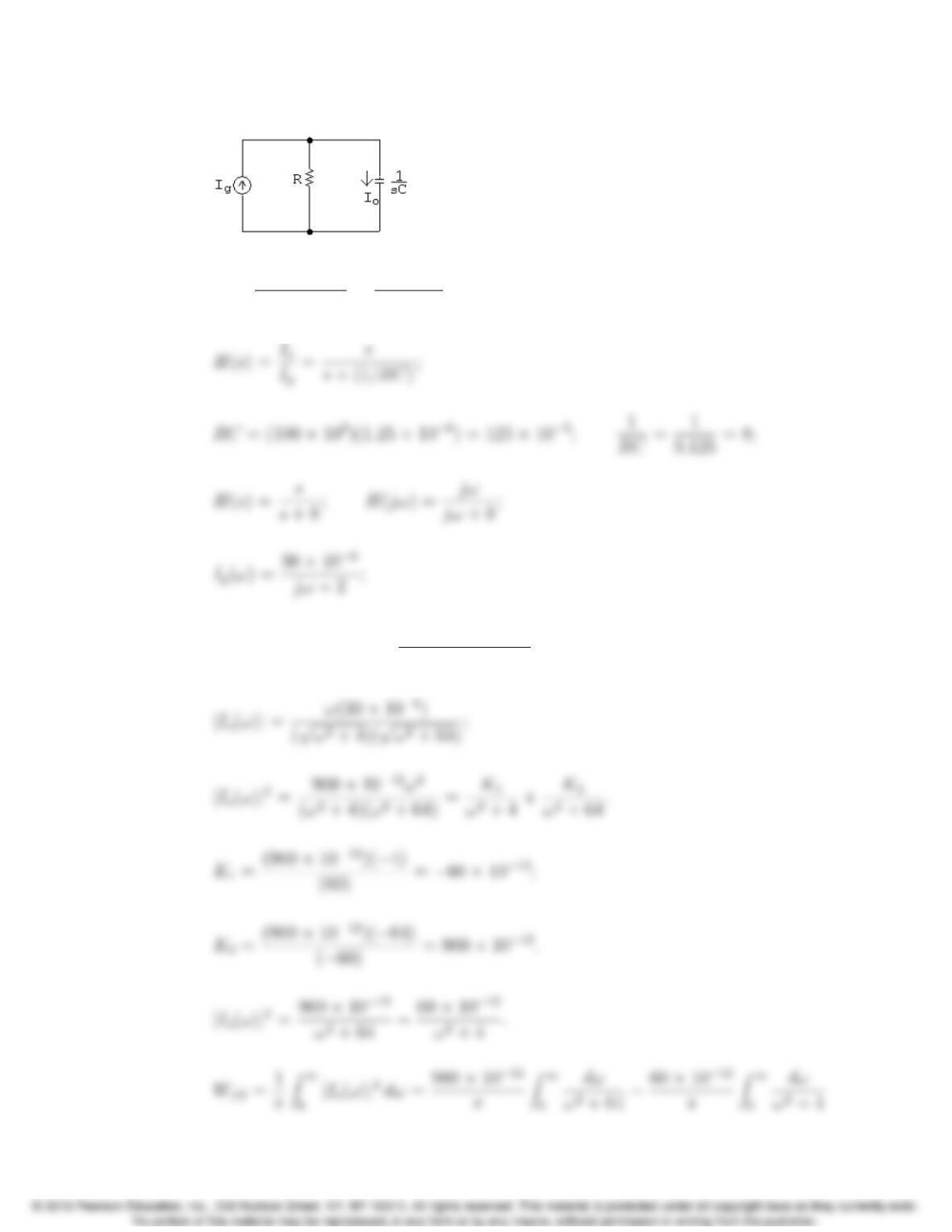
P 17.38 Io=0.5sIg
0.5s+25 =sIg
s+50;
H(s)=Io
Ig
=s
s+50.
H(jω)= jω
jω+50;
Therefore, the percent between 0 and 100 rad/s is
Problems 17–35
P 17.39
Io=IgR
R+ (1/sC)=RCsIg
RCs +1;
Io(ω)=H(jω)Ig(ω)= 30 ⇥106jω
(jω+ 2)(jω+8);
17–36 CHAPTER 17. The Fourier Transform
1
1
Between 0 and 4 rad/s
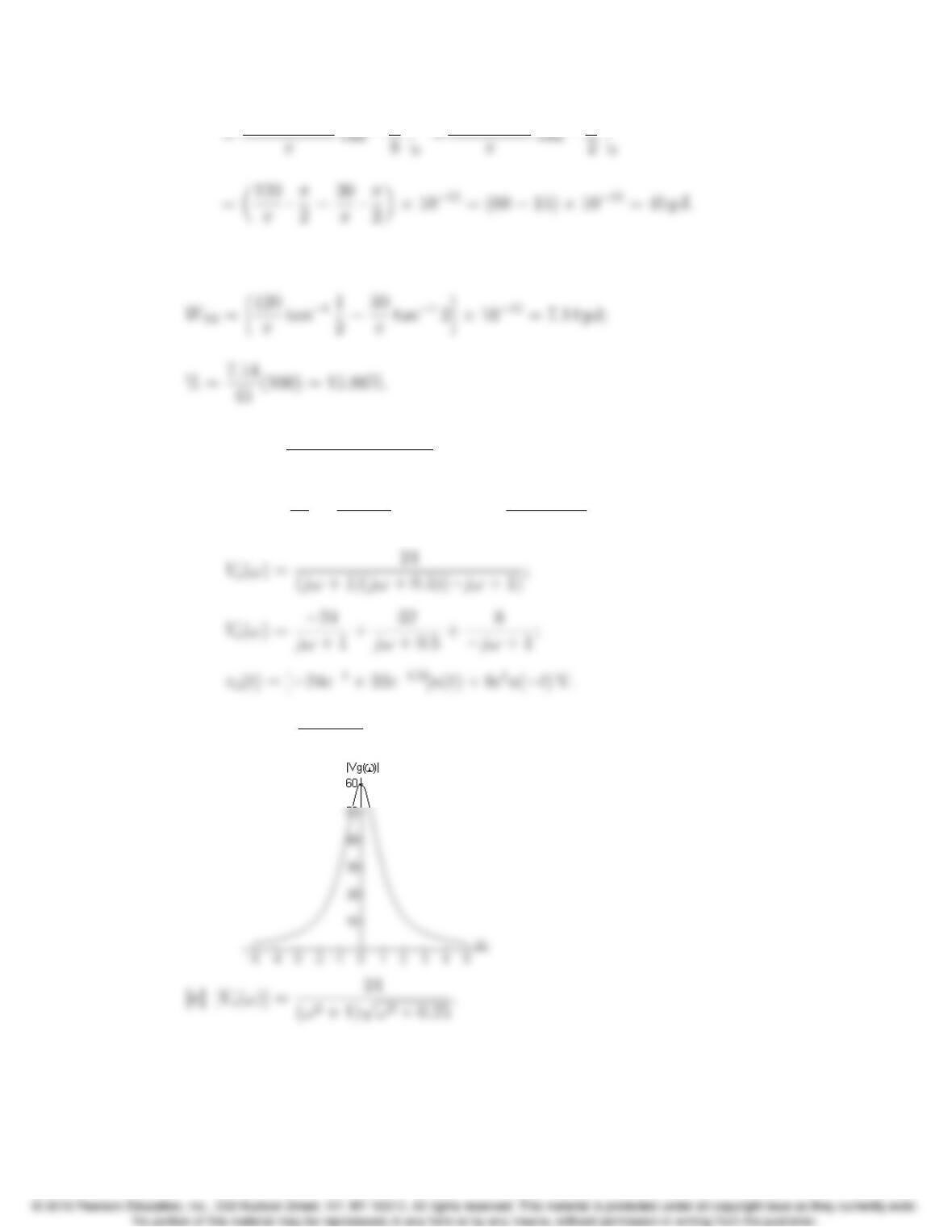
P 17.40 [a] Vg(ω)= 60
(jω+ 1)(jω+1);
H(s)=Vo
Vg
=0.4
s+0.5;H(ω)= 0.4
(jω+0.5).
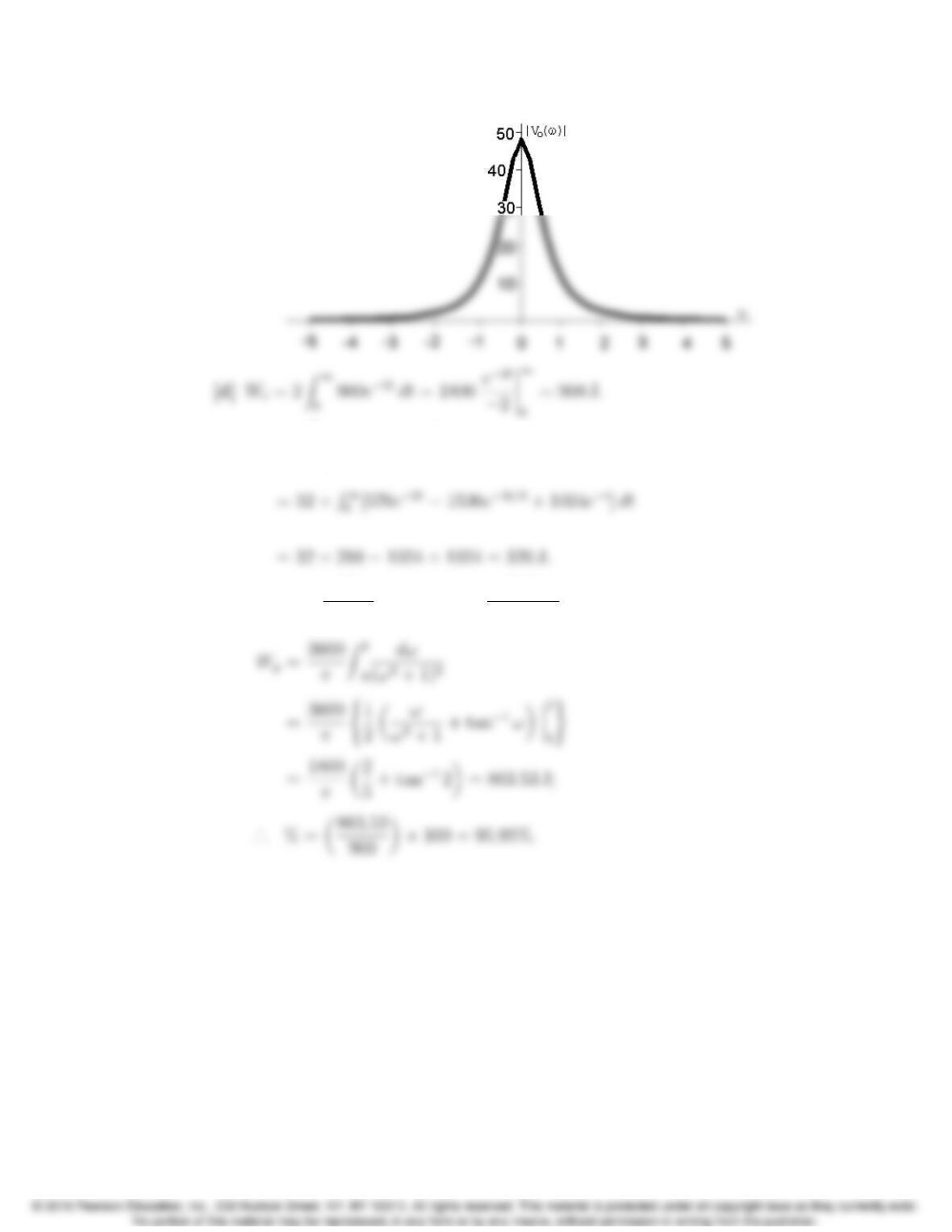
[b] |Vg(ω)|=60
(ω2+1).
Problems 17–37
[e] Wo=Z0
1
64e2tdt +Z1
0(24et+32et/2)2dt
[f] |Vg(ω)|=60
ω2+1,|V2
g(ω)|=3600
(ω2+1)
2;
17–38 CHAPTER 17. The Fourier Transform
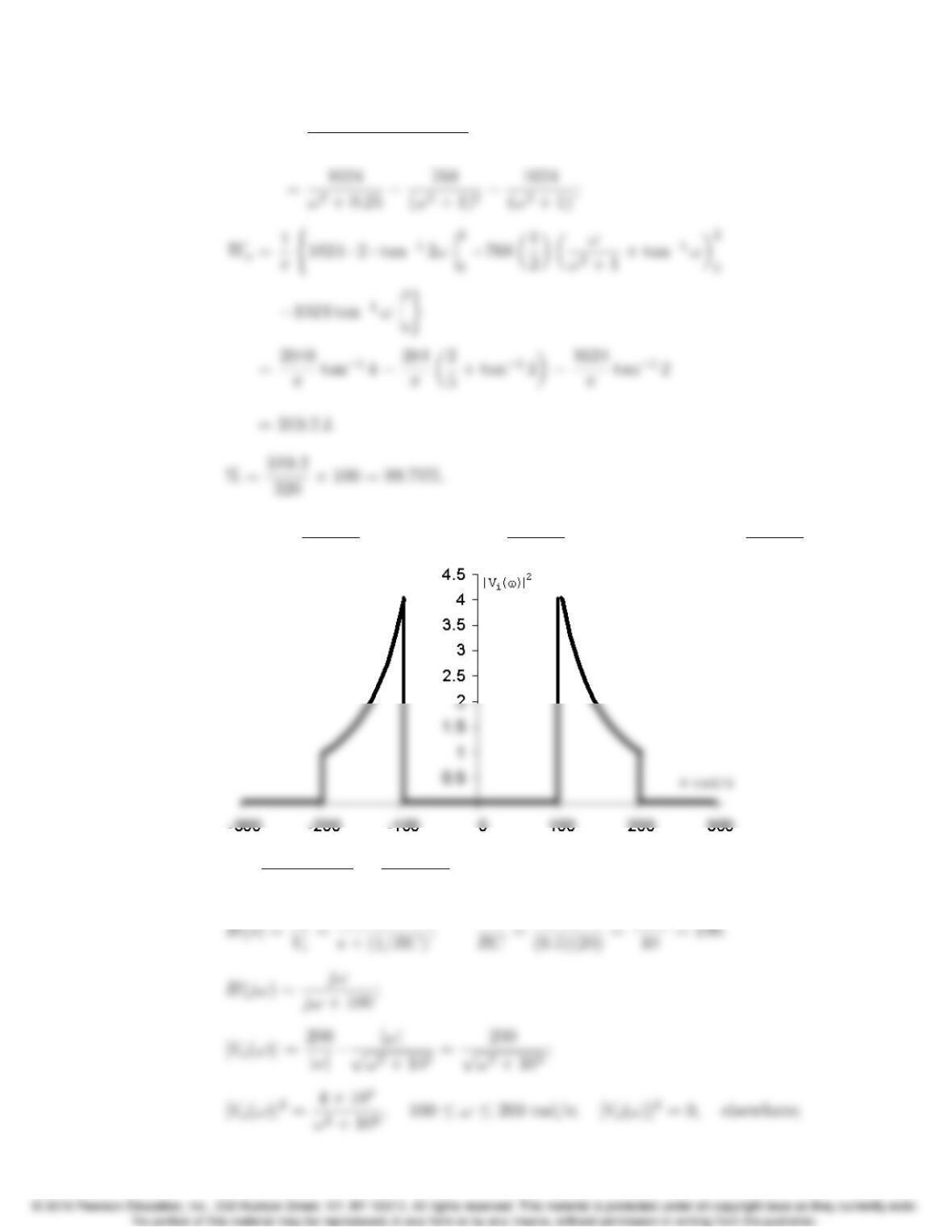
[g] |Vo(ω)|2=576
(ω2+1)
2(ω2+0.25)
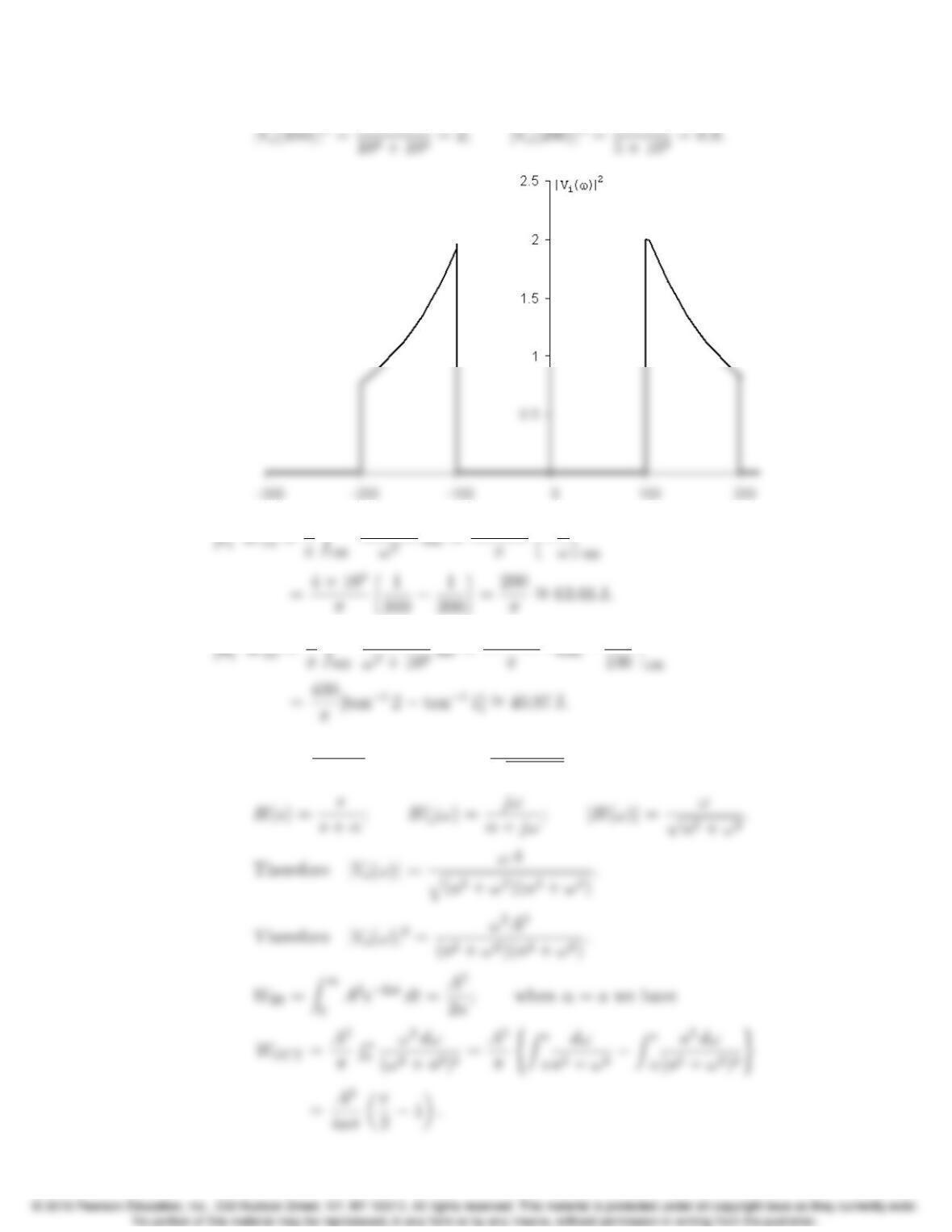
P 17.41 [a] |Vi(ω)|2=4⇥104
ω2;|Vi(100)|2=4⇥104
1002= 4; |Vi(200)|2=4⇥104
2002=1.
[b] Vo=ViR
R+ (1/sC)=sRCVi
RCs +1;
Problems 17–39
4⇥104
4⇥104
200
P 17.42 [a] Vi(ω)= A
a+jω;|Vi(ω)|=A
pa2+ω2;
17–40 CHAPTER 17. The Fourier Transform
[b] When α6=awe have
WOUT(α)= 1
πZα
0
ω2A2dω
(a2+ω2)(α2+ω2)