Problems 13–21
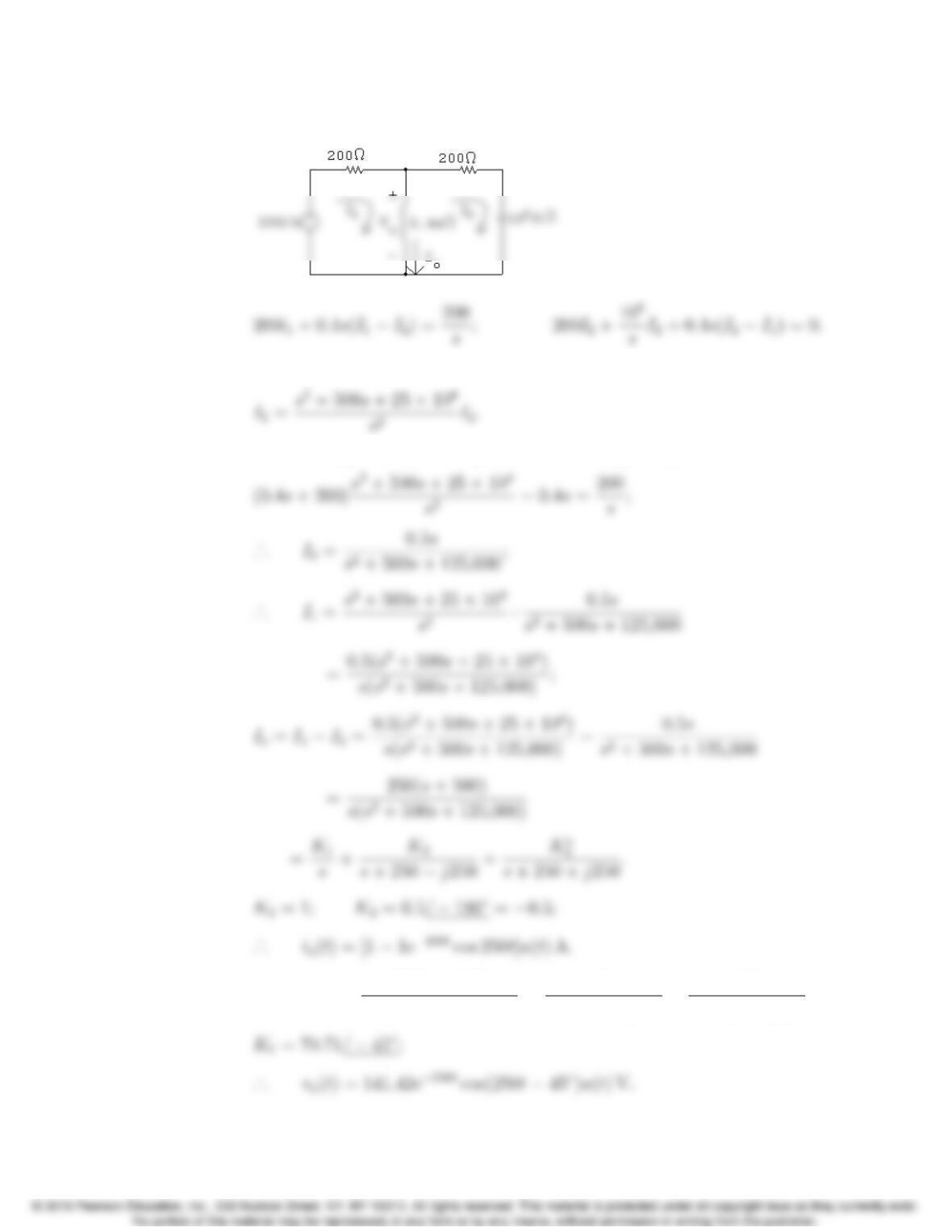
P 13.20 [a]
Solving the second equation for I1:
Substituting into the first equation and solving for I2:
[b] Vo=0.4sIo=100(s+ 500)
s2+ 500s+ 125,000 =K1
s+ 250 j250 +K⇤
1
s+ 250 + j250;
13–22 CHAPTER 13. The Laplace Transform in Circuit Analysis
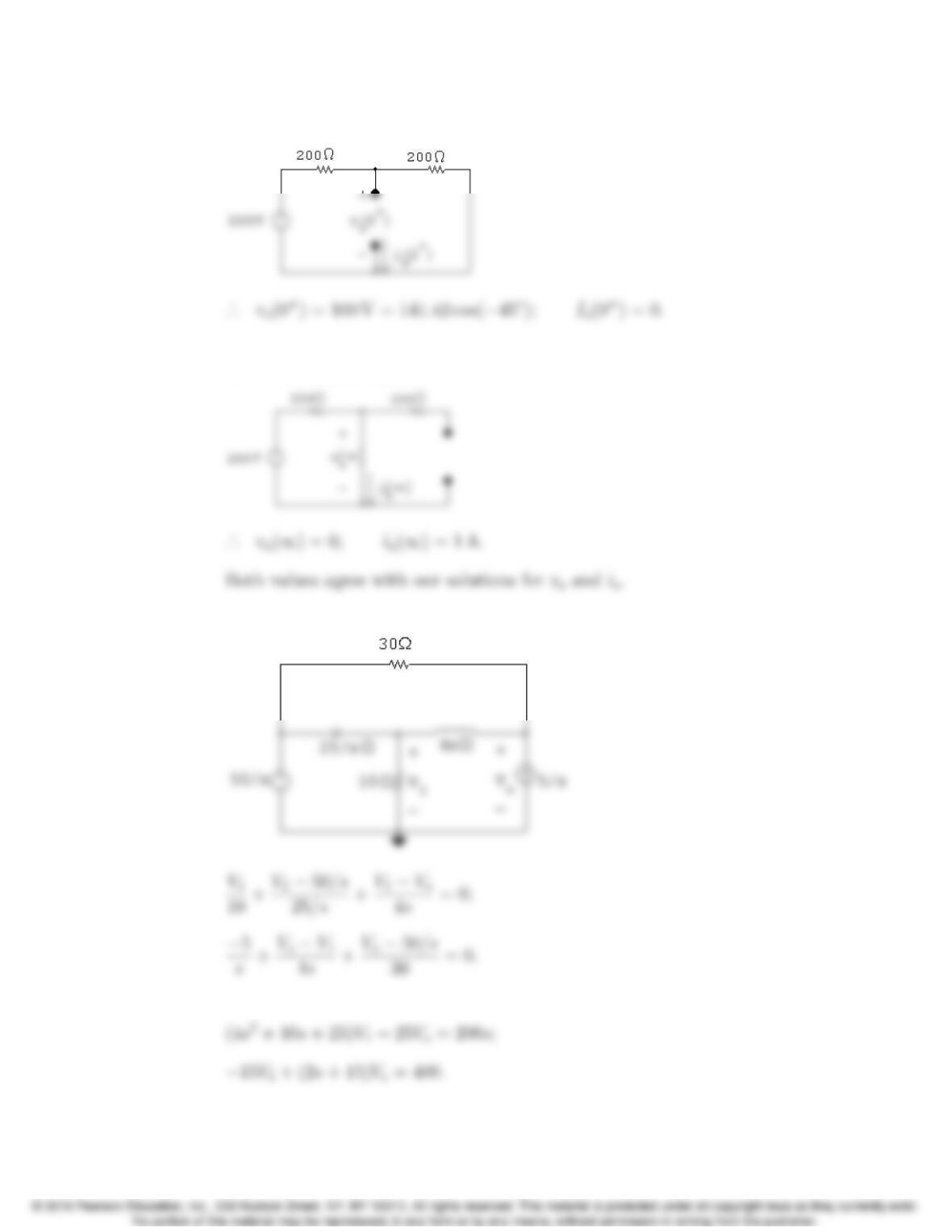
[c] At t=0
+the circuit is
Both values agree with our solutions for voand io.
At t=1the circuit is
P 13.21 [a]
Simplfying,
Problems 13–23
∆=
(4s2+10s+ 25) 25
=8s(s+5)
2;
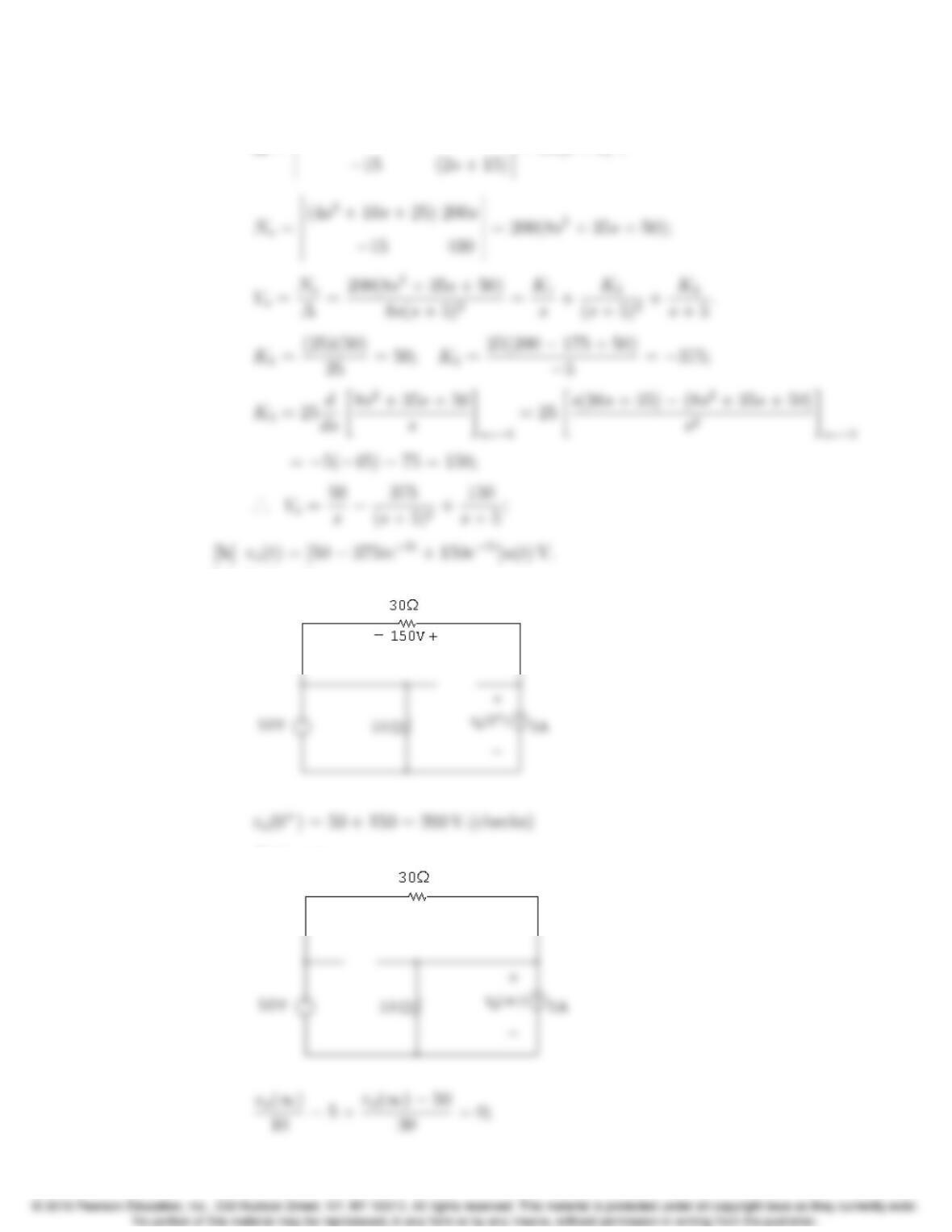
[c] At t=0
+:
At t=1:
13–24 CHAPTER 13. The Laplace Transform in Circuit Analysis
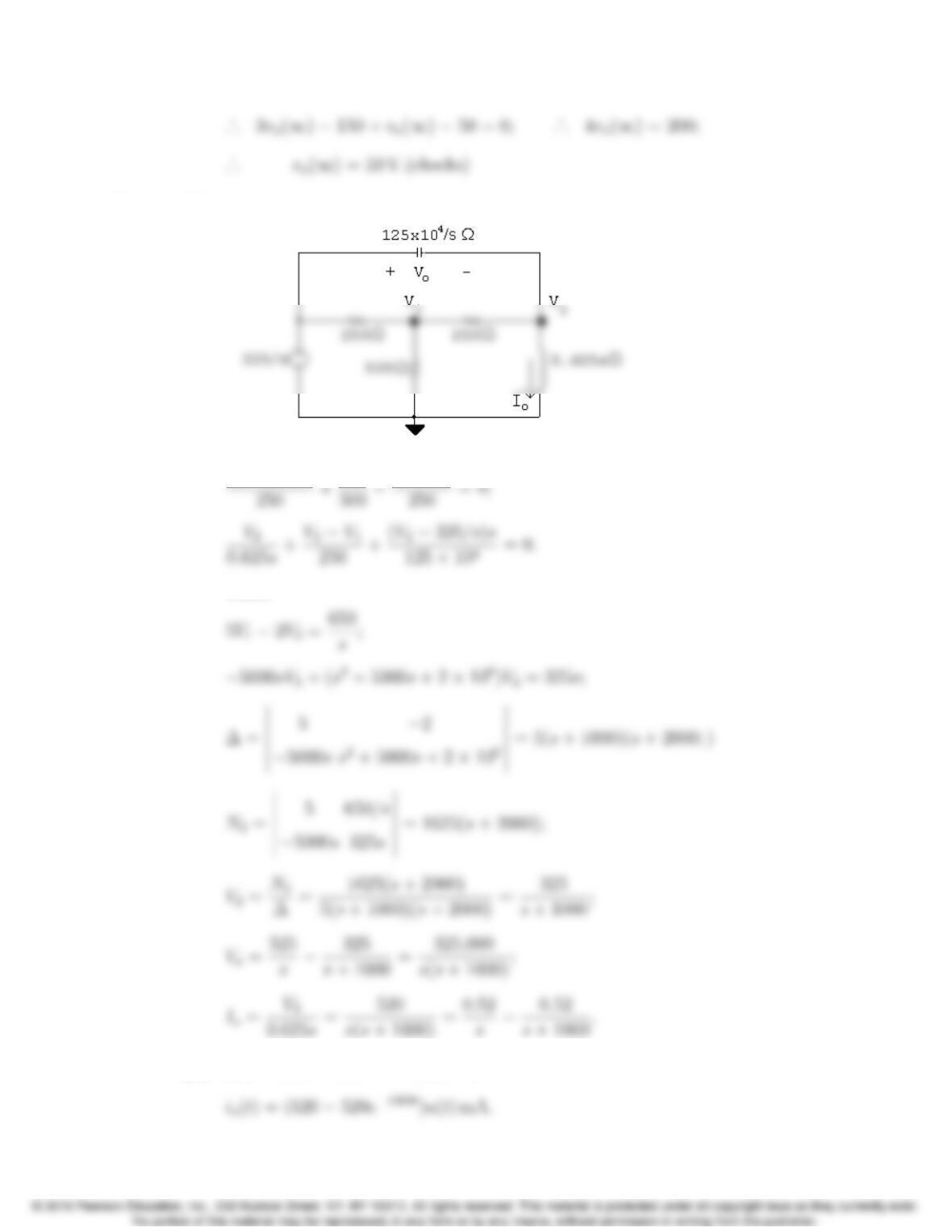
P 13.22 [a]
V1325/s
Thus,
[b] vo(t) = (325 325e1000t)u(t) V;
Problems 13–25
[c] At t=0
+the circuit is
At t=1the circuit is
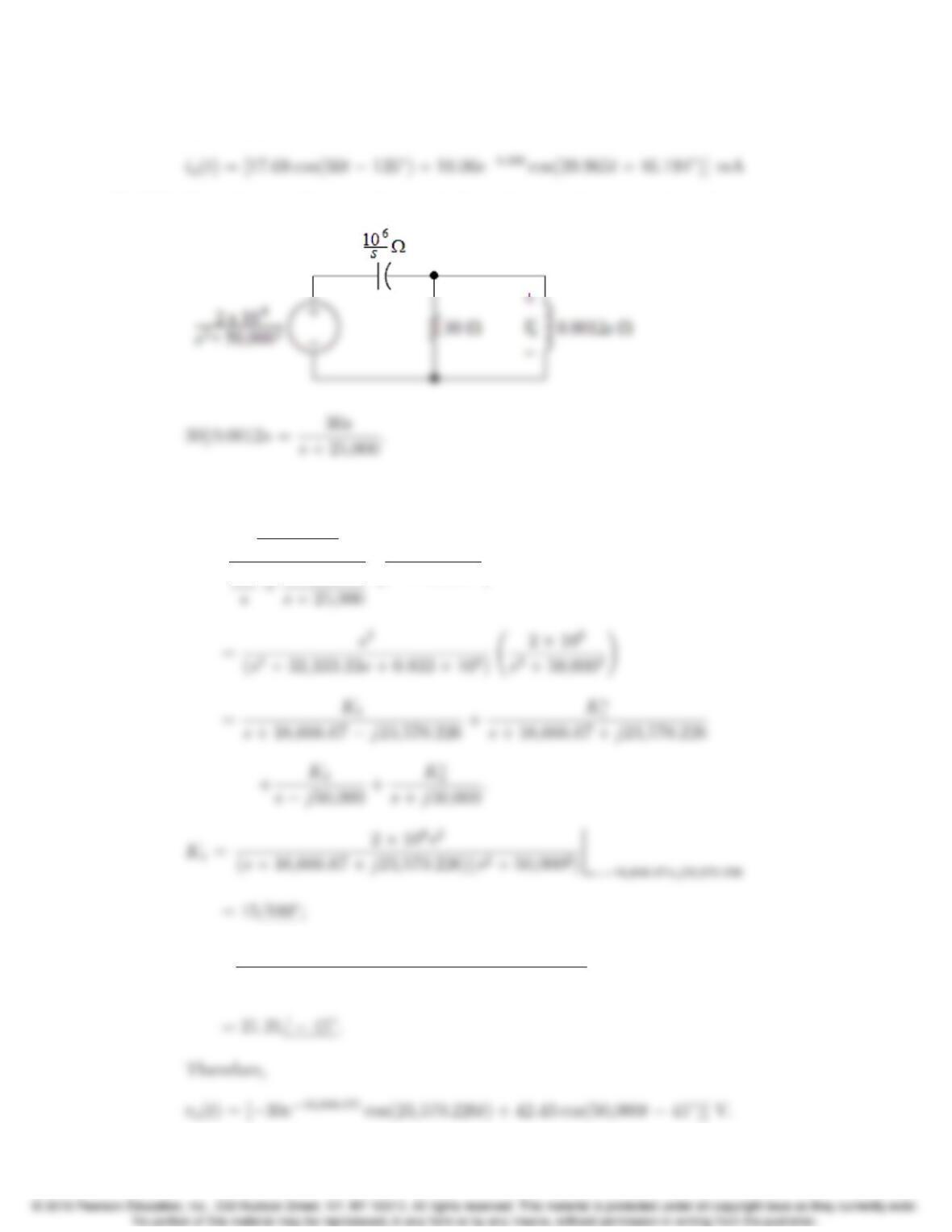
P 13.23 Begin by transforming the circuit from the time domain to the sdomain:
5
2
13–26 CHAPTER 13. The Laplace Transform in Circuit Analysis
Therefore,
P 13.24 Begin by transforming the circuit from the time domain to the sdomain:
Use voltage division to find Vo(s):
Vo=
30s
s+25,000
106
2⇥106
s2+50,0002!
K2=2⇥106s2
(s2+33,333.33s+0.833 ⇥109)(s+j50,000)s=j50,000
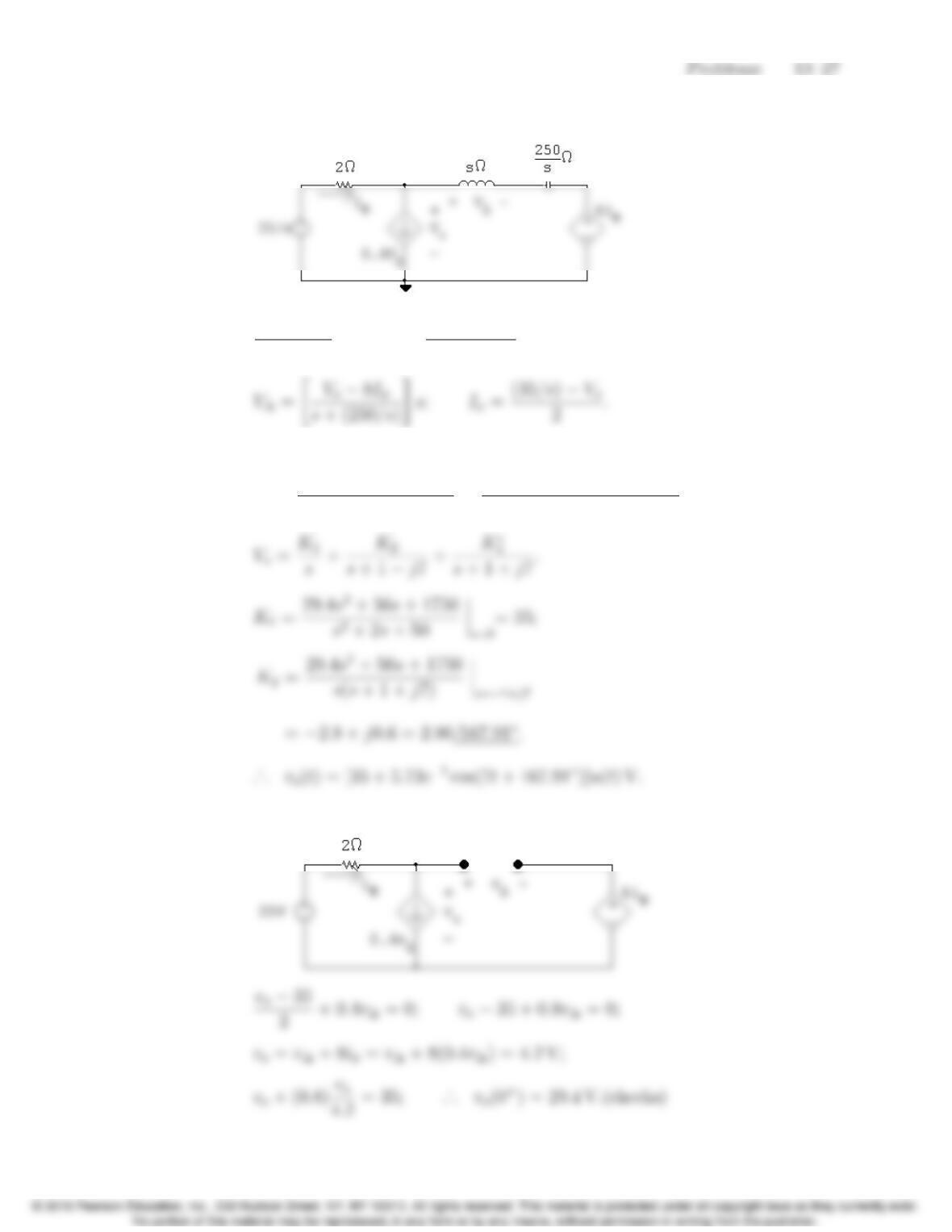
P 13.25 [a]
Vo35/s
2+0.4V∆+Vo8Iφ
s+ (250/s)= 0;
Solving for Voyields:
Vo=29.4s2+56s+ 1750
s(s2+2s+ 50) =29.4s2+56s+ 1750
s(s+1j7)(s+1+j7);
[b] At t=0
+vo= 35 + 5.73 cos(167.91)=29.4 V.
13–28 CHAPTER 13. The Laplace Transform in Circuit Analysis
At t=1, the circuit is
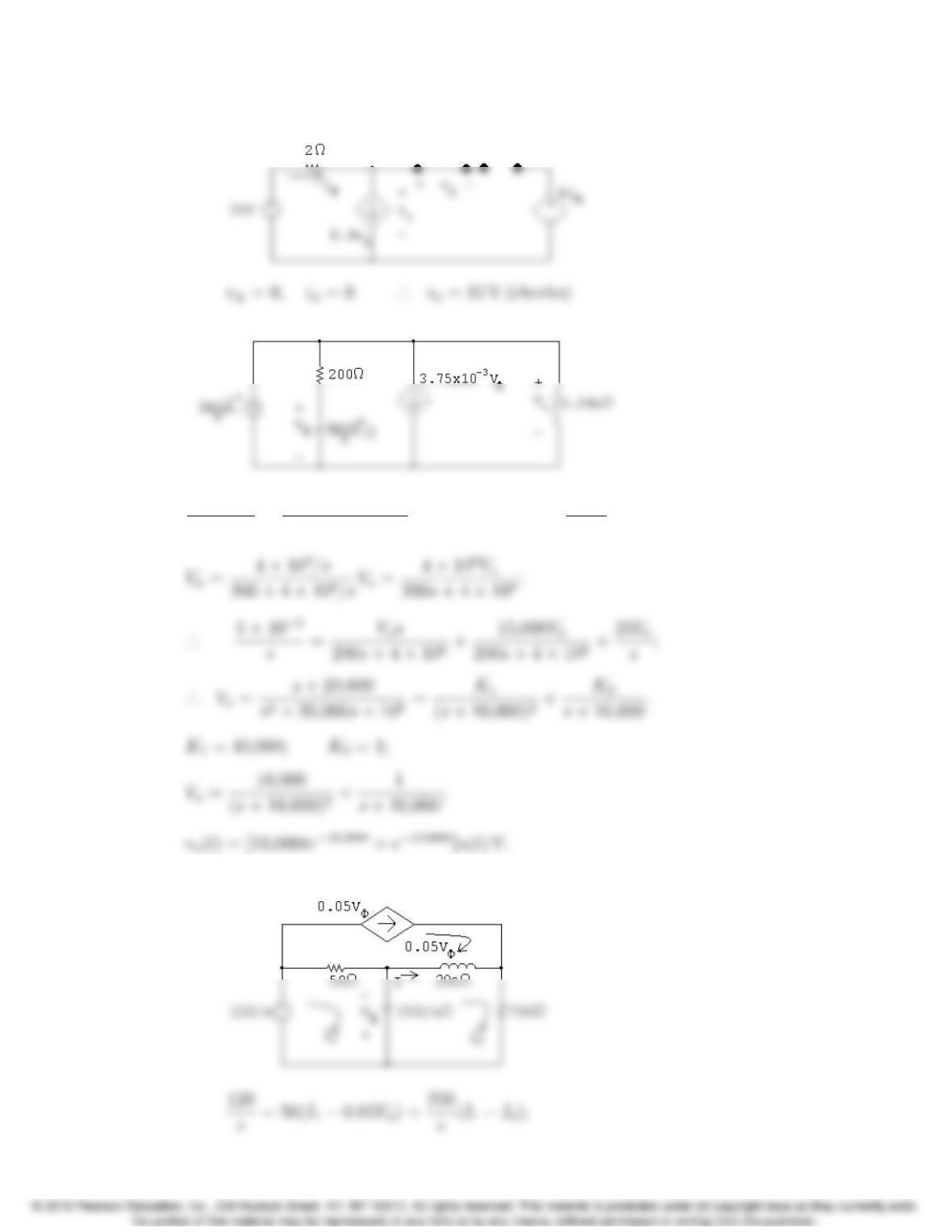
P 13.26
5⇥103
s=Vo
200 + 4 ⇥106/s +3.75 ⇥103Vφ+Vo
0.04s;
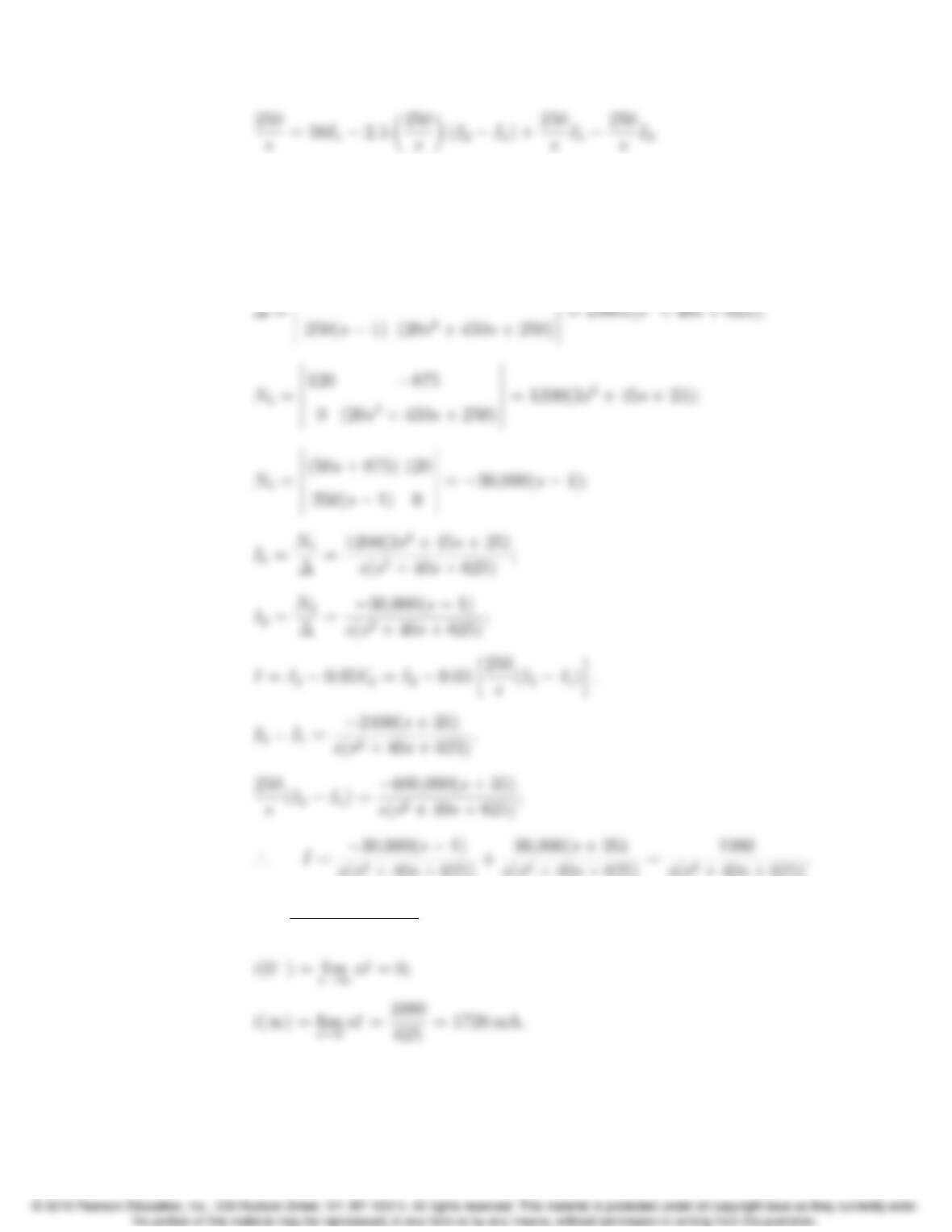
P 13.27 [a]
Problems 13–29
Simplfying,
(50s+ 875)I1875I2= 120;
250(s1)I1+ (20s2+ 450s+ 250)I2=0.
(50s+ 875) 875
s(s2+40s+ 625) +30,000(s+ 35)
s(s2+40s+ 625) =1080
s(s2+40s+ 625).
[b] sI =1080
(s2+40s+ 625);
13–30 CHAPTER 13. The Laplace Transform in Circuit Analysis
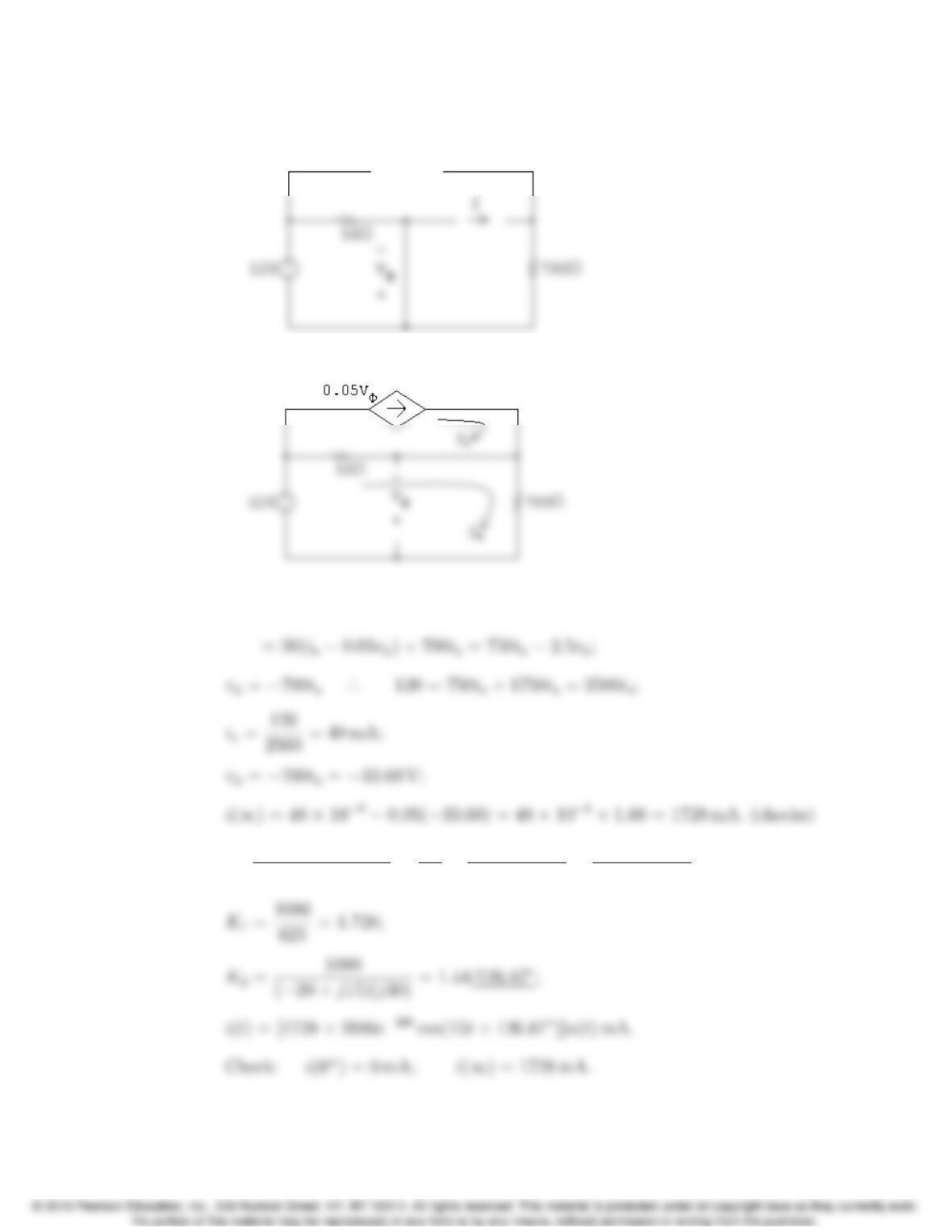
[c] At t=0
+the circuit is
From this circuit, i(0+)=0. Att=1the circuit is
120 = 50(iai1) + 700ia
[d] I=1080
s(s2+40s+ 625) =K1
s+K2
s+20j15 +K⇤
2
s+20+j15.
Problems 13–31
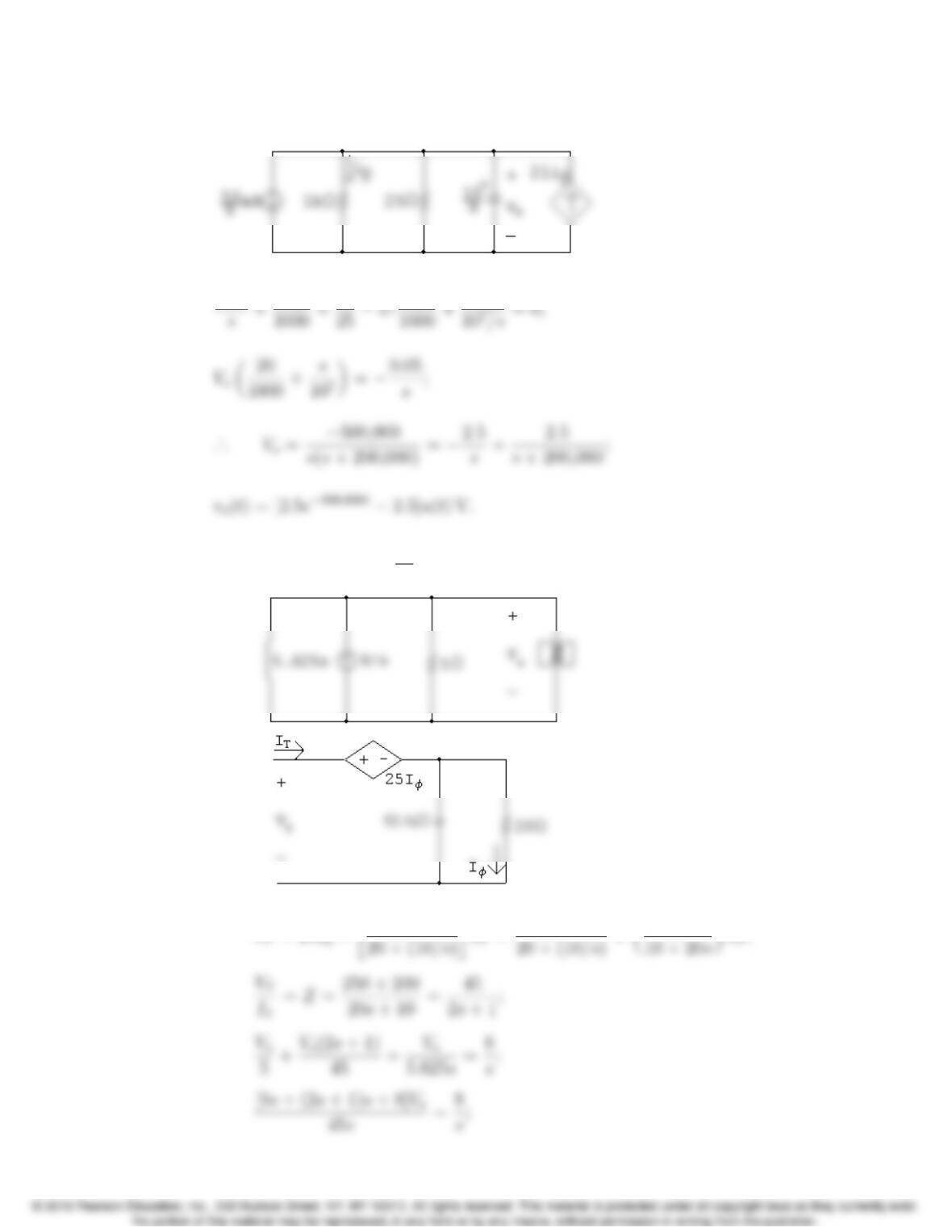
P 13.28 vo(0)=vo(0+)=0.
0.05
P 13.29 [a] iL(0)=iL(0+)=24
3=8A.directed upward
13–32 CHAPTER 13. The Laplace Transform in Circuit Analysis
Vo[2s2+10s+ 8] = 360;
Vo=360
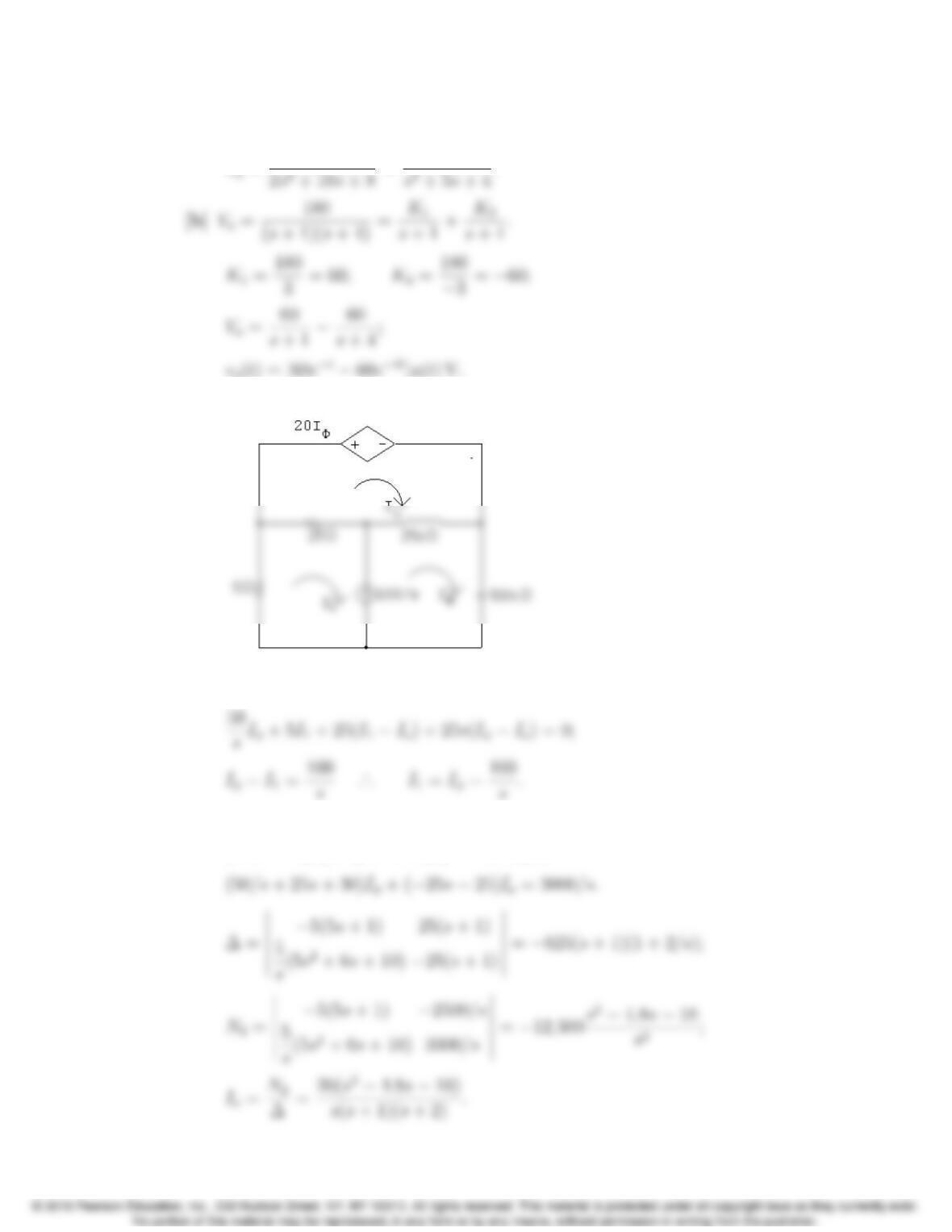
P 13.30 [a]
20Iφ+25s(IoIφ) + 25(IoI1)=0;
Simplifying,
(25s5)Iφ+ (25s+ 25)Io=2500/s;
Problems 13–33
[b] io(0+) = lim
s!1 sIo= 20 A;
2=100 A.
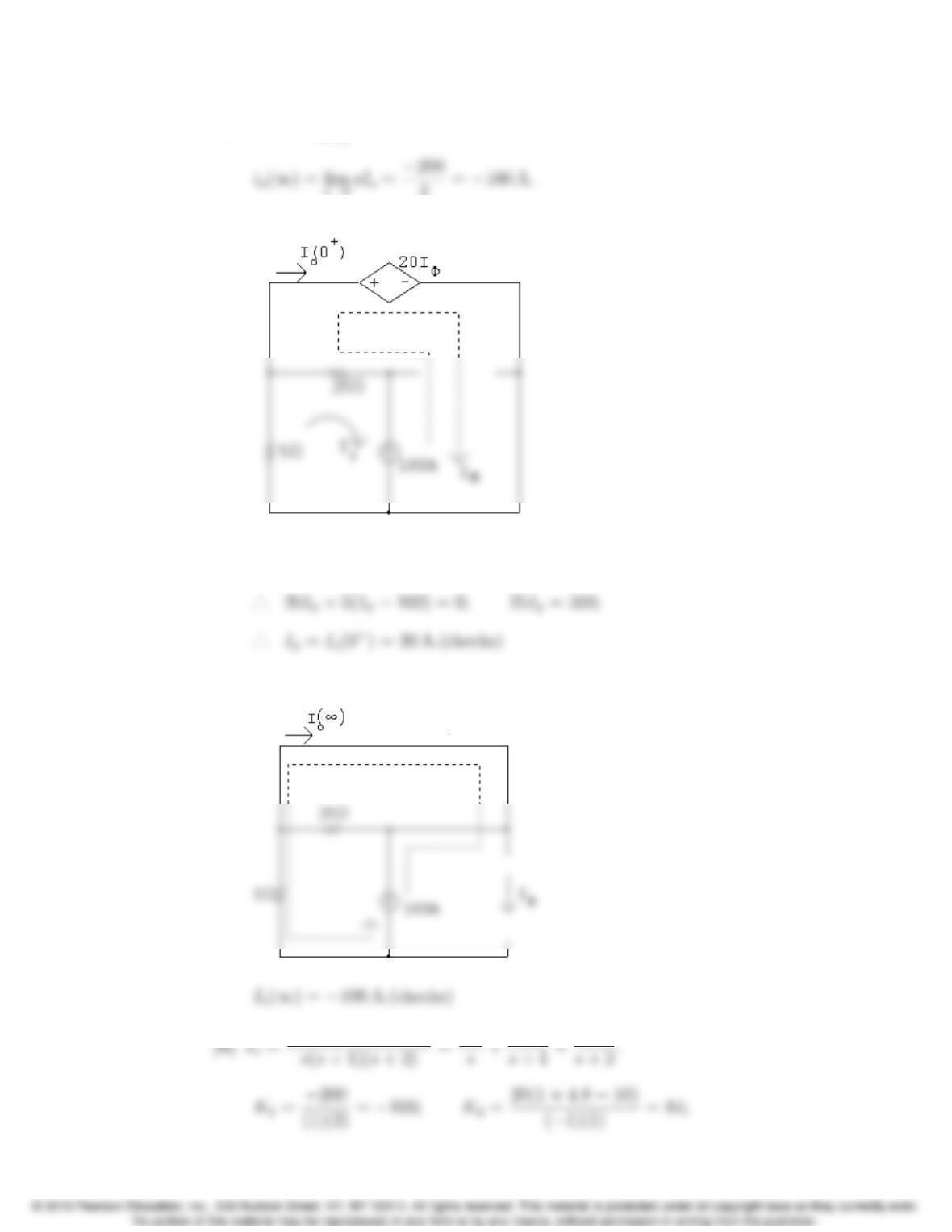
[c] At t=0
+the circuit is
20Iφ+5I1= 0; IφI1= 100;
At t=1the circuit is
13–34 CHAPTER 13. The Laplace Transform in Circuit Analysis
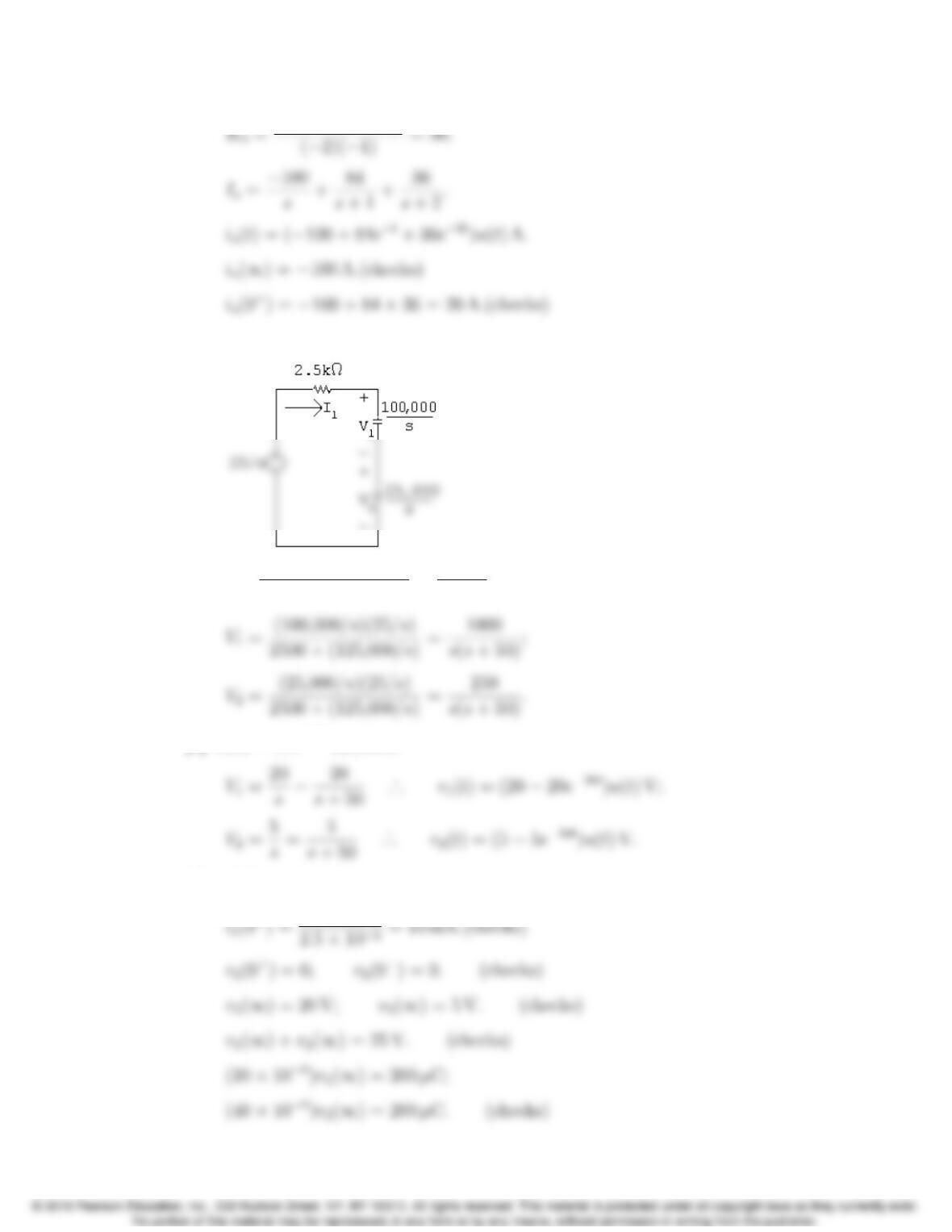
P 13.31 [a]
[b] I1=25/s
2500 + (125,000/s)=0.01
s+50;
[c] i1(t)=10e50tu(t) mA;
[d] i1(0+) = 10 mA;
Problems 13–35
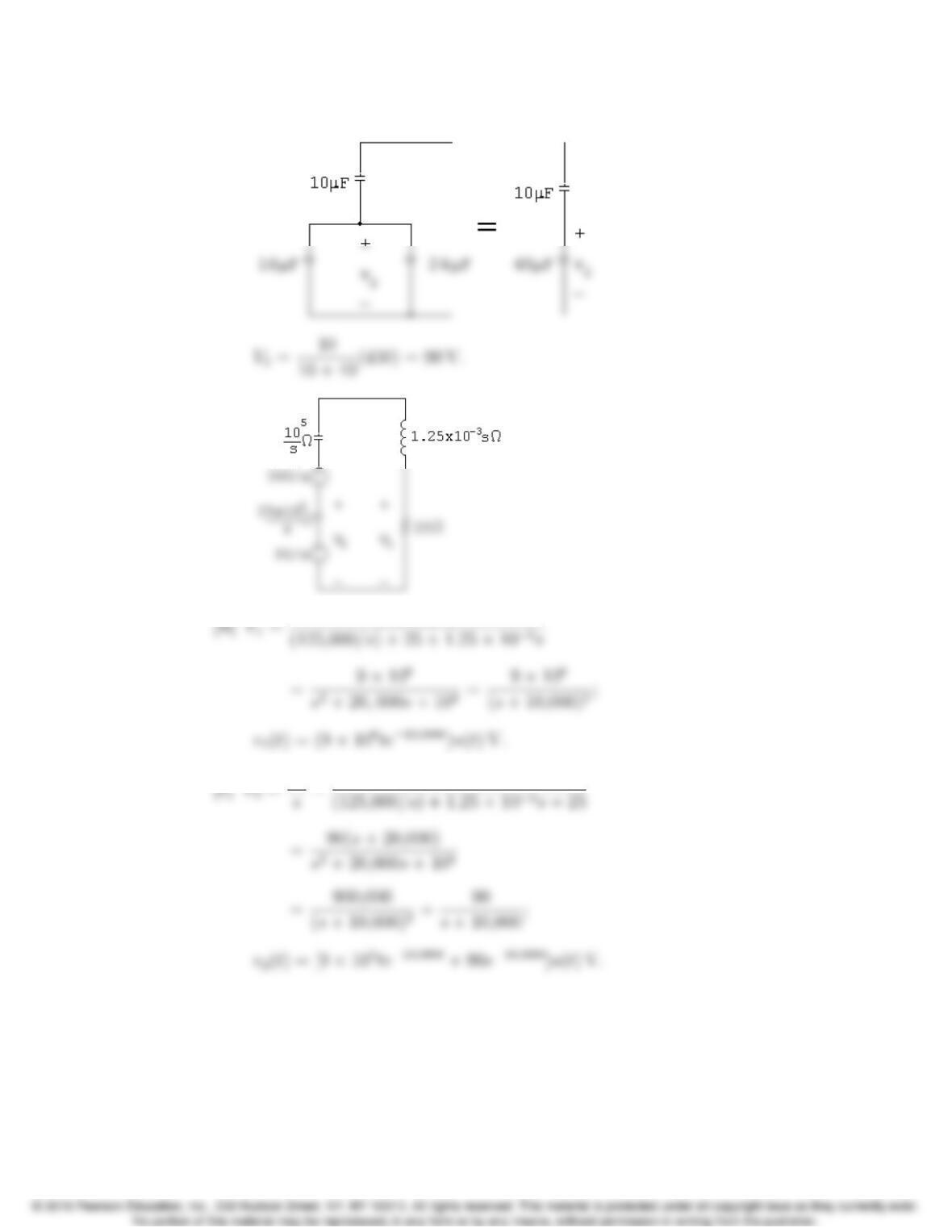
P 13.32 [a] For t<0:
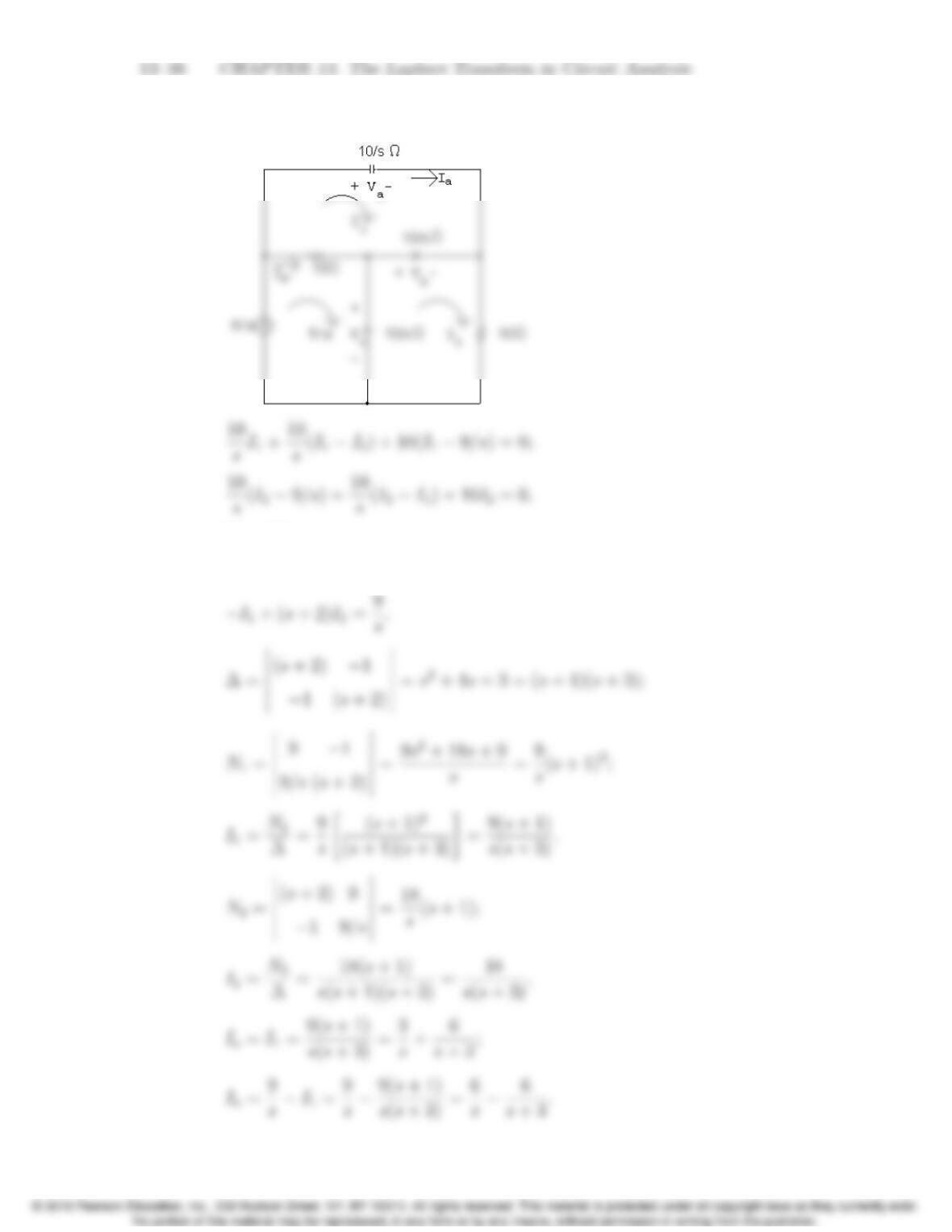
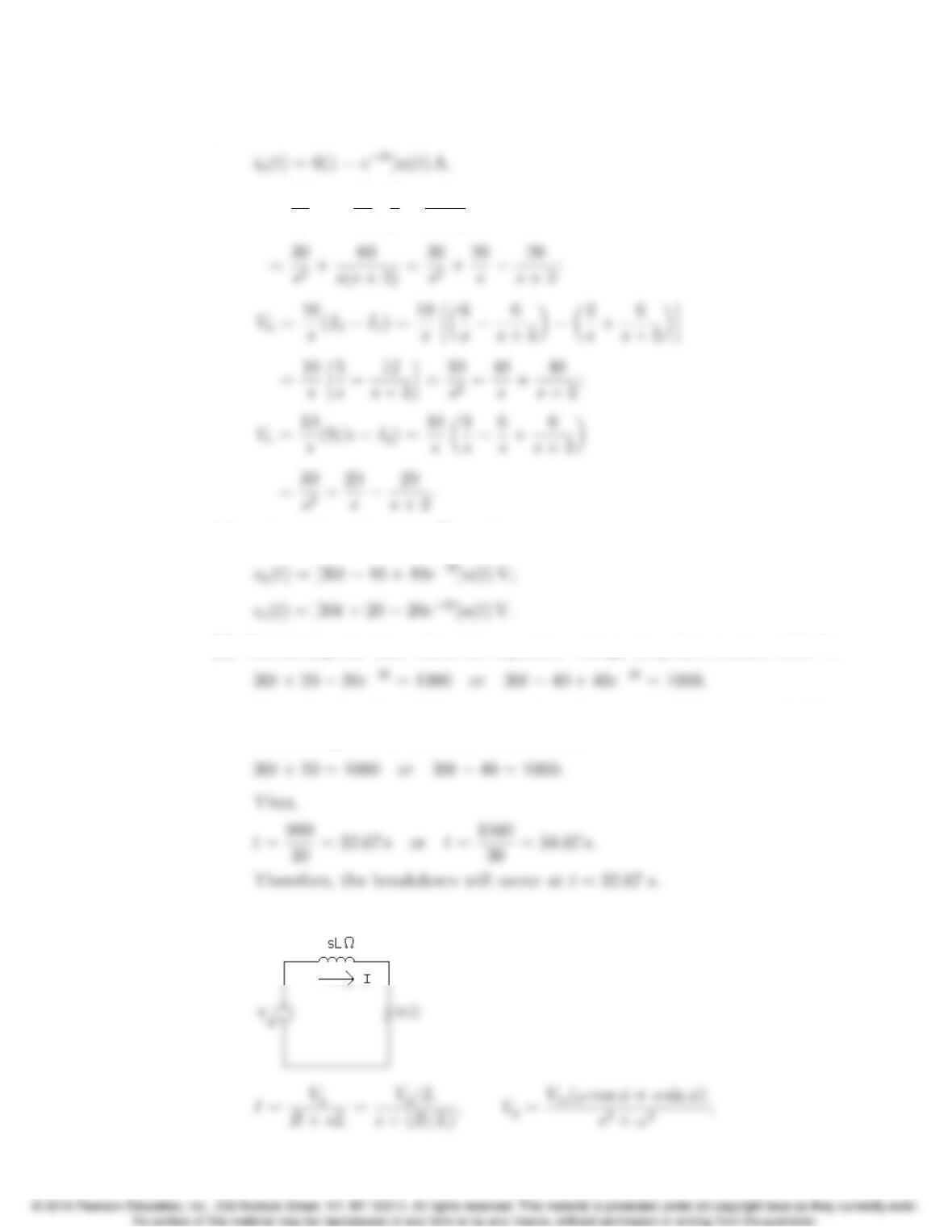
P 13.33 [a]
Simplifying,
(s+2)I1I2= 9;
Problems 13–37
[b] ia(t) = 3(1 + 2e3t)u(t) A;
[c] Va=10
sIb=10
s✓3
s+6
s+3◆
[d] va(t) = [30t+2020e3t]u(t) V;
[e] Calculating the time when the capacitor voltage drop first reaches 1000 V:
Note that in either of these expressions the exponential tem is negligible
when compared to the other terms. Thus,
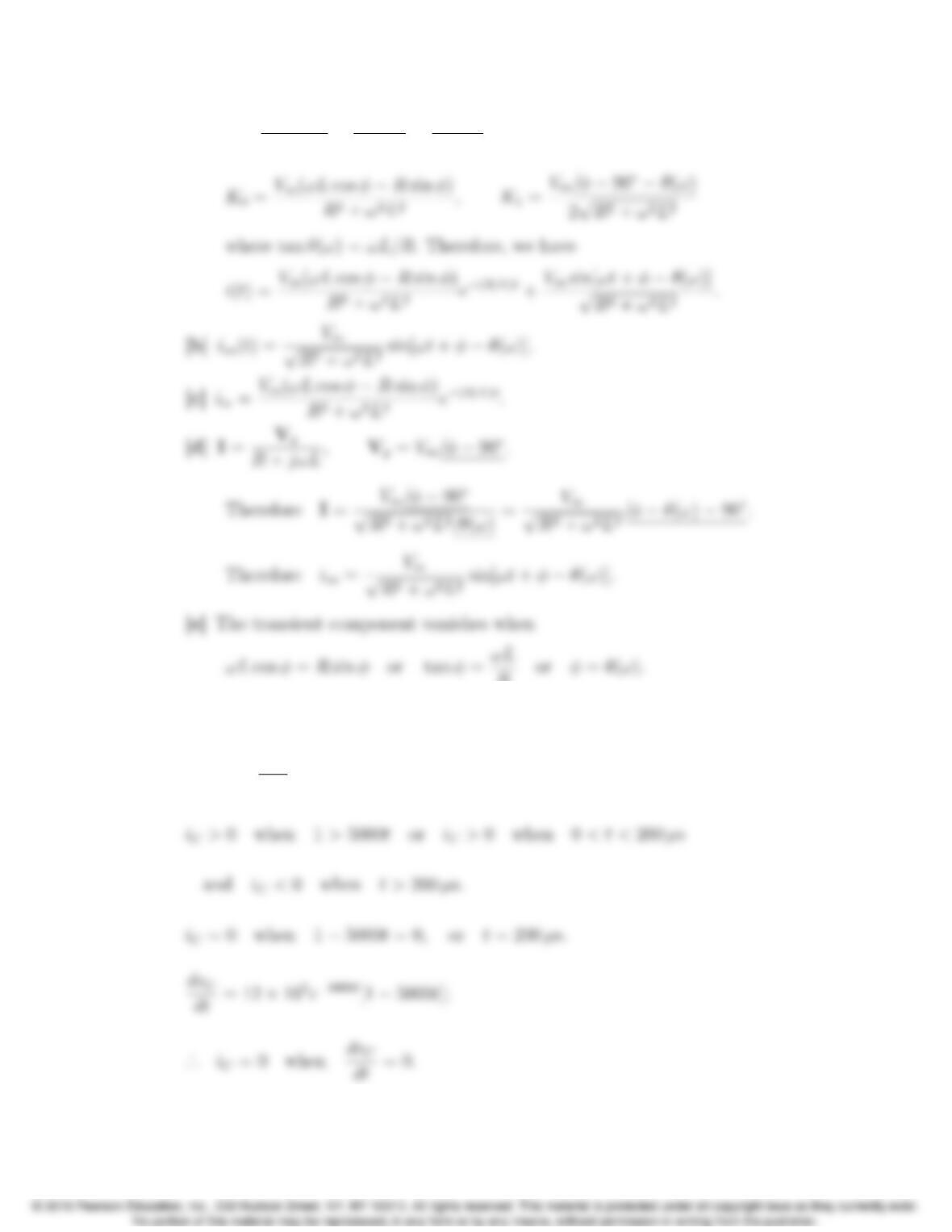
P 13.34 [a] The s-domain equivalent circuit is
13–38 CHAPTER 13. The Laplace Transform in Circuit Analysis
I=K0
s+R/L +K1
sjω+K⇤
1
s+jω.
Ror φ=θ(ω).
P 13.35 vC= 12 ⇥105te5000tV,C=5µF; therefore
iC=C dvC
dt !=6e5000t(1 5000t)A.
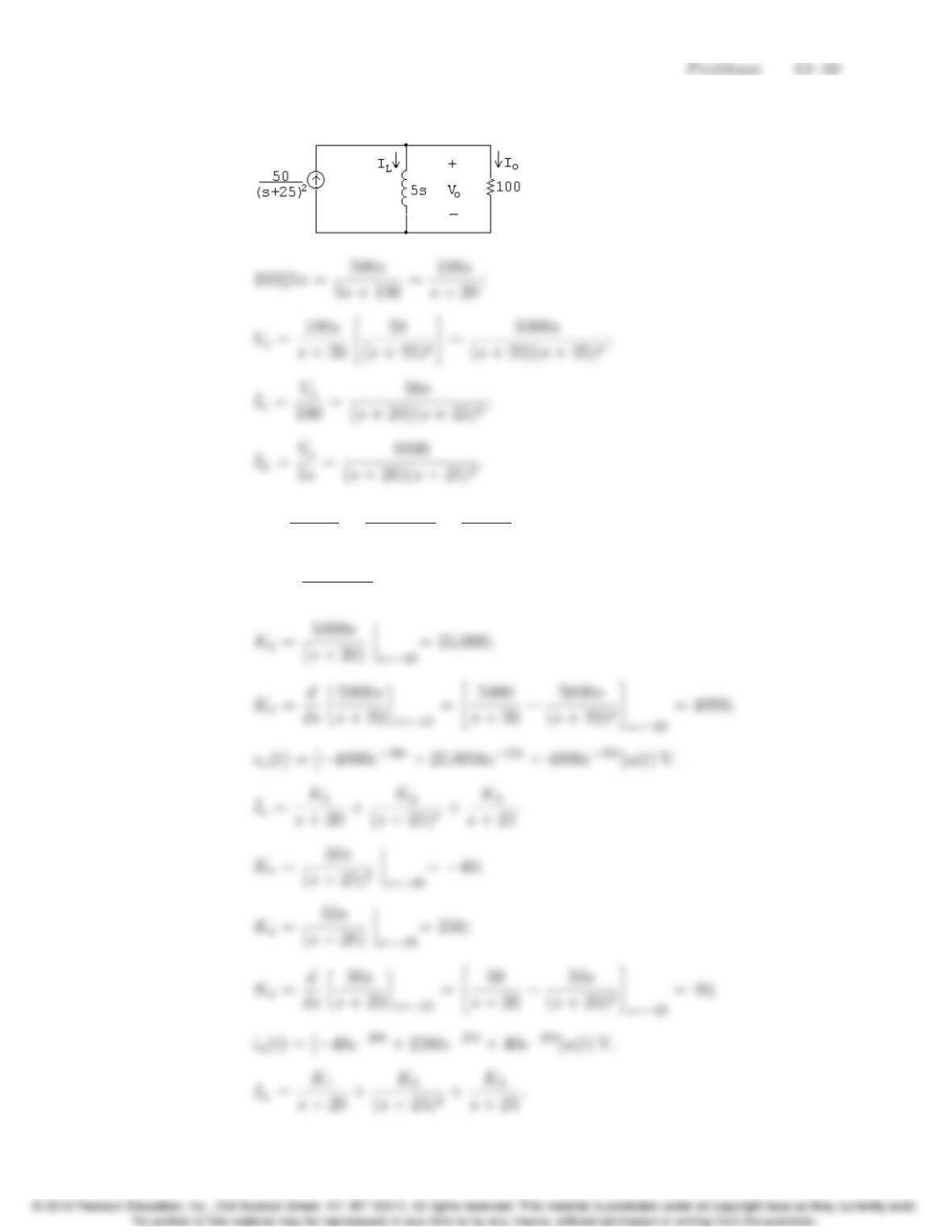
P 13.36 [a]
[b] Vo=K1
s+20+K2
(s+ 25)2+K3
s+25.
K1=5000s
(s+ 25)2s=20
=4000;
13–40 CHAPTER 13. The Laplace Transform in Circuit Analysis
P 13.37