Problems 10–39
P 10.50 [a] Set Co= 0.1µF, so −j/ωC =−j2000 Ω; also set Ro= 4123.1 Ω.
I=120
8123.1 + j1000 = 14.55 −j1.79 mA;
P 10.51 [a] jωL1=jωL2=j(400)(625 ×10−3) = j250 Ω;
Solving,
Thus,
[c] When t= 1.25πms:
When t= 2.5πms:
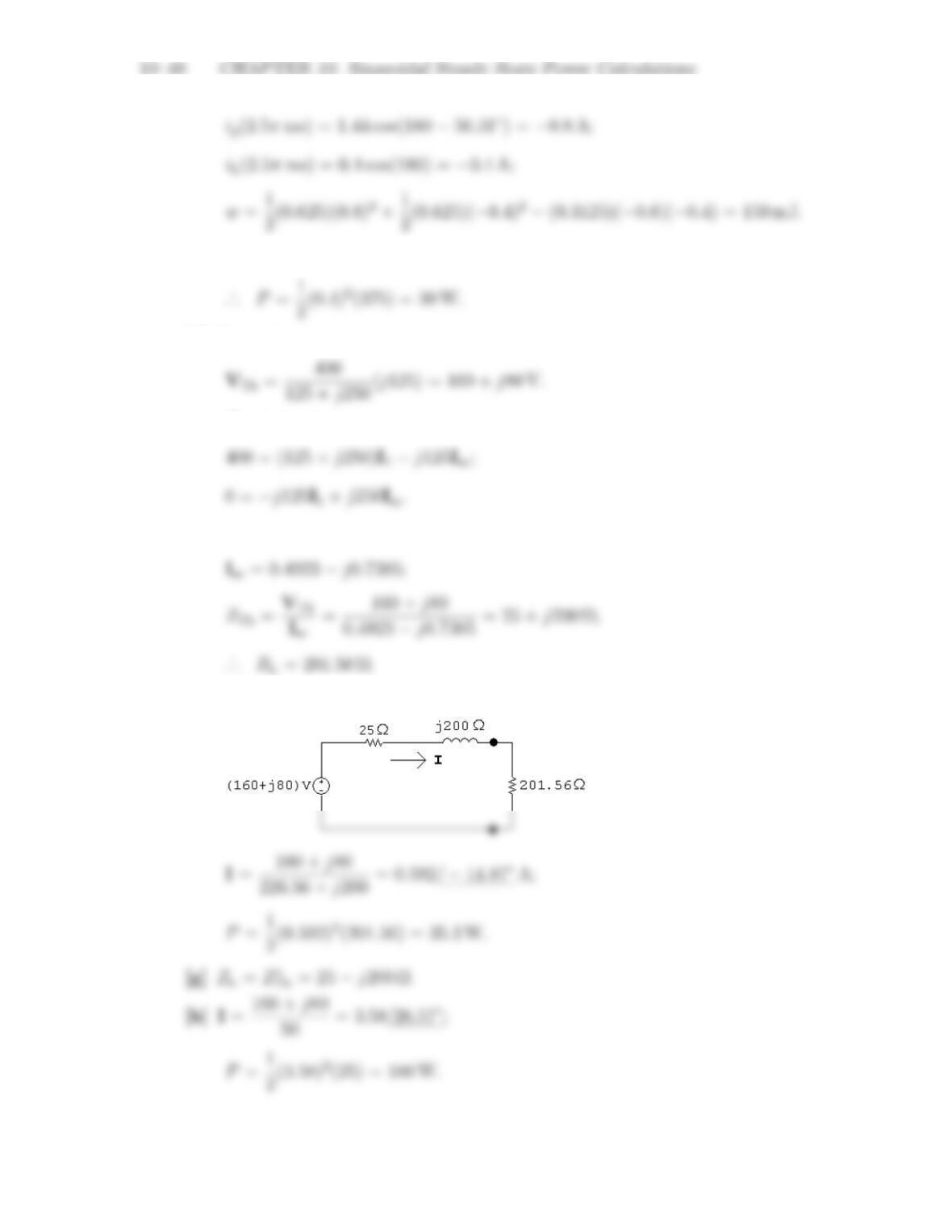
[d] From (a), IL= 0.4 A,
[e] Open circuit:
Short circuit:
Solving,
[f]
Problems 10–41
P 10.52 [a]
648(100) = 9.72%.
P 10.53 [a]
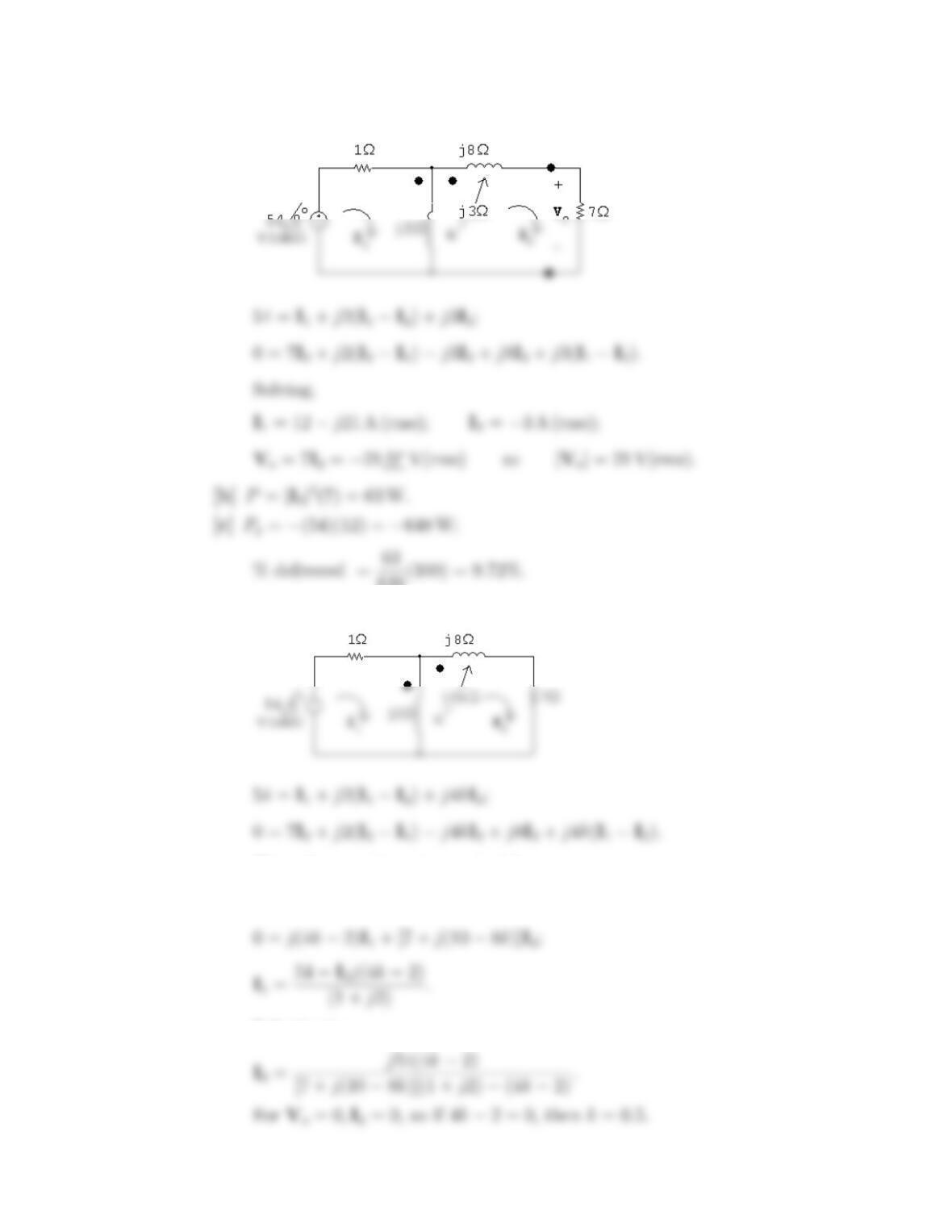
Place the equations in standard form:
54 = (1 + j2)I1+j(4k−2)I2;
Substituting,
10–42 CHAPTER 10. Sinusoidal Steady State Power Calculations
[b] When I2= 0,
I1=54
1 + j2= 10.8−j21.6 A(rms);
P 10.54 [a]
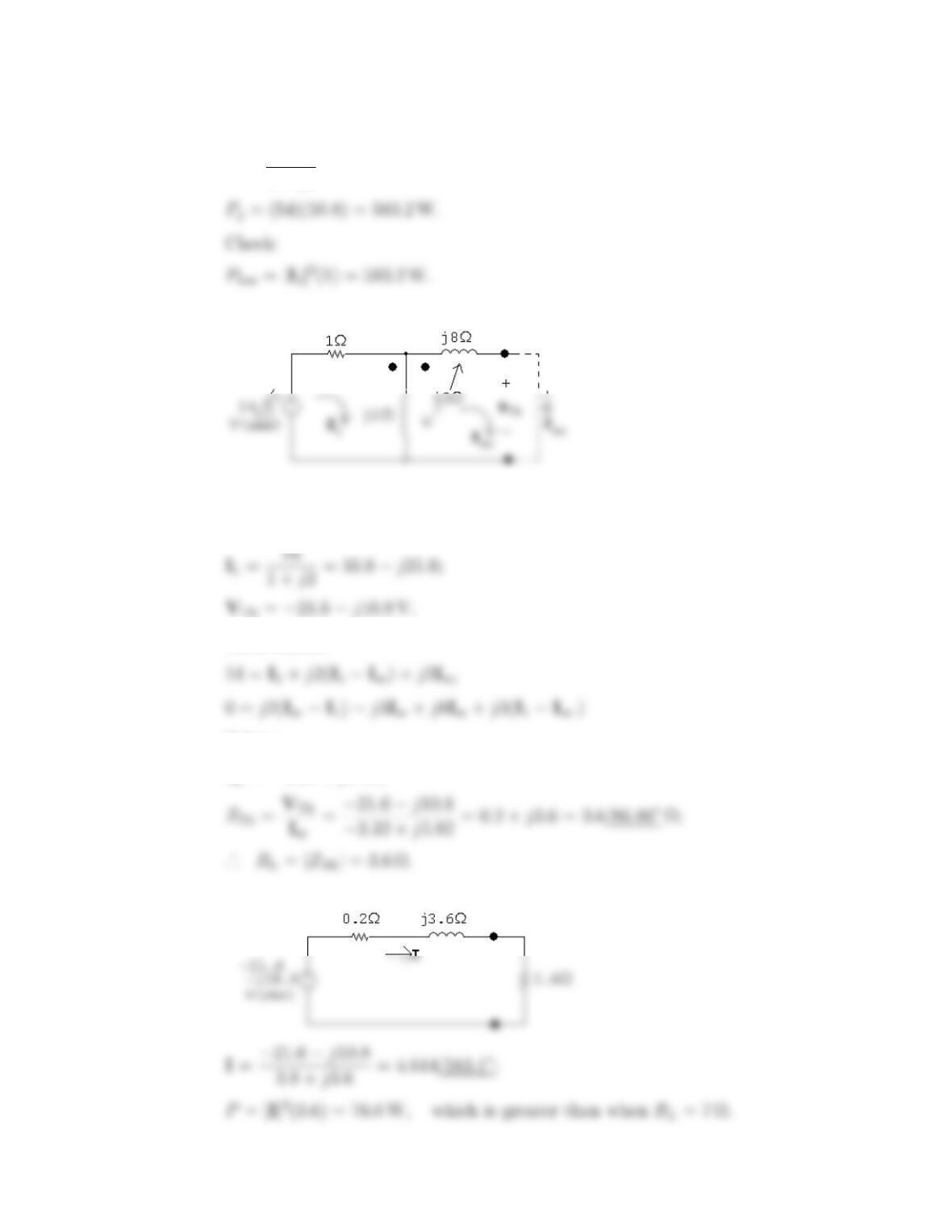
Open circuit:
VTh =−j3I1+j2I1=−jI1;
Short circuit:
Solving,
Isc =−3.32 + j5.82;
[b]
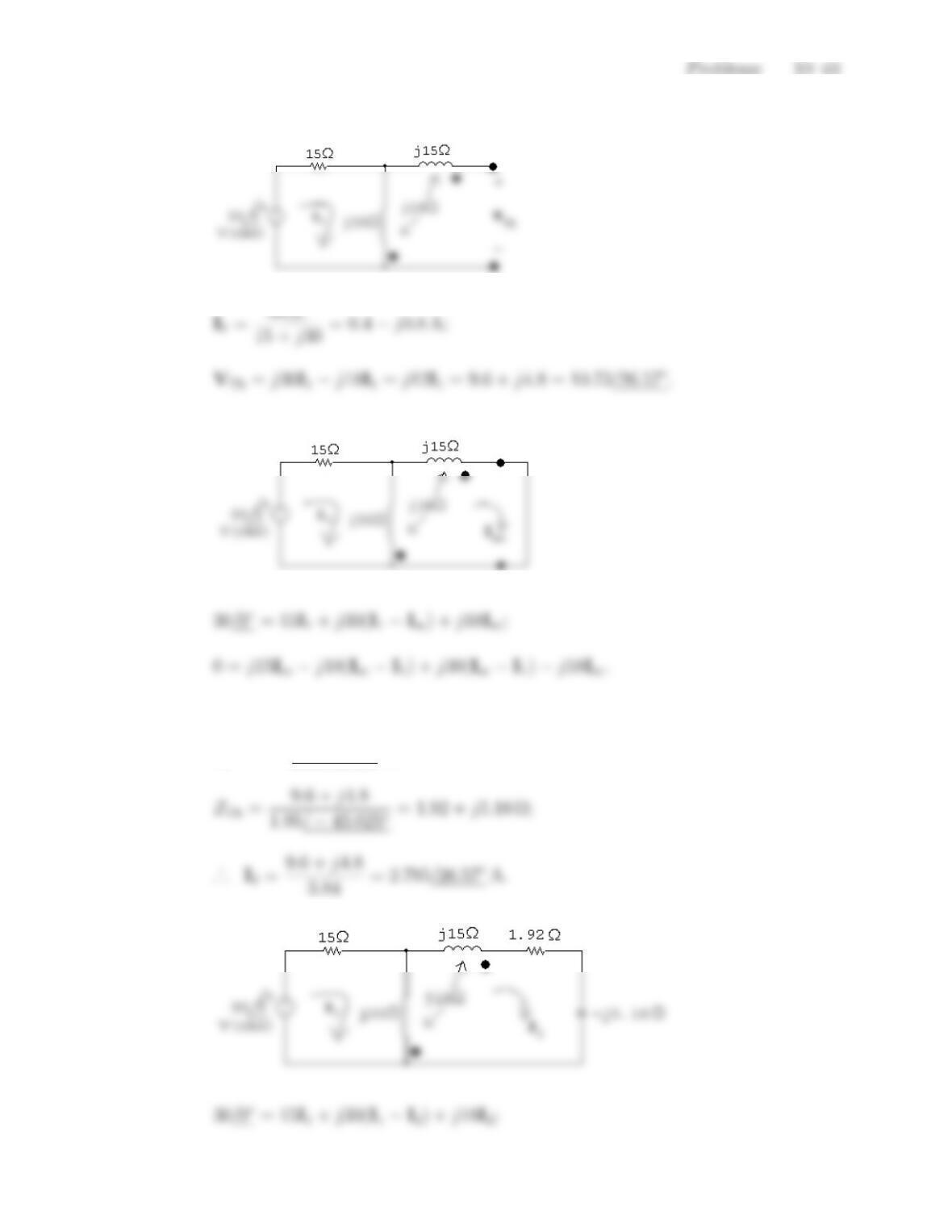
P 10.55 Open circuit voltage:
Short circuit current:
Solving,
Isc = 1.95/−43.025◦A;
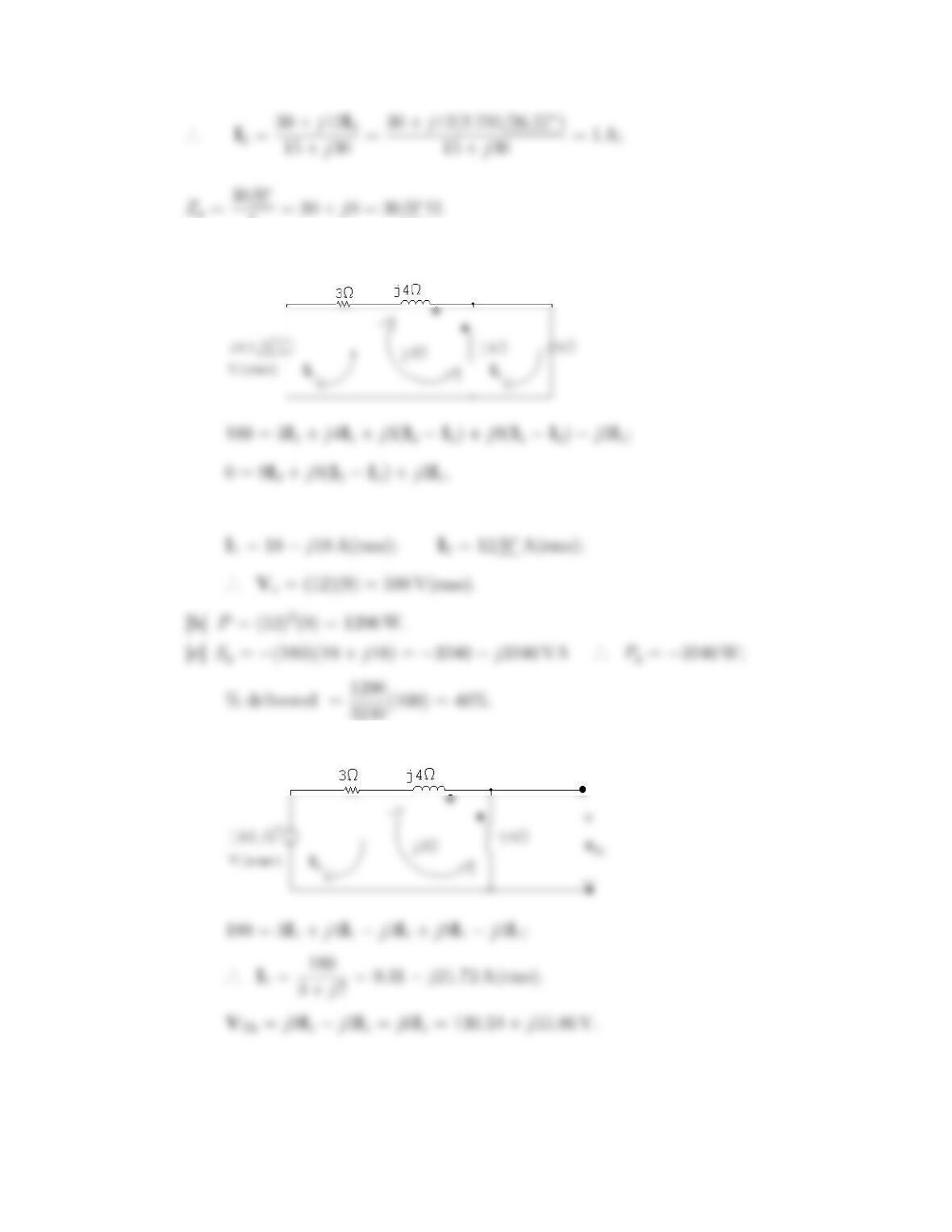
10–44 CHAPTER 10. Sinusoidal Steady State Power Calculations
1= 30 + j0 = 30/0◦Ω.
P 10.56 [a]
Solving,
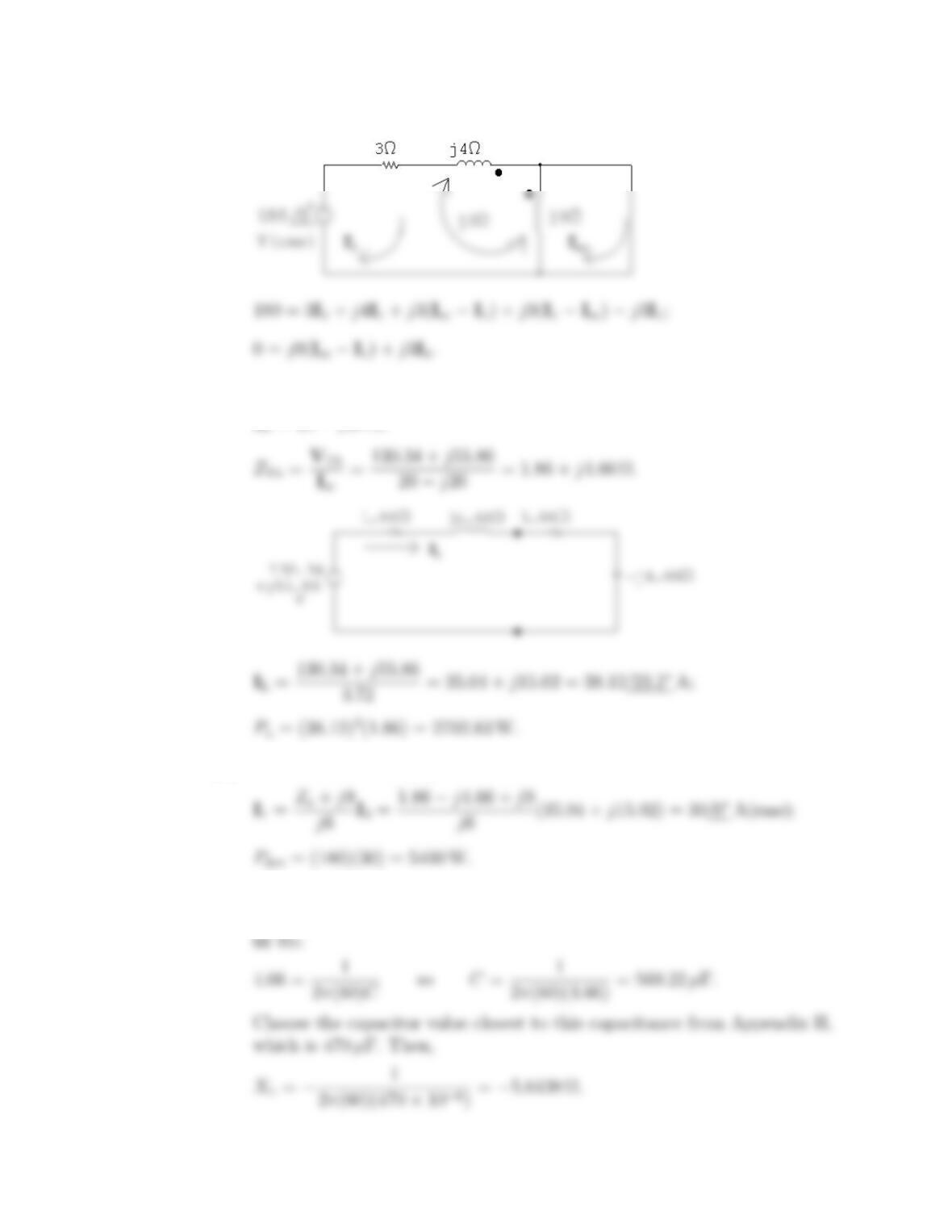
P 10.57 [a] Open circuit voltage:
Problems 10–45
Short circuit current:
Solving,
Isc = 20 −j20 A;
[b] From Problem 10.56(a),
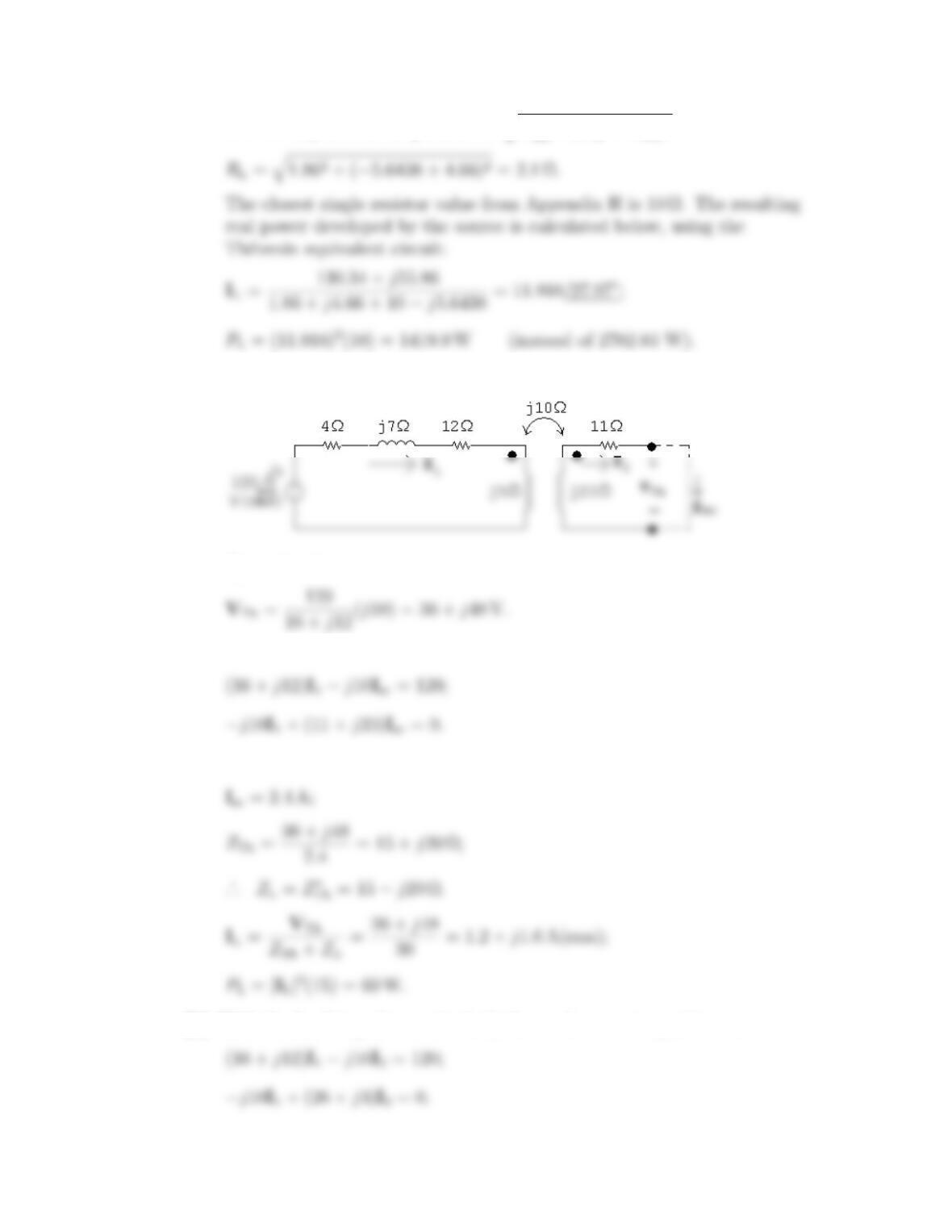
[c] Begin by choosing the capacitor value from Appendix H that is closest to
the required reactive impedance, assuming the frequency of the source is
10–46 CHAPTER 10. Sinusoidal Steady State Power Calculations
Now set RLas close as possible to qR2
Th + (XL+XTh)2:
P 10.58 [a]
Open circuit:
Short circuit:
Solving,
[b] With the load impedance attached, the mesh current equations are
Problems 10–47
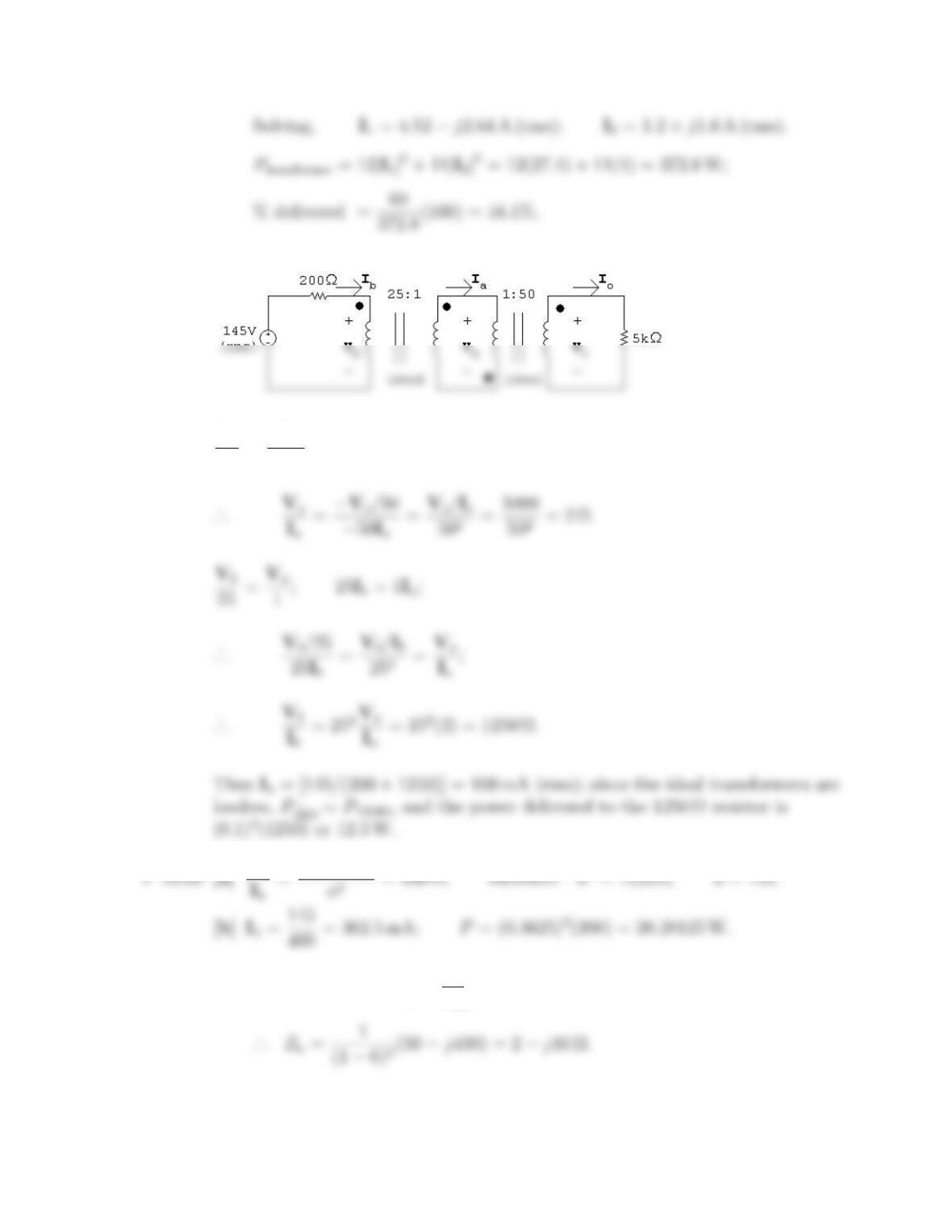
P 10.59
Va
1=−Vo
50 ; 1Ia=−50Io;
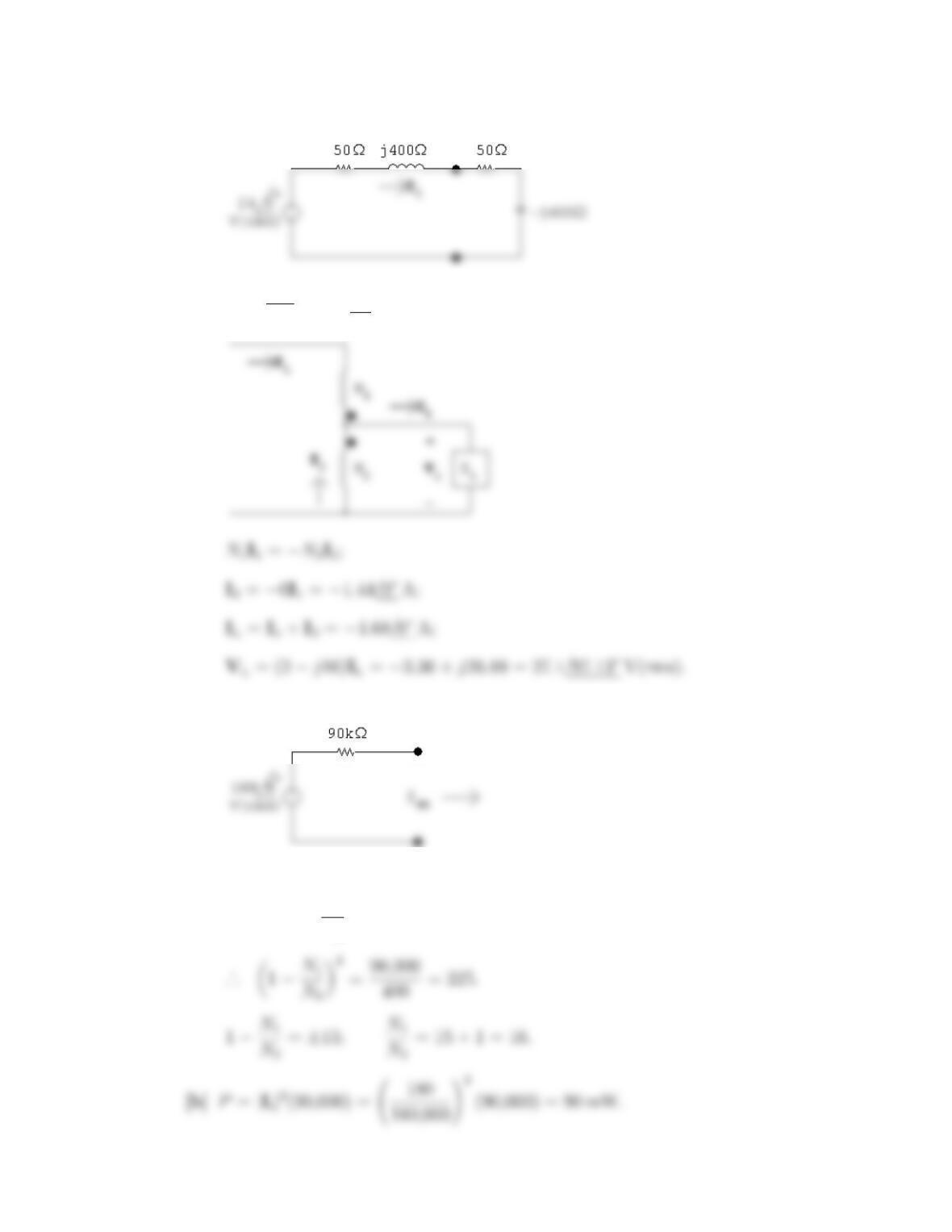
P 10.61 [a] Zab = 50 −j400 = 1−N1
N22
ZL;
10–48 CHAPTER 10. Sinusoidal Steady State Power Calculations
[b]
I1=24
100 = 240/0◦mA.
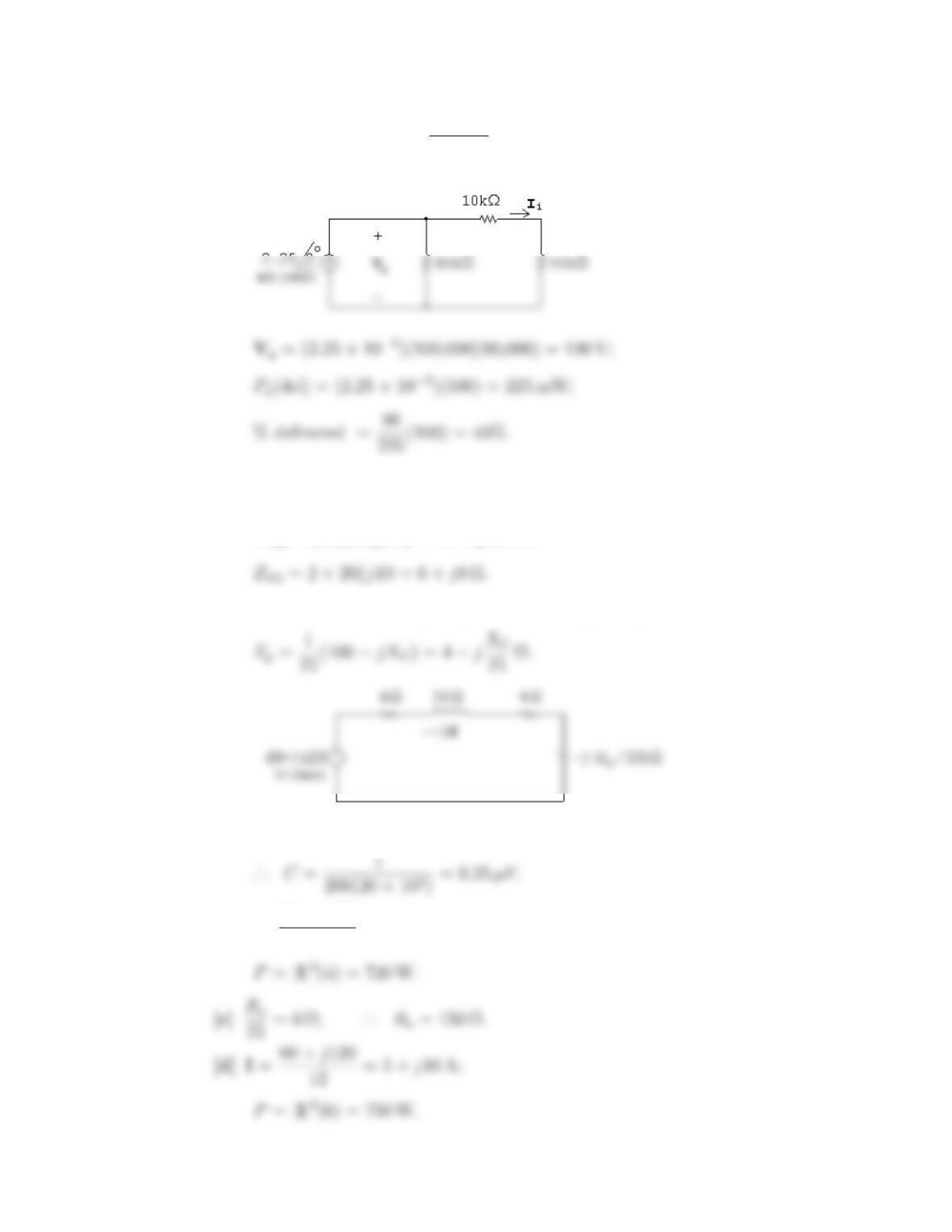
P 10.62 [a]
For maximum power transfer, Zab = 90 kΩ
Zab =1−N1
N22
ZL;
Problems 10–49
[c] V1=RiIi= (90,000) 180
180,000!= 90 V.
[d]
P 10.63 [a] Replace the circuit to the left of the primary winding with a Th´evenin
equivalent:
VTh = (15)(20kj10) = 60 + j120 V;
Transfer the secondary impedance to the primary side:
Now maximize Iby setting (XC/25) = 8 Ω:
[b] I =60 + j120
10 = 6 + j12 A;
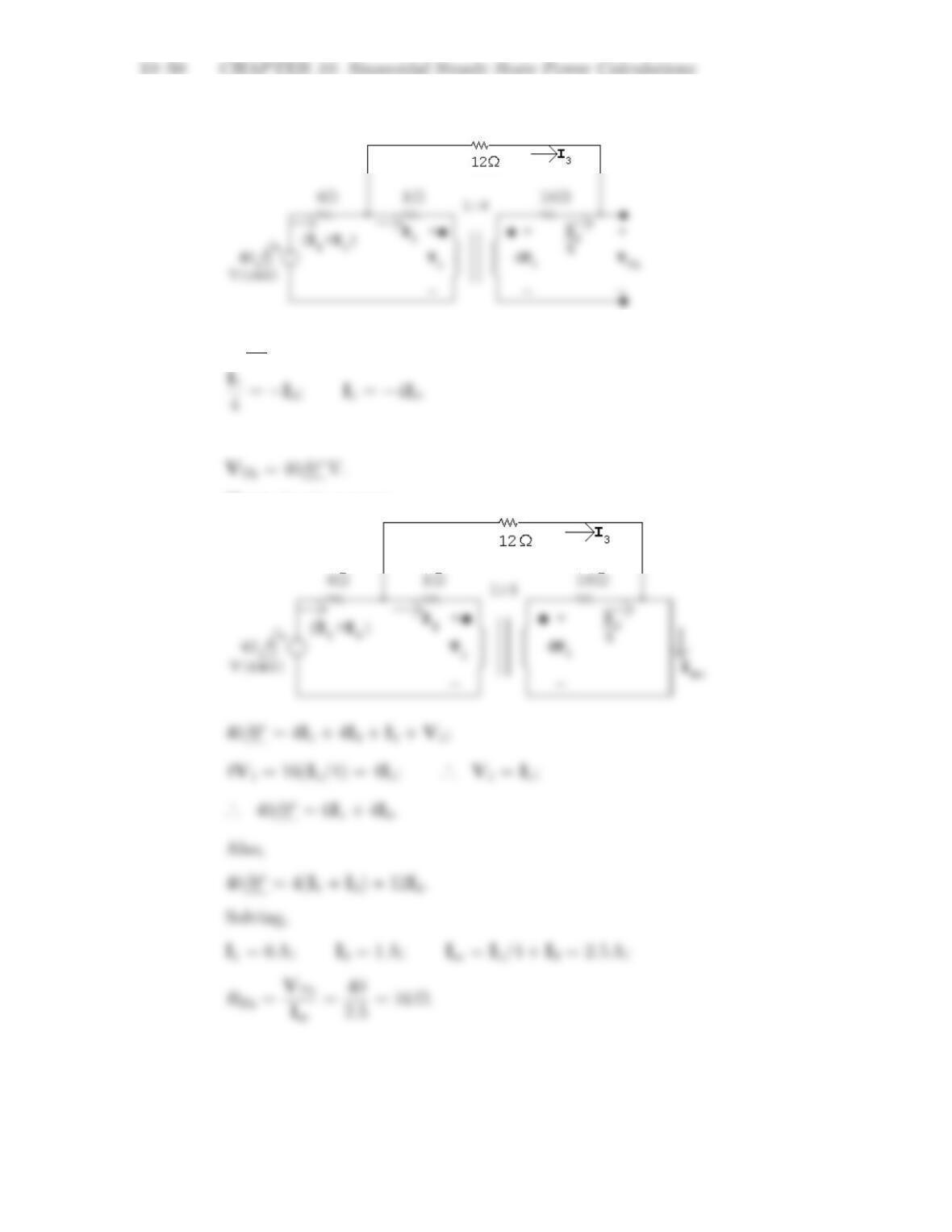
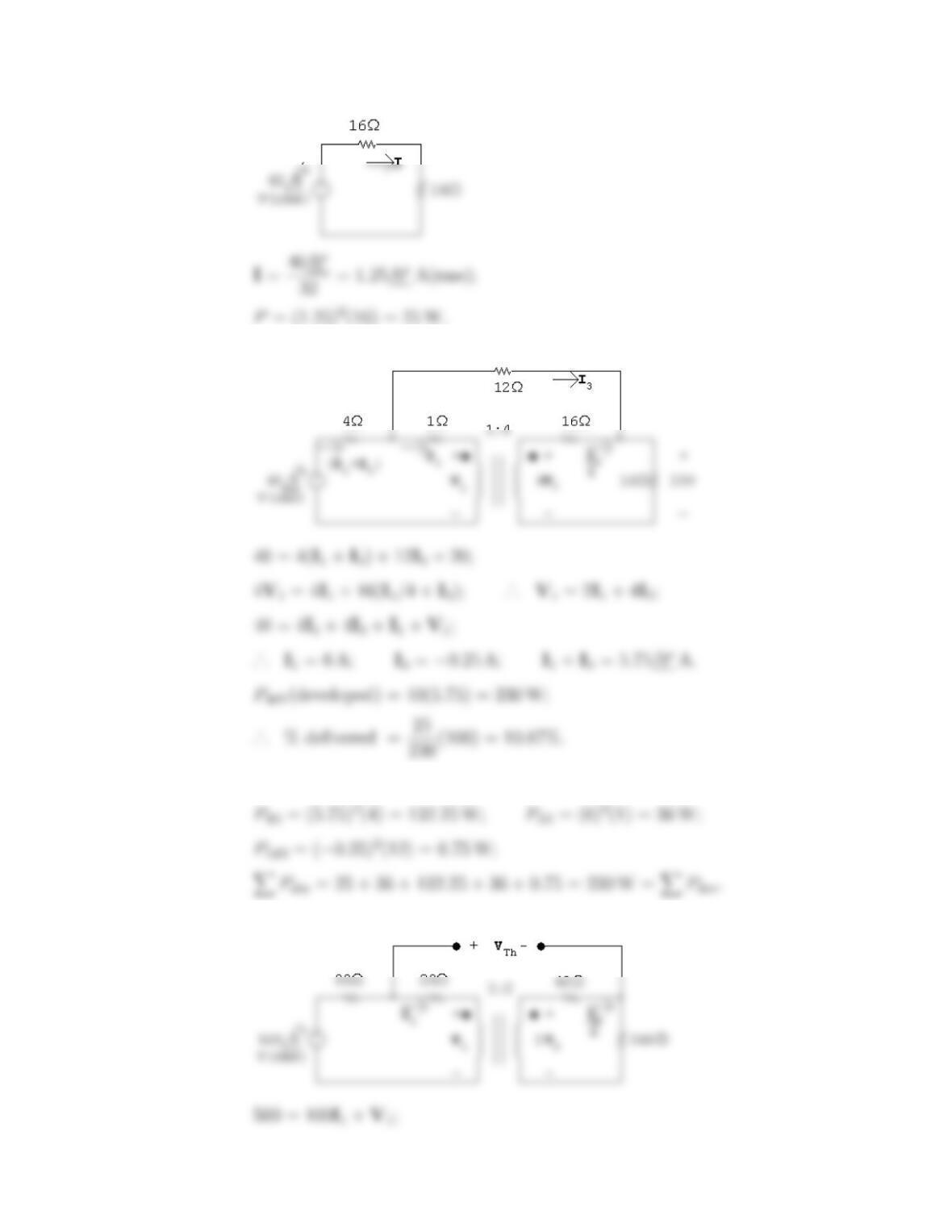
P 10.64 [a] Open circuit voltage:
40/0◦= 4(I1+I3) + 12I3+VTh;
Solving,
Short circuit current:
Problems 10–51
[b]
[c] PRL= 25 W; P16Ω = (1.5)2(16) = 36 W;
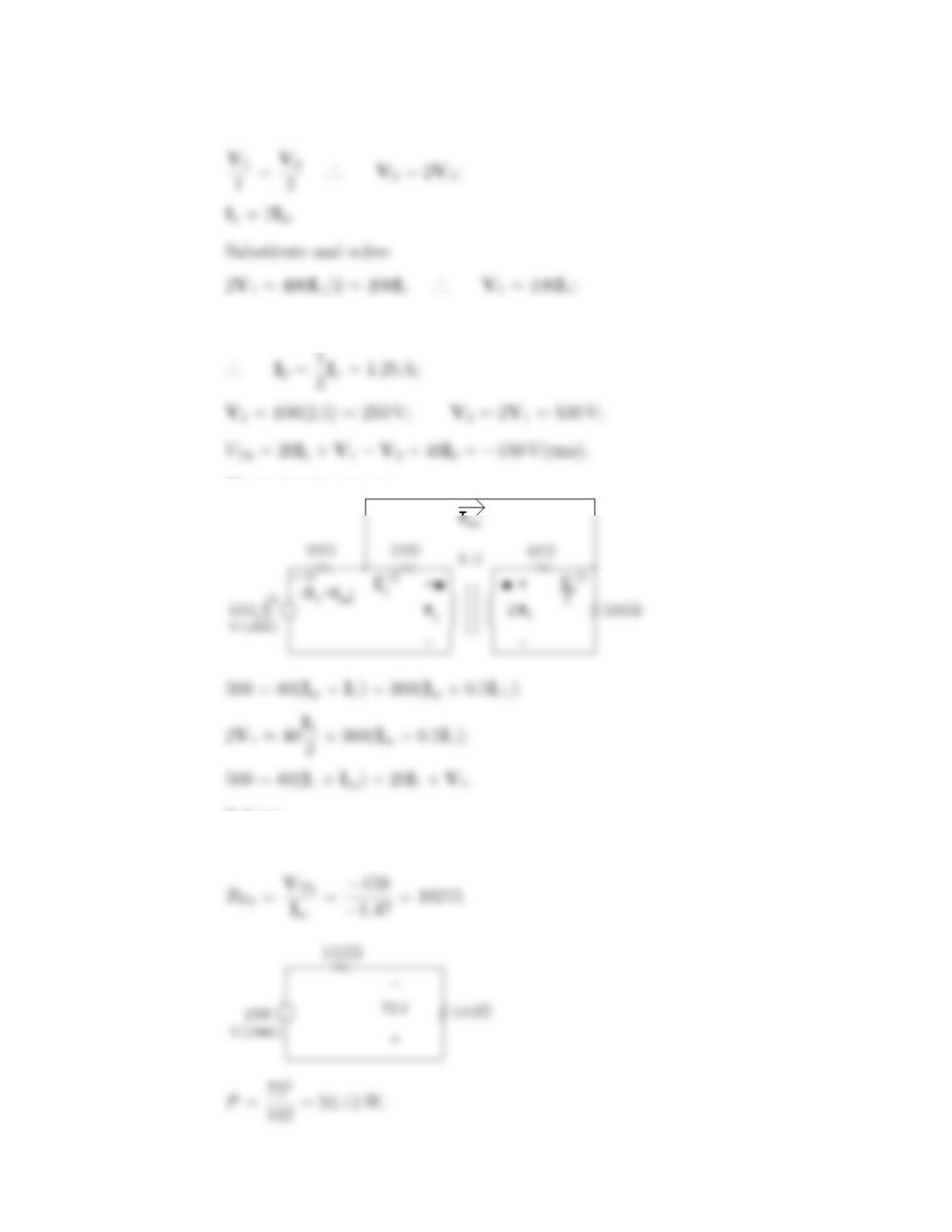
P 10.65 [a] Open circuit voltage:
10–52 CHAPTER 10. Sinusoidal Steady State Power Calculations
V2= 400I2;
500 = 100I1+ 100I1·
. . I1= 500/200 = 2.5 A;
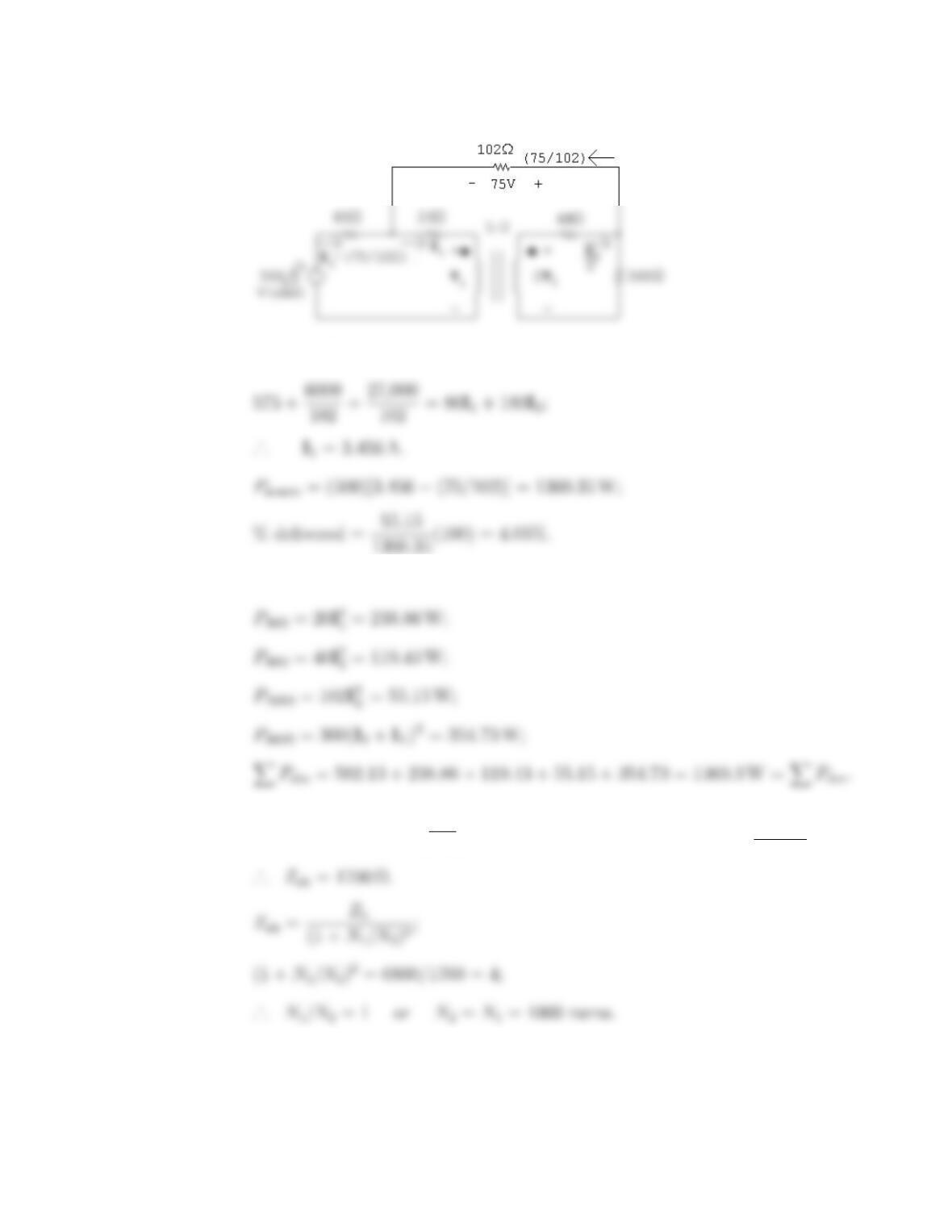
Short circuit current:
Solving,
Isc =−1.47 A;
Problems 10–53
[b]
500 = 80[I1−(75/102)] −75 + 360[I2−(75/102)];
[c] P80Ω = 80(I1+IL)2= 592.13 W;
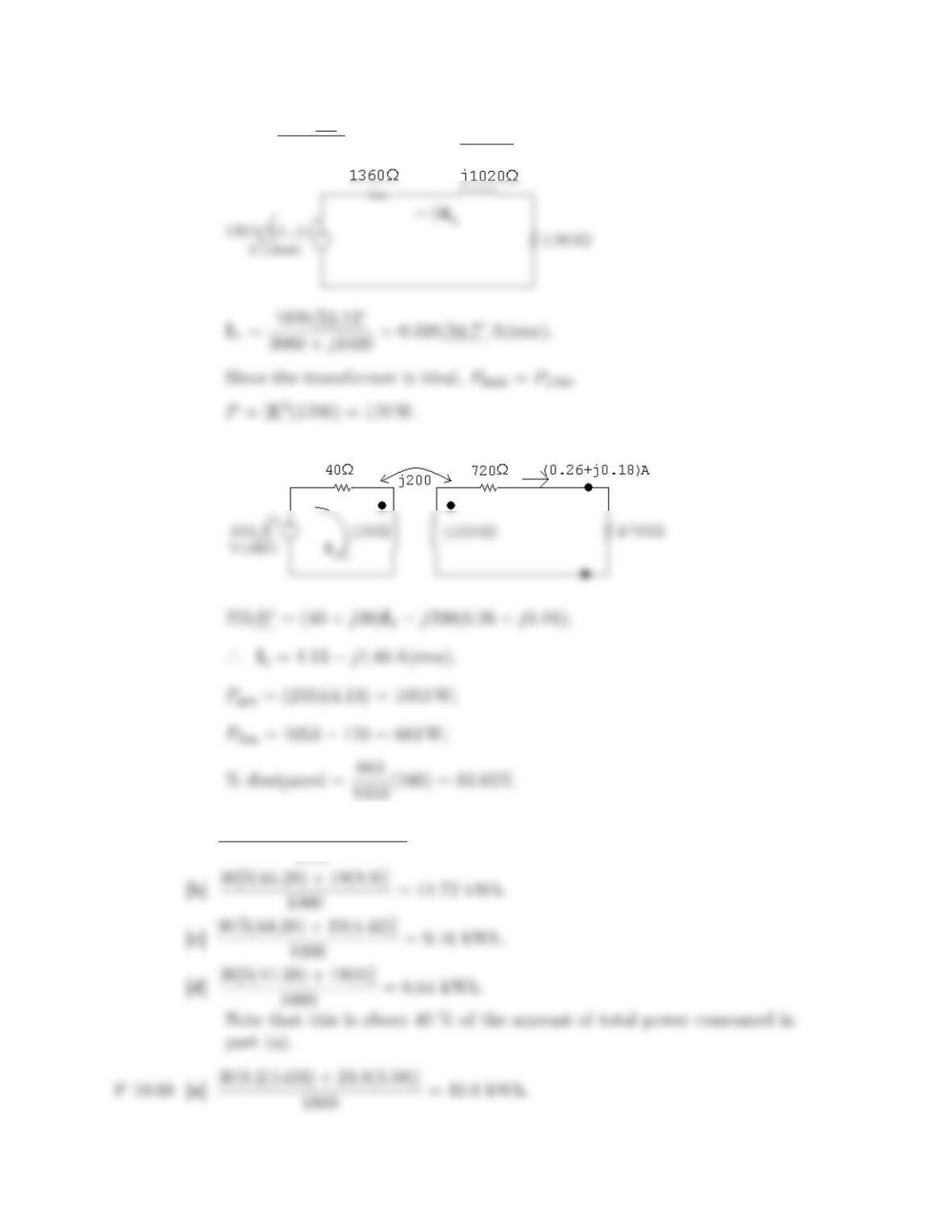
P 10.66 [a] ZTh = 720 + j1500 + 200
50 2
(40 −j30) = 1360 + j1020 = 1700/36.87◦Ω;
10–54 CHAPTER 10. Sinusoidal Steady State Power Calculations
[b] VTh =255/0◦
40 + j30(j200) = 1020/53.13◦V.
[c]
P 10.67 [a] 30[5(44.28) + 19(15.77)]
1000 = 15.63 kWh.
Problems 10–55
[b] The standby power consumed in one month by the microwave oven when
in the ready state is
P 10.69 jωL1=j(2π)(60)(0.25) = j94.25 Ω;
P 10.70 jωL1=j(2π)(60)(0.25) = j94.25 Ω;
P 10.71 An ideal transformer has no resistance, so consumes no real power. This is one