CHAPTER 9
AGGREGATE DEMAND
SOLUTIONS TO END OF CHAPTER PROBLEMS
1.
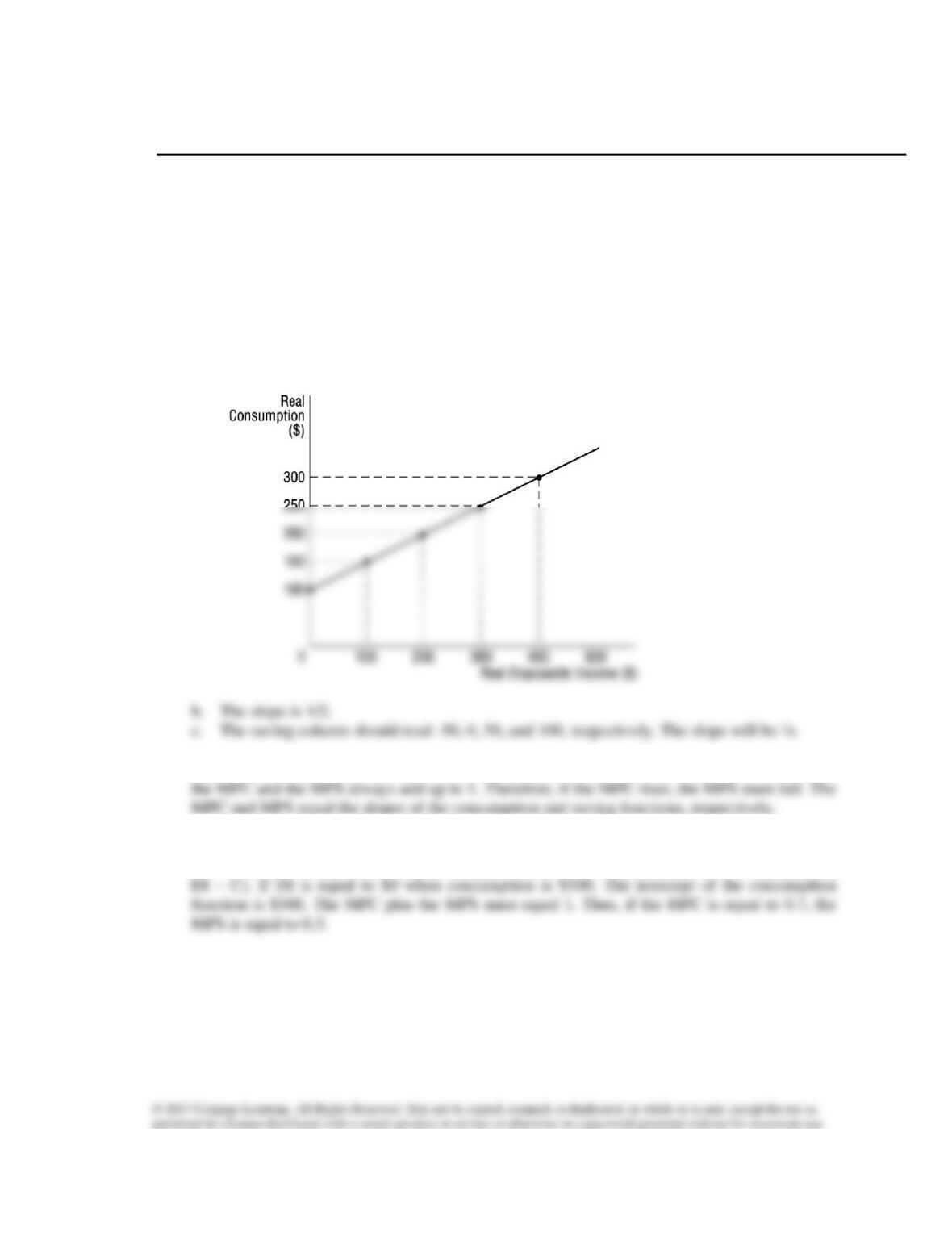
a. Graph the consumption function, with consumption spending on the vertical axis and
disposable income on the horizontal axis.
b. If the consumption function is a straight line, what is its slope?
c. Fill in the saving column at each level of income. If the saving function is a straight line,
what is its slope?
a.
2. The value of the MPC is 12/15 = 0.80. As disposable income can only be consumed or saved,
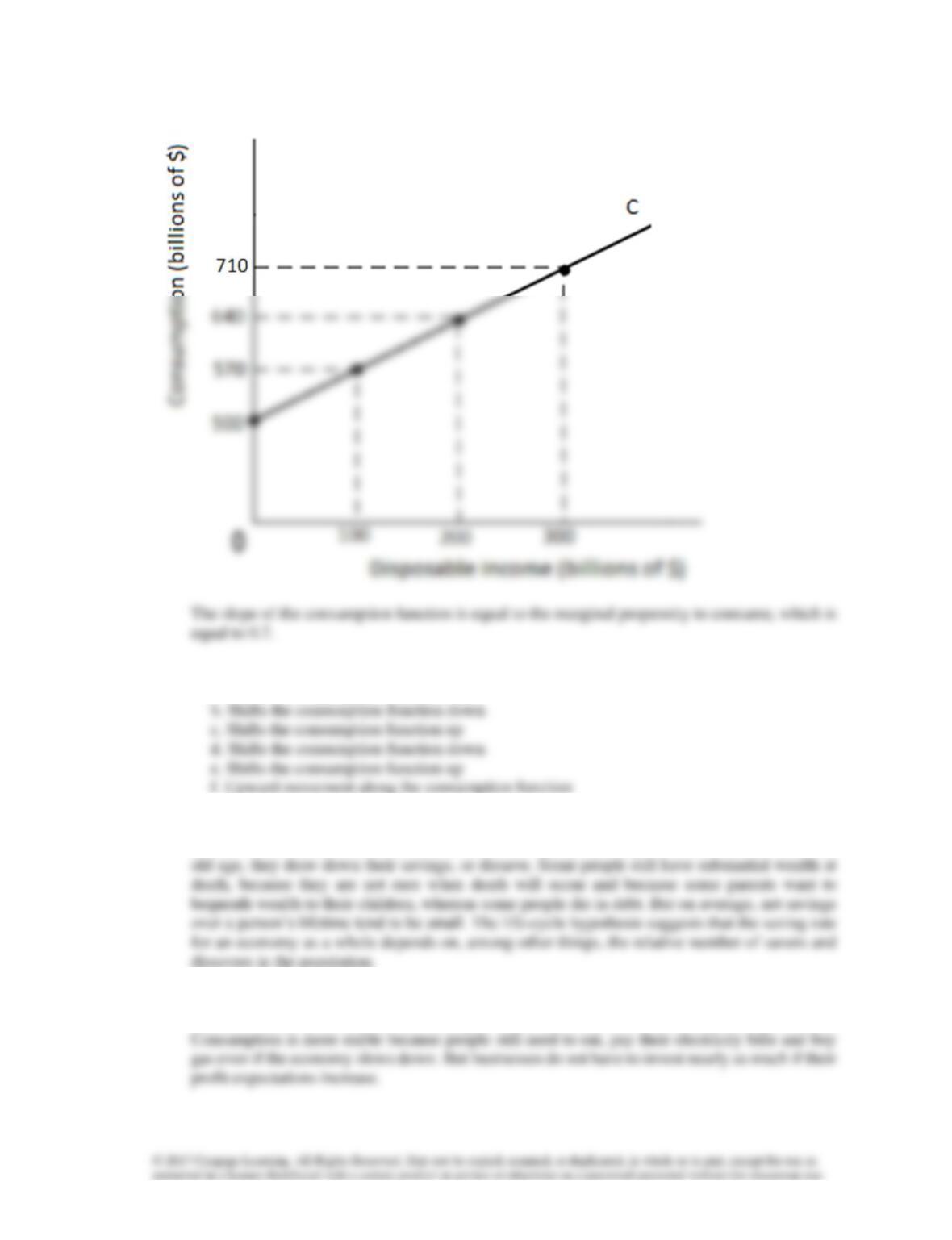
3. The key to drawing this graph is the ability to calculate the intercept and slope of the saving
function. Disposable Income is equal to consumption plus savings. Thus, (DI = C + S) and (S =
Chapter 9 Aggregate Demand 2
4.
a. Shifts the consumption function down
5. According to the life-cycle model of consumption and saving, young people tend to borrow to
finance education and home purchases. In middle age, people pay off debts and save more. In
6. Investment depends on the market interest rate and on business expectations. Investment
fluctuates from year to year but averaged about one-sixth of GDP during the last decade.
7.
a. As interest rates fall, holding revenue from the use of the equipment constant, it becomes
8. The components of aggregate expenditure are (a) consumption, (b) investment, (c) government
9. The aggregate expenditure line indicates, for a given price level, spending plans at each income
10.
11. The simple spending multiplier is 5. If government spending is increased by $200 billion, real
13.