CHAPTER 9
(MACRO CHAPTER 9)
Aggregate Expenditures
FUNDAMENTAL QUESTIONS
1. How are consumption and saving related?
2. What are the determinants of consumption?
OVERVIEW AND OBJECTIVES
The primary purpose of this chapter is to begin the analysis of real GDP by studying the components of
national spending: consumption (C), investment (I), government spending (G), and net exports(X).
The chapter develops the consumption and saving functions and demonstrates that one is the mirror
image of the other. The marginal propensity to consume (MPC) is the change in consumption that
After reading and reviewing this chapter, the student should be able to:
1. Define disposable income as the sum of consumption and saving.
2. Graphically construct consumption and saving functions.
3. Define autonomous consumption.
4. Calculate marginal propensity to consume, marginal propensity to save, average propensity to
Chapter 9: Aggregate Expenditures 65
.
KEY TERM REVIEW
consumption function
saving function
dissaving
autonomous consumption
LECTURE OUTLINE AND TEACHING STRATEGIES
I. Consumption and Saving
Households can consume, save, or pay taxes with their income.
A. Saving and savings: Saving is the flow of income that is not consumed over a period of time.
Savings are the accumulation of saving over time and are a stock concept.
Teaching Strategy: Ask your students to think of savings as a bathtub that accumulates the
saving in each period over time. Saving adds to the level of savings in the tub and dissaving
reduces the level in the tub.
C. Marginal propensity to consume and save: The ratio of the change in consumption to the
change in disposable income is the marginal propensity to consume. The ratio of the change
in saving to the change in disposable income is the marginal propensity to save. Because in
an economy without taxes, people must either consume or save their income, the MPC plus
66 Chapter 9: Aggregate Expenditures
E. Determinants of consumption: Beyond income, there are several other determinants of
consumption that affect autonomous consumption and the slope of the consumption
function.
Teaching Strategy: Discuss how saving more and earlier in life should affect the
consumption function.
1. Disposable income: Changes in disposable income that are due to tax changes shift the
consumption function. Changes that are due to changes in current income cause
II. Investment
A. Autonomous investment: Investment expenditures are assumed to be autonomous with
respect to income.
B. Determinants of investment: The determinants of investment fix the position of the
investment function.
1. The interest rate: This is the key factor in determining the rate of return on a firm’s
investment projects.
2. Profit expectations: The expected rate of return determines firms’ level of investment.
C. Volatility: Several determinants of investment have a significant impact on volatility—
interest rates, expectations, technological change, tax policy changes, and capacity
III. Government Spending
Government spending on goods and services is the second largest component of aggregate
spending.
Teaching Strategy: Point out that government spending is not autonomous in the real world.
This is a good time to mention the concept of automatic stabilizers.
Chapter 9: Aggregate Expenditures 67
.
IV. Net Exports
Net exports represent the difference between a country’s exports and imports of merchandise and
services.
Teaching Strategy: Point out that when net exports are negative, this means savings is less than
investment and domestic expenditures are greater than domestic output.
A. Exports: Exports are positively related to the level of foreign income and the tastes of
V. The Aggregate Expenditures Function
Teaching Strategy: It will pay off in the future if you change the values of the MPC and MPI
and show how the aggregate expenditures function changes in response.
Teaching Strategy: Whenever a component of the aggregate expenditures function is added,
explain and graphically demonstrate the addition. This will illustrate where the component fits in
OPPORTUNITIES FOR DISCUSSION
1. Why is consumption such an important part of the aggregate expenditures function?
21. How can individuals consume more than they earn in a given period?
3. Why do economists pay so much attention to investment, even though it is a relatively small
component of aggregate spending?
ANSWERS TO EXERCISES
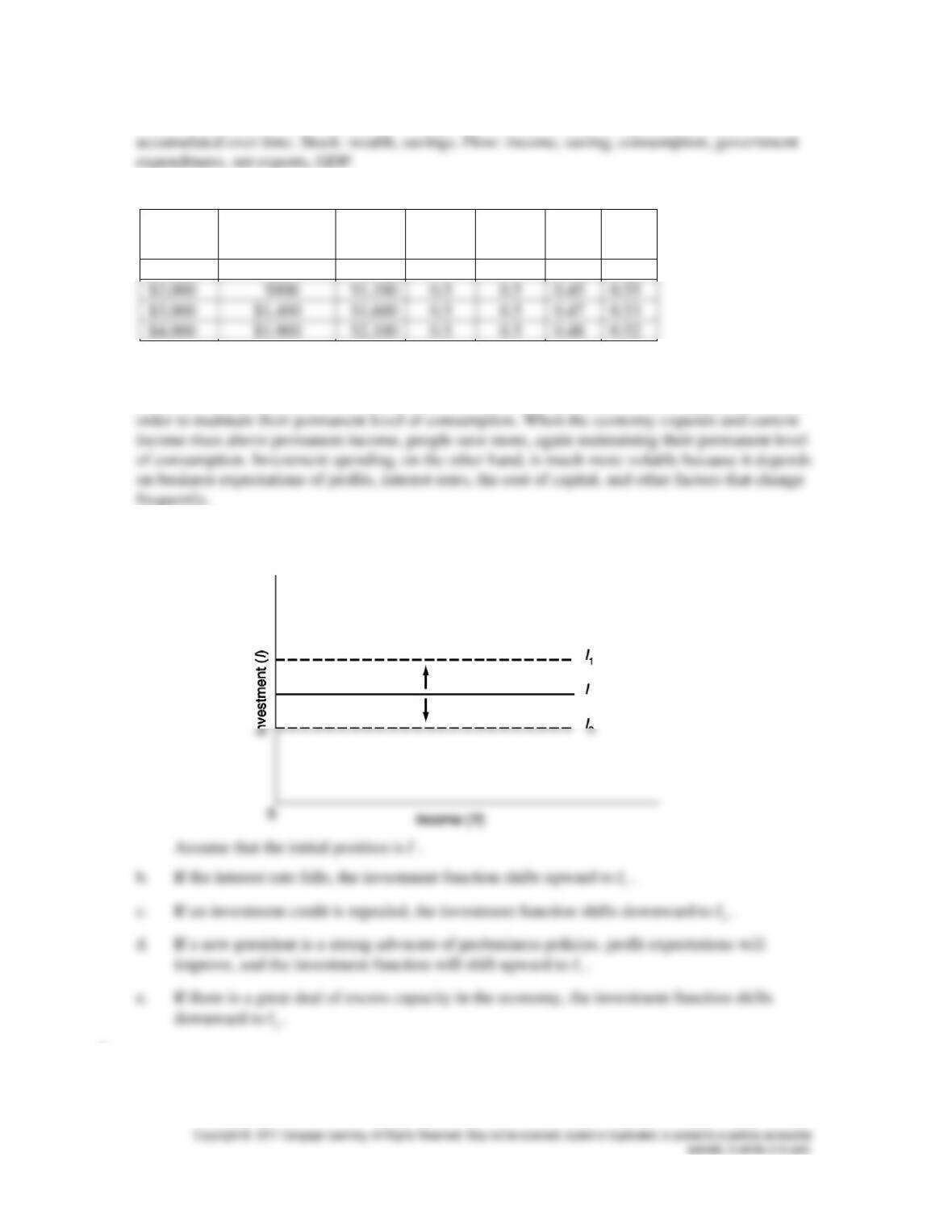
1. We study the consumption and saving functions together because one is just the mirror image of
68 Chapter 9: Aggregate Expenditures
2. A flow is a variable that is measured over a period of time. A stock is a quantity that has
3.
Income
Consumption
Saving
MPC
MPS
APC
APS
$1,000
$400
0$600
0.40
0.60
$3,000
0.47
0.53
4. Consumption is stable over the business cycle because it is related to long-run permanent income
rather than current income. When current income falls below permanent income, people dissave in
5.
a.
6.
a.
0.9MPC =
Chapter 9: Aggregate Expenditures 69
.
b.
0.1MPS =
7.
a.
50 0.9=+CY
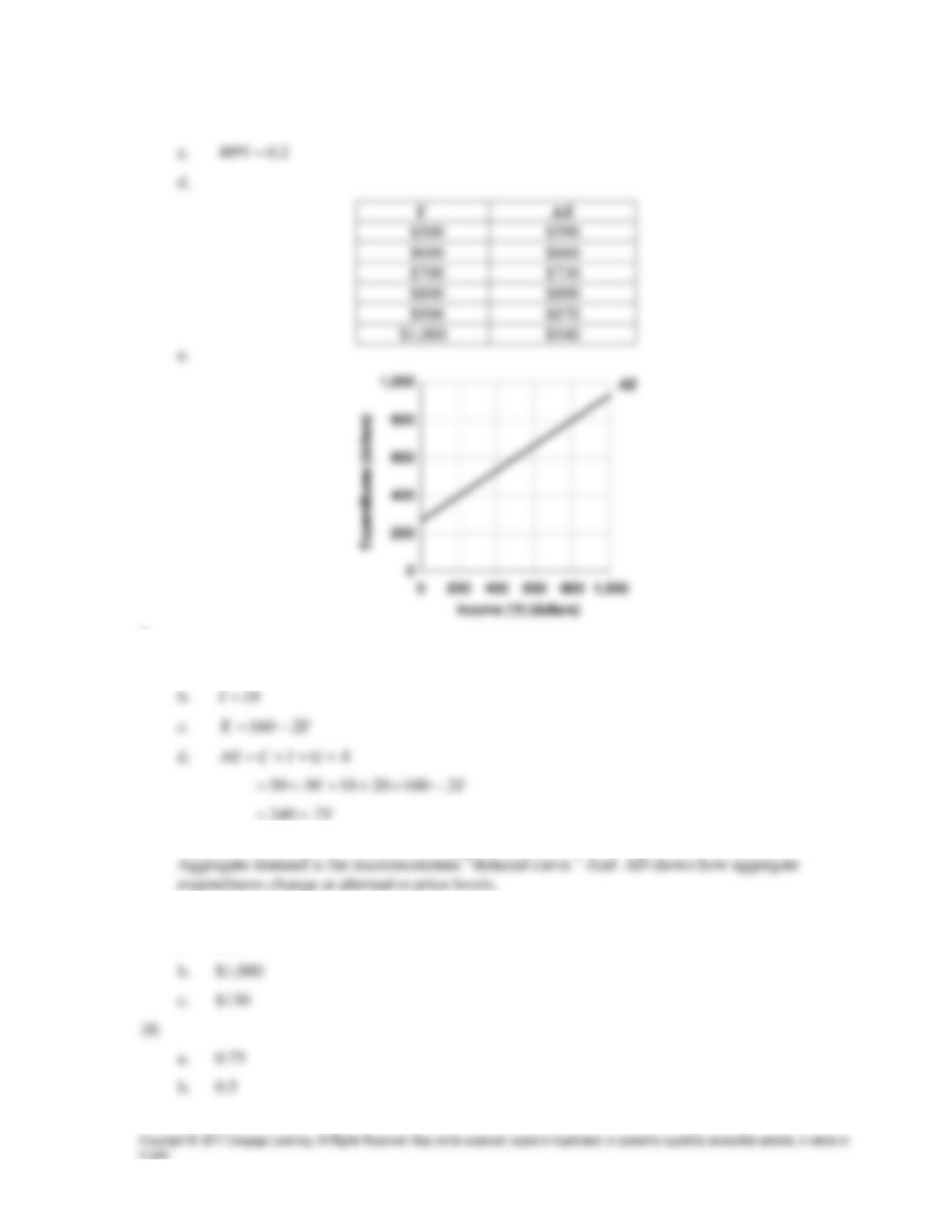
8. No, the
AE
function shows the level of aggregate expenditures at alternative levels of real GDP.
9.
a. $50
70 Chapter 9: Aggregate Expenditures
c. 0.9
11. The fact that the intercept of the consumption function is not at
0C=
allows the APC to fall even
with a constant MPC. Since C is positive when real GDP equals zero, as consumption rises by a
12. Older populations tend to have higher MPCs because income tends to be lower for older
households than for middle-aged households, and people in retirement are frequently dissaving
(living off the savings accumulated during their working years).
13.
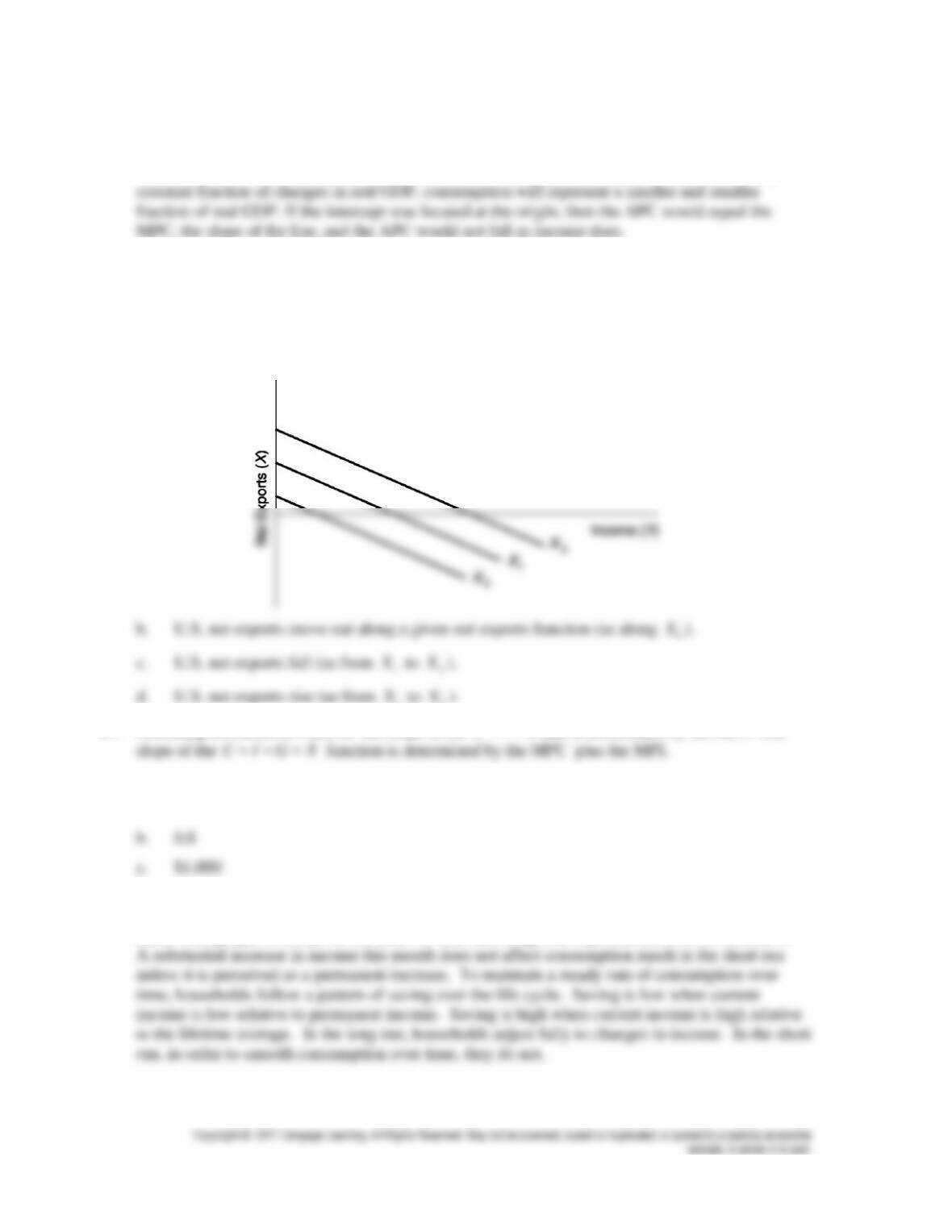
a. U.S. net exports fall (as from
1
X
to
2
X
1
).
1
3
14. Assuming autonomous I and G, the slope of the
++C I G
line is determined by the MPC. The
15.
a. $200
16. Economists offer two related explanations for the difference between long-run and short-run
consumption behavior: the permanent income hypothesis and the life-cycle hypothesis. The basic
idea is that people consume on the basis of what their long-run or permanent level of income is.
Chapter 9: Aggregate Expenditures 71
.
ANSWERS TO STUDY GUIDE HOMEWORK
1. Disposable income, wealth, expectations, demographics, taxation.
2. The interest rate, profit expectations, technological change, the cost of capital goods, capacity
utilization.
5.
a. Decreases investment and aggregate expenditures.
ACTIVE LEARNING EXERCISE
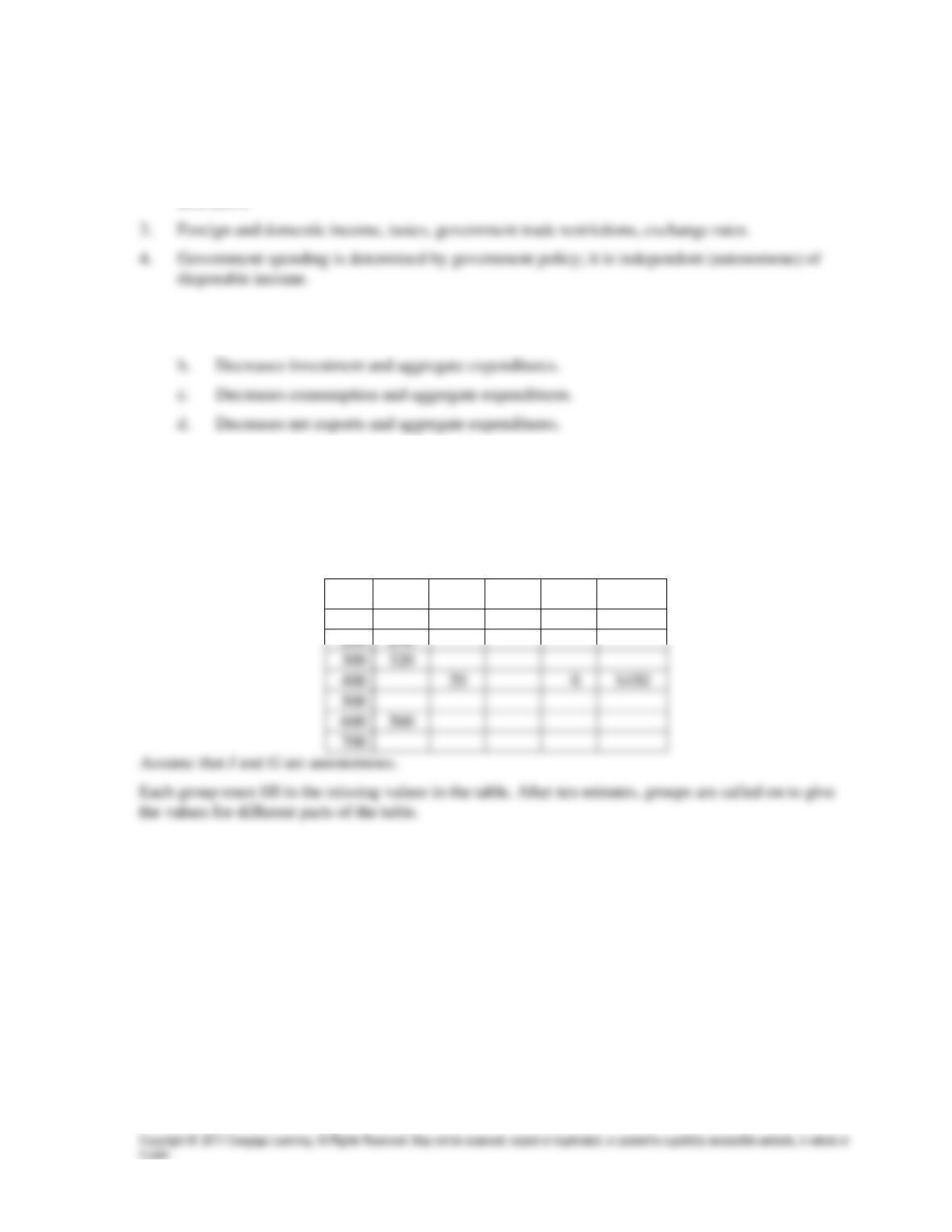
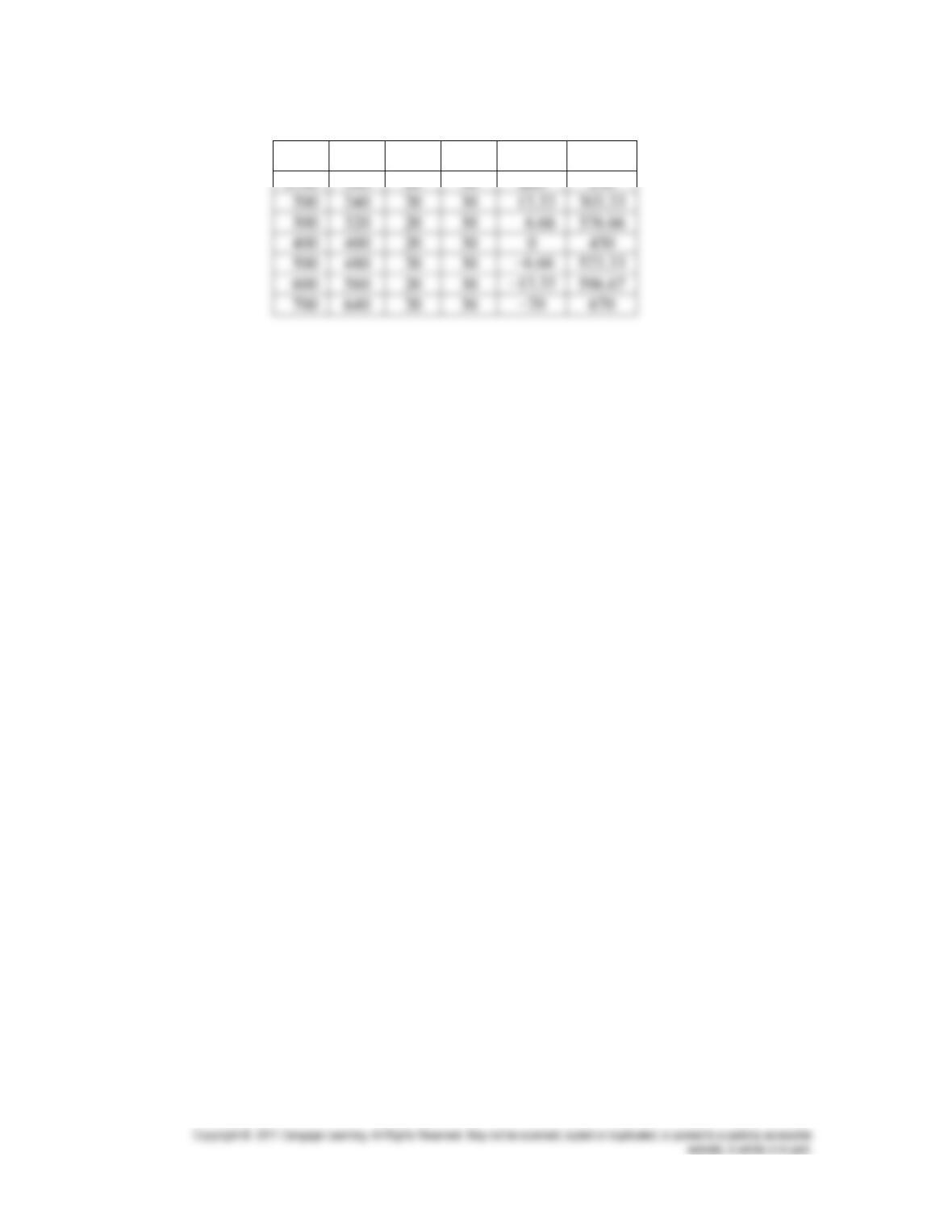
This exercise will test students’ understanding of the aggregate expenditures functions, a number of the
equations in the chapter, and several relevant concepts. It may be necessary to review the definitions of
MPC and MPI before assigning the exercise.
Divide the class into groups of three or four and give them the following information:
Y
C
I
G
X
AE
$100
$20
200
240
400
600
560
72 Chapter 9: Aggregate Expenditures
Solution:
Y
C
I
G
X
AE