CHAPTER 7
UNEMPLOYMENT AND INFLATION
SOLUTIONS TO END OF CHAPTER PROBLEMS
1.
a. The labor force participation rate drops since these workers have left the labor force.
2.
b. Of the 230 million adults in the population, 154.1 million are in the labor force. The
3. a. Seasonal
4. Unemployment often creates both an economic and a psychological hardship. For some, this
burden is reduced by an employed spouse and by unemployment insurance. Unemployment
5. When the economy is at full employment, the unemployment rate is not zero because there
will always be some natural or normal rate of unemployment consisting of the frictionally
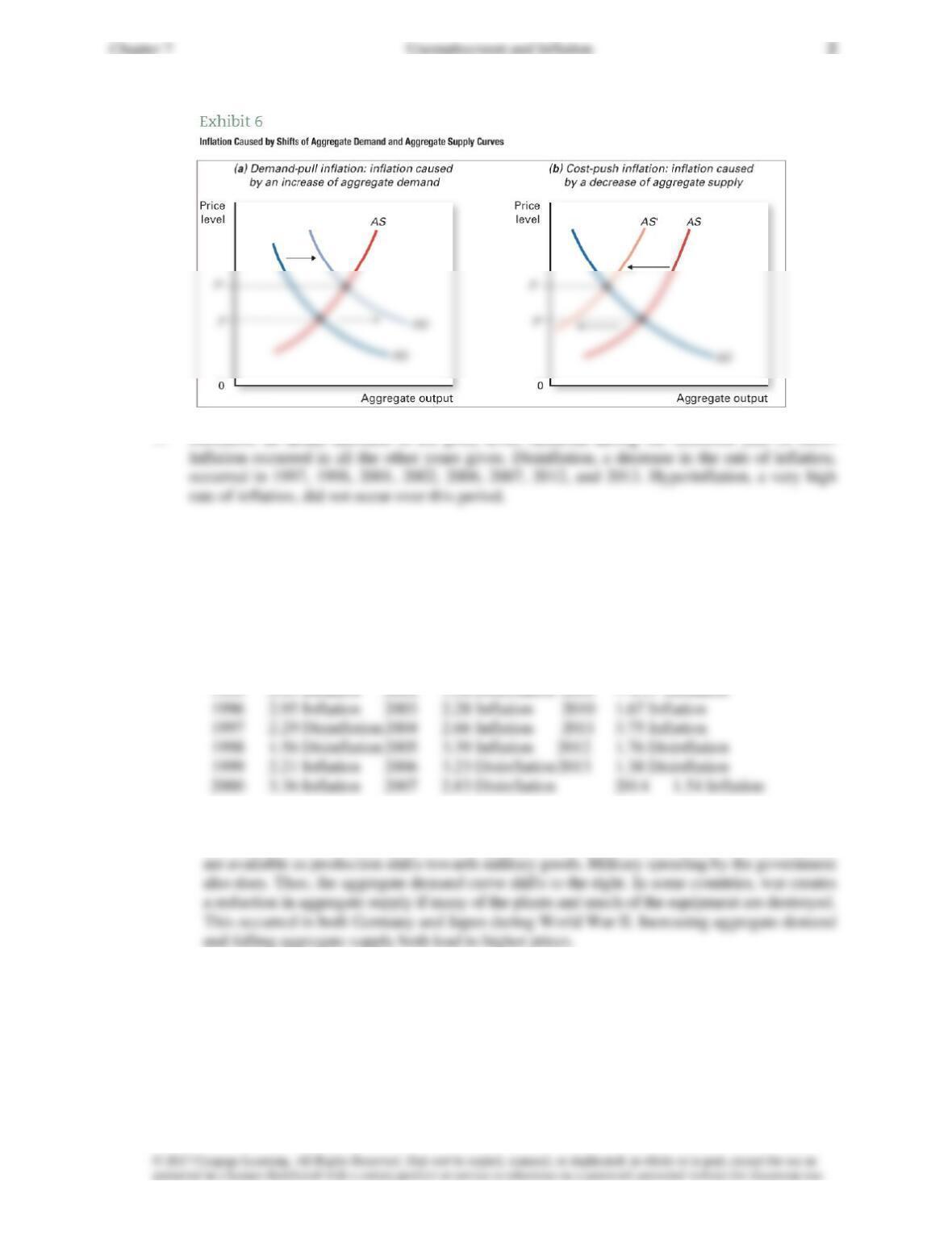
6. An increase in aggregate demand can cause demand-pull inflation. A decrease in aggregate
supply can cause cost-push inflation. See Exhibit 6 below.
7. Deflation, an actual decrease in the price level, occurred during the recession year of 2009.
The rate is calculated as: [(CPI in a given year minus CPI from the prior year)/CPI prior year]
multiplied by 100.
Inflation Inflation Inflation
Year Rate (%) Year Rate (% ) Year Rate (%)
2001 2.85 Disinflation 2008 3.86 Inflation
8. One of the most important reasons why prices rise so quickly during wartime is that household
incomes increase as more workers are employed in the armed forces. Fewer consumer goods
9.
Chapter 7 Unemployment and Inflation 3
10. When actual inflation exceeds anticipated inflation, those on fixed incomes and those who
save or lend money will be hurt. Borrowers will benefit because they will be re-paying loans