Mutually Exclusive Alternatives
5.38
(a)
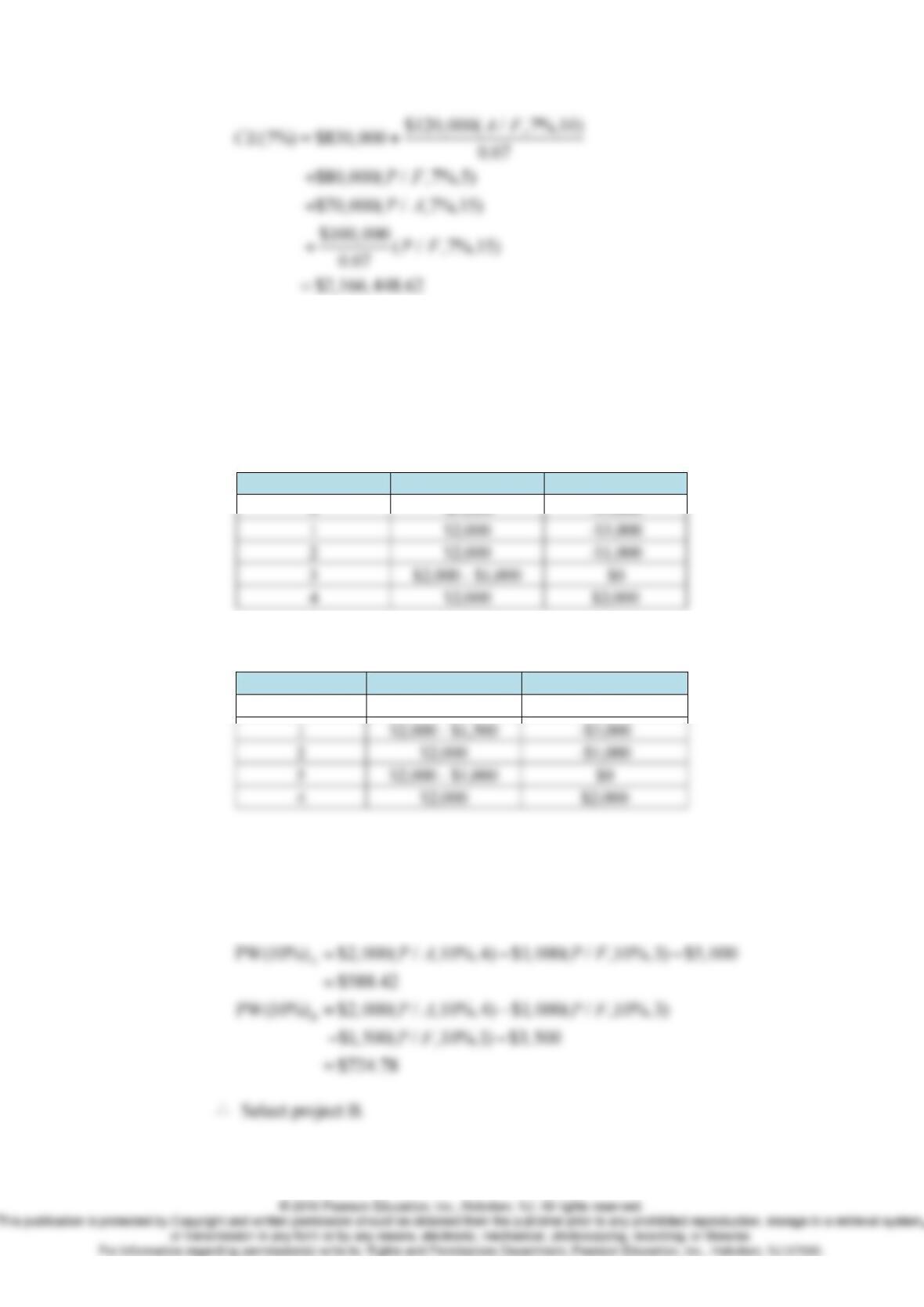
Option A
n
Net Cash Flow
Cumulative CF
0
–$5,000
–$5,000
1
–$3,000
2
–$1,000
3
4
Option B
n
Net Cash Flow
Cumulative CF
0
–$3,500
–$3,500
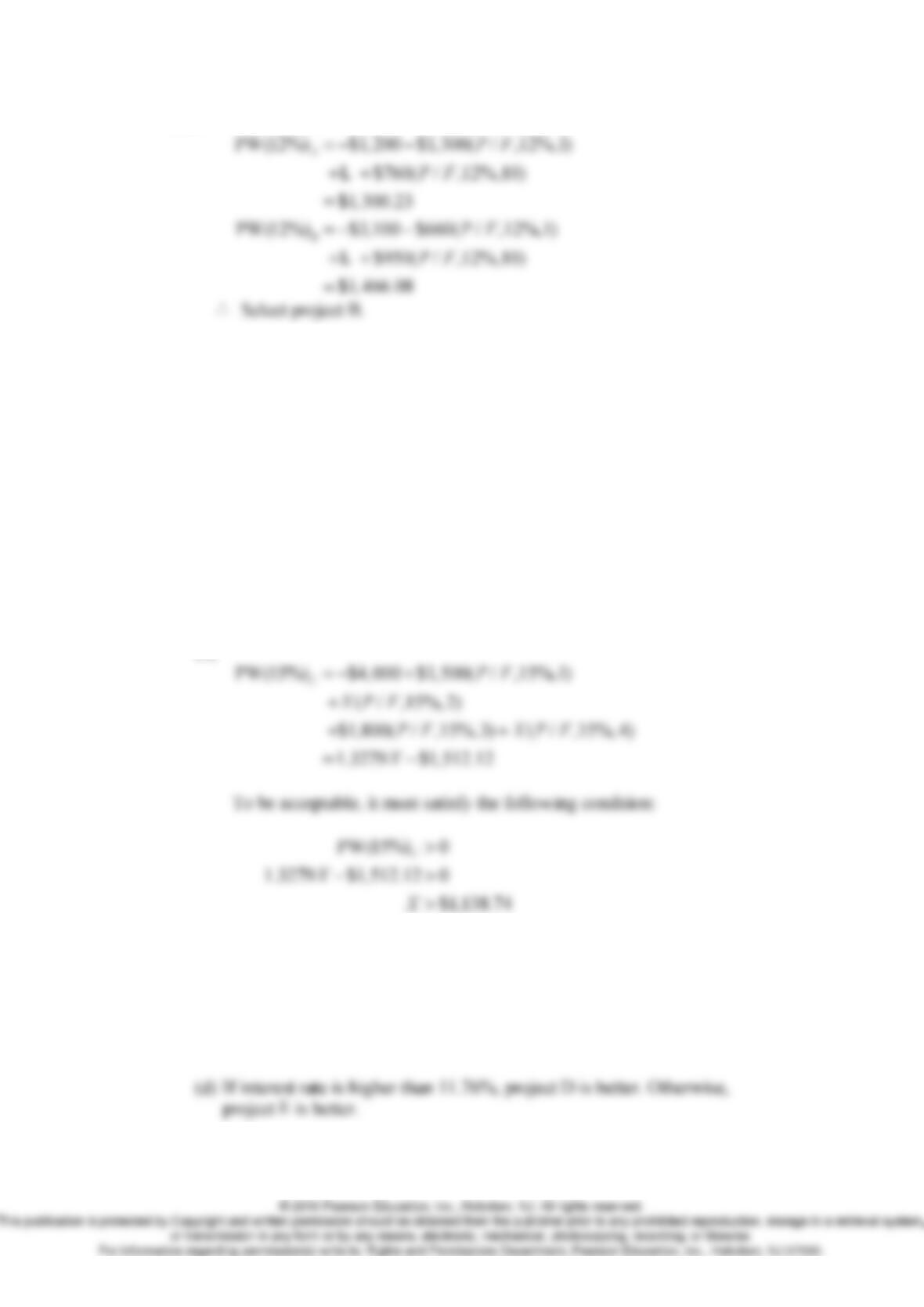
∴ Both options are equally likely.
(b)
5.39
5.40
(a)
A
B
PW(15%) $1,800 $1,150( / ,15%,1)
$200( / ,15%, 4)
$24.85
PW(15%) $1, 500 $1, 200( / ,15%,1)
$100( / ,15%, 4)
$590.22
PF
PF
PF
PF
=−+ +
+
=−
=−+ +
+
=
L
L
∴Select Project B.
(b)
(c)
PW(18%) $1, 400 $450( / ,18%, 4)
$189.47 0
D
PA=−
=>
Yes, project D is acceptable.
5.41
5.42
B-A
2
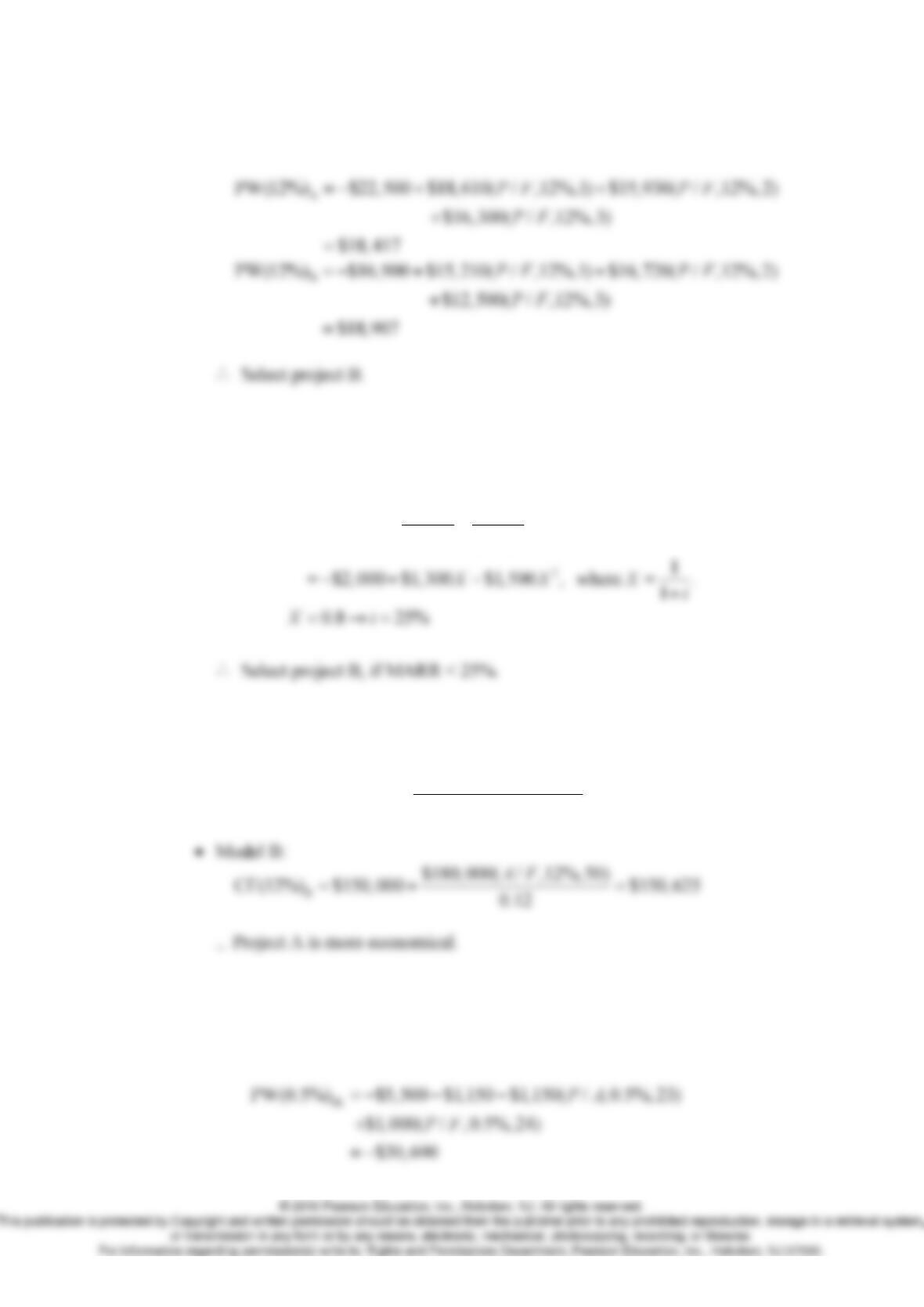
PW( ) $2,000 $1,300( / , ,1) $1,500( / , , 2) 0
$1,300 $1,500
$2,000 0
1(1)
iPFiPFi
ii
=−+ + >
Δ=−+ + >
++
5.43
•Model A:
A
$25,000( / ,12%,5)
CE(12%) $60,000 $92,794
0.12
AF
=+ =
5.44
•Standard Lease Option:
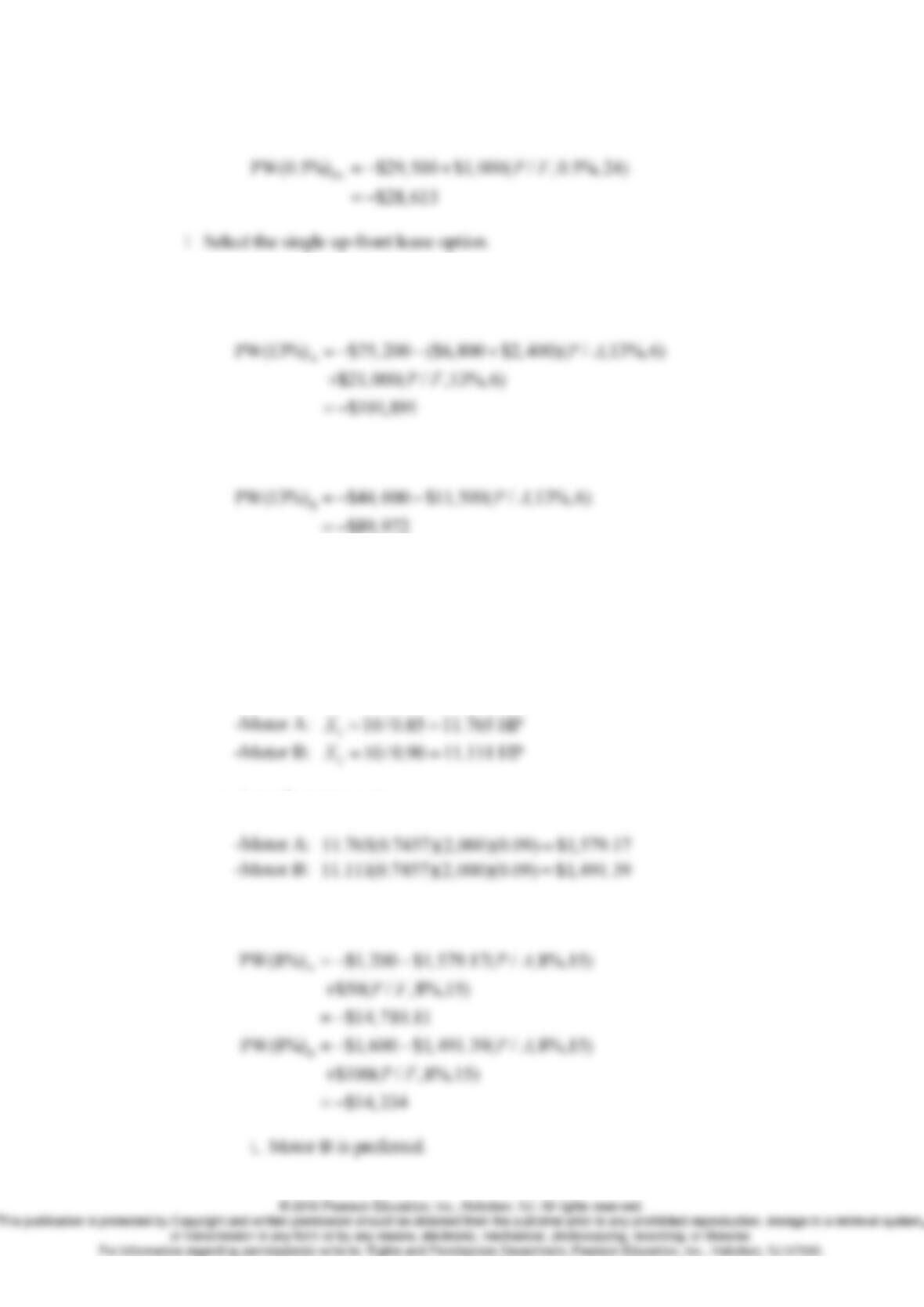
•Single Up-Front Option:
5.45
•Machine A:
•Machine B:
Machine B is a better choice.
5.46
(a)
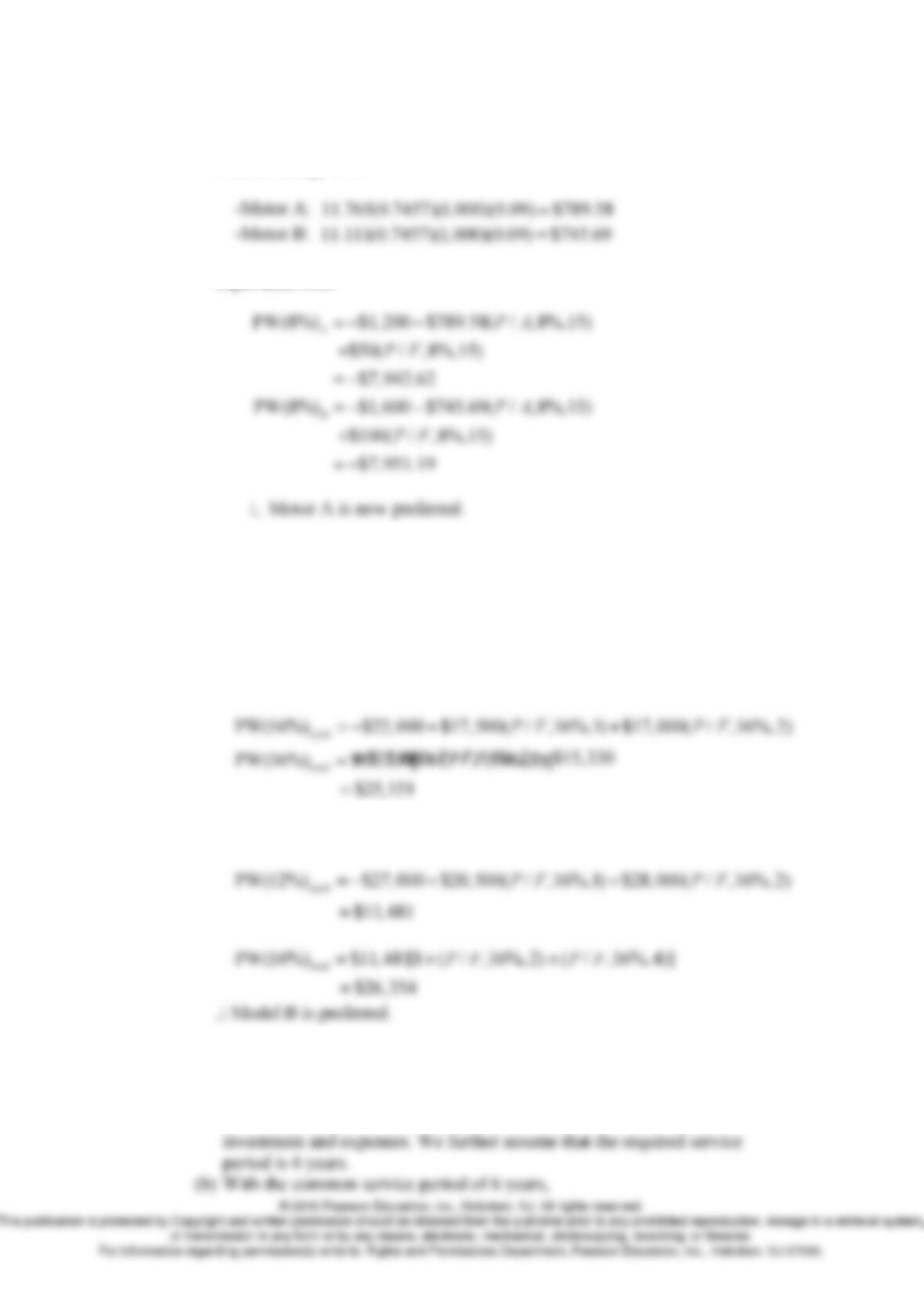
•Required HP to produce 10 HP:
•Annual energy cost:
•Equivalent cost:
(b) With 1,000 operating hours:
Annual energy cost:
Equivalent cost:
5.47
Given: Required service period = infinite, analysis period = least common
multiple service periods (6 years)
•Model A:
•Model B:
5.48
(a) Without knowing the future replacement opportunities, we may assume
that both alternatives will be available in the future with the same
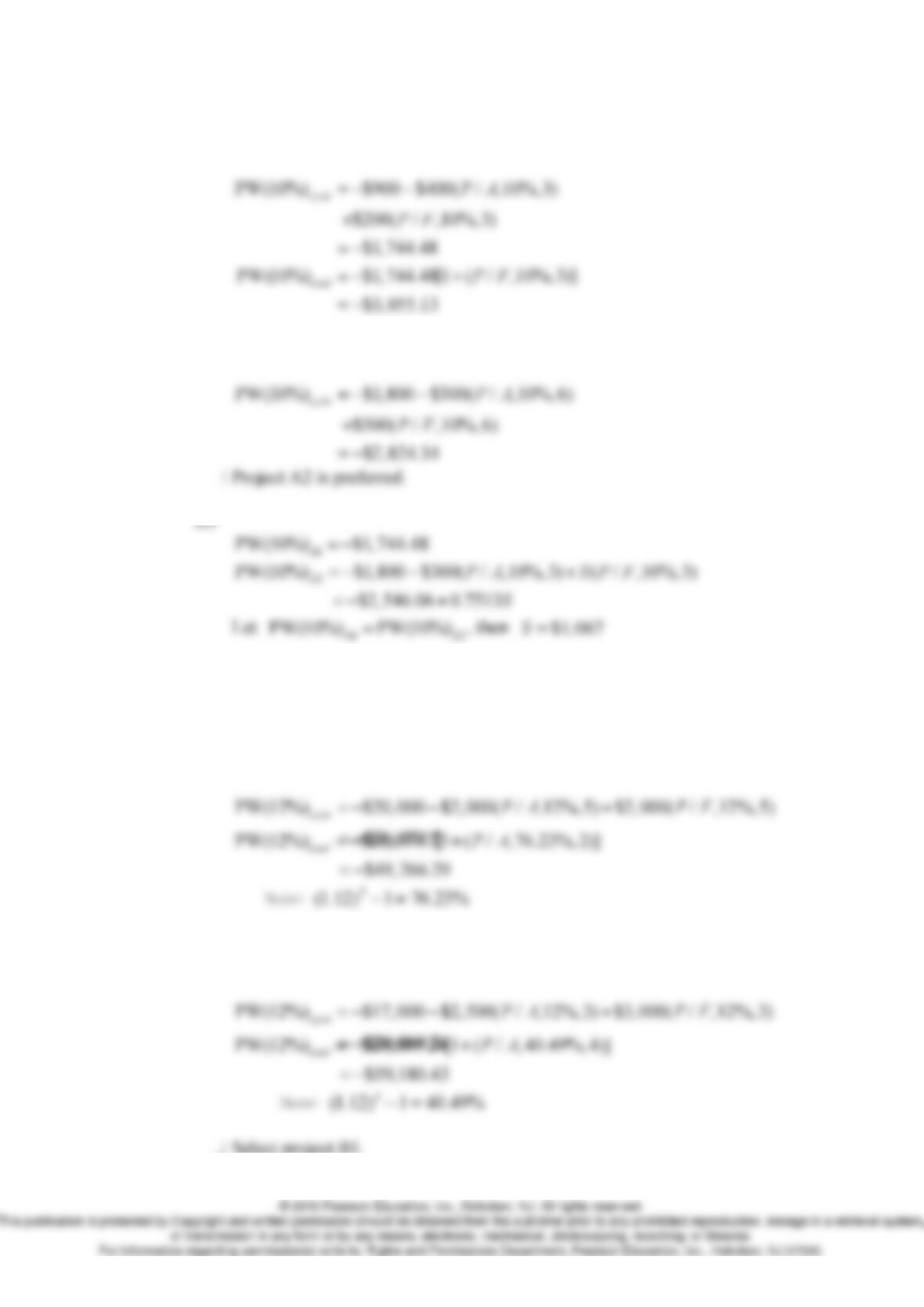
•Project A1:
•Project A2:
5.49
(a) Assuming a common service period of 15 years
•Project B1:
•Project B2:
Select project B1.
(b)
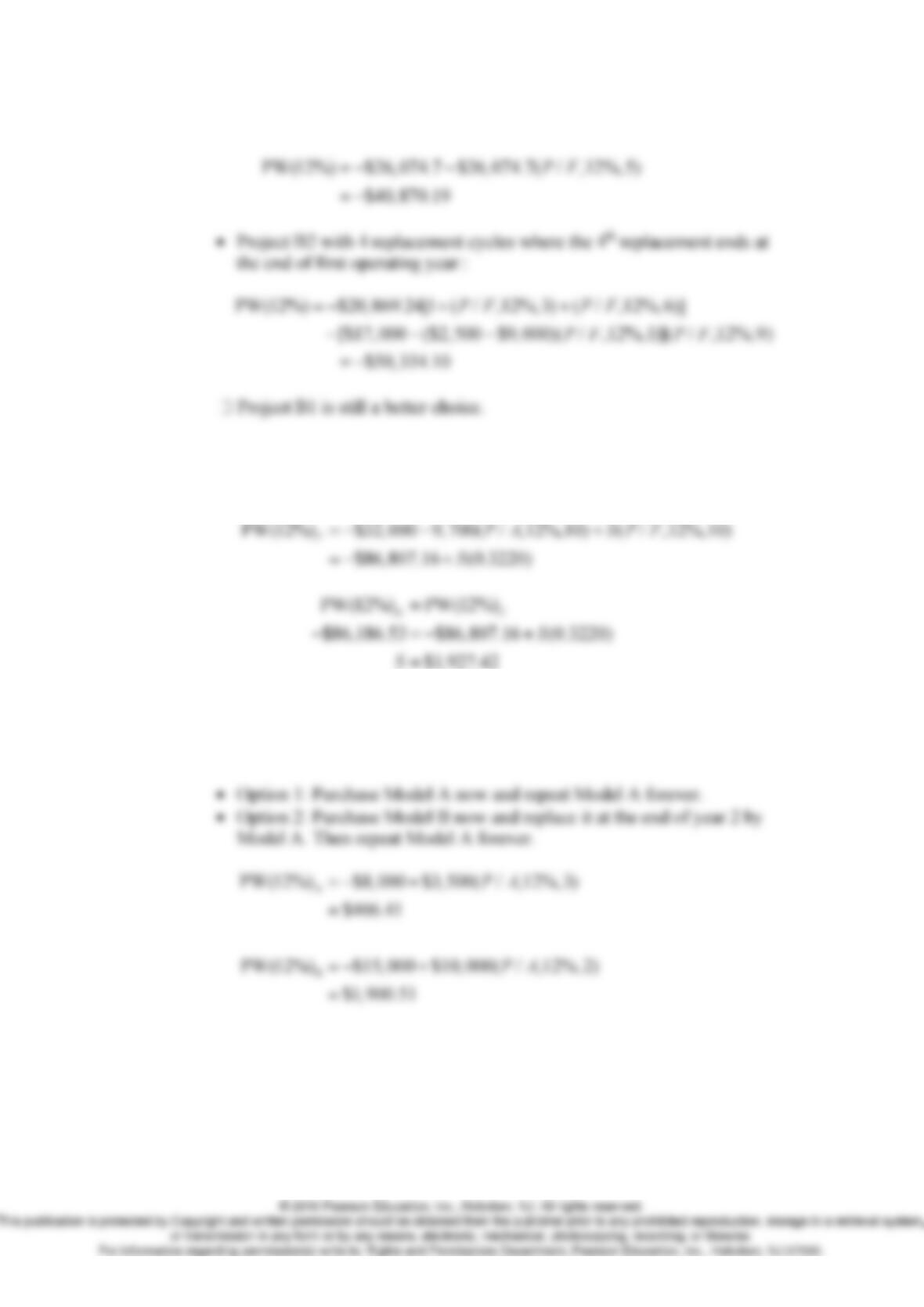
•Project B1 with 2 replacement cycles:
5.50
PW(12%) $25,000 11,000( / ,12%,10) 3,000( / ,12%,10)
$86,186.53
K
PA PF
=− − +
=−
5.51
Since only Model B is repeated in the future, we may have the following
sequence of replacement cycles:
(a)
•Option 1:
$406.41( / ,12%,3)
PW(12%) 0.12
$1, 410.08
AAA
AP
=
=
L
•Option 2:
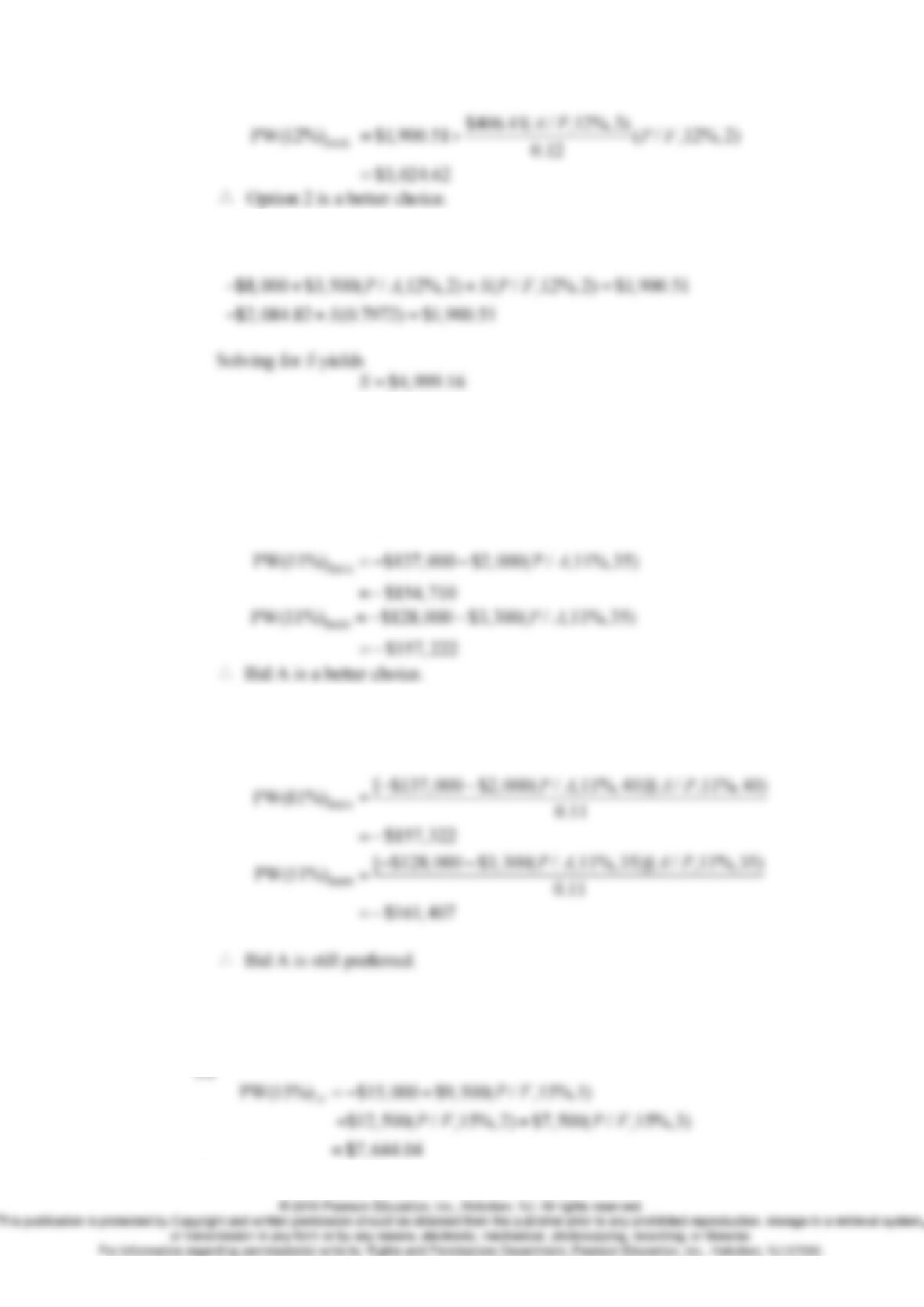
(b) Let S be the salvage value of Model A at the end of year 2.
5.52
•Since either tower will have zero salvage value after 20 years, we may
select the analysis period of 35 years:
•If you assume an infinite analysis period, the present worth of each bid
will be:
5.53
(a)
(b)
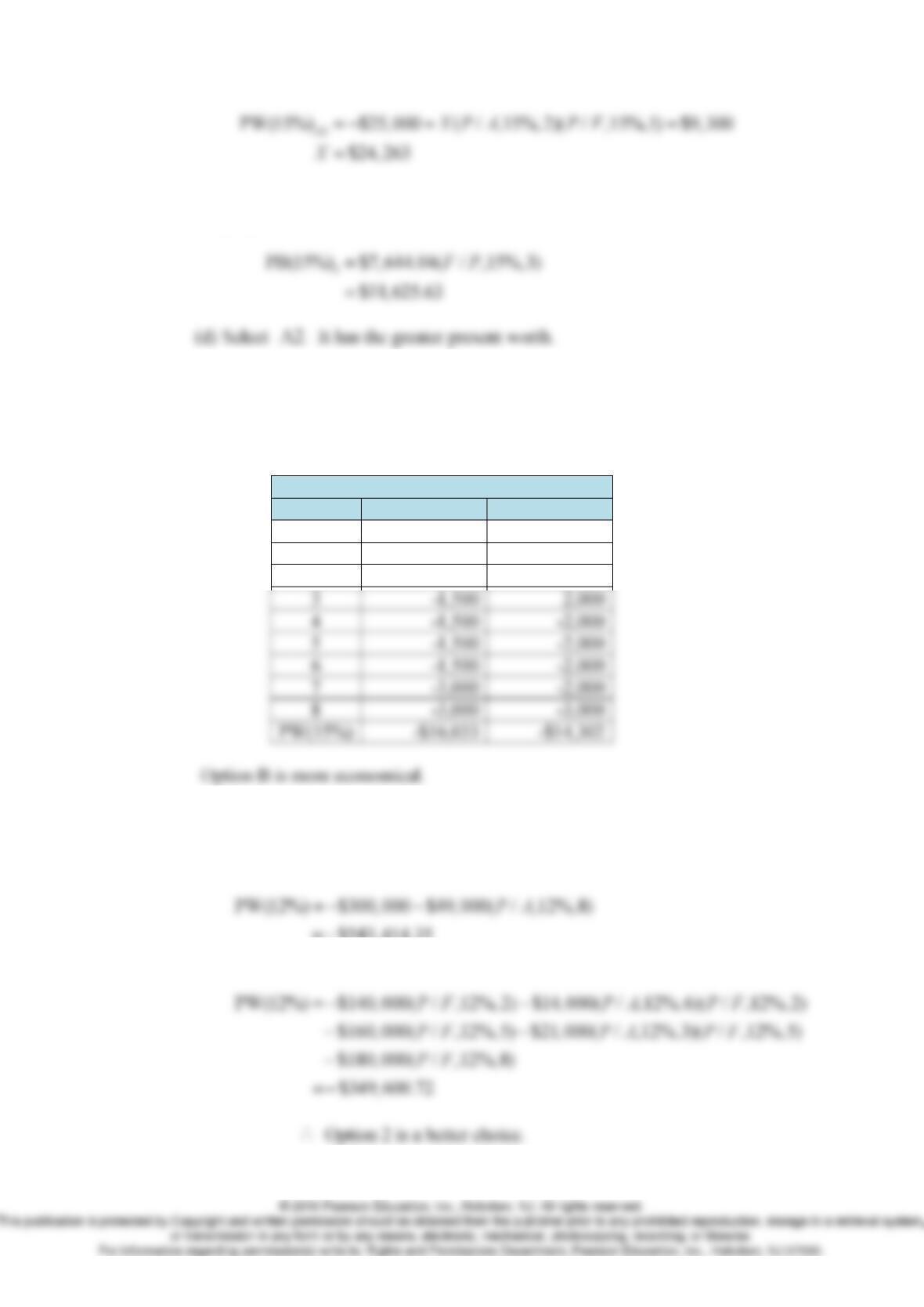
(c) Note that the net future worth of the project is equivalent to its terminal
project balance.
5.54
(a) Project balances as a function of time are as follows:
Modified Cash Flows
n
B
C
0
-$7,000
-$5,000
1
-2,500
-2,000
2
-2,000
-2,000
3
-1,500
4
-1,500
-2,000
5
-1,500
-2,000
6
-1,500
-2,000
7
-3,000
-2,000
8
-3,000
-3,000
5.55
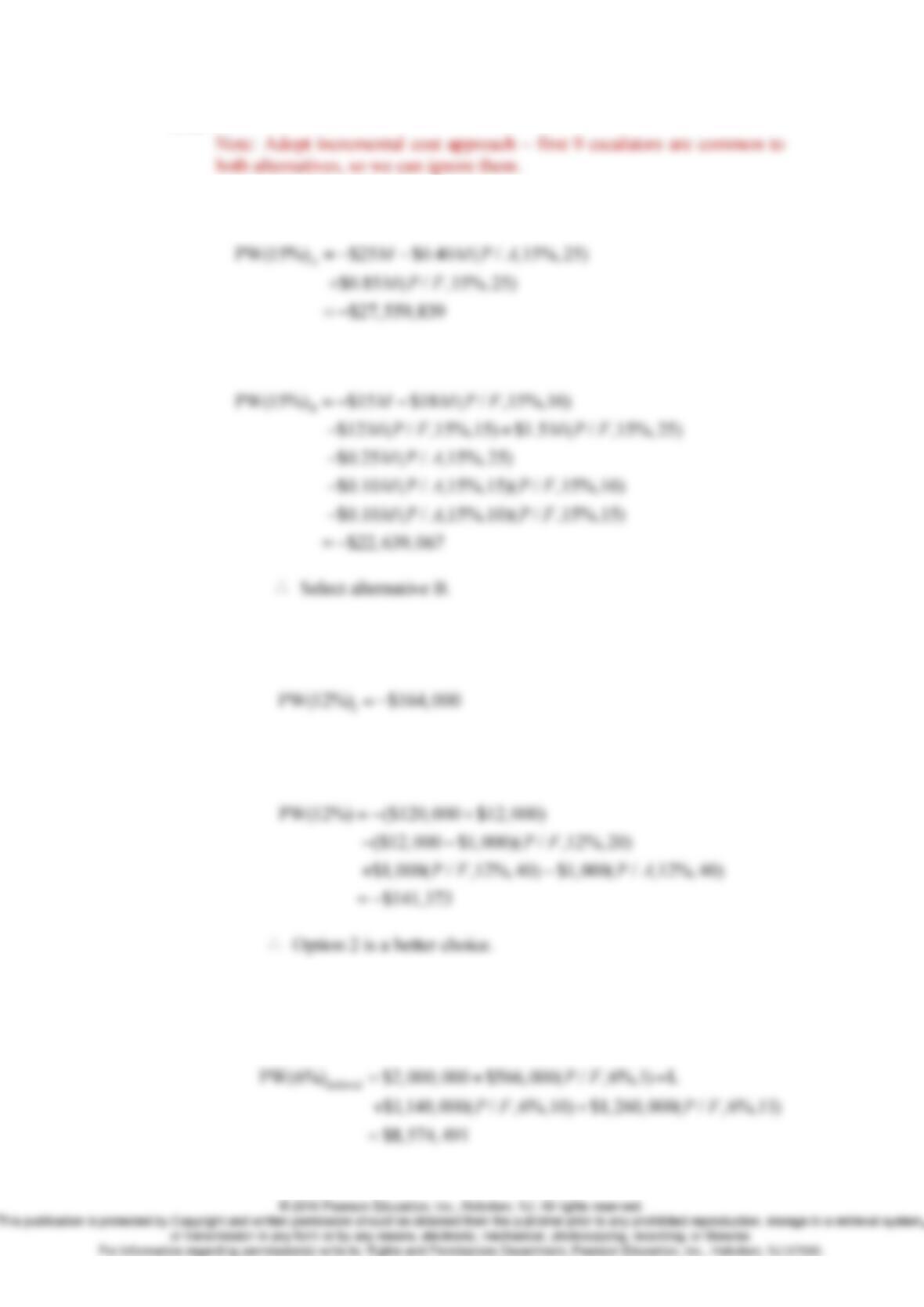
•Option 1: Non-deferred plan
$543, 414.35
=−
•Option 2: Deferred plan
5.56
•Alternative A: Once-for-all expansion
•Alternative B: Incremental expansion
5.57
•Option 1: Tank/tower installation
•Option 2: Tank/hill installation with the pumping equipment replaced
at the end of 20 years at the same cost
5.58
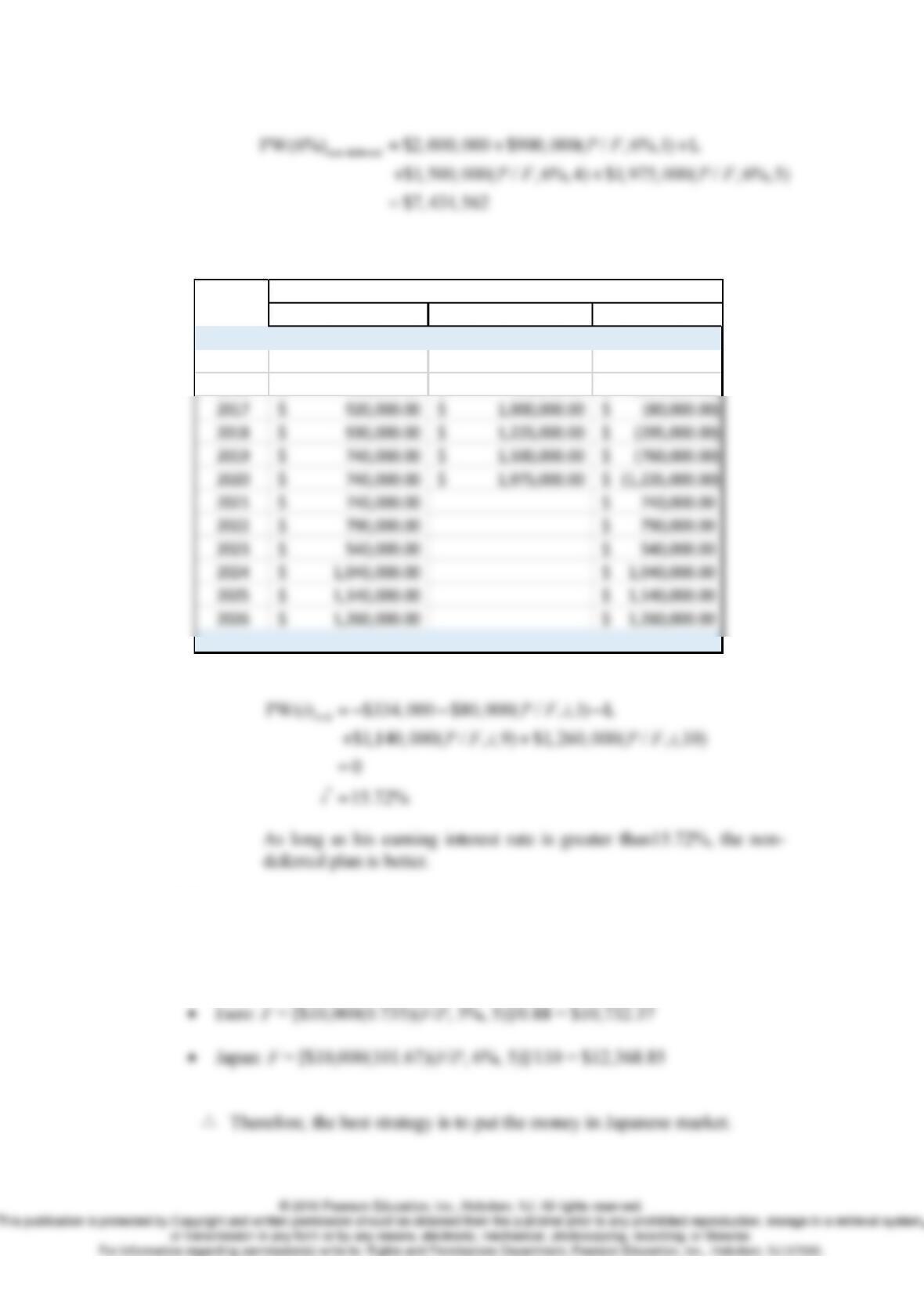
(a)
•Deferred Plan:
•Non-deferred Plan:
(b)
5.59
•US: F = $10,000(F/P, 4%, 5) = $12,166.53
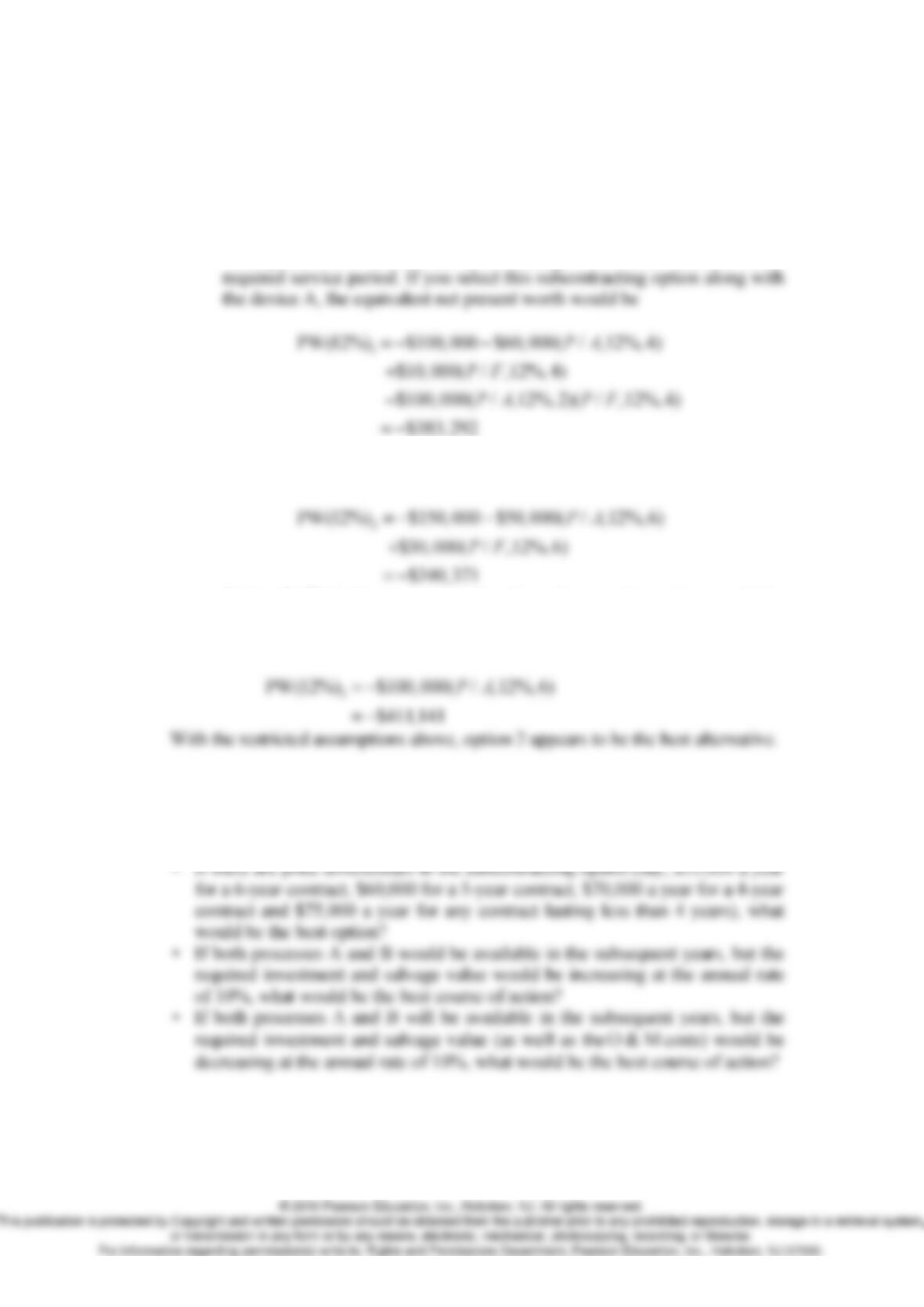
Deferred&Plan&(A) Non0deferred&Plan&(B) A&0&B
2015 2,000,000.00$(( ((2,000,000.00$(( (( )$(( ((
2016 566,000.00$(( ((900,000.00$(( (((334,000.00)$((((((((
Cash&Flows
Season
Short Case Studies
ST 5.1
•Option 1: Process device A lasts only 4 years. You have a required service
period of 6 years. If you take this option, you must consider how you will
satisfy the rest of the required service period at the end of the project life.
One option would subcontract the remaining work for the duration of the
•Option 2: This option creates no problem because its service life coincides
with the required service period.
•Option 3: With the assumption that the subcontracting option would be
available over the next 6 years at the same cost, the equivalent present
worth would be
Notes to Instructors: This problem is deceptively simple. However, it can make
the problem interesting with the following embellishments.
• If the required service period is changed to 5 years, what would be the best
course of action?
ST 5.2
∴ Option 2 is a better choice.
∴ Option 1 is a better choice.
ST 5.4
Not provided.