1
CHAPTER 5
Game Theory
A. Summary
This chapter provides an introduction to game theory, providing students
with tools to analyze simple games.
We have placed this chapter so early in the text for several reasons. Of
course it is useful to have this material covered before it is used in later chap-
ters, most importantly in studying the strategic interaction between oligopoly
The chapter begins with a description of the components of a game:
players, strategies, and payoffs. Then it turns to the fundamental equilibrium
concept for simultaneous games, Nash equilibrium. Then it turns to sequen-
tial games and the equilibrium concept for these, subgame-perfect equilibri-
um. It ends with more advanced topics including repeated games, games
with continuous actions, and so forth. The focus throughout is on methods
to solve for equilibrium.
B. Lecture and Discussion Suggestions
The various game theory concepts introduced in this chapter are, we believe,
best illustrated with specific games in lecture. Three simple ones to begin
with might be the Prisoner’s Dilemma, Matching Pennies, and the Battle of
Chapter 5: Game Theory
2
Students often raise the issue that the equilibrium predictions in, for ex-
ample, the Prisoners’ Dilemma and the Battle of the Sexes are off target be-
cause of dynamic aspects of the game, possibilities of threats and other
communications, and the possibility of irrational play. One could respond
Some practitioners contend that the crucial skill is less the ability to solve
a game with a sophisticated equilibrium concept than the ability to boil down
a particular economic situation into a simple game that can then be analyzed.
One way to have students practice modeling economic situations as games is
to assign a project that has students take a situation from student life, from
Drawing the best-response-function diagrams is somewhat difficult, so
we would recommend omitting this topic for less analytical courses. We
D. Glossary Entries in the Chapter
• Backward Induction
• Best Response
• Best-Response Function
• Dominant Strategy
• Extensive Form
Chapter 5: Game Theory
3
SOLUTIONS TO CHAPTER 5/ PROBLEMS
5.1 a. A plays Up; B plays Left.
5.2 a. A plays Down; B plays Right.
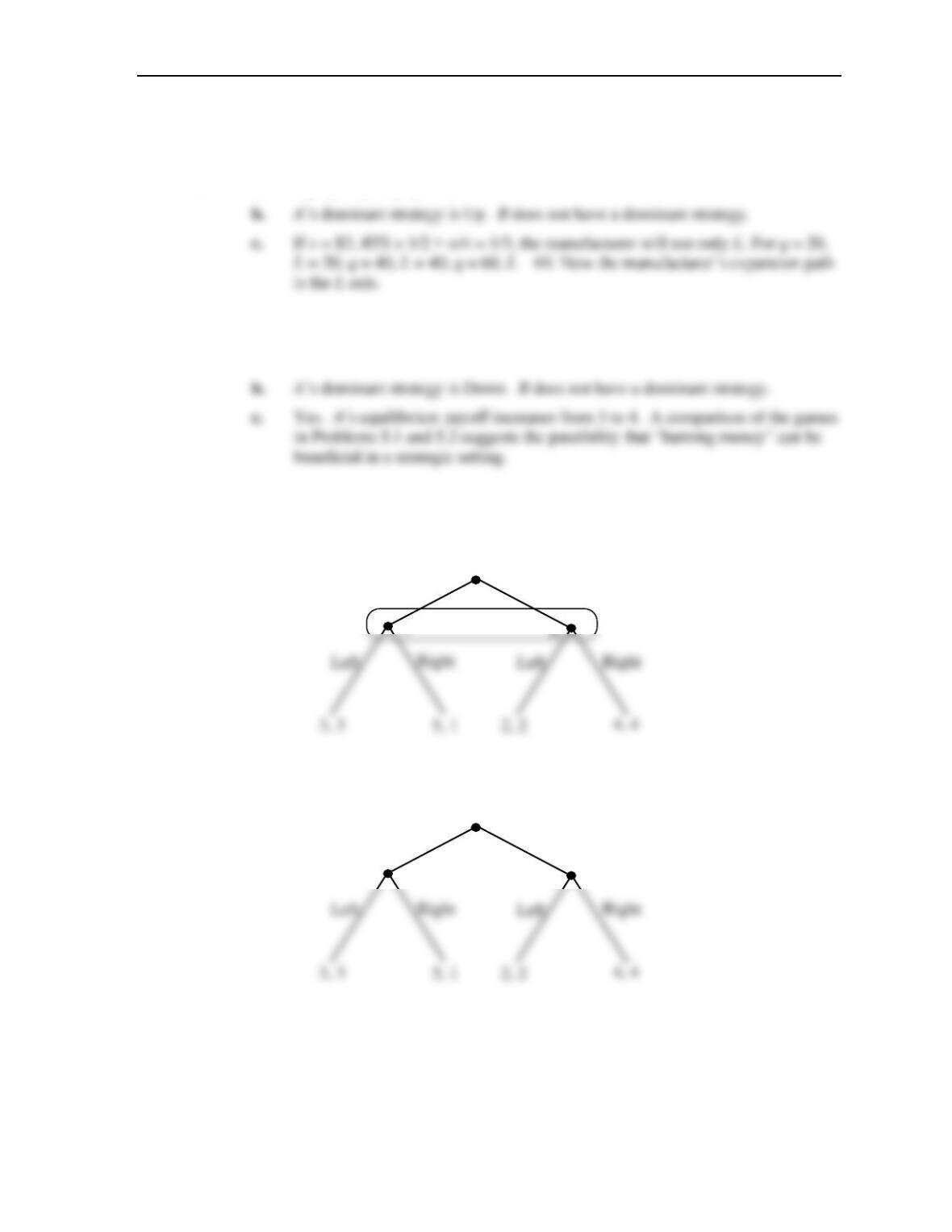
5.3 a.
b.
Up
Down
A
B
3, 3
Right
B
Right
Up
Down
A
B
B
Chapter 5: Game Theory
4
c.
B
Left | Up
Left | Down
Left | Up
Right | Down
Right | Up
Left | Down
Right | Up
Right | Down
Up
3, 3
3, 3
5, 1
5, 1
A
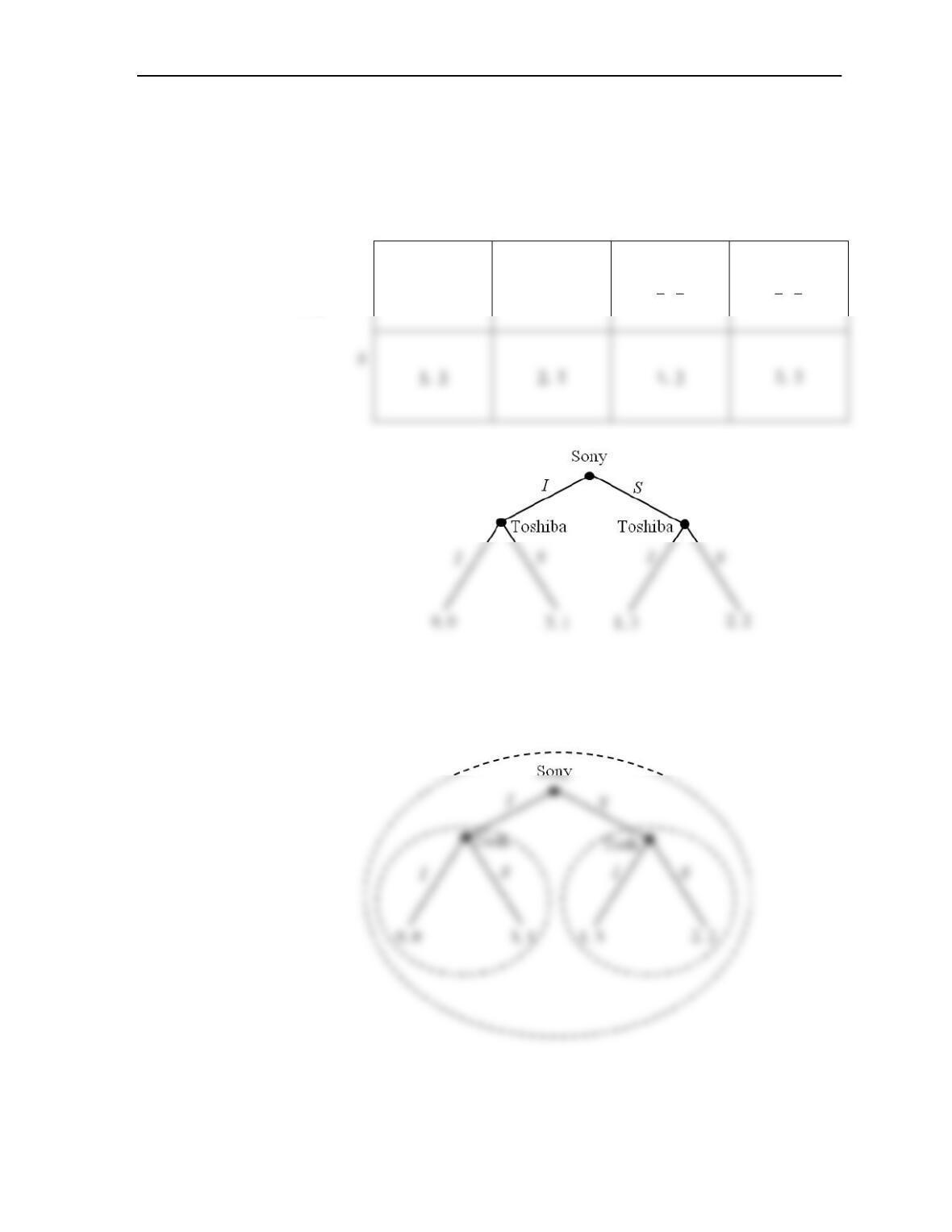
5.4 a. One pure-strategy Nash equilibrium is for Sony to Invest Heavily and Toshiba
to Slacken. The other is the reverse (Sony Slackens and Toshiba Invests Heav-
ily).
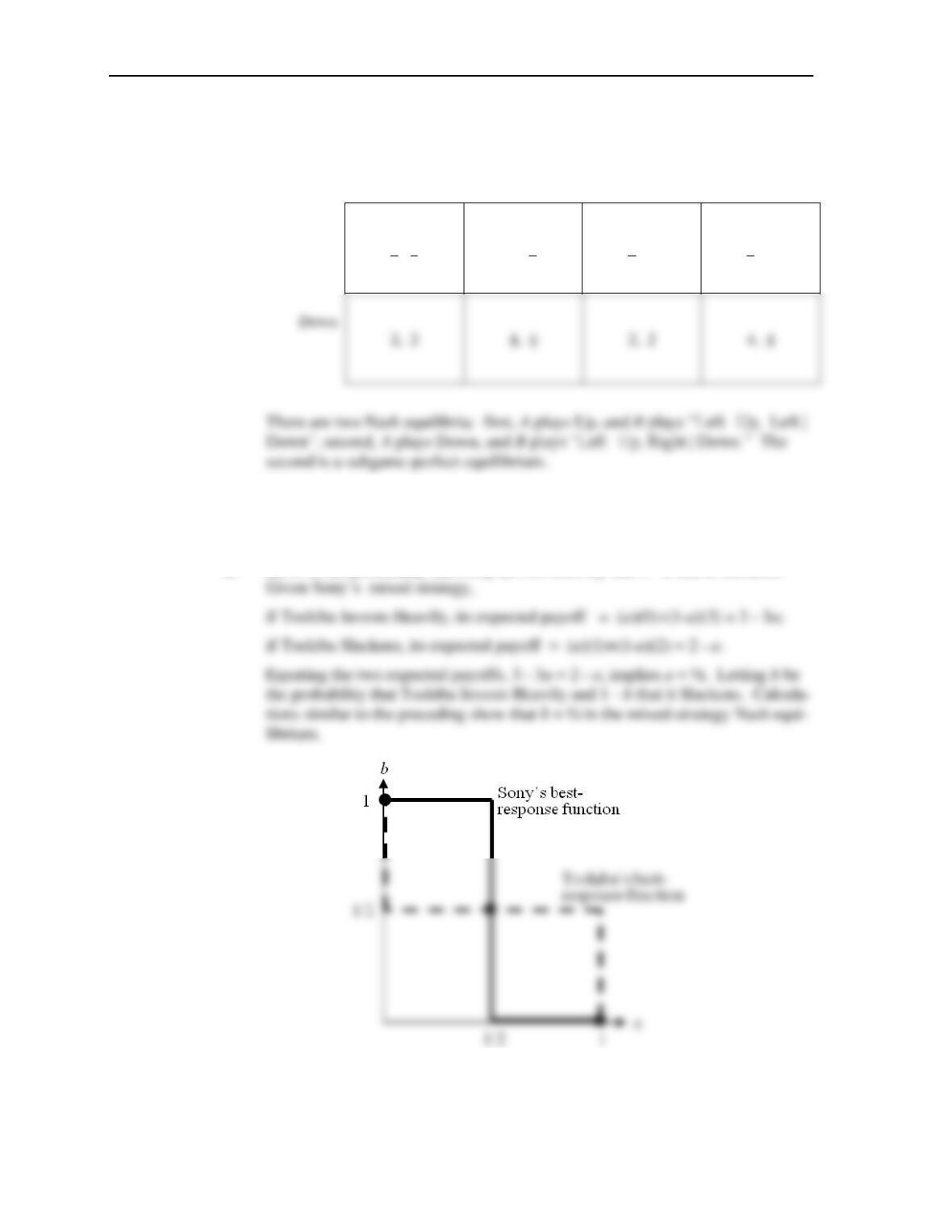
b. Let a be the probability that Sony Invests Heavily and 1 – a that it Slackens.
Down
2, 2
4, 4
2, 2
4, 4
Chapter 5: Game Theory
5
c. Let I stand for Invest Heavily and S for Slacken. Toshiba’s contingent strate-
gies are in the column headings of the following normal form:
Toshiba
I | I
I | S
I | I
S | S
S | I
I | S
S | I
S | S
I
0, 0
0, 0
3, 1
3, 1
Sony
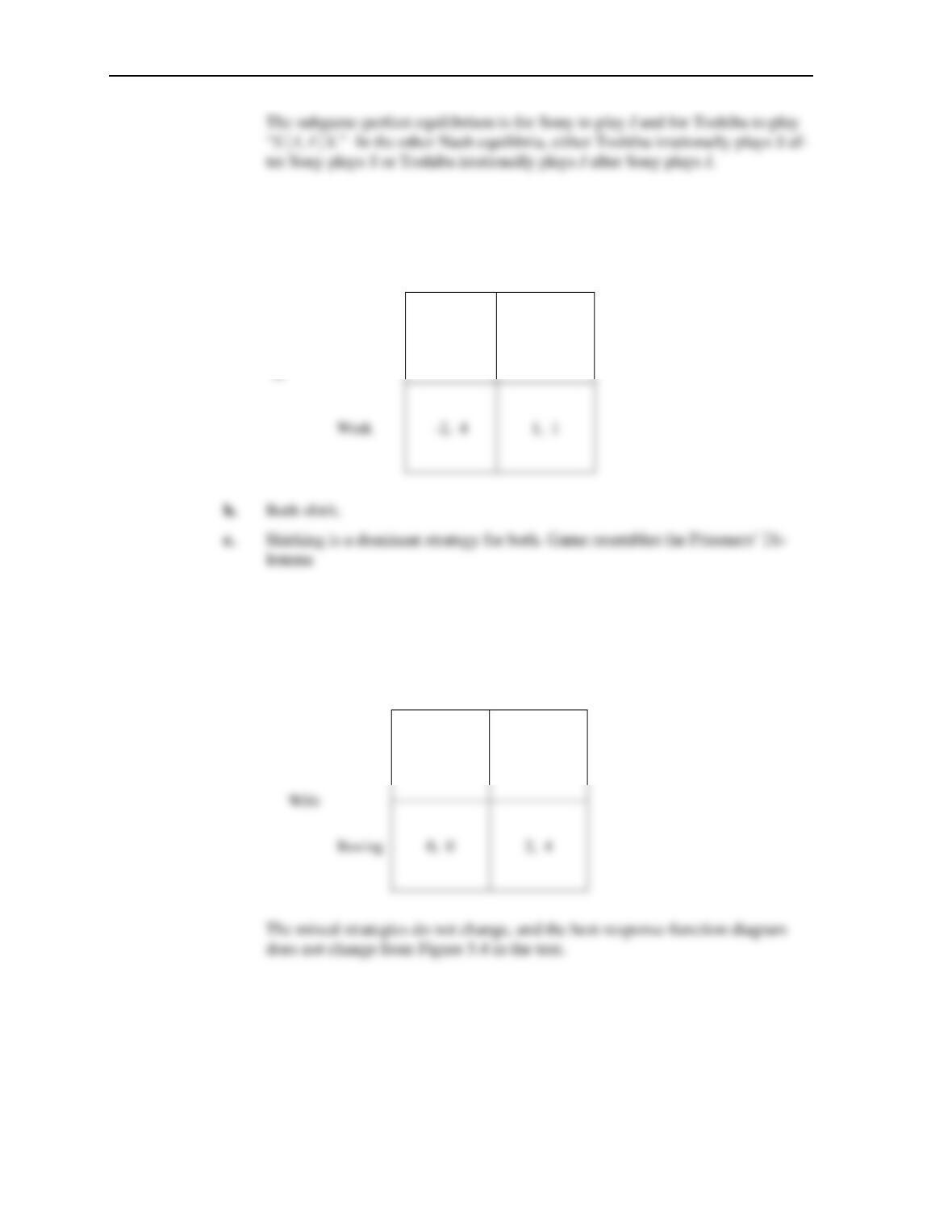
d. Refer to the underlining method in the normal form in part c. There are three
Nash equilibria indicated by the boxes with both payoffs underlined.
e. Proper subgames circled below.
Chapter 5: Game Theory
6
5.5 a.
B
Shirk
Work
A
Shirk
0, 0
4, -2
Work
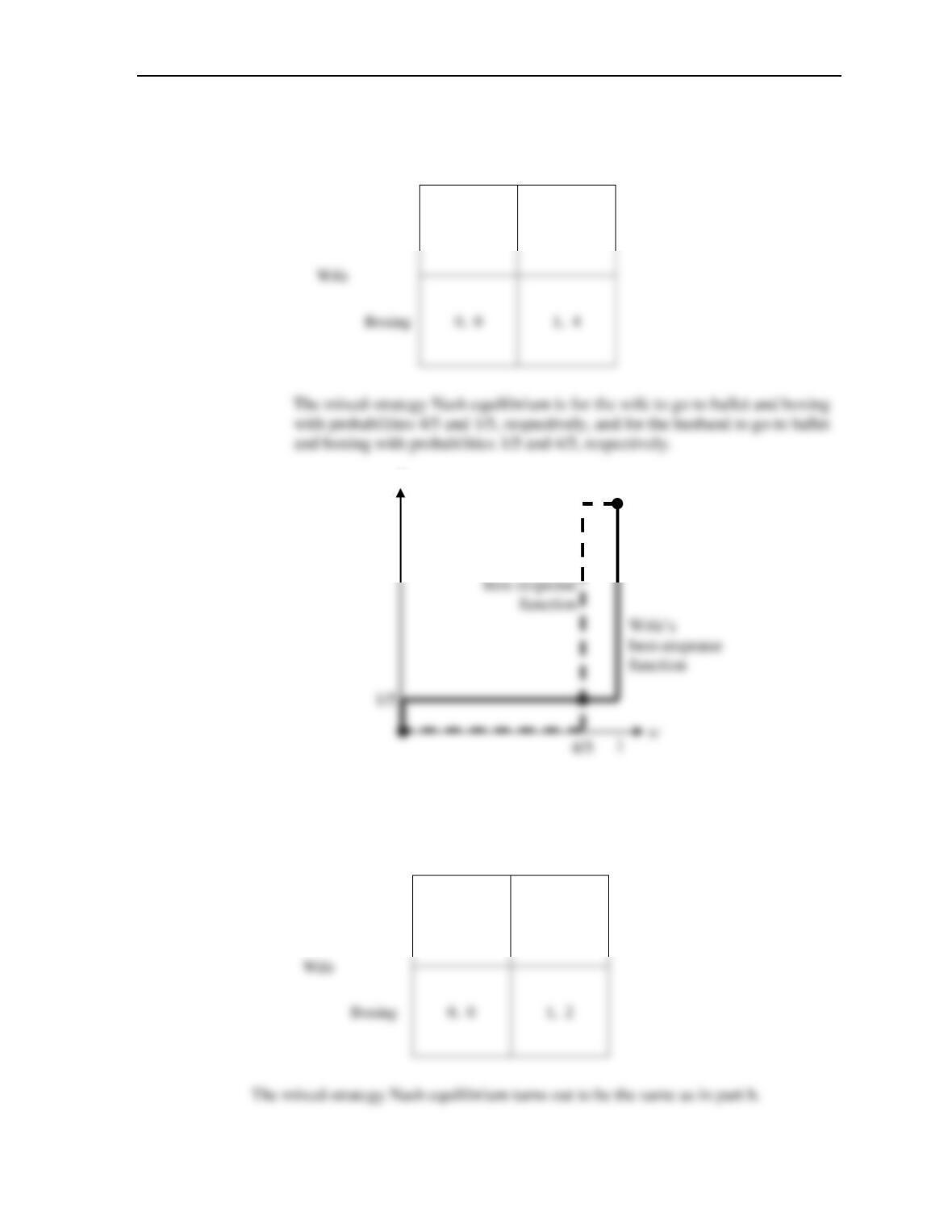
5.6 a. The normal form becomes
Husband
Ballet
Boxing
Boxing
Ballet
4, 2
0, 0
Chapter 5: Game Theory
7
b. The normal form becomes
Husband
Ballet
Boxing
Ballet
4, 1
0, 0
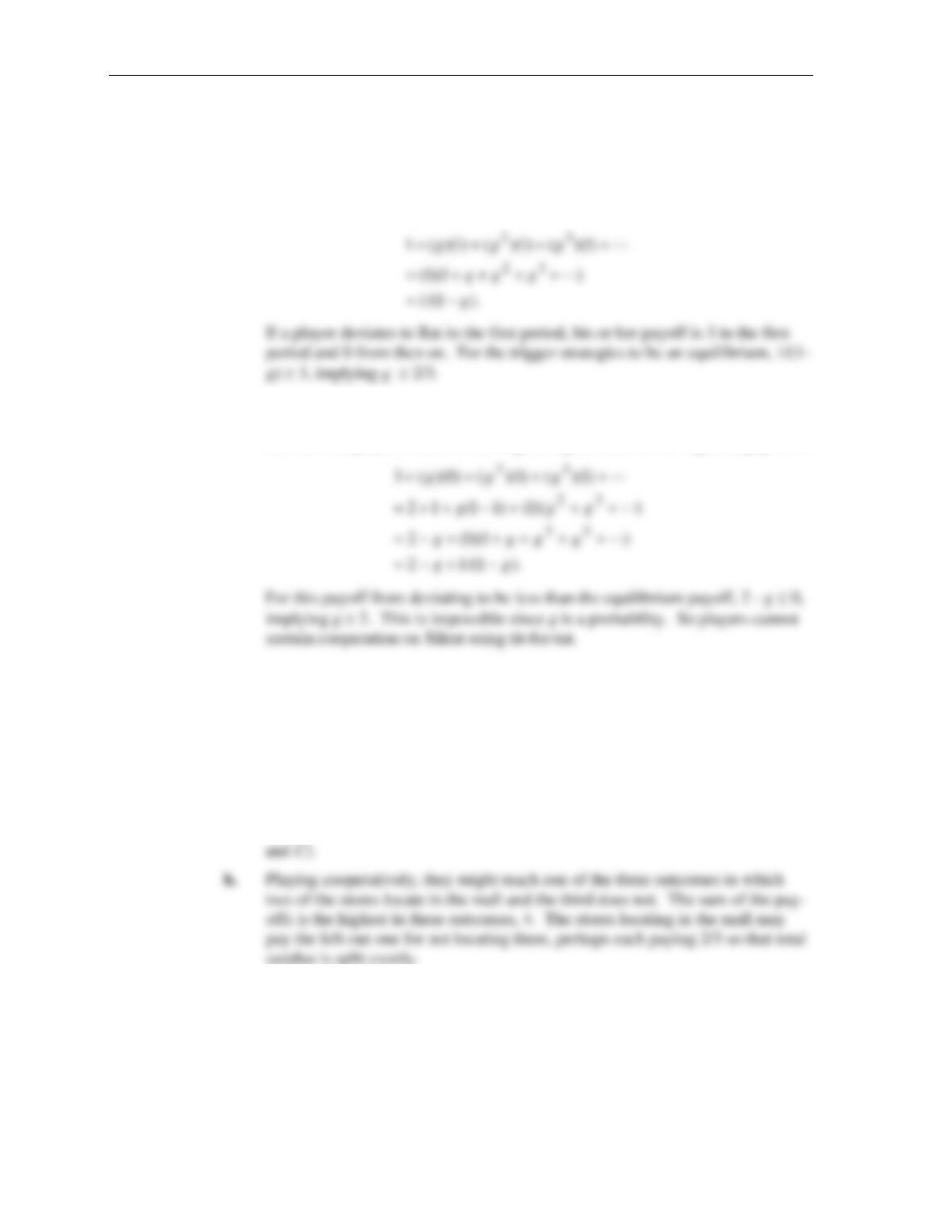
c. The normal form becomes
Husband
Ballet
Boxing
Boxing
0, 0
1, 2
Ballet
2, 1
1/2, 1/2
h
1
Husband’s
Boxing
0, 0
1, 4
Chapter 5: Game Theory
8
5.7 a. Using the underlining method shows that playing Rat is a dominant strategy for
both and that both Ratting is a Nash equilibrium.
b. Expected payoff in equilibrium is
c. The expected equilibrium payoff is the same as in part b, 1/(1-g). If a player
deviates from tit-for-tat, he or she earns 3 in the first period, 0 in the second,
and then the players return to the original equilibrium for an expected payoff of
5.8 The pure-strategy Nash equilibrium is for A to play Up and B to play Left.
5.9 a. There are four pure-strategy Nash equilibria, one in which none of the three lo-
cate in the mall and three different ones in which two locate in the mall and the
third does not (so three different ones, one for each different left-out store A, B,
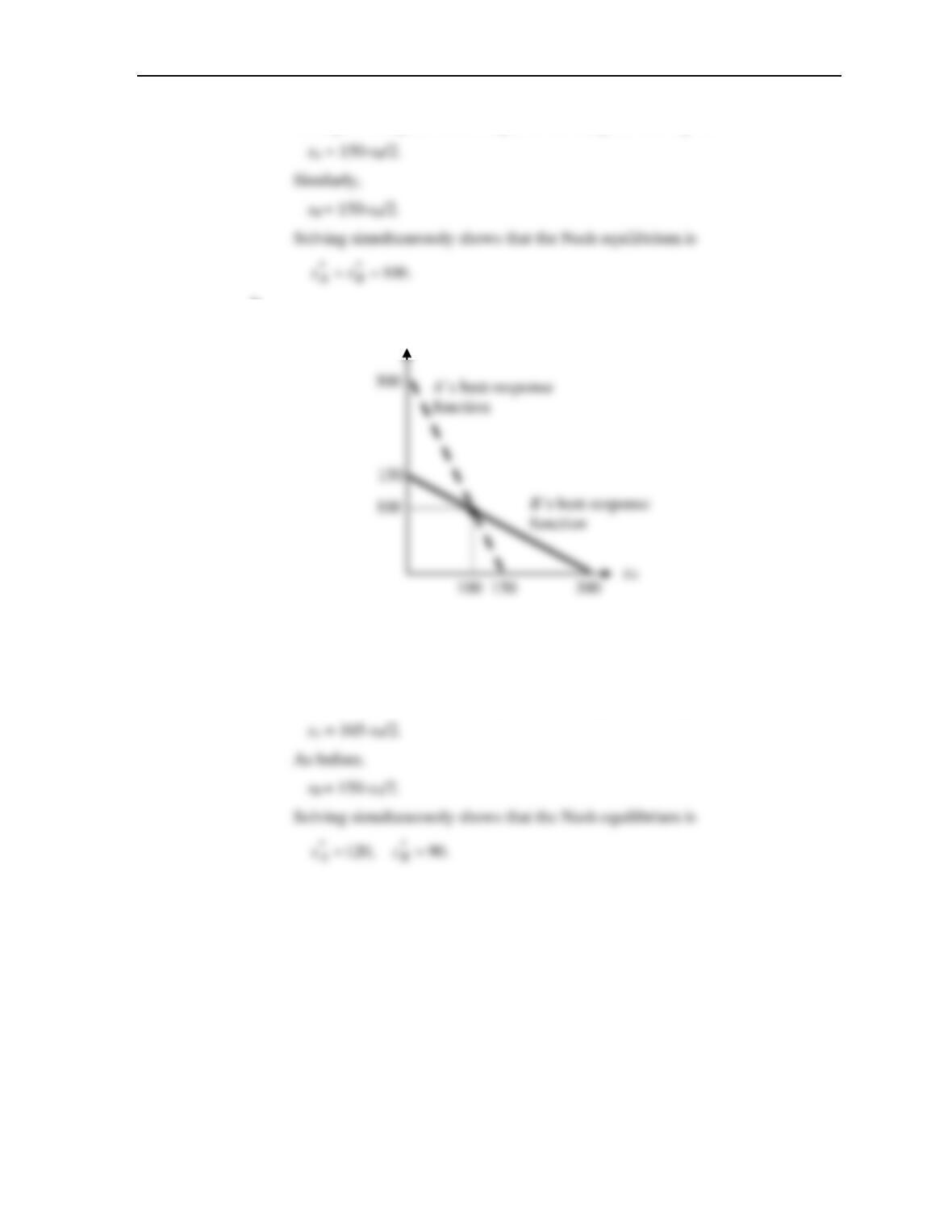
5.10 a. Following the logic of equation (6.6), the marginal benefit of an additional
sheep for A is
300-2sA–sB.
Chapter 5: Game Theory
9
Setting the marginal benefit equal to the marginal cost 0 gives
b.
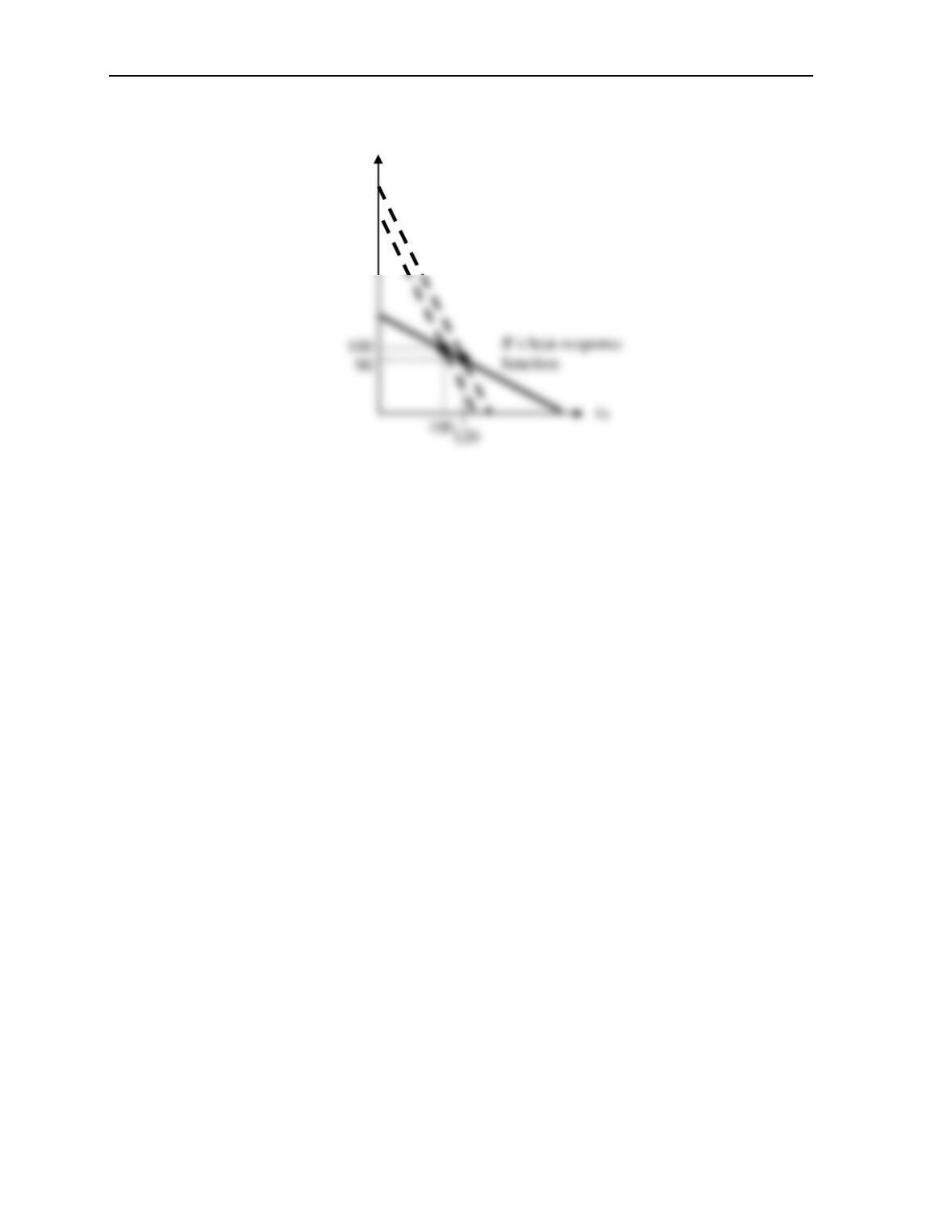
c. The marginal benefit of an additional sheep for A is
330-2sA–sB.
Setting the marginal benefit equal to the marginal cost 0 gives
sB
Chapter 5: Game Theory
10
A’s best-response
function shifts out
sB