Chapter 5:
1. Using supply and demand curves, show the effect of each of the following events on the market for
wheat.
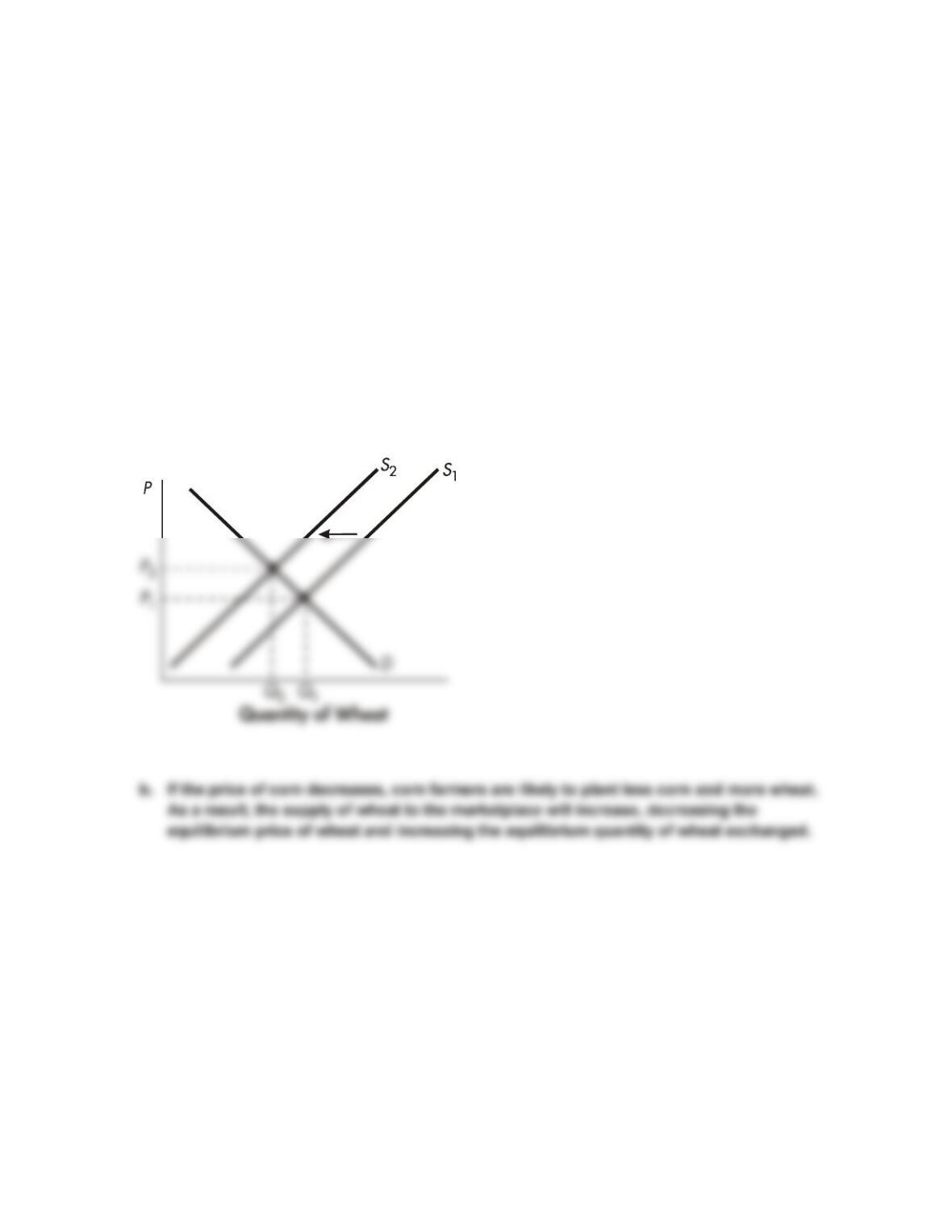
a. The Midwestern United States (a major wheat-producing area) suffers a flood.
b. The price of corn decreases (assume that many farmers can grow either corn or wheat).
c. The Midwest has great weather.
d. The price of fertilizer declines.
e. More individuals start growing wheat.
Answers:
a. The price of wheat increases and the equilibrium quantity of wheat traded decreases.
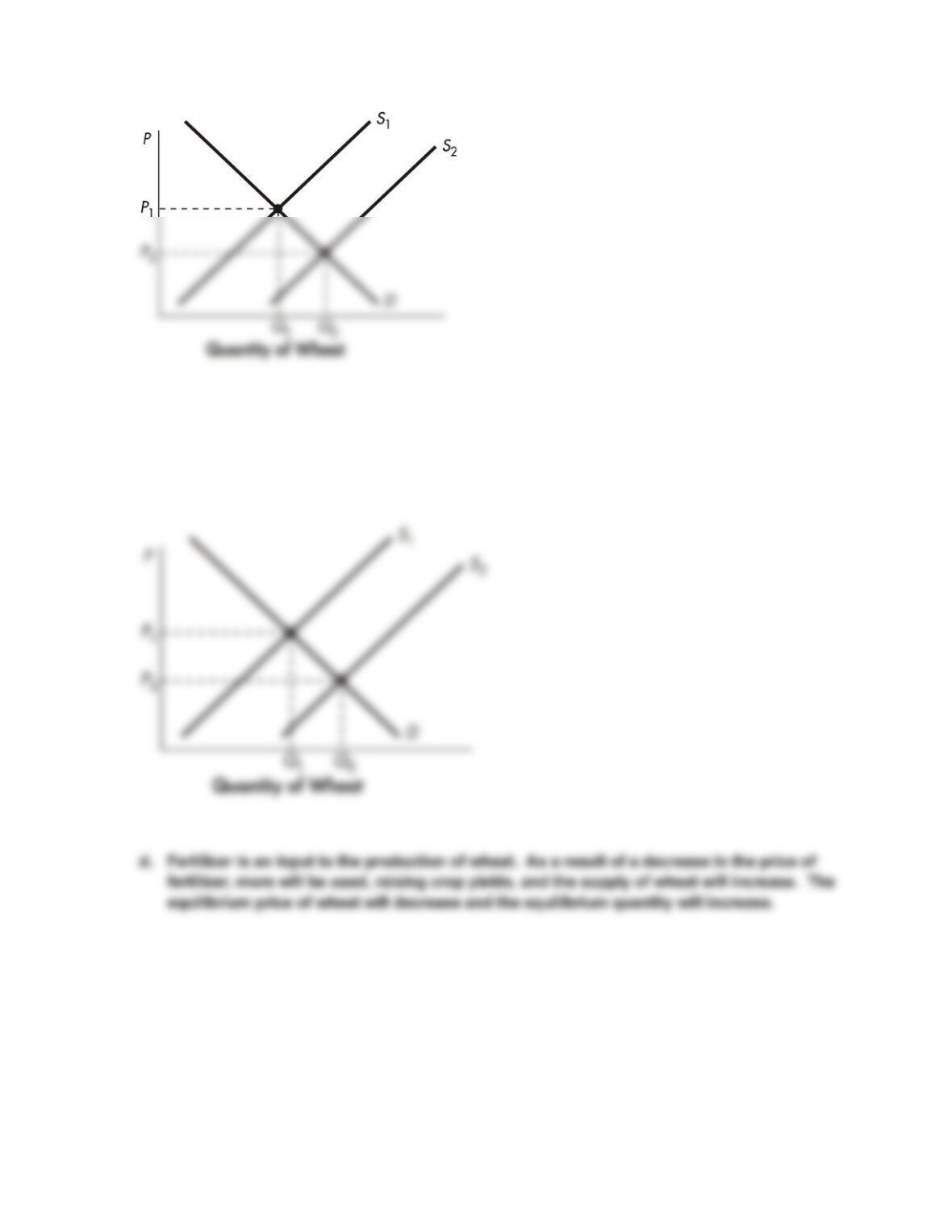
c. If the Midwest has exceptionally favorable weather, crop yields are likely to increase. The
supply curve for wheat will shift to the right, decreasing the equilibrium price and
increasing the equilibrium quantity of wheat traded.
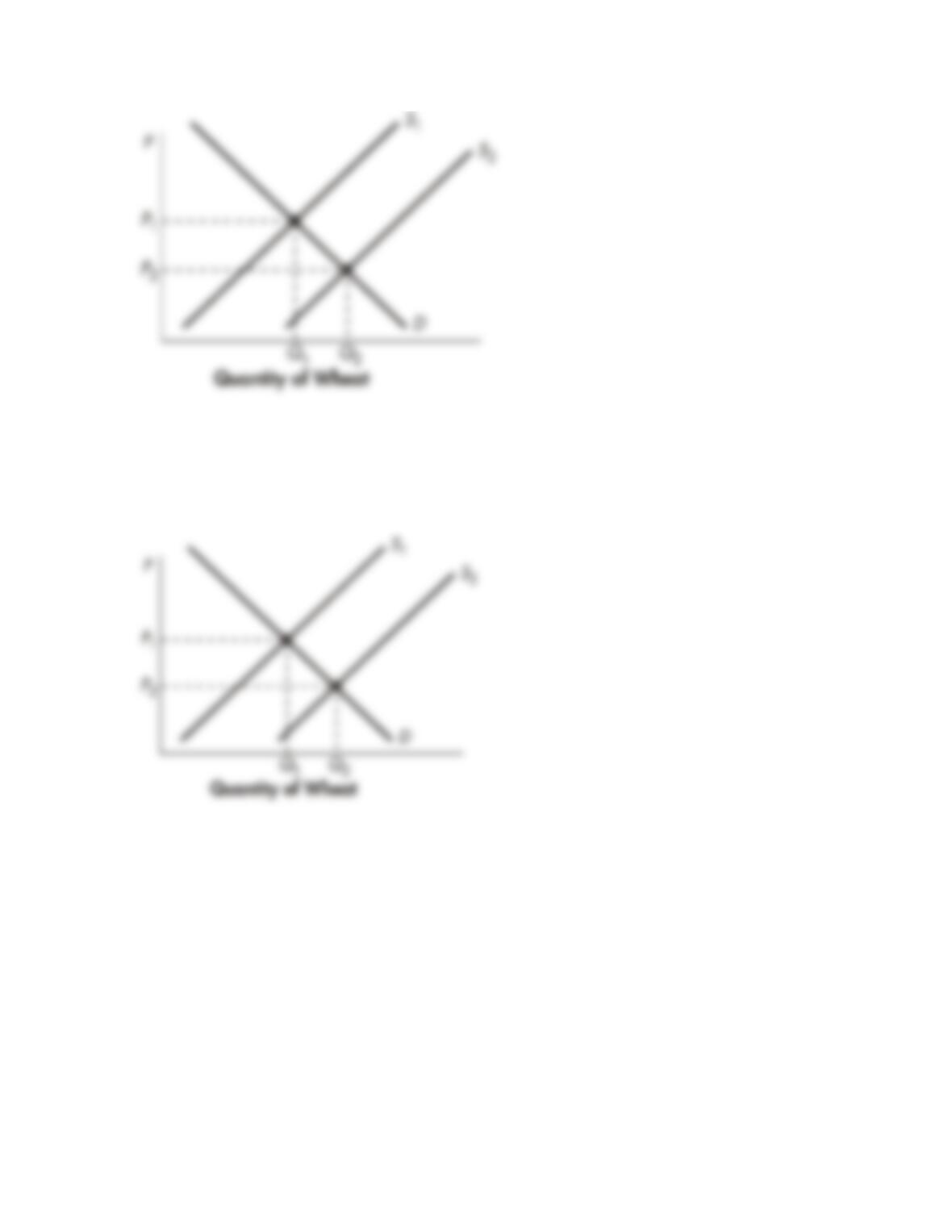
e. If more individuals begin growing wheat, the market supply curve for wheat will increase.
The equilibrium price of wheat will decrease and the equilibrium quantity will increase.
2. Beginning from an initial equilibrium, draw the effects of the changes in the following list in terms of the
relevant supply and demand curves.
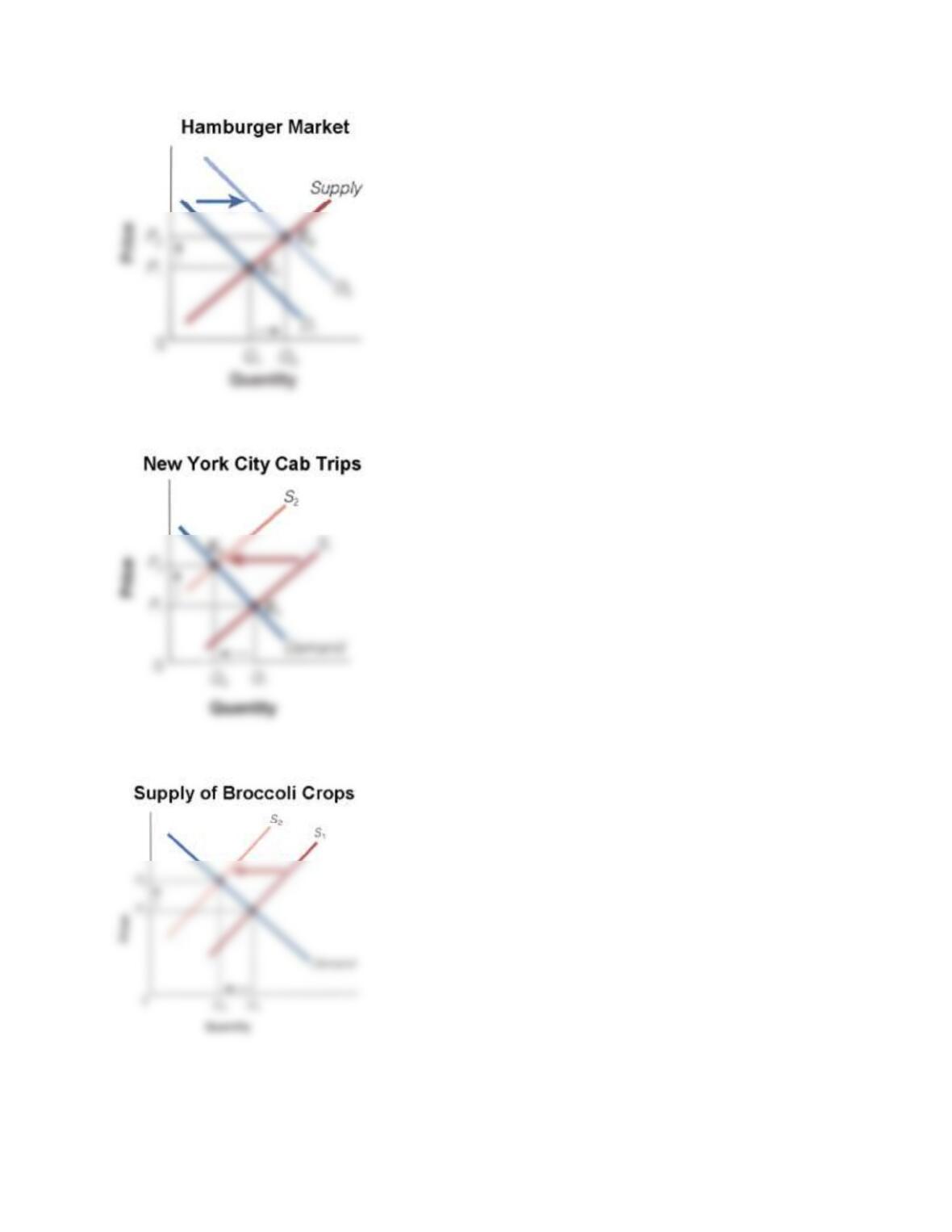
a. an increase in the price of hot dogs on the hamburger market
b. a decrease in the number of taxicab companies in New York City on cab trips
c. the effect of El Niño rain storms destroying the broccoli crops in two California counties
Answers:
a.
b.
c.
3. Use supply and demand curves to show:
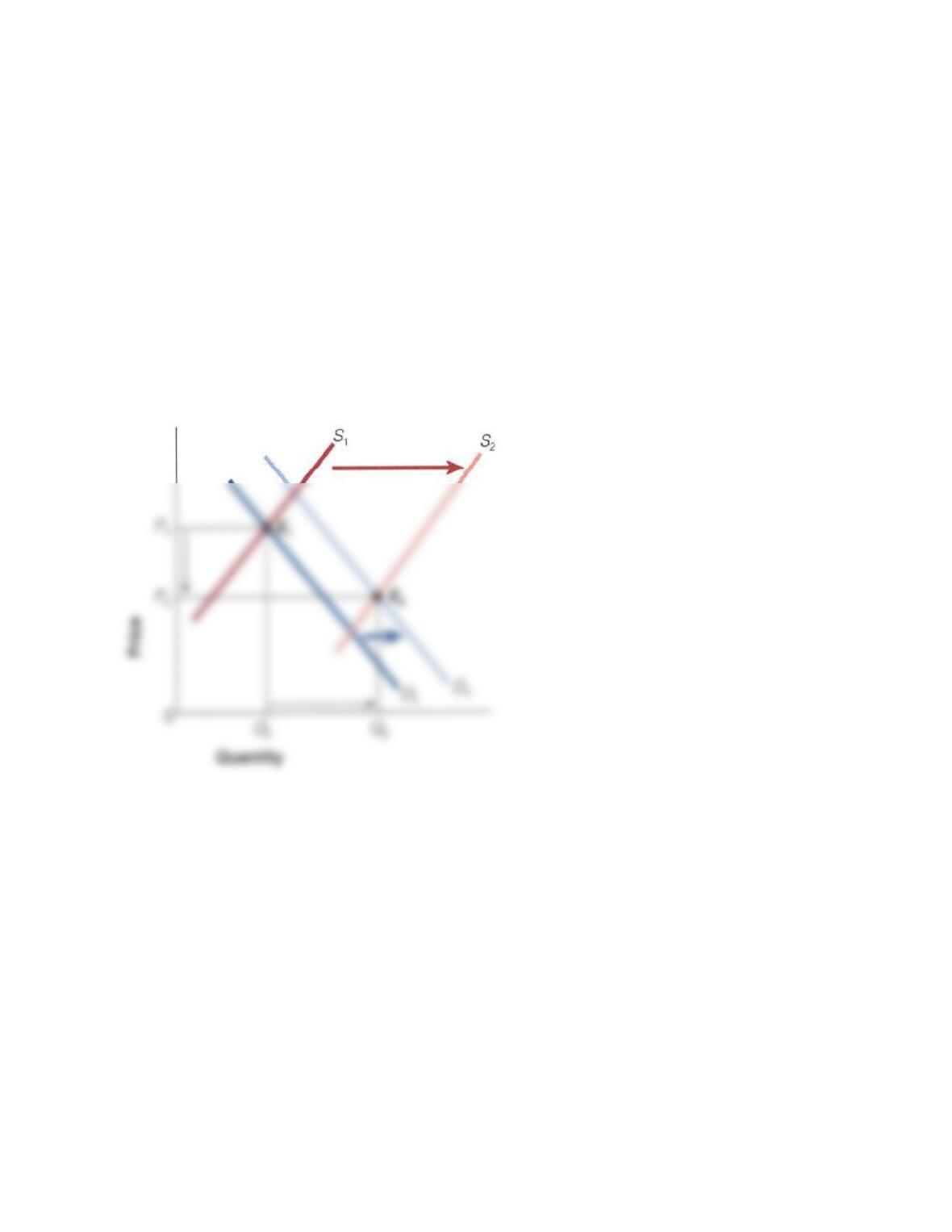
a. simultaneous increases in supply and demand, with a large increase in supply and a small increase in
demand.
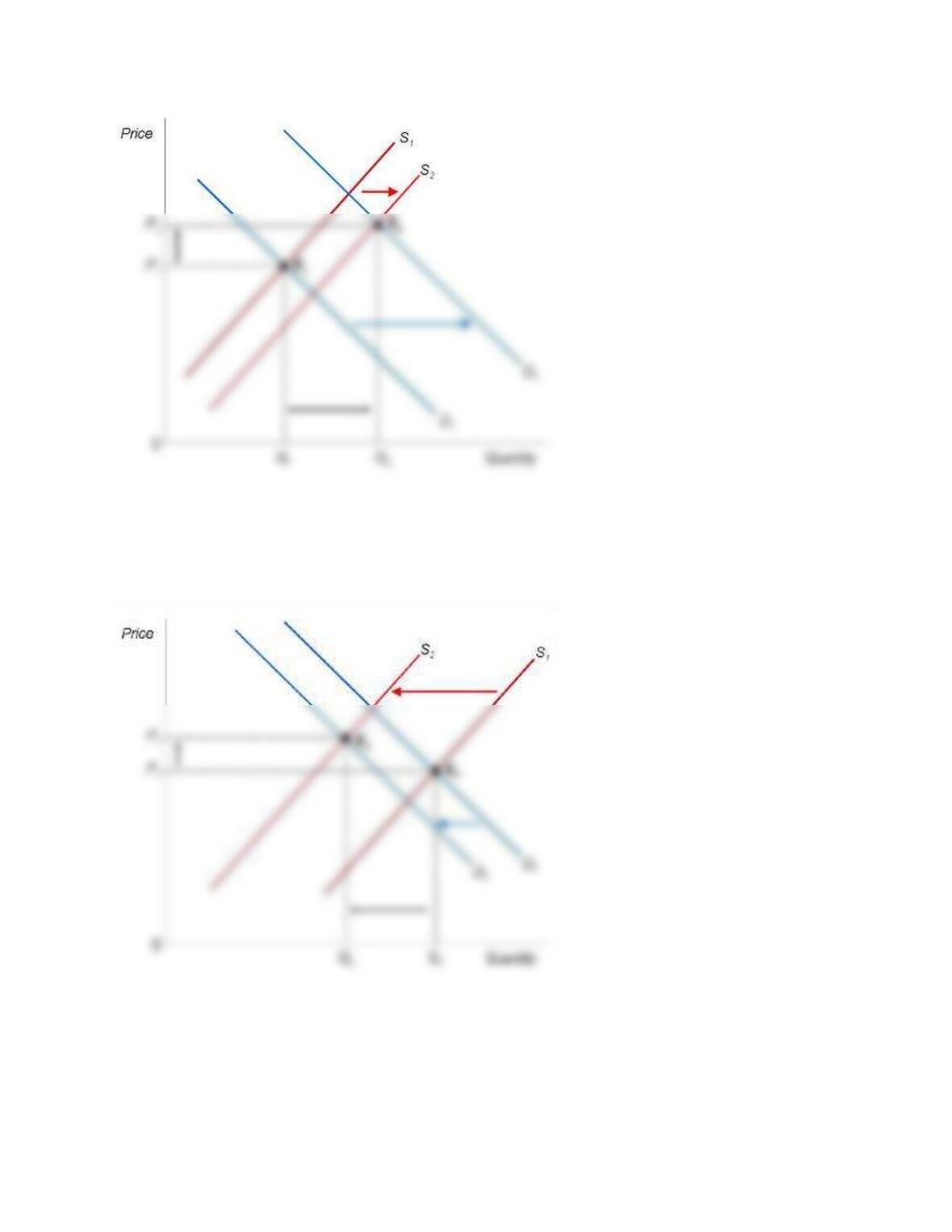
b. simultaneous increases in supply and demand, with a small increase in supply and a large increase in
demand.
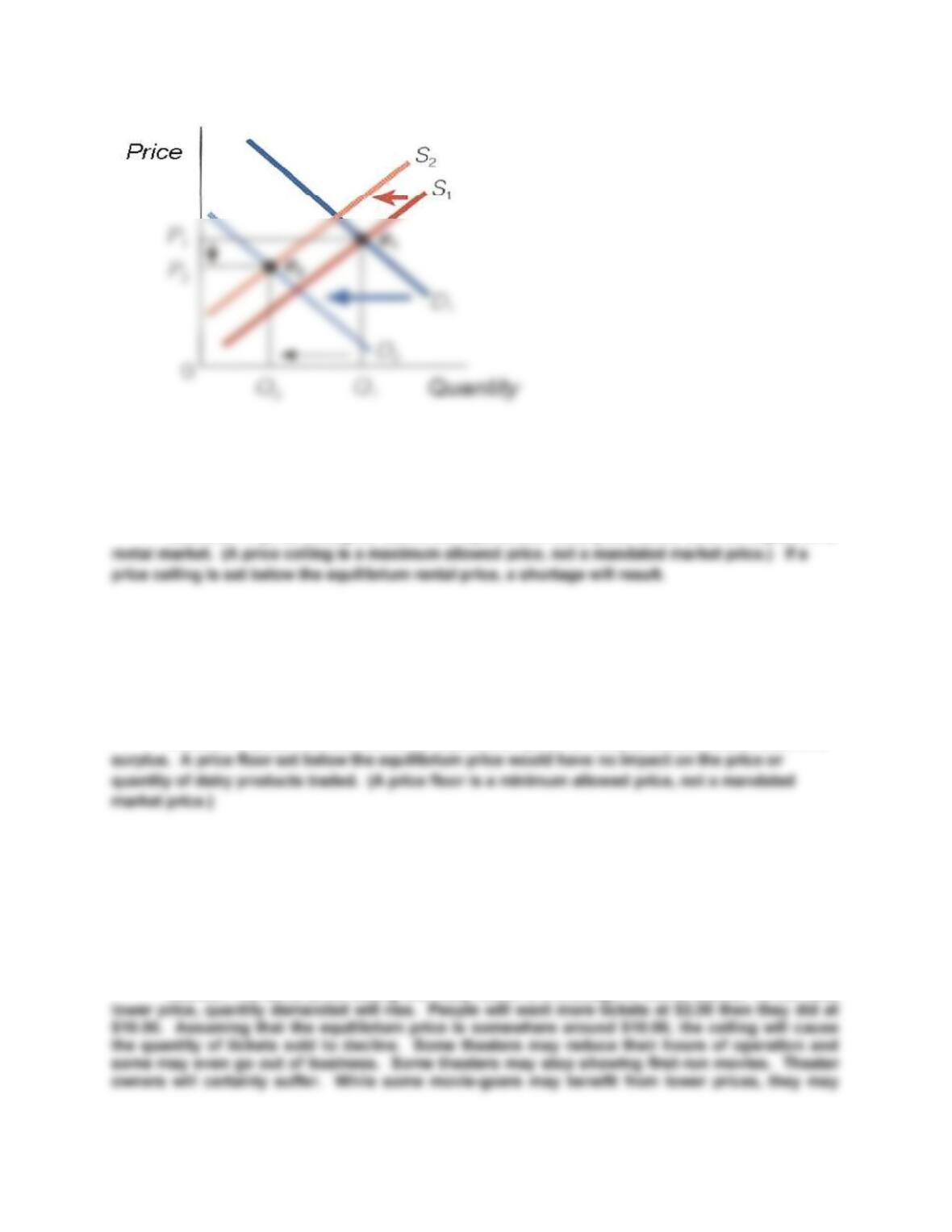
c. simultaneous decreases in supply and demand, with a large decrease in supply and a small decrease
in demand.
d. simultaneous decrease in supply and demand, with a small decrease in supply and a large decrease in
demand.
Answers:
a. Price falls, quantity rises.
b. Price rises, quantity rises.
c. Price rises, quantity falls.
d. Price falls, quantity falls.
4. What would be the impact of a rental price ceiling set above the equilibrium rental price for
apartments? Below the equilibrium rental price?
Answers: A price ceiling set above the equilibrium rental price would have no impact on a
5. What would be the impact of a price floor set above the equilibrium price for dairy products? Below the
equilibrium price?
Answer: A price floor set above the equilibrium price for dairy products would result in a
6. Giving in to pressure from voters who charge that local theater owners are gouging their customers
with ticket prices as high as $10 per movie, the city council of a Midwestern city imposes a price ceiling of
$2 on all movies. What effect is this likely to have on the market for movies in this particular city? What
will happen to the quantity of tickets demanded? What will happen to the quantity supplied? Who gains?
Who loses?
Answer: The $2.00 price ceiling will likely result in a shortage of movie tickets. At the new,
7. Why do price floors and price ceilings both reduce the quantity of goods traded in those markets?
Answer: When a price floor is imposed above the equilibrium price, the quantity
demanded by buyers falls. Sellers cannot sell what buyers are unwilling to purchase at this price.
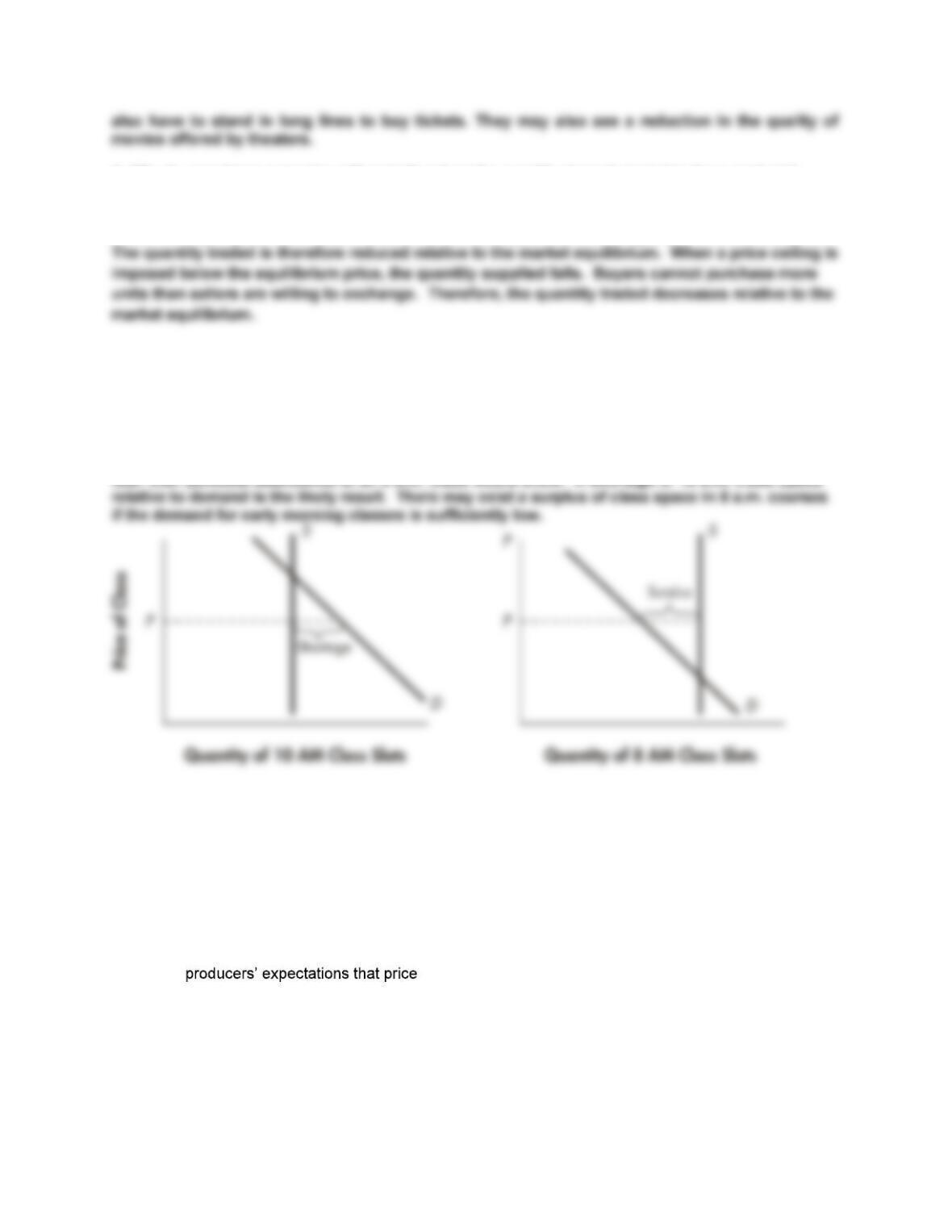
8. Why do 10 a.m. classes fill up before 8 a.m. classes during class registration? Use supply and demand
curves to help explain your answer.
Answer: Even though the tuition “price” is the same in both cases, student demand for 10
a.m. classes is typically greater than for 8 a.m. classes. College students often prefer to sleep in
later than punctual attendance at an 8 a.m. class would allow. A shortage of 10 a.m. class space
9. What would happen to the equilibrium price and quantity exchanged in the following cases?
a. an increase in income and a decreasing price of a complement, for a normal good
b. a technological advance and lower input prices
c. an increase in the price of a substitute and an increase in income, for an inferior good
d. s will soon fall, and increasingly costly government
regulations
Answers:
a) Demand would increase, since both changes increase demand. As a result, the price and
quantity exchanged would both increase.
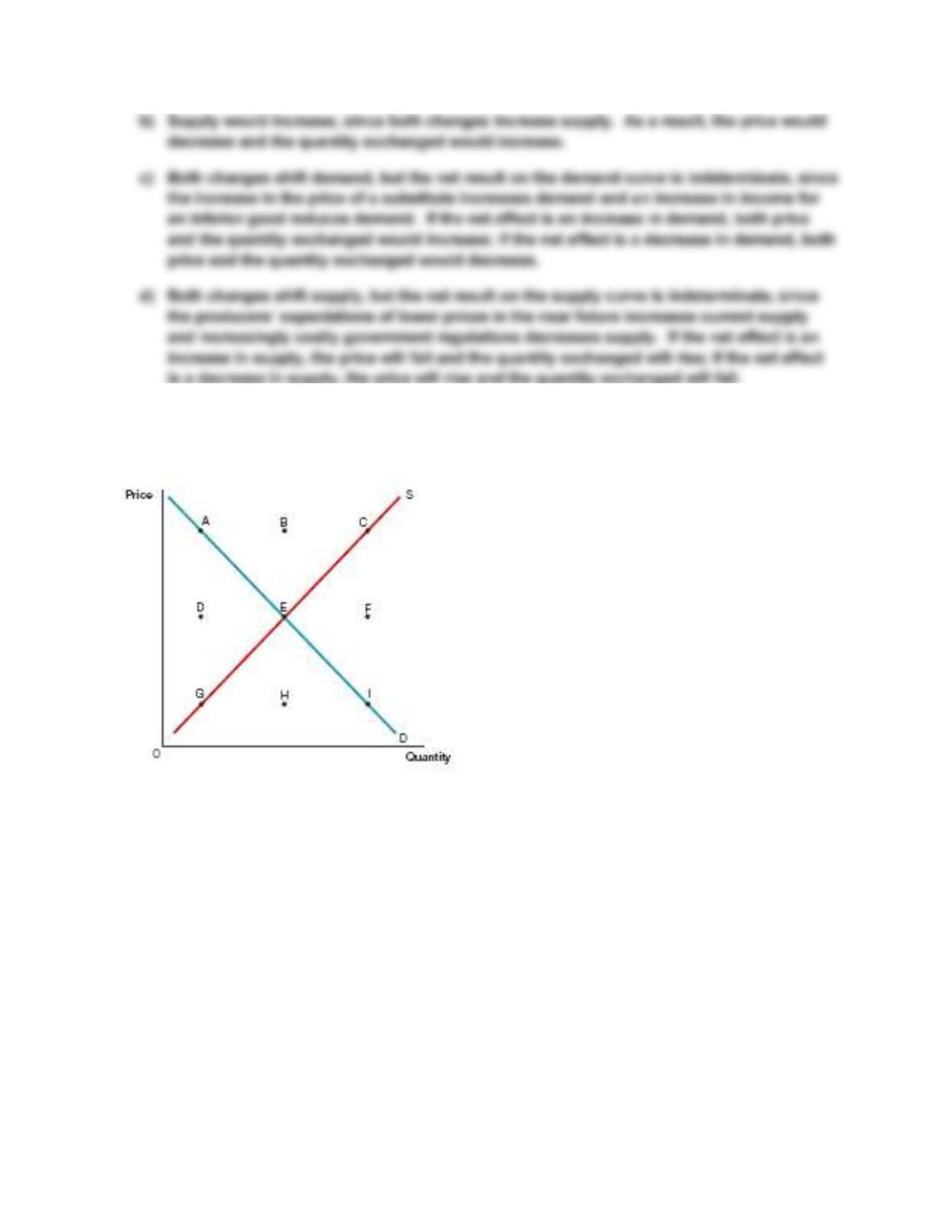
10. Refer to the following supply and demand curve diagram.
a. Starting from an initial equilibrium at E, what shift or shifts in supply and/or demand could move the
equilibrium price and quantity to each of points A through I?
b. Starting from an initial equilibrium at E, what would happen if both a decrease in the price of a
substitute in production and an increase in income occurred, if it is a normal good?
c. Starting from an initial equilibrium at E, what would happen if both an increase in the price of an input
and an advance in technology occurred?
d. If a price floor is imposed above the equilibrium price, which of A through I would tend to be the
quantity supplied, and which would tend to be the quantity demanded? Which would be the new quantity
exchanged?
e. If a price ceiling is imposed below the equilibrium price, which of A through I would tend to be the
quantity supplied, and which would tend to be the quantity demanded? Which would be the new quantity
exchanged?
Answers:
a) To get to point A would require a decrease in supply; to get to point B would require a
decrease in supply and an increase in demand; to get to point c would require an