Chapter 5: Present-Worth Analysis
Identifying Cash Inflows and Outflows
5.1
Revenue =
$45 (0.40)(5,000) 5 $450, 000××=
(No. of engineer:5)
n
Inflow
Outflow
Net flow
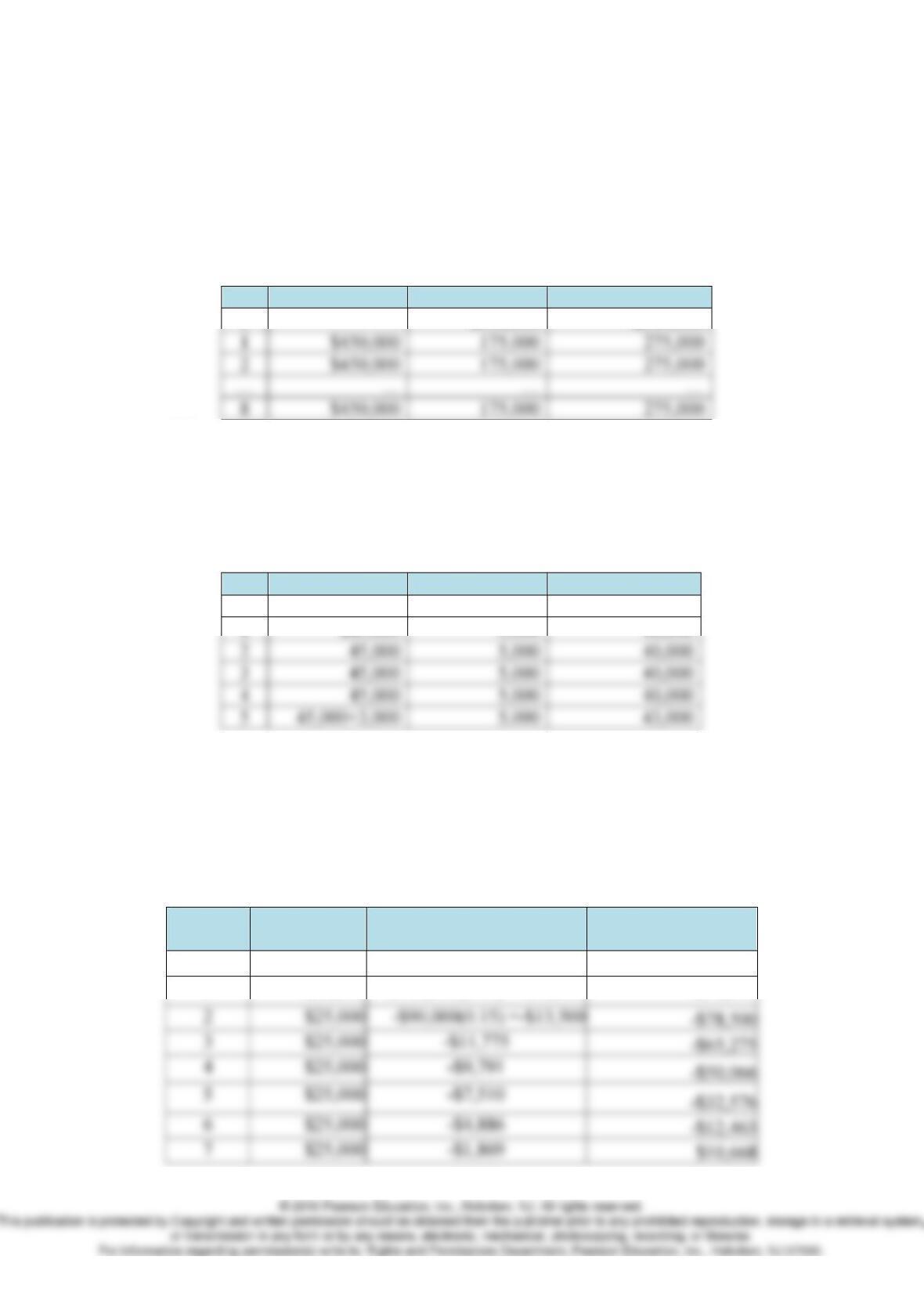
0
$500,000
-$500,000
5.2
(a) Cash inflows: (1) savings in labor, $45,000 per year, (2) salvage value,
$3,000 at year 5.
(b) Cash outflows: (1) capital expenditure = $30,000 at year 0, (2) operating
costs = $5,000 per year.
(c) Estimating project cash flows:
n
Inflow
Outflow
Net flow
0
$30,000
-$30,000
1
$45,000
5,000
40,000
2
45,000
3
5,000
40,000
4
45,000
5
5,000
43,000
Payback Period
5.3
(a) Conventional payback period: $100,000/$25,000 = 4 years
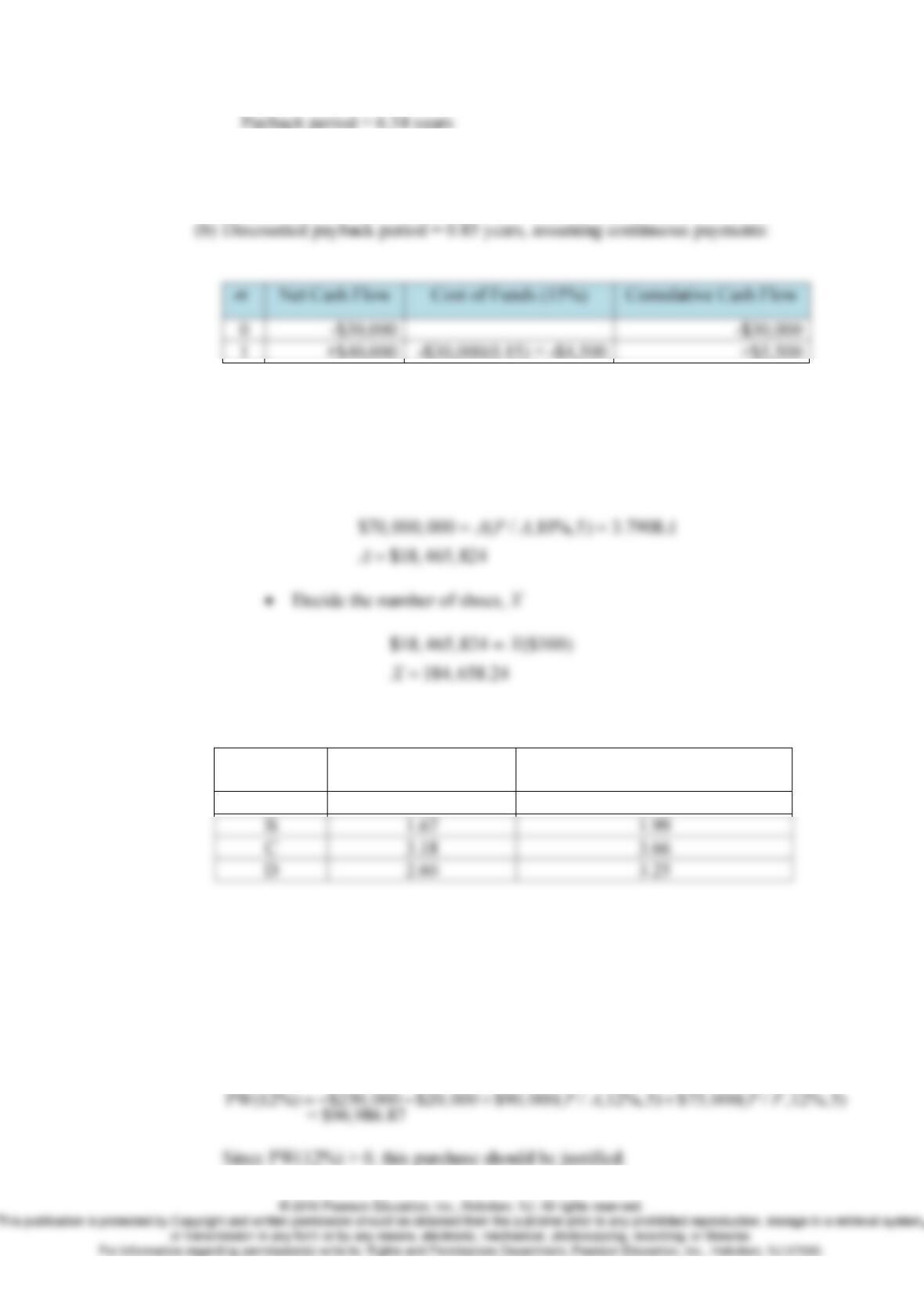
(b) Discounted payback period at i = 15%:
n
Net Cash Flow
Cost of Funds (15%)
Cumulative Cash
Flow
0
-$100,000
-$100,000
1
$25,000
-$100,000(0.15) =-$15,000
-$90,000
2
7
1
$450,000
175,000
2
175,000
8
175,000
5.4
(a) Conventional payback period: 0.75 years
5.5
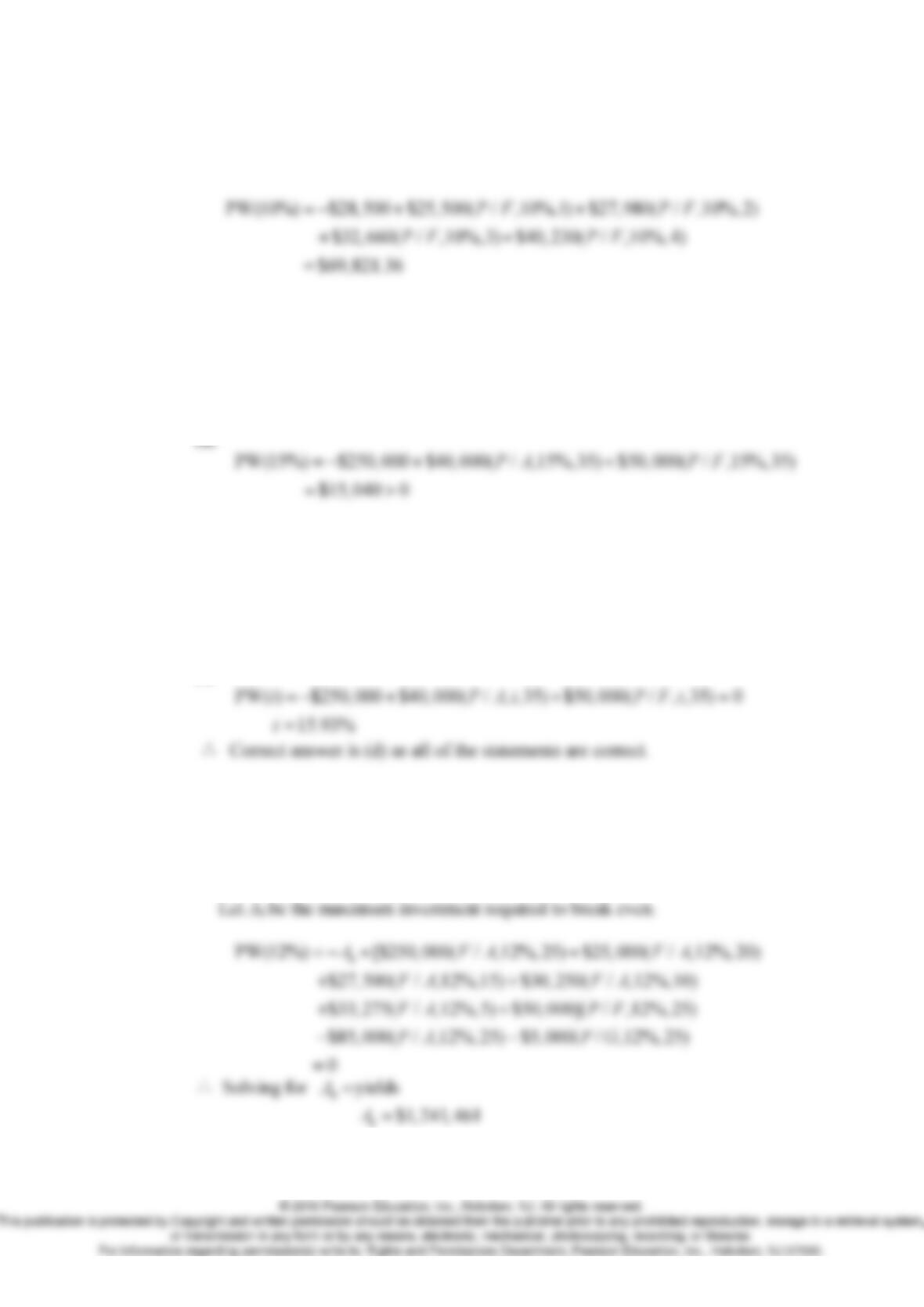
•Compute the required annual net cash profit to pay off the
investment and interest.
5.6
Project
(a) Payback
Period
(b) Discounted Payback
Period
A
3.40
3.70
3.18
3.66
NPW Criterion
5.7
PW(12%) $100,000 $30,000( / ,12%,5) $8,143.3PA=−+ =
5.8
-$30,000
5.9
(a)
(b) Draw the graphs using Excel or other software (not provided).
5.10
(a)
(b)
PW(20%) $250,000 $40,000( / ,20%,35) $50,000( /,20%,35)
$50, 254
PA PF=−+ +
=−
(c)
5.11
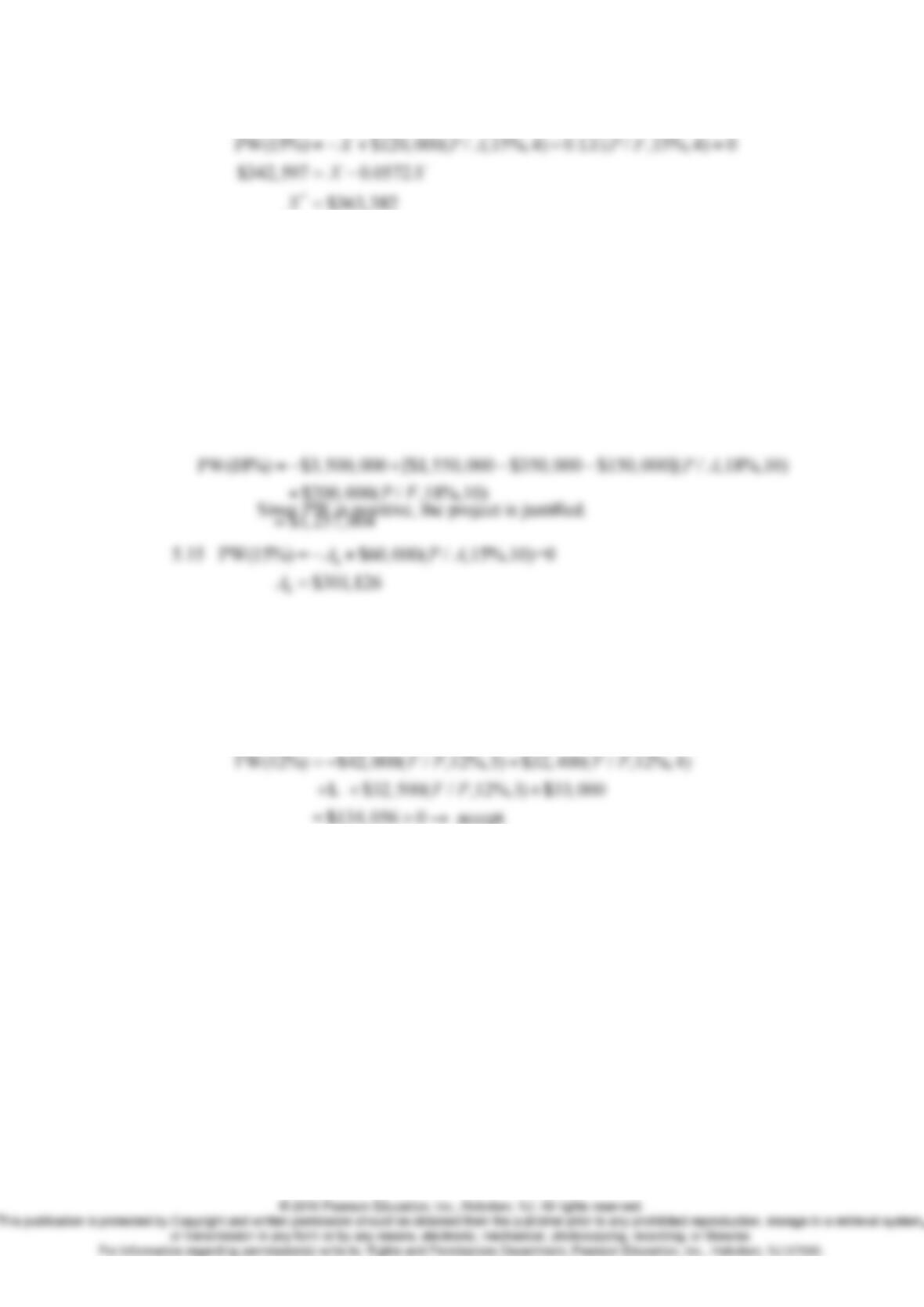
Given: Estimated remaining service life = 25 years, current rental income =
$250,000 per year,
O&M costs = $85,000
for the first year increasing by
$5,000 thereafter, salvage value
=$50,000,
and
MARR 12%=
.
5.12
5.13
PW(15%) $500,000 2,200,00( / ,15%,1) $2,700,000( / ,15%,8)
$1,500,000( / ,15%,8)
PF PA
PF
=− − +
+
= $10,193,077
5.14
Future Worth and Project Balance
5.16
5.17
(a)
FW(15%) $12,500( / ,15%,3) $6,400( / ,15%,2)
$14,400( / ,15%,1) $7,200
$13,213
FW(15%) $12,500( / ,15%,3) $3,000( / ,15%,2)
$23,000( / ,15%,1) $13,000
$16,472
=−+
++
=
=− −
++
=
A
B
FP FP
FP
FP FP
FP
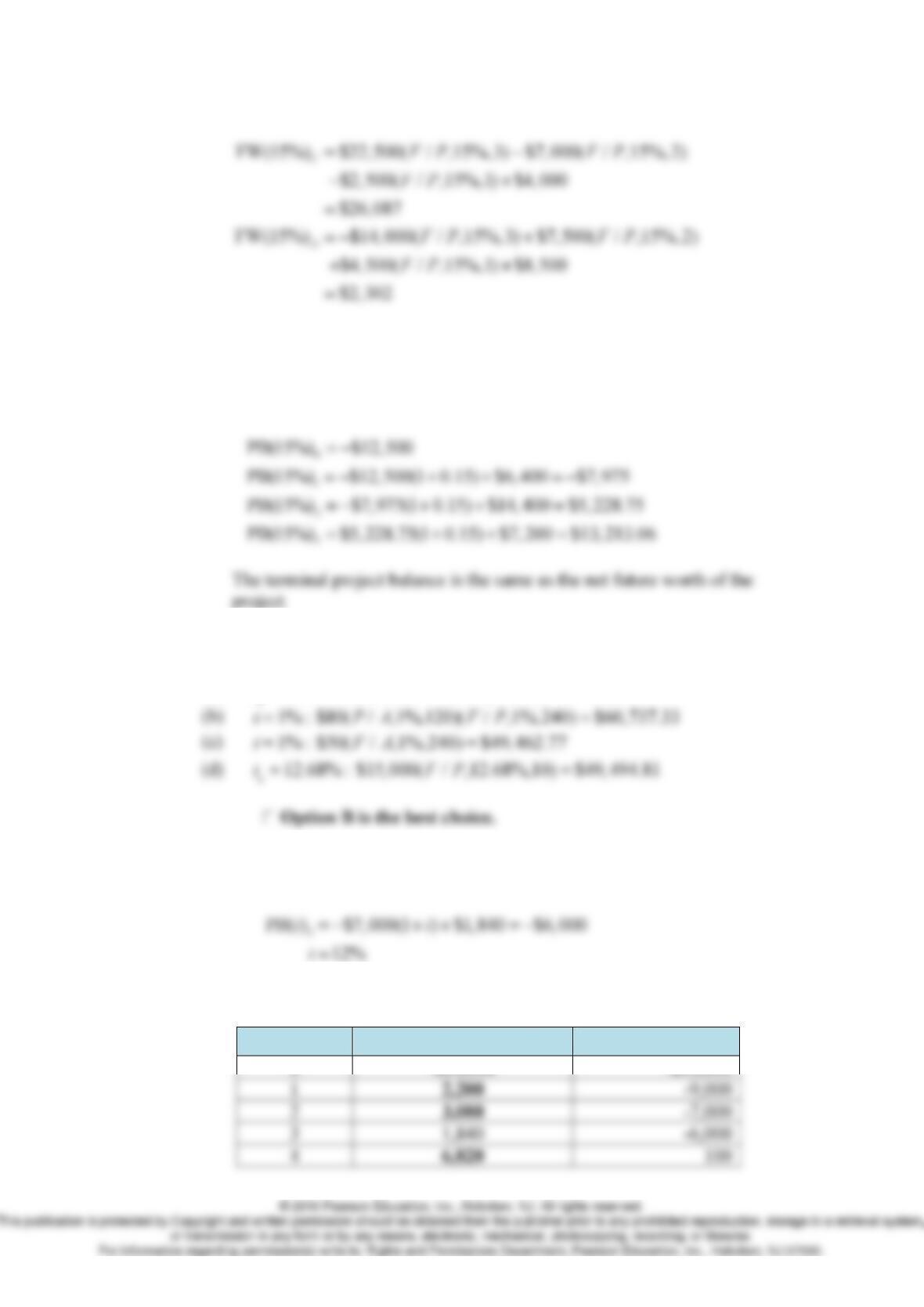
All projects are acceptable.
(b)
Sample calculation for Project A:
5.18
(a)
i
a
=12.68% : $5,000(F/P,12.68%,20) =$54,438.58
5.19
(a)
(b) The original cash flows of the project are as follows.
n
n
A
Project Balance
0
-$10,000
-$10,000
2
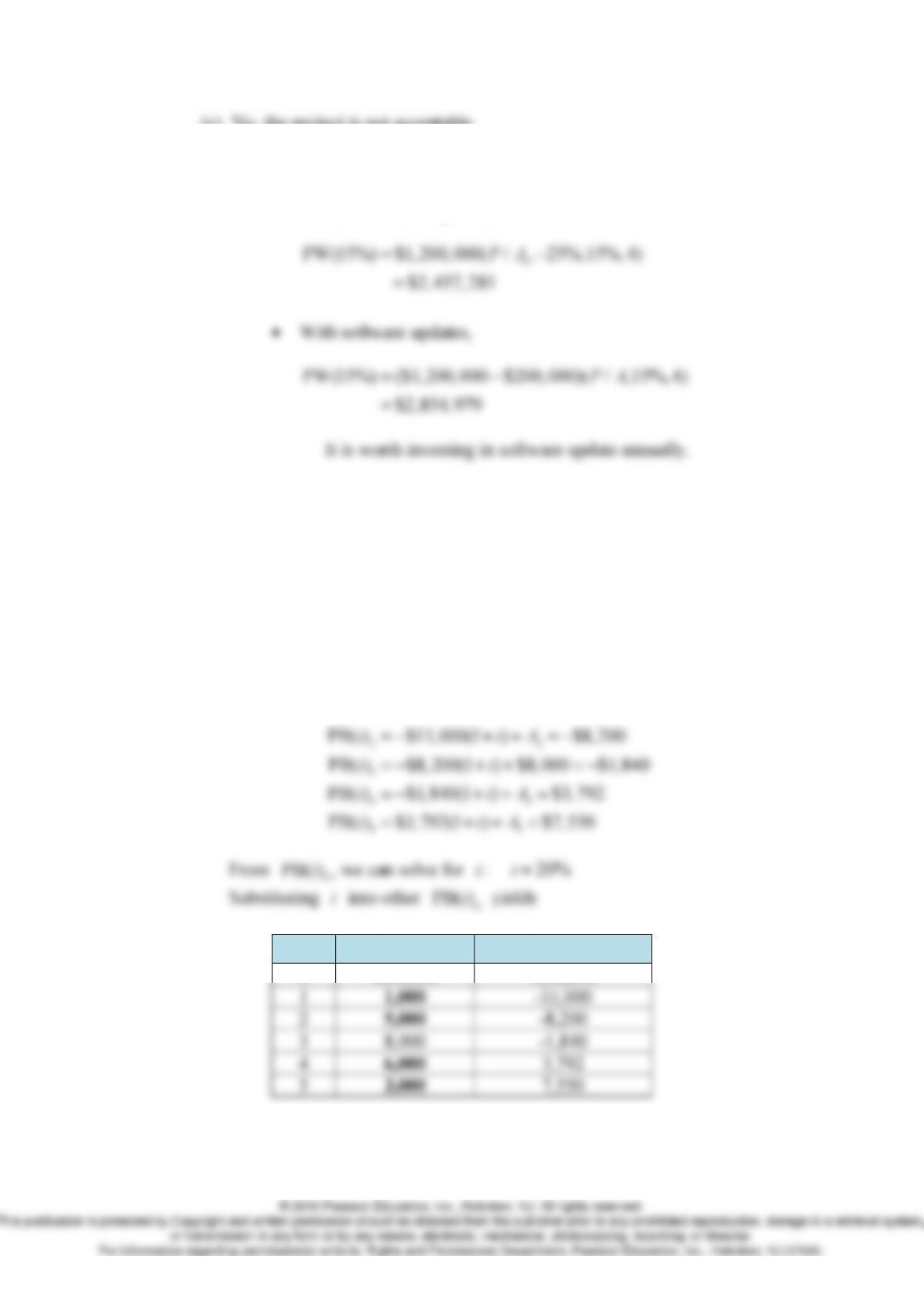
(c) No, the project is not acceptable.
5.20
(a)
•Without software updates,
(b)
Note that without software updates, you expect $2,457,281. So, this is
the minimum price that you may be willing to accept.
5.21
(a) First find the interest rate that is used in calculating the project balances.
We can set up the following project balance equations:
11
PB( ) $10,000(1 ) $11,000
iiA
=−+ + =−
n
n
A
PB( )n
i
0
-$10,000
-$10,000
2
3
5
(b) Conventional payback period
=3
years ( or 2.5 years with continuous cash
flows)
5.22
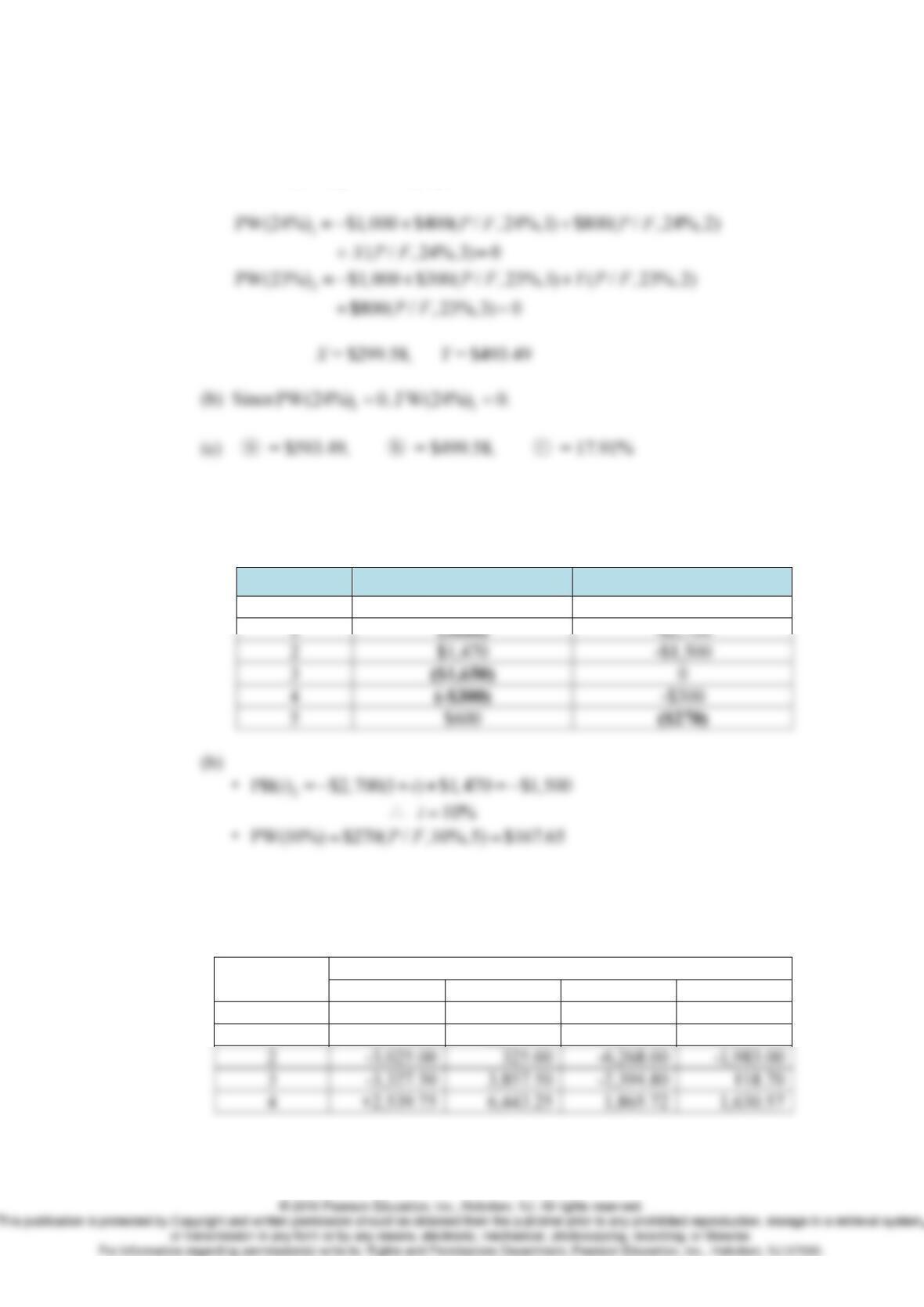
(a) From the project balance diagram, note that
1
PW(24%) 0=
for project 1
and
2
PW(23%) 0=
for project 2.
5.23
(a) The original cash flows of the project are as follows
n
n
A
Project Balance
0
-$3,000
-$3,000
1
2
-$1,500
3
4
5
5.24
(a) No graphs are given.
Period
(n)
Project Balance, PB(i)n
A
B
C
D
0
-$2,500.00
-$3,500.00
-$2,800.00
-$2,300.00
1
-2,750.00
-2,250.00
-4,880.00
-3,530.00
2
3
4
(b)
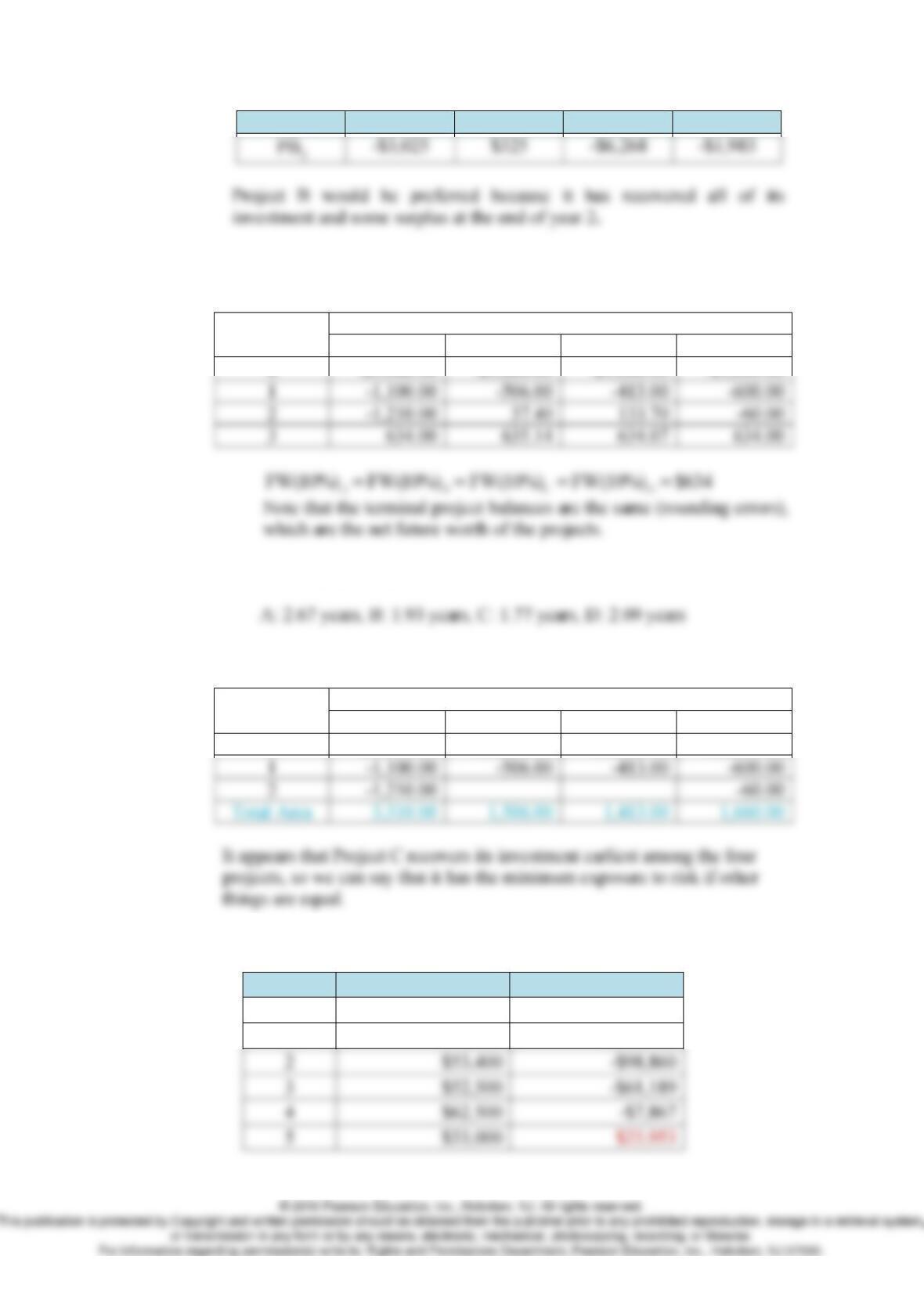
Project
A
B
C
D
5.25
(a)
Period
(n)
Project Balance, PB(i)n
A
B
C
D
0
-$1,000.00
-$1,000.00
-$1,000.00
-$1,000.00
1
2
3
(b) Discounted payback period:
(c) & (d)
Period
(n)
Area of Negative Project Balance, PB(i)n
A
B
C
D
0
-$1,000.00
-$1,000.00
-$1,000.00
-$1,000.00
1
2
5.26
n
Cash flow
Project Balance
0
-$152,000
-$152,000
1
$42,400
-$132,400
2
$53,400
3
4
$62,500
5
$33,000
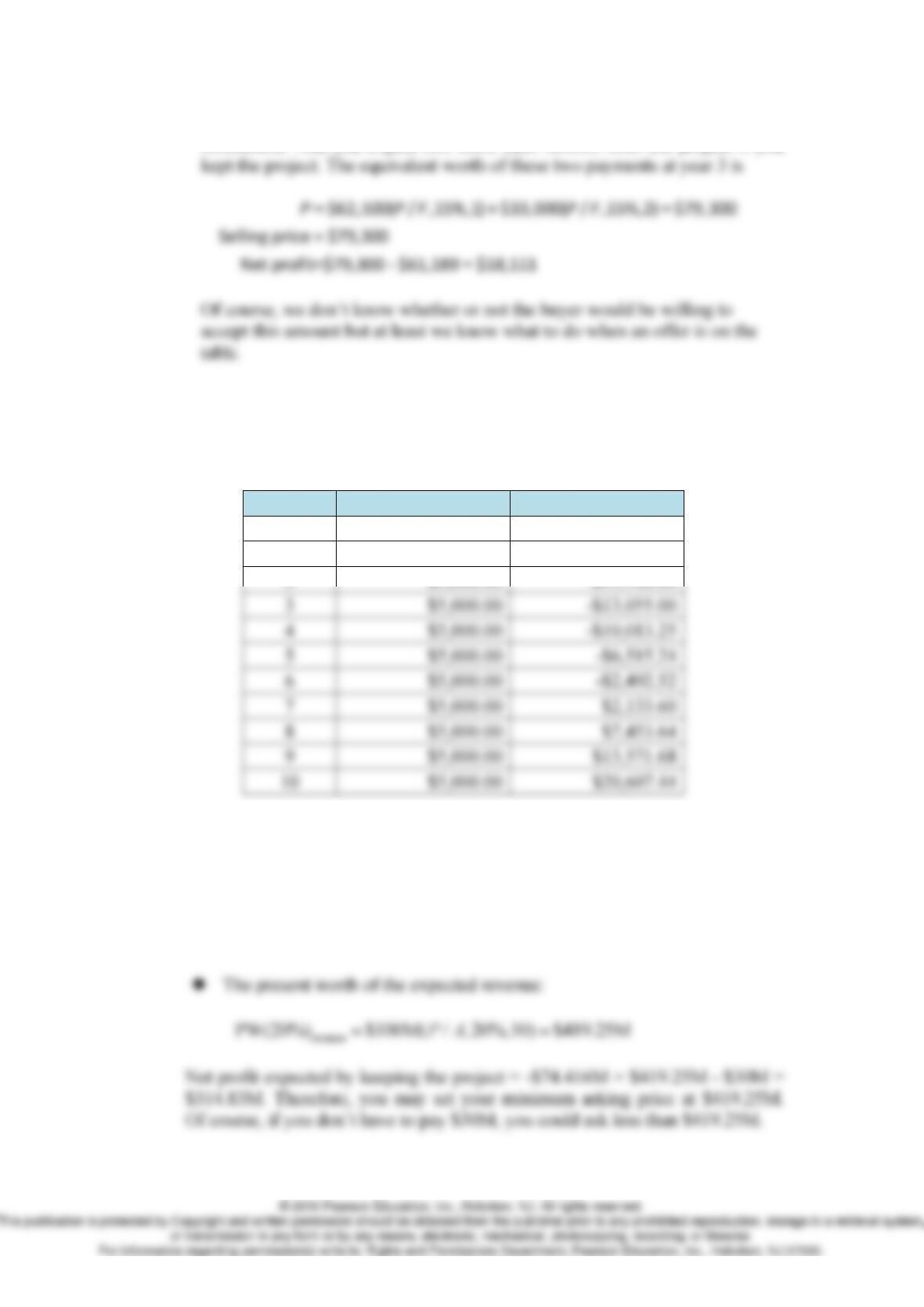
At the end of year 3, you still need to recover $61,189 from your previous
investment. And you expect two more cash inflows from the project if you
5.27
From the annual cash flow and balance table, shown below, it will take 6.54
years approximately.
n
Cash flow
Balance
0
-$20,000.00
-$20,000.00
1
$5,000.00
-$18,000.00
2
$5,000.00
-$15,700.00
3
$5,000.00
-$13,055.00
4
$5,000.00
-$10,013.25
5
$5,000.00
6
$5,000.00
7
$5,000.00
$2,133.60
8
$5,000.00
$7,453.64
9
$5,000.00
$5,000.00
5.28
! The present worth of the expenses already spent on the project:
expense
PW(20%) $10M( / , 20%,5) $74.416M=−=−FA
5.29
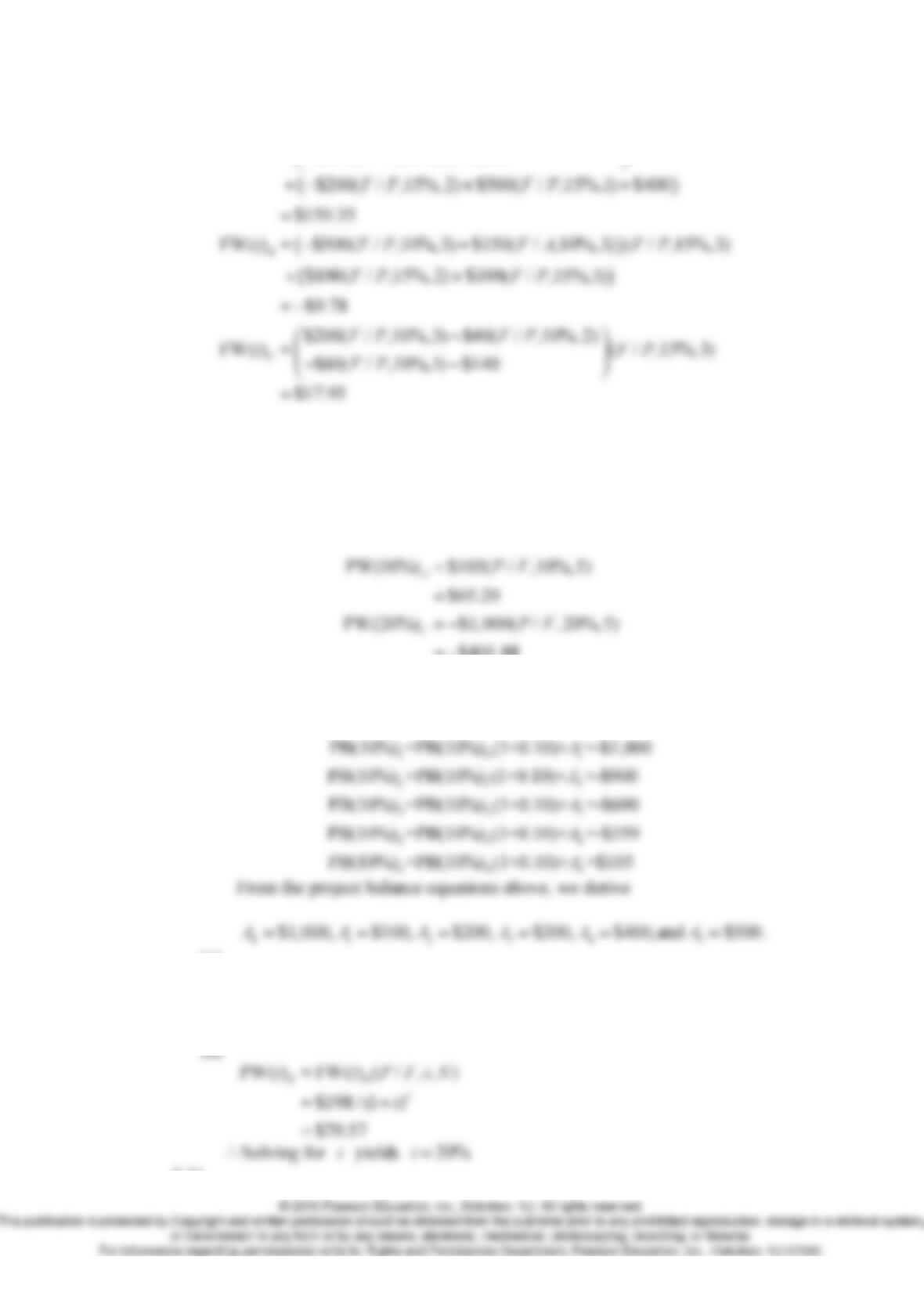
A
$800( / ,10%,3) $150( / ,10%,2)
FW( ) ( / ,15%,3)
$150( / ,10%,1) $350
FP FP
iFP
FP
−+
⎛⎞
=⎜⎟
++
⎝⎠
5.30
(a) Since a project’s terminal project balance is equivalent to its future worth,
we can easily find the equivalent present worth for each project by
$401.88
=−
(b)
00
PB(10%) = =-$1,000
A
(c)
5
FW(20%) PB(20%) $1, 000==−
(Note that the terminal project balance is the future worth of the project.)
5.31
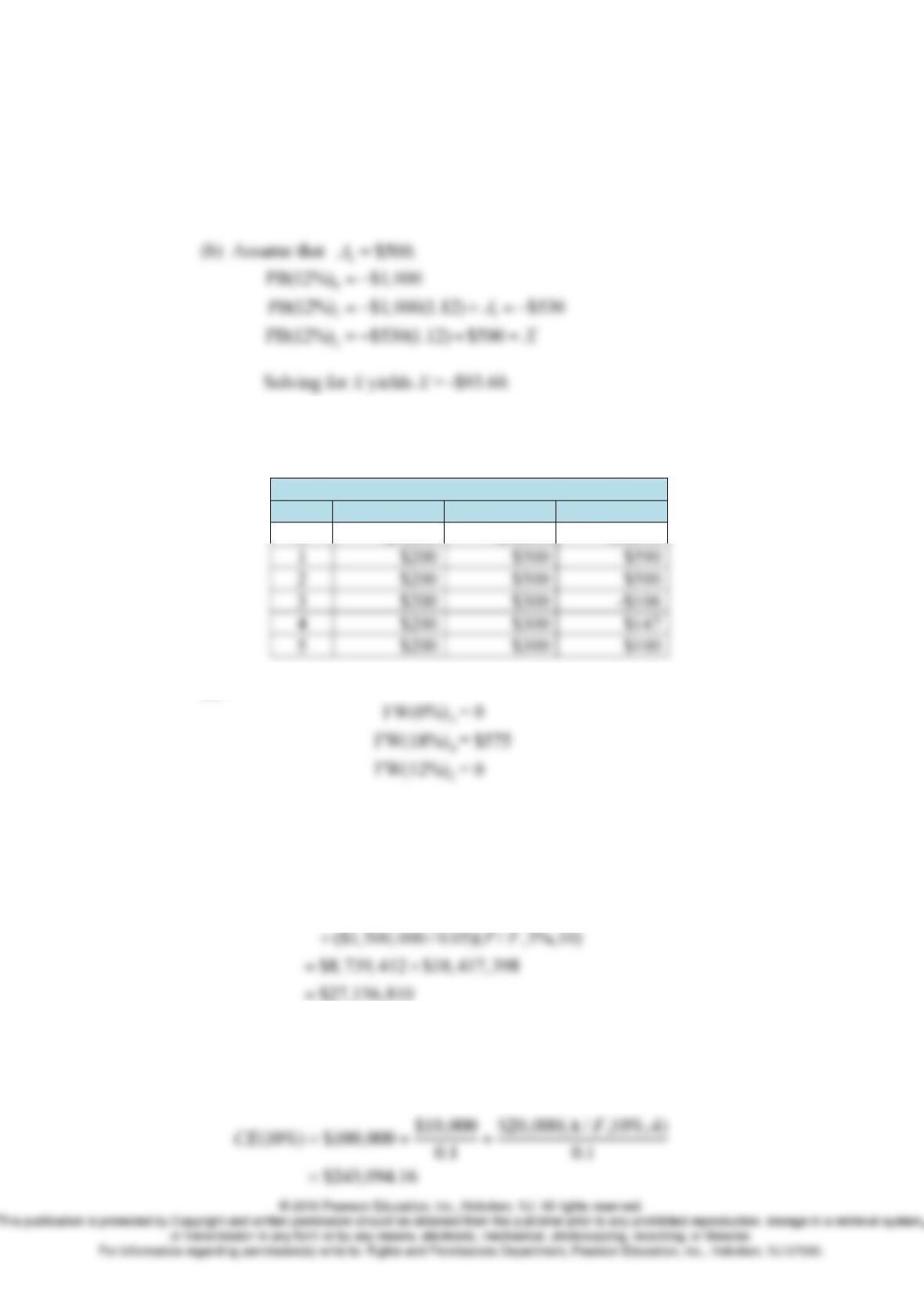
(a)
A
B
C
PW(0%) = 0
PW(18%) = $575( / ,18%,5)=$251.34
PW(12%) = 0
PF
(c) The net cash flows for each project are as follows:
Net Cash Flow
n
A
B
C
0
-$1,000
-$1,000
-$1,000
2
5
(d)
Capitalized Equivalent Worth
5.32
(a)
PW(5%) $1, 000,000( / ,5%,5) $1,300,000( / ,5%,5)( / ,5%,5)
PA PA PF
=+
5.33
! Capitalized equivalent amount:
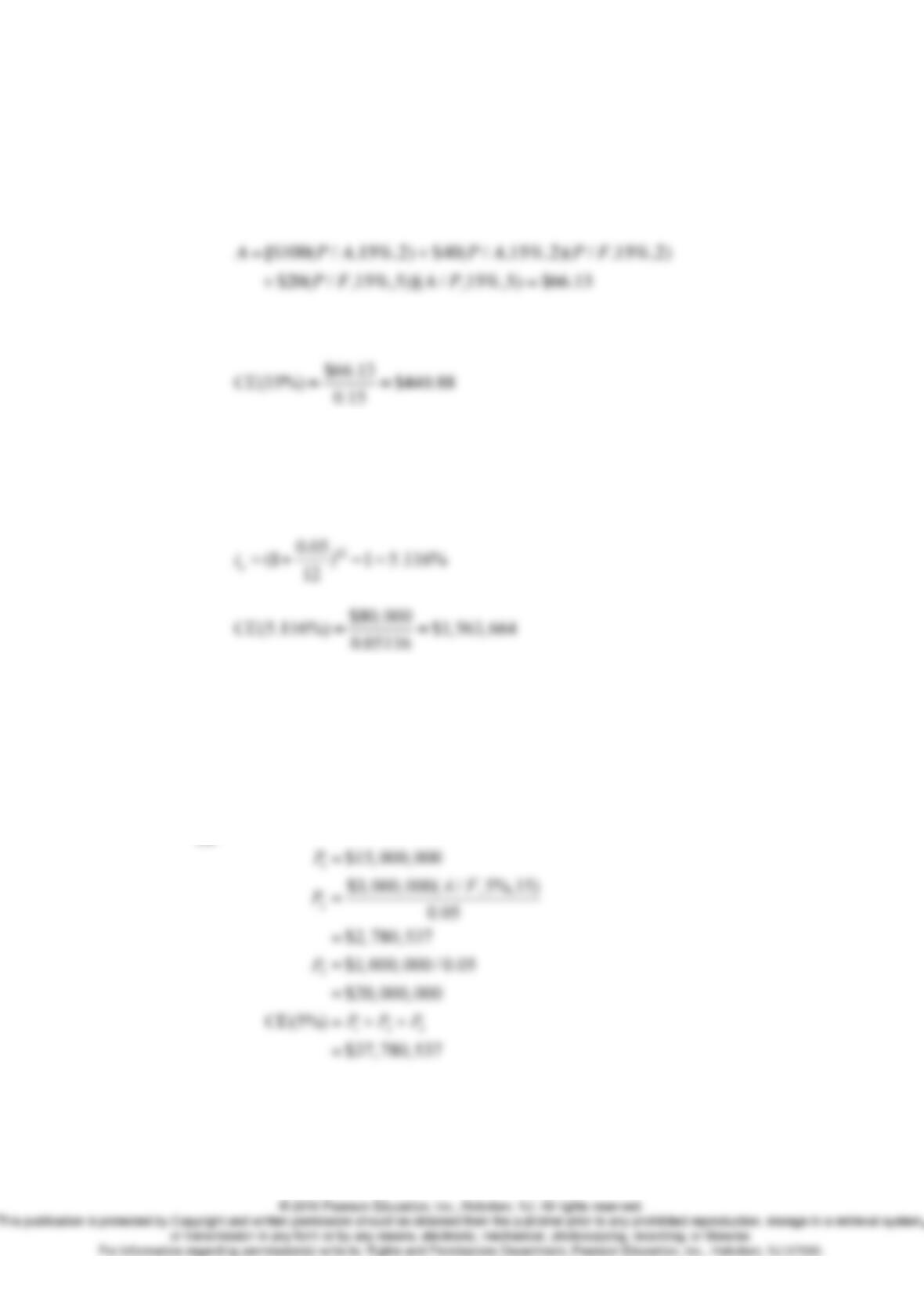
5.34
! Find the equivalent annual series for the first cycle:
! Capitalized equivalent amount:
5.35
Given: r =5% compounded monthly, maintenance cost = $80,000 per year
5.36
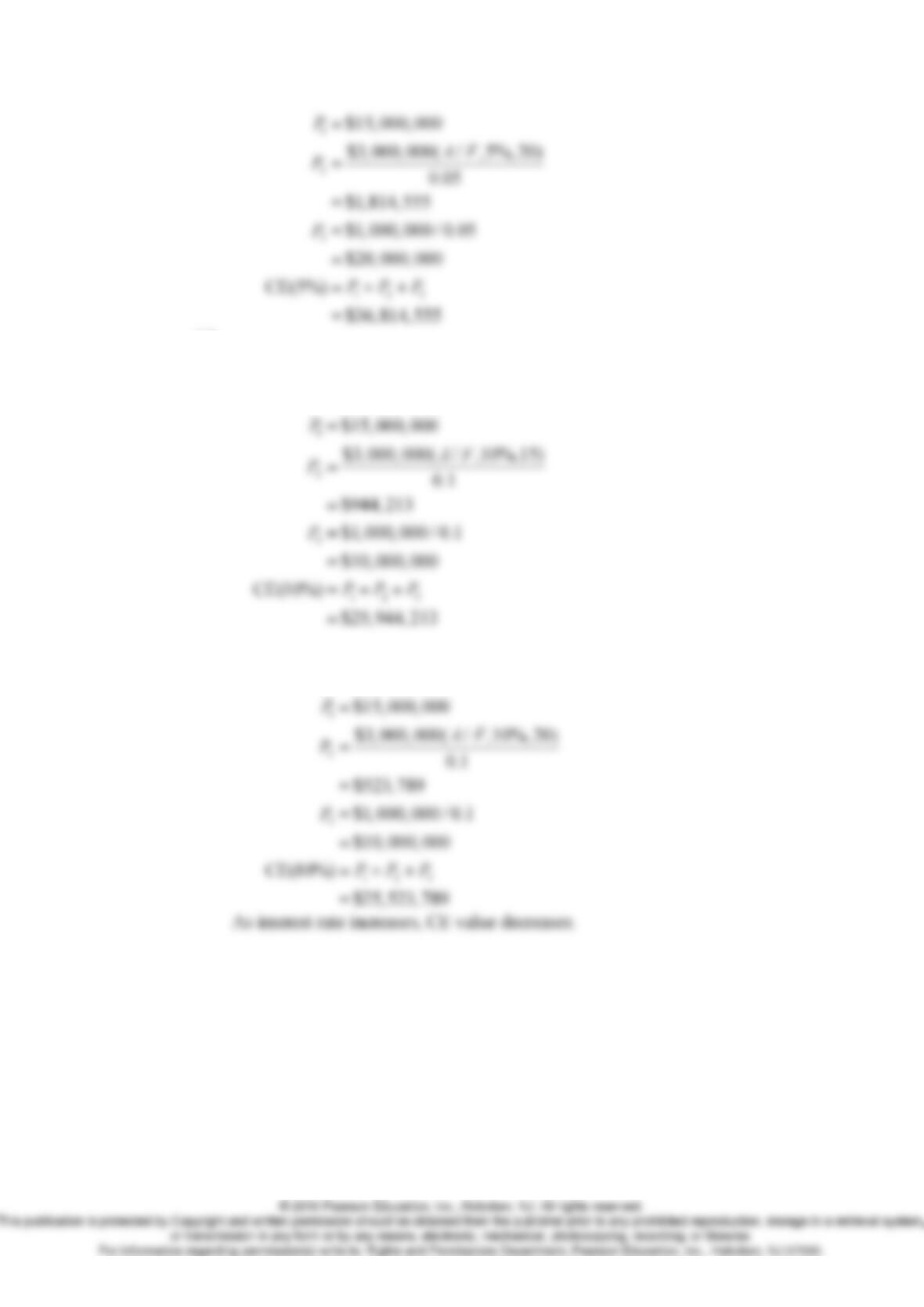
Given: Construction cost = $15,000,000, renovation cost = $3,000,000
every 15 years, annual
&OM
costs = $1,000,000 and
5%i=
per year
(a)
(b)
(c)
•15-year cycle with 10% of interest:
•20-year cycle with 10% of interest:
5.37
Given: Cost to design and build
=$830,000
, rework cost
=
$120,000
every 10 years, new type of gear
=$80,000
at the end of 5th year, annual
operating costs
=$70,000
for the first 15 years and
$100,000
thereafter