
Chapter 28:
1. Bud and Larry have been shipwrecked on a deserted island. Their economic activity consists of either
gathering berries or fishing. We know that Bud can catch four fish in one hour or harvest two buckets of
berries. In the same time Larry can catch two fish or harvest two buckets of berries.
a. Fill in the following table assuming that they each spend four hours a day fishing and four hours a day
harvesting berries.
Answers:
Fish per Day Buckets of Berries per Day
b. If Bud
c. Assume that Larry and Bud operate on straight-line production possibilities curves. Fill in the following
table:
Answers:
Opportunity Cost of a Opportunity Cost
Bucket of Berries of a Fish
d. If they traded, who has the comparative advantage in fish? In berries?
e. If Larry and Bud specialize in and trade the good in which they have a comparative advantage, how
much of each good will be produced in an eight-hour day? What are the gains from trade?
2. The following table represents the production possibilities in two countries:
Country A Country B
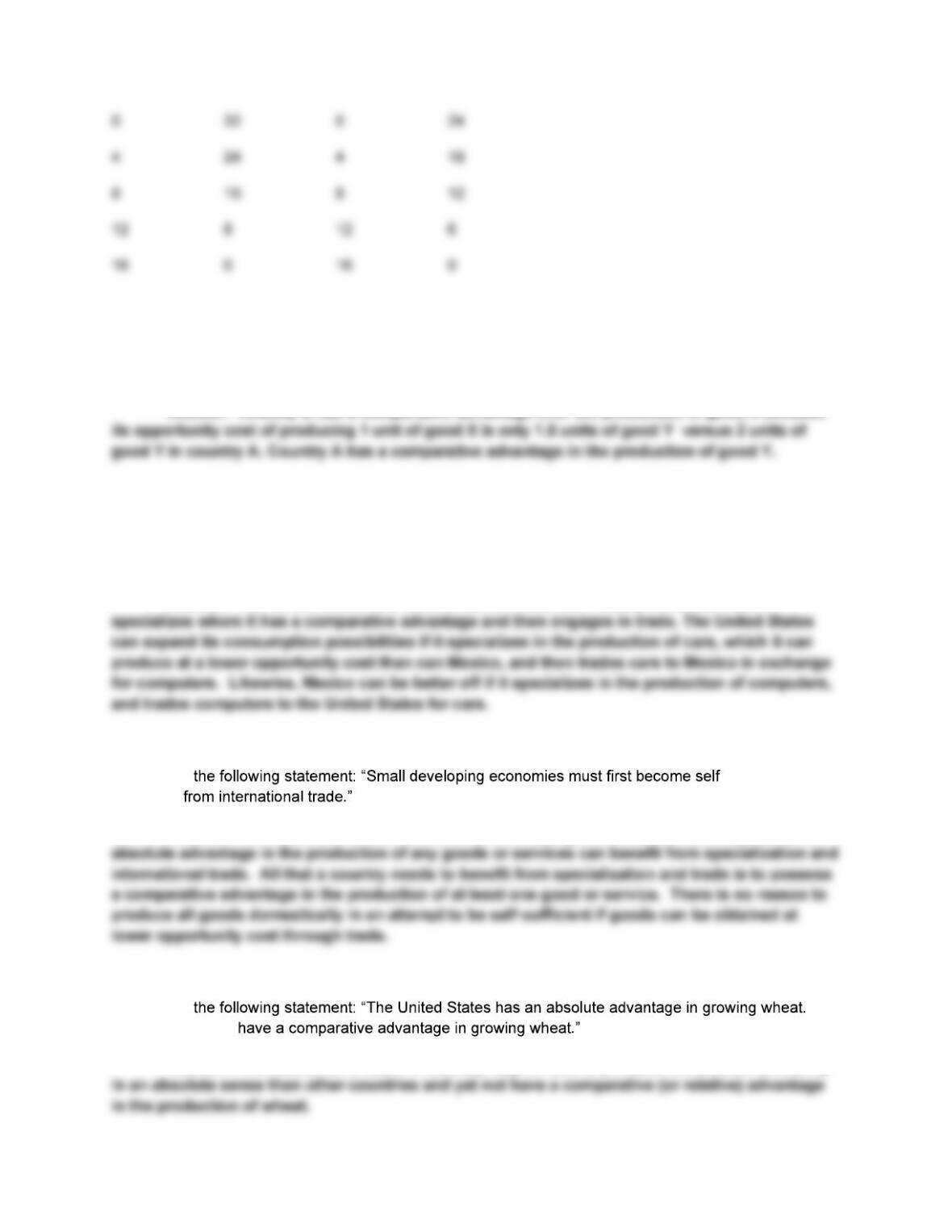
Which country has a comparative advantage at producing Good X? How can you tell?
Which country has a comparative advantage at producing Good Y?
Answer: Country B has a comparative advantage over the production of good X because
3. Suppose the United States can produce cars at an opportunity cost of two computers for each car it
produces. Suppose Mexico can produce cars at an opportunity cost of eight computers for each car it
produces. Indicate how both countries can gain from free trade.
Answer: The United States and Mexico can increase their total production if each
4. Evaluate -sufficient before
benefiting
Answer: The statement is false. Even small developing countries that do not possess an
5. Evaluate
Therefore, it must
Answer: The statement is false. A country may be able to produce wheat more efficiently
6. NAFTA (North American Free Trade Agreement) is an agreement among the United States, Canada,
and Mexico to reduce trade barriers and promote the free flow of goods and services across borders.
Many U.S. labor groups were opposed to NAFTA. Can you explain why? Can you predict how NAFTA
might alter the goods and services produced in the participating countries?
Answer: Many labor groups were opposed to NAFTA because the trade agreement will
gradually eliminate protectionist policies that protect jobs in certain sectors of the economy.
7. If country A is the lower opportunity cost producer of X and country B is the lowest opportunity cost
producer of Y, what happens to their absolute and comparative advantages if country A suddenly become
three times more productive at producing both X and Y than it was before?
Answer: If country A becomes three times more productive at producing both X and Y, it
8. Assume that Freeland could produce 8 units of X and no Y, 16 units of Y and no X, or any linear
combination in between, and Braveburg could produce 32 units of X and no Y, 48 units of Y and no X, or
any linear combination in between,
a. What is the opportunity cost of producing X in Freeland? In Braveburg?
producing X in Braveburg is 1.5 Y.
b. If Freeland and Braveburg specialize according to comparative advantage, which directions will goods
flow in trade?
c. If trade occurs, what will the terms of trade between X and Y be?
Answer: The terms of trade will have to be between 1.5 Y per X and 2 Y per X (the
opportunity costs of producing X in the two countries).
d. How large would transactions costs, transportation costs, or tariffs have to be to eliminate trade
between Freeland and Braveburg?
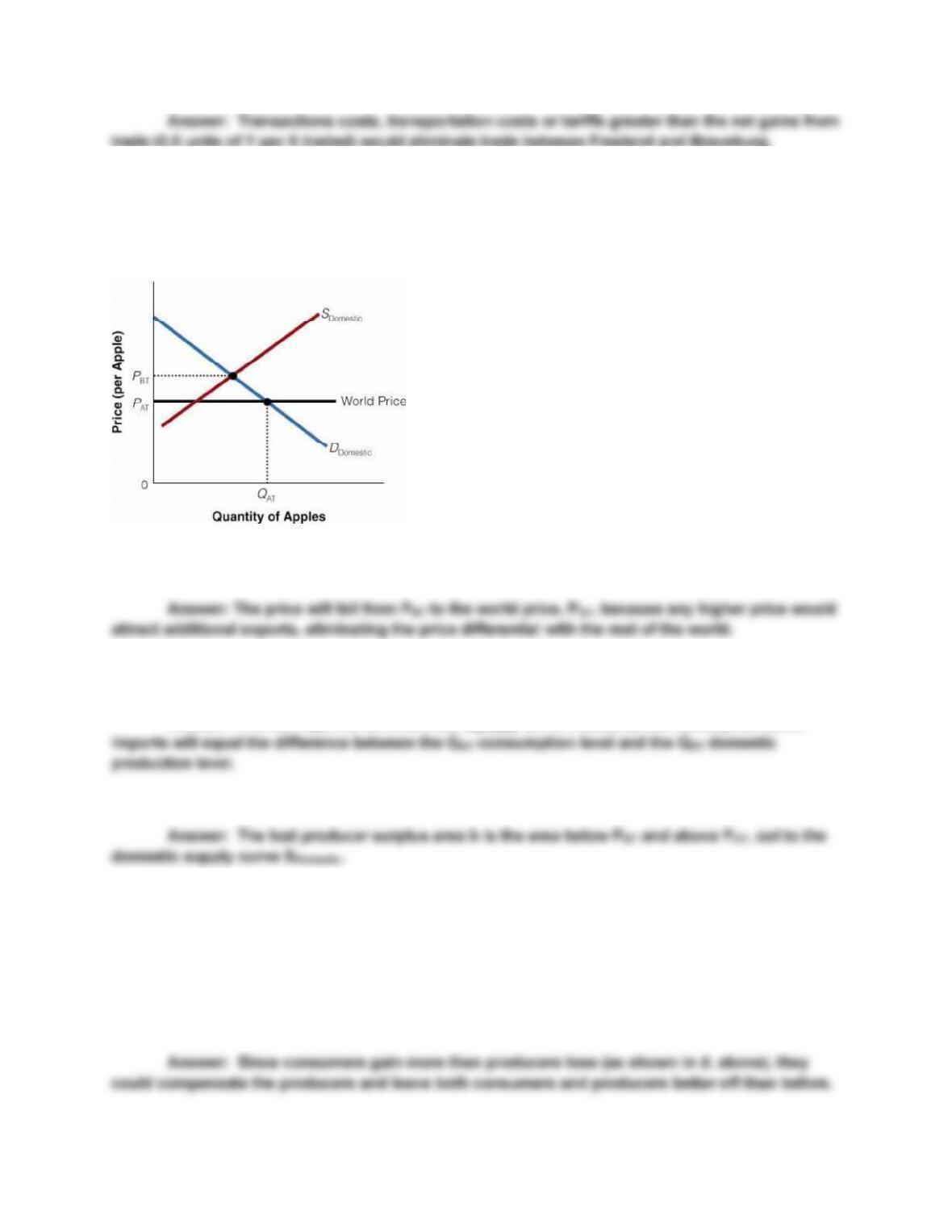
9. To protect its domestic apple industry, Botswana has for many years prevented international trade in
apples. The following graph represents the Botswana domestic market for apples. PBT is the current price,
and PAT is the world price.
a. If the government allows world trade in apples, what will happen to the price of apples in Botswana?
Why?
b. Indicate the amount of apples domestic producers produce after there is trade in apples as QDT. How
many apples are imported?
Answer: The new QDT will be where the SDomestic curve intersects the world price curve.
c. Trade in imports causes producer surplus to be reduced by the amount b. Show b on the graph.
d. The gains from trade equal the amount increased consumer surplus exceeds the loss in producer
surplus. Show this gain, g, on the graph.
Answer: The net gains from trade are measured by the area between SDomestic and DDomestic
from the old PBT and the world price PAT.
e. Explain why consumers in Botswana would still be better off if they were required to compensate
producers for their lost producer surplus.
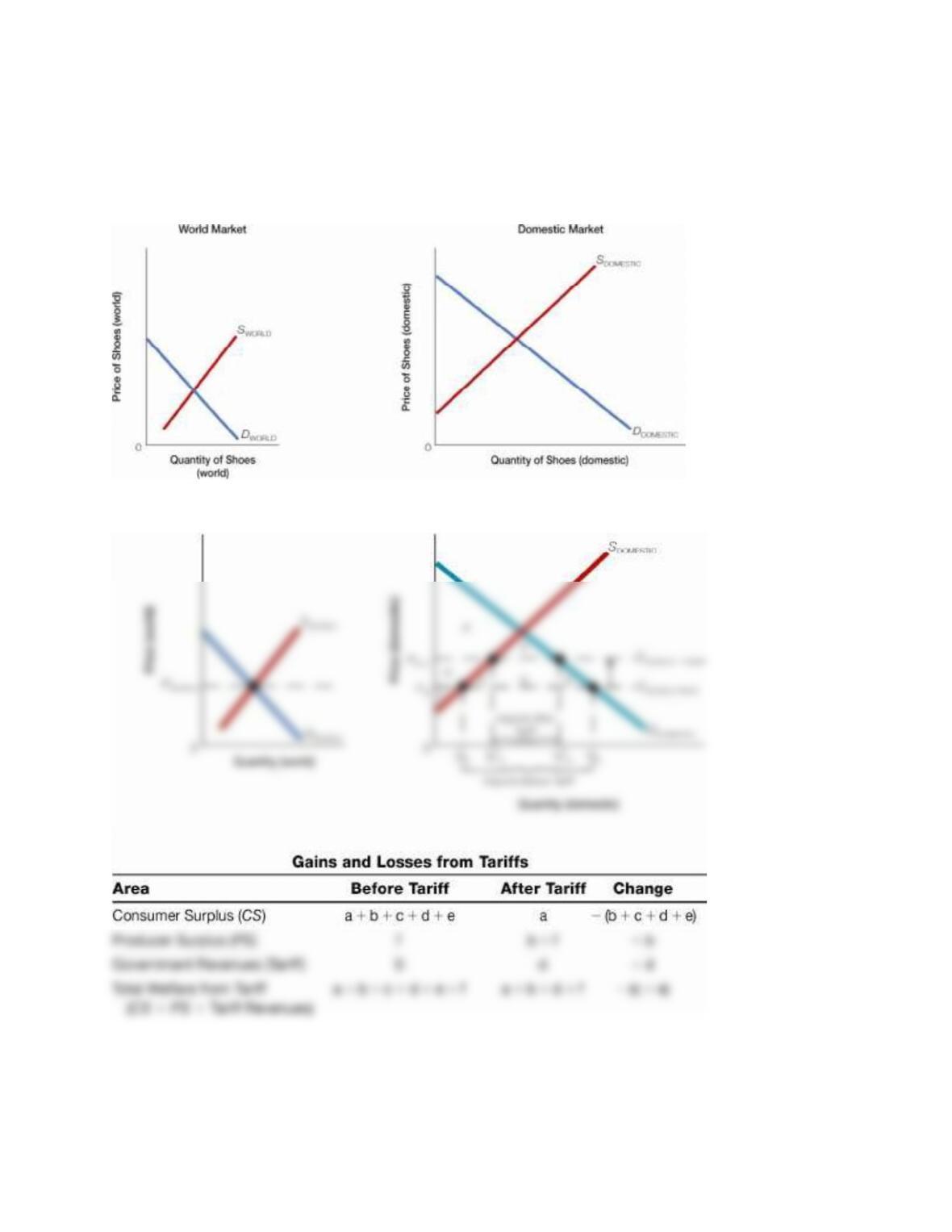
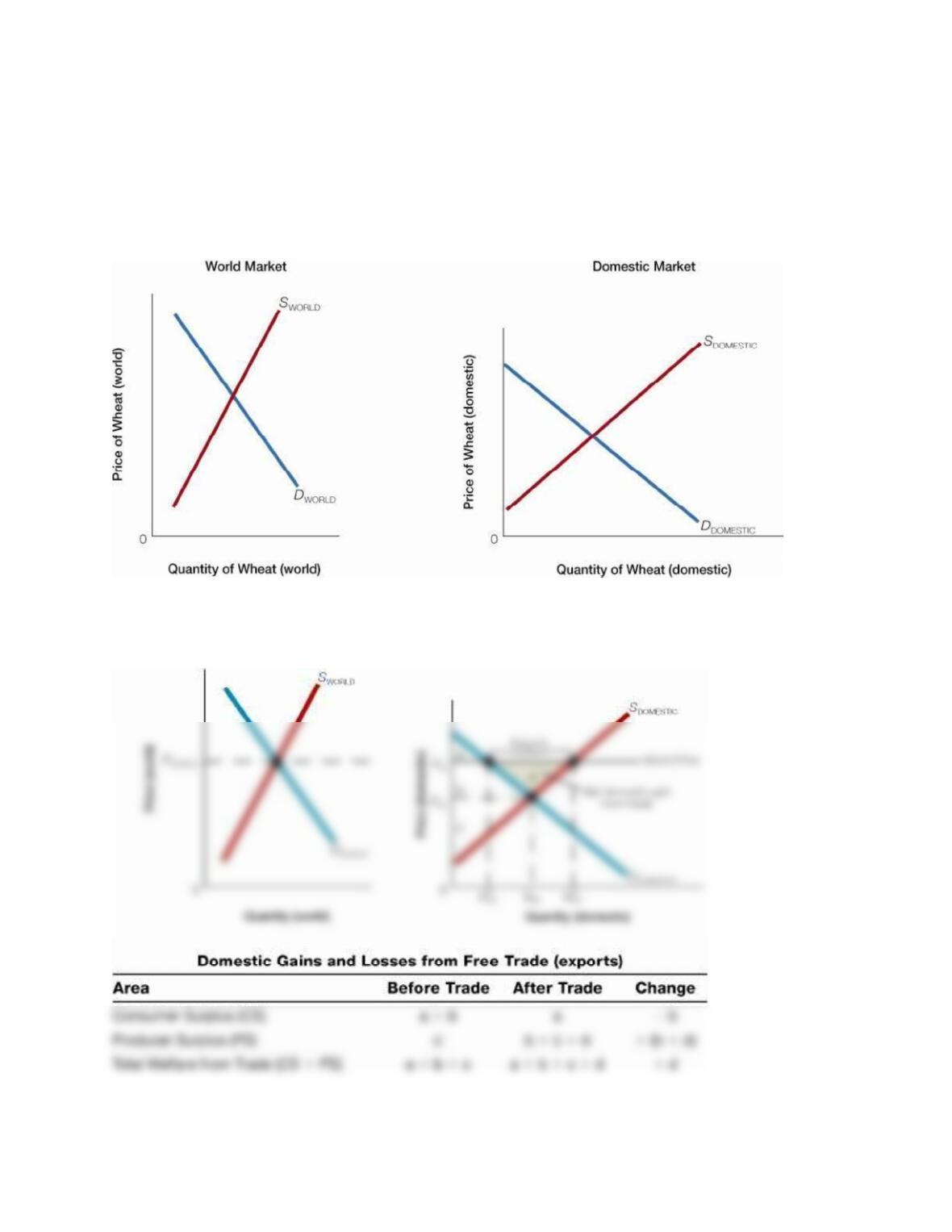
10. Use the accompanying graphs to illustrate the effects of imposing a tariff on imports on the domestic
price, the domestic quantity purchased, the domestic quantity produced, the level of imports, consumer
surplus, producer surplus, the tariff revenue generated, and the total welfare effect from the tariff.
Answer:
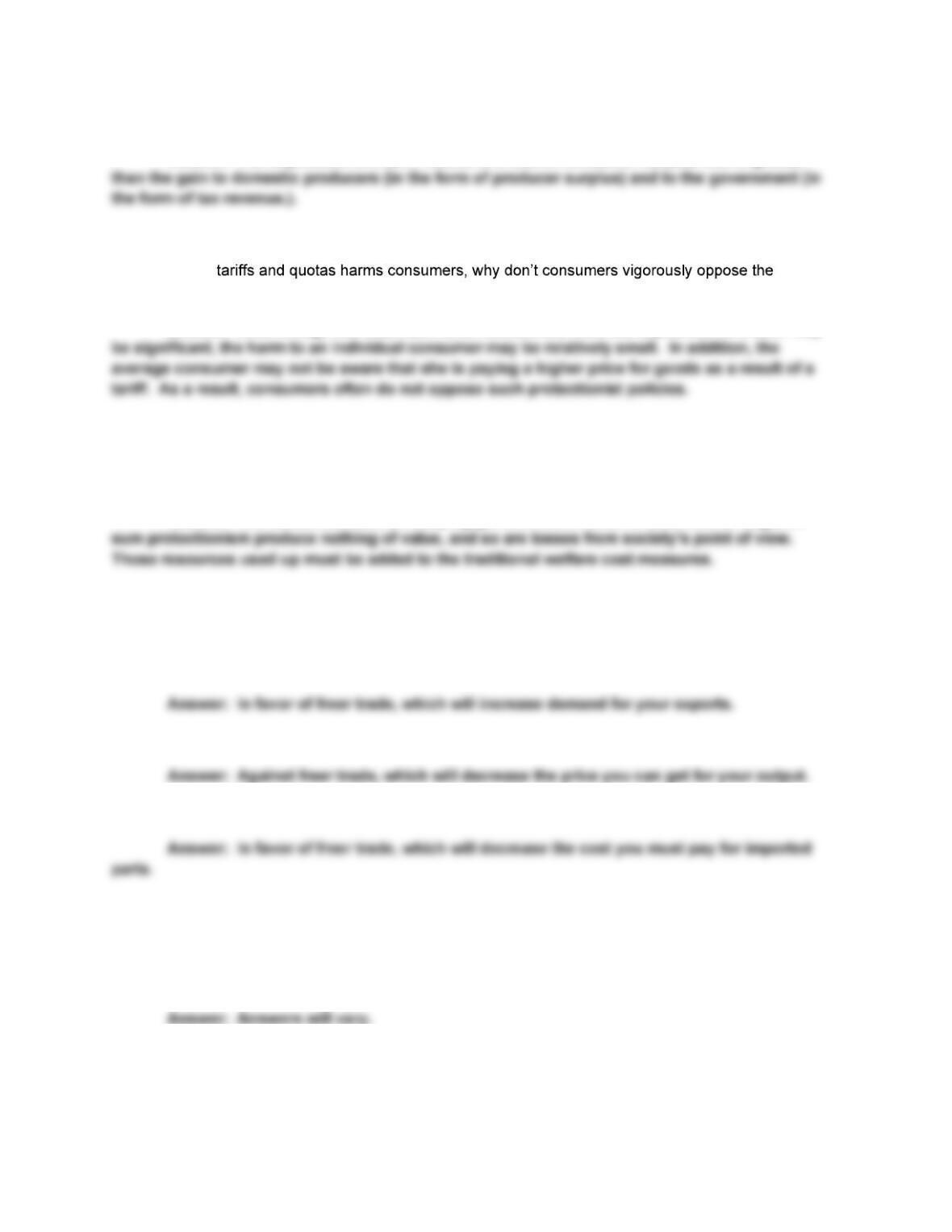
11. Using the accompanying graphs to illustrate the effects of opening up the domestic market to
international trade on the domestic price, the domestic quantity purchased, the domestic quantity
produced, imports or exports, consumer surplus, producer surplus, and the total welfare gain from trade.
Answer:
12. Explain why imposing a tariff causes a net welfare loss to the domestic economy.
Answer: The imposition of a tariff results in a loss of consumer surplus that is greater
13. If imposing
implementation of these protectionist policies?
Answer: Even though the total harm to all consumers from the imposition of a tariff may
14. Why does rent seeking imply that the traditional measure of deadweight loss from tariffs and quotas
will likely understate the true deadweight loss to society?
Answer: The resources used in lobbying government in favor of zero-sum or negative-
15. Would you be in favor of freer trade or against it in the following circumstances?
a. The move to freer trade is in another country and you are an exporter to that country.
b. The move to freer trade is in your country and you compete with imports from other countries.
c. The move to freer trade is in your country and you import parts for products you sell domestically.
16. Go through your local newspaper and locate four news items regarding the global economy. Identify
the significance of each of these news items to the U.S. economy and whether they are likely to affect
international trade.