Chapter 24:
1. Why are federal government actions that increase deficits considered expansionary fiscal policy and
those that decrease deficits considered contractionary fiscal policy?
Answer: Government deficits are increased whenever government purchases rise or
taxes fall, other things equal. However, either higher government purchases or lower taxes
2. Are increases in both government purchases and net taxes at the same time expansionary or
contractionary? Would both changes together increase or decrease the federal government deficit?
Answer: An increase in government purchases would be expansionary, while an increase
3. Answer the following questions:
a. If the current budget shows a surplus, what would an increase in government purchases do to it?
b. What would that increase in government purchases do to aggregate demand?
c. When would an increase in government purchases be an appropriate countercyclical fiscal policy?
4. Answer the following questions:
a. If the current budget shows a deficit, what would an increase in taxes do to it?
b. What would that increase in taxes do to aggregate demand?
c. When would an increase in taxes be an appropriate contractionary fiscal policy?
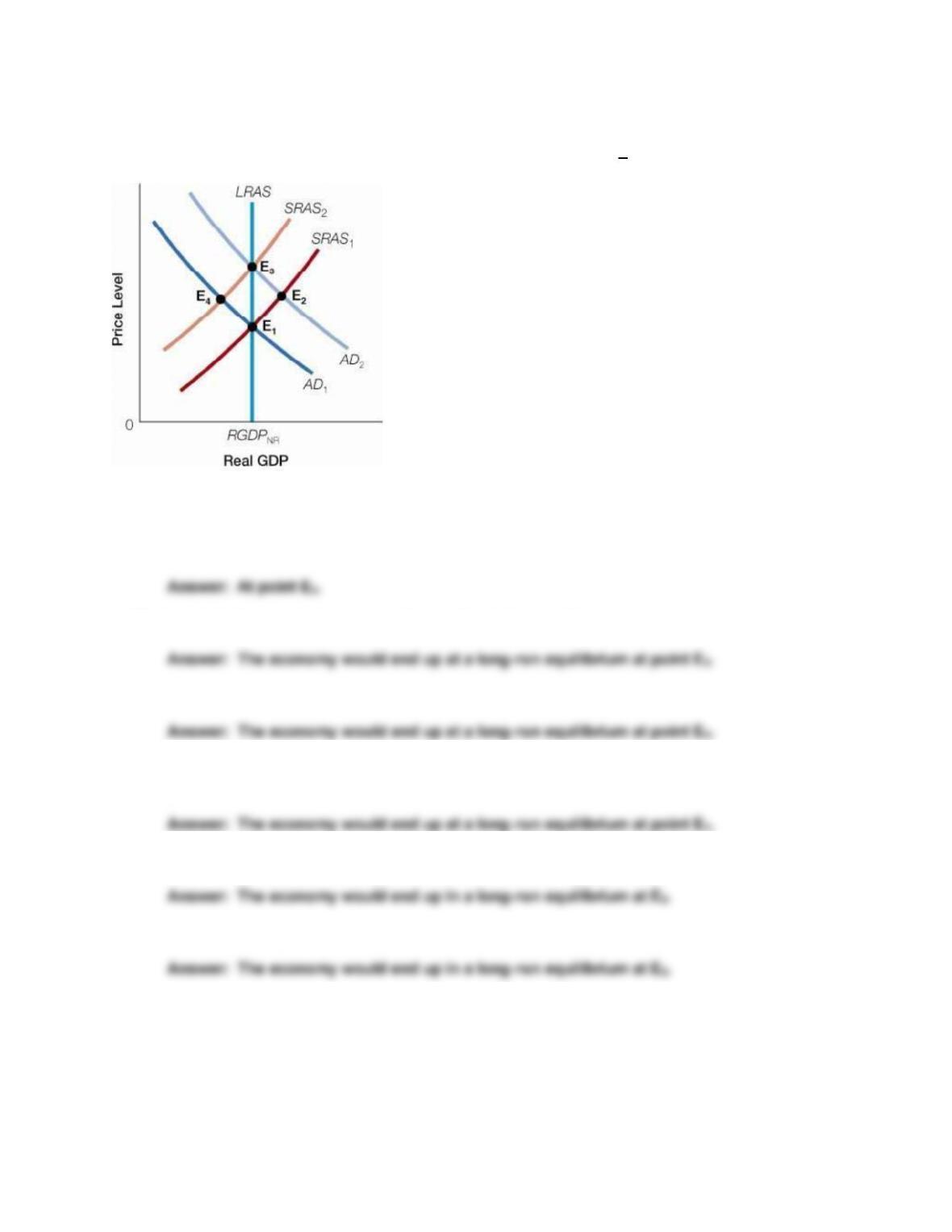
5. Use the accompanying diagram (from page 789) to answer questions a f.
a. At what short-run equilibrium point might expansionary fiscal policy make sense to help stabilize the
economy?
b. What would be the result of appropriate fiscal policy in that case?
c. What would be the long-run result if no fiscal policy action were taken in that case?
d. At what short-run equilibrium point might contractionary fiscal policy make sense to help stabilize the
economy?
e. What would be the result of appropriate fiscal policy in that case?
f. What would be the long-run result if no fiscal policy action were taken in that case?
6. What is a recessionary gap? What would be the appropriate fiscal policy to combat or offset one?
What is an inflationary gap? What would be the appropriate fiscal policy to combat or offset one?
Answer: A recessionary gap exists when the short run AS/AD equilibrium is at a level of
real output less than its long run equilibrium level. An expansionary fiscal policy, increasing
7. What would the multiplier be if the marginal propensity to consume was
8. If government purchases increased by $20 billion, other things being equal, what would be the resulting
change in aggregate demand, and how much of that change would be a change in consumption, if the
MPC were
Change in Change in
Aggregate Demand Consumption
a. 1/3? $30 billion $10 billion
9. Could the multiplier be written as 1 divided by the marginal propensity to save (MPS)?
10. Why does it take a larger reduction in taxes to create the same increase in AD as a given increase in
government purchases?
Answer: It is the initial effect in the goods and services market that triggers the multiplier
11. Explain why an equal dollar increase in both government purchases and net taxes would increase
aggregate demand.
Answer: Since the multiplier for a dollar change in government purchases is greater than
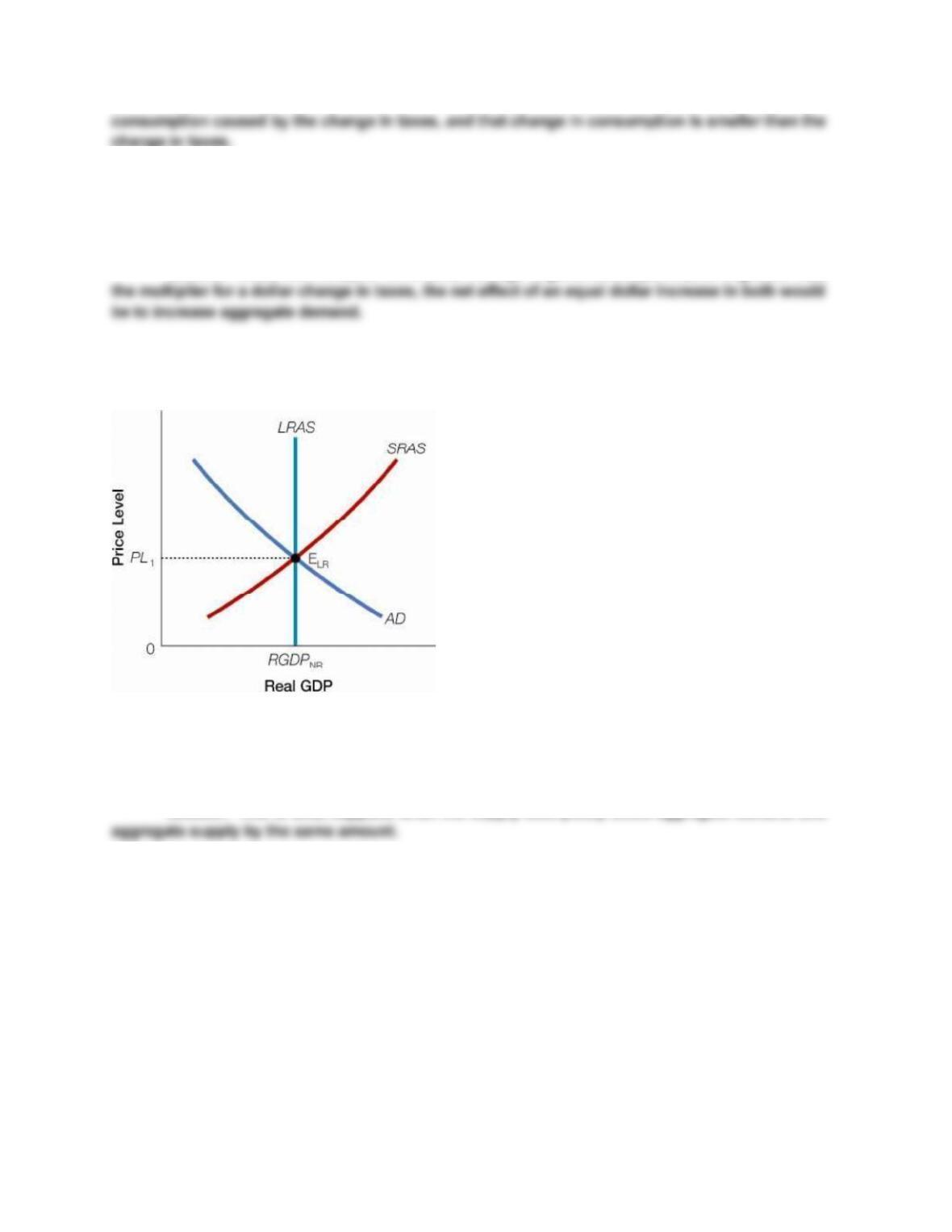
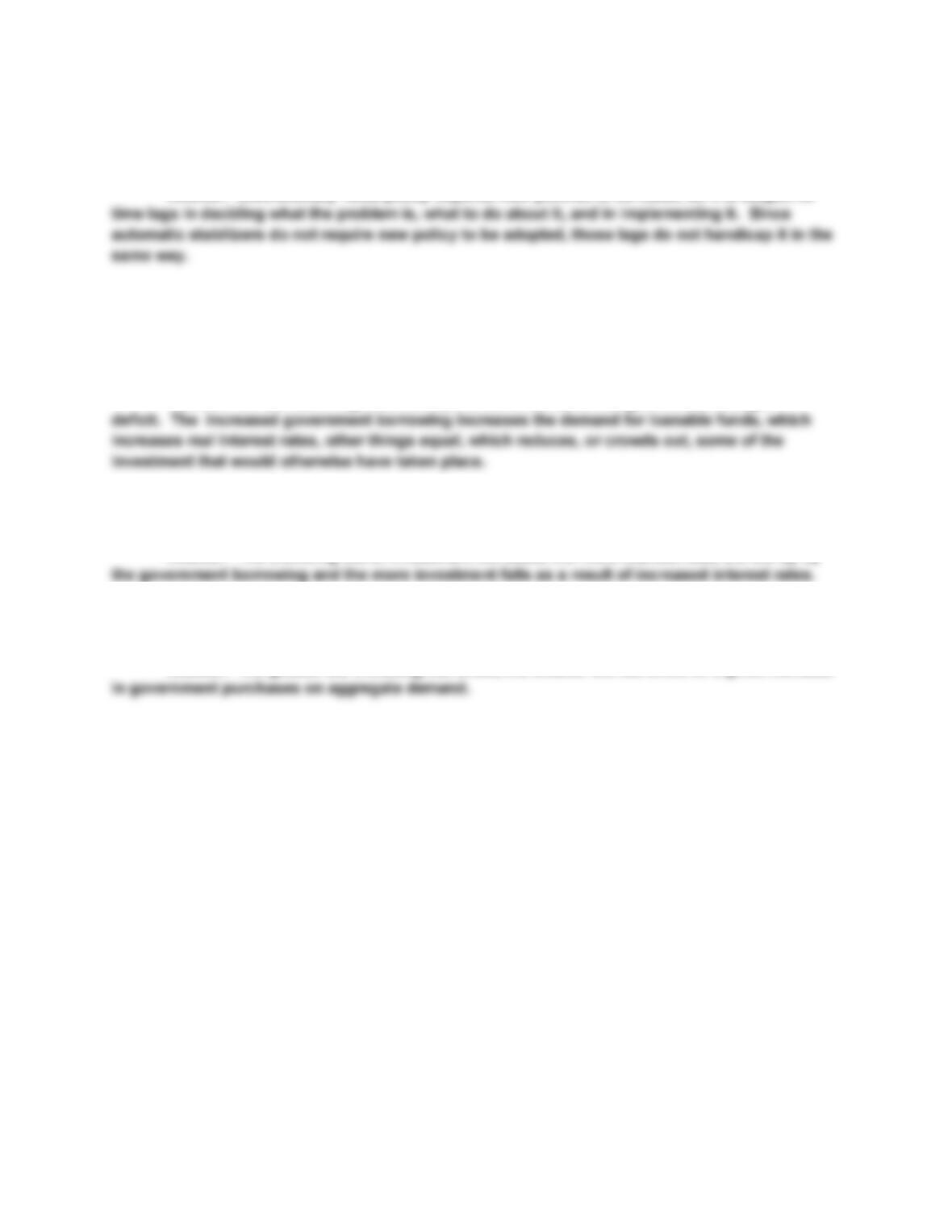
12. Use the accompanying diagram (from page 790) to answer questions a and b.
a. Starting from the initial equilibrium in the diagram, illustrate the case of a supply-side fiscal policy that
left the price level unchanged in both the short run and long run.
Answer: This is what happens when the supply–side policy shifts aggregate demand and
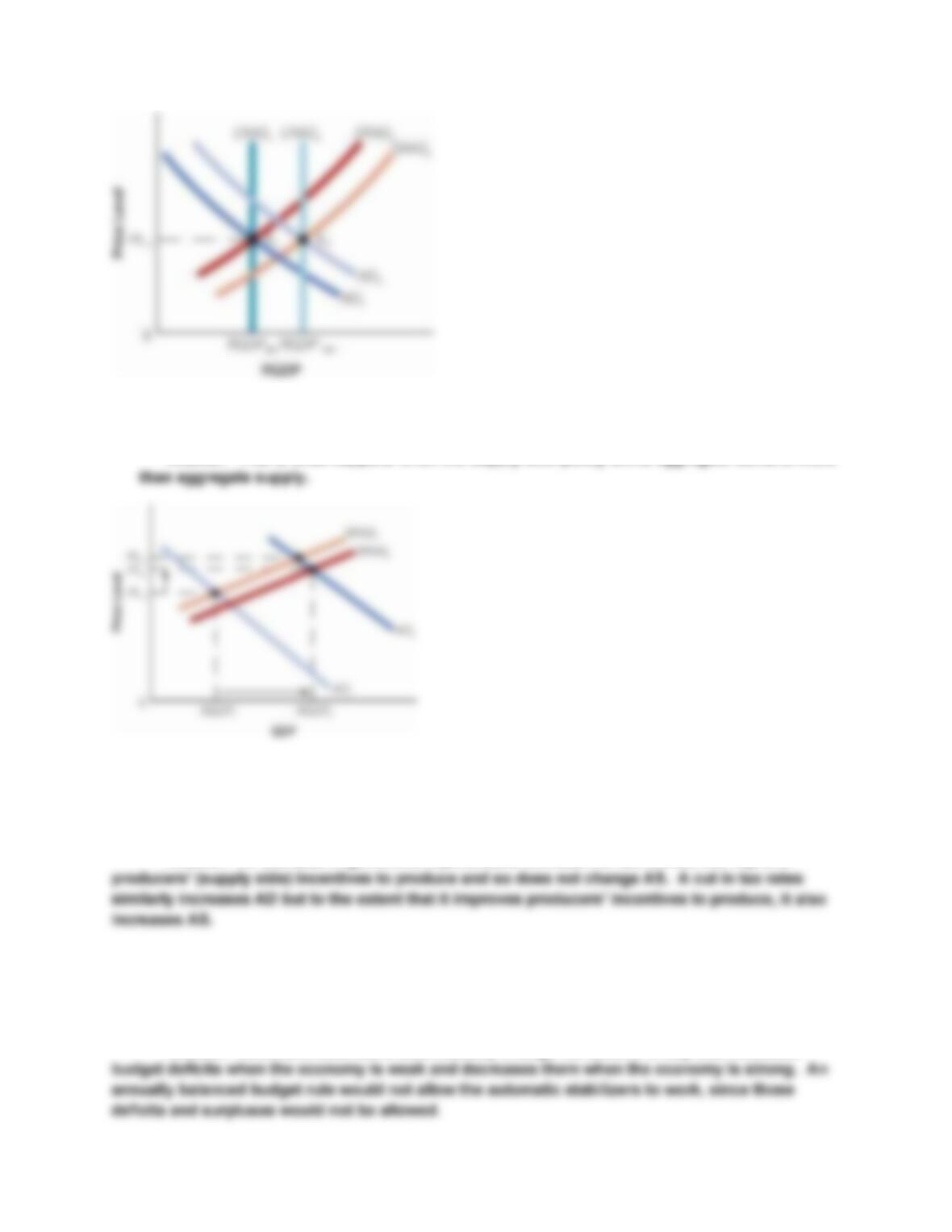
b. Compared to your answer in a, when would a supply-side fiscal policy result in an increase in the
price level?
Answer: This is what happens when the supply-side policy shifts aggregate demand more
13. Why can a decrease in tax rates increase AS as well as AD, whereas an increase in government
purchases will increase AD but not AS?
Answer: An increase in government purchases increase AD but it does not improve
14. How do automatic stabilizers affect budget deficits and surpluses? How would automatic stabilizers
be affected by an annually balanced budget rule?
Answer: Automatic stabilizers automatically change net taxes in a way that increases
15. Why do automatic stabilizers minimize the lag problems with fiscal policy?
Answer: Discretionary fiscal policy requires new policies to be made, so it is subject to
16. Answer the following questions:
a. Describe the crowding-out effect of an increase in government purchases.
Answer: An increase in government purchases increases the government budget
b. Why does the magnitude of the crowding-out effect depend on how responsive interest rates are to
increased government borrowing and how responsive investment is to changes in interest rates?
Answer: The crowding out of investment increases the more interest rates are bid up by
c. How would the size of the crowding-out effect affect the size of the change in aggregate demand that
would result from a given increase in government purchases?
Answer: The greater the crowding out effect, the smaller the net effect of a given increase