Chapter 22:
1. Describe what the effect on aggregate demand would be, other things being equal, if
2. Fill in the blanks in the following explanations:
a. The real wealth effect is described by the following: An increase in the price level leads to a(n)
b. The interest rate effect is described by the following: A decrease in the price level leads to a(n)
c. The open economy effect is described by the following: An increase in the price level leads to a(n)
3. How will each of the following changes alter aggregate supply?
Short-Run Long-Run
Change Aggregate Supply Aggregate Supply
An increase in aggregate demand no change no change
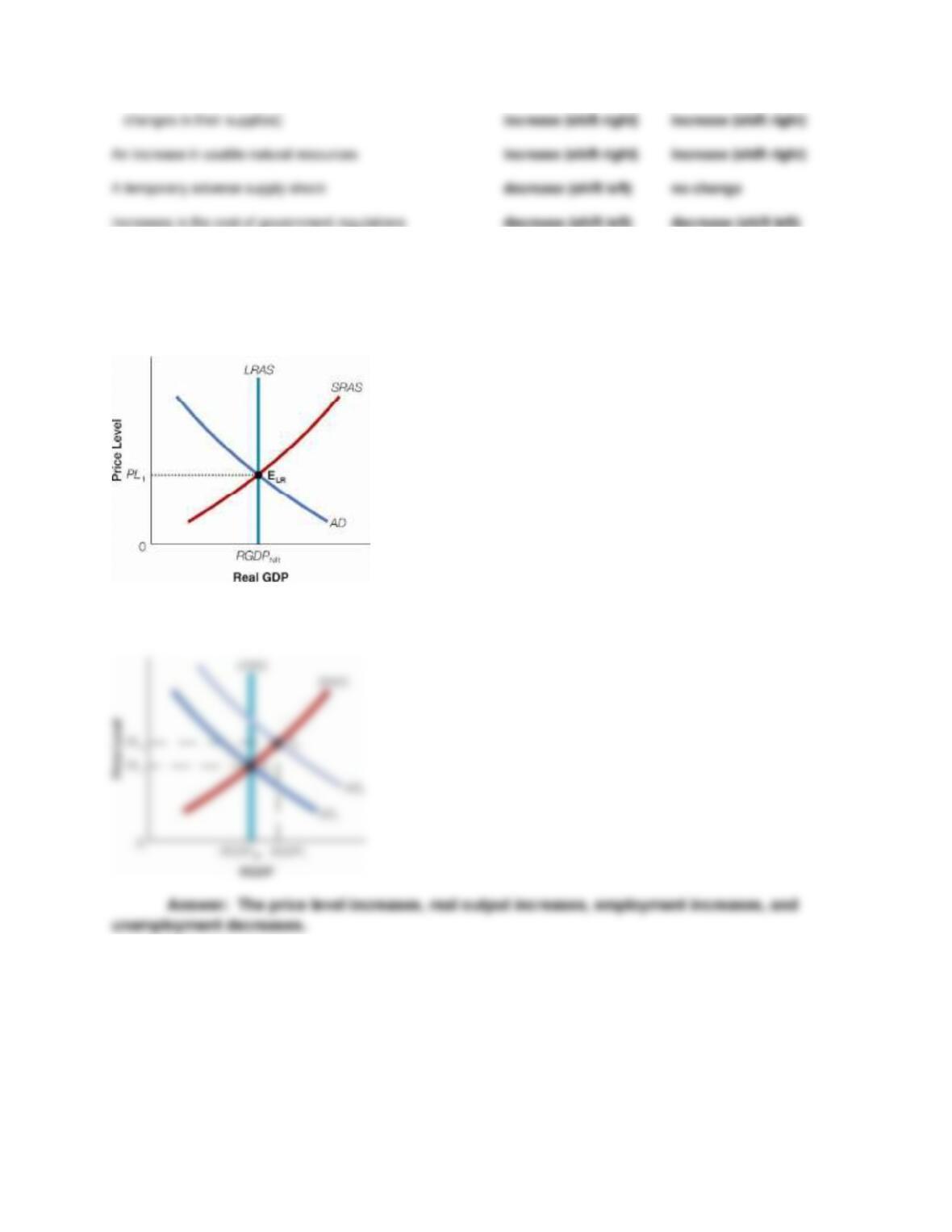
4. Use the accompanying diagram (from page 715) to answer questions a and b.
a. On the exhibit provided, illustrate the short-run effects of an increase in aggregate demand. What
happens to the price level, real output, employment, and unemployment?
b. On the exhibit provided, illustrate the long-run effects of an increase in aggregate demand. What
happens to the price level, real output, employment, and unemployment?
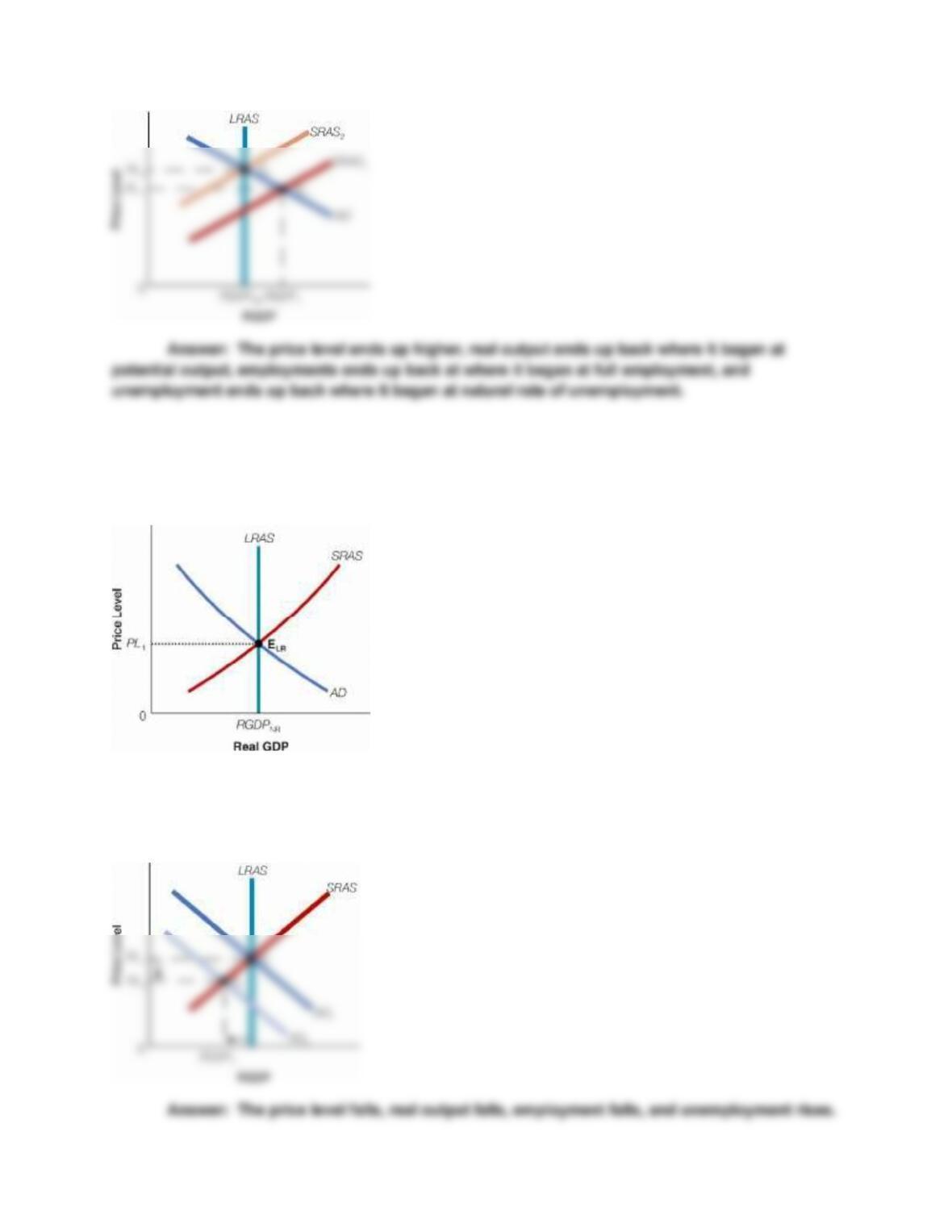
5. Use the accompanying diagram (from page 716) to answer questions a and b.
a. On the exhibit provided, illustrate the short-run effects of a decrease in aggregate demand. What
happens to the price level, real output, employment, and unemployment?
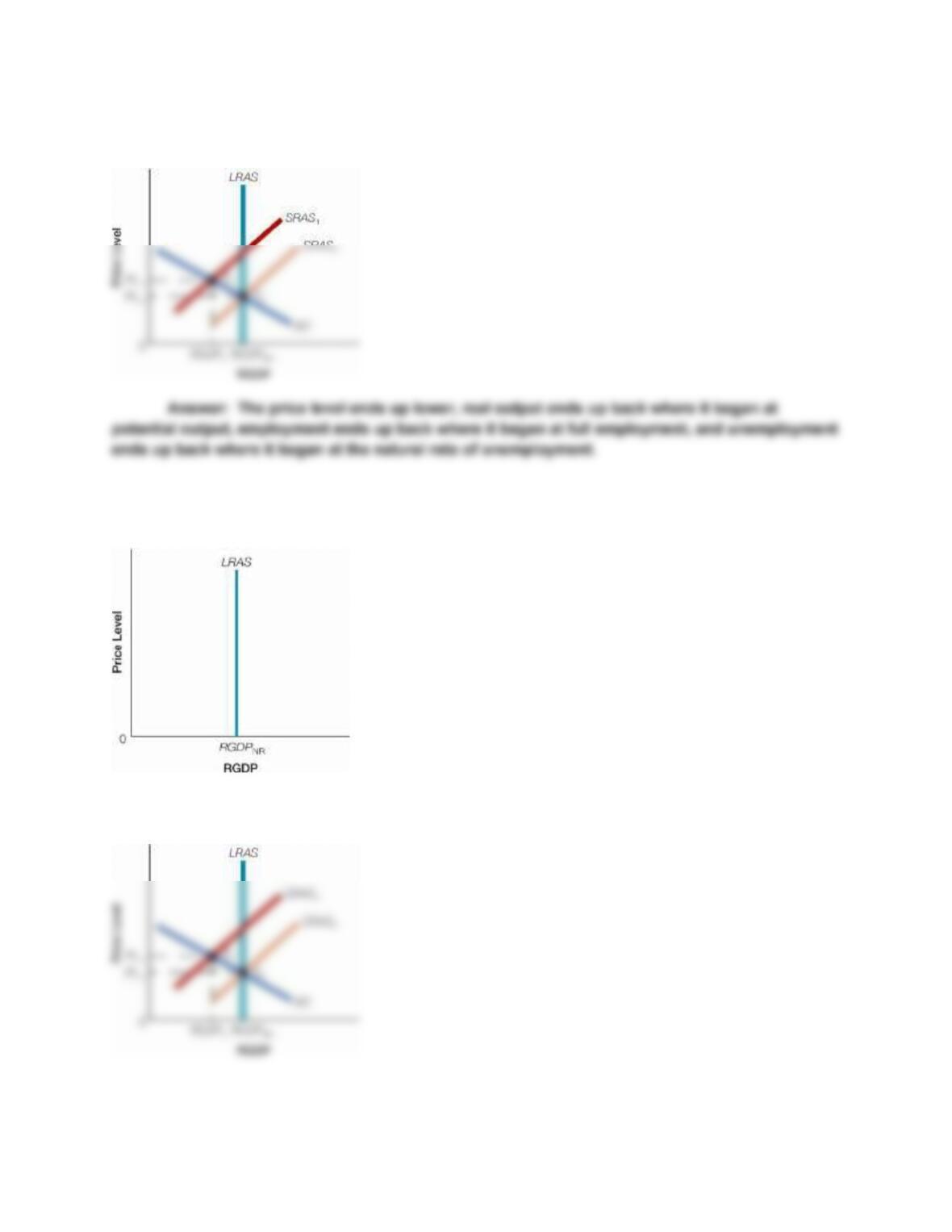
b. On the exhibit provided, illustrate the long-run effects of a decrease in aggregate demand. What
happens to the price level, real output, employment, and unemployment?
6. Use the accompanying diagram (from page 716) to answer questions a and b.
a. Illustrate a recessionary gap on the diagram provided.
Answer:
b. Using the results in a, illustrate and explain the eventual long-run equilibrium in this case.
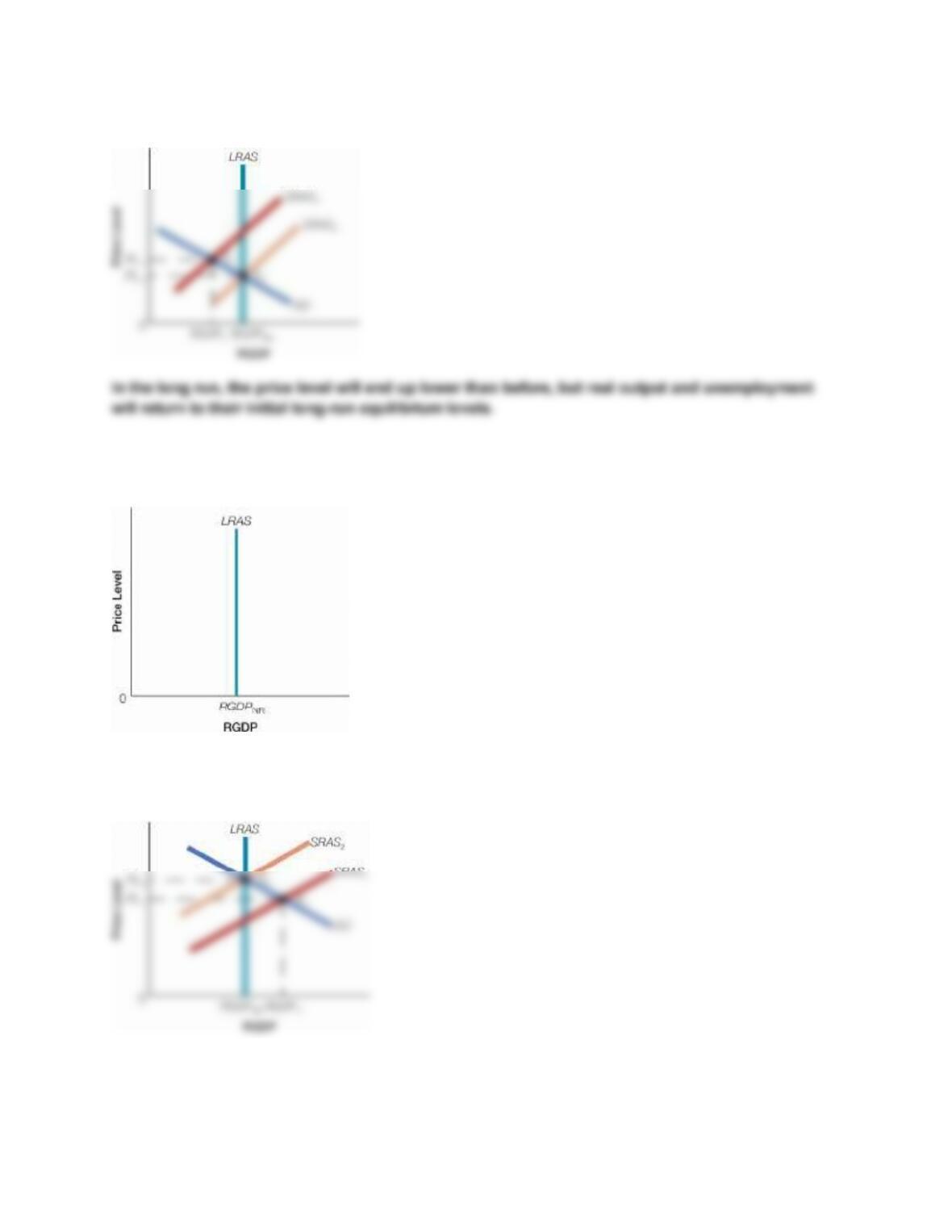
Answer:
7. Use the accompanying diagram (from page 716) to answer questions a and b.
a. Illustrate an inflationary gap on the diagram provided.
Answer:
b. Using the results in a, illustrate and explain the eventual long-run equilibrium in this case.
Answer:
8. If retailers such as Wal-Mart and Target find that inventories are rapidly being depleted, would it have
been caused by a rightward or leftward change in the aggregate demand curve? What are the likely
consequences for output and investment?
Answer: A rapid depletion of inventories is consistent with a rightward shift of the
9.
and reduces
Answer: The statement is correct. A higher price level reduces the quantity of goods and
10. How does a higher price level in the U.S. economy affect purchases of imported goods? Explain.
Answer: A higher price level in the U.S. makes it more expensive for domestic consumers
11. Explain how a recession in Latin America may affect aggregate demand in the U.S. economy.
Answer: A recession in Latin America will reduce the incomes of Latin Americans. As a
12. You operate a business in which you manufacture furniture. You are able to increase your furniture
prices by 5 percent this quarter. You assume that the demand for your furniture has increased and begin
increasing furniture production. Only later do you realize that prices in the macroeconomy are rising
generally at a rate of 5 percent per quarter. This is an example of what effect? What does it imply about
the slope of the short-run aggregate supply curve?
Answer: This is an example of the misperception effect. The misperception effect implies
an upward sloping supply curve.
13. Distinguish cost-push from demand-pull inflation. Provide an example of an event or shock to the
economy that would cause each.
Answer: Cost-push inflation occurs when the short-run aggregate supply curve shifts to
14. Is it ever possible for an economy to operate above the full-employment level in the short term?
Explain.
Answer: Yes, an economy may operate above full employment in the short–run by using
15. Evaluate the following statement: the Keynesian assumption of wage and price rigidity best
corresponds to the steepest portion of the aggregate supply curve where factories are operating well
below capacity.
Answer: It is correct that the Keynesian assumption of wage and price rigidity
16. Why do classical economists and Keynesian economists agree on the long-run effects of a fall in
aggregate demand, but not agree on the short-run effects?
Answer: In the short run, Keynesian economists emphasize wage and price rigidity, unlike

17. How does the slope of the Keynesian short-run aggregate supply curve depend on the degree of
excess capacity in the economy?
Answer: The Keynesian short-run aggregate supply curve gets flatter the larger the
18. Why does the effect of a given increase in aggregate demand have a larger effect on real output in
the short run, the more excess capacity exists in the economy?
Answer: The more excess capacity there is in the economy, the flatter the short-run