Basic Econometrics, Gujarati and Porter
203
CHAPTER 18:
SIMULTANEOUS-EQUATI0N MODELS
18.1 The number of dentists demanded would be a function of the price
of dental care, the income of the patient population, the availability
of dental insurance, the level of education of the dental population,
18.2 Brunner and Meltzer used variables such as interest rate, real public
wealth, ratio of current to permanent income, etc. Tiegen used
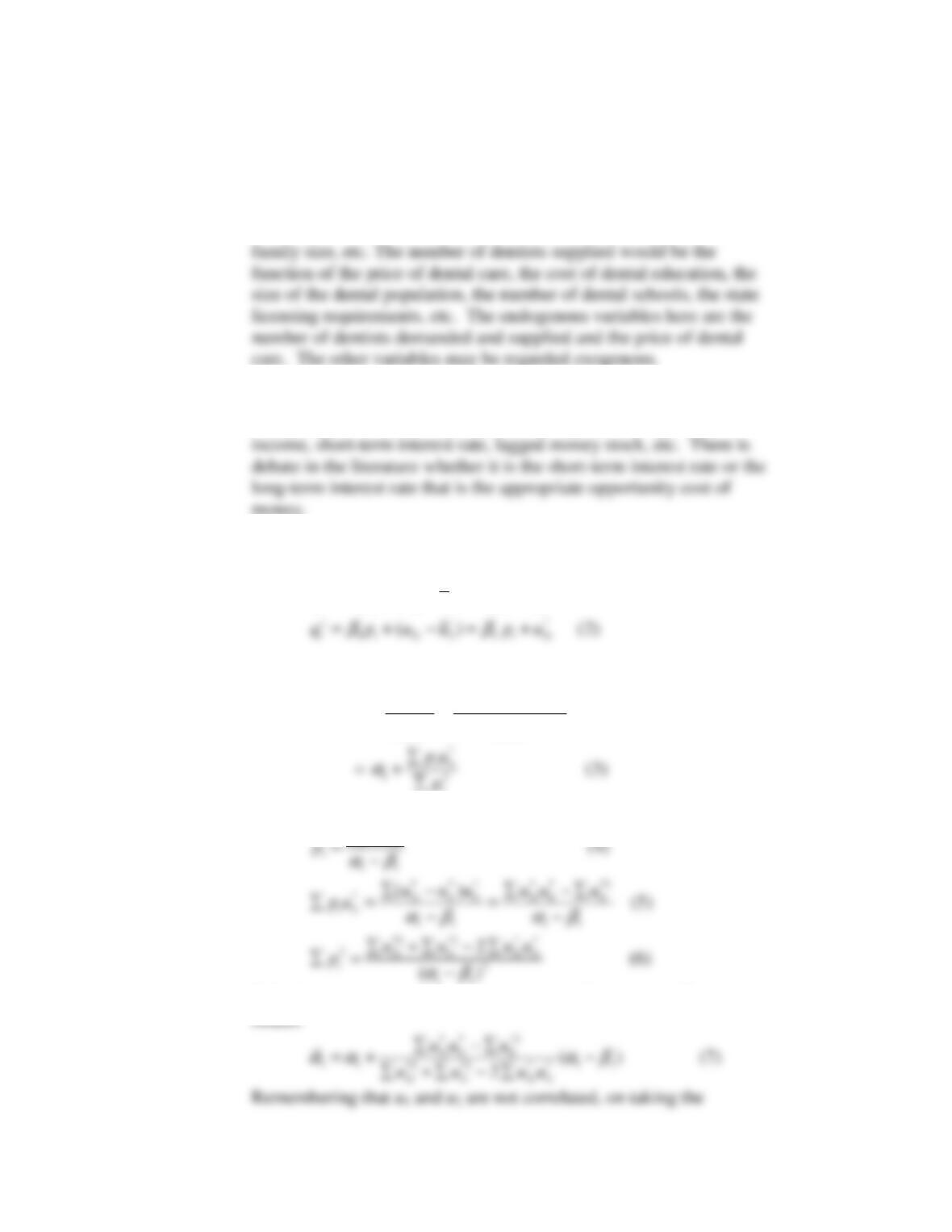
18.3 In deviation form (deviation from the mean values) the demand and
supply functions can be expressed as:
*
1 1 1 1 1
( ) (1)
d
t t t t t
q p u u p u
α α
= + − = +
From (1), we obtain:
1
ˆ
α
=
*
1 1
2 2
[( ]
t t t t
t t
q p p u p
p p
α
∑ ∑ +
=
∑ ∑
t
In equilibrium, (1) = (2), hence we obtain, after simplification,
* *
2 1
t t
u u
−
Substituting the preceding expressions into (3), and simplifying, we
Basic Econometrics, Gujarati and Porter
204
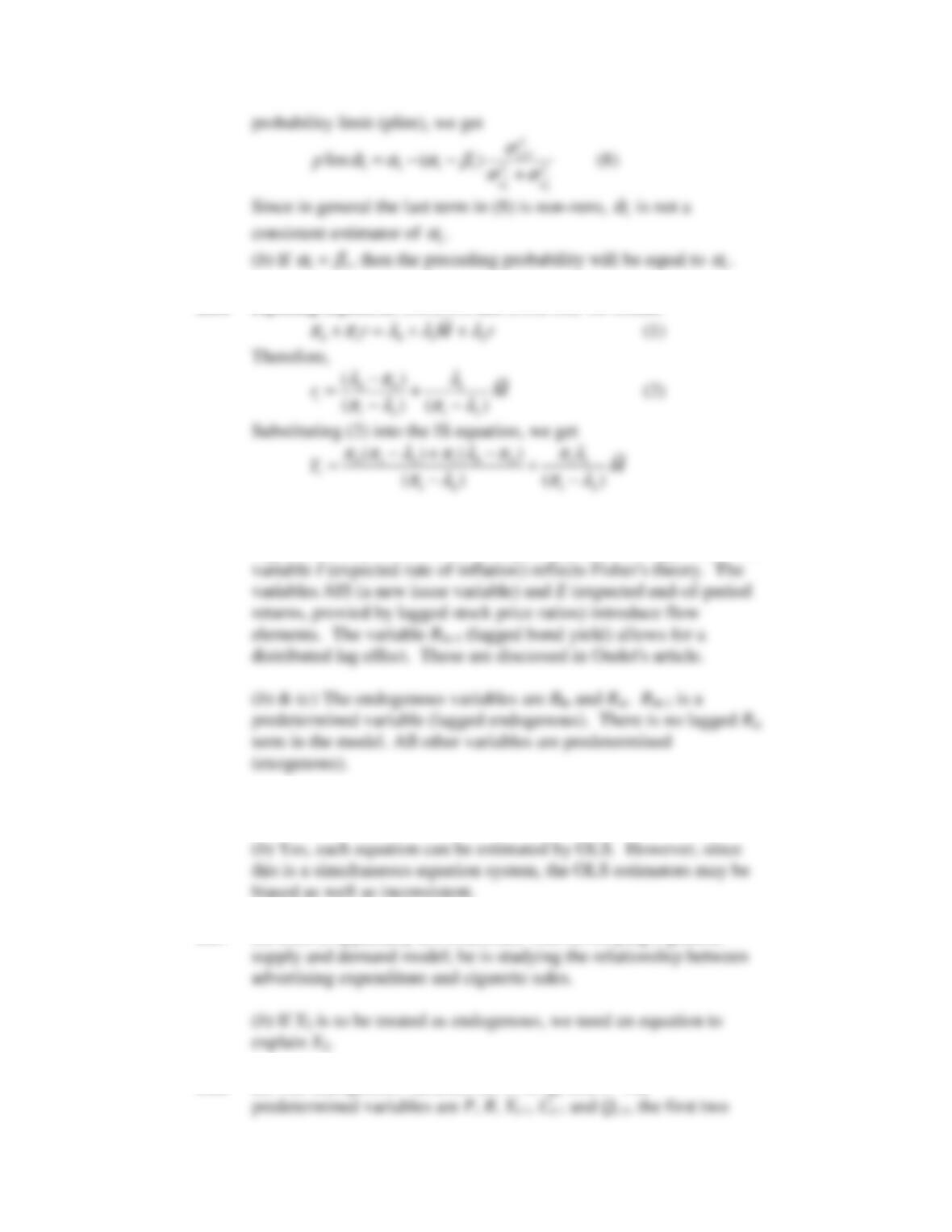
18.4 Equating Equations (18.2.13) and (18.2.18), we obtain:
18.5
(a) The variables Y (real per capita income) and L (real per
capita monetary base) reflect the liquidity preference approach. The
18.6
(a) Each Y variable is endogenous. Each X variable is exogenous.
18.7
(a) Bass is apparently not concerned with developing a general
18.8
(a) The endogenous variables are Y, C, Q, and I. The
205
18.9
(a) There is no simultaneous equation system here. None of the
Empirical Exercises
18.10
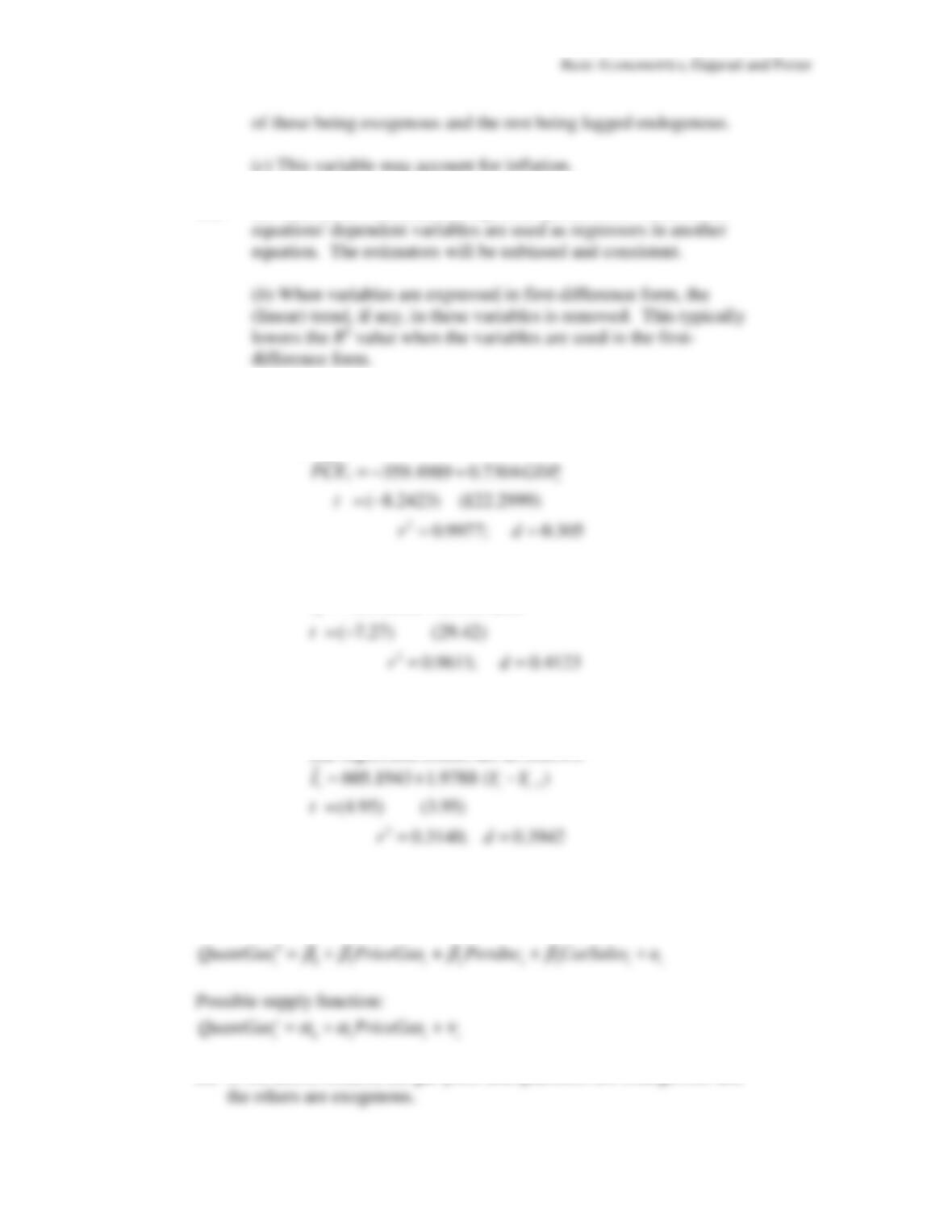
The regression results are as follows:
18.11
ˆ
351.8932 0.1951
I GDP
= − +
18.12
The regression results are as follows:
18.13
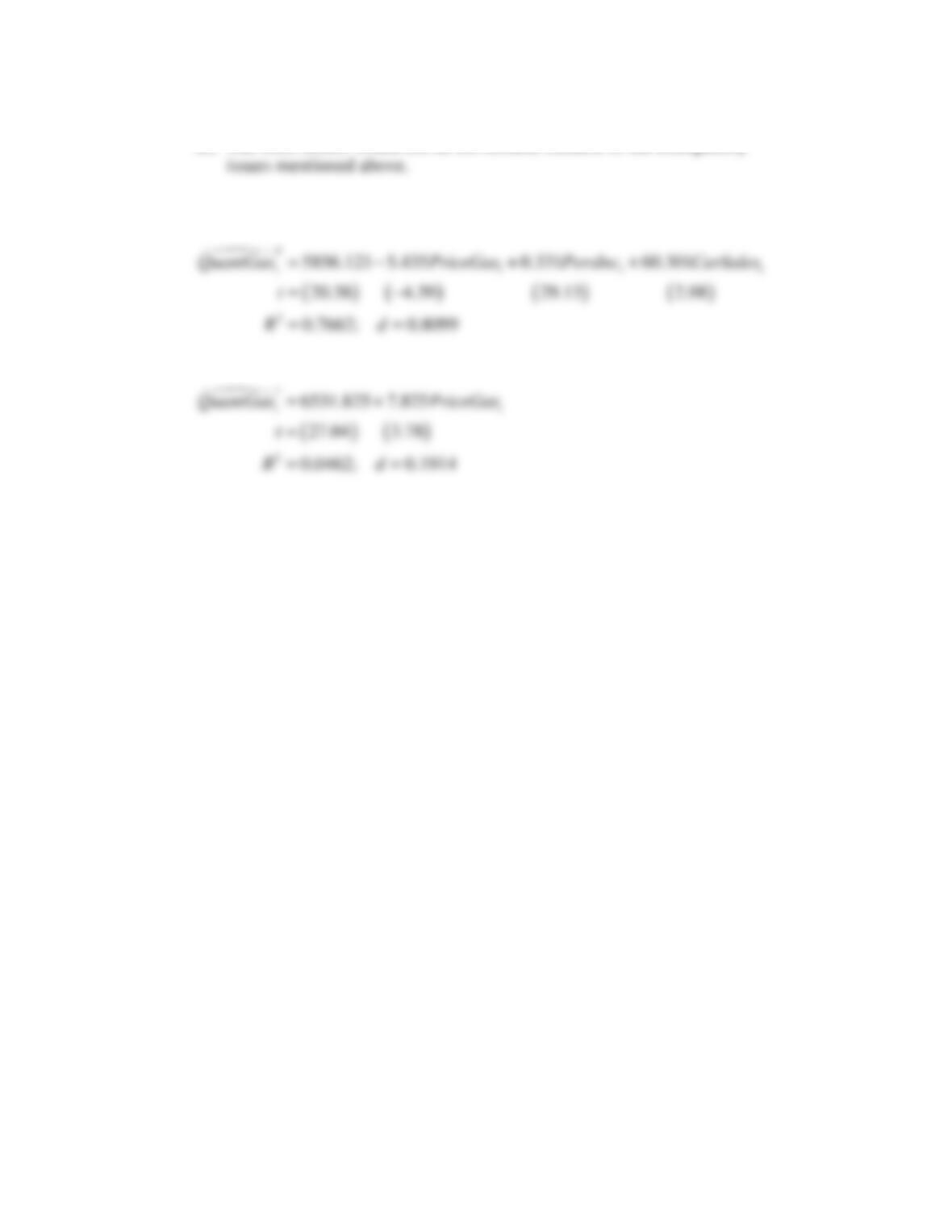
(a) The models are left to the reader, but one possible demand
function could be:
(b)
In the above models, the gas price and quantities are endogenous and
Basic Econometrics, Gujarati and Porter
206
(c)
The OLS results would not be too reliable because of the endogeneity
(d)
The OLS results are:
18.14
This model is left to the reader to develop.