CHAPTER 17
INTERNATIONAL TRADE
SOLUTIONS TO END OF CHAPTER PROBLEMS
1. Just as individuals benefit from specialization and exchange, so do states and, indeed,
2. The United States has an absolute advantage because a single worker can produce more of
both goods than can a single worker in Fredonia. Fredonia has a comparative advantage in
3. As the “price” of clothing increases from 1 unit of food to 2 units of food, the U.S.
4. One determinant of specialization is a country’s resource endowments. Countries with a
relative abundance of skilled labor and sophisticated capital should specialize in high–
technology manufactured goods. Those with a relative abundance of unskilled or semiskilled
5. An effective import quota holds imports below the level that would occur with free trade. In
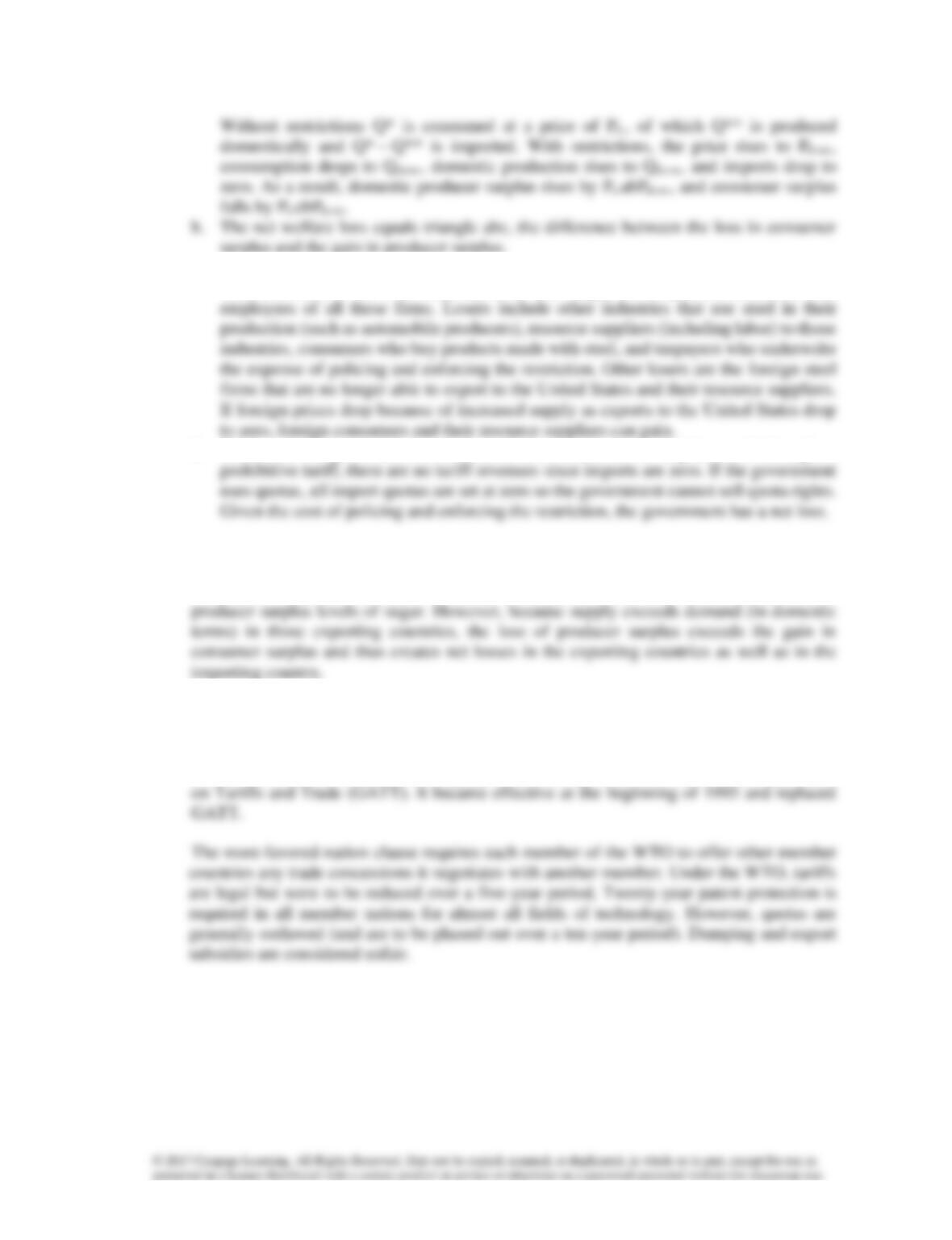
the following graph S + q represents domestic supply (S) plus the quota. The horizontal
6.
a.
Chapter 17 International Trade 3
surplus and the gain in producer surplus.
c. Gainers include the domestic manufacturers of steel, upstream firms that supply parts or
other resources to the steel industry, firms that supply these upstream firms, and the
d. There are no government revenues. If the restriction is implemented through a
7. Tariffs or quotas on imported sugar lower the world price of sugar by restricting world
demand for sugar. This benefits consumers of sugar outside the United States and lowers
8. The World Trade Organization is the legal and institutional body for collective debate about
international trade and restrictions among its more than 150 member countries. It provides
trade policy analysis and assists in settling trade disputes among the members. The WTO
was established as a result of the Uruguay Round of negotiations of the General Agreement
9. The national defense argument claims that certain industries need protection because their
output is necessary during war. Military considerations require the existence of a domestic
producer of the good regardless of economic considerations. The declining industries
10. The chief problems with this argument are that jobs saved by import protection are likely to
be offset by jobs lost in export industries as other nations retaliate and the fact that potential