CHAPTER 17
Behavioral Economics
A. Summary
This is new chapter in the 11th edition surveys recent developments in be-
havioral economics. In contrast to the neoclassical perspective occupying the
over the past several decades. Being relatively young, the subject is less de-
veloped than neoclassical economics and the ultimate value of the approach
is still the subject of considerable debate. There is too much material to offer
a comprehensive survey in this chapter, so it only covers a few of the high-
lights.
to model in the standard neoclassical framework, but then goes on to more
complicated social preferences such as fairness, reciprocity, and envy. These
alternative social preferences have a big impact on how games will be
played, so the section is closely connected with Chapter 5.
Behavioral economics introduces a new role for government intervention
Chapter 17: Behavioral Economics
2
B. Lecture and Discussion Suggestions
There are a number of valid approaches to the material in this chapter. One
would be to omit it entirely. Instructors were already pressed for time before
the addition of this chapter, so there may well be no time at all for it. The
be assigned a popular book on behavioral economics, for example, Thaler
and Sunstein’s recent popular book, Nudge,
1
as outside reading, perhaps as
the subject of a term paper to be worked on fairly independently.
Another approach would be to sprinkled the material throughout the term
the discussion of standard discounting in Chapter 14.
C. Glossary Entries in the Chapter
• Altruism
• Behavioral Economics
1
R. H. Thaler and C. R. Sunstein, Nudge: Improving Decisions about Health, Wealth, and Happiness (Yale
University Press 2008).
Chapter 17: Behavioral Economics
3
SOLUTIONS TO CHAPTER 17 PROBLEMS
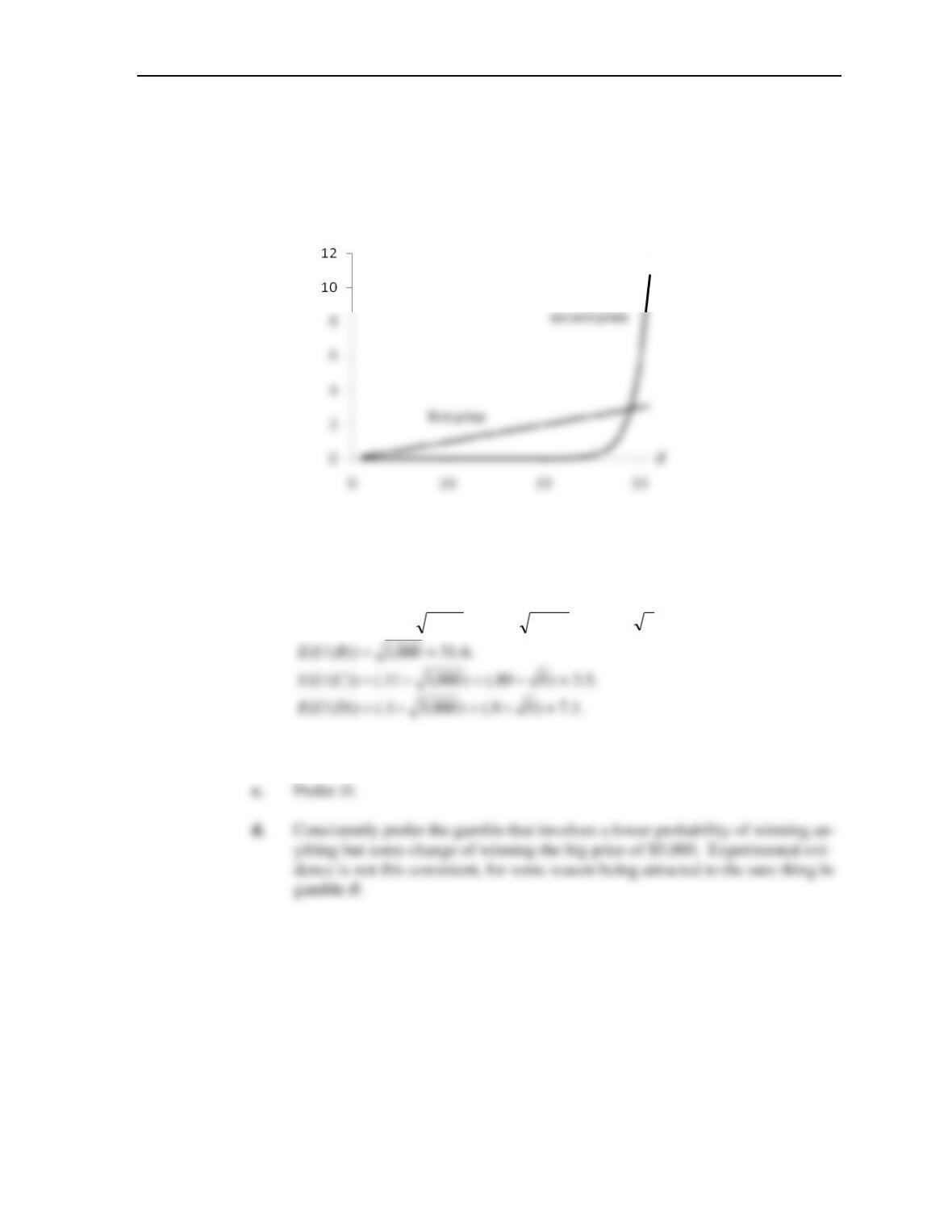
17.1 a. The first prize is 100,000d, and the second is 2d-1/100 (in dollars).
b.
c. The curves cross between day 29 and 30. The first prize is better for shorter
time spans and the second prize for longer time spans.
17.2 a.
.2.35)001(.)000,51(.)000,189(.))(( ++=AUE
b. Prefer A.
million $
Chapter 17: Behavioral Economics
4
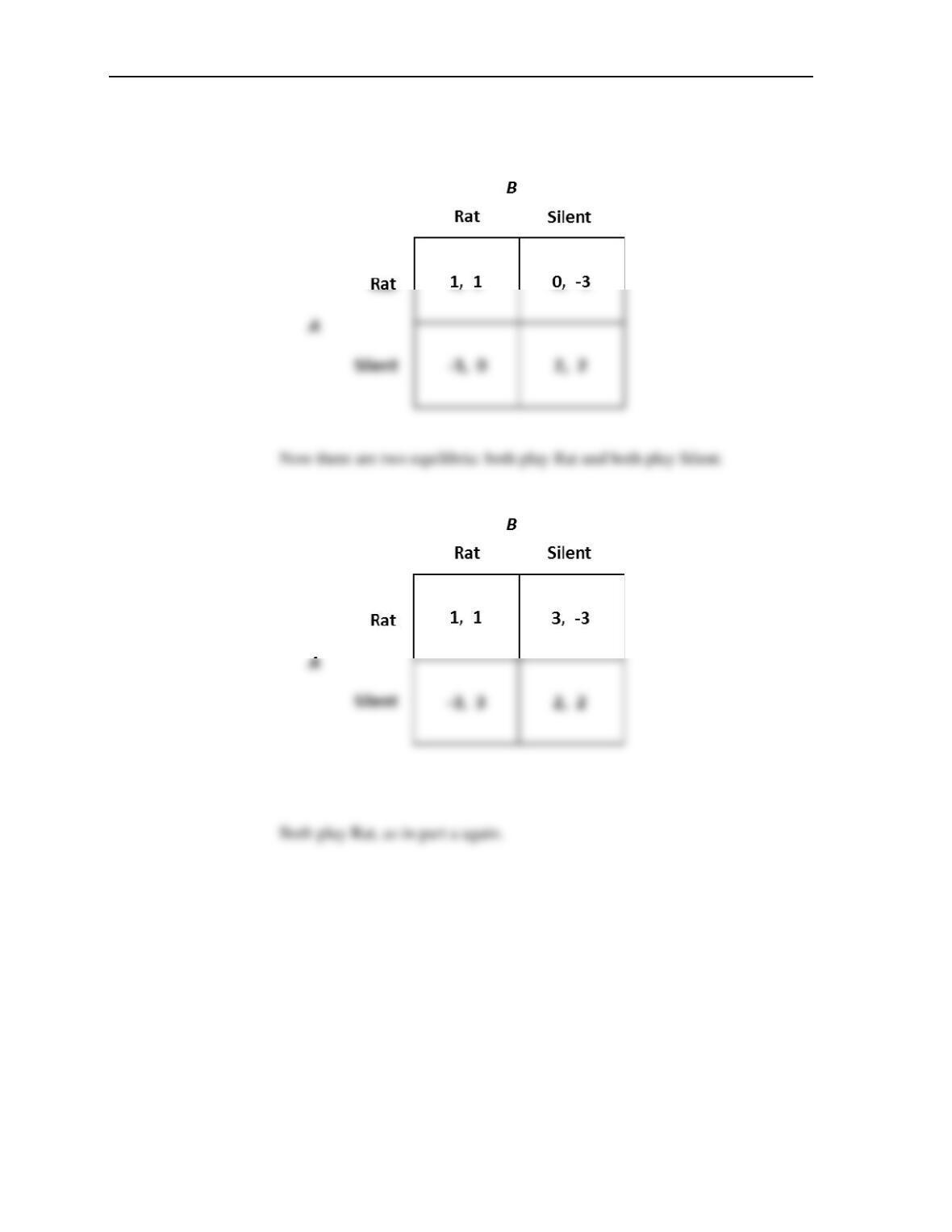
17.3 a. Both play Rat.
b.
c.
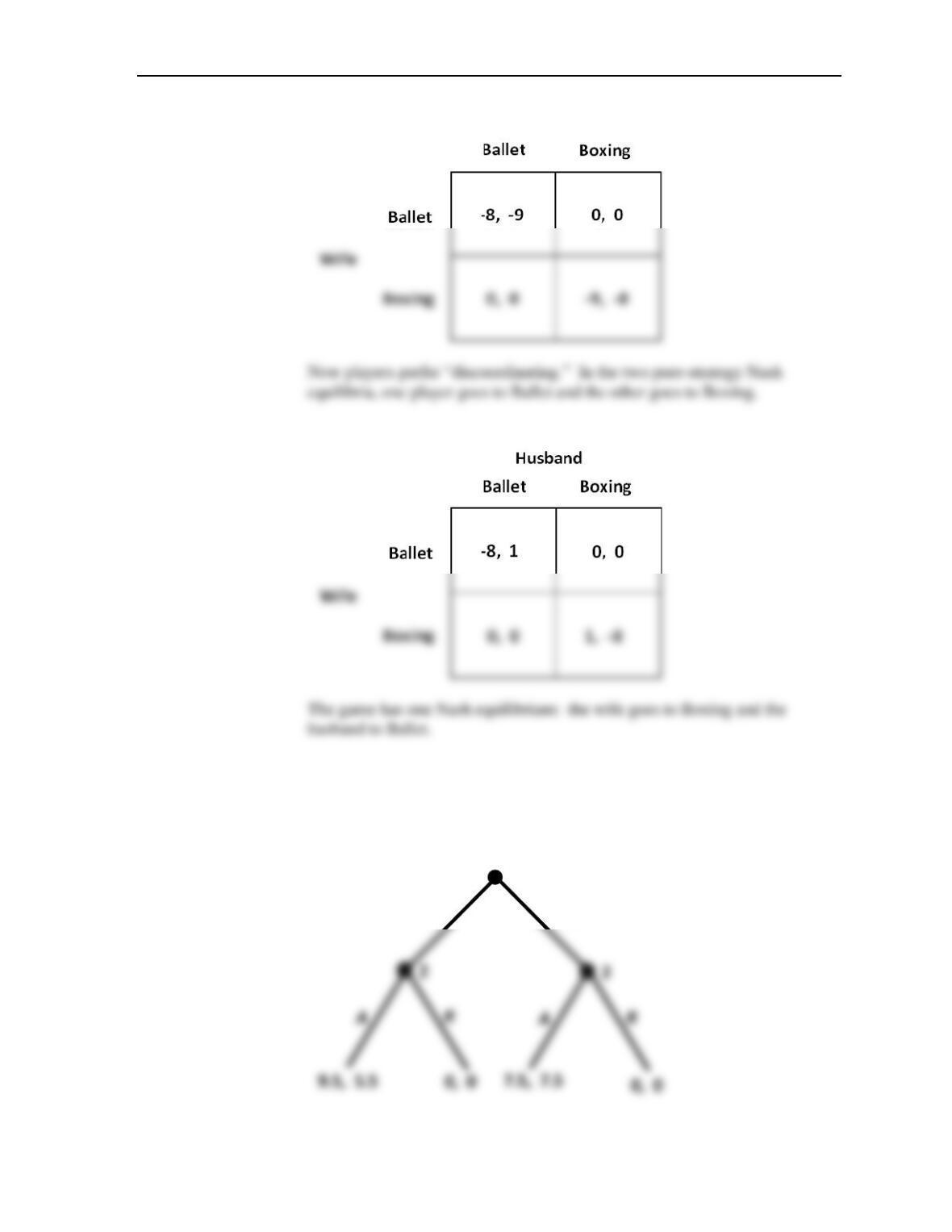
17.4 a. In one Nash equilibrium, both go to Ballet, and in the other both go to
Boxing.
Chapter 17: Behavioral Economics
5
b.
c.
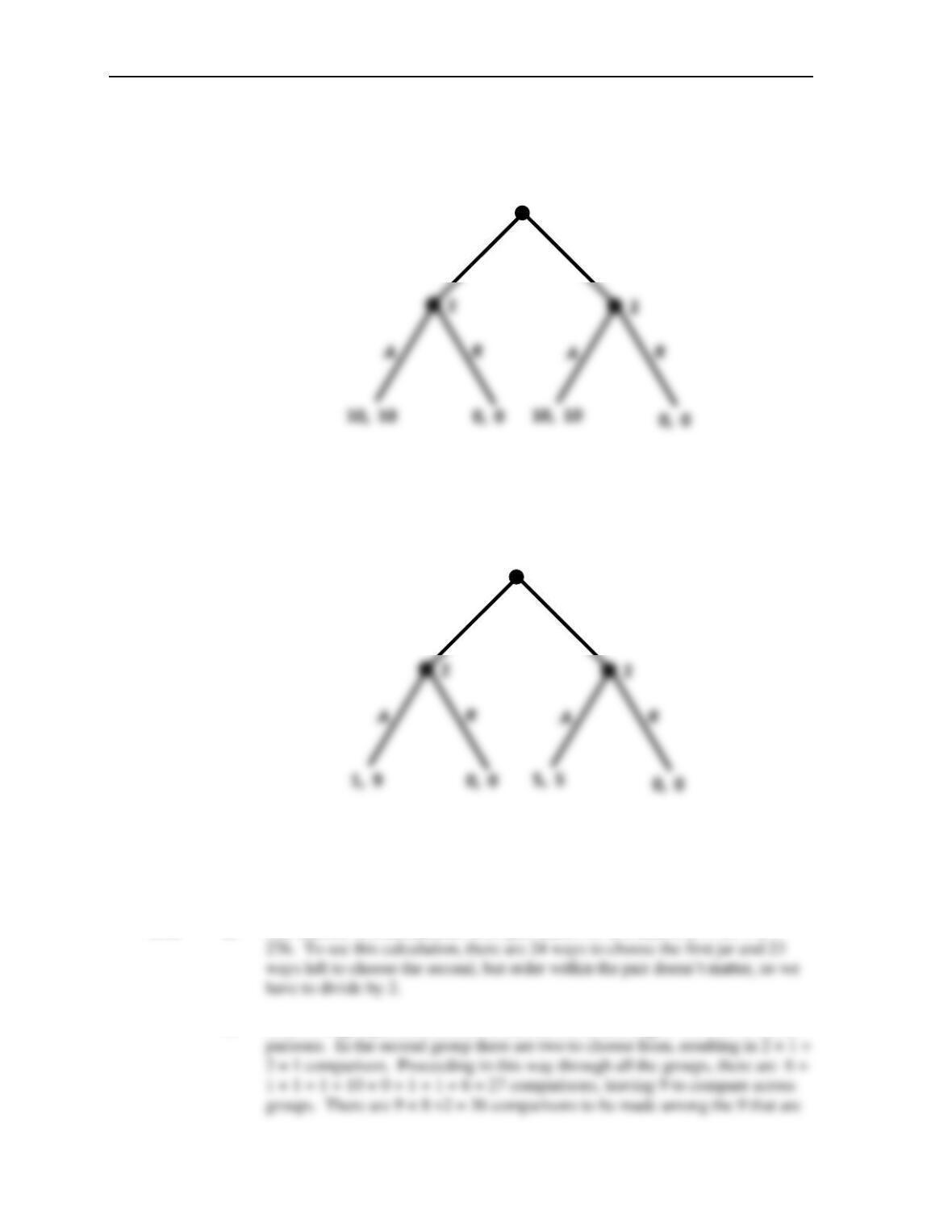
17.5 a. Player 1 makes a low offer; player 2 accepts either offer.
b.
Low Even
1
Chapter 17: Behavioral Economics
6
The equilibrium is the same as in part a.
c.
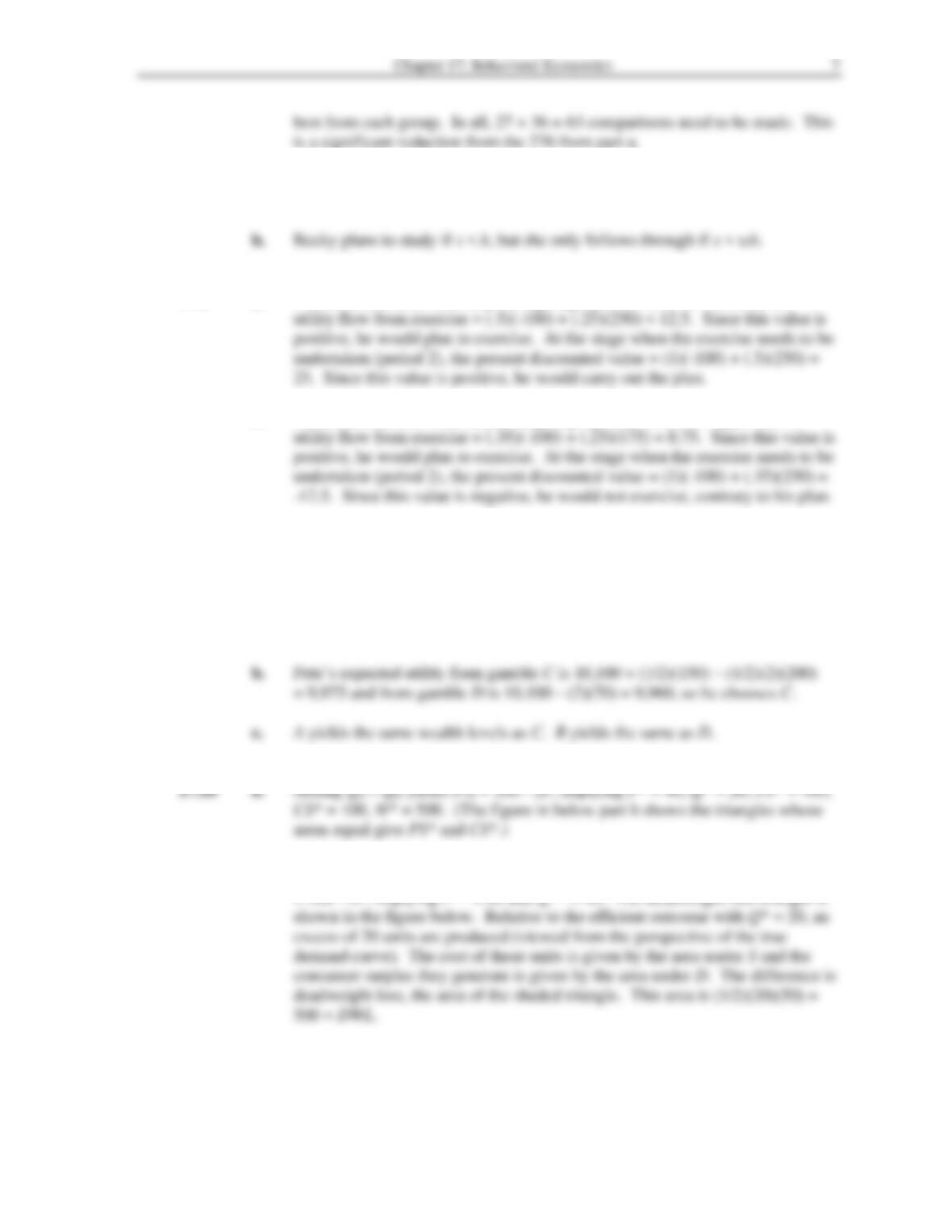
Now, besides the equilibrium in part a, there is another one in which player 1
makes an even offer and 2 accepts either offer.
d.
In equilibrium, 1 offers an even split and 2 accepts any offer. Paradoxically,
2 gains a higher monetary payoff but lower utility than if he or she received
the low offer.
17.6 a. The number of combinations of 24 jars taken two at a time is 24 × 23 ÷ 2 =
b. In the first group, there are four to choose from, resulting in 4 × 3 ÷2 = 6 com-
Low Even
1
Low Even
1
17.7 a. Will plans to study, and also carries out his plan, if s < b.
17.8 a. Present discounted value at planning stage (period 1) of Mr. Consistent’s
b. Present discounted value at planning stage (period 1) of Mr. Hyperbolic’s
c. As seen in b, he obtains a present discounted value of -12.5 if he exercises, so
x ≥ 12.5 would induce him to exercise.
17.9 a. Pete’s expected utility from gamble A is 10,000 + (1/2)(250) – (1/2)(2)(100) =
10,025 and from gamble B is 10,030, so he chooses B.
b. Setting
DS QQ ~
=
(where
D
Q
~
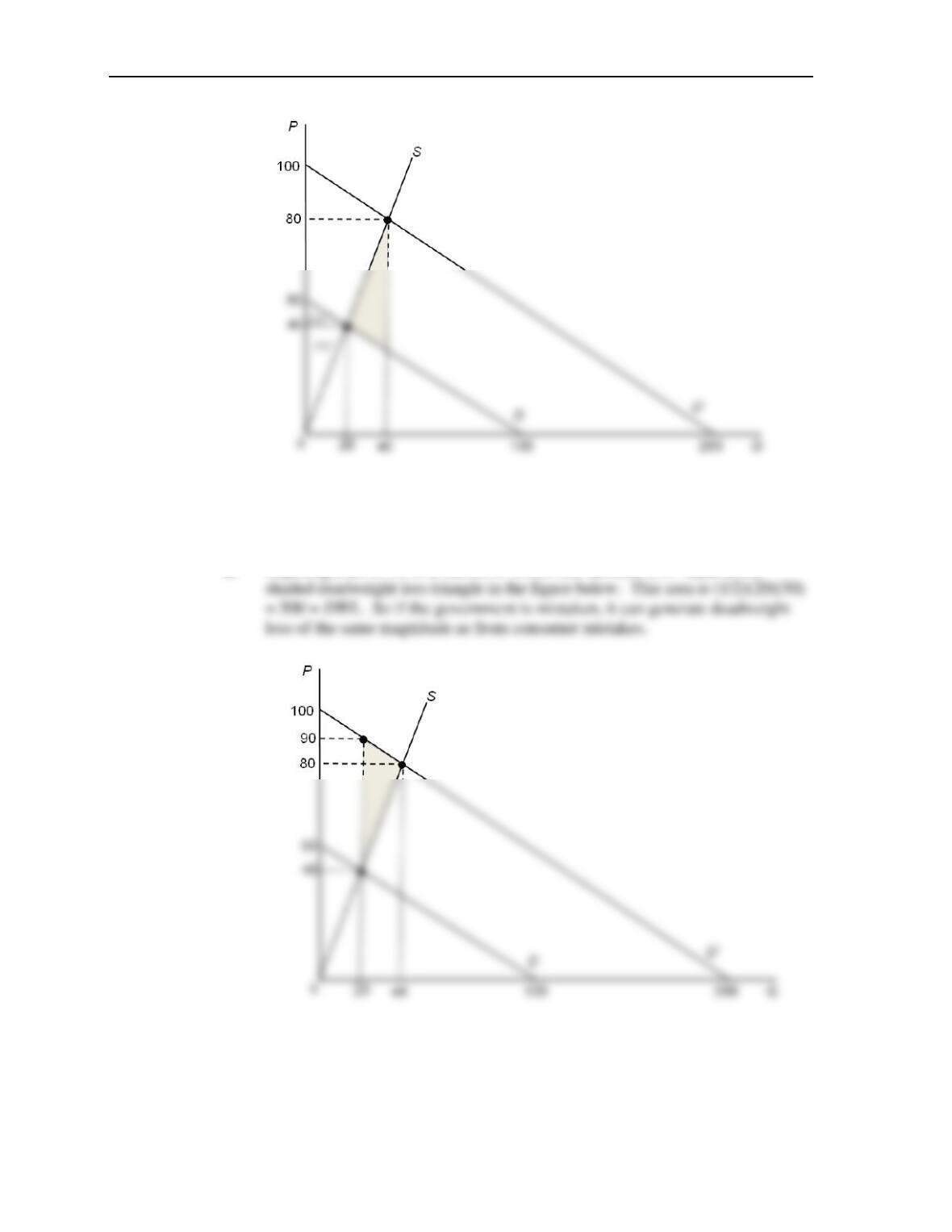
is mistaken rather than true demand) yields P/2
Chapter 17: Behavioral Economics
8
c. A tax of 50 will shift the mistaken demand curve D’ down to now overlap with
the true one, D.
d. Imposing a tax of 50 in a market in which true demand is D’ leads to the