CHAPTER 15
MONETARY THEORY AND POLICY
SOLUTIONS TO END OF CHAPTER PROBLEMS
1.
a. Your average balance is $500.
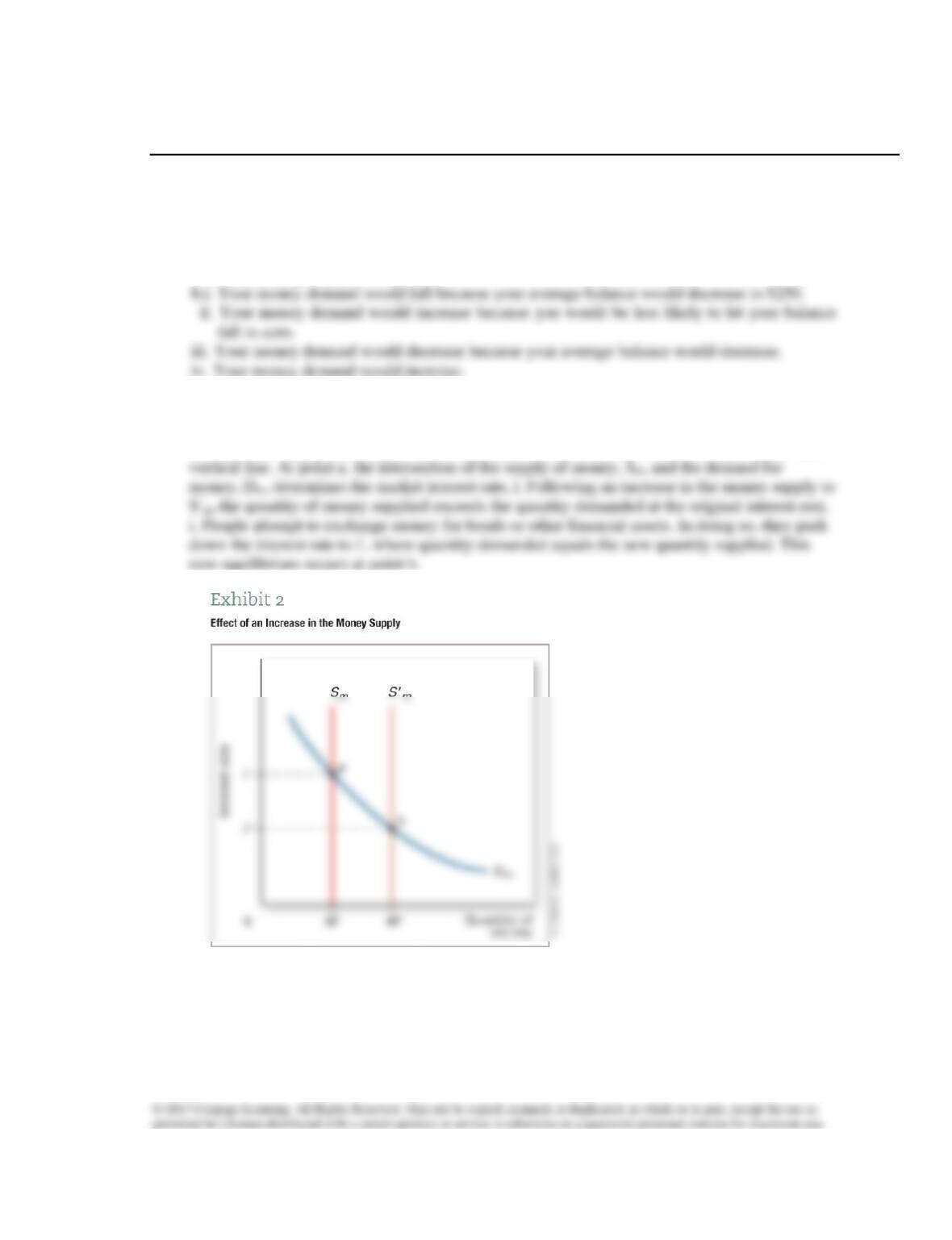
2. The money demand curve, Dm, slopes downward. As the interest rate falls, other things constant,
so does the opportunity cost of holding money; the quantity of money demanded increases.
Because the supply of money is determined by the Federal Reserve, it can be represented by a
3.
Chapter 15 Monetary Theory and Policy 2
a. Decrease: Investment demand changes by smaller amounts, leading to smaller changes in
aggregate demand.
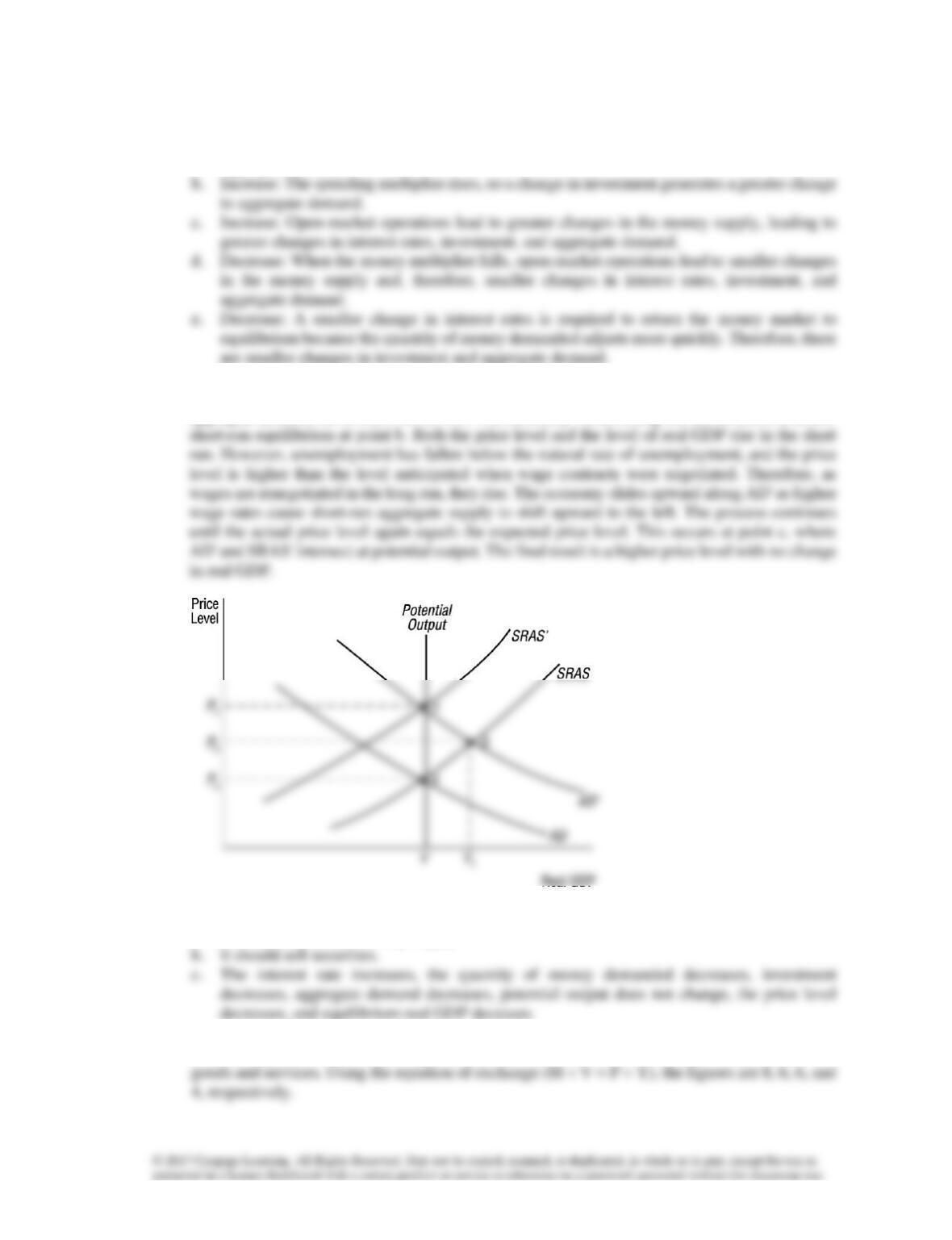
4. The economy is initially in equilibrium at point a. Increasing the money supply shifts the
aggregate demand curve from AD to AD’. The economy moves along the SRAS curve to a new
5.
a. It should decrease the money supply.
6. The velocity of money is the average number of times each dollar is turned over to purchase final
7. The quantity theory of money assumes that velocity is relatively stable and that any changes are
predictable.
a. Nominal GDP rises by 5 percent.
8. Between World War II and October 1979, the Fed tried to maintain stable interest rates as a way
of promoting a stable investment environment. During the 1980s and early 1990s, the Fed paid
more attention to growth in money aggregates, first M1 and then M2. But the velocity of M1 and
9. a. Money demand will increase.
10. (Quantitative Easing) What’s the difference between ordinary open-market purchases and
quantitative easing?
11. The Fed typically changes the federal funds rate by buying or selling short-term government
securities. But with interest rates already at rock bottom by late 2008, the Fed was looking