.
CHAPTER 15
(MACRO CHAPTER 15)
Macroeconomic Viewpoints: New Keynesian,
Monetarist, and New Classical
FUNDAMENTAL QUESTIONS
1. What do Keynesian economists believe about macroeconomic policy?
OVERVIEW AND OBJECTIVES
The primary purpose of this chapter is to introduce the major alternative schools of macroeconomic
thought.
The unique feature of the chapter is the discussion of the policy prescriptions of Keynesian, monetarist,
and new classical economists. Each group differs in its view of the role that government should play in
the economy. Keynesians tend to argue for activist monetary and fiscal policies. Monetarists and new
classical economists argue for nonactivist rules with respect to monetary policy and a balanced budget
on the fiscal side.
After reading and reviewing this chapter, the student should be able to:
1. Describe the Keynesian model of economic theory.
KEY TERM REVIEW
Keynesian economics
LECTURE OUTLINE AND TEACHING STRATEGIES
I. Keynesian Economics
Chapter 15: Macroeconomic Viewpoints: New Keynesian, Monetarist, and New Classical 107
A. The Keynesian model: Keynesians argue that equilibrium income is determined by
aggregate expenditures. New Keynesians point to wage and price rigidities as the reason that
II. Monetarist Economics
A. The monetarist model: A change in the money supply leads to a change in the price level in
the long run. Real output is affected only in the short run.
III. New Classical Economics
A. The new classical model: The two major components of new classical economics are
rational expectations and market clearing.
IV. Comparison and Influence
Teaching Strategy: It is important to note that a key distinction among the major schools
of macroeconomics is their reliance on the self-adjusting mechanism.
OPPORTUNITIES FOR DISCUSSION
1. What is the difference between the traditional Keynesian and New Keynesian macroeconomic
models?
2. How would a New Keynesian economist respond to the monetarist’s policy proposal for a steady
rate of growth in the money supply?
3. If monetarists believe that money will affect real income in the short run, why don’t they support
short-run discretionary policies?
108 Chapter 15: Macroeconomic Viewpoints: New Keynesian, Monetarist, and New Classical
ANSWERS TO EXERCISES
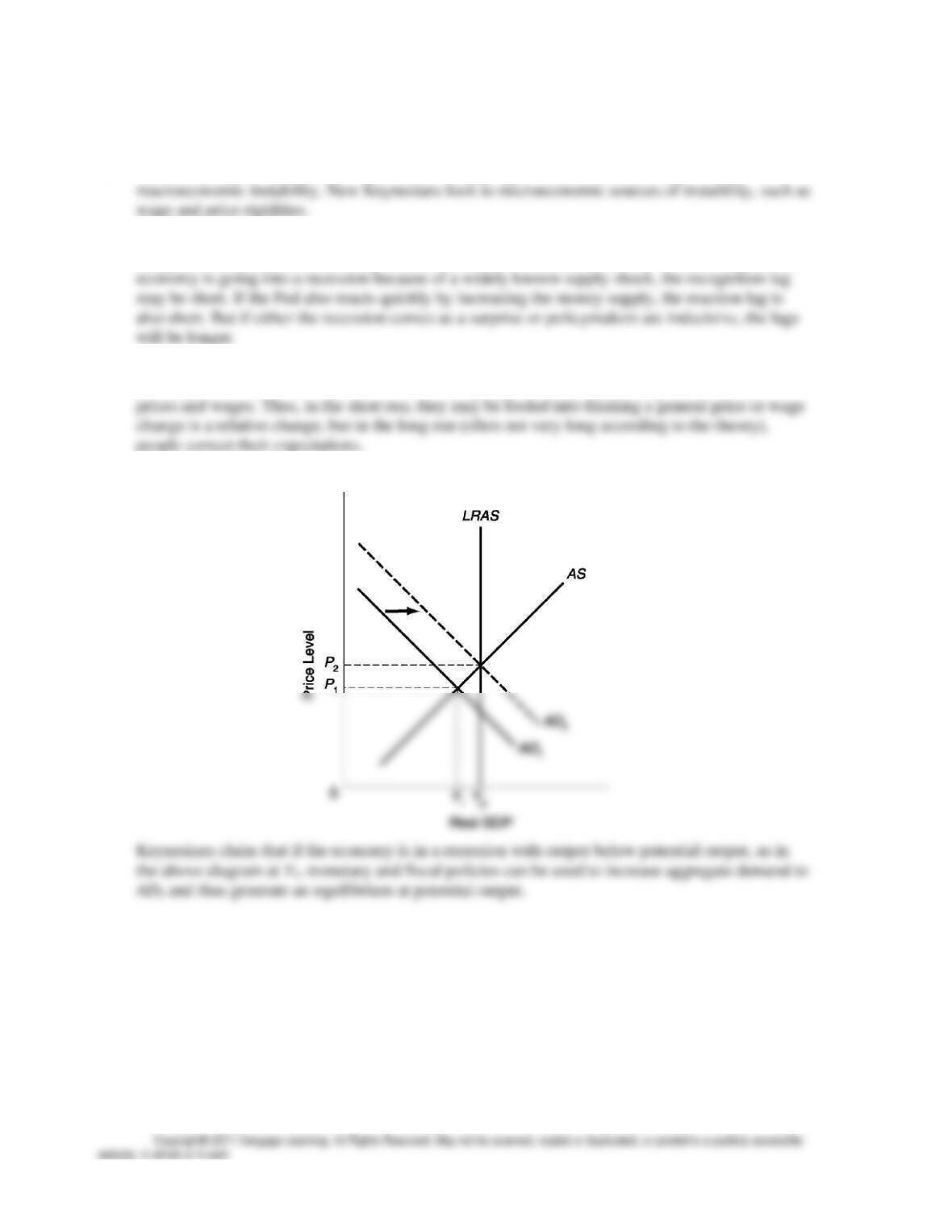
1. Traditional Keynesians focus on fluctuations in aggregate demand as the source of
2. Monetary policy works with a long and variable lag because the time that is required for the
recognition, reaction, and effect lags varies from one circumstance to another. For example, if the
3. Old classical economics assumed that people were aware of all alternative wages and prices in the
economy. New classical economics assumes that people develop rational expectations about
4.
Chapter 15: Macroeconomic Viewpoints: New Keynesian, Monetarist, and New Classical 109
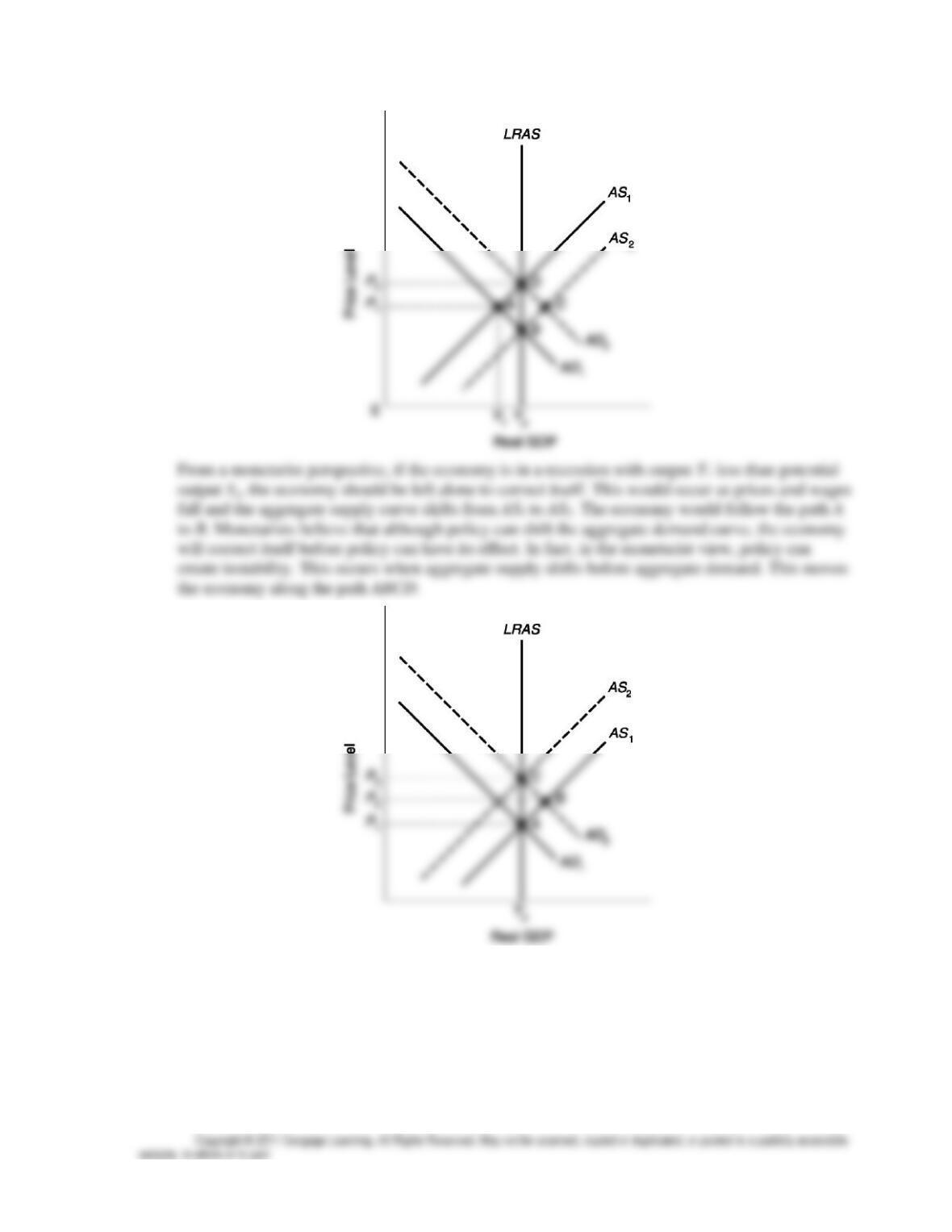
For new classical economists, the economy tends to operate at potential output Yp. If policy is
unexpected, an increase in aggregate demand increases output and prices. The increase in output
will last only until expectations are adjusted. The economy will follow the path ABC. If the policy
is expected, the economy will follow the path AC.
5. All of the theories recognize the effect of changes in aggregate demand on prices and output in the
short run.
110 Chapter 15: Macroeconomic Viewpoints: New Keynesian, Monetarist, and New Classical
6. Soon people in the economy would recognize that the Fed was attempting to fool them and would
anticipate the policy. In the end, the only policy that could work would be one that was
7. Keynesian macroeconomics evolved largely as a result of the fact that classical macro theory
8. Keynesian
9. Monetarist
ANSWERS TO STUDY GUIDE HOMEWORK
1.
D
;
A
;
A
D
D
D
D
5.
a. Monetarists
ACTIVE LEARNING EXERCISE
This exercise will allow students to explore the basic beliefs of the major approaches to economic
theory. By creating their own multiple-choice questions, students will learn to differentiate among the
Chapter 15: Macroeconomic Viewpoints: New Keynesian, Monetarist, and New Classical 111
Divide the class into groups of four. Each group is to write one correct and four incorrect answers to the
1. Monetarist economists believe that:
2. Keynesian economists believe that: