Chapter 14:
1. Which of the following markets are perfectly competitive or monopolistically competitive. Why?
a. soy market
b. retail clothing stores
c.
Answer: The market for soybeans is perfectly competitive, as large numbers of buyers
2. List three ways in which a grocery store might differentiate itself from its competitors.
Answer: A grocery store can differentiate itself from its competitors in many ways,
3. What might make you choose one gas station over another?
4. ofitable when he first opened, why should he expect those profits to fall
over time?
Answer: If Frank earns significant profits when he first opened, he can expect to face
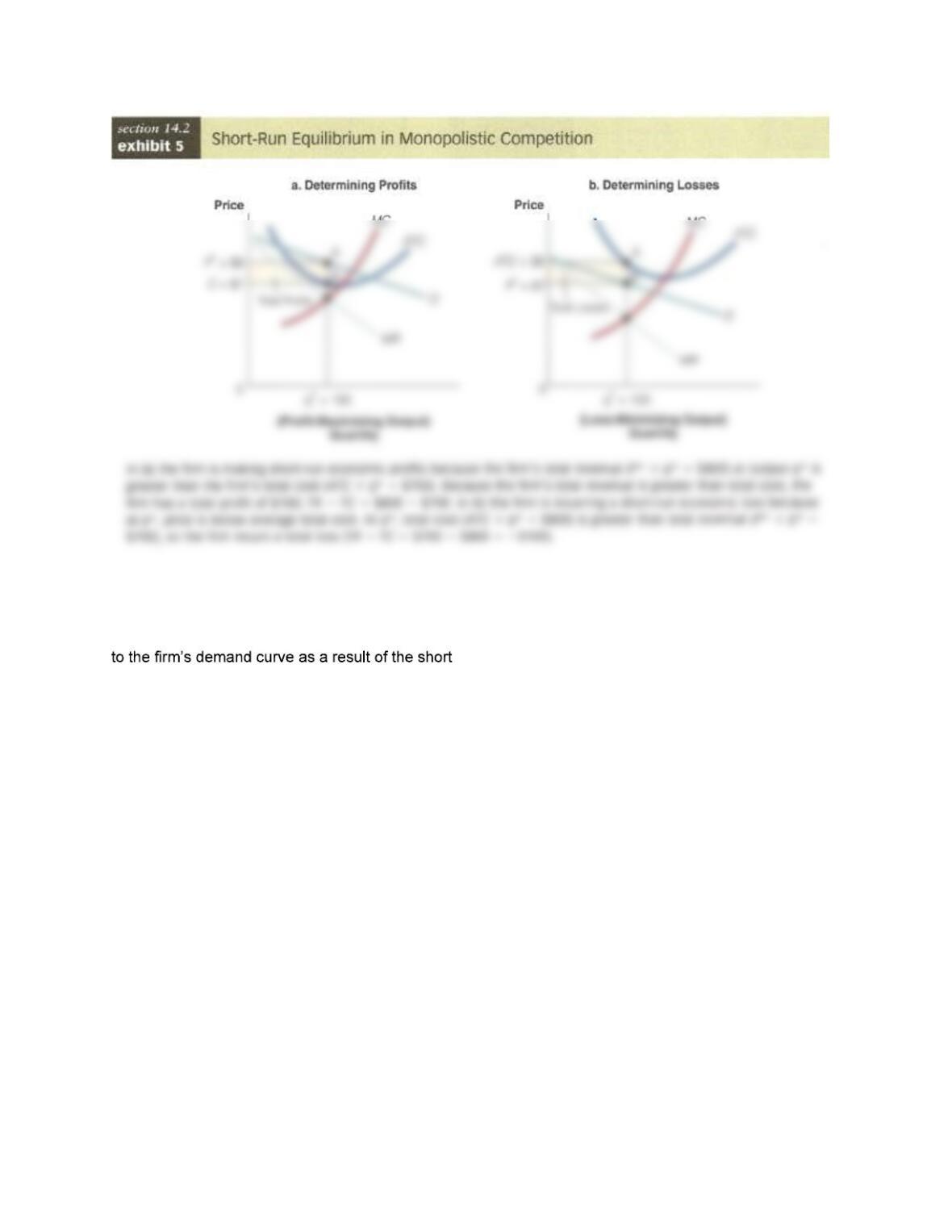
5. Draw a graph showing a monopolistically competitive firm in a short-run equilibrium where it is earning
positive economic profits. What must be true of price versus average total cost for such a firm? What will
ult of the short-run profits?
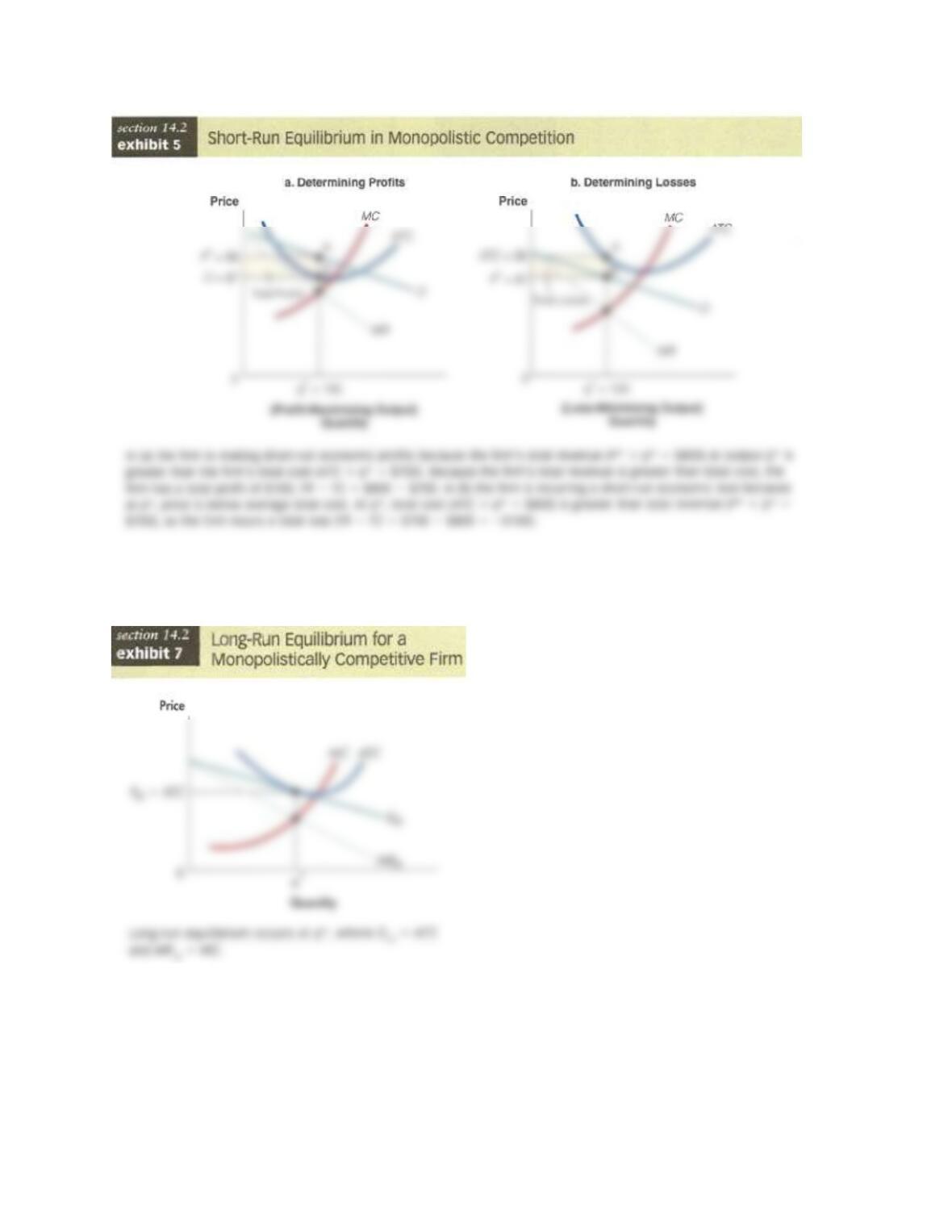
Answer: Refer to panel (a) below.
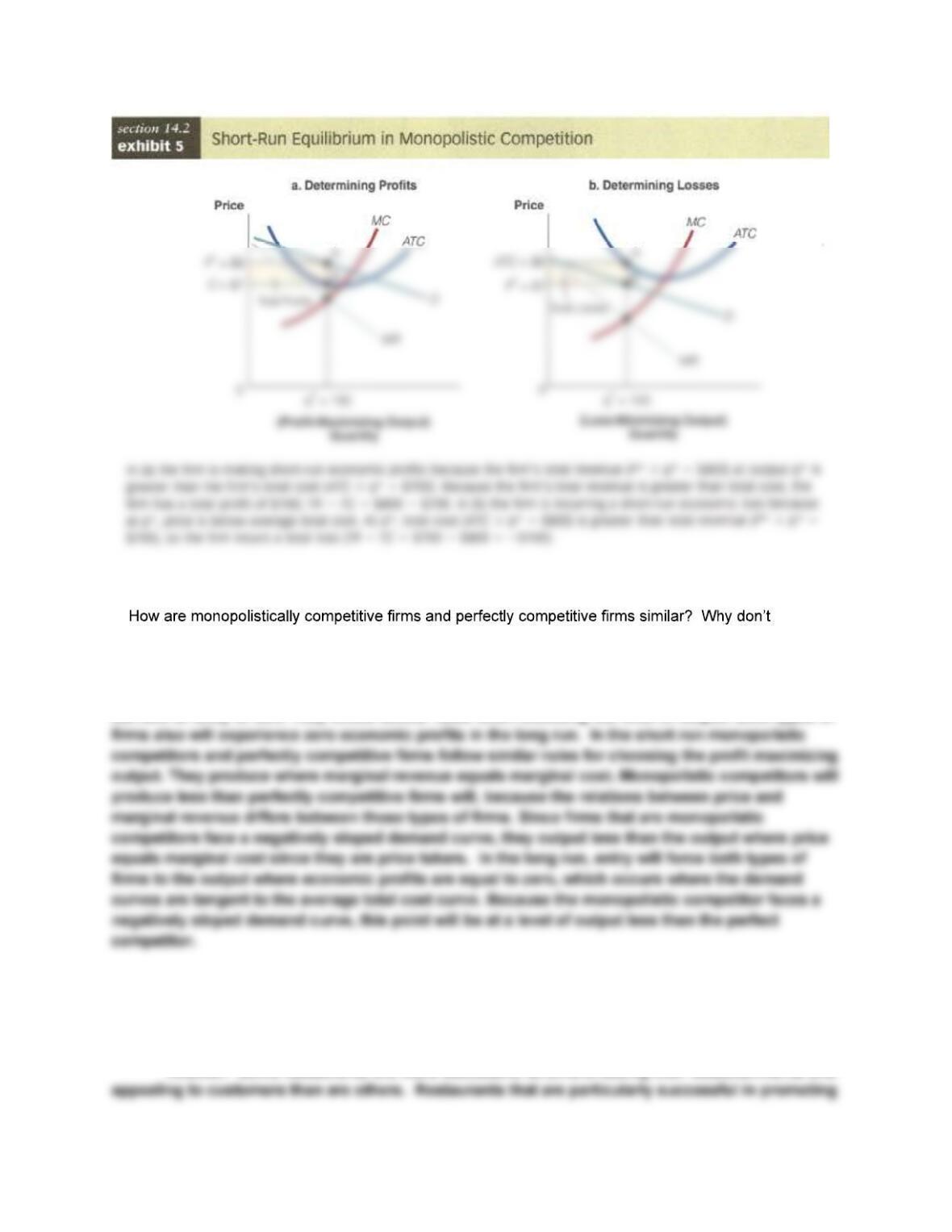
6. Draw a graph showing a monopolistically competitive firm in a short-run equilibrium where it is earning
economic losses. What must be true of price versus average total cost for such a firm? What will happen
-run losses?
Answer: Refer to panel (b) below.
7.
monopolistically competitive firms produce the same output in the long run as perfectly competitive firms,
which face similar costs?
Answer: Both types of firms operate in industries with many other sellers and with no real
barriers to entry or exit. They follow similar rules when choosing the level of output. Both types of
8. Can you explain why some restaurants are highly profitable while other restaurants in the same
general area are going out of business?
Answer: Some restaurants are more successful at differentiating their establishments and
9. Suppose that half the restaurants in a city are closed so that the remaining eateries can operate at full
capacity.
Answer: The “cost” restaurant patrons might incur is a loss of product differentiation.
10. How is price related to marginal and average total cost for monopolistically competitive firms in the
following situations?
a. a short-run equilibrium where it is earning positive economic profits
Answer: If total revenue is greater than total cost at q*, the firm is generating total
b. a short-run equilibrium where it is earning economic profits
Answer: If total revenue is less than total cost at q*, the firm is generating total economic
c. a short-run equilibrium where it is earning zero economic profits
Answer: See Exhibit 7 below.
d. a long-run equilibrium
Answer: See Exhibit 7 below.
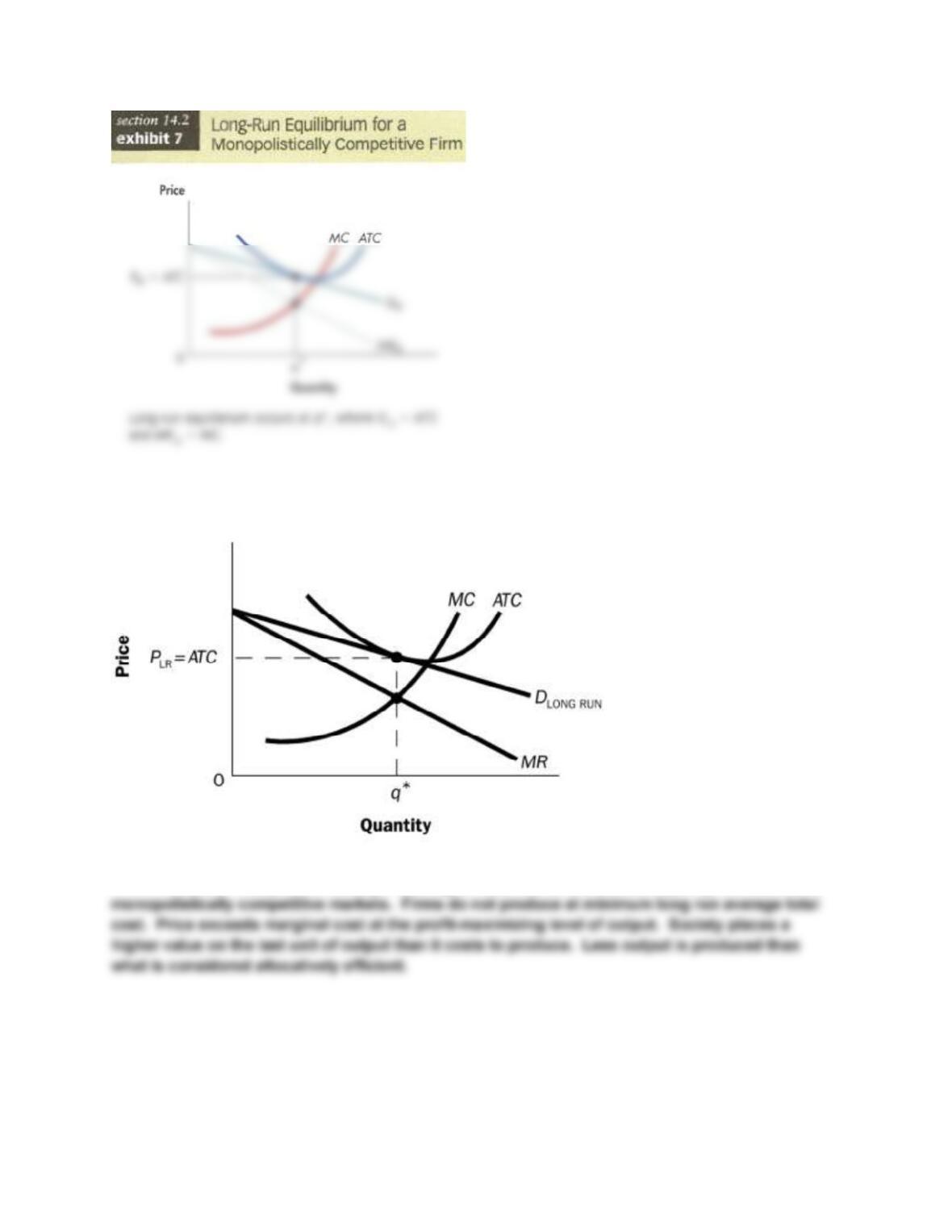
11. What is meant by the price of variety? Graph and explain.
Answer: The price of variety is the higher cost due to the excess capacity that results in
12. How does Starbucks differentiate its product? Why does Starbucks stay open until late at night but a
donut or bagel shop might close at noon?
Answer: Starbucks differentiates its product by location, hours of operation, service, and
13.
monopolistically competitive firms produce the same output in the long run as perfectly competitive firms,
which face similar costs?
Answer: Both types of firms operate in industries with many other sellers and with no real
barriers to entry or exit. They follow similar rules when choosing the level of output. Both types of
14.
than for the corner barber shop?
Answer: The corner barber shop services clients in a limited area. Many people are aware
of the barbershop because it is local and they patronize local barbershops for the sake of
15. Think of your favorite ads on television. Do you think that these ads have an effect on your spending?
These ads are expensive;
Answer: Answers will vary. Certainly not all individuals will respond to each and every
16. Product differentiation is a hallmark of monopolistic competition, and the text lists four sources of such
differentiation: physical differences, prestige, location, and service. How do firms in the industries listed
here differentiate their products? How important is each of the four sources of differentiation in each
case? Give the most important source of differentiation in each case.
a. fast-food restaurants
Answer: Physical differences are probably most important. Big Macs, Whoppers, tacos,
b. espresso shops/carts
Answer: A convenient location is very important, although service is considered an
c. hair stylists
Answer: Service is number one, but location is important as well. How far are you willing
d. soft drinks
Answer: Physical qualities, including taste and the look of the container, are most
e. wine
Answer: Physical differences is probably the most important, but prestige is important as
well.
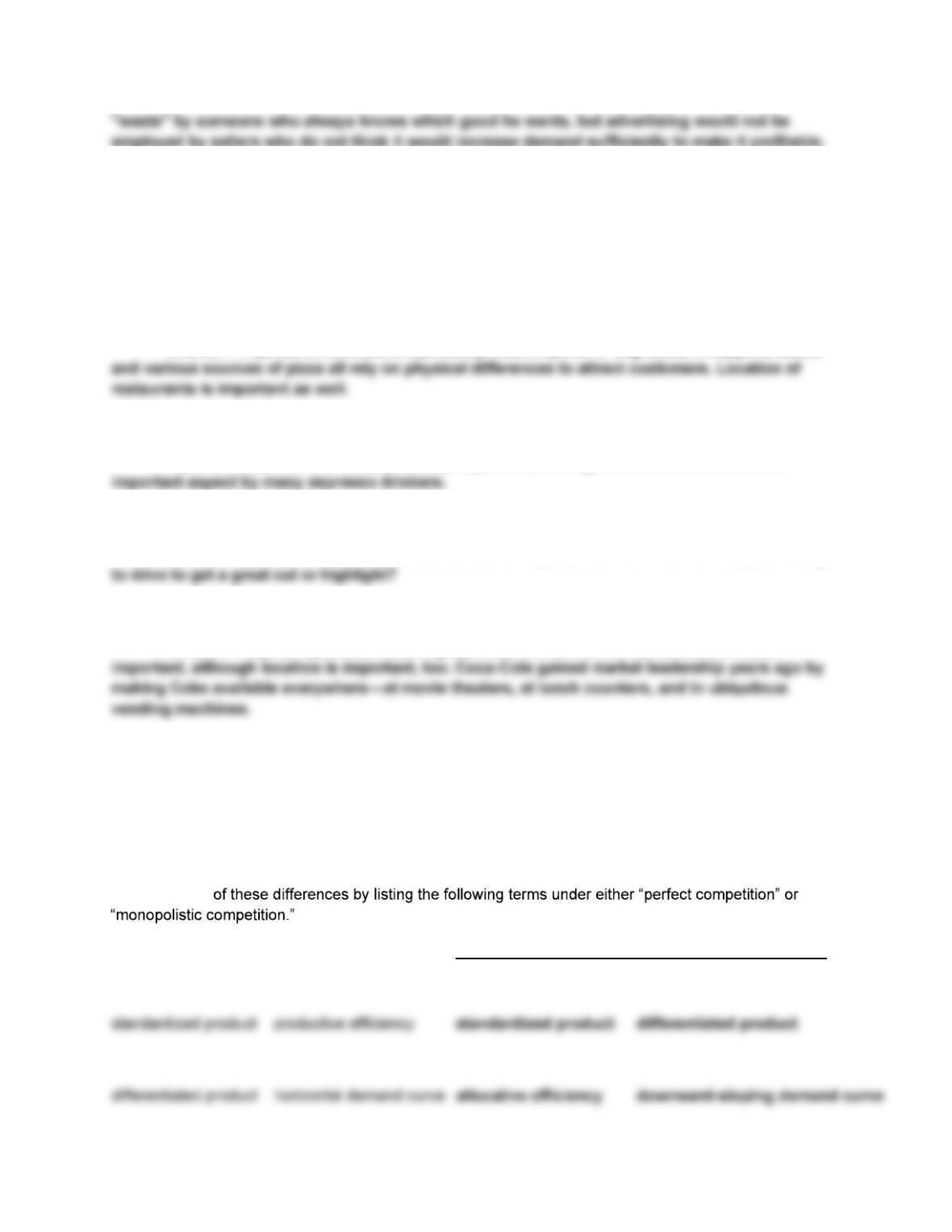
17. As you know, perfect competition and monopolistic competition differ in important ways. Show your
understanding
Perfect Competition Monopolistic Competition
18. In
which entrepreneurs pursuing their own best interest make consumers better off?
Answer: Producers use advertising to increase the demand for their products and reduce
19. How does advertising intend to shift demand? How does it intend to change the elasticity of demand?
Answer: By advertising, firms hope to increase the demand and create a less elastic