You may be willing to pay up to $218,499.9 to know the true state of nature.
(b)
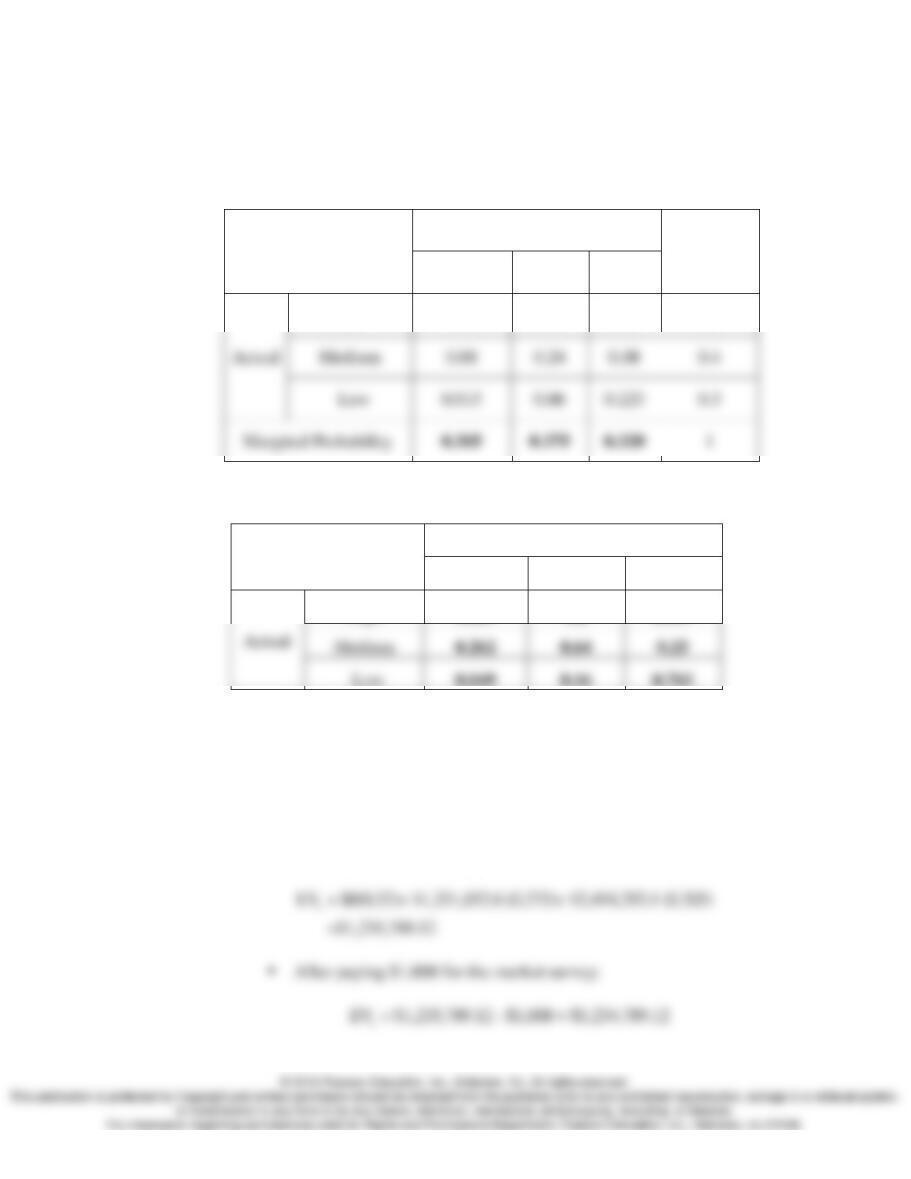
• Joint / marginal probabilities:
Survey says Marginal
Probability
High Medium Low
High 0.21 0.075 0.015 0.3
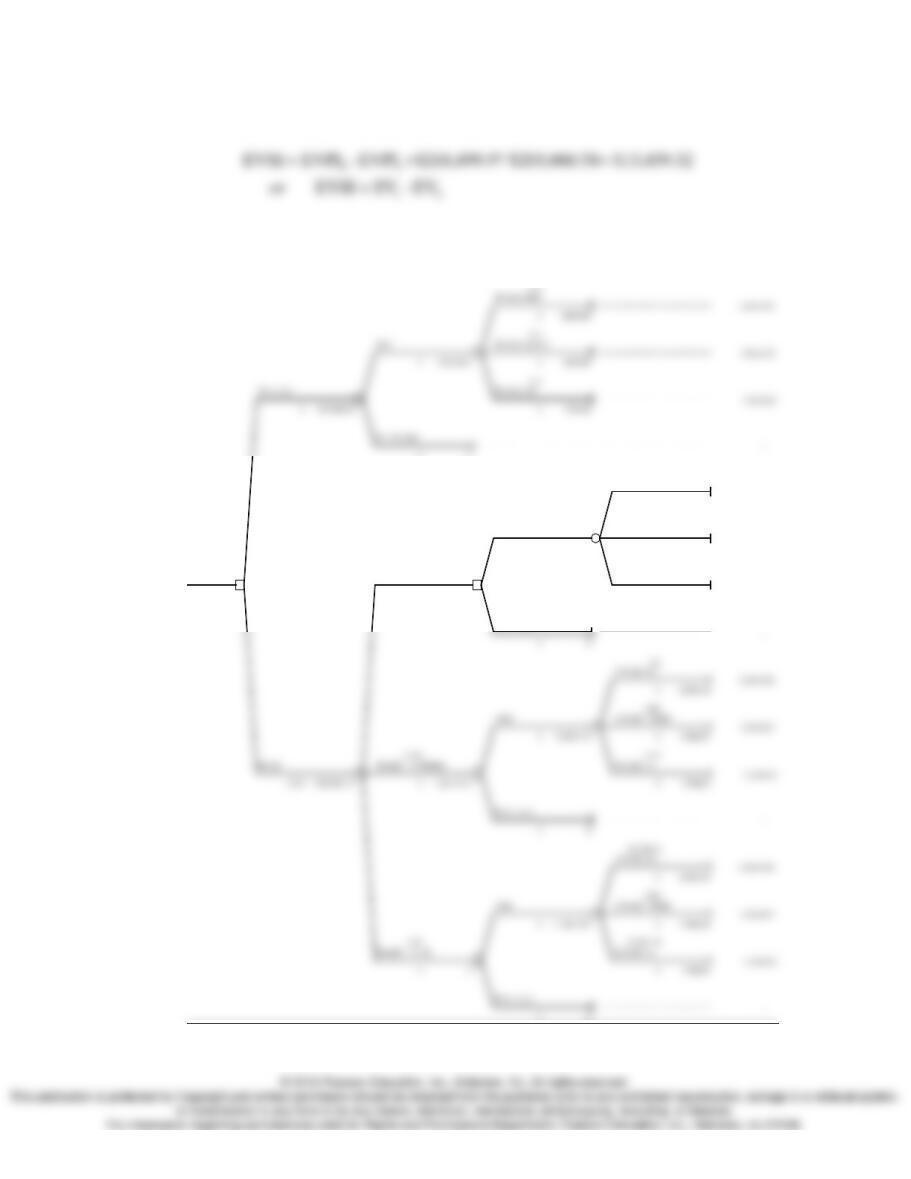
• Conditional probabilities:
Survey says
High
Medium
Low
0.262
0.64
0.25
0.049
0.16
0.703
High
0.689
0.2
0.047
o Optimal decision: Take a survey. With either “High” or “Medium” result
from the survey, open the store. Otherwise, do not open the store.
o Calculating the expected value of perfect information with survey.
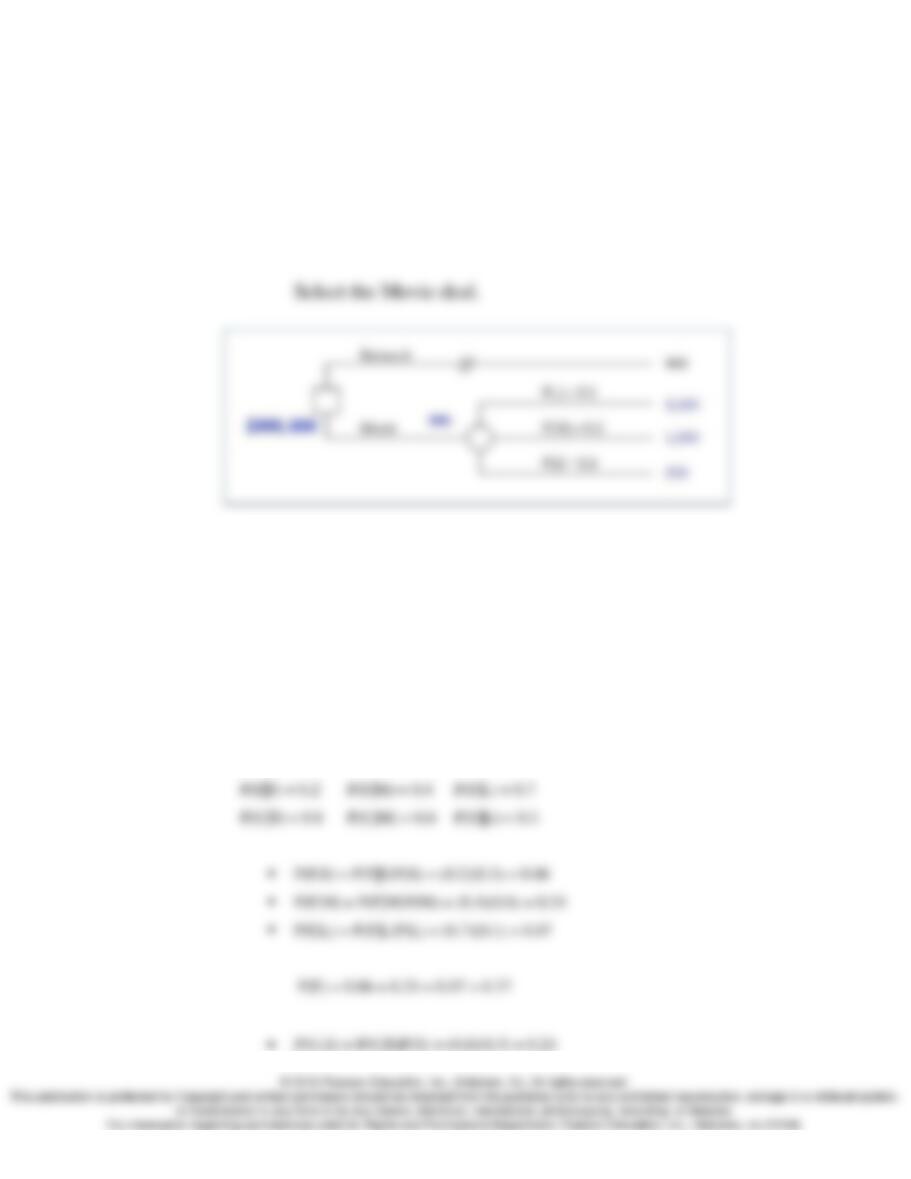
EVPI EPPI-EV $1, 440,849.7 $1,235,789.12= $205,060.58
ee
= = −
EPPI= $3,060,763 (.3) + $1,306,552 (.4) + $0(.3) = $1,440,849.7
With a free market survey:
o Expected Value of Sample Information (EVSI)
• Decision Tree
0 0
0.68852 459
Dem and High
3,060,763
03060763
0.26229 508
Open Dem and m edium
1,306,552
02414293.09 01306552
0.305 0.04918 033
Sam ple info High Dem an d l ow
# 1 (728,333)
1234789.12 02414293.09 0–72833 3
Do not open
12.28
(a)
TV Network
Movie
EMV $900
EMV $250(0.3) $1, 000(0.6) $3, 200(0.10) $995
=
=++ =
(b)
EPPI (0.30)($900) (0.60)$1, 000 (0.10)($3, 200) $1,190
EVPI $1,190 $995 $195
=++ =
= −=
The maximum amount to pay is $195.
(c) Revised probabilities:
P(S) = 0.3 P(M) = 0.6 P(L) = 0.1
Conditional Probabilities
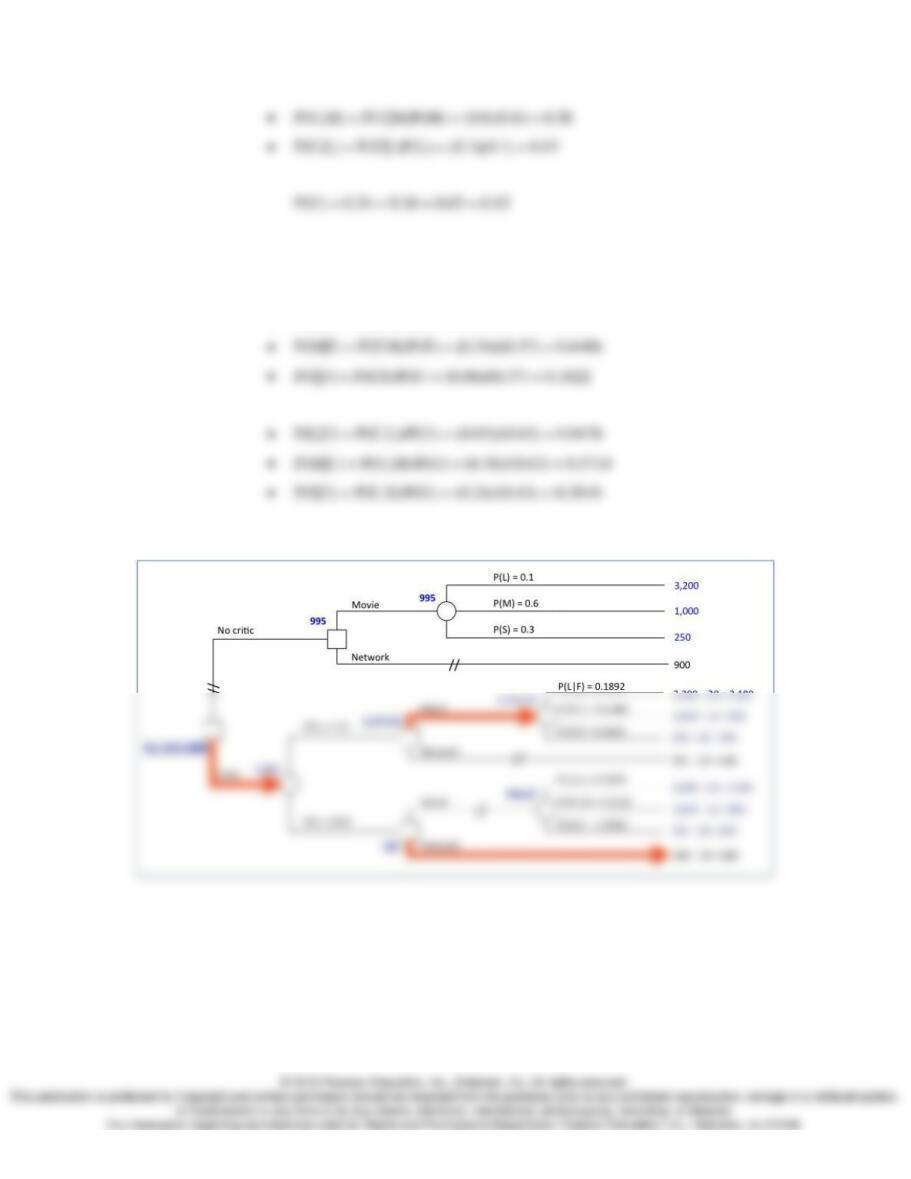
• P(L|F) = P(F,L)/P(F) = (0.07)/(0.37) = 0.1892
• Decision: Get the movie critic report. If the report is favorable, select
the movie option. If unfavorable, select the network option. The
expected payoff is $1,025,998 (after paying $20,000).
• EVPI after receiving the movie critic’s report.
Unfavorable critic, (3,180)(0.0476) + (980)(0.5714) + (880)(0.3810) – 880 = 166.62
• What is worth of the movie critic’s report?
• What is Jay’s ultimate strategy for this investment problem? (4 points)
12.29
(a)
(b)
0
EV = $54
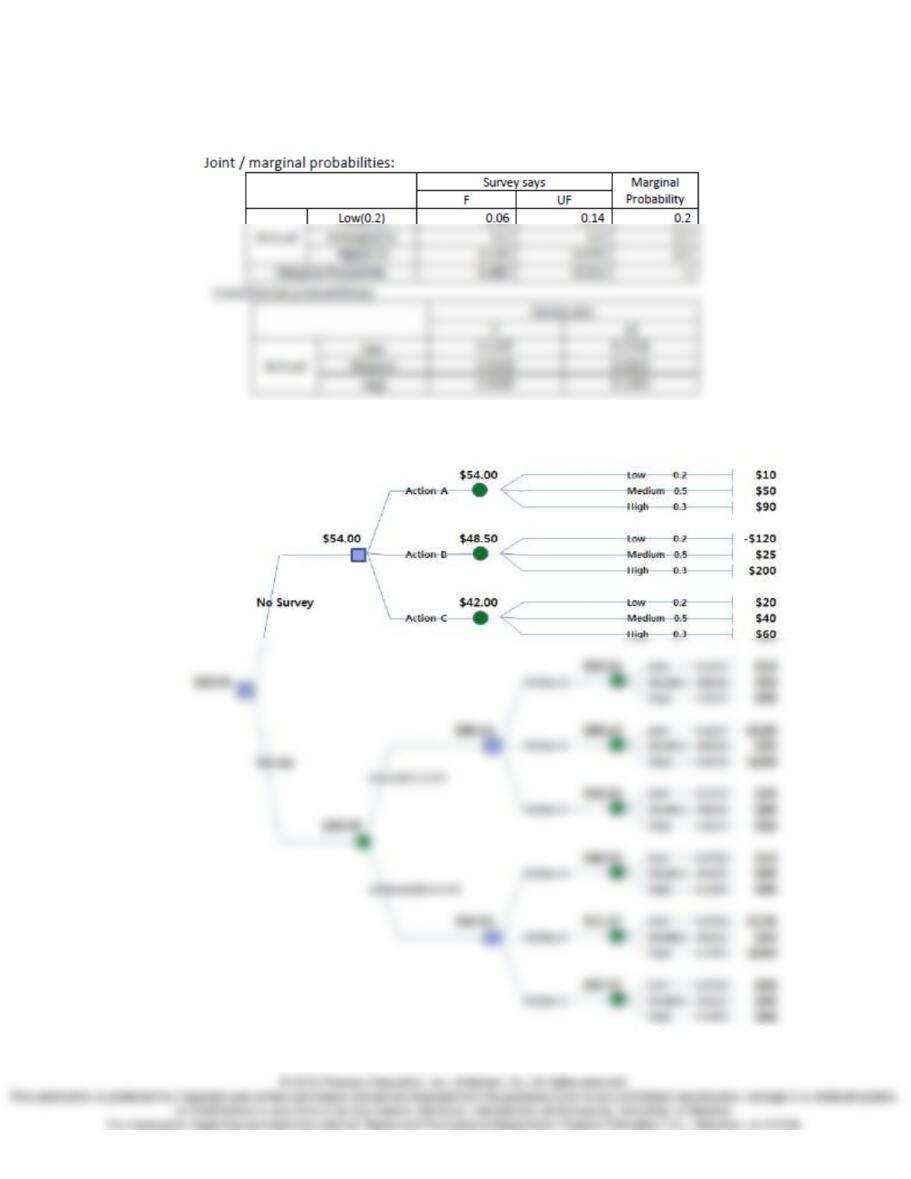
(c)
• Determine the strategy that maximizes the expected payoff with the survey.
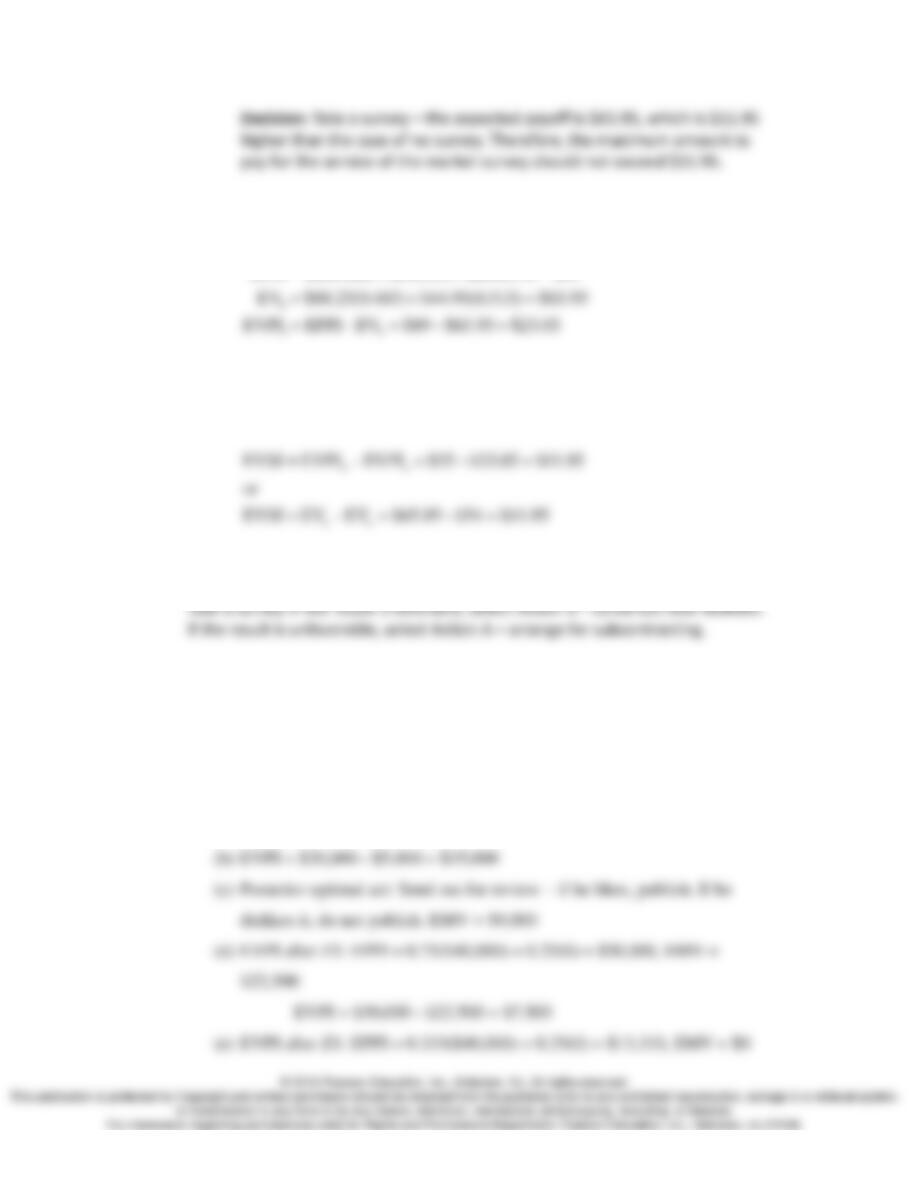
• EVPI after taking the survey
EPPI $20(0.20) $50(0.5) $200(0.3) $89
= ++ =
• What is the true worth of the survey?
• What is the ultimate strategy for this investment problem?
12.30
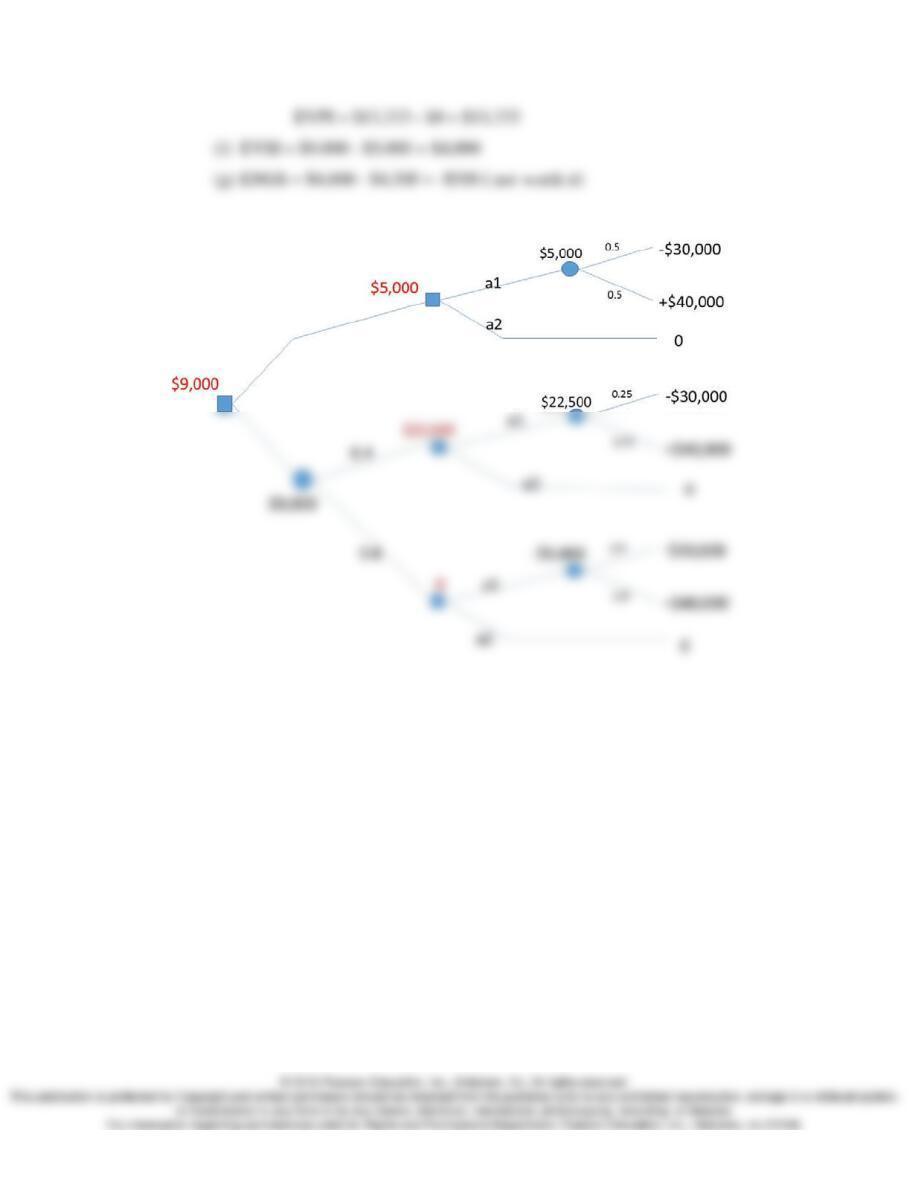
a1: publish
a2: do not publish
(a) Prior optimal act: a1 – publish, with EMV = $5,000
ST 12.1
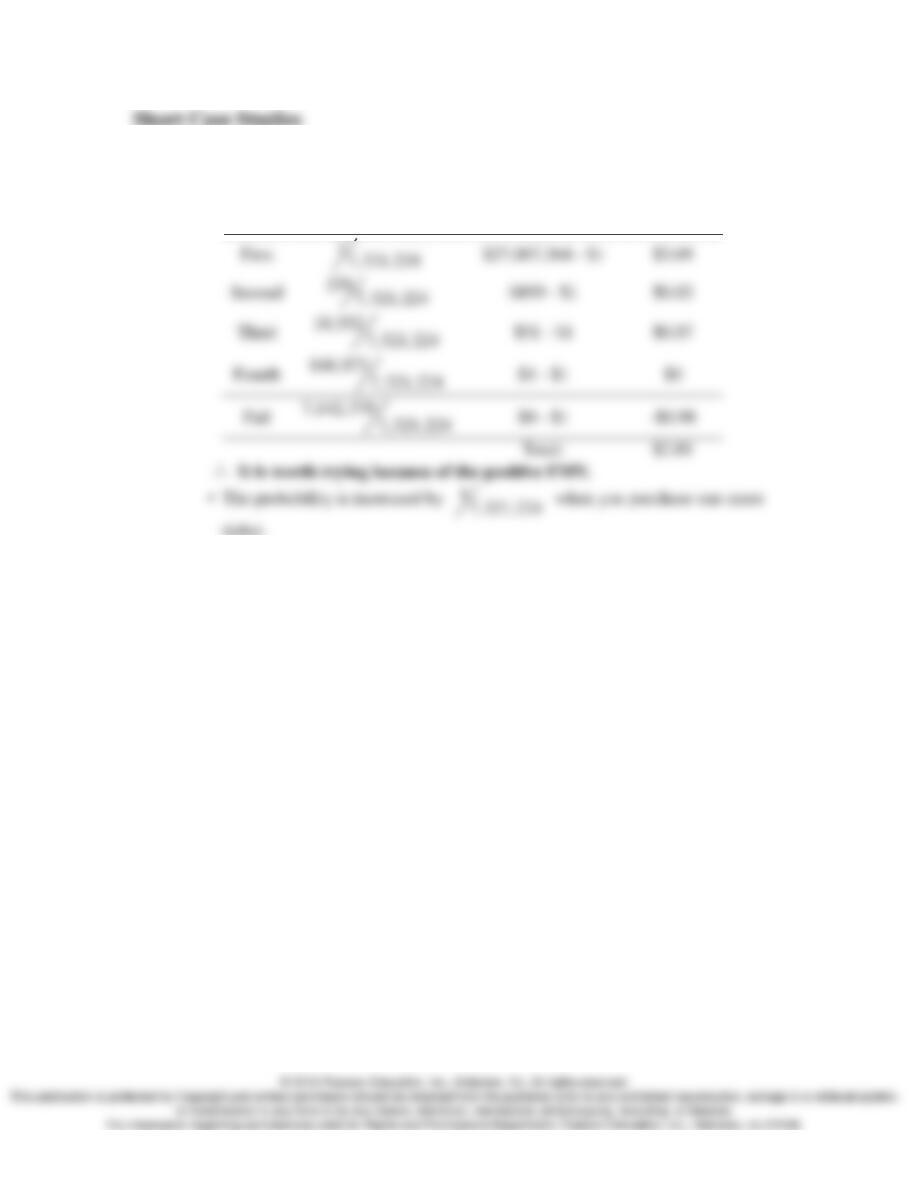
• The EMV of the lottery by assuming that the lotto price is $1:
• The number of regular lottery players: 7,321,224.
Prize
Probability
Payoff
EMV
ST 12.2
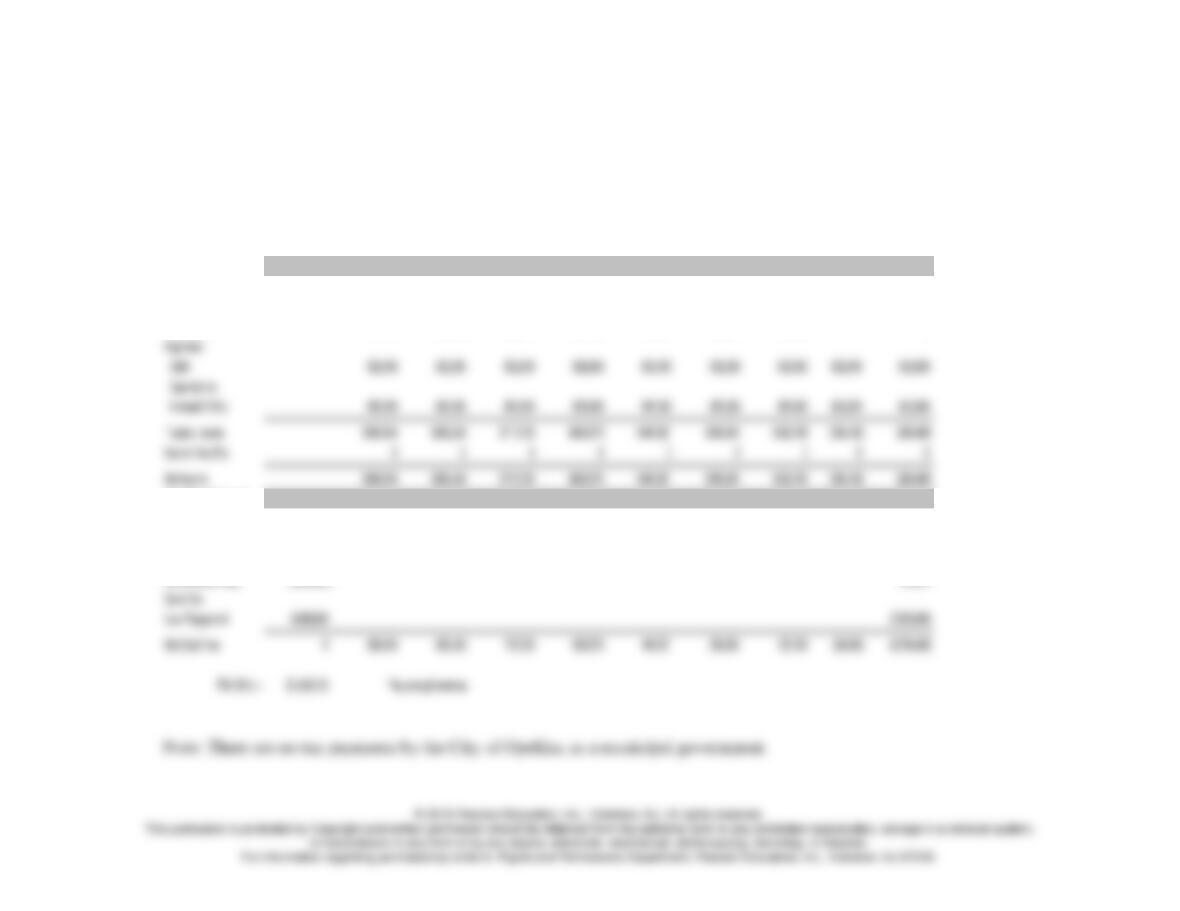
(a) Project cash flows:
(a) Project cash flows based on most-likely estimates:
012345678-19 20
Income Statement
Revenue:
Steam Sales $1,550,520 $1,550,520 $1,550,520 $1,550,520 $1,550,520 $1,550,520 $1,550,520 $1,550,520 $1,550,520
Tipping Fee 976,114 895,723 800,275 687,153 553,301 395,161 208,585 0 0
Cash Flow Statement
Cash From Operation:
Net Income 889,634 809,243 713,795 600,673 466,821 308,681 122,105 (86,480) (86,480)
Depreciation 0 0 0 0 0 0 0 0 0
Investment&Salvage (6,688,800) 300,000
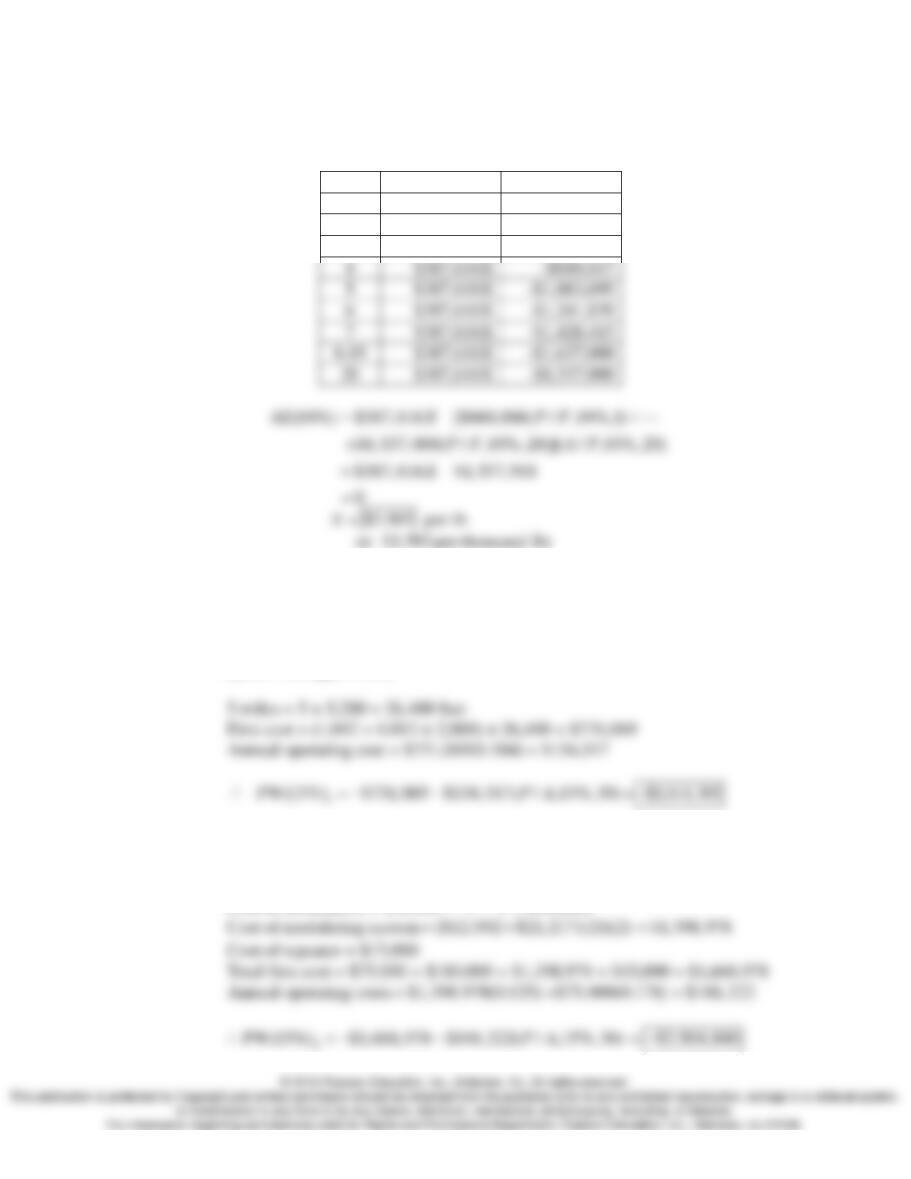
(b) Let X denote the steam charge per pound. Then, annual steam charge
1,061,962(0.001 )(365) 387,616X X= =
n
Revenue
Expenses
1
$387,616X
-$660,886
2
$387,616X
-$741,277
3
$387,616X
-$836,725
ST 12.3
(a) Transmission distance of 5 miles:
• Option 1 (Copper wire):
• Option 2 (Fiber optics):
Cost of ribbon = $15,000/mile × 5miles = $75,000
Cost of terminators = $30,000 × 3 × 2 = $180,000
4
$387,616X
-$949,847
5
$387,616X
6
$387,616X
7
$387,616X
$387,616X
$387,616X
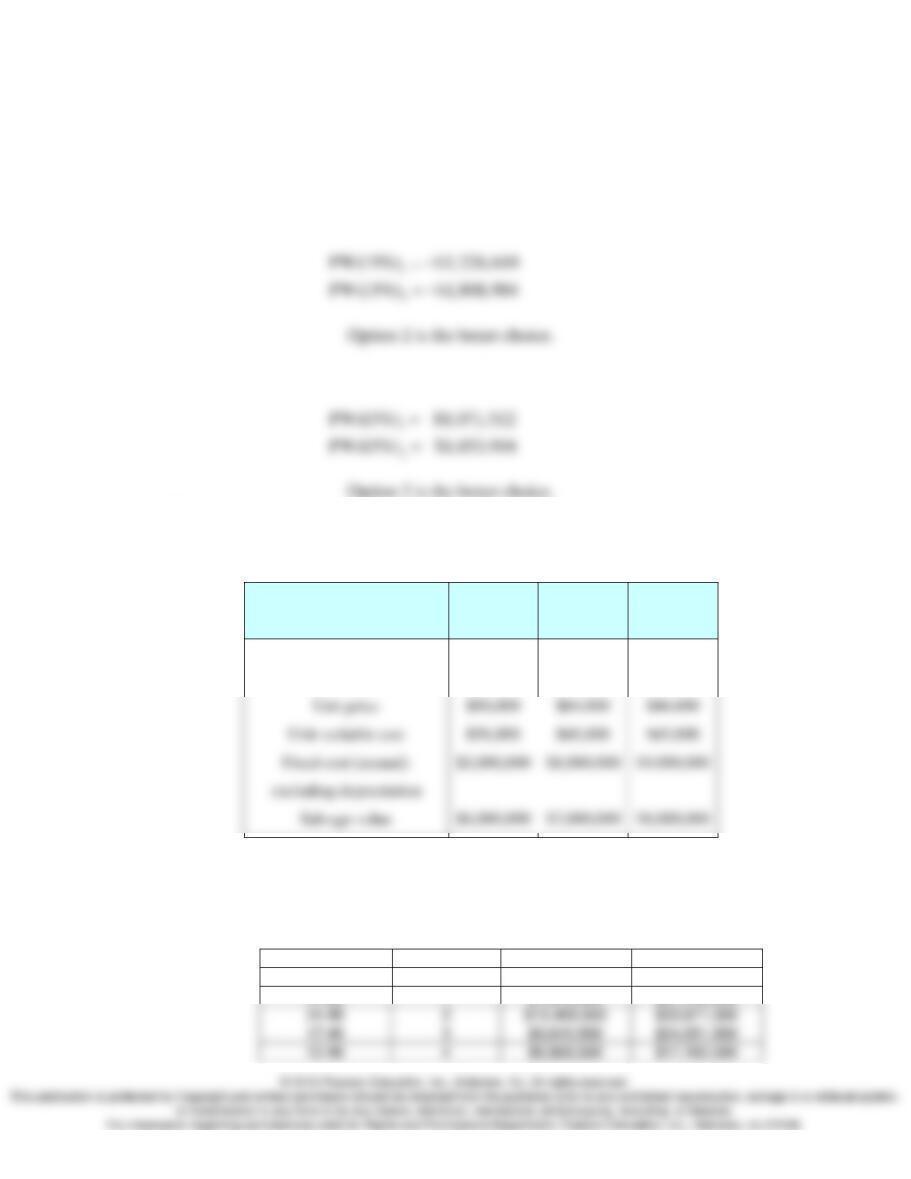
Option 1 is the better choice.
(b) Either 10 miles or 25 miles of transmission distance:
• 10 miles: two repeaters need for option 2
• 25 miles: five repeaters need for option 2
ST 12.4
(a), (b), and (c).
• Depreciated on a 7–year MACRS
Depreciation:
%
n
Dn
Bn
0
$55,000,000
14.29
1
$7,859,500
$47,140,500
2
Random Variables
Low
Most
Likely
High
Annual Market size (units)
Growth rate (annual)
5,000
3%
8,000
5%
10,000
8%
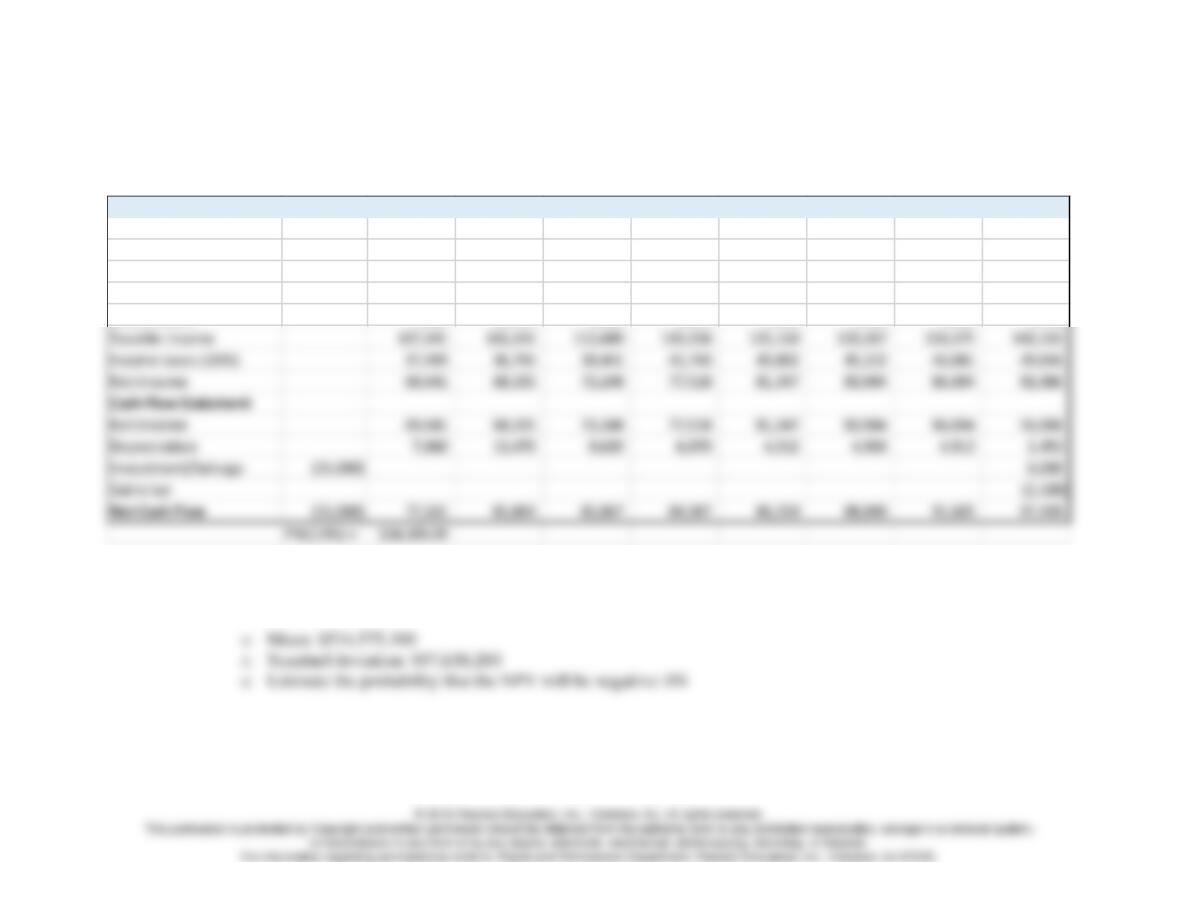
• A sample calculation: Net cash flow (Low case)
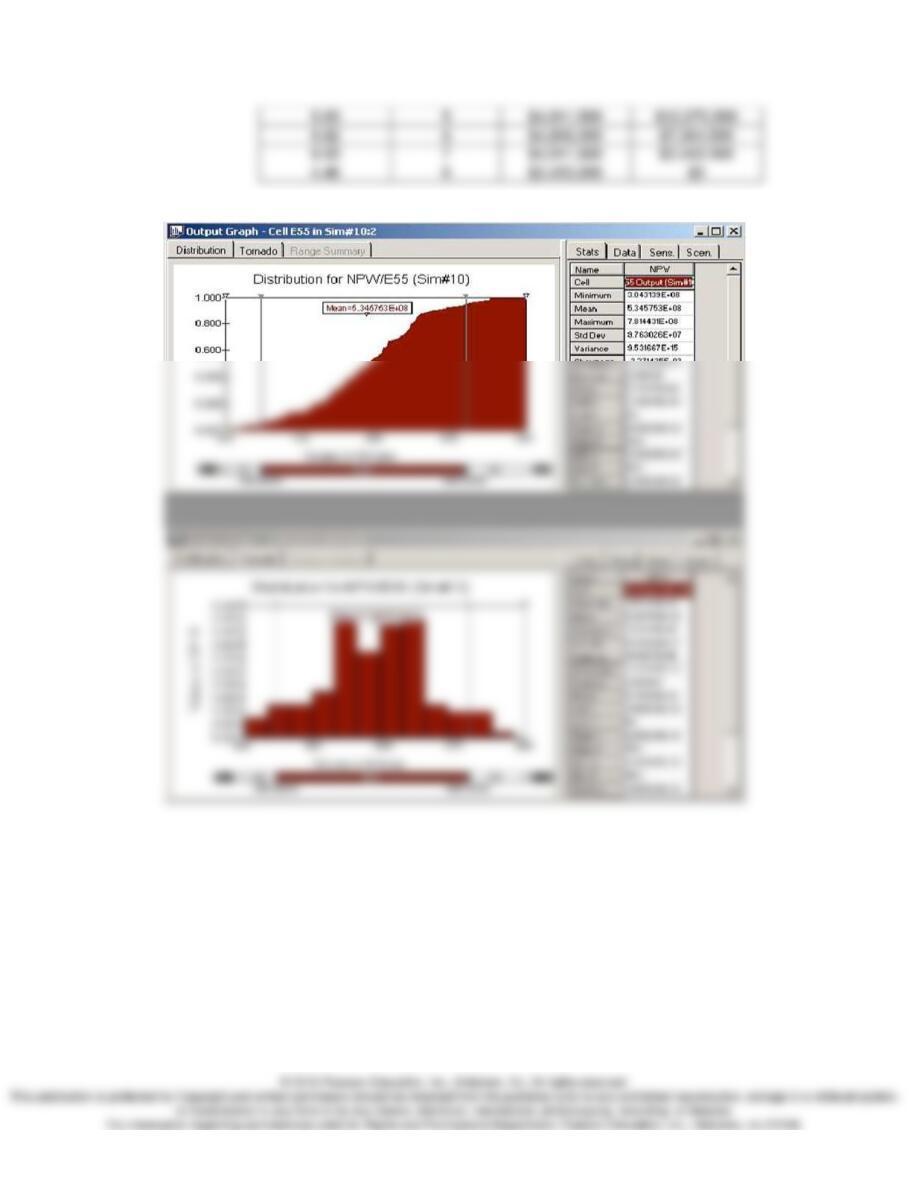
• Result of simulation (with random variables)
(unit: 000)
Income Statement 0 1 2 3 4 5 6 7 8
Revenue 400,000 412,000 424,360 437,091 450,204 463,710 477,621 491,950
Variable cost 280,000 288,400 297,052 305,964 315,142 324,597 334,335 344,365
Fixed cost 5,000 5,000 5,000 5,000 5,000 5,000 5,000 5,000
Depreciation 7,860 13,470 9,620 6,870 4,912 4,906 4,912 2,453
ST 12.5
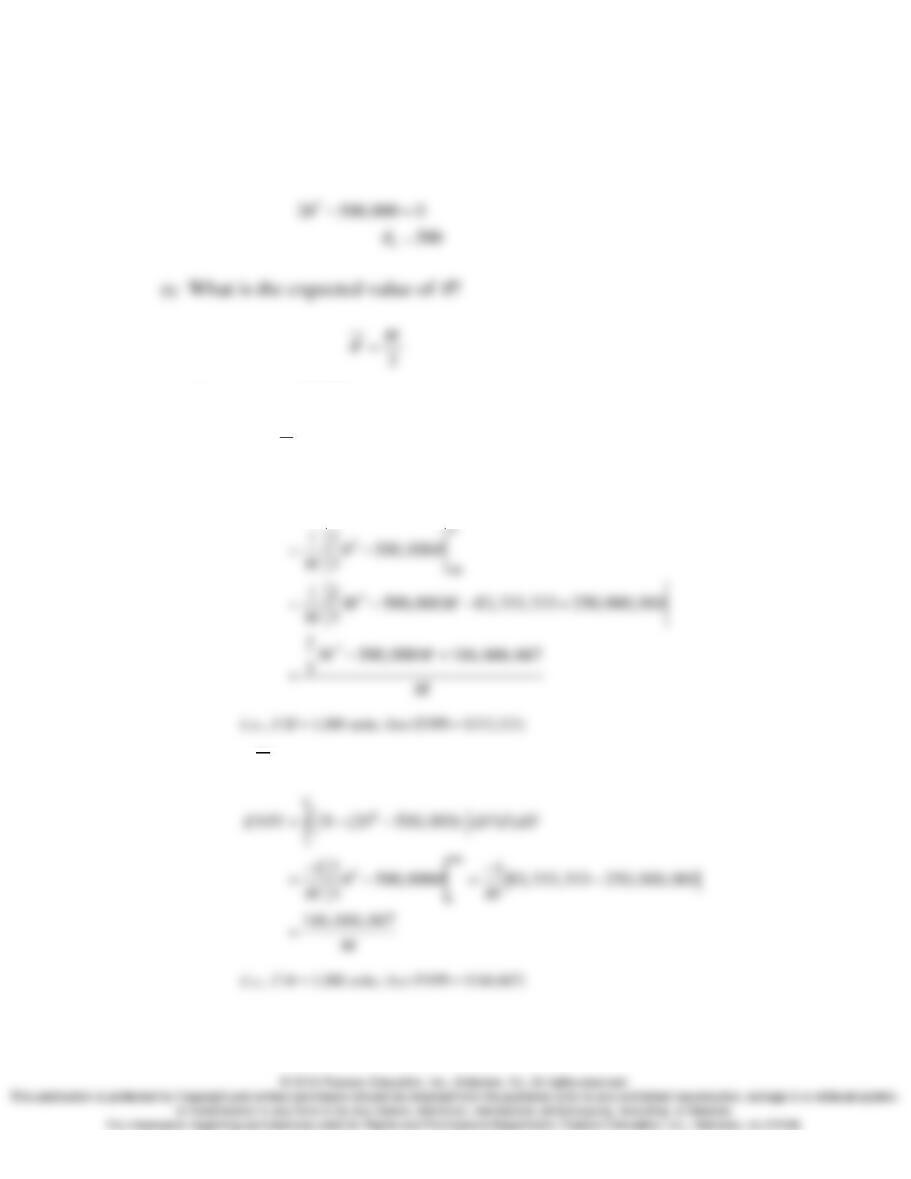
(a) The breakeven demand,
θ
b.
(c) Compute the EVPI.
• Case 1: if
‘
500
θ
≤
: Do not market the product
2
(2 500,000) ‘( )
b
M
EVPI D d
θ
θ θθ
= −
∫
• Case 2: if
‘500
θ
>
: Market the product