CHAPTER 11
FISCAL POLICY
SOLUTIONS TO END OF CHAPTER PROBLEMS
1. Fiscal policy refers to government purchases, transfer payments, taxes, and borrowing as
they affect macroeconomic variables such as real gross domestic product (GDP),
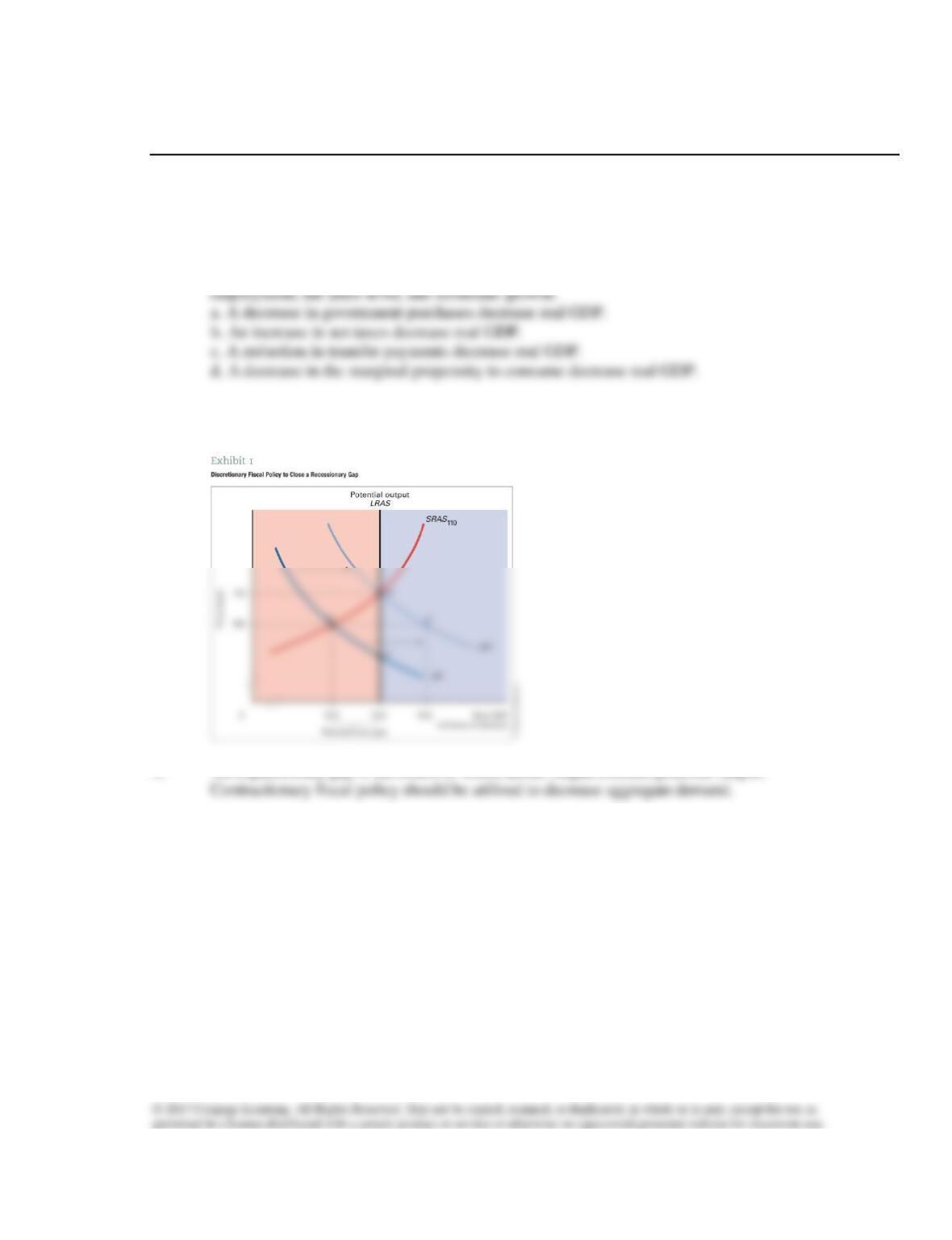
2. A recessionary gap is the extent to which actual output falls short of potential output.
Expansionary fiscal policy should be utilized to increase aggregate demand.
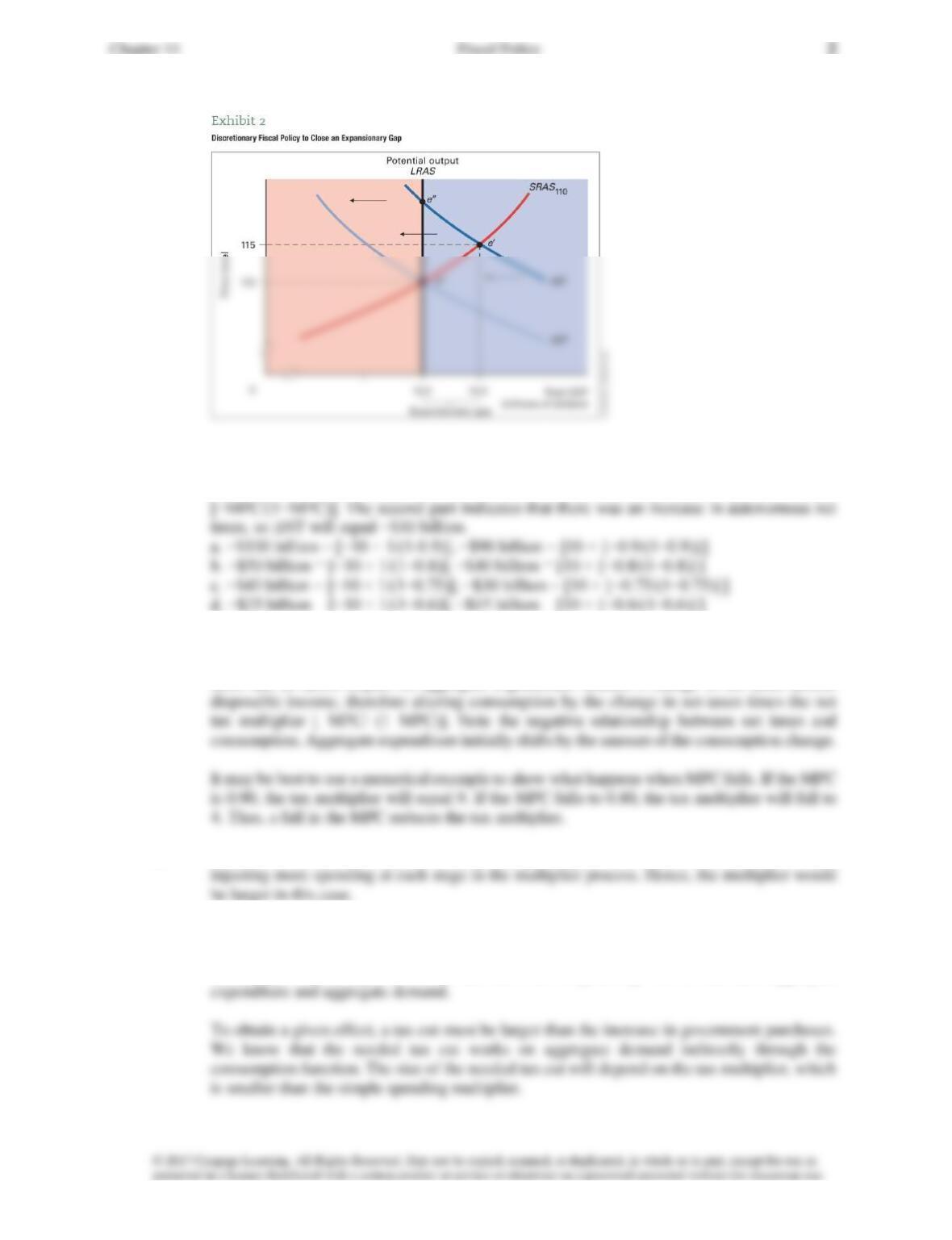
3. An expansionary gap is the extent to which actual output exceeds potential output.
4. The formula that should be used to solve the first part of this problem is ∆G × 1/(1−MPC).
The first part indicates that there was a decrease in government purchases, so ∆G will equal
−$10 billion. The formula that should be used to solve the second part is ∆NT×
5. A change in government purchases directly affects aggregate expenditure by the amount of
the change in purchases, and its multiplier equals 1/(1 − MPC). However, a change in net
taxes has no direct impact on aggregate expenditure. Rather, a change in net taxes affects
6. It would have the same impact on the spending multiplier as an increase in the MPC would,
7. A tax cut would increase disposable income. Individuals would in turn spend a portion of their
tax cuts, provided they felt that the tax cuts were long lasting. This would raise aggregate
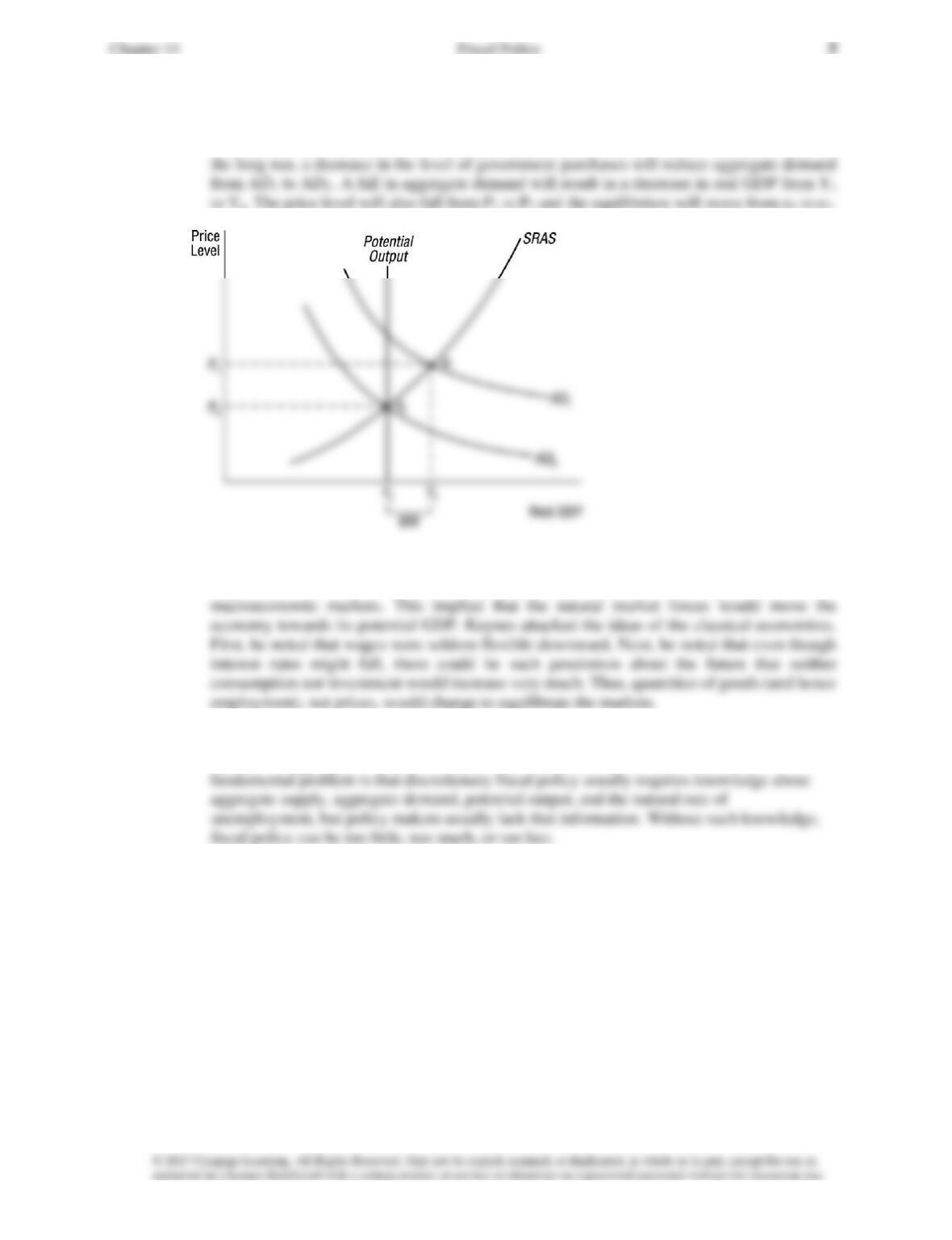
8. In the aggregate demand–aggregate supply model below, the difference between Y1 and Yn
illustrates an inflationary gap. Government should decrease its purchases to close the gap. In
9. The flexibility of prices was the most important point of the classical economists, since they
emphasized that flexible prices would restore any imbalance that might occur in the
10. The problems of the 1970s resulted from a decrease in aggregate supply more than from a
decrease in aggregate demand, so demand-side remedies seemed less effective. A more
11.
Chapter 11 Fiscal Policy 4
12. During the mid-1990s, the U.S. economy experienced a strong recovery fueled by growing
consumer spending, rising business optimism based on technological innovation, market
globalization, and the strongest stock market in history. The confluence of these events—
13. After peaking in December 2007, the economy turned down, as consumers, firms, and
financial markets were spooked by falling home prices and rising foreclosure rates. Job