CHAPTER 10
AGGREGATE SUPPLY
SOLUTIONS TO END OF CHAPTER PROBLEMS
1.
a. Given the levels of the different types of unemployment, the natural rate of unemployment
2. The real wage at point c is exactly the same as at point a. The reason is simple. The output levels
are the same; if there has been no change in labor supply or demand, the real wage must also be
3.
a. $17.2 trillion; 130
4.
Chapter 10 Aggregate Supply 2
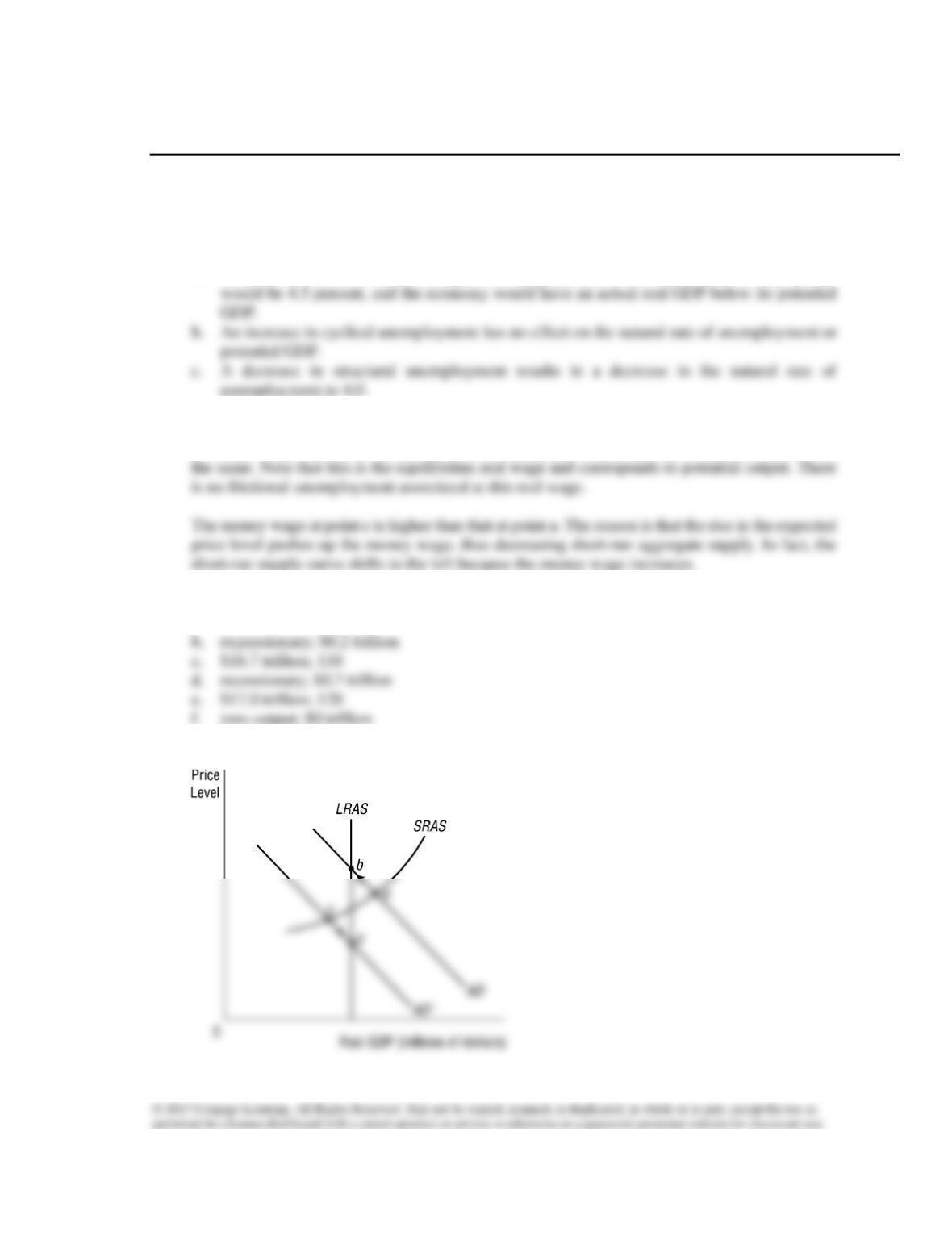
When an expansionary gap exists (e.g., the economy is at point a), prices are higher than expected
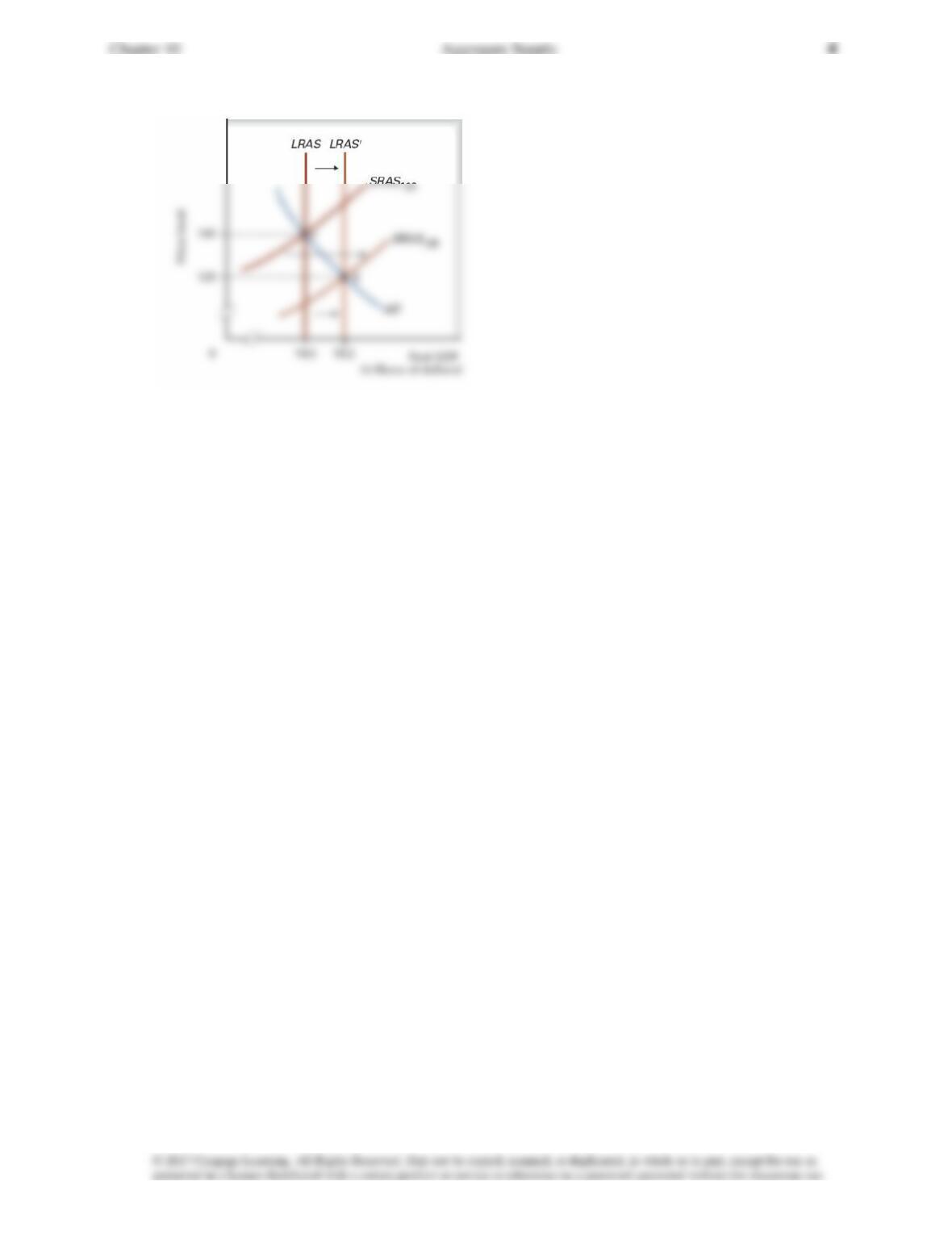
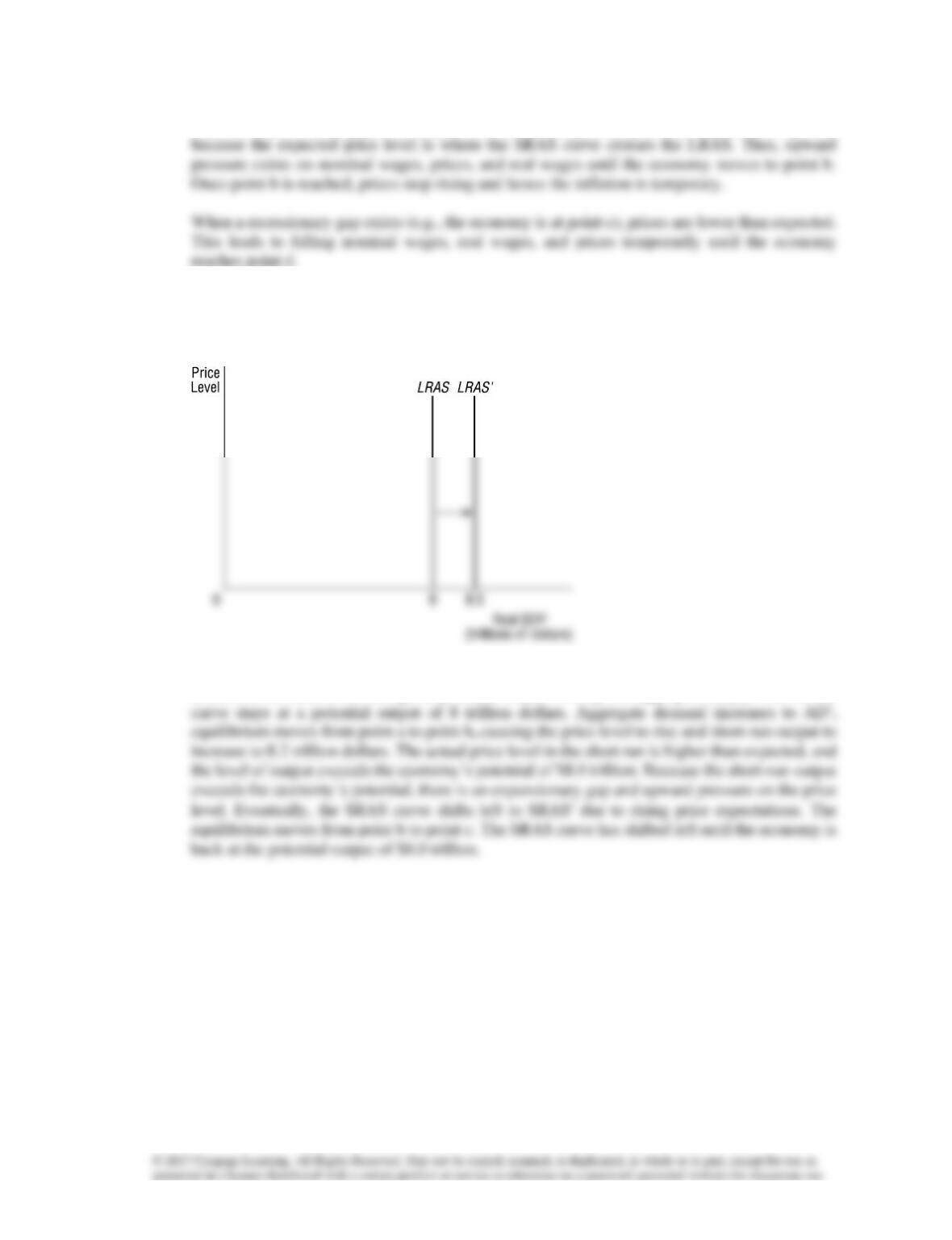
5. Increases in resource availability, improvements in technology, or institutional changes that
provide more attractive production incentives increase long-run aggregate supply and, thus,
potential output. In the following diagram, the LRAS curve shifts to the right as a result of any
of these changes.
If the aggregate demand curve shifts to the right in the following diagram, the price level
increases, but there is no change in potential output or long-run aggregate supply. The LRAS
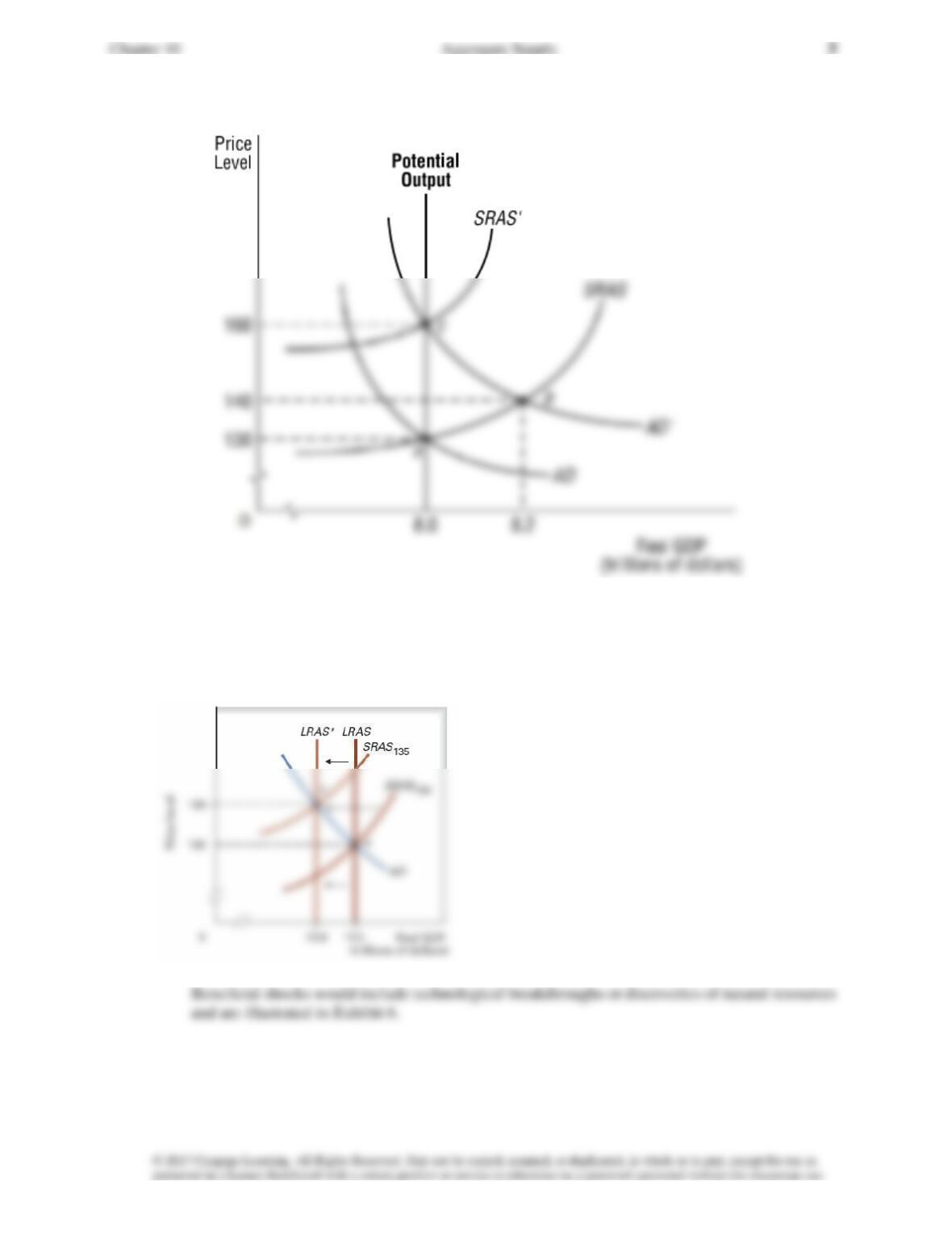
6. A natural disaster and the attack on the World Trade Center are examples of adverse supply
shocks. Exhibit 7 in the text graphically illustrates an adverse supply shock.