
Chapter 10
Dynamic Change, Economic Fluctuations,
and the AD-AS Model
OUTLINE
I. Anticipated and Unanticipated Changes
A. Anticipated changes are foreseen by economic participants. Decision makers have time
to adjust to them before they occur.
B. Unanticipated changes catch people by surprise.
II. Factors That Shift Aggregate Demand
A. An increase (decrease) in real wealth
B. A decrease in the real rate of interest
III. Shifts in Aggregate Supply
A. Changes in Long-Run Aggregate Supply
2. An improvement (deterioration) in technology and productivity.
3. Institutional changes that increase fireduce) the efficiency of resource use.
B. Changes in Short-Run Aggregate Supply
1. A decrease (increase) in resource prices that is, production costs.
3. Favorable (unfavorable) supply shocks, such as good (bad) weather or a reduction
(increase) in the world price of an important resource.
IV. Steady Economic Growth and Anticipated Changes in Long Run Aggregate Supply
A. Increases in LRAS will make it possible to produce and sustain a larger rate of output.
V. Unanticipated Changes and Market Adjustments
A. In the short run, output will deviate from full employment capacity when prices in the
goods and services market deviate from the price level that people expected.
B. Impact of Unanticipated Increases in Aggregate Demand
1. Initially, the strong demand and higher price level in the goods and services market
2. Output will increase, the rate of unemployment will drop below the natural rate and
-run potential.
4. Once this -run potential.
C. Impact of Unanticipated Reductions in Aggregate Demand
2. Firms will reduce output; the rate of unemployment will rise above the natural rate
-run potential.
D. Impact of an Unanticipated Increase in SRAS
2. Since the temporarily favorable supply conditions cannot be counted on in the
-term production capacity will not be altered.
3. Recognizing that they will be unable to maintain their current high level of income,
4. The increased saving will reduce interest rates, which will encourage investment
(capital formation).
E. Impact of Unanticipated Reductions in SRAS
2. Households will reduce their current saving level (and dip into past savings) to
3. The reduction in saving will lead to higher real interest rates and retard current
investment.
VI. Price Level, Inflation, and the AD-AS Model
A. Once decision makers anticipate a given rate of inflation and build it into long-term
contracts, an actual rate of inflation that is less than expected is essentially the
VII. Unanticipated Changes, Recessions, and Booms
A. There are two forces that underlie the self-corrective mechanism of macro markets:
1. Changes in real resource prices will help direct an economy toward equilibrium.
B. Expansions and Recessions: the Historical Record
1. During the past six decades, economic expansions have been far more lengthy than
recessions.
2. The depth and severity of the recession that started in December 2007 highlights the
issue of economic instability and recovery from a recession.
C. Using the AD-AS Model to Think about the Business Cycle and the Great Recession of
2008-2009
1. Between 2002 and mid-year 2006, housing prices rose by almost 90%. Stock prices
OBJECTIVES
This chapter focuses on how the three-market macroeconomic model adjusts in response to
economic change. The major factors that shift the aggregate demand and aggregate supply schedules
IMPORTANT POINTS AND TEACHING SUGGESTIONS
1.
2. The initial section of this chapter outlines the primary factors that shift the aggregate demand
schedule. The Thumbnail Sketch summarizes these points. Make sure students understand why
3. The long-
4. Be sure to stress that short-run aggregate supply can change temporarily without a change in the
5. The Thumbnail Sketch summarizes the major factors that cause shifts in the long-run and short-
6. Since the fiscal and monetary policies are unchanged, economic growth will shift both the long-
run and short-run aggregate supply curves to the right and lead to a lower price (level) in the
7. The distinction between anticipated and unanticipated economic changes is central to modern
economic analysis. Use illustrations to stress how behavior varies depending on whether an
event is anticipated or unanticipated. For example, you might note that when thunderstorms
8. Be sure to go over the impact of an unanticipated increase and decrease in aggregate demand.
Exhibits 5 and 6 of the text cover these topics.
9. -run) capacity, the strong
demand will push up resource prices. The higher resource prices will shift SRAS to the left and
10. Critical Analysis questions 1 and 2 will enhance student understanding of the major factors that
11. In talking about the effects of supply-side incentives on the long-run aggregate supply curve, it
is important to emphasize that supply-
13. In talking about the speed of market adjustment toward an equilibrium on the long-run aggregate
HINTS FOR ANSWERING CRITICAL ANALYSIS QUESTIONS
3. An outward shift in the production possibilities curve would shift the long run aggregate
6. At the lower-than-expected inflation rate, real wages (and costs) will increase relative to
7. The sharp decrease in house prices would tend to reduce aggregate demand and the rise in oil
10. The increase in demand for exports will increase aggregate demand. In the short run, this
unanticipated expansion in demand will tend to increase output and employment while
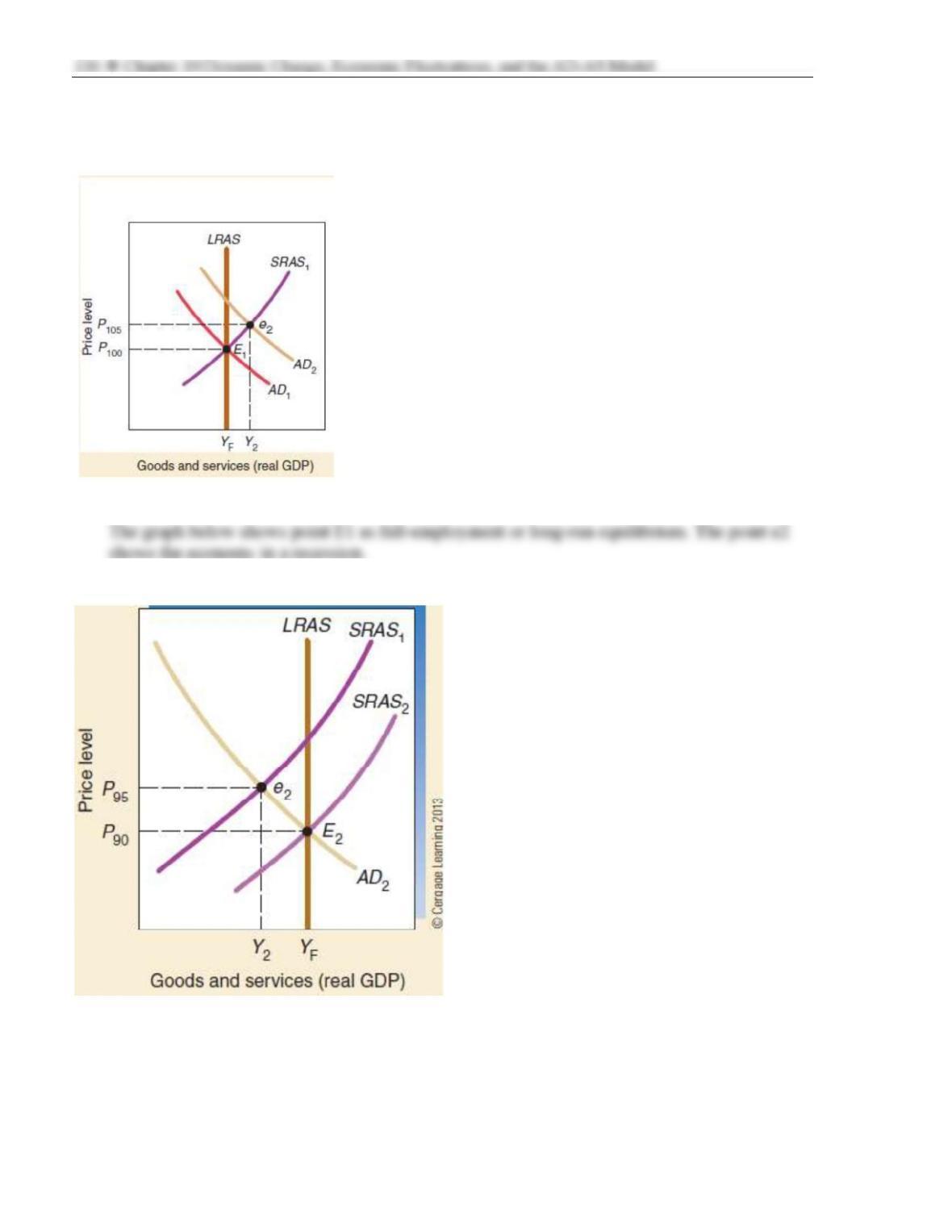
11. The graph below shows point E1 as full-employment or long-run equilibrium. The point e2
shows the economy in a boom.
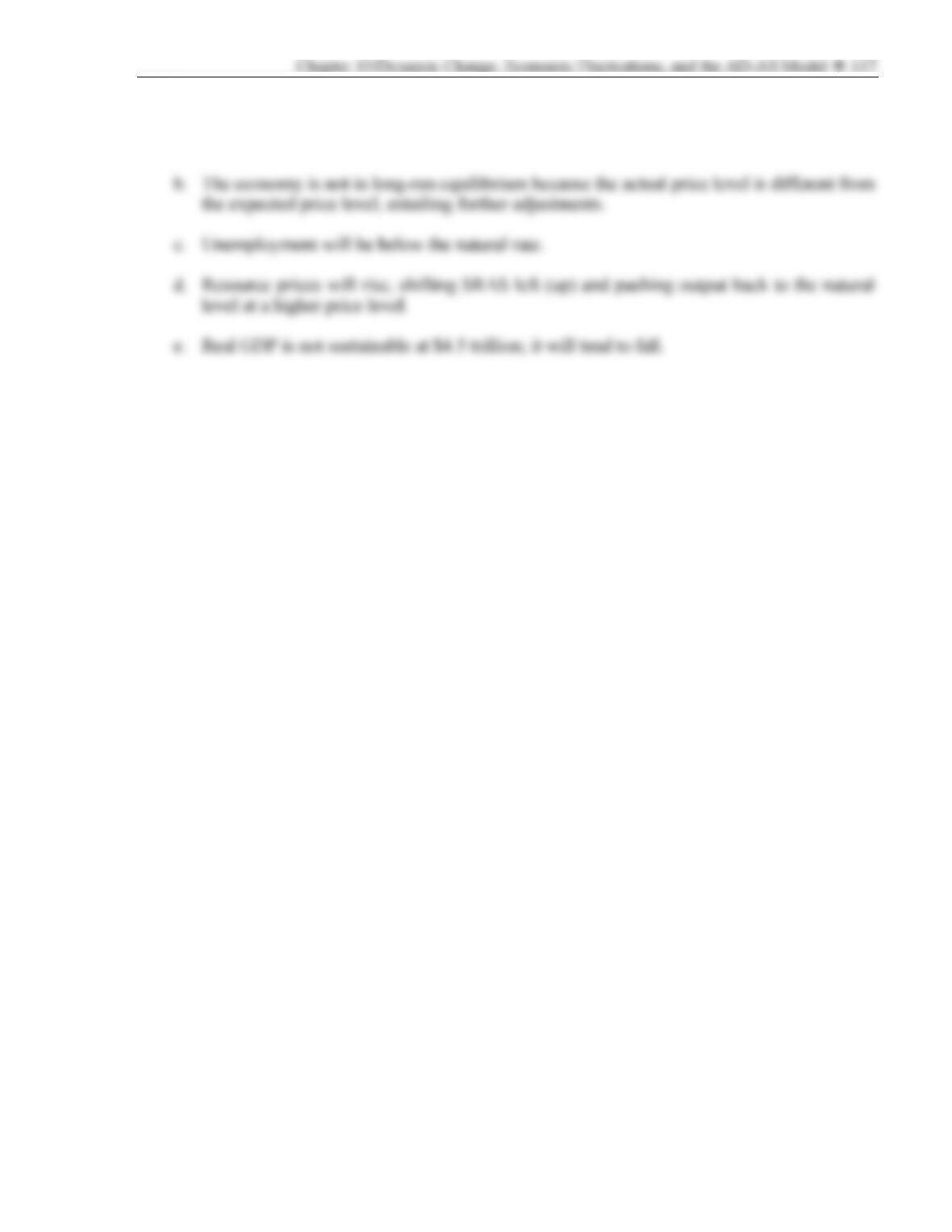
12. a. $4.5 trillion.