Appendix 10A The Cost of New Common Stock and WACC
Answers and Solutions
10A–1
Web Appendix 10A
The Cost of New Common Stock and WACC
Answers to Questions
10A-1 In reality, the WACC would probably not take as sharp a jump from 11.5% to 12.0%. The firm
would adjust its capital structure and/or its dividend payments, and these adjustments would cause
the WACC curve to increase slowly and smoothly beyond the breakpoint. Consequently, it would
not be necessary for the firm to issue additional new equity to accept some of these additional
projects.
10A–2
Answers and Solutions
Appendix 10A The Cost of New Common Stock and WACC
Solutions to Problems
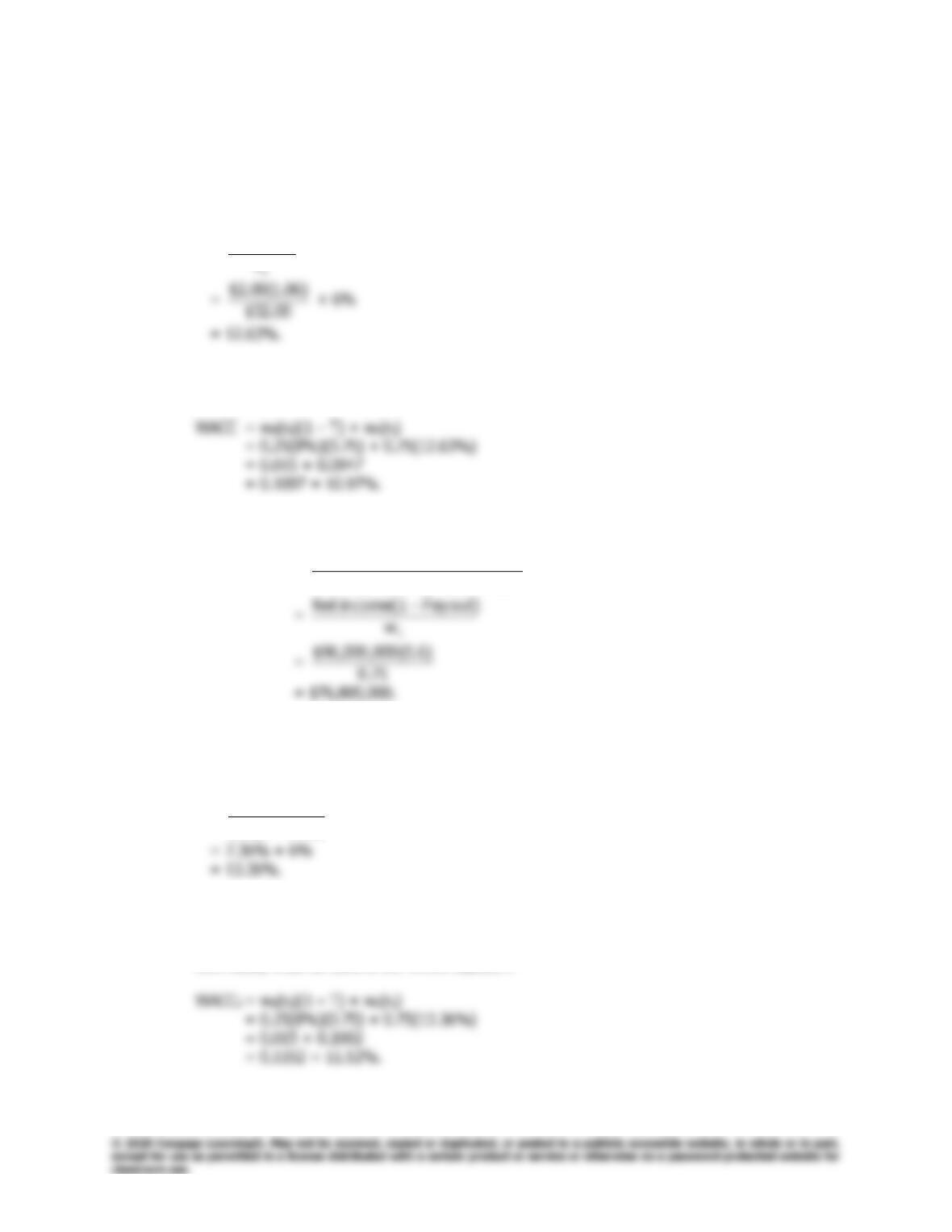
10A-1 a. rd = 8%; T = 25%; wd = 25%; wc = 75%; D0 = $2.00; P0 = $32; g = 6%.
rs =
0
P
)g1(D +
+ g
The firm has no preferred stock, so the WACC equation includes only the component costs of
debt and common equity as follows:
b. Net income = $96,000,000; Dividend payout ratio = 40%; wc = 0.75
RE breakpoint =
structure capital inequity of %
RE to Addition
c. Capital budget = $144,000,000 > RE breakpoint = $76,800,000, so additional new equity will be
issued. The flotation cost associated with issuing new equity is 10%. So, we need to calculate re
as follows:
re =
)10.01(32$
12.2$
−
+ 6%
The firm has no preferred stock, so the WACC equation includes only the component costs of
debt and common equity. However, now new equity will have to be issued because the firm’s
optimal capital budget exceeds the retained earnings breakpoints. So, the component cost of
new equity must be used in the WACC equation.
Appendix 10A The Cost of New Common Stock and WACC
Answers and Solutions
10A–3
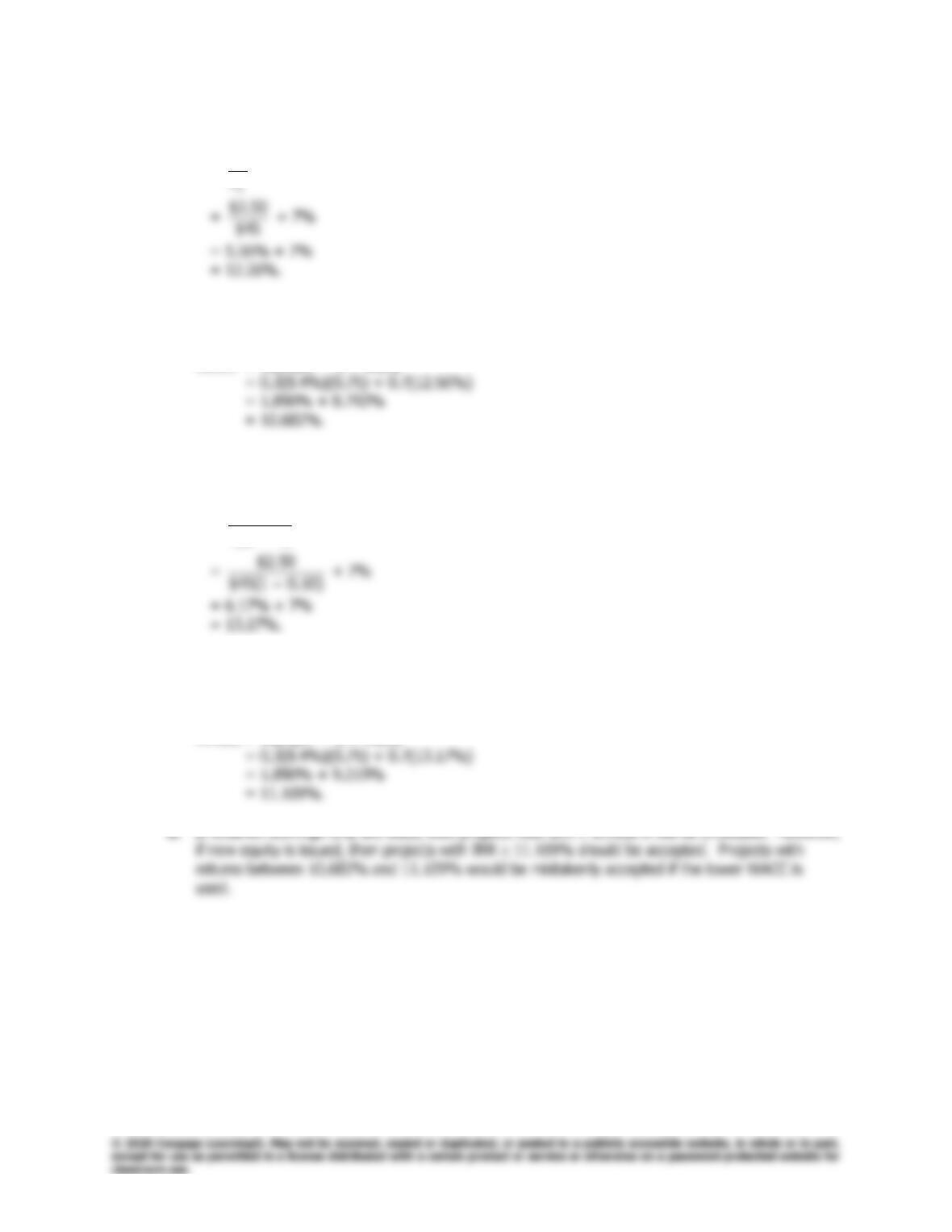
10A-2 a. rd = 8.4%; T = 25%; wd = 30%; wc = 70%; D1 = $2.50; P0 = $45; g = 7%.
rs =
1
D
+ g
The firm has no preferred stock, so the WACC equation includes only the component costs of
debt and common equity as follows:
WACC = wd(rd)(1 – T) + wc(rs)
b. The flotation cost associated with issuing new equity is 10%. So, we need to calculate re as
follows:
re =
)F1(P
D
0
1
−
+ g
The firm has no preferred stock, so the WACC equation includes only the component costs of
debt and common equity. However, now new equity will have to be issued so the component
cost of new equity must be used in the WACC equation.
WACC2 = wd(rd)(1 – T) + wc(re)