
Appendix 15B Short–Term Loans and Bank Financing
Answers and Solutions
15B-1
Web Appendix 15B
Short-Term Loans and Bank Financing
Answers to Questions
15B-1 The chapter discussed two common methods of calculating bank interest charges: regular, or
simple, interest and add-on interest. This web appendix discusses two additional methods:
discount interest and compensating balances.
15B-2 A compensating balance is the amount a lender requires to be on hand in your account. If this
amount required exceeds the amount the firm would normally hold on deposit, then this excess
must be deducted from the loan amount. The compensating balance reduces the funds available
and thus increases the cost of the loan.
Solutions to Problems
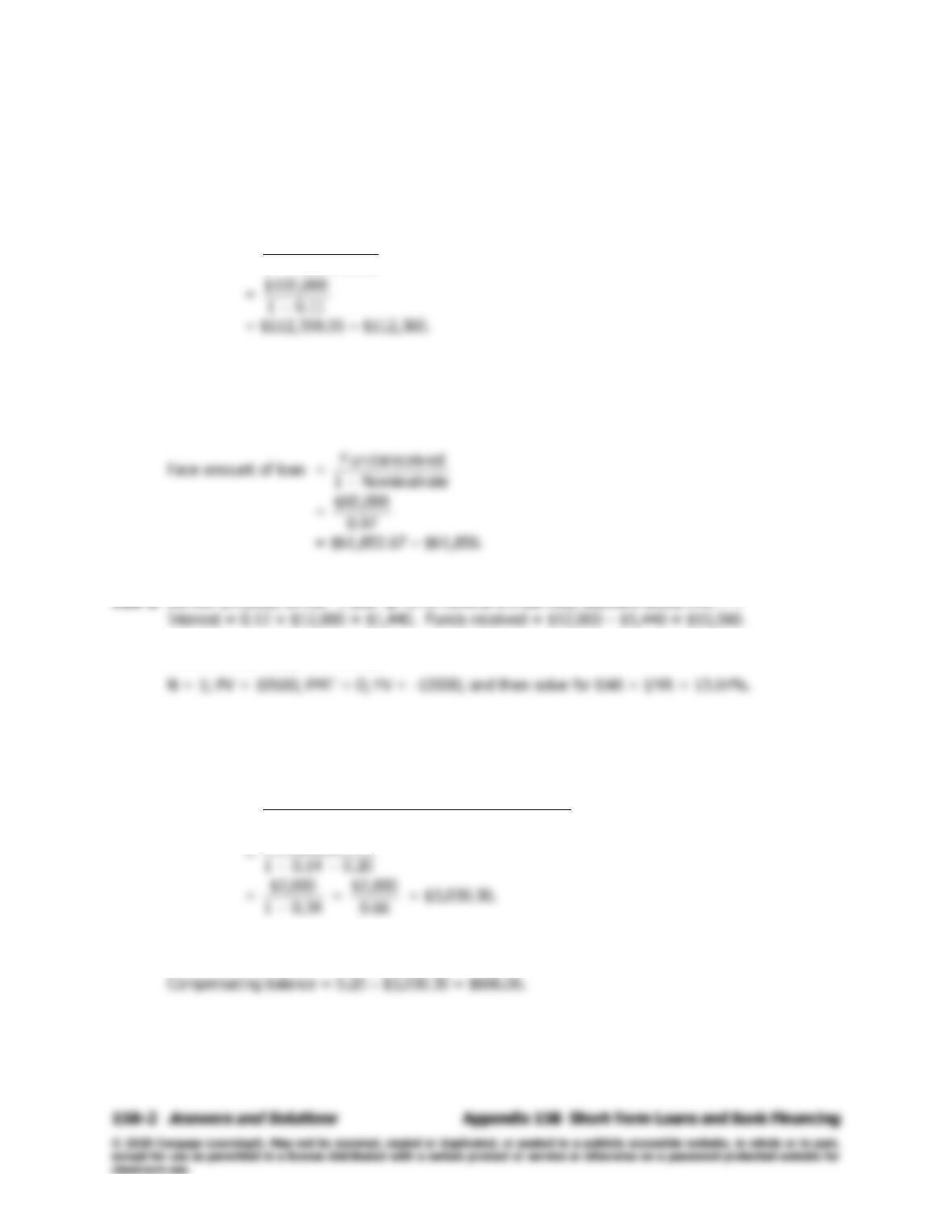
15B-1 Loan required = $100,000; discount basis = 11% nominal annual rate; face value = ?
Face value =
rate Nominal1
available Funds
−
rate Nominal1
−
15B-2 90-day bank notes; 12% nominal annual rate, discount basis; loan required = $60,000/each note.
Interest/90 days = 0.12/4 = 0.03.
15B-3 Borrow $12,000; terms: 1 year @ 12% nominal annual rate, discount basis; EAR = ?
Discount interest, paid annually:
15B-4 Borrow $2,000; terms: 1 year @ 14% nominal annual rate, discount basis and 20% compensating
balance. EAR = ? Face value = ?
Face value =
% balance ngCompensatirate Nominal1
receiv ed Funds
−−
000,2$
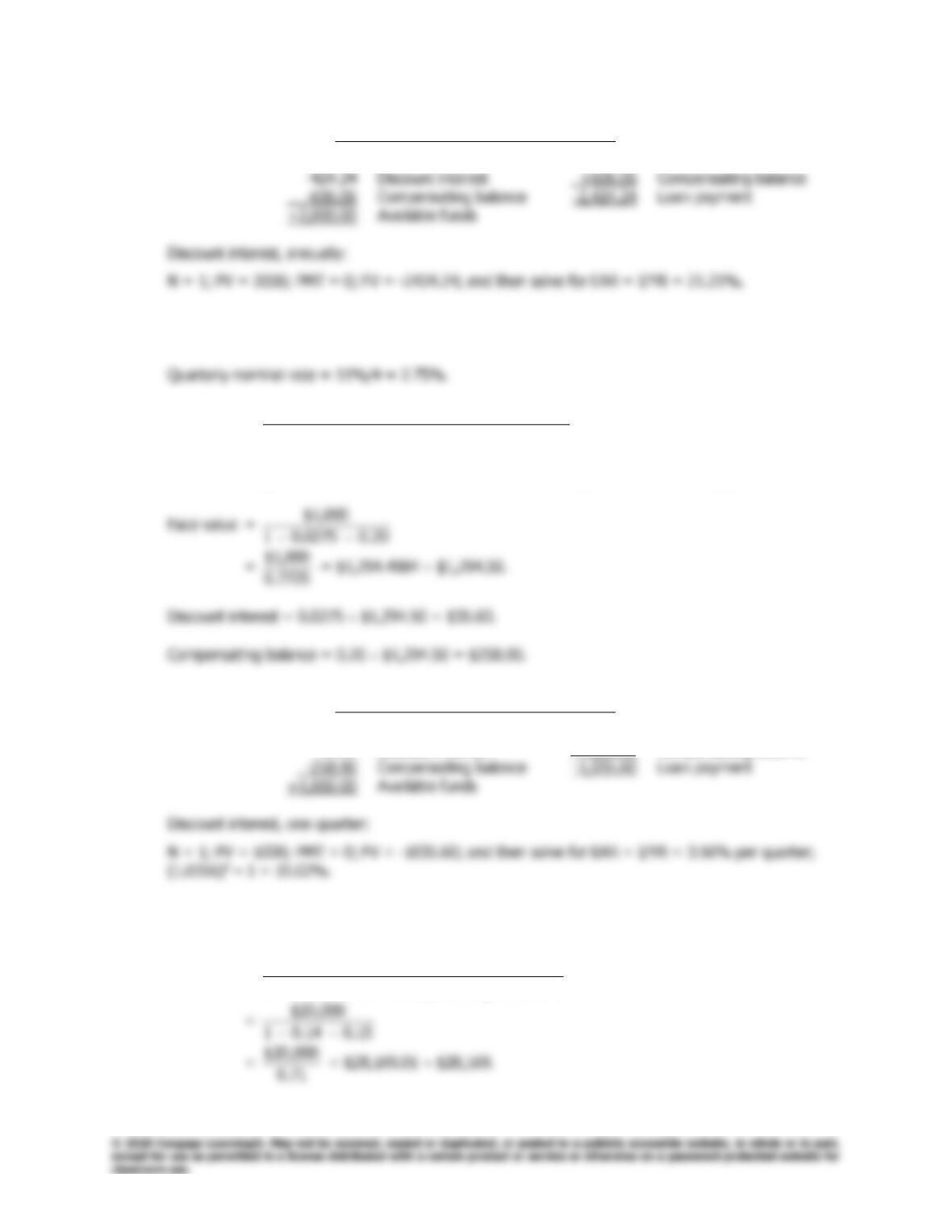
Discount interest = 0.14 $3,030.30 = $424.24.
Appendix 15B Short–Term Loans and Bank Financing
Answers and Solutions
15B-3
0 1
| |
+3,030.30 -3,030.30
15B-5 90–day bank notes; 11% stated annual rate, discount basis and 20% compensating balance; EAR ?
Face value =
% balance ngCompensatirate Nominal1
received Funds
−−
.
You can use any dollar amount for funds received to solve this problem. We used $1,000.
0 1
| |
+1,294.50 -1,294.50
-35.60 Discount interest +258.90 Compensating balance
15B-6 $20,000 loan; 14% stated annual discount interest; 15% compensating balance.
Face value =
% balance ngCompensati rate Nominal 1
received Funds
−−