260
APPENDIX A
SOLUTIONS TO PROBLEMS
A.1 (i) $566.
A.2 (i) This is just a standard linear equation with intercept equal to 3 and slope equal to .2. The
intercept is the number of missed classes for a student who lives on campus.
A.4 (i) The percentage point change is 5.6 – 6.4 = –.8, or an eight-tenths of a percentage point
decrease in the unemployment rate.
A.5 The majority shareholder is referring to the percentage point increase in the stock return,
while the CEO is referring to the change relative to the initial return of 15%. To be precise, the
shareholder should specifically refer to a 3 percentage point increase.
A.6 (i) 100[42,000 – 35,000)/35,000] = 20%.
A.7 (i) When exper = 0, log(salary) = 10.6; therefore, salary = exp(10.6)
$40,134.84. When
exper = 5, salary = exp[10.6 + .027(5)]
$45,935.80.
261
A.8 From the given equation, grthemp = –.78(salestax). Since both variables are in
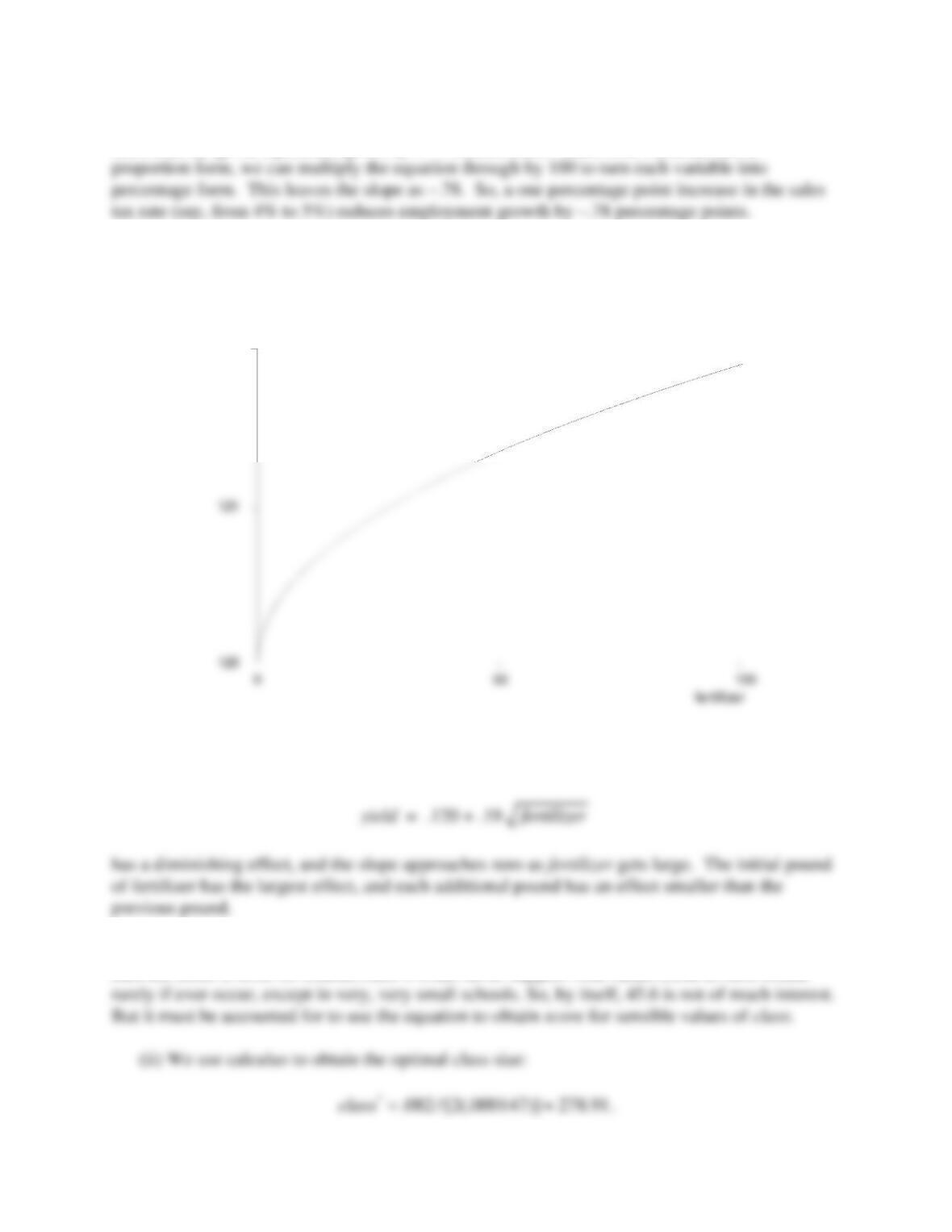
A.9 (i) The relationship between yield and fertilizer is graphed below.
(ii) Compared with a linear function, the function
A.10 (i) The value 45.6 is the intercept in the equation, so it literally means that if class = 0
then the score is 45.6. Of course, class = 0 can never happen. And values close to zero would
yield 122
262
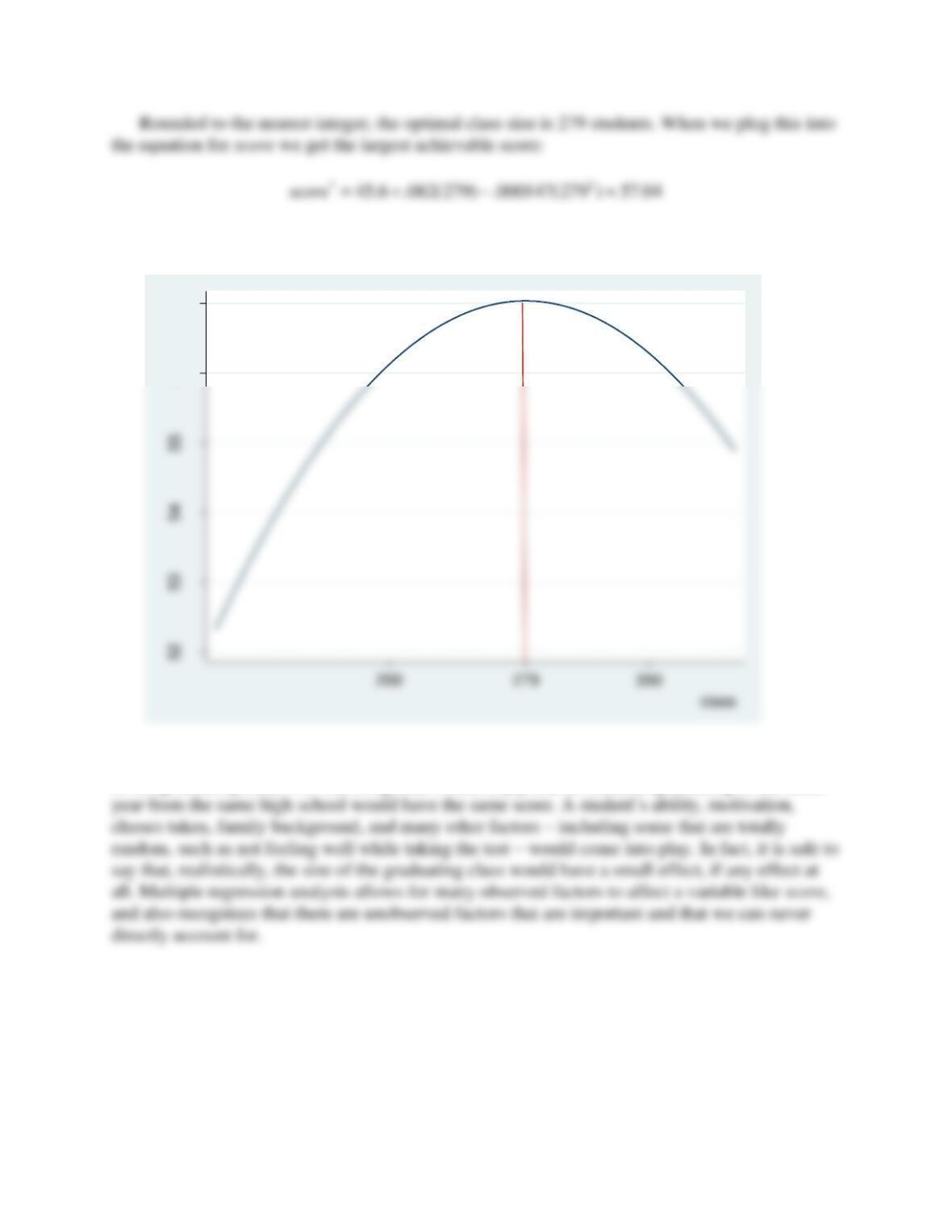
(iii) The following graph shows the solution rounded to the nearest integer:
(iv) It is not at all realistic to think that a student’s score is determined only by the size of his
or her graduating class. For one thing, that would imply that all students graduating in the same
score