Chapter 8 – Database Redesign
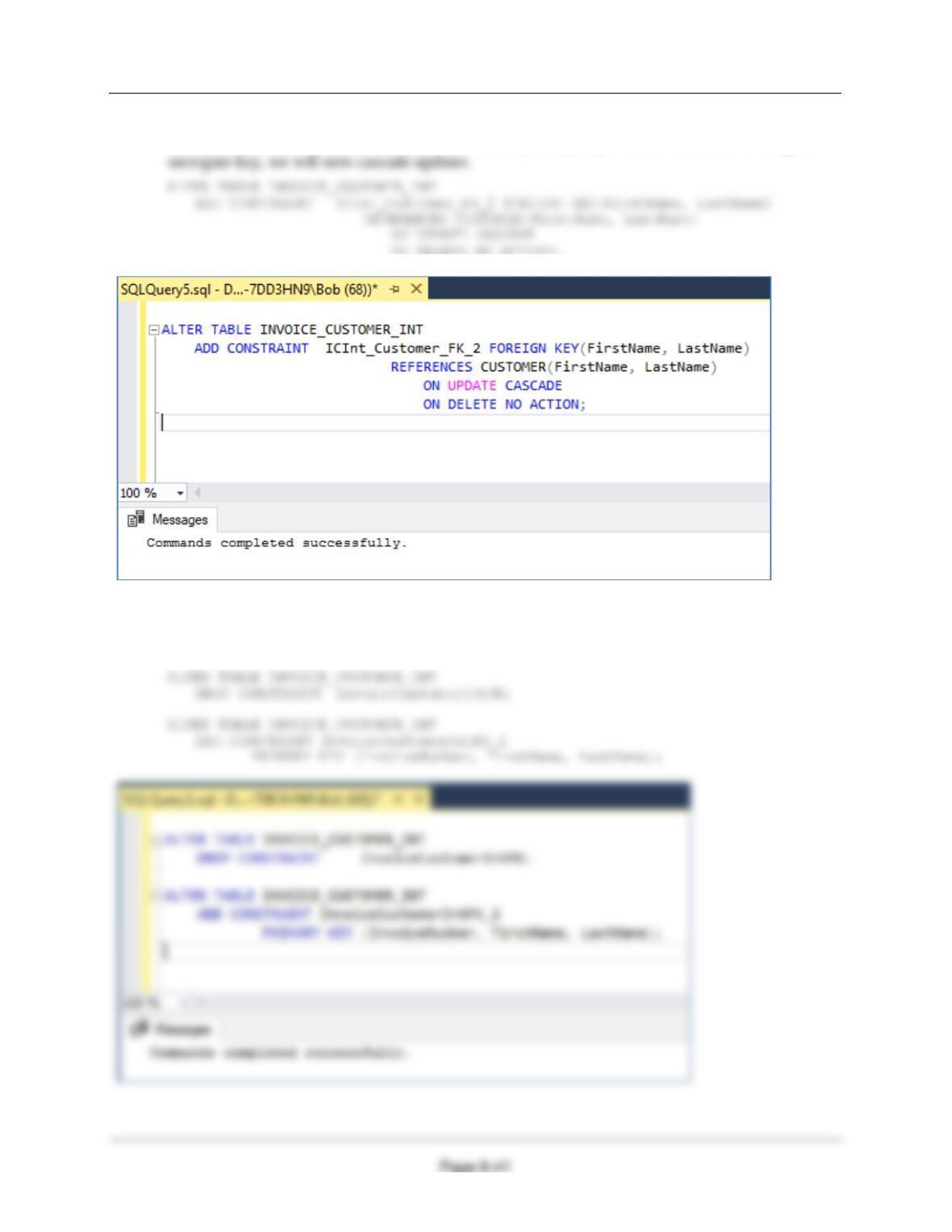
(6) Create a new foreign key constraint between CUSTOMER and
INVOICE_CUSTOMER_INT. Note that since the primary key of CUSTOMER is no longer a
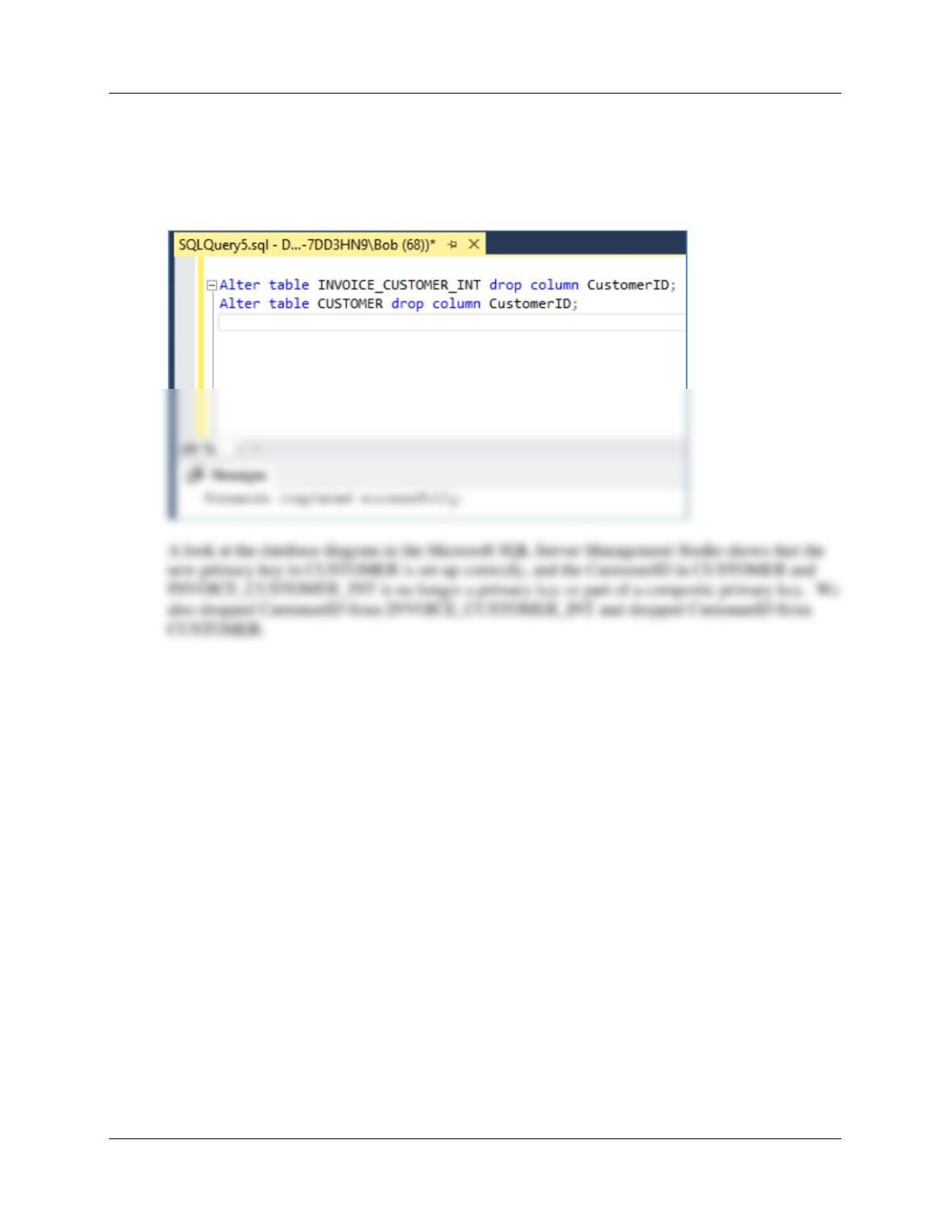
(7) Drop the primary key constraint on (InvoiceNumber, CustomerID) in
INVOICE_CUSTOMER_INT, and replace it with a primary key constraint on (InvoiceNumber,
FirstName, LastName).
Chapter 8 – Database Redesign
Page 8-42
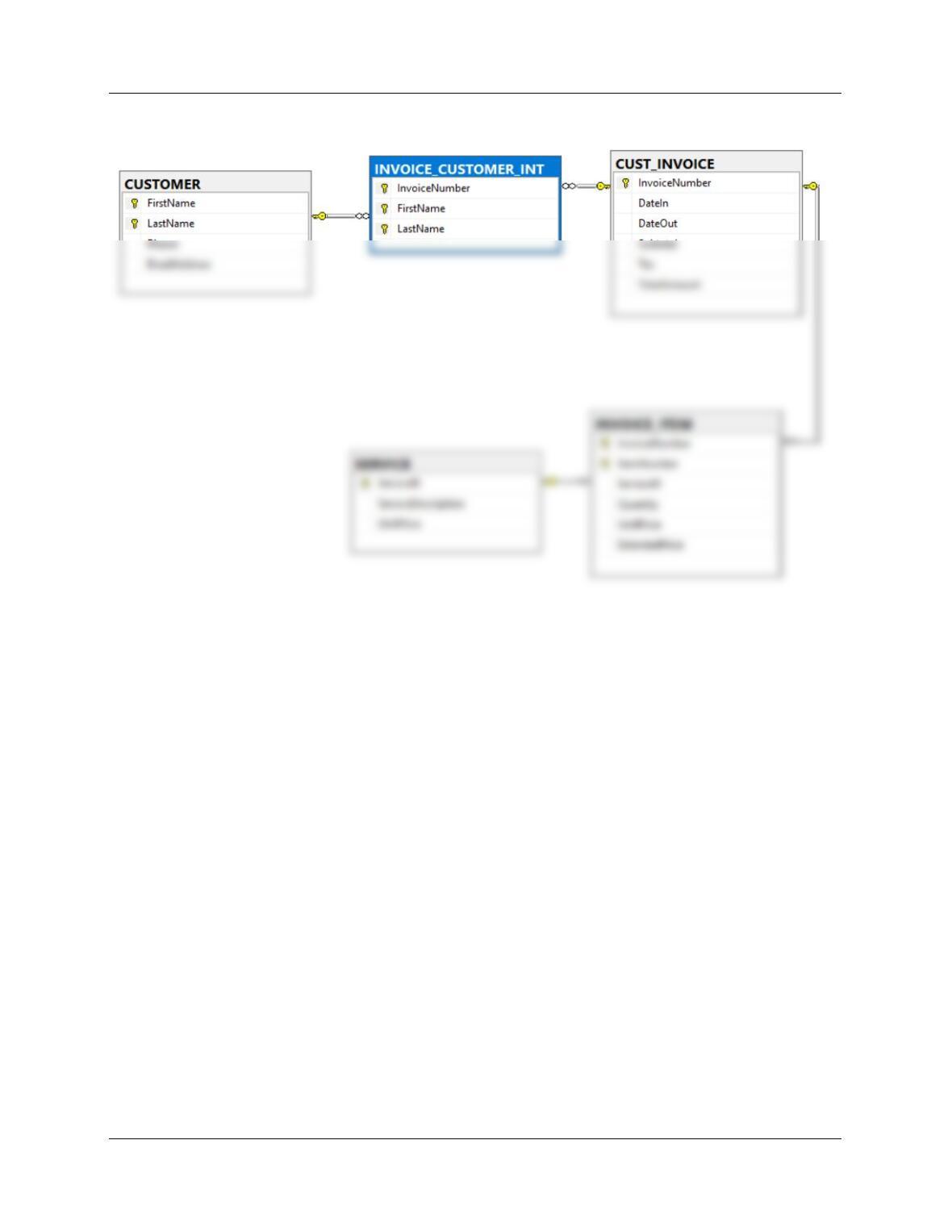
(8) Drop the CustomerID column for INVOICE_CUSTOMER_INT and also in CUSTOMER.
Alter table INVOICE_CUSTOMER_INT drop column CustomerID;
Alter table CUSTOMER drop column CustomerID;
Chapter 8 – Database Redesign
Page 8-43
Chapter 8 – Database Redesign
❖ THE QUEEN ANNE CURIOSITY SHOP PROJECT QUESTIONS
Assume that The Queen Anne Curiosity Shop has created a database with the tables described
at the end of Chapter 7:
CUSTOMER (CustomerID, LastName, FirstName, EmailAddress, EncryptedPassword,
Address, City, State, ZIP, Phone, ReferredBy)
The referential integrity constraints are:
ReferredBy in CUSTOMER must exist in CustomerID in CUSTOMER
Supervisor in EMPLOYEE must exist in EmployeeID in EMPLOYEE
Assume that CustomerID of CUSTOMER, EmployeeID of EMPLOYEE, ItemID of ITEM, SaleID
of SALE, and SaleItemID of SALE_ITEM are all surrogate keys with values as follows:
CustomerID Start at 1 Increment by 1
Chapter 8 – Database Redesign
Page 8-45
A vendor may be an individual or a company. If the vendor is an individual, the CompanyName
field is left blank, while the ContactLastName and ContactFirstName fields must have data
values. If the vendor is a company, the company name is recorded in the CompanyName field,
and the name of the primary contact at the company is recorded in the ContactLastName and
ContactFirstName fields.
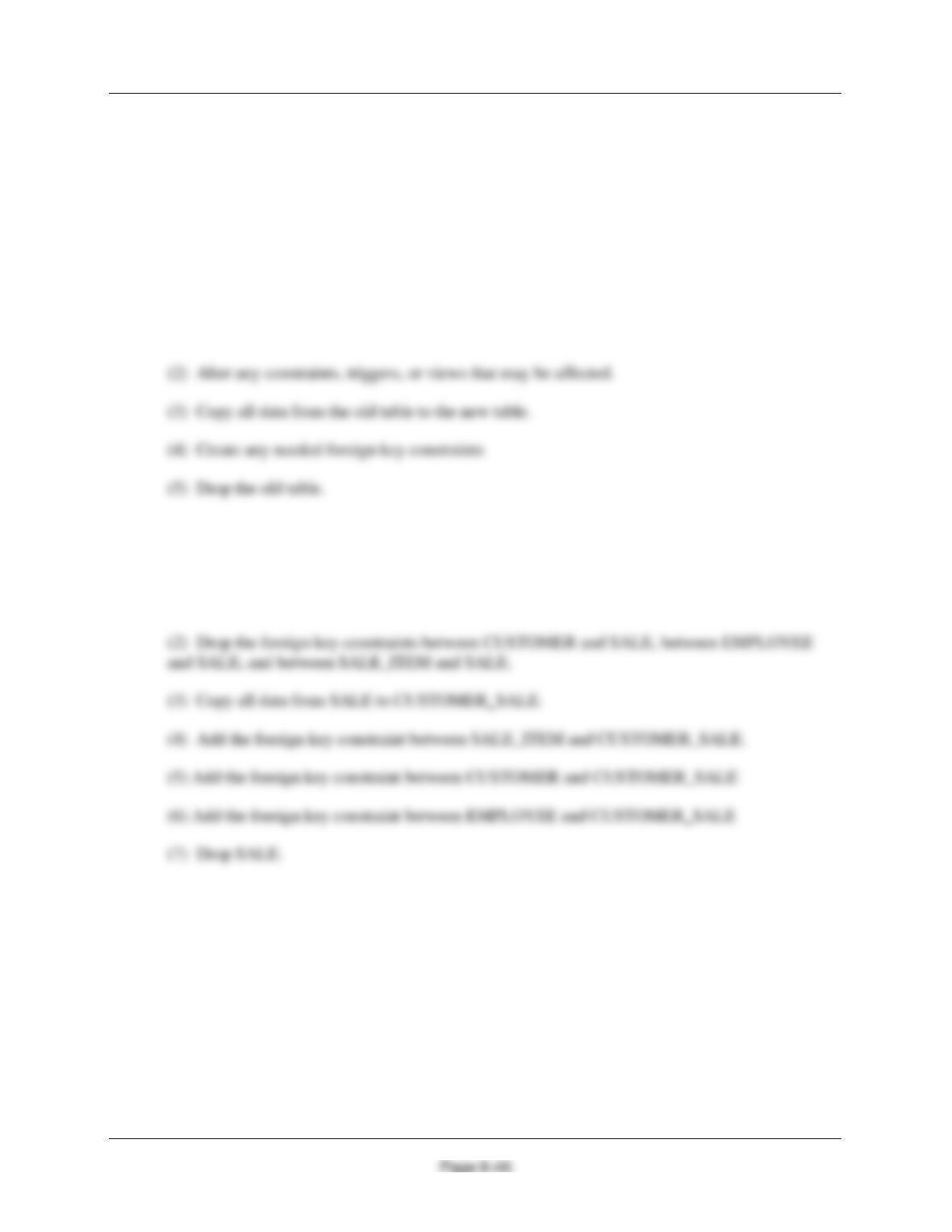
The diagram below shows the dependencies between the tables, and also shows the extensions for
view and functions. Triggers and stored procedures would be added as they are designed.
Chapter 8 – Database Redesign
B. Using your dependency graph, describe the tasks necessary to change the name of the
SALE table to CUSTOMER_SALE.
We will use just the tables in the dependency graph—every view, trigger and stored procedure
dependent on SALE would also have to be adjusted.
Based on the dependency graph, we can see that SALE is dependent on CUSTOMER and
EMPLOYEE, and that SALE_ITEM is dependent on SALE.
As described in Review Question 8.25 above, the process for changing a table name is:
(1) Create a new table with the new name.
So we would:
(1) Create the table CUSTOMER_SALE (Note—the foreign key constraints between
[CUSTOMER and CUSTOMER_SALE] and [CUSTOMER and EMPLOYEE] can be created as
part of the table creation process).
Chapter 8 – Database Redesign
Page 8-47
C. Write all SQL statements to make the name change described in part B.
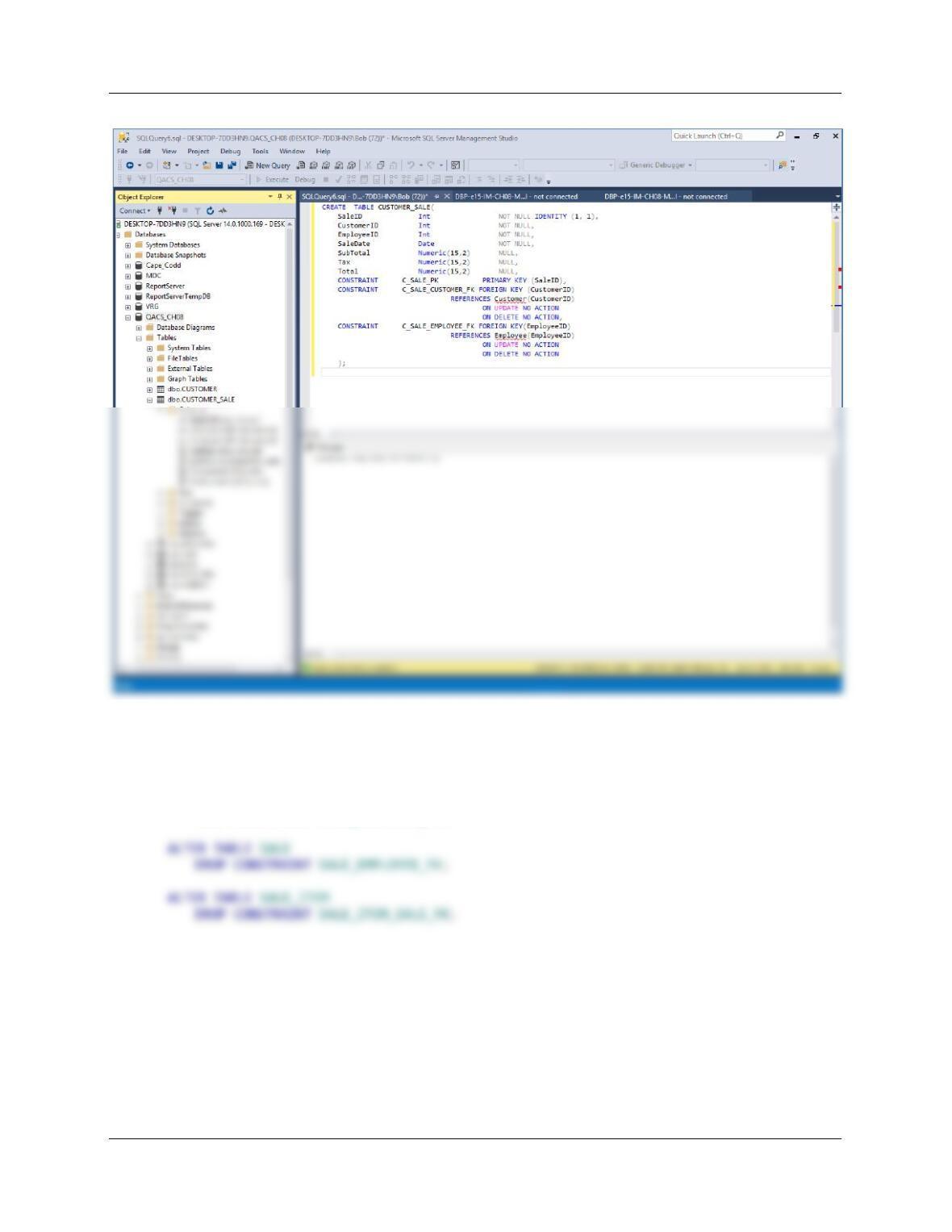
(1) Create the table CUSTOMER_SALE. Note that we will also create the foreign key
constraints between [CUSTOMER and CUSTOMER_SALE] and [EMPLOYEE and
CUSTOMER_SALE] at this time—we’re used to doing this when we create a new table.
CREATE TABLE CUSTOMER_SALE(
SaleID Int NOT NULL IDENTITY (1, 1),
CustomerID Int NOT NULL,
EmployeeID Int NOT NULL,
Chapter 8 – Database Redesign
Page 8-48
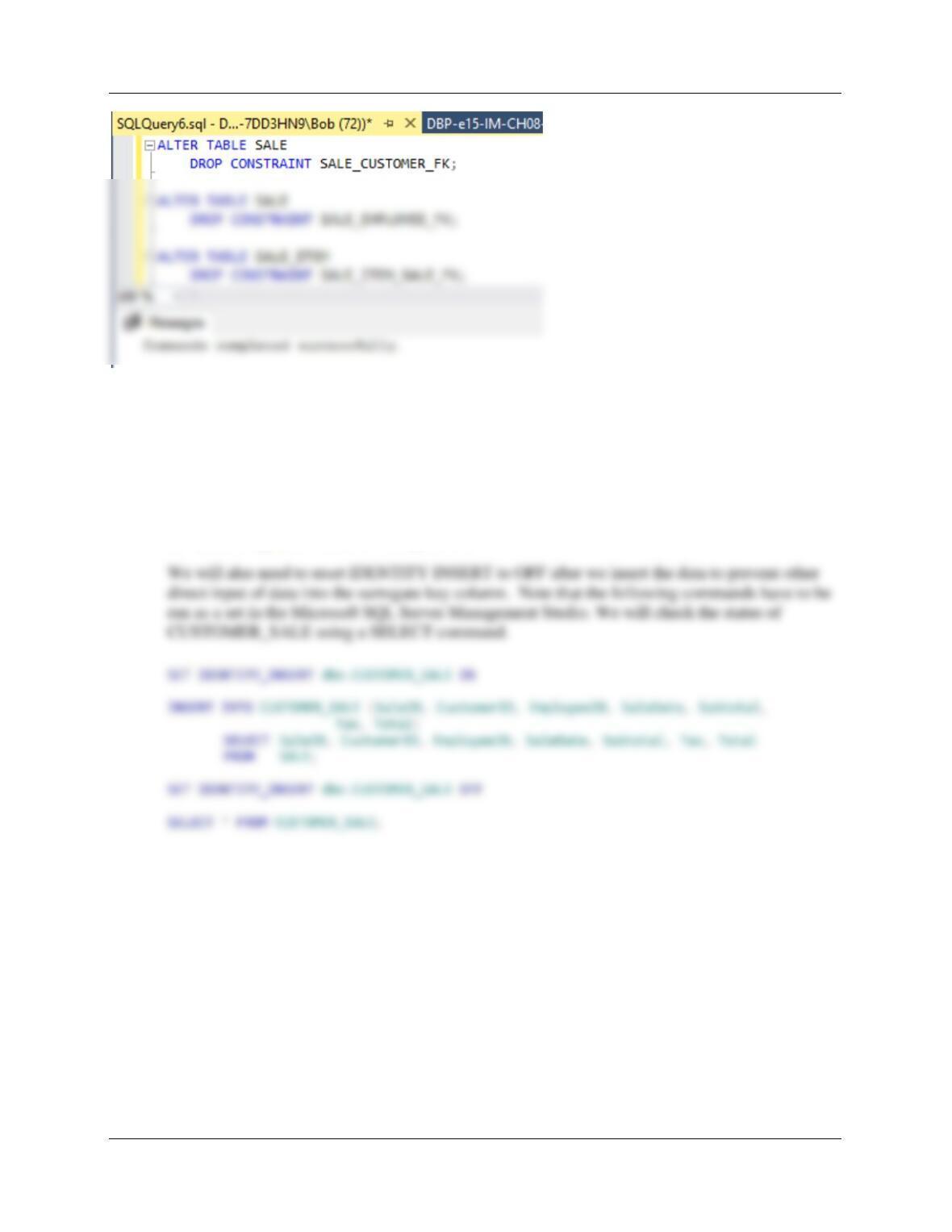
(2) Drop the foreign key constraints between CUSTOMER and SALE, between EMPLOYEE
and SALE, and between SALE_ITEM and SALE.
ALTER TABLE SALE
DROP CONSTRAINT SALE_CUSTOMER_FK;
Chapter 8 – Database Redesign
Page 8-49
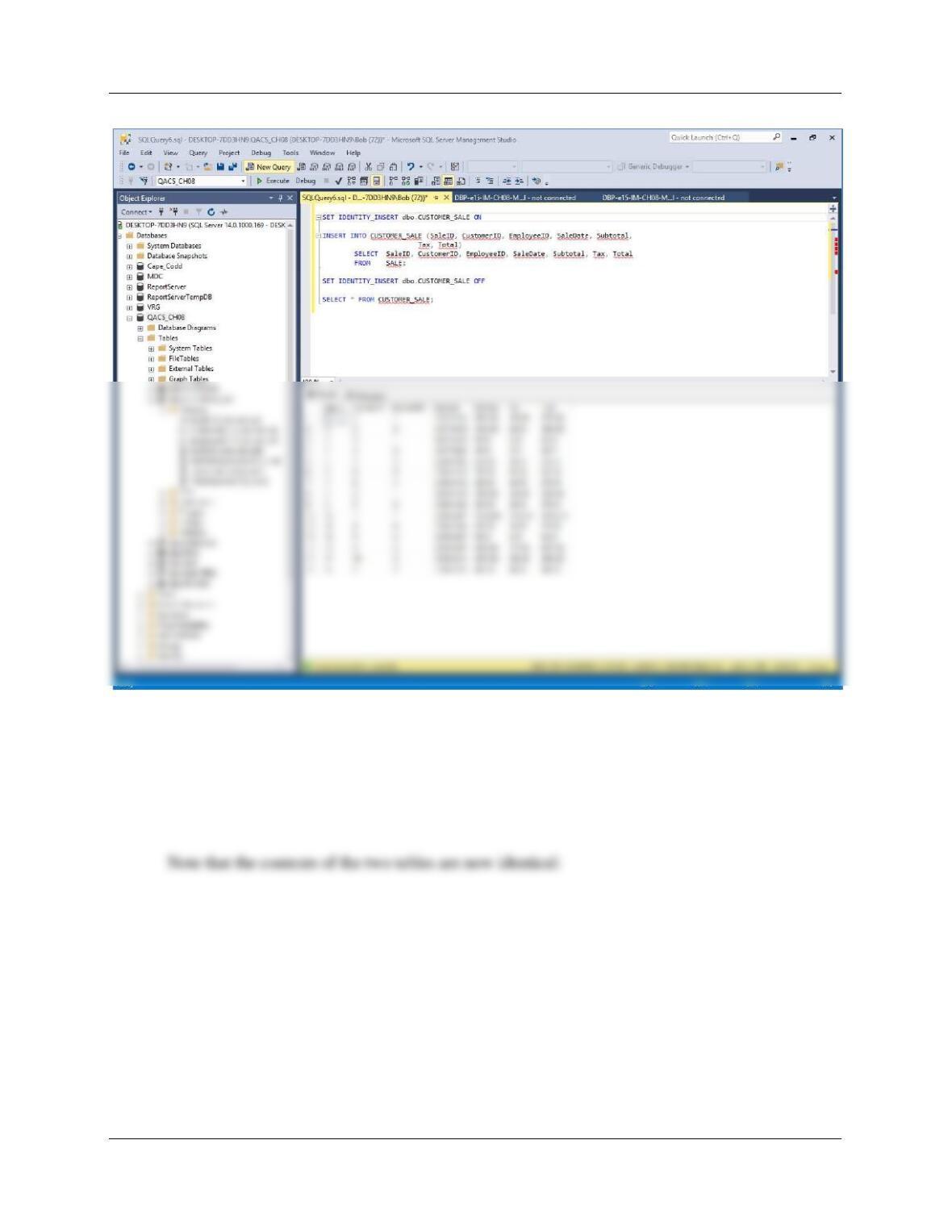
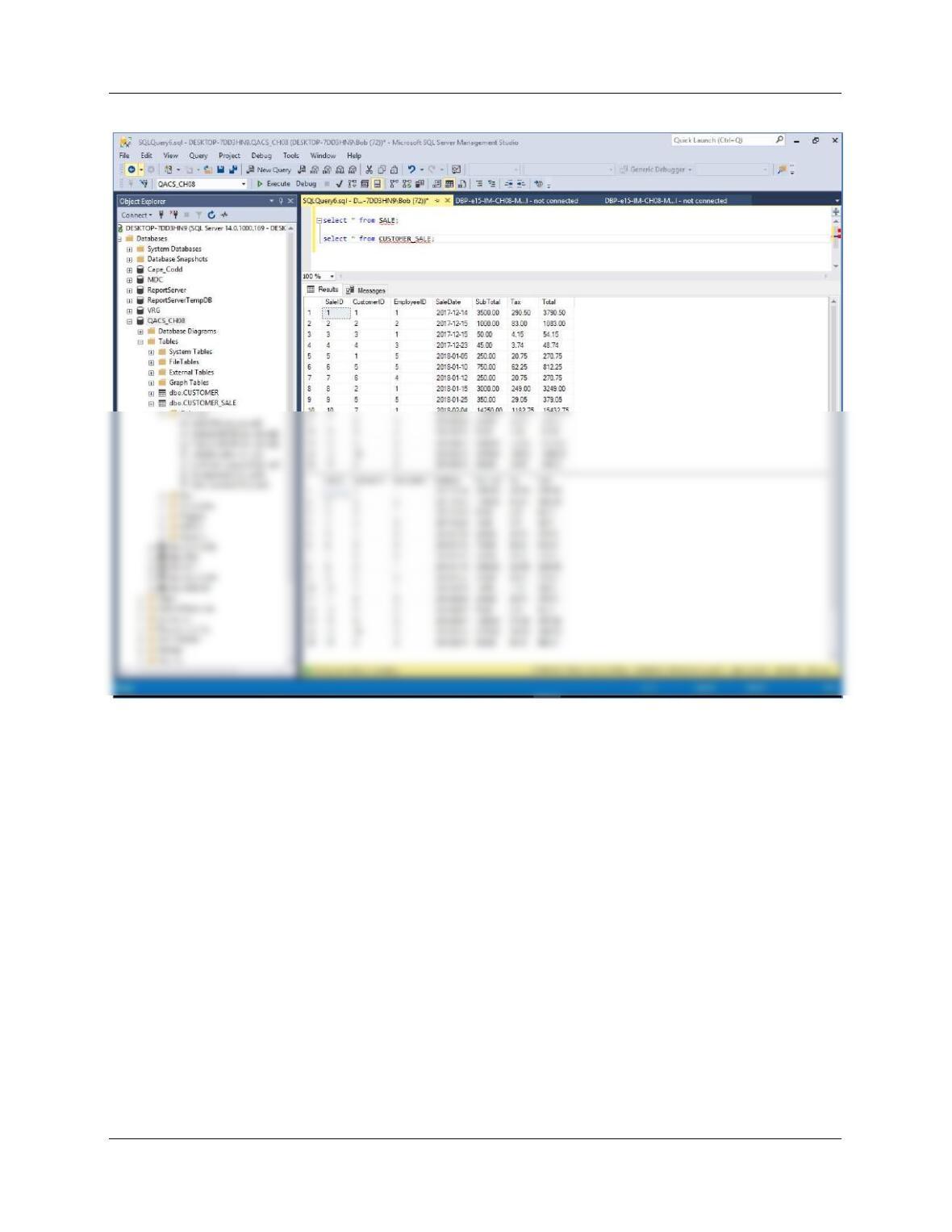
(3) Copy all data from CUSTOMER to CUSTOMER_SALE (note use of SET
IDENTITY_INSERT because SaleID is a surrogate key).
The SQL INSERT statement will have a problem, and the problem is the surrogate key for
SaleID. SQL Server will not let us insert values into a surrogate key field that uses the
IDENTITY function without explicitly stating that we want to. This requires the use of the SQL
Server SQL command IDENTITY_INSERT. We will use the command (don’t run it yet):
SET IDENTITY_INSERT dbo.CUSTOMER_SALE ON
Chapter 8 – Database Redesign
Page 8-50
(4) Add the foreign key constraint for SALE_ITEM.
ALTER TABLE SALE_ITEM
ADD CONSTRAINT Item_CustSale_FK FOREIGN KEY(SaleID)
REFERENCES CUSTOMER_SALE(SaleID)
ON UPDATE CASCADE
ON DELETE CASCADE;
Chapter 8 – Database Redesign
Page 8-51
Chapter 8 – Database Redesign
Page 8-52
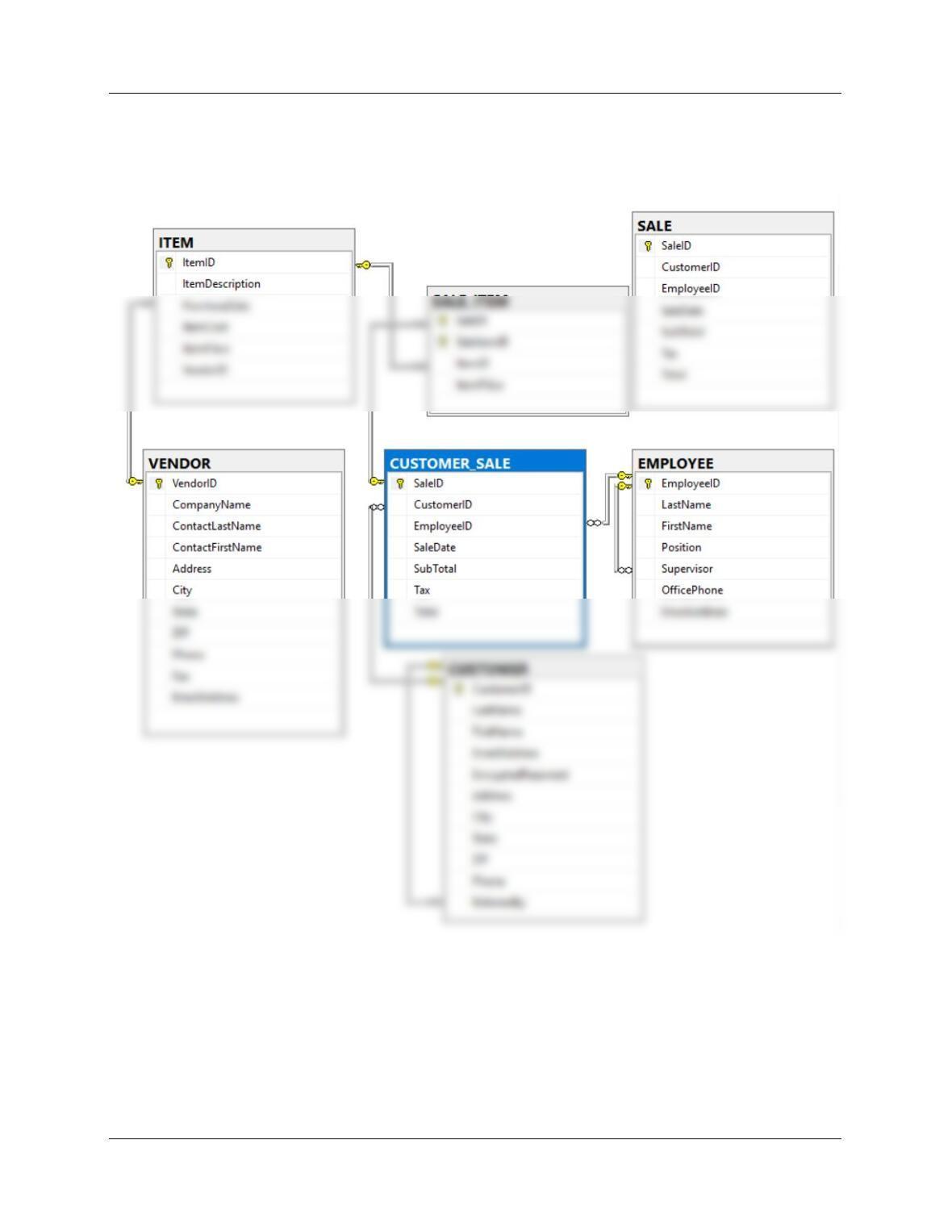
If we look at the database diagram in the Microsoft SQL Server Management Studio, we can see
that CUSTOMER_SALE is correctly inserted into the database, and SALE is now disconnected.
Page 8-53
(5) Drop the SALE table.
DROP TABLE SALE;
D. Suppose that The Queen Anne Curiosity Shop owners decide to allow multiple
customers per order (e.g., for customers’ spouses). Modify the design of these tables to
accommodate this change.
(1) Create the intersection table. Foreign key constraints can be done while creating the table or
as a separate step.
So we would:
(1) Create the CUSTOMER_CUSTOMER_SALE_INT intersection table (yes, that is an
awkward name, and we might want to name it something else!). Since we normally create
foreign key constraints when we create a table, we will do the foreign key constraints between
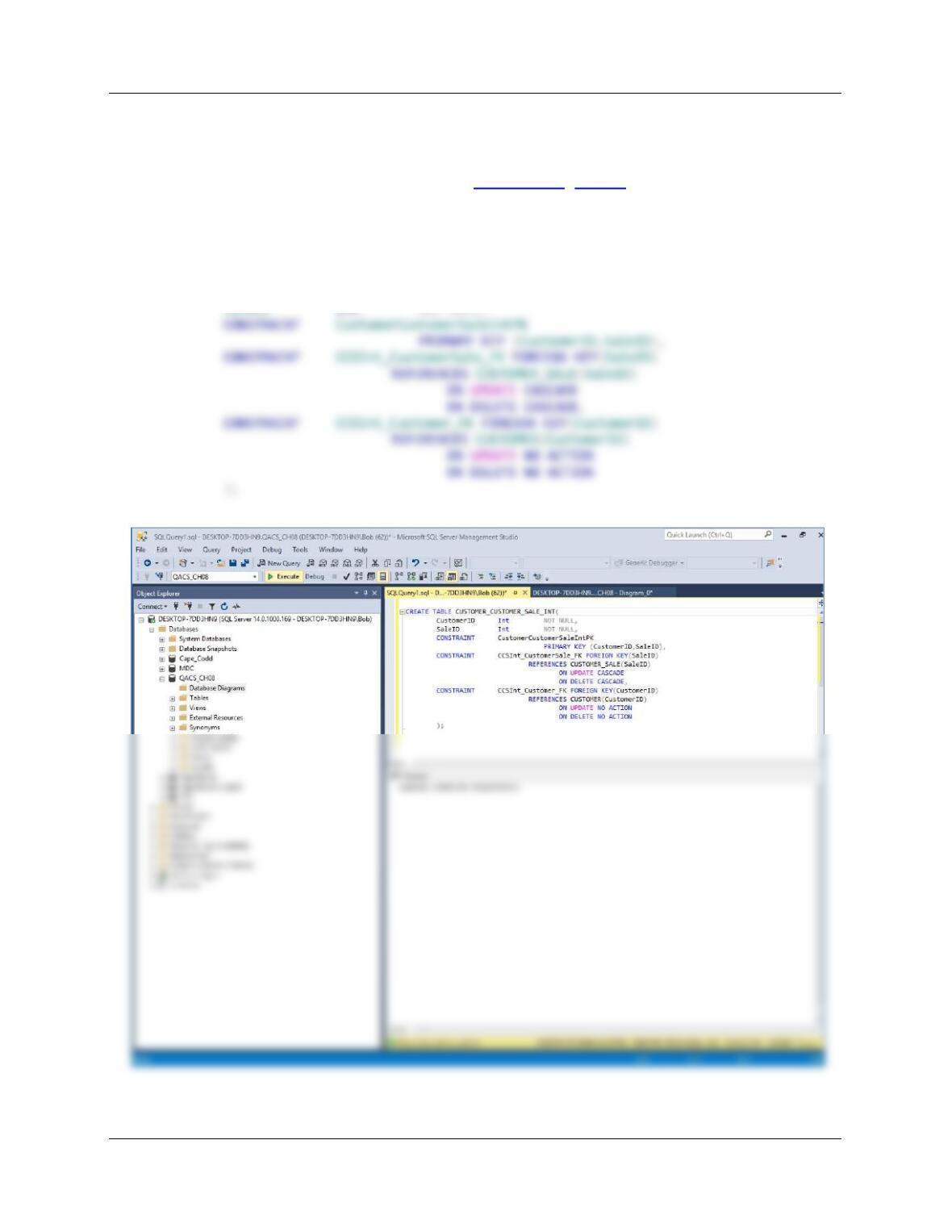
Chapter 8 – Database Redesign
Page 8-54
E. Code SQL statements necessary to redesign the database, as described in your answer
to part D.
CUSTOMER_CUSTOMER_SALE_INT (CustomerID, SaleID)
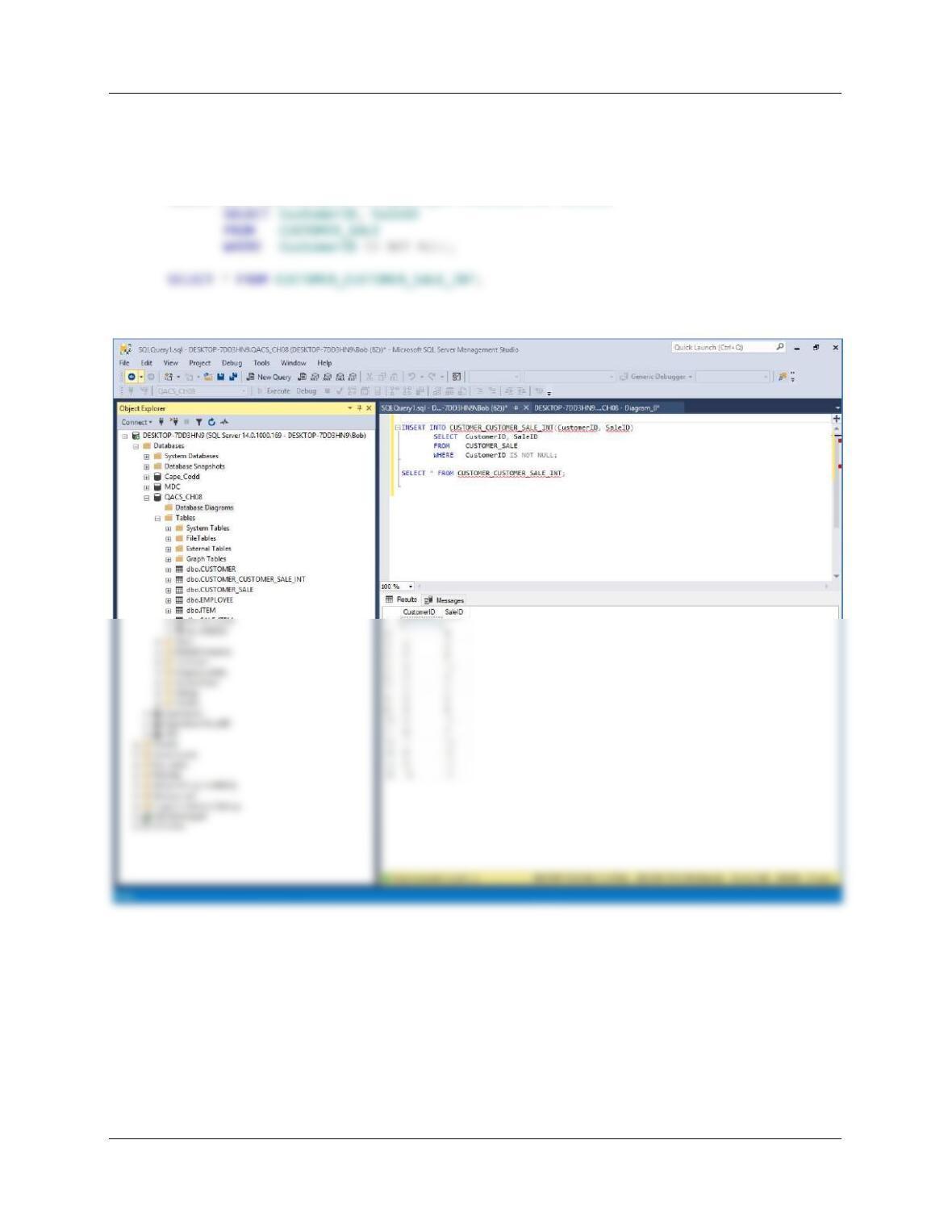
(1) Create the intersection table. Foreign key constraints can be done while creating the table or
as a separate step.
CREATE TABLE CUSTOMER_CUSTOMER_SALE_INT(
CustomerID Int NOT NULL,
Chapter 8 – Database Redesign
Page 8-55
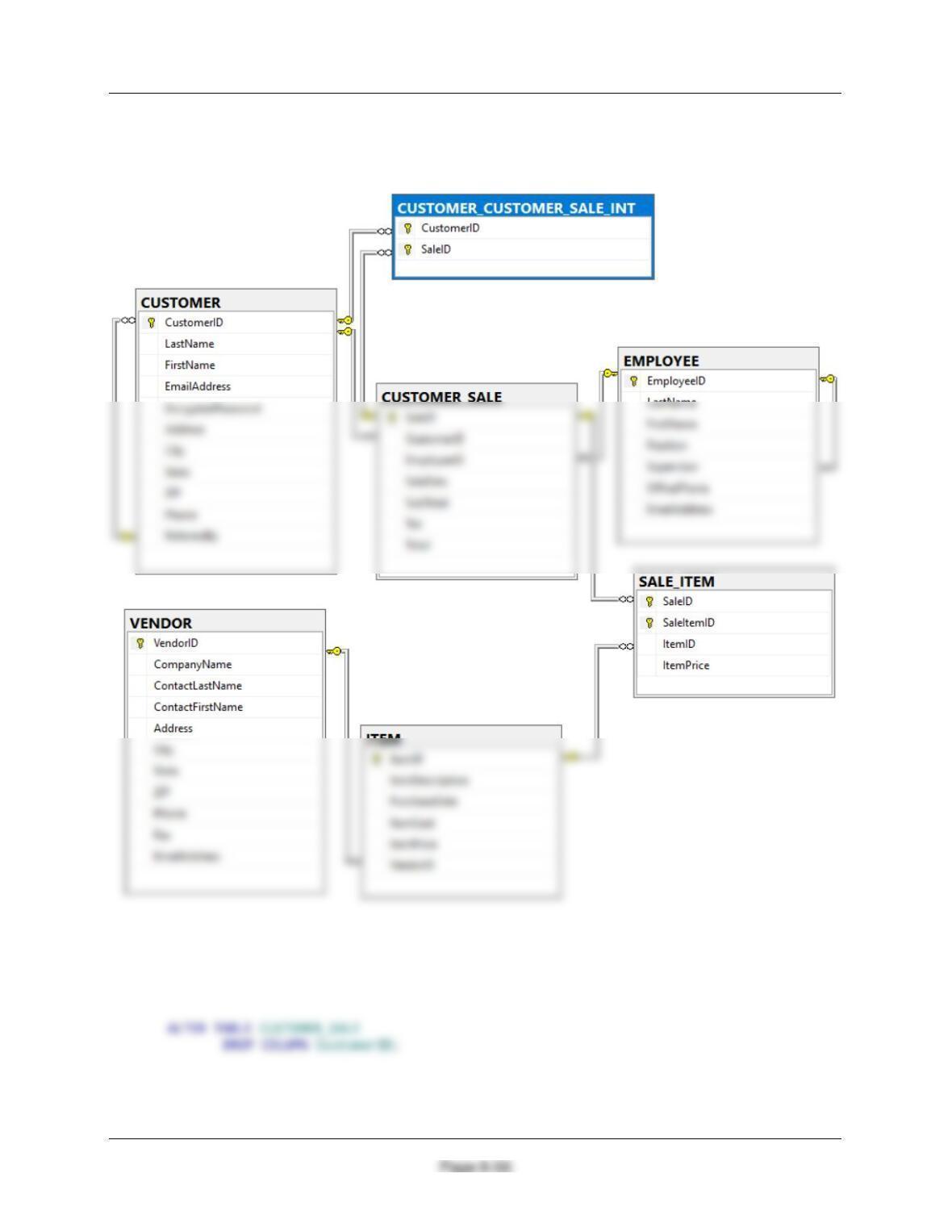
(2) Copy the values of primary keys from the tables of the original child table for rows in which
there is an existing foreign key match from CUSTOMER_SALE to
CUSTOMER_CUSTOMER_SALE_INT and the foreign key is not null.
INSERT INTO CUSTOMER_CUSTOMER_SALE_INT(CustomerID, SaleID)
Chapter 8 – Database Redesign
If we look at the database diagram in the Microsoft SQL Server Management Studio, we can see
that INVOICE_CUSTOMER_INT is correctly inserted into the database, but that the foreign key
relationship between CUSTOMER_SALE and CUSTOMER still exists.
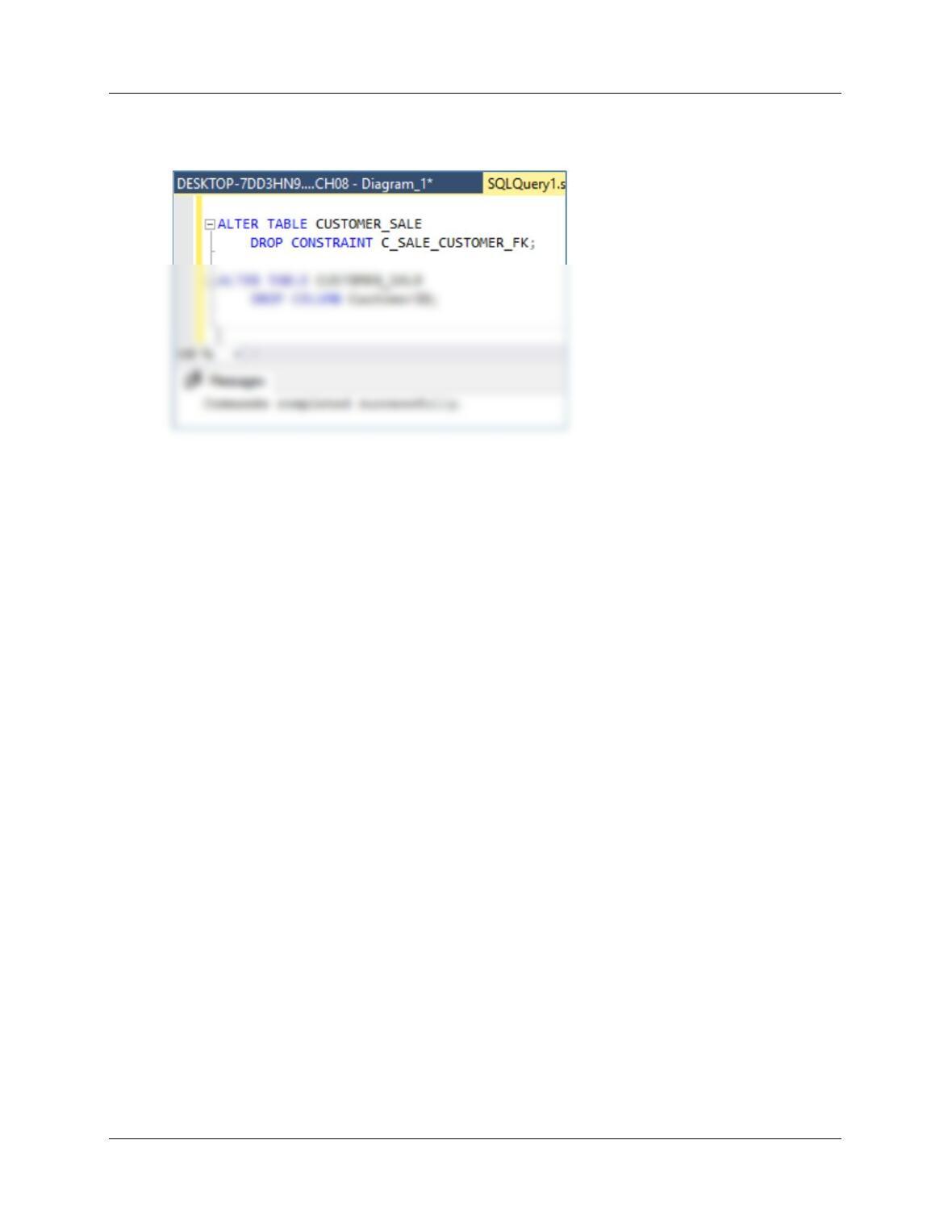
(3) Drop the original foreign key constraint and foreign key column for CUSTOMER_SALE.
ALTER TABLE CUSTOMER_SALE
DROP CONSTRAINT C_SALE_CUSTOMER_FK;
Chapter 8 – Database Redesign
Page 8-57
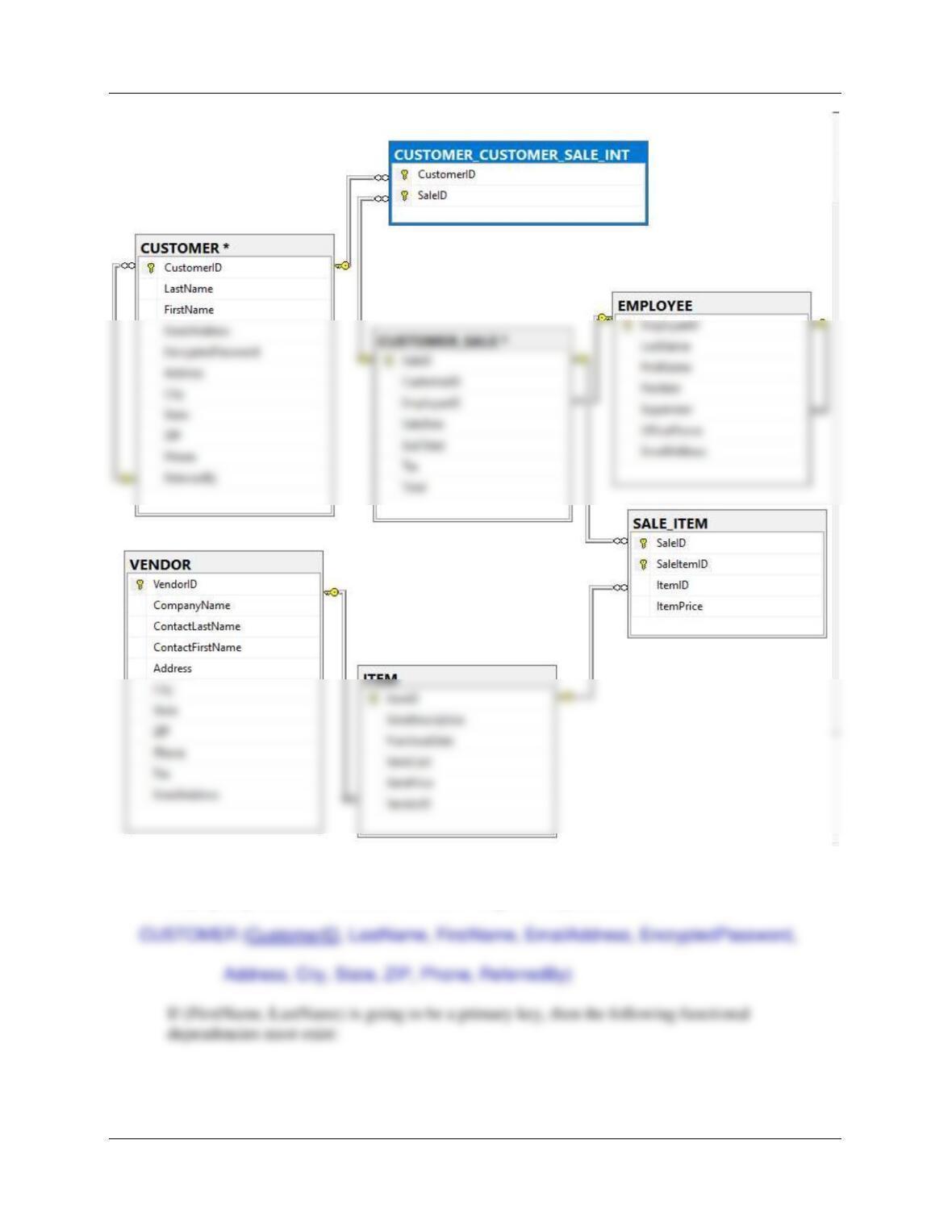
With a final look at the database diagram in the Microsoft SQL Server Management Studio, we
can see that CUSTOMER_CUSTOMER_SALE_INT is correctly inserted into the database.
Chapter 8 – Database Redesign
Page 8-58
F. Suppose that The Queen Anne Curiosity Shop owners are considering changing the
primary key of CUSTOMER to (FirstName, LastName). Write correlated subqueries to
display any data that indicate that this change is not justifiable.
Chapter 8 – Database Redesign
Page 8-59
(FirstName, LastName) → EmailAddress
(FirstName, LastName) → EncryptedPassword
(FirstName, LastName) → Address
Which can be combined as:
(FirstName, LastName) → (EmailAddress, EncryptedPassword, Address, City, State, ZIP,
Phone, ReferredBy)
A quick look at the data in the table (which only works because we have very little data) shows
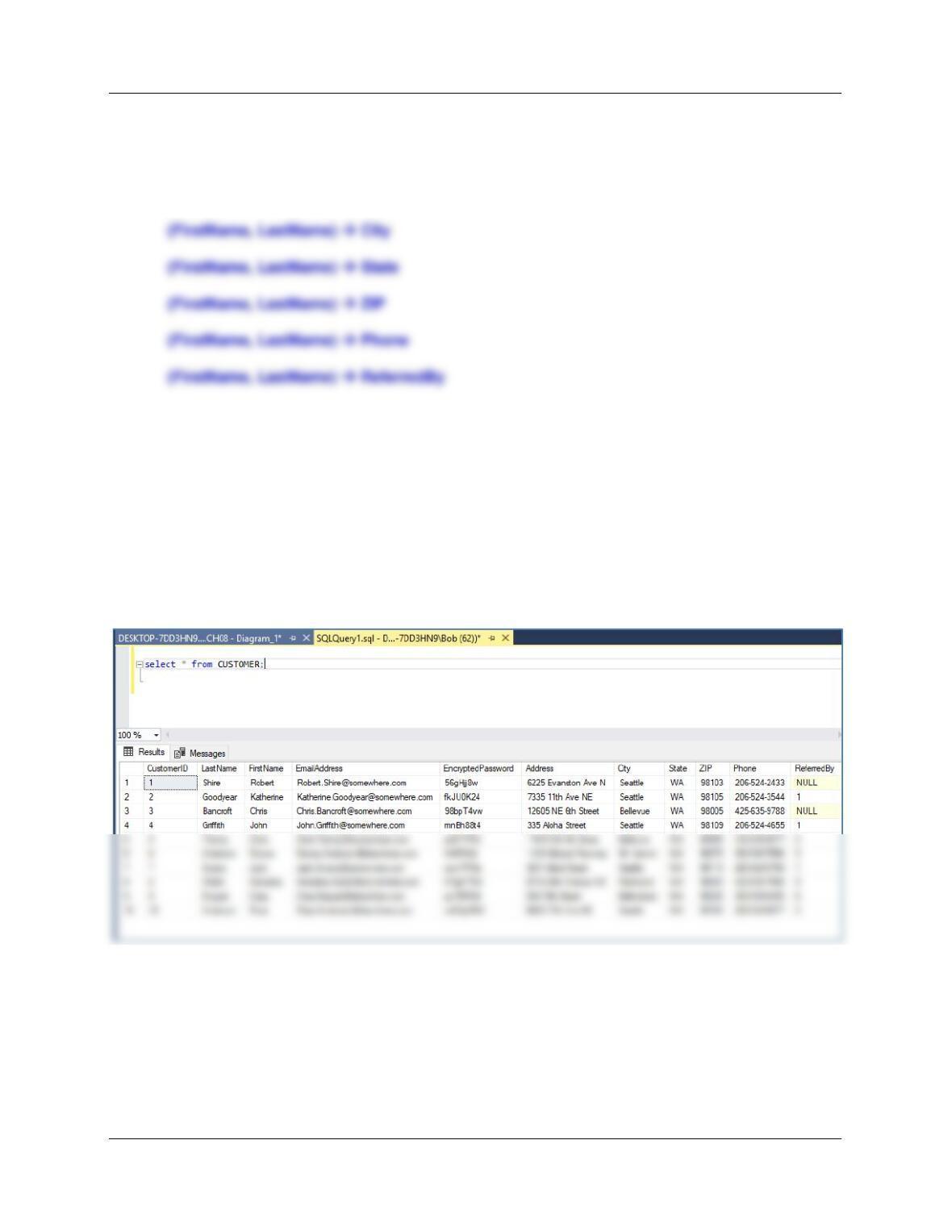
that (FirstName, LastName) is indeed currently unique.
Since the table still has CustomerID as a primary key, the easiest way to check is to test
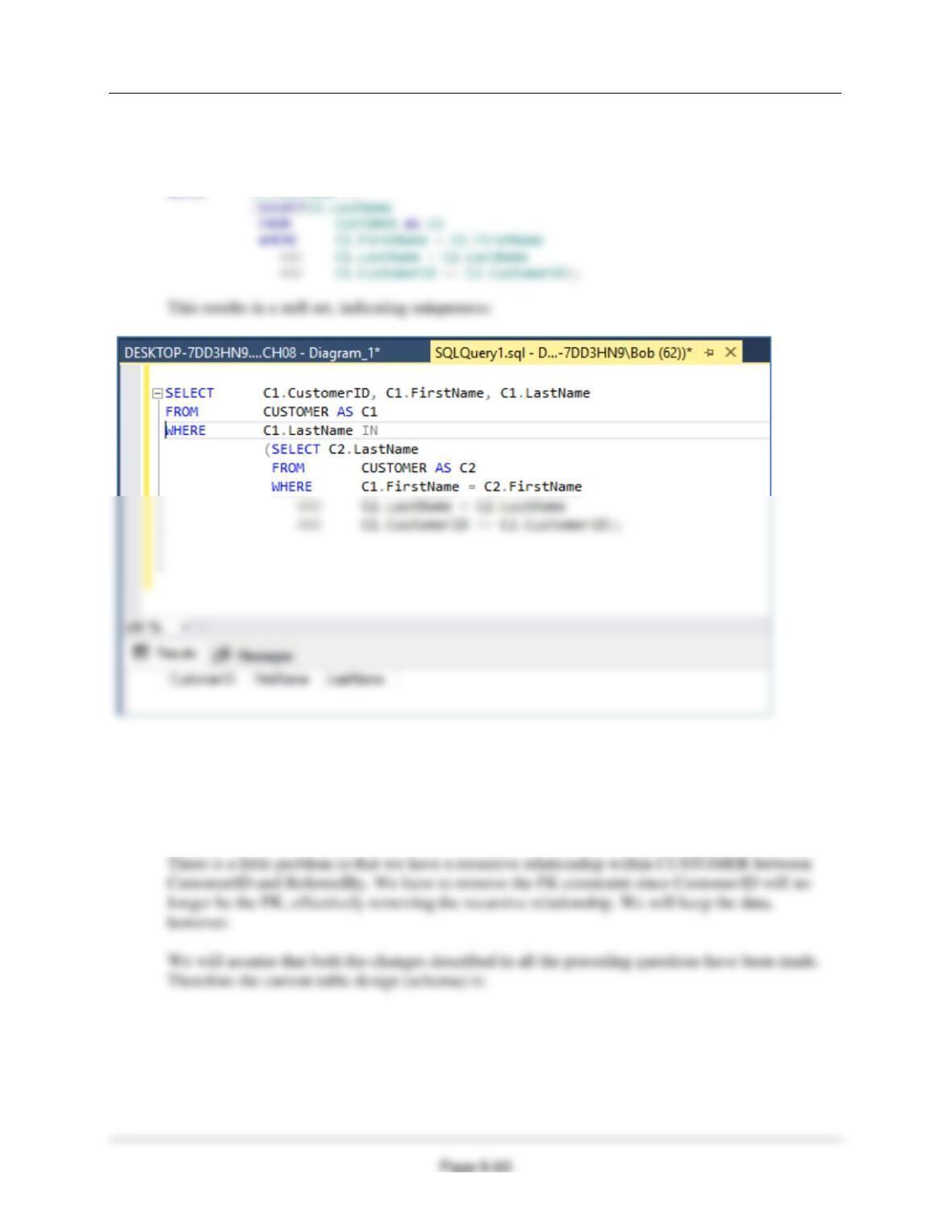
uniqueness for (FirstName, LastName). We did something similar is Review Question 8.7. Here
is a similar SQL statement:
Chapter 8 – Database Redesign
For SQL Server:
SELECT C1.CustomerID, C1.FirstName, C1.LastName
FROM CUSTOMER AS C1
WHERE C1.LastName IN
G. Suppose that (FirstName, LastName) can be made the primary key of CUSTOMER.
Make appropriate changes to the table design with this new primary key.