Chapter 8 – Database Redesign
Page 8-21
B. Using your dependency graph, describe the tasks necessary to change the name of the
INVOICE table to CUST_INVOICE.
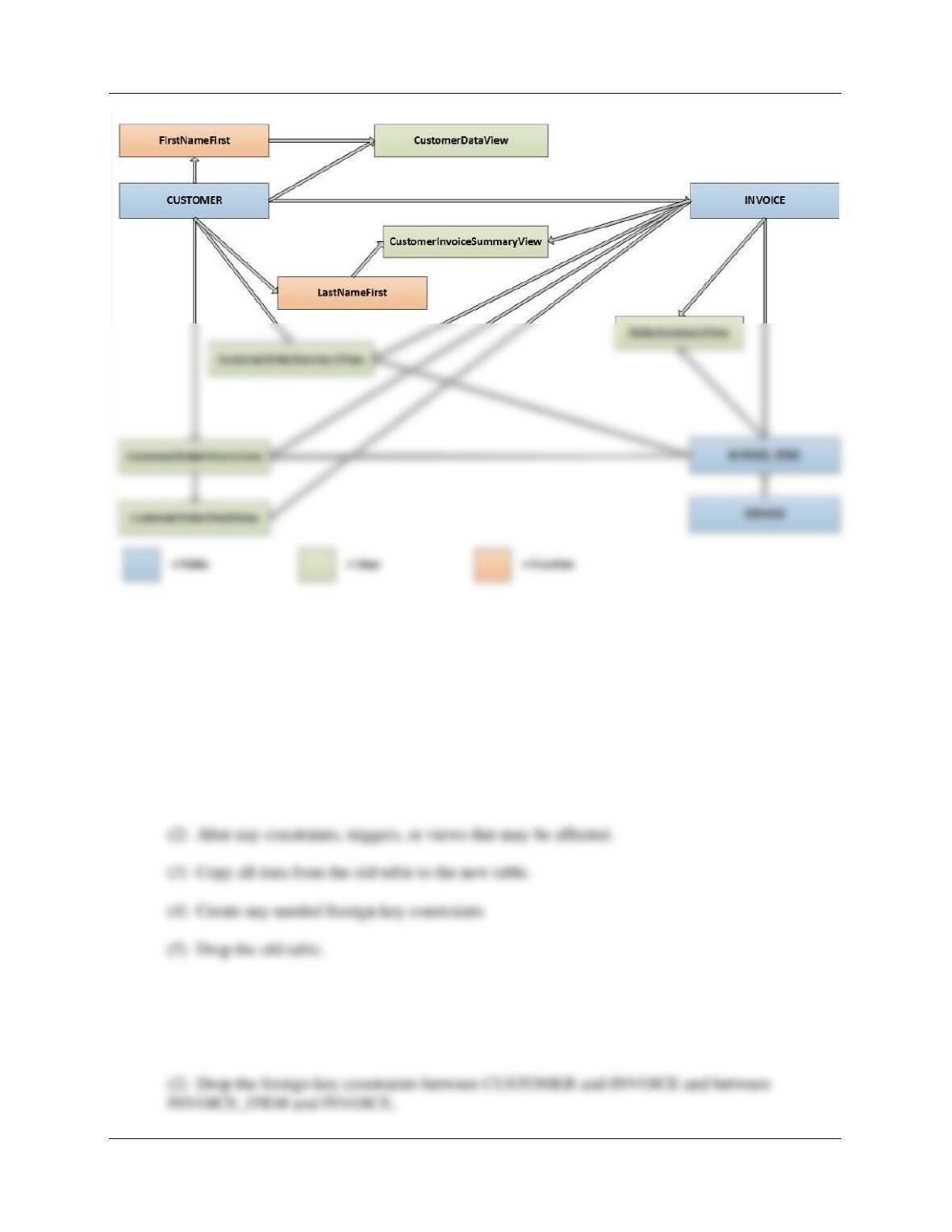
We will use the original dependency graph with just the tables. Based on the dependency graph,
we can see that INVOICE is dependent on CUSTOMER, and that INVOICE_ITEM is dependent
on INVOICE.
As described in Review Question 8.25 above, the process for changing a table name is:
(1) Create a new table with the new name.
So we would:
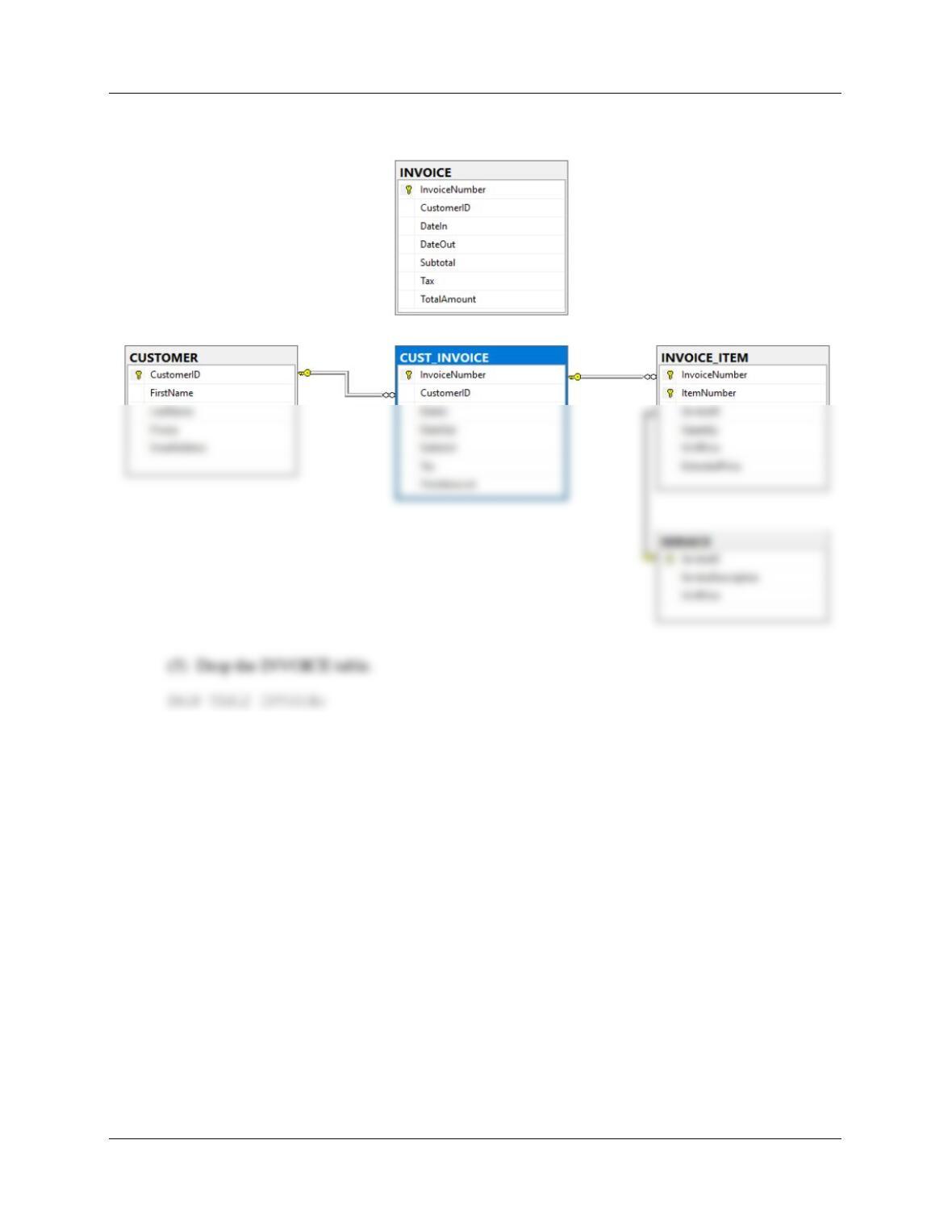
(1) Create the table CUST_INVOICE (Note the foreign key constraint between CUSTOMER
and CUST_INVOICE can be created as part of the table creation process).

Page 8-22
(3) Copy all data from INVOICE to CUST_INVOICE.
C. Write all SQL statements to make the name change described in question B.
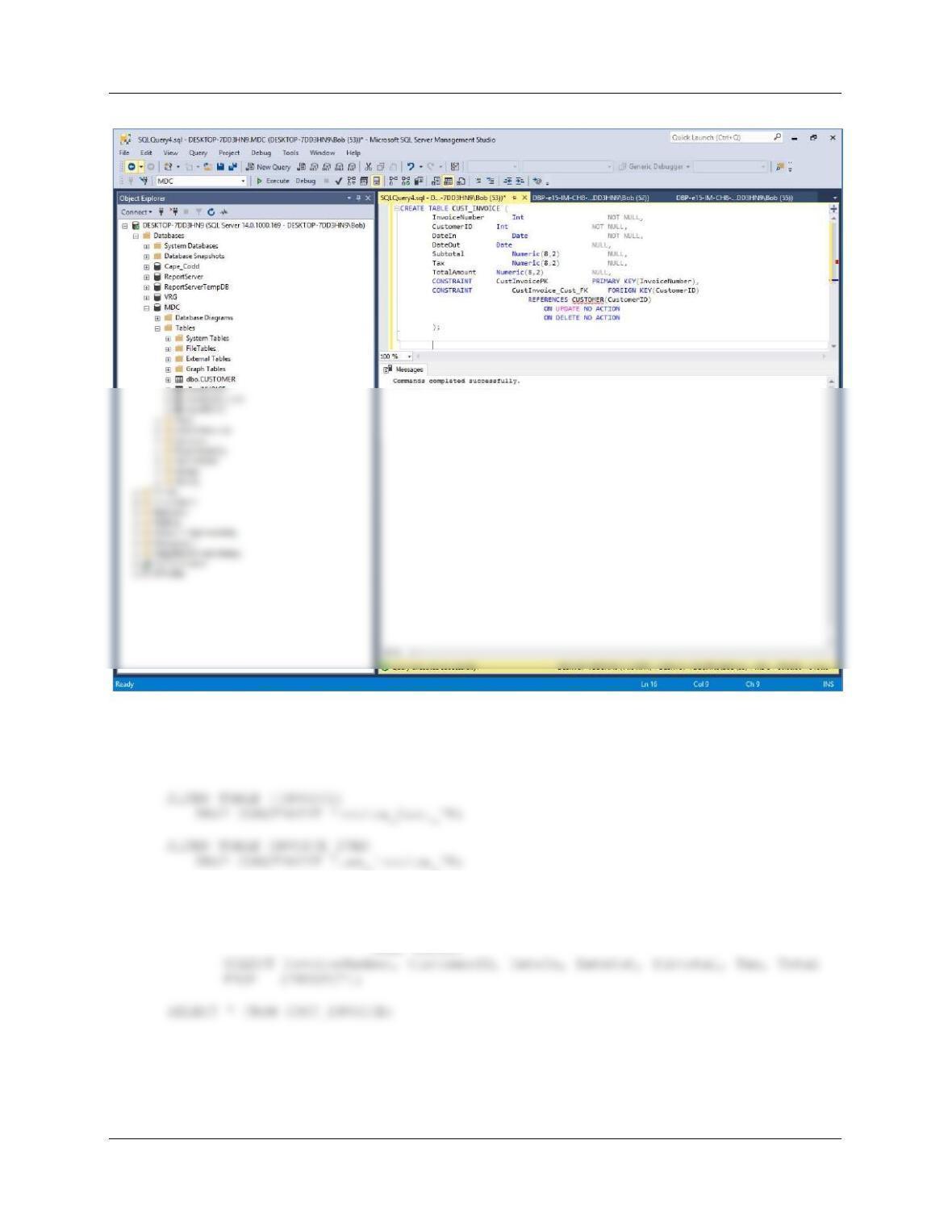
(1) Create the table CUST_INVOICE. Note that we will also create the foreign key constraint
between CUSTOMER and CUST_INVOICE at this time—we’re used to doing this when we
create a new table.
Chapter 8 – Database Redesign
Page 8-23
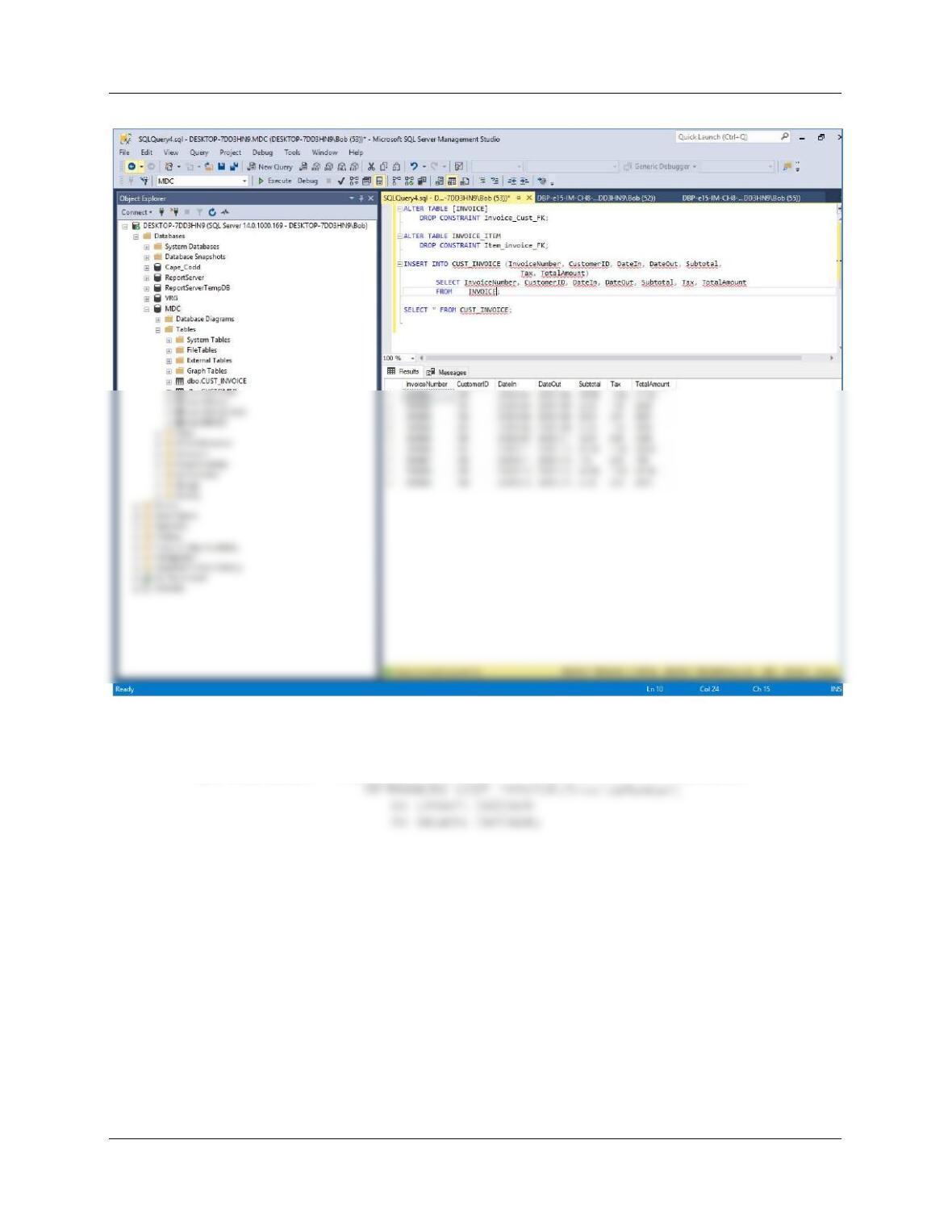
(2) Drop the foreign key constraints between CUSTOMER and INVOICE and between
INVOICE_ITEM and INVOICE.
(3) Copy all data from INVOICE to CUST_INVOICE.
INSERT INTO CUST_INVOICE (InvoiceNumber, CustomerID, DateIn, DateOut, Subtotal,
Tax, Total)
Chapter 8 – Database Redesign
Page 8-24
(4) Add the foreign key constraint for INVOICE_ITEM.
ALTER TABLE INVOICE_ITEM
ADD CONSTRAINT Item_CustInvoice_FK FOREIGN KEY(InvoiceNumber)
Chapter 8 – Database Redesign
Page 8-25
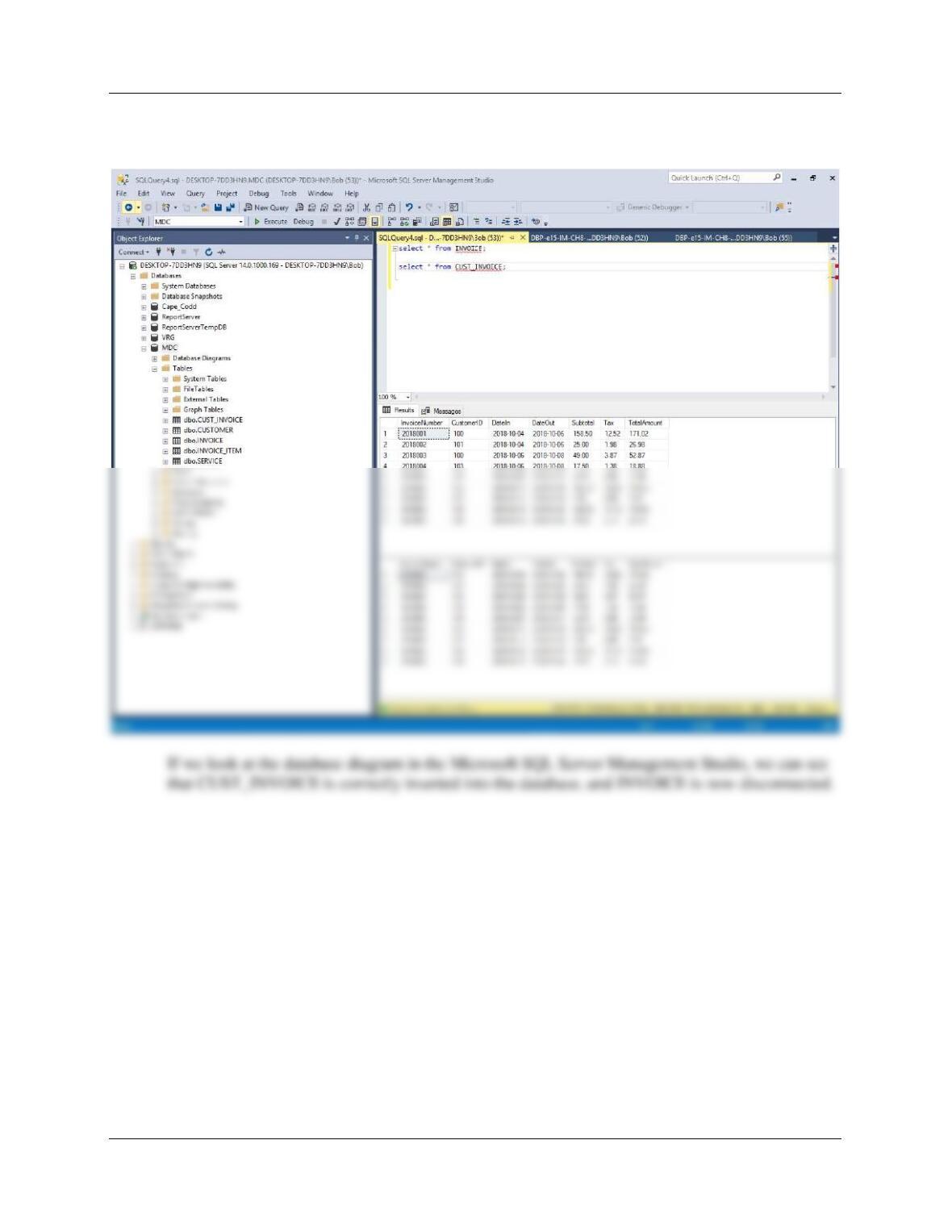
Note that the contents of the two tables are now identical:
Chapter 8 – Database Redesign
Page 8-26
Chapter 8 – Database Redesign
Page 8-27
D. Suppose that Marcia decides to allow multiple customers per order (for customers’
spouses, for example). Modify the design of these tables to accommodate this change.
We will assume that the name change from INVOICE to CUST_INVOICE described above has
(1) Create the intersection table. Foreign key constraints can be done while creating the table or
as a separate step.
So we would:
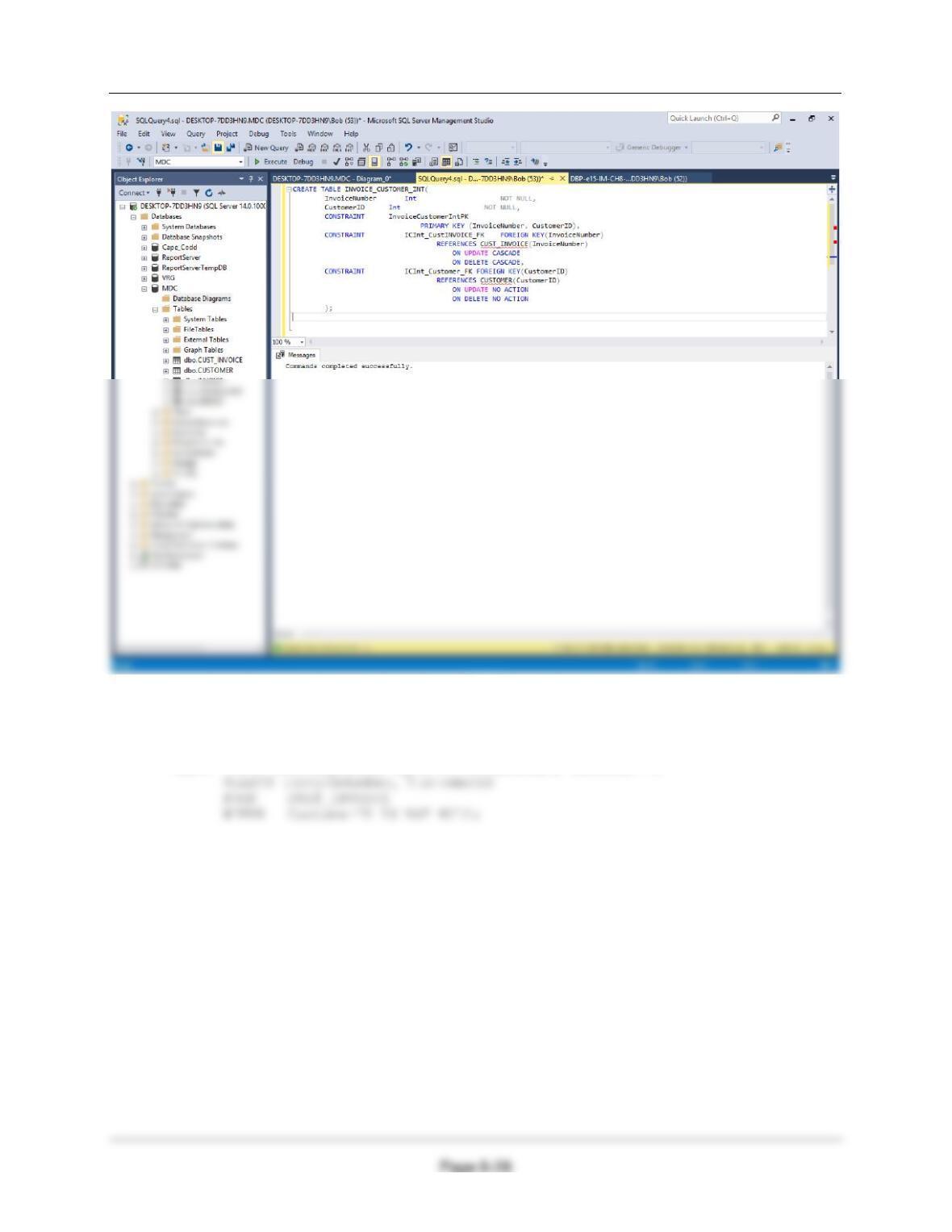
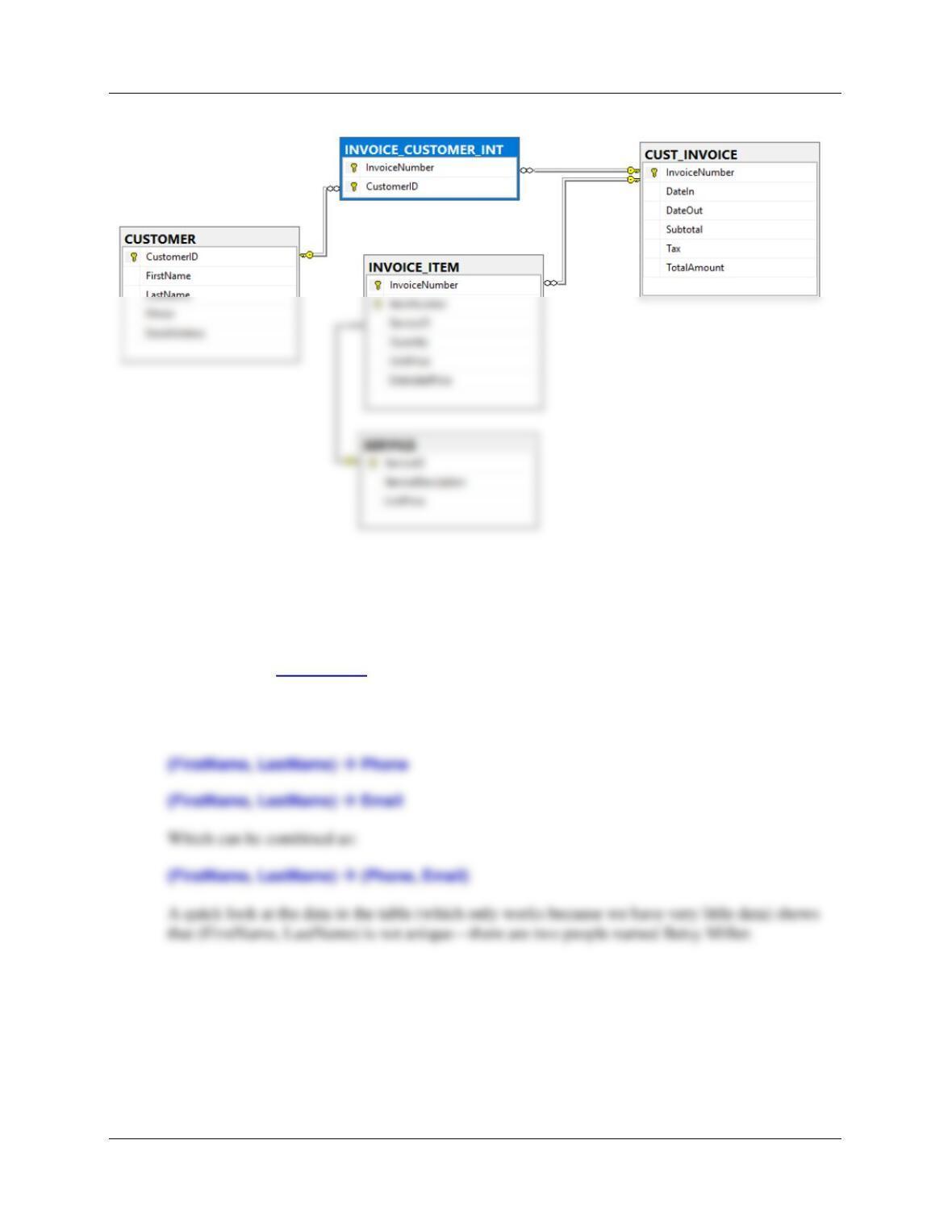
(1) Create the INVOICE_CUSTOMER_INT. Since we normally create foreign key constraints
when we create a table, we will do the foreign key constraints between
INVOICE_CUSTOMER_INT and CUSTOMER and between INVOICE_CUSTOMER_INT and
CUST_INVOICE while creating the intersection table.
E. Code SQL statements necessary to redesign the database, as described in your answer
to question D.
INVOICE_CUSTOMER_INT (InvoiceNumber, CustomerSK )
(1) Create the intersection table. Foreign key constraints can be done while creating the table or
as a separate step.
CREATE TABLE INVOICE_CUSTOMER_INT(
InvoiceNumber Int NOT NULL,
Chapter 8 – Database Redesign
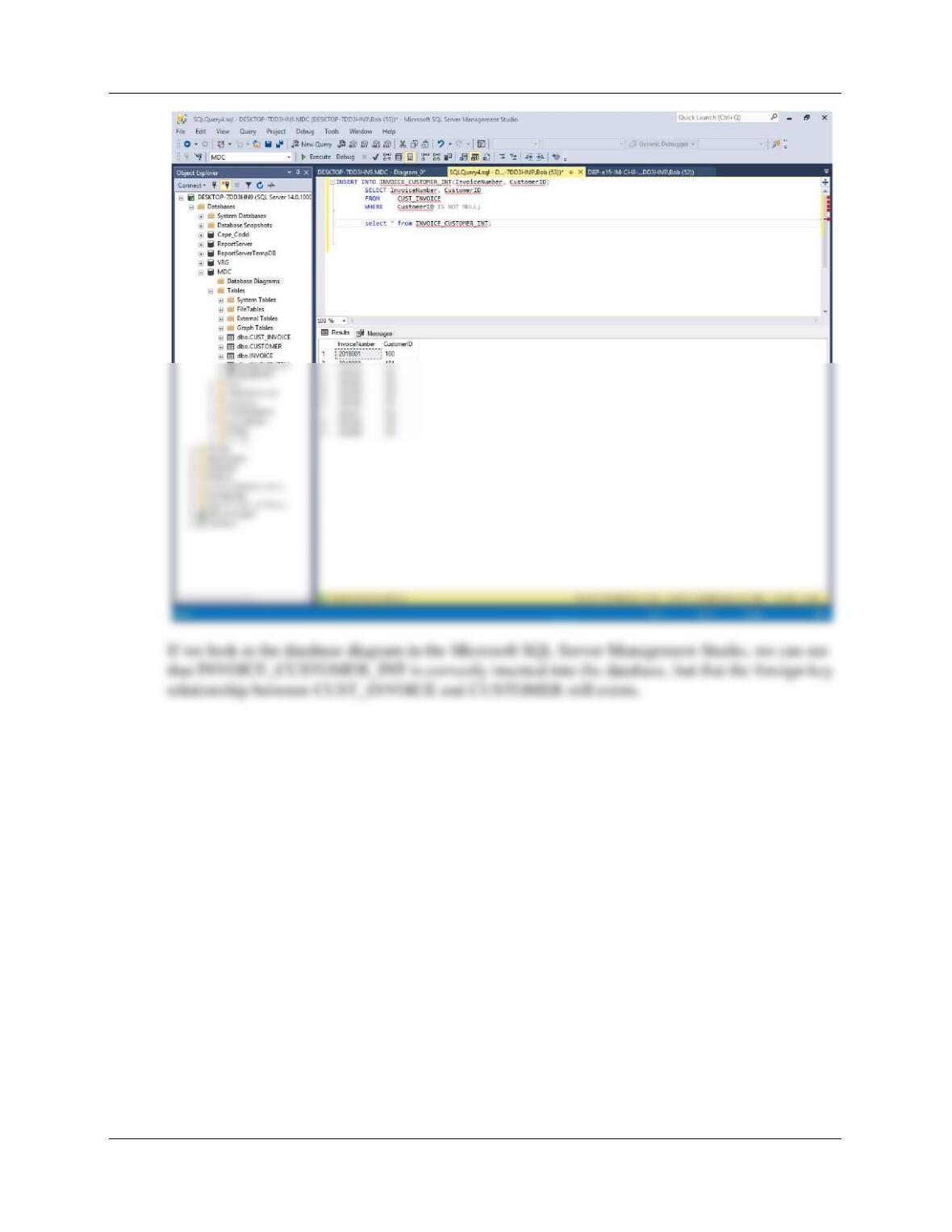
(2) Copy the values of primary keys from the tables of the original child table for rows in which
there are existing foreign key matches from CUST_INVOICE to CUSTOMER and the foreign
key is not null.
INSERT INTO INVOICE_CUSTOMER_INT(InvoiceNumber, CustomerID)
Chapter 8 – Database Redesign
Page 8-29
Chapter 8 – Database Redesign
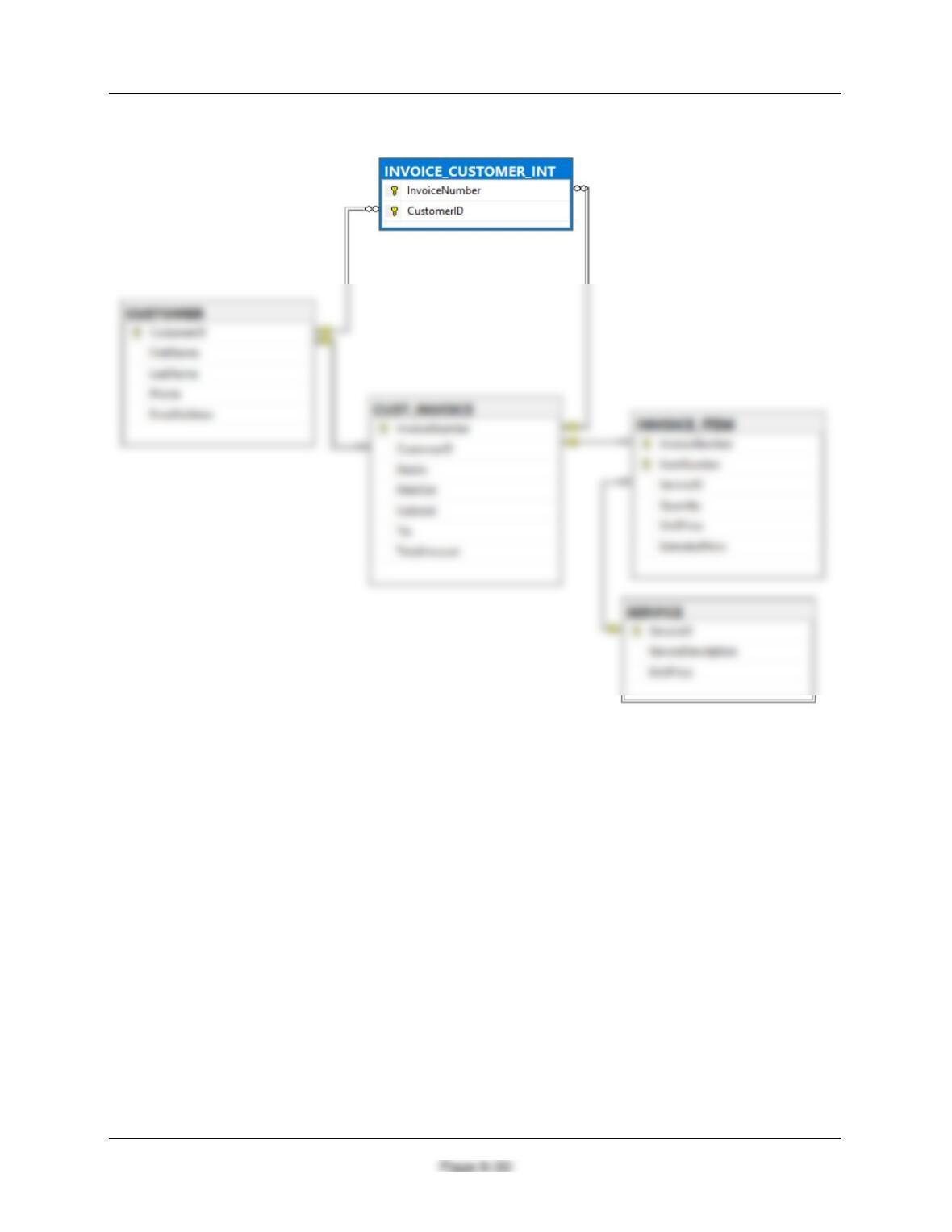
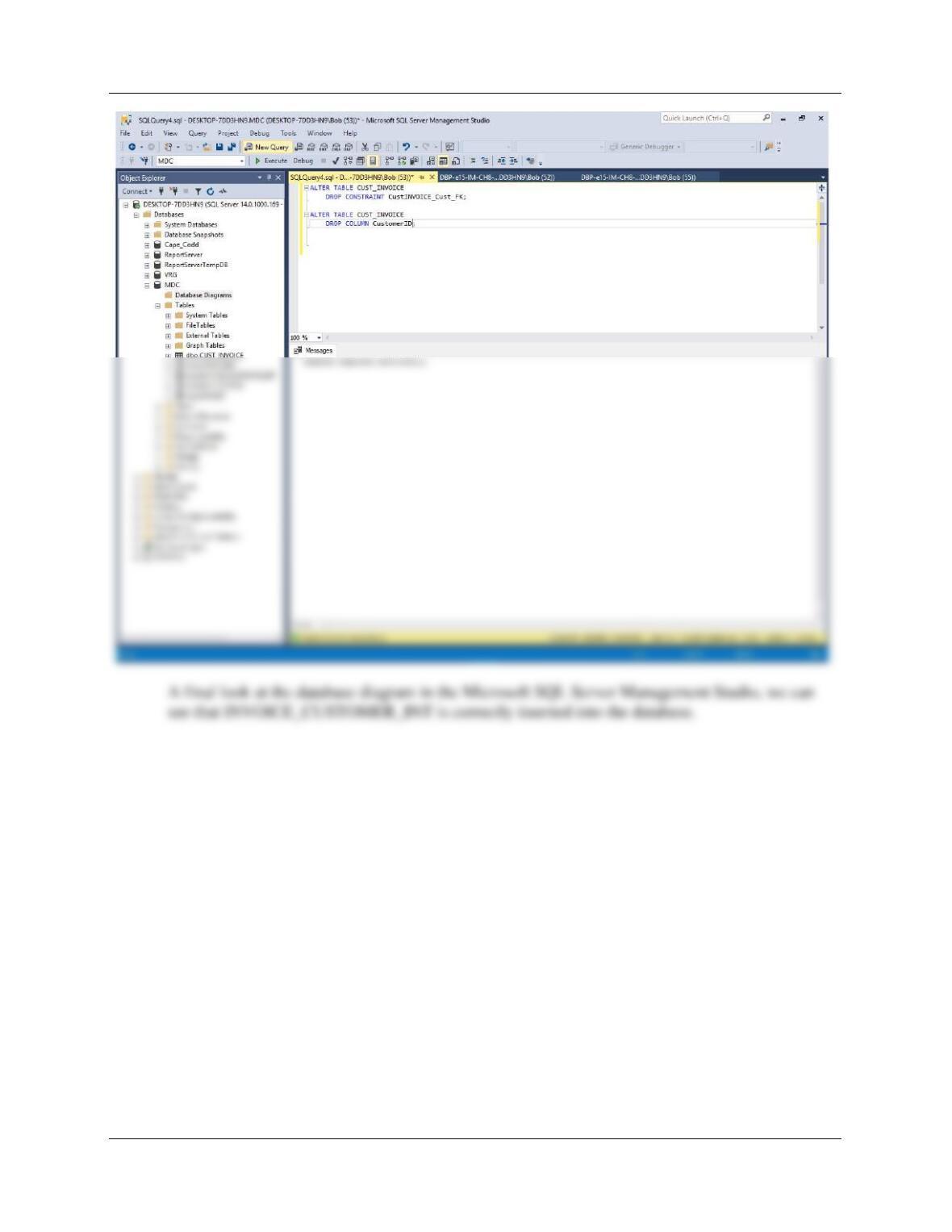
(3) Drop the original foreign key constraint and foreign key column for CUST_INVOICE.
ALTER TABLE CUST_INVOICE
DROP CONSTRAINT CustINVOICE_Cust_FK;
ALTER TABLE CUST_INVOICE
DROP COLUMN CustomerID;
Chapter 8 – Database Redesign
Page 8-31
Chapter 8 – Database Redesign
Page 8-32
F. Suppose that Marcia considers changing the primary key of CUSTOMER to (FirstName,
LastName). Write correlated subqueries to display any data that indicate that this change is not
justifiable.
CUSTOMER (CustomerID, FirstName, LastName, Phone, EmailAddress)
If (FirstName, LastName) is going to be a primary key, then the following functional
dependencies must exist:
Chapter 8 – Database Redesign
Page 8-33
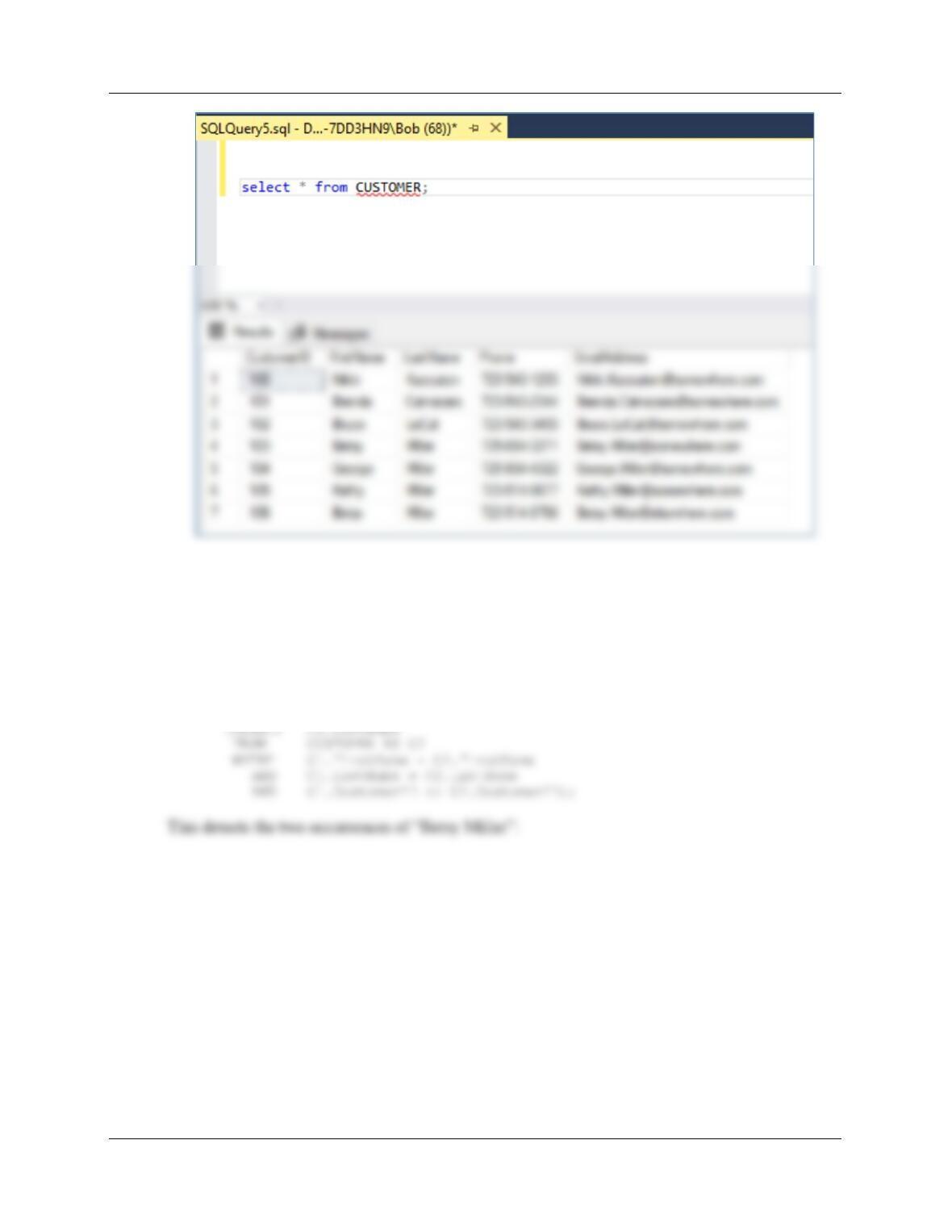
Since the table still has CustomerID as a primary key, the easiest way to check is to test
uniqueness for (FirstName, LastName). We did something similar is Review Question 8.7. Here
is a similar SQL statement:
For SQL Server:
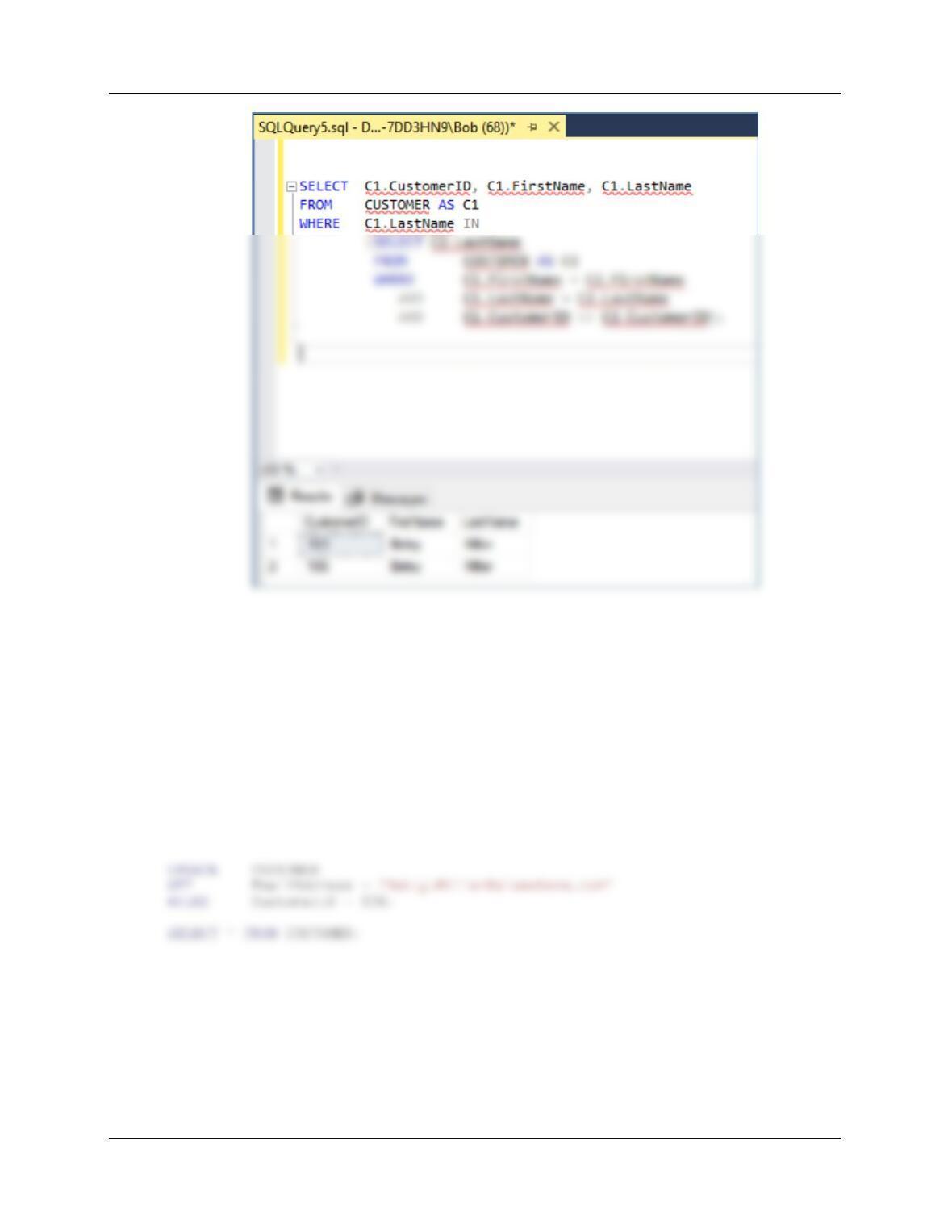
SELECT C1.CustomerID, C1.FirstName, C1.LastName
FROM CUSTOMER AS C1
WHERE C1.LastName IN
Chapter 8 – Database Redesign
Page 8-34
G. Suppose that (FirstName, LastName) can be made the primary key of CUSTOMER.
Make appropriate changes to the table design with this new primary key.
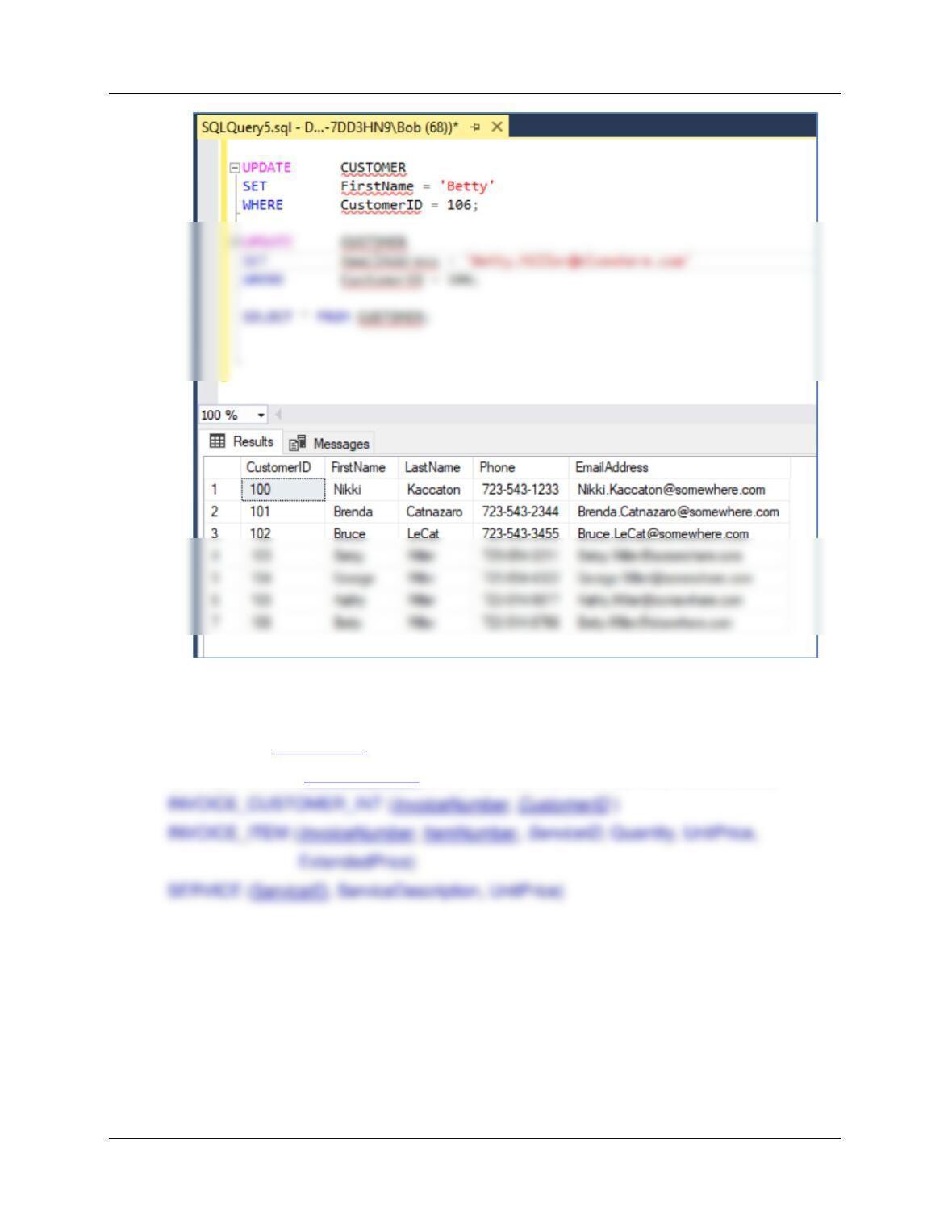
Given our results to Project Question F, this won’t work. SO, we’ll change the data set to allow
(FirstName, LastName) to be a possible primary key by changing the first name of CustomerID =
106 to “Betty”.
UPDATE CUSTOMER
SET FirstName = ‘Betty’
WHERE CustomerID = 106;
Chapter 8 – Database Redesign
Page 8-35
We will assume that both the changes described in all the preceding questions have been made.
Therefore the current table design (schema) is:
CUSTOMER (CustomerID, FirstName, LastName, Phone, EmailAddress)
CUST_INVOICE (InvoiceNumber, DateIn, DateOut, Subtotal, Tax, TotalAmount)
Chapter 8 – Database Redesign
Page 8-36
Without moving the locations of existing columns in the schema (table design), if we make
(FirstName, LastName) the primary key of CUSTOMER we would have:
CUSTOMER (CustomerID, FirstName, LastName, Phone, EmailAddress)
H. Code all SQL statements necessary to implement the changes described in question G.
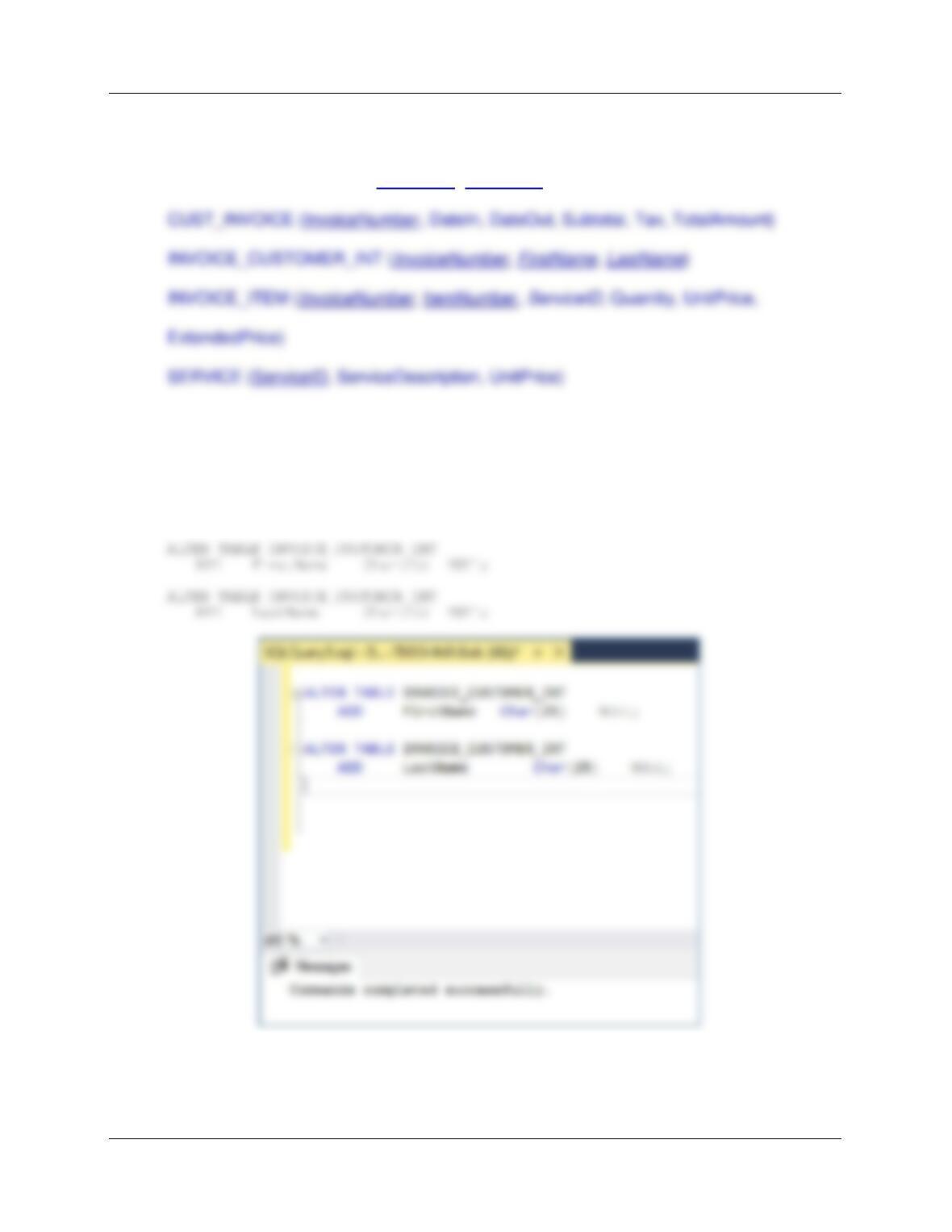
(1) Add the new columns to INVOICE_CUSTOMER_INT to hold the foreign key values, but
allow these columns to be NULL at this point (there are many existing rows, and these columns
will initially be empty).
(2) Add foreign key data to INVOICE_CUSTOMER_INT.
Chapter 8 – Database Redesign
Page 8-37
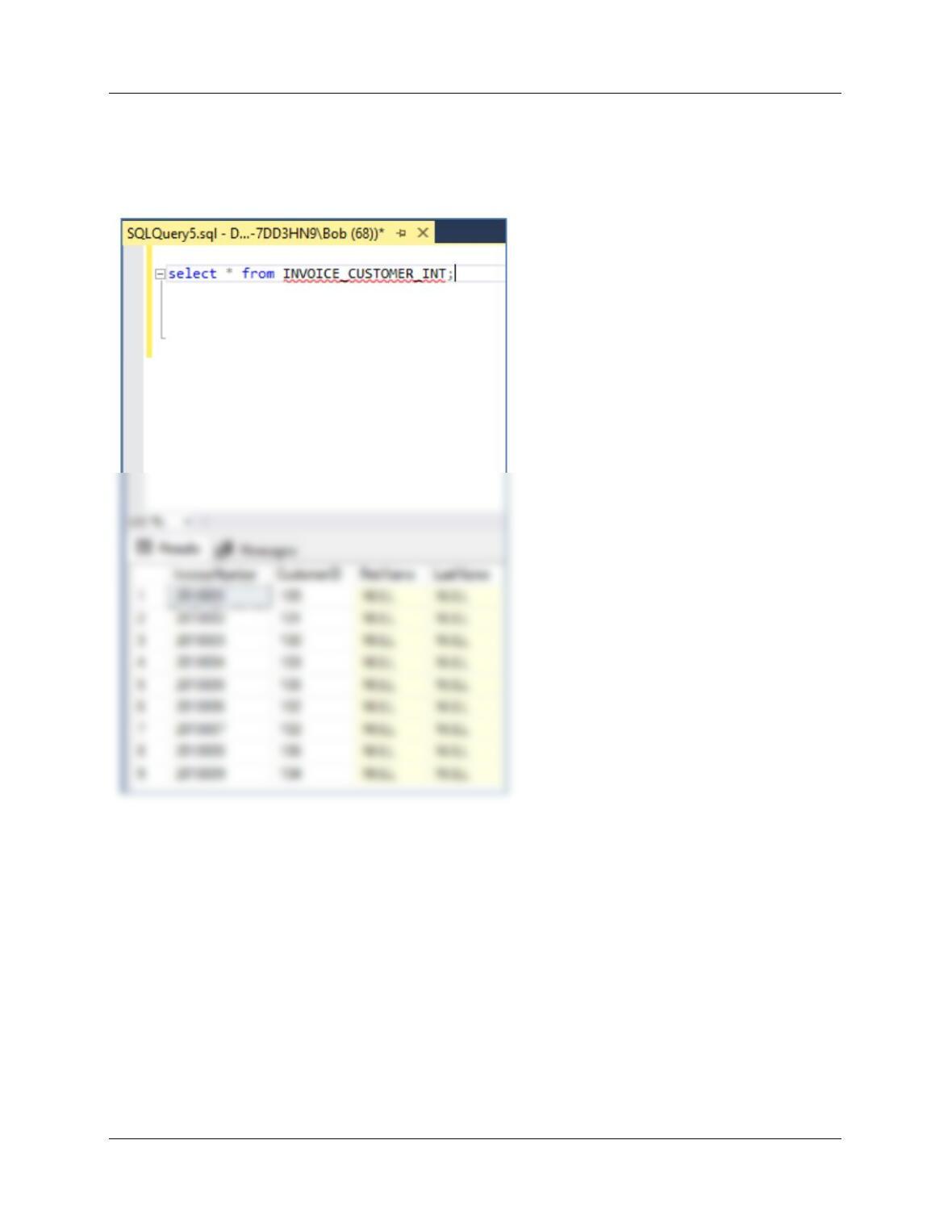
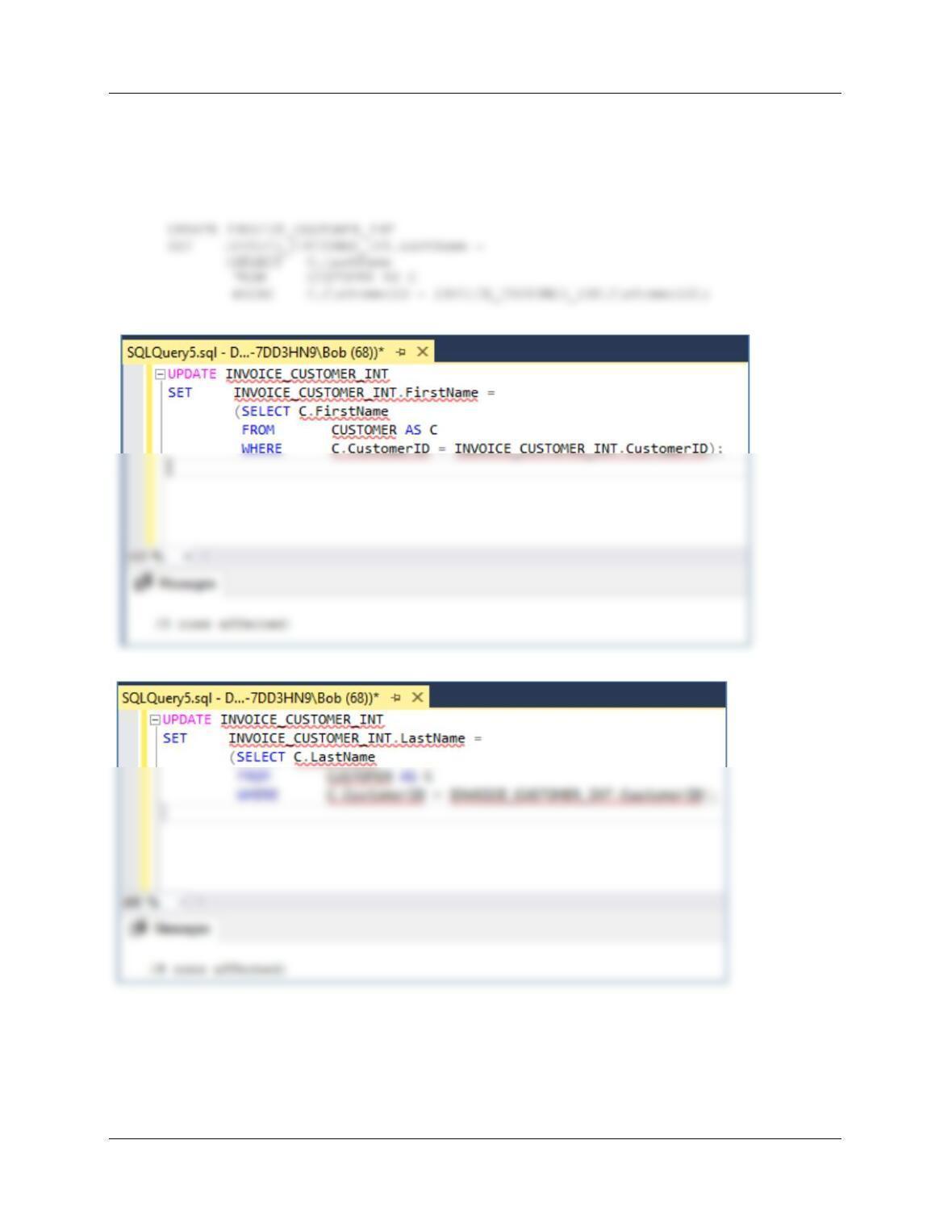
First we’ll see what the current table data looks like, then add the data and finally look at the data
again.
SELECT * FROM INVOICE_CUSTOMER_INT;
Chapter 8 – Database Redesign
Page 8-38
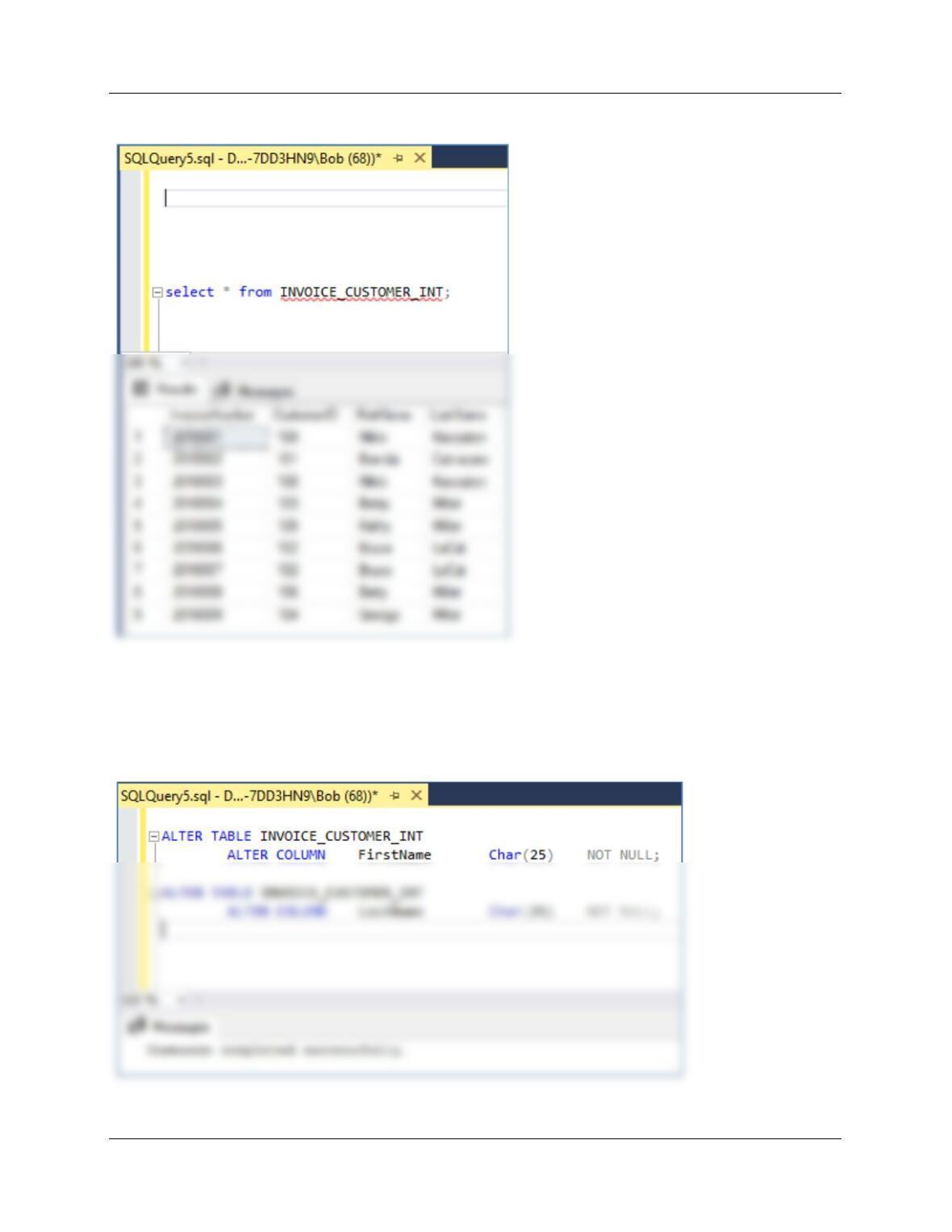
UPDATE INVOICE_CUSTOMER_INT
SET INVOICE_CUSTOMER_INT.FirstName =
(SELECT C.FirstName
FROM CUSTOMER AS C
WHERE C.CustomerID = INVOICE_CUSTOMER_INT.CustomerID);
Chapter 8 – Database Redesign
Page 8-39
SELECT * FROM INVOICE_CUSTOMER_INT;
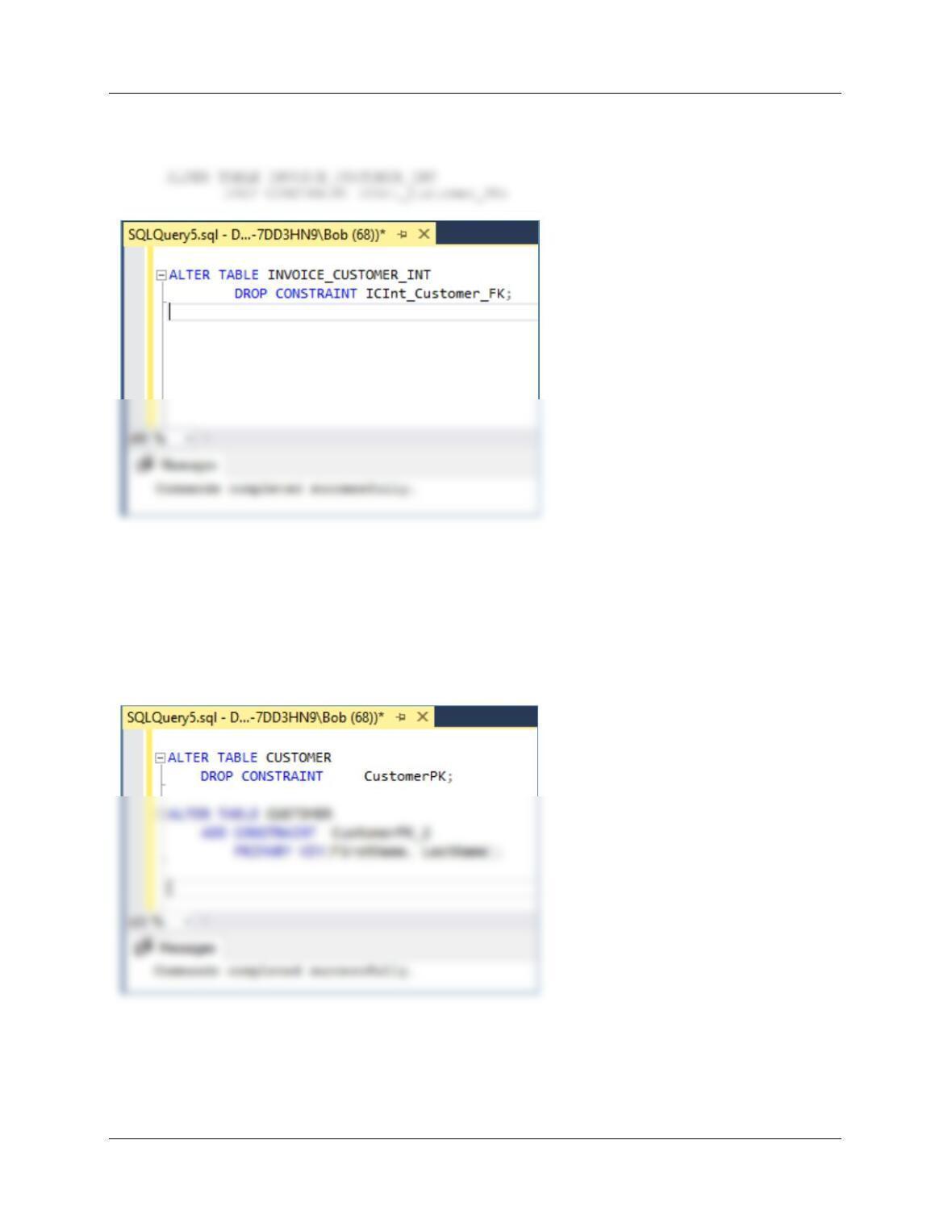
(3) Set the new columns to NOT NULL.
ALTER TABLE INVOICE_CUSTOMER_INT
ALTER COLUMN FirstName Char(25) NOT NULL;
ALTER TABLE INVOICE_CUSTOMER_INT
ALTER COLUMN LastName Char(25) NOT NULL;
Chapter 8 – Database Redesign
Page 8-40
(4) Drop the existing foreign key constraint between CUSTOMER and
INVOICE_CUSTOMER_INT.
(5) Drop the existing primary key constraint for CUSTOMER and set a new primary key
constraint.
ALTER TABLE CUSTOMER
DROP CONSTRAINT CustomerPK;
ALTER TABLE CUSTOMER
ADD CONSTRAINT CustomerPK_2
PRIMARY KEY(FirstName, LastName);