PART IV
Chapter 23 Query Processing
Case Study 1 InstantBuy
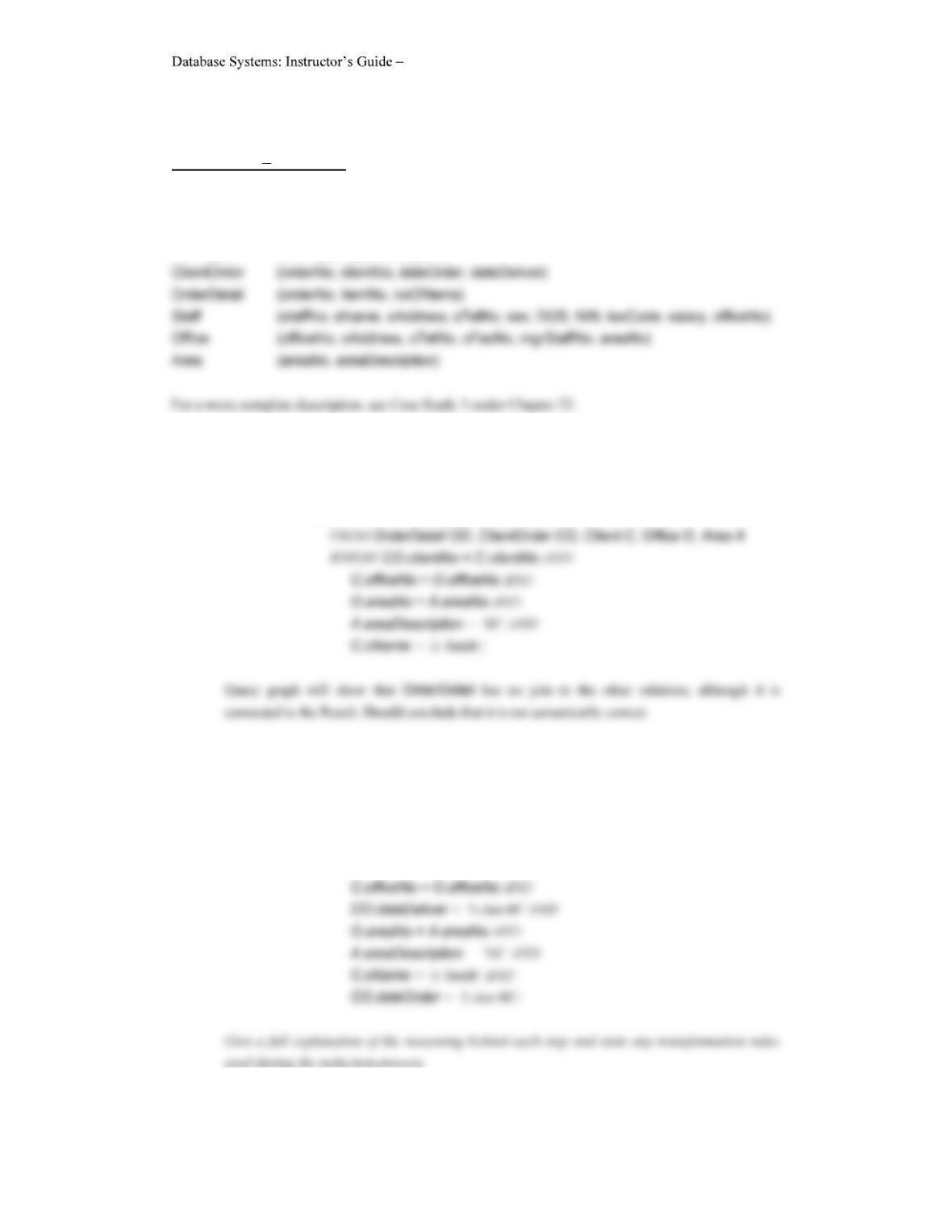
Client (clientNo, cName, cAddress, cTelNo, cFaxNo, sex, DOB, officeNo)
Item (itemNo, itemDescription, itemSize, itemColor, itemPrice, itemType)
ItemType (itemType, typeDescription)
23.1 Using the above relational schema, determine whether the following query is both type and
semantically correct:
SELECT CO.orderNo, C.cAddress, OD.itemNo
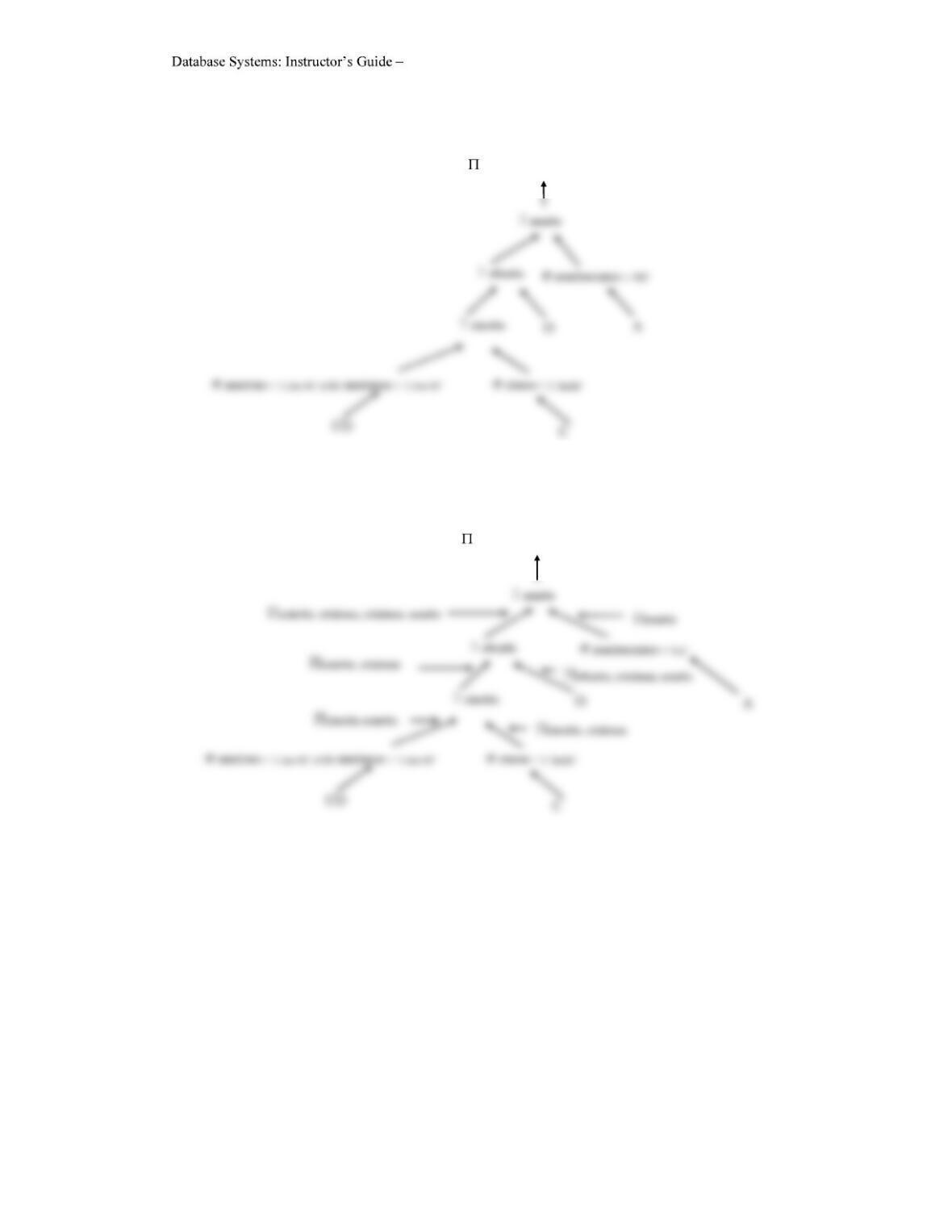
23.2 Consider the above relational schema. Map the following query onto a relational algebra tree,
and then transform it into a reduced query:
SELECT CO.orderNo, C.cAddress, O.oAddress
FROM ClientOrder CO, Client C, Office O, Area A
WHERE CO.clientNo = C.clientNo AND
PART IV
CO.orderNo, cAddress, oAddress
CO.orderNo, cAddress, oAddress
PART IV
Case Study 2 Complete Pet Care
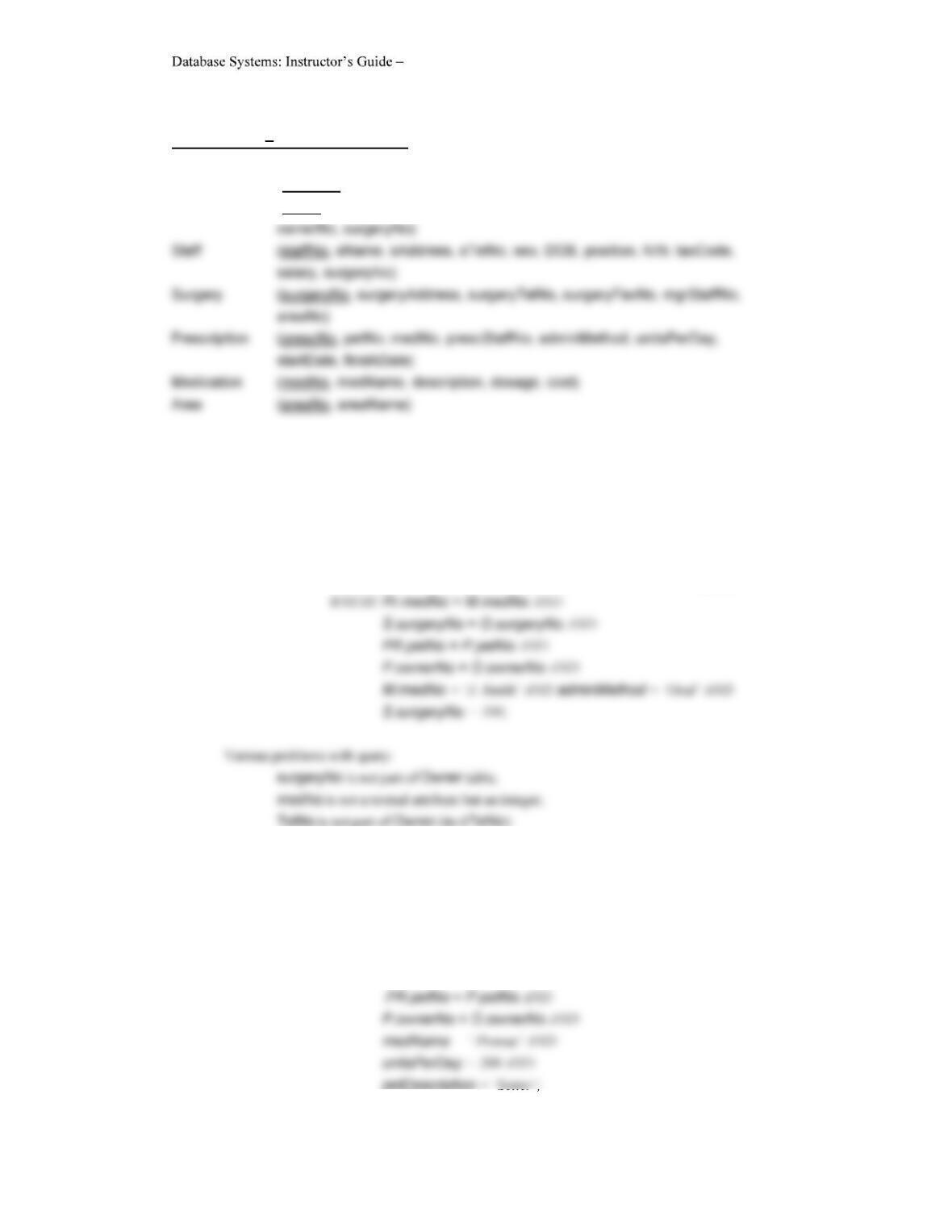
Owner (ownerNo, oName, oAddress, oTelNo)
Pet (petNo, petName, petDescription, petSex, petDOB, dateRegistered,
For a more complete description, see Case Study 4 under Chapter 22.
23.3 Using the above relational schema, determine whether the following query is both type and
semantically correct:
SELECT P.petNo, petName, oName, O.TelNo
FROM Pet P, Owner O, Prescription Pr, Medication M, Surgery S
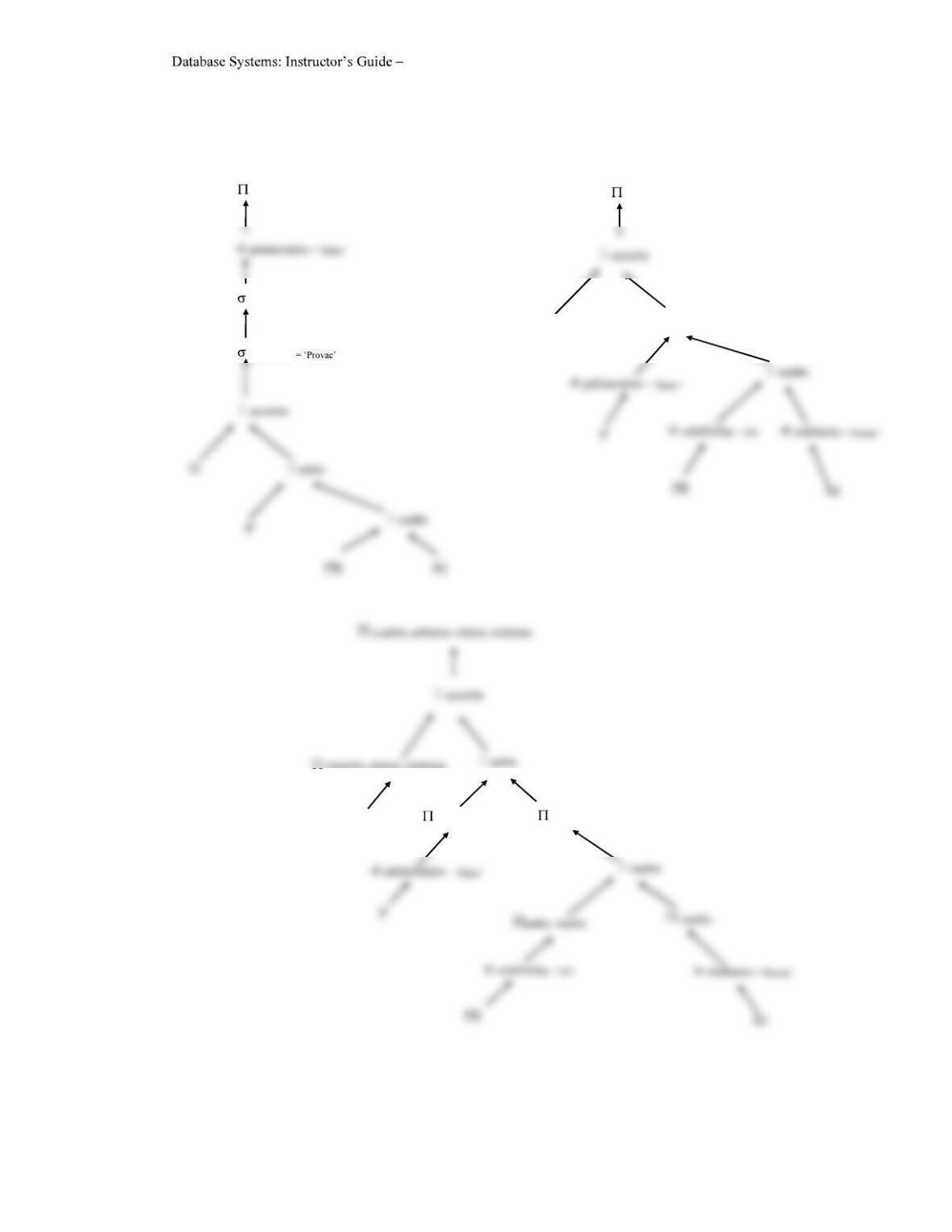
23.4 Consider the above relational schema. Map the following query onto a relational algebra tree,
and then transform it into a reduced query:
SELECT P.petNo, petName, oName, oAddress
FROM Pet P, Owner O, Prescription P, Medication M
WHERE PR.medNo = M.medNo AND
PART IV
Give a full explanation of the reasoning behind each step and state any transformation rules
used during the reduction process.
p.petNo, petName, oName, oAddress
unitsPerDay > 200
medName
p.petNo, petName, oName, oAddress
3 petNo
O
O
p.petNo, petName
p.petNo
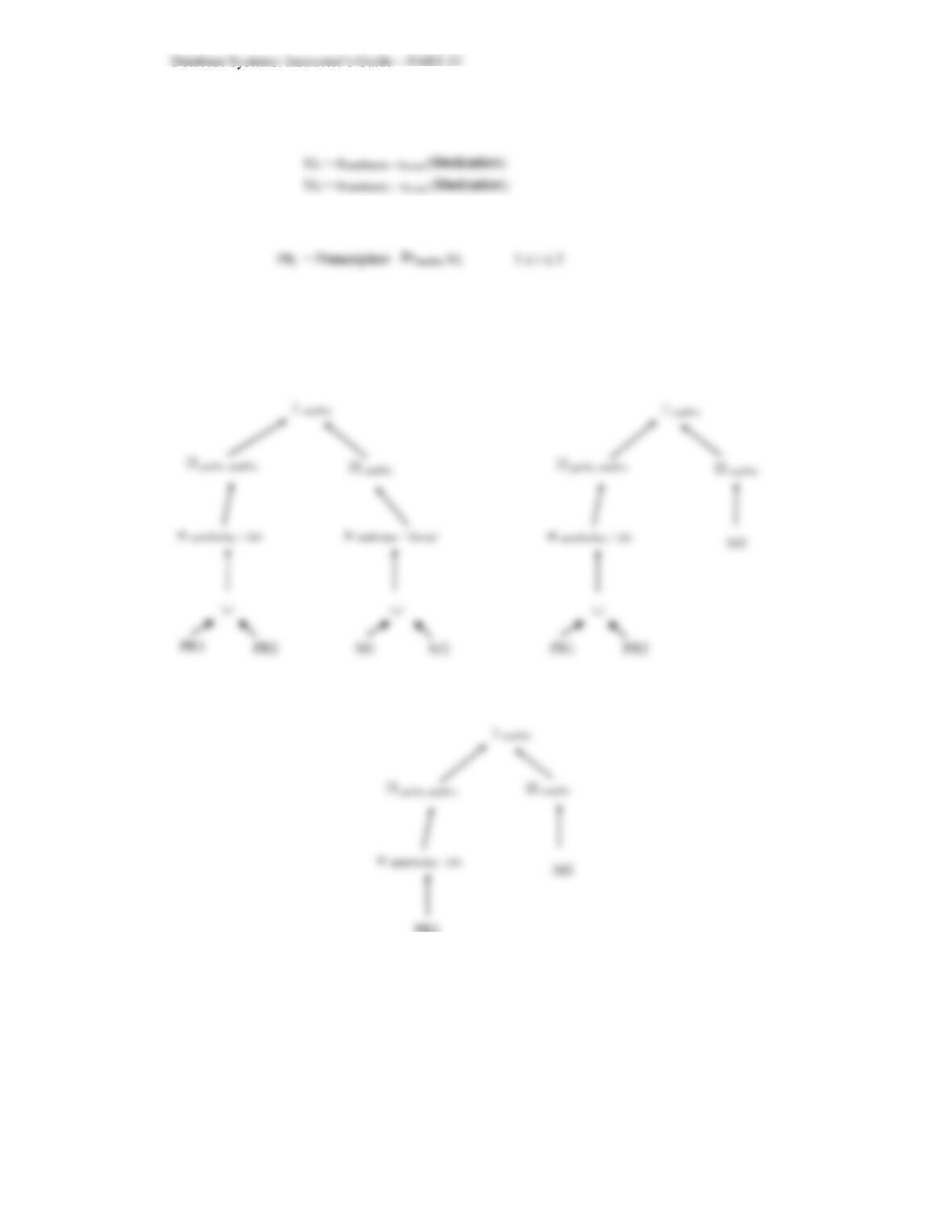
23.5 Now assume that the relation Medication given in Question 20.4 is horizontally fragmented as follows:
and that Prescription is horizontally derived from Medication:
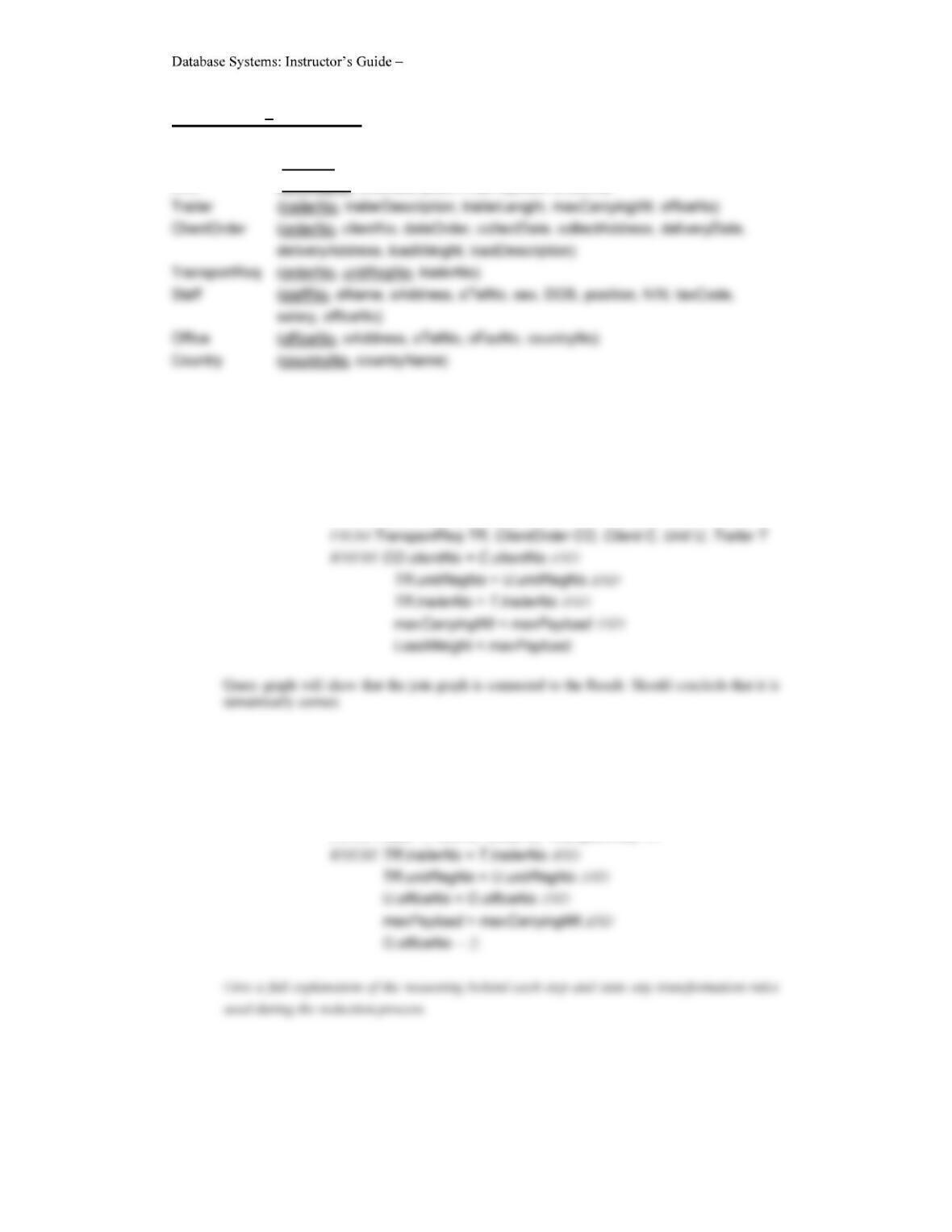
Transform the relational algebra tree from Question 20.4 into a reduced query on fragments.
Give a full explanation of the reasoning behind each step and state any transformation rules
used during the reduction process.
PR1
PART IV
Case Study 3 Rapid Roads
Client (clientNo, cName, cAddress, cTelNo, cFaxNo, officeNo)
Unit (unitRegNo, unitDescription, maxPayload, officeNo)
For a more complete description, see Case Study 5 under Chapter 22.
23.6 Using the above relational schema, determine whether the following query is both type and
semantically correct:
SELECT CO.clientNo, cAddress
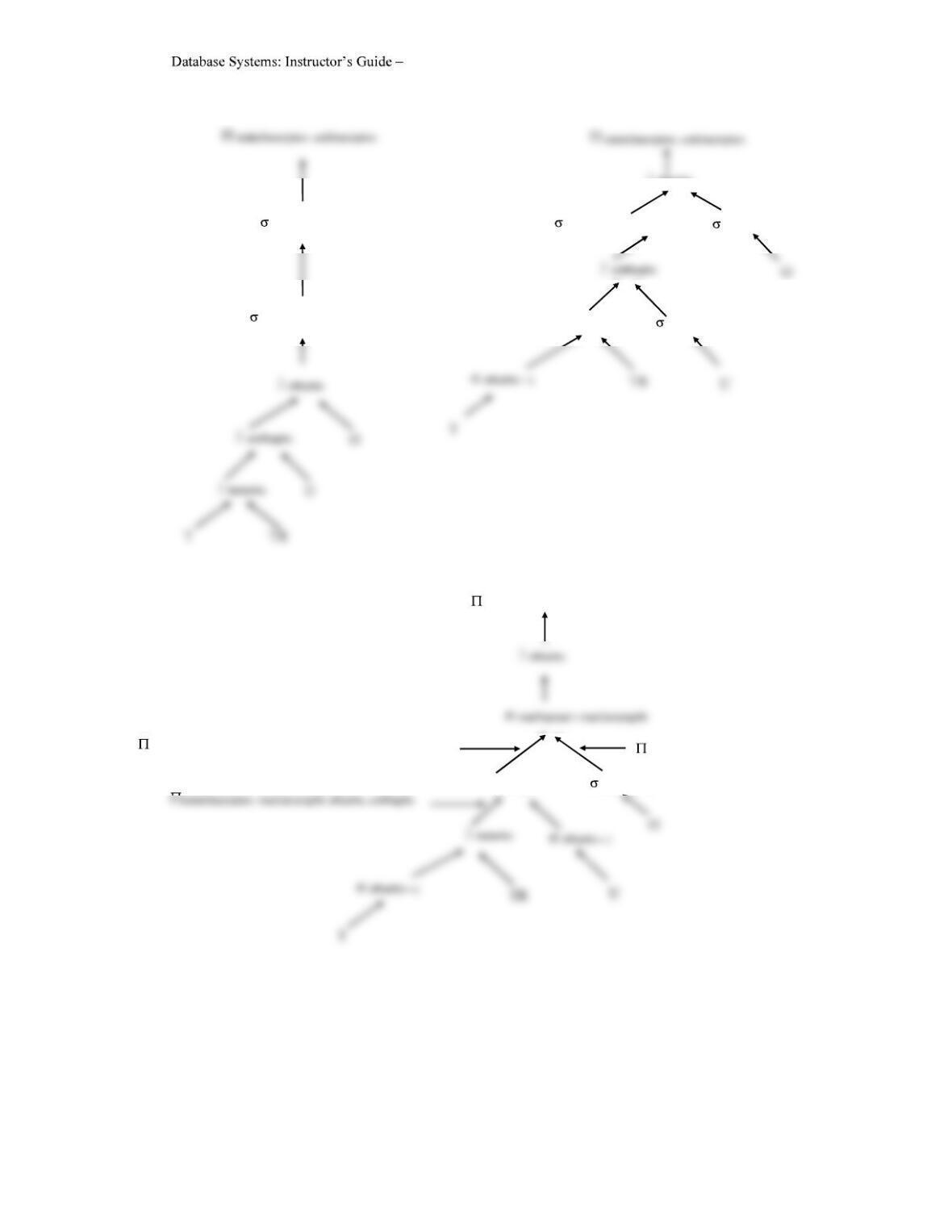
23.7 Consider the above relational schema. Map the following query onto a relational algebra tree,
and then transform it into a reduced query:
SELECT trailerDescription, unitDescription
FROM Trailer T, Unit U, Office O, TransportReq TR
PART IV
maxPayload > maxCarryingWt
officeNo = 2
maxPayload > maxCarryingwt
3 officeNo
officeNo = 2
3 trailerNo
officeNo = 2
maxPayload > maxCarryingwt
trailerDescription, unitDescription
officeNo = 2
3unitRegNo
officeNo
trailerDescription, unitDescription, maxPayload, maxCarryingWt, officeNo
23.8 Now assume that the relation Trailer given in Question 20.7 is horizontally fragmented as
follows:
T1 = officeNo < 2(Trailer)
T2 = officeNo = 2(Trailer)
T3 = officeNo > 2(Trailer)
and that TransportReq is horizontally derived from Trailer:
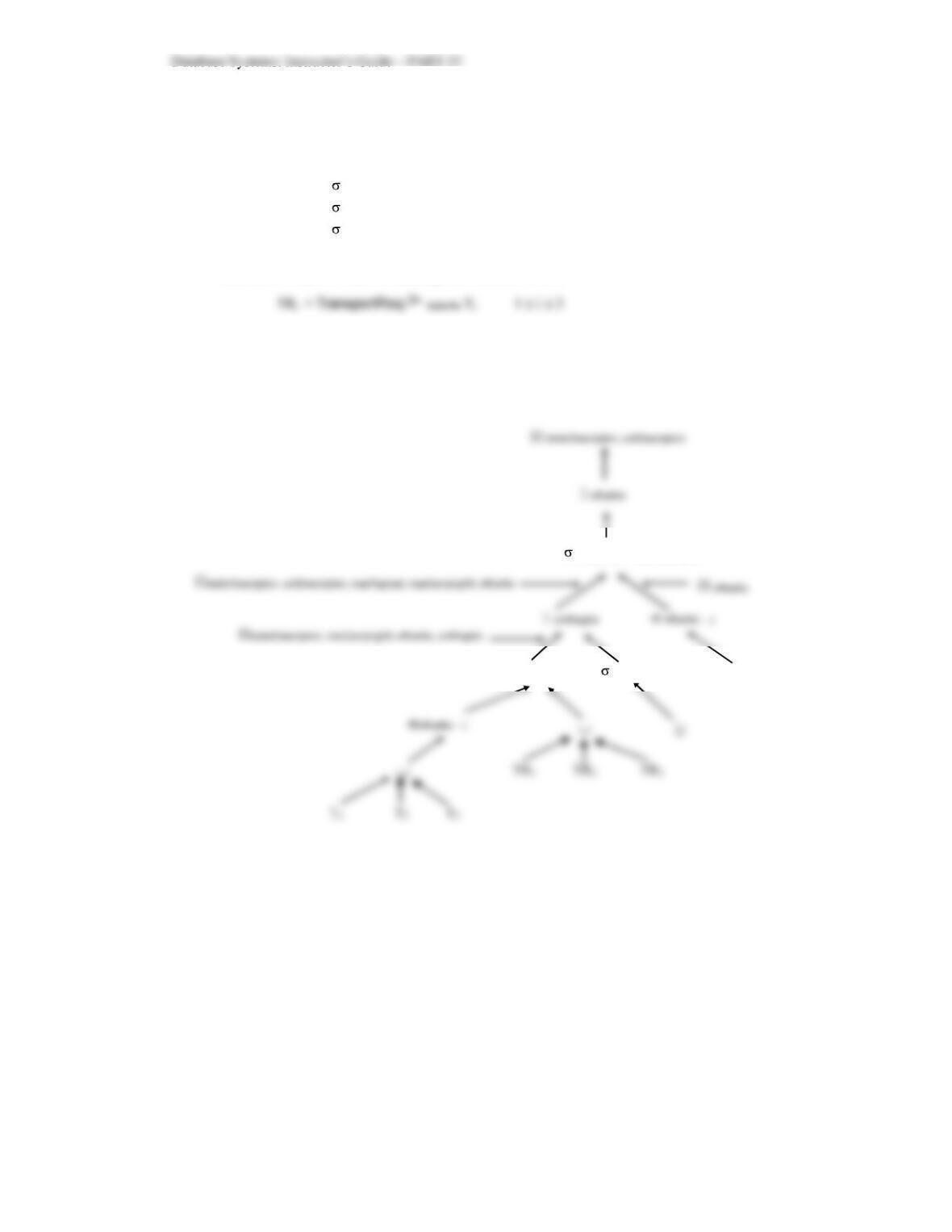
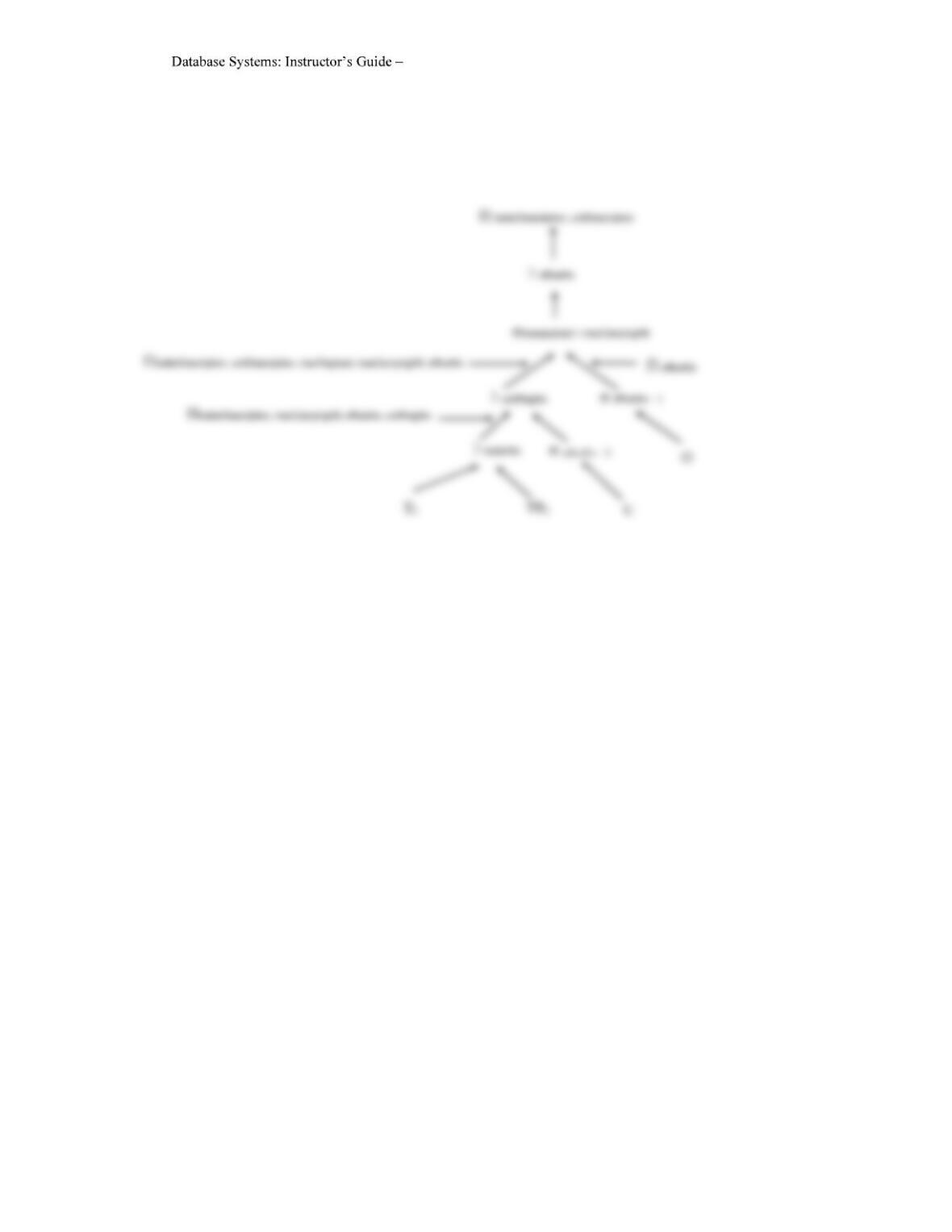
Transform the relational algebra tree from Question 21.7 into a reduced query on fragments.
Give a full explanation of the reasoning behind each step and state any transformation rules
used during the reduction process.
maxpayload > maxCarryingWt
3 trailerNo
O
officeNo = 2
PART IV
Using the fact that the Selection operation on (officeNo = 2) will not produce any tuples from
T1 and T3, this will simplify to the following tree: