Appendix C – E-R Diagrams and the IDEF1X and UML Standards
Page C-12
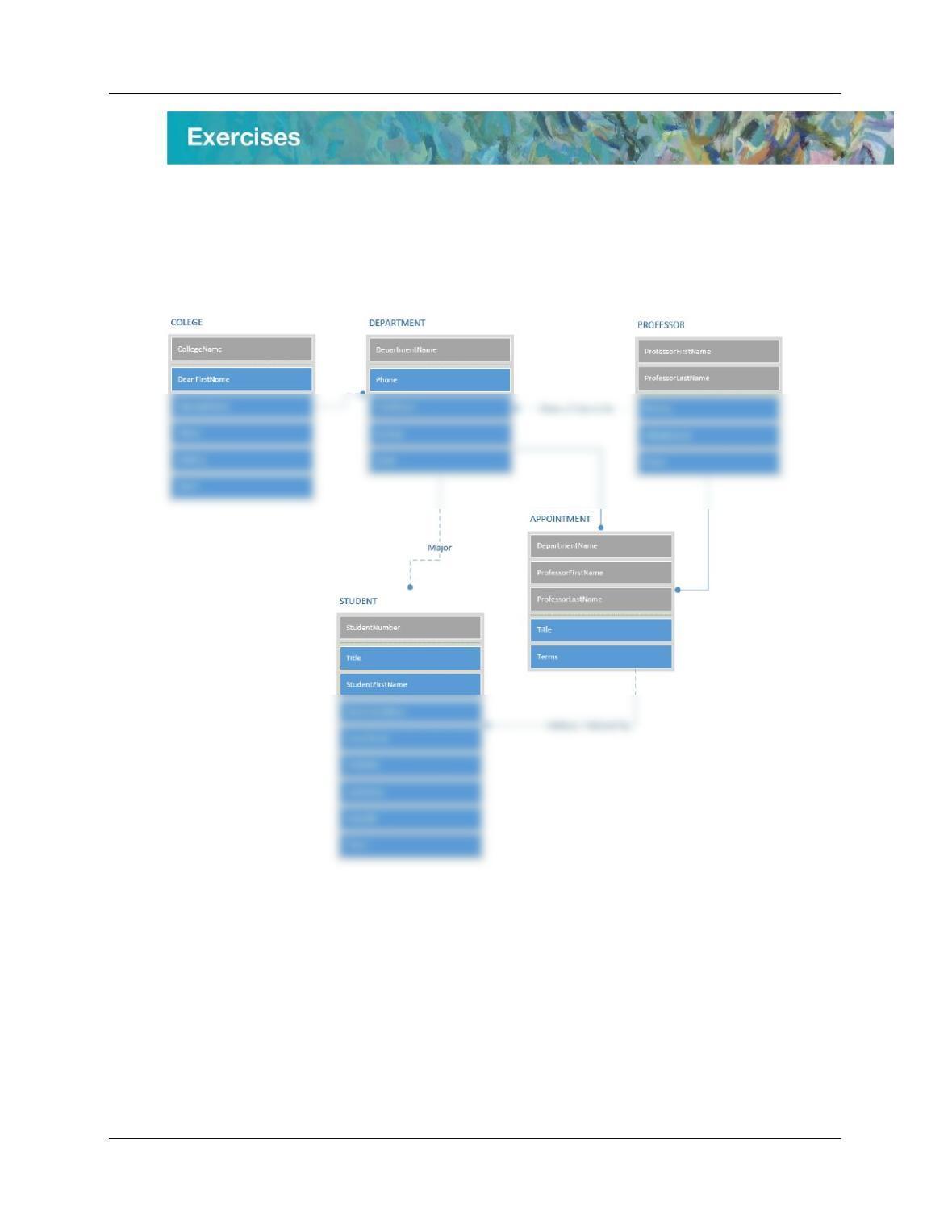
C.21. Redraw the E-R Project Question 5.52, using IDEF1X.
Note that erwin always requires the user to switch between Information Engineering [IE] and
IDEF1X notation. From the menu bar, choose Model | Model Properties | Notation Tab. The
student can either draw the model in IDEF1X originally, or duplicate Figure 5-52 in IE crow’s
foot style and then switch to the IDEF1X notation.
Appendix C – E-R Diagrams and the IDEF1X and UML Standards
Page C-13
C.22. Answer Exercise 5.56, but use IDEF1X instead of the crow‘s foot model.
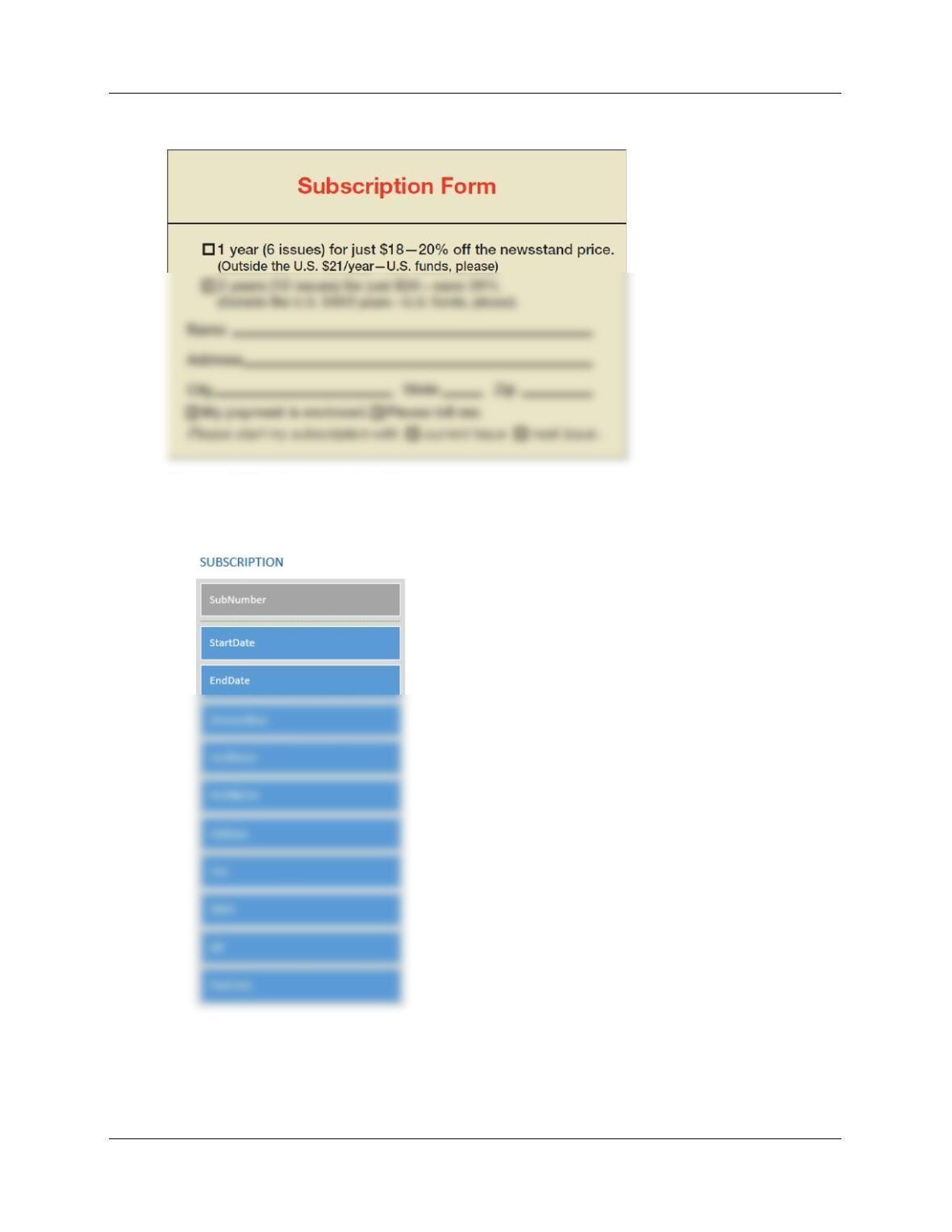
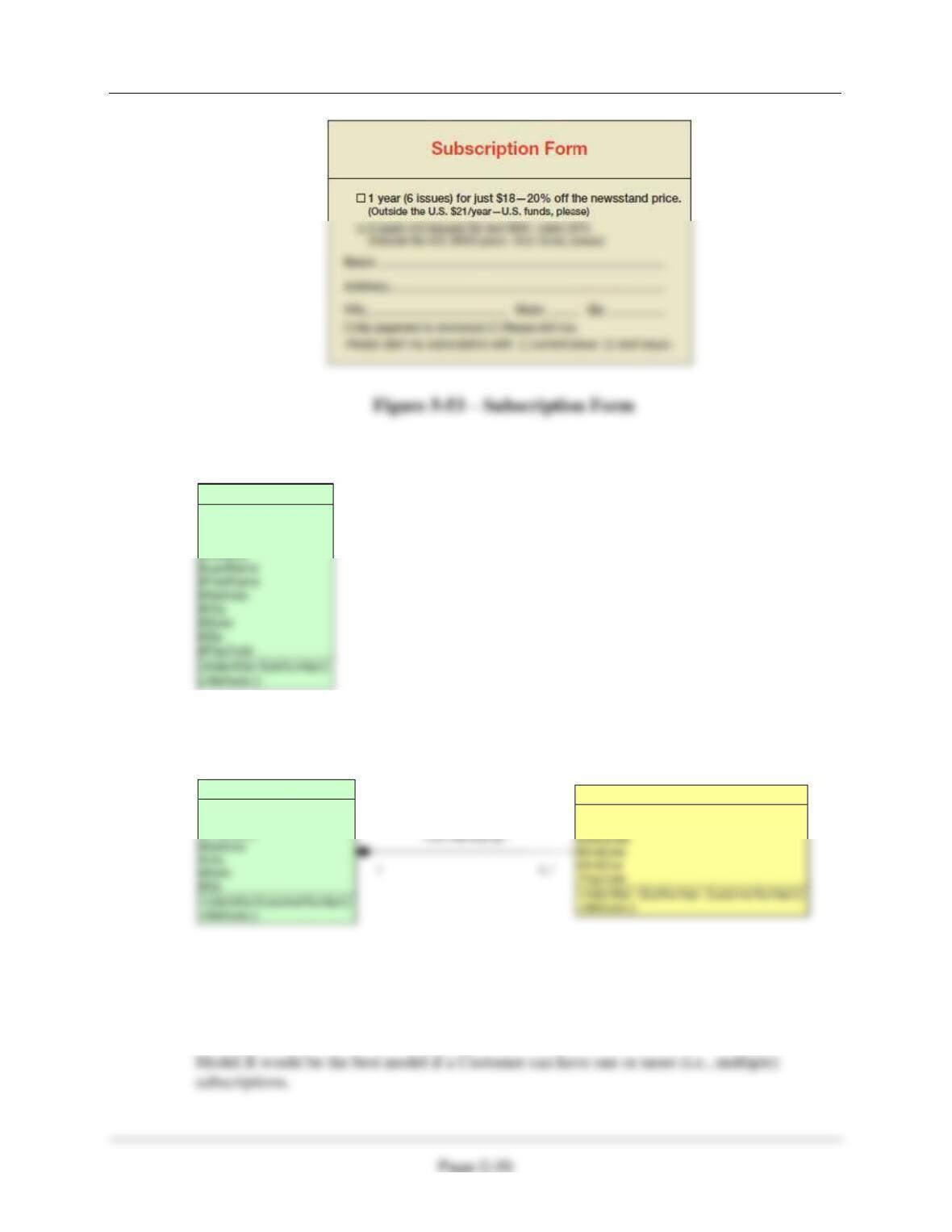
Figure 5-53 – Subscription Form
a. Create a model with one entity. Specify the identifier and attributes.
Appendix C – E-R Diagrams and the IDEF1X and UML Standards
Page C-14
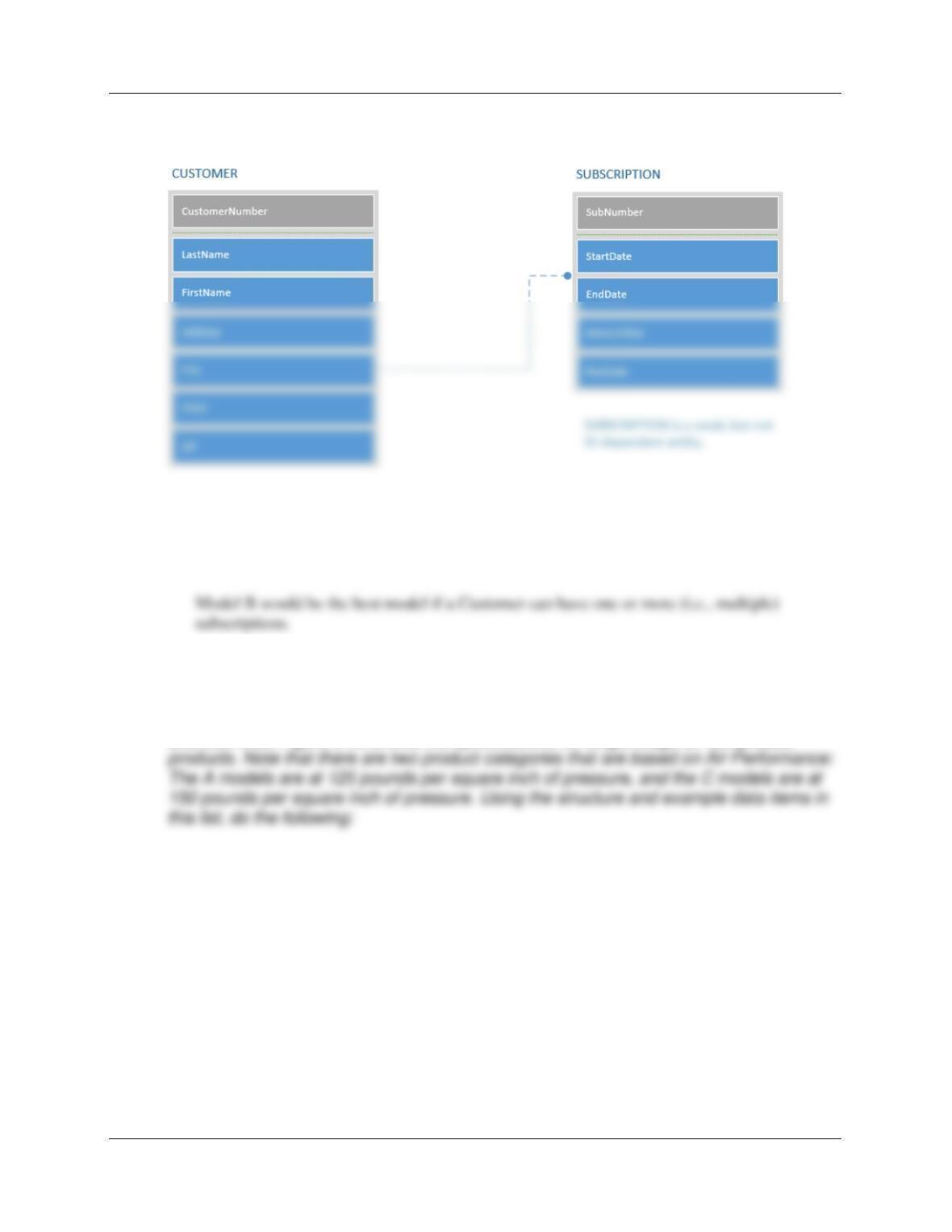
b. Create a model with two entities, one for customer and a second for subscription.
Specify identifiers, attributes, relationship name, type, and cardinalities.
c. Under what conditions do you prefer the model in A to that in B?
Model A would be the best model if a Customer can only have one subscription.
d. Under what conditions do you prefer the model in B to that in A?
C.23. Answer Exercise 5.59, but use IDEF1X instead of the crow’s foot model. Redraw Figure
5-57 in IDEF1X notation.
Figure 5-57 is shown redrawn in the question below.
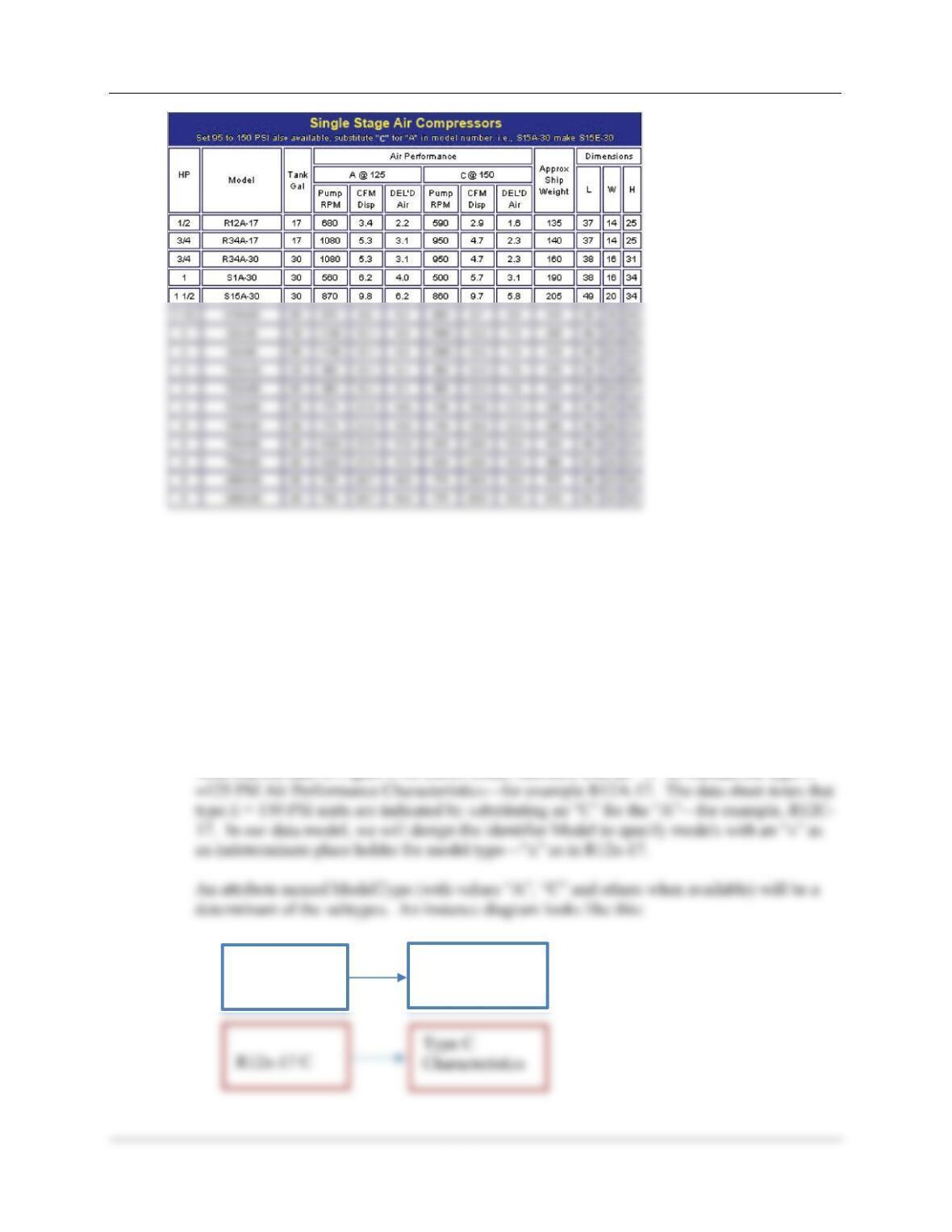
Exercise 5.59. Figure 5-56 shows the specifications for single-stage air compressor
Appendix C – E-R Diagrams and the IDEF1X and UML Standards
Page C-15
Figure 5-56 – Air Compressor Specifications
A. Create a set of exclusive subtypes to represent these compressors. The
supertype will have attributes for all single-stage compressors, and the
subtypes will have attributes for products having the two different types of Air
Performance. Assume that there might be additional products with different
types of Air Performance. Specify the entities, identifiers, attributes,
relationships, type of category cluster, and possible determinant.
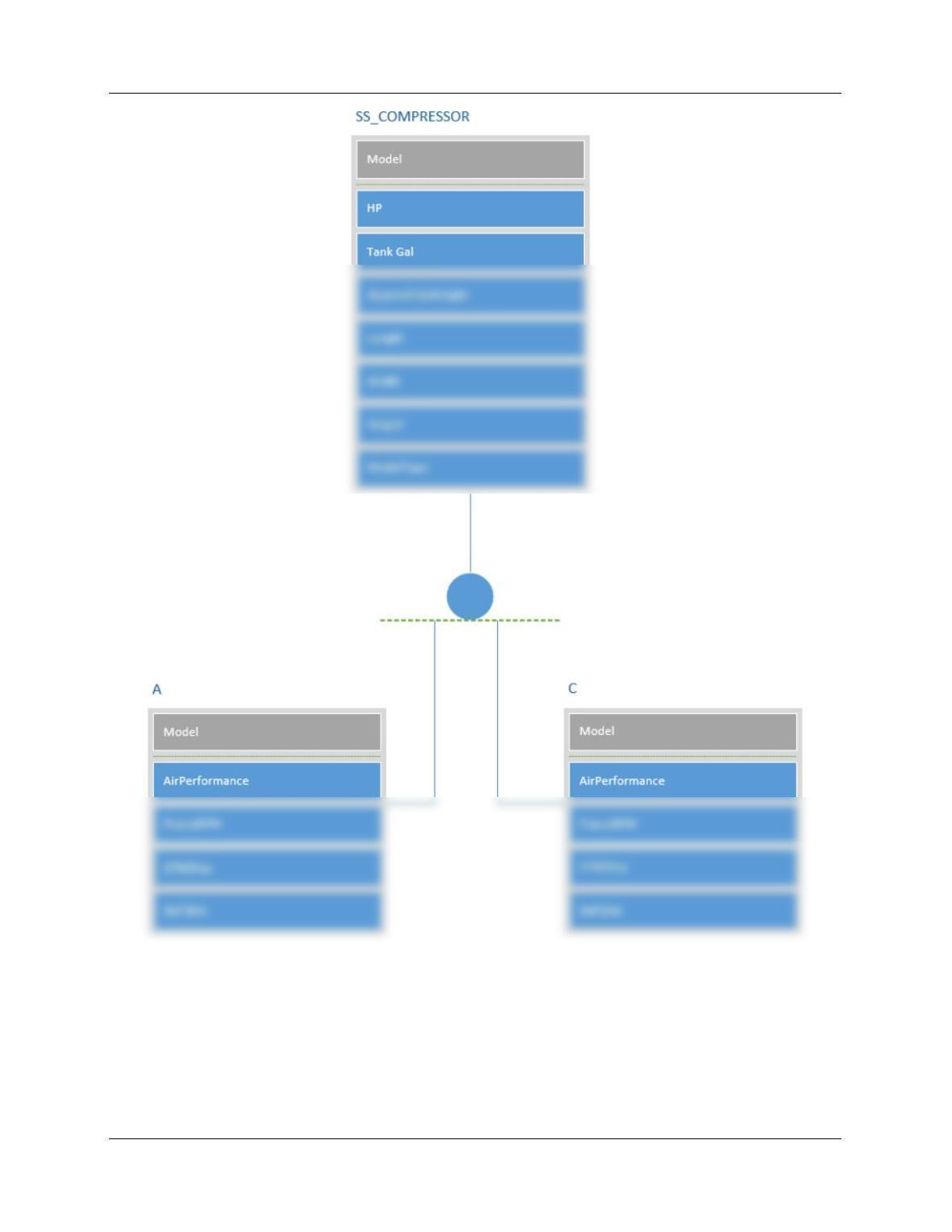
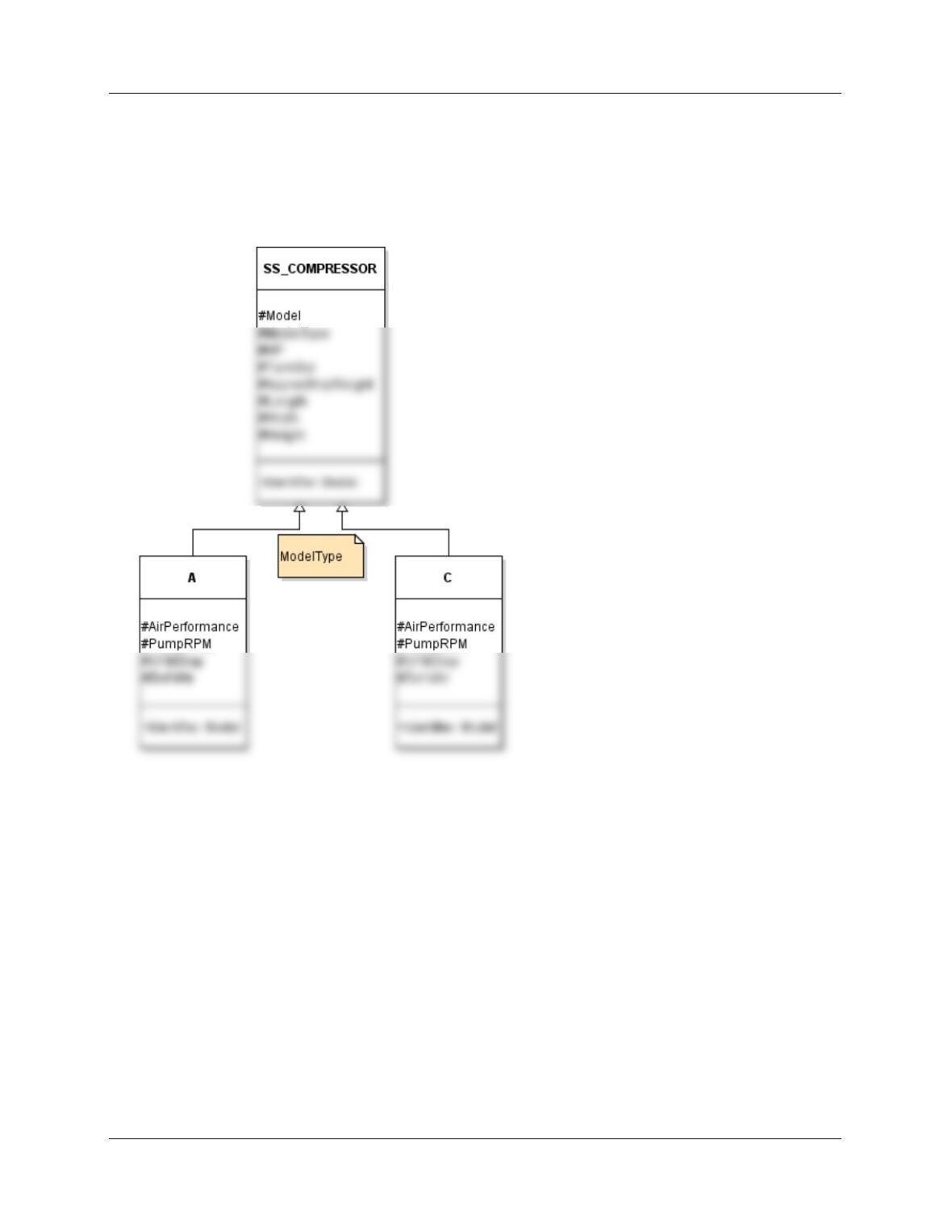
The first entity will be SS_COMPRESSOR, with an identifier of Model.
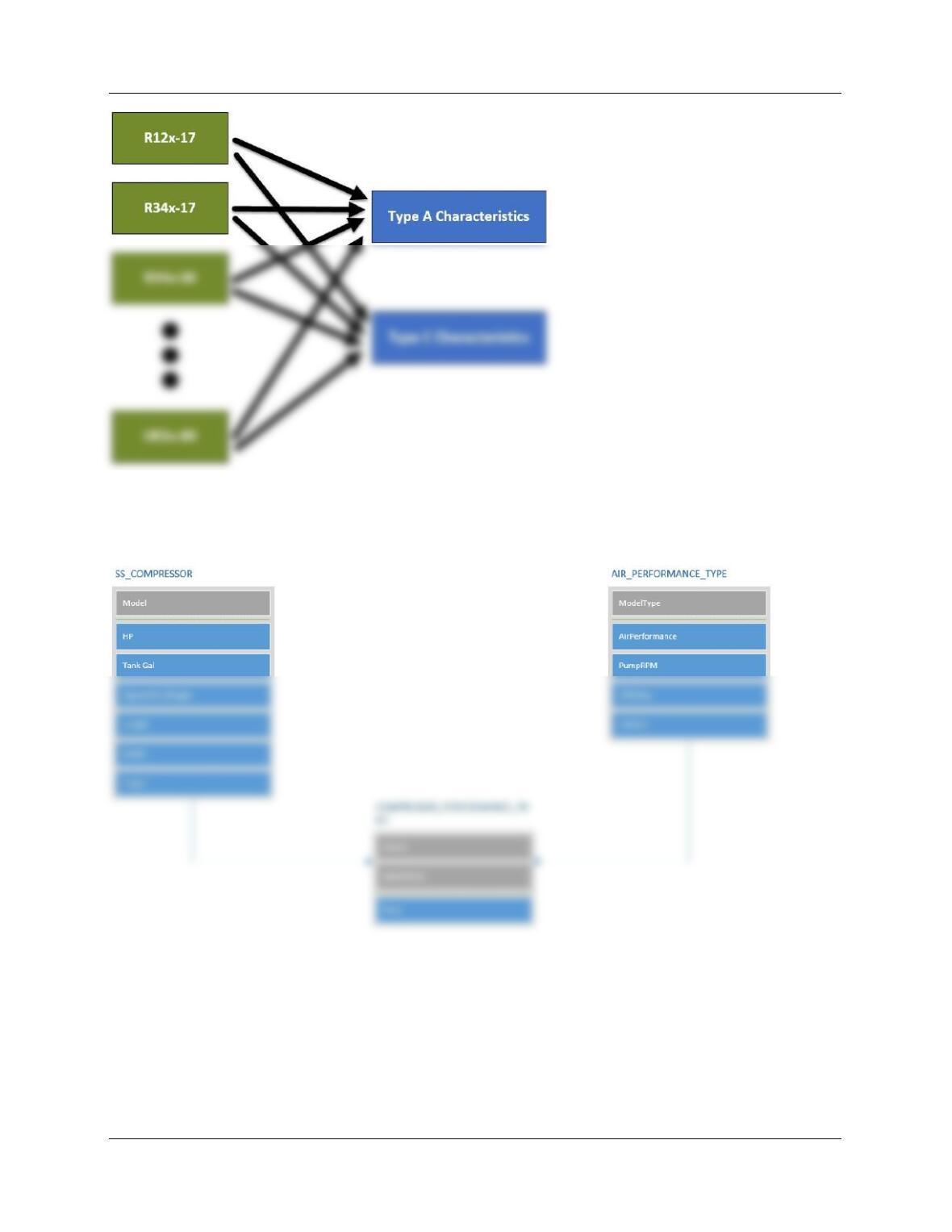
Note that the date in Figure 5-56 shows model numbers with an “A” to indicate the type A
R12x-17 A
Type A
Characteristics
Appendix C – E-R Diagrams and the IDEF1X and UML Standards
Page C-16
The entities, identifiers, attributes, and relationships are shown in the above diagram. In
IDEF1X, this would be called an “incomplete category cluster” —according to the question,
there may be “additional products with different types of Air Performance” which means
there may be more models then just the A and C models shown.
Appendix C – E-R Diagrams and the IDEF1X and UML Standards
Page C-17
B. Figure 5-57 shows a different model for the compressor data. Explain the entities,
their type, the relationship, its type, and its cardinality. How well do you think this
model fits the data shown in Figure 5-56?
Figure 5-57 – Alternate Model for Compressor Data
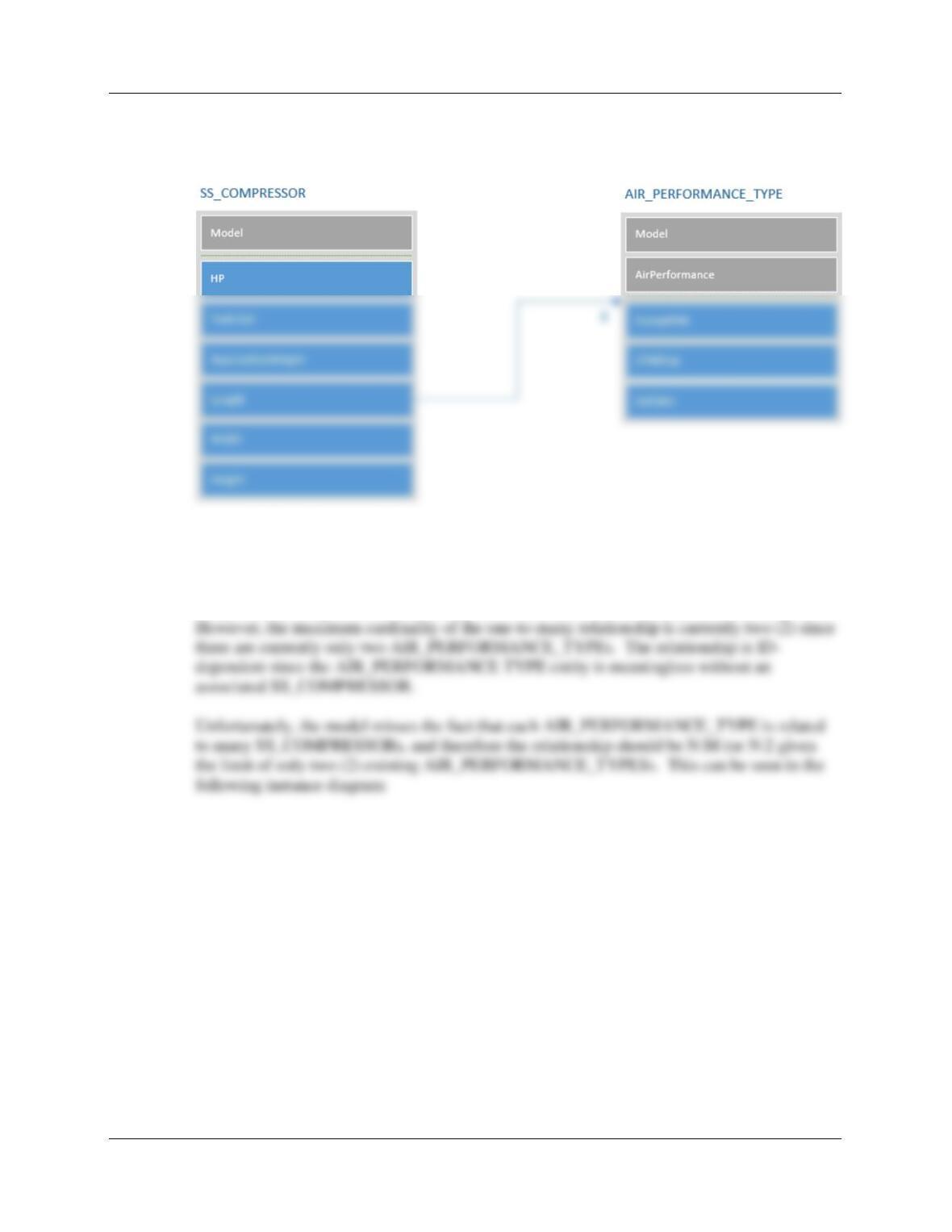
In the model in Figure 5-57, SS_COMPRESSOR is a strong entity and
AIR_PERFORMANCE_TYPE is an ID-Dependent weak entity. The relationship is one-to–
many since an SS_COMPRESSOR may have more than one AIR_PERFORMANCE_TYPE.
Appendix C – E-R Diagrams and the IDEF1X and UML Standards
Page C-18
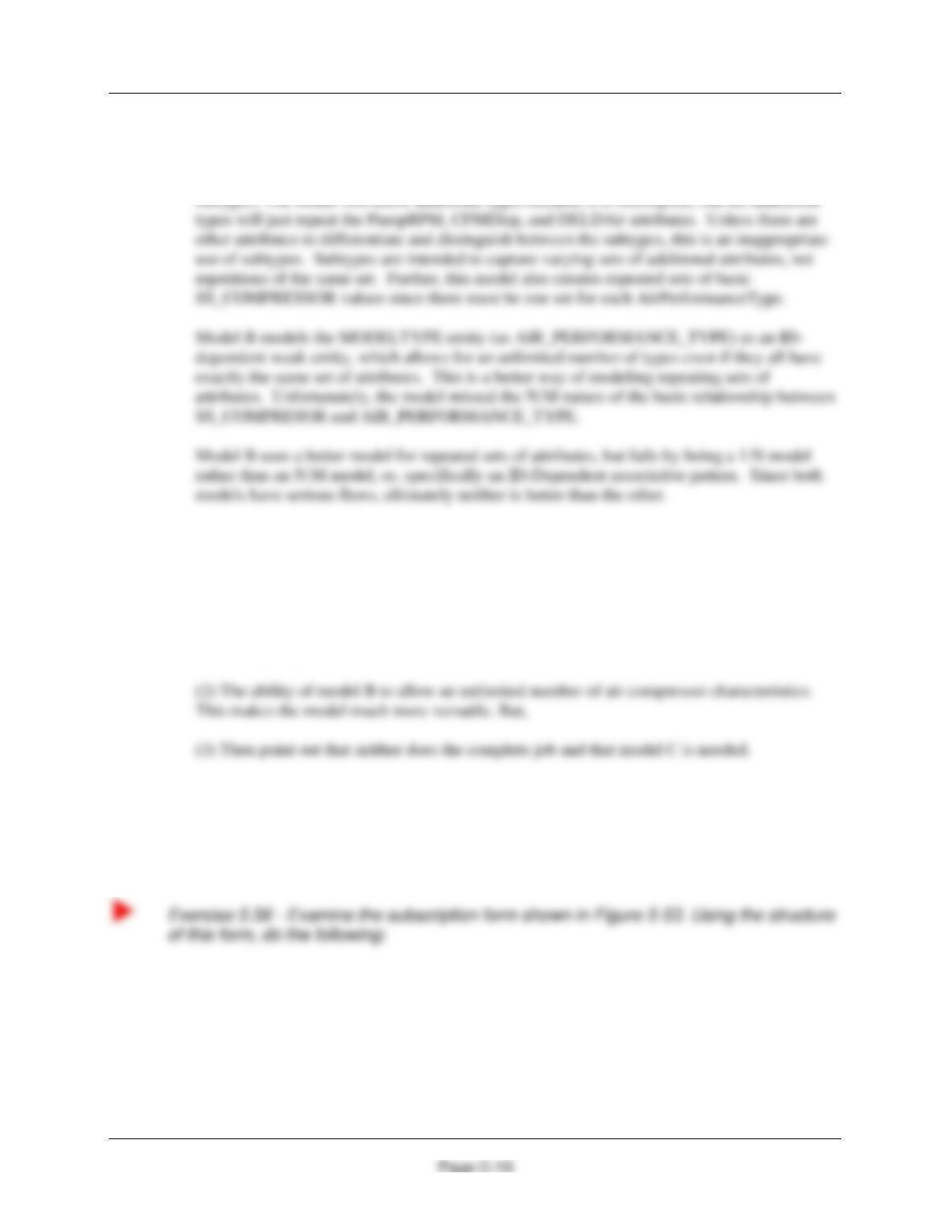
Further, each combination will have at least one additional attribute associated with it—namely Price.
Therefore, a better model would be an ID-Dependent associate model, with two strong entities—
SS_COMPRESSOR and AIR_PERFORMANCE TYPE. That model would look like this:
Appendix C – E-R Diagrams and the IDEF1X and UML Standards
C. Compare your answer in question A with the model in Figure 5-57. What are the
essential differences between the two models? Which do you think is better?
Model A models the ModelType as an incomplete category cluster currently with two
D. Suppose you had the job of explaining the differences in these two models to a
highly motivated, intelligent end user. How would you accomplish this?
Perhaps focus the discussion on:
(1) The ability of model A to use supertype/subtypes to handle different sets of attributes for
a basic supertype, and
C.24. Answer Exercise 5.56, but use UML instead of the crow’s foot model.
NOTE: Microsoft Visio 2010 and Microsoft Visio 2016 both have a UML template, and the
drawings below were done using the Microsoft Visio 2010 template.
Appendix C – E-R Diagrams and the IDEF1X and UML Standards
a. Create a model with one entity. Specify the identifier and attributes.
+SubNumber
#StartDate
#EndDate
SUBSCRIPTION
b. Create a model with two entities, one for customer and a second for subscription.
Specify identifiers, attributes, relationship name, type, and cardinalities.
+CustomerNumber
#LastName
#FirstName
CUSTOMER
+CustomerNumber
+SubNumber
SUBSCRIPTION
CUSTOMER-SUBSRIPTION
c. Under what conditions do you prefer the model in A to that in B?
Model A would be the best model if a Customer can only have one subscription.
d. Under what conditions do you prefer the model in B to that in A?
Appendix C – E-R Diagrams and the IDEF1X and UML Standards
Page C-21
C.25. Answer Exercise 5.59, but use UML instead of the crow’s foot model. Note that this
question asks for exclusive subtypes, which are not supported in UML – explain how you will
handle this problem (Hint: you may use application logic if the database design itself is not
sufficient). Redraw Figure 5-57 using UML notation.
See answers in C-23. The UML diagram is: